Tag: hope

  • The Empty Tomb

    The Empty Tomb

    Easter Sunday: Acts of the Apostles 10:34a, 37-43, Colossians 3:1-4, John 20:1-9.

    Today’s readings uncover the truly baffling nature of the empty tomb. We rejoice 2,000 years later because the full revelation of the Resurrection is known. We sing Alleluia! with abandon, but today’s readings remind us that his rising from the dead was unexpected and incomprehensible on the morning after Passover, even for those who believed in him as the Messiah.
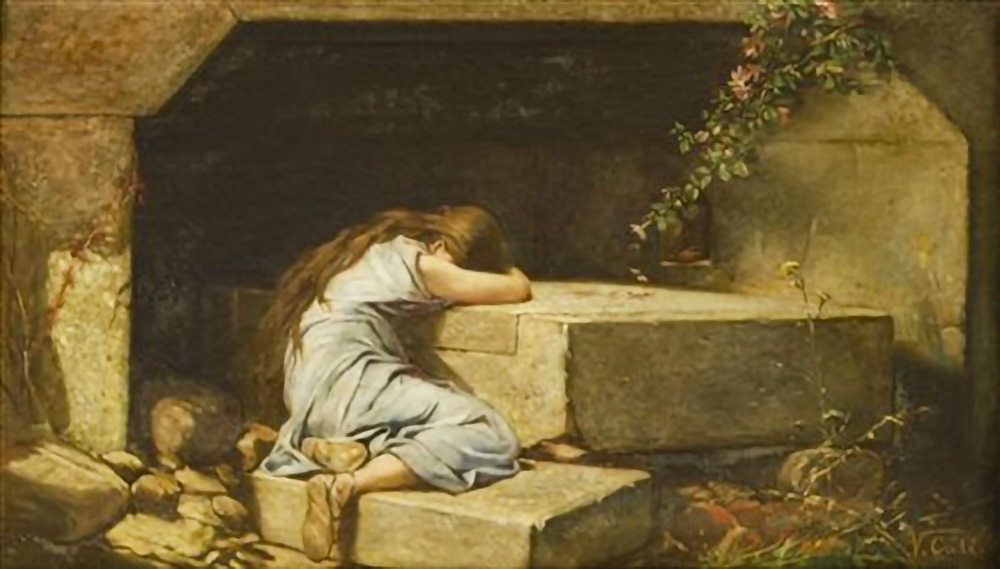
    Mary Magdalene on Christ’s Tomb (c.1900), Giuseppe Calì | image from artnet.com.

    In the gospel, Mary Magdalene, driven by her love of Jesus, goes to the tomb early in the morning after Passover, “while it was still dark.” The darkness is emblematic of the encounter at the tomb for her and, later, Peter and John. Mary is so discombobulated by the sight of the stone that is rolled away that she runs back to the Apostles without even looking in. She thinks that someone stole his body: “They have taken the Lord from the tomb, and we don’t know where they put him.” Perhaps the “they” she refers to are the guards, the Romans. 

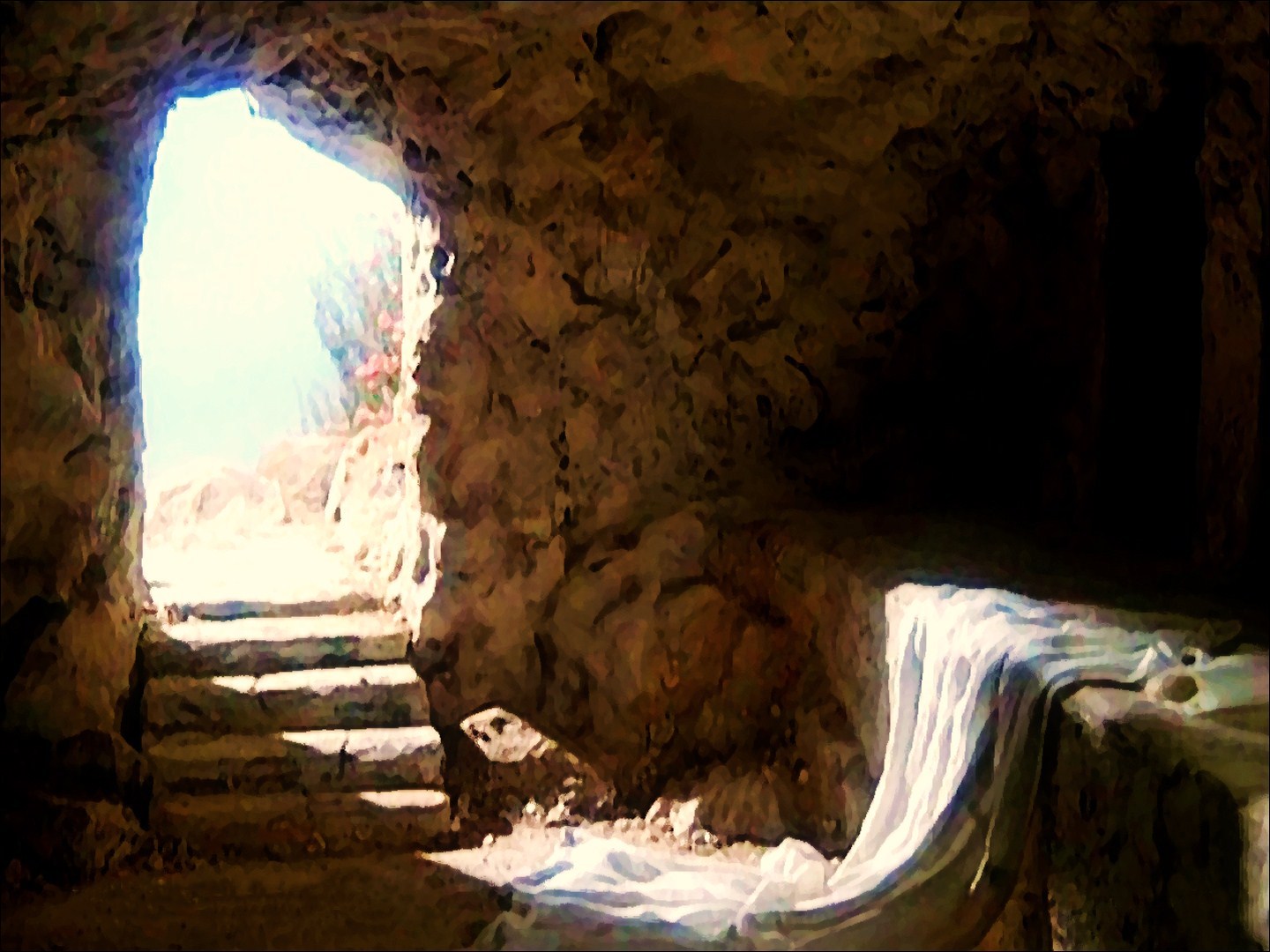
    The state of the burial cloths is even more confusing for them. Peter and John see “the burial cloths there, and the cloth that had covered his head, not with the burial cloths but rolled up in a separate place.” This is not the scene of a tomb being pilfered or a simple act of transferring a body somewhere else. St. John Chrysostom writes:

    If any persons had removed the body, would they before doing so have stripped it; or if any had stolen it, would they have taken the trouble to remove the napkin, and roll it up, and lay it in a place by itself; but how? They would have taken the body as it was. On this account John tells us by anticipation that it was buried with much myrrh, which glues linen to the body not less firmly than lead; in order that when you hear that the napkins lay apart, you may not endure those who say that He was stolen. For a thief would not have been so foolish as to spend so much trouble on a superfluous matter. For why should he undo the clothes? And how could he have escaped detection if he had done so? Since he would probably have spent much time in so doing, and be found out by delaying and loitering. But why do the clothes lie apart, while the napkin was wrapped together by itself? That you may learn that it was not the action of men in confusion or haste, the placing some in one place, some in another, and the wrapping them together (Homily 85 on the Gospel of John, 4).

    I had no idea that myrrh “glues linen to the body not less firmly than lead.” Thank you to Chrysostom for pointing that out. Chrysostom indentifies that the care taken not just to unwrap the body but also lay the head covering (“napkin”) aside separately means that something altogether different happened. Something deliberate, something careful, something unafraid. Yet something that is still hidden from them.
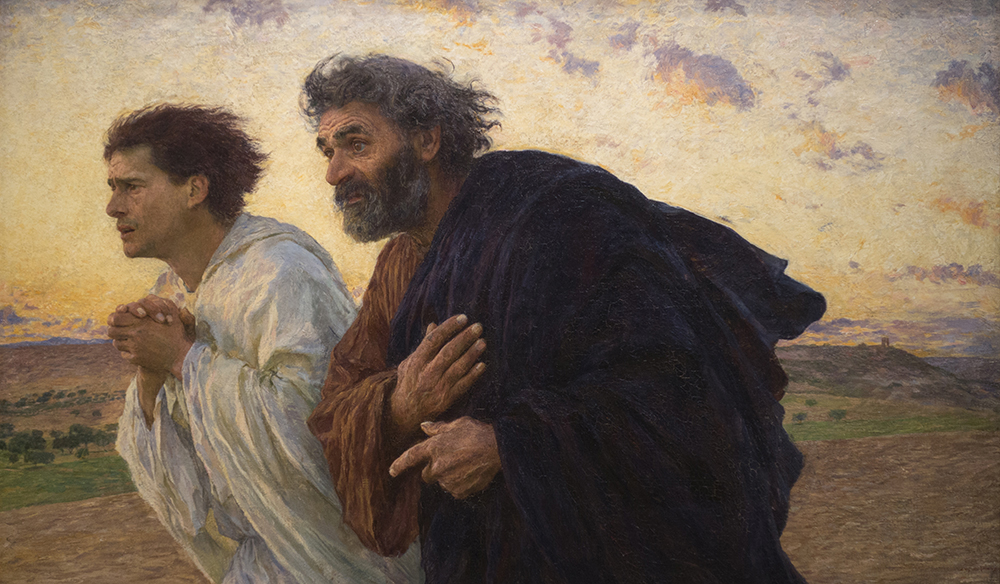
    The Disciples Peter and John running to the sepulchre on the morning of the Resurrection (1898), Eugène Burnand | Image from eugene-burnand.com.

    Which makes me wonder what is meant when John says of himself, “he saw and believed,” when he follows it with “For they did not yet understand the Scripture that he had to rise from the dead.” I think that John and Peter have the seeds of hope when they encounter the empty tomb in the state it is in. They believe in the possibility of all the hints that Christ gave them about them seeing him again after he dies. They have yet to meet him in his Resurrected Body. The angels have yet to explain to Mary what happened.

    This is the moment of hope! Humanity sees order, care, and absence where there should be death. What a mysterious but wonderful sight. Mourning is no longer appropriate, but instead hope — maybe, just maybe, all those incredible things Jesus told us are true!

    The empty tomb is the picture of our new reality: the place of death has been ransacked and re-ordered. Mysterious hope fills us but God remains out of sight; we must trust the Lord’s Word and grow together as a Church in the sacraments he has given us until we meet him face-to-face.
    Even in the decades after His Resurrection, St. Paul in today’s second reading writes of a “hiddenness” that characterizes Christianity: “For you have died, and your life is hidden with Christ in God. When Christ your life appears, then you too will appear with him in glory.” This is the wonderful mystery we are able to live to this very day.

    People bemoan this state, they want proof that God exists, but what we are given is the empty tomb. This is, in fact, proof; albeit, proof of a different type. We have to remember that God fundamentally wants us to yearn for him, to thirst for him, to live in a differently ordered way that shows how central he is to us despite his hiddenness. He has given us free will, but “to whom much is given, much will be required” (Lk 12:48). We are called to use our free will to choose His will precisely because he gave us the empty tomb, his ordered absence that speaks volumes.

    Of course, much more is given to us. He will appear to his disciples and His Spirit explodes into the world in all its fullness, working amidst humanity constantly and to this day. All of this is most evident in the liturgy, in the sacraments.

    But for now, let us consider the empty tomb, the mystery of his disappearance from the grip of death. It is the surest sign we require.
  • Living in the Promise

    Living in the Promise

    Monday in the Fourth Week of Lent: Isaiah 65:17-21, John 4:43-54.

    Compared to some of the well-structured parables we’ve been hearing this Lent, today’s readings are a bit vague. Perhaps “transitional” is a better way to describe them. But maybe that’s the point. We are waiting for Easter in our liturgical season and perhaps waiting for many other things in our personal lives. Waiting is an unavoidable human pastime.

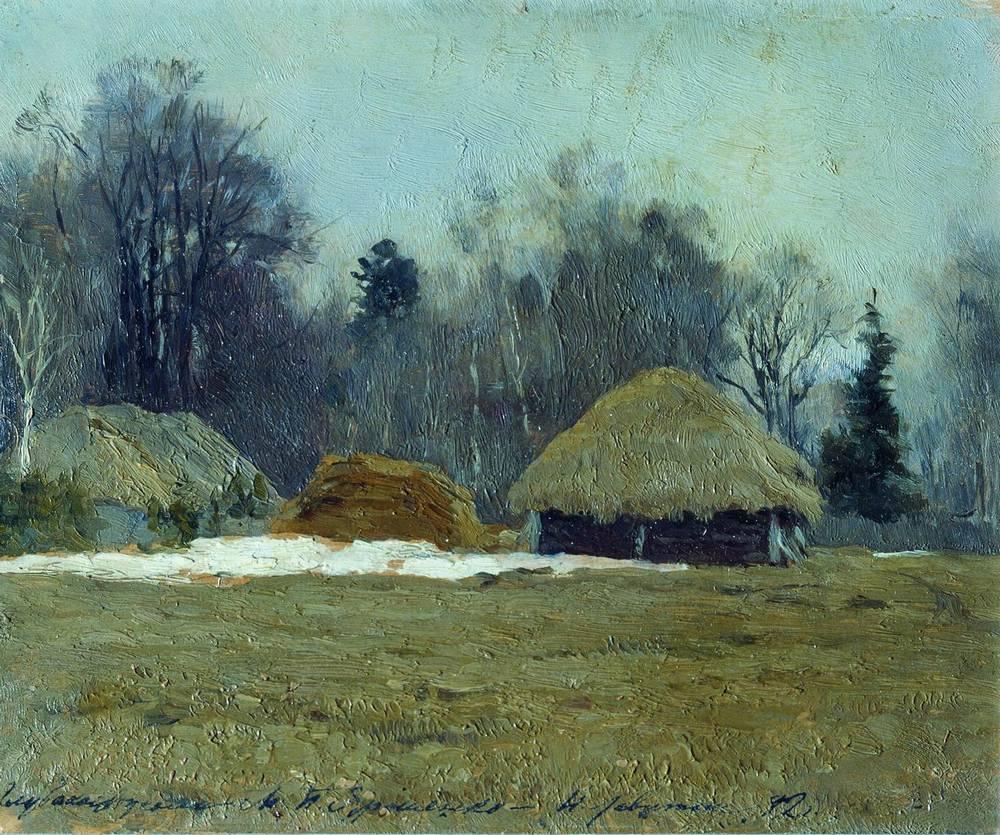
    Early Spring (1892), Isaac Levitan | Creative Commons, courtesy Wikiart.org. This is how I’m feeling this morning, as I imagine many others are: hunkered down in our homes, the early spring around us silently thawing and a tinge of blue expressing the existential angst of waiting. 

    Yet the tenor of the readings is hopeful, even triumphant. Through Isaiah, the Word of God speaks about the “new heavens and new earth” he will build: “I create Jerusalem to be a joy and its people to be a delight; I will rejoice in Jerusalem and exult in my people. No longer shall the sound of weeping be heard there, or the sound of crying.” Forget earth, this sounds like Heaven. But he is speaking of earth, too. What else could this be but the end times in which we are living? The time after Christ, when Heaven truly does come down to earth and establishes a firm foothold in the Church. Can we accept this new reality?

    It requires a change in us. As he says, “The things of the past shall not be remembered or come to mind.” For the nation of Israel, this refers to both their historical struggles as well as the former covenants established by God. The New Covenant supersedes them — it does not reduce them in the slightest but intensifies God’s connection with his people.

    However, there is something scary in not remembering the past.

    Is Isaiah talking about the abolishment of history? I do not think God suggests ahistoricity for humanity, but a new and transformed historicity. In other words, the Christ event and what it reveals about God’s fullness throughout history enables us to forget our tiny lens of human nation-building and power relationships. We now have insight into God’s saving plan for us and this presents a new way to look at everything. The earth is transformed.

    This requires willing participation on our part. We have to live up to our end of the covenant and love the Lord your God with all your heart, with all your soul, with all your mind, and with all your strength. This is constant work for us to live in the light, to accept God’s agape, allow it to transform us, and then give that agape to those around us. So, we are in constant transition, sometimes living in the New Covenant, but then falling into sin. The sacraments — Confession, Eucharist, Marriage, etc. — and the never-ending liturgy are our ways to re-unite with God, to re-commit to the covenant with Him. Lent itself is a season of waiting, transition, and re-commitment.

    In today’s gospel, we find Christ in transition, going from Samaria to Galilee. And a royal official travels from Capernaum to Galilee to ask Jesus to return to his home with him to heal his son. Rather than travel with the man, Jesus tells him to go home where he will find that his son is healed. We are told that the man “believed” and left. Yet this is a two-day journey, and we can imagine that the man had a twinge of doubt as well as hope in his heart. 

    On the way home the next day, the man encounters his slaves who share the good news that his son is recovering (starting exactly at the time he met with Jesus). With this, “he and his whole household came to believe.”

    In other scenes from the gospels, we see Jesus teaching specific lessons with each healing. For example, yesterday’s parable of curing the blind man by making clay from his own saliva was a sign that he, the Christ, is the method for curing our spiritual blindness. So what do we find when we dig into this abbreviated miracle? All Jesus says is, “You may go; your son will live.”

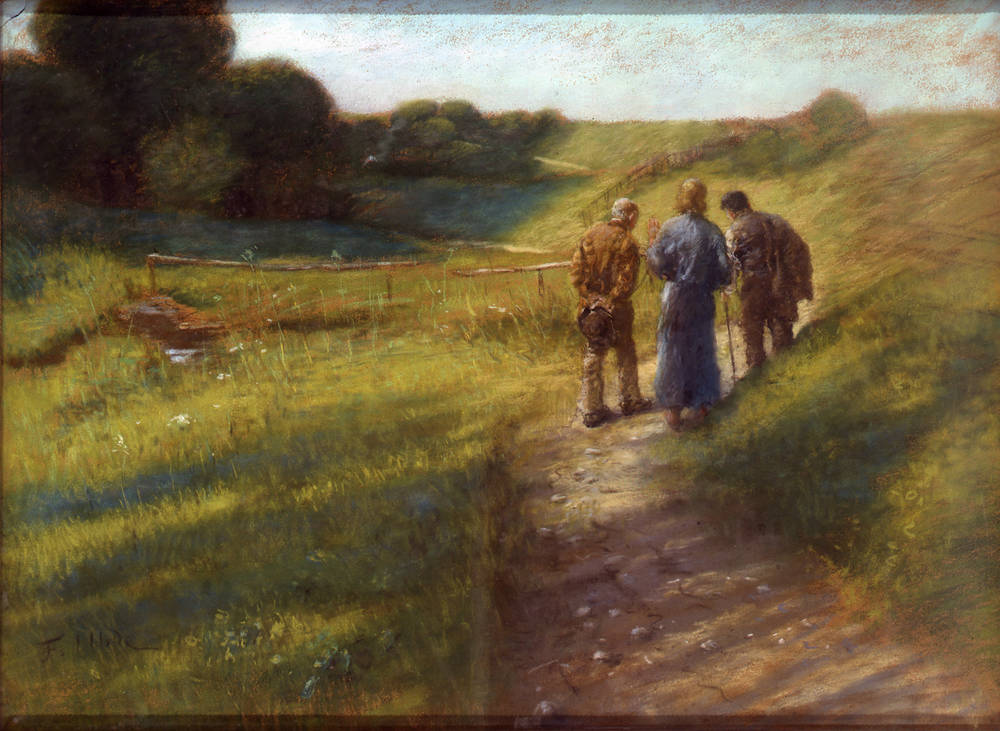
    The Road to Emmaus (Der Gang nach Emmaus), 1891, Fritz von Uhde | Wikimedia Commons.

    I believe the lesson here lies in the travel and the transitions of spirit that are marked along the way. First, Jesus travels to us from “his native place,” where he was not recognized as the Messiah. This was a historical event for the man as he left Nazareth for Galilee, but also symbolic of overall salvation history, where God travels from the nation of Israel where he is rejected to the rest of the world. Next, the man from Capernaum travels to him, just as we are to travel to him, to leave the comfort of our homes, especially urgent in times of distress. 

    Here, at the encounter with Christ, the man petitions him in earnest, with belief in his power to save. God comforts him and pours out his mercy upon the man. Refreshed in spirit thanks to the life-giving water, the man returns home, renewed in faith. This is the model for our own encounter with Christ in the sacraments, in the Church, in our hearts. He is our hope and our wellspring.

    And in looking at the overall arc of the gospel, most of the time is spent in transition, in travel. Is this not the case for us, too? Our faith shows us the broad strokes: we are in transition between this world and the next, where we shall be united with God face-to-face. As we’ve noted before, the earliest Christians referred to themselves as followers “of the Way” (cf. Acts 9:1-2), letting this great eschatological fact define them.

    On the micro level, too, we are constantly traveling, in transition. We get to experience the Mass infrequently and ecstatic moments of union with God even less frequently. What happens outside of those moments? Well, we call it life. It’s hard to keep up a sustained outpouring of God’s love and will. We are members of the Church in part to support us in that effort to maintain our spiritual focus. But let’s be honest about the reality of this life: it exists largely in transition between moments of sin, fear, and isolation and moments of peace within God’s light.

    How are we living this life? What do we look like as we walk in this life of transition? The answer and expectation given to us is frustratingly simple; Jesus tells us, “I am the way, and the truth, and the life” (Jn 14:6). We must happily embrace what the earliest Christians did and be followers “of the Way,” because the travel, the path, and the moments of transition are in union with Christ Himself.

    He resided in our flesh, he knows us intimately, he is here with us. The great Life-Bringer, the source of Truth and Wisdom traveled just like us. With his Resurrection, he lives spiritually, personally, and mystically with each of us while we walk in this life of transition. We are not alone here. As baptized Christians, we are surrounded by and infused with the Spirit of the Lord. This must make our journey joyful and hopeful, despite all of its hardships and pain.

    This is the “new earth” of which Isaiah speaks. The Lord has promised us salvation and a place in his house. This is why he says, “No longer shall the sound of weeping be heard there, or the sound of crying.” Let us live in the promise of the Kingdom, knowing that every step we take on the Way is one step closer to him.

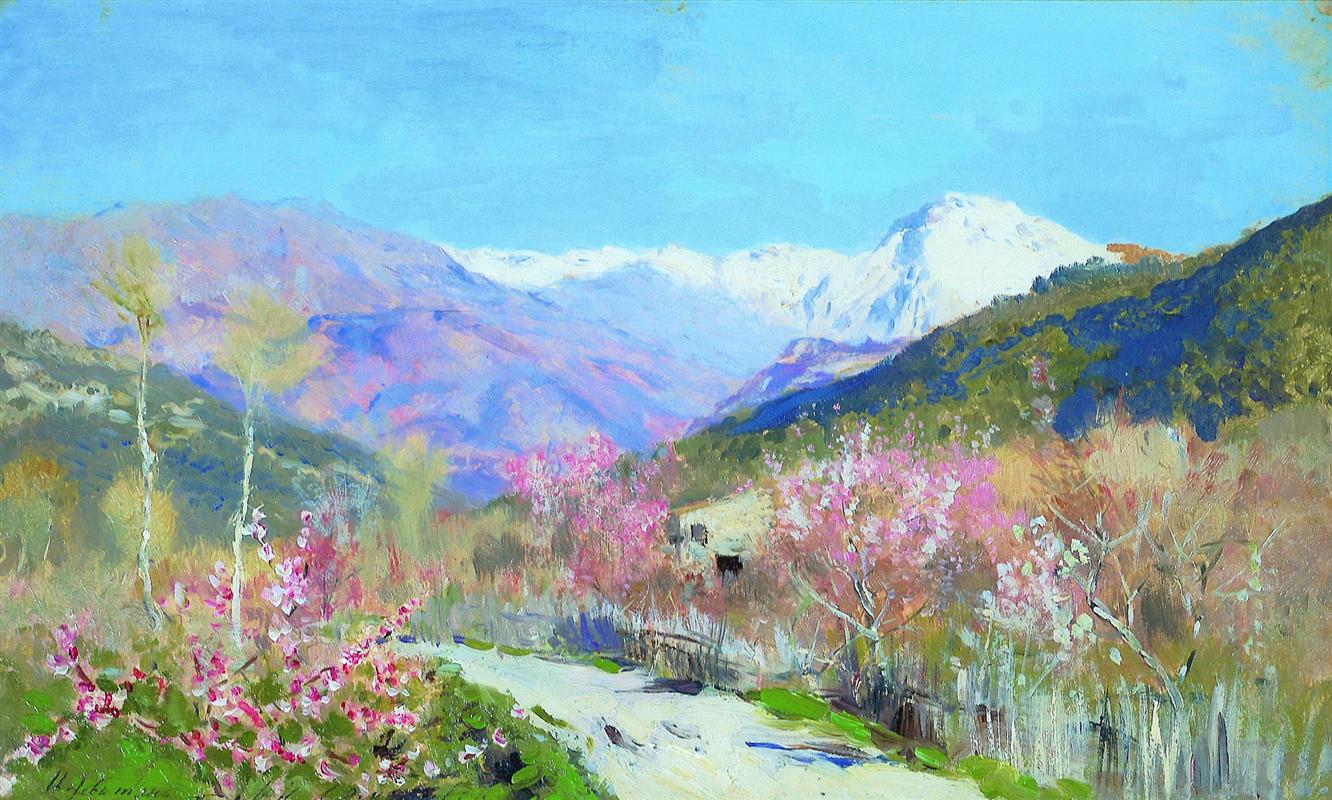
    Spring in Italy (1890), Isaac Levitan | Creative Commons, courtesy Wikiart.org. Perhaps this is how we can feel today, regarding the world with the promise of blossoms being fed by a running stream. Regarding the spiritual promise of the mountain, that is, of the Kingdom, ahead.