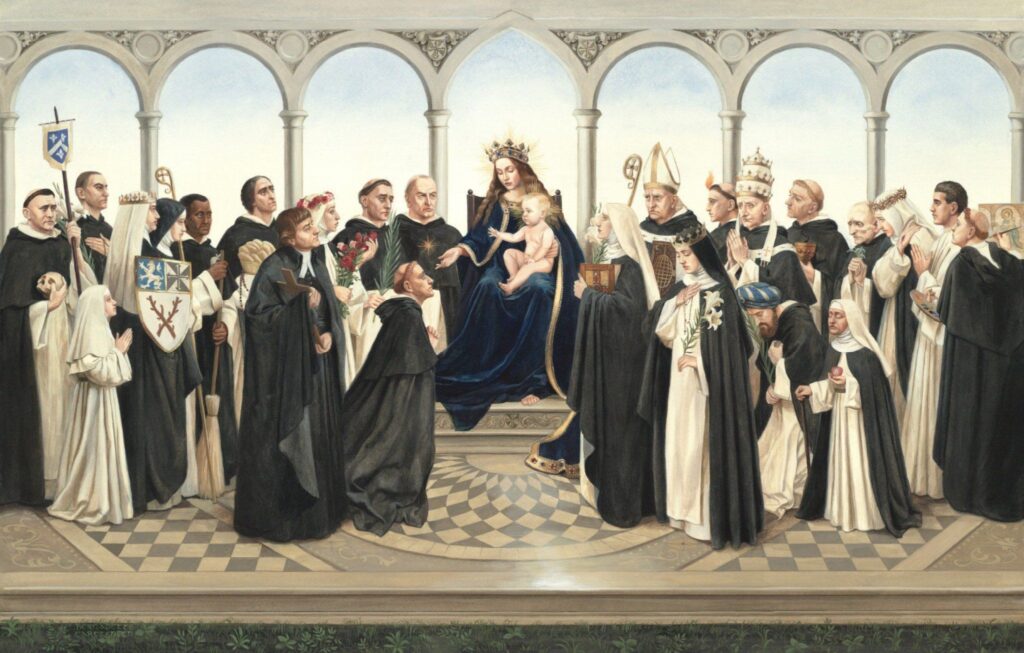

The Dominican Order has several branches:
- Friars (First Order): Priests or brothers who take vows of poverty, chastity and obedience.
- Cloistered nuns (Second Order): Women who live in convents, established by St. Dominic to pray for the preaching of the friars.
- Sisters (Third Order regular): Women who have taken specific vows to the Order, and who are focused on teaching, nursing and other apostolates in the secular world.
- Lay Dominicans (Third Order secular): An association of Catholic faithful living in the secular world who desire Christian perfection according to the Dominican charism.
What is the Dominican “charism”?
The Catechism of the Catholic Church defines charisms as “graces of the Holy Spirit which directly or indirectly benefit the Church.” A charism can refer to a personal gift from the Holy Spirit or to defining characteristics of religious orders, which are often a reflection of their founder. The charism, or personality, of the Franciscan Order, for instance, is radical poverty and active service. The Benedictine charism includes a vow of stability to a specific monastery, perpetual prayer and obedience to an abbot.
The Dominican charism emphasizes preaching, but also study, prayer and community. All four “pillars” of Dominican life inform and renew one another.
Why would someone be a Lay Dominican?
Our Lord said, “Be perfect, therefore, as your heavenly Father is perfect” (Mt 5:48). The Lay Dominicans offer laypeople a way to work towards this perfection, following in the footsteps of St. Dominic. It is a specific way for Catholic adults to practice their faith in a deep, meaningful tradition. The Dominican Order provides a structure that can help many Catholics grow in faith and love.
And, it is clearly effective! Currently, the Dominican Order has helped form 389 saints and blesseds — many of whom were Third Order Dominicans, such as St. Catherine of Siena, St. Rose of Lima and St. Martin de Porres.
Beyond the personal goal of perfection and union with God, those who follow St. Dominic have a special charge to promote the salvation of souls. That’s why St. Dominic became a preacher: to defend the truth and draw all people — believers and nonbelievers — to Christ so their souls can enter the Kingdom of Heaven.
What do Lay Dominicans do?
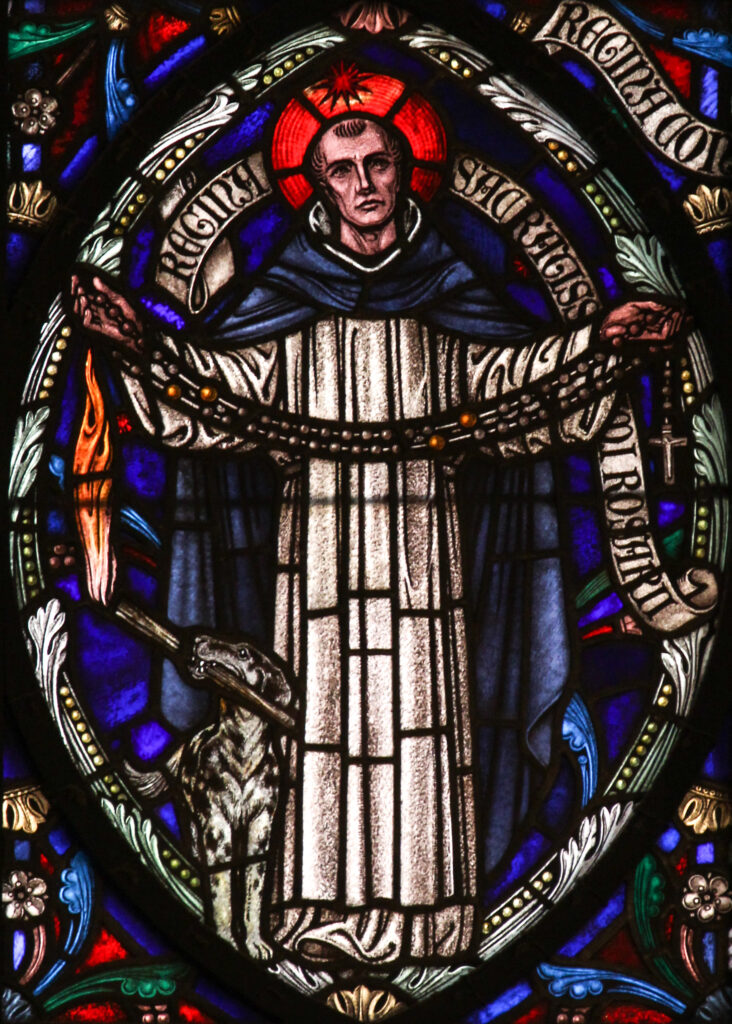
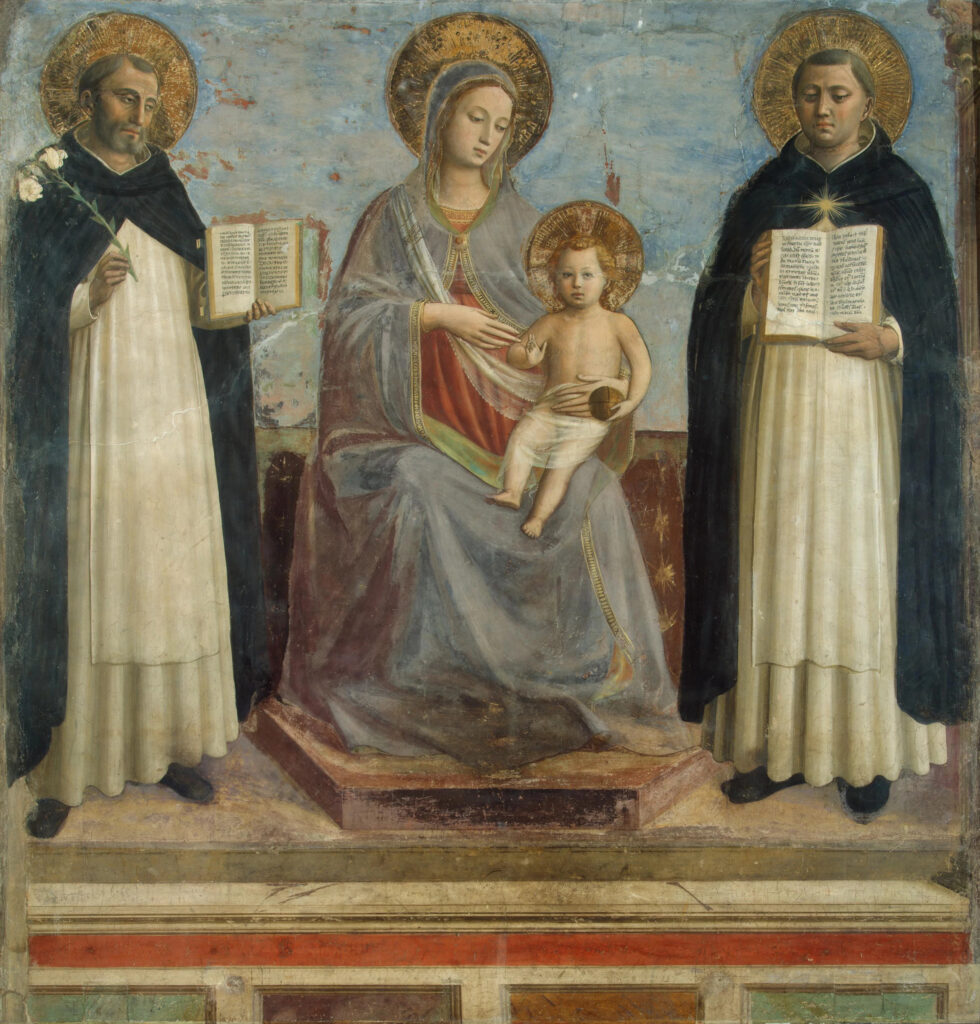
Prayer: individual prayer, with a special devotion to the Blessed Virgin Mary and the Rosary, as well as daily participation in the liturgy, specifically the Mass and the Divine Office.
Study: ongoing individual study of the mysteries of our faith, wisdom from the saints, and teachings from the Doctors of the Church, as well as communal study within the Lay Dominican Chapter.
Preaching: Lay Dominicans preach by the example of their lives, speaking the truth of Christ when interacting with others, and working towards the salvation of souls through an apostolate, or a concrete expression of the apostolic call to serve. This apostolate is often a group effort by the chapter, but it can also be a personal apostolate. Examples include teaching RCIA, organizing talks within the diocese, regularly staffing tables on university campuses, or bringing liturgical practices like the Divine Office to parishes in need of this important form of prayer.
Community: all Dominicans belong to a community — friars, nuns, sisters and laypeople. For Lay Dominicans, this is called a chapter. In community, they support one another in prayer, study and preaching; they meet regularly and accept the chapter leadership with grace and humility.
How does someone become a Lay Dominican?
Just like friars and nuns go through a period of learning and discernment, so do Lay Dominicans. People interested in learning more are invited to come to meetings without any commitment. After that, a person can become a postulant, when they meet with the formation director and do some study in preparation to enter the Order.
The first formal step is to be received into the Order as a novice. Novices study with the formation director for a year, learning and discerning if they want to make promises in the Order.
The next stage is to make a temporary profession to the Order. This is a promise to commit to ongoing formation, prayer and study within the Lay Dominican community for three years. After this, those who are temporarily professed can either choose to make life promises, leave the order, or ask for a one-year extension.
When a person makes a life profession, he or she is fully received into the Order of Preachers for life. Life-professed Lay Dominicans promise to live the Rule as an extension of their baptismal mission, organized by the four pillars of Dominican life: prayer, study, preaching and community.
Is the Dominican life for me?
Here are some hallmarks of the Dominican charism to consider. All Lay Dominicans strive toward these things but don’t necessarily have them from the beginning or exhibit them all the time. It’s a process of learning, and really, the first question for someone new is, “Is God inviting me to contact a chapter to learn more?”
- Desire for personal sanctification and the salvation of souls through the preaching of the Gospel.
- A love of Truth (In Latin: Veritas, which is the motto of the Order). This includes fidelity to the Magisterium of the Catholic Church and a desire to defend the faith and morals of the Church.
- A studious nature that leads you to love God and the Church more deeply.
- A contemplative spirit that loves to pray and share the gifts given to you in prayer.
- An apostolic heart that seeks to serve God and neighbor.
- A desire for a rich liturgical life, most especially in the Eucharist and Liturgy of the Hours.
- A penitential heart that seeks to make reparation for sin and grow in God’s grace.
- A devotion to the Blessed Mother, Dominican saints and blesseds, and praying for the holy souls in Purgatory.
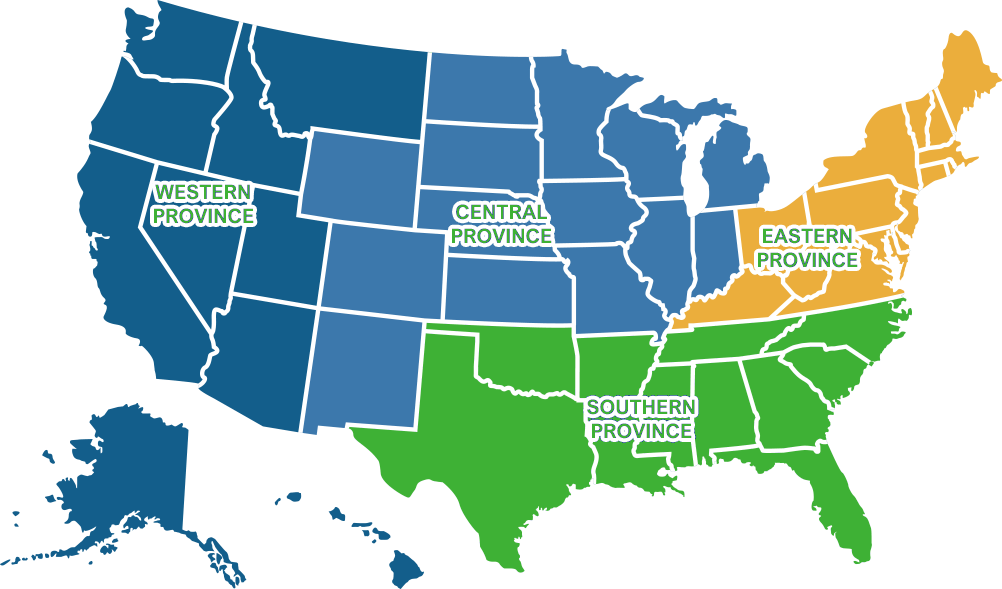
Check out your Dominican province:
Eastern Province: The Province of Saint Joseph.
Western Province: Province of the Most Holy Name of Jesus.
Southern Province: The Province of Saint Martin de Porres.
Central Province: The Province of Saint Albert the Great.