
5th Sunday in Ordinary Time: Isaiah 58:7-10, 1 Corinthians 2:1-5, Matthew 5:13-16.
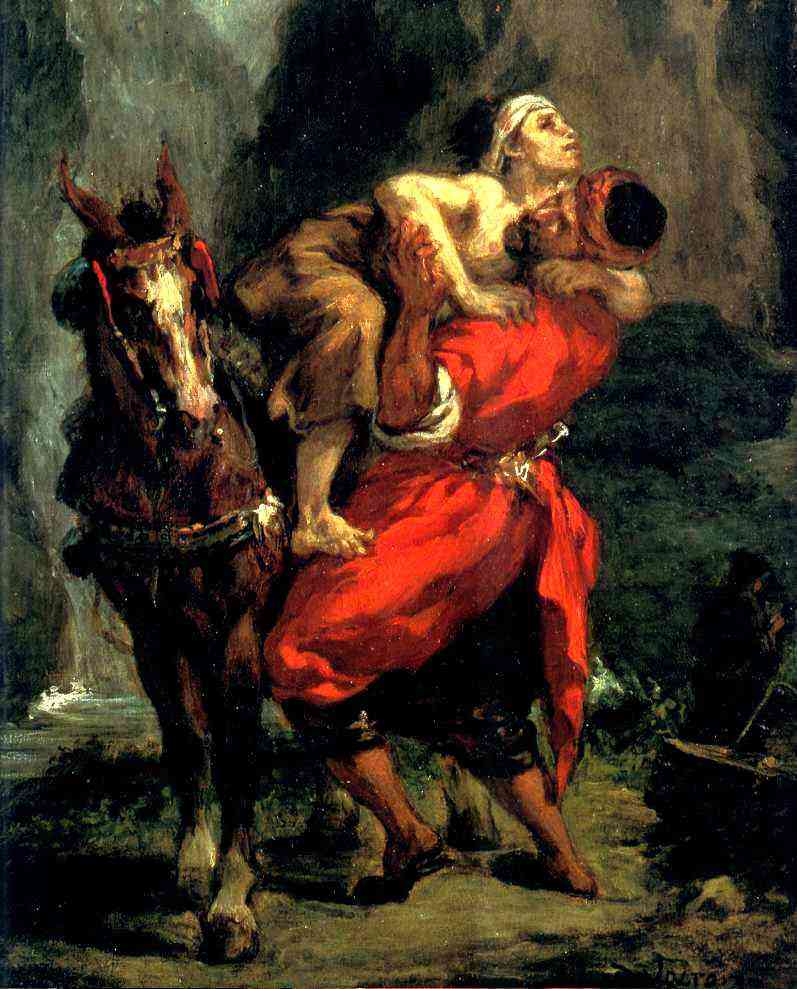
Doing good works, especially for those who are in great need, is at the core of the Christian life. Jesus not only preaches this (Parable of the Good Samaritan, Parable of the Sheep and Goats, etc.), but he also demonstrates it by doing the greatest work of all — providing salvation for the entire human race.
This is not to say that Christianity as a religion is only about doing good works. It is clearly about much more, most especially God’s revelation of himself to us in the form of the Word of God incarnate, through whom, in whom and for whom, all Creation is made. The centrality of Jesus Christ’s Incarnation, ministry, suffering, Crucifixion, Resurrection and Ascension (all of which we could call the “Christ Event”) to all of humanity and to each of us individually is truly the core of Christianity.
But the scriptures tell us that the Christian life — that is, how we go about living in this world while we await the infinitely greater one we hope to inhabit with God — is one that should be lived in service to others.
Today’s readings afford us the opportunity to ask why. Why does God want us to do good works?
The question might seem like a no-brainer — we do good works in order to get to Heaven, right? But Christians have been arguing over this particular issue for centuries.
The Theological Fuss Over Salvation and Justification
“Getting to Heaven” is an informal way to refer to salvation. There is another term, justification, that is related to the larger concept of salvation, but refers to that moment when God declares a person to be “not guilty” or “acquitted of guilt.” The reason we pay attention to these two terms is that St. Paul uses them, especially in his Epistle to the Romans. In one passage, for example, he writes, “… now that we have been justified by his blood, will we be saved through him from the wrath of God” (Romans 5:9). I want to take a moment to examine good works in relation to salvation (“getting to Heaven”) and justification because this is one of the big debates that was brought up in the Protestant Reformation.
In his Epistle to the Romans, Paul is not terribly precise in describing justification, despite the fact that he spends a lot of time discussing it. In the passage above, he states that Christ’s sacrifice on the Cross is the thing that justifies us: “we have been justified by his blood.” Yet a few verses earlier, Paul writes that Jesus “was handed over to death for our trespasses and was raised for our justification” (Romans 4:25). Here, it seems that the Resurrection was the vehicle for our justification, not the sacrifice on the Cross. More fundamentally, he writes that “since all have sinned and fall short of the glory of God; they are now justified by his grace as a gift, through the redemption that is in Christ Jesus” (Romans 3:23-24). This is a more comprehensive statement and the one he really cares about, that we are justified by God’s grace, and this grace manifested itself through all the divine works of Jesus Christ (including his sacrifice on the Cross and his Resurrection).
This point is not debated between Catholics and Protestants, despite some confusion. Both profess the same belief that the moment of being pronounced “acquitted” by God (aka, justified) is accomplished solely through God’s grace and no effort of our own. It’s beyond our ability to acquit ourselves before God — it took the divine Son of God to take on our humanity and accomplish this for us.
Of course the issue is that we continue to sin, so despite this initial divine help in justifying us, the question remains: could we lose our salvation by turning away from God? Is there a way for us to secure our salvation?
In the early 1500s, a German priest and theology teacher at the University of Wittenburg named Martin Luther made waves in the Church, preaching about this technical term, justification, and offering his opinion on this matter. Luther had become obsessed with the letter to the Romans, writing, “This epistle is in truth the chief part of the New Testament and the purest Gospel.” This should strike us as a bit of a red flag, in that none of the epistles are the actual Gospel, but inspired instruction to the faithful — certainly not “the chief part of the New Testament”! Yet Luther latches onto some of St. Paul’s statements in the epistle and doesn’t let go, unable to weigh them in the balance of all of scripture and achieve the appropriate perspective for orthodox theological teaching.
One of Luther’s main objectives in his Preface to the Epistle of the Romans is to argue that our righteousness before God comes through faith alone, not through works. To accomplish this, he puts forth an imbalanced definition of faith, not in line with Catholic teaching then or now. He writes, “faith is a divine work in us, which transforms us, gives us a new birth out of God … Oh, it is a living, energetic, active, mighty thing, this faith. It cannot but do good unceasingly” (16). Luther overemphasizes the divine origin of the theological virtue of faith, to the point where it becomes an “active, mighty thing” all on its own, doing good seemingly without any tether to the person. He writes scathingly about people who doubt if faith is enough and go about doing good works as a way to “become godly.” He says their notions of faith are erroneous and a “human figment” (15).
Contrast this with the Catechism of the Catholic Church, which teaches that faith is both a grace and a human act: “In faith, the human intellect and will co-operate with divine grace”; at this point, the Catechism quotes St. Thomas Aquinas, whose writings already heavily influenced the Church by Luther’s time: “Believing is an act of the intellect assenting to the divine truth by command of the will moved by God through grace” (155).
Luther is having none of this.1 He imagines faith as a type of superpower: “Faith is a living, daring confidence in the grace of God … [which] makes a person happy, bold, and full of gladness in his relation to God and all creatures.” He adds that faith makes a person “willing and enthusiastic to do good to everybody, to serve everybody.” His conception of faith prompts him to make the claim that “it is impossible to separate works from faith, just as impossible as it is to separate the power to burn and shine from fire” (18). Not only does this fly in the face of human experience (clearly, it’s possible to have great faith but not have the physical ability or opportunity to do works, and just as clearly you can do good works but have zero faith in God), it also disagrees with how the Apostles, Church Fathers, saints and popes have talked about faith and works.
St. Gregory of Nyssa puts it plainly: “Faith without works of justice is not sufficient for salvation; neither is righteous living secure in itself of salvation, if it is disjoined from faith” (Homilies on Ecclesiastes, 8 [ca. A.D. 335- 394]). Why Luther chose to disagree with so many Fathers of the Church and the teaching of the Magisterium is beyond me. But, to this day, Protestants continue to choose this hill to die on.
In short, Luther elevates faith to the level of a divine force (as opposed to simply having a divine origin) in order to make it easier to swallow the claim that justification and salvation come from faith alone. The implications of his definition of faith enable him to write, “all good works are merely external signs flowing from faith and, as good fruits, attesting that a person is already inwardly righteous in the sight of God” (26). While good works can be a sign of strong faith and good fruits of faith, not all good works find their source in faith. His diminishment and disdain for good works find their punctuation in the word merely.
The implications of this philosophy is that our lives and actions are divorced from divine, supernatural realities. Our works are just external signs of this supernatural faith that seems to leave out any potential for free will, concupiscence or any number of things that make us human. And, it has more than a little of the old gnostic heresy that calls the body bad and the spirit the only good.
OK, enough of Luther and this foray into “faith alone.” As the Church reminds us, God invites us, urges us, enchants us, fills us with awe — all so that we respond. We are called to respond with our will, our intellect, and our acts.
Do Good Works Earn You Anything?
Luther’s legacy has given Protestants a firm belief that good works can earn you nothing. Yet the Church Fathers like Gregory of Nyssa are clear: faith and works contribute to God’s decision over the fate of our souls. This is the orthodox teaching of the Church.
But that doesn’t mean that the point of good works is to earn salvation. Perhaps they do help us achieve ultimate union with God; but maybe they do more.
Turning to today’s readings, we encounter some intriguing suggestions. God shares his wisdom through the mouth of Isaiah, encouraging us to do good works like feeding the hungry, sheltering the oppressed and homeless, clothing the naked and not turning our backs on our family and neighbors. What does God do in response?
Then your light shall break forth like the dawn,
and your wound shall quickly be healed;
your vindication shall go before you,
and the glory of the LORD shall be your rear guard.
Then you shall call, and the LORD will answer,
you shall cry for help, and he will say: Here I am!
We are given a key image here: light. Jesus speaks to this in the gospel reading, and we’ll return to this below. Other things are happening — things that impact us here and now in this life. When I hear “your wound shall quickly be healed,” I think of emotional and psychological wounds. There is something about charitable works that heals the doer as much as the recipient.
More importantly, we are told that good works bolster our relationship with God. As God stands by our side and acts as our rear guard, our faith can strengthen. As our faith and reliance on him grows, he answers when we call.
The Lord adds one more thing at the end of this reading: “then light shall rise for you in the darkness, and the gloom shall become for you like midday.” How important this light is! The scene is spectacular if we picture it: the person doing good deeds has an internal light that flows forth like the dawn, and at the same time another spiritual light rises within that person’s life, enlightening them in their spiritual darkness.
How else to describe the influence of God, other than light? It’s hard to pinpoint, but overwhelming in its impact, it’s warmth, it’s omnipresence. Note that this does not deny the fact that the fallen world holds “gloom” for us; doing good deeds, however, makes that gloom seem like midday, because we have brought God into the world. It enables us to not just endure the gloom of a fallen world, but to encounter it differently. By living in the light, the world no longer holds its terror.
So, the point of good works might be more immediate than earning eternal salvation. This reminds me of a discussion I had recently with my brother that involved the distinction between Heaven and the Kingdom of God. Heaven — that ultimate resting place where we hope to dwell in the eternal Father’s presence — is different from the Kingdom, it can be argued. Jesus talks about the Kingdom of God movingly in his parables, and it is something more immediate to which we have access. The Kingdom is “happening now,” in our midst, while Heaven is that long-sought-after final home. Jesus’s description of the Kingdom of God is not that of a physical place or jurisdiction (like the Kingdom of Thailand, or the United Kingdom) but that of an active presence of a King, almost like an existential state of living under the power and rule of a king.
The Kingdom, we might consider, is this spiritual light that God tells us about. This light is the presence of the king. Remarkably, here in the passage from Isaiah, He even tells us that doing good works helps to manifest the Kingdom!
Thus, another way of considering good works, when done with faith in God and out of love for him, is that it enables us to share in his Kingdom. He has implanted in humanity a way to channel his transcendent love by using our will, intellect and very bodies — and this seems to enable the divine light to grow in us and illuminate us from without.
Today’s psalm echoes this important lesson, with the refrain, “The just man is a light in darkness to the upright.” This light in the darkness is clearly more than just a helpful physical thing: it’s a spiritual light. In the same way, the good deeds done by this just man are about more than just clothing, food, and physical aid. The good deeds are ultimately (perhaps primarily) about spiritual aid in a fallen world.
The light we read about in these passages is a little peek into the dynamic love that flows between the persons of the Trinity. This divine love, this divine light, might seem impossible to experience in this life, but Jesus dispels this doubt in today’s gospel reading.
We are told that Jesus tells his disciples, “You are the light of the world.” Let’s return with fresh ears to this familiar saying from Jesus. He and his disciples knew the prophecy of Isaiah quite well. They would have known that good works, in particular, make “your light break forth like the dawn.” During his ministry, he gave them even more wisdom and spiritual power to bring forth light in his name. So, when we reach the final teaching he provides in this episode, we can see how doing good works continues to be at the heart of living a Christian life: “your light must shine before others, that they may see your good deeds and glorify your heavenly Father.”
He gives us an answer here to that question, why should we do good works? The answer is that these works bring God’s transcendent, divine light into the world, and this light dispels darkness, turning gloom into midday, spreading spiritual encouragement, and — ultimately — bringing people into right relationship with the Father, glorifying him. In short, the reason is the salvation of souls. Doing good works brings salvation to others by bringing them into contact with God’s light.
Note that these are his beloved disciples he’s talking to. Thus, the component of faith is also present. We have the conditions of faith and good works coming together.
So perhaps the whole theological fuss was beside the point. It’s not about what good works earn for the doer, but what they do for the world, the watchers, the recipients, the skeptics. Justification is certainly brought about by grace alone, specifically through Jesus Christ, but the fact that our good works do not justify us does not diminish their importance in bringing about the Kingdom of God and doing his will.
Doing. Not just passively receiving. Not burying in the ground these talents we received.
1Paul was not writing a theological treatise on the concept of justification, so Luther’s commentary is taking Paul’s words a bit out of context. He was more concerned with the issues gripping early Christian communities, particularly whether non-Jewish converts to the faith needed to be circumcised, according to Old Testament practices. He is adamantly against this prescription and successfully argues so that it was formally upheld in the First Council of Jerusalem, AD 48-50.
The way he makes his argument in the Epistle to the Romans is by asking whether doing things according to the Law (like circumcision) provided salvation, or if instead it was faith in Jesus Christ that saved people. He notes that Jews who are circumcised are just as likely to be denied Heaven as anyone else. It’s not the physical circumcision — the deed, or “work” of the law — that justifies them. As he writes, “real circumcision is a matter of the heart—it is spiritual and not literal” (Romans 2:29). He asks if it was the stuff that Abraham did that justified him or if it was his faith and fidelity to God that made the difference. He quotes the Old Testament, writing, “Abraham believed God, and it was reckoned to him as righteousness” (Romans 4:3). “Reckoned to him as righteousness” is another way to say “he was justified.”
Paul goes on to discuss how adherence to the law does not justify anyone, but “it depends on faith.” Luther latches onto Paul’s diminishment of “works under the law” (like circumcision) in favor of faith — taking it out of this context of belonging to the community and applying it to the broader question of individual salvation.