
In Part I of this series, we spent a lot of time considering what it means to be human. After all, we can’t live a good life unless we know what exactly this life is.
There is a good reason we dwelled so long on the point that each of us is a soul made in God’s image. These days, our lives are moderated by screens, media, and artificial AI online search results. The reality of God becomes more and more distant. As we master ever-greater challenges in medicine, energy, manufacturing, and idea generation, God seems irrelevant. It feels like we don’t need him; maybe we never have.
But we continue to have experiences we can’t explain, much less master: love, pain, joy. Our souls soar when we hear sublime music, expand when we reach out to someone in need, and yearn for deep meaning. For those who have ears to hear, these movements of the soul are growing pains as we respond to God’s calling out to us.
We begin to remember that being human is more than using our fancy technology to make our days easier and more comfortable. Slowly, we open ourselves up to the realization that God made us in a great love story, one of a nearly unimaginable scope. And then we realize that the God man, Jesus Christ, has made a path back to the Father for us. And he is, even now, at work in our souls, helping us find that path.
And, once you have been baptized, your fundamental reality has changed. You no longer have a soul unfit for Heaven. You have died to the life of sin and have received a new life in the Spirit. So we must live in this new reality, contemplating the meaning of life from this perspective. As St. Paul writes, “So if you have been raised with Christ, seek the things that are above, where Christ is, seated at the right hand of God. Set your minds on things that are above, not on things that are on earth” (Colossians 3:1-2).
Three primary sources guide Christians through God’s love story for humanity, and, by extension, the meaning of life:
- The Old Testament, with Christ as God’s Word, reveals how he established all Creation, guided the Jews in their faithfulness, and prepared the world for his coming in the flesh.
- The New Testament reveals Christ’s work as the Word Made Flesh — giving us his words and actions, testifying to his Resurrection, and ushering in a world made new in his Spirit.
- The theological writings of the Church, inspired and guided by his Spirit, reveal even more about the spiritual significance of Christ’s coming — helping us understand what it means to be a Christian and how God wants us to grow towards perfection as we ready ourselves to stand in His presence.
Many of us know the first two fairly well, but since we’ve had 2,000 years of writings from the Church Fathers, Doctors of the Church, the Magisterium, and individual popes, bishops and saints, it’s a fairly impossible task to fully know the rich theological writings of the Church. But, little by little, when we open ourselves to these writings, we can gain great insights.
In this reflection, we will look at some of the New Testament, but also weave in theology and practice of the Church after the time of the New Testament. It’s important to remember that these are all one fluid movement: Christ’s words and actions, as recorded in the New Testament, instituted liturgical acts and sacraments of the Church. What’s more, over time, his Spirit revealed to Church Fathers the deeper meaning of both Christ’s life and the liturgy/sacramental life of the Church. (As a side note, anyone interested on the differences between authentic development of Church doctrine over time versus innovative corruptions should read Saint John Henry Newman’s An Essay on the Development of Christian Doctrine.)
To pick up our discussion on how to live a good life, even if we agree that our fundamental reality is having an immortal soul (so often ignored, like a withered limb) made according to the very template of God, we must wonder how humanity can have fallen so far from the potential within us. How can we possibly re-configure our lives according to that divine template?
We see that Jesus Christ provides the answer quite plainly. During the Last Supper, he tells the Apostle Thomas: “I am the way, and the truth, and the life. No one comes to the Father except through me” (John 14:6).
Let’s understand how to live a good life by examining this statement from Jesus, piece by piece.
“I am …”
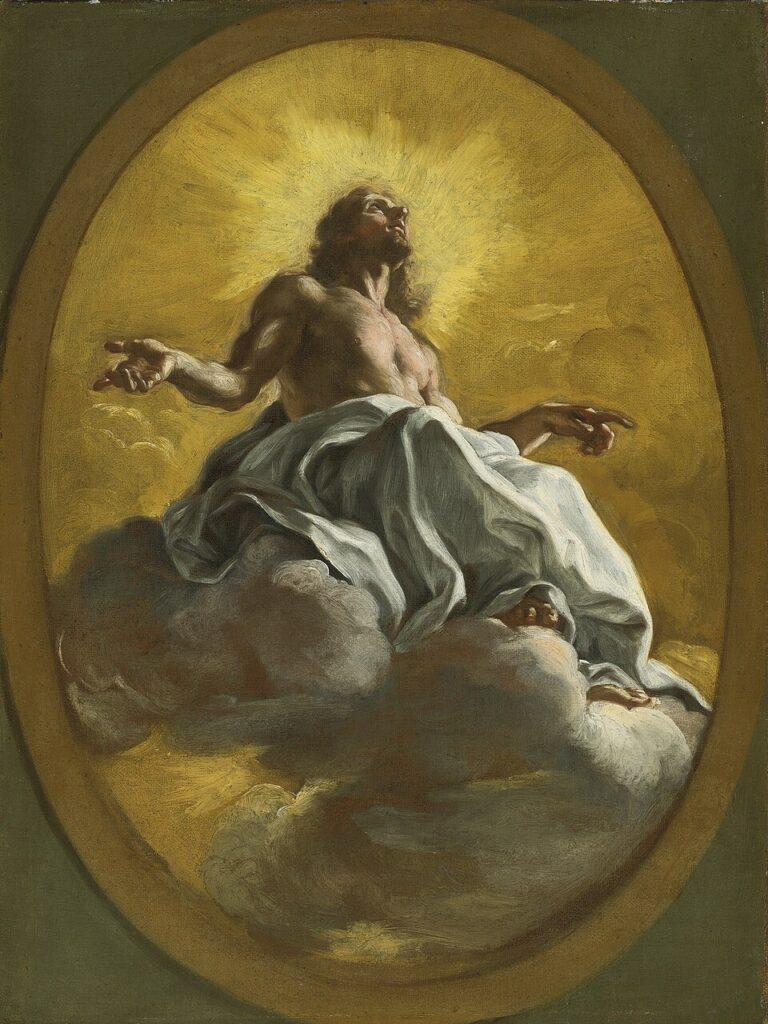
Let’s not cruise past the first two syllables Jesus speaks. These are the most important words in all of history: God’s revelation of himself! We recall that God identifies himself this way when Moses asks his name. Jesus reveals that he, too, is this same singular God.
There are seven so-called “metaphorical I-AM statements” in John. These are when he says, I am …
There are three other important I-AM statements in John. The first is when he affirms that he is the Messiah, speaking to the Samaritan woman at the well. The second is when he tells the Jews in the temple, “Very truly, I tell you, before Abraham was, I am” (John 8:58). There’s no way to interpret this statement differently or metaphorically. The third is in the Garden of Gethsemane, when Judas brings the guards. Jesus asks who they are looking for, and he answers “I AM.” At this point, they are struck with the fear of God in his presence and fall down to the ground. John could not be clearer about Jesus’s divinity.
- The bread of life
- The light of the world
- The gate
- The good shepherd
- The resurrection and the life
- The way, the truth, and the life
- The true vine
As Catholics, we understand these to be more than metaphors and analogies, of course. Medieval theologians described four ways of understanding sacred texts: literal, analogical, tropological (i.e., moral lessons), and anagogical (i.e., mystical significance, spiritual ascendence). In these I-AM statements, we see all four meanings at play.
As we look at the rest of this statement, let’s remember that it’s more than mere metaphor. This is God Himself talking, and there are literal, tropological and anagogical meanings to grasp.
The Way
When I was younger, the sheer grammatical incompatibility of “a person = a way” threw me for a loop. The comparison was unequal somehow (one finite person to a lifetime’s worth of choices and actions). Now, however, I think it’s one of the most apt metaphorical/ literal/ tropological/ anagogical statements in the entire Bible.
The Apostolic followers of Christ thought so, too, since they called themselves the followers of the Way long before the term “Christian” came into use.
Let’s consider a few ways that Christ’s statement makes sense. On the most obvious level of metaphor, saying he is the Way clues us into the fact that he serves a very practical purpose for us — that we should model our lives on his. This forces us to consider Christ’s entire ministry. We begin to recall all of his examples and parables and realize that not a single word has been wasted or should be overlooked. We also look at his actions during his Passion and see a nearly superhuman example of love, acceptance of suffering, and refusal for retribution. This Way has endless depths for us to discover.
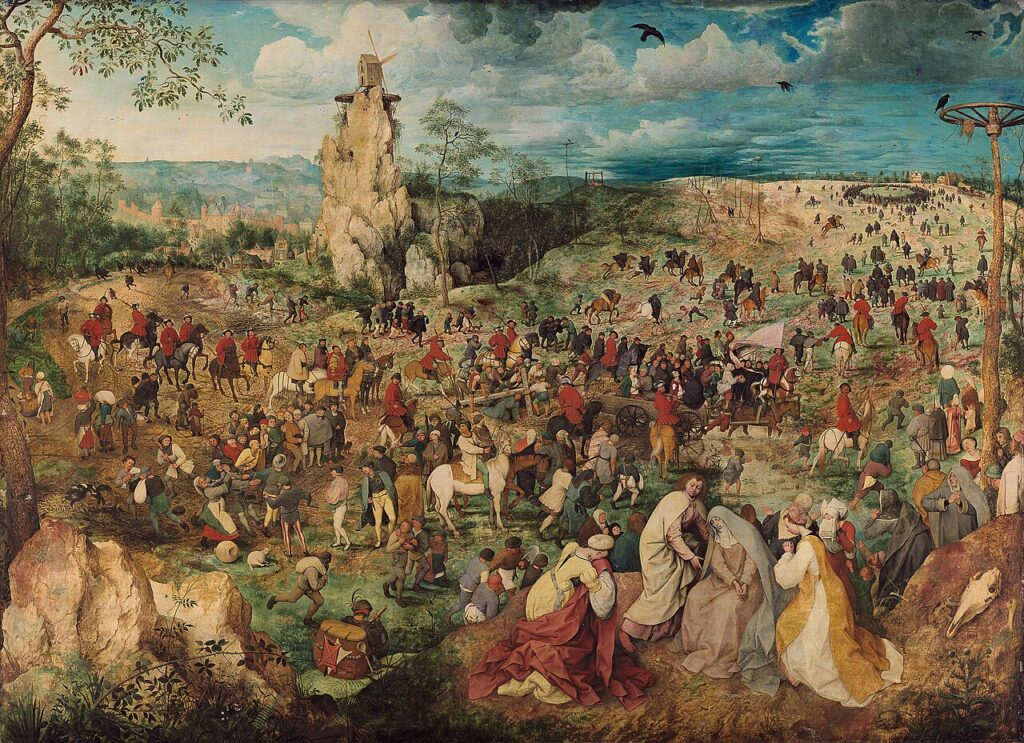
But the way towards what? The tropological meaning here would be a moral example: the selfless love of Christ is the way to be a morally good person. Concerning the eternal life of the soul, however, the anagogical understanding is that this is the way back to God, the way to Heaven.
Jesus, in his very being, is the way back to God. We should contemplate this statement slowly and carefully throughout our lives. To be the way back to God means that his entire being is about giving himself back to the Father. To be the way for us back to God means that he has the spiritual power to take us back to the Father if we unite ourselves to him (this is beyond our ability!).
There is also the literal level here! Jesus makes himself available to us spiritually through the sacraments and they are the literal things we do in this life as Christians. We eat his Body and Blood for spiritual food. They are the Way to remain spiritually healthy. We belong to the Church, a spiritual community of believers known as the Body of Christ, with him as the head. We are marching through life via Christ.
I praise God’s genius for his “I am the Way” statement because it draws us deeper into the mystery of the Trinity and deeper into the template for the Christian life.
To our overall question of how to live a good life, this seems to provide the quick answer: be like Christ. But there is still more to understand, because any creature can imitate, but we must do more than ape the Savior.
The Truth
Dominicans rejoice! This is one of the most important mottos of the Dominican Order: Veritas. St. Dominic founded the order of preachers to help save souls in southern France and beyond who were straying from the truthful, orthodox teaching of the Church and therefore in danger of losing their way back to God for eternity.
St. Dominic (and many other saints) realized that God entrusted us with specific truths that we have to uphold and defend if we want to be his true sons and daughters. God entrusted his Chosen People with these truths through the Ten Commandments and culminated his sharing of truths in the person of Jesus Christ.
And don’t be caught up in the Protestant trap that the Bible alone holds all the truth. Jesus entrusted his Bride, the Church, with what we call tradition, that is, doctrine, rituals, and meanings of his ministry passed along in words and acts, distinct from the recorded Bible writings. Several times in the New Testament, the evangelists tell us that he shared deeper truths with the Apostles that were not written down. The Church has been shepherding and protecting these teachings dutifully from the time of Christ to the present. All of these truths come directly from Jesus Christ.
I’ve been talking about “truths,” but Jesus didn’t say, “I am giving you the truths.” He said, I am the Truth, with a capital T. This signifies an ontological and metaphysical reality we must understand. It’s time to examine the literal meaning here.
First, ontology — that is, the study of being. “Jesus is the Truth” means that there is a divine being who is truth itself. This means that absolute truth fundamentally exists, too. This bear repeating: Jesus tell us that this abstract universal thing called truth is actually him. Whoa!
If we read the Bible or listen at church, we are somewhat prepared for this. In the Old Testament, we have an entire Book of Wisdom, where King Solomon describes wisdom in terms we could also see applied to truth: “There is in her a spirit that is intelligent, holy, unique, manifold, subtle, mobile, clear, unpolluted, distinct, invulnerable, loving the good … For she is a breath of the power of God, and a pure emanation of the glory of the Almighty” (Wisdom 7:22, 25). To this point of Jesus is also identified with God’s wisdom. The Church proclaims the wisdom of the Cross, based on St. Paul: “to those who are the called, both Jews and Greeks, Christ the power of God and the wisdom of God” (1 Corinthians 1:24).
Jesus is both a historical man, born in time, and the timeless abstraction of truth itself. This is no small thing to comprehend.
Second, metaphysics (the study of reality and existence). How does the fact that Christ is the universal essence of Truth impact or change our reality? For one thing, we have to be more careful with how we use the word truth and how we think about it. Nowadays, truth is a slippery, often subjective thing. Think of people saying, “well, that’s your truth, not mine.” I think we need to stop saying things like this. “Truth” does not equal your opinion or your perspective. We have the added pressure of a juridical meaning of truth, often arrived at by consensus or through provable facts. This is not what we’re talking about, either — Truth is not determined by a courtroom or a jury or a compilation of evidence.
“Jesus is Truth” means that truth is not in the eye of the beholder. Truth is not relative. Ask yourself if you believe this. If not, that’s a problem, because these are Jesus’s own words. Pure and absolute truth actually exists, and is found in the person of Christ.
Is this just a pretty metaphor? No. Consider the God who made the universe. His Word made the universe — all the fundamental laws of physics, staggering in their complexity, all the rules of math and order and life and death. Only a being that is also truth itself could accomplish creation. Any falsehood, and the universe wouldn’t work.
So how does this knowledge help us live a good life? This provides the certainty that the Way is the right one. The very source of the logic, math, and beauty that created the world is within the Christ, who is our Way. Everything he teaches and does, from the epic acts of suffering out of love to the tiniest detail of his conversations, teaches us about truth. We must study and pray to know him better.
The Life
Much like our discussion of the universal thing called truth, we have to realize that “life” is more than just a person’s span of days. When Jesus says, “I am the life,” he is referring to the animating spirit of being that makes anything and everything exist. This is life with a capital L and it doesn’t end. But this universal thing called Life is more than just an animating force — it is God himself, holding all things in existence simply by his will.
From this statement, we learn that living a good life entails more than we thought at first. Just by using that word “life,” we unwittingly acknowledge that we are living something beyond us, something that is by all rights God’s, not ours. We are living a thing that is a gift from God — sharing in the ecstatic will of God that existed before time began and will exist forever.
Thought of in this way, living a good life is more akin to being a perfect guest than throwing yourself a big party. It’s not your party.
It’s more like sailing a ship in an armada that existed long before you and will exist long after you’re gone than it is like “whatever floats your boat.” It’s not your boat.
We begin to see why Christ was such a fan of parables. How else to explain concepts so much deeper than our minds and routines can imagine?
If “life” is this thing whose source is far beyond us, surely it is also mine and yours for a time, too. And here is a great connection. We have a finite life in this world, and while its pleasures and sadnesses are great, it points to something greater. God gave us Jesus to explain this and give us a model for participating in his life in the best way possible.
Participation, Not Ownership
Our life is a part of his great will. While it is also “mine” and “yours,” we have no true ownership over it. It is “ours” in the sense that we can lose it, waste it, or gain eternity through it. Truly, it is His. After all, he is Being itself and holds the entire universe together simply because he wills it.
So, in a nutshell, living a good life means participating meaningfully and prayerfully in the great things that come from God.
Beyond the doing the things of the Way (prayer, sacrifice, love, etc.), there is the question of how to comport ourselves in this life. That is also a “way” and, again, Christ is our model. As St. Paul writes, “though he was in the form of God, did not regard equality with God as something to be exploited, but emptied himself,” (Philippians 1:6-7). Christ didn’t exploit the fact that he was God in order to make his life easier or to fix everything wrong in the world. He “emptied himself,” which is called kenosis in Greek and it turns out this is the Way each of the persons of the Trinity operates. They empty themselves out in love for one another and in love for creation.
This is the Way. Emptying ourselves for the good of the world and the good of God is the great lesson Christ gives us. It is about humility, not lording our lives and power over others, but reveling in doing God’s will.
“It’s my life and my rules” is a stunted philosophy that misses the great depth of the gift we’ve been given. “May I decrease while he increases” is the philosophy that John the Baptist gives us, and one much more appropriate for living a good life.
Supernatural Help
But, seriously, being humble and emptying ourselves for the good of others is hard. It’s almost counter-intuitive when you first start doing it. How are we supposed to do this thing that only God seems capable of doing?
Thankfully, we have supernatural help every day of our lives. Christ instituted the sacraments during his life on earth as the means by which we receive the help to live our lives well. These are not rituals we do just because everyone else we know does them. We shouldn’t be receiving the Eucharist and going to confession simply because we think we should.
When we acknowledge the purposeful, pointed, and life-generating significance of the sacraments, we start to understand that they are like 75% of being a good Christian and living a good life. OK, I made up that statistic, but you get my point. (Protestants, please take heed. Calling the sacraments “symbols” makes Christianity little more than a self-help class).
If you’re Catholic, at one point in your life you were explained the significance of each sacrament. If you’re not, an RCIA class can do a much better job than I can here. Nonetheless, let’s remind ourselves of the highlights:
Baptism. Even for those baptized at birth, the spiritual effects of this sacrament are life-changing. St. Didymus the Blind (c. 310-395) writes in his treatise On the Trinity:
“The Holy Spirit renews us in baptism through his godhead, which he shares with the Father and the Son. Finding us in a state of deformity, the Spirit restores our original beauty and fills us with his grace, leaving no room for anything unworthy of our love. The Spirit frees us from sin and death, and changes us from the earthly men we were, men of dust and ashes, into spiritual men, sharers in the divine glory, sons and heirs of God the Father who bear a likeness to the Son and are his co-heirs and brothers, destined to reign with him and to share his glory.”
If anyone asks you if baptism is really that important, point them to the passage above.
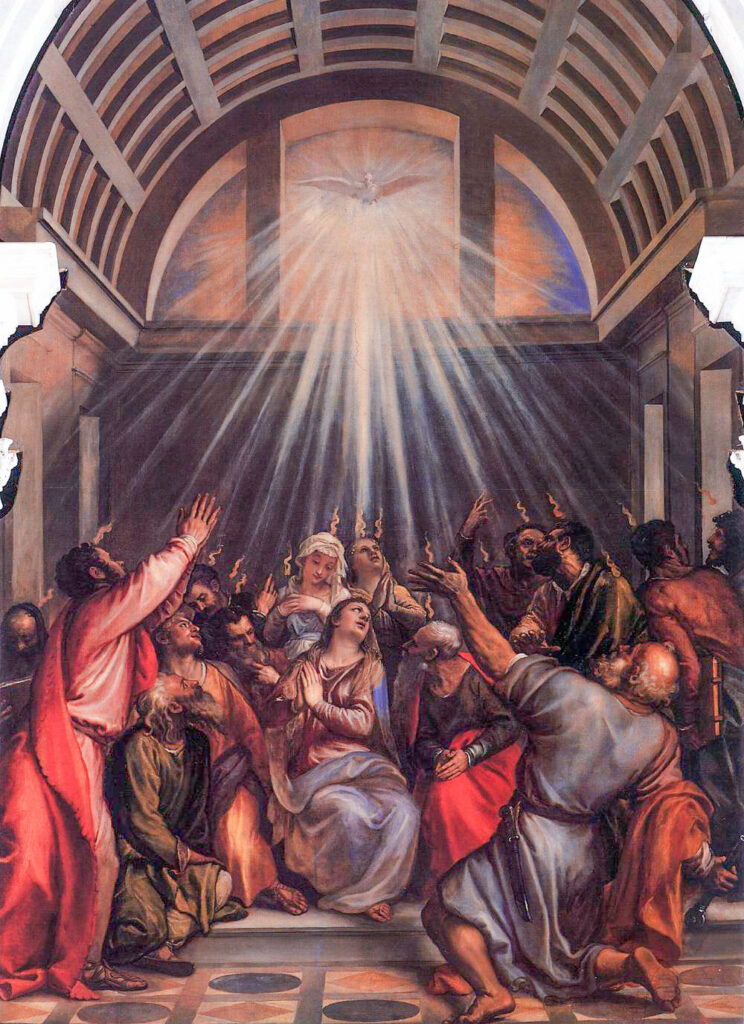
Confirmation. Many Catholics have a hard time explaining the significance of confirmation. The best way to see it is as our catechism teaches: “the effect of the sacrament of Confirmation is the full outpouring of the Holy Spirit as once granted to the apostles on the day of Pentecost” (CCC 1302). Baptism initiates us into the Christian life and Confirmation binds us more deeply, conferring on us the seven gifts of the Holy Spirit. Even if our intellect and wisdom are not fully developed as children, we are spiritually ready to proclaim the Gospel with confidence like the Apostles did after Pentecost.
The Eucharist. We ask God the Father to “give us this day our daily bread” and, as usual, he responds with abundance beyond our imaginings. The entire scope of Jesus Christ’s sacrifice and offering of eternal life are wrapped up in the Holy Eucharist, given to us as spiritual food to help us accomplish the hard work of loving our neighbor, turning the other cheek and being humble.
The Eucharist is such an important spiritual gift that our catechism tells us it is “the source and summit of the Christian life” (CCC 1324). But a word of caution! Faith in Christ and in his sacramental gift are required! As St. Ephrem the Syrian (306-373 AD) writes, “Take, eat, entertaining no doubt of faith, because this is My Body, and whoever eats it in belief eats in it Fire and Spirit. But if any doubter eat of it, for him it will be only bread.”
Participation in the sacraments demands faith — not just showing up, not just taking the communion host.
Penance and Reconciliation. Where would we be without the confessional? I thank God every day that Jesus Christ instituted this sacrament and bestowed the power to forgive sins upon the Apostles: “Receive the Holy Spirit. If you forgive the sins of any, they are forgiven them; if you retain the sins of any, they are retained” (John 20:22-23). God knows that we have a tendency to sin, to abuse the freedom of will that he bestowed on us, and in his great mercy he has given the Church the ability to purify our souls from any sins after Baptism.
We noted above how Jesus is the Truth. Consider how the Sacrament of Penance invites us to bring this Truth into our hearts and speak the Truth with our mouths. Many are scared to admit to a priest (or to themselves) how imperfect they really are, but as we follow the Way, we absolutely must embrace this sacrament fully. The saints, many whom we would consider perfect, are the ones who most vocally advocate for their need of forgiveness. And if they need it, surely all of us do.
Anointing of the Sick. For very sick Christians, the Church provides this sacrament as both a consolation and a spiritual aid in achieving Heaven. Styled on Jesus’s many healing works, a priest uses holy oil and prayer to implore God to save the sick and dying person. This ancient sacrament comes directly from St. James: “Are any among you sick? They should call for the elders of the church and have them pray over them, anointing them with oil in the name of the Lord. The prayer of faith will save the sick, and the Lord will raise them up; and anyone who has committed sins will be forgiven” (James 5:14-15). What a precious sacrament as the end of our time on this earth hovers close!
Holy Orders and Marriage. These are vocations that require our spiritual effort, and when done sacramentally, sealed by the Spirit and renewed constantly in prayer and devotion to God, we can accomplish them in ways otherwise unreachable. They are sacraments because we require God’s grace and help to do them as He intends, whole heartedly and selflessly. What’s more, a “sacramental vocation” is shorthand for a life devoted to God. In other words, simply by being married in the Catholic Church or becoming a priest, nun, monk or sister, a person is living a good life.
It’s All About Grace
How do the sacraments accomplish all of this, you might ask? They are spiritually effective because it is God Himself doing the work. The priest acts in persona Christi when celebrating Mass and it is Christ who sanctifies the gifts at the altar. The Holy Spirit is the agent of Baptism, working through the sign of water to purify the candidate. In each sacrament, God is the power that strengthens and anoints us.
You see, God isn’t separate from us, especially not if we are Christian. God, as Being itself, suffuses all of creation with Himself and his Spirit. When we accept his Son, Jesus Christ, as our God, we open our hearts to be filled more fully; we open our souls to be formed in Christ’s image — something that he himself is doing! All we have to do is say, “Yes, I accept your will and participate with my own will joined to yours.”
God then gives us himself in the form of grace. The most important form of grace is called sanctifying grace, bestowed at Baptism. This is the Holy Spirit himself, infused into our souls to create a permanent disposition of the soul that makes it fit to enter Heaven. This grace doesn’t go away unless we commit a mortal sin. Then, we need the sacrament of Penance and Reconciliation in order to return to what we call a “state of grace.”
And there are other forms of grace. These are divine interventions in our lives — like a nudge from God to help us avoid evil, do good, or turn back to Him. Perhaps it’s an inspiration of some sort, a sudden urge to pray, or a feeling of remorse. These are temporary helps from God, and living a good life means that we tune into the graces surrounding all of us in this life. The more receptive and perceptive we are to grace, the more we are able to listen to God, to act faithfully, and to properly revere Him as our God and Savior.
Finally, there the seven gifts of the Holy Spirit, known as special graces or charisms: wisdom, understanding, counsel, fortitude, knowledge, piety, and fear of the Lord.
Once you become aware of how God is the very fabric of our everyday lives, it’s hard to think that he is some type of far-off, uninvolved Godhead. It becomes more and more clear how you can meaningfully participate in God’s gift of life. It becomes more and more rewarding to realize that you are starting to live a good life and walk the Way intended for you, yoked to Christ at your side.
No one comes to the Father except through me
We can’t forget the end of Jesus’s answer to St. Thomas. It’s a terribly important point, and the whole reason Christians have grown from a group of disciples to a worldwide Church. We evangelize because we believe in this statement. We evangelize because we want everyone to come to the Father, and the only Way is through his Son.
It’s not fashionable today to say one way is better than others. “Inclusion” is the idol of the moment. Don’t get me wrong — the Church is universal and open to everyone, regardless of race, sexual orientation, or anything else. Good Christians should reach out to every human being, even enemies, and bring Christ into their lives. But being inclusive in your approach is different than saying that inclusion is the most important factor to consider or quality for a person to uphold. This latter belief makes inclusion an ideology rather than a component of a good life.
Jesus Christ is the most important factor to consider. He is the most important quality for a person to uphold. In Jesus, we find love, truth, life and divinity.
When Jesus says, “no one comes to the Father except through me,” we should be reading all levels of this statement once again: literal, metaphorical, tropological, and anagogical.
- Literal: Jesus is just telling us the truth. There will be a Final Judgement and the Father has appointed his Son the judge of souls.
- Metaphorical: This is consistent with his “I am the Way” statement, in that we need to conform our souls to his example in order to reach Heaven with the Father. For those who do not know Jesus Christ, this puts them in peril.
- Tropological: The moral aspect of this statement is that we must act in a way consistent with what God intended for us as his children. This brings us back to having souls made in his image. Christ can help us live this life in a way where our souls are reaching their potential as sons and daughters of God.
- Anagogical: the mystical and eschatological meaning of this statement is clear, since “coming to the Father” is equivalent with achieving Heaven for eternity. If we want to return to our Father, we need Christ’s help in cleansing and re-configuring our souls for reunification with the Father.
So, while this isn’t a statement to the effect, “if you’re not Catholic, you’re going to Hell,” it does have rather serious implications. In the end, we are not the judge. Christ is. We can’t tell each other who is saved and who is not.
But Christ will.
In the first reflection of this series on how to live a good life, we considered that the core of our being exists because of God and no good life could happen without that being the crux of the equation. In this reflection, we considered how Christ is the Way to a good life — literally, metaphorically and more. Next, we will uncover how to pursue virtue as a practical way to live a good life — How to Live a Good Life, Part III: Living a Virtuous Life.
In other words,
- Step one: focus on God and Jesus Christ.
- Step two: be Catholic.
- Step three: strive for sainthood.