Category: Cycle I

  • Salvation Is Based on Our Core Person, a Deep Adherence to the Law

    Salvation Is Based on Our Core Person, a Deep Adherence to the Law

    Friday in the First Week of Lent: Ezekiel 18:21-28, Matthew 5:20-26.

    Today’s readings are very much concerned with what is central to a person, as opposed to the actions they take on the surface. First from the mouth of the prophet Ezekiel and then from the mouth of the Lord Himself, we hear how God wants a relationship with authentically upright and loving people.

    Ezekiel writes in a particularly difficult time for the Jewish nation, in between the multiple sackings of Jerusalem by the Babylonians, when the Jews were forcibly exiled in waves. They must have been wondering what they did to deserve this, and he spends a section of Chapter 18, just prior to today’s reading, adjusting the common notion of being punished by God for your own father’s sins. God speaks through Ezekiel: “Know that all lives are mine; the life of the parent as well as the life of the child is mine: it is only the person who sins that shall die” (Ez 18:4).

    Today’s reading is a continuation of this theme of being personally responsibile for one’s sins, and it reflects back for the listener some truths about God Himself. We hear that God welcomes the repentant person: “If the wicked man turns away from all the sins he committed, if he keeps all my statutes and does what is right and just, he shall surely live, he shall not die.” It is God’s great message of hope that anyone can live in the light, united with Him if he or she repents and lives according to His statutes. One’s past does not matter as much as the state of one’s heart and soul in the present.
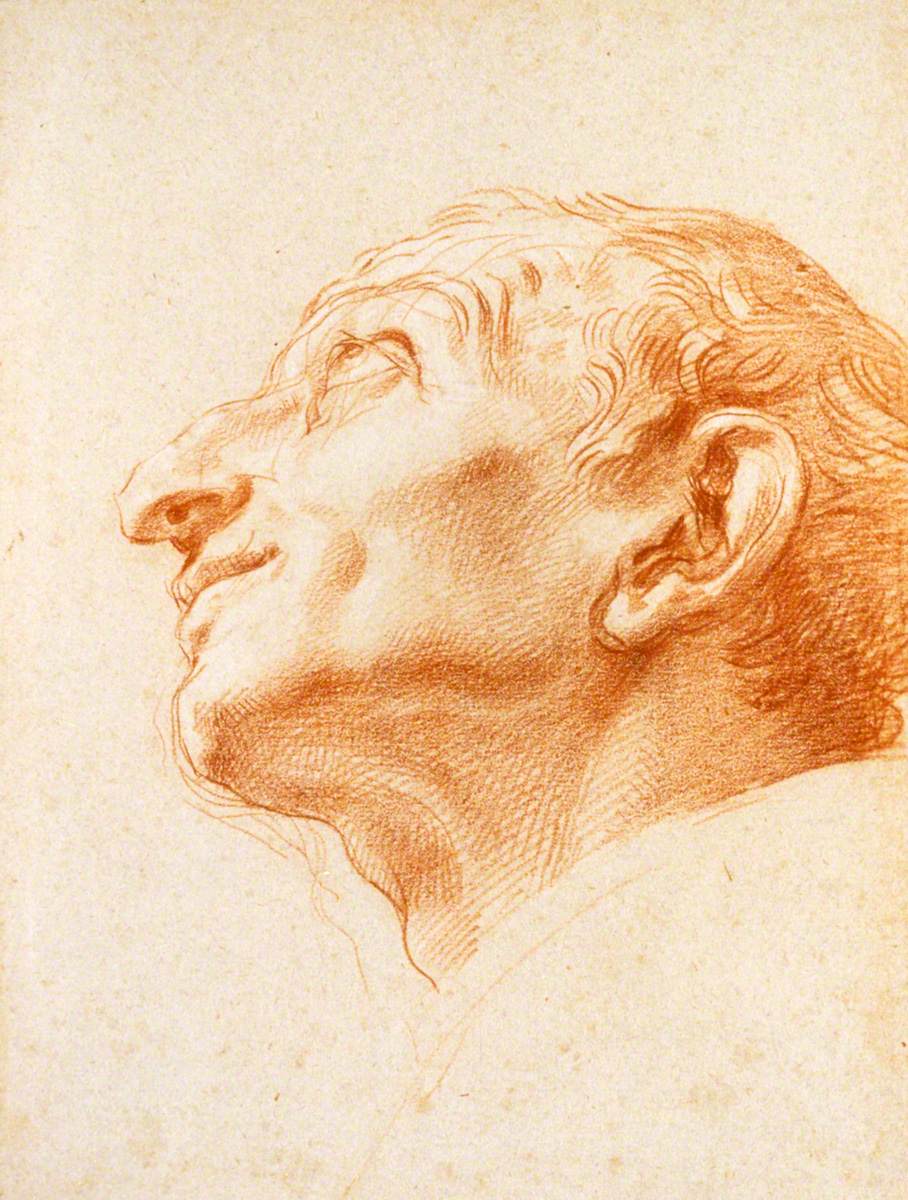
    Study for the Head of Saint Charles Borommeo (1658-1690), Carlo Maratta | Creative Commons, courtesy the Barber Institute of Fine Arts/ArtUK.

    Ezekiel affirms the opposite, that an otherwise virtuous person will die if he or she turns to wickedness. This is undoubtedly less-than-good news, especially for people who might believe their final judgment is weighed “in the balance.” God states unequivocally that it’s not an average of one’s lifetime of goodness vs. wickedness: “None of his virtuous deeds shall be remembered, because he has broken faith and committed sin; because of this, he shall die.”

    While this may not seem fair to those who subscribe to the “I mostly do things right” camp of salvation, God is telling us that he wants us to be authentically converted to him. He points out that if we’ve turned away from him and embrace wickedness, we have taken ourselves out of the light, we have accepted death over life. “When someone virtuous turns away from virtue to commit iniquity, and dies, it is because of the iniquity he committed that he must die.” It is our action of turning away that has, in effect, killed us.

    In Matthew’s gospel reading, Jesus elaborates on God’s desire to have us turn to him in heart and soul, with the very core of our being. He begins by doubling down on adherence to the law: “unless your righteousness surpasses that of the scribes and Pharisees, you will not enter into the Kingdom of heaven.” These fastidious practitioners of Jewish law — who could hope to be more righteous than them? To clarify what he means, Jesus says that while the law forbids murder, “whoever is angry with his brother will be liable to judgment.”

    And so we get to the meat of the matter. It’s not just adherence to the outward details of the law, but adherence to the spirit of the law as well that makes one righteous. Jesus is pointing out that being angry with someone carries the same intent as murder. Our anger puts us in a position of opposing that person to such an extent that we wish to enact some type of violence — a verbal insult, public scorn, physical violence, etc. Each of these reflects an attitude of hate, not love, where we no longer consider that person a brother or sister but an enemy or an opponent. In this state of anger, we no longer abide by the spirit of the law. Murder is an extreme physical manifestation of the same spiritual low point.

    His next example is similar. Jewish law made it punishable to be judged by the Sanhedrin for saying the epithet “Raqa” (essentially, “I spit at you”) to someone. Christ counters “whoever says, ‘You fool,’ will be liable to fiery Gehenna.” This seemingly lesser crime contains within it the same seed of spiritual decay, however. The Greek word that Matthew records Jesus using is Μωρέ, which is also aptly translated as “idiot” (it is the root of the English word “moron”). To call someone a fool or idiot discounts them completely as someone with dignity. More than that, we are denying our brotherhood with them, denying their equal status given to them by God. Christ’s Passion, Death and Resurrection was accomplished for all of humanity. Through this earth-shattering event, he dwells in each of us. Thus, when we discount another person by calling them fool or idiot, we are discounting Christ as well. A grievous sin, indeed! 

    Fr. Simeon Erasmo Leiva-Merikakis, PhD, states this clearly in his three-volume masterpiece on the gospel of St. Matthew, Fire of Mercy, Heart of the Word: “Who am I to raise myself exaltedly above another and confine that child of God and brother of mine to the category of human debris?” (221). Central to our understanding is that God’s Law describes outward markers of actions that stem from a deeply planted spiritual truth. The deeply planted truth is that we are undeservedly loved by the origin of love Himself, who wants us to share this heavenly love with all of his creation. Everything stems from that, and the “spirit of the law” is how deeply this spiritual truth orients the core of our being. Our actions (which show whether we adhere to the “letter” of the law) are, in effect, the fruits of either a healthy spirit dwelling with God or an unhealthy spirit obsessed with self and dwelling with the devil. 
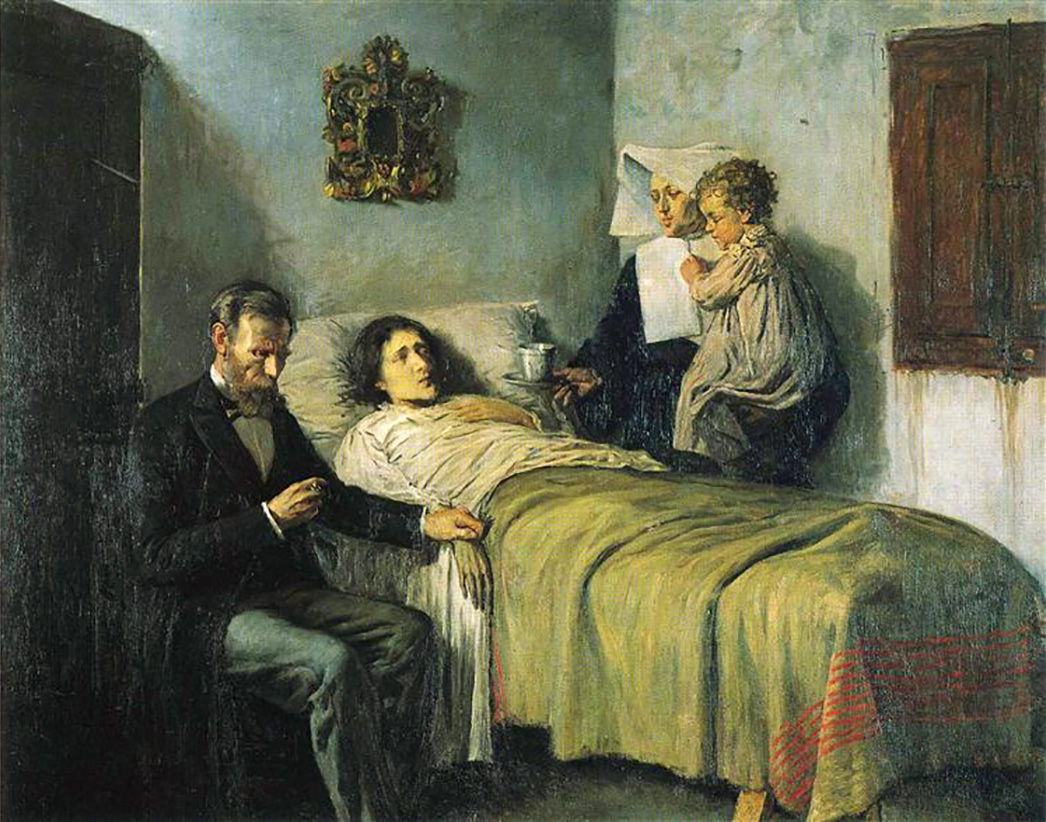
    Science and Charity (1897), Pablo Picasso | Creative Commons, courtesy WikiArt.org

    We must be careful not to simplify and misunderstand Jesus’s message to be “the spirit of the law is more important than the letter of the law.” Leiva-Merikakis states that the spirit is an “overabundance,” not a different/better thing: “If he is asking his followers to surpass the ‘justice’ of the Pharisees and Doctors of the Law, this ‘surpassing’ is an overabundance that transcends the Law interiorly, that deepens the sense of the Law and traces it back to its very source in the will and Heart of God … [transcending] in the sense of going deeper into it: an interior transcendence.” (216-217).

    The last words of Jesus presented in today’s gospel relate an urgency to keep our deeply planted spiritual truth healthy and in front of our own eyes. He says, “leave your gift there at the altar, go first and be reconciled with your brother.” We must not attempt to offer sacrifice to God, our ultimate display of obedience and honor, if we are dishonoring him by arguing with or discounting another child of God. We would be hypocrites, pretending to give ourselves to Him while at the same time being in a state of pushing Him away.

    Both readings today, therefore, display how God wants us to convert to him, fully and unreservedly. It’s easy for us to be tempted to sin and be out of grace, covering up that deep spiritual truth God has planted in us. But that’s why Lent is so important, so that prayer, fasting, and almsgiving can help us fight temptations and remain close to God, anxious to meet him face-to-face.


    As a final note on the passage from St. Matthew’s gospel and a plug for Erasmo Leiva-Merikakis’s amazing three-volume set, revel for a moment in his command of language and excellence as a scholar. Below is a more extended excerpt from the first volume of Fire of Mercy on today’s reading.

    There is a subtle progression in the verbs used by the Lord in these three verses (5:21-23). Just as his doctrine is proceeding from external to the interior, from the past to the present, and from the general to the particular, so too his language. He first addresses the crowd as such in the plural: “All of you have heard.” He then singles out individuals from the group before him, but somewhat hypothetically: “Whoever might say….” Finally, he completes his approach to the human heart and conscience of the specific person standing before him by using the second person singular: “When thou are taking….” Matthew’s scenography here is full of visual dramatic impact. We can see Jesus first looking over the whole crowd on the mountainside and then gradually beginning to move in on individuals, who are transfixed by the penetrating goodness of his eyes. In the end, the merely curious individual who found himself in the crowd just “to see” can no longer hide, for he feels Jesus address him, and no one else, with his words and glances.

    “When you are bringing your gift-offering to the altar.” The material gift offered to God to fulfill a ritual prescription suddenly becomes the symbol of the human heart, which is the real gift the external sacrifice intends in authentic religion. But the pious rite that is to be transacted between the individual and his God cannot be completed if the memory (μνησθῇς) of a rift with one’s brother intervenes. On the way to the altar, the gift must be dropped; not a minute more can pass; reconciliation cannot be left for later. The impediment to sacrifice, and hence to right relationship with God in worship — what had been objectified as ritual impurity before the coming of Christ — now becomes the impediment of the memory, of the consciousness of disharmony with one’s brother. You cannot present your heart to God as a gift-offering on the altar of sacrifice (θυσιαστήριον) if that heart is turned against God’s other children   (222-223).
    Buy the 1st volume here.

  • On Being Chosen

    On Being Chosen

    Saturday after Ash Wednesday: Isaiah 58:9b-14, Luke 5:27-32

    Today, we hear Isaiah preaching the benefits of living a Godly life — that the Chosen People will “ride on the heights of the earth.” Then, in the gospel of St. Luke, we see the Word Incarnate choosing the lowest of the Jews, a tax collector, and even having dinner with a large crowd of tax collectors. Imagine the indignation of the upright Jews who saw this, who expected the Messiah to bless them, not the money-grubbing agents of the state. The lesson Jesus gives us is his great egalitarian message: all are offered the chance to be God’s chosen children. 

    Isaiah’s words, which are a continuation of yesterday’s Old Testament reading, sound an awful lot like St. Paul’s words 700 years later. That’s because they both speak of God’s precepts, which are unchanging. More generally, they speak of the greatest commandment that we should first love the Lord our God above all else and then our neighbors as we love ourselves. Let’s compare the two following passages:

    (1) If you remove from your midst oppression,
    false accusation and malicious speech;
    If you bestow your bread on the hungry
    and satisfy the afflicted;
    Then light shall rise for you in the darkness

    (2) As God’s chosen ones, holy and beloved, clothe yourselves with compassion, kindness, humility, meekness, and patience.
    Bear with one another and, if anyone has a complaint against another, forgive each other; just as the Lord has forgiven you, so you also must forgive.

    Which comes from Isaiah and which from St. Paul? The first talks about good works of charity and images of light dispelling darkness. We’ve heard those things many times from St. Paul. Plus, the second one talks about God’s chosen ones, holy and beloved, words that the Hebrew nation traditionally used to refer to itself. So, that’s Isaiah, right?

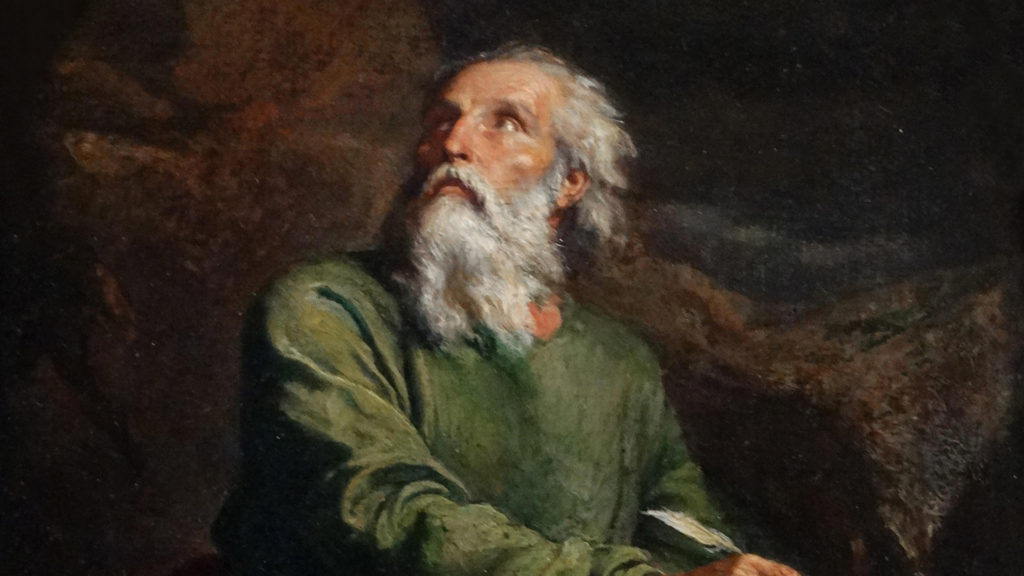
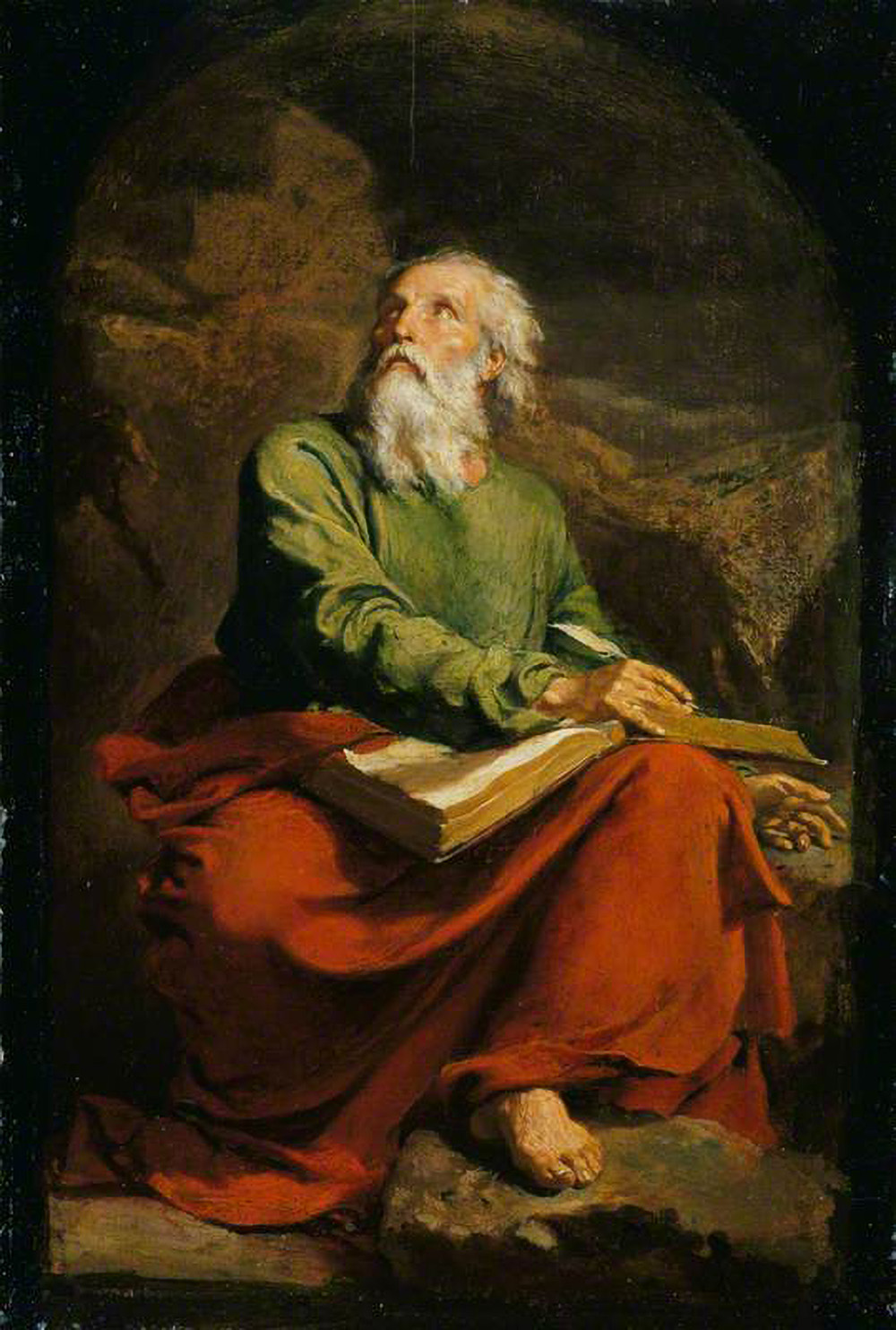
    The Vision of Isaiah (1838), Jean-Louis Ernest Meissonier, oil on oak panel | Creative Commons.

    Nope.

    The first one is Isaiah from today’s reading and the second is St. Paul’s letter to the Colossians (3:12-13). God’s message, the Word, is consistent and unchanging. It is the perfection of truth and wisdom. This is why our holy scripture contains both the Old and New Testaments. Christ didn’t change the fundamental message that God gives to humanity. What he clarified was the scope of the message (its universality). He also ruptured all of time with the life-giving spring of his resurrected Body and began the holy liturgy, which the Spirit pours out upon us daily.

    Today’s readings speak specifically to the clarification in scope that Christ shares. The Hebrews in Isaiah’s time had lived through several thousand years of blessings and curses, each connected to the actions of its people, kings, priests, and judges. The prophets in the Old Testament are very consistent in their call to repentance and upholding God’s precepts. The master narrative could be summed up in Isaiah’s words we hear today: if they follow his commandments,

    Then the LORD will guide you always
    and give you plenty even on the parched land.
    He will renew your strength,
    and you shall be like a watered garden,
    like a spring whose water never fails.

    The Jews who received this message very much took it to heart, establishing a very robust set of rules and laws to follow so as to stay in God’s grace. Rabbinic tradition tells us that there are 613 mitzvot (תרי״ג מצוות), or commandments, in the scriptures. These include 365 “negative commandments” (prescribe what not to do) and 248 “positive commandments.” Knowing all of these commandments, much less staying pure by following them all, became a specialized and serious business.

    Central to the commandments is the concept of purity — of distinguishing between clean and unclean, pure and impure — in thought, action, inanimate, and animate things. And between people! The first distinction was Jews and non-Jews (or “Greeks” as we hear them described throughout the New Testament). But even among Jews there were definite distinctions between those considered holy and those who held lower stations by birth, situation, or behavior. Take the much-maligned Samaritans, who were just as Jewish as the Jews returning from Assyria, only they had stayed behind in their sacked towns and lived with (and intermarried with) the invaders. 

    Into this legalistic impurity minefield, Jesus was born. And we can start to understand why the Pharisees (a religious sect opposed to assimilation with non-Jews and expert in impurity laws) and their scribes “complained to his disciples, saying, ‘Why do you eat and drink with tax collectors and sinners?’”

    As inheritors of 2,000 years of Christian thought and practice, it’s easy for us to consider their words as prejudiced invective, but many Jews of the time probably wondered the same thing about Jesus. They had inherited several thousand years of purity laws that were built on making distinctions. And here was a man people called the Messiah seeming to disregard all of these distinctions.

    But Jesus’ masterful reply to the Pharisees acknowledges the distinctions: “Those who are healthy do not need a physician, but the sick do. I have not come to call the righteous to repentance but sinners.” The Word of Truth here affirms that sin exists and some people live in it, but he displays for us a new way of relating to the sinful: to serve them, to call them to repentance. He also affirms that the Pharisees are “healthy” and “righteous.” But underlying these complements is a gentle reproach for how they look down upon the sinful instead of looking at them with eyes of love.

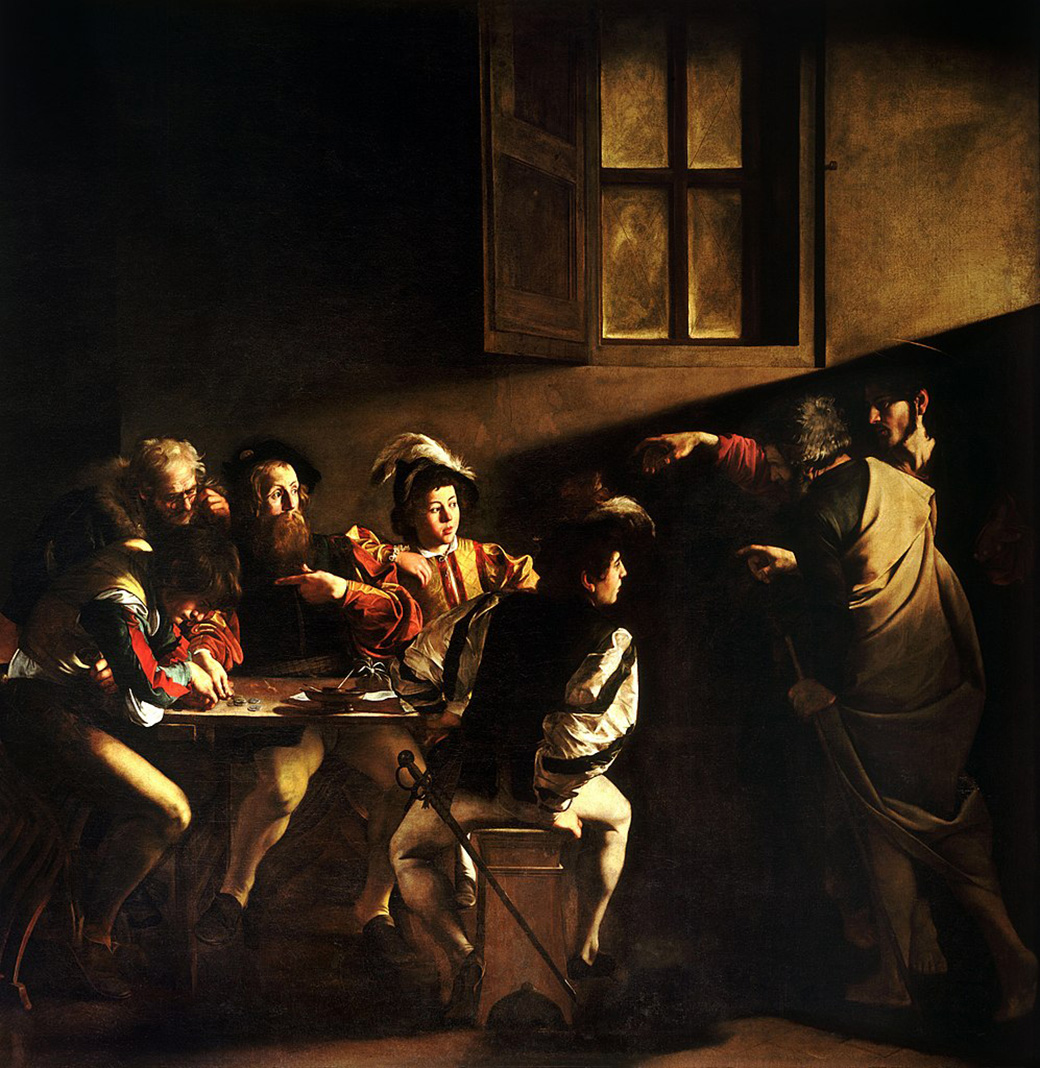
    The Calling of Saint Matthew (1599-1600), Caravaggio | Wikimedia Commons. Matthew (Levi) sits counting money at the far left, while Christ on the far right, signified by the halo, points to him (the hand that of the Sistene Chapel), calling him as a disciple. The beautiful use of light and shading emphasizes the light of God breaking into the darkness. It is a remarkable study of the heavenly meeting the earthly and the light of God seeking us wherever we are.

    The parable of the Prodigal Son is the clearest expansion of Jesus’ message here. The father welcomes the prodigal son, but much of the lesson is for the good son who stayed home and has a hard time understanding his father’s generosity towards the profligate son. The father’s reply is that the good son already has an honored place in his father’s house and the welcoming of the prodigal son in no way diminishes that place. The Pharisees and Jews living God’s commandments are the “good son,” while Christ’s mission is to gather as many prodigal sons as he can.

    Christ’s message re-framed the Jewish inheritance of God’s commandments and extended it, in love, to those living in darkness. He opened up the true faith in the true God to all rather than keeping it hidden behind layers of commandments and concerns over purity.

    And thus, Matthew, one of the great gospel writers, was saved from a sinful life. In responding to God’s call, St. Matthew has, in turn, brought light to millions of people throughout the world.

    May we all hear Jesus as he calls us out personally to follow him. And may we each accomplish just a sliver of what St. Matthew accomplished after answering the call.


  • Fasting for What?

    Fasting for What?

    Friday after Ash Wednesday: Isaiah 58:1-9a, Matthew 9:14-15


    In today’s readings, Isaiah takes on the custom of fasting head-on. Then, in the gospel reading, John the Baptist’s disciples challenge Christ on fasting, but he uses it as a chance to reveal his own nature and thereby reflect on the entire purpose of fasting. The question of sincerity is at stake in both readings.

    Isaiah is an unrelenting prophet. He delivers vividly clear images of Christ who will come, but also pulls no punches when it comes to calling out the unfaithfulness of his people. In today’s reading, he points out the hypocritical self-righteousness of the Jews:

    They seek me day after day,
    and desire to know my ways,
    Like a nation that has done what is just
    and not abandoned the law of their God;
    They ask me to declare what is due them
    pleased to gain access to God

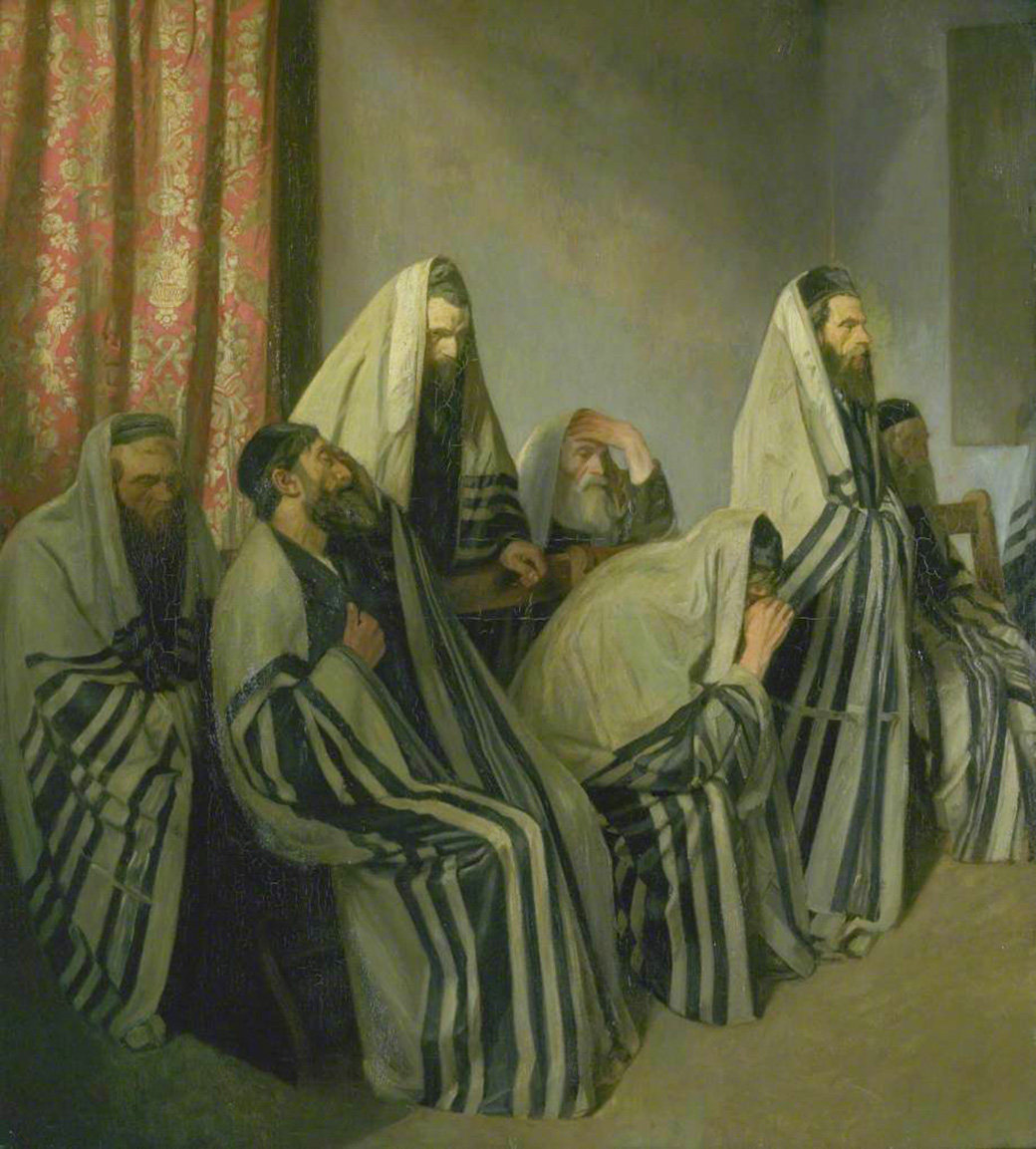
    Jews Mourning in a Synagogue, 1906, William Rothenstein | Creative Commons, courtesy Tate Museum.

    Yes, as if they had done what is just, they want what is due to them. Oh, the arrogance. The question they ask is “why do we fast and you take no notice of it?” Isaiah schools them. He points out that while they put on the appearance of fasting (sackcloth and ashes), their deeds display that they aren’t living the fast. Much like the Christ who will come, Isaiah wants to distinguish living the letter of the law from living the spirit of the law. Isaiah tells them what they should be doing while fasting (apart from abstaining from foods):

    releasing those bound unjustly,
    untying the thongs of the yoke;
    Setting free the oppressed,
    breaking every yoke;
    Sharing your bread with the hungry,
    sheltering the oppressed and the homeless;
    Clothing the naked when you see them,

    Jesus will emphasize these same points in his ministry. We can call them acts of charity. Many of us consider fasting mainly an act of deprivation, but Isaiah reminds us that the act of depriving ourselves of food is simply the first step — sharpening our senses, waking us up from the complacency of being well-fed — so that we can offer ourselves more fully to God by service to one another.

    But if we’re too absorbed in ourselves when we fast, all we think about is our hunger and discomfort. Alternatively, if we’re too concerned with showing others that we abide by the law, we look mournful and disheveled in order to broadcast our efforts to humble ourselves in front of God. Both of these pitfalls miss the entire point of fasting, which is the spirit of fully offering ourselves to God.

    Isaiah is essentially asking his people, “Are you sincere in your faith?” Following God’s precepts is a whole-person effort, and God knows if we are sincere. There’s an old saying, “Smith went to Mass every Sunday, but went to hell for what he did on Monday.” The idea, of course, is that simply going through the motions is not what God asks of us.

    So what about duty? Where does our obligation lie? Isaiah (and later, Jesus) is clear that our obligation is not to the rituals but to the spirit that the rituals are meant to bring us into. As the Catechism of the Catholic Church states, “Our duty toward God is to believe in him and to bear witness to him” (2087). Belief, faith, bearing witness (through testimony and good acts).

    An interesting acceleration of these questions occurs in Matthew’s gospel today. The disciples of John the Baptist, who were by all accounts faithful in spirit as well as in the letter of the law, ask Jesus why his disciples weren’t fasting. Jesus uses this opportunity to talk not about fasting, but about his own divine nature. Like Isaiah, he presses the people about their sincerity, only this time in a more immediate way.

    Jesus says, “Can the wedding guests mourn as long as the bridegroom is with them?” This image of Jesus as the groom and the Church as his mystical bride will be developed theologically in the years to come. More germane to our discussion, Jesus is gently telling John the Baptist’s disciples (who, we must remember, already heard from John that Jesus is the Messiah) that God is in their midst. If the goal of fasting is to attest to God in our bodies and our spirits, in a desire to be close to Him, then what place does it have when he’s already with you? 

    It’s like standing next to your father and shouting, “Oh, if my father was only here! I wish to be near my father!” It’s ridiculous. And here Jesus pushes on the sincerity of these questioners’ practice of fasting at that moment in time. If they sincerely desire unity with God, why are they fasting in front of him as if he was not present? Or is their fasting yet again simply a ritual that they stubbornly hold onto? 

    Our faith demands that we bring our entire beings, including our spirit and our intellect, to bear on this world and the next. If we fast without acting in God’s love, we are not living out our faith. If we prioritize the niggly details of our fast over the presence of God Himself, then we are blindly following ritual and not recognizing the Spirit at work.

    By being sincere in our fast — focusing on being close to God, doing his will — we can avoid these mistakes and begin to recognize when and where He is with us.