Category: Cycle II

  • Embracing God’s Offer

    Embracing God’s Offer

    Saturday after Ash Wednesday: Isaiah 58:9b-14, Luke 5:27-32.

    God shows us in todays’ readings his great desire to redeem us. Consider how different our God is from the gods in classical Greek culture or the nature-oriented gods of other pagan cultures. These deities have either complex personal, selfish desires that conflict with humanity or they are seemingly indifferent, only responding to humans when they implore them with sacrifices and occult rituals. Our God shows Himself to be the only and true God, above these “principalities and powers” that our Judeo-Christian tradition allows space for in a lower echelon of being. Our God is true to his own principle of creative love; he loves his creation and endlessly reaches out to it with a Father’s care.

    In the first reading from Isaiah, a continuation of yesterday’s reading about false worship, God entreats his people to act in the way of goodness he has given them. He promises them that all will be well if they do so: “If you remove from your midst oppression, false accusation and malicious speech; If you bestow your bread on the hungry and satisfy the afflicted; Then light shall rise for you in the darkness, and the gloom shall become for you like midday.” These are the Father’s words of teaching and advice for the children he loves so much. We can relate to this in our own parent-child relationships. I think I’ve said some form of his words to my own children: “Then the LORD will guide you always and give you plenty even on the parched land. He will renew your strength.” The truth of our God being the one true God is so evident here — all of our instincts for love and family flow from him as our Creator. 
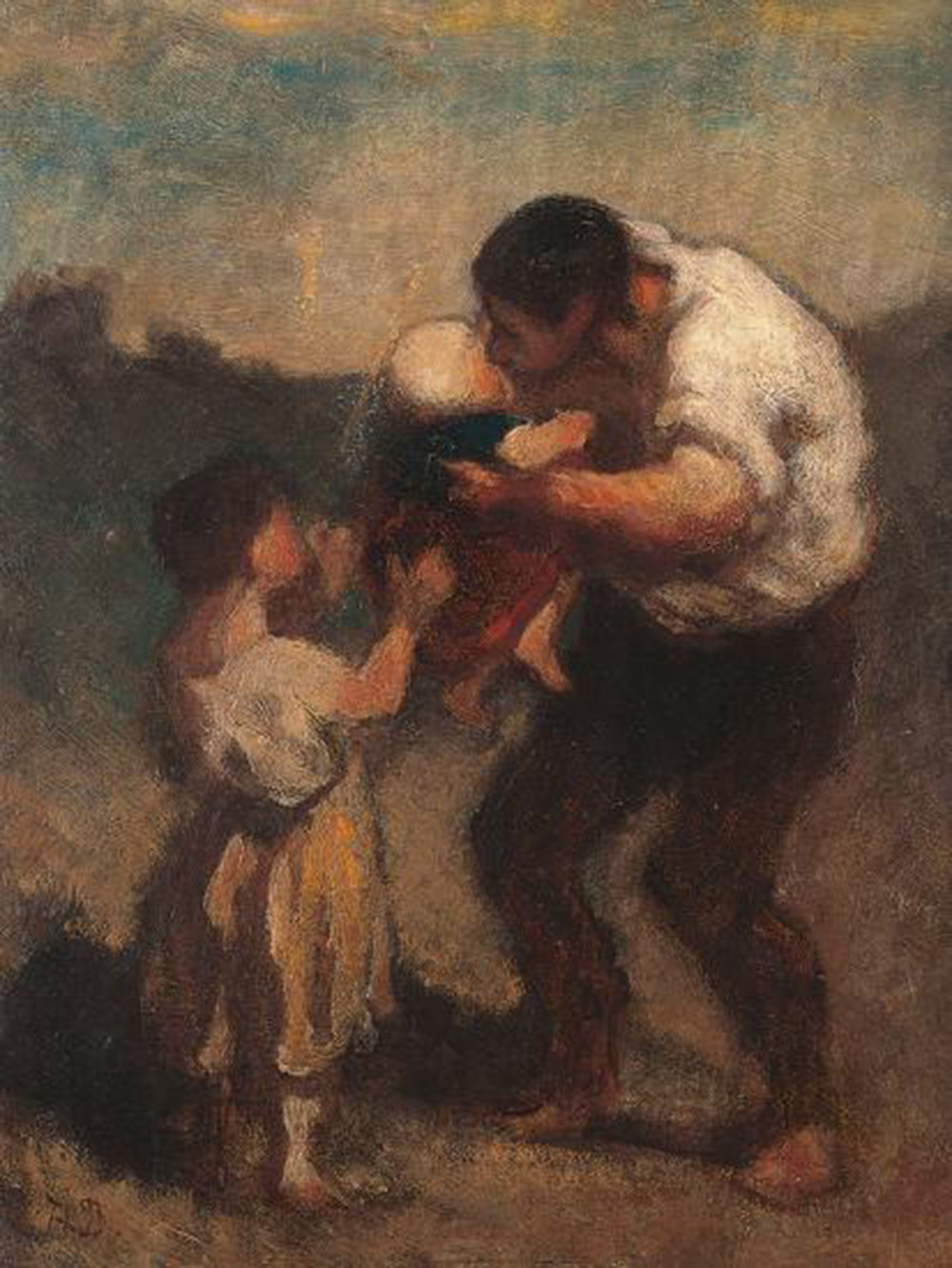
    The Kiss (1845-1848), Honoré Daumier | Image from Art.com.

    We must be careful to orient ourselves to him as the source of truth and goodness, rather than the other way around. We think we know what love is and tend to project this onto our maxim “God is love.” Thus, we might imagine that God agrees with a first-world, 21st-century impulse to give your children all of the freedom of choice and autonomy possible (thinking that this equals love). Likewise, a century or so ago, a father would likely imagine that lessons to children are best reinforced with a beating, and would project this same “rough love” onto God.

    We have to let the scriptures and the Holy Spirit guide us in understanding what love and fatherhood are all about. If not, we risk thinking we know God’s love but are really just projecting our own notions, which arise partly as a result of our cultural circumstances. 

    What we discover in the scriptures is that God provides a moral framework (the Law) and boundaries for his People to guide them back to his Kingdom for eternity. At the same time, he grants us free will, and this freedom is also an aspect of his love. That being said, he knows that an unguided free will is apt to make bad decisions, so he provides us with a clear way to live a life of love that leads back to him. We hear this guidance in today’s first reading. It ends with a promise for those who respect this way of love, which reaches its pinnacle in him:

    If you hold back your foot on the sabbath
        from following your own pursuits on my holy day;
    If you call the sabbath a delight,
        and the LORD’s holy day honorable;
    If you honor it by not following your ways,
        seeking your own interests, or speaking with malice
    Then you shall delight in the LORD,
        and I will make you ride on the heights of the earth;

    We see the Lenten theme of fasting, where we avoid our own interests while honoring him. But note the timbre of his words — we shall delight in the Lord and the sabbath. This whole-hearted embrace of our Father is a delight, not a task or trial. Only God can turn our denial of self into something delightful.

    He created us with desires, passions, and ambitions; these things help us thrive in the world, but perhaps he also gave us these things so that we can subdue and master them for a greater purpose, namely him. When we deny desire and passion, we are exercising a different type of muscle, a spiritual muscle. It’s not emotion, which would drive us to give in to the desires. It’s not intelligence, which would logically dictate that if you’re hungry you should eat. It’s not physical and it’s not emotional; it’s a spiritual impulse done solely because our spiritual Father and source of life has requested that we do it.

    It’s important to recognize this: God is helping us to grow strong spiritually because our spiritual nature connects us to him and everlasting life. His promise is not bound to our time on this earth, but to eternity. This makes his guidance, boundaries, and advice of ultimate importance and also stealthily effective as a way to salvation.

    Turning to the gospel reading, we hear the famous calling of Matthew (Levi), the tax collector. The force of the excerpt is on Christ’s simple yet powerful “Follow me” and his interaction with the Pharisees at dinner. But let’s not overlook Levi here, who like Peter, James and John dropping their nets, responds with equivalent certitude: “And leaving everything behind, he got up and followed him. Then Levi gave a great banquet for him in his house.”

    We can speculate in many directions about Levi’s motives (perhaps he saw a way out of his hateful profession?) or about his emotional state (perhaps he wanted to rise in status as a close follower of this new cult figure?) but I think all of this misses the point. A more profitable reflection might be upon that moment of connection, when God and man see each other, God holds out his hand, and man takes it without hesitation.

    Did Jesus choose Levi because he knew that something in him was ready to say yes? Or is it simply impossible for those directly approached by Christ to say no — the pull of the divine being so irresistible? Maybe the call and response is so amazing because that moment is always unique for every human being; free will is a potential monkey wrench, and receptivity to God is variable with time of life, even time of day.

    Perhaps the gospel writers describe the details of the call and response of the Apostles so plainly because the sheer fact of following Christ — the Way — is perfect and true on its own. It must be recorded and repeated. Whether fisherman, prostitute, tax collector, or rabbi, this is the very call and response that God speaks of through Isaiah. Deny yourself and delight in the Lord.
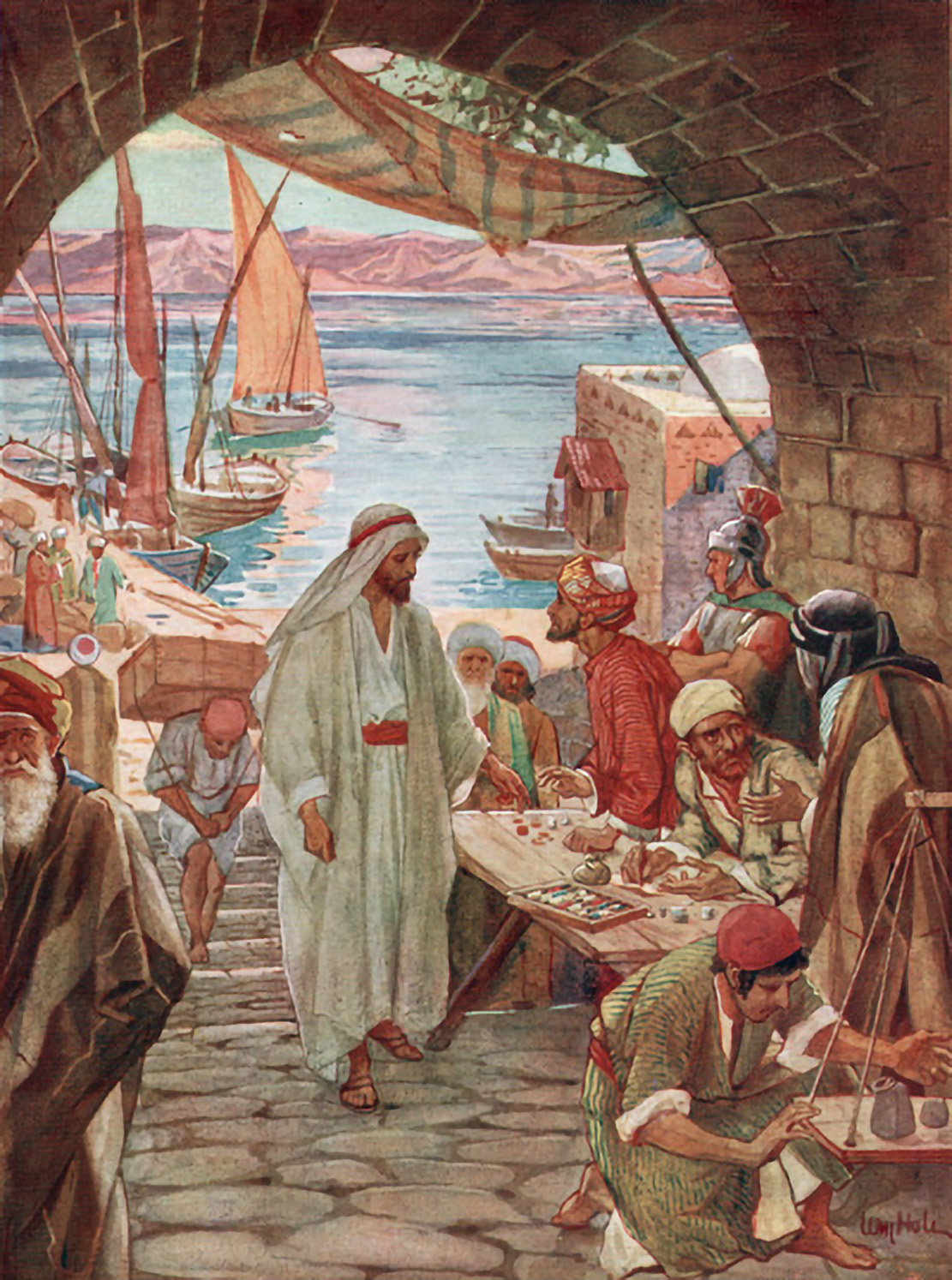
    Jesus calls Levi. From the book The Life of Jesus of Nazareth. Eighty Pictures (1906), William Hole | Wikimedia Commons.

    And in the same way that Christ speaks of the relationship between God and man in yesterday’s gospel reading — “Can the wedding guests mourn as long as the bridegroom is with them?” — he answers the peevish question from the Pharisees with a truth about who God is. He responds, “Those who are healthy do not need a physician, but the sick do. I have not come to call the righteous to repentance but sinners.”

    We will hear him expand on this truth in the Parable of the Prodigal Son. If you are a righteous person, a son who has obeyed his father, then you already have the kingdom at your fingertips. You are with God and if you realize this and delight in it (instead of being there only out of moral obedience), then you are fulfilled. In fact, you will be so filled with the Father’s love that you, too, want to rescue the sinners.

    The Pharisees’ question is ultimately one about justice: isn’t it unjust that we who have obeyed God should eat on our own while the Messiah feasts with sinners? Jesus’s response is the re-orientation of our concept of justice that we desperately need as humans. It starts with realizing who God is: the Alpha and Omega with whom all creation reaches its fullness. Being on the Way to God or in his presence means sharing in that fullness of being. As one’s outlook becomes infused with God’s being, questions of justice like the Pharisees’ become very small minded. The only justice is that everyone has a chance to join God and the fullness of being in the Kingdom. If any of us poor, sinning people is given access to God, then let us all have access! God’s love is all about this: it is all-encompassing, ever forgiving. This love is the real principle for justice.

    May we all exercise our spiritual muscle in denying ourselves this Lent so we can delight in the Lord.

  • The Spirit of Fasting

    The Spirit of Fasting

    Friday after Ash Wednesday: Isaiah 58:1-9a, Matthew 9:14-15.

    Today’s readings cast some doubt on fasting, and it’s worth digging into them to understand the teaching God delivers to us.

    The verses from Isaiah are some of the longest in the Old Testament dealing with fasting. This chapter in Isaiah tackles false vs. true worship; God is chastising the Jews for presenting themselves as holy people but acting completely differently. In short, it’s a warning against hypocrisy.

    Let’s consider the first words attributed to the Jews: “Why do we fast, and you do not see it? afflict ourselves, and you take no note of it?” God’s reply is, “you serve your own interest on your fast day, and oppress all your workers. Look, you fast only to quarrel and to fight and to strike with a wicked fist” (NRSV translation).

    There are several things going on here. First, doesn’t it seem a bit pushy and presumptuous of the people to challenge God and his non-response to their penitential acts? This should clue us into their lack of true humility before God, a true fear of God. And God’s response is that they serve their own interests on the fast day rather than obeying the great commandment to love God before all else (i.e., themselves) and then their neighbor as themselves.

    They also seem to be devolving into quarrelling and fighting with one another. This sounds pretty bad, but are we much better? Fasting makes us hungry, grumpy, and snippy. That’s part of the point, really: it forces us into a position to master not just our physical hunger but our emotional state and way we react to things around us. Pile onto this our cultural pressures of politics, people at work or home who habitually bother us, and unknowns like road rage moments, and it’s a recipe for disaster.

    The War (The First Discord), 1864, William Adolphe Bouguereau | Image from arthive.com. I’m not a huge fan of cherub pictures in general, but this seems too perfect to pass up. Here we have innocence (our desire to fast) being turned ugly by the desire to possess – specifically food. 

    God details something different: “This, rather, is the fasting that I wish: releasing those bound unjustly, untying the thongs of the yoke … Sharing your bread with the hungry, sheltering the oppressed and the homeless; Clothing the naked when you see them, and not turning your back on your own.” This is the Word of God, later to be incarnated as Jesus Christ, speaking to be sure! We hear Jesus say these same things in the gospels. But does this sound like fasting to you?

    I generally think of fasting as if I am going into a desert cave and struggling with my hunger and emotional state in an environment where I can just focus on prayer without the realities of life messing things up (I’d be too tempted to say something stupid or lash out). It’s like a taking a retreat with the Lord. And yet God plainly tells the Jews that the type of fasting he wishes is one immersed in the world and in helping others. Oy! I can’t escape it! How is it possible? It’s hard enough keeping myself level without having to worry about helping others.

    The answer, it seems, is that I probably haven’t been giving myself over to God wholly or trusting in his help. His words in the verses directly following today’s reading point us in this direction: “If you remove the yoke from among you, the pointing of the finger, the speaking of evil, if you offer your food to the hungry and satisfy the needs of the afflicted, then your light shall rise in the darkness and your gloom be like the noonday” (Is 58:9b-10). We might say he’s speaking of the virtuous cycle here: if you start doing good, that good reproduces itself in others and rejuvenates you. It’s the work of the Holy Spirit in the world.

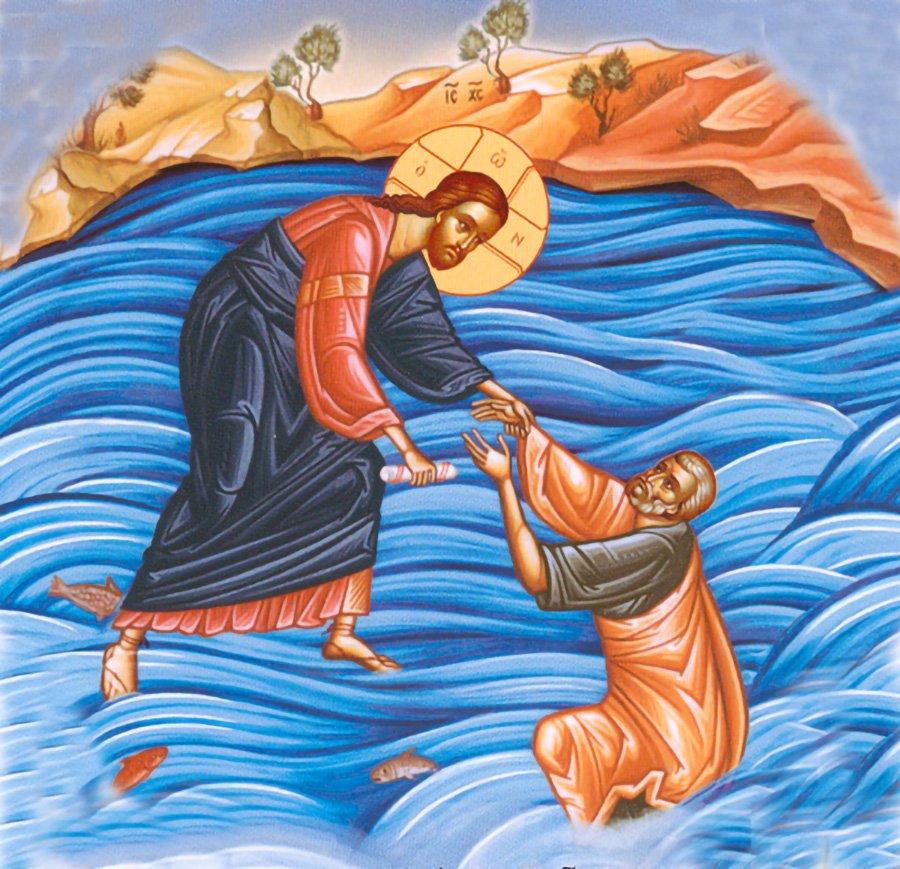
    I particularly like how God addresses the emotional hurdles associated with fasting: “your gloom will be like the noonday.” Thank you for understanding me! And giving us the Holy Spirit to aid us in our devotion. That thing that I most feared — putting my grumpy self into contact with others where I might become that very hypocrite Isaiah addresses — is the very thing that offers me an opportunity to lighten my load. I just have to fill myself with your commands to help others and remove the temptations to be grumpy and edgy. This would likely be impossible without help, and we are in a position to be more successful than the ancient Jews. Christ has promised to lash himself to us on the yoke: “Come to me, all you that are weary and are carrying heavy burdens, and I will give you rest. Take my yoke upon you, and learn from me; for I am gentle and humble in heart, and you will find rest for your souls. For my yoke is easy, and my burden is light” (Matt 11:28-30).

    Icon of Jesus walking on the water and helping Peter, provenance unknown | Image from www.pemptousia.gr.

    If it’s just a matter of self-discipline and mastering oneself, then it’s bound to be a hollow victory in the end, and certainly not a participation in our faith, our life in the liturgy. But if we fast with Christ at our side, we actively participate in the work of His Spirit in the world. What sounded like a burden is revealed to be an amazing spiritual activity. In his book Liturgical Asceticism, the University of Notre Dame professor of theology David Fagerberg acknowledges that fasting, solitude, and other forms of renunciation existed before Christianity and continue exist outside of it. What makes our Christian fasting different is “the degree that its source is sacramental immersion into Jesus’ life, and to the degree that this discipline frees the baptized for participation in the Mystical Body of Christ” (83). In other words, our fasting becomes a spiritual celebration of Christian liturgy the more we invite Christ to participate with us, to hold us up, and ask the Spirit to move within us and the Father to bless us in our effort.

    Fagerberg continues to distinguish our fasting from other faiths and types of fasting by showing that it is a specific response to the Christ Event in history — it is our recognition that we wait in patience for the final coming of Christ and we wait in the way Christ lived in us: allowing himself to be pierced by nails to uproot the passions and sin that ensnare us.

    Fagerberg also writes, “This liturgical asceticism initiates us into something higher than mere morality” (84). His point is that when we properly fast, with Christ at our side and love in our hearts, we are elevated beyond simply “doing the right thing.” Morality flows naturally from God, the ultimate Good; and the closer we become to God, the more we act and think in our lives in a morally correct way. But some acts of renunciation — fasting, for instance — are voluntary acts that can and should be done outside of the strict moral sense. Another way of saying this is that fasting is neither good nor bad (it is amoral) until it is united with a specific intent (see Ash Wednesday’s reflection where St. Thomas Aquinas defines fasting as virtuous only if directed to some virtuous good).

    There are many virtuous things we can direct our fast towards, and these are undoubtedly “morally good.” Fagerberg’s point is that the deepest Christian fasting is beyond just “morally good” because we participate in the actual life of Christ, fulfilling in action what we sacramentally join via Baptism and the Eucharist, bodily and mentally joining in the scope of salvation history and the awaiting of Christ’s coming in glory. We don’t fast because it’s the “right” thing to do or because the bishops declare that we have to on specific days; no, we fast in this way because we are fulfilling our purpose within the Mystical Body of Christ and becoming better spiritual beings.

    Sounds to me like I should be fasting all the time! What a fantastic and deep way to think about acts of renunciation. So, are we called to fast without ceasing as we wait for Christ’s return? After all, St. Catherine of Siena and some other saints lived this way.

    Let’s look at this question through the lens of the gospel reading. When John the Baptist’s disciples ask why they and the Pharisees fast often but his disciples do not, Jesus answers, “Can the wedding guests mourn as long as the bridegroom is with them? The days will come when the bridegroom is taken away from them, and then they will fast.” We notice a few things. First, Jesus connects fasting with mourning. In the Old Testament, the prophets advised that the people mourn their loss of God’s favor, which was brought about by their own infidelity to his law. In other words, their unfaithfulness to God resulted in his withholding his favor — this situation demanded fasting, a type of mourning, repentance and pleas for mercy. But Jesus’s use of the word mourning clearly has another edge to it as he foreshadows his own death. The second thing to notice is the content of what he’s saying: that when God is with us, there is no need or use for fasting and mourning; there is nothing missing when one is in God’s presence.

    This idea of putting fasting in its rightful place — that we might not be called to a state of constant fasting — is illustrated clearly by the Desert Fathers. In the Collected Sayings of the Desert Fathers, there is one episode shared by Abba John Cassian (360 – c.435) that reads,

    [Coming] from Palestine to Egypt, we visited one of the fathers. He entertained us and was asked by us, “Why is it that when you are entertaining brothers from elsewhere, you do not observe the rule of your fasting the way we observe it in Palestine?” “Fasting is always with me,” he replied, “but I cannot detain you with me forever. And although fasting is a useful and necessary practice, we do it because we choose to, whereas the law of God enjoins the practice of charity as a necessity. When I entertain one of you, I am serving Christ (as I am obliged to do) with full attention; and when I send you on your way, I can resume the rule of fasting, for ‘the companions of the bridegroom cannot fast while the bridegroom is with them; but when he is taken away from them, then will they fast’ [Matt 9:15] to their hearts’ content.”
    (The Book of Elders, 13.2)

    Let’s remember that the Desert Fathers were absolutely committed to physical poverty, fasting, and acts of penitence. Abba Isaiah says, “Hate everything in the world and repose of the body, for these made you an enemy of God. As a person who has an enemy fights with him, so we ought also to fight against the body to allow it no repose” (1.10). Not that these hermits’ sayings were completely uniform, but this general code of physical existence was fairly standard. This is why John Cassian’s story about the Egyptian father is worth pondering. The Egyptian ascetic notes that fasting is voluntary while charity is a commandment. His explanation that by welcoming his guest he is serving Christ is a lovely way to be looking at our interactions with each other. He even quotes today’s gospel to support his argument, suggesting that the Christ who is present in the other person is just as real and alive as Jesus was when addressing his disciples. 

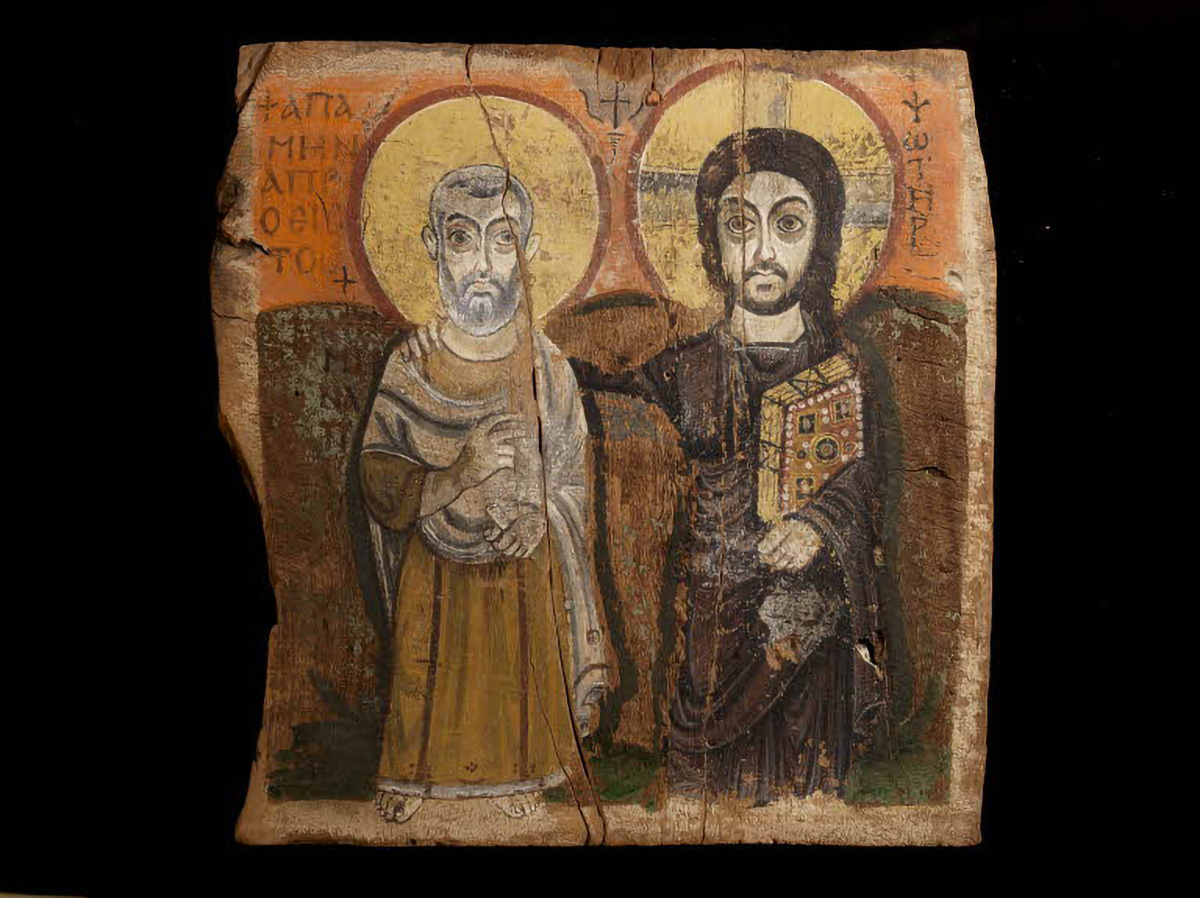
    Christ and Abbot Mena, from the monastery of Bawit in Middle Egypt. Dated to the 8th century, it represents Christ on the right (his halo has a cross) and Abbot Mena, the superior of the monastery at the time. The abbot holds a scroll in his left hand; this may have contained the rules of his monastery. | Image from the Louvre Museum.

    At the end of this reflection, it is clear that God is much more delighted when we choose to fast with the Spirit guiding us to deep, eschatologically-centered communion with God rather than when we choose to fast because it is a rule or something we “should” do. The Jews who fasted but acted poorly in Isaiah’s time as well as those who forget Christ’s presence when self-focused on fasting are examples of the wrong way to approach fasting. Even just a quick look at the saints and Desert Fathers can show us that fasting and other penitential renunciations are more of an alignment of one’s heart and spirit than a hard-and-fast set of practices.

    Each of us is called in a different way to follow Christ to the Father. We can use fasting and other renunciations of the passions and the flesh to better discern what exactly that call entails. We might find that, like St. Catherine, we are called to fast often while serving Christ in others. We might find that we are called to fast a bit less often while serving Christ in a different way. One thing is clear, however: we cannot shirk our responsibility to align our hearts in a “spirit of fasting,” for Christ tells us to deny ourselves and pick up our cross daily to follow him.