
Tuesday of the Second Week of Advent: Isaiah 40:1-11, Matthew 18:12-14.
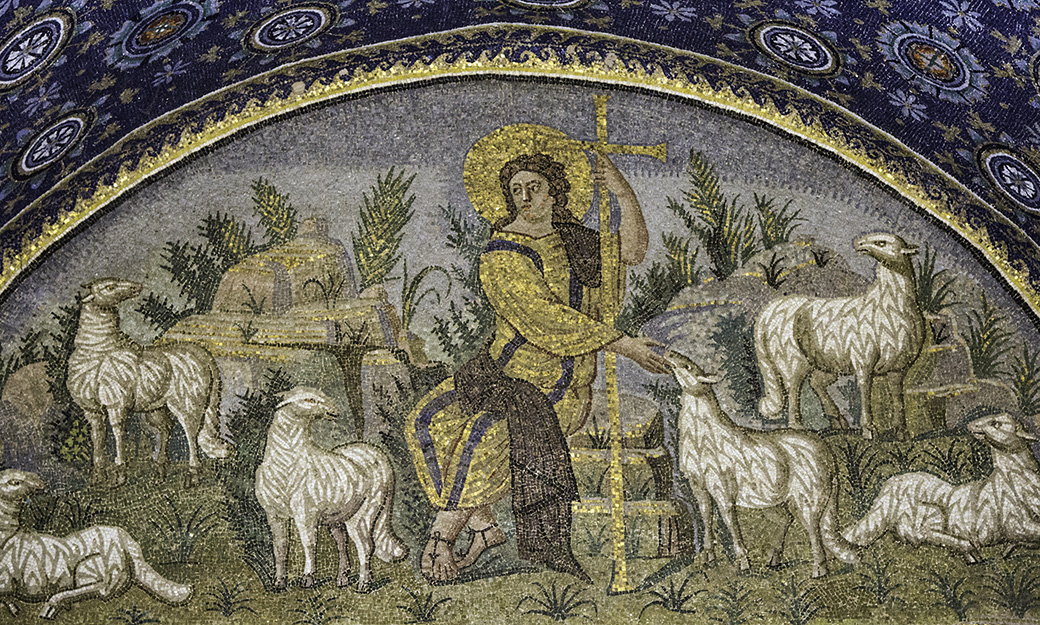
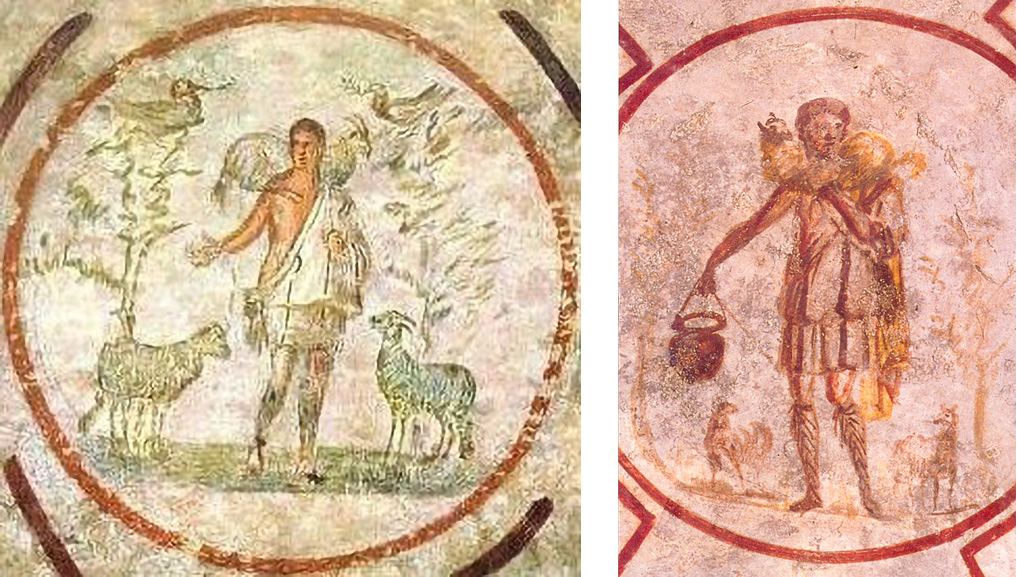
Today’s gospel presents the Parable of the Lost Sheep, and Christ as the Good Shepherd is one of the oldest artistic representations we have from the early Christian Church. Clearly, this image resonates with us. But is it more than a nice metaphor?
God the Father is far beyond our comprehension. We need metaphor and analogy to even begin to contemplate Him. As Jesus says today, “In just the same way, it is not the will of your heavenly Father that one of these little ones be lost.” He explicitly points to the analogy aspect of the parable (“in just the same way…”) in order to help us understand a small aspect of God’s will.
But the Son of God was made incarnate as a man, so we have a physical, historical understanding of him. He literally tended to humans like precious creatures waiting for the harvest — it’s no coincidence that he invites Simon and Andrew to “fish for men,” and that he says, “I am the good shepherd. The good shepherd lays down his life for the sheep” (Jn 10:11).
This last passage, in particular, invites us to understand Christ in a more literal way rather than metaphorically.
I’d like to quote a passage from the Trappist monk, Fr. Erasmo Leiva-Merikakis, PhD — from his master work of reflections on the Gospel of St. Matthew:
Every scene in the Gospel represents a new step in the Son’s search for his lost sheep. Golgotha is the moment when he fully finds us, because it is then that he gives all he has to give—the very substance of divinity. He finds us by entering into our locus of despairing darkness and filling us there with his love and life. “I will bind up the crippled, and I will strengthen the weak”: But how? Our resurrection and healing gush forth from his suffering. In the words of Isaiah:
Surely he has borne our griefs and carried our sorrows. . . . He was wounded for our transgressions, he was bruised for our iniquities; upon him was the chastisement that made us whole, and with his stripes we are healed. All we like sheep have gone astray; we have turned every one to his own way; and the Lord has laid on him the iniquity of us all. (Is 53:4-6).
Jesus, in whom “all the fulness of God was pleased to dwell,” could not make peace between us and the Father, could not restore us lost sheep to the heavenly flock, without the spilling of “the blood of his Cross” (Col 1:19-20). It was by this outpouring of the human blood of the incarnate God that the Father “delivered us from the dominion of darkness and transferred us to the kingdom of his beloved Son” (Col 1:13).
(Fire of Mercy: Heart of the Word, Vol III, 627)
We might be so familiar with the words of St. John’s gospel, “the good shepherd lays down his life for the sheep,” that we forget how very real that act was accomplished by Jesus Christ. God is the best of all good shepherds — so much so that we can use him as the basis of comparison in the metaphor, “you are as good of a shepherd as Jesus Christ with how selflessly you lay down your life…”
I don’t want to detour too far on John’s gospel; today’s gospel reading from Matthew is about searching for and not forgetting the lost sheep. This parable is the promise that God wants every one of us to be with Him, no matter how lowly or sinful we might think we are. And, of course, sin is the main way we lose our way from the flock bound for heaven. Consider this — the person so lost in sin that he can’t be recognized is actively sought out to the ends of the earth by our diligent Good Shepherd. If that’s not good news for those in despair, I don’t know what is.
As we turn our eyes to gaze lovingly on this Good Shepherd, let us return to Isaiah’s words from the first reading. He describes a strong, powerful God whose Word lasts forever — long after humanity is gone. He describes a God for whom we flatten mountains and fill in valleys to make way for his majesty and might. As we turn our eyes to gaze on Him, what do we see?
|
Here comes with power |
Isaiah uses the language we hear throughout the Old Testament: God who smites the enemies of Israel with his “strong arm” |
|
Here is his reward with him, |
Something is different here. God appears on the wide way we have prepared with His reward. What is this reward, this recompense, but the very flock He has been shepherding! |
|
Like a shepherd he feeds his flock; |
And what is he doing with this harvest of sheep? He is feeding them, gathering them in his arms and carrying them in his bosom! What tenderness! What a seeming paradox that the mightiest of all, whose breath can level mountains, is to be found in heaven doing that which he loves the most: tending his flock of souls. |
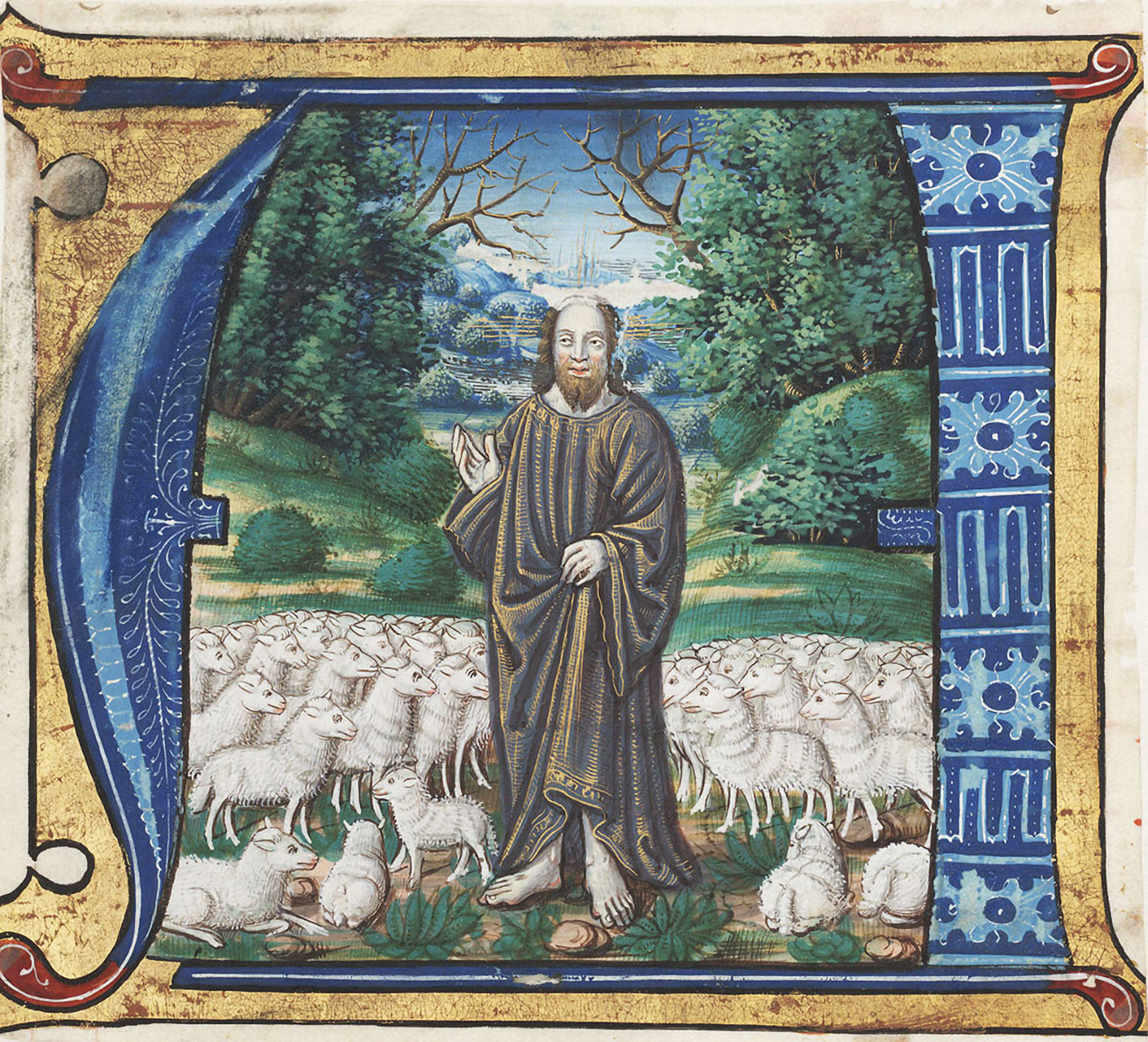
Let’s consider the foretaste of heaven we have on earth in the celebration of the liturgy. As we approach the Mass and the Holy Eucharist, let us remember that Christ’s great sacrifice was one where he carried us in his bosom all the way to the Cross and beyond. He came to earth to physically enact the work of the Good Shepherd, giving us our redemption, salvation, and a peek at the very heart of God.
When we eat the Eucharist, we are imbibing in the flesh of the one who carries us in his bosom, who protects us, and who literally died for us.
In Advent, this is who we wait for. We offer a comparatively paltry sacrifice in the form of prayer, fasting and alms to mark this season that anticipates the one who offers the greatest sacrifice of all.