
Thursday of the First Week of Advent, Year A: Isaiah 26:1-6, Matthew 7:21, 24-27.
The beginning of the first week of Advent has set our eyes upon the goal: Christ’s entrance into the world and – at the same time – the fullness of the Kingdom that will come. Today’s readings remind us that to partake in this prize that we anticipate, we must have faith and do God’s will.
As Jesus says in the gospel reading, “Not everyone who says to me, ‘Lord, Lord,’ will enter the Kingdom of heaven.” Maybe it’s just me, but those words send a chill down my spine. The thought of not spending eternity in God’s presence is my greatest fear. Perhaps we run the risk of getting too comfy with the thought of our ever-merciful, ever-loving God that we forget we have a real covenant with Him, one that we must uphold on our end, too.
Isaiah is given this knowledge, as he relates in the first reading: “Open up the gates to let in a nation that is just, one that keeps faith.” These are the two ingredients: keeping faith in God (and, as we shall see with Jesus, in His Son), and being “just,” which means acting according to God’s will.
Justice is a big theme in the Old Testament, and it boils down to the application of God’s law to human situations. Justice is where the rubber hits the road, as they say. We read in the Psalms: “Blessed are they who observe justice, who do righteousness at all times!” (Ps 106:3). Justice was understood as an active thing that people do, and righteousness is specifically applied to those who act justly.
Justice and righteousness, of course, cannot be understood outside of their relationship with God, who is the ultimate source of justice and good. A person’s righteousness is measured against how much his “doing justice” is in line with God’s goodness and justice. And it is God’s will that we act justly and be righteous, as we read in Proverbs: “To do righteousness and justice is more acceptable to the Lord than sacrifice” (Pro 21:3).
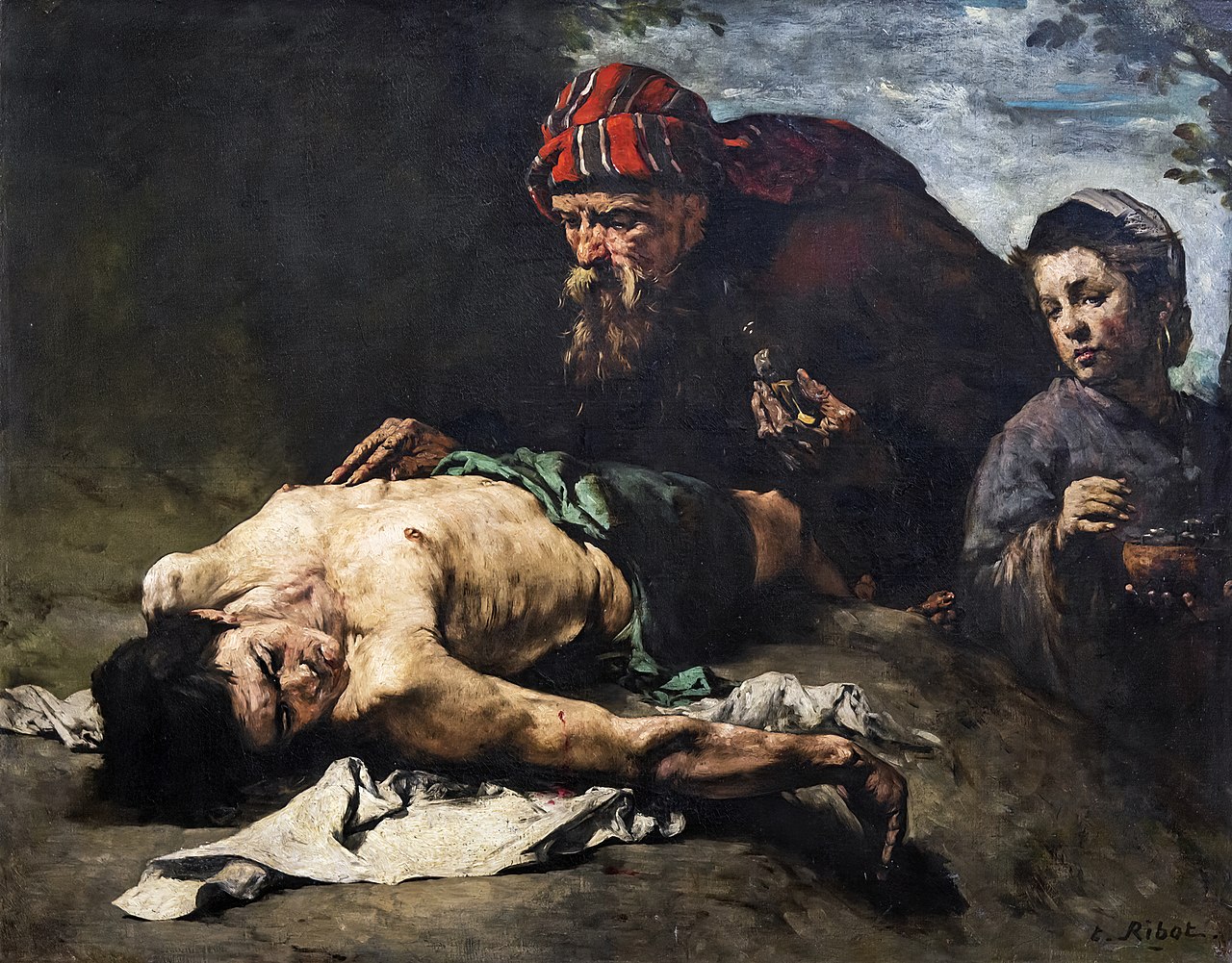
Jesus ratifies this understanding of active justice = righteousness, and raises the stakes when he says in today’s gospel that the one who will enter Heaven is “only the one who does the will of my Father.” This is new. Before Jesus, there was no way for humanity to gain entry into the Kingdom for eternity – this was not on the table for the Jewish nation and thus their hope took on a more worldly, nation-building aspect. But with Christ, the horizon of hope and the aspirations of humanity became immeasurably greater.
With Jesus, the prophecies about a triumphant Jerusalem were shown to be about a heavenly Jerusalem, not an earthly one. The true temple is now understood as the Body of Christ, and the laws of the prophets is perfected in the Way of Love that he demonstrated.
The first ingredient for salvation is faith in Jesus Christ: if you don’t accept that he is the true Son of God, then you can’t accept the new Jerusalem, the new temple, or the Way of Love as the only path to Heaven. All of those things rest in the person of Jesus Christ. But today Jesus reminds us that this is not all – “Not everyone who says to me, ‘Lord, Lord,’ will enter the Kingdom of heaven.” Why is this not all? Because Jesus himself is but the fullest expression of loving the Father and doing His will. Jesus always points back to the Father, insists that “His will be done.”
And, crucially, His will is not to be done passively. Doing God’s will means … well, doing.
Even though God could act decisively in Creation without us doing anything (after all, He created it to begin with!), His will is precisely that we act in the same love He brings to Creation. Jesus could not be clearer in today’s reading: “only the one who does the will of my Father in heaven” will spend eternity in Heaven. Emphasis on “does the will,” not “accepts” or “watches” or “approves of.” This doesn’t mean that we should run out and start a mission house for the poor or sell everything we have and give it to the Church (unless you hear God’s call to do that). We don’t have to invent things to do. Instead, let’s consider every act we already do throughout our day and weigh them against whether they are in line with God’s will.
The words that we do (or do not) offer to someone in greeting as we pass them – are they in line with the Father’s will? How about the thoughts that enter our head before we even formulate words of greeting? Is our heart conformed to God? Do we think generous thoughts about people we know as well as strangers? If not, now’s the time to start praying for God’s mercy to enter our hearts, to soften them, to fill our minds with positive, generous, loving things. This is the work of resisting the temptations to hate, jealousy, resentment, etc. that Satan spends his hours insinuating in our minds. It takes prayer, reliance on God’s power, and placing ourselves at His feet. He is our armor of light and will protect us.
But something, too, should be said about engagement and encounter. Especially in today’s pandemic-conscious environment, we have become accustomed to a certain amount of personal, sanitized space. Whether working from home or avoiding that person who is coughing, we live in a very different world than just a few years ago. Yet we have to admit that God is found in encounter with others, and the Church is fundamentally a community and communion of many. God’s will is particularly meaningful when applied to others. The great commandment is to love God above all else AND love our neighbors as ourselves. This demands some type of encounter and engagement. This doesn’t have to be face-to-face (especially for those who are sick, immunocompromised, etc.), but for most of us, the post-pandemic era perhaps tempts us to be a little more selfish with our space and time.

One last thing resonates with me about today’s gospel reading. Jesus’s analogy is interesting: “Everyone who listens to these words of mine and acts on them will be like a wise man who built his house on rock.” The first half of his statement is a repetition of what he said earlier about doing God’s will, only this time God is configured as “these words of mine” (this is coming from the Word of God, the Logos himself, of course). Remember Jesus’s words, “If you know me, you will know my Father also” (John 14:7a). Next, the analogy is to build a house on a rock. The force of this analogy is the solidity and permanence of the structure. If faith is the firm ground upon which we stand in life, then the full Way of Christ – faith plus doing God’s will – is that solidity multiplied and lasting, carrying us all the way to Heaven.
It makes sense that Jesus presents this analogy as a man building his house because it is by the sweat of our brow, the good work we do, that we multiply the solidity of our faith. You may have noticed this in practice. Have you ever felt bad about giving some money to someone in need or providing a cheery hello to someone and seeing their expression change to a creaky grin, surprised at the random niceness sent their way? God has built within us a natural reinforcement for doing His will – it feels good. It is the companion to our conscience, which alerts us when something against God’s will is afoot. This positive reinforcement for acts of love and generosity is baked into the very acts themselves. It’s the true source of happiness. It’s doing God’s will.
Today’s readings echo resoundingly the active preparation we are called to do in Advent upon which we reflected on the first Sunday of the season. May we all prepare actively through prayer, praise, feast, and love!