Tag: choice

  • Courage and Cowardice

    Courage and Cowardice

    Wednesday of Holy Week: Isaiah 50:4-9a, Matthew 26:14-25.

    Today’s gospel focuses on Judas’s betrayal, much like yesterday’s reading. Coupled with the first reading from Isaiah, we get a clear look at what it means to live in the light compared to living in darkness. 

    Today’s first reading is from a section of Isaiah’s prophecy entitled “The Servant’s Humiliation and Vindication” in the NRSV Bible. He speaks in the first person as a blessed servant with a “well-trained tongue” for whom God “opens my ear that I may hear.” This servant accepts his gifts and uses them: “And I have not rebelled, have not turned back. I gave my back to those who beat me, my cheeks to those who plucked my beard; My face I did not shield from buffets and spitting.” This is a person who uses his human faculties and talents with the grace of God and is persecuted for it, like Jesus in his ministry.

    But this servant is “not disgraced,” he says, “I have set my face like flint knowing that I shall not be put to shame. He is near who upholds my right.” This servant lives fully as a human in the light of God’s presence and graces; as such, God is near to him and no amount of trying by other humans can make him disgraced or ashamed.

    I am struck by this person’s courage. Aren’t we all raised to be aware of others in our communities, to take care not to offend or make fools of ourselves? But this servant of God, by living fully in the light of God, is not defined not by social morés; he has found the true lodestar for humans: the Word of God for his well-trained tongue, the grace of God to open his ears, and the love of God to give him courage. Let’s think about this love, the source of his courage. This love coincides with a surety in the Lord, a thirst to be with Him, and an unshakable faith that what he has comes from God who has created him.
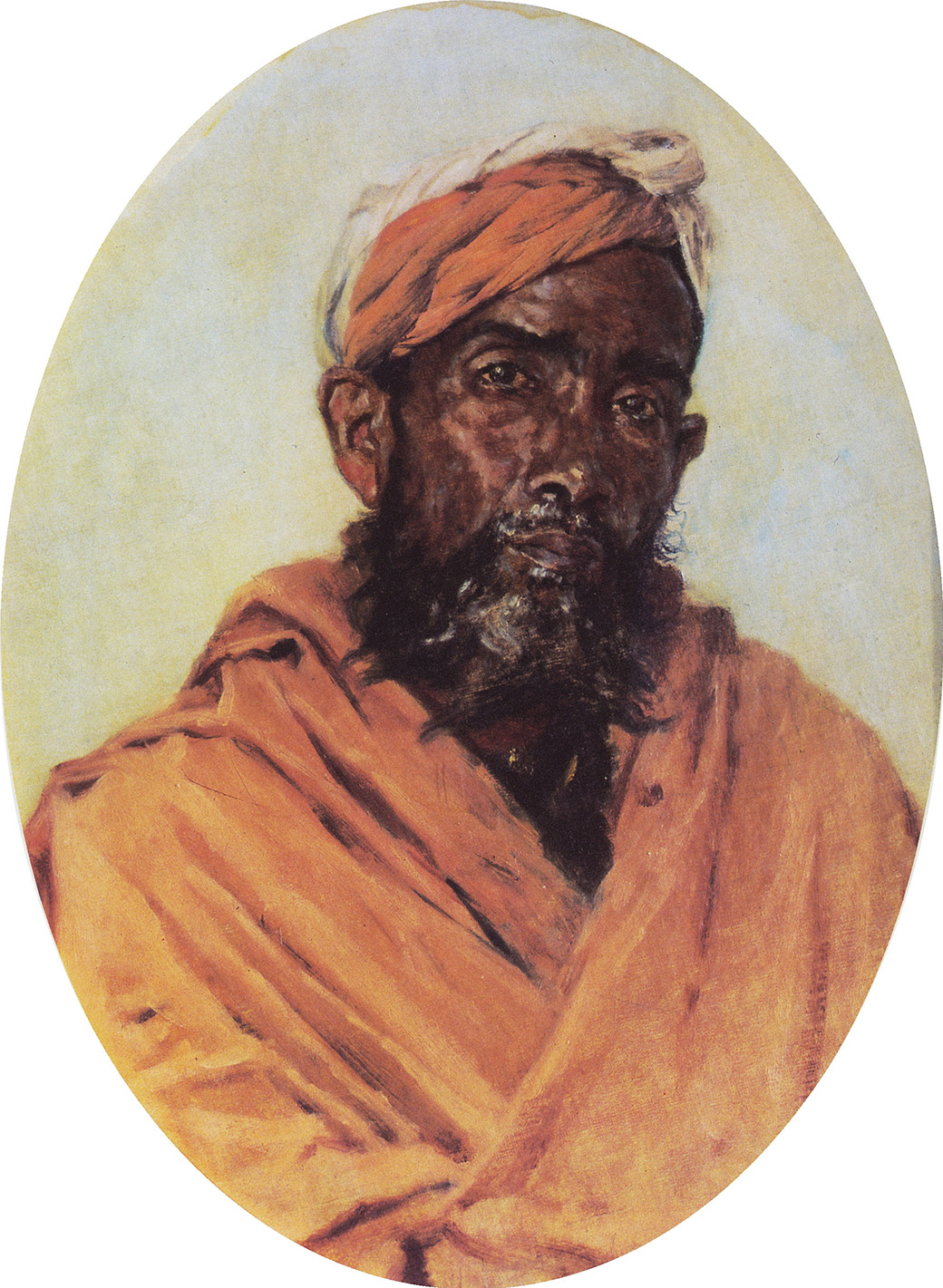
    A Muslim servant (1883), Vasily Vereshchagin | Creative Commons, courtesy arthive.com. Today’s reflection made me consider how each of us is called to be the courageous servant, near to God who upholds our “right.” It has also made me consider the Christian tenet that each of us has God within us, in our soul, and since we are called to humility and service, you can never judge a person based on their look or station in life. To that end, I’ve included a few lovely portraits from Vasily Vereshchagin that give dignity to the subjects and seem to reveal the light of God within them.

    Thus, the servant is absolutely aware that God lives beside him: “He is near who upholds my right.” I like the Lectionary translation here; the Hebrew is more literally translated as “He is near who vindicates/justifies me.” By using the phrase that the Lord upholds his “right,” we might actually come closer to the nuance in the Hebrew phrase since those words vindicate and justify have taken on a technical aspect after several thousand years of Church theology.

    We can think of this “right” in several ways. First, tracing the word “near,” the right is a statement of authority due to proximity. In other words, the servant’s sheer proximity to God, his state of “living in the light” of God, gives him the right to speak. Beyond the proximity argument, second is a statement of personal right to speak as an endowment specifically from God. This meaning traces back to the statement that “He…upholds my right.” God is gracing, upholding, this servant’s right to speak.

    Note that this is different than Natural Law envisioned by John Locke. Locke postulated that God establishes a Natural Law that grants all people certain unalienable rights. Many (myself included) think that scripture does not support Locke’s theory because, in scripture, people regularly lose their lives and communities (i.e., “rights”) when they live outside of God’s commandments and precepts. Today’s reading is a perfect example: the servant can claim his right because he lives in the light of God, as opposed to those who live in darkness. Even with the history-changing reality of Christianity, the basic right is the same: an invitation to accept God into our hearts, not a right for everyone even if they sneer at God and push him away.

    The third way we can think of “right” when the servant says “He is near who upholds my right” is the idea of correctness. God’s Word is Truth — the “well-trained tongue” is one that speaks the truth — and we can understand that the servant’s “right” is his accuracy in presenting the truth. 

    This reading culminates in a bold statement of the servant’s courage: “if anyone wishes to oppose me, let us appear together. Who disputes my right? Let him confront me.” Here is the full reality of the servant living in the light, speaking the truth. There is no space or “right” for those who live in darkness. We see a contrast between courage to speak and cowardice in not speaking, between truth and deceit.

    The Old Beggar Ninety Six Years (1891), Vasily Vereshchagin | Creative Commons, courtesy arthive.com.

    These contrasts are displayed clearly in the gospel reading from St. Matthew, where Jesus gives Judas the chance to be courageous and to speak the truth, but Judas chooses cowardice and deceit. The reading opens with an account of Judas’s visit to the chief priests and his agreement to hand over Jesus for 30 pieces of silver. We can only imagine the darkness of spirit that would have made Judas turn his back on the Word of God, the Truth incarnate. Like John who tells us that “the devil had already put it into the heart of Judas” to betray Jesus, Matthew tells us, “and from that time on he looked for an opportunity to hand him over.” In other words, Judas’s betrayal did not come about in some moment of passion but out of his fallen state.

    Just as in the gospel of John, Matthew tells us that while they were eating, Jesus says, “Amen, I say to you, one of you will betray me.” What is the point of saying this? Is it meant to alarm them, stir them up with doubt and suspicion of one another?

    St. John Chrysostom provides a window into what may have been Jesus’s motivation; he writes, “And before the supper, He had even washed his feet. And see how He spares the traitor. For He said not, such a one shall betray me; but, “one of you,” so as again to give him power of repentance by concealment. And He chooses to alarm all, for the sake of saving this man” (Homilies on Matthew, 81.1). As we reflected yesterday, Christ the Good Shepherd is at work, especially here when one of his chosen Apostles’ souls is at stake. In Chrysostom’s view, Christ is trying to give Judas a chance to come back into the light of God.
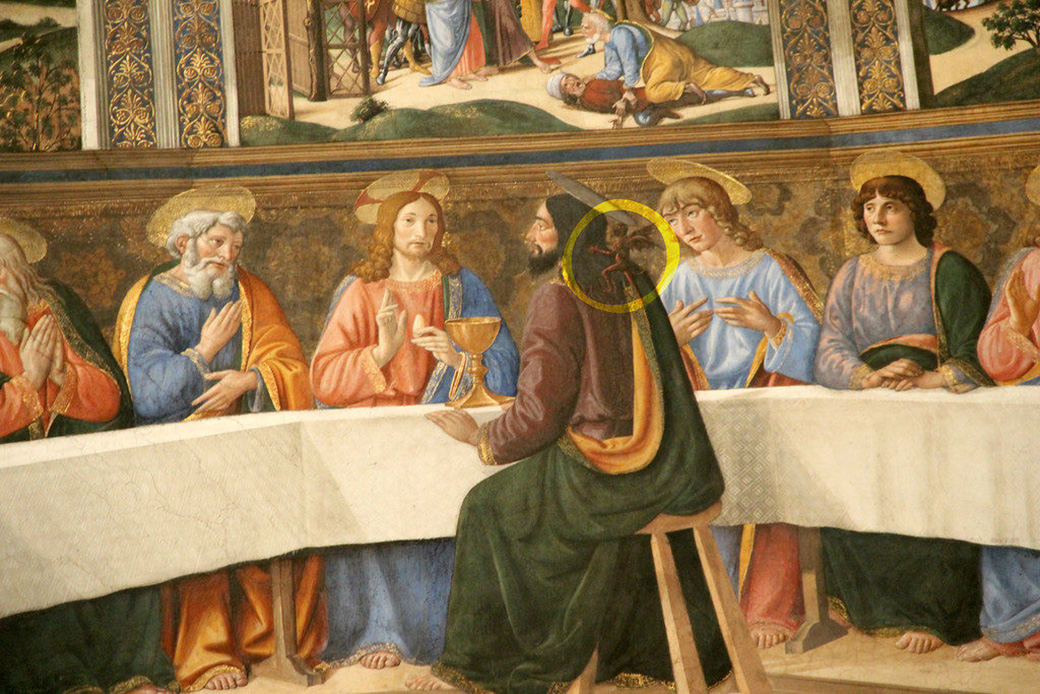
    Detail from The Last Supper in the Sistine Chapel (c.1481-1482), Cosimo Rosselli | image from sharingtravelmemories.com, including added circle. Note the devil placed on Judas’s shoulder as well as the halo that has turned gray. 

    Even after the distressed apostles say, “surely it is not me, Lord,” Jesus gives a dire warning, a last chance for Judas to come clean: “The Son of Man indeed goes, as it is written of him, but woe to that man by whom the Son of Man is betrayed. It would be better for that man if he had never been born.” Jesus has committed Himself to “going,” as John tells us, “Jesus knew that his hour had come to depart from this world and go to the Father.”

    An interesting question to ponder is if he needed to be betrayed to the chief priests; if someone had to do it even if it wasn’t Judas. It seems quite plausible that he could have simply walked into the temple the next day of his own accord and started the sequence of arrest and death. So let’s take him at his word that he was willingly accepting death and did not need to be betrayed. Then we must also see his attempt to save Judas from this great sin as genuine. He truly hoped to save him and keep him from committing this betrayal. But, as we are taught, God has given humanity free will to accept or reject him, and in this choice lies our own salvation.

    Another way to think of this is in terms of fate. “Fate” is a concept that doesn’t take responsibility for the reality of humans making choices in regards to God’s invitation to be with him. Instead, “fate” makes it seem like its’ all out of our hands. I don’t think Judas was “fated” to betray Jesus, and based on today’s reading, Jesus didn’t believe that this was somehow pre-ordained by God, because he tries to save Judas from this error.

    So, what happens when Jesus speaks in truth like Isaiah’s courageous servant, saying, “if anyone wishes to oppose me, let us appear together.” He invites Judas to speak openly of any concerns or changes of heart, to return to him, without calling him on the carpet in front of the other Apostles. What is Judas’s response? “Surely it is not I, Rabbi?” He hides in the cover of deceit, he takes on cowardice rather than courage. This is because he has taken the devil into his heart rather than God and he operates in the devil’s ways.

    Jesus simply (and I must imagine sadly) responds, “You have said so.” This is the only sad truth he can utter in the face of Judas’s cowardice and deceit. Chrysostom gives us a heck of a reaction to this:

    Oh insensibility! He inquires, when conscious to himself of such things. … What then says the most mild and gentle Jesus? “You say.” And yet He might have said, “O thou unholy, thou all unholy one; accursed, and profane; so long a time in travail with mischief, who hast gone your way, and made satanical compacts, and hast agreed to receive money, and hast been convicted by me too, do you yet dare to ask?” But none of these things did He say; but how? “You say?” fixing for us bounds and rules of long suffering (Homilies on Matthew, 81.2).

    I love Chrysostom’s commentary here, if for nothing else because it shows that in 395 AD, his jaw was dropping at the deceitfulness of Judas in the same way mine is today. I also appreciate how he concentrates on the “most mild and gentle Jesus,” who sets an example for us on “long suffering,” that is, patience in the face of troubles caused by others. 
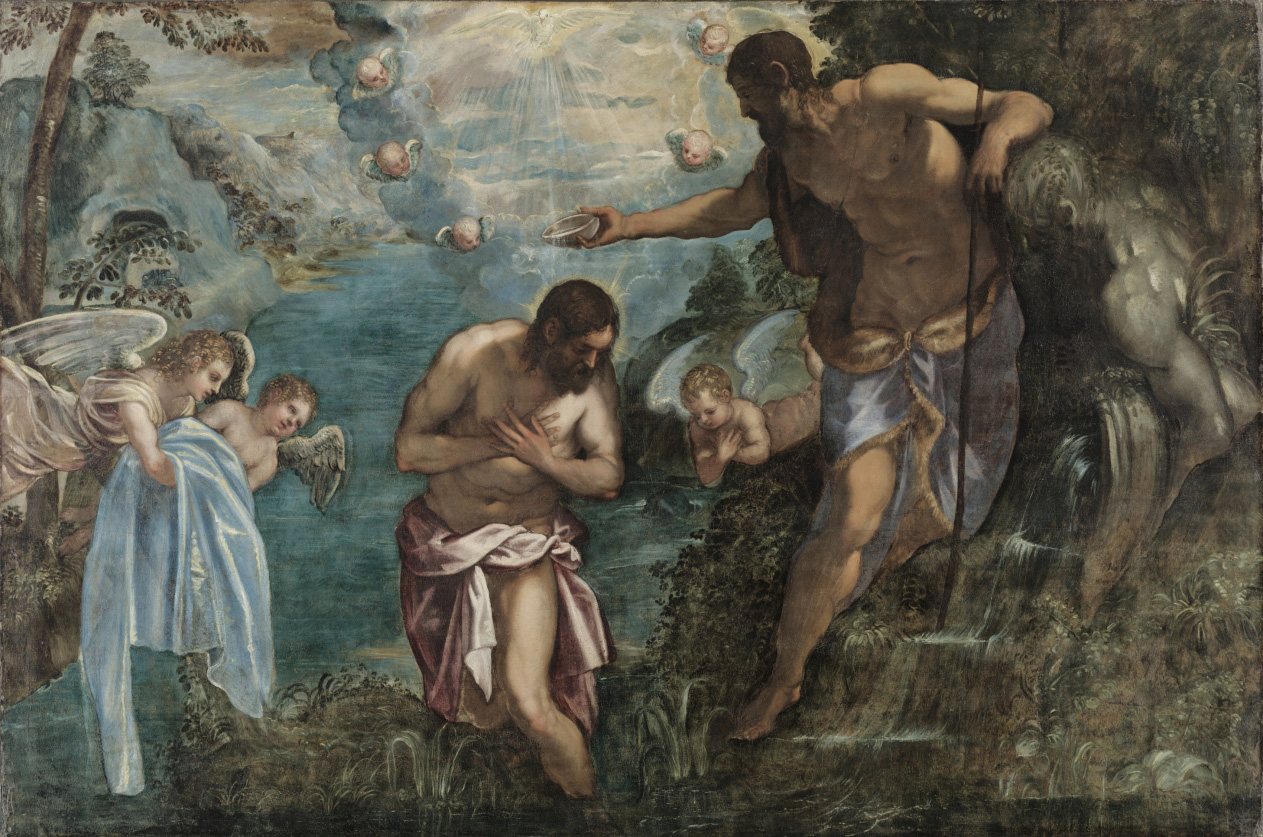
    Baptism of Christ (1580s), workshop of Jacopo Tintoretto | Creative Commons, courtesy of Cleveland Museum of Art. I appreciate the humble servant aspect of Christ depicted here as He begins His ministry, also the form of the Spirit that is pouring out the water of everlasting life.

    Let us take the challenge from Christ to live in the light of God, to have our “right” come from him and him alone. May we well heed the terrible choice that Judas makes to turn his back on God and live in the cowardice and deceit of the devil; “woe to that man.”
  • Evil Plots in Empty Hearts

    Evil Plots in Empty Hearts

    Saturday in the Fourth Week of Lent: Jeremiah 11:18-20, John 7:40-53.

    Today’s readings display the evil plots of those who willingly disbelieve. In the Old Testament and New, we see those with hardened hearts speak ill of and plan the destruction of the righteous. We must beware of this tendency that arises when we are not open and inquiring, always humble in the presence of God.

    Jeremiah was a spitfire of a prophet, to be sure. He did God’s will without fail, but also reveled a bit in divine justice, or vengeance as he would call it. In today’s reading, God reveals to him that there are those who dislike his preaching and are plotting against him. We hear, “Let us destroy the tree in its vigor; let us cut him off from the land of the living, so that his name will be spoken no more.”

    We hear similar evil words throughout sacred scripture and secular history. It reminds me of our Lenten reading of Joseph’s brothers (sons of Jacob), plotting against him and selling him into slavery (see Tend to the Good Fruit of the Vineyard). They say, “Here comes that master dreamer! Come on, let us kill him and throw him into one of the cisterns here” (Gen 37:19-20). Both of these episodes display a disease at the heart of the speakers, their flawed hearts allow jealousy, anger, self-centerdeness, defensiveness, and, ultimately, malice to grow.

    Even if murder is not physically enacted, Jesus tells us that the intent is enough to condemn us. As the fulfillment of the law, Jesus warns us that we must be more than just followers of the letter of the law; we must allow God’s Law to inhabit our hearts. From another reading this Lent, he illustrates that while we know we should not kill, “whoever is angry with his brother will be liable to judgment” (Mt 5:22). His point is that while we might refrain from the physical act of murder, we may still hold murderous intent — malice — in our hearts (see Salvation is Based on Our Core Person … for a fuller reflection on this). The reading from Jeremiah (and Genesis) displays this murderous intent in stark words.

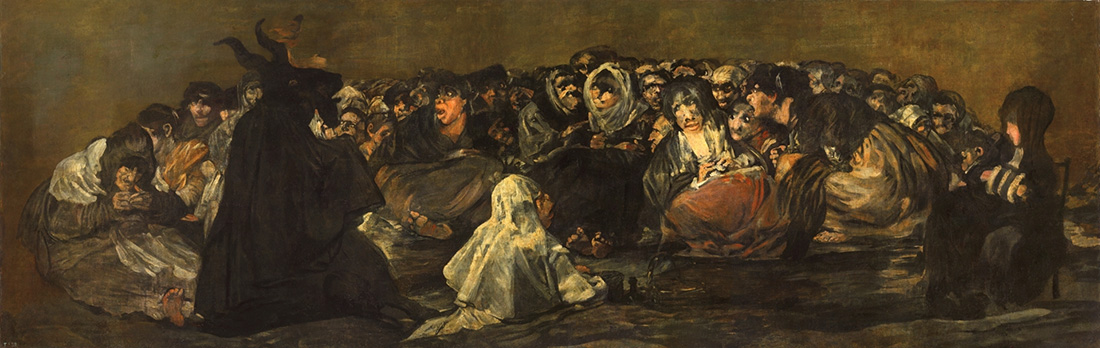
    Witches’ Sabbath, or the Great He-Goat (1820-1823), Francisco de Goya y Lucientes | Creative Commons, courtesy Museo del Prado, Madrid. The rapt and deformed (unformed might be a better description) faces of the witches painted by Goya in his “Black Period” remind me of the evil plots and empty hearts of those in the world who are paying more attention to Satan than to God. In the process, they are becoming enslaved to themselves and Satan and losing their humanity.

    Turning to today’s gospel reading from St. John, we encounter a crowd of very divided Jews reacting to Jesus’s words. Some were convinced that he was “the Christ,” while others wanted to arrest him. What has them in such a state?

    In the verses just prior to our reading, we learn that it is “last day of the festival, the great day,” which is known as Hoshana Rabbah. This is the last “day of judgment” in the Jewish calendar, when they process around the temple seven times and have a great temple service, imploring the Lord for a bountiful year ahead. Water played a special role throughout the festival of Sukkot during this period of history. On each morning of the seven days, the priests would travel down to the river to gather water and bring it back to the altars, where it would be poured into special holes that would allow the water to drain at a slow rate, flowing from God’s altar. On this last day of Hoshana Rabbah, the priest makes a great show of the water libation as an appeal to God to provide water for the people in the year ahead. It is at this time that Jesus cries out, “Let anyone who is thirsty come to me, and let the one who believes in me drink. As the scripture has said, ‘Out of the believer’s heart shall flow rivers of living water’” (Jn 7:37-38).

    No wonder the crowd is aghast! Jesus, as if in answer to the priest’s prayer, tells the people to come to him for living water. He is saying that he has God’s power of restoration for the people. This proclamation forces the Jews to make a decision, to react. Will they accept the Messiah in their midst or reject him?

    If they believe him, they must follow him in order to receive this living water that God will provide. Here, at the culmination of a great seven-day festival, replete with rituals and priestly roles, they are facing the option of potentially replacing all of these things that define them with faith in a single man (a Galilean at that!).

    On the persuasive side, his preaching during the festival has “astounded” them with his wisdom and command of God’s Word. Plus, he is renowned for working miracles, in the temple and beyond. But the stakes are incredibly high for them. The alternative to following him is that they maintain the rituals and beliefs that are much more comfortable to them. It’s inertia vs. actuation. Comfortable doubt vs. faith in something new.

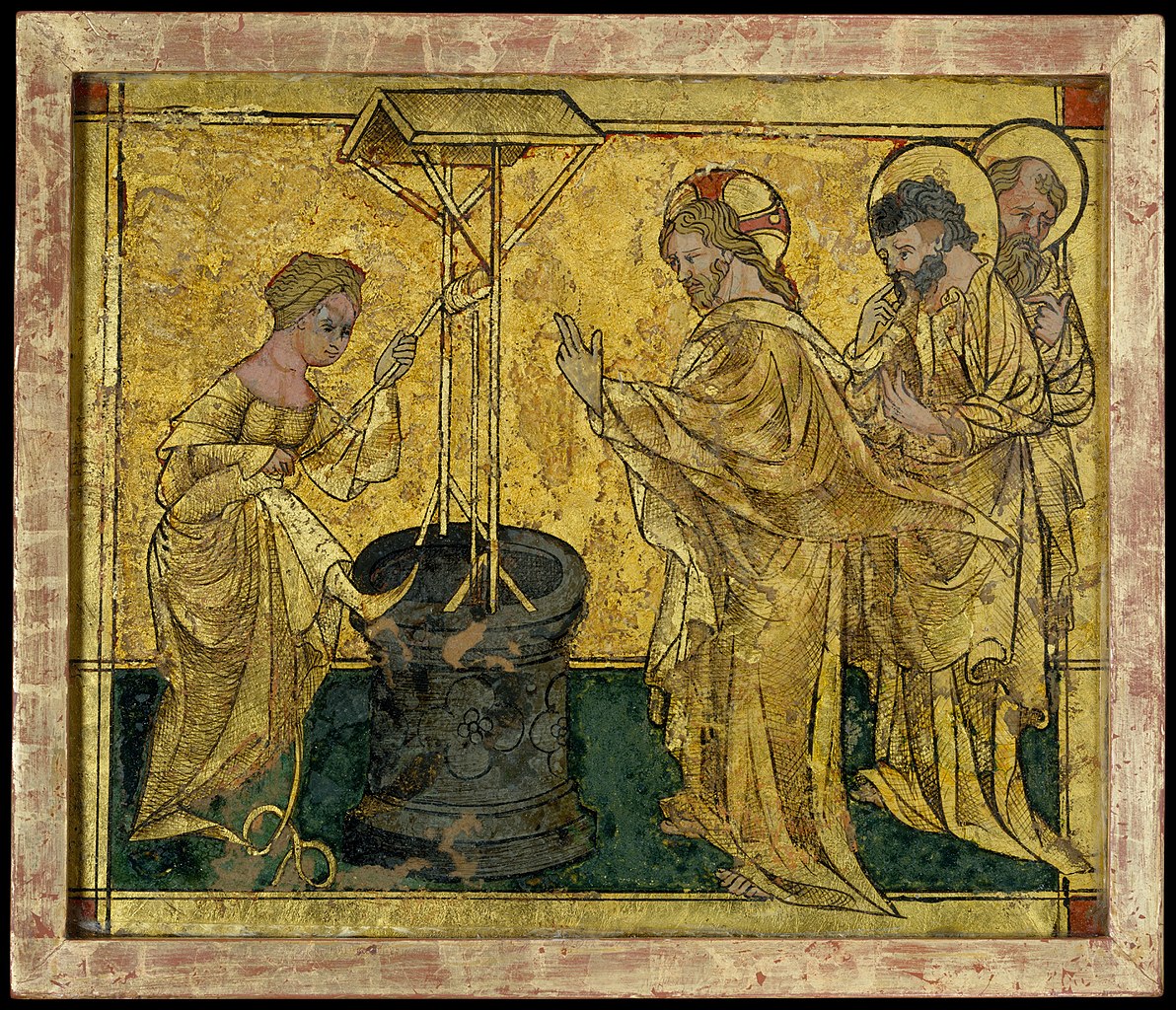
    Jesus and the Samaritan Woman at the Well (c.1420) Southwest German? | Creative Commons, courtesy the Metropolitan Museum of Art. Jesus offers us living water – will we accept his offer like the Samaritan woman (who appears about to jump into the well in her act of pulling up the water)?

    We hear that “Some of them even wanted to arrest him, but no one laid hands on him.” These are the ones who have chosen doubt, and we see where it leads them: arrest, persecution, shutting him up. The gospel emphasizes that these feelings from diseased hearts lead nowhere. St. John Chrysostom explains in his Homily 51 on the Gospel of John: 

    Such a thing is malice! It will give way to nothing, it looks to one thing only, and that is, to destroy the person against whom it plots. But what says the Scripture? “Whoever digs a pit for his neighbor, shall fall into it himself” (Proverbs 26:27). Which was the case then. For they desired to kill Him, to stop, as they thought, His preaching; the result was the opposite. For the preaching flourishes by the grace of Christ, while all that was theirs is quenched and perished; they have lost their country, their freedom, their security, their worship, they have been deprived of all their prosperity, and have become slaves and captives (Homily 51, 3).

    The problem with plotters is that they are too caught up in the short-term and in themselves. Chrysostom shows us that the long view, the perspective where we interact with the eternal, has a “rightness” that does not belong to us. This eternal perspective God invites us to share shows us that those malicious Jews (and all who exhibit malice) “have lost their freedom” in that they are captive to their own prejudice and small-mindedness; “they have been deprived of all their prosperity” in that they no longer grow as human beings but shrink into desiccated shells of hatred.

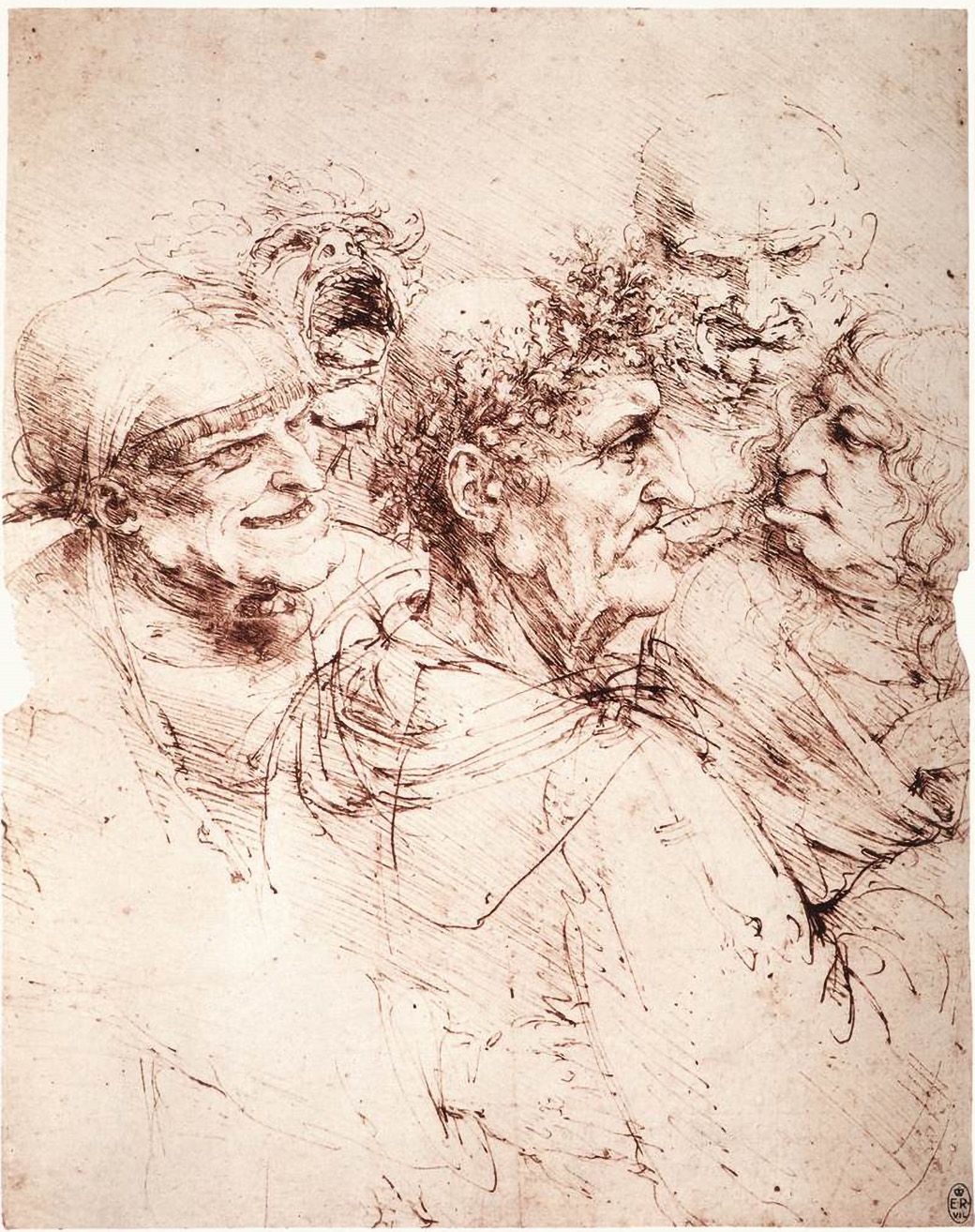
    Study of five grotesque heads (c.1494), Leonardo da Vinci | Wikimedia Commons. da Vinci’s sketch truly makes me think of the chief priests and Pharisees, wicked plotting and self-righteousness evident in their bearing.

    Today’s gospel continues by showing us the diseased hearts and malice of the chief priests and Pharisees. They chastise the guards for not arresting Jesus: “Have you also been deceived? Have any of the authorities or the Pharisees believed in him?” They attack the guards as being feeble-minded and offer themselves as the authorities on what is correct. They display their myopic determination to be seen as “right.”

    And when Nicodemus, a Pharisee who has come to Jesus previously with an open mind, urges them to give him a chance to talk with them before condemning him, they lash out. They venomously reply, “You are not from Galilee also, are you? Look and see that no prophet arises from Galilee.” We are shown that the diseased hearts of these impotent plotters devours them, so much so that they begin attacking their own.

    What a stark choice we are given in John’s gospel. On one hand, we have the Son of God, speaking with authority, working miracles, and offering life-giving water. On the other, we have the chief priests, Pharisees, and doubters — plotters all — who have no light and no truth to offer their people. All they offer is malice. If we judge by the fruits, we can see that this tree is diseased. And as Chrysostom points out, “it will come to nothing.”

    The passage ends: “Then each went to his own house.” They are left with nothing but themselves and their evil thoughts.

  • Who Said Catholics Aren’t Pro-Choice?

    Who Said Catholics Aren’t Pro-Choice?

    Thursday after Ash Wednesday: Deuteronomy 30:15-20, Luke 9:22-25

    It’s not the choice you’re probably thinking about; it’s more fundamental than that. It’s the freedom to choose to live in the light or to live in the darkness, and God guarantees us this freedom. This freedom is carried out in myriad choices we make every day. We don’t think about the consequences of all these little choices, but that’s at the heart of today’s readings.

    Moses is blunt: “I have set before you life and death, the blessing and the curse.” Here we have the Israelites, wandering in the desert, camping here and there, desperate to start a new life. They make the mistakes of mistrusting God, second-guessing Him, and being impatient for answers (sound familiar, everyone?). When Moses finally comes down from Mount Sinai with the Ten Commandments, he gives them a stark choice. This one choice, to either obey God’s commandments or to “turn away your hearts,” will become their blessing or their curse. In their moment of time, the blessing was to “live and grow numerous” and be blessed by God in a new land. The curse was to perish, have a short life, and a short family line. In other words, the Jews saw the consequences of their fundamental choice (i.e., to live a life of little choices that conform to God’s will) in their lives in this world. Blessings and curses for themselves and their descendants on the earth.

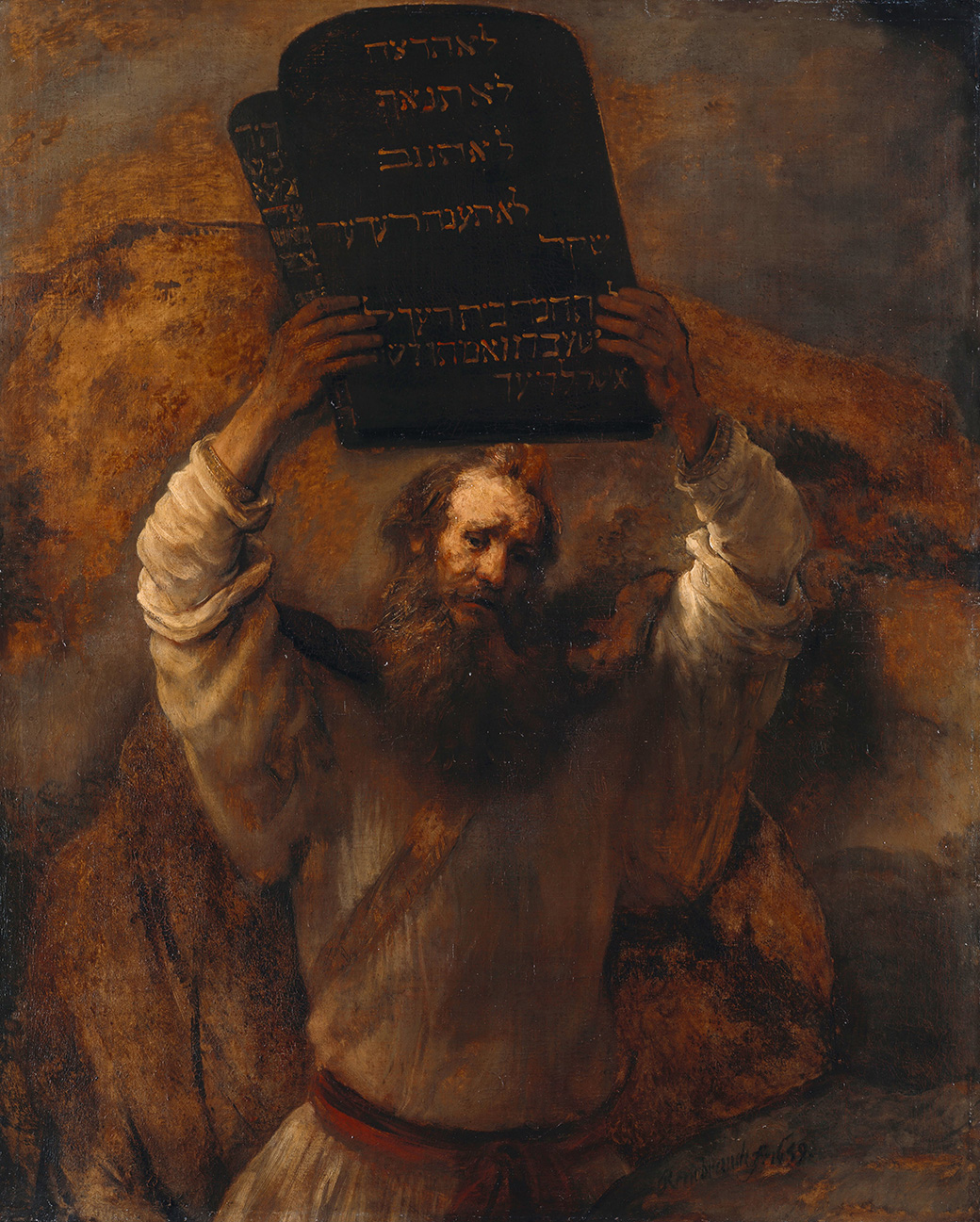
    Moses Breaking the Tablets of the Law (1659) by Rembrandt | Wikimedia Commons

    Today’s gospel of St. Luke opens like yesterday’s from Matthew: our Messiah tells his disciples that he’s going to suffer and be killed, then rise on the third day. But the sequence in Luke is slightly different than in Matthew. This conversation happens immediately after Jesus asks his disciples who they say he is. Peter answers him, “The Messiah of God.” Thus, Jesus’s message is hard, if not impossible for them to understand since they’ve inherited the earthly understanding of blessing and glory from their Jewish ancestors. The Messiah was thought to install an earthly kingdom, blessed by God, but an earthly kingdom nonetheless. How could the Messiah suffer and be killed? 

    But that’s not all. Jesus ups the ante: “If anyone wishes to come after me, he must deny himself and take up his cross daily and follow me. For whoever wishes to save his life will lose it, but whoever loses his life for my sake will save it.” I can just imagine the cold sweat and chill down the spines of the apostles, hearing with a fair amount of horror these words. They were coming off of just feeding 5,000 people with a few loaves and fish. Huge crowds were testifying to Jesus as the Messiah, seeing his miracles and believing. These were heady and exciting times for them.

    The first thing that jumps out is how Jesus is reframing the blessing and the curse. Specifically, he is exploding the traditional concept of them being experienced in this life, in this world. How can you save your “life” by losing it? More than just a clever linguistic reversal, Jesus is expanding their concept of “life” to extend beyond the grave or the life they experience in this world. This new eschatology forms the basis of all hope for Christians. It orients us to something greater than what we see, hear and touch — something eternal. For the ancients, the eternal was something only gods could experience, but here we have God alive as a man telling us that we, too, can experience the eternal.

    But we have to make a choice.

    Christ clarified the reward, but he’s also clarified the commitment. (As in all ways, he not only upholds the law but perfects it.) His clarification of the commitment is this: we must deny ourselves and take up our cross daily to follow him. This is no different than the Word of God proclaimed to Moses (same Word!), but the reality of the cross punctuates the eschatological consequences. Why bring up the cross and death as part of our commitment? It’s a way for him to show that death is but a step in a much larger continuing life with (or without) God. Death does not mark an endpoint after which we could say “that person was blessed” or “that person was cursed.” We must instead embrace death as a part of the journey toward God.

    Moreover, the way we embrace the cross is important. We must “deny ourselves” and “follow him.” This is important because an atheist could embrace death (even hasten it with suicide) but not be making the choice that Jesus wants us to make. That atheist still believes that death is his or her final moment and is not united with God. This person does not accept God’s invitation to eternal life.

    So it’s not simply about being blasé about death. By denying ourselves and following Christ, we fundamentally see death differently. This is a sticking point for a lot of people. Death is scary; death is DEATH, right? Being afraid is natural, but here is where the rubber hits the road in terms of our faith. We believe that there’s an incomprehensible greatness and glory that awaits us. We orient our entire lives to this. We live differently. We deny that our “selves” belong to this world alone. When Jesus asks what profit is there “to gain the whole world yet lose or forfeit himself?”, he puts the world in direct opposition to true personhood. True personhood is a spiritual personhood that exists fundamentally in relationship with God. What is death, then, but a step in the path to getting closer to our Creator?

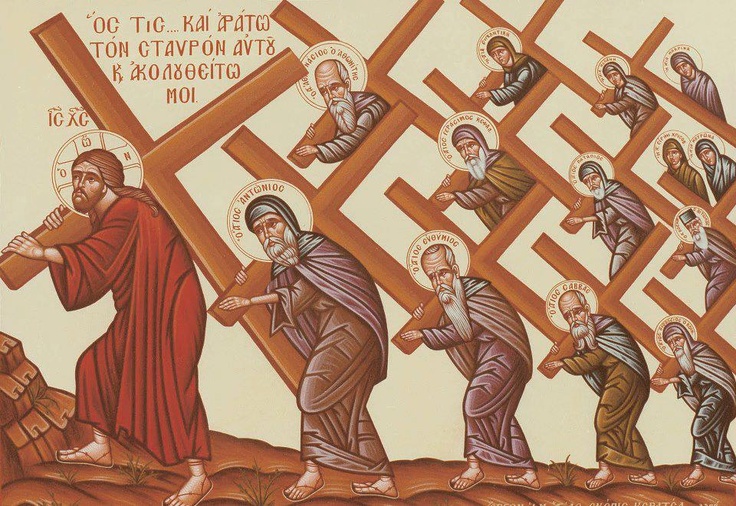
    Image: Palamas Institute

    When we hear “he must deny himself and take up his cross daily,” we might be tempted to consider this a sad, crushing, but good-for-you pill to swallow. Instead, I think Christ’s point is ultimately a hopeful and positive one. The last sticking point to address is the “deny himself” bit. Well, now, it seems appropriate that we just started Lent!

    Can there be anything more profoundly fulfilling than being selfless? As a married man, I am no happier than I am to see my wife be happy or thrilled with something. If I can do something for her that delights her, then I am very fulfilled. Our sacrament of marriage is a vow to be Christ for one another, and every act of putting the other person first is a step in this direction. Being selfless in our daily interactions with others is one aspect of “denying oneself” that I for one find fulfilling, not something that deprives me of happiness. 

    A deeper aspect of “denying oneself” is to deny our sense of importance as we stand daily before God. This is better understood as humility. And it’s not a complete denial of self. As Simon Tugwell, OP, writes in Prayer: Living with God, “Humility means recognizing all these [obstacles and competing wills] and not trying to make my will paramount at all costs; it does not mean the simple suppression of my will” (61). We must still be fully human, accept that we have a will that God gave us, but not let that will supersede our desire to do God’s will.

    Perhaps the most common understanding of “denying oneself” in Lent is to make a Lenten promise to avoid certain desires, passions, and behaviors. For example, giving up alcohol, chocolate, or TV during Lent. Saints by the hundreds show us the benefits of little denials of our worldly passions: these denials strengthen our spirit, help us avoid bigger temptations when they present themselves, and help us better listen and see God in our lives. An important point is that we’re not trying to lose all emotion or passion for life. Tugwell, in the same book, counsels that “A man whose passions are ordered and harmonious can have a far more richly and intensely emotional life, fully emotional, but always subject to the overall guidance of clear thought and vision” (71). To Tugwell’s point, Christ’s lesson to take up his cross, deny ourselves, and follow him is one that helps us be more fully human, more perfectly ordered both in this world and the next.

    It’s not an easy path, it takes discernment and work, but the rewards of making this choice to follow God’s law … can we even describe how glorious?