Tag: Exodus

  • Forgiving our Great Affront

    Forgiving our Great Affront

    Thursday of the Fourth Week of Lent: Exodus 32:7-14, John 5:31-47.

    Today’s readings pull no punches in shining a light on our inability to recognize God and remain faithful to Him. But they also show us that God’s overwhelming love, mercy, and forgiveness wipe away this great affront. This is our God: deserving of all honor and glory, but as the source of goodness and love, willing to erase the greatest affront and welcome us back to himself.
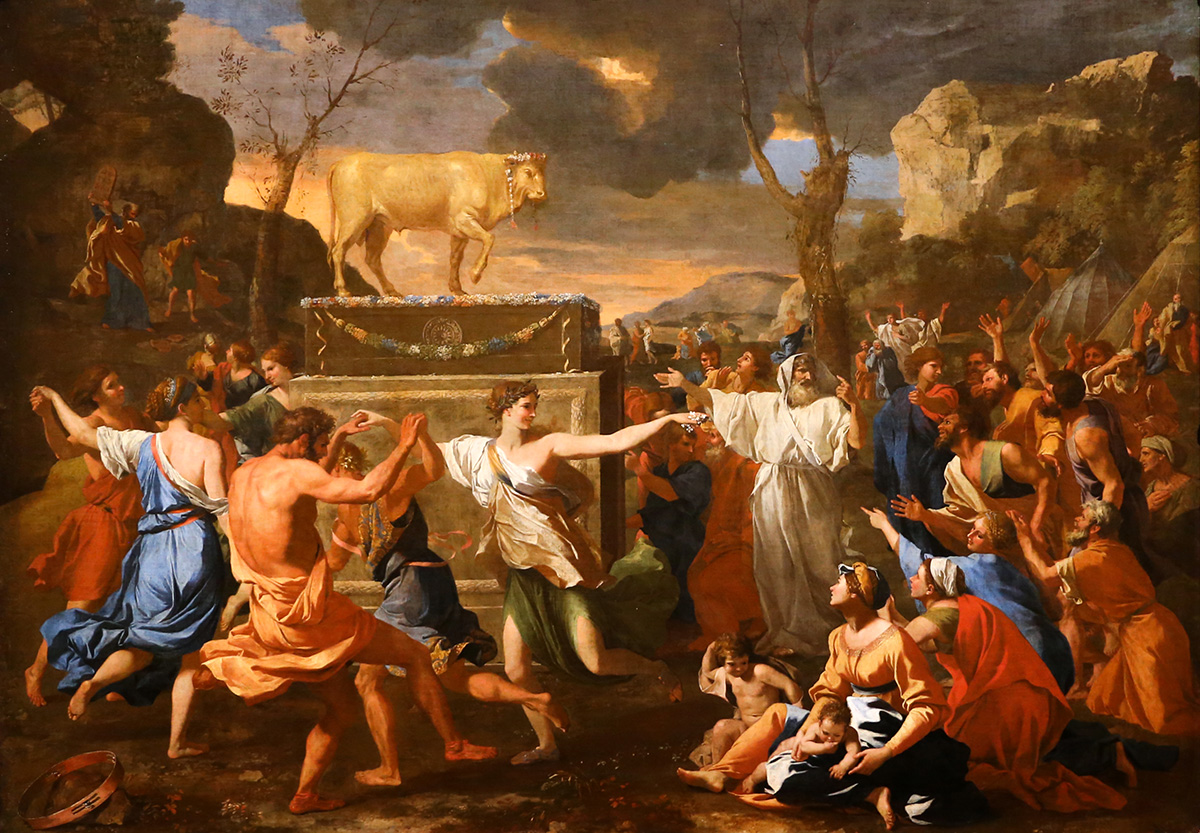
    The Adoration of the Golden Calf (L’Adoration du veau d’or), 1633-1634, Nicolas Poussin | Wikimedia Commons.

    The famous incident of the golden calf is the subject of the first reading. In the verses just prior to this, the extent of God’s betrayal is shown in the person of his chosen priest, Aaron. Aaron, Moses’s brother, who has been by his side for all of the wonders God worked in Egypt, who held up Moses’s arms during the long battle with Amalek so the Jews could win, is the one who builds the calf. Aaron responds to the wishes of the people who were tired of waiting for Moses (occupied on Mount Sinai with God). He takes all of their gold rings, melts them, and casts a statue of a golden calf. Then, he says, “These are your gods, O Israel, who brought you up out of the land of Egypt!” and “he built an altar before it; and Aaron made proclamation and said, ‘Tomorrow shall be a festival to the Lord.’”

    Now, that’s truly messed up if you asked me. I understand the desperation of a people lost and wandering in the desert without a home, but this extreme of abandoning the God who made himself known personally to Aaron, who singlehandedly brought them all out of slavery … it’s almost unfathomable.

    It’s surprising, but on second thought, not terribly different from all of us today who abandon God despite all of the blessings we’ve received. It is interesting that those who receive the most blessings on earth are often the quickest to abandon God when reflecting on the troubles that plague humanity. People in poorer countries (in South America and Africa, for instance) are the ones who comprise the bulk of the Catholic Church nowadays while rates of atheists in first-world countries are higher than ever before.

    Perhaps God makes up for whatever blessings of earthly pleasures are lacking for some people by blessing them with greater faith. Or perhaps striving to live with dignity in the face of great obstacles reminds us of our humility in the face of things greater than us and thereby find room in our hearts to honor God and seek his help. Either way, the poor and less fortunate seem to be more faithful to God.

    We begin to understand Jesus when he says, “many who are first will be last, and the last will be first” (Mt 19:30) — that is, the “first” in this world will be last in the Kingdom because they have abandoned God while the “last” in this world will be first in the Kingdom because they remained faithful.

    There is something of this conundrum in the Jews who are tarrying at the base of Mt. Sinai. Over the course of their miraculous deliverance from slavery in Egypt, they have benefitted from miracle after miracle: waters parting, manna and quail being given as food, water sprouting from rocks at the strike of Moses’s staff. And oddly we hear at each turn how they are abandoning God for idols or not obeying his commandments. Their ongoing blessings seem to engender a sense of entitlement rather than thankfulness. The more they receive, the less they recognize the giver of the gifts.

    This culminates in them so forgetting who God is that they clamor for Aaron to invent someone for them to worship: “Come, make gods for us, who shall go before us; as for this Moses, the man who brought us up out of the land of Egypt, we do not know what has become of him” (Ex 32:1b).

    Let’s not tell ourselves that this is the work of particularly evil or callous people. The story of the Jews in the desert is the story of all humanity failing to recognize God in their blessings. It is the story of our lost wanderings, being led back to God and the Promised Land (i.e., the Kingdom of God), but questioning him and his ways at every step. Sadly, it is the story of our contemporary descent into idolatry and atheism even when we have been shown the way.

    What is God’s response to this unfaithfulness? He tells Moses he’s ready to purify these people: “that my wrath may blaze up against them to consume them. Then I will make of you a great nation.” Whoa! This is the God of Love. Let’s unpack this so that we don’t think there is some sort of contradiction going on.

    The Church teaches us that God is all good, complete, and unchanging. He is the origin of all creation, not a part of it, as He tells Moses: “I AM who I AM.” As the only complete and unchanging thing in the universe (or outside of the universe), he doesn’t get angry, he’s not surprised, he’s not jealous, etc. That doesn’t mean he doesn’t care, mind you, or doesn’t yearn for us more than we yearn for him. When we encounter moments like today’s in the Scriptures, we have to remember what all of revelation has taught us about God and read the passage as it has been laid down by a mortal.

    One of the better articles I’ve read on this topic was posted on the Catholic Standard by Monsignor Charles Pope in 2019. He writes that God’s “wrath” can be called “wrath” only in how it is experienced by us, not as an emotion raging within him. He writes about the analogy of trying to mix water and fire:

    God’s wrath is our experience of the total incompatibility of our sinful state before the holiness of God. Sin and God’s holiness just don’t mix; they can’t keep company. Think of fire and water; they cannot coexist in the same place. Bring them together and you can hear the conflict. Think of a small amount of water poured into a large fire: the water droplets sizzle and pop; steam rises as the water boils away. … We must be purified before entering His presence, otherwise we could not tolerate His glory. We would wail and grind our teeth, turning away in horror. The wrath is the conflict between our sin and God’s holiness. God cannot and will not change, so we must be changed or else we will experience wrath.

    So we can affirm that God does not lose self-control or experience emotions in the ways that humans do. I tend to agree with our Church Father, Tertullian, though, who writes, “Angry He will possibly be, but not irritated, nor dangerously tempted; He will be moved, but not subverted” (Against Marcion, II.16). Tertullian’s point, in part, is that we can’t really know how or if God experiences “feelings,” since it is beyond our capacity. But, he notes that one thing is for sure: “it is yet palpably absurd of you to be placing human characteristics in God rather than divine ones in man, and clothing God in the likeness of man, instead of man in the image of God” (ibid, II.16).

    As I wrote in Forgiveness is Mercy in Action last week, there is something in the original Greek that points to God’s visceral reaction that we might interpret (by analogy) as “emotional” or “affective.” When he is viscerally moved to compassion, the verb has its root in the word for intestines and internal organs: σπλαγχνισθεὶς (splanchnistheis). This is a nice nuance to add to Msgr. Pope’s analogy of the fire, which is by definition an element that is impassive and will burn anything regardless of its good or evil nature.

    Let me tentatively put this forward: because God is all goodness and purity, the purifying fire of his nature has a valence, meaning that it is weighted with all things good and against all things evil. Thus, when goodness approaches Him, the reaction is unity, which we experience as delight, warmth, and embrace. When evil approaches Him, the reaction is rejection and elimination, which we experience as wrath, anger, and jealousy.

    Transfiguration of Jesus (2004), Armando Alemdar Ara | Wikimedia Commons. I think this beautiful interpretation of the Transfiguration might also be a nice way to visualize the purifying fire of God.

    Let’s return with these thoughts to our story from Exodus. God says, “Let me alone, then, that my wrath may blaze up against them to consume them.” Two things to note: first, he maintains his discourse and relationship with Moses, not to mention the promise to build for him “a great nation.” When he asks Moses to “let him alone,” we might see this as a the way Moses interprets this moment of sensing the momentum of God’s purifying fire and the opening Moses himself has in terms of begging for mercy for his people.

    For those who welcome the idea of a God who tests us, perhaps he is probing to see if Moses is able to fully inhabit the mercy of God and reflect this same mercy in a request to save his people. In any case, we can say that God is exhibiting his own mercy here simply in the act of conversing with Moses, giving him a chance to halt his purifying essence from burning through his people.

    The second thing to note is that God is not consumed by wrath; he is not out of control with human-like emotions. He is measured, speaking frankly and with mercy to Moses. In fact, he presents his wrath as a fundamental part of who he is, a purifying force that simply blazes up in rejection of the sin it encounters. This shows us the mercy and compassion of God while maintaining his essential, indivisible nature, “I AM who I AM.”

    Moses steps into his role of chosen prophet and law-giver admirably, reflecting back to God the mercy that he himself was shown. He pleads for the sinful people to be saved. God, ever merciful, grants his prayer. We hear, “So the LORD relented in the punishment, he had threatened to inflict on his people.” In some ways this wording is unfortunate because the words “punishment” and “threatened” feed a misunderstanding of God as one who is overly emotional and fickle (the theological terms would be passible and changing). This sentence could have also been written “So the LORD granted Moses’s prayer and mercifully spared the sinful people from His purifying essence.” In this way, we should understand his “punishment” as simply the incompatibility of sin and blasphemy with the presence of God. Likewise, “threatened to inflict” is “told Moses would occur if His presence fully encountered and burned/purified the sinful people.”

    Could worshipping a golden calf after God has saved you countless times be the biggest affront possible? It’s close, but I think how we treat Jesus Christ is worse. After all, we take his greatest gift, his only Son, don’t believe him, mock him, torture him, and crucify him. It is the same type of affront — faithlessness — but many degrees more egregious.

    Today’s gospel reading is a continuation of yesterday’s, when Jesus is talking about his consubstantial relationship with the Father, like a flame and the light it gives forth. He is trying to show the ridiculousness of the Jews’ accusations of blasphemy; they are distrustful of the only one telling the truth! But how do you convince distrustful people? You have prophets testify to your coming throughout the scriptures, including a living example in John the Baptist. More, you have the Father’s miracles coursing through you that testify to the Truth you are. What more could they want?

    This is what Jesus tells them. They have the promised gift of life from God and refuse to accept it. He speaks of an interesting mindset, particularly Jewish: “You search the Scriptures, because you think you have eternal life through them; even they testify on my behalf. But you do not want to come to me to have life.” This is not the disbelief of an atheist or pagan. This is the disbelief of a people who have become fossilized in what they consider to be truth, yet is only prophecy, only something that points to the truth yet to come in a very real way: Jesus the Christ.

    They think they have eternal life through the scriptures, that is, by living out written laws and prescriptions, but Jesus tells them this is not eternal life — it is only part of the path of living on the earth right now. Importantly, he points out the big affront: “you do not want to come to me to have life.” This is the stubbornness and pride of the “stiff-necked” people. They must acknowledge that they need something more, that they are still vulnerable and dependent on God, in order to want to come to Christ. They do not do so.
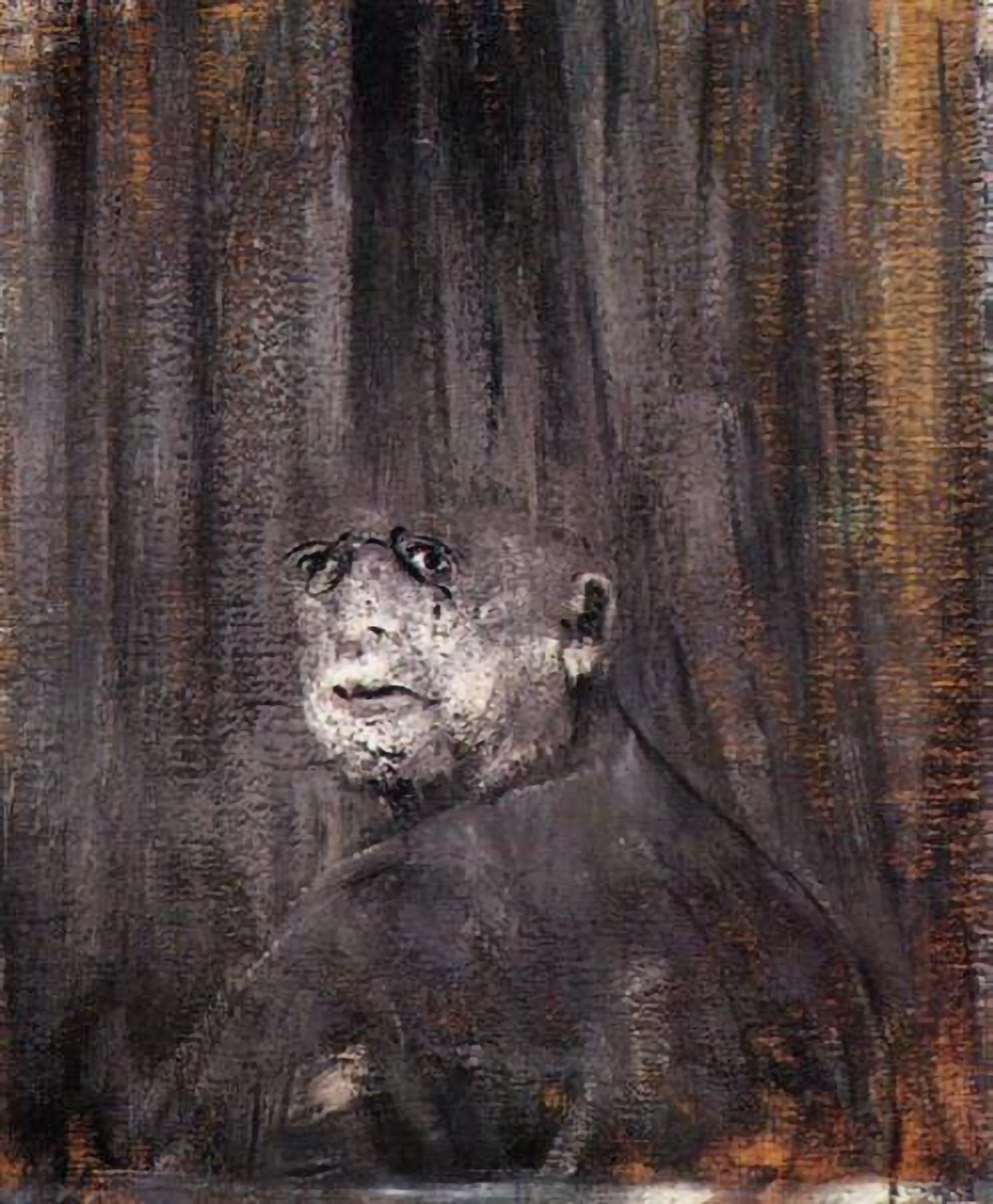
    Head III (1949), Francis Bacon | Wikimedia Commons. Bacon was an Irish-born British figurative painter known for his raw, unsettling imagery, and claimed that he strove to render “the brutality of fact.” This is neither his most abstract nor most macabre work, but one that I think speaks to the mind of humans when we think that we “know best.” There is a pride in this man’s demeanor and hints of scholarly knowledge in his eyeglasses. And while we see his features and face, it is as if they emerge with great effort, for he is but a shell of what a full human should be. Importantly, his mind is obliterated – lost to a vacuum of some sort rather than full and defined with actual Truth.

    “Moreover,” Jesus says, “I know that you do not have the love of God in you.” Oh, the shame and trembling if they only knew who was saying this to them! It is interesting to me that Jesus separates this ultimate sin of turning one’s back on God from the earlier point about them not wanting to come to him. Jesus instructs us here that one can be imperfect and prideful yet still perhaps have a kernel of God’s love inside them. Sadly, the Jews who disbelieve and accuse him are both prideful and lack God’s love inside them, meaning that the truth they supposedly found in the scriptures is not something they have incorporated into themselves. They lack God’s love out of their own fault, not because it has been withheld from them. This is a horrible state of affairs, a great affront to our Creator, to whom we owe our lives, our intelligence, our souls, everything. 

    But like the Father, the Son loves and gives mercy. Despite their accusations against him and their disbelief in who he IS, he says, “Do not think that I will accuse you before the Father: the one who will accuse you is Moses, in whom you have placed your hope.” Like the Father, he IS, meaning he will radiate and purify with his love through his actions and his very being. His saving mission at this moment in history is to teach, to suffer, to die, to resurrect, and to initiate the Church in Spirit and Truth.

    But we must remember his words from yesterday (part of this same dialogue), when he says, “[the Father] has given him authority to execute judgment, because he is the Son of Man.” This discussion, in other words, has an eschatological bent. It is concerned with everlasting life or everlasting torment. The Son’s mission isn’t done with the establishment of the Church — it will eventually conclude with his presiding over Judgement Day. He will embody the purifying love of the Father. He returns to that concept when he says “Do not think that I will accuse you before the Father.” It sends a chill up my spine to imagine how these unconverted Jews will wither when they see their great hero, Moses, prostrate before the Son of God and condemning them.

    The take-home message is clear: be grateful to God for your life and every blessing in it. Be faithful to God — especially when thinking and talking about him with others. Your testimony to the Truth of God and Jesus Christ is an essential element of your salvation. And, like Jesus tells us, whether you believe it or not, the Truth has already been testified to.
  • As I Have Done for You

    As I Have Done for You

    Holy Thursday – Evening Mass of the Lord’s Supper: Exodus 12:1-8, 11-14, 1 Corinthians 11:23-26, John 13:1-15.

    We know the readings of the Easter Triduum well, as we should; it is our highest of feasts, the culmination of Christ’s mission and ministry. On this Holy Thursday, the Lord is ready; his hour has come. As I consider these readings, I’ve been asking myself how I would spend my last hours on the earth, and how Christ’s message at the Last Supper can guide me.

    The first reading from Exodus recounts the institution of the Passover meal that commemorates the truly terrifying Passover night in Egypt. In describing the Passover meal, this reading relates to Holy Thursday, and in describing the blood marking the houses of the Israelites, it relates to the Lord’s death on Good Friday.

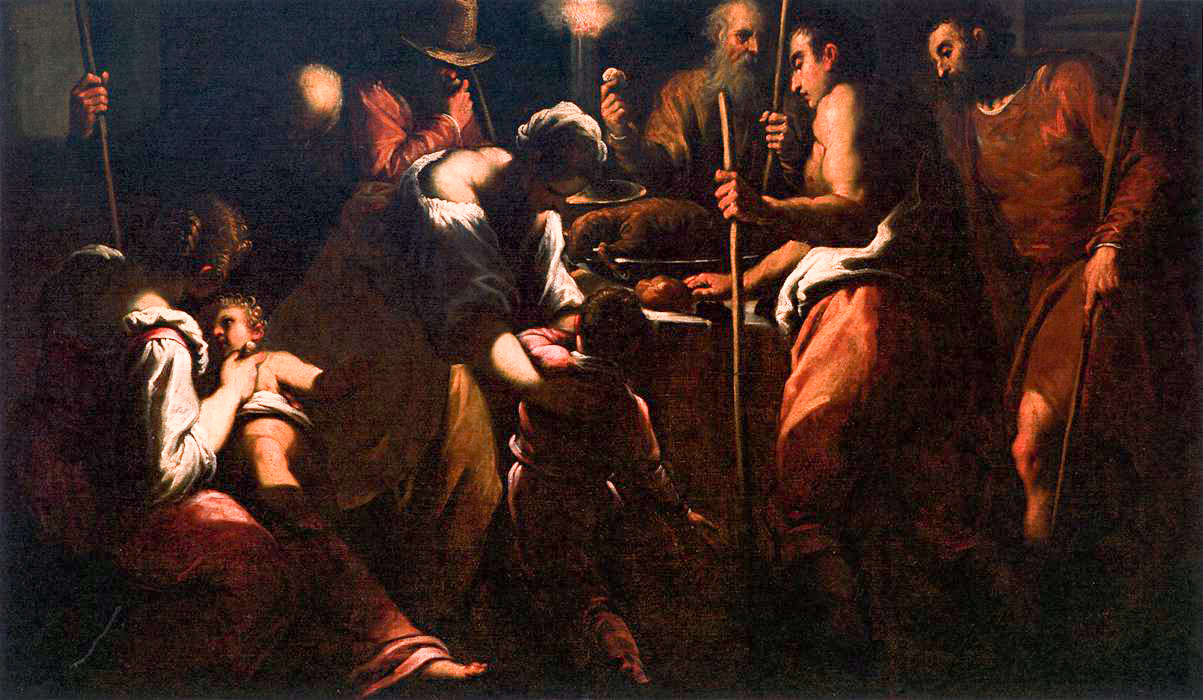
    The Paschal Lamb (1580-1581), Palma il Giovane | Wikimedia Commons.

    Jesus instituted the greatest sacrament, the Eucharist, during the Last Supper (as St. Paul recounts in the second reading). Let’s consider how the Word of God prefigured the meal of the Eucharist in the institution of the Passover meal. First, there is the regularity of the Passover meal — it is held annually on the 14th of the first month. For the Catholic Church, the Eucharistic meal is so much more central to our being that we celebrate it with every gathering (Mass), a regularity that has been instituted at least every Sunday. Next, the Word of God establishes the mark of purity for this meal; he prescribes that “The lamb must be a year-old male and without blemish.” Also, there is one lamb per family and it is to be slaughtered at twilight, at which point some of its blood is to be applied “to the two doorposts and the lintel of every house” where they “partake” of the lamb. What is the point of these prescriptive rituals? This is but one of many animal sacrifices described in the Old Testament, and part of the challenge for the Jewish nation was to uphold these prescriptions in order to display their faithfulness to God. This speaks to a certain type of ritual beauty that exists in its particularity for each sacrifice — whether those participating were in the desert, in the glorious time of King Solomon, or in the Babylonian Exile, each connected ritually with God in a way that is both shared yet particular to their place and time. In addition to instilling an appropriate thankfulness as the Jews recollect the original Passover, God was establishing a special place for the “unblemished lamb” in their cultural memory to be ready for the time when the Lamb of God, pure of sin, comes for his ultimate sacrifice.

    Eating the slaughtered lamb is an important part of the Passover ritual: “That same night they shall eat its roasted flesh with unleavened bread and bitter herbs.” The Word of God made flesh, Jesus Christ, establishes the full meaning of this ritual when he says, “This is my body that is for you. Do this in remembrance of me” (Mk 14:22, Lk 22:19, 1 Cor 11:24) and “Amen, I tell you, unless you eat the flesh of the Son of Man and drink his blood, you have no life in you” (Jn 6:53). As Christians, we understand the Passover lamb as the precursor (easier to understand and easier to “stomach”) to the true Paschal Lamb, Christ Himself.

    In the same way, we understand the Passover deliverance from the wrath of God that ravaged “every firstborn of the land, both man and beast” in Egypt as a precursor to Christ’s deliverance from the ravaging of every person on earth, condemning them to Gehenna. Our Eucharistic feast is a dense recollection of the great mystery of the Christ event: it is a gift from God, it is a joining of the food of life and the great sin-atoning sacrifice, it is a fulfillment of generations of Jewish ritual and God’s preparation of human hearts for his entrance into humanity. At the same time, it is real food, truly the flesh of the Lord present through the mystical action of the Spirit in our liturgy. The mysterious sacrament of the Eucharist, the heart of our Mass and the “source and summit of our faith,” can be plumbed endlessly for theological significance but more importantly provides real-world transformation of humanity.

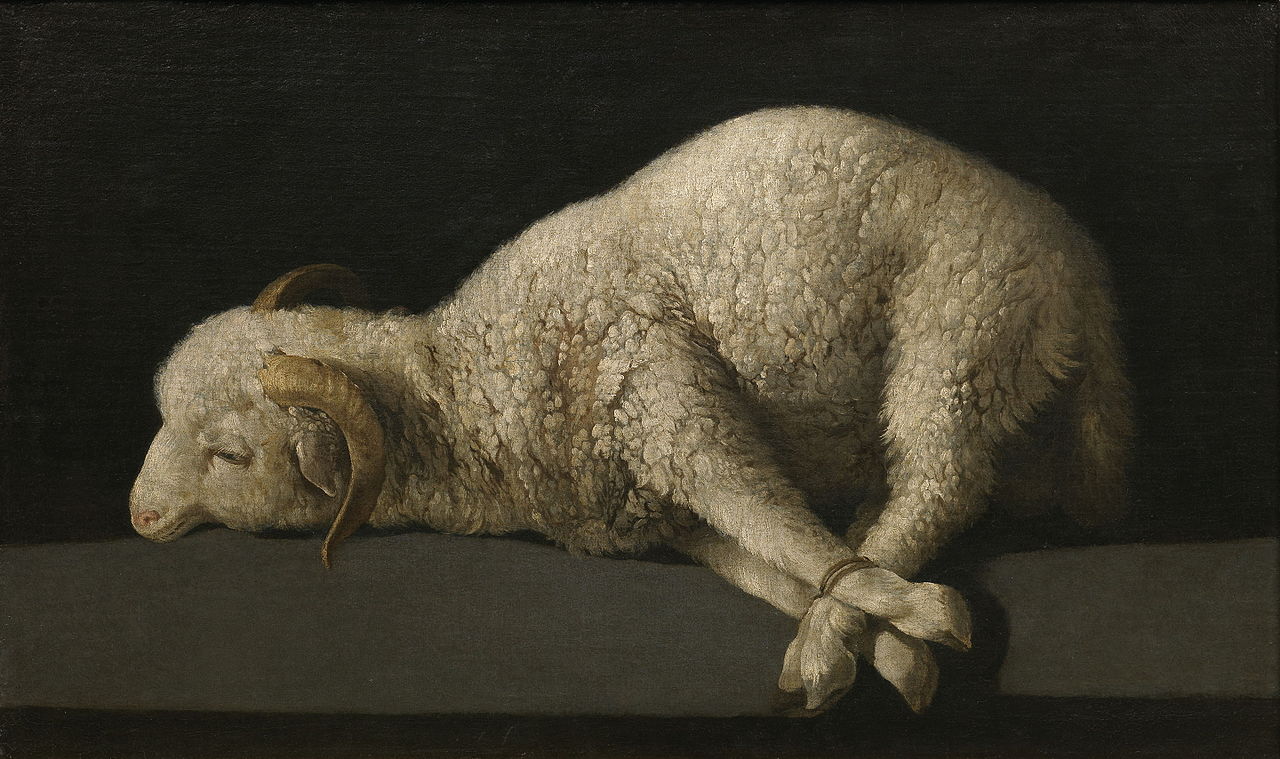
    Agnus Dei (1635-1640), Francisco de Zurbarán | Wikimedia Commons.

    A final instruction from God to Moses is important to note. He instructs the Jews to eat the Passover meal in a certain way: “with your loins girt, sandals on your feet and your staff in hand, you shall eat like those who are in flight.” This idea of being on the way to something greater, not tied to the things of this world, was embraced from the very beginning of the Church. Jesus tells his apostles on this Holy Thursday, “but because you do not belong to the world, and I have chosen you out of the world, the world hates you” (Jn 15:19).

    Peter acknowledges this transitory nature of our existence and our belonging to something other than this world in his epistle, “I appeal to you, my friends, as strangers and refugees in this world! Do not give in to bodily passions, which are always at war against the soul” (1 Peter 2:11). And, of course, St. Paul gives us a number of memorable passages related to this, including “Do not be conformed to this world, but be transformed by the renewing of your minds” (Rom 12:2). So, drawing on Jesus saying “I am the way, and the truth, and the life. No one comes to the Father except through me” (Jn 14:6), Christians very truly had their “loins girt, sandals on your feet and your staff in your hand” — in their thirst to follow Christ and be with the Father, they were “On the Way.” We read in the Acts of the Apostles that the earliest Christians referred to themselves as followers “of the Way” (cf. Acts 9:1-2).

    It’s incredible that the Last Supper, this pinpoint moment in a room with his Apostles, is the moment that the Word of God begins to reveal the true fulfillment of these ancient rituals. Yet there is also the drama of Judas’s betrayal and Christ’s effort to save Judas from this great sin (see yesterday’s reflection). Despite the knowledge of his entire ministry coming to an end and the drama of betrayal and denial by his closest friends, Jesus patiently goes about setting everything in order.

    Think about the to-do list here: giving his Apostles one last great moment of teaching, instituting the Eucharist, establishing the momentum for the Church to continue, leaving time to travel “to the mountain” (Mount of Olives) to have a prayerful encounter with his Father in anticipation of the Passion and Crucifixion ahead … all in a matter of a few hours! It’s remarkably, almost serenely organized.

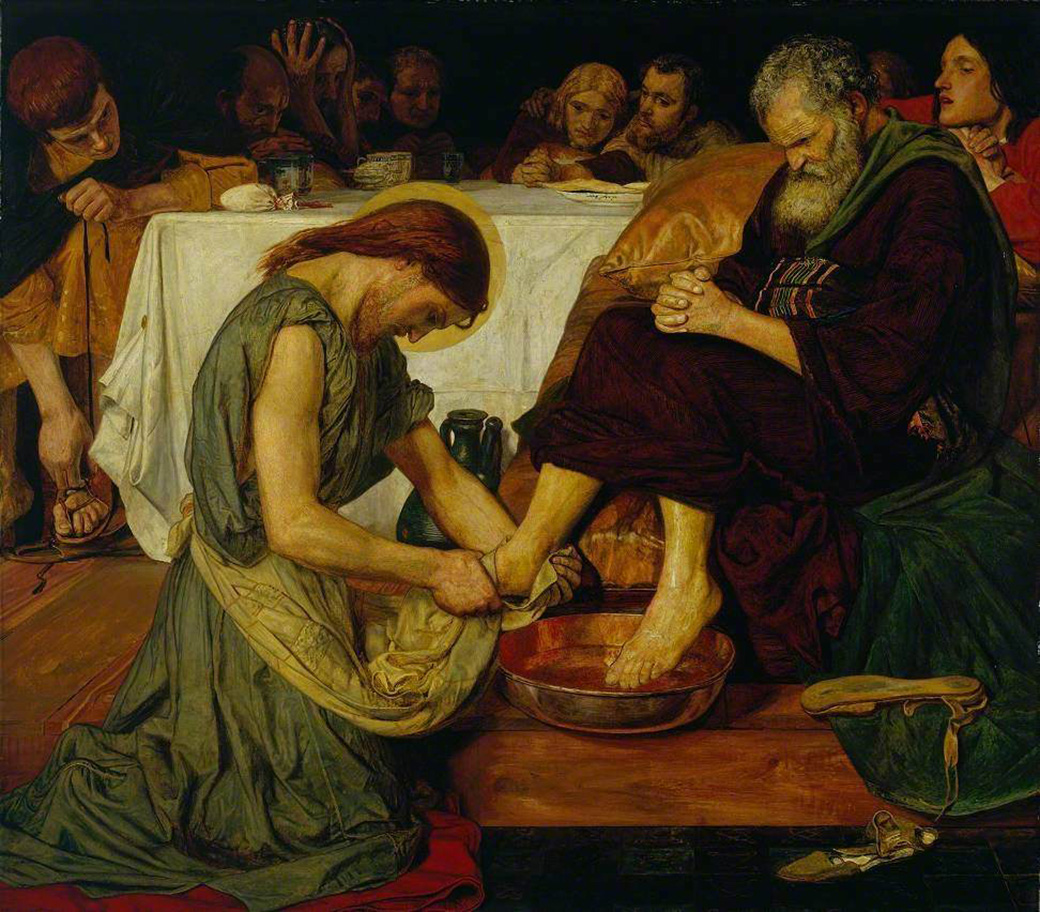
    Jesus Washing Peter’s Feet (1852-1856), Ford Madox Brown | Creative Commons, courtesy ArtUK/Tate.

    Today’s gospel focuses on Christ the servant, who “rose from supper and took off his outer garments. He took a towel and tied it around his waist. Then he poured water into a basin and began to wash the disciples’ feet.” St. Augustine of Hippo in Tractate 55 on the Gospel of John explains how each of these actions relates to something significant in the manner of his saving sacrifice. I’d like to use some of his ideas and some from other sources to consider this extraordinary action of our Lord.

    First, he rises from the supper and takes off his outer garments — as an action, this reminds me of his Resurrection to come and the garments found in the empty tomb, and as such this act of washing the feet is a salvific act akin to the Resurrection itself. St. Augustine also notes that “When about to be crucified, He was indeed stripped of His garments,” so we see a parallel in the Crucifixion, too.

    Indeed, Fr. Jean Corbon notes that the Crucifixion and Resurrection “are not two events, but two phases or moments of the same mystery” (Wellspring of Worship, 46).

    Next, Jesus ties a towel around his waist like a servant, and St. Augustine compares this to the larger humility of the Word of God taking on human form. Then, he doesn’t ask for some water in a bowl, but pours the water into the basin himself. St. Augustine notes that this is like how he “poured His blood upon the earth to wash away the filth of their sins,” and I see a clear parallel to the endless pouring out of love, of the water of everlasting life, that flows continually between the three Persons of the Trinity (as we have explored in several previous reflections).

    Finally, there is the washing of the Apostles’ feet. This lowly act of a servant is important for Jesus to model for his apostles, so much so that he tells Peter that he’ll tell him why he’s doing it after it is done, so as to not disrupt the action by discussing it. St. Augustine notes that he even deigns to wash Judas’s feet: “the greatness of His humility should be still further enhanced by the fact that He did not esteem it beneath His dignity to wash also the feet of one whose hands He already foresaw to be steeped in wickedness.”

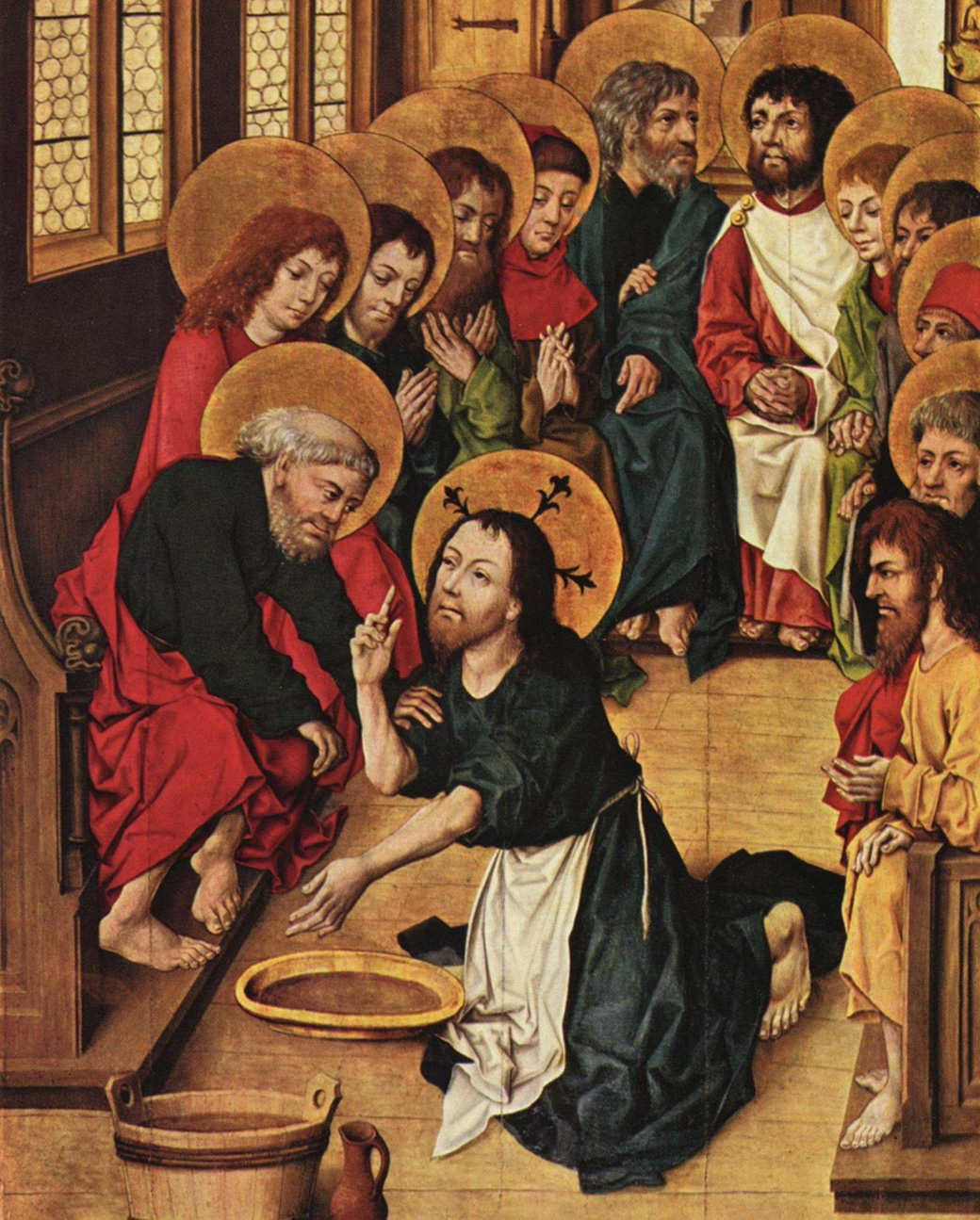
    Detail from Christ Washing the Feet of the Apostles (1475), Meister des Hausbuches | Wikimedia Commons.

    Peter’s reaction is typically passionate and vacillatory. First, he says, “You will never wash my feet” because he thinks it is too far beneath his Lord and Savior. After hearing that he needs it or he will “have no inheritance” with Christ, Peter pulls a quick 180° turn: “then not only my feet, but my hands and head as well.”

    Oh, Peter. Your heart is in the right place, but sometimes it seems like you have no check on your mouth.

    But Jesus uses Peter’s outbursts to teach us something important: “Whoever has bathed has no need except to have his feet washed, for he is clean all over.” What can this cryptic message mean? If we have bathed are “clean all over,” aren’t our feet clean, too? When I think of the feet, I think of those things that ground us, both literally and in our faith (faith means to “stand on firm ground” of that which we can’t prove, as Cardinal Joseph Ratzinger writes). And I think of those things that keep us on the move, signifying that we are agents of action in the world. Why do these appendages that ground us and yet move us require refreshment and purification before we sit down at table with our Lord?

    In his homily for Holy Thursday on March 20, 2008, Pope Benedict XVI gives us a great explanation of this response from Jesus:

    Yet here, with the distinction between bathing and the washing of the feet, an allusion to life in the community of the disciples also becomes perceptible, an allusion to the life of the Church. It then seems clear that the bathing that purifies us once and for all and must not be repeated is Baptism – being immersed in the death and Resurrection of Christ, a fact that profoundly changes our life, giving us as it were a new identity that lasts. … It seems to me that the First Letter of St John gives us the key to understanding [the “washing of the feet”]. In it we read: “If we say we have no sin, we deceive ourselves, and the truth is not in us. If we confess our sins, he is faithful and just, and will forgive our sins and cleanse us from all unrighteousness” (1: 8ff.). We are in need of the “washing of the feet”, the cleansing of our daily sins, and for this reason we need to confess our sins as St John spoke of in this Letter. We have to recognize that we sin, even in our new identity as baptized persons. We need confession in the form it has taken in the Sacrament of Reconciliation. In it the Lord washes our dirty feet ever anew and we can be seated at table with him.

    I think Pope Benedict XVI’s analysis is spot-on, and fits with this idea of the feet grounding us in faith. The liturgy, where we are “at table with the Lord,” is the wellspring for our faith to be continually renewed, refreshed, and purified. These feet, doing the work of carrying us and our Christian message around the world to all those we meet, will of course get dirty and need to be re-washed.

    So much meaning condensed in such a humble act! As Jesus asks when he is finished, “Do you realize what I have done for you?” Jesus brings the whole mystery of the Word of God’s descent into humanity into this act of a servant for his apostles. He signals this when he says, “You call me ‘teacher’ and ‘master,’  and rightly so, for indeed I am.” Remember his words from St. Matthew’s gospel back in the second week of Lent: “Call no one on earth your father; you have but one Father in heaven. Do not be called ‘Master’; you have but one master, the Christ” (Mt 23:9-10; see the reflection Led by the Master). In other words, he is invoking his own teaching to re-establish here that the Christ, the Messiah, is speaking.

    And what he says: “If I, therefore, the master and teacher, have washed your feet, you ought to wash one another’s feet. I have given you a model to follow, so that as I have done for you, you should also do.” We must understand his washing of feet as both the humility/action of a servant as well as a metaphor for a specific type of service related to the ritual cleansing in confession. As Pope Benedict XVI also says in his Holy Thursday homily: “We must wash one another’s feet in the mutual daily service of love. But we must also wash one another’s feet in the sense that we must forgive one another ever anew.”  

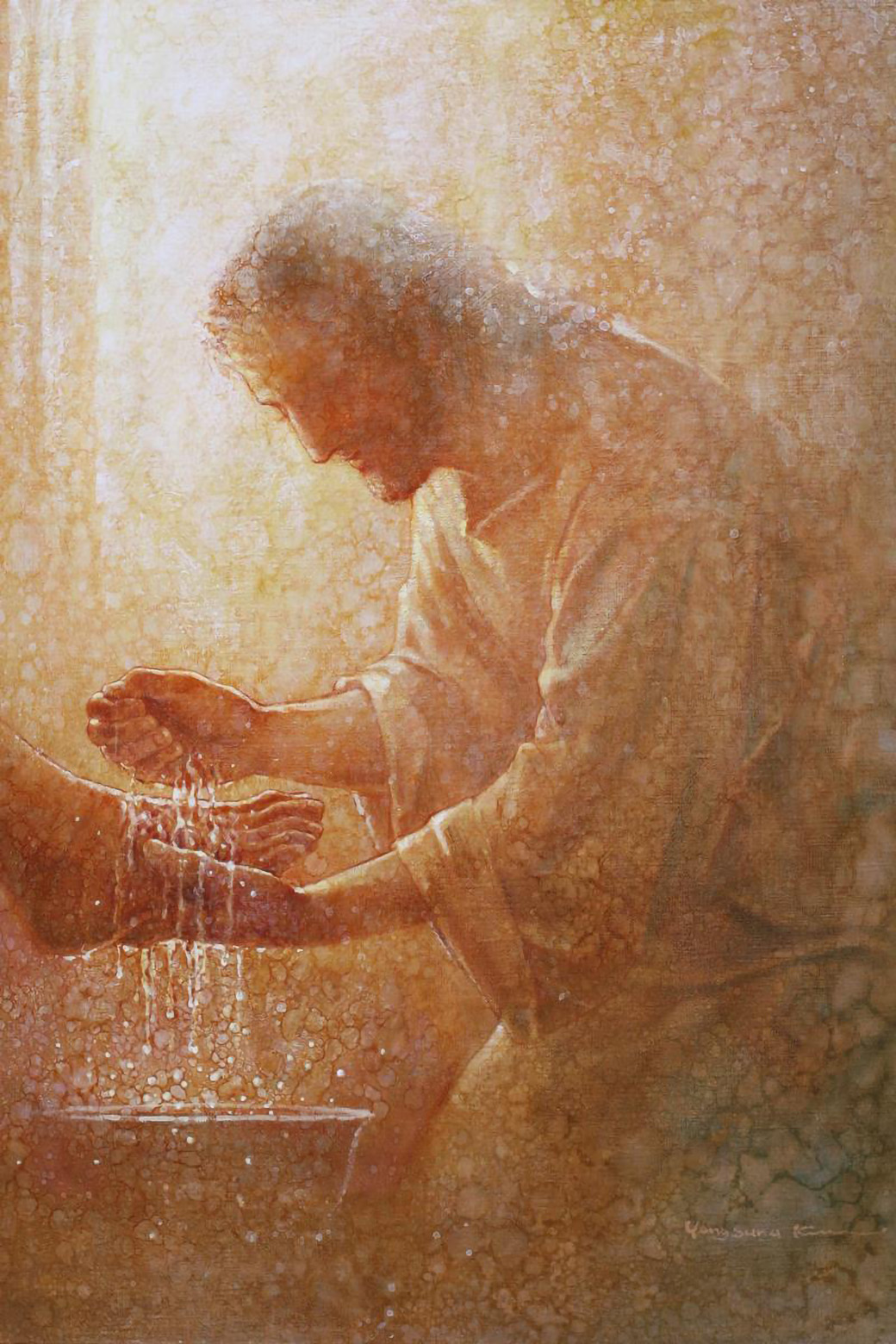
    The Servant (2000s), Yongsung Kim | image from lighthaven.net.

    And thus the Holy Thursday action of Christ in washing his apostles’ feet is a crucial act of establishing the Church. The ultimate mystery of his Death and Resurrection will usher in a new age, a New Covenant, a new opening of Heaven for humanity. But before this saving action is done, Christ sets his Church in motion through his Apostles, giving them the appropriate method, intention, and understanding of what it means to pour out love for one another in an endless example of agape on earth, irresistibly drawing people to God.

  • The Purifying Fire We Call God’s Wrath

    The Purifying Fire We Call God’s Wrath

    Thursday in the Fourth Week of Lent: Exodus 32: 7-14, John 5:31-47.

    Today’s readings give us the iconic scene in Exodus when God sees the Israelites waiting for Moses at the base of Mt. Sinai making “a molten calf and worshiping it.” God utterly rejects this, noting, “they have become depraved.” God notes “how stiff-necked this people is,” and he wants to finish creating his Covenant with Moses in the way he intended, with a receptive people. So he says, “Let me alone, then, that my wrath may blaze up against them to consume them. Then I will make of you a great nation.” Let us understand this scene carefully because we may make several theological missteps if we start to go down the wrong interpretative path.

    On one hand, we have the fire-and-brimstone set of Christians who would use this passage to claim that God is vengeful and filled with wrath for anyone who strays from the straight and narrow path. This is the gospel of fear, which is not really compatible with Christ’s message of agape. On the other hand, we have the everything-is-love set of Christians who would happily disregard this passage as “that’s not really what he meant” because nothing about this scene jives with their vision of a God they want to believe in.

    Let’s cut through what we want to believe and how we want the world to conform to our expectations, and start to see the God who is revealed to us through sacred scripture. There are a few points of doctrine that Western and Eastern Christians have always agreed upon: God is all-good, God is complete (that is, does not need anything outside of himself), and God is unchanging.

    He explains these facts about himself in his statement to Moses: “I AM who I AM.” In other words, he is defined by nothing outside of himself. He is fullness of being, and as his interactions with us throughout our history show, this fullness is essentially good.

    Untitled painting from Glory to God Alone, Tron-Eilert Holst-Pedersen | image found on tehpbilledkunst.com.

    A logical extension of these beliefs is what is called Impassibility, or the fact that God is free from affections or emotions, which are a type of changeability. In other words, if he is complete and unchanging, then he doesn’t get angry, he’s not surprised, he’s not jealous, etc. Yet this leads us to imagine an impassive (note the difference from “impassible”) God who seems not to care one way or another about anything. That can’t be right, Christ proves the opposite! Plus, we hear about wrath, anger, jealousy, delight, and more all throughout the scriptures. What’s going on here?

    One of the better articles I’ve read on this conundrum of an impassible yet wrathful God was posted on the Catholic Standard by Monsignor Charles Pope in 2019.  He explains that we must understand God’s wrath is experienced by us, not as an emotion raging within him. He writes about the analogy of trying to mix water and fire:

    God’s wrath is our experience of the total incompatibility of our sinful state before the holiness of God. Sin and God’s holiness just don’t mix; they can’t keep company. Think of fire and water; they cannot coexist in the same place. Bring them together and you can hear the conflict. Think of a small amount of water poured into a large fire: the water droplets sizzle and pop; steam rises as the water boils away. … We must be purified before entering his presence, otherwise we could not tolerate his glory. We would wail and grind our teeth, turning away in horror. The wrath is the conflict between our sin and God’s holiness. God cannot and will not change, so we must be changed or else we will experience wrath.

    So we can affirm impassibility in that God does not lose self-control or experience emotions in the ways that humans do. I tend to agree with our Church Father, Tertullian, though, who writes, “Angry he will possibly be, but not irritated, nor dangerously tempted; he will be moved, but not subverted” (Against Marcion, II.16). Tertullian’s point, in part, is that we can’t really know how God may or may not “feel,” since it is beyond our capacity. But, he notes that one thing is for sure: “it is yet palpably absurd of you to be placing human characteristics in God rather than divine ones in man, and clothing God in the likeness of man, instead of man in the image of God” (ibid, II.16).

    As I wrote in Mercy is the Master Principle, there is something in the original Greek that points to God’s visceral reaction that we might interpret (by analogy) as “emotional” or “affective.” When he is viscerally moved to compassion, the verb has its root in the word for intestines and internal organs: σπλαγχνισθεὶς (splanchnistheis). This is a nice nuance to add to Msgr. Pope’s analogy of the fire, which is by definition an element that is impassive and will burn anything regardless of its good or evil nature. Let me tentatively put this forward: because God is all goodness and purity, the purifying fire of his nature has a valence, meaning that it is weighted with all things good and against all things evil. Thus, when goodness approaches Him, the reaction is unity, which we experience as delight, warmth, and embrace. When evil approaches Him, the reaction is rejection and elimination, which we experience as wrath, anger, and jealousy.

    Transfiguration of Jesus (2004), Armando Alemdar Ara | Wikimedia Commons. I think this beautiful interpretation of the Transfiguration might also be a nice way to visualize the purifying fire of God.

    Let’s return with these thoughts to our story from Exodus. God says, “Let me alone, then, that my wrath may blaze up against them to consume them.” Two things to note: first, he maintains his discourse and relationship with Moses, not to mention the promise to build for him “a great nation.” When he asks Moses to “let him alone,” we might see this as a test for Moses, probing to see if Moses is able to fully inhabit the mercy of God and reflect this same mercy in a request to save his people. In any case, God is exhibiting his mercy here simply in the fact of conversing with Moses about it, giving him a chance to halt the purifying essence of God from burning through his people.

    The second thing to note is that God is not consumed by wrath; he is not out of control with human-like emotions. He is measured, speaking frankly and with mercy to Moses. In fact, he presents his wrath as a fundamental part of who he is, a purifying force that simply blazes up in rejection of the sin it encounters. This shows us the mercy and compassion of God while maintaining his essential, indivisible nature, “I AM who I AM.”

    Moses steps into his role of chosen prophet and law-giver admirably, reflecting back to God the mercy that he himself was shown. He pleads for the sinful people to be saved. God, ever merciful, grants his prayer.

    We hear, “So the LORD relented in the punishment, he had threatened to inflict on his people.” In some ways this wording is unfortunate because the words “punishment” and “threatened” feed a misunderstanding of God as one who is overly emotional and fickle (the theological terms would be passible and changing). This sentence could have also been written “So the LORD granted Moses’s prayer and mercifully spared the sinful people from His purifying essence.” In this way, we should understand his “punishment” as simply the incompatibility of sin and blasphemy with the presence of God. Likewise, “threatened to inflict” is “told Moses would occur if His presence fully encountered and burned/purified the sinful people.”

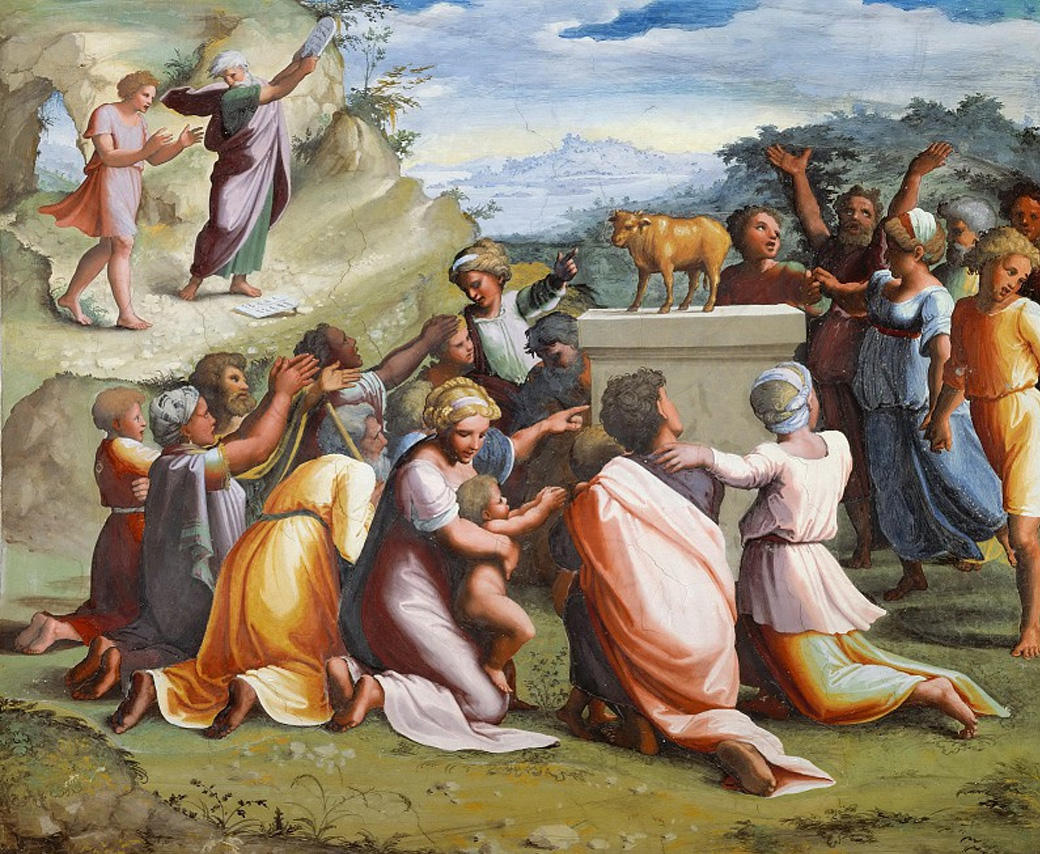
    The Worship of the Golden Calf (1519), Raphael | Creative Commons, courtesy arthive.com. This fresco is in the Papal Palace at the Vatican.

    The problem that caused this whole kerfuffle was that the Israelites couldn’t even make it a month in the desert without seeing miracles or a sign of their God before they turned away to embrace an idol. This brings us to the gospel reading and the theme Jesus picks up: unfaithfulness to God when you cannot see him.

    The first line Jesus speaks in today’s reading is a little fuzzy without context: “If I testify on my own behalf, my testimony is not true.” He is not contradicting what he will say later, “I am the Way, the Truth, and the Life” (Jn 14:6); instead, he is drawing a distinction between speaking on one’s own behalf and speaking with the authority and power of God. He is clear in the verse prior to the one we read: “I can do nothing on my own. As I hear, I judge; and my judgment is just, because I seek to do not my own will but the will of him who sent me.”

    Thus, “If I testify on my own behalf” means “if I’m standing here preaching to make a name for myself.” And rightfully, then, his testimony would not be “true,” since Truth comes from and points to the Father. He makes this point again in the second half of the reading: “yet if another comes in his own name, you will accept him. How can you believe, when you accept praise from one another and do not seek the praise that comes from the only God?” He refers here to those priests, prophets, and scribes who wish to get fame and glory in this world, who “accept praise from one another.” They are all caught up in a game with themselves and ignore the reality of God, invisible but not unknowable.

    Jesus is attempting to counsel the scribes and Pharisees who challenge him for doing work on the Sabbath. He tells them that he is doing the work of his Father, that he is the Son of God. He says, “The works that the Father gave me to accomplish, these works that I perform testify on my behalf that the Father has sent me.” He is attempting to make visible for them the omnipresent but invisible God. His works testify both “on his behalf” (that he is the Son of God) and they testify to the reality of God the Father. He pinpoints their lack of faith despite all of the signs of his coming, both in his works and in the scriptures:

    But you have never heard his voice nor seen his form,
    and you do not have his word remaining in you,
    because you do not believe in the one whom he has sent.
    You search the Scriptures,
    because you think you have eternal life through them;
    even they testify on my behalf.
    But you do not want to come to me to have life.

    This paints a truly pathetic picture of the ones who are persecuting Jesus. They are blind to God, deaf to God, and do not even have “his word remaining in them,” all because of their act of rejecting him. He is giving them communion with the divine Lord and they reject it. Even the scriptures to which they cling for salvation are testifying to Christ, but they choose not to see it, they “do not want to come to me to have life.” These people seem just as doomed as the ones worshipping a golden calf at the base of Mt. Sinai. Perhaps even more because they don’t have to believe through an interlocutor like Moses, they have God right in front of them, working miracles and attempting to teach them.

    Like God in the Exodus passage, however, Jesus shows them mercy and does not burn them in his purifying fire. He asserts:

    Do not think that I will accuse you before the Father:
    the one who will accuse you is Moses,
    in whom you have placed your hope.
    For if you had believed Moses,
    you would have believed me,
    because he wrote about me.

    He shows them that they have created a golden calf in Moses, that they are worshipping an image that is easier for them to believe in than the invisible God on high. But this very idol they have created is true to God and will accuse them to the Father because he knows and has written about the living Word of God long before his coming. 

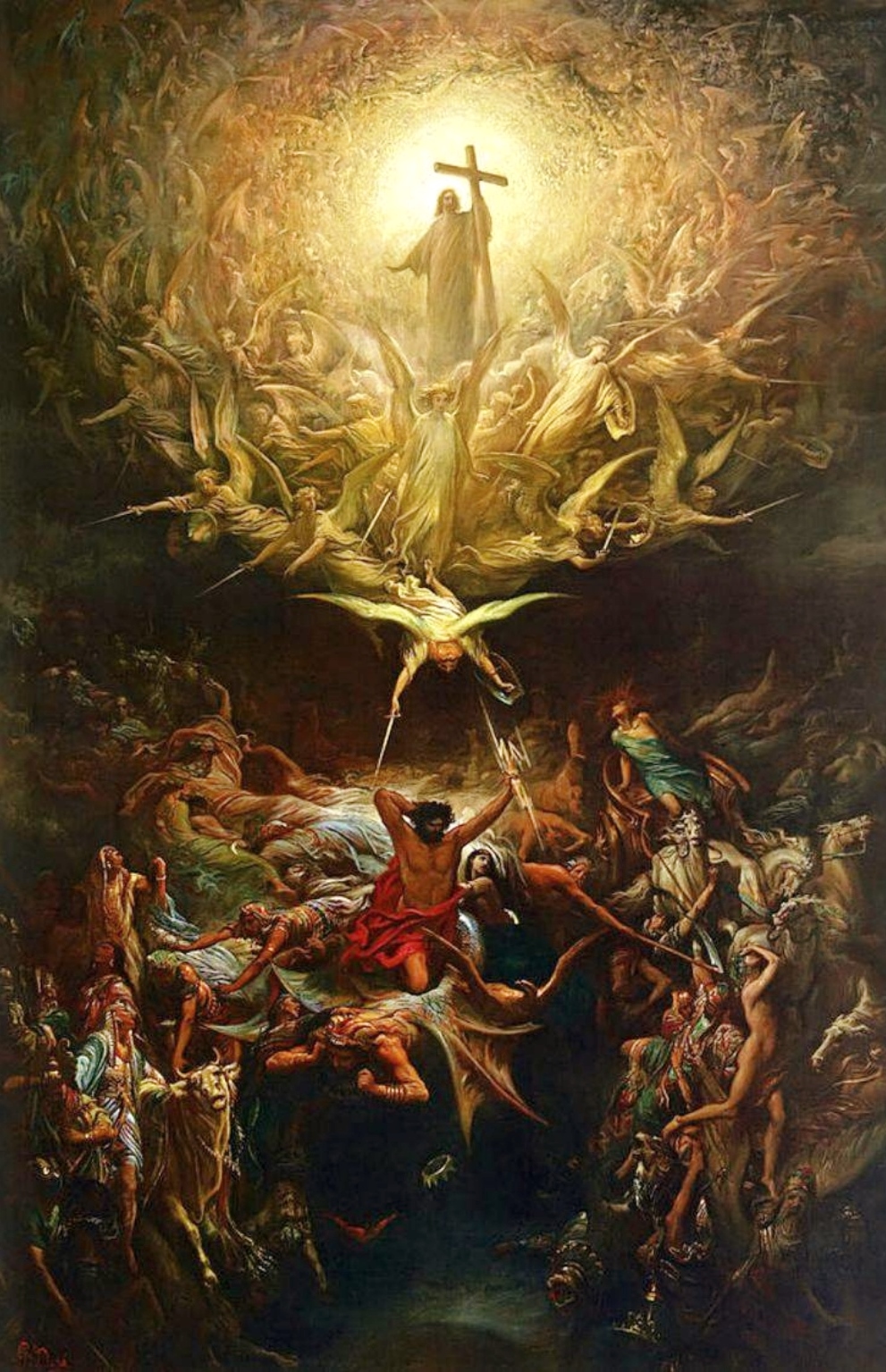
    The Triumph of Christianity over Paganism (Le Triomphe du Christianisme sur le paganisme), 1868, Gustave Doré | Wikimedia Commons.

    Today’s readings give me a greater appreciation for the person of Jesus Christ, where the “I AM” in all its pure being is mysteriously united with a human nature susceptible to all of the temptations of this world. By his very nature, God rejects and purifies evil, like fire vaporizing a water droplet. Yet within the person of Jesus, this essence maintains ultimate self-control and obedience to the mercy and goodness of the Father (which he can only do because he is at the same time wholly the essence of the Father, too).

    The divine essence does not struggle with or burn out a human nature that would, if it was anyone of us, have wanted to yell, punch, or demolish the self-righteous scribes and Pharisees criticizing him. Christ somehow manages to seamlessly integrate these two natures and persevere in preaching the Truth, the Word, while warning them with mercy about their errant ways. 

    Let us attempt to understand the coming together of divine impassibility and yearning for the good. This is what we are all called to be as we imitate our Savior.

  • If You Knew the Gift!

    If You Knew the Gift!

    Third Sunday in Lent: Exodus 17:3-7, Romans 5:1-2, 5-8, John 4:5-42.

    Today’s readings map the importance of water not just as a lifeforce for our bodies, but as a symbol of the spiritual nourishment provided by God. We are given two seminal scriptural stories: Moses striking the rock at Massah and Meribah to let forth water and Jesus revealing his gift of “living water” to the Samaritan woman at the well. Both episodes underscore the way our bodily and spiritual needs intertwine in our faith.

    The first question we might ask is, why water? It’s so mundane. Yes, we rely on it to live, our bodies consist mostly of water, but why would it be associated with holiness? Why is it used for baptism in Christ?

    The Great Wave off Kanagawa (1830-1832), Katsushika Hokusai | Wikimedia Commons.

    Our early Church Father Tertullian (c.155 AD – c.240 AD) speaks movingly about the fact that water was present early in creation. In his treatise, On Baptism, he recalls the first sentence from the Book of Genesis, where the earth is a formless void and “the Spirit of the Lord was hovering over the waters.” Tertullian writes:

    “The first thing, O man, which you have to venerate, is the age of the waters in that their substance is ancient; the second, their dignity, in that they were the seat of the Divine Spirit, more pleasing to Him, no doubt, than all the other than existing elements. For the darkness was total thus far, shapeless, without the ornament of stars; and the abyss gloomy; and the earth unfurnished; and the heaven unwrought: water alone — always a perfect, gladsome, simple material substance, pure in itself — supplied a worthy vehicle to God. What of the fact that waters were in some way the regulating powers by which the disposition of the world thenceforward was constituted by God?”

    Thus, Tertullian demonstrates how water is ancient, dignified, pleasing to the Holy Spirit, pure, and was instrumental for God when forming the rest of Creation. Due to this intimate relationship with the Spirit, all waters, he says, “attain the sacramental power of sanctification; for the Spirit immediately supervenes from the heavens, and rests over the waters, sanctifying them from Himself.” And just as water washes the dirt from our skin, it washes the spiritual stain of sin from our souls. 

    Water figures mightily in the Exodus story. It is the saving agent for the Israelites and the humbling force against Pharaoh’s army when God parts the sea as Moses raises his staff. And in today’s reading, we hear of the famous place with a double name, Massah and Meribah, which is invoked every day in the Liturgy of the Hours with the invitatory from Psalm 95. “The place was called Massah and Meribah, because the Israelites quarreled there and tested the LORD, saying, ‘Is the LORD in our midst or not?’” God has already delivered them from the hands of Pharaoh, he has given them manna and quail to eat, and so their doubt displeases him so much that he declares the entire generation will have to wander the desert for 40 years and only the next generation will see the promised land.

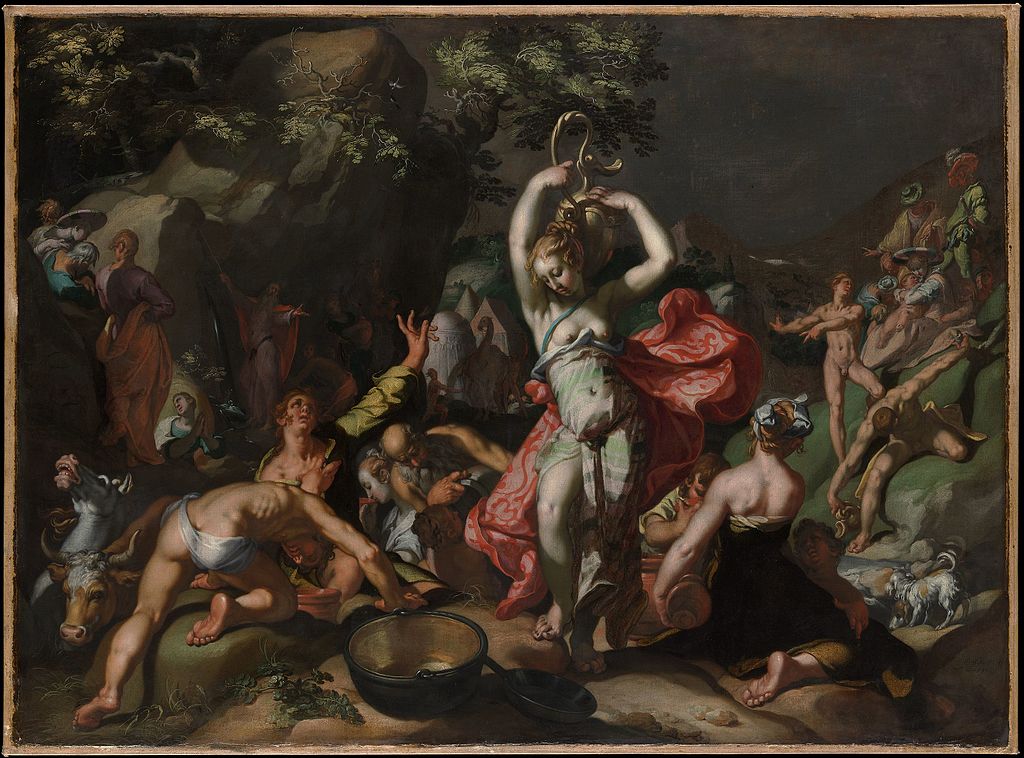
    Moses Striking the Rock (1596), Abraham Bloemaert | Wikimedia Commons. I quite like this interpretation of the scene at Massah and Meribah because it displays carousing, clueless Israelites who are focused on their material needs and bodies. Meanwhile, Moses strikes the rock in the background, imploring them to pay attention to the miracles God is working in their midst. You can sense his frustration with the unfocused and unfaithful tribe he is leading.

    The passage opens with an important statement that we should not overlook. It reads, “In those days, in their thirst for water, the people grumbled against Moses …” Thirst for water is answered by God, and is forever associated with faith, or lack of faith. When they thirst for water, they are also thirsting for reassurance, for deliverance. Faith in God is what will bring them both of these, and because they grumble and revolt against Moses instead of staying strong in faith, God makes them an example for the rest of our salvation history. He delivers water to us, but we must wait 1,500 years before Christ makes it clear what type of water God provides.

    The second reading from St. Paul to the Romans contains a crucial phrase that connects Massah and Meribah to the Samaritan Woman at the Well. Referring to Christ’s death and Resurrection, St. Paul writes, “the love of God has been poured out into our hearts through the Holy Spirit.” All three Persons of the Trinity are present in this concise statement, and the verb is “pour.” God’s unfathomable love is being poured into our hearts. Here we get to the core of what Jesus will refer to as “living water.”

    Before diving into the gospel reading, let’s think about wells for a moment. Wells are our way of digging deep for the water God has planted in the earth in the form of natural springs. We are reaching out to God’s providence when we dig wells. We are displaying a primordial faith in our Creator who provides for us. Also, we dig wells when we want to settle in a place for a period of time. Wells, therefore, represent a stable relationship between ourselves and the wonders of Creation that God has given to help support us. 

    In his incredible book Wellspring of Worship, Jean Corbon, OP, explores the fundamental symbolism of water as he describes the mystical wellspring of worship that is the liturgy. He writes:

    “Men thirst and look for water wherever they think they will find it. As they wander without any horizon in sight and no way of escape, they dig a well each time they pitch their tent. … Nor does he sleep who placed in the human soul both the thirst and the expectation. Indeed, he is the first to thirst and set out in search of us, to the point of joining us beside our pathetic wells.”

    Corbon paints a picture of dependence on the part of humanity and something of a tavern owner in God (to borrow one of my favorite images of God from Simon Tugwell, OP). God the tavern keeper, offering us the most satisfying drink, has planted the thirst in us and is also the one who fulfills the thirst. 

    As we see at Massah and Meribah, thirst is physical and spiritual. The Catechism of the Catholic Church affirms this: “Whether we realize it or not, prayer is the encounter of God’s thirst with ours. God thirsts that we may thirst for him” (2560). Thirst, therefore, defines our mutual relationship with God. And thirst is the thing that brings Jesus and the Samaritan woman together at the well in the noonday heat.

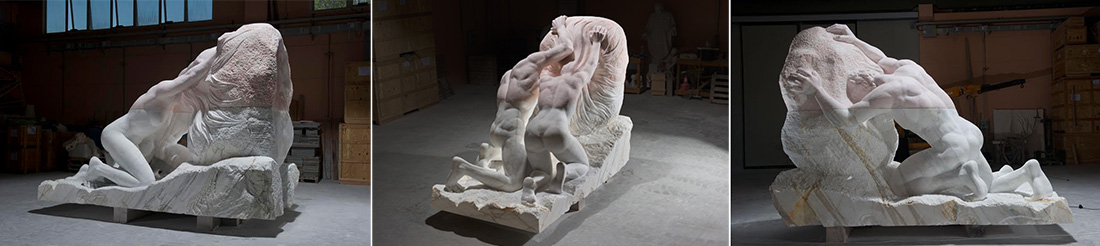
    Thirst (2011), Sigalit Landau | Creative Commons. This striking sculpture by Israeli artist Sigalit Landau depicts male and female forms in poses that might be supplication, physical effort, strain, or resignation upon a rock. The rock suggests Massah and Meribah (and there is an inscription in Hebrew on the back of the rock for which I wish I knew the translation). The two tones of marble suggest a meeting of humanity and God. The sculpture, carved in two gigantic chunks of Rosa Portugalo and Calacatta Gold marble, rests at the Elma hotel in Zichron Yaakov, Israel.

    Note, in fact, who asks for water first in our gospel reading: it is Jesus. The Lord thirsts for us — what a remarkable thing! The source of life, beauty and truth, perfect in Himself without any needs … thirsts for an authentic and pure relationship with us! If you haven’t considered this before, realize that this sets our religion and our God apart from all other gods and all other religions.

    The Samaritan woman is certainly struck by Jesus’s request. Everyone — Jews and Gentiles alike — was surprised by his opening of the New Covenant to all peoples on earth. Her surprised words, “How can you, a Jew, ask me, a Samaritan woman, for a drink?” are met with what seems like one of the great wry understatements in all of the gospels: “If you knew the gift of God and who is saying to you, ‘Give me a drink,’ you would have asked him and he would have given you living water.” Of course, it’s not wry or an understatement, but the honest truth that he gives her in their moment of mutual thirst.

    She doesn’t quite understand what he’s saying, so he elaborates: “the water I shall give will become in him a spring of water welling up to eternal life.” As with every word of this passage, so much depth inhabits these words. Jesus is proclaiming the significance of the New Covenant, that his water (the love he will pour out onto humanity with his death and Resurrection) will become a spring for us that wells up to eternal life. A spring is self-regenerating, and let us realize that the self-regenerating aspect of Christianity is the active work of Christ’s Spirit, renewing us in the liturgy and the sacraments. Furthermore, the goal of this water is not physical life but eternal life. Jesus establishes a new goal, a new end-game that we are able to experience thanks to him.

    The Samaritan woman exclaims that she would love to have this water, “so that I may not be thirsty or have to keep coming here to draw water.” She doesn’t quite get it. She still thinks this is about her physical needs (and psychological, since having to keep coming there in the midday sun to avoid the sneers of the more upstanding women of the community would certainly mean psychological stress). So she responds to God’s thirst with her own thirst, but in order to purify her thirst and point it towards her spiritual needs, not just her physical ones, God tests her.

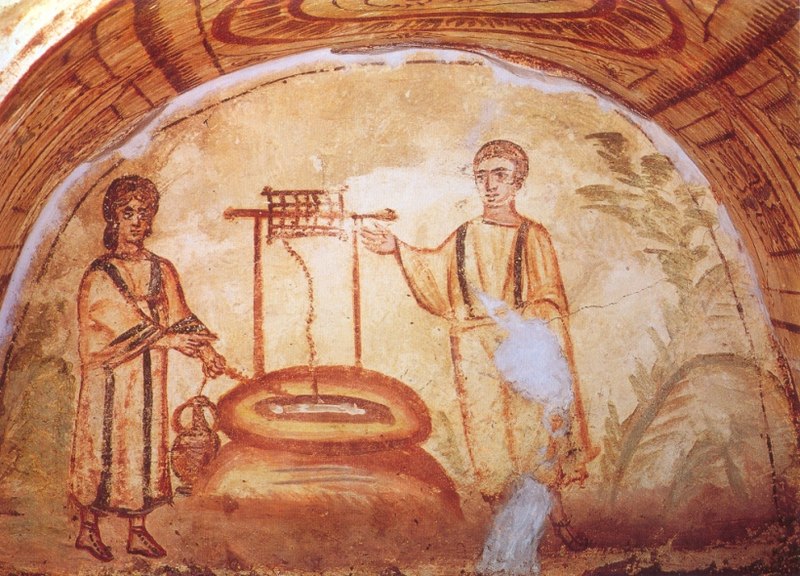
    Jesus and the Samaritan Woman at the Well, ~350 AD in the catacombs beneath Rome. Note that many scholars believe this is a closer representation of Christ to how Jews commonly looked in his time, clean-shaven and short-haired. But, we must of course reconcile that with the image found on the Shroud of Turin.

    He tells her to get her husband. Certainly a moment of soul-searching for her, she decides to speak the truth and tell him about her unmarried state. Without scorn or harsh judgment, Jesus affirms her statement and details her life of sin to that point. Our lesson here is twofold: we must recognize and atone for our sins in order to begin a correct relationship with God, and God demands truth in our relationship. Because she meets him in truth, the remainder of their conversation is startling in its revelation.

    Jesus proclaims to her, the outcast and sinner who is thirsty for Him and honest with Him:

    “But the hour is coming, and is now here,
    when true worshipers will worship the Father in Spirit and truth;
    and indeed the Father seeks such people to worship him.
    God is Spirit, and those who worship him
    must worship in Spirit and truth.”

    Worshipping in Spirit and truth. This is what the Father thirsts for because he “is Spirit” and we meet him “in Spirit and truth.” It is the activity of our souls, not the activity of our bodies in a certain place (like the mountain or Jerusalem). It is the work of intent and heart, not of bodies and outward ritual.

    Jesus reiterates this point when his disciples ask him if he wants to eat and he responds, “I have food to eat of which you do not know. … My food is to do the will of the one who sent me and to finish his work.” To finish his work! The work of Creation started by God will be finished, refined in the fire of the sacrifice, to purify humanity and make them finally ready to unite with God on the spiritual level for which he always intended.

    But before this exchange with the disciples, he makes the most shocking statement in private to the Samaritan woman, acknowledging, “I am he [the Messiah], the one speaking with you.” How can we reconcile this revelation of his identity when he spends much of the gospels asking people not to talk about him as the Messiah and not fully proclaiming it until the time just before his Passion in Jerusalem? How else except to understand this encounter as the prototype for all relationships with God: when we meet him personally, in truth, honestly thirsting for him, then he will share with us all of his glory and revelation. She is the archetype of the sinner who converts in honesty, is baptized in water of the Spirit, and enjoys an honest and blessed existence close to God. 

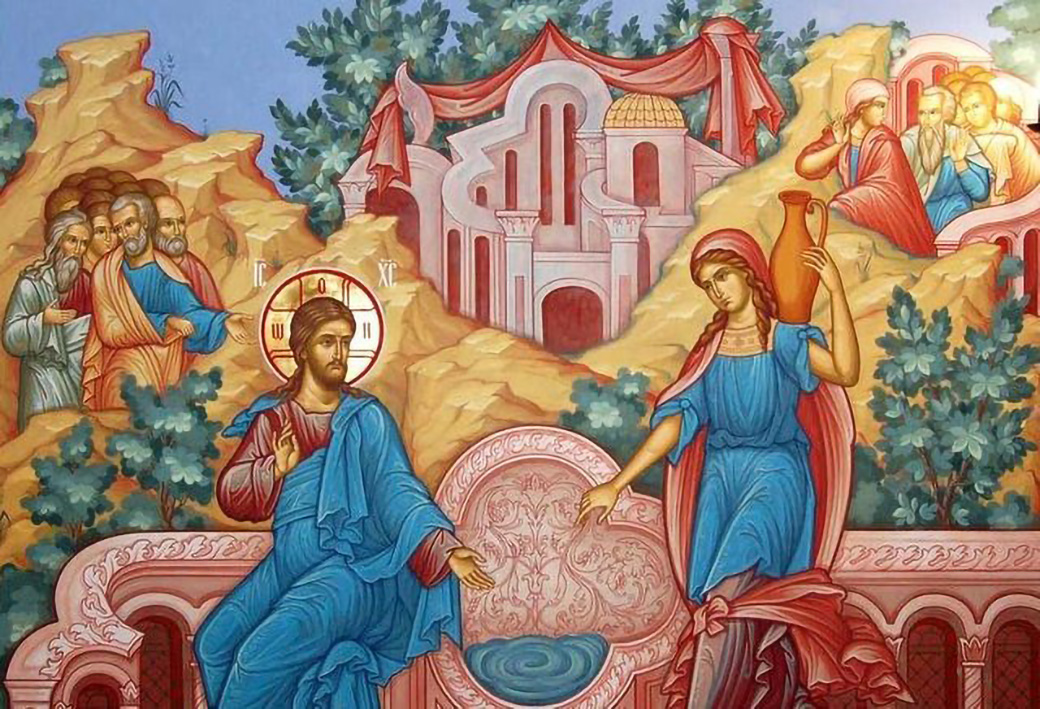
    Jesus and the Samaritan Woman at the Well, 19th century Russian icon, author unknown | Creative Commons. In this classic icon representation of the gospel scene, we see the scope of the story, from Jesus’s reference to the water in the well (which has taken on a cruciform appearance with his anointing presence) to the disciples backed by mountains (signifying enlightenment and spiritual matters) and the townspeople moving from the town to the mountain.

    There is so much to say here: how the townspeople experience this conversion themselves (“We no longer believe because of your word; for we have heard for ourselves, and we know that this is truly the savior of the world.”), how the well is Jacob’s well and Christ is the Anointed One, greater than the prior prophets and figures in the scriptures and instilling a new meaning on water and the well, etc. But, I’ve gone on long enough. 

    One last thing to mention that brings us back to St. Paul’s words in the second reading, “the love of God has been poured out into our hearts through the Holy Spirit.” The living water that Christ brings to the Samaritan woman at the well is the very same “love of God” St. Paul writes about. That’s why Paul speaks of it as being “poured out.”

    Corbon gives us a lovely way to connect water with the love of God:

    In the communion of the Blessed Trinity … we find life in its eternal outpouring; the river of life, which John contemplates at the heart of history, is an energy of love at work before the world was. … Yes, the mysterious river of divine communion is an outpouring of love among the Three, and in it eternal life consists. Each person is gift and acceptance of gift. … The river is love, but a love that does not arise in the human heart. The river is life, but a life that does not flow from the human heart. That is because this river, this energy, is wholly other; it is the self-opening of our thrice-holy God.

    This is the theology of the Trinity: not just three Persons contained in one God, but three Persons endlessly pouring out their love among one another. Here is the river of life, the river of love, the wellspring of worship: it is located in the “self-opening of our thrice-holy God.” That is why Christ experienced the Passion, death, and Resurrection. He shared with us this self-sacrificing quality of the Trinity; more than shared, he poured upon all of history the river of love that is the fundamental action of the Trinity. THIS is his living water, of which he tells the Samaritan woman, “If you knew the gift of God …”

    If you knew the gift, indeed!

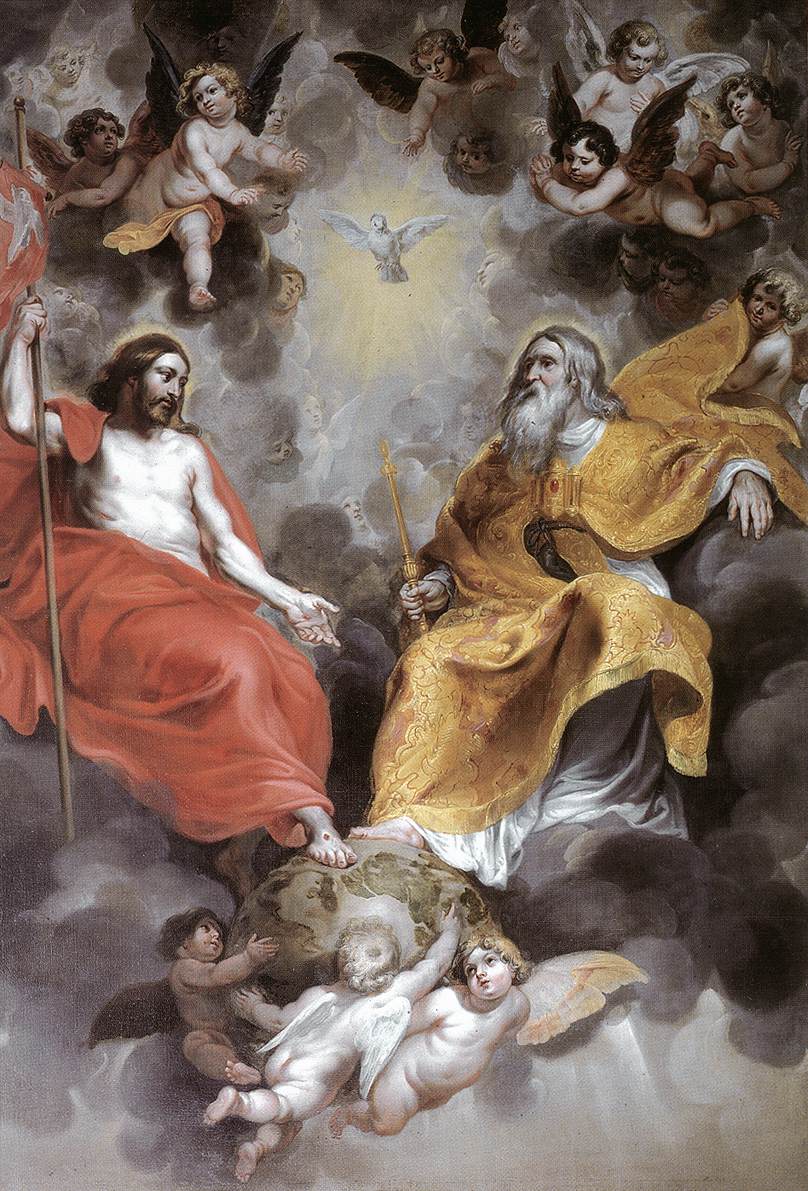
    Holy Trinity (1620), Hendrick van Balen | Wikimedia Commons. I greatly appreciate the efforts to which van Balen goes to show the loving gazes shared between the three Persons of the Trinity as well as Christ’s crucified foot resting on the world with his Father’s.