Tag: forgiveness

  • The Flipside of Feeling Bad

    Monday of the Second Week in Lent: Daniel 9:4b-10, Luke 6:36-38.

    Today’s readings present us with two sides of the Christian coin: sin and forgiveness. One side is ugly and tarnished; when we look at it in the full light of day, we are humiliated by what it reveals about us. The other side, though, is shiny and new, stamped with God’s image, gorgeous to behold. As long as we walk this earth, we deal in these coins. The devil constantly presses us to use the ugly side while God offers to make it beautiful again. Our soul soars when the coin is made beautiful, but it demands a full accounting of our sin in order to flip that coin.
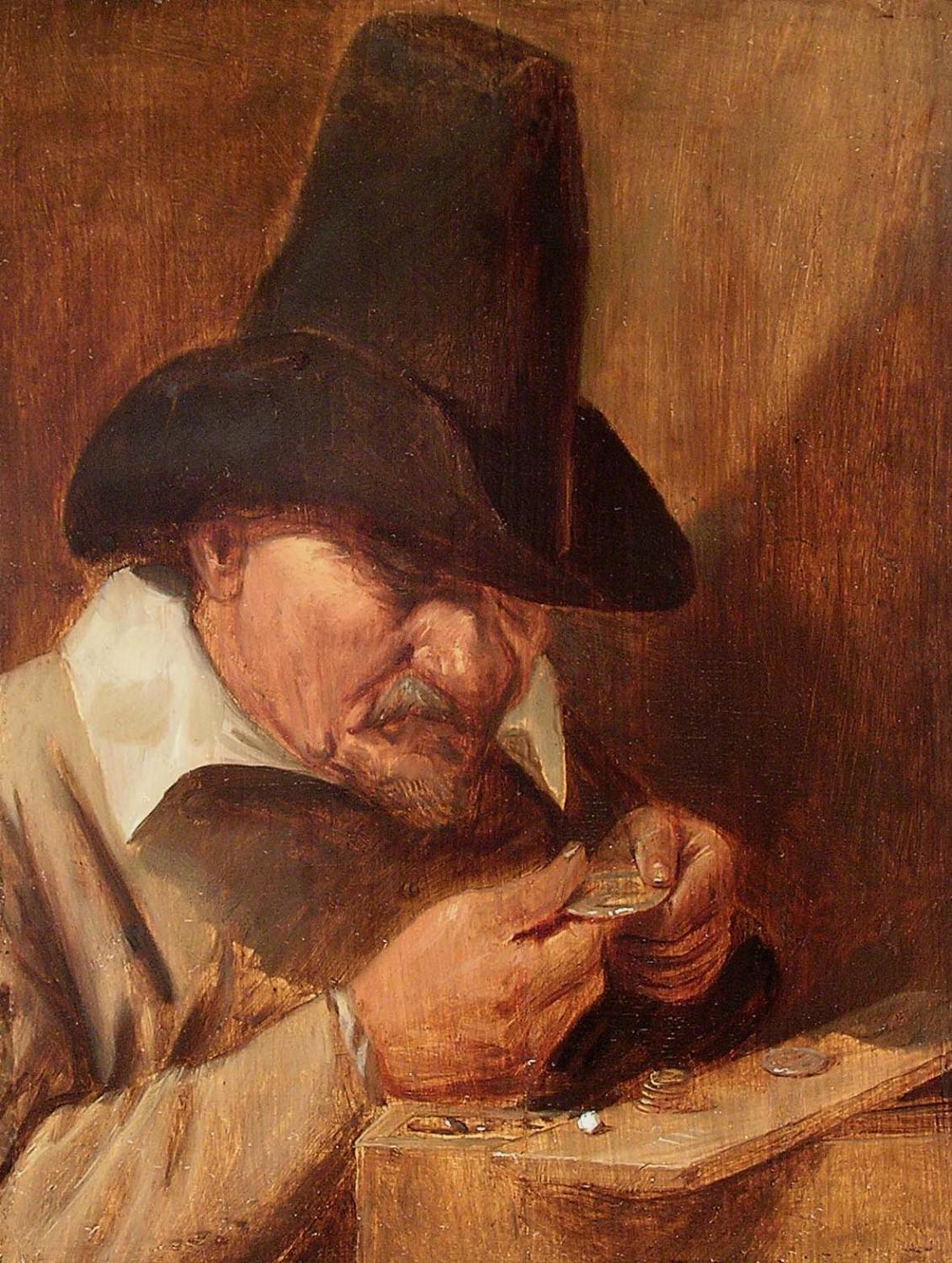
    The Coin Collector (1600), Joos van Craesbeeck | Creative Commons, courtesy of the Krannert Art Museum, University of Illinois.

    But God operates within a different economy: that of love. The economy of love is governed only by the rules of mercy and abundance. Jesus tells us that we can participate in God’s economy of love. He teaches us that the more we forgive others, the more we will be forgiven for our own sins. The economy of love is multiplicative, never divisive.

    Let’s consider the first reading where the author of the Book of Daniel presents an honest accounting for the sins of the Jews and an accompanying request for forgiveness. Humiliation is something the Jews knew well at the time the Book of Daniel was written (~165 BC). During this period, Antiochus IV Epiphanes was the Greek ruler over Israel who brutally put down the revolt recorded in the Book of Maccabees. “He ordered his soldiers to cut down without mercy those whom they met and to slay those who took refuge in their houses. There was a massacre of young and old, a killing of women and children, a slaughter of virgins and infants. In the space of three days, eighty thousand were lost, forty thousand meeting a violent death, and the same number being sold into slavery” (2 Maccabees 5:11–14). Then he tried to force the remaining Jews to worship Zeus on pain of death.

    Rather than bemoan their conquered and downtrodden state, the Book of Daniel acknowledges their humiliation and takes spiritual responsibility: “O LORD, we are shamefaced, like our kings, our princes, and our fathers, for having sinned against you.” The message is not all shame and doom, however. God’s covenant with his people still stands and hope is always there: “But yours, O Lord, our God, are compassion and forgiveness!” The Book of Daniel sees God’s compassion and forgiveness in the coming of the Messiah and the ultimate vindication of the chosen people. (The writer of Daniel uses the famous phrase “Son of Man” for the messiah — one that Jesus will use in reference to himself throughout his ministry.) He is pointing to Christ, waiting for a fuller experience of being human and redeemed.

    What can we learn from this long passage acknowledging sins? We aren’t Israelites who broke their covenant by worshipping idols and ignoring God’s commandments. Or are we more like them than we think? Our idols may not be golden calves, and our worship of them may not include burnt offerings, but how much more willing are we to sacrifice our time and money for things of leisure, pleasure, pride, and position than charity for our fellow human? Americans are notorious for a few things: relentless drive in the work world, greed, and consumption. I think we can honestly lament with Daniel, “we have rebelled and departed from your commandments and your laws. We have not obeyed your servants the prophets.”

    We live in a world transformed by Christ, one that the author of Daniel longed for. God has provided us with a clear path to forgiveness, namely our sacrament of Reconciliation. Let’s recall that at the heart of this sacrament is a pledge to no longer sin and an honest intention to convert back to God in our ways. Church Fathers like Tertullian see Reconciliation as the amazing gift that it is and beg us to engage fully with it: “In so far as you do not spare yourself, the more, believe me, will God spare you!” (Repentance, 203 AD). A few centuries later, St. John Chrysostom writes much the same: “Unless you tell the magnitude of your debt, you do not experience the abundance of grace” (Homilies on Lazarus (388 AD), 4.4).

    The emphasis on public confession and penance grew throughout the centuries until it was commandeered by secular Kings during their own inquisitions to root out heretics in their populace. The Spanish Inquisition is the most infamous, and these trials culminated in the highly orchestrated auto-da-fé. Prisoners were taken outside the city walls to a place called the quemadero, or burning place, where the sentences were read. Prisoners who were acquitted or whose sentence was suspended would fall on their knees in thanksgiving, but the condemned would be punished (whipping, torture, burning at the stake).

    The auto-da-fé is the pinnacle of public humiliation for sins and stands at the outward bound of a philosophy of negative reasoning around sin. In negative reasoning, if God’s mercy is given to us in the measure that we “do not spare ourselves” (to use Tertullian’s words), then extreme penance and humiliations are better guarantees of mercy. In this line of reasoning, the auto-da-fé is not only justified, its punishments are the best thing we can do to save souls. (queue the shivers)
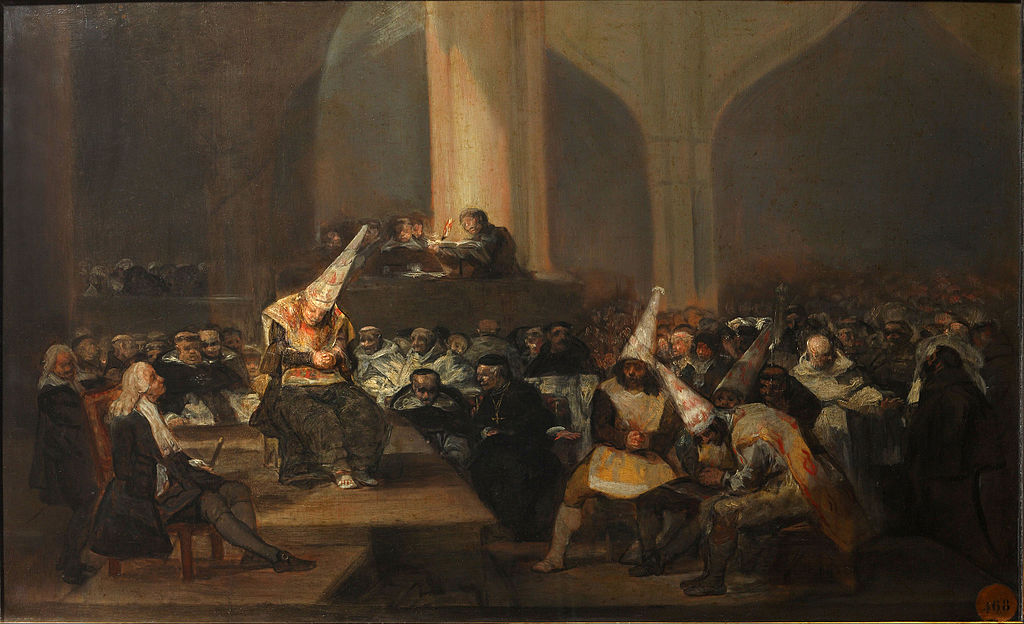
    The Inquisition Tribunal (1808), Francisco Goya | Wikimedia Commons.

    Thankfully, Christ provides a much different teaching in today’s gospel. He says, “Stop condemning and you will not be condemned. Forgive and you will be forgiven. Give and gifts will be given to you.” In other words, live by God’s law and you will continue to live with God for eternity; carry divine love in your heart as you live, work, and act with other people, and divine love will be given to you for eternity. In addition to providing us with the Way to live in the light of truth, this is the antidote to negative reasoning about sin.

    Instead of the equation where greater humiliation and penance = greater forgiveness from God (negative reasoning), we encounter an equation where greater forgiveness towards others = greater forgiveness from God for our own sins (positive). We can see that the more we participate in the economy of love by which God operates, the more we are conforming ourselves to final unity with Him. This reciprocation is a refrain that Jesus repeats throughout his ministry. The Lord’s Prayer uses nearly the same formulation: “forgive us our trespasses, as [you see us forgiving others].”

    What changed from the old covenant in time of Daniel is that Jesus bursts into history as a bridge between Heaven and earth. He himself is the one gateway to the eternal Kingdom. Since we now have the liturgy that gives us true communion with God, we have the opportunity to carry our godliness into every aspect of our lives in a way that was never available before Christ. The liturgy as we live it is the new Way; the earliest Christians referred to themselves as followers “of the Way” (cf. Acts 9:1-2). To inhabit the spirit of the law (and let the Spirit inhabit us), we must not carry the spirit of condemnation and judgement, we must forgive and give.

    It’s easy to Monday-morning quarterback the problem with Inquisitors and the logic of the auto-da-fé. We must realize that this was a form of policing by the crown leveraged against non-Catholics and heretics, and reveals the problem with co-mingling our faith and political power structures. The state is charged with keeping the peace and enacting the national politics of a group of people. The Church is charged with saving souls. These are different aims and the centuries of Christendom in the Middle Ages gave us plenty of examples of how power structures of the state twisted and mobilized aspects of our faith for dubious ends.

    Christ calls us to something much different, much more radically personal. He calls us to begin operating within the generous, merciful economy of love. This has to be on an individual level, not a policy or state level, because it is a participation in the unique relationship God forges with each of us. Each person’s free will must be engaged within the state of life, personal histories, and sphere of influence that person has. The only law that can prescribe this type of engagement is a spiritual law because it involves the action of the soul in communion with God. No secular structure can know, much less evaluate, someone’s adherence to this law. Only God knows; and He knows us better than we know ourselves.
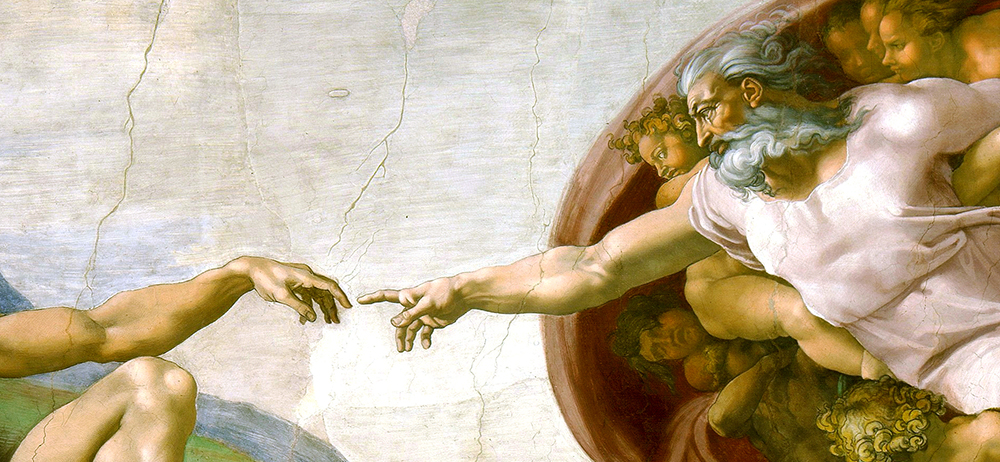
    Detail from the ceiling of the Sistine Chapel, the Creation of Adam (1511), Michelangelo | Wikimedia Commons.

    Finally, I’d like to explain the title of this post. Just like our Christian coin on earth is sin/forgiveness, there is an associated mindset with which we can proceed in our lives. On one hand, we can focus on the awfulness of our sinful state and approach ourselves and everyone else as impure abscesses on the Body of Christ that require penance to eradicate. Or we could focus on the gift of forgiveness God gives us and the broader economy of love. This is the clear direction in which Jesus leads us. He speaks not just of forgiveness but of three other ways to understand God’s overflowing generosity:

    Stop judging and you will not be judged.
    Stop condemning and you will not be condemned.
    Forgive and you will be forgiven.
    Give and gifts will be given to you;

    What unites these four is love and generosity — no judgement, no condemnation, just forgiving and giving. This is the way God works and Jesus is calling us to become more and more like him.

    This isn’t just good advice. His final statement in the gospel reading spells out, “For the measure with which you measure will in return be measured out to you.” I like the double meaning of measure being something you measure out to someone else as well as the way in which you take account of things. The “measure with which you measure” is not just the quantity of your generosity with others but also the way in which you’re thinking about your spiritual journey and salvation.

    This means that true salvation (i.e., divinification, union with God) comes to those in whom the spirit of generosity and forgiveness are infused to such an extent that they are everything. We are not “measuring” the number of times we forgive others or the number of gifts we give as a way to quantify or tally our movement towards Heaven. The way we go about things, “the measure with which we measure,” itself shuns the idea of quantification. We don’t count the hurts people enact on us; we don’t judge or condemn, we simply forgive. This Way of being, brought to us through Christ, is the point. And the more we walk the Way, the sooner and more completely God embraces us on that Way.
  • As I Have Done for You

    As I Have Done for You

    Holy Thursday – Evening Mass of the Lord’s Supper: Exodus 12:1-8, 11-14, 1 Corinthians 11:23-26, John 13:1-15.

    We know the readings of the Easter Triduum well, as we should; it is our highest of feasts, the culmination of Christ’s mission and ministry. On this Holy Thursday, the Lord is ready; his hour has come. As I consider these readings, I’ve been asking myself how I would spend my last hours on the earth, and how Christ’s message at the Last Supper can guide me.

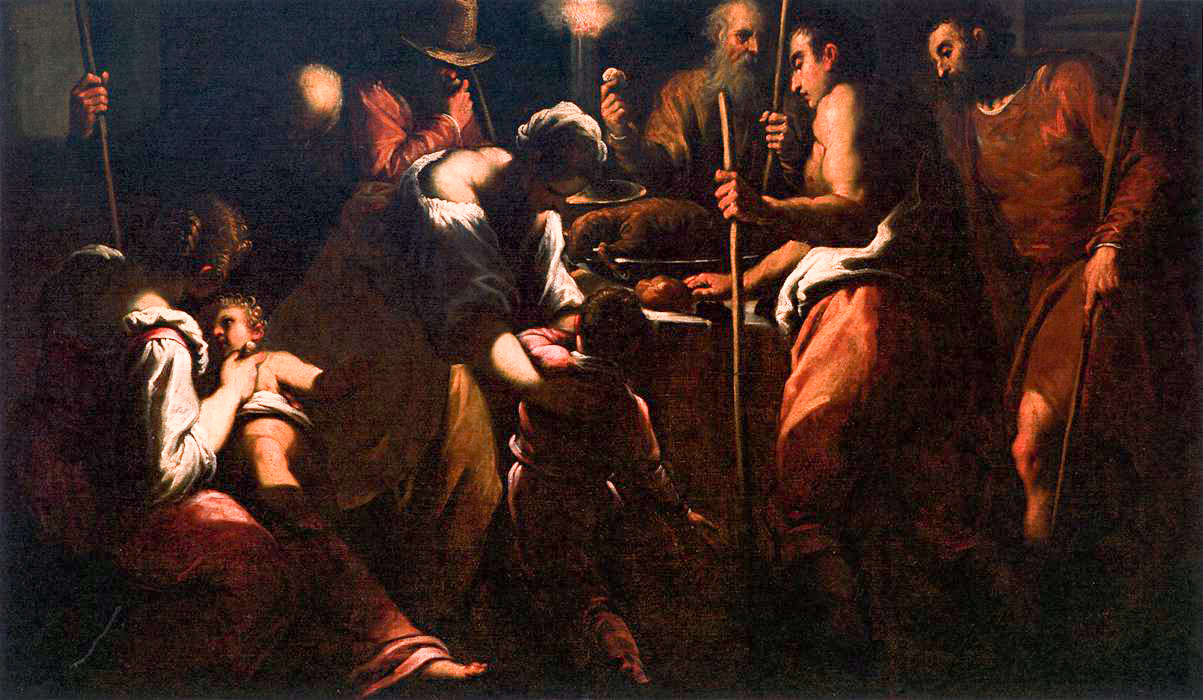
    The first reading from Exodus recounts the institution of the Passover meal that commemorates the truly terrifying Passover night in Egypt. In describing the Passover meal, this reading relates to Holy Thursday, and in describing the blood marking the houses of the Israelites, it relates to the Lord’s death on Good Friday.

    The Paschal Lamb (1580-1581), Palma il Giovane | Wikimedia Commons.

    Jesus instituted the greatest sacrament, the Eucharist, during the Last Supper (as St. Paul recounts in the second reading). Let’s consider how the Word of God prefigured the meal of the Eucharist in the institution of the Passover meal. First, there is the regularity of the Passover meal — it is held annually on the 14th of the first month. For the Catholic Church, the Eucharistic meal is so much more central to our being that we celebrate it with every gathering (Mass), a regularity that has been instituted at least every Sunday. Next, the Word of God establishes the mark of purity for this meal; he prescribes that “The lamb must be a year-old male and without blemish.” Also, there is one lamb per family and it is to be slaughtered at twilight, at which point some of its blood is to be applied “to the two doorposts and the lintel of every house” where they “partake” of the lamb. What is the point of these prescriptive rituals? This is but one of many animal sacrifices described in the Old Testament, and part of the challenge for the Jewish nation was to uphold these prescriptions in order to display their faithfulness to God. This speaks to a certain type of ritual beauty that exists in its particularity for each sacrifice — whether those participating were in the desert, in the glorious time of King Solomon, or in the Babylonian Exile, each connected ritually with God in a way that is both shared yet particular to their place and time. In addition to instilling an appropriate thankfulness as the Jews recollect the original Passover, God was establishing a special place for the “unblemished lamb” in their cultural memory to be ready for the time when the Lamb of God, pure of sin, comes for his ultimate sacrifice.

    Eating the slaughtered lamb is an important part of the Passover ritual: “That same night they shall eat its roasted flesh with unleavened bread and bitter herbs.” The Word of God made flesh, Jesus Christ, establishes the full meaning of this ritual when he says, “This is my body that is for you. Do this in remembrance of me” (Mk 14:22, Lk 22:19, 1 Cor 11:24) and “Amen, I tell you, unless you eat the flesh of the Son of Man and drink his blood, you have no life in you” (Jn 6:53). As Christians, we understand the Passover lamb as the precursor (easier to understand and easier to “stomach”) to the true Paschal Lamb, Christ Himself.

    In the same way, we understand the Passover deliverance from the wrath of God that ravaged “every firstborn of the land, both man and beast” in Egypt as a precursor to Christ’s deliverance from the ravaging of every person on earth, condemning them to Gehenna. Our Eucharistic feast is a dense recollection of the great mystery of the Christ event: it is a gift from God, it is a joining of the food of life and the great sin-atoning sacrifice, it is a fulfillment of generations of Jewish ritual and God’s preparation of human hearts for his entrance into humanity. At the same time, it is real food, truly the flesh of the Lord present through the mystical action of the Spirit in our liturgy. The mysterious sacrament of the Eucharist, the heart of our Mass and the “source and summit of our faith,” can be plumbed endlessly for theological significance but more importantly provides real-world transformation of humanity.

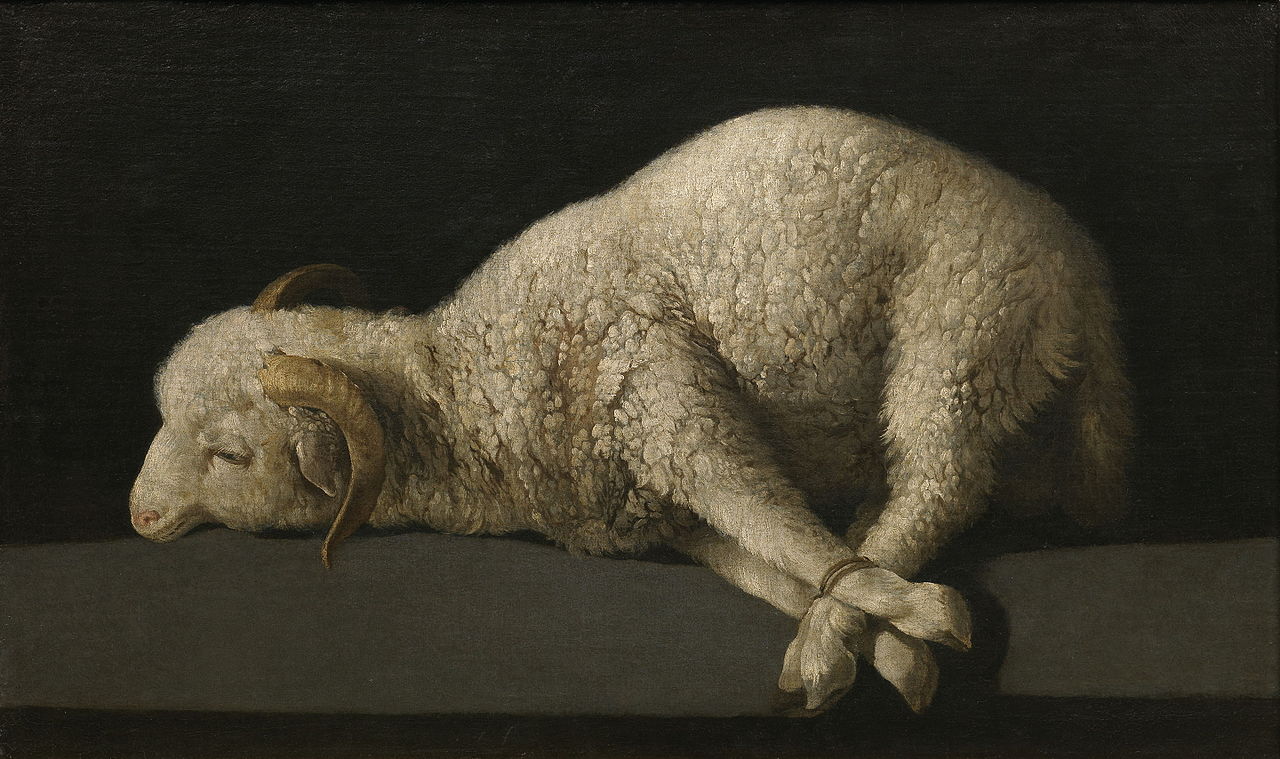
    Agnus Dei (1635-1640), Francisco de Zurbarán | Wikimedia Commons.

    A final instruction from God to Moses is important to note. He instructs the Jews to eat the Passover meal in a certain way: “with your loins girt, sandals on your feet and your staff in hand, you shall eat like those who are in flight.” This idea of being on the way to something greater, not tied to the things of this world, was embraced from the very beginning of the Church. Jesus tells his apostles on this Holy Thursday, “but because you do not belong to the world, and I have chosen you out of the world, the world hates you” (Jn 15:19).

    Peter acknowledges this transitory nature of our existence and our belonging to something other than this world in his epistle, “I appeal to you, my friends, as strangers and refugees in this world! Do not give in to bodily passions, which are always at war against the soul” (1 Peter 2:11). And, of course, St. Paul gives us a number of memorable passages related to this, including “Do not be conformed to this world, but be transformed by the renewing of your minds” (Rom 12:2). So, drawing on Jesus saying “I am the way, and the truth, and the life. No one comes to the Father except through me” (Jn 14:6), Christians very truly had their “loins girt, sandals on your feet and your staff in your hand” — in their thirst to follow Christ and be with the Father, they were “On the Way.” We read in the Acts of the Apostles that the earliest Christians referred to themselves as followers “of the Way” (cf. Acts 9:1-2).

    It’s incredible that the Last Supper, this pinpoint moment in a room with his Apostles, is the moment that the Word of God begins to reveal the true fulfillment of these ancient rituals. Yet there is also the drama of Judas’s betrayal and Christ’s effort to save Judas from this great sin (see yesterday’s reflection). Despite the knowledge of his entire ministry coming to an end and the drama of betrayal and denial by his closest friends, Jesus patiently goes about setting everything in order.

    Think about the to-do list here: giving his Apostles one last great moment of teaching, instituting the Eucharist, establishing the momentum for the Church to continue, leaving time to travel “to the mountain” (Mount of Olives) to have a prayerful encounter with his Father in anticipation of the Passion and Crucifixion ahead … all in a matter of a few hours! It’s remarkably, almost serenely organized.

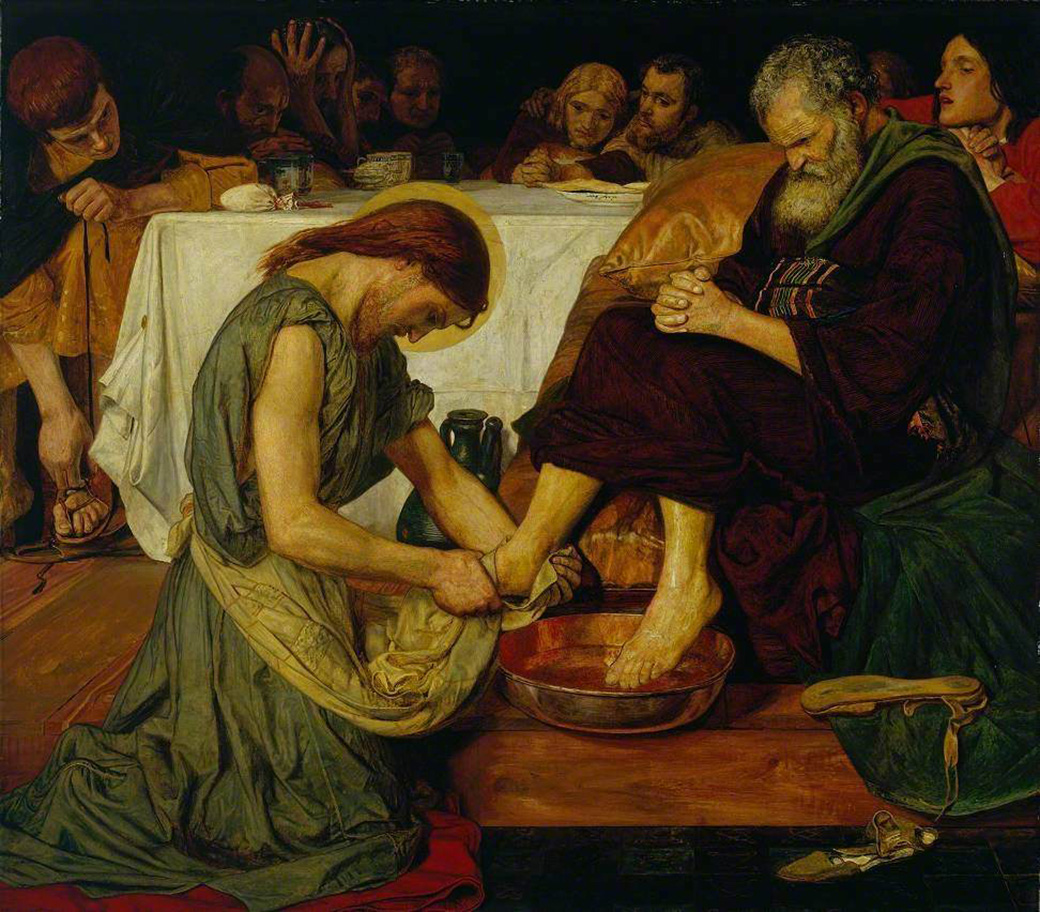
    Jesus Washing Peter’s Feet (1852-1856), Ford Madox Brown | Creative Commons, courtesy ArtUK/Tate.

    Today’s gospel focuses on Christ the servant, who “rose from supper and took off his outer garments. He took a towel and tied it around his waist. Then he poured water into a basin and began to wash the disciples’ feet.” St. Augustine of Hippo in Tractate 55 on the Gospel of John explains how each of these actions relates to something significant in the manner of his saving sacrifice. I’d like to use some of his ideas and some from other sources to consider this extraordinary action of our Lord.

    First, he rises from the supper and takes off his outer garments — as an action, this reminds me of his Resurrection to come and the garments found in the empty tomb, and as such this act of washing the feet is a salvific act akin to the Resurrection itself. St. Augustine also notes that “When about to be crucified, He was indeed stripped of His garments,” so we see a parallel in the Crucifixion, too.

    Indeed, Fr. Jean Corbon notes that the Crucifixion and Resurrection “are not two events, but two phases or moments of the same mystery” (Wellspring of Worship, 46).

    Next, Jesus ties a towel around his waist like a servant, and St. Augustine compares this to the larger humility of the Word of God taking on human form. Then, he doesn’t ask for some water in a bowl, but pours the water into the basin himself. St. Augustine notes that this is like how he “poured His blood upon the earth to wash away the filth of their sins,” and I see a clear parallel to the endless pouring out of love, of the water of everlasting life, that flows continually between the three Persons of the Trinity (as we have explored in several previous reflections).

    Finally, there is the washing of the Apostles’ feet. This lowly act of a servant is important for Jesus to model for his apostles, so much so that he tells Peter that he’ll tell him why he’s doing it after it is done, so as to not disrupt the action by discussing it. St. Augustine notes that he even deigns to wash Judas’s feet: “the greatness of His humility should be still further enhanced by the fact that He did not esteem it beneath His dignity to wash also the feet of one whose hands He already foresaw to be steeped in wickedness.”

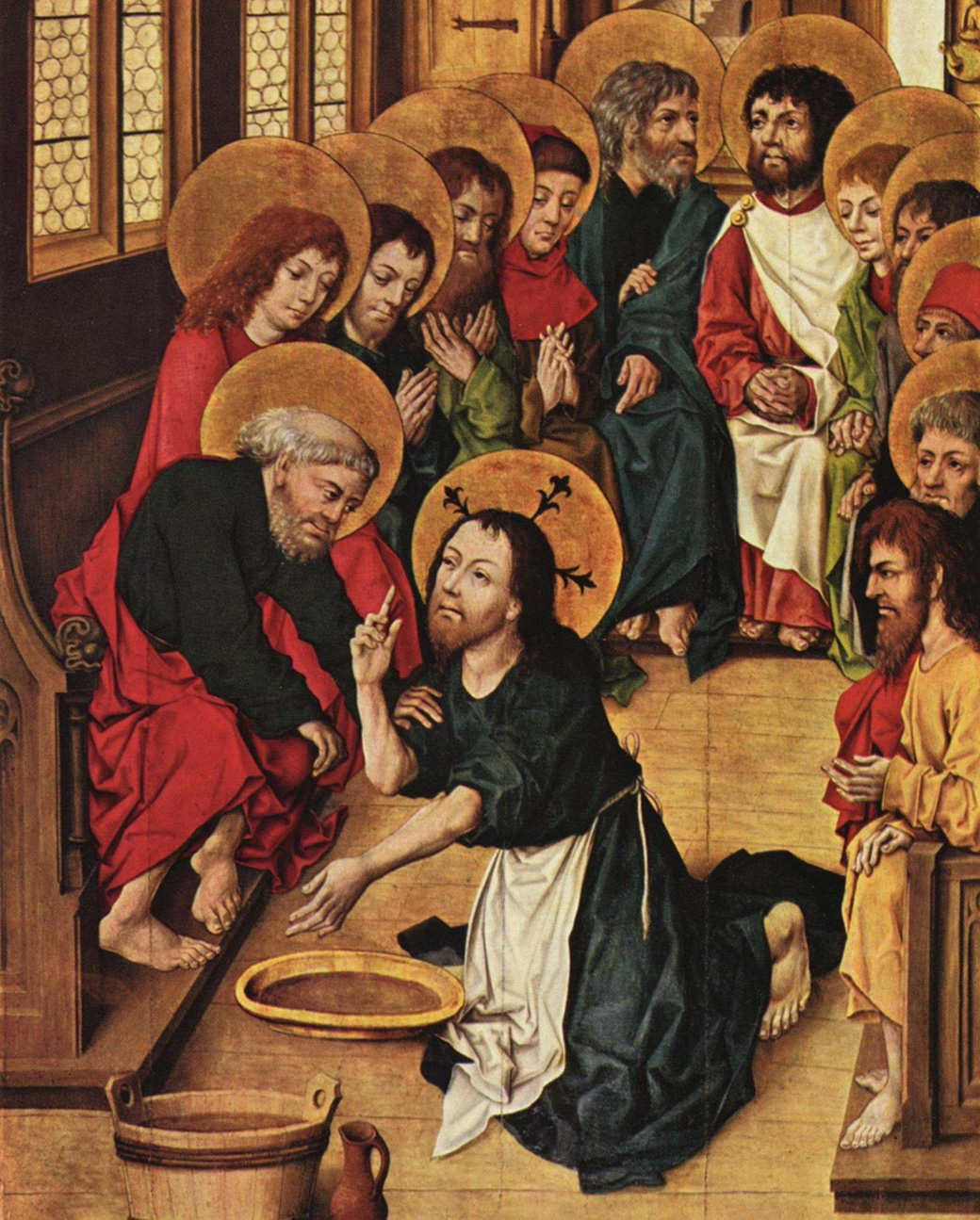
    Detail from Christ Washing the Feet of the Apostles (1475), Meister des Hausbuches | Wikimedia Commons.

    Peter’s reaction is typically passionate and vacillatory. First, he says, “You will never wash my feet” because he thinks it is too far beneath his Lord and Savior. After hearing that he needs it or he will “have no inheritance” with Christ, Peter pulls a quick 180° turn: “then not only my feet, but my hands and head as well.”

    Oh, Peter. Your heart is in the right place, but sometimes it seems like you have no check on your mouth.

    But Jesus uses Peter’s outbursts to teach us something important: “Whoever has bathed has no need except to have his feet washed, for he is clean all over.” What can this cryptic message mean? If we have bathed are “clean all over,” aren’t our feet clean, too? When I think of the feet, I think of those things that ground us, both literally and in our faith (faith means to “stand on firm ground” of that which we can’t prove, as Cardinal Joseph Ratzinger writes). And I think of those things that keep us on the move, signifying that we are agents of action in the world. Why do these appendages that ground us and yet move us require refreshment and purification before we sit down at table with our Lord?

    In his homily for Holy Thursday on March 20, 2008, Pope Benedict XVI gives us a great explanation of this response from Jesus:

    Yet here, with the distinction between bathing and the washing of the feet, an allusion to life in the community of the disciples also becomes perceptible, an allusion to the life of the Church. It then seems clear that the bathing that purifies us once and for all and must not be repeated is Baptism – being immersed in the death and Resurrection of Christ, a fact that profoundly changes our life, giving us as it were a new identity that lasts. … It seems to me that the First Letter of St John gives us the key to understanding [the “washing of the feet”]. In it we read: “If we say we have no sin, we deceive ourselves, and the truth is not in us. If we confess our sins, he is faithful and just, and will forgive our sins and cleanse us from all unrighteousness” (1: 8ff.). We are in need of the “washing of the feet”, the cleansing of our daily sins, and for this reason we need to confess our sins as St John spoke of in this Letter. We have to recognize that we sin, even in our new identity as baptized persons. We need confession in the form it has taken in the Sacrament of Reconciliation. In it the Lord washes our dirty feet ever anew and we can be seated at table with him.

    I think Pope Benedict XVI’s analysis is spot-on, and fits with this idea of the feet grounding us in faith. The liturgy, where we are “at table with the Lord,” is the wellspring for our faith to be continually renewed, refreshed, and purified. These feet, doing the work of carrying us and our Christian message around the world to all those we meet, will of course get dirty and need to be re-washed.

    So much meaning condensed in such a humble act! As Jesus asks when he is finished, “Do you realize what I have done for you?” Jesus brings the whole mystery of the Word of God’s descent into humanity into this act of a servant for his apostles. He signals this when he says, “You call me ‘teacher’ and ‘master,’  and rightly so, for indeed I am.” Remember his words from St. Matthew’s gospel back in the second week of Lent: “Call no one on earth your father; you have but one Father in heaven. Do not be called ‘Master’; you have but one master, the Christ” (Mt 23:9-10; see the reflection Led by the Master). In other words, he is invoking his own teaching to re-establish here that the Christ, the Messiah, is speaking.

    And what he says: “If I, therefore, the master and teacher, have washed your feet, you ought to wash one another’s feet. I have given you a model to follow, so that as I have done for you, you should also do.” We must understand his washing of feet as both the humility/action of a servant as well as a metaphor for a specific type of service related to the ritual cleansing in confession. As Pope Benedict XVI also says in his Holy Thursday homily: “We must wash one another’s feet in the mutual daily service of love. But we must also wash one another’s feet in the sense that we must forgive one another ever anew.”  

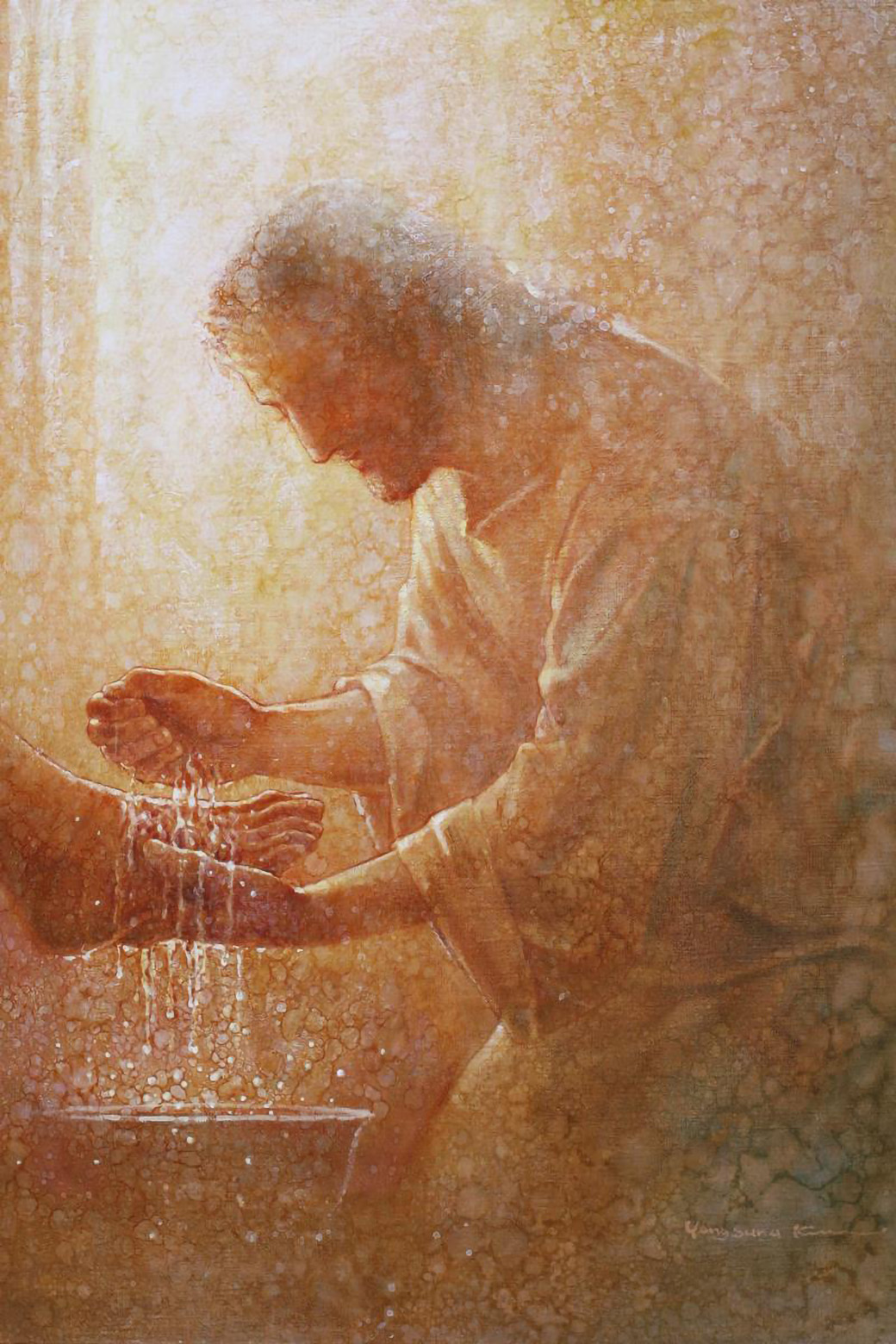
    The Servant (2000s), Yongsung Kim | image from lighthaven.net.

    And thus the Holy Thursday action of Christ in washing his apostles’ feet is a crucial act of establishing the Church. The ultimate mystery of his Death and Resurrection will usher in a new age, a New Covenant, a new opening of Heaven for humanity. But before this saving action is done, Christ sets his Church in motion through his Apostles, giving them the appropriate method, intention, and understanding of what it means to pour out love for one another in an endless example of agape on earth, irresistibly drawing people to God.

  • Rejoice for the Pardon of the Prodigal

    Rejoice for the Pardon of the Prodigal

    Saturday in the Second Week of Lent: Micah 7:14-15, 18-20, Luke 15:1-3, 11-32.

    Today we read one of Jesus’s most famous parables, the Parable of the Prodigal Son. There is so much to say about it. The broad strokes: it displays the unflagging love of the father (that is, God the Father) and our ability to return to Him like the prodigal son, no matter how grievous our sins. In this reflection, I’d like to take a deep dive into a few other aspects, especially the type of love the father provides. 

    We might not quite comprehend just how insulting the younger son is when he demands his inheritance. It would have shocked the Jewish audience to hear that the younger son demands a portion of the inheritance (the eldest son has first dibs and the younger is expected to work). When we look at the original Greek, we see that Jesus actually presents a deeper meaning here. When the son says, “Father, give me the share of your estate that should come to me,” the word Luke chooses to best report what Jesus uses for “estate” is οὐσίας (ousias), which means being, meaning, or essence. The son is asking for his inheritance, yes, but more literally the essence of the father.

    The prophets have a long tradition of referring to the inheritance of the nation of Israel (when they live by God’s precepts) as God’s grace and more specifically the nation’s glory and lands. Thus, it makes sense that the listeners to Jesus’s parable would understand an inheritance to have a double meaning of property/estate as well as the grace or essence of the father.

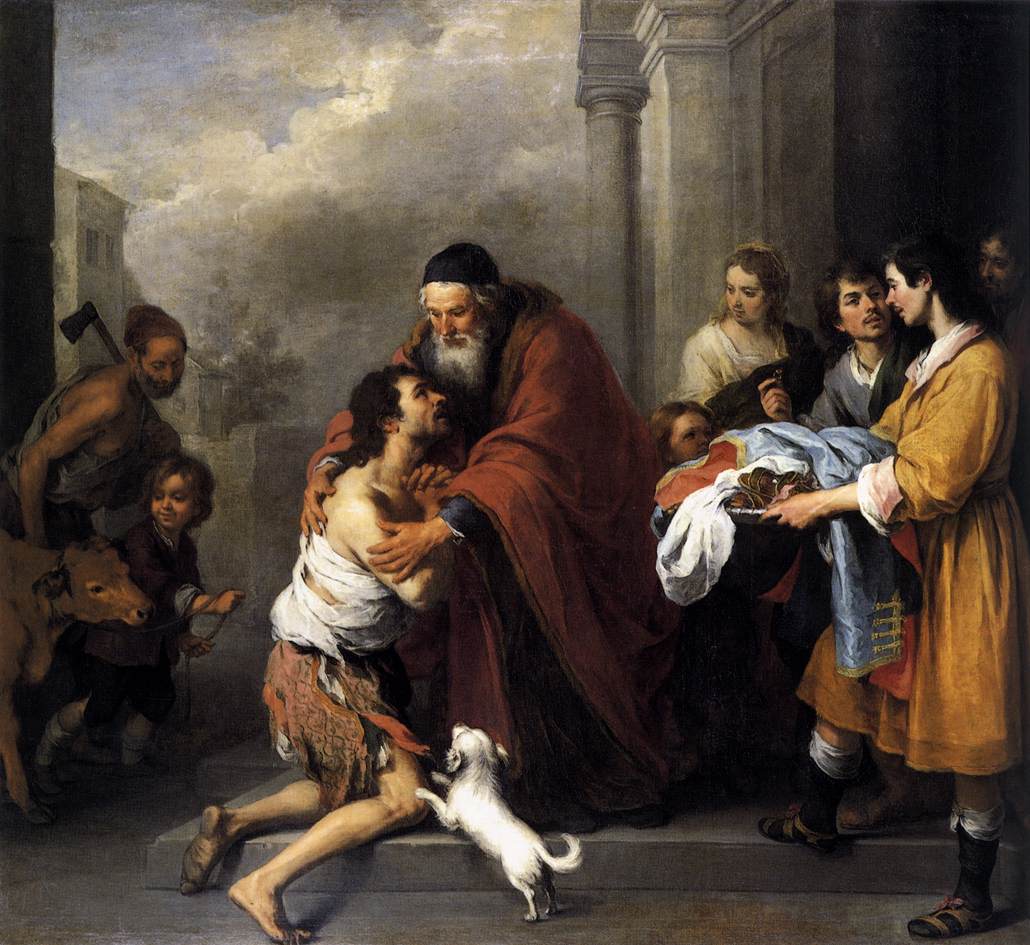
    Return of the Prodigal Son (1667-1670), Bartolome Esteban Murillo | Creative Commons, WikiArt.org.

    But Jesus speaks of the Kingdom of God throughout his ministry in a new, eschatological way. That is, inheritance means everlasting life with God in Heaven (not just glory and land); and perhaps even a share in the Kingdom here in this life, albeit an imperfect one. The next sentence is a lovely way for Jesus to expand the meaning of the “essence of the inheritance” in the new Christology. I like to think of him saying it slowly and deliberately to his audience, making strong eye contact: “So he divided his property between them.” The reason this is so important is that he switches from ousias when describing the property/inheritance and uses βίον (bion, the singular form of bios), which means life. So, he gave them his life in response for the son’s demand for his portion of the inheritance. How deeply prophetic and significant to put this into the parable!

    Today, we know how God gave his essence, his life, in the form of his only-begotten Son on the cross. This inheritance of which Christ speaks is love.

    Knowing the type of inheritance given to the younger son, it is all the more shocking to hear that he used the essence of God given to him on a “life of dissipation” (i.e., prostitution, drunkenness, debauchery). He falls so far that he tends the Jew’s forbidden animal to eat, the pig. This places him in the lowest levels of uncleanliness for a Jewish culture obsessive about cleanliness in body and spirit.

    Then we get to the younger son’s great conversion, which begins with a simple assessment of his own pathetic situation, as it does for most of us. His initial motivation is selfish, simply to get fed and earn some money, because selfishness is all he has and all he knows. But contemplation of his father, enkindled by the never-dormant ember of the essence of the Father given to him, broadens and deepens the return he plans. He commits to say, “Father, I have sinned against heaven and against you. I no longer deserve to be called your son; treat me as you would treat one of your hired workers.” The selfishness, in its destitution, finds something outside of itself to cling to: the Father, in front of whom the debasement of his sins is clear and undeniable.

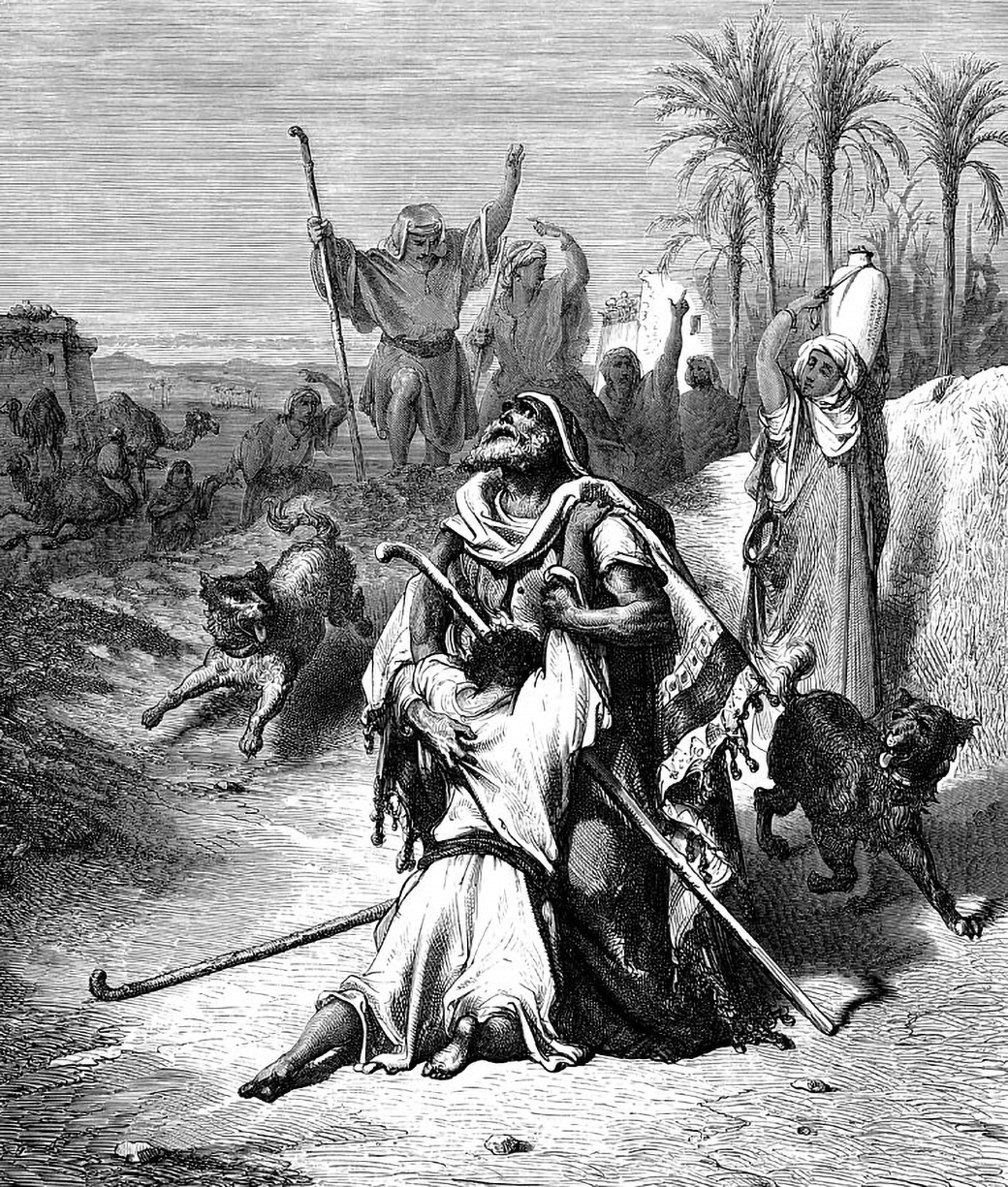
    The Prodigal Son In The Arms Of His Father (c. 1870-1883), Gustave Dore | Creative Commons, WikiArt.org

    At this point, we can turn to our Angelic Doctor of the Church, St. Thomas Aquinas, who wrote extensively about the going from God (exitus) and returning to Him (reditus). He and other theologians understand God as the First Cause of all things and the End to which all things come. He writes early in his scholastic career: “[Sacred] doctrine will consider things in so far as they leave God at the start, and in so far as they are brought back to Him in the end. Thus, we understand divine things first as going forth [exitum] and, second, as returning to [reditum] the End.”¹

    The Parable of the Prodigal Son concisely portrays this same understanding of our existence as ordered by God; the younger son goes forth from God and returns to him. But, let’s order things precisely: first, the Father gives the son his essence to enable him to leave. This could be seen as the breath of God in our creation as well as every gift and grace of God given freely to us, such as Baptism.

    What happens after the gifts are bestowed on us? This is another great generosity of our Lord: we have the free will to do with these gifts as we please. God tries throughout our history to instruct us on good uses of our free will. He gives us endless opportunities to use his inheritance for good works, He works to purify us, and has even poured out the love of the Trinity in the liturgy as a way for us to have true communion with Him. What is our personal story of reditus?

    I believe that this is what defines us as individuals: how we find our way back to God time and again, the decisions we make and the people we interact with on our way to God as the Truth and the End. It’s not the clothes we wear, the haircuts we have, the house we live in, the careers we strive for — in short, all of the things our secular society says define us. No the “person” who is hopefully granted everlasting life in the Kingdom is the being who worked with the essence of God that was bestowed on him or her; all the rest will be stripped away in death, for it is our spirit, our soul, that rests in God.

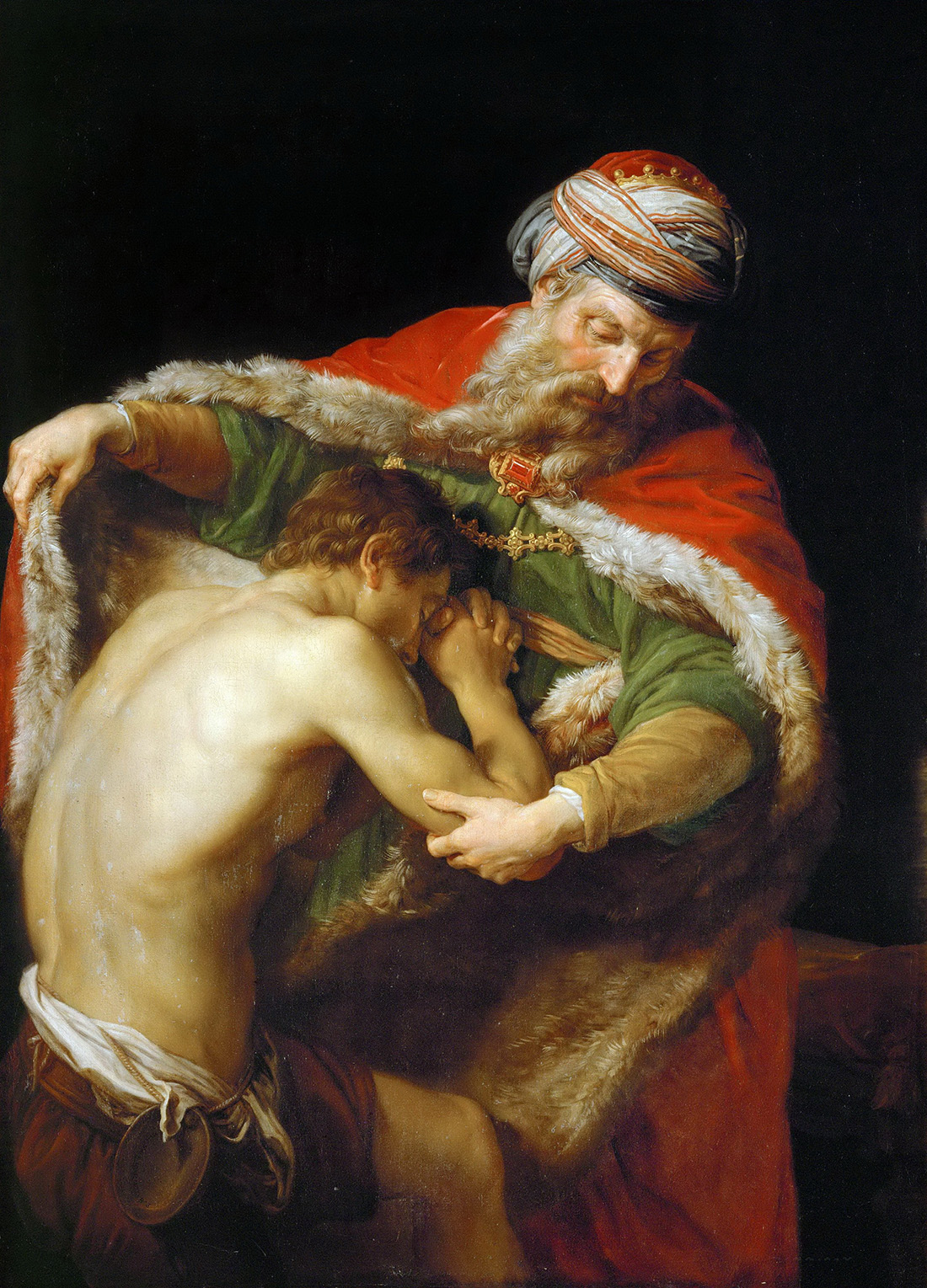
    The Return of the Prodigal Son (1773), Pompeo Batoni | Wikimedia Commons. I love this painting of the father holding his returning son. It shows not just the contrite, true conversion of the son but the colorful richness of God’s love in the figure of the father.

    Let’s turn to the elder son and see ourselves in him. Whenever we feel like we’re on the right track, we’re honoring God and doing his will in the world, we may slip into the persona of the elder son, pathetic creatures that we are.

    Upon hearing that his father is throwing a feast to welcome home his prodigal son, the elder son becomes angry, refuses to enter the house, and is overcome with righteous indignation. In short, he is undergoing his own exitus, a leaving of God. What we see in him is the lesson Jesus has for the Pharisees and scribes who grumble and say a few verses before today’s reading, “This fellow welcomes sinners and eats with them.”

    Like the Pharisees, the elder son seems to have done everything correctly, or at least he’s done externally what was expected of him as a good son. Yet in his refusal to enter the house (and here we can infer the temple, the house of God) and in his righteous indignation, we see that he never converted his heart to God. He has wasted his inheritance as much as the younger son, wasting it on his own sense of righteousness and fastidiousness about the law without digging deeper and truly letting the essence of the Father inhabit him.

    The father immediately wants the elder son to participate in the welcome feast as well. The father seems to not sympathize with the elder son’s jealousy. I think this is a significant point. If we live with the Father and do his will, we are filled with the same love that he has. Our hearts are in union with his. We should want the best for everyone and not be thinking of others as competitors to ourselves, for the love of God is not in finite supply — there is plenty for all.

    The father’s last gentle words of comfort make me want to hide my head in shame for the elder son: “Son, you are always with me, and all that is mine is yours.” You can almost hear a note of puzzlement in the voice of the father at this reminder, as if the son should be aware of this if he has been a good son all these years. And it is here, in these tests of our faith and fidelity of heart, that God finds out if we are good inheritors and produce good fruits (to echo the language from yesterday’s reflection, Tend to the Good Fruit of the Vineyard).

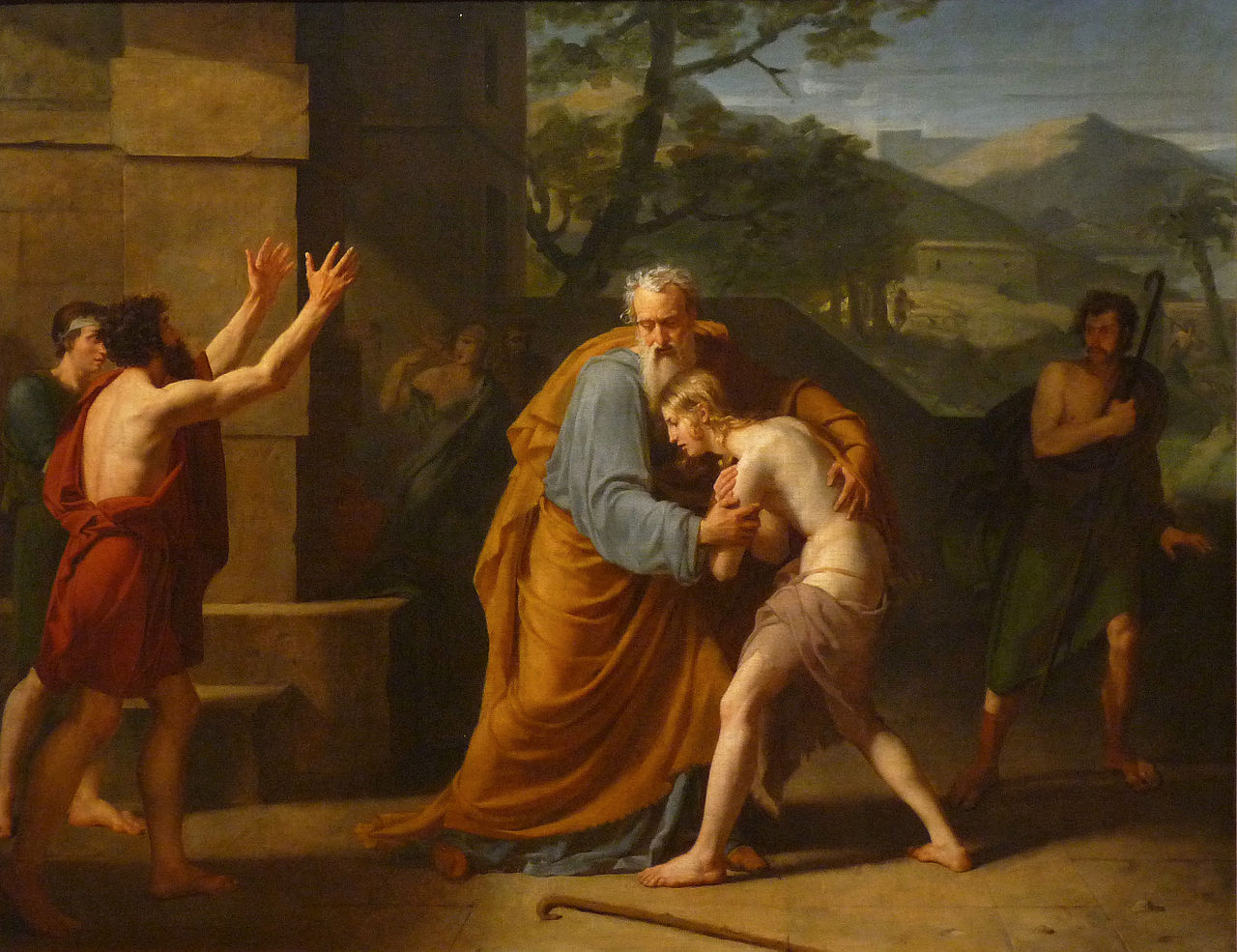
    The Return of the Prodigal Son (Le Retour du fils prodigue), 1806, Michel Martin Drolling | Wikimedia Commons. Drolling gives us a painting of the parable that displays the elder son on the left raising his hands in protest, clearly out of sync with the embrace of the father and, as such, out of place in a world ruled by love.

    It is interesting to note that the Greek verb used when the father “pleaded” with his elder son to stay is παρεκάλει (parekalai), which is the same root as the name given to the Holy Spirit: παράκλητος (parakletos), or paraclete. “Paraclete” carries a complex meaning for the apostles, as the Holy Spirit advocates, witnesses, comforts, and intercedes. The father in our parable is acting with the Holy Spirit, and indeed, this is how God works within us here on earth.

    The Holy Spirit was promised by Jesus: “And I will ask the Father, and he will give you another advocate [Παράκλητον (Parakleton)] to help you and be with you forever— the Spirit of truth. The world cannot accept him, because it neither sees him nor knows him. But you know him, for he lives with you and will be in you” (Jn 14:16-17).

    We see St. Luke use this same verb, parekalai, three times in the Acts of the Apostles, and in a similar way. The first one is striking because it is attributed to St. Peter directly after the Holy Spirit descends at Pentecost and they leave the upper room speaking in tongues. Peter addresses the crowd that gathers with a long speech and then “he testified with many other arguments and exhorted [παρεκάλει (parekalai)] them, saying, ‘Save yourselves from this corrupt generation’” (Acts 2:40). Thereupon, three thousand were converted to Christianity that day. This is a clear indication that the author uses the word to mean the action of the Holy Spirit within us as we exhort, plead, encourage, implore others to convert to God. It is another gift we barely realize that we have from God, the gift of the Holy Spirit active within us as we exhort and encourage others.

    The parable ends with a final window into the vast love of the Father: “now we must celebrate and rejoice, because your brother was dead and has come to life again; he was lost and has been found.” I love passages from scripture that remind us that God rejoices, that he wants to be delighted. And here we see that he fundamentally delights in each of us on our path of reditus.

    Our return to Him is the most pleasing thing we can do. And once we are with him, we need not desire more personal doting, because we can join with him in welcoming others as they find their ways back to him, too.


    ¹ The translation of the Latin here is partially my own. The original text: “consideratio hujus doctrinae erit de rebus secundum quod exeunt a Deo ut a principio, et secundum quod referuntur in ipsum ut in finem. Unde in prima parte déterminât de rebus divinis secundum exitum a principio; in secunda secundum reditum in finem” (I Sent., 2 dist., divisio textus).