Tag: trust

  • “Fathering” the Word of God – Part II

    “Fathering” the Word of God – Part II

    Friday in the 3rd Week of Advent: Judges 13:2-7, 24-25a, Luke 1:5-25.

    On the heels of yesterday’s reflection of St. Joseph’s righteousness and exemplary acceptance of God’s plan for him, today’s readings give us the stories of two other scriptural fathers, 1,100 years apart, with stunning parallels. Neither father accepts God’s word to the extent that Joseph does, although both of their sons are towering figures in bringing people to God: Samson and John the Baptist. While accentuating the true blessedness of St. Joseph, both readings underline our need to trust in the Lord as well as the impact of generational germination of the Word.

    The first reading from the Book of Judges presents the origins of the near-mythological Samson, the last of the judges before the Judaic monarchy is established. Samson’s family is not particularly distinguished; we don’t know much from scripture other than his unnamed mother worked in the fields like a common Jewish woman of the time: “the angel of God came again to the woman as she sat in the field” (Jgs 13:9). But God likes to work through the humble and lowly, doesn’t He?

    The readings today give us several important parallels between Samson and John the Baptist: both of their mothers were barren and older, both sets of parents were visited by an angel promising that they would become pregnant and give birth to men who would be important figures for the Lord and His work, and both fathers do some questioning before acquiescing to the angel.

    And then there are the parallels between the men themselves. Samson is to be brought up as a Nazirite, which means “one separated” or “one consecrated.” This was a class of people as recorded in the Book of Numbers, Chapter 6. God declares to Moses that Nazirites should not shave their hair, drink alcohol, or come in contact with corpses. Being a Nazirite was a sign of consecrating oneself to God, like an early form of voluntary commitment to a religious order.

    Samson’s life was filled with episodes of conquering nature or putting it to good use: slaying the lion with his bare hands, tying torches to the tails of 300 foxes to burn Philistine fields, killing 1,000 Philistines with the jawbone of a donkey, etc. These actions and his God-given superhuman strength served to make Jew and Gentile alike marvel at the works of the Lord and believe more deeply in the Jewish God. 
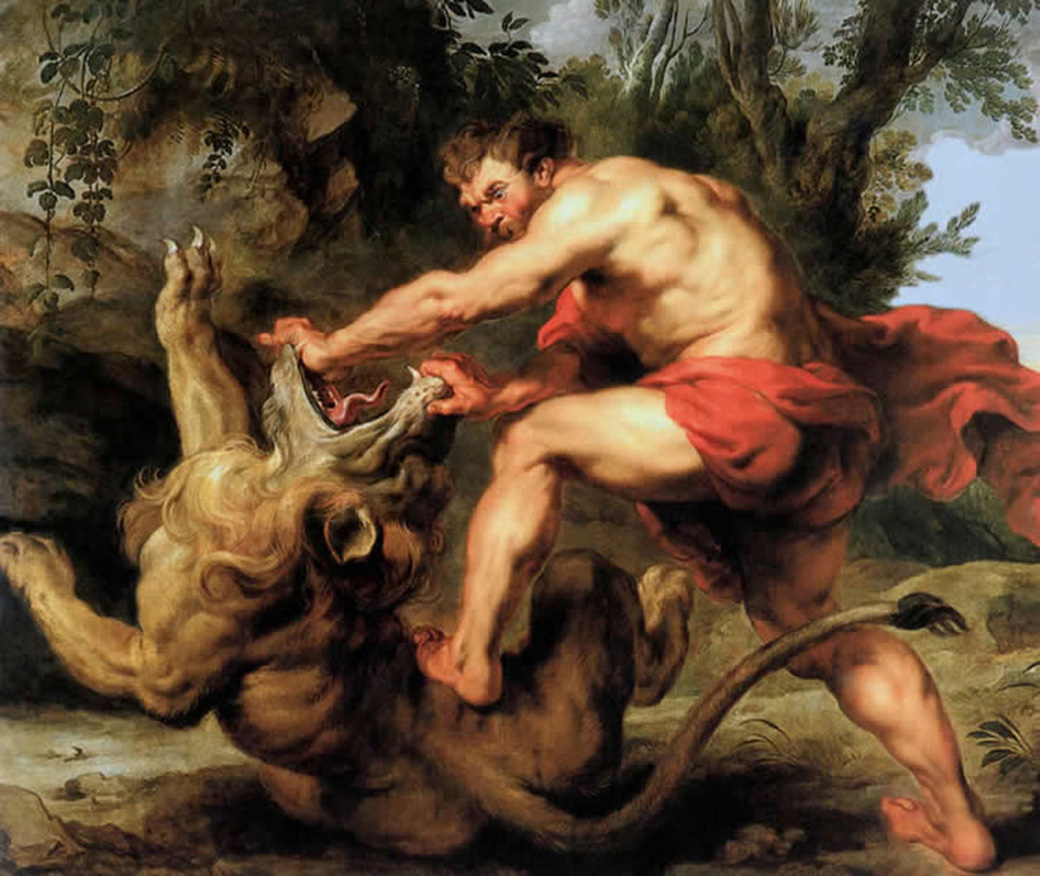
    Samson Slaying the Lion (1628), Peter Paul Rubens | Wikimedia Commons.

    John, for his part, shares many of these characteristics. We know that he was the “voice crying out in the wilderness” and he is aligned with nature in several aspects: “John wore clothing of camel’s hair with a leather belt around his waist, and his food was locusts and wild honey” (Mk 1:6, Mt 3:4). He lives apart, much like a devout Nazirite; today, we hear the angel tell his father, Zechariah: “He will drink neither wine nor strong drink.” He is also depicted throughout Christian art history as being wild in appearance, with long, uncut hair. Since he was completely devoted to being God’s mouthpiece (see A Day of Vindication by Our God), he was as close to a Nazirite in spirit as you can get, if not formally one. 

    (Recently, in his book, Jesus and the Dead Sea Scrolls, Catholic scholar John Bergsma makes a strong case that John the Baptist may have been part of the Essene movement from early in his life another proto-monastic group much like the Nazirites).

    But today’s readings aren’t about Samson and John; instead, they’re about God’s announcement of these great figures to their childless, barren parents. This, in itself, is proof of God’s loving mercy and overflowing generosity to those who remain faithful to Him. There are many stories of God granting pregnancies to barren women in the Bible, starting with our patriarch Abraham and his wife, Sarah. In sympathy with these women who lived in a culture where birthing children, especially sons, was given such importance, we see that God responds to their feelings of inadequacy, abandonment by God, and failure. Into these hearts, yearning to feel God’s healing love, He delivers a miraculous fecundity. I am reminded of previous reflections on agricultural harvest and fertility. God’s blessings carry this same imperative: to bring forth fruits of righteousness. For Samson’s mother and John’s mother, these fruits are their sons. 

    With Mary, God gives us a turning point. He sends the Spirit to bring about Jesus in her womb, and here divinity itself becomes the answer to humanity, which has repeated its sacrifices and strivings generation after generation to no avail. As Fr. Jean Corbon writes, the time leading up to Mary “is also the time when prophetic words and cultic sacrifices are repeated again and again; nothing can do away with this repetition, which signals the grip of death, until the coming of the event that ‘once and for all’ delivers man from death” (The Wellspring of Worship, 35).

    Women prayed for children in the Time of Promises because they were caught in the wheel of generational futility, the “grip of death.” With Mary, the child that is born is a new being, a God and man, who establishes His Reign on earth and delivers humanity from the grip of death. No longer do we need long for children alone to prolong our lives on the planet because Christ has opened up for us life eternal!

    After Christ, our spiritual fruits, rather than physical offspring, are the fruits for which we pray and upon which we pin our hopes.
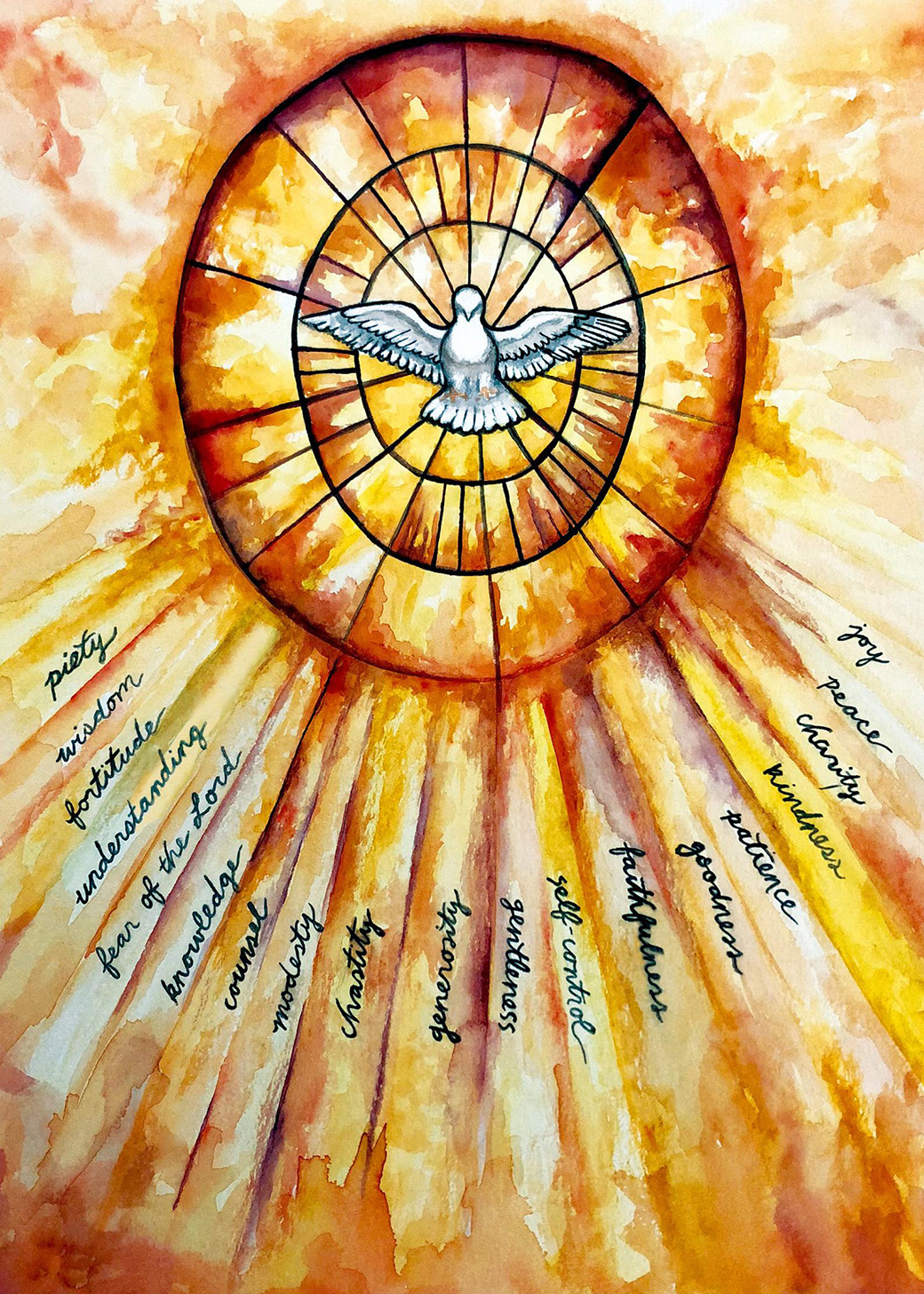
    Fruits of the Spirit (contemporary) Leann Bowen Fine Art | Image from etsy.com.

    St. Paul is very good at exhorting us to embrace this new state of being. He recognizes how the Nazirite tradition prefigured the state of being a Christian. Sanctifying ourselves to God and restraining ourselves from worldly things is now the de facto state for all. This is because of the Spirit, who descended upon Mary and whom Christ has promised will guide us throughout the End Times. Paul writes to the Galatians: “Live by the Spirit, I say, and do not gratify the desires of the flesh. … those who belong to Christ Jesus have crucified the flesh with its passions and desires” (5:16, 24).

    We are all now anointed, set apart, and sanctified for God thanks to Jesus Christ. We must live by the Spirit, and this brings us back to the idea of fruitfulness and fertility. The new fertility is one of the Spirit. Paul writes: “the fruit of the Spirit is love, joy, peace, patience, kindness, generosity, faithfulness, gentleness, and self-control” (Gal 5:22-23a). The fruit that we bring forth into the world is God’s love! This is marked by charity and the personal attributes that Paul lists.

    Note that this is real fruit — it represents the true germination of the Word in our hearts and the creation of new selves. More importantly, this new self is outwardly focused, generating God’s love within all those we meet. We cannot deny the impact of pure charity, forgiveness, patients, and generosity on others. This is the harvest we are called to bring into the Kingdom.

    Of course, we’re imperfect (thanks be to God for the sacraments of Confession and Eucharist!).

    Let’s return to the fathers in today’s readings: Manoah and Zechariah. Both men reveal an imperfect reception of the Word of God delivered by the angel. First (in verses skipped by the Lectionary), Manoah reacts to his wife’s news of the angel by asking God to hear it himself: “O Lord, I pray, let the man of God whom you sent come to us again and teach us what we are to do concerning the boy who will be born” (Jgs 13:8). God sends His angel again, but once again to Manoah’s wife, and she has to run to get Manoah to meet him.

    We are witnessing a little frustration by Manoah that God isn’t doing things the way he wants him to. Manoah asks the angel what they should do with the child and the angel responds a bit dismissively, “Let the woman give heed to all that I said to her” (Jgs 13:13). Like Joseph, Manoah is being asked to take a back seat here, but he’s not quite as good at accepting this as Joseph.

    Manoah wants to make an offering to the angel in response to the news and asks, “What is your name, so that we may honor you when your words come true?” But the angel of the Lord said to him, “Why do you ask my name? It is too wonderful” (Jgs 13:17-18). While not doing anything specifically against God here, Manoah is living in a way where his actions and expectations are driven by the culture of the Jewish law: he offers the prescribed sacrifice and attempts to take control of the situation as the man of the house. Contrast this with Joseph hearing the Word of God and responding in righteousness from the heart. Both men are asked to “father” the Word of God, and Joseph clearly is more configured internally to the Word Himself than Manoah.

    We see a similar circumstance with Zechariah. We hear Zechariah respond to the angel with much more challenge in his demeanor: “How shall I know this? For I am an old man, and my wife is advanced in years.” This would be surprising for those who associate the trappings of piety with actual conformation to God. Zechariah was of the priestly class and in the much-respected role of entering the sanctuary of the Lord alone to burn incense. Of course, Christ preached many times against those who appear to be living according to the law but are not transformed in their hearts, so from our perspective as Christians we should not be too surprised.

    Unlike the episode with Manoah, the angel is not shy about using his own name in a bit of a smack-down: “I am Gabriel, who stand before God. I was sent to speak to you and to announce to you this good news. But now you will be speechless and unable to talk until the day these things take place, because you did not believe my words, which will be fulfilled at their proper time.” How ironic that the father of the great Voice in the Wilderness would be silenced himself throughout his wife’s pregnancy! God’s plan for the announcement and coming of His Son has no room for lukewarm reception or obstacles.

    Zechariah, like Manoah before him and Joseph after him, must take a humble position while fathering the Word of God, and in his case, it must be an externally enforced humbling.
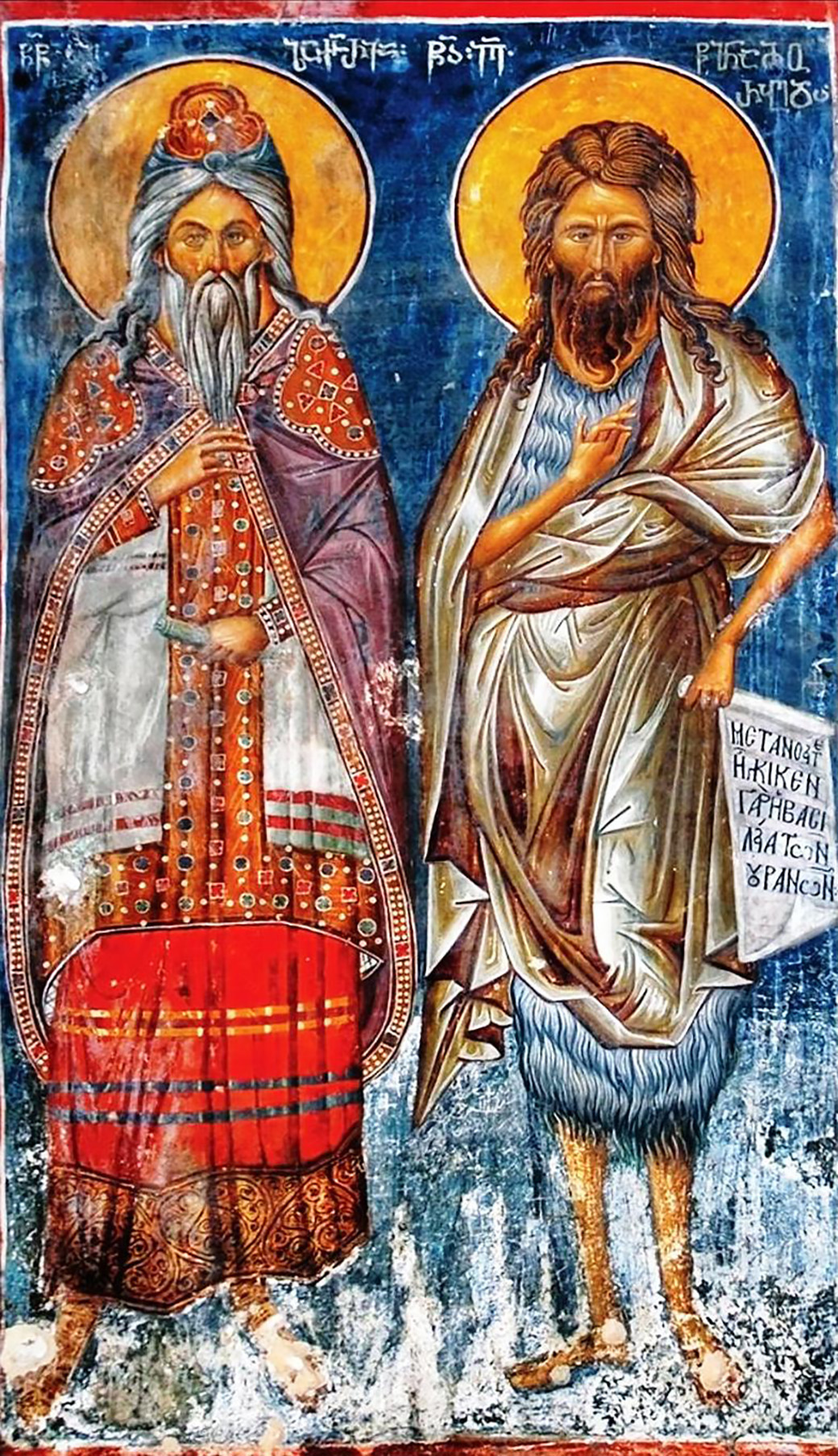
    Zechariah and St. John the Baptist. A medieval Georgian fresco from Monastery of the Cross, Jerusalem (c.1600s) | Wikimedia Commons.

    I’m not trying to take Manoah and Zechariah down a peg — don’t get me wrong. Both men are great figures in our faith tradition. When his tongue is loosed at the circumcision and naming of John, Zechariah gives us one of the great canticles that we chant daily at Lauds (this is the gospel reading on Christmas Eve Mass during the day). Their stories do, however, contrast with Joseph’s humble fathering of the Word, and they give us room to reflect on how we might be fathering the Word in our own lives. We all must germinate and gestate the Word in our hearts and souls; we all must meet God’s plan with humility and acceptance rather than hesitation and excuses; and we all must bring forth the fruits of the Spirit during our time here on earth.

    As we remind ourselves of our Nazirite calling as Christians during this Advent time of waiting and anticipation, we might be tempted to wonder if this is worth it. After all, if the cycle of human reproduction and death ended 2,000 years ago in Christ, why does it still feel that we’re on that hamster wheel? Be comforted in the fact that this confusion over the time of Christ’s Second Coming has existed from the earliest Apostolic Age. In St. Peter’s second letter we read his exhortation to keep the faith:

    But do not ignore this one fact, beloved, that with the Lord one day is like a thousand years, and a thousand years are like one day. The Lord is not slow about his promise, as some think of slowness, but is patient with you, not wanting any to perish, but all to come to repentance. But the day of the Lord will come like a thief, and then the heavens will pass away with a loud noise, and the elements will be dissolved with fire, and the earth and everything that is done on it will be disclosed  (3:8-10).

    This is the message of Advent. Keep your lamps trimmed and burning, for we know neither the day nor the hour when the Lord will come in judgment. “Therefore, beloved, while you are waiting for these things, strive to be found by him at peace, without spot or blemish; and regard the patience of our Lord as salvation” (2 Peter 3:14-15a).

  • The Transfiguration Reveals Truth “According to His Own Design”

    The Transfiguration Reveals Truth “According to His Own Design”

    Second Sunday in Lent, The Transfiguration of Christ: Genesis 12:1-4a, 2 Timothy 1:8b-10, Matthew 17:1-9.

    Today we hear of the Lord’s glorious Transfiguration, set up wonderfully by yesterday’s readings on covenants (see The Difficult New Covenant of Love). There are many signs that point to the New Covenant, including the Annunciation, the Lord’s Baptism, the Presentation of Jesus at the Temple, and of course the Resurrection. But the Transfiguration stands out as a pivotal moment that invokes the old covenants in the form of Moses and Elijah while the Father presents his blessed Son as a gift with the command to “listen to him.” We encounter all of the elements of the covenant as a pact with God where his gift and our commitment to him are both present.

    The first reading from Genesis relates the Abrahamic Covenant where God asks for great faithfulness in return for his blessing. He commands: “Go forth from the land of your kinsfolk and from your father’s house to a land that I will show you.” We might call this blind faith, actually. Abraham must leave everything — his father’s inheritance, all of his relatives and friends — to go to parts unknown (to be revealed later!). Of course, after the test of faith where he was asked to sacrifice his son Isaac, maybe he was getting used to these demands of faithfulness. Whatever the case, we hear that “Abram went as the LORD directed him.” It’s a short sentence but displays the absolute trust that Abram places in God. (Hence the very appropriate Responsorial Psalm 33, Lord, let your mercy be on us, as we place our trust in you.)

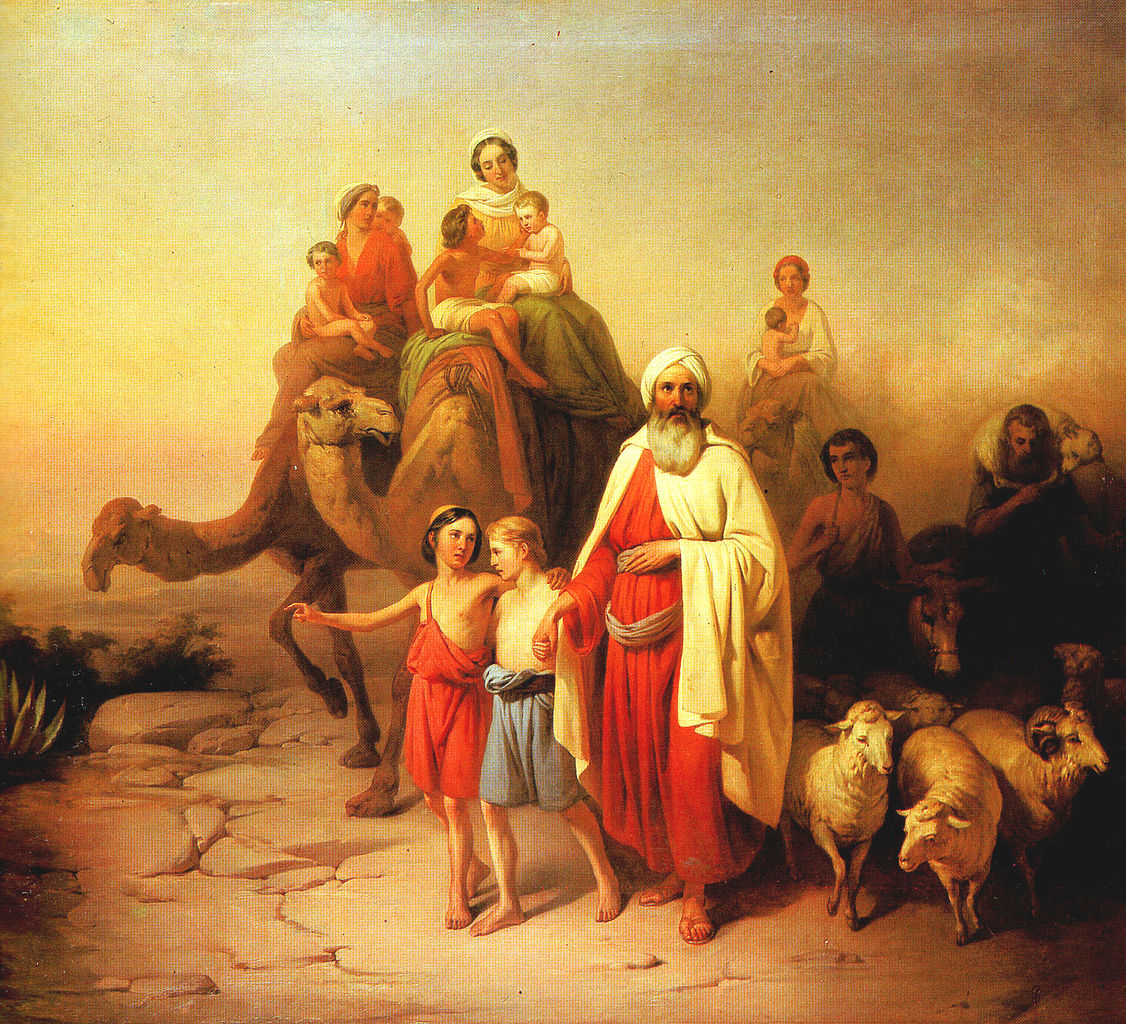
    Abraham’s Journey from Ur to Canaan (Ábrahám kiköltözése), 1850, József Molnár | Wikimedia Commons, artwork housed in Szépművészeti Múzeum – Magyar Nemzeti Galéria, Hungary.

    The Abrahamic Covenant sets the stage for all of God’s covenants: we are asked to act in faith based on what we do not know or see. We can’t do this unless we trust God completely.

    In the second reading, St. Paul underscores this aspect of our relationship with God as he urges his flock to “Bear your share of hardship for the gospel with the strength that comes from God.” We might think we lack that strength ourselves, but no matter, the strength actually comes from God, another point of trust. This trust is made possible thanks to Abraham and the entire tradition to the point of Christ. Paul writes, “He saved us and called us to a holy life,” noting that God’s covenants have saved the nation time and again, and that, in return, they have been called to a holy life. Lest his readers think they earned their holiness, much less their salvation, he corrects them: “not according to our works but according to his own design.”

    And here we have a great and humbling admission: “according to his own design.” As humans, relinquishing power over our destiny, trajectory, or career (to use modern terms) is something we have a hard time accepting. Especially in “pull yourself up by your bootstraps” USA. It’s part of our national fabric to be a “self-made man.” Yet how far from our faith could we possibly get when we think this way? Was Abraham a self-made man? Moses? Elijah? Christ?? Of course not. These greatest of figures in history were not only made by God, but directed, commanded, steered, and loved by Him. Their greatness lay in their acceptance of his dominion and willingness to trust, have faith, and do his will.

    We have to actively work to change our unconscious bias for being self-made, for controlling our own destiny. Thank God that we have thousands of years of his promises kept, miracles done, and covenants upheld. These must give us great comfort; they display that he does indeed have “his own design” and it works best if we don’t try to know it but rather simply trust it.

    The greatest of You-deserve-our-trust signs is Jesus Christ himself. Today’s account of the Transfiguration of Christ in the gospel of St. Matthew is almost understated in regards to the pure majesty and import of the New Covenant’s revelation. Matthew gets right to the point: Jesus and his chosen three go up the mountain, “And he was transfigured before them; his face shone like the sun and his clothes became white as light.” 

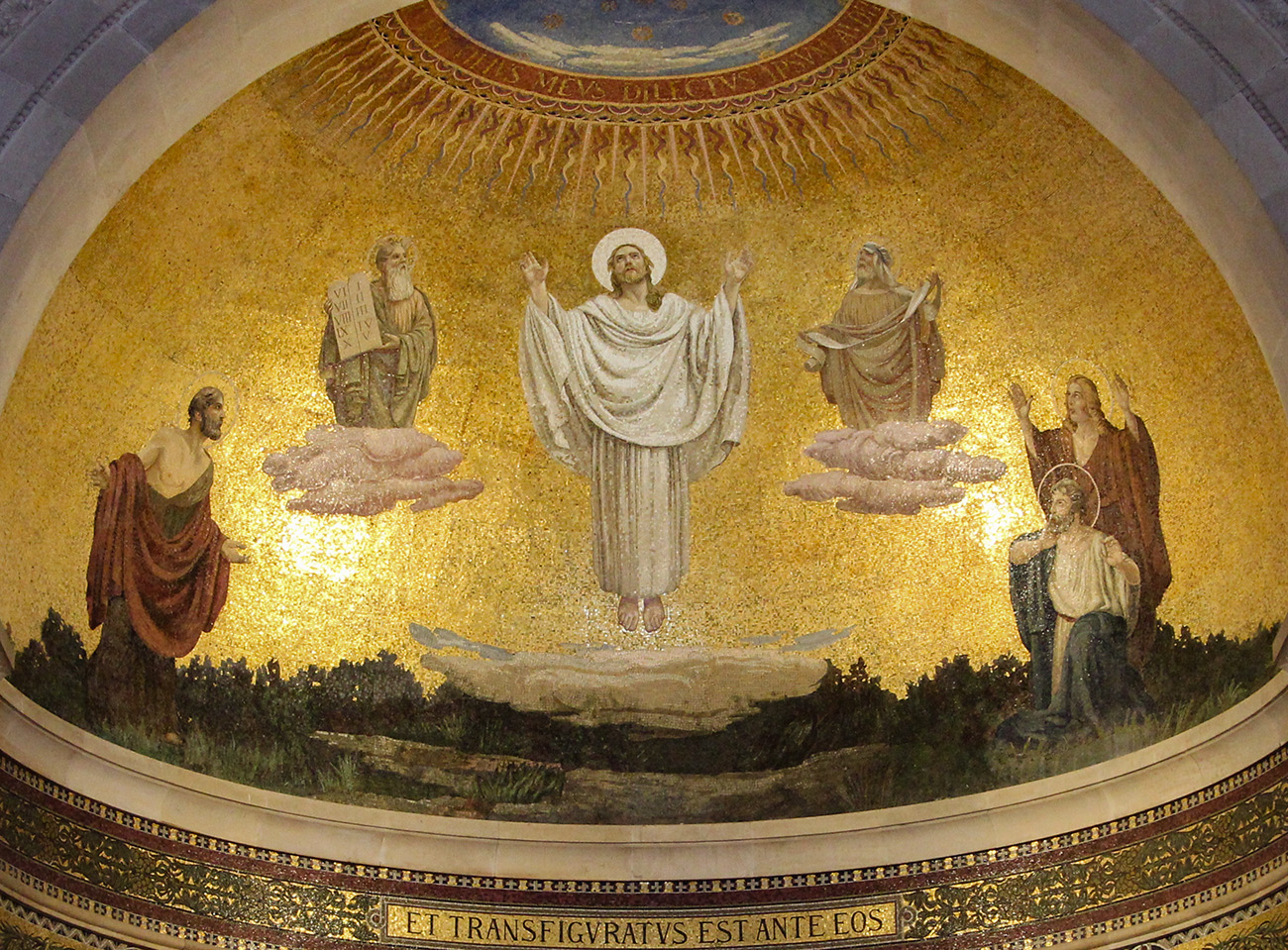
    The Transfiguration of the Lord (mosaic, Church of the Transfiguration, Mount Tabor, Israel), 1924, Umberto Noni | Wikimedia Commons. The caption is Latin for “And he was transfigured before them.”

    There was one other encounter with God that changed a man’s appearance: Moses on Mt. Sinai receiving the Ten Commandments. These two mountain encounters with God are worth comparing. Matthew’s report that Jesus’s face shone like the sun is important to contrast to the interplay of light on the faces at Mt. Sinai. The glorious face needed to be hidden from Moses; The Lord tells him “you cannot see my face; for no one shall see me and live….you shall see my back; but my face shall not be seen” (Ex 33:20, 23). When he comes down from the mountain, “Moses did not know that the skin of his face shone because he had been talking with God” (Ex 34:29b), and even this reflected glory makes the Israelites afraid. Moses has to wear a veil over his face when he talks to them so that they can overcome their fear and awe.

    Yet Jesus does not reflect God’s light, he emanates it. He is such a perfect, non-conflicting union of the human and the divine that the divine light that would kill humans merges perfectly with him; more: he, in fact, is the source of illumination.

    What is the significance of his clothes? He purifies these garments made by human hands, turning them white. This is a sign that, in him, humans can be purified and divinized as well.

    Matthew tells us next, “behold, Moses and Elijah appeared to them, conversing with him.” Moses is the ultimate representative of the law, and Elijah is the ultimate representative of the prophets. Christ is the fulfillment of both the law and the prophets. Here he stands talking with the greatest of those who represent the law and the prophets, and Peter, for one, is thrilled. Here are two of the greatest Jewish religious figures and heroes, conversing with his own teacher, who glows with some sort of mysterious providence that they’ve never seen before. He asks Jesus if he should build tents for each of them. This is easy to misinterpret, but remember that Moses (and all of Israel before the Temple of Solomon was built) made a tent for God to dwell with them. Peter’s tents are a Biblically-sound suggestion for these celestial beings to remain with them, as if a new era has started where the new heavenly Jewish superheroes will help the nation reach new heights.

    But he’s clearly missed the point, and God the Father interrupts him mid-request. Note how differently God appears here on Mt. Tabor compared to Mt. Sinai. On Mt. Sinai:

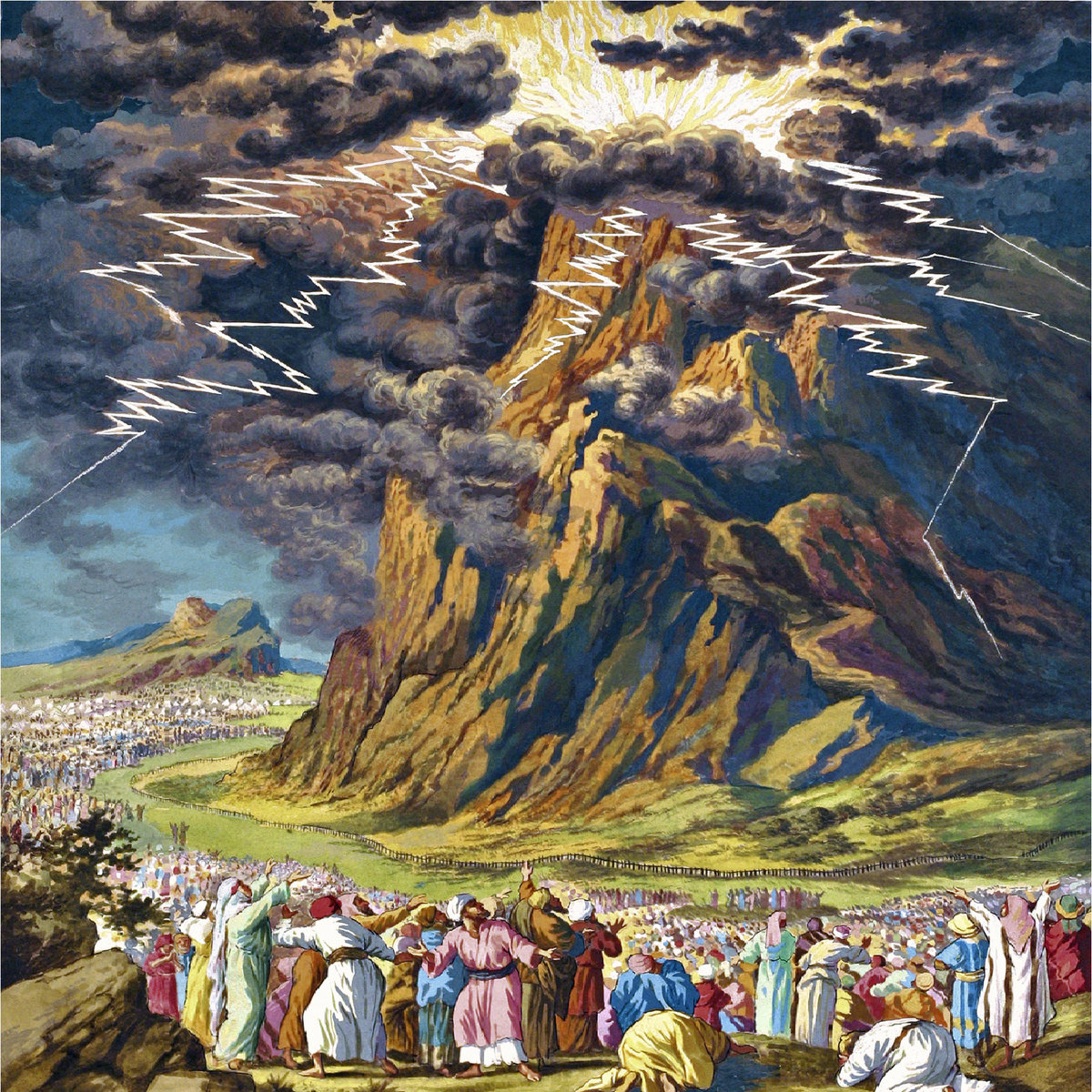
    On the morning of the third day there was thunder and lightning, as well as a thick cloud on the mountain, and a blast of a trumpet so loud that all the people who were in the camp trembled. Moses brought the people out of the camp to meet God. They took their stand at the foot of the mountain. Now Mount Sinai was wrapped in smoke, because the Lord had descended upon it in fire; the smoke went up like the smoke of a kiln, while the whole mountain shook violently. As the blast of the trumpet grew louder and louder, Moses would speak and God would answer him in thunder (Ex 19:16-19).

    The Giving of the Law, 1936, unknown artist | Creative Commons.

    Thunder, lightning, a thick cloud, smoke, fire, violent shaking and trumpet blasts. Truly frightening phenomena. Add to this God’s command to Moses: “warn the people not to break through to the Lord to look; otherwise many of them will perish.” The Lord is hidden from view, darkness and opacity characterize His appearance, and even Moses must only converse with his back, not his face.

    Contrast this with today’s reading: “While [Peter] was still speaking, behold, a bright cloud cast a shadow over them, then from the cloud came a voice…” What an interesting description of light that St. Matthew gives us! The cloud is bright, not dark, akin to the glow we see on the face of Christ. And how can we explain that a source of brightness casts a shadow, since shadows are only cast when a greater source of light is behind them? The divine cloud is surely the brightest thing in the sky.

    For one point of reference, I am reminded of St. John of the Cross and his contemplations in The Dark Night of the Soul: “The more simply and purely the divine light strikes the soul, the more it darkens and empties and annihilates it in its particular apprehensions and affections concerning both earthly and heavenly things” (Book 2, 8.2(2)). This seems to be precisely what is happening — the shadow cast over them is the darkness that strikes the soul by the purifying and incomprehensible divine light.

    Indeed, “they fell prostrate and were very much afraid,” despite the fact that they are in the light and there are no terrible phenomena like we see on Mt. Sinai. Their minds are also cleared of the “particular apprehensions and affections concerning both earthly and heavenly things” as described by St. John of the Cross — there is no more discussion of tents.

    God delivers the New Covenant: “This is my beloved Son, with whom I am well pleased; listen to him.” His gift: his Son. His command: listen to him. Christ is both sides of the covenant, the gift and our requirement. This seemingly simple covenant, taking up so few words compared to those in the Old Testament, is unapproachably dense in its profundity.

    How can we comprehend the gift of God Himself, joined to humanity in our New Covenant? This unlikely and undeserved gift simply requires us to “listen to him.” Like an overly-dense star ready to become a supernova, Christ is poised for the Resurrection, when the love of the Trinity will be poured out on humanity. But the Resurrection will only come after his example of self-giving love is shared with us in the form of the Cross. Listening to him will, in fact, require a radical shift in our lives, a willingness to accept the way of the cross.

    Transfiguration of Jesus (icon), 1408, Theophanes the Greek | Wikimedia Commons. Artwork from Spaso-Preobrazhensky Cathedral in Pereslavl-Zalessky.

    But the truth of the Transfiguration is most beautifully portrayed in Jesus’s words: “Jesus came and touched them, saying, ‘Rise, and do not be afraid.’ And when the disciples raised their eyes, they saw no one else but Jesus alone.” Despite the difficulties we will encounter truly listening to him and taking up our crosses, Jesus the man, the friend, the teacher, is there for us in person, giving us his generous love. He touches them with tenderness, encouraging them not to be afraid of the reaction of their souls to the divinity they are in contact with. When they raise their eyes like docile sheep, they see only the Good Shepherd, who is also the sacrificial lamb.

    The first test of this New Covenant will be given to Peter, James and John when he charges them: “Do not tell the vision to anyone until the Son of Man has been raised from the dead.” They must listen to him as God commanded, although every fiber of their being must have been straining to share the Good News, electrons excited out of their shells with the potential of the divine energy waiting to erupt into the world. But only when the Resurrection is accomplished will the world be ready to comprehend that God Himself walked among us, that he was the fulfillment of the law and the prophets.