Author: Michael Mozdy OP

  • Who Said Catholics Aren’t Pro-Choice?

    Who Said Catholics Aren’t Pro-Choice?

    Thursday after Ash Wednesday: Deuteronomy 30:15-20, Luke 9:22-25

    It’s not the choice you’re probably thinking about; it’s more fundamental than that. It’s the freedom to choose to live in the light or to live in the darkness, and God guarantees us this freedom. This freedom is carried out in myriad choices we make every day. We don’t think about the consequences of all these little choices, but that’s at the heart of today’s readings.

    Moses is blunt: “I have set before you life and death, the blessing and the curse.” Here we have the Israelites, wandering in the desert, camping here and there, desperate to start a new life. They make the mistakes of mistrusting God, second-guessing Him, and being impatient for answers (sound familiar, everyone?). When Moses finally comes down from Mount Sinai with the Ten Commandments, he gives them a stark choice. This one choice, to either obey God’s commandments or to “turn away your hearts,” will become their blessing or their curse. In their moment of time, the blessing was to “live and grow numerous” and be blessed by God in a new land. The curse was to perish, have a short life, and a short family line. In other words, the Jews saw the consequences of their fundamental choice (i.e., to live a life of little choices that conform to God’s will) in their lives in this world. Blessings and curses for themselves and their descendants on the earth.
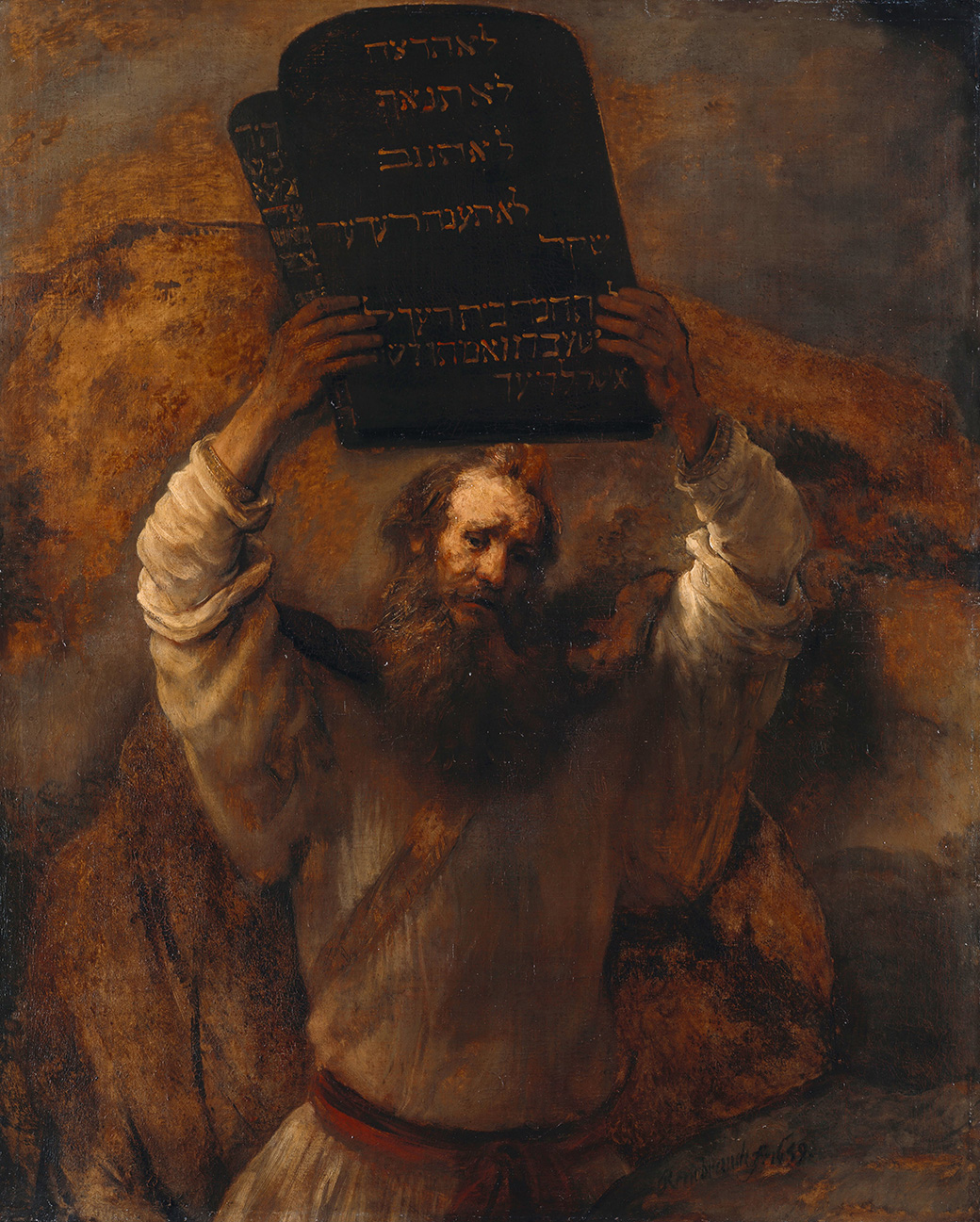
    Moses Breaking the Tablets of the Law (1659) by Rembrandt | Wikimedia Commons

    Today’s gospel of St. Luke opens like yesterday’s from Matthew: our Messiah tells his disciples that he’s going to suffer and be killed, then rise on the third day. But the sequence in Luke is slightly different than in Matthew. This conversation happens immediately after Jesus asks his disciples who they say he is. Peter answers him, “The Messiah of God.” Thus, Jesus’s message is hard, if not impossible for them to understand since they’ve inherited the earthly understanding of blessing and glory from their Jewish ancestors. The Messiah was thought to install an earthly kingdom, blessed by God, but an earthly kingdom nonetheless. How could the Messiah suffer and be killed? 

    But that’s not all. Jesus ups the ante: “If anyone wishes to come after me, he must deny himself and take up his cross daily and follow me. For whoever wishes to save his life will lose it, but whoever loses his life for my sake will save it.” I can just imagine the cold sweat and chill down the spines of the apostles, hearing with a fair amount of horror these words. They were coming off of just feeding 5,000 people with a few loaves and fish. Huge crowds were testifying to Jesus as the Messiah, seeing his miracles and believing. These were heady and exciting times for them.

    The first thing that jumps out is how Jesus is reframing the blessing and the curse. Specifically, he is exploding the traditional concept of them being experienced in this life, in this world. How can you save your “life” by losing it? More than just a clever linguistic reversal, Jesus is expanding their concept of “life” to extend beyond the grave or the life they experience in this world. This new eschatology forms the basis of all hope for Christians. It orients us to something greater than what we see, hear and touch — something eternal. For the ancients, the eternal was something only gods could experience, but here we have God alive as a man telling us that we, too, can experience the eternal.

    But we have to make a choice.

    Christ clarified the reward, but he’s also clarified the commitment. (As in all ways, he not only upholds the law but perfects it.) His clarification of the commitment is this: we must deny ourselves and take up our cross daily to follow him. This is no different than the Word of God proclaimed to Moses (same Word!), but the reality of the cross punctuates the eschatological consequences. Why bring up the cross and death as part of our commitment? It’s a way for him to show that death is but a step in a much larger continuing life with (or without) God. Death does not mark an endpoint after which we could say “that person was blessed” or “that person was cursed.” We must instead embrace death as a part of the journey toward God.

    Moreover, the way we embrace the cross is important. We must “deny ourselves” and “follow him.” This is important because an atheist could embrace death (even hasten it with suicide) but not be making the choice that Jesus wants us to make. That atheist still believes that death is his or her final moment and is not united with God. This person does not accept God’s invitation to eternal life.

    So it’s not simply about being blasé about death. By denying ourselves and following Christ, we fundamentally see death differently. This is a sticking point for a lot of people. Death is scary; death is DEATH, right? Being afraid is natural, but here is where the rubber hits the road in terms of our faith. We believe that there’s an incomprehensible greatness and glory that awaits us. We orient our entire lives to this. We live differently. We deny that our “selves” belong to this world alone. When Jesus asks what profit is there “to gain the whole world yet lose or forfeit himself?”, he puts the world in direct opposition to true personhood. True personhood is a spiritual personhood that exists fundamentally in relationship with God. What is death, then, but a step in the path to getting closer to our Creator?
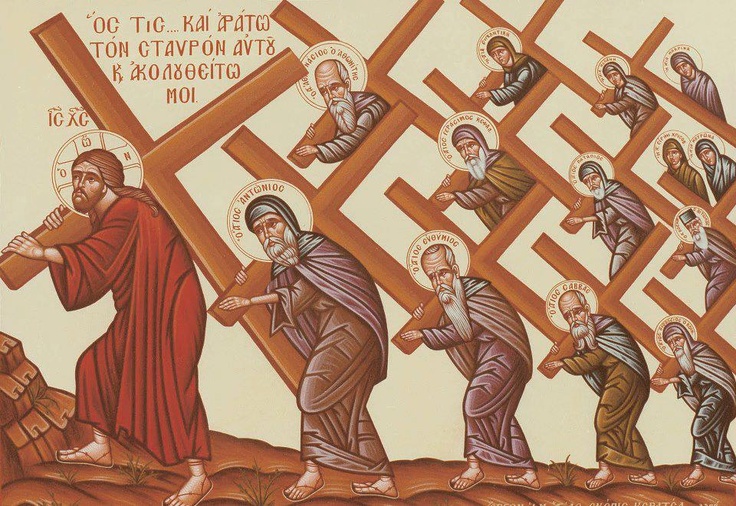
    Image: Palamas Institute

    When we hear “he must deny himself and take up his cross daily,” we might be tempted to consider this a sad, crushing, but good-for-you pill to swallow. Instead, I think Christ’s point is ultimately a hopeful and positive one. The last sticking point to address is the “deny himself” bit. Well, now, it seems appropriate that we just started Lent!

    Can there be anything more profoundly fulfilling than being selfless? As a married man, I am no happier than I am to see my wife be happy or thrilled with something. If I can do something for her that delights her, then I am very fulfilled. Our sacrament of marriage is a vow to be Christ for one another, and every act of putting the other person first is a step in this direction. Being selfless in our daily interactions with others is one aspect of “denying oneself” that I for one find fulfilling, not something that deprives me of happiness. 

    A deeper aspect of “denying oneself” is to deny our sense of importance as we stand daily before God. This is better understood as humility. And it’s not a complete denial of self. As Simon Tugwell, OP, writes in Prayer: Living with God, “Humility means recognizing all these [obstacles and competing wills] and not trying to make my will paramount at all costs; it does not mean the simple suppression of my will” (61). We must still be fully human, accept that we have a will that God gave us, but not let that will supersede our desire to do God’s will.

    Perhaps the most common understanding of “denying oneself” in Lent is to make a Lenten promise to avoid certain desires, passions, and behaviors. For example, giving up alcohol, chocolate, or TV during Lent. Saints by the hundreds show us the benefits of little denials of our worldly passions: these denials strengthen our spirit, help us avoid bigger temptations when they present themselves, and help us better listen and see God in our lives. An important point is that we’re not trying to lose all emotion or passion for life. Tugwell, in the same book, counsels that “A man whose passions are ordered and harmonious can have a far more richly and intensely emotional life, fully emotional, but always subject to the overall guidance of clear thought and vision” (71). To Tugwell’s point, Christ’s lesson to take up his cross, deny ourselves, and follow him is one that helps us be more fully human, more perfectly ordered both in this world and the next.

    It’s not an easy path, it takes discernment and work, but the rewards of making this choice to follow God’s law … can we even describe how glorious?

     

  • The Not-So-Flashy Evangelism

    What’s Going on with this Blog?

    After I published a few posts, I had a conversation with my mom about the blog. She knows me as a writer who has spent a good portion of his career doing PR and marketing work. In short: someone who writes persuasively, hopefully with personality and passion. Upon reading my posts, her response was something along the lines of “It just doesn’t seem like you. You could give people more examples from your life, or more ideas about incorporating Christ’s message into their lives.”

    It was a good conversation. We agreed that my approach was more academic (for lack of a better word) and that the writing was a bit dense and not particularly flashy. Or even inspiring. She didn’t understand why I would choose to write this way, and I explained that these posts are simply my contemplations on the readings of the day, and will naturally reflect the stage of my own faith formation. I’ve been reading a lot of Church Fathers, writings on the liturgy, writings of past popes and other thinkers in the Church. I am particularly interested in delving into the layers of meaning found within the Word of God. Perhaps it’s my training in English Departments and years of close textual analysis. 

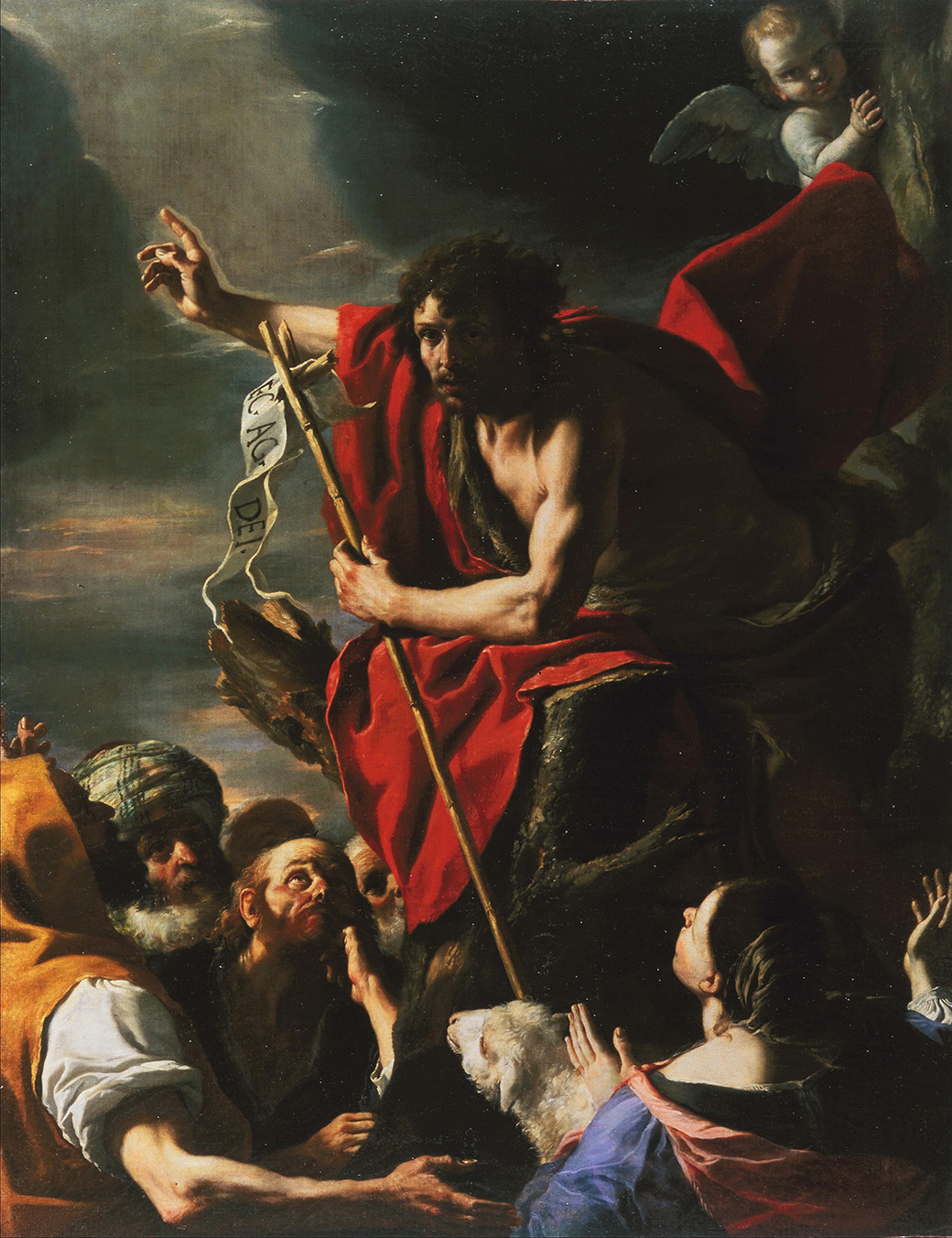
    St. John the Baptist Preaching, c. 1665, by Mattia Preti

    But as we spoke I realized there was more. We are also a product of certain biases about how things are done and how they’re most effective. I must admit that I’ve done a 180° turn in my approach to faith matters compared to my day job in marketing and PR. Much of this is due to the influence of a particularly smart and biased Polish Dominican priest named Jacek Buda. Thanks to years of tutelage — his recommended readings, long discussions over good vodka, and time spent in prayer together — I realize that I’ve taken on some of his more fundamental beliefs about the nature of evangelization.

    The primary nugget I’ve gleaned from my time with Fr. Jacek: our practice of faith must point to God, not to us. He’s likely the best homilist I’ve known, and not because he makes us laugh, is terribly witty, or tells us fascinating stories. He’s not a commanding, loud presence at the ambo; quite the opposite, despite his large frame and ample belly, he speaks softly (almost inaudibly at times!) so that his listeners lean forward, straining to hear. He simply uses his homily as that time during the Mass was meant to be used: to draw us more deeply into the Word of God by uncovering the levels of meaning therein. “What’s more interesting and captivating than the Word of God?” he asks. And as I’ve examined that question in the light of taking my faith seriously, the answer is that nothing is more interesting, enlightening, or important. Christ, the Word, is “the way, the truth, and the life” (Jn 14:6). If I believe this, which I do, then the Word is much more incredibly powerful and interesting than we give it credit. Inexhaustibly interesting as many important writers have stated.

    our practice of faith must point to God, not to us.

    How do we know when our practice of the faith points to God and not to us? It’s really quite simple. Are members of the congregation using time before Mass to chat with one another instead of preparing for the holy liturgy? Then it’s more about them in that moment. Is a preacher talking about himself more than God? Is he developing a cult of personality around himself? Then it’s more about him than God in those moments. Do we constantly ask how to put Christ’s words into practice in daily life, turning our faith into a perpetual self-improvement strategy (or society improvement strategy)? Then it’s becoming more about us than God. 

    I don’t want to be misunderstood as an extremist here. It can be very instructive to hear a priest share a personal story as a way to better understand a gospel reading. The Church as the Body of Christ is communal, with friendship in its heart (perhaps not effusively in the chapel around the time of the liturgy, however, to harp on a personal pet peeve). And social justice and personal sanctity are important parts of our life as Christians. But I’d rather err on the side of pointing to, praising, and reflecting God with all my heart and being than reveling in the worldly and the human.

    The true meaning of the universe exists without us doing anything. And the amazing thing: that truth is fully present during the liturgy. As Catholics in the United States, we’ve taken on some unfortunate aspects of worship from our Protestant brothers and sisters. I have no ax to grind here, and I respect them as much as anyone, but they do not believe that Christ is really and truly present in the Eucharist at Mass, sanctifying them and giving them true communion with God here and now. So, of course they look for other things to make their services more interesting, palatable, and entertaining. But we do believe in the presence of Christ in the Mass. As such, we should not be tempted by a path of entertainment and easy palatability that simply detracts from the deep realities of the mysteries of our faith.

    So back to the question of this not-so-flashy blog. That aspect of entertainment, persuasion, even manipulation is something that we’ve come to expect in every aspect of our lives. I fundamentally don’t believe it belongs or is necessary when it comes to our faith. It’s not important that I convince you of something. What’s important is that every person seek God — yearn for God, learn about God — on his or her own. The Word of God is in the scriptures, waiting to instruct us and dwell with us. This blog, like Fr. Jacek’s homilies, is hopefully simply pointing to God in the scriptures and allowing Him to do the work that He naturally does in our lives.

    Photo by DoDo Phanthamaly, Pexels.com

    Here, we might apply the old adage, “Give a man a fish, and you feed him for a day. Teach a man to fish, and you feed him for a lifetime.” The type of writing typified by advertising and marketing wants to hand us fish on a platter, better yet, as many fish as we can eat, buy one get one free! Notice how this type of exciting, persuasive writing in fact gnaws away at our freedom to choose. So often the marketing promise contains an implicit “you’d be ridiculous to choose any other option,” it cajoles and promises what it can’t deliver, and in this way is manipulative. God does not operate this way. He maintains our freedom to choose light or dark and stands behind his promises. If we want to “point to God” in our actions and evangelization, we must also provide people a way to meet God as their complete selves and discover for themselves the wonders he provides.

    A last word of thanks to my mom. I’m glad you weren’t afraid to have that conversation with me, be honest about your thoughts, and hear my response. With God’s grace we can avoid hurting feelings when we’re truthful and act in love!


  • Ambassadors for Christ

    Ambassadors for Christ

    Ash Wednesday: Joel 2:12-18, 2 Corinthians 5:20-6:2, Matthew 6:1-6, 16-18

    The readings today certainly set the stage for Lent, as you’d imagine they might on Ash Wednesday. In the gospel reading, Jesus instructs on the appropriate way to pray and fast. This is part of his long sermon that starts with the Beatitudes, taking up three full chapters in Matthew’s gospel. But let’s take our time and see how today’s first two readings tell us why we might be praying and fasting in the first place.

    The book of Joel uses lovely language to portray some rather drastic times for the Jewish people. A plague of locusts (some scholars claim this is an allegory for invading armies) has so devastated the land that there is no grain in the fields nor even viable wilderness pasture either thanks to wildfires. The land is ruined, “the ground mourns.” Then the prophet Joel speaks of impending doom, “the day of the Lord,” when the Lord brings an innumerable, unstoppable army upon them. This horrible apocalyptic vision ends with: “Truly the day of the Lord is great; terrible indeed—who can endure it?”

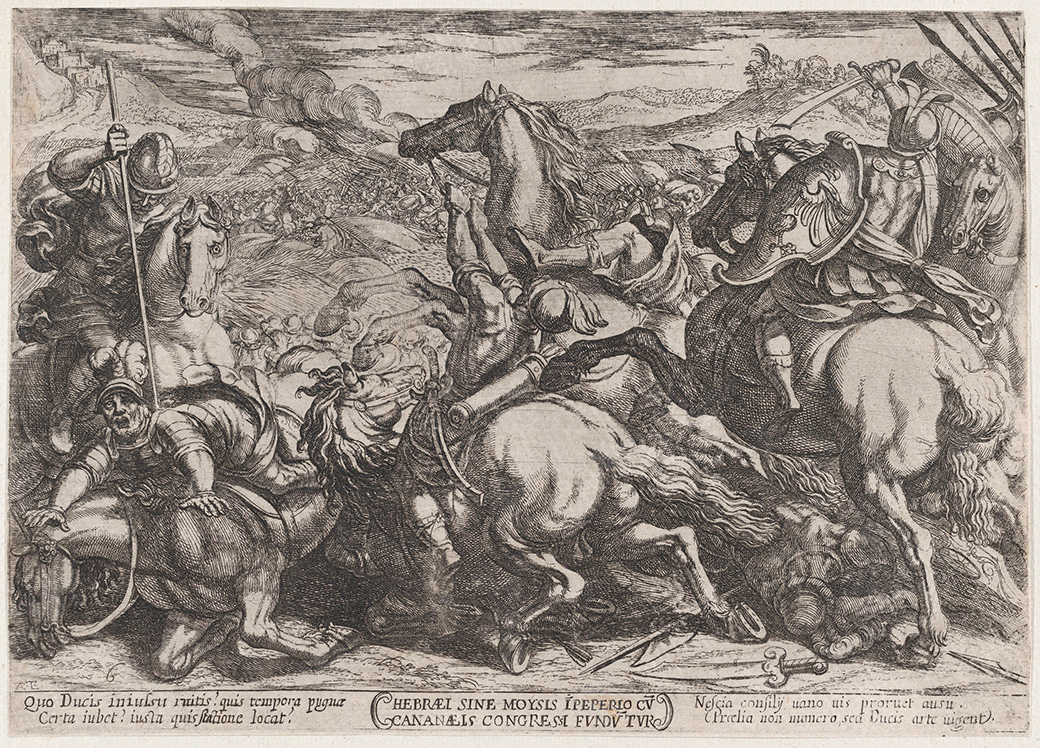
    Israelites defeated by Canaanites for Having Disobeyed Moses, ~1590-1610, Antonio Tempesta | Creative Commons license, courtesy The Metropolitan Museum of Art.

    And that’s the lead up to what we read today. Despite opening with complete despair, we hear undeniable hope from Joel, “Even now, says the LORD, return to me with your whole heart, with fasting, and weeping, and mourning; Rend your hearts, not your garments, and return to the LORD, your God. For gracious and merciful is he, slow to anger, rich in kindness, and relenting in punishment. Perhaps he will again relent and leave behind him a blessing.” Joel gives us a reason to return to God with our whole hearts: the hope that He will relent from his punishments, that is, the hope that we will be saved and be brought into his Kingdom for eternity. This trumps all of the worldly concerns of barren land and empty granaries. Joel implores the entire populace (“Assemble the elders, gather the children…”) to weep and pray for God’s mercy.

    St. Paul’s words to the Corinthians are significantly different than Joel’s instructions for the Jews of his time.

    As we move to the New Testament in the second reading, we enter a new world transformed by Christ. We are, ontologically speaking, new beings. St. Paul explains this beautifully elsewhere, in the letter to the Hebrews: “we have been sanctified through the offering of the body of Jesus Christ once for all … by a single offering he has perfected for all time those who are being sanctified” (Heb 10:10,14). We no longer have to keep sacrificing animals and other offerings over and over as we beg for God’s forgiveness and mercy (which he amply provides in the time before Christ). Instead, we are able to commune directly with God thanks to, and through Christ — our new way of “right relationship” with God is called the Holy Liturgy.

    This is why St. Paul’s words to the Corinthians are significantly different than Joel’s instructions for the Jews of his time. Christians encounter a new perspective. The first sentence of the reading encapsulates the new reason we pray, fast, and give alms: “We are ambassadors for Christ, as if God were appealing through us.” What an exalted position, ambassadors for Christ! This means that our lives are examples to the world, showing who Christ is. And who exactly was Christ? Above all, he was perfect in devotion to his Father. Therefore, our first act as ambassadors is to embody the humility for the Father that Christ had, the desire to please Him and do His will, the focus on spiritual fortitude, not the pleasures of the world. This is why St. Paul asks the Corinthians to “be reconciled to God” so that they do not “receive the grace of God in vain.” We do this for the Father, yes, but also to grow the Body of Christ in the world.

    This brings us to the words of Jesus himself. Shortly before what we read today, he says, “Do not think that I have come to abolish the law or the prophets; I have come not to abolish but to fulfill” (Mt 5:17). And, indeed, he mentions the same prescriptions that prophets like Joel and Isaiah levy upon their people: righteous deeds, giving alms, prayer, and fasting. Only now Christ is instructing us on the way in which we carry out these acts. In order for us to be good ambassadors for him, we must listen intently and understand that he perfected the law, fulfilled the law, and wishes for us to continue this fulfillment of the law as He lives in us. And so we are instructed to fervently pray, fast, give alms, and do good deeds, but to do them in a way that does not draw attention to ourselves. This self-effacement is essential for the good Christian. Why? Because Jesus reminds us in his instructions that all things should begin and end in the Father. All things should point to the Father. What will be noticed are the good works, the alms, the prayerful attitude — all of which speak of God alive in the world. What won’t be noticed is a person trying hard to look pious. 

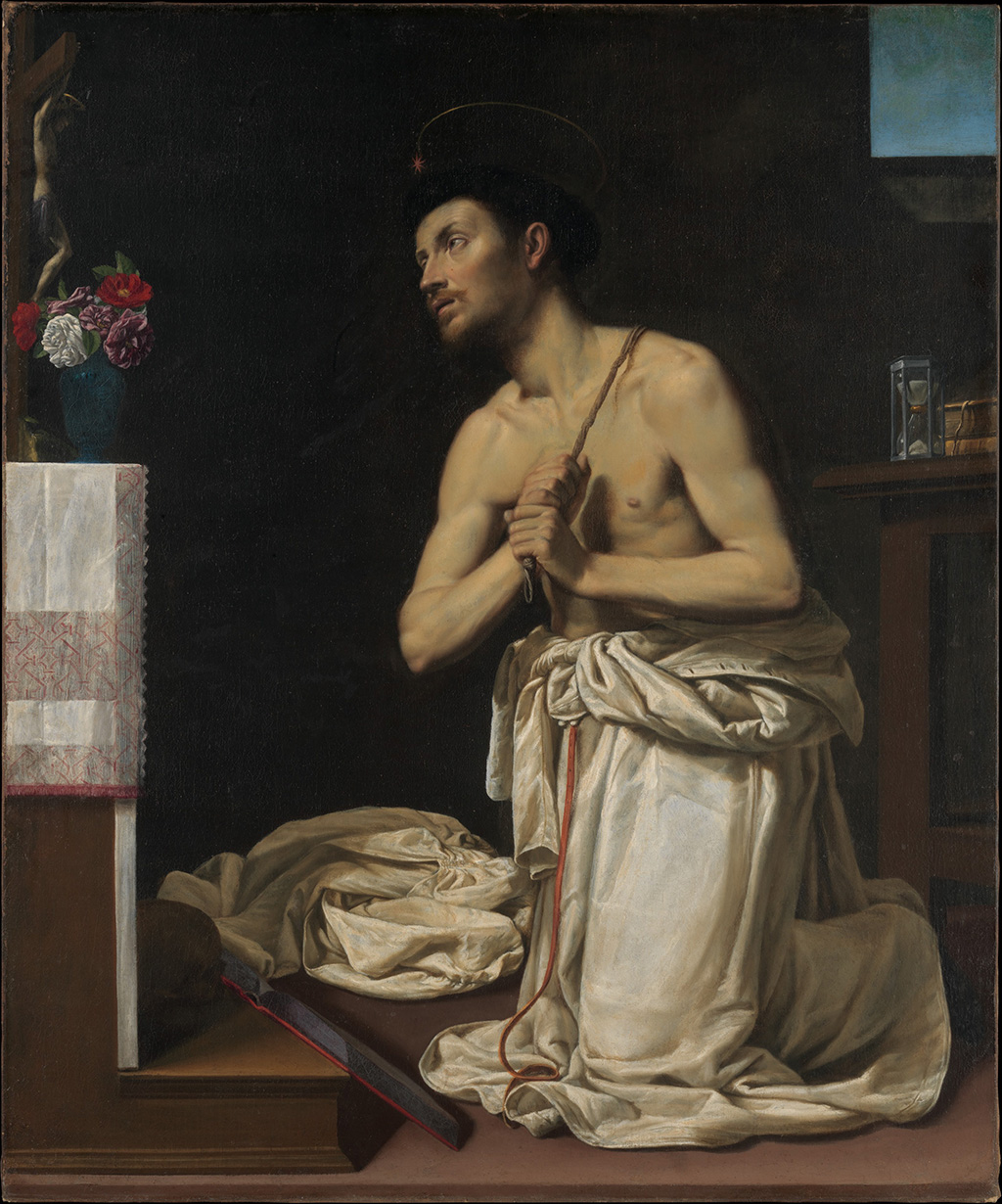
    St. Dominic in Penitence, 1607, Filippo Tarchiani | Creative Commons license, courtesy The Metropolitan Museum of Art

    This reminds me of St. Dominic. He was known for being an enjoyable, affectionate man in an age when the religious were expected to be grimly serious. Yet he was also famous for his all-night weeping and prayer sessions in the chapel, crying for the lost souls in Purgatory, that kept up the friars in the various monasteries where he rested his head.¹  Here was a saint who actively worked all over Europe doing good deeds, praying, and preaching; in essence, being a fantastic ambassador for Christ. We also know that he was deeply penitent, praying, fasting, and even performing mortification of the flesh three times nightly. Yet those who met him enjoyed his company immensely and did not find him morose or looking like he was in the middle of constant penance. Something about the man always pointed to the goodness of God. In fact, the Dominicans gained an early reputation for being too cheerful and showy, but the order grew in all ways (friars, nuns, laypeople) exponentially. 

    So that we don’t forget the upshot of all of this, Jesus reminds us in today’s reading at the end of each paragraph. He repeats: “And your Father who sees in secret will repay you.” This is a great reminder of the intensely personal relationship each of us has with our God, who knows us better than we know ourselves. May we all be reconciled to Him this Lent so that we can be excellent ambassadors for Christ!


    ¹ I am much indebted to Simon Tugwell, OP, for any knowledge I might have about St. Dominic and the early Dominicans. If you haven’t read The Way of the Preacher (among several other excellent books), I highly recommend it.

  • Passions and humility before God

    Tuesday, 7th Week of Ordinary Time: James 4:1-10 and Mark 9:30-37.

    What a nice connection between the two readings today. James asks in his letter “where do the conflicts among you come from?” and likewise we hear Jesus ask “What were you arguing about on the way?” The answer in both cases is our lack of humility before God.

    First, let’s consider the Letter of Saint James. He puts the blame for our sorry state of affairs — that is, war, conflict, covetousness — squarely on our unbridled passions. We’ve all seen people with uncontrolled passions: drink until drunk beyond belief, eat until overfull, sex with whomever and whenever, power at the cost of our morality or basic humanity. Heck, we might be those very people at times. St. James tells us there are grave consequences here: “Do you not know that to be a lover of the world means enmity with God?” Even more forcefully: “whoever wants to be a lover of the world makes himself an enemy of God.” God wants us to be with Him in perfection and glory, and we betray his desire for us when we desire the world more than Him.

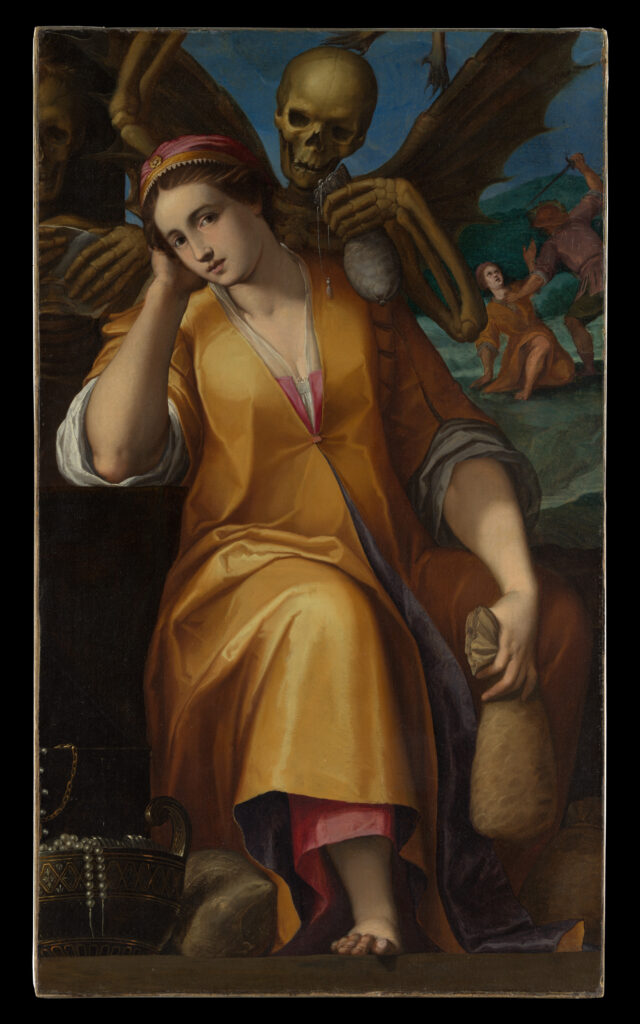
    Allegory of Avarice, 1590, Jacopo Ligozzi | Creative Commons license, courtesy The Metropolitan Museum of Art

    Jesus and the apostles were clear on this point. Epistles from St. John, St. Paul, and St. Peter all have a version of “Do not love the world or the things in the world” (1 Jn 2:15) or “Do not be conformed to this world” (Rom 12:2). Just before his arrest and Passion, Jesus prayed on behalf of his disciples to the Father: “I have given them your word, and the world has hated them because they do not belong to the world, just as I do not belong to the world. I am not asking you to take them out of the world, but I ask you to protect them from the evil one” (Jn 17:14-15). So there it is: we Christians do not belong to the world, we must tame our passions and ask for God’s protection from Satan.

    Why, then, after 2000 years of hearing this message, do we still cling to this world and its passions, knowing that it’s an affront to our new state of grace won by Christ? As our small morning mass congregation was reminded today by Fr. Erik Richtsteig, it all stems from The Fall of Adam and Eve, when our human desires and intellect became warped and out of sync with God. This is our human condition. How, then, do we return to God from our fallen state?

    St. James quotes scripture: “God resists the proud, but gives grace to the humble.” His instruction for us is to “submit yourselves to God … Humble yourselves before the Lord and he will exalt you.” Ah, yes, that frighteningly difficult virtue of humility. While I’m not very good at being truly humble, I do appreciate the way St. James tells us that the act of humility here is submission to God. It’s not a submission to other people, a type of meekness in the face of others. This I can begin to do. In my mind, it’s much easier to humble myself before the awesome wonder of the Creator of the Universe than a self-righteous co-worker arguing with me. (The harder part is seeing our Lord in that co-worker, and loving that person because the Lord resides in her, too.)

    Author: Jean-Luc Ourlin | Wikimedia Commons

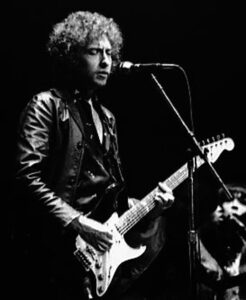
    St. James’s dialectic of world/God reminds me of the words of our reluctant Nobel Laureate and national folk-rock treasure, Bob Dylan: “Well, it may be the devil or it may be the Lord, but you’re gonna have to serve somebody.” If Bob is right (and St. James), then we are fooling ourselves if we believe that following our self-interest is somehow our most “free” state of being. Following our passions is just being a slave to the world (whose prince is Satan, as we are told). We’re literally serving something/someone who has no care for our salvation, someone who deviously makes us think we’re serving ourselves in the process. Wouldn’t it be better to serve God, who yearns to give us eternal salvation?

    Fr. Erik deftly reminded us that this is a great reading to have the day before Lent starts. Taming the passions through fasting and giving up things during Lent “exercises our spiritual muscles,” in his words. These things serve a real purpose (aside from what looks like sadistic torment to non-Catholics) — they bring us closer to God by helping us detach from the world and our passions. Fasting and little deprivations help us prepare for bigger temptations and challenges that come our way. The saints’ lives are a grand tapestry of testimonials to this effect. Bring on Lent!

    This brings us to the gospel reading from St. Mark, where Jesus finally opens up to his disciples and tells them that he will “be handed over to men and they will kill him, and three days after his death he will rise.” In hindsight, we can grasp the immensity of these prophetic words, that they are in fact the inauguration of the New Covenant and our saving grace, but the disciples did not understand and “were afraid to question him.”

    St. Mark, in all his brevity being the shortest of the gospels, is a master at pointing out the awkward failings of humans. When Jesus asks what they were arguing about along the way, Mark states in the dry cunning befitting a police procedural: “But they remained silent. For they had been discussing among themselves on the way who was the greatest.” It’s easy to imagine the embarrassment of being called out for such hubris. Maybe some flushed cheeks while they stare at their sandals, shifting uneasily on the ground as they stand there in ashamed silence. Awwwwkward.

    Jesus (we must wonder if he suppresses a big sigh at this point) simply sits down, calls the Twelve to him and explains that “If anyone wishes to be first, he shall be the last of all and the servant of all.” This only makes sense if we understand that “being first” is not measured in this world, by people in this world, but by God, in His Kingdom. This is the type of teaching echoed in St. Paul’s “Do not be conformed to this world.”

    Jesus follows this up with the gentle gesture of putting his arms around a child in their midst and saying “Whoever receives one child such as this in my name, receives me.” Several things are happening here. First, if important men such as chosen apostles spend their time receiving a child into their arms, they are performing an act of humility. This is the first level of meaning. Second, Jesus constructs an analogy between himself and the child — by acting as he acts, they receive him. He is the child, not just figuratively, but literally, the Son of God. And this sonship is an important perspective: the good son is wholly prefigured by and attentive to his father. Being humble like a good son is humble before his father is the entire message here, and the apostles will be able to receive that type of humility by following Christ’s example, yes, but also because of the mystical nature of this Christ, this God-become-man. Thus, the second part of his statement, “and whoever receives me, receives not me but the One who sent me.” This is the nature of our salvation as adopted sons and daughters of God through Christ. He opens the doorway of true filiation with God. He is the example, but more importantly, both the herald and the very means of salvation. His saving Passion and Resurrection, which he was just trying to share with them, is the event that will enable them (and us) to not be slaves to our passions but receive divinification when we are humble before God. 

    Whoever is skeptical about the Word of God, about Christ, needs to just read and understand the import of passages like this in St. Mark to realize that this isn’t something a writer can just “make up.” This revelation of the Lord’s presence, ways, and plan for us is something so densely a part of Christ and his dealings with his disciples that every gesture and word recorded resounds down the centuries. St. Mark admits that the disciples didn’t understand what Christ was talking about, and it’s possible that St. Mark himself didn’t realize the full import of the events and words that he faithfully wrote down for us. This is the revelation of God, and as important today as it ever was.

  • Mark’s account of the mute spirit exorcism

    Monday, 7th Week of Ordinary Time: Mark 9:14-29

    Today’s reading was that great one from St. Mark where Jesus, Peter, James, and John come down from the mountain of the Transfiguration to find their disciples in a bit of a ruckus with the scribes. As I read and listened, it was one of those times when the reality of the actual Word of God springing into our lives was evident. Every sentence struck me as being loaded with import.

    The Transfiguration of Christ: Part of an iconostasis in Constantinople style. Middle of the 12th century. | Wikimedia Commons.

    The crowds are “utterly amazed” when they see Jesus after his transfiguration. But we get no time to dwell on that piece of revelation because the old law of the scribes is once again challenging the new charism of the spirit. Off we go, back to his ministry! Jesus asks about the nature of their argument and “someone from the crowd” answers that he brought his possessed son to be cured but the disciples were unable to do it. This seems like a non-sequitur to me – was that really the argument the scribes were having? I tend to think from evidence elsewhere that they are claiming, as usual, that the disciples (and Jesus) have no authority to teach and drive out spirits because they don’t follow the law to the very letter. They’re probably accusing them of blasphemy.

    But the text continues without further discussion of the scribes. Jesus responds with a lament: “O faithless generation, how long will I be with you? How long will I endure you?  Bring him to me.” His exasperation is clear. It’s almost jarring (for me, at least) because we honor the Transfiguration to such an extent that I’m imagining this white-as-snow figure of Christ fairly floating down the mountain, radiating love, having been face-to-face with the Father, and these words of complaint don’t seem to fit. It’s a great reminder not to get complacent with images and notions (especially romantic or emotional ones) about who the Lord is. We really can’t fathom.

    When the man explains about his son’s possession, he finishes with what seems to be a request based in an appropriate stance towards God: “if you can do anything, have compassion on us and help us.” Shouldn’t we ask for compassion and help? But Jesus pounces upon the first part of his appeal: “‘If you can!’ Everything is possible to one who has faith.” His exasperation continues, it seems. It’s as if he’s saying “can’t you all see who I am?” Then, Mark gives us one of the best lines in the gospels: “the boy’s father cried out, ‘I do believe, help my unbelief!’” We should all have this tattooed on our bodies somewhere. If that’s not the human condition, I don’t know what is. We are so weak in faith, that even our tentative belief must be bolstered by a plea for help with our basic struggle to believe.

    Piqsels/Creative Commons Zero

    Bishop Robert Barron’s daily gospel reflection picks up on this problem of faith. He writes, “Don’t think of faith so much first in propositional form—the things that I believe—but rather in psychological or spiritual form. Faith is an attitude of trust in the God who is always holding out new possibilities to us.” I really like thinking of faith as an “attitude of trust.”

    Barron’s words remind me of Cardinal Joseph Ratzinger, who writes in Introduction to Christianity, “For to believe as a Christian means in fact entrusting oneself to the meaning that upholds me and the world; taking it as the firm ground on which I can stand fearlessly” (73).  I love his construction of faith as the firm ground, the thing that I stand on, that upholds me. He has a wonderfully large understanding of “meaning” in his book as going far beyond “knowledge.” He writes: “[To believe] means affirming that the meaning we do not make but can only receive is already granted to us so that we have only to take it and entrust ourselves to it” (73). Again, trust (not knowledge) becomes the operative function when it comes to faith. I guess this is what Jesus bemoans when he points out the conditional aspect of the man’s plea; the “if you can” part betrays a lack of trust.

    One other thing strikes me about this wonderfully rich gospel reading. The boy is possessed by a “mute and deaf spirit.” The significance must be noted. After Jesus drives out the spirit and heals the boy, his disciples ask him in private why they were not able to drive out the spirit. Jesus answers: “This kind can only come out through prayer.” My first thoughts are, “Oh, no, now we need an evil spirit compendium and a degree in demonology to do the good work of God in the world.” It just seems to be a weird qualification – how could the disciples, or we for that matter, distinguish between types of spirits and what is needed to drive them out? But that’s not what Christ’s message is during his ministry. It’s not magic or the arcane arts. The important thing he says is “through prayer.” What is prayer other than the verbalization of our faith, our trust in God, in order to praise him, thank him, and intercess for others? There is something important about speech, about the word, verbalization – which is faith proclaimed – that becomes an action in its own right. It’s no coincidence that this is a “mute and deaf spirit”: it clarifies the problem with not proclaiming faith, with not hearing the Word. Yes, here is the Word of God made flesh – as true of a testament to the power of logos in our world as there can be – reminding us that it’s not enough to have faith, but to put that faith into action through our own words and prayers.

    What a great reading for me as I contemplate the lay Dominican vocation. This order of preachers – what does it mean? What significance might it have for me? Is it about me being called to write and preach about God? Is there something that fundamentally fits with God’s call to us all? Today’s gospel seems to affirm these thoughts.