Category: NT reflection

  • Running Out of Chances

    Running Out of Chances

    Memorial of Saint Lucy, Virgin and Martyr, Third Tuesday of Advent, Year A: Zephaniah 3:1-2, 9-13, Matthew 21:28-32.

    Alongside the great promise of our covenant with God – that we will be saved and granted eternal life with Him – there is an ominous warning. If we don’t come to him with open hearts, if we remain committed to our own pleasures and will, then we will be cut off from Him. This being cut off is quite an uncomfortable condition, to put it mildly. Eternal torment is another way to say it. But God would rather have us with Him, so we keep getting warnings to repent, to turn back to him, to stop our navel gazing and do His will while we are alive.

    I wonder if we are running out of chances.
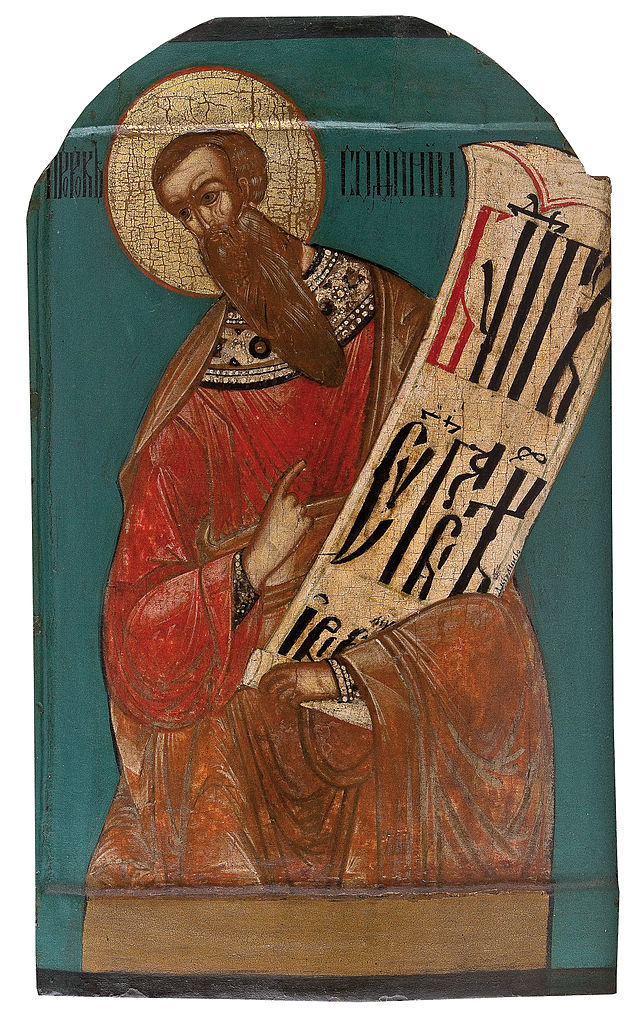
    Russian icon of Zephaniah, 17th Century | Creative Commons, courtesy Wikimedia.

    Today’s readings give us two of these warnings. The first is given to us through the mouth of the prophet Zephaniah, speaking to the Jews collectively as “Jerusalem.” I think his words could equally be applied to Americans today: “Woe to the city, rebellious and polluted, to the tyrannical city! She hears no voice, accepts no correction; In the LORD she has not trusted.” Especially the idea of accepting no correction – there is a huge arrogance among Americans who feel that this is the best country on the earth and no one can correct us. And don’t get me started on the false slogan “In God we Trust” which makes me cringe every time I see it on a Utah license plate. The main thing our culture trusts in is money; we were built on capitalism and on capitalism we will die. Thus, the great irony is that we were taught to take the “In God we Trust” printed on our currency as a serious statement rather than seeing it for the hoax it was; after all, our government was carefully crafted to fully separate its laws and operations from any religious influence. The truth is, our real slogan is “In Man and Money we Trust.” OK, rant over, but hopefully the applicability of Zephaniah’s words is clear.

    Let us pray we are called to participate in Zephaniah’s next statement: “I will change and purify the lips of the peoples, That they all may call upon the name of the LORD.” If we want to join our Lord, we must start by actually being courageous enough to call upon His name, in private and in public. God’s promise is that, like it or not, He will intervene. We will become a changed, humbled people. “You need not be ashamed of all your deeds, your rebellious actions against me; For then will I remove from your midst the proud braggarts, And you shall no longer exalt yourself.” It may be easiest to see our showboating athletes, strutting music icons, and loudmouthed politicians as the “proud braggarts” of our culture, but I know that every time I hope for recognition at work or appreciation at home or even desire for holiness that I participate in this exalting of self. My wife has shared with me the powerful Litany of Humility this Advent, and it is a fantastic prayer to help us get ourselves right around the crucial problem of pride. Thank you to her! I’ve included it here.

    Maybe if we pray the Litany of Humility enough and conform our hearts more and more to doing God’s will alone, we can be a part of the remnant that Zephaniah speaks of: “But I will leave as a remnant in your midst a people humble and lowly, Who shall take refuge in the name of the LORD: the remnant of Israel.” We often jump to the idea of exalting in God’s glory in heaven, of living in the bliss of His presence, without considering what type of person we must become first. Heaven as an endless banquet is a wonderful image, heaven as a state of having no cares or worries is as well. But these things look very different for the person who has and expects nothing versus the person who has many things and is continually striving for more. For me, I fall into the problem of seeing heaven as a place of final relaxation with the Lord, essentially where I can be lazy in the sun, like a great beach vacation. How stupid! This vision is completely dominated first of all by me, and secondly by how I will feel. I have so far to go. So far, in fact, that I feel like I’m starting at the beginning every day.

    Contrast this vision of heaven with the mindset of someone who is truly humble before the Lord. For someone who thirsts, for someone who never expects to be mentioned in conversations or remembered by history, even a sidelong glance from the Lord is a thrill of a lifetime. Imagine this person being looked upon full in the face by the Lord, in absolute love, and then grasped and pulled to sit at the Master’s table to be in His presence for eternity. This is mind-blowing. This is heaven. And it’s not as if the Lord is awesome as a consequence of perspective. God is truly awesome with or without our perspective being right.

    Zephaniah shows us that God’s will is that we be humble. One might claim that only by being truly humble can we experience true love for Him and all others in humanity. Consider this: pride by its nature seeks to put us above others, to see them as an object to be used (as my confessor recently gently explained to me), and there can be no love when this adversarial, objectifying impulse is present. Love is itself desiring the good of the other more than the good for yourself. If you see yourself above others, how can you ever truly love them? You might care for them, have sympathy for them, even do good works for them, but love, caritas, agape, is another mode. For this reason, we should pray to become a remnant of the people, humble and lowly.

    Litany of Humility

    -by Rafael Cardinal Merry del Val

    O Jesus! meek and humble of heart, Hear me.

    From the desire of being esteemed,
    Deliver me, Jesus.

    From the desire of being loved,
    Deliver me, Jesus.

    From the desire of being extolled,
    Deliver me, Jesus.

    From the desire of being honored,
    Deliver me, Jesus.

    From the desire of being praised,
    Deliver me, Jesus.

    From the desire of being preferred to others,
    Deliver me, Jesus.

    From the desire of being consulted,
    Deliver me, Jesus.

    From the desire of being approved,
    Deliver me, Jesus.

    From the fear of being humiliated,
    Deliver me, Jesus.

    From the fear of being despised,
    Deliver me, Jesus.

    From the fear of suffering rebukes,
    Deliver me, Jesus.

    From the fear of being calumated,
    Deliver me, Jesus.

    From the fear of being forgotten,
    Deliver me, Jesus.

    From the fear of being ridiculed,
    Deliver me, Jesus.

    From the fear of being wronged,
    Deliver me, Jesus.

    From the fear of being suspected,
    Deliver me, Jesus.

    That others may be loved more than I,
    Jesus, grant me the grace to desire it.

    That others may be esteemed more than I,
    Jesus, grant me the grace to desire it.

    That, in the opinion of the world, others may be loved more than I, others may increase and I may decrease,
    Jesus, grant me the grace to desire it.

    That others may be chosen and I set aside,
    Jesus, grant me the grace to desire it.

    That others may be praised and I unnoticed,
    Jesus, grant me the grace to desire it.

    That others may be preferred to me in everything,
    Jesus, grant me the grace to desire it.

    That others may become holier than I, provided that I may become as holy as I should,
    Jesus, grant me the grace to desire it.

    Amen.

    Nearly 700 years after Zephaniah and all of the other prophets who repeated God’s message to the people, we encounter Jesus in today’s gospel reading. He teaches the Parable of the Two Sons, one who initially refuses to work for his father, but then actually does it and the other who says he will but never does. Growing up, this parable immediately resonated with me. I was always mouthy (I know, shocking!), but thankfully the conscience God planted in me was also very active. I often regretted things said or done in moments of passion or temper, and sought to do good afterwards, in part to atone for my previous idiocy. So, I related to this parable on a very literal level. Jesus asks, “Which of the two did his father’s will?” and the answer is obvious.

    But understanding the parable on this level doesn’t really go far enough. After all, does God want his people to be a bunch of resistant hotheads who end up doing the right thing in the end? Probably not. This parable is illustrating an aspect of hearing God’s will, not an entire way of being a good Christian. The point of this parable might be summarized in the title of this post: hey people, you might be running out of chances to follow God’s will! Jesus drives this home when he says, “When John came to you in the way of righteousness, you did not believe him; but tax collectors and prostitutes did. Yet even when you saw that, you did not later change your minds and believe him.” He could have started with: God sent you centuries of prophets and warnings about being humble, turning to Him, and doing His will. But, graciously, he just holds them to what has happened during their generation. He points to John the Baptist, Elijah in their midst, calling them to repentance and opening themselves to God who has come.

    The chief priests and elders, while initially saying they would do God’s will given their paths in life, didn’t believe John and do God’s will, making them the second son in the parable. The tax collectors and prostitutes, who had initially said no to God in their life choices, now turned to Him to do His will. 
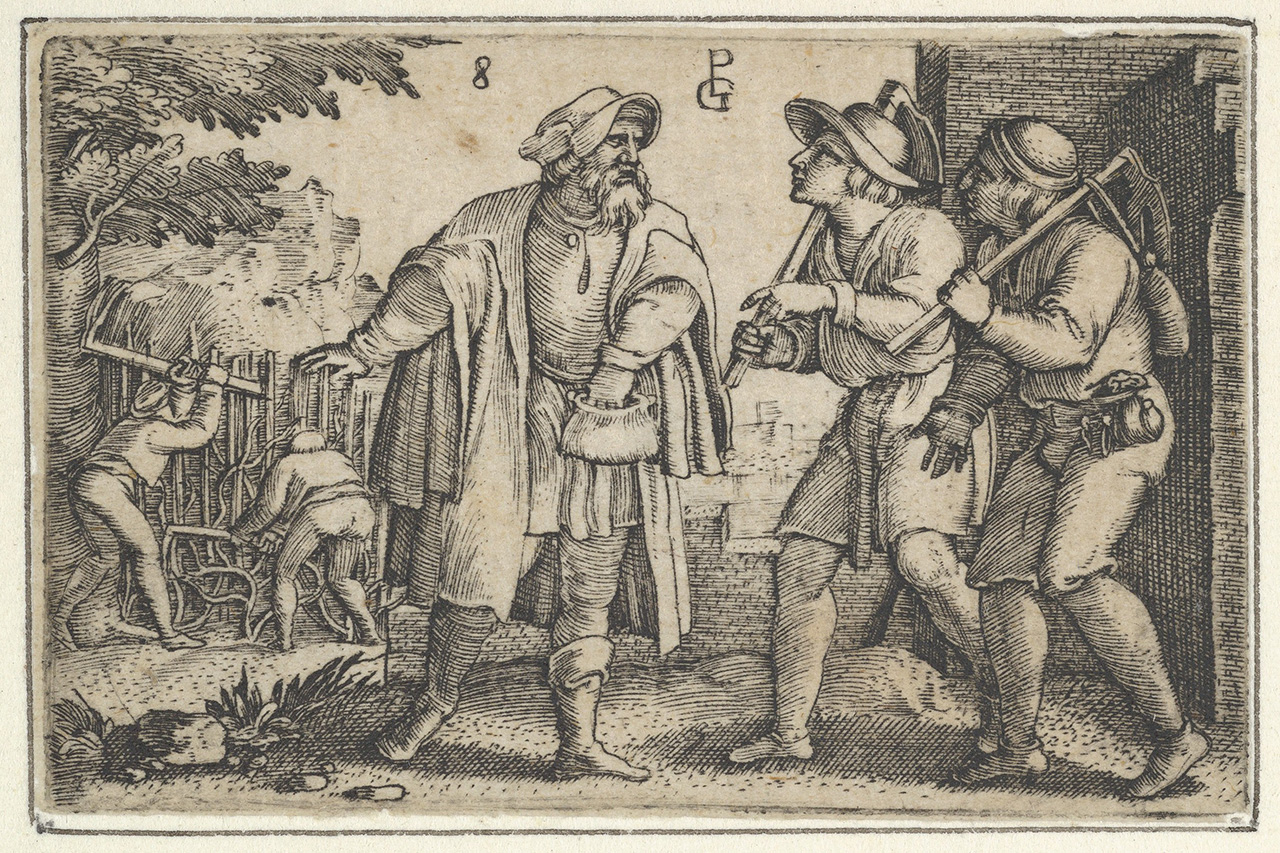
    The Parable of the Father and His Two Sons in the Vineyard, from The Story of Christ, Georg Pencz (1534-35) | Public domain, courtesy of the Metropolitan Museum of Art.

    This is compounded by the fact that the priests and elders have seen that John’s baptism has been doing much good and converting people’s hearts back to God. John’s ministry of preparing people for Jesus has been successful; many crowds of disciples are filled with faith, are being healed, and are on their way to the Kingdom. But the priests and elders remain antagonistic, challenging and not believing God who is right in front of them.

    Woe to them! They are most definitely not the remnant, humble and lowly.

    Let us pray the Litany of Humility this Advent. Let us seek to become the remnant who will be welcomed into the Kingdom when our Savior comes.
  • Getting into Gaudete Sunday

    Getting into Gaudete Sunday

    Third Sunday of Advent “Gaudete Sunday,” Year A: Isaiah 35:1-6a, 10, James 5:7-10, Matthew 11:2-11.

    Gaudéte in Dómino semper: íterum dico, gaudéte. Rejoice in the Lord always: again I say rejoice. This is the first line of the Introit to today’s Mass, marking the halfway point of Advent when we take a little break from the semi-penitential season to recall the joy of Christ’s coming into our hearts. The name for this special Sunday comes from the first word of the Introit, Rejoice!

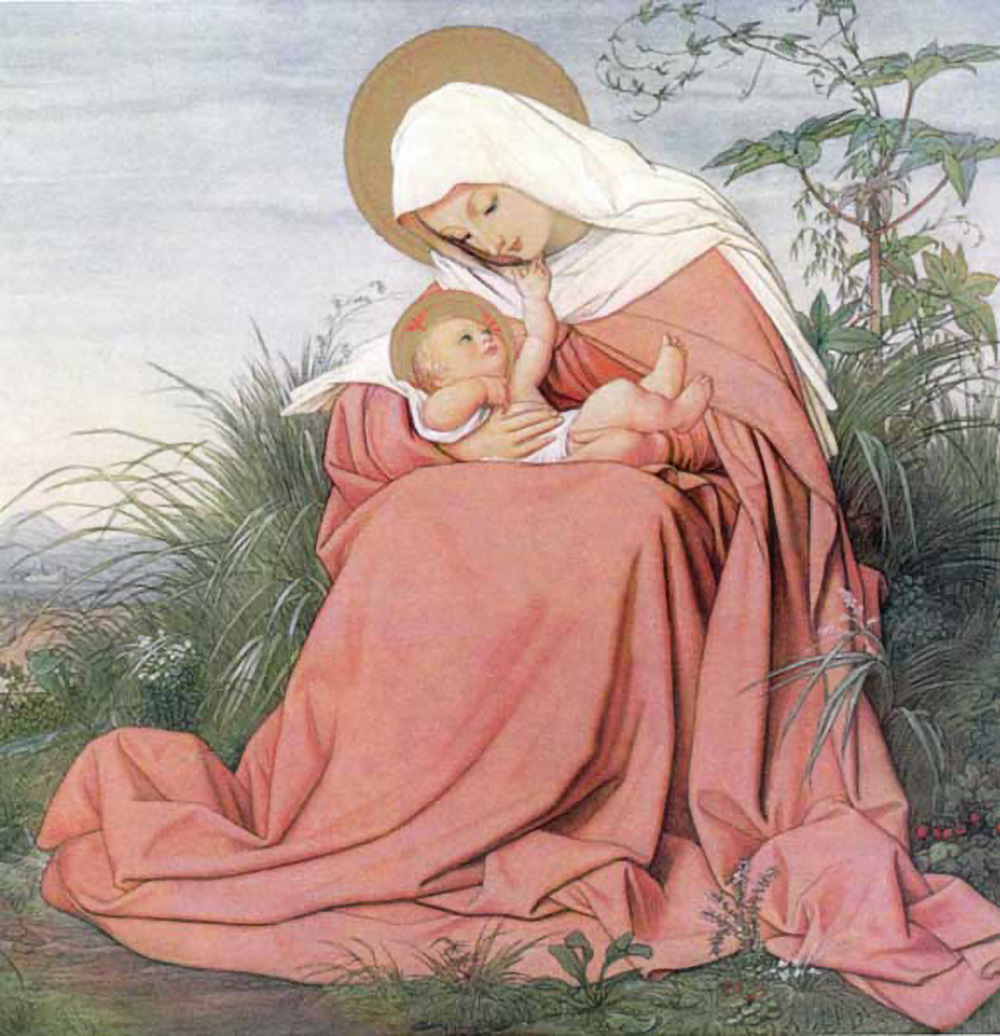
    Virgin Mary and Christ Child, unknown illustrator (20th century) | Image from divine-innocence.org. Priests are allowed to wear rose on Gaudete Sunday, a color signifying the mixing of the white of Christmas with the violet of the Advent Season, a lovely symbolic gesture of the meaning of this halfway point of rejoicing.

    I’ve been reflecting on the dual nature of Christ’s coming (the babe in the Nativity and the judge at the end of time) this Advent, but there is a third coming for which Catholics are preparing in Advent: the coming of Christ in our hearts. Gaudete Sunday asks us directly to prepare our hearts by cultivating the joy that Christ’s coming will bring (and that we will allow to fully blossom in the Christmas liturgical season). Advent is a time to scour our hearts of sin, making them suitable for the Lord. Gaudete Sunday is a moment in Advent when we can align that preparation of the heart by remembering that joy is what awaits us, not just the continual work of penitential scouring. 

    So, today’s readings are chock-full of rejoicing. The first lines of Isaiah even extend rejoicing to all of creation: “The desert and the parched land will exult; the steppe will rejoice and bloom.” I appreciate these reminders that it’s not just humanity that will be perfected in Christ but all of creation.

    God does have a special place in His heart for humanity, though (case in point: Jesus is incarnated as a man, not a goat or a tree), and the message for us involves our intellect, emotions, and spirit: “say to those whose hearts are frightened: Be strong, fear not! Here is your God … He comes to save you.” This message never gets stale. It gave hope and confidence to Jews in exile hundreds of years before Christ, to early Christians suffering martyrdom, to Christians in the turbulence, disease, and violence of the Dark and Middle Ages, and to us moderns, assailed by a lust-filled, nihilist and atheistic culture.

    Apart from the 100,000-foot view of cultures and history, this message gives hope and confidence to all of us on an intensely personal level, whether we struggle with depression, family problems, money problems, or other uncertainties. God’s promise, proclaimed through Isaiah, is a true celebration of the best in each of us. He promises that in heaven we “will return and enter Zion singing, crowned with everlasting joy; [we] will meet with joy and gladness, sorrow and mourning will flee.” This promise of joy is so needed in all of our lives, and a huge reason that reading and re-reading the scriptures is important; not just to find comfort, but to find a much-needed perspective in our lives.

    So, God is coming to save us, and Jesus has already initiated the Last Times. Awesome, let’s do this! What is God waiting for??

    This question was especially poignant in the first generations after Christ’s resurrection, when they pondered his words, “Truly I tell you, this generation will not pass away until all these things have taken place. Heaven and earth will pass away, but my words will not pass away” (Mt 24-34-35). There was a very real expectation that the second coming would happen at any minute.

    Thus, for Christians at all moments since the resurrection, St. James’s words in today’s second reading are very important: “Be patient, brothers and sisters, until the coming of the Lord.” This is echoed by other apostolic writers, notably St. John, who uses the word abide (“to stay,” “stand fast,” “remain” or “endure”) 34 times in his gospel and 19 times in his letters. Abiding and patience are both practices related to the virtue of fortitude — that is, not straying from the faith and the practice of the faith, remaining strong. James picks up this association with remaining strong: “Make your hearts firm, because the coming of the Lord is at hand.”

    It is oh so easy for us to give up on things that don’t yield right away. Especially in today’s immediate gratification culture (heck, I find myself oddly impatient when an entire TV series isn’t available for immediate streaming all at once — having to wait a week for the next episode? The horror!). Thankfully, our history as God’s people provides us with the example and confidence that we can do it. As James says, “Take as an example of hardship and patience, brothers and sisters, the prophets who spoke in the name of the Lord.” This is another reason why reading and re-reading the scriptures is so important for us. It helps us find courage and remember the example of those who have come before us. We are not in this alone and without a guide!

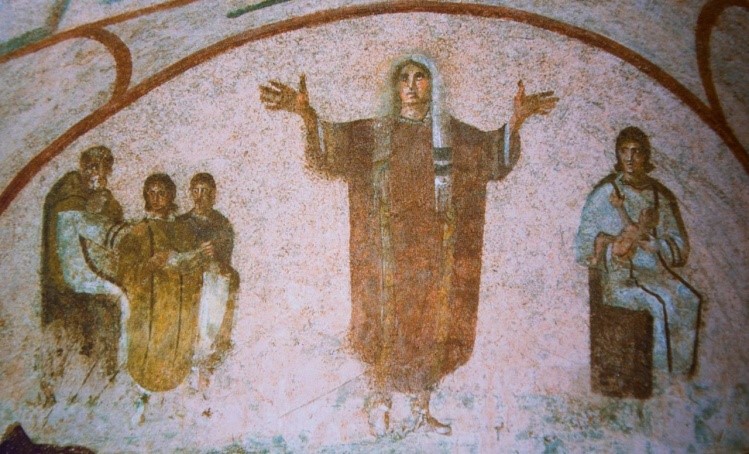
    3rd century painting of Christians praying, Catacomb of Priscilla, Rome | Creative Commons, courtesy Wikimedia.

    We even see the need for reassurance and confidence from the great John the Baptist in today’s gospel reading. John sends some disciples to ask if Jesus is the Messiah they’ve been waiting for. We might be cultivating a sense of anticipation in Advent, but John was bursting with it. His whole life was oriented to this one thing.

    Jesus, consistent with his teaching that we will be judged by our fruits, responds: “Go and tell John what you hear and see: the blind regain their sight, the lame walk, lepers are cleansed, the deaf hear, the dead are raised, and the poor have the good news proclaimed to them.” In other words, trust in the supernatural realities that are being revealed to you.

    What an interesting answer! He could have said, “yes,” and been done with it, but Jesus was always teaching, always consistent, always urging us to go deeper. His point was that we must meet God’s will with our own will — we must exercise the muscle of faith and enter into a spiritual dimension with God in order to perceive the truth about life.

    Even this simple experience of entering into faith is one that can give joy. We often give up in frustration over what we perceive to be the silence of God in our lives, but, once again, St. James tells us to cultivate patience and a firm heart! Developing a relationship with God, who doesn’t often answer questions head-on the way we wish He would, takes effort and openness, but even the journey has its rewards.

    As we open ourselves to supernatural realities and the mysterious presence of divinity, God immediately rewards us with an expanded sense of Him and the world. And let’s not imagine we’re in this alone, praying in the cell of our mind. The Church of which we are a part has been established as the bridegroom of Christ, where we meet him in joy and love. The rituals, sacraments, devotions, and prayer life of the Church as a body are where we encounter God in sight, sound, feeling, and even in our bodies through the Eucharist. If we are feeling dry in our spiritual life and lacking in patience with our faith, we must ask ourselves how often we are participating in the life-restoring activities of the Church and how open our hearts and minds are to those activities and sacraments. They are great joy bringers for us in this time of patience.

    One last thing is something that really stuck with me from the pastor of St. Catherine of Siena Newman Center, Fr. Gabriel Mosher, OP, in his homily for Gaudete Sunday. He asked if we really knew what joy was and had we considered that Christ had achieved perfect joy as he hung crucified on the Cross?

    This is, of course, a Thomist definition of joy: “For joy is caused by love, either through the presence of the thing loved, or because the proper good of the thing loved exists and endures in it” (Summa II.II.28.1). As he hung on the Cross, Jesus obtained his heart’s desire, a perfect sacrifice to the Father that provided salvation for humanity. This is a great lesson for us! How often do we let suffering lead us to misery instead of joy? Perhaps always??

    Imagine instead responding to your suffering by remembering Christ absolutely joyful on the Cross (undoubtedly in great pain), and finding inspiration in him to be joyful yourself. You might not be taking away the sin of the world with your suffering, but you can offer your suffering self to the Father, just like Jesus did. You can say a prayer like, “Father, accept my lowly suffering alongside the great redeeming suffering of your Son. Allow me to offer my broken human self to you like he did, and in your mercy make me more like him.”

    Who knows — you might just find a glimmer of joy after that prayer. If for nothing else, you’ve taken up Christ’s offer to “take up your yoke” with him; and you might find it as sweet as he promises.

    I don’t want to be a “downer” amid our joyful celebration of Gaudete Sunday, but I was struck by how Fr. Gabriel expanded my notion of what joy can be and further deepened my appreciation for the depth of Jesus’s sacrifice. This is a powerful way to look at the Crucifixion, a scene which is often dominated by sorrow, upset, and emptiness. How important for us to consider that Jesus experienced a powerful joy over the completion of his ministry and doing God’s will. How fruitful is the contemplation of this type of joy, which so dwarfs suffering and ignominy.

    This joy persists for eternity with the Father, while those other things pass like a whisper in the night.

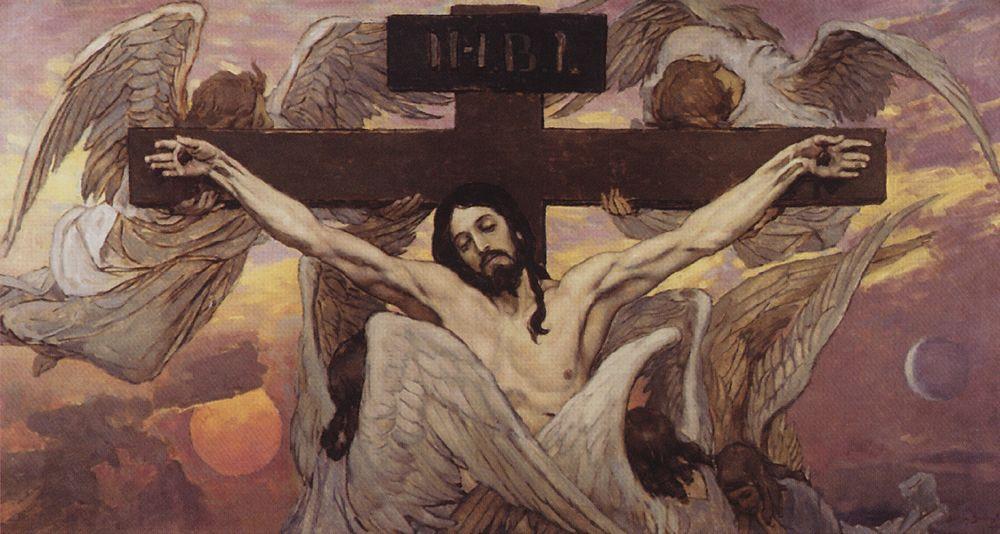
    Crucified Jesus Christ, Viktor Mikhailovich Vasnetsov (1885-1896) | Creative Commons, courtesy Wikimedia.
  • John is Elijah, Both Prepare the Way

    Saturday in the Second Week of Advent, Year A: Sirach 48:1-4, 9-11, Matthew 17:9a, 10-13.

    Today’s readings shed light on a lesser-emphasized aspect of St. John the Baptist: the fact that he is Elijah returned. The prophecy in question was given to Micah: “I will send you the prophet Elijah before the great and terrible day of the Lord comes. He will turn the hearts of parents to their children and the hearts of children to their parents, so that I will not come and strike the land with a curse” (Micah 4:5-6). Modern Christians simply don’t have the cultural frame of reference to appreciate this prophecy. Elijah was one of the original superheroes of the Jewish tradition, alongside Moses and likely eclipsing even the name of Solomon, David, Judah and Israel. His miracles were profound, his wisdom straight from the mouth of God. For Jews around the time of Christ, the return of Elijah would have been a not-to-miss event, a fitting prelude to the Messiah himself.

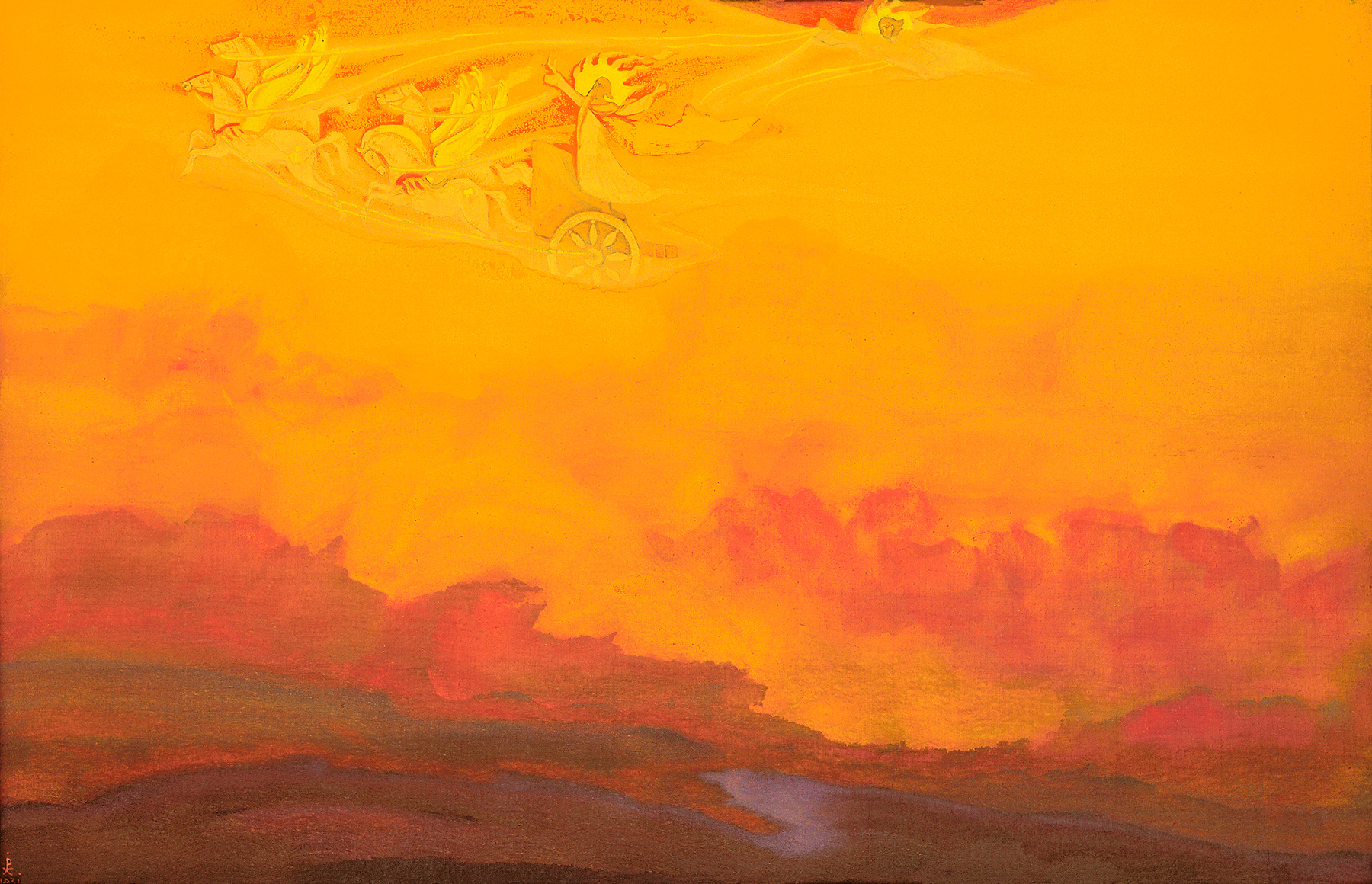
    Elijah the Prophet, Nicholas Roerich (1931) | Creative Commons, courtesy Wikiart.

    To help us remember Elijah’s superhero status, the Lectionary provides us with an excerpt from Sirach, praising him. “How awesome are you, Elijah, in your wondrous deeds! Whose glory is equal to yours?” Sirach goes on to recount a number of his deeds, including ones not included in this excerpt like raising from the dead, healing, sending kings to their destruction. Fire figures prominently in Sirach’s account, especially the famous “whirlwind of fire, in a chariot with horses of fire” that carried him to heaven. We have reflected this Advent on how fire is a symbol of God’s purity. Elijah, surrounded by fire, was a prophet seemingly closer to God than other men in every way.

    The gospel reading picks up the Elijah thread. It is pulled from right after the Transfiguration (which, of course, featured Elijah as well). The disciples are walking down the mountain, asking Christ about Micah’s prophecy. Jesus answers that “Elijah has already come, and they did not recognize him, but they did to him whatever they pleased. So also the Son of Man is about to suffer at their hands.” They understand he is speaking of John the Baptist. What’s the connection between the two? Well, there are many: they both preached in the wilderness, apart from communities of men and women; they both dressed as wild men, with a leather belt around their waist; both set themselves against kings and had high-profile enemies; and both preached repentance. This last point, in particular, is how they both prepared humanity for the coming of Jesus Christ, and it is in this that Jesus can explain that Elijah has come as John the Baptist.

    But Jesus also speaks about Elijah in the future tense: “Elijah is indeed coming and will restore all things.” What are we to make of this? Was Jesus just confused at that moment? Clearly not – he was just transfigured and shared the company of Moses, Elijah, and his Father! Was this a misprint in the gospel or maybe Matthew just got it wrong? Not at all – Matthew faithfully reported Jesus’s words and many manuscripts have faithfully reproduced these seemingly contradictory statements. How can Elijah still be coming and yet have already come?

    We know that God stands outside of time – that the Christ Event explains the the history that came before it and forms the future after it, that the Word can speak to the prophets and also be made flesh in Mary’s womb and be coming for the Last Judgement. In this way, it makes sense to speak of the Son of God having spoke in the past, being present in humanity and still coming at the end of history. All three tenses apply and make perfect sense in reference to God, who stands outside of time. If we think of Elijah in these same moments – as a prophet to whom the Word spoke, as John the Baptist in the “present” of the gospel, and as some yet-to-come Elijah just before the end of history – then Jesus’s statements make perfect sense as well.

    We might also imagine who Elijah is after he is taken into heaven on the burning chariot. We are told he was taken into heaven body and soul, but we must admit that he exists primarily on the spiritual plane where the spirit is perhaps more “real” (as we would consider things of the body more “real” here on earth). Perhaps the spiritual mode of existence in heaven alongside God allows Elijah to inherit some of His characteristics and ability to exist outside of time. After all, we are working to purify our souls so that we can be worthy of union with God. True union with God is our deification, our sharing in His Godliness. Perhaps, also, the “spirit of Elijah” can inhabit John without detracting from John’s own personhood, much like the Spirit of God can work in us. We don’t know the answers to these musings, but it is not beyond the scope of even our impoverished human imaginations to consider how it might be so.

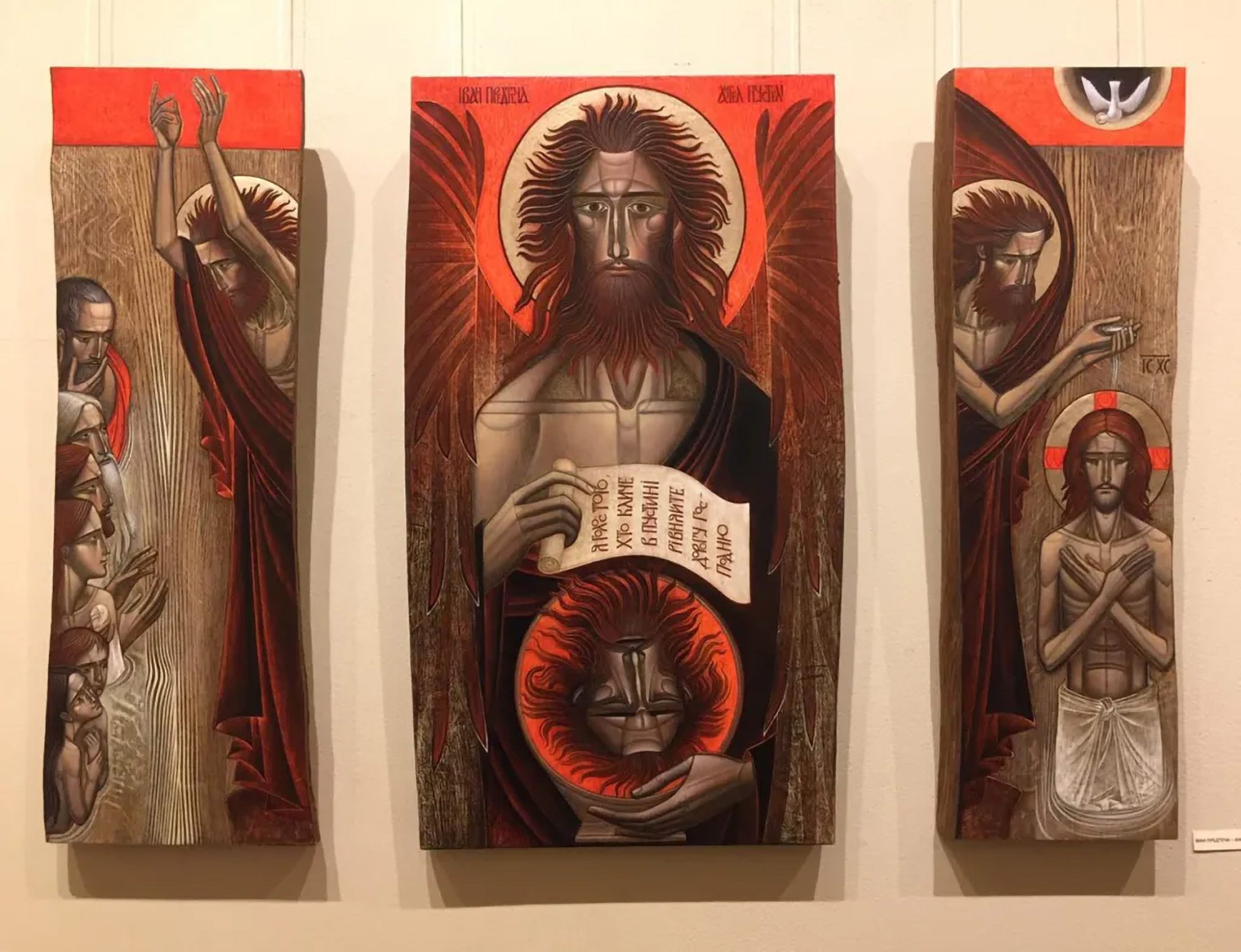
    St. John the Forerunner, Angel of the Desert, Lyuba Yatskiv (2019) | Image from artandtheology.org.

    In any case, the fact that Jesus tells his disciples that Elijah has already come as John is enough for us to accept it. I try not to question the teaching of my God, but try to humbly and happily accept it. The take-home message is that all of the prophecy regarding Jesus’s coming really did happen, including the prophecy of Elijah coming before Jesus. Probably more prophecy was fulfilled than we could ever know.

    John, like Mary, accepted the role that God had for him. He is an amazing prophet and role model for us. For this reason, we should listen to him and Elijah and repent for our sins, for the Kingdom of God is near.


  • How Receptive Are You?

    Friday of the Second Week of Advent, Year A: Isaiah 48:17-19, Matthew 11:16-19.

    A few years ago, Thomas Nichols published a book entitled, The Death of Expertise: The Campaign against Established Knowledge and Why it Matters. It captures the zeitgeist of our age in regards to knowledge – everyone thinks he or she is an expert in everything. Nichols laments, “I fear we are witnessing the death of the ideal of expertise itself, a Google-fueled, Wikipedia-based, blog-sodden collapse of any division between professionals and laypeople, students and teachers, knowers and wonderers” (3). It is tempting to agree with Nichols; we’ve all met (or have been ourselves) someone who preaches to everyone about their opinion as if it was the only truth despite their surface understanding of the issue. We can certainly agree that this is an unprecedented moment in history when Wikipedia and Google have made so much information available to so many people. Other internet-driven tools have amplified the voices of everyone using and reacting to this information. It certainly seems like uninformed opinions are running rampant, drowning out informed opinions.

    I suspect that Nichols (and many others) are experiencing a bit of confirmation bias – that is, they have a hypothesis and they find a bunch of new examples that confirm it. And with the rise of platforms that give voice to all these unformed opinions, there is certainly a glut of examples. Other writers are also pointing out that noise, as opposed to bias, is just as troublesome in cultural systems in terms of formulating hypotheses around major trends (see the recent New York Times article, Bias is a Big Problem, But So is ‘Noise’).

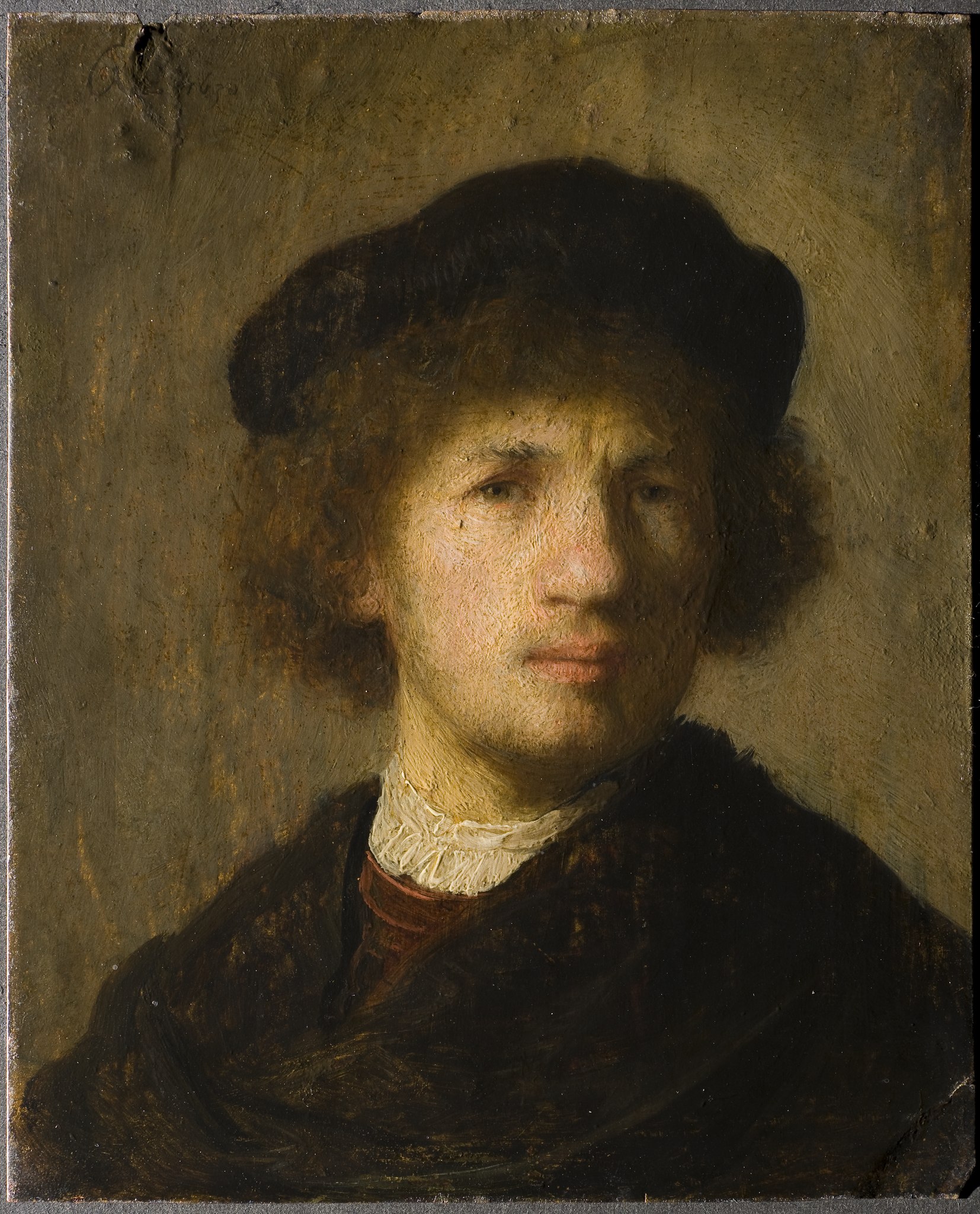
    Self-portrait, Rembrandt (1630, age 24) | Creative Commons, courtesy Wikimedia.

    But the reason I’m bringing this up today is that I think Nichols’s book demonstrates that our culture is hopelessly lost in a dream of mastering knowledge all on our own. Nichols lionizes those who spend their lives learning and gaining expertise (at the same time he laments that most people are undermining them). He sees this loss of human expertise as one of the worst problems facing us: “These are dangerous times. Never have so many people had so much access to so much knowledge and yet have been so resistant to learning anything. . . Not only do increasing numbers of laypeople lack basic knowledge, they reject fundamental rules of evidence and refuse to learn how to make a logical argument” (2-3). One thing I can agree with: these are dangerous times, but not for the reasons Nichols presents. Frankly, I think its sort-of amusing to see a lament for the loss of rationality after we have put on a pedestal the power of the human mind to solve all the problems in the universe since the Enlightenment. We forget that we live in a time when human rationality as the only, correct paradigm for understanding the world is so dominant. We mistakenly think that this is, in fact, the primary example of how humans have progressed from dark times of superstition to a superior life thanks to technology. This is a huge historical bias.

    Those of us who lament the loss of faith centuries ago might be excused for a little chuckle over the sense of alarm.

    The fact is, there are other ways of understanding apart from relying on facts we can measure in the physical world. These ways of understanding, found often in religious traditions, acknowledge that we are more than just animal beings. For Catholics, our divine soul makes up an equal part of our being, and it is attuned to God’s voice. But this last sentence requires faith – faith in a soul, faith in our God, and faith that we can glean any kind of understanding, wisdom, or knowledge from listening to God. Fundamentally, the “dangerous” part of our times is the astounding lack of faith in these things. The cult of expertise that Nichols so loves thrives on skepticism, on testing hypotheses with evidence that can be tested, and this skepticism has been disastrous for faith and spiritual knowledge, which resists the ability to be measured.

    I would like to ask Nichols and others like him what they make of today’s readings, where Isaiah shares God’s Word: “I, the LORD, your God, teach you what is for your good, and lead you on the way you should go.” Our ancestors in faith and the prophets took this as the fundamental basis for how we should understand the universe. God teaches us what is good and leads us through life. The simple promise that God gives us is that if we listen to Him, we will prosper: “If you would hearken to my commandments, your prosperity would be like a river.”

    Do we “hearken” to God throughout our days? Have we aligned our ways of acting, thinking, loving, disagreeing, etc. with what He teaches? Let’s step back, do we even know how to “hearken” to God?? It starts with acknowledging that He exists and has something to teach us. It then demands that we are receptive.

    Jesus presents us with a terrifying question: “To what shall I compare this generation?” The Judge of the Universe is paying attention. He has suffered and died for us, given us baptism to take away our original sin and a Way to heaven to follow in his footsteps. And yet, we want to be the judges ourselves, like those in his time who criticized John the Baptist for not eating and drinking and then criticized Jesus for doing the opposite. They were not receptive to John or Jesus, but instead were committed to making meaning for themselves. This is what Nichols sees in us, who read something on Wikipedia and decide we know it, they go about making judgements based on limited information. But I also see it in so many of the experts he loves, who have determined their own parameters and give us their opinions that he thinks should be the law.

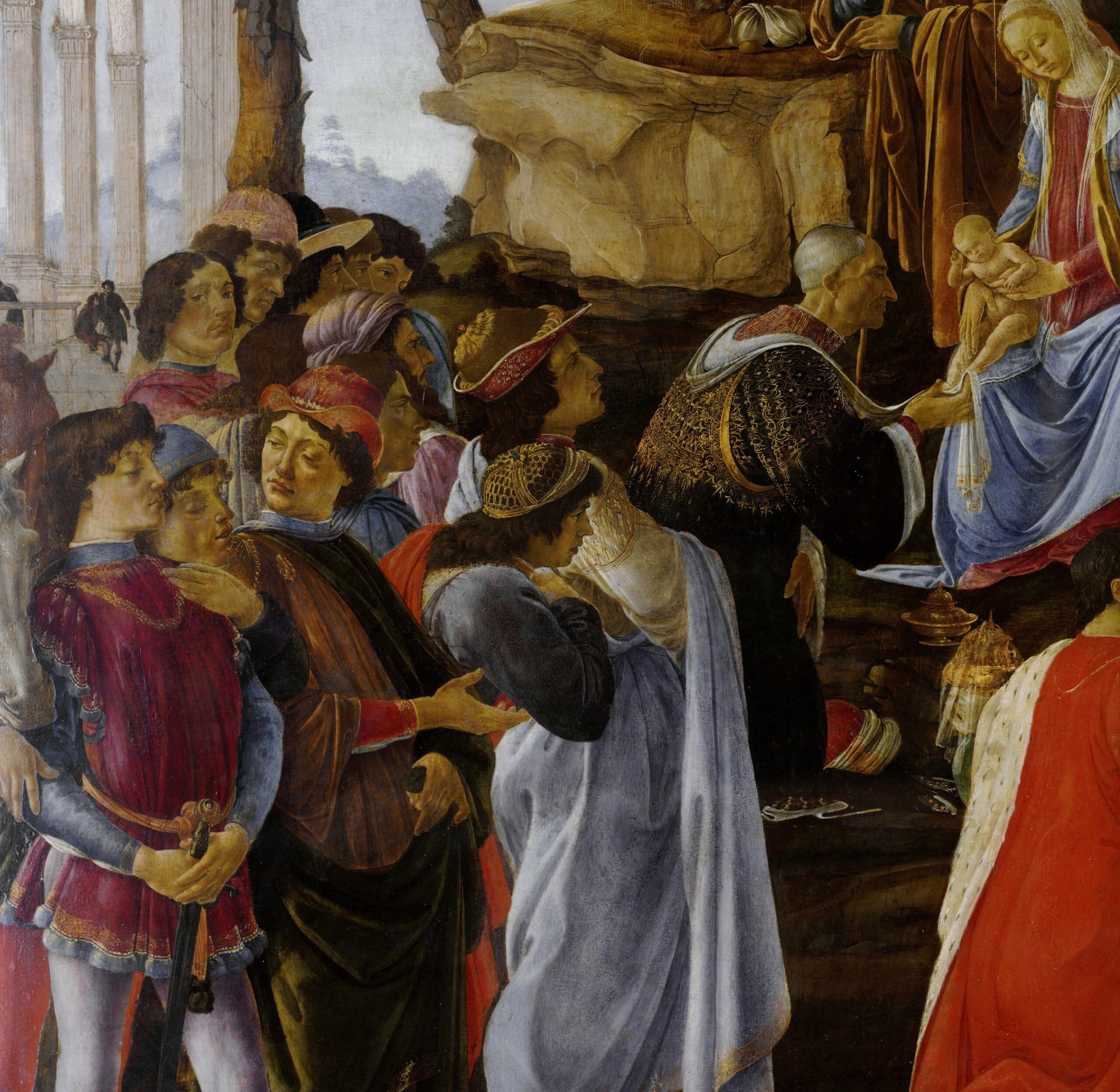
    Detail from Adoration of the Magi, Sandro Botticelli (1476) | Creative Commons, courtesy Wikimedia. I have cropped about half of this painting to show the interesting facial details that Botticelli included in this masterpiece. It is fitting that scholars believe that the leftmost young man was Lorenzo de’ Medici, who became one of the most powerful, enthusiastic and influential proponent of the Italian Renaissance. As we see, Lorenzo and his friends are on the fringe of the composition, more interested in themselves than the birth of the Savior. The third man in the trio is looking back at Lorenzo with his hand stretched to the Christ child, as if asking Lorenzo what his opinion is of this event. Whether Botticelli (who was a friend of this most powerful of patron families) meant to critique this or not, it stands that these figures, standing in for the overwhelming belief that man can do anything, including control his own destiny, have a haughty, distanced appearance. They don’t seem particularly receptive to divine teaching.

    Jesus has an ominous sounding response for us: “But wisdom is vindicated by her works.” Jesus teaches this concept in many ways, notably during the Sermon on the Mount: “A good tree cannot bear bad fruit, nor can a bad tree bear good fruit. Every tree that does not bear good fruit is cut down and thrown into the fire. Thus you will know them by their fruits” (Mt 7:18-20). Let us take a look at our culture and see what fruits are abundant. Huge income gaps, worldwide suffering and discord, rampant selfishness found in the amassing of personal goods and property. These bad fruits point to a bad tree, and we know what will happen to them (fire!).

    We can also take a look at ourselves, which is really more productive. This is the message today in Advent – are we receptive to God’s teaching and will? Are we producing good fruit? This is really what we must worry about because God is concerned with us personally and individually. As we await our Savior, we must be clad in the armor of light because “you also must be ready, for the Son of Man is coming at an unexpected hour” (Mt 24:44). If we truly believe this, if we truly worry about going to heaven versus hell, if we love God and want to be with him in ultimate love and goodness, then let’s be receptive, for God will “teach you what is for your good, and lead you on the way you should go.”


  • Understanding the Immaculate Conception

    Understanding the Immaculate Conception

    Solemnity of the Immaculate Conception of the Blessed Virgin Mary: Genesis 3:9-15, 20, Ephesians 1:3-6, 11-12, Luke 1:26-38.

    I grew up in a Catholic family and attended a Catholic school, so veneration of the Blessed Virgin Mary was a part and parcel of my faith. I never found it odd, or over the top, nor did I feel like we worshipped her as we worship our Triune God. It wasn’t until college that I became aware of the fact that Protestants and other denominations criticize Catholics for their Marian devotions. These criticisms struck me as superstitious, but I understand that they were earnest. So, I wanted to write about the deep devotion the Church has had since its inception for the Mother of God and hopefully help explain the dogma of the Immaculate Conception of the Blessed Virgin Mary.

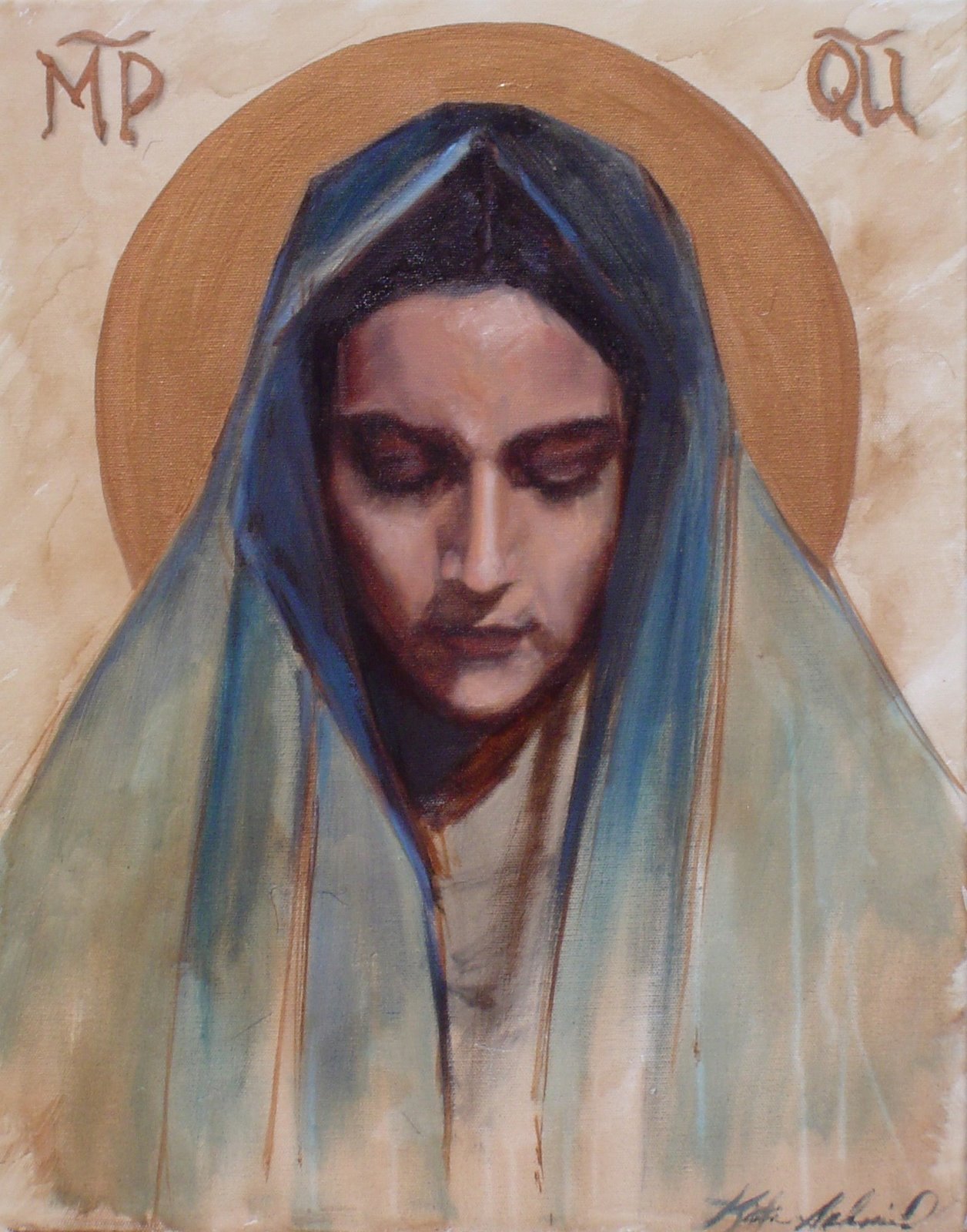
    Mary, Mother of God (20th Century), provenance unknown | Image from draganbachev.wordpress.com.

    Perhaps the hardest Catholic dogma for non-Catholics to accept is the Immaculate Conception. Yet, if we follow today’s readings closely, we can understand both the deep theology and Biblical underpinnings of the doctrine behind this Solemnity. It starts, unsurprisingly, with Adam and Eve. We are reminded of the original sin: “You have eaten, then, from the tree of which I had forbidden you to eat!” Adam immediately recognizes his sin and his own fallen state: “I heard you in the garden; but I was afraid, because I was naked, so I hid myself.” He is afraid of retribution because he knows he has disobeyed God. He is naked both physically (loss of innocence) and spiritually before his maker. This is our founding, fundamental story of humanity.

    Whether we think of this story as literal or allegorical is not the point — all Christians agree that we have inherited a fallen nature thanks to the sin committed by the first man and woman. In the Catholic Church, this sin has a number consequences:

    • The dominion of death. As God tells Adam, “By the sweat of your face you shall eat bread until you return to the ground, for out of it you were taken; you are dust, and to dust you shall return.” Clearly, this was “baked into” Adam and Eve, meaning it is a genetic inheritance for us. The consequence of their sin was passed down to us: to toil on the earth and eventually return biologically back to it.
    • Genetic inheritance of death is but one type of inheritance! We are body and soul, and our spiritual inheritance from this first sin is our tendency to fall into sin (the fancy term would be concupiscence). Just as Eve was tempted by the serpent, we have that inclination to be tempted by Satan throughout our lives. 
    • Perhaps the worst of our curse, however, is not the physical death or inclination to sin, but being deprived of the sanctifying grace of God at our birth. As the Catechism states: “Although it is proper to each individual, original sin does not have the character of a personal fault in any of Adam’s descendants. It is a deprivation of original holiness and justice” (CCC, 405). Original holiness and justice describe the state of Adam and Eve in the Garden of Eden before they sinned. This is the real original sin that we “contract” from Adam and Eve (as opposed to “commit”). Our shorthand for this is “fallen state,” but thanks to Jesus Christ, who came to baptize with the Holy Spirit and fire, we are cleansed of original sin through our Christian baptism. Lest we get too cocky, though, “Baptism, by imparting the life of Christ’s grace, erases original sin and turns a man back towards God, but the consequences for nature, weakened and inclined to evil, persist in man and summon him to spiritual battle” (CCC, 405). 

    Adam and Eve started this great drama of humanity’s distance from God, yet as far back as this very passage from the Book of Genesis, we learn that God promises to rectify it. Many people don’t realize this, but the pinnacle of today’s first reading is contained in these lines, spoken to the serpent:

    I will put enmity between you and the woman,
            and between your offspring and hers;
        he will strike at your head,
            while you strike at his heel.

    This is referred to as the Protoevangelium. With this pronouncement, God is gracing us with a natural hatred of evil, to counteract our tendency to be drawn towards it. What’s more, he is hinting at the Messiah, the offspring of Eve, who will strike Satan’s head while Satan strikes at his heel. As the Catechism tells us: “After his fall, man was not abandoned by God. On the contrary, God calls him and in a mysterious way heralds the coming victory over evil and his restoration from his fall. Hence, this passage in Genesis is called the Protoevangelium (“first gospel”): the first announcement of the Messiah and Redeemer, of a battle between the serpent and the Woman, and of the final victory of a descendant of hers” (CCC, 410). We Christians call Jesus Christ the “New Adam” because he crushes the serpent (while being struck on his “heel” by the Cross), and his mother, Mary, is the “New Eve.” This fulfillment of a promise from Genesis through Mary and Jesus is so central to our faith that it can be found in popular hymns, such as Charles Wesley’s carol, Hark, the Herald Angels Sing:

    Come, Desire of Nations, come, Fix in us Thy humble home.
    Rise the woman’s conquering Seed, Bruise in us the serpent’s head.
    Adam’s likeness now efface, Stamp Thine image in its place,
    Second Adam from above, Reinstate us in Thy love,
    Hark, the herald angels sing, Glory to the newborn King.

    Saint Paul expounds upon God’s plan in the second reading today: “he chose us in him, before the foundation of the world, to be holy and without blemish before him.” We can’t overstate how important the words “holy” and “without blemish” are to our faith. As we reflected in the past week, God is pure goodness, pure love, and in order to be suitable to be united with Him in heaven, we must also work to become purified through our faith. What Paul is saying is that it has always been God’s plan, since “before the foundation of the world” that we should be united with him in holiness and purity. Theologically, this resonates with the problem of original sin. If we have contracted the lack of “original holiness and justice” from Adam and Eve, then restoring original holiness is a major step to reunification with God – thus, Christ comes to reinstate our holiness through baptism.

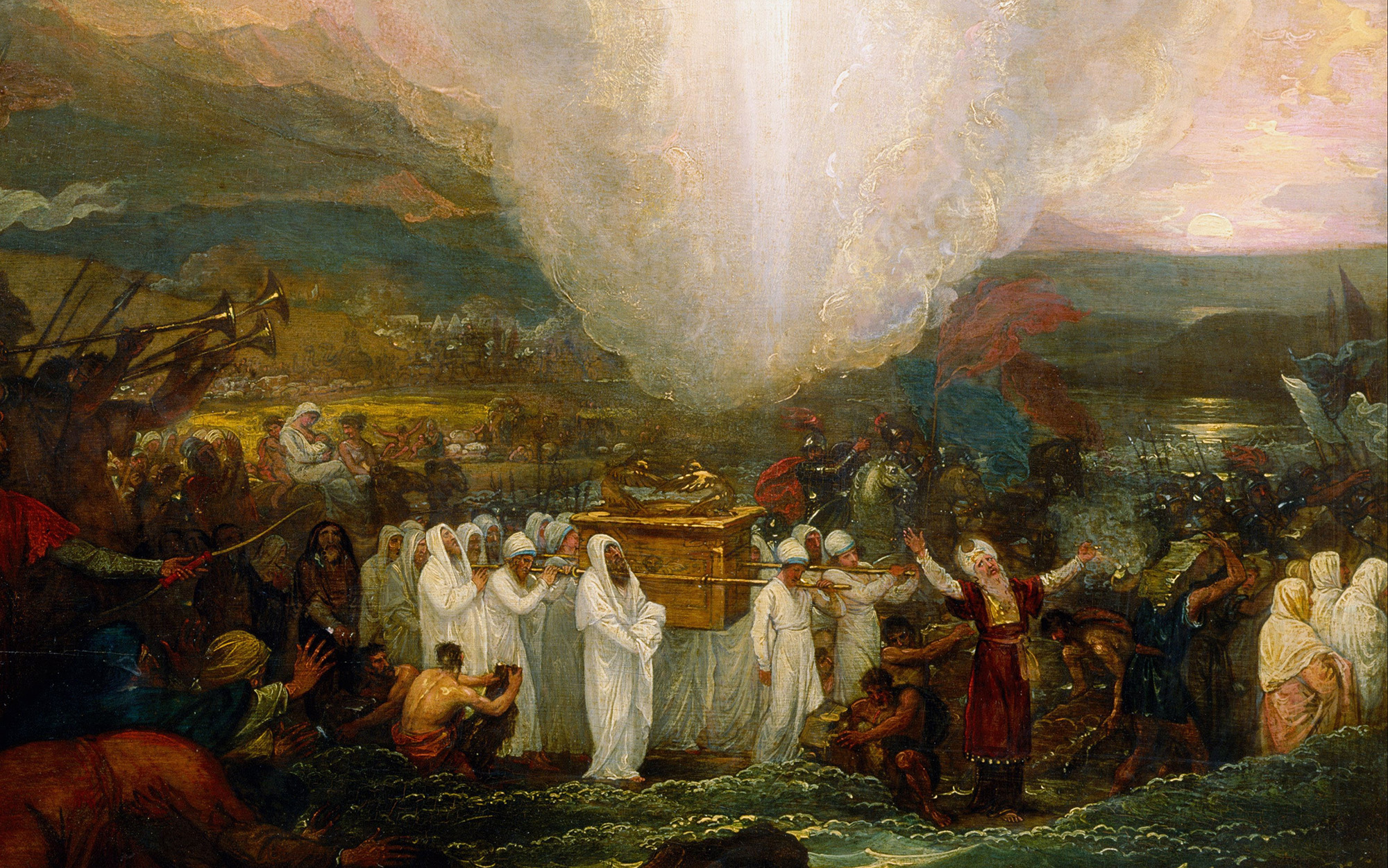
    But original sin also poses a particular problem for the New Eve, Mary. Like the holy Ark of the Covenant that held the commandments, the Aaron’s rod, and manna from heaven, this Ark of the New Covenant that will hold Jesus must be holy, too. Remember that the acacia wood-covered-in-gold ark upon which a giant slab of gold and two angels in gold rested was the place where God manifested Himself to the Jews. Remember, too, that poor Uzzah was stricken dead when he tried to steady the Ark in the cart being transported by King David to Jerusalem. The holiness of the Ark was so great that God’s commandments regarding who could touch it were inviolate.

    Detail from Joshua passing the River Jordan with the Ark of the Covenant, Benjamin West (1800) | Creative Commons, courtesy Wikimedia. If such prayerful care and ceremony was given to the Ark of the Covenant, why would someone be surprised that we give equal veneration to Mary, the Ark of the New Covenant?

    So, if the original Ark was holy, how much more must the Ark of the New Covenant be if it is to hold the incarnate God?

    All of this is drawing to a logical conclusion: that Mary must be holy, that is, lacking even original sin, if she is to bear Jesus. But let’s not assume that our dogma comes about because of a logic puzzle. Nor does it exist out of some kind of sentimental, emotional attachment to Mary, who is Our Lady, most pure. No, the Church did not acknowledge the dogma of the Immaculate Conception either because it was logically convenient or because it seemed fitting to support the cult of devotion to Mary that had developed over the centuries.

    From the earliest moments of the Church, the apostles and Church Fathers believed that Mary had special grace and purity beyond all other humans. The dogma of the Church, although not formalized until 1854 by Pope Pius IX, stands firmly in a tradition that was held from the very beginning of the Church. And even before tradition, we have the scriptural basis, the words of the Angel Gabriel as we hear them in today’s gospel reading:

    Ancient Greek:  χαῖρε, κεχαριτωμένη, ὁ κύριος μετὰ σοῦ.
    “Greeklish”:      Chaire, kecharitōmenē, ho kyrios meta sou!
    English:             Hail, “Full of Grace,” the Lord is with you!

    I want to dwell on the actual Greek text here because it’s very important. The Angel Gabriel bestows on Mary a one-of-a-kind greeting, and “Full of Grace” doesn’t quite sum up the name he calls her, Kecharitōmenē (pronounced keh-kah-rih-toe-MEN-ee). Notice that the root of his first two words is the same: χαῖρε (chaire) and χαριτω (charitō), which would have sounded a bit like heavenly wordplay coming from the Angel Gabriel, or at least a doubling or emphasis. “Kai-ray, keh-kah-rih-toe-MEN-ee,” he said. This root word χαριτω (charitō) means “grace”; χαῖρε (chaire) means “hail!” or “greetings!” and is clearly meant to be a happy greeting since the addition of -τε makes χαίρετε (chairete), meaning “rejoice!”

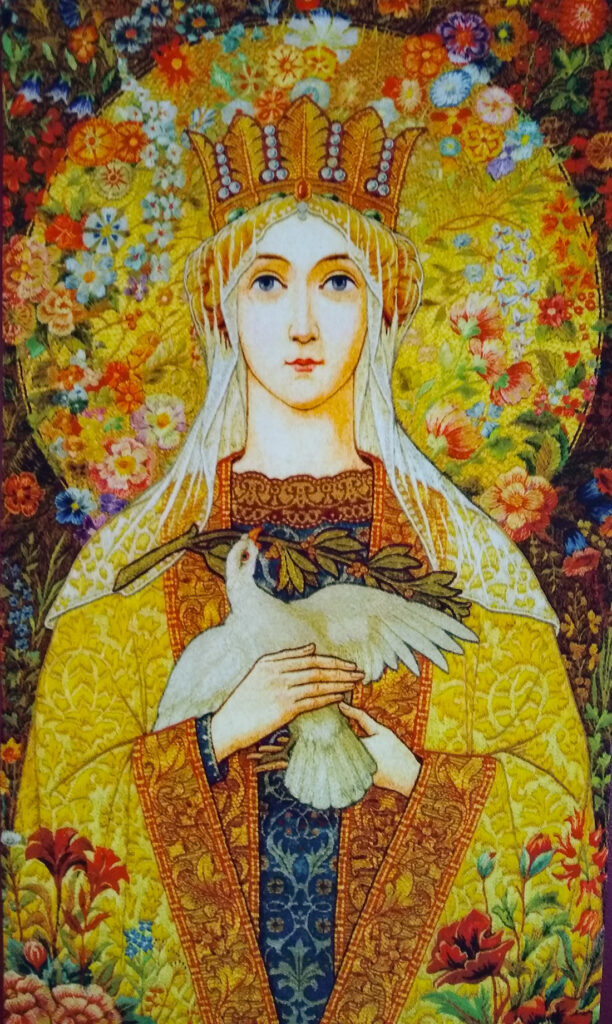
    Our Lady of Peace tapestry (printed on cotton), photo of tapestry hanging in the author’s home. The artwork was originally created in the workshop of Hendrik Slabbinck in Bruges, Belgium during World War II.

    Kecharitōmenē is only used once in scripture and never in secular writings. That’s right, this one-of-a-kind word is invoked by the Angel Gabriel at that moment, used uniquely as a title for Mary. The common English translation is “full of grace,” which is fairly close, but does not express its true depth. In fact, “full of grace” is properly written as πληρης χαριτος (pleres charitos), which is used in reference to Christ in the prologue of the Gospel of St. John (Jn 1:14) and in reference to St. Stephen in the Acts of the Apostles (Acts 6:8).

    But Kecharitōmenē is not a description like “full of grace.” It is a noun, a title, and would be better translated as “The One Who has Been Perfectly and Permanently Graced.” You see, Kecharitōmenē is the perfect passive participle of the verb charitŏō, “to be graced.” Passive, meaning this was not Mary’s doing but God’s. Perfect, meaning completed in its entirety yet ongoing. Gabriel is telling the unsuspecting young Mary that she has been perfectly graced by God from the beginning and continues to be pure. Even before she learns that she is to bear God in her womb, she trembles with the fear of God at the revelation of her own holiness. The Magisterium has always understood this to mean that it was God’s will that she be born without original sin. Thus, we have the scriptural, theological basis for the Immaculate Conception right here in the queenly title acknowledged by Gabriel.

    So, let us celebrate the Solemnity of the Immaculate Conception today with a true grasp of the dogma, with a love of God and His amazing plan for humanity, and with a thankfulness that the New Eve said yes to the Father and bore unto us our Savior.

  • Hope, Rest, and Renewal in Christ

    Hope, Rest, and Renewal in Christ

    Memorial of Saint Ambrose, Bishop and Doctor of the Church; Second Wednesday of Advent: Isaiah 40:25-31, Matthew 11:28-30.

    What soothing words of hope and security we find in today’s readings! With so many trials and difficulties in our lives, this reminder couldn’t come at a better time. As we prepare and wait for the Lord this Advent, we wait like adoring adults gazing at the Christ child in the manger as well as frightened children in need of a Savior to carry us to the finish line. Christ is of course both of these – incarnate in ultimate fragility and yet the most powerful being in the universe. Today, we remember this second aspect: the fact that he is God, able to bear our burdens with us and renew our vigor. Appropriately, we also celebrate St. Ambrose, a towering Doctor of the Church from the 4th century who also acts as a force of solidity and strength in our faith.

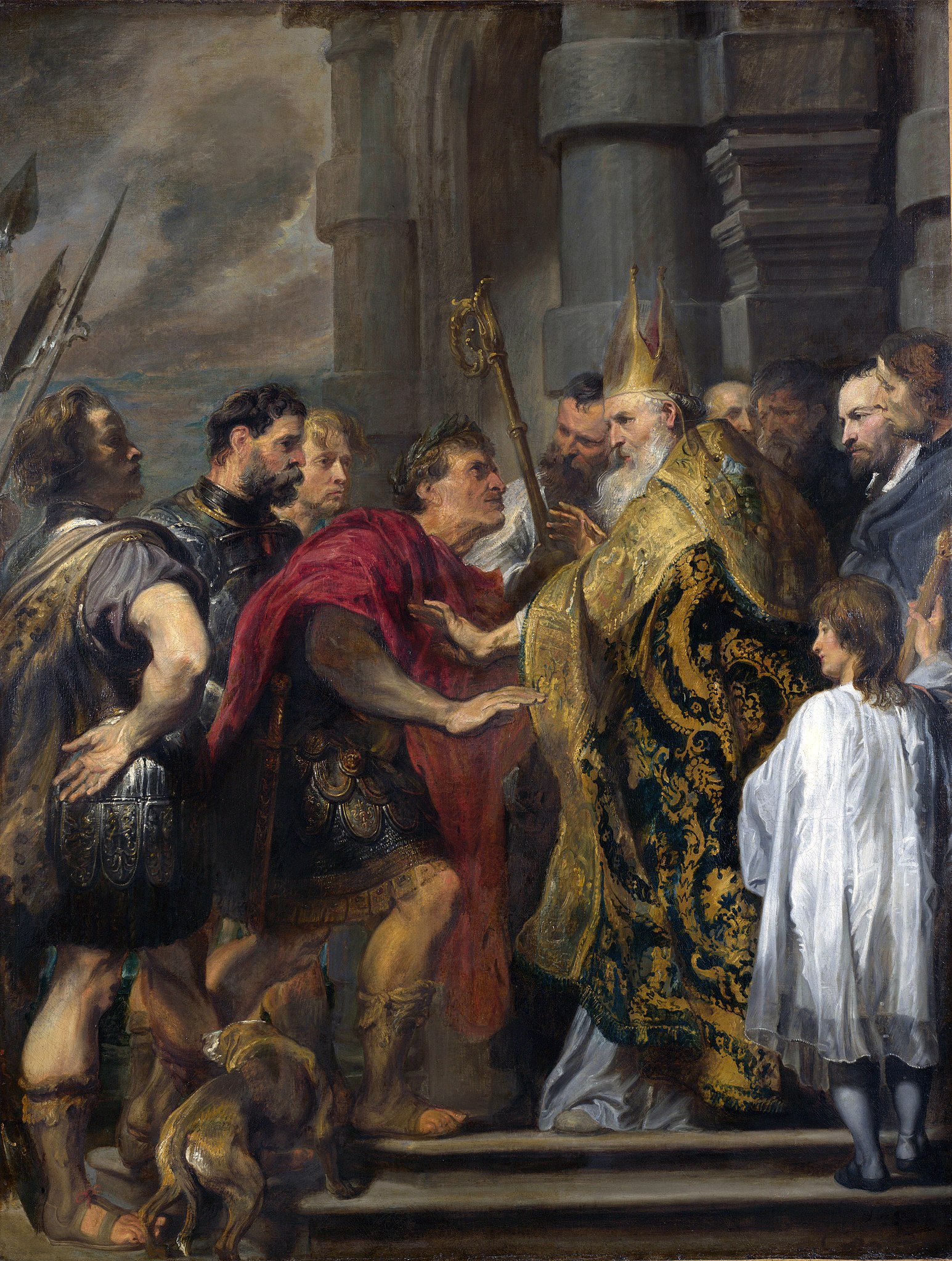
    St Ambrose barring Theodosius from Milan Cathedral, Anthony van Dyck (1619-1620) | Creative Commons, courtesy Wikimedia. Talk about a figure of strength and moral fortitude! In 390 AD, St. Ambrose wouldn’t let Emperor Theodosius into the Milan Cathedral to receive communion until he made a public show of penance for the Roman troops’ Massacre at Thessalonica. While there is evidence of this exchange in letters between Ambrose and Theodosius, as well as Theodosius’s eventual presence for Mass at Christmas, the scene above probably didn’t happen this way, although it makes for great artistic fodder.

    I love how Isaiah asks us incredulously in today’s reading, “Do you not know or have you not heard?” as if his listeners were ignorant of the God of Abraham and Moses. In breathless earnestness he proceeds to tell us, “The LORD is the eternal God, creator of the ends of the earth. He does not faint nor grow weary.” Clearly, he thought we needed a reminder (then and now). And he immediately transitions from describing God’s attributes to describing what He does for us: “He gives strength to the fainting; for the weak he makes vigor abound.” This is a crucial point: our God is a selfless God who gives endlessly to His People. He is no pagan god who toys with his people and expects sacrifice in exchange for favors.

    Isaiah points out that hope, not even sacrifice or ritual, engages God in this transfer of vigor to His People: “They that hope in the LORD will renew their strength, they will soar as with eagles’ wings.” This is extraordinary, especially in comparison to the world’s other religions. Isaiah is reminding us of the intensely personal nature of our relationship with God. He knows us so well that the very act of hope – wherein we align our thoughts and our will toward Him as the ultimate One who can help us – is enough for Him to work in and through us.

    Hope, in this instance, is a form of prayer where we give God our allegiance and in humility tell him that He is the only true source of aid. Ours is a God who cares so much for every single one of the countless people He has created that He enters their minds and hearts to have communion with them.

    Jesus gives voice to this wish of the Father: “Come to me, all you who labor and are burdened, and I will give you rest. Take my yoke upon you and learn from me, for I am meek and humble of heart; and you will find rest for yourselves. For my yoke is easy, and my burden light.” How extraordinary! What mere Messiah figure speaks like this? What mere holy man? These words don’t come across as braggadocio, or as hollow promises. This is the voice of God, sharing His desire for all of His People to come to Him. 

    Taking a closer look, though, there is a seeming paradox in these words of comfort. While he promises everyone who comes to him rest, he also states that he is waiting with a yoke for them. Which is it, rest or work? Can they exist together? He promises to teach them, but notes that he is meek and humble of heart so they can rest in his teachings. Which is it, active learning or rest? These are exactly the tensions that find their harmony in Christ. “For my yoke is easy, and my burden light.” This is the key — the yoke is uncompromising love. Love itself is easy and light, it does give you rest and regeneration.

    Yet living in a state of grace is also work and takes training to achieve. All of our moral teachings and commandments stem from love as God defines it. Constant prayer is a fundamental aspect of living a life of love. Extending mercy and forgiveness to everyone in your life is the way of love. To stand up and put on this yoke every day takes dedication, as our brothers and sisters in monasteries and convents attest. 

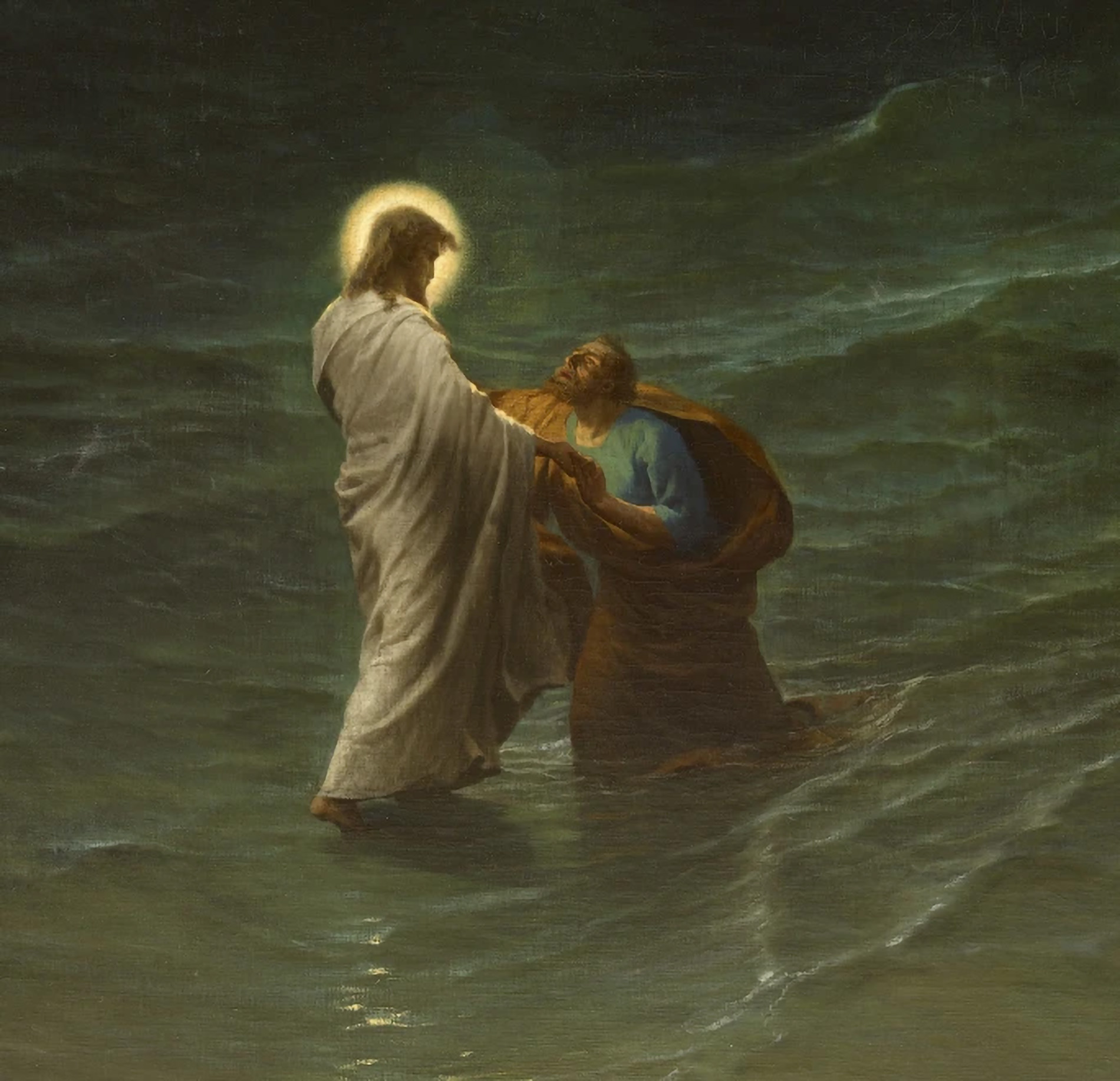
    detail from Jesus and Peter on the Water, Gustave Brion (1863) | Image from gallery19c.com.

    All of the sudden, the yoke seems hard. And, without Christ and the Holy Spirit active in our lives, it might be. These things would become a chore, but God makes them a joy. This is the promise of renewed vigor and rest. Think of how your soul soars when you help someone in need without a thought of recompense. Or of how a time of intense prayer gives you a new perspective on your day-to-day life. God is with us, all the time. All we have to do is open ourselves to Him.

    And no one says it more clearly than Saint Ambrose, who we honor today. Here is a concise exposition he wrote on this very subject:

    Open wide your door to the one who comes. Open your soul, throw open the depths of your heart to see the riches of simplicity, the treasures of peace, the sweetness of grace. Open your heart and run to meet the Sun of eternal light that illuminates all men. . . . Blessed is he, therefore, at whose door Christ comes knocking. Faith is the door of the soul, and if it is strong then it fortifies the whole house. Through this door Christ enters. . . . Open to him, therefore: he wishes to come in, the Bridegroom wishes to find you keeping watch. (from Commentary on Psalm 118).

    St. Ambrose reminds us that faith is the door through which Christ enters. He is waiting at the door of everyone’s soul, but if faith is shriveled, if it is nonexistent, there is no way to greet Christ and find refuge in him. It is almost too obvious to point out, but this is why faith is so important. It is why Satan tries so hard to erode our faith in God, and perhaps it is why God makes Himself invisible to our senses, so that we strengthen our faith like a muscle. We must pray to God to continually strengthen our faith, especially in times when we doubt a Church teaching or even God’s presence in our lives.

    May Saint Ambrose intercede for us today as we celebrate Advent, prepared and waiting for the Sun of eternal light to shine on us all.

  • Carried in His Bosom

    Carried in His Bosom

    Tuesday of the Second Week of Advent: Isaiah 40:1-11, Matthew 18:12-14.

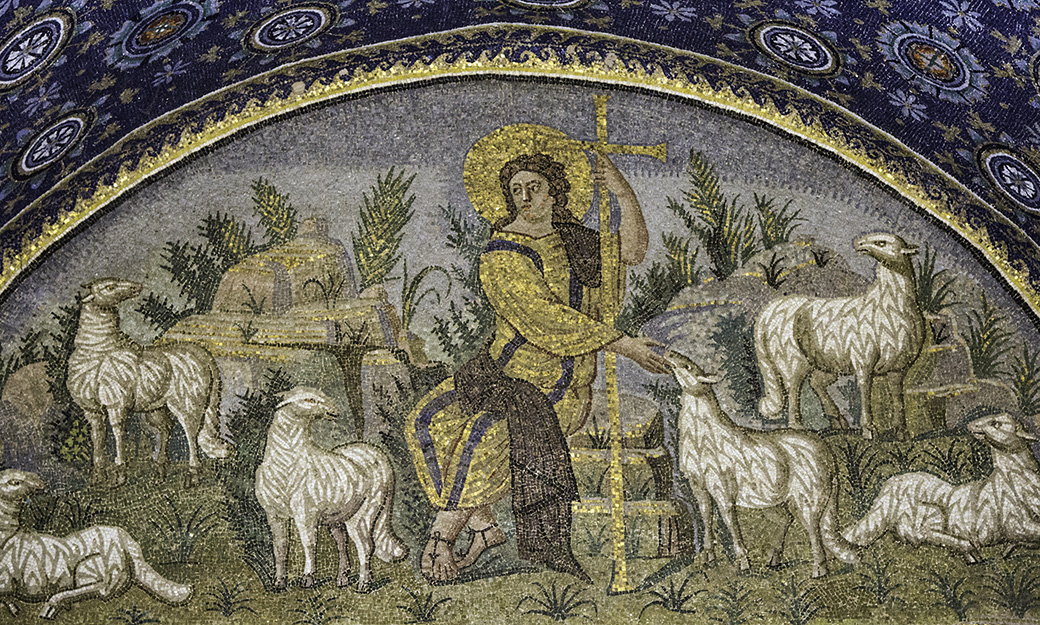
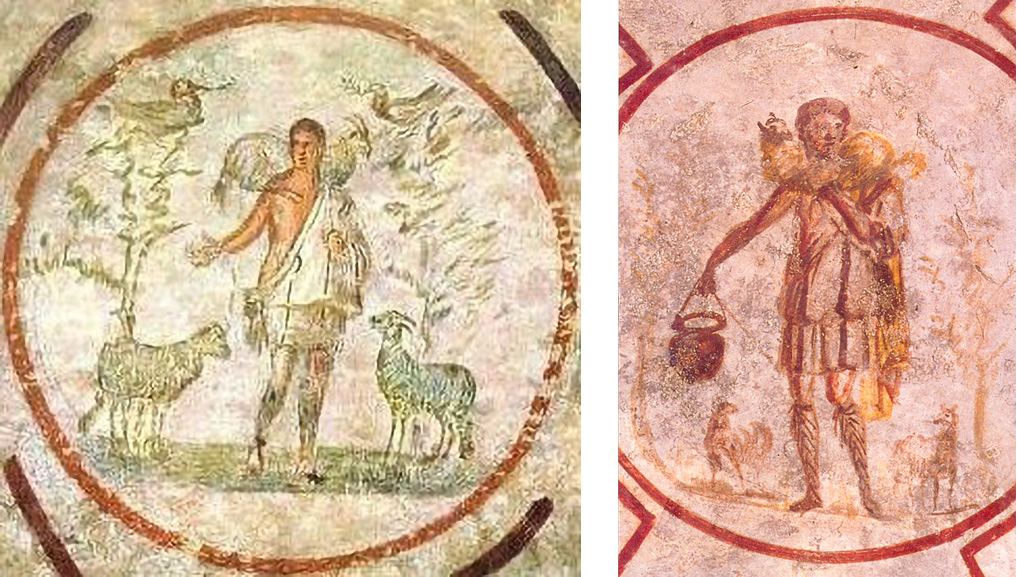
    Today’s gospel presents the Parable of the Lost Sheep, and Christ as the Good Shepherd is one of the oldest artistic representations we have from the early Christian Church. Clearly, this image resonates with us. But is it more than a nice metaphor?

    God the Father is far beyond our comprehension. We need metaphor and analogy to even begin to contemplate Him. As Jesus says today, “In just the same way, it is not the will of your heavenly Father that one of these little ones be lost.” He explicitly points to the analogy aspect of the parable (“in just the same way…”) in order to help us understand a small aspect of God’s will.

    But the Son of God was made incarnate as a man, so we have a physical, historical understanding of him. He literally tended to humans like precious creatures waiting for the harvest — it’s no coincidence that he invites Simon and Andrew to “fish for men,” and that he says, “I am the good shepherd. The good shepherd lays down his life for the sheep” (Jn 10:11).

    This last passage, in particular, invites us to understand Christ in a more literal way rather than metaphorically.

    3rd century paintings of Christ the Good Shepherd in the Roman Catacombs (Catacomb of Priscilla on left, Catacomb of St Callixtus on right) | Creative Commons, courtesy Wikimedia.

    I’d like to quote a passage from the Trappist monk, Fr. Erasmo Leiva-Merikakis, PhD — from his master work of reflections on the Gospel of St. Matthew:

    Every scene in the Gospel represents a new step in the Son’s search for his lost sheep. Golgotha is the moment when he fully finds us, because it is then that he gives all he has to give—the very substance of divinity. He finds us by entering into our locus of despairing darkness and filling us there with his love and life. “I will bind up the crippled, and I will strengthen the weak”: But how? Our resurrection and healing gush forth from his suffering. In the words of Isaiah:

    Surely he has borne our griefs and carried our sorrows. . . . He was wounded for our transgressions, he was bruised for our iniquities; upon him was the chastisement that made us whole, and with his stripes we are healed. All we like sheep have gone astray; we have turned every one to his own way; and the Lord has laid on him the iniquity of us all. (Is 53:4-6).

    Jesus, in whom “all the fulness of God was pleased to dwell,” could not make peace between us and the Father, could not restore us lost sheep to the heavenly flock, without the spilling of “the blood of his Cross” (Col 1:19-20). It was by this outpouring of the human blood of the incarnate God that the Father “delivered us from the dominion of darkness and transferred us to the kingdom of his beloved Son” (Col 1:13).
    (Fire of Mercy: Heart of the Word, Vol III, 627)

    We might be so familiar with the words of St. John’s gospel, “the good shepherd lays down his life for the sheep,” that we forget how very real that act was accomplished by Jesus Christ. God is the best of all good shepherds — so much so that we can use him as the basis of comparison in the metaphor, “you are as good of a shepherd as Jesus Christ with how selflessly you lay down your life…” 

    I don’t want to detour too far on John’s gospel; today’s gospel reading from Matthew is about searching for and not forgetting the lost sheep. This parable is the promise that God wants every one of us to be with Him, no matter how lowly or sinful we might think we are. And, of course, sin is the main way we lose our way from the flock bound for heaven. Consider this — the person so lost in sin that he can’t be recognized is actively sought out to the ends of the earth by our diligent Good Shepherd. If that’s not good news for those in despair, I don’t know what is.

    As we turn our eyes to gaze lovingly on this Good Shepherd, let us return to Isaiah’s words from the first reading. He describes a strong, powerful God whose Word lasts forever — long after humanity is gone. He describes a God for whom we flatten mountains and fill in valleys to make way for his majesty and might. As we turn our eyes to gaze on Him, what do we see?

    Here comes with power
    the Lord GOD,
    who rules by his strong arm;

    Isaiah uses the language we hear throughout the Old Testament: God who smites the enemies of Israel with his “strong arm”

    Here is his reward with him,
    his recompense before him.

    Something is different here. God appears on the wide way we have prepared with His reward. What is this reward, this recompense, but the very flock He has been shepherding!

    Like a shepherd he feeds his flock;
    in his arms he gathers the lambs,
    Carrying them in his bosom,
    and leading the ewes with care.

    And what is he doing with this harvest of sheep? He is feeding them, gathering them in his arms and carrying them in his bosom! What tenderness! What a seeming paradox that the mightiest of all, whose breath can level mountains, is to be found in heaven doing that which he loves the most: tending his flock of souls.

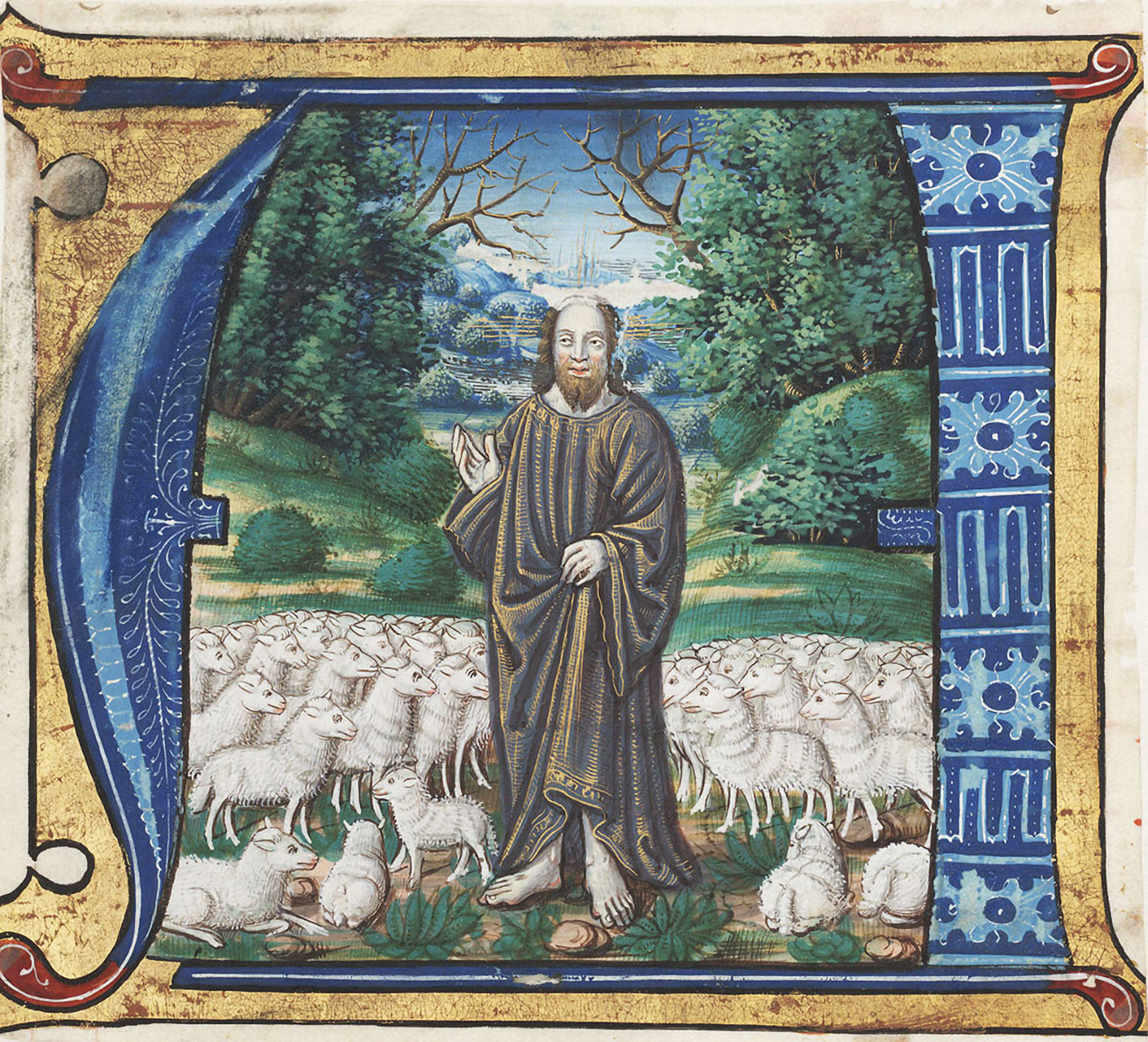
    Historiated “A” depicting Christ the Good Shepherd from French manuscript (1525) | public domain, image from the Free Library of Philadelphia.

    Let’s consider the foretaste of heaven we have on earth in the celebration of the liturgy. As we approach the Mass and the Holy Eucharist, let us remember that Christ’s great sacrifice was one where he carried us in his bosom all the way to the Cross and beyond. He came to earth to physically enact the work of the Good Shepherd, giving us our redemption, salvation, and a peek at the very heart of God.

    When we eat the Eucharist, we are imbibing in the flesh of the one who carries us in his bosom, who protects us, and who literally died for us.

    In Advent, this is who we wait for. We offer a comparatively paltry sacrifice in the form of prayer, fasting and alms to mark this season that anticipates the one who offers the greatest sacrifice of all.

  • A Holy Way for the Weak

    Monday of the Second Week of Advent: Isaiah 35:1-10, Luke 5:17-26.

    Isaiah was graced with such vision! He saw the coming of Christ and all that this meant for humanity; his poetic prophecies are treasures. Today’s readings again present us with the call and response, the promise and the fulfillment, of our faith. Isaiah prophesies that Christ will heal the lame, and Luke describes a memorable episode of the paralytic being lowered through the roof. Yet beyond this prophesied miracle lies a deep message about walking a path, taking courage, and being ecstatically in awe of God.

    Today, Isaiah tells us that “they will see the glory of the Lord,” and then, “Strengthen the hands that are feeble, make firm the knees that are weak, Say to those whose hearts are frightened: Be strong, fear not!” This is the consequence of seeing the Lord: gaining strength, overcoming fear. There are many things to fear in this world, tyrants, bullies, sickness and death, loneliness. But encountering God puts all of these fears in perspective. Holding His gaze and being drawn by His love, all of those fears are dwarfed and overcome. This is the state of the Christian! God has made Himself known to us, come in the flesh in the form of the Son, and if we dwell in His love, all of our earthly concerns wither and fade. We gain the strength and desire to be with Him.

    So in the gospel story we can think of the paralytic and his friends who might have feared the logistics of the crowd or maybe the blowback for disrupting the conversation with all the “Pharisees and teachers of the law” who came from miles around. They might have feared embarrassment, failure, and so many other things. But, they saw the Lord! They were drawn by him and given strength to overcome their fears. Their reward was great: “When Jesus saw their faith, he said, ‘As for you, your sins are forgiven.’”

    Next, Jesus delivers a great demonstration of how the outward signs of healing are but a foretaste of the spiritual healing he offers. But I would like to focus on what happens after that. What does the paralytic do once he is healed? “He stood up immediately before them, picked up what he had been lying on, and went home, glorifying God.” He doesn’t rest or bask in the healing but goes on his way. Indeed, this is Jesus’s command: “I say to you, rise, pick up your stretcher, and go home.” What is important here?

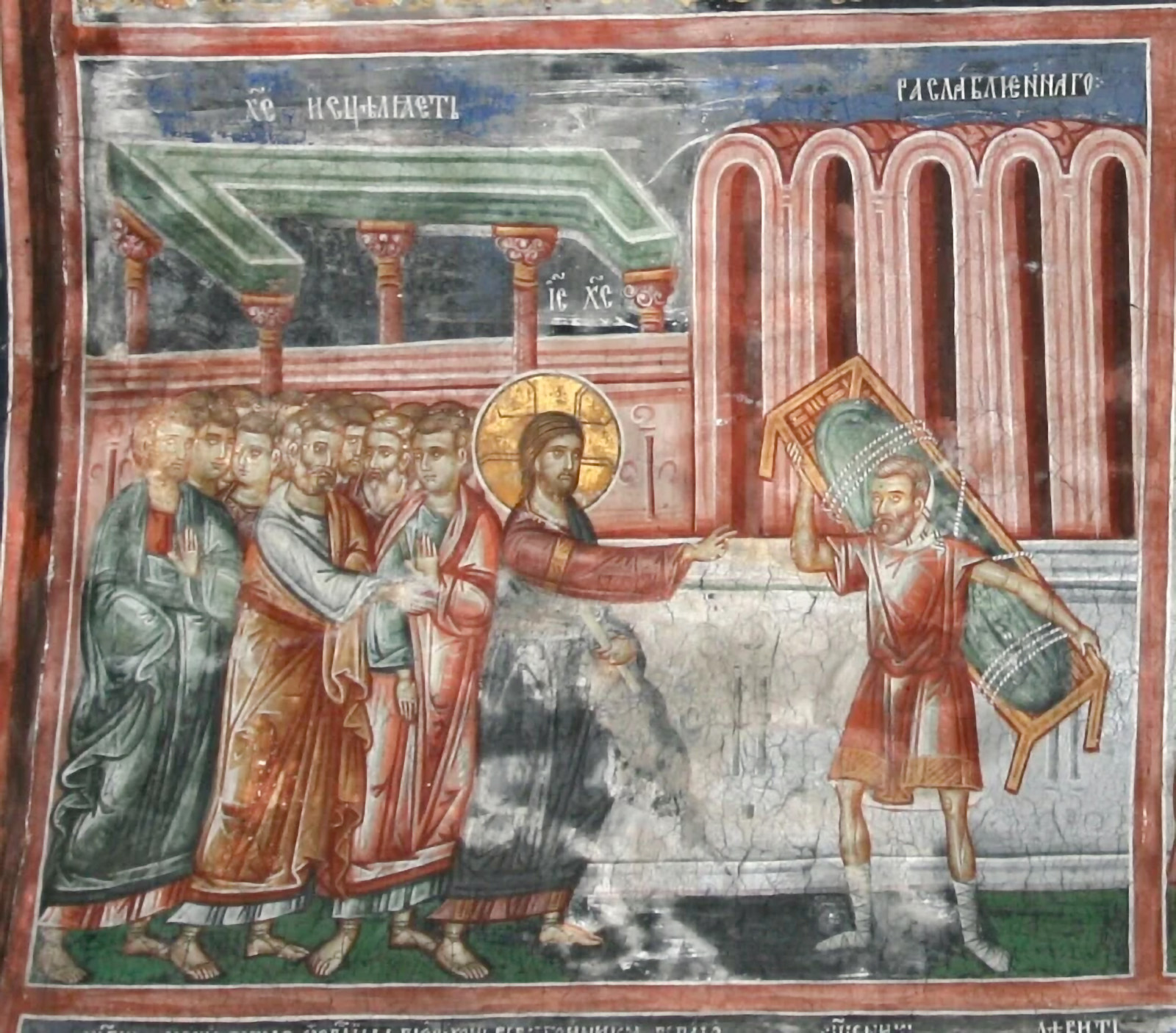
    Ceiling fresco from Patriarchate of Peć Monastery, Serbia (1300s) | Image from russianicons.wordpress.com. Although this is the scene from the paralytic laying by the pool of Bethesda, note that Jesus’s command is the same: “Rise, take up your bed, and walk.” 

    Let’s look at two things: the stretcher and “home.” The stretcher/mat/bed is the symbol of the man’s beaten down life. All of his defeat, anguish, questions, and trials laid on that mat with him for years. He was bound to that mat as Christ was bound to the Cross. It was his burden, but also his sense of who he was – it defined him. By commanding him to “pick up your stretcher and go home,” Jesus is saying in a different way what he will later tell his disciples, “If anyone would come after me, let him deny himself and take up his cross daily and follow me.” Simply put, this is the Way to heaven. This is the Way that Christ himself walked and that he wants us to walk. We are not meant to forget the world’s troubles but to pick them up, to work to help solve them, to bring love into the world. This is what picking up your cross and following Christ is all about. Acknowledging this meaning, we can also see how “go home” has a deeper meaning than his earthly home. Jesus is telling the paralytic – and us – to pick up his cross and travel the way to his heavenly home.

    If there is any doubt that “home” refers to heaven, let’s return to Isaiah’s reading. He says, “A highway will be there, called the holy way … It is for those with a journey to make, and on it the redeemed will walk. Those whom the LORD has ransomed will return and enter Zion singing, crowned with everlasting joy.” Yes! This is the Way of Christ prophesied. A veritable “highway” for the redeemed. I love how Isaiah phrases the purpose of the highway: “it is for those with a journey to make.” This is no road of simple connections. It is meant specifically for those who desire to see God, those who have chosen this journey as their life’s purpose.

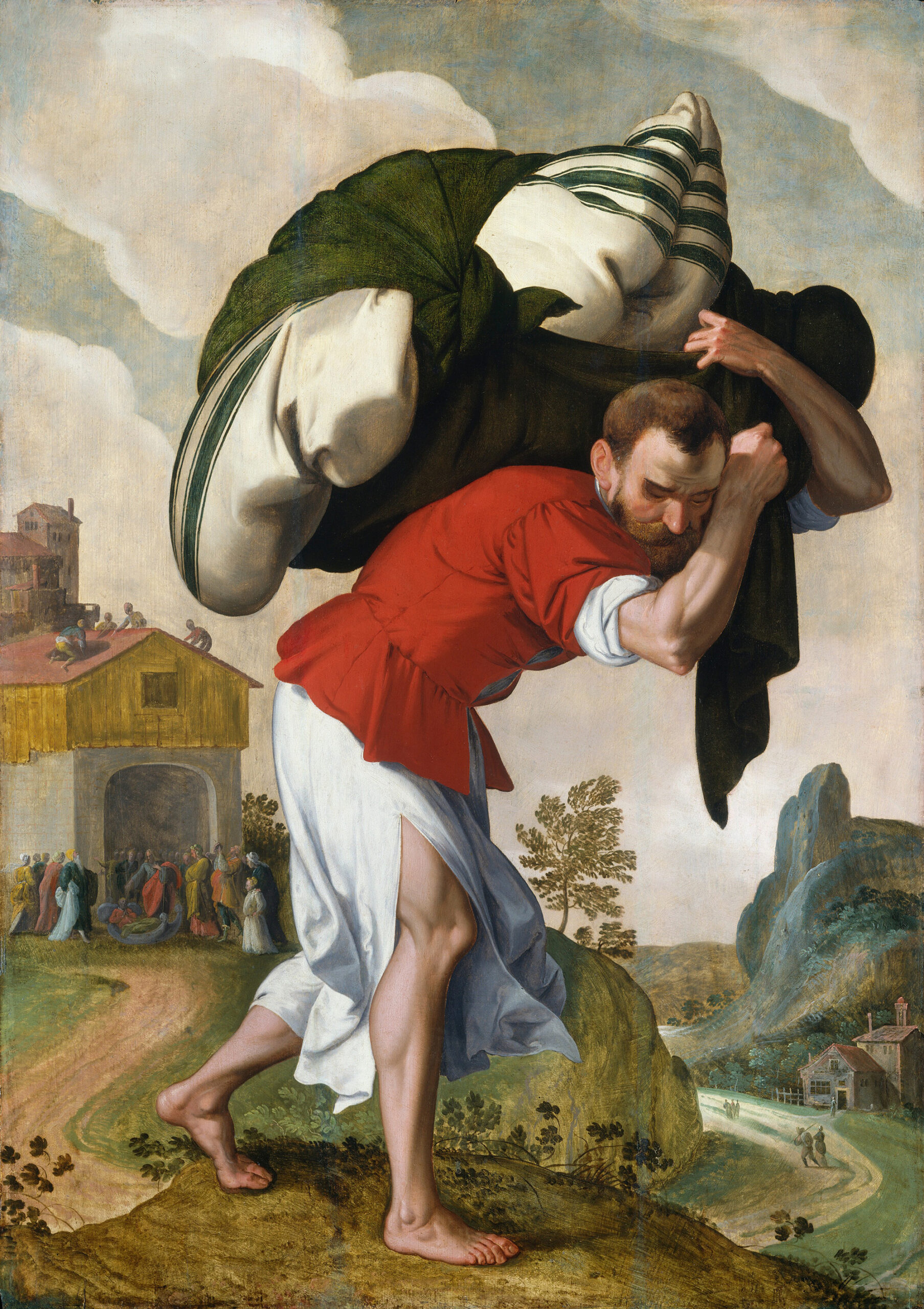
    The Healing of the Paralytic, unknown Dutch painter (1560-1590) | public domain, courtesy the National Gallery of Art. I love the painter’s focus on walking the Way, carrying his burden. This is the work we are all called to do in life once we meet Christ in our baptism.

    The final piece of today’s reflection unites the last words of Isaiah and Luke. Isaiah says, “They will meet with joy and gladness, sorrow and mourning will flee.” This is the promise to those on the Way, but it is also attested to by those witnessing the healing of the paralytic. Luke relates, “Then astonishment seized them all and they glorified God, and, struck with awe, they said, ‘We have seen incredible things today.’” This happens multiple times in the gospels, and the Greek word used for “amazement” is no mere wonder at a magic trick or coincidence. The original text reads, “ἔκστασις ἔλαβεν” (ekstasis elaben), meaning “amazement seized them.” Ekstasis literally means “to be or stand outside oneself, a removal to elsewhere,” and in written usage it means a displacement, a disturbance of mind caused by shock, bewilderment, or amazement. It also means a trance and an ecstasy. This is something far beyond what our normal powers of perception can resolve. Watching the paralytic meet Jesus, be healed physically and spiritually, and embark upon the Way, the scribes, priests, and disciples of Jesus were seized by a displacement of their mind, equal parts bewildering and ecstatic. In their ecstasy, they began to glorify God and fear Him, saying, “we have seen remarkable things today.” But remarkable things doesn’t quite translate the original Greek παράδοξα (paradoxa), which means something close to paradoxical, but more properly “something astonishing we didn’t expect.” 

    Why does this matter? Because this is the state of conversion, something we always are in the process of experiencing as we journey to God. We must continually convert ourselves to the Lord because this world entrances us with its dramas and enticements. We must inhabit this ekstasis, be seized by bewilderment and astonishment over God’s power, goodness, and magnetism. 

    Thus, we receive three great pieces of instruction today in Advent: 1) seek to encounter the Lord because He will give you great courage to overcome your earthly fears, 2) pick up those fears and trials and journey down that highway made for us in the Way that Christ established, and 3) allow yourself to be continually seized by ekstasis over the glory and power of our God. May we take this instruction to heart!

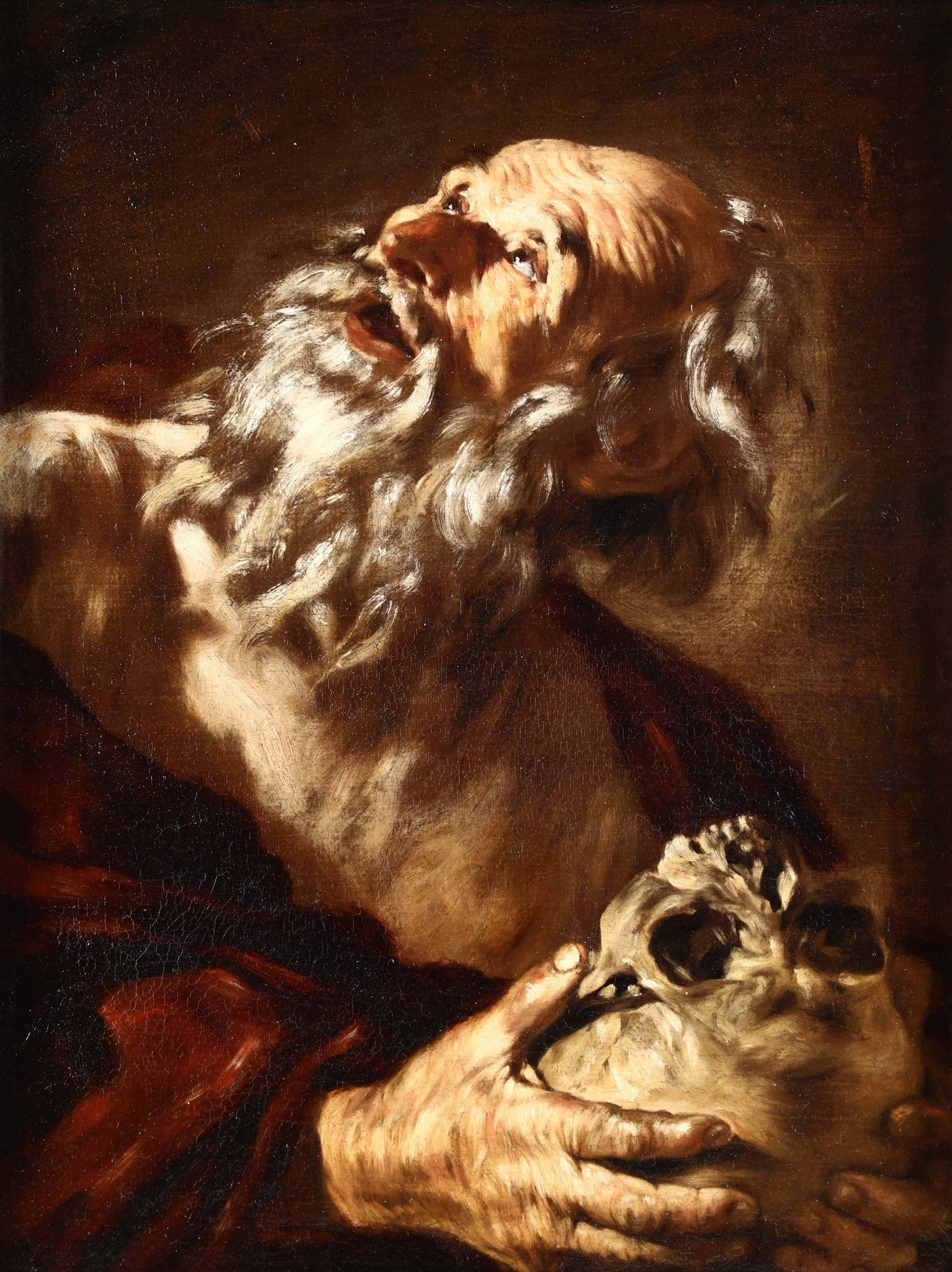
    Saint Jerome (San Gerolamo), Giovanni Serodine (1620) | Creative Commons, courtesy Wikimedia.


  • A Place for Fire

    A Place for Fire

    Second Sunday in Advent: Isaiah 11:1-10, Romans 15:4-9, Matthew 3:1-12.

    It is not in fashion to bring up damnation as a part of our religion. Heck, people look at you like you’re a superstitious nut if you mention Satan. The decades after Vatican II in America attempted to make Mass more “engaging,” and the catechism of both children and adults in the past 50 years … well, it softened, for lack of a better word. In a discussion with our first year Lay Dominican inquirers, several of us shared stories of priests we knew in our childhood telling people that more strict matters of doctrine and moral teaching were optional (or at least they would turn their heads and ignore it). Lest we think this is just anecdotal evidence, a 2021 Pew research poll asking if you could go to heaven if you don’t believe in God showed that 45% of non-Catholic Christians said yes to this prompt while 68% of Catholics said yes. Heaven without believing in God! Worse yet, a full 10% of the Catholics surveyed said they don’t believe in heaven (!!). What’s more, 26% of these Catholics don’t believe in hell. 

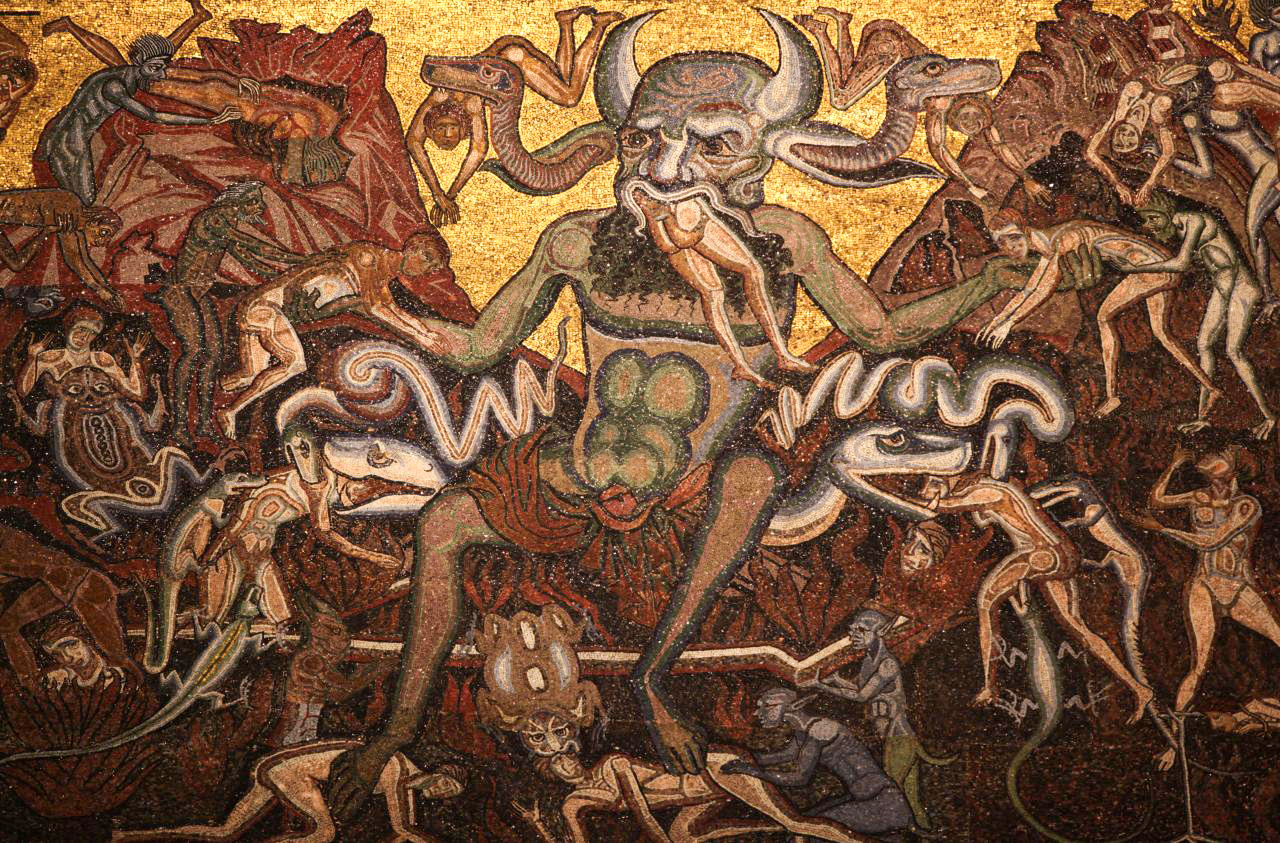
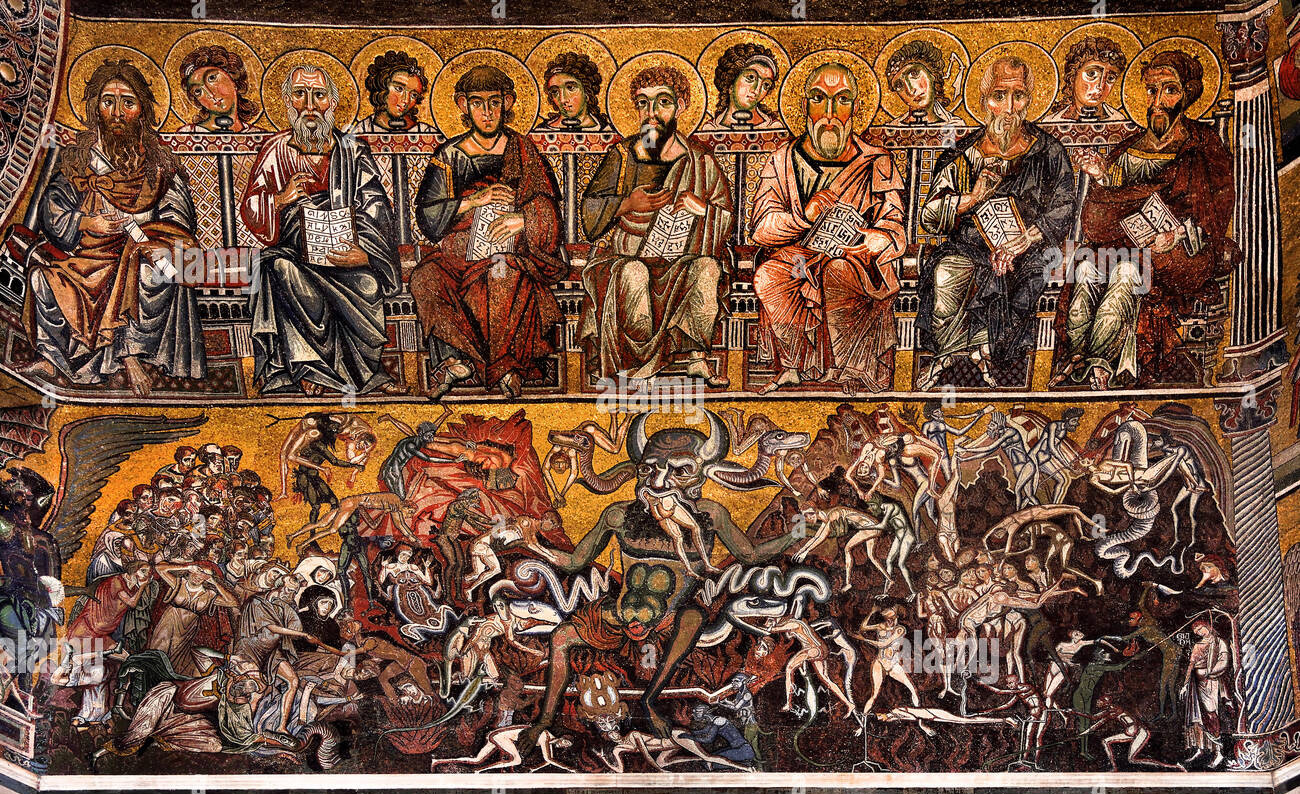
    Mosaic depiction of Satan in Hell, Baptistery of Saint John in Florence, Italy (1260-75) | Image courtesy Holly Hayes on Flickr. More on this image below, at the end of the reflection.

    These are fundamental aspects of our faith. Christ didn’t come to earth to start a feel-good-about-yourself community of do-gooders. If we deny the whole point of our faith — going to heaven to be in union with God — then there is no point in calling ourselves Christian. Let’s put this another (more positive) way … if we believe in Jesus Christ, it would do good to listen to what he promises us: heaven for those who walk in his Way, hell for those who don’t. This is reality for eternity, of course, which might be the very thing that people don’t want to come to grips with. 

    Why bring this up now, in cosy, rosy Advent of all times? Well, I’m just following the Lectionary here. Today’s readings give us the same first reading from Isaiah that we encountered on Tuesday of week one, paired with Matthew’s introduction of St. John the Baptist. I reflected on much of the Isaiah reading on Tuesday, but I’d like to focus on two different lines from this passage today: “He shall strike the ruthless with the rod of his mouth, and with the breath of his lips he shall slay the wicked.” Isaiah is, of course, referring to the Anointed One, the shoot from the stump of Jesse, who we know as Jesus Christ. In the midst of passages that glow about his wisdom, fear of the Lord, and faithfulness, Isaiah puts in these lines about striking the ruthless and slaying the wicked. If these lines seem out of place, then we must remind ourselves of God’s plan. 

    The key word that unites these concepts of peace and retribution occurs in the very next line: “Justice shall be the band around his waist.” God’s justice is that the pure of heart are rewarded while the wicked are punished. Both of these, reward and punishment, are part of God’s promise to His People. We can’t choose to ignore this.

    Thus, the line after this also follows logically: “and faithfulness a belt upon his hips.” The Messiah is, above all, faithful to the Lord whom he loves and fears. It is faithfulness to the Father’s will that makes the distribution of justice happen. Aren’t these great qualities, justice and faithfulness? Then why do I still sense some Catholics squirming with uneasiness at these words?

    This was always the job of the prophesied Messiah: to bring peace and justice. Why have we skewed so far towards the peaceful Lamb of God rather than the Lord of Justice in our modern age? What is it about divine justice and retribution that disturbs us? Perhaps it is because we have ingrained in ourselves a very correct Christian morality of upholding life — not harming others and not judging others. This is good! But let’s not apply the rules of the servants to the master. It’s like ants in a little plastic ant farm looking out at the human caring for them and saying, wait, why aren’t you rooting around in sand? What has been given to us for our own good is not for us to turn around and try to apply to God.

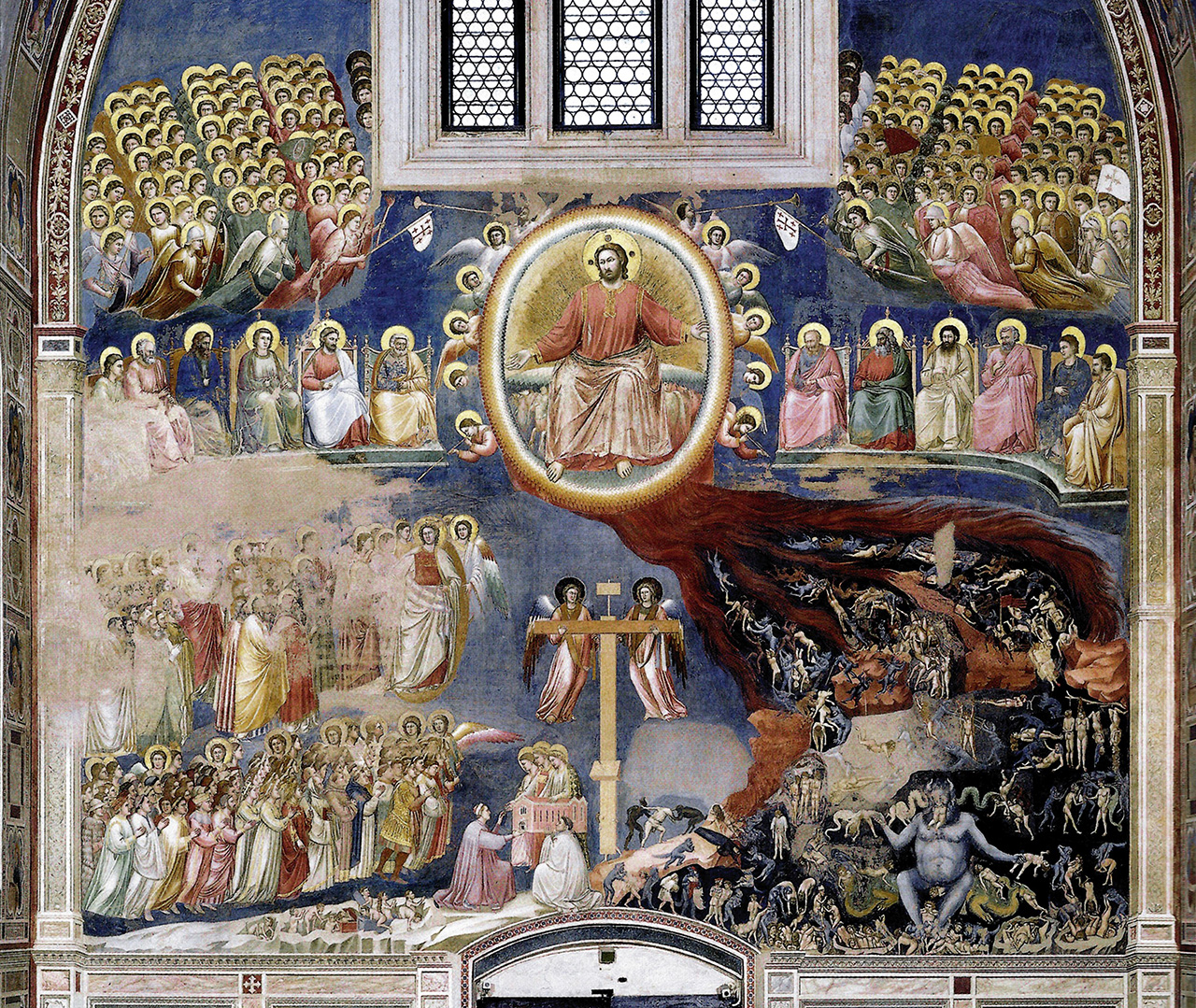
    Last Judgement, Giotto (1306) | Creative Commons, courtesy Wikimedia. The Last Judgment at the Arena Chapel (Cappella Scrovegni), in Padua. Christ in Majesty is surrounded by a rainbow mandorla and angels, flanked by the Apostles. The Heavenly Host is above, while the saved and the damned are shown below, rising to Heaven or being dragged to Hell. What would our faith be without Christ as rightful judge at the Last Judgement? We can’t excise this from our beliefs and still call ourselves Catholics.

    In fact, God is the only just judge. It is his rightful role. To tell him not to judge is like telling a fish not to swim. It is what He was always meant to do. Instead of fretting over this, we should thank him endlessly for his love and mercy (and for being God, because only the one who knows us better than we know ourselves would be qualified to be our judge). So, why be uneasy with the fact that the just judge will come to dispense justice?

    Maybe it’s because we think the punishment doesn’t suit the crime (amateur, unqualified mini judges that we are). We might argue that just because someone does some bad stuff here on earth, that doesn’t merit eternal damnation, without parole! Apart from the fact that we’re breaking rule #1 (it’s not our place to judge or weigh merit), there are two problems with this line of reasoning. First, we have forgotten that actions in this life have consequences beyond the immediate ones. Think of the butterfly effect. On a physical level, a drunk driving accident that paralyzes a person impacts them and their family and acquaintances for generations, far beyond what we could know or anticipate. A worse crime might occur on a spiritual level, where our sins might spiritually cripple someone, even cause them to turn from God and lose their own salvation. This is a grave crime indeed.

    Second, and related, we misunderstand what type of beings we are, having a body, mind, and soul. This makes us believe a weird version of the Las Vegas slogan, “what happens on earth stays on earth.” In fact, what we do on earth has impact in the afterlife, precisely because our soul is irrevocably wrapped up in the actions of our mind and body. Our soul receives the stain when we sin with our body. God has given us a physical life here as well as a greater life that our soul is already a part of, even while we’re here on earth. Thus, our eternal soul is committing crimes that resonate in eternity while we are here on earth. Even to our limited rational mind and logic, the punishment suits the crime.

    The scarier part here is that atheists and others who don’t take heaven and hell seriously are not exempt from justice and punishment just because they mistakenly choose to stick their heads in the sand about the whole matter. They are committing crimes in eternity without even accepting the moral teaching that would help them avoid sin and repent for the ones they have committed. We should have pity on them. This is why the salvation of souls is such an important goal for Dominicans (and all Christians), and something that will always be needed.

    So, can we Catholics accept the fact that God, our just judge, will come to both reward and punish?

    No? You say God is love and he would never punish because that’s evil? Ho, ho – one final objection to overcome. I won’t dwell on the fact that we are in no place to dictate what God can’t do, and that we live in faith, meaning in the totality of the faith and revelation that has been handed down to us (including the bits about divine retribution). Instead, I’ll attempt the more rational, logical argument, following Aquinas’s lead. The point that God is pure love and goodness is the very proof that punishment and banishment to Gehenna must happen. Pure goodness cannot exist alongside evil. That would be impossible, like trying to make oil become part of water. God’s goodness is like a white hot, purifying flame, and those who have been tested in the fire during life, like gold purified from slag, will glory in the pure flame of God’s love (this is reward). Meanwhile, those who have remained slag, or perhaps piled on more muck that they created themselves, will smoke and burn and writhe in the presence of God’s love.

    Perhaps this is hell, the burning out. Perhaps it is a place in the underworld. I don’t know. But what I know is the promise, in the words of Jesus Christ: 

    Woe to you, scribes and Pharisees, hypocrites! For you are like whitewashed tombs, which on the outside look beautiful, but inside they are full of the bones of the dead and of all kinds of filth. So you also on the outside look righteous to others, but inside you are full of hypocrisy and lawlessness … You snakes, you brood of vipers! How can you escape being sentenced to hell?  (Mt 23:27,28, 33).

    I bring up all of this is to get us to the point of understanding St. John the Baptist, who makes his appearance every Advent as we contemplate the coming of Jesus Christ. I love John. What a figure! The final prophet, the bridge between the old covenant and the new, the voice crying out in the wilderness. In our reverence of this saint, however, let’s not lose sight of just what a wild figure he was. “John wore clothing made of camel’s hair and had a leather belt around his waist. His food was locusts and wild honey.” This is not normal — not now, not then. Setting the fashion for centuries’ worth of future desert ascetics wasn’t his only standout quality, though. He was a true fire and brimstone preacher, and famous throughout the land. Something was different with him and his message. 

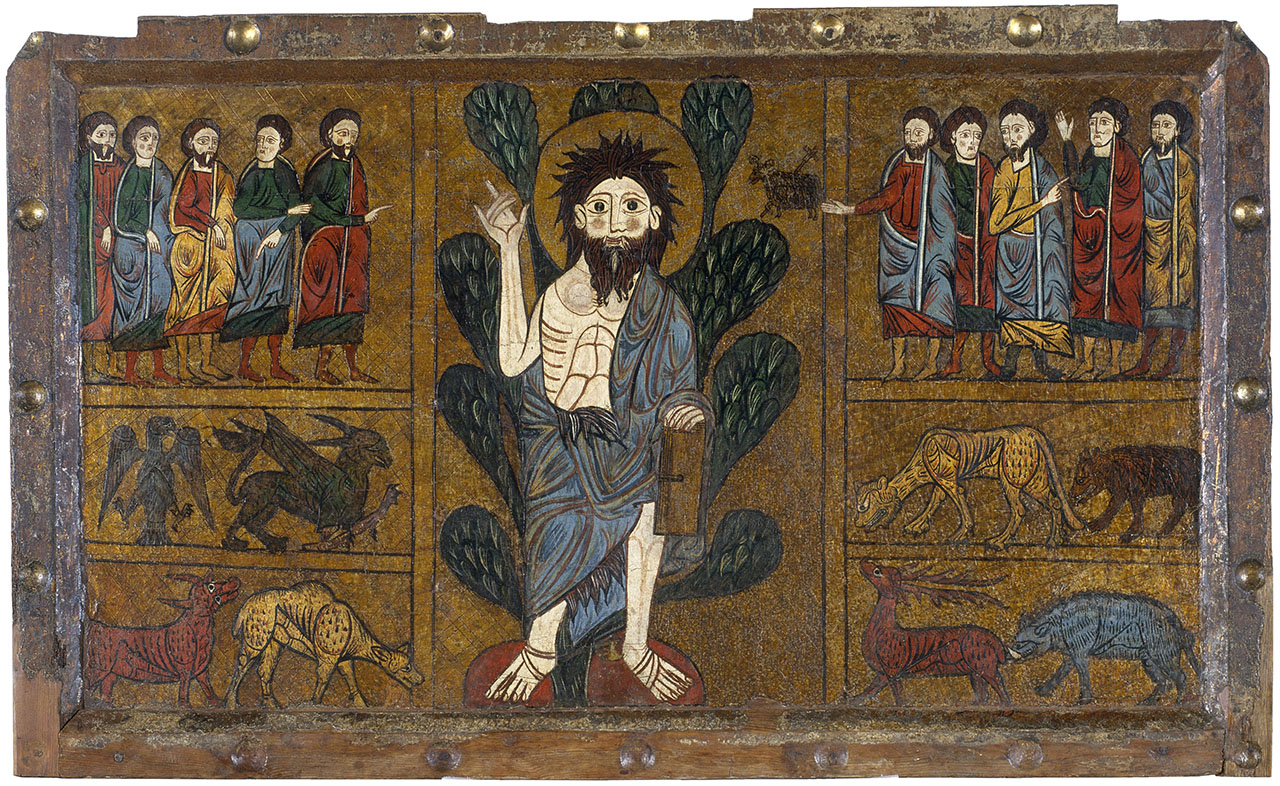
    Altar Frontal from Gésera, Spain (1200s) depicting John the Baptist preaching in the desert, surrounded by wild animals | Image from Museu Nacional d’Art de Catalunya, Barcelona.

    We are told that his message was, “Repent, for the kingdom of heaven is at hand!” This is something that Jesus would echo throughout his ministry, too. So, after God spent centuries preparing His People to develop their faith, culminating in the woman who would bear God as the Ark of the New Covenant, John spends these last moments before Jesus begins his ministry by preparing the people to bear the Word in their hearts. 

    John and Jesus share a fondness for calling out Pharisees: “When he saw many of the Pharisees and Sadducees coming to his baptism, he said to them, ‘You brood of vipers! Who warned you to flee from the coming wrath?’” We cannot turn a blind eye to the fact that John and Jesus’s message was one of preparing for the Final Judgement, the “coming wrath.” Today’s readings put this uncomfortable fact front and center. Advent is about preparing for Jesus, and that preparation has very, very serious stakes.

    Consider how central “fire” is to St. John’s short speech about God’s judgment. “Even now the ax lies at the root of the trees. Therefore every tree that does not bear good fruit will be cut down and thrown into the fire.” Fire consumes the trees that do not bear the fruit for which they were planted. And then: “His winnowing fan is in his hand. He will clear his threshing floor and gather his wheat into his barn, but the chaff he will burn with unquenchable fire.” Fire immolates the leftover and useless chaff that was separated from the life-bearing grain. In both instances, fire is the judgement rendered, and importantly that fire cleans. It is a way to finalize the harvest season, to reset an ordered existence. 

    Fire Blaze, Carol Carter (contemporary) | Image from CCarterWatercolors Etsy page.

    So, when John also tells us that Jesus “will baptize you with the Holy Spirit and fire,” we must realize that the cleansing, ordered, perfect fire of God is present with us from the very beginning of our journey to Him. Our baptism is conducted with the grace of the Holy Spirit and the soul-cleansing effect of fire. Fire is there in the beginning and it will be there in the end. There is a place for fire.

    After all, there is even fire (in a positive sense, as in baptism), for those who will enter heaven. Being united to the divine glory that is the fiery love and goodness of God, our earthly concerns will be immolated by the great love we will bear in our whole beings, participating fully in that irresistible and never-ending flow of love in the Trinity.

    If we are still bugged by the question of how do we feel about a God who judges harshly, then I think we need to contemplate the wild, frightening words of St. John the Baptist. We must take seriously the covenant God has made with us. We must repent for our sins, convert our hearts, and strive with all of our beings to be on the right side of the judgement. And we have to understand that there is a rightful place for fire.  

    Christ and the Last Judgement, mosaic in Saint John Baptistery in Florence, Italy (1260-75) | Image is a preview download from Alamy.com. Here we have the fuller composition of the image at the top of this reflection (apologies for the watermarks). Note that the damned in hell are presided over by the council of prophets and angels – in particular, note the wild-haired St. John the Baptist on the far left. This is a good reminder of our doctrine: hell is a sentence that is passed on those who have not “born good fruit” in life and accepted God; it is just and ordered, promised from the beginning. Unlike popular culture conceptions of good and evil fighting it out in an almost-equal battle (think of Star Wars), we condemn that heresy as dualism. Evil and Satan certainly exist, but they serve as part of the crucible of perfecting ourselves in this life and then as the jailers of hell in the afterlife. God has no equal and Jesus has already defeated death and Satan. The other important aspect of this mosaic is that it shows the deep medieval understanding of the important truths of the faith that are inaugurated with baptism. This magnificent Battistero di San Giovanni reveals to the initiates on the inside of its walls in glorious fashion the mysteries of our faith, including the fact that they are being baptized with the Holy Spirit and fire. They are being brought into the faith that promises a Final Judgement by fire from the very beginning.


  • Laboring for the Master’s Harvest

    Laboring for the Master’s Harvest

    aturday in the First Week of Advent: Isaiah 30:19-21, 23-26, Matthew 9:35–10:1, 5A, 6-8.

    I have reflected in the past on the use of agricultural metaphors in scripture (see The Generous Harvest Without Cost, and Laborers for the Harvest), and today’s readings provide another opportunity to do so. The backyard gardener in me loves these metaphors – there is something so wholesome, so fundamentally human about working the land and then transforming its products into food and drink. The harvest, in particular, connects to something even deeper – life itself in those plants, which has reached a ripeness that yields fruit; this is the germ of the new generation, whether eaten by humans or plowed back into the earth for next year’s crop.

    The Harvesters, Léon Augustin Lhermitte (1888-1889) | Creative Commons, courtesy the Art Institute of Chicago.

    I’ll get philosophical here and claim that the fecundity of Creation reaches an inflection point in the harvest. OK, two $5 words there. Fecundity, meaning all of the potential fertility of a system. Inflection point, which my mathematician wife would happily define for us as the point on a curve when it changes concavity (convex to concave or vice versa) – imagine the very crest of a wave. If life on earth has a cyclical nature, then harvest is one inflection point while germination is its twin. 

    The entire cycle of germination ⇔ harvest is graced by the Creator, as Isaiah tells us today: “He will give rain for the seed that you sow in the ground, And the wheat that the soil produces will be rich and abundant.” But let’s not confuse this with “praying for rain” as in pagan nature worship. Isaiah is talking about God’s providential grace, His purposeful blessing of His People that is outside of the natural course of random weather patterns and such. This is a promise of something special and new: “No longer will your Teacher hide himself, but with your own eyes you shall see your Teacher.” Images of nature and harvest in scripture always serve as signs of something greater. Thus, Isaiah promises with apocalyptic language, “The light of the moon will be like that of the sun and the light of the sun will be seven times greater … On the day the LORD binds up the wounds of his people.” Once again, let there be no doubt that this is the promise of a great intervention on the part of God for His people. And, as we have reflected nearly every day of this first week of Advent, that great intervention is Jesus Christ, God made flesh.

    So, what do we make of these agricultural signs once the promise is being fulfilled? 

    As he works his ministry of healing bodies and souls, Jesus has compassion on the “harassed and helpless” crowds (or “troubled and abandoned” as the lectionary states). He tells his disciples, “The harvest is plentiful, but the laborers are few; therefore ask the Lord of the harvest to send out laborers into his harvest.” The harvest – the inflection point where the ripeness of Creation is given over – is no longer portrayed as a harvest of wheat but a harvest of souls. The master of the harvest in the Time of Promises (Old Testament) would have always been a human, harvesting food for the good of the human community. But now, Jesus explains that the master of the harvest is God Himself, and what is being harvested – the ripe fruit of Creation – are souls in need of saving.

    This is a fairly huge point. Jesus has compassion on a particular group: the helpless, abandoned crowds of troubled people. These poor, sick, demented, sinful people are his ripe fruit! He does not send the apostles to go harvest all the priests and Pharisees who uphold the Mosaic law down to the tiniest restriction. Jesus sees with the eyes of the Father, past the sin and ailments to the soul. This is the great message of hope that Jesus brings us: we are all children of God, all worthy to be saved. The outward trappings of failure matter little to God. It is faith and a contrite heart that God looks for.

    Detail from October Harvest, Van Matino (contemporary) | Image from Art Leaders Gallery. When I first saw this detail crop of the larger painting, I honestly couldn’t figure out what it was at first – the glowing pear on the right was so lustrous that I thought it was an abstract painting. The richness of the colors in the fruit is a nice analogy for what God must see in us – our shining souls – rather than how we picture ourselves.

    And what of the cycle? If harvest is the first inflection point, what of germination? What will come of this harvest? 

    Jesus tells them, “As you go, make this proclamation: ‘The Kingdom of heaven is at hand.’ Cure the sick, raise the dead, cleanse lepers, drive out demons.” These are things you do for people in spiritual trouble; rather, that you do for souls in need of saving. Jesus makes it clear that the disciples and his own ministry are operating on a new plane: a spiritual one that transcends the physical one. The Kingdom of heaven is at hand! The new life that Jesus is in the process of begetting with this harvest of souls is infinitely greater. It is eternal life in heaven.

    Cycles are abolished with this set of inflection points to end all cycles. The harvest that Christ began in his ministry and successfully established with his sacrifice to the Father has changed the concavity of history. We exist now in the end times, able to be a part of the harvest of souls as laborers and the harvested. We await the final germination of our souls in the Kingdom of Heaven, that final inflection point upward. This is explained in the letter to the Hebrews:

    For Christ did not enter a sanctuary made by human hands, a mere copy of the true one, but he entered into heaven itself, now to appear in the presence of God on our behalf. Nor was it to offer himself again and again, as the high priest enters the Holy Place year after year with blood that is not his own; for then he would have had to suffer again and again since the foundation of the world. But as it is, he has appeared once for all at the end of the age to remove sin by the sacrifice of himself. And just as it is appointed for mortals to die once, and after that the judgment, so Christ, having been offered once to bear the sins of many, will appear a second time, not to deal with sin, but to save those who are eagerly waiting for him.  (Heb 9:24-28).

    Yes, may we all be “eagerly waiting for him,” harvested and ready to gain new life in the Kingdom. And, particularly for those of the Dominican charism, we must hear the call to be laborers in this harvest – the salvation of souls must be our heart’s desire, just as it is God’s.