Category: Year C

  • The Heavenly Womb

    The Fourth Sunday of Advent, Year C: Micah 5:1-4a, Hebrews 10:5-10, Luke 1:39-45.

    Today’s readings present us with a familiar scene, the kindly image of pregnant Elizabeth greeting pregnant Mary. This is the Visitation of Mary. Mary travels to the hill country, she “enters the house of Zachariah,” the women exchange pleasantries. It’s December 19th and Salt Lake City is covered in snow. The whole scene can lull us with its domesticity as I dream of cozying up to the fireplace and doing a puzzle this afternoon. The gospel reading with its overtones of “nesting” fits perfectly.

    But, let’s dwell with the Word of God for a moment and let it reveal its wonder and wisdom to us. There is something deep happening in this gospel reading. We are witnessing the turning point of history, when the time of the Prophets meets the time of the Messiah. Hidden in this countryside meeting of cousins is a glorious revelation for the world, much like the glorious revelation Himself will soon be given to the world, yet hidden in a humble manger.
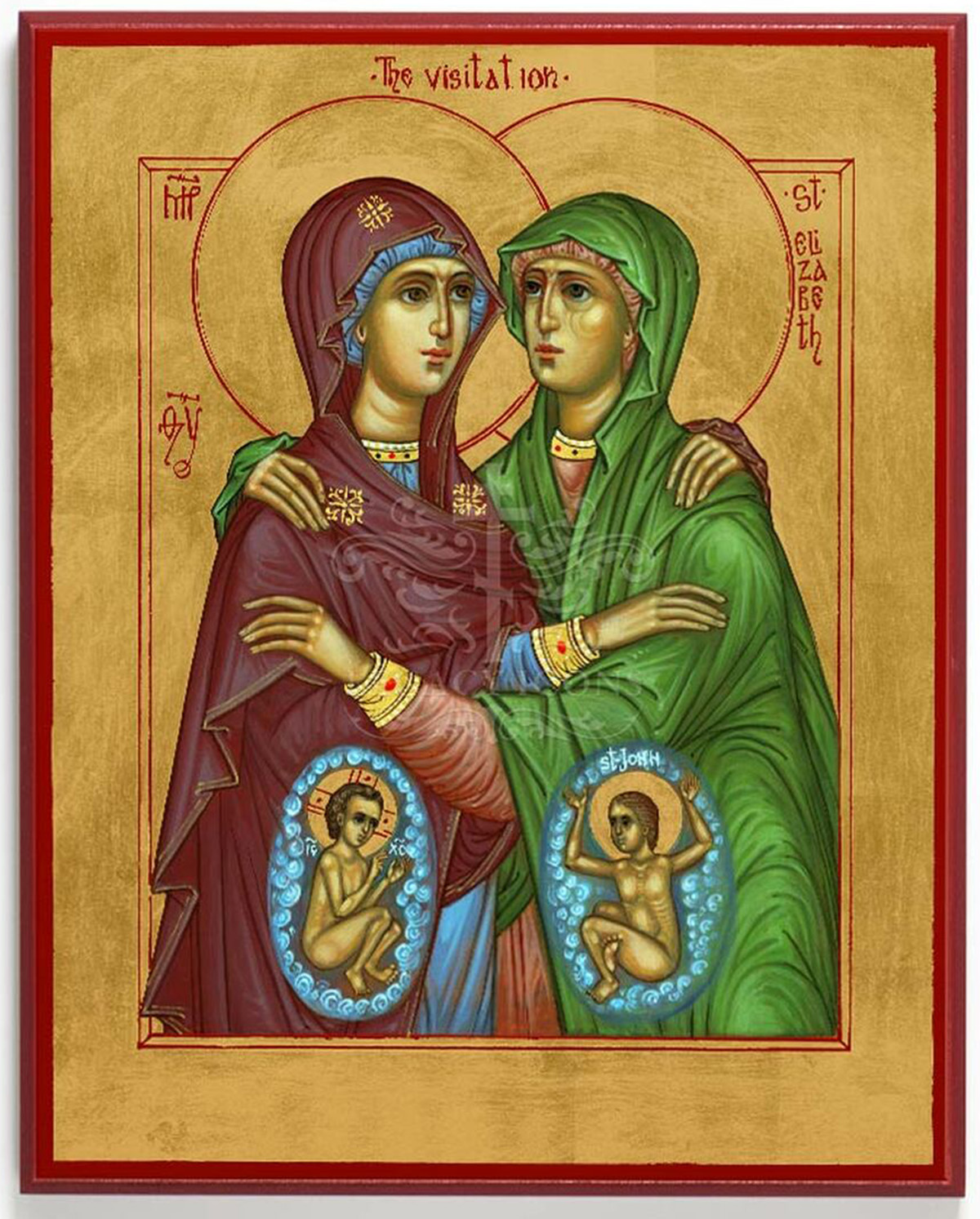
    Icon of the Visitation | Image from legacyicons.com. There are plenty of beautiful paintings of the Visitation, but I wanted to choose one here to emphasize that this was as much a meeting of Jesus and John as Mary and Elizabeth. And while it is more common to see John depicted in a pose of humility in sacred icons, I like this one particularly because it shows John “leaping for joy.”

    There are many present at this meeting – there is Elizabeth meeting Mary, but also John meeting Jesus, in fact the prophets (remember that Jesus will say, “And if you are willing to accept it, John himself is Elijah who was to come,” (Mt 11:14)) meeting the Messiah, and finally the Spirit filling humanity. Let’s remember the central action of this scene. After Mary enters the house and greets Elizabeth,

    When Elizabeth heard Mary’s greeting,
    the infant leaped in her womb, 
    and Elizabeth, filled with the Holy Spirit, 
    cried out in a loud voice and said, 
    “Blessed are you among women, 
    and blessed is the fruit of your womb.”

    Several things happen before Elizabeth speaks: first, the infant John reacts to the Messiah entering his presence. Remember, this is John’s entire reason for being – the Father has given him the solemn job of preparing the world for the Messiah and recognizing Him when He comes. John is more than a normal baby; he is chosen and exalted by God and because his soul is so much greater and full even at this stage of his life, he is able to model for us the true meaning of joy by leaping in the presence of the Lord (see last week’s reflection for more thoughts on this joy). John’s great soul seems to envelop his mother at this point because she herself prophesies! She is “filled with the Holy Spirit” and “cries out in a loud voice” – both things we read of prophets in general and John in particular during his ministry. The Holy Spirit gives her the wisdom and courage to proclaim the truth present in front of her: “Blessed are you among women, and blessed is the fruit of your womb.”

    There is a reason the Hail Mary joins these words with the angel Gabriel’s words during the Annunciation (“Hail Mary, full of grace, the Lord is with you”): this moment is John’s first pronouncement to the world that the Savior is present in his pure vessel, the virgin womb of Mary. God makes his Word heard, first through an angel and then through the Holy Spirit speaking through John and Elizabeth. Both times, the proclamation is made to Mary (and in the retelling of the gospel, to the world). Mary is, in fact, the archetype of the Church herself. The Church, who bears and protects and is transformed by Christ, is being announced as blessed and full of grace (literally and figuratively). The original Greek is worth noting, since Gabriel calls her Kecharitōmenē (One Whom Grace Inhabits) and Elizabeth calls her Eulogēmenē. I unpack Gabriel’s words in a prior reflection, but let’s understand what the Holy Spirit is saying through Elizabeth here. The root word is eulogéō, which is a combination of , meaning “well, good” and lógos, which we should all recognize as “word, reason,” or in this context “speaking,” which is how we arrive at “bless” for eulogéō. Greek scholars also note that this word can properly mean “confer what is beneficial” when we read of how God blesses His people and they bless him in return. The point is that there is an action combined with the word – the blessing is coming from someone, through being spoken, and is thereby conveyed on someone else. Who is speaking? The Holy Spirit! That means that God Himself is conveying blessings upon Mary and His Son in this scene. This scene is thus tied to not just the Annunciation but Jesus’s Baptism when the Father calls down from heaven, saying, “This is my Son, the Beloved, with whom I am well pleased” (Mt 3:17), as well as the Transfiguration when the Father proclaims, “This is my Son, whom I have chosen, listen to Him” (Lk 9:35). All of these scenes are the revelation of Christ to humanity, accomplished by the Father and the Holy Spirit.

    Returning to today’s gospel passage, let’s look at the curious self-awareness that Elizabeth shows after God proclaims the blessedness of Mary and the presence of His Son:

    And how does this happen to me, 
    that the mother of my Lord should come to me?
    For at the moment the sound of your greeting reached my ears, 
    the infant in my womb leaped for joy.

    How fascinating that her own voice is intermingled with that of the Spirit and John’s expansive soul. She is fully aware of the fact that Mary bears the Christ in her womb, and she marvels that she is lucky enough to be in the presence of them both. But she also calls attention to her own body, to the feeling of John leaping for joy. This, I believe is a purposeful and profound passage for us. We are invited to consider what it is like to be pregnant with another being growing inside us. I have no personal insights here, but I have two children and my mother had 10 pregnancies. From what I’ve observed and read, the feeling is at the same time alien and could not be more integral and personal. There is not just something growing inside you, but someone. I’ve come across this quote from author Anne Christian Buchanan and it seems insightful: “To be pregnant is to be vitally alive, thoroughly woman, and distressingly inhabited. Soul and spirit are stretched – along with body – making pregnancy a time of transition, growth, and profound beginnings.” There is something of this being “distressingly inhabited” and having one’s soul stretched going on in our gospel scene. Elizabeth is profoundly aware of the movement in her womb – something that is her but not her. She is doubly inhabited here because she is “filled with the Holy Spirit.” What are we being told about God’s will for us here?
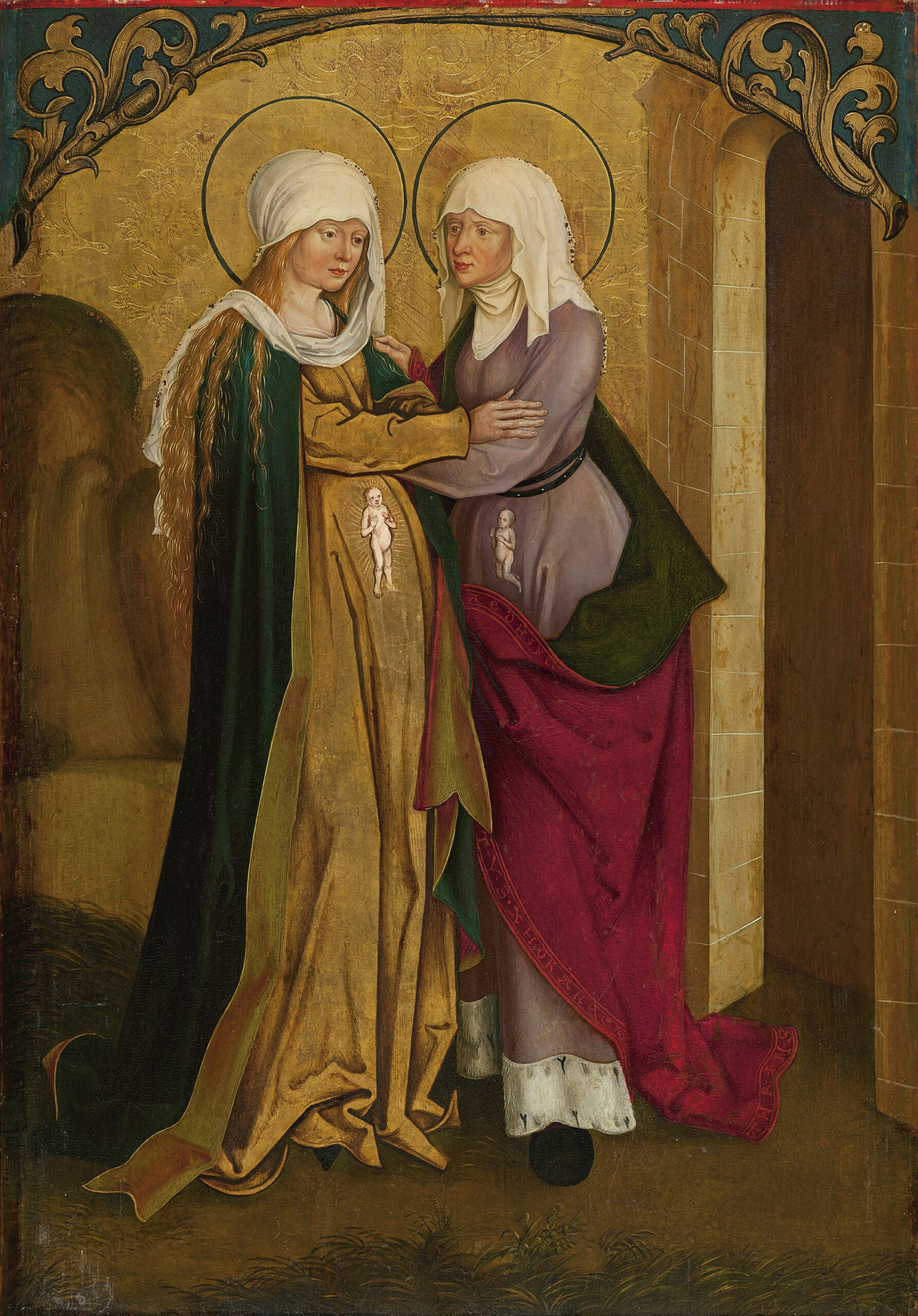
    The Visitation, Jakob and/or Hans Strüb (1505) | Image courtesy the Museo Nacional Thyssen-Bornemisza, Madrid. I like the slightly distant looks in Mary and Elizabeth’s eyes here, as if they are witnessing the expansion of their souls, the meeting of the prophet and the Savior, and the Holy Spirit beside and within them.

    Let’s take a look at Elizabeth’s final words: “Blessed are you who believed that what was spoken to you by the Lord would be fulfilled.” The final piece of the revelation puzzle begins to appear. Our work is trust in the Lord and acceptance of His will. It is Mary’s faith that has made her blessed. Mariologists would quibble here that she was blessed upon her own birth by her virgin mother, in fact blessed by God before time began. But the Holy Spirit is blessing her here for her belief and acceptance of God’s will, for she was granted free will and could have denied the incarnation of Christ offered to her. Thus, blessings come upon Mary (who is us, remember: the Church) when she accepts God’s will; more, even: when she accepts God Himself and allows Him to grow within her.

    We are invited to consider the womb as the reality of our spiritual life here on earth. It is the intersection of our biology and our spirit. Our soul – that invisible and intangible essence within us that allows us to recognize and commune with God – needs to grow, just like the body. Sadly, many of us neglect it. But Christ has shown us the Way. We must empty ourselves of personal ambition and self-centeredness and open ourselves up to the Spirit, to God’s will.

    Elizabeth and Mary are at the heart of God’s revelation of Himself to us because this is precisely how He works through us to achieve our salvation. Just as Mary is the living vessel for God, the Ark of the New Covenant, we are all to become vessels for the Spirit. Indeed, in today’s second reading during the Office of the Readings (part of the Divine Office), St. Irenaeus tells us, “Man is the vessel which receives God’s action and all his wisdom and power” (from Against Heresies). What’s more, we all undergo that mysterious, life-giving process of gestating something new and wondrous within us. Irenaeus continues: “if man perseveres in God’s love, and in obedience and gratitude to him, he will receive greater glory from him. It will be a glory which will grow ever brighter until he takes on the likeness of the one who died for him.” This is our deification, our ability to take our first steps in the Kingdom, imperfectly while still on this earth, but entrance to the Kingdom is indeed promised to us if we follow Christ the Way. What a marvelous plan that uses the very biological processes of gestating and becoming (processes He created, of course) in order to bring about the formation of the soul in the likeness of Christ. Note, though, that this plan is only made possible because of Christ. The Jews “persevered in obedience and gratitude” (off and on) but they still waited for a Messiah to save them. Humanity had no actual way to achieve eternal life or enter the Kingdom of God until Christ. Irenaeus elaborates: “He wanted to invite man to take on his likeness … establishing man in a way of life in obedience to the Father that would lead to the vision of God, and endowing man with power to receive the Father. He is the Word of God who dwelt with man and became the Son of Man to open the way for man to receive God, for God to dwell with man, according to the will of the Father.” To paraphrase Pope John Paul II, we must always remember to view the world through a Christological lens. Nothing makes sense without Him. 

    So, located in this everyday, humble scene of two pregnant women, we find the glowing embers not just of the greatest prophet and the Messiah, but the wisdom of our entire religion. We are all “pregnant” with a soul. While it may seem foreign to us, this thing can be a person, just like pregnancy. We can allow God to inhabit our souls. God can fill us with His glory, helping our souls swell with His love and moving us toward perfect unity with Him and eternal life in the Kingdom. We are all invited to participate in a heavenly womb, at once foreign to us and also something that could not be more personal. If pregnancy is “a time of transition, growth, and profound beginnings,” then the heavenly womb wherein we gestate God in our souls is even moreso. Knowingly or unknowingly, we have been doing this since our own moments of creation, and as we turn to the gospels this Advent, we can recommit ourselves to this work of believing in God, accepting His will in a deeper and deeper way until we can also leap with joy simply to be in His presence.
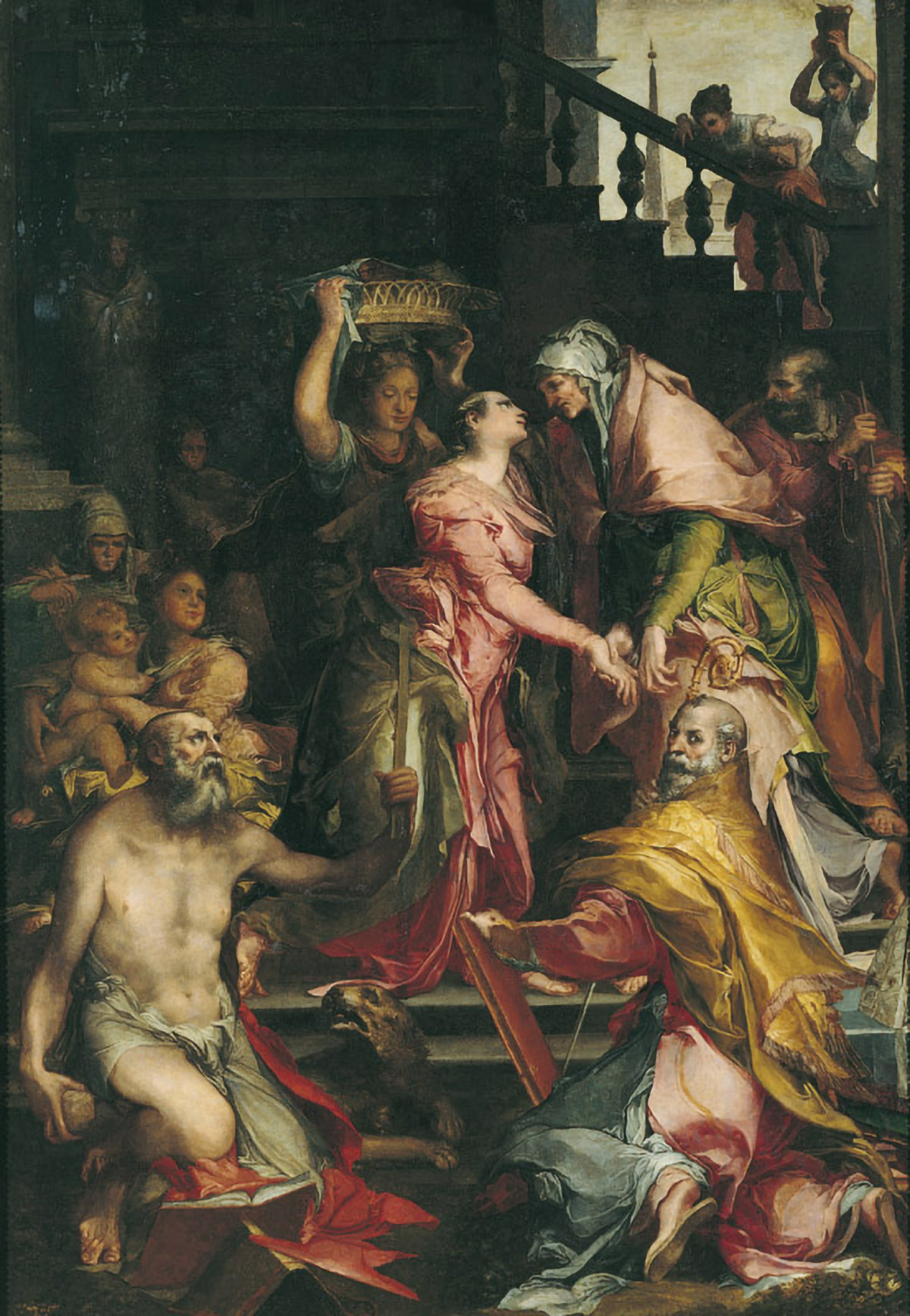
    Visitation of Mary to Saint Elizabeth, Cristoforo Gherardi (c. 1541), currently in the Musée des Augustins, Toulouse | Wikimedia Commons. Note how crowded this scene is as painted by Gherardi. An archetype for the Church, indeed!
  • As Wheat Gathered by the Lord

    Third Sunday of Advent: Zephaniah 3:14-18a, Philippians 4:4-7, Luke 3:10-18.

    Gaudete in Domino semper! These are the first words of today’s second reading and, in fact, the introit (opening chant) for the third Sunday in Advent, marking Gaudete Sunday every year. What does it mean? The Latin translates as “Rejoice in the Lord always,” so we celebrate Rejoice Sunday. Hooray!

    But what is joy, really? St. Thomas Aquinas writes that “joy is caused by love,” either in the presence of something that is loved or having that thing you love achieve it’s proper state of goodness (Summa II-II, q28.1). There is joy in earthly things, but the highest joy is spiritual because the highest form of love is charity (caritas). As St. Thomas writes, “according to 1 John 4:16: ‘He that abideth in charity, abideth in God, and God in him.’ Therefore spiritual joy, which is about God, is caused by charity” (Ibid). There is something circular here, something only the Creator Himself can generate: we rejoice in God always because God is the very charity that creates the joy we have. It boils down to simply allowing ourselves to exist wholly in His generative presence, which is love itself, and which generates the joy we experience.

    Adoration of the Magi (detail), Domenico Ghirlandaio (1488-1489) | Wikimedia Commons.

    As we dig into St. Paul’s exhortation in the second reading, we should note a subtlety to today’s Lectionary translation. We hear today, “Your kindness should be known to all,” but “kindness” is an interesting translation of the original Greek, ἐπιεικὲς (epieikes), which means gentle spirit or gentleness. The Latin Vulgate translation is Modestia vestra nota sit omnibus hominibus, or “let your moderation be known unto all men.” So, we have a key word, epieikes or modestia, which is variously translated as forbearance, gentleness, reasonableness, moderation, and humility. In fact, our Lectionary is the only place I’ve found it translated as kindness. This is a point to consider, especially in the context of what we are called to do and to be. Certainly, our call to love God and then our neighbor as ourselves (simply put, a call to caritas or agape) can manifest itself as kindness. I’m not saying this is a mis-translation. But kindness emphasizes an act that we do – something we call up within us and enact on the world around us. These other words: forbearance, gentleness, moderation, and humility, all emphasize a state of internal calm that radiates through our actions. It is best phrased in perhaps the closest translation, gentle spirit. This emphasizes an internal ordering toward God, a letting go of self rather than an assertion of self. St. Paul is exhorting the Philippians (and all of us) to be known for our gentle spirit. Indeed, in the next sentence he says, “Be anxious about nothing.” This is Christianity on earth: a gentle spirit, anxious about nothing, living in Christ and awaiting His triumphant return; awaiting our own second birth into heaven. This is the essence of Gaudete Sunday, especially.

    This gentle spirit, ordered to and ordered by God, is compatible with St. Thomas’s discussion of joy, too. He writes, “joy is not a virtue distinct from charity, but an act, or effect, of charity” (Summa, II-II, q 28.4). Joy, in other words, is brought about by charity. As stated earlier, when God loves us, joy is the natural effect. Contemplating and living in the Christ event brings this joy back to the surface of our minds. Living in Christ also means allowing God’s love – charity – to flow through us to others. Our gentle spirit can be anxious about nothing as we are rejoicing in God always because we exist within the constant effects of charity.

    This is getting a little abstract and philosophical (as St. Thomas tends to do). Let’s bring it back to the reality of Jesus Christ, man and God, alive on earth. In his excellent apostolic exhortation in 1975, Gaudete in Domino, Pope Paul VI reminds us: “But it is necessary here below to understand properly the secret of the unfathomable joy which dwells in Jesus and which is special to Him. It is especially the Gospel of Saint John that lifts the veil, by giving us the intimate words of the Son of God made man. If Jesus radiates such peace, such assurance, such happiness, such availability, it is by reason of the inexpressible love by which He knows that He is loved by His Father” (III). Pope Paul VI goes on to recount the number of ways John tells us Christ knows the Father and is united with Him: “It is an unceasing and total exchange: ‘All I have is yours and all you have is mine.’ The Father has given the Son the power to judge, the power to dispose of life. It is a mutual indwelling: ‘…I am in the Father and the Father in me….’.” Pope Paul VI’s point is to more clearly flesh out the charity that gives us joy. Perfect charity is the relationship between God the Father and God the Son: “Here there is an uncommunicable relationship of love which is identified with His existence as the Son and which is the secret of the life of the Trinity: the Father is seen here as the one, who gives Himself to the Son, without reserve and without ceasing, in a burst of joyful generosity, and the Son is seen as He who gives Himself in the same way to the Father, in a burst of joyful gratitude, in the Holy Spirit.” And, the best part: “And the disciples and all those who believe in Christ are called to share this joy.” There it is! This is the fullness of what St. Paul means when he says rejoice in the Lord always.

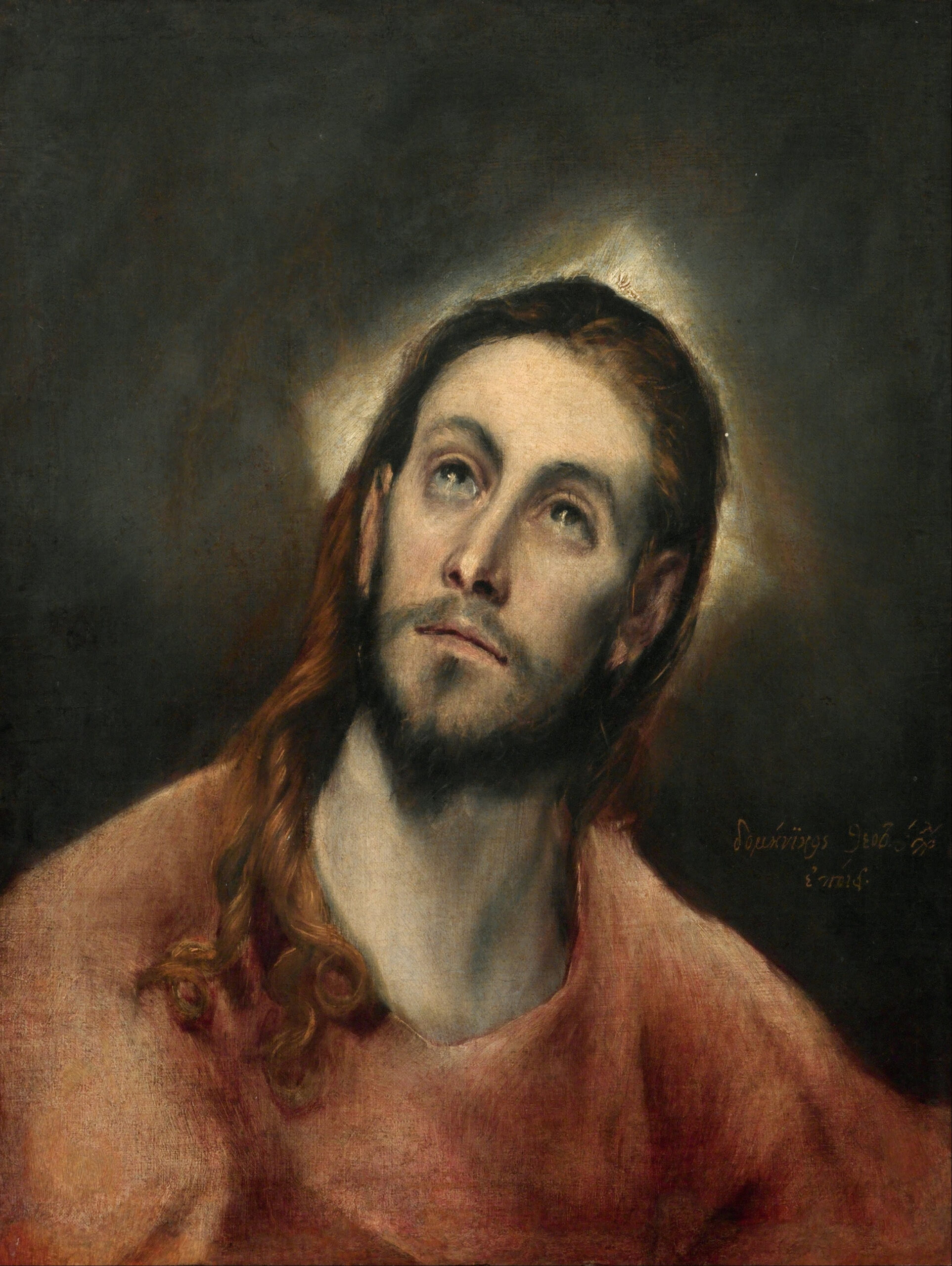
    Christ in Prayer, El Greco (1595-1597) | Wikimedia Commons.

    This (and every) Advent, we remember the anticipation of the world awaiting its Savior. We also anticipate the second coming of Christ. And, finally, we celebrate Christ being here with us already. This third reality is most clearly articulated here on the third Sunday of Advent through St. Paul’s words to the Philippians, who were themselves living in the new reality brought to the Earth through His death and resurrection. Zephaniah, too, in the first reading foresees this age: “the King of Israel, the LORD, is in your midst, you have no further misfortune to fear … Fear not, O Zion, be not discouraged! The LORD, your God, is in your midst, a mighty savior; he will rejoice over you with gladness, and renew you in his love.” What a deep and accurate prophecy! This is the same Word that speaks through St. Paul to the Philippians, a Word that unveils the meaning of the Christ event in the lives of humans. How can we fear misfortunes here on earth when the grave has been conquered and eternal life in Heaven has been offered to us? Humanity’s greatest fear and sadness, that we will cease to exist one day and that life has no meaning beyond the present, has been blown to bits by Christ’s sacrifice. What joy that His love of the Father has provided us a Way to the Kingdom! Rejoice in the Lord always!

    We cannot end this reflection without gazing at the titanic figure of St. John the Baptist, the great prophet, the voice crying out in the wilderness. In the gospel reading, John teaches the crowds to stop being selfish: “share with the person who has none … Stop collecting more than what is prescribed … Do not practice extortion.” Let’s remember that John has felt the effects of charity come to earth; he “leaped for joy” in Elizabeth’s womb when Mary, carrying Jesus, came near. Like a supernova, the child even as an embryo radiated charity upon the world, transforming the hearts of those open to Him. John is so transformed that he spends his life preparing the world for Jesus. What other messianic figure in that day (and there were many, as we know from the historic record) tells his expectant, adulatory followers that he doesn’t want their praise, that “one mightier than I is coming. I am not worthy to loosen the thongs of his sandals”? Only a man who has been transformed by God and holds no stock in worldly things can so thoroughly cast off the mantle that his followers want to place on him. John, filled with the zeal of the Lord, infects his followers with the anticipation of Christ that fills him. What’s more, this anticipation is not just one of looking and waiting but one that paves the way for charity. He tells them to stop being selfish while they wait so that they can prepare themselves for the more radical baptism in the Spirit that Jesus will bring to them. If they can repent, strip away their concern for worldly pleasure and security, they will create fertile ground for the message Christ brings.

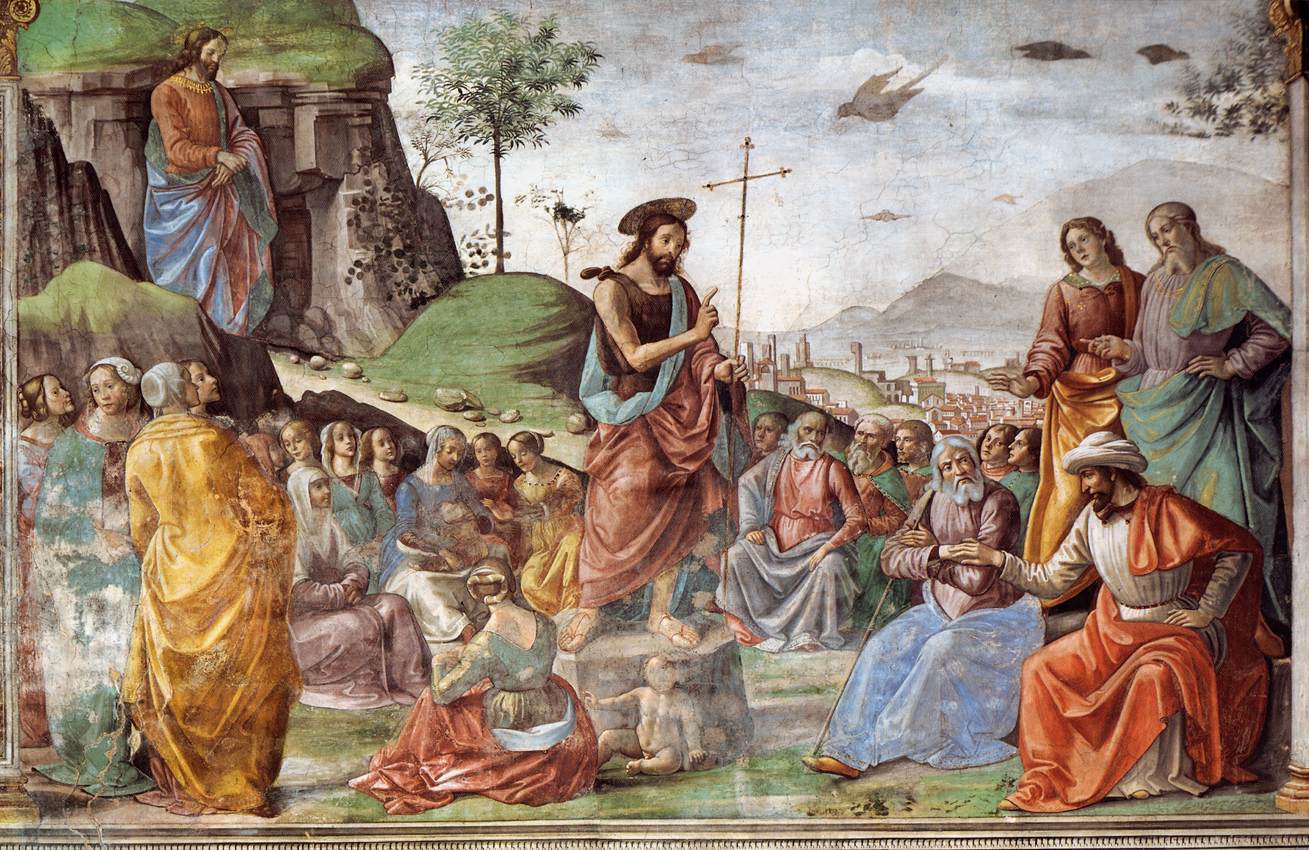
    Preaching of St. John the Baptist, Domenico Ghirlandaio (1486-1490) | Wikimedia Commons.

    I choose the agricultural metaphor purposely, because John, in his brilliance as a prophet, does the same. Let us concentrate on these final words of the gospel reading as John describes Christ: “His winnowing fan is in his hand to clear his threshing floor and to gather the wheat into his barn, but the chaff he will burn with unquenchable fire.” On the most obvious level, the metaphor is one his listeners can understand given the tools and occupation common to their time and place. A winnowing fan is used at the harvest to separate the good grain from the husks, dust, stalks and other “chaff” that do not serve as food. Metaphorically, the wheat are those who please God while the evil ones are the chaff. The harvester is Christ, the one who brings the final judgment. But the metaphor is agricultural particularly because it involves growth and harvest. He could have used a metaphor of a builder choosing strong stones instead of weak ones, or any number of other metaphors. But this one reminds us that life is at stake. First, life is implicated because we can grow into wheat or dead stalks. This is a living process in which we are bound up. Second, life is at stake because the wheat will go on to a greater life (gathered into the barn, or kingdom of Heaven) while the chaff will be burned in unquenchable fire. Finally, the third and most intricate reading here is to consider what the life of mature wheat is. Wheat feeds us, it is nourishment, it is an offering of life. Literally, it forms the grain offering, the minchah, that is prescribed in the Book of Leviticus where the finest parts of the grain, the semolina, are offered to God, either ground, cooked, or burnt. This is our destiny, to feed others, and to be an offering of life to the Father. Our greatest destiny and goal is to be gathered like wheat to the Father where we cease living simply for ourselves (that is, to grow nice, fat grains on the stalk). The mature wheat, having been grown rejoicing in the charity of God, achieves its ultimate purpose: to nourish others and be an offering to God Himself. Astounding depth in a simple metaphor!

    And this is why John must begin the process by having us turn our mindset away from self and towards others. Our ultimate purpose, revealed through Christ, is to grow into something great with a purpose beyond us. If we allow ourselves to rejoice in the Lord always, to be fully caught up in His love, we just might achieve it.

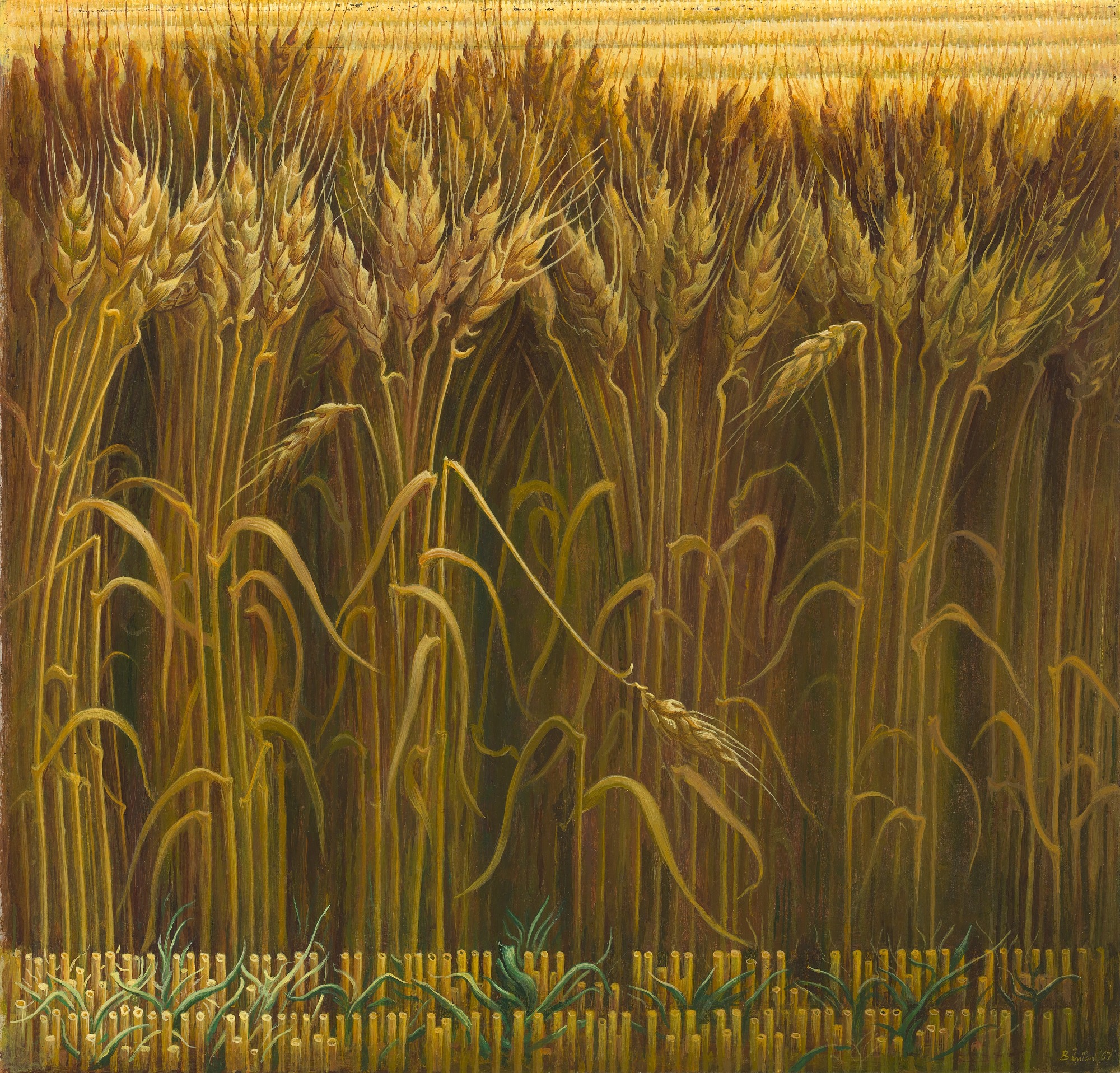
    Wheat, Thomas Hart Benton (1967) | Image courtesy the Smithsonian American Art Museum.
  • The Comprehensive Way

    Second Sunday of Advent: Baruch 5:1-9, Philippians 1:4-6, 8-11, Luke 3:1-6

    It’s a phrase familiar to us: the valleys shall be filled and the hills made low. We hear it from St. Luke and Baruch in today’s readings and, of course, Isaiah, whom Luke quotes. On a purely aesthetic level, my reaction is a bit of dismay; I like mountains and valleys – they’re a magnificent part of God’s creation. But this might be part of the point – they are striking features of this world, but the Savior’s reign is not of this world. It is incomprehensibly greater and more difficult for us to imagine, much less get to. That’s the point in a nutshell: by leveling mountains and valleys, God makes the Kingdom accessible. He gives us a way to come to Him, a way specifically embodied in Jesus Christ.

    As we dig into the syntax and phrasing of Luke’s gospel, we’ll see that there are more layers to this message that speak to the role we play and the role God plays. We begin to see the genius of this image and the crystalline truth to Jesus’s words to St. Thomas as recorded by St. John, “I am the way, and the truth, and the life. No one comes to the Father except through me” (Jn 14:6).

    But first, let’s turn our attention to the prophecy in the book of Baruch, in the past seen as either a part of Jeremiah’s prophetic books, a stand-alone book written by Jeremiah’s scribe, or a text closely fitting near Jeremiah and Lamentations (incidentally, Baruch is not a part of the Protestant Bible or the Hebrew Bible, but was included in the Catholic canon as early as the mid-300s by Church Fathers like Athanasius and Cyril of Jerusalem). The prophet is directly addressing the people of faith, whom he calls “Jerusalem.” This word cannot be separated from the holy place, however, where the Jews placed their great temple, the dwelling place for God. Thus, Jerusalem is both a people and a holy place, which is why the Catholic Church teaches that the new Jerusalem is the Church herself, both a temple to God and the people of God. With this in mind, we hear the prophet say: “Jerusalem, take off your robe of mourning and misery; put on the splendor of glory from God forever: wrapped in the cloak of justice from God, bear on your head the mitre that displays the glory of the eternal name.” Note that we are hearing instructions for how to present ourselves. There is preparation happening (as we live out during this liturgical season) and that preparation takes a specific form: wrapping ourselves in the cloak of God and the ceremonial headdress (mitre) that has God’s name upon it. This means we are to proclaim ourselves as belonging to God, proudly and loudly. Note, too, that we might call this a way of presenting ourselves, and we can start to see another facet of how Christ is the Way.

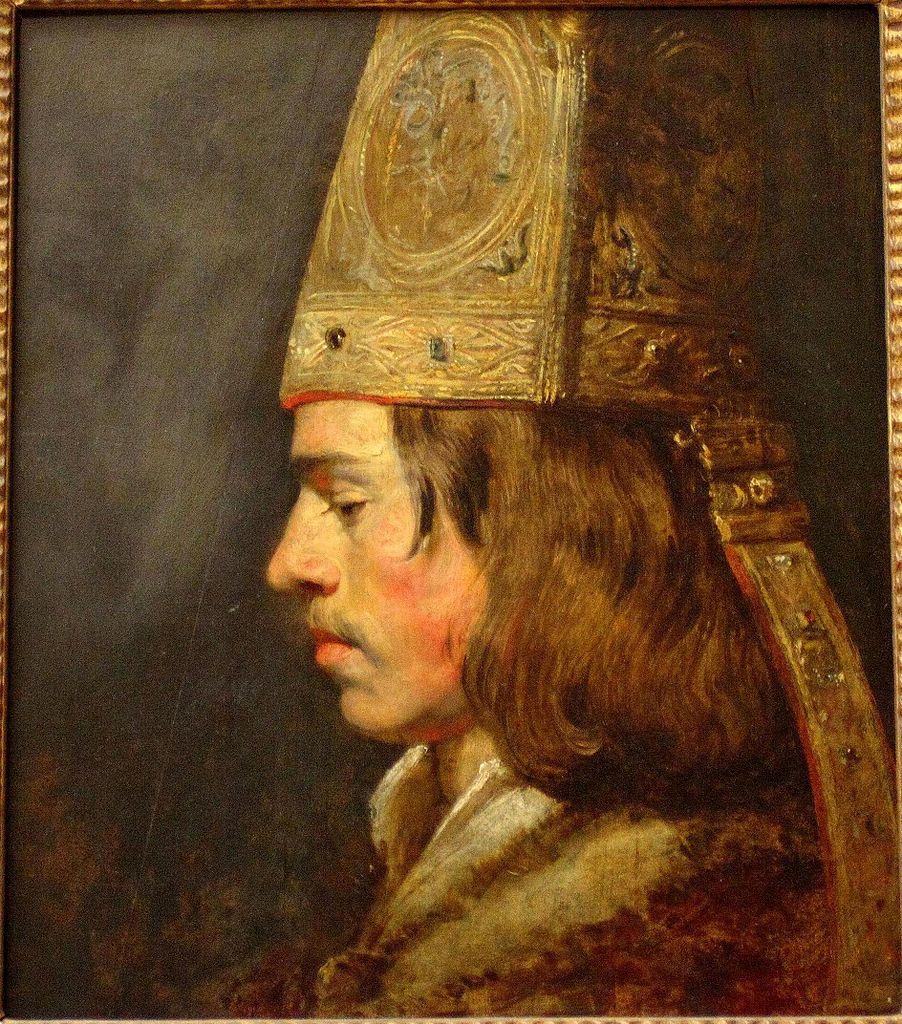
    Young Man with a Mitre, Pieter van Mol (1611-1650) | Wikimedia Commons.

    Next, we hear the prophet speak in the future tense about Jerusalem and we must understand that there is an eschatological meaning here; in other words, the future being proclaimed is the final meeting of humanity and God: “For God will show all the earth your splendor: you will be named by God forever the peace of justice, the glory of God’s worship.” This is a great promise, that God will show all the earth the splendor of His faithful. And it reminds us that while we can proudly present ourselves as belonging to Him, the reason we can do this is that the real action is His. He, in fact, lifts us up. He is the agent of salvation, we are His subjects. And so the prophet commands: “Up, Jerusalem! stand upon the heights; look to the east and see your children gathered from the east and the west at the word of the Holy One, rejoicing that they are remembered by God.” What a great Advent message we hear the Jewish prophet declare hundreds of years before the birth of Christ. We present ourselves as God’s faithful, we look to the east (the direction of the rising sun and the Son of God, the Morning Star) and we see there that God has expanded His salvation to all humanity. And now the great image: “For God has commanded that every lofty mountain be made low, and that the age-old depths and gorges be filled to level ground, that Israel may advance secure in the glory of God.” By now we realize that these physical landforms are to be understood within a different context: not the earthly but the heavenly kingdom. The valleys are the low spots of the spiritual journey, the mountains are the seemingly impassible obstacles the soul faces on its journey to God. God’s work is to level the spiritual ground, to give us a way to Him, clear and straight. This Way, of course, is Jesus Christ.

    St. John makes this clear in the Book of Revelation: “I saw the holy city, the new Jerusalem, coming down out of heaven from God. It was prepared like a bride dressed for her husband. And I heard a loud voice from the throne, saying, ‘Now God’s presence is with people, and he will live with them, and they will be his people. God himself will be with them and will be their God. He will wipe away every tear from their eyes, and there will be no more death, sadness, crying, or pain, because all the old ways are gone’” (Rev 21:2-4). The new Jerusalem, the very one that God spoke about with the prophet Baruch, is shown to St. John. Jerusalem (the city, the people) has prepared itself and dressed itself with the glory of God, like a bride dressed for her husband. And in this ecstatic vision of completeness, God is there, establishing a new reality for humanity in His kingdom, one without death, sadness, crying or pain. The book of Revelation is the vision of the Church having made her way across the straightened path to be united with God.

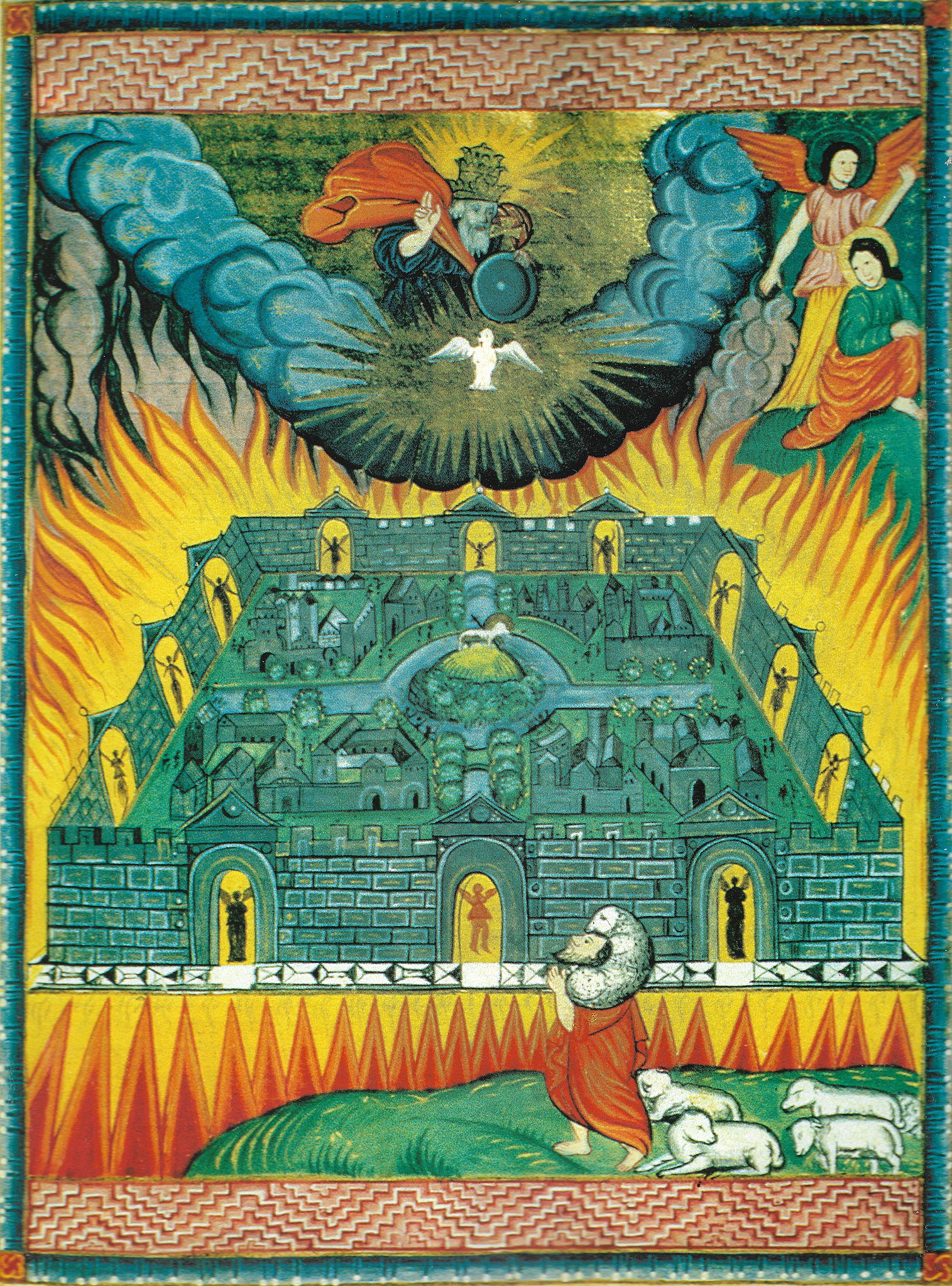
    Armenian icon of the New Jerusalem (1645) | Wikimedia Commons. The description reads: “The Angel shows Saint John the Celestial Jerusalem, a vision which constitutes the triumphal completion of the Apocalypse.”

    In the gospel, St. Luke makes the effort to explain that John the Baptist arrives in the world in a very specific time and place. He mentions Caesar, Pontius Pilate, Herod, Annas and Caiaphas. Why might he do this? Because he wants to emphasize that well-known prophecies are being realized on earth in a real way. This is an important shift in the eyes of the Church from one age to another; from the Time of the Promises to the Last Times. So John the Baptist is recognized immediately as the one whom Isaiah prophesied: “A voice of one crying out in the desert: ‘Prepare the way of the Lord, make straight his paths.’” This preparation, this initial way we prepare ourselves, is a deeper explanation of what Baruch sees. Baruch commands the faithful to stand up proudly and wrap themselves in the cloak of God’s glory. But in practical terms, how can a sinner do this? John the Baptist, in announcing Christ, shares the first part of His Way: “John went throughout the whole region of the Jordan, proclaiming a baptism of repentance for the forgiveness of sins.” This is part of what it means to wear an ornamental headdress with God’s name on it, to proclaim yourself as His – we must repent of our sinfulness, ask for His forgiveness, be baptized, that is consecrated, to Him. The Way has begun. This is how John can exhort us to “make straight his paths,” which is to make straight within ourselves the spiritual righteousness for which God designed us. This act of getting our spiritual house in order is just the beginning of the Way, but frankly something most of us spend the greater part of our lives trying to accomplish. It’s okay, we’re still on the Way.

    The gospel reading ends with the final words of the prophecy: “Every valley shall be filled and every mountain and hill shall be made low. The winding roads shall be made straight, and the rough ways made smooth, and all flesh shall see the salvation of God.”  It’s important to see the shift in agency here. We are the agents of making straight God’s paths within ourselves, which is a matter of repentance and consecration of ourselves to God, but God is the one who does the work of filling valleys and making low mountains. This is important because we can’t think that Christianity is about us building the City of God. This work of redemption and the salvation of the New Jerusalem is entirely God’s will and only He has the power to accomplish it. We can’t be pulled in by overly charismatic communities here on earth who congratulate each other on their great work. This is a dangerous road of making idols out of our own work and clinging to this world. We must be on the Way to God, toward the spiritual kingdom that we neither deserve nor can earn nor can build. Humility is at the heart (which is why John preaches repentance and why Advent is considered a penitential season of preparation). St. Luke tells us later in this chapter that Jesus is identified as this one whom we have been preparing for. He is the salvation of God whom “all flesh shall see.” This is the importance of the incarnation of God in the flesh. He has come in a form we can see and touch, in our form, and He is the one who will straighten and smooth the Way to God.

    The Way. This was perhaps the most difficult thing for me to grasp when I was a child because its so abstract. I could see Jesus as the Truth (He always proclaims the truth since He’s the very Word of God), and I could see the Life because of the Resurrection. But the Way seemed a bit weird – He’s a human, not a dirt path! As I’ve reflected upon this over the years, however, I realize that the Way is both a path and a way of acting or comporting oneself. Plus, I realized that Christ can transcend normal boundaries like He does in the Mass when being present in the Liturgy of the Word and in the signs of the bread and wine. He is perhaps more easily understood as the Way in the fact that He provides a perfect example by which we can model our lives and behavior. But more than that He is a Way in that we walk upon Him, His body that He laid down for us; we feed spiritually upon Him in the Eucharist; we gain adopted sonship and daughtership to God the Father through His incarnation; and we walk through His empty tomb to our own Resurrections that He made possible. There is no humiliation and condescension He will not bear for us. These more mystical and spiritual Ways are so much more profound than the role modeling Way because they bridge this world and the next. They are the heart of our faith and hope. The Way is much more complex and complete than I ever realized.

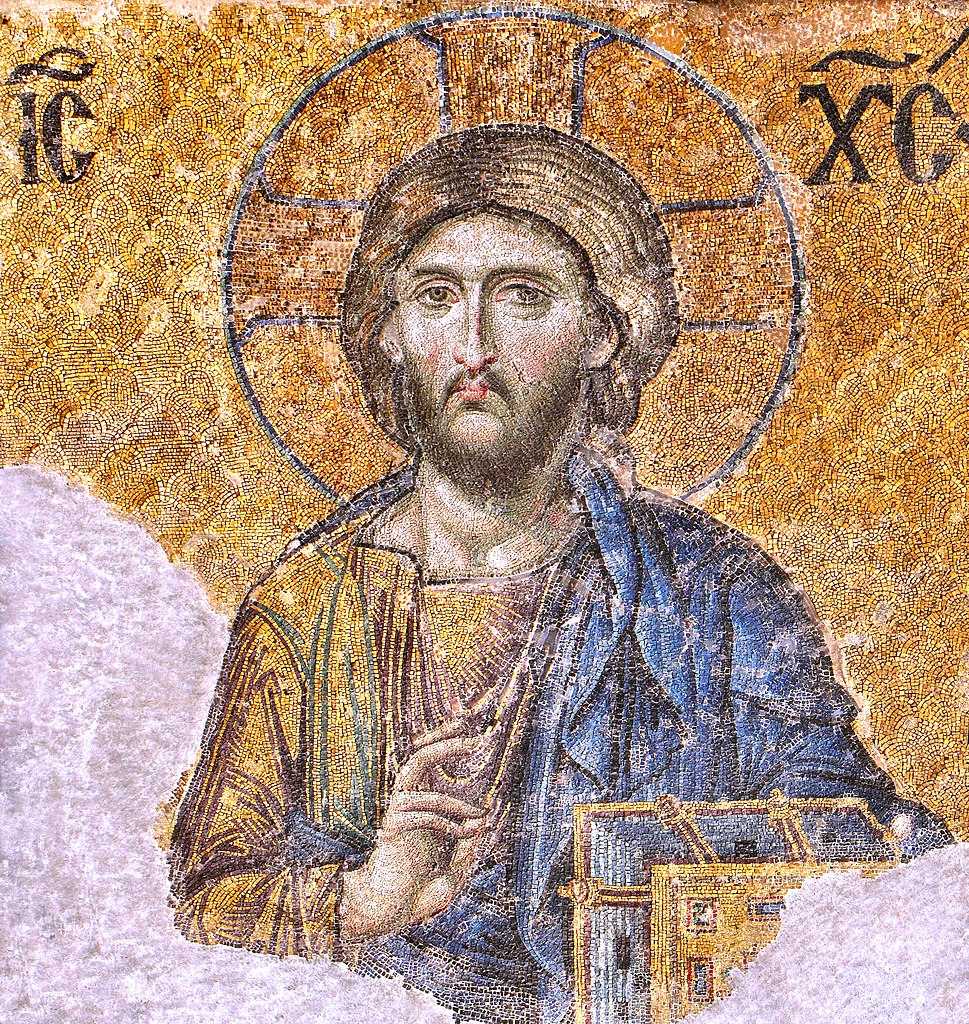
    Mosaic of Christ Pantocrator (“ruler over all”) from the Hagia Sophia in Istanbul, Turkey (1261) | Wikimedia Commons.
  • Feasting and Recognizing God

    Feasting and Recognizing God

    Wednesday in the 1st Week of Advent: Isaiah 25:6-10a, Matthew 15:25-37.

    In today’s readings, we encounter a stunning prophecy of the Christ Event from Isaiah and a passage from the gospel that aligns exactly with this prophecy. I’m going to focus mainly on the Isaiah passage before finishing with a connection to the gospel, so if you haven’t read the Isaiah passage, you might want to check it out now.

    In this short passage from Isaiah, he points out three aspects of the coming Reign of God: He will provide for us rich sustenance, He will remove a “veil that veils all peoples,” and we will recognize and praise Him. Let’s take these in turn.

    First, God’s sustenance might be spiritual, but the image used by Isaiah is very earthly: “A feast of rich food and choice wines, juicy, rich food and pure, choice wines.” I love the repeated sentence here, with an intentional emphasis pointed out by the adjective “juicy” for the rich food and “pure” for the choice wines. What he seems to be pointing out is that God is not just going to provide a basic level of sustenance but instead a feast of the very finest things. Psychologically for Christians, this is a nice counterbalance to the ascetic life that shuns fleshly desires, as insisted upon by St. Paul, the desert Fathers, the saints of the medieval period and so many more of our Doctors and saints in the Church. These holy men and women would certainly agree with Isaiah and his description here, but would likely say that restraining ourselves from desires while on the earth is necessary to forge our spirit in Christ’s image; plus, it will make the great heavenly feast of the kingdom all the more richly appreciated. Yet we must admit that the enjoyment of feasting is something not altogether bad, or else God would not be employing this image to describe His Kingdom. One might argue that a Christian might properly enjoy moments of feasting in this lifetime, especially if a person is living morally under God’s law and focused on God’s providence and grace.

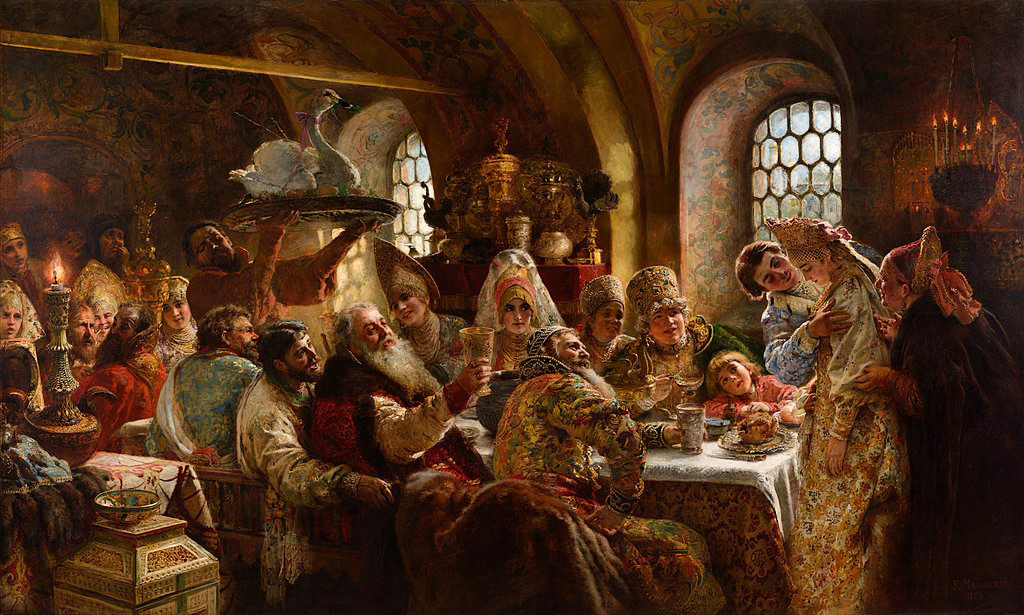
    A Boyar Wedding Feast (1883), Konstantin Makovsky | Wikimedia Commons. There is an interesting recalcitrance in the bride on the right side of the picture, with the groom attempting to coax her into enjoying their wedding feast. Indeed, the attention of all the guests is placed on this interaction. Perhaps she is sad to be married, perhaps she loved that beautiful swan that’s being served as food (ha!), or perhaps she’s terribly shy. In light of the paragraph above, though, perhaps we can read some of this recalcitrance as the pious Christian’s reaction to feast and worldly excess. I, for one, am with the groom on this one, though. If there is a time for feasting and enjoyment, let it be at a wedding feast. There is goodness in this world, and we can celebrate it appropriately.

    The second promise from Isaiah is that God will remove something that ensnares humanity: “he will destroy the veil that veils all peoples, The web that is woven over all nations; he will destroy death forever. The Lord GOD will wipe away the tears from all faces.” In a phrase, Isaiah is talking about the fallenness of the world and our natures. He calls this veil “death,” and indeed it is, but the ancient, scriptural understanding of death is deeper than we usually consider it in our analytical, scientific age. Yes, death has a technical meaning as the loss of life, measured perhaps in the absence of a heartbeat and the lack of measurable brain activity. But death also has a larger metaphysical meaning. When there is nothing ahead of us but death and a hole in the ground, then death reigns in a real psychological and even existential way. As we’ve amply seen with writers from Nietzsche onward, disbelieving in God goes hand-in-hand with the reign of death (one logically flows to the other). The reign of death is more than physical – it is spiritual, the death of the spirit. Any atheist will proclaim that nothing awaits us beyond this world, and the implications of this are diverse, but often include a softening of moral thought (i.e., if there is no larger or eternal repercussion for doing something right vs. something wrong, then why worry about making sure you’re doing things that are right? Even further, in this worldview, moral “right” is completely conceived by people rather than emanating from the source of all goodness, and so it is by definition changing and malleable).

    When moral thought and action are brought low, we Christians are taught that this is the devil at work in the world. Thus, the devil’s influence and the reign of death are tightly linked. This brings us back to our origin as recounted in Genesis: Satan – the serpent – is the cause of our temptation; and he is cursed as is humanity when cast out of the garden into the world where death reigns. Eons of weeping, blood, and sin ensue. We now live apart from God, unable to be in His presence, unable to see the truth and light clearly. St. Paul tells us, “For now we see in a mirror, dimly, but then we will see face to face” (1 Cor 13:12). So, when Isaiah promises that “he will destroy the veil that veils all peoples … he will destroy death forever,” we can understand that this is a full reconciliation with Him, a return to the garden. It is again St. Paul who helps us locate the promise of Isaiah in the Reign of Jesus Christ: “but when one turns to the Lord [Jesus Christ], the veil is removed. Now the Lord is the Spirit, and where the Spirit of the Lord is, there is freedom” (2 Cor 3:16-17). The freedom offered by Christ is a freedom from the reign of death, a removal of a veil that has ensnared us, and a reconciliation with God thanks to Christ’s great sacrifice.

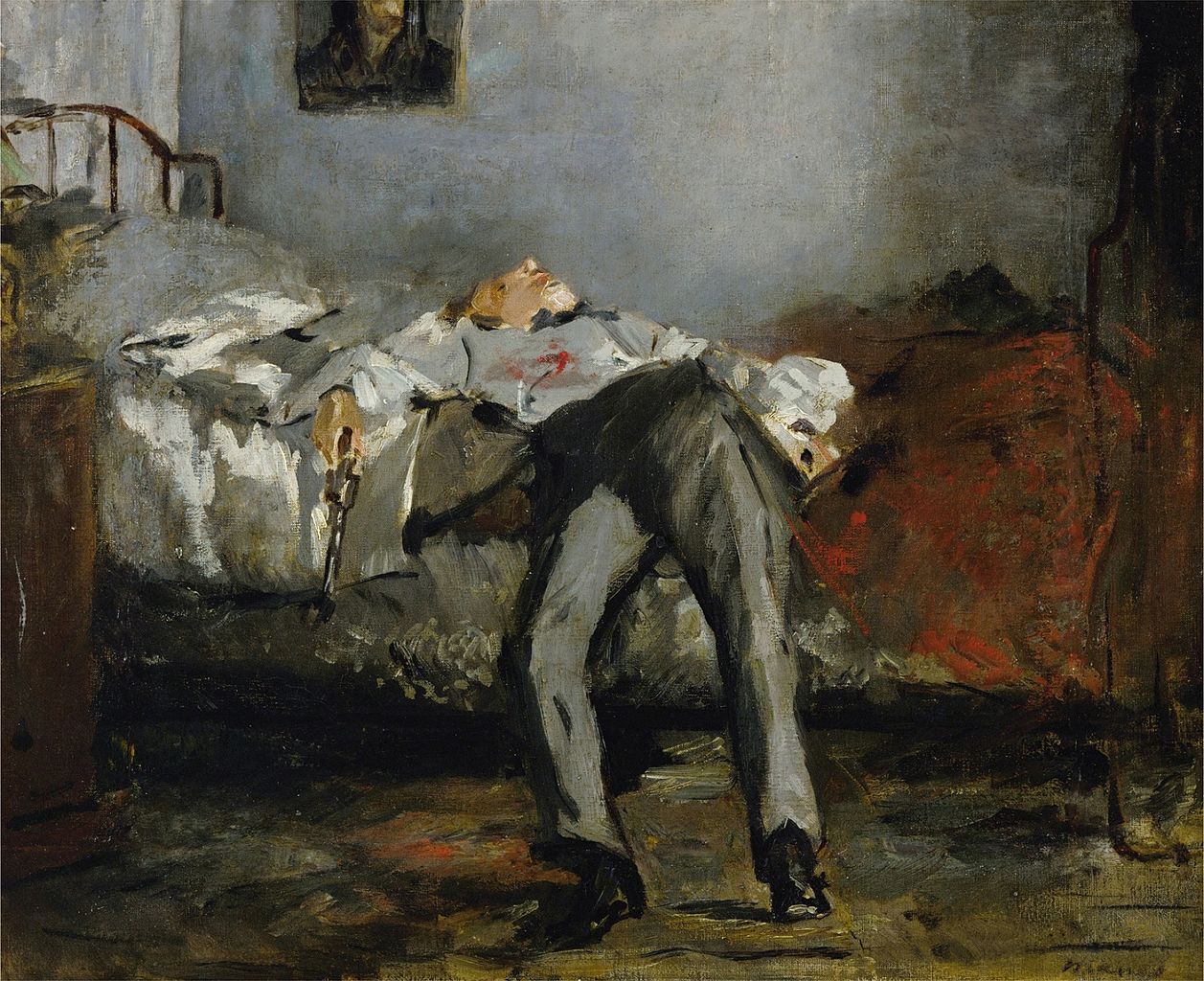
    Le Suicidé (1877), Édouard Manet | Wikimedia Commons. For me, nothing proclaims the ascendancy of the reign of death like suicide, especially in our modern era when atheism and disbelief in God compound the sin unimaginably. The great flaw in the thinking that leads to suicide is that there is no redemption, no God who can wipe away stain or guilt. In short: a complete lack of hope, which must be like living with that veil of death drawn so tightly around oneself.

    Finally, today’s prophecy by Isaiah tells that the world will recognize God as the bringer of the feast and conqueror of death. Humanity shall say, “Behold our God, to whom we looked to save us! This is the LORD for whom we looked; let us rejoice and be glad that he has saved us!” This recognition is important because God is calling us to a relationship but also gives us the free will to either refuse or answer the call. Isaiah’s prophetic vision reveals those who are present at the feast, who have the veil lifted as death is defeated. These people give God his due credit and rejoice in Him; they have answered his call to a relationship with him. Importantly, they recognize that His action is a saving action – one that saves them from the reign of death.

    Now, let’s turn to today’s gospel and see each of these three aspects of Isaiah’s prophecy in this single episode of Jesus feeding the four thousand (plus women and children!). First, the feast: this is the famous miracle of the loaves and fishes. Signaling the abundance, the richness of the feast, is the fact that after all were satisfied, “They picked up the fragments left over – seven baskets full.” Such unheard-of largess appearing without delivery carts and many villages’ worth of bakers and fishermen has only one author: God Himself. More: these people knew the writings of Isaiah, “On this mountain the LORD of hosts will provide for all peoples…” Here, with them and for them, the Reign of God was beginning – God in the form of the Messiah was here.

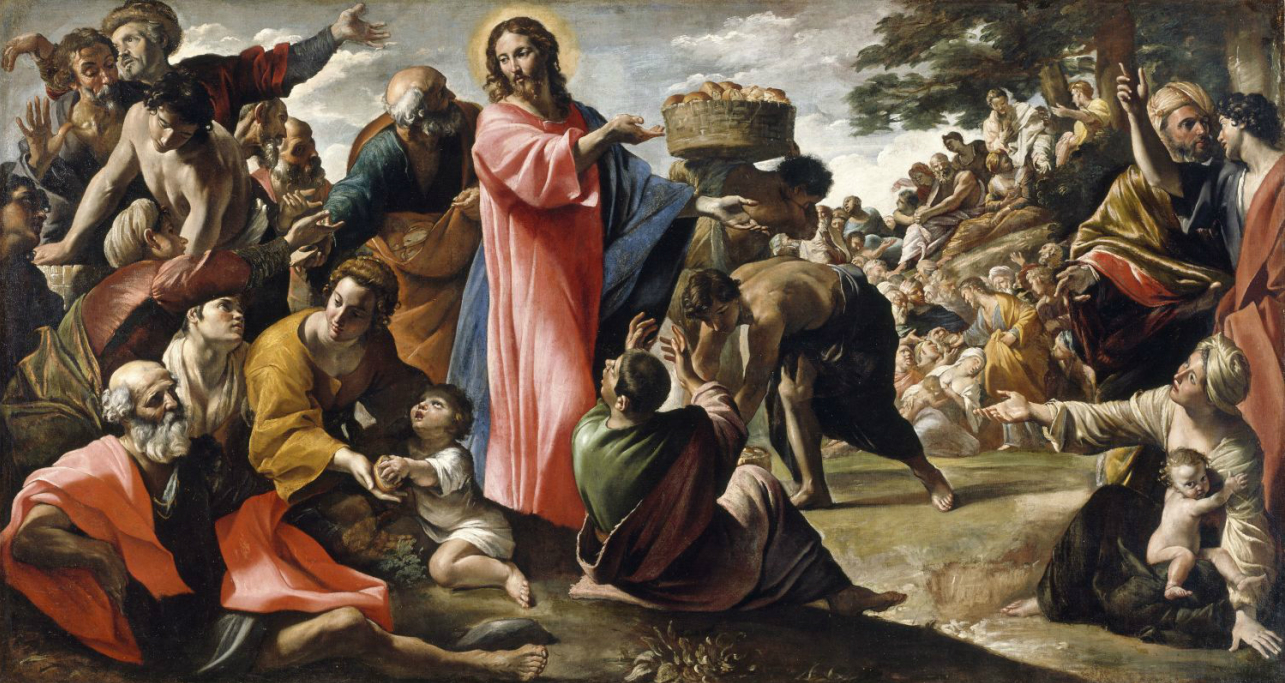
    Miracle of the Bread and Fish (1620-1623), Giovanni Lanfranco | Wikimedia Commons. I appreciate Lanfranco’s Baroque period portrayal of the serene, haloed Christ in the posture of giving in the midst of the writhing masses. Yes, the elaborate body positions were likely done to show off a certain painterly prowess for anatomy and beauty of the human form, but the effect is one that recognizes the fallenness/messiness of the world and portrays with true eyes the Messianic, generous substance of Christ.

    Second is the removal of the veil of death. Remember that the crowd had gathered because they had heard Jesus was a great teacher and healer – they came seeking Him. This is the essential ingredient for those who will be present at the eternal feast: that they answer God’s call. “Great crowds came to him, having with them the lame, the blind, the deformed, the mute, and many others. They placed them at his feet, and he cured them.” These people are in the grip of death in one form or another, not just physical death but spiritual death. Jesus often shows us that healing physical blindness in fact heals a deeper, underlying spiritual blindness. As mentioned earlier, death reigns not just physically, but spiritually. The Christ Event in history is the beginning of the Reign of Christ – death’s reign is clearly defeated in these miracles and the veil of sin, Satan, and death is lifted from these people. 

    Third is the recognition of God as the Savior. This, too, is pointed out by St. Matthew: “The crowds were amazed when they saw the mute speaking, the deformed made whole, the lame walking, and the blind able to see, and they glorified the God of Israel.” But giving thanks to God for being healed is a bit different from looking at the one who healed you and thanking him, personally, as God incarnate. And this is the aspect of Isaiah’s prophecy that is played out throughout the gospels and even to this day. As we investigated yesterday, the fantastic vision of Christ granted to Isaiah 700 years before Jesus was born was truly a glimpse into the time-defying kairos event that is God puncturing human history and coming at the end of time, swirled into one ecstatic vision. If we try to inhabit this vision, we can see that we are living within this prophecy, where the feast is available to us, death’s reign can be lifted from us, and we must strive to recognize God in the person of Christ, just like the people described in the gospels.

    The three touchstones Isaiah shares today, the feast, the removal of the veil of death, and the recognition of God as Savior, are at the heart of the Christ Event and all of our symbols and actions that emanate from it. The feast was celebrated throughout his ministry in every miraculous outpouring of sustenance and richness – wedding at Cana, feeding of the four thousand, and most clearly in the Last Supper – and it is this last example that instituted the ongoing feast of the Holy Eucharist that we continue to celebrate day after day in this contemporary moment within the Reign of Christ. The removal of the veil of death, specifically spiritual death, happens in our sacraments, notably in baptism, and integral to each of the other sacraments as we are drawn deeper and deeper into full communion with God. Over the course of our lifetimes as Catholics, we participate in the removal of this veil of death that ensnares and blinds us – it is our journey of faith. So we can see how the first two touchstones happened in Jesus’s life events and also happen our own. But this last one, our participatory acceptance and recognition of God in the form of Christ our Savior, is the one we must step up and bring to God all on our own. We pray that all are able to do this at some point before their physical bodies die. This great drama of recognizing Christ as God was brought to the forefront by Christ Himself: “Who do you say I am?” (Mat 16:15, Mk 8:29, and Lk 9:20). He asks each of us this same question. The Apostles realized that this was their great duty: to evangelize, that is, bring this good news of the Christ Event to people across the globe. Pope Benedict XVI identifies that this evangelical activity is part of the ongoing lifting of the veil of death: “But the preaching of God’s Kingdom is never just words, never just instruction. It is an event, just as Jesus himself is an event, God’s Word in person … Because the world is ruled by the powers of evil, this preaching is at the same time a struggle with those powers” (Jesus of Nazareth, 173).

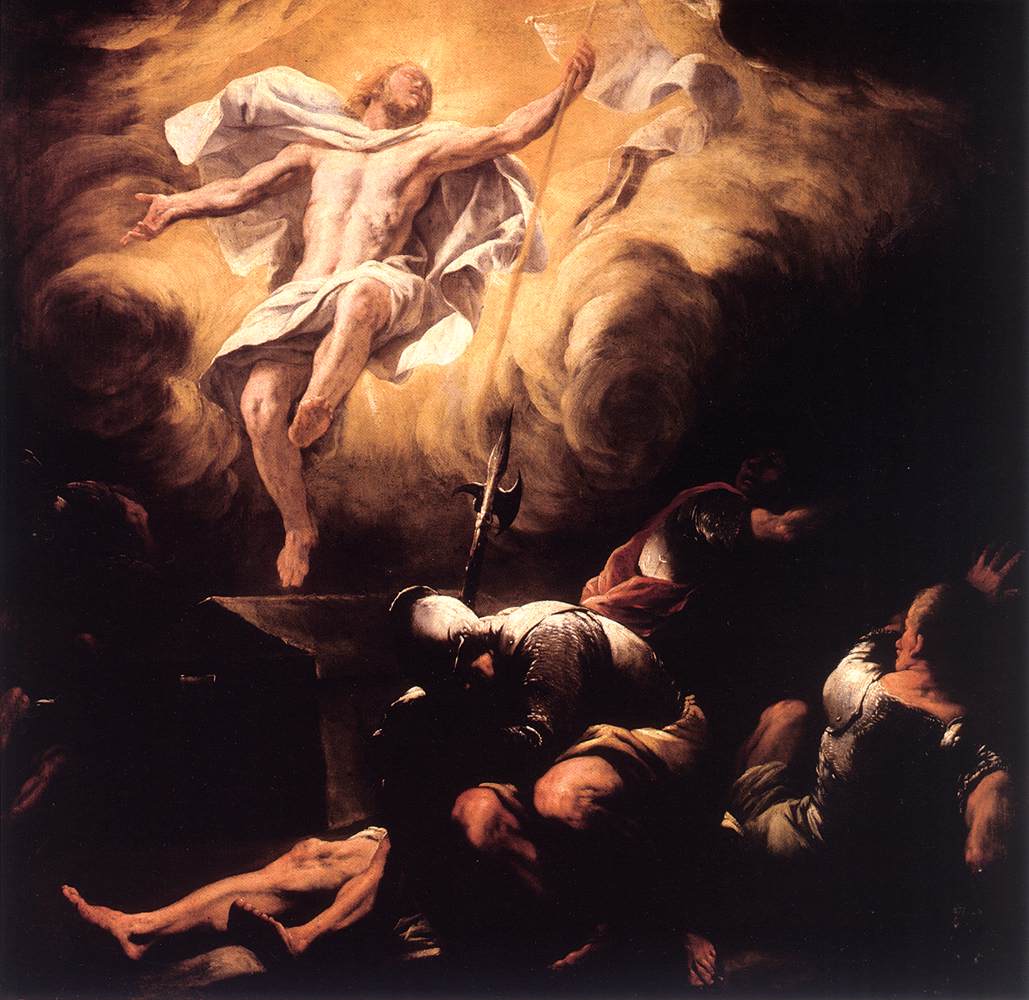
    The Resurrection (after 1655), Luca Giordano | Wikimedia Commons.

    Don’t let anyone tell you that all major religions are the same; we have a very particular core to our faith, and it is Jesus Christ, the man and God incarnate. Pope Benedict XVI, like Pope Saint John Paul II before him, writes that everything in our faith tradition and practice must be understood through a Christocentric lens. Everything about our salvation as well as the signs, symbols and language of our religion is fundamentally about Christ being God. It’s not about being morally good or doing good deeds or praying a certain way (although those things matter, especially when seen as ways of being united with our Savior). How can the popes insist on this (and not just them – think of so many saints and doctors of the Church, St. Augustine to name just one)? Well, it starts perhaps most plainly with Christ Himself, especially as revealed through the gospel of St. John: “for you will die in your sins unless you believe that I am he” (Jn 8:24). Jesus is adamant that He is the path to the Father, to salvation, to the end of the reign of death. Why might faith in Jesus Christ as the Son of God and Savior be so important for eternal salvation? I can think of several reasons, but here are two that jump most quickly to mind. First, denying that Christ is the Son of God (when He is one of three Persons of God) is, in fact, denying God (being atheist, that is). Second, the Christ Event – and only the Christ Event – is the exact action of God in the world that ushers in our salvation. This means that only Christ is the vector God provides for us to unite with Him. 

    And perhaps a third, more human reason that this specific faith in Christ as God is necessary: Jesus reveals aspects of God in a way that no one or nothing else in creation can. Jesus Christ reveals to us ways that we are made in the image of God (we are agents of truth and light as He is) and that humanity is precious to God in a special way. As we dwell on the Word of God, as uttered by the Word of God made incarnate, we learn about Him as well as the great potential within all of us. Jesus Christ becomes our “key” to knowing God and to knowing ourselves.

    Today’s gospel reading, for instance, stands out to me not just because of the amazing parallels with Isaiah’s prophecy and these three touchstones of our faith. It stands out because of what Jesus says: “My heart is moved with pity for the crowd, for they have been with me now for three days and have nothing to eat. I do not want to send them away hungry, for fear they may collapse on the way.” Matthew takes 5 lines to describe Jesus’s great compassion here, and just 2 to describe the miracle itself. This is where we find the reality of Christ – in His love and compassion. After healing hundreds, if not thousands, of people on the mountain by the Sea of Galilee, surely He would be exhausted by the sheer weight of it all. But, as God, He shows us that God never tires of compassion. He teaches us how to find that compassion in ourselves. Even after delivering them from the grip of death through His healing, His saving acts do not end. He knows their hunger and, more importantly, this hunger moves him to compassion. It never fails to amaze that our God is a God who is moved to compassion for us. This is no distant God! So, He feeds them, as only God can. Here is the same God accomplishing the same act He did for His Chosen People after freeing them from slavery in Egypt and feeding them manna in the desert. Only now our God walks among us, speaks plainly for us, and ultimately sunders the divide between our fallen earth and heaven.

    The Miracle of the Five Loaves and Two Fish (contemporary), Grace Carol Bomer | Image from gracecarolbomer.com.

    Thank God for His compassion! Because this Advent is about anticipating the culmination of the Christ Event, and we will certainly all need compassion, understanding, and forgiveness on the Day of Judgment.

  • Streaming Toward God’s Mountain

    Monday of the First Week of Advent, Year C: Isaiah 2:1-5, Matthew 8:5-11.

    Today we peek into the cosmic story of Christ. The word “cosmic” is important to Catholicism and is worth unpacking a bit. At its most basic, the cosmos is the physical universe in which we live. Since we believe that the cosmos was created by God and we have an important role in His creation, the cosmos is always intertwined with God’s will for Christians. Note that this is very different than the direction modern scientists called cosmologists take when looking at the universe. They study the component parts of the universe (planets, stars, gases, forces, etc.) and sometimes arrive at grand theories about what it all means. Stephen Hawking is a good example, with published books entitled A Brief History of Time, The Grand Design, and the un-humble The Theory of Everything. No doubt Mr. Hawking is an incredible scientist, but scientists deal in what can be measured and what can be conjectured through logic. Theirs is a world limited by the measurable world and the confines of the human brain; revelation from God plays no part.

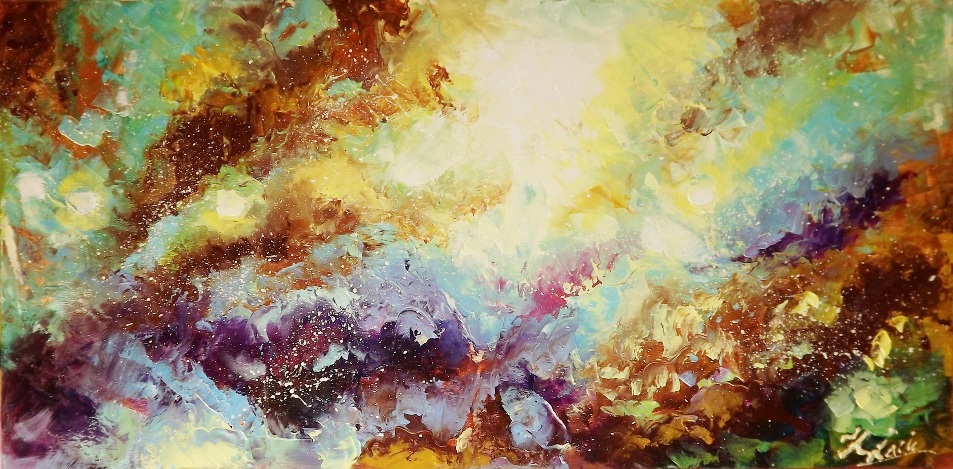
    Cosmos, Kasia1989 (2013) | Image from deviantart.com  .

    As Catholics, we can support, enjoy, and learn from science, but we must always prioritize our faith in God, God’s revelation to humanity through the prophets, and the life and teachings of His Son Jesus Christ over science. Not “maybe there are good points on both sides.” Science and faith do not need to be opposed – there are many writings today showing how complementary they are – but it takes an acceptance of faith and religion to arrive at this perspective. We cannot move forward as Christians if we secretly think that people who believe in the spiritual world or God’s intense plan for humanity are gullible or misguided. I say this because I feel that we underestimate the lengths to which secular science, movies, news, etc. have enculturated us to look askance at religion and its claims. My two children, who have attended Catholic school through high school, get a troubled look of disbelief every time I bring up God’s role in what is happening in our lives. It’s not new to this generation – there have been “cafeteria Catholics” for as long as there have been Catholics, deciding which parts of the Creed or the tenets of faith they choose to believe. But in centuries past, the existence of the spiritual world was not in doubt. Ancient and medieval peoples accepted that there was more to life than just what they could see and measure – they used religion, myth, legend, and more to try to talk about the spiritual side of life. Today, however, we have inherited centuries of accelerating scientism and secularism since the Enlightenment, and the bedrock of belief in the spiritual side of life, much less God, has been eroded to a thin plane, often ignored.

    So, back to the cosmos: it’s more than quarks and black holes. In fact, saying that the cosmos is made of quarks and quantum fields is like saying the experience of a luxury hotel boils down to cotton fibers in the towels and scent combinations in the shower gel. In other words, we’ve focused so much on the details of what the physical elements of the cosmos are made of that we’ve forgotten what the forest looks like while gazing at the microscopic organisms in the soil. The Catholic understanding of the cosmos is a much more expansive perspective, one that acknowledges the handiwork of the Creator in his creation. Fr. John Hardon’s Modern Catholic Dictionary defines “Cosmic Christ” as “The second person of the Trinity, made man, seen as the origin or beginning and end or purpose of creation.” The opening of the Gospel of St. John explores this mystery of the cosmos, that the logos, issued forth by God, in fact part of God, took a human form. We simply cannot understand the cosmos without this mystery: God decided to manifest in measurable, human space in the form of Jesus Christ, forming a connection and bridge between the invisible spiritual kingdom where He reigns outside of time and this palpable existence we have inside of time. Consider our Nicene Creed: “For us men and for our salvation he came down from heaven, and by the Holy Spirit was incarnate of the Virgin Mary, and became man.” We don’t know why God chose to enact His plan of salvation in this way, but we praise Him for it! Thus, I return to my opening sentence: today we peek into the cosmic story of Christ. He is our Way to salvation, a part of a grand story God has laid before us, a story of a physical universe wrapped up in the mystical, spiritual reality of God.

    Today’s first vision from Isaiah paints the picture of God’s salvation for all humanity, not just Jews. The imagery is worldly: “The mountain of the LORD’s house shall be established as the highest mountain and raised above the hills.” The highest mountain is an image we see in many cultures – it represents wisdom (where the gurus live) and the closest we can get to God. What is interesting about God’s revelation to Isaiah is that it’s not just humanity straining to get to heaven here. It’s the “mountain of the Lord’s house,” meaning that God is participating with humans in drawing them to Himself. Our religion has a participatory God. And we are drawn to this loving God: “All nations shall stream toward it; many peoples shall come and say: ‘Come, let us climb  the LORD’s mountain, to the house of the God of Jacob, That he may instruct us in his ways, and we may walk in his paths.’” I love this revelation because it must have surprised the Jews in many ways. Their nation was established by God’s favor in overcoming their enemies on the battlefield. There had been an exclusivity to their nation and to God’s favor that set them apart. But here we have Isaiah being shown that all those non-Jewish nations will come streaming to the Jewish people’s God. What’s more, they will want to climb it, learn His wisdom, and act as He commands. This is a picture of all humanity being converted to God! 

    The Watzmann, Caspar David Friedrich (1825) | Wikimedia Commons

    So the first reading gives us the broad strokes of a cosmic story, where images and metaphors serve to instruct us that God’s plan is grand, it involves all of the cosmos, and it is a type of fulfillment. The gospel reading delves into a specific movement to that mountain by a single Roman centurion – a conversion to God from outside the Jewish fold that fulfills Isaiah’s vision and shows everyone that the cosmic wheels are turning around this man Jesus Christ. My wife and I hold this scene close to our hearts as these are the words we echo right before receiving the Eucharist at Mass: “Lord, I am not worthy to have you enter under my roof; only say the word and my servant will be healed.” The deep humility and faith of these words are striking and provide a fitting mantra for Christians who come into the real presence of their Lord and Savior. But today I am hearing with equal gravity the second part of the centurion’s speech. He professes an unshakable belief in the authority and power of Christ here on earth. “For I too am a man subject to authority,” he says, and he lives in a military world where orders are given and then followed to a T. The difference is that centurions are taught that Caesar is a god and to obey him absolutely, and yet here he replaces the earthly power structure with something greater that has come to earth, someone who has power over life and death. This is a radical conversion, one that has made a new man of the centurion, although that spiritual movement to God’s mountain leaves him free to continue to live his life as a Roman soldier.

    I love also Jesus’s reaction: “When Jesus heard this, he was amazed.” Oh, to be the source of amazement for our Lord! And before responding to the centurion He marks the importance of this moment, foretold by Isaiah, by validating the centurion’s words for his followers: “I say to you, many will come from the east and the west, and will recline with Abraham, Isaac, and Jacob at the banquet in the Kingdom of heaven.” The exclusive Jewish faith has become an inclusive faith through Christ. A universal faith that draws people to it through the person of Jesus Christ.

    This moment holds great significance for us in Advent. Can we see ourselves as part of the great movement of humanity towards God’s mountain? Can we lose our sense of self importance along the way, immolating it as we reflect on the authority and power of our God to keep His Word? Advent is a celebration of people on the move to God, waiting for Him to consummate their love for Him. Can we keep our eyes on this great cosmic story?

  • The Way to Pleasing God

    The First Sunday of Advent, Year C: Jeremiah 33:14-16, 1 Thessalonians 3:12 – 4:2, Luke 21:25-28, 34-36.

    It is right and just that Advent starts with looking forward to Christ’s coming, that is, “coming in a cloud with power and great glory,” as He himself attests in the gospel reading. Yes, in the liturgical calendar, this season occurs before the birth of the Christ child in Bethlehem, but the real waiting and anticipation that we are doing – right here, right now – as Christians alive in this last age is the waiting for the end of the world and the final judgment. We celebrate the birth of Christ at Christmas, but we don’t live in a make-believe reality where He has not yet been born.

    Too often we boil down Christianity to easy sayings (e.g., “God is Love”) and simple moral living. This is a great disservice to the density of the Christian life within which we live. Advent can easily be seen as a time simply waiting for the Christ baby to appear in the manger scene. Not so! Let’s remember that Christ has already begun His reign and has invited us to be a part of the kingdom while alive here on the earth. We can never be as fully united with God as we will in death, but we are given a way to experience the kingdom through the Holy Spirit, not to mention amazing role models (saints), sacraments, and spiritual communion. Not to mention, in terms of the hard facts of salvation history, Christ has ushered in this final era, whether we listen/understand/believe it or not. We are literally on the Way (to the end of humanity and all time), and the start of Advent is a reminder of exactly what it means to be on the Way.

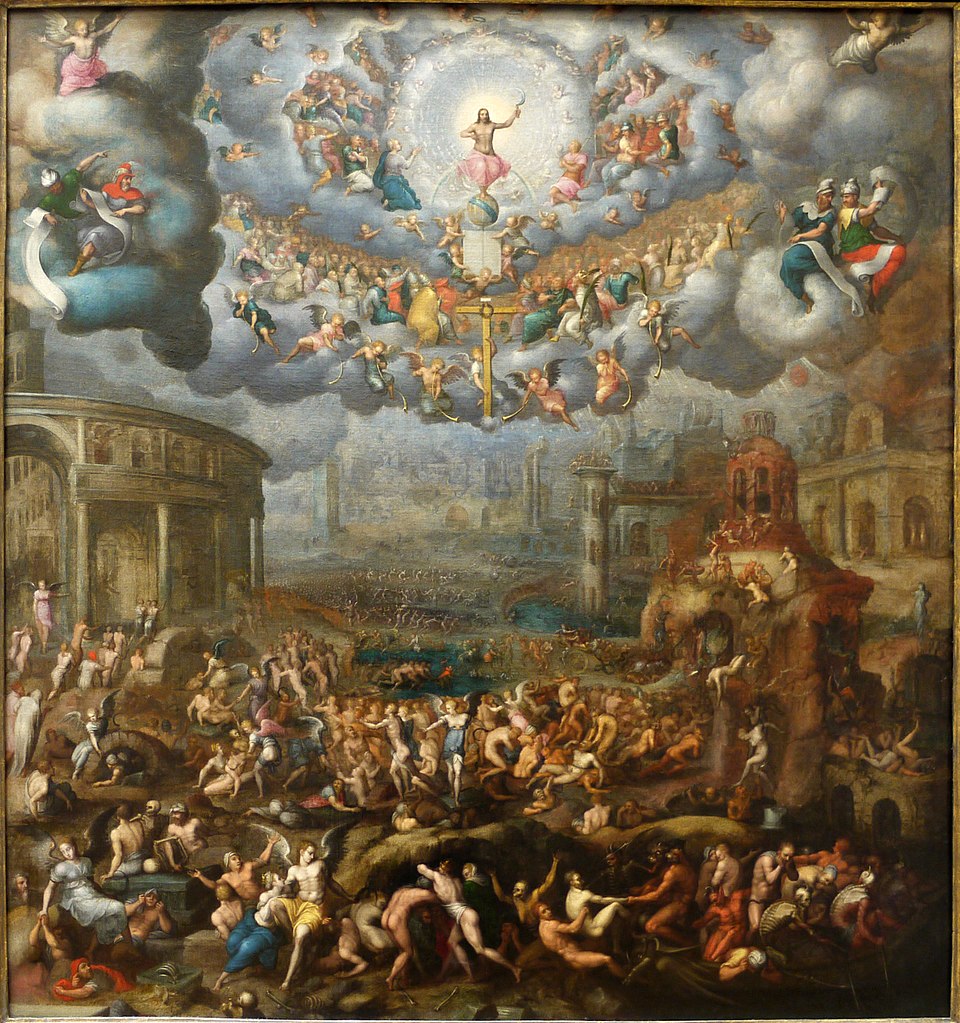
    Judgment Day, Jean Cousin le fils (c. 1585) | image courtesy wikimedia.

    God is, as the saying goes, love; and lucky for us! Jeremiah reminds us of God’s loving covenant with us: “I will fulfill the promise I made … I will raise up for David a just shoot … Judah shall be safe and Jerusalem shall dwell secure.” The Jews never forgot that our relationship with God rests on this undeserved covenant He made with us, and neither should we. Without this covenant, the end of the world would be as bad as every Hollywood apocalypse movie or dystopian sci fi novel would have us believe. But with this covenant, we have hope; more than hope, we have God’s very promise.

    2000 years ago, God sent the “just shoot” from David’s line: Jesus. But His plan is even greater than we could imagine, because Christ ushers in an age where we have the ability to reach new spiritual heights, through Him. Those who listen to Him and abide in Him are able to experience the Kingdom and bring others to the Kingdom – a spectacular raising up of our souls and purpose that we couldn’t imagine possible. Christ promises that it will be hard, that we will be persecuted, and He himself accepts the most ignoble death to show us that in seeming weakness is the great, loving power of God. Thus, today’s second reading gives us St. Paul exhorting the Thessalonians to stick to the Way: “May the Lord make you increase and abound in love for one another and for all.” Why is this so important? Again, Christ has made possible for us the great spiritual purpose of making our way to the Kingdom. Apart from the saints, the vast majority of us will not experience the kingdom while still alive, but we must devote ourselves to it nonetheless. Paul explains why: “to be blameless in holiness before our God and Father at the coming of our Lord Jesus with all his holy ones.” The Way itself helps us get to the Kingdom, whether partially experienced while still alive or simply through our efforts that show us faithful to Him when He comes on the cloud with the heavenly host. 

    This is a great way to reflect on why Catholics have spent so much time on preaching and living the moral life. We may have gone too far from mentioning God in our moral writings and conversations over the centuries because it really makes no sense if you’re not on the Way. If you’re not living the dense Christian life, aware of ourselves here in the final age, then moral decisions are as arbitrary as evil ones. I would go so far as to say that there is no real purpose to choosing good if you are not at the same time knowingly choosing God. Secularists would say that lawful society, psychological health, or longevity would be perfectly good examples of the purpose behind choosing good vs. evil. I would respond that all of these are justifications that deliberately remove God from our existence, creating a seemingly rational, human-made world. But that type of world Christians flatly reject. Our lives are a gift directly from God – how can we remove Him from the equation and think it’s rational? Lawful society, psychological health, and longevity are certainly benefits of moral action, but they should not be the purpose or the goal. The purpose we act morally is that we love God first, and God (who is love) has given to us commandments and precepts to help us achieve a greater, fuller way to be human. The purpose is our loving relationship with God as His subjects, and in the final age in which we live, that purpose has the goal revealed by Christ: walking the Way to the Kingdom that will be finally commenced at some point in the future. 

    Oh, the anticipation, the waiting! Yes, this is the Advent spirit. In the gospel reading, Christ tells us, “People will die of fright in anticipation of what is coming upon the world, for the powers of the heavens will be shaken.” We are in a state of tension, but it’s no holding pattern, with nothing to do and no way to hasten its fulfillment. He has given us His Spirit to help us stay on the path to the Kingdom. And so He can say, “when these signs begin to happen, stand erect and raise your heads because your redemption is at hand.” This is the great Christian message of hope: the end of the world is not annihilation but redemption and reunion with God. Don’t be frightened, be excited! But also, be prepared. Christ somberly exhorts His apostles in this reading to stick to the Way and not to falter: “Be vigilant at all times and pray that you have the strength to escape the tribulations that are imminent and to stand before the Son of Man.” So … excited with an asterisk, that we must be obedient to Him.

    Obedience is such a downer for today’s modern person, right? The modern would say that obedience equals stifling freedom of speech, obedience equals the white, rich status quo, and obedience prevents positive change. Where to start? It must always start with God, who is not a stifling influence but a creator, not a preventer but an expander of potential. When we take ourselves and our precious points of view so seriously that we forget that all we have is a gift we didn’t earn, then we are truly lost. In the end, obedience takes a heart docile to God, and once that happens, joy, wonder, and hope follow. Isn’t that what we want to experience in Advent?

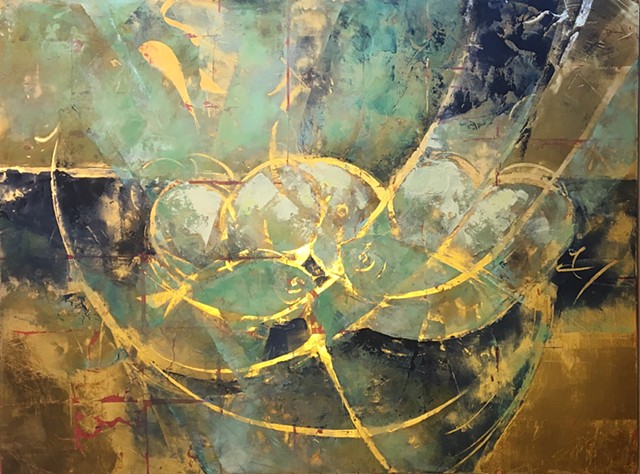
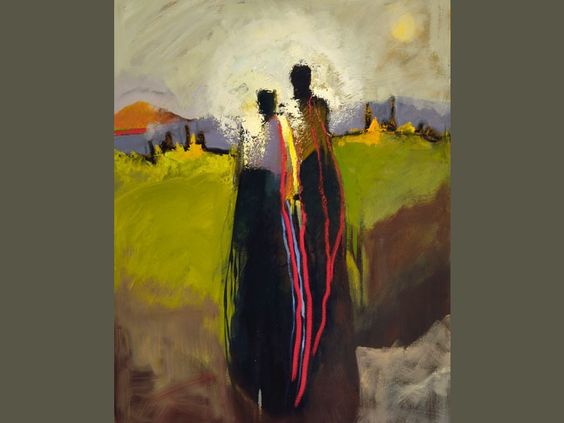
    Unknown title, Kathy Jones (contemporary) | Image from kathyjonesstudio.com

    Perhaps the most helpful short line in today’s readings comes from St. Paul: “conduct yourselves to please God.” This wraps up everything we’ve been discussing: acknowledging God’s supreme sovereignty, the true purpose behind moral actions, the way to live in this final age that has already been given Christ but yet awaits Him still. It is right and just that the operative word here is to “please” God. God wants to please us, His beloved creation; and as we grow in love for Him, we realize that wanting to please Him is our greatest calling.