Tag: Acts

  • What the Ascension Tells Us of Glorification and Divinization

    The Ascension of the Lord: Acts 1:1-11, Ephesians 1:17-23, Matthew 28:16-20.

    What an incredible feast we celebrate today. It marks the end of the physical presence of Christ in the world (in this age, at least) as well as the divine mystery of the Trinity that God will unfold in a new and expanded way for us at Pentecost. For Christ tells us that He is always with us, despite the fact that His body ascends to heaven. What do we make of this paradox? How can He be “with us” while clearly He ascends out of this world? Is this just a cute phrase meaning “the memory of me will be with you”? No, definitively not, as Pentecost and the sacraments attest. Christ’s ascension is a necessary element of salvation history and the glorification of God; the ascension enables a new reality for the Church to operate “in Spirit and Truth.”

    As we contemplate today’s readings, we’ll see that this new reality is a place where God has been yearning to meet us since Adam and Eve left the garden — perhaps a spiritual plane as much as a place, it can be examined through the concept of glorification.
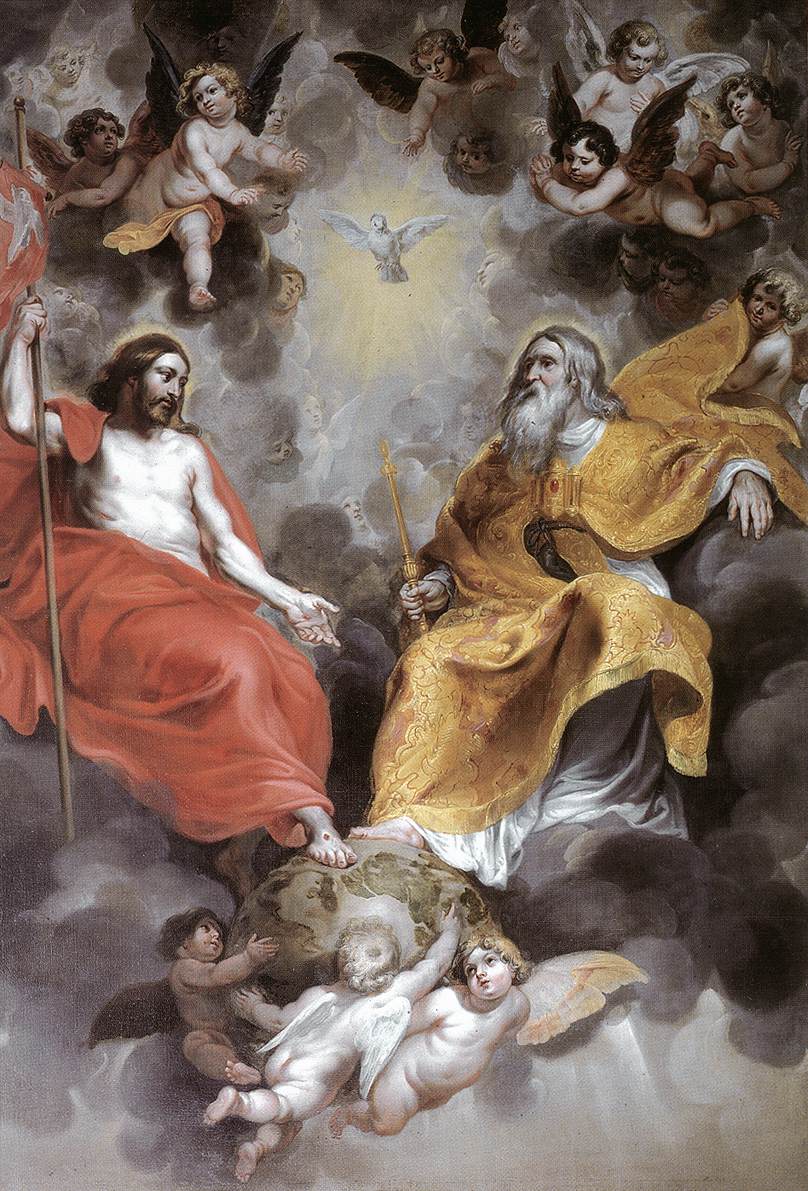
    Holy Trinity (1620), Hendrick van Balen | Wikimedia Commons. Today’s feast celebrates the day that Christ ascends to heaven to be seated at the right hand of the Father, and our reflections reveal that the Holy Trinity is the great mystery central to our faith.

    But let’s start with the Ascension and what we learn from the Acts of the Apostles. What’s odd about the Ascension is that it can almost be lost in the liturgical year, coming just a week before Pentecost, within the Easter Season. This may deceive us into thinking that it’s somehow not as important or at least less important than the Resurrection or Pentecost. Yet as we examine it, we find that it’s not only psychologically impactful for the Apostolic Church but also essential to usher in a new spiritual reality for the Church, a reality that persists until the Final Judgement. Its importance is signaled by the time frame; the author of Acts tells us that “he presented himself alive to them by many proofs after he had suffered, appearing to them during forty days and speaking about the kingdom of God.” Forty days marks spiritual preparation and purification, often before a new mission or calling. Notably, Jesus spends forty days in the desert just after being baptized by John and prior to starting His earthly mission. And here we are told that Jesus spends forty days with His apostles between His Resurrection and His Ascension. Luke and John tell us that He uses this time to explain how the Easter events fulfill scriptural prophecies as well as the meaning of many of His teachings that they were unable to comprehend before His Passion and Death. In other words, Jesus delivers the first full catechism to his Apostolic Church, the amazing Christology that defines the Church to this day.

    So the purification of the Church during these 40 days exists in the physical presence of the risen Lord and His fully revealed teachings. And if the 40 days are also a preparation for a new mission and reality, what are they preparing for? Jesus explains that they’ve been preparing to be baptized in the Holy Spirit: “the promise of the Father about which you have heard me speak; for John baptized with water, but in a few days you will be baptized with the Holy Spirit.” As we know, this comes at Pentecost, and, indeed, the Spirit comes with an intensity and impact that is totally surprising.

    But why must Christ ascend? The answer comes in the question His apostles ask just before He ascends: “Lord, are you at this time going to restore the kingdom to Israel?” With this question, they show that they have not yet seen the mystical connection that Christ serves as a “gate” for humanity (the Way) and they still see him as a Messiah who will accomplish all things physically Himself. Now, none of those things are technically wrong — Christ is the Messiah, and it is through His unique entrance into history that Israel is restored and the world is saved, and He will return physically at the end of time for the Final Judgement. But they’re missing the point that Christ came to establish a new relationship with God for humanity. They’re missing the point that the Church needs to exist as a way to draw people to God precisely through the spiritual presence of Christ within them, not the physical presence of Christ by Himself. Christ is the gate and the Way because He is the nexus where divinity and humanity were joined, sins were sacrificed, and a new relationship with God was made possible (we’ll call this glorification below). But He doesn’t come to simply take over and do everything for us. He comes with an invitation for us to go through Him to the Father; we must use our free will and our actions in this life to unite ourselves with God; we must do some work, too. (As a side note, I think this is a better way to think about salvation through faith and works: our “work” is not community service but the work of living out God’s commandments, the work of bringing God’s will to the world through our own actions.)

    This is why Jesus’s answer to His apostles is: “you will receive power when the Holy Spirit comes upon you, and you will be my witnesses in Jerusalem, throughout Judea and Samaria, and to the ends of the earth.” These are His last words as He exists bodily on the earth, before “a cloud took him from their sight.” Note that in His final words, He is giving them their Apostolic mission. They will receive power, they will be His witnesses to the ends of the earth. This is why He must ascend: so that the apostles no longer look to Him as a physical person to do this work. They must be imbued with the Spirit of God to exist with the mystical reality of the Trinity because God’s plan is that we are no longer called slaves, but friends. God wants theosis, divinization, for all of us. This requires faith, in which we are blessed if we “have not seen and yet have come to believe,” as Christ explains to St. Thomas. Christ provides salvation to us through the Cross and Resurrection, but that salvation takes on the specific characteristic of being a Way to our own divinization. That Way is one where He is not seen, where we must forge a relationship with God and see Him in the world through each other and the rest of creation.
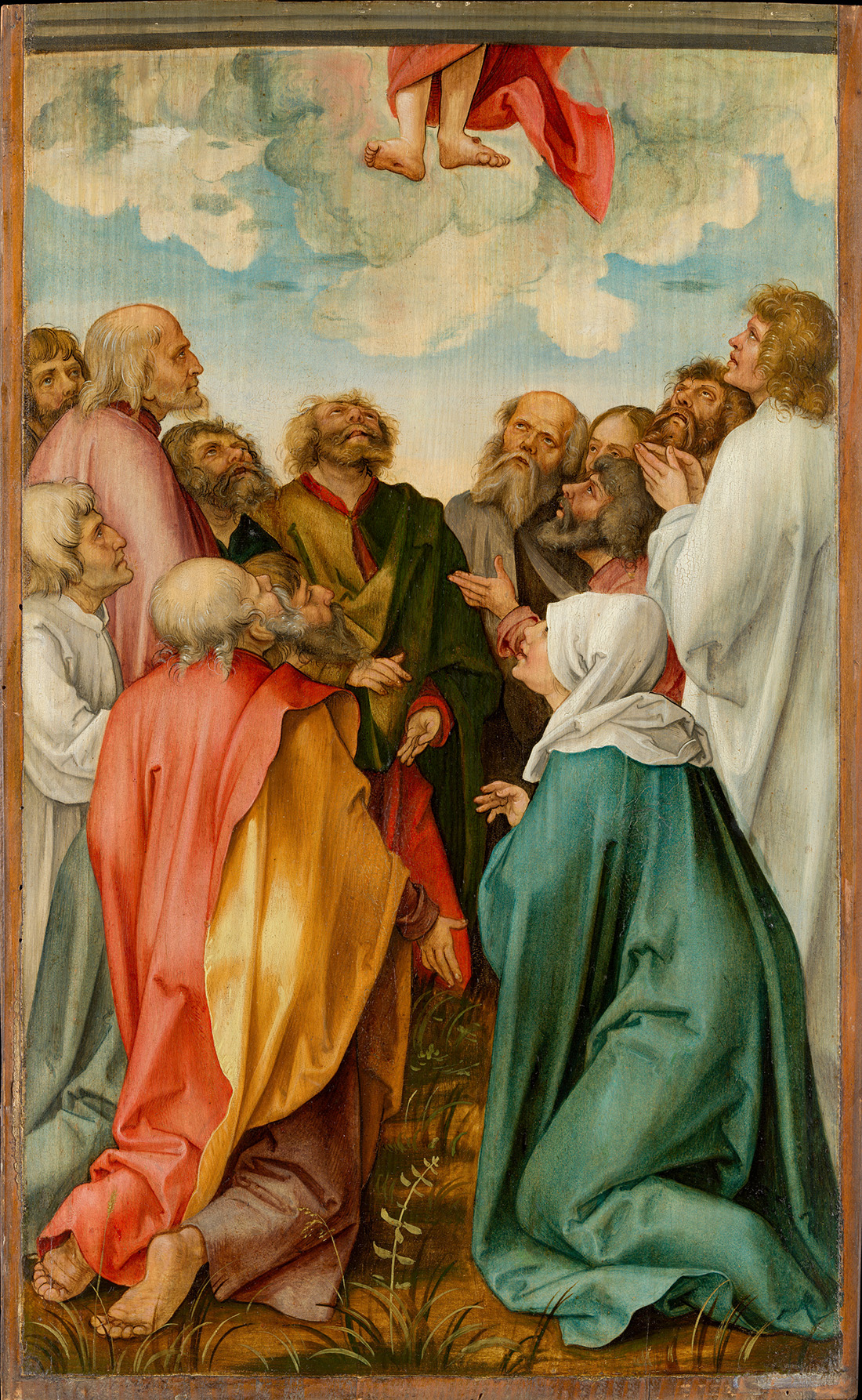
    The Ascension of Christ (1513), Hans Süss von Kulmbach | Creative Commons, courtesy of The Metropolitan Museum of Art. I find the depiction of only Jesus’s feet rising to heaven to be hilarious in a way, given the words of the angels.

    The angels (“two men dressed in white garments”) accentuate this point when they say, “why are you standing there looking at the sky? This Jesus who has been taken up from you into heaven will return in the same way as you have seen him going into heaven.” In other words, the promise of the Final Judgement still stands, and Christ will once again be present on earth in bodily form, but we are not to just look at the sky as we await that moment. We have work to do. Our baptism in the Holy Spirit has given us a share in the divinity of Christ, and our job on earth is to get to know our wonderful, infinitely perfect and mysterious God, bringing Him and His will to this world.

    This lens helps us better hear what St. Paul tells the Ephesians in the second reading:

    I pray that the God of our Lord Jesus Christ, the Father of glory, may give you a spirit of wisdom and revelation as you come to know him, so that, with the eyes of your heart enlightened, you may know what is the hope to which he has called you, what are the riches of his glorious inheritance among the saints, and what is the immeasurable greatness of his power for us who believe, according to the working of his great power.

    Note how St. Paul is praying for the gifts of the Spirit to come to this fledgling part of the Church: wisdom, revelation, enlightenment, and faith. They will need faith and spiritual gifts to truly become the Body of Christ. Paul knows that the purpose of the Church is to share in the great power that the Father gave to Jesus:

    God put this power to work in Christ when he raised him from the dead and seated him at his right hand in the heavenly places, far above all rule and authority and power and dominion, and above every name that is named, not only in this age but also in the age to come. And he has put all things under his feet and has made him the head over all things for the church, which is his body, the fullness of him who fills all in all.

    Paul tells us here that the Church is “the fullness of him who fills all in all.” What an amazing destiny for us! Do we all comprehend that this has been entrusted to us? That our work in the world as Christians is not just being a good person and being nice to others, but to participate in the mystical relationship of love that is the Trinity, to bring God to the world and in the process be deified ourselves as we strive for perfection according to the Way of Christ? WOW! That’s a seriously awesome charge.

    Let’s reflect for a moment on this concept of divinization, deification, or theosis, as the Eastern Churches call it. It’s not something that a paragraph or two in a blog post can do justice to, but let’s dip our toes into this deep water. Divinization is not the belief that we become gods in some sort of pagan pantheism. Divinization instead refers to the spiritual state of being united with God to such an extent that we are able to share in the holiness that characterizes God. The metaphor often used is that of a piece of metal thrust into a fire: it becomes hot, it glows, and it is malleable, taking on aspects the fire imbues upon it, but it is still metal. This is the true goal for all Christians on the earth: not just to “be good” like Christ, but to unite our human nature with the divine nature like Christ.
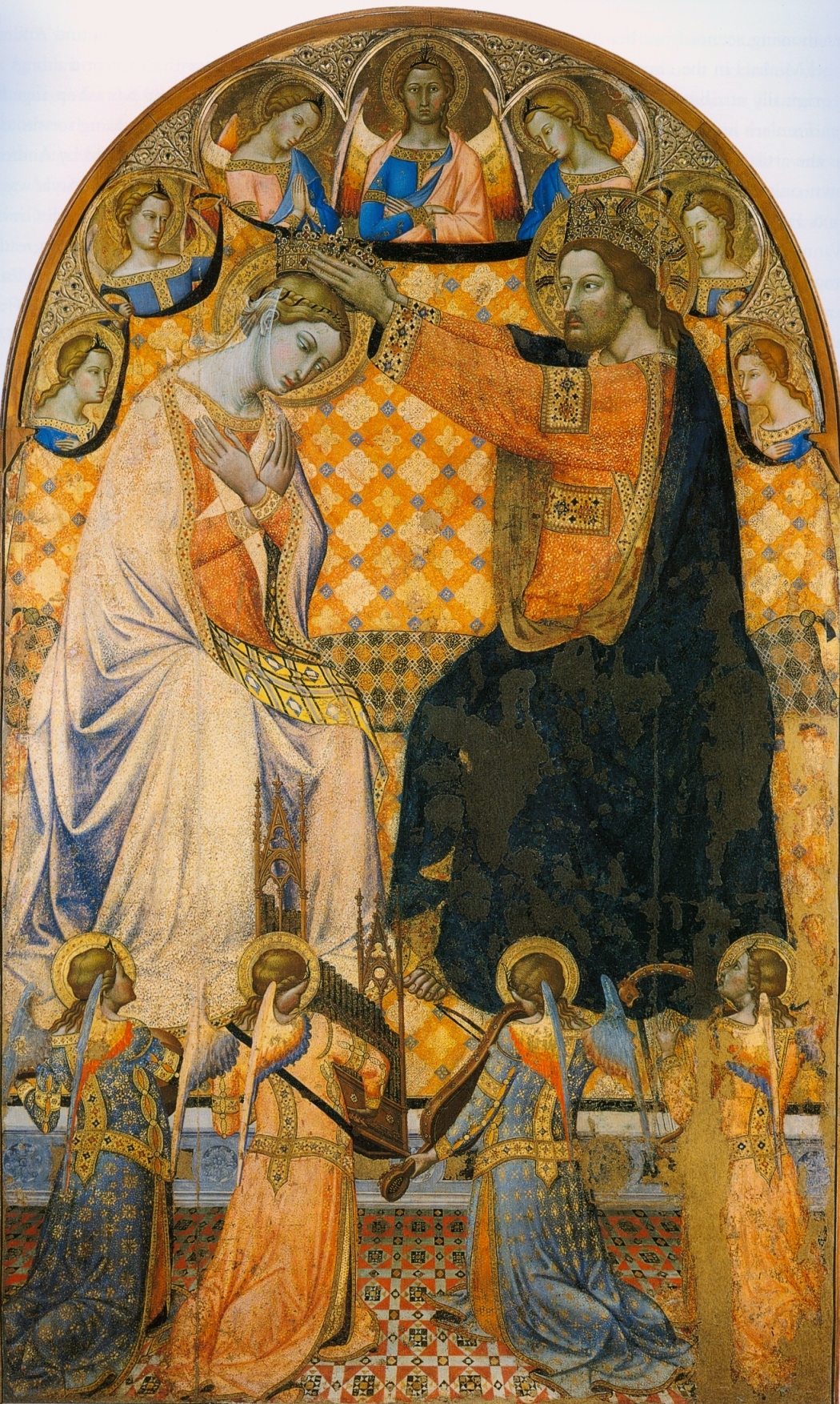
    Coronation of the Virgin Mary (c.1340-1350), Jacopo di Mino del Pellicciaio | Wikimedia Commons. Our primary example of divinization is the Virgin Mary, the supreme example of how highly God seeks to raise humanity in communion with Him.

    As you might imagine, the thought of divinization made theologians and churchmen in the Western Church somewhat uncomfortable over the centuries. Part of this is because of the fear that people would seek to be treated like gods (like the Roman caesar, who claimed to be a god). The word for this in Greek is apotheosis, not to be confused with theosis.

    I think there is another, related concept to help us avoid this pitfall: glorification. We must constantly refer back to Jesus, the perfect union of the human and the divine. Jesus, despite His divinity, always pointed back to the Father and credited the Father for everything. He tells the Pharisees, “If I glorify myself, my glory is nothing. It is my Father who glorifies me” (John 8:54). Here is an important lesson about divinization: we must not seek glory for ourselves like secular heroes (what Aquinas calls vainglory), but instead remember that all glory belongs to and is bestowed by God.

    So if glory is more than just fame or renown, what is it? St. Augustine calls glory clara notitia cum laude, or “brilliant celebrity with praise.” Augustine gives us the second part of the equation “with praise” to signal that we’re talking about how we humans interact with divine glory. A first step in glorifying God is praising the wonders of His creation, which are a partial reflection of his abundance, goodness, and perfection. But truly glorifying God must go beyond this. Here an excerpt from the Catholic Encyclopedia is particularly helpful:

    This praise involves not merely intellectual perception, but also the practical acknowledgment by heart and will which issues in obedience and loving service. The endowment of intelligence with all that it implies — spirituality and free-will — renders man a higher and nobler image of the Creator than is any other being of this visible world. The gift of intellect also imposes on man the duty of returning to God that formal glory of which we have just spoken. The more perfectly he discharges this obligation, the more does he develop and perfect that initial resemblance to God which exists in his soul, and by the fulfillment of this duty serves the end for which he, like all else, has been created. (“Glory” by Fr. James Fox, 1909)

    In other words, our intellect, spirituality, and free will enable us to glorify God in a much deeper way than the existence of creation being a testament to His awesomeness. The final sentence in this excerpt is worth examination. We can read “the more perfectly he discharges this obligation [of returning glory to God]” to mean the “goal of the Christian life.” And the object of that sentence is the divinization bit: “the more does he develop and perfect that initial resemblance to God which exists in his soul.” Thus we see how divinization and glorifying God are related: our whole-hearted glorification of God in our praise and loving work is what brings about our divinization. Like Christ, who glorified God in the most unimaginable loving gift of Himself on the Cross, we are called to glorify God and that is the Way to divinization.

    With this connection in mind, some of Jesus’s words come into sharp focus. As He says in His final prayer for the Apostles before His betrayal in the garden:

    Father, the hour has come; glorify your Son so that the Son may glorify you, since you have given him authority over all people, to give eternal life to all whom you have given him. And this is eternal life, that they may know you, the only true God, and Jesus Christ whom you have sent. I glorified you on earth by finishing the work that you gave me to do. So now, Father, glorify me in your own presence with the glory that I had in your presence before the world existed  (John 17:1b-5).

    Jesus’s prayer reveals how glory is a gift that marks divinity, that the Persons of the Trinity give glory to one another in order to better reveal the essence of divinity to humanity. Jesus asks the Father to glorify Him in order that Jesus may glorify the Father in return (through the Easter events). Why do they do this? As Jesus said, this instills in humanity the knowledge of the “only true God, and Jesus Christ whom you have sent.”

    Thanks to the events of Ascension and the coming Pentecost, we can understand this not as book knowledge but rather experiential knowledge. Jesus tells us that eternal life is “that they may know you.” The kingdom, the reign, of God is living in the reality of glorification. It is a constant, ever-gifting of glory among the Trinity that we get to participate in! Our praise of God: glorification. Our works of love: glorification. Our faith in the unseen yet perpetually active God: glorification. (The priest exhorts us at the close of the Mass: “Glorify the Lord with your life!”) With a constant focus on the glorification of God, just like Jesus in His ministry, we can live our lives with the realistic goal of divinization. This is a new reality that Jesus and the Holy Spirit bring about in the world. As St. Peter writes, “If you are insulted for the name of Christ, blessed are you, for the spirit of glory, which is the Spirit of God, is resting on you” (1 Pt 4:14). In other words, if our constant glorification of God through our works and words that spread the Gospel of Christ invite ridicule or suffering, our hearts can be glad in the knowledge of being blessed by the Spirit of Glory. And here we see why the Church Fathers insisted that the primary actor in divinization is the Holy Spirit. Since glory comes from God, it is the Spirit that glorifies the Father through us. Likewise, if any share of glorification comes to us, it is also through the Spirit.
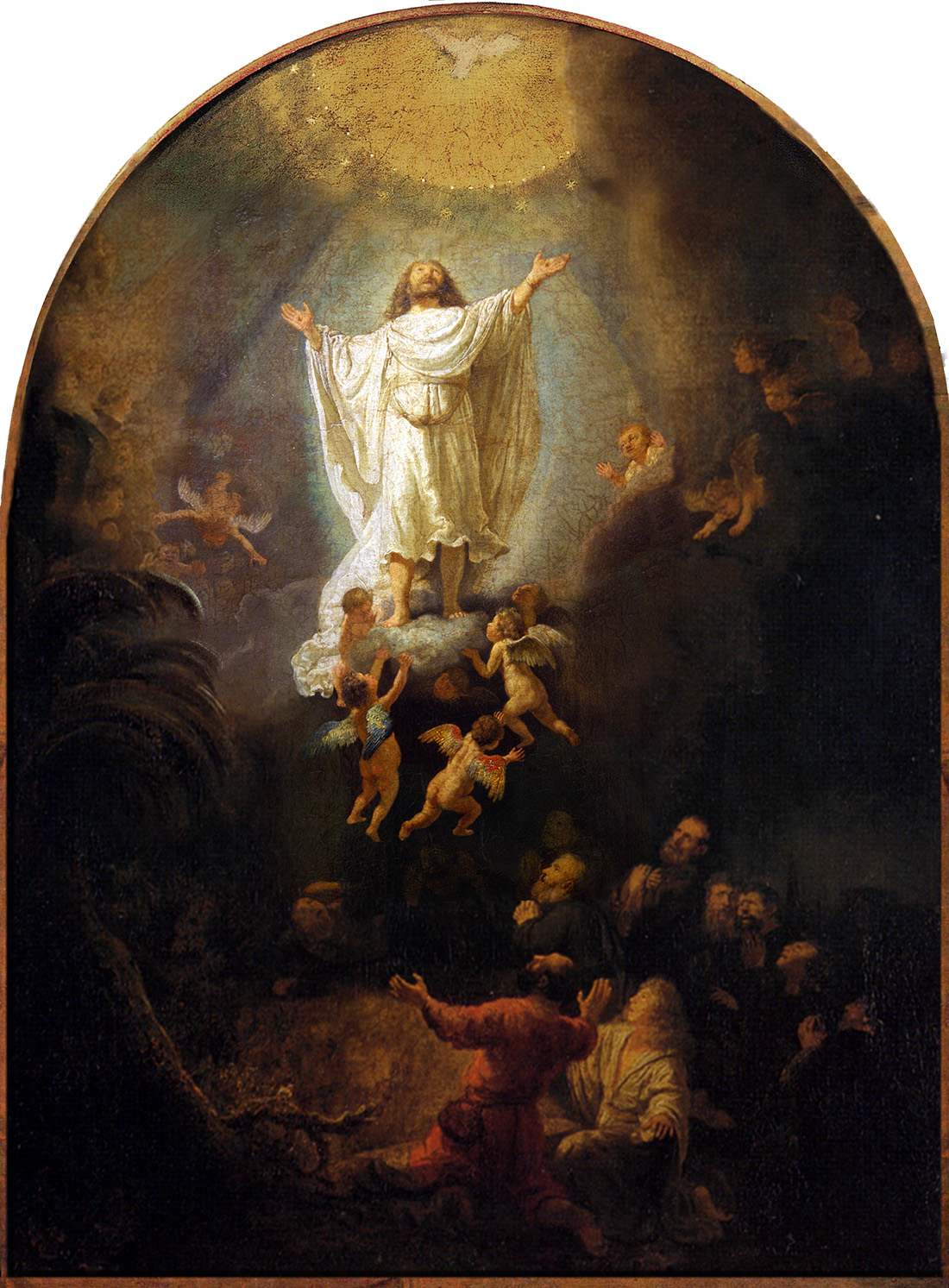
    The Ascension (1636), Rembrandt | Wikimedia Commons. I quite like Rembrandt’s visual emphasis on Christ and the Holy Spirit in this painting. Baby angels are cute, too.

    And so we can bring this reflection to a close, hopefully better understanding why Jesus ascends to the Father. It is only in this way that our primary relationship with God is through the Holy Spirit and the sacraments Jesus institutes. The Holy Spirit is the author of our divinization. The Holy Spirit makes our glorification of God real and not just lip service, by stirring our hearts and uniting the divine soul within us with its Creator. Jesus tells his apostles in today’s gospel reading, “Go, therefore, and make disciples of all nations, baptizing them in the name of the Father, and of the Son, and of the Holy Spirit.” The more we reflect upon the mysteries of our faith, the more we see the undeniable and essential logic of the Trinity: that each Person is required for God’s mysterious saving plan for humanity. When Jesus says, “And behold, I am with you always, until the end of the age,” we have the Father’s glorification of His Son as proof of this eternal existence, and we can expectantly await Pentecost, when we celebrate the sending of His Spirit to be with us until the end of time.
  • The Advocate Comes to Convict

    Tuesday in the Sixth Week of Easter: Acts of the Apostles 16:22-34, John 16:5-11.

    Today’s readings may seem like standard Easter season fare: miraculous things happen with Paul as he evangelizes throughout the Near East and in the gospel, Jesus talks about His impending death and Resurrection. But we have to stop and examine them closely because they reveal some important aspects of the Holy Spirit, and therefore about the Holy Trinity, God Himself. 

    In the gospel reading, Jesus clearly references each Person of the Trinity separately. He says, “Now I am going to the one who sent me,” referring to His journey back to the Father. He proceeds to guide them through a new way of viewing a departure from this world. This is the psychology of the New Covenant, wherein death no longer has finality for us. First, he marvels a bit that “not one of you asks me, ‘Where are you going?’” as a way to signal that something greater resides in the place He is going. This is a gentle way of telling the apostles (remember, this is John’s account of His long speech during the Last Supper) that they are still focused on the wrong thing (i.e., death) and should be focused on the right thing (i.e., everlasting life with God). He notes that “grief has filled your hearts,” and this psychology of grief is one that we struggle with to this day when we think of a loved one who has passed.

    Jesus then describes the unfolding of the Church in the final days and tells them how His passing will benefit them more than if Jesus stayed on earth. This is rather incredible, and something that we don’t consider much as we think about our Savior. Jesus says, “it is better for you that I go. For if I do not go, the Advocate will not come to you.” Thus, the first thing we hear about the Trinity is that the Persons act separately in the world, according to their time. Let’s consider how logical this is: God is One and indivisible. Thus, while God’s essence is incarnate on the earth in bodily form (i.e., Jesus), He is also not actively working in the form of His Spirit. As we are taught, a human has a body and a spirit, united and given life by God. So I can speak of myself and refer to my body (Michael’s body) and my spirit (Michael’s spirit). Let’s apply this to Jesus. He has His body, which He will offer up as a sacrifice, gathering all the world’s sin to be sacrificed in His Body on the Cross. He also has His Spirit, which in the case of God incarnate, is the Holy Spirit itself. Let’s repeat: Jesus’s Spirit is the Spirit of God, the Holy Spirit. This wonderful mystery is what makes our salvation possible. The immortal takes on mortality so that it can burst into this world and give us a share in immortality, defeating death, which can never take God. The world-changing realities that Jesus is revealing to this small band of his apostles are truly mind-boggling, and He acknowledges this in the verses following today’s reading: “I still have many things to say to you, but you cannot bear them now.” They cannot bear them because of their sadness and also because they have not yet seen him risen from the dead. The realities must begin to unfold on their own for the apostles to grasp what’s going on.

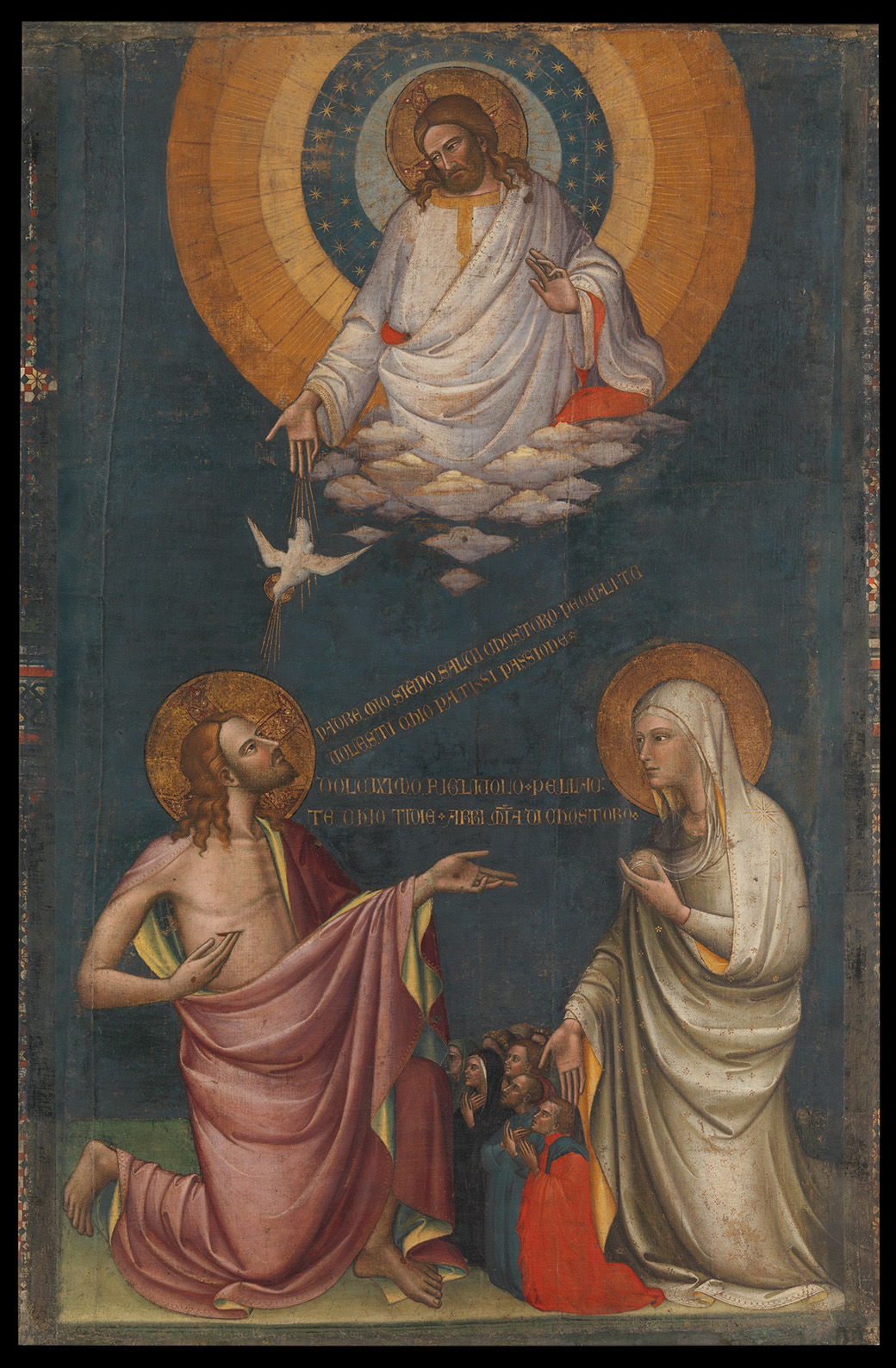
    The Intercession of Christ and the Virgin (before 1402), attributed to Lorenzo Monaco (Piero di Giovanni) | Creative Commons, courtesy the Metropolitan Museum of Art.

    Jesus tells His apostles that while the Holy Spirit is bound to the Body of Christ in the world, it cannot be active in the world apart from Him: “if I do not go, the Advocate will not come to you.” Jesus’s death, Resurrection, and Ascension to the Father mark (at the very least): 1.) the salvation of humanity from the reign of death, 2.) the beginning of a new age, the “final days,” when we can sacramentally participate in the life of the Trinity and the reign of God, and 3.) the release of the Holy Spirit into the world as God’s primary way of interacting with humanity.

    Jesus expounds: “if I go, I will send him to you.” Again, once Jesus ascends, the Spirit can be sent to them. Note that we reflect Jesus’s statement in the Nicene Creed: the Holy Spirit “proceeds from the Father and the Son.” Jesus can send His Spirit just as the Father can because “All that the Father has is mine” (Acts 16:15). Yet notice how Jesus maintains the autonomy of the Spirit as a Person of the Trinity. He continues to refer to the Spirit as “him” and “he.” In His ministry, He calls the Spirit the Paraclete and the Advocate. How mysterious and wonderful that the Spirit of God, the Spirit of Christ, is granted personhood in the way that the Son is granted personhood. The Spirit is undoubtedly a part of God and a part of the Son (indeed, the very spirit of the man Jesus Christ), yet Jesus speaks of Him as an independent actor in the world. This is consistent with how Jesus acknowledges that everything He is given is a gift from the Father — He does not even speak of His own Spirit as something that He has ownership over. And this seems right and just, for how can a man “own” his spirit, even if that man is the Son of God? The spark of divinity, the Breath of God, is not owned or subservient to any being. And here the Person of the Holy Spirit is not inferior or subservient to the Person of the Son. All Persons of the Trinity are united in God’s love, which grants autonomy and truth above all.

    Then Jesus gives us some incredible insight into the action of the Spirit in the world: “And when he comes he will convict the world in regard to sin and righteousness and condemnation.” What can this mean? Is the mission of the Spirit to “convict the world”? When we look at the original Greek, we indeed see the verb ἐλέγξει (elenxei), and according to Thayer’s Greek Lexicon, this means: “1. to convict, refute, confute, generally with a suggestion of the shame of the person convicted; 2. to find fault with, correct.” How can this be, since the Spirit is known also as the Consoler? Does a consoler convict people? Also, how does this jive with the fact that God is ultimate goodness and love?

    Let’s consider that Jesus is doing some consoling of His own with His apostles when He shares this promise of the Spirit. He explains in the next verse, “sin, because they do not believe in me; righteousness, because I am going to the Father and you will no longer see me; condemnation, because the ruler of this world has been condemned.” He is telling them that the Spirit will uphold the fact that Jesus is, in fact, the Savior of the World. There is a certain consolation for them to know that they are following the true path, the true Son of God. So the Spirit will convict those who willfully do not believe in Christ (their sin is convicted), will uphold the righteousness of those who do believe (he will do it because Christ who has ascended cannot be there to do it), and condemnation of the chief priest/Pontius Pilate (“the ruler of this world”) for executing the Savior. 

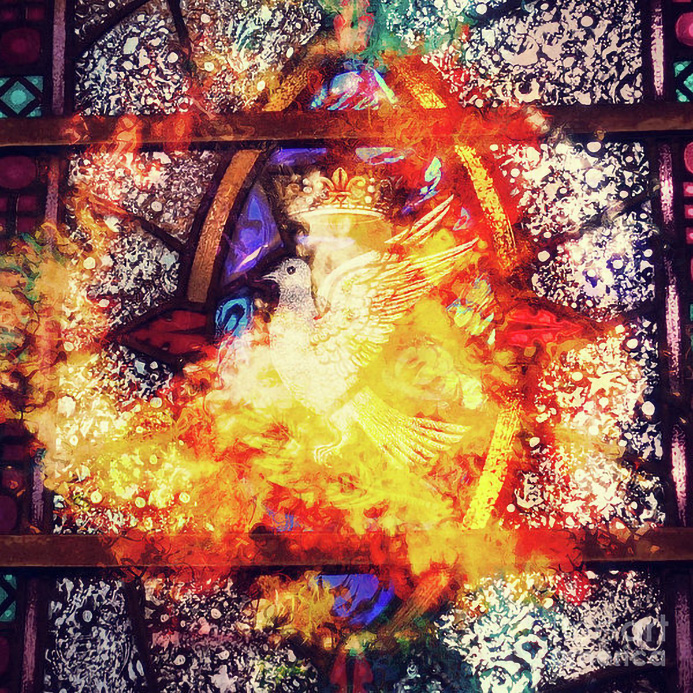
    Fire of the Holy Spirit (contemporary), Davy Cheng | image from fineartamerica.com.

    We can start to see how “Consoler” is an appropriate title for the Spirit who will uphold the mission of Christ in the world, thus consoling Christ’s disciples. But how about reconciling this action of convicting the world with the nature of God being goodness and love?

    I think the key to understanding this seeming paradox is found in the verses immediately following today’s gospel reading. Jesus continues to give the apostles hope by describing the close guidance the Spirit will provide them: “When the Spirit of truth comes, he will guide you into all the truth; for he will not speak on his own, but will speak whatever he hears, and he will declare to you the things that are to come.” Jesus refers to the Holy Spirit as the “Spirit of truth.” Just as Jesus is the fulfillment of the Law, the Holy Spirit is the very truth of God, active in the world. We must understand this aspect of the Spirit if we are to understand how He works in the world. The truth of God is not something that is “maybe this, maybe that.” It is not equivocal, up to interpretation. It is “what is right,” which means that there are things that are wrong. How unpopular in today’s world where the prevailing axiom is “this problem is not black and white, it’s many shades of grey.” Let’s not deny that there is complexity in the world and that most problems are multi-faceted. But that’s not the same thing as saying that right and wrong don’t exist. Sure, problems can be multi-faceted but at the same time, the individual choices that make up a solution to complex problems can be right or wrong. Since the Creation, God has been sharing with us His truth, His commandments, in order to teach us the right and wrong that make up goodness in the world. Do we have the intellectual space for God’s truth when we demand that everything is nuanced and no “truth” exists that can transcend everyone’s specific context? This is the central claim of the postmodern world, that specific perspectives are the only real thing and there is nothing universal, no “truth” that can transcend or supersede specific contexts and perspectives. (Of course, this claim is itself a universal “truth,” oh, the irony!). Yet the history of salvation demonstrates the opposite: there is universal truth, and that universal truth is God.

    Let’s return to the question of love and “convicting the world” coexisting in the Spirit of God. I am reminded of our reflection about the Purifying Love of God (see The Purifying Fire We Call God’s Wrath). God’s love, uncompromising in its truth, has a terrible aspect to those in sin, who cannot stand its purity. This is how we can speak of the “wrath of God.” Simply put, there is no room for evil, sin, and wrong thinking in the presence of God. God’s ultimate goodness, truth, and love vaporize those things in his purifying fire. This is why no one could look at God when He was with Moses on Mt. Sinai. This is why His Spirit appears as a cloud that obscures our sight, protecting us from a fire that none of us is truly able to bear.

    So it is the truth that the Spirit brings that is both loving (after all, His message is that of Christ) and convicts those in the wrong. Only truth points out right and wrong. All human legal systems try in an imperfect way to get to “truth” in order to convict those in the wrong. Jesus shares with us that the Holy Spirit is really the only one who can do this infallibly. We must live in Him and with Him in order to access the truth.

    This brings us around to today’s first reading where St. Paul and Silas are unjustly stripped, beaten with rods, and imprisoned in Philippi. We don’t hear the verses leading up to this, which explain why they are treated in this way. I don’t mean to make light of anything, but it’s a little funny that what causes all of this is Paul being annoyed by a spirit that inhabits a slave girl. The scene is this:

    One day, as we were going to the place of prayer, we met a slave-girl who had a spirit of divination and brought her owners a great deal of money by fortune-telling. While she followed Paul and us, she would cry out, “These men are slaves of the Most High God, who proclaim to you a way of salvation.” She kept doing this for many days. But Paul, very much annoyed, turned and said to the spirit, “I order you in the name of Jesus Christ to come out of her.” And it came out that very hour. But when her owners saw that their hope of making money was gone, they seized Paul and Silas and dragged them into the marketplace before the authorities. (Acts 16:16-19).

    So Paul releases the girl from spiritual possession, the power of which is a gift from the Holy Spirit, but the consequence is that the greedy owners want retribution. This is quite the commentary on truth. The spirit of divination is something that evidently brings truth into the world. After all, it correctly identifies Paul and Silas as slaves of God who “proclaim a way of salvation.” But this spirit has possessed a human in what must be understood as a type of enslavement; after all, she is an actual slave, which is not a coincidental or accidental aspect of the story. The spirit of truth is being used not to free people to make their way to God but instead as a way to make greedy people rich. This is not the objective of truth, it is against the nature of truth as found in God. Thus, Paul’s exorcism is just, and it tells us something of the fact that even when truth is found, it must be used appropriately, with reverence to God and His plans for humanity.

    The way truth is enslaved in the girl is again enacted when Paul and Silas are imprisoned under the care of a jailer who “put them in the innermost cell and secured their feet to a stake.” Now that’s a depiction of the entrapment/imprisonment/enslavement of truth! But this is against the very nature of God. It simply cannot stand. No force of man or nature can capture and silence the truth of Jesus Christ. 

    Silas (contemporary), Carolina Ines Vivenza | image from useum.org.

    I love the fact that Paul and Silas were praying and singing hymns to God for the other prisoners to hear. What light in the darkness! Does this not remind you of Hananiah, Azariah and Mishael as they are put in the fiery furnace by Nebedchunezzar? Or Esther during her three-day petition to the Lord? Paul and Silas are so full of the Holy Spirit it swells in my heart just to read it. And of course they are — only as such, as ones fully embracing and being embraced by the Spirit, could the earth be shook, their chains broken, and the doors of the jail flung open. Let us all take heed: this is how we must be, not wavering in our joyful embrace with God despite beatings and jailing. The truth of Jesus Christ must be so much a part of who we are that nothing stops the truth that we pour out of ourselves into the world. The truth comes with prayer, praise, and thanksgiving.

    What’s more, the truth comes with love. For what does Paul immediately do but shout out in a loud voice to the jailer: “Do no harm to yourself; we are all here.” He does not blame or seek retribution on the jailer who was simply doing his job. He meets him with love and an offering of salvation: “Believe in the Lord Jesus and you and your household will be saved.” In an almost storybook ending, the jailer takes them home and bathes their wounds, they, in turn, catechize and baptize him and his family, and they all “rejoiced at having come to faith in God.”

    Speaking the truth, that is, convicting the wrong and upholding the right, is part and parcel of the loving work of the Holy Spirit. There is no contradiction here. In this way, the first reading is the real-time reporting of the work of the Holy Spirit as Jesus promised He would come. St. Paul is a fantastic, enduring figure of one who intimately knows the Holy Spirit and brings the Word of God to the world fully within the embrace of the Spirit. That is why his letters make up such an important part of our scriptures and why we should read them over and over as we slowly gain more insight into God’s love for us.

    So we have explored Jesus’s promise of the Holy Spirit and how the Advocate will come to convict those rejecting the truth of Christ and uphold those who have embraced the truth of Christ. Logically, our next question is: so what? How does this make me a better Christian?

    I think the first repercussion of this knowledge in our lives is that we must allow ourselves to be conformed to the truth. The truth is no small line item in Christianity. Jesus said, “I am the Way, the Truth, and the Life,” so it is clearly THE central item of what He brings to us. This emphasis on truth does not end with the Cross — He promises us “the Spirit of truth” when He speaks of the Holy Spirit. Thus, this way we’ve discussed of understanding truth as something that reveals and upholds Godliness and righteousness and at the same time reveals and condemns sinfulness must be central to who we are in the world. This is the Way that is Christ. I am not a neo-Inquisitionist; I don’t think we should imagine we as individual people have a monopoly on truth (see my second repercussion below). But I do think that we have become rather limp in our modern Christianity. We have accepted too much of the postmodern insistence that there is no universal truth. When we conform ourselves to the truth that is Christ, we uphold the clear commandments he gives and condemn the sins that he condemns. There is nothing wishy-washy about Christ and His ministry. He fulfills the law that God has given His Chosen People. There should be nothing wishy-washy about our faith and the truth we bring to the world, either.

    The clearest embodiment of being “conformed to the truth” that strikes me is our approach to morality, in other words, doing right vs. doing wrong. For perhaps the last 400-500 years, our understanding of morality has been dominated by a sense that we should do something, often against our own inclination. This is a dangerous road we’ve been on, and one that doesn’t lead to God. This sense of should inevitably leads to guilt and a feeling of sinfulness rather than living in the embrace of God. In other words, morality has become an external obligation rather than an internal desire to unite and conform oneself to God. Morality has become a bugbear. Why would we turn morality into something we frankly loathe because it makes us feel bad about ourselves? Morality is supposed to be about goodness, about Godliness. And perhaps here is where we can pivot. If we have been emphasizing an obligation where what is right is often opposed to what we want, we can pivot to contemplating the right as the very thing we want. 

    This is the act of conforming ourselves to the Truth that is Christ: morality is knowing what Jesus would do and what Jesus would say. It is an embrace of the good in the world and a rejection of sin. It is a willingness to be led by the Spirit as opposed to being led by our base desires, our greed, our lust, and our pride. We willingly change and mold ourselves to the model of Christ, and we are given so many gifts to do it: our conscience, the Holy Spirit, and the Church.

    This brings me to the second repercussion that strikes me from today’s reflection. Let’s suppose that we want to open ourselves to the Spirit. Let’s assume we are also surrounded by secular pressures and ideas … work, “me time,” healthiness, politics, etc. It can be tricky teasing apart the Spirit’s action and God’s voice in our lives from everything else. Meditation in a goat yoga class might seem equivalent to adoration at church. But these things are definitively different. How can we discern the voice of God, the action of the Spirit in our lives? In short, sure, even if we want to conform ourselves to the truth that is God, how do we know and uphold the truth in any given situation? Well, myriad books have been written on the subject, and in the end, the Church herself gives us the tools: prayer, the sacraments, especially the Mass, and the Word of God. These might seem humdrum, but only by training ourselves with the history of God’s saving work and feeding ourselves on the Word and Body of Christ can we begin to commune with the Spirit.

    Yoga Goat (contemporary), Anna Afzelius-Alm | image from saatchiart.com.  Goat yoga – yeah, it’s a thing.

    There is a specific aspect of the Holy Catholic Church that is fundamental to our recognition of the Spirit and truth in our lives: the Magisterium. If you’re unfamiliar with the term, the Magesterium is the authority of the Catholic Church to provide for us the authentic interpretation of the Word of God. This is something that the Protestant Churches have rejected. But for me, whatever historical and political complications made that seem like a good idea, rejecting the authority of the Church is a horrible overshot, throwing out the baby with the bathwater. The fact is that the Holy Spirit is a mysterious force in the world, and He has made Himself intimately known to the Apostles, the great saints like Paul, and many of our popes and martyrs. These figures began to assemble the discernment, knowledge, writing, and teaching of the Catholic Church as early as the first days of the Church and the Council of Jerusalem. Their accumulated teachings continue to this day. Who are we — what kind of mad pride do we have — to insist that we would have a better interpretation of the Word of God or more faithful/truthful/honest knowledge of the Spirit than the incredible tradition of Fathers and Saints that have made the Magisterium what it is? Friends, the Catholic Church is the Body of Christ, the physical and spiritual manifestation of Christ in the world that has been guided by the Holy Spirit from Pentecost onward. This body is also a body of knowledge and authority, a guide for us in our messy lives. The most obvious and available manifestation of the Magesterium is the Catechism of the Catholic Church. It’s not a pick-and-choose catechism. We can’t just agree with the things we like and quietly decide to ignore those that trouble us. We must study and come to grips with the teachings of our Church in order to fully conform ourselves to the truth that is God. There is no other way; the Church was established by Christ and guided by the Holy Spirit. May we fully embrace the Way, the Truth, and the Life!

  • What is the Lord’s Peace?

    Tuesday the Fifth Week of Easter – Acts of the Apostles 14:19-28, John 14:27-31a.

    In today’s readings, we hear Jesus promise his apostles, “Peace I leave with you,” and yet we hear in the first reading that Paul is stoned and left for dead when bringing Christ to the people of Lystra. What kind of peace is this? Moreover, how can we reconcile Jesus’s words that He gives his apostles peace when He says elsewhere “Do not think that I have come to bring peace to the earth; I have not come to bring peace, but a sword” (Matt 10:34)?

    What is interesting about these moments when Jesus invokes the concept of peace is that they are both directed to the twelve apostles and act like bookends on his ministry while alive with them. The “not peace but a sword” passage is from the gospel of St. Matthew and occurs during his exhortation to the Twelve Apostles when he sends them out to the surrounding towns after He “gave them authority over unclean spirits, to cast them out, and to cure every disease and every sickness” (Matt 10:1). First, let’s note that this is a fulfillment of the “gathering of Israel” prophesied in the scriptures (cf., Deut 30:1-5, Isa 11:11-12, Jer 29:14, Ez 20:41-42), as Jesus tells them “Go nowhere among the Gentiles, and enter no town of the Samaritans, but go rather to the lost sheep of the house of Israel” (Matt 10:5b-6). But it is also preparation for the work the apostles will do after the Resurrection: “For so the Lord has commanded us, saying, ‘I have set you to be a light for the Gentiles, so that you may bring salvation to the ends of the earth’” (Acts 13:47). As we reflected in Who are His Sheep? there is a natural progression to the spread of God’s salvation — first, within the Chosen People, then to all the nations. The apostles’ mission is to be radical evangelists in both cases. Jesus tells them, “Take no gold, or silver, or copper in your belts, 10 no bag for your journey, or two tunics, or sandals, or a staff” (Matt 10:9-10a). What kind of mad mission is this? We might imagine that the apostles would be terrified without the safety net of money, extra clothes, and basic defense like a staff. But by all accounts, they went joyously, buoyed by the overflowing love Jesus was bestowing on them, made supernaturally courageous and unbothered thanks to the gifts of the Spirit. And here we can reflect on the singular focus of their mission: “As you go, proclaim the good news, ‘The kingdom of heaven has come near.’ Cure the sick, raise the dead, cleanse the lepers, cast out demons. You received without payment; give without payment” (Matt 10:7-8). They are to be like Jesus, spreading the Word of God by mouth and by deed. What else would one need? We often think of “being like Christ” as a moral imperative, a perfection of sinlessness. But here we see what being like Christ really is: an outpouring of saving words and saving work, a laser-like focus on God the Father whose reign is at hand, and a complete lack of ego because “you received without payment,” so you should give endlessly without expecting thanks, payment, or recognition. Wow, I don’t know about you, but I find this thrilling.

    Ministry of the Apostles (1660), Fyodor Zubov | Wikimedia Commons.

    Jesus must be honest with the apostles as He sends them out to do His work: “I am sending you out like sheep into the midst of wolves … 17 Beware of them, for they will hand you over to councils and flog you in their synagogues” (Matt 10:16-17). Note that the gospels don’t report this type of treatment in the years of Jesus’s ministry but rather report that many were healed, many demons cast out, and many new disciples were gained. Thus we must acknowledge that Jesus was referring to the treatment the apostles would receive after his Death and Resurrection. In this prophetic mode, He continues, “Do not fear those who kill the body but cannot kill the soul; rather fear him who can destroy both soul and body in hell” (Matt 10:28). As in so many places in the gospels, Jesus redirects His disciples to consider the reality of God — both His love and His judgment — as so much more important than the trials of this world. So the apostles are warned that they will be persecuted but in the same breath reassured that they should not fear the trials of the body because they do the good work of salvation for the soul. As we shall see, this is advice that St. Paul lives out.

    Now we have the appropriate context to understand His words:

    Do not think that I have come to bring peace to the earth; I have not come to bring peace, but a sword.

    35 For I have come to set a man against his father,
    and a daughter against her mother,
    and a daughter-in-law against her mother-in-law;
    36 and one’s foes will be members of one’s own household.

    37 Whoever loves father or mother more than me is not worthy of me; and whoever loves son or daughter more than me is not worthy of me; 38 and whoever does not take up the cross and follow me is not worthy of me. 39 Those who find their life will lose it, and those who lose their life for my sake will find it.

    Jesus sees all of time. He knows that many will not welcome His message or accept His sacrifice. Even within the same family, some will follow Him for their soul’s salvation and others will reject Him. When He says “I have not come to bring peace, but a sword,” He reveals something about the path to salvation. This path demands that He absolutely must come first (that is, He, our triune God). That is why Jesus asserts that we cannot be saved if we love parents or children more than Him. He invokes these intimate relationships purposefully, in order to illustrate that our relationship with God must be so fundamental to who we are that it comes before anyone or anything else. To renounce God would be worse (and more ridiculous) than renouncing ourselves because it renounces the very One who made us, who made everything. This can seem extreme to those who lack a close relationship with God, but to people like the saints, there is nothing shocking about these statements. What it reveals to everyone, regardless of who they are, is that Christ’s message forces you to take a stand. Either you fundamentally put God first, before all else, and you achieve salvation, or you don’t. This is where the image of the “sword” makes sense: it cleaves apart the believers from the unbelievers. It is unavoidably violent not in its nature (the nature of the path is, in fact, love), but in how it is received in the world. Because the Way to God that is Christ is fundamentally nonviolent love, it doesn’t revel in this “sword-like” effect brought about by those wolves who attack the sheep. This is why He tells us we must “take up the cross.” Only those who are convicted (not those who convict) are put upon the cross. Only those who are the object of violence, not those delivering violence, are put upon the cross. 

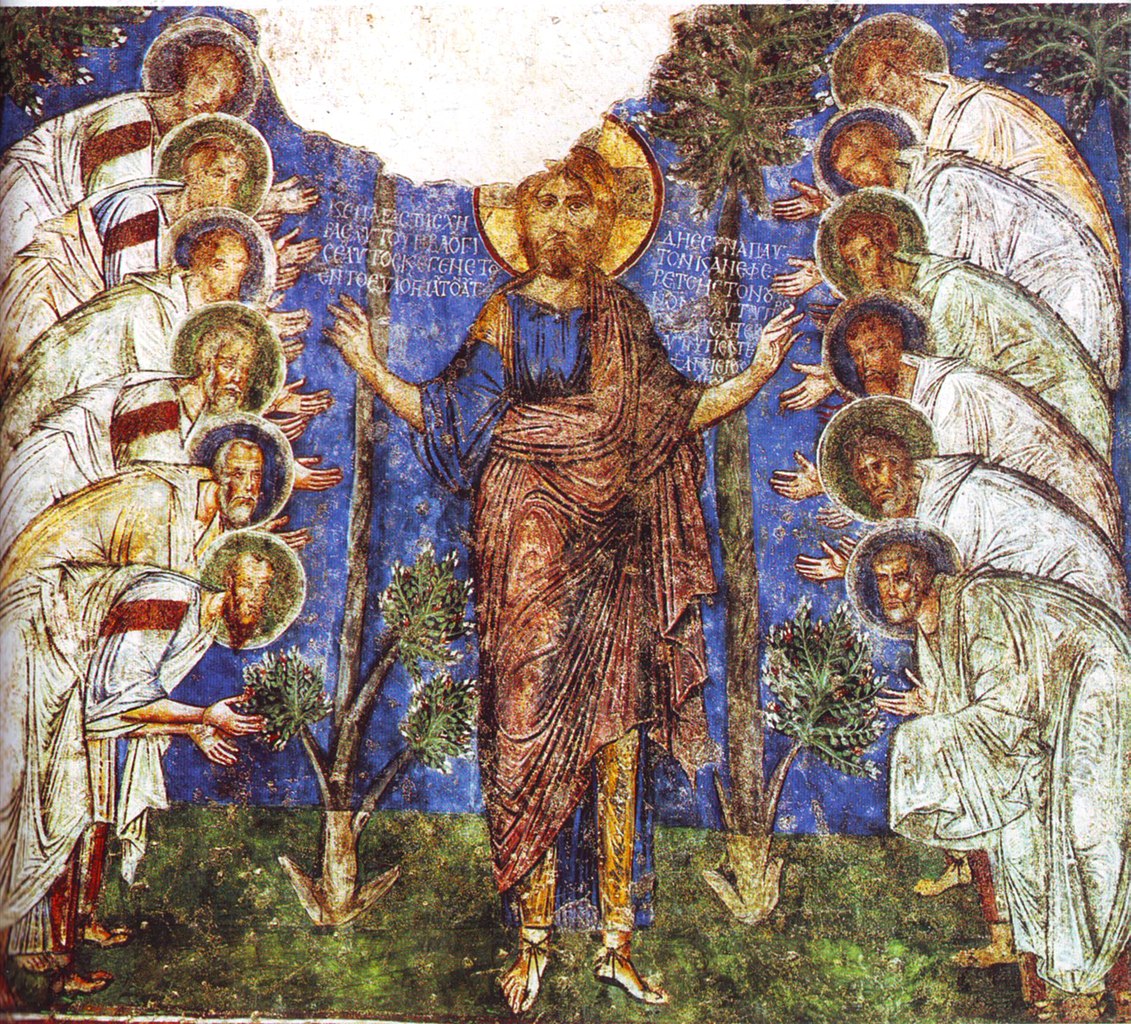
    Jesus and the Twelve Apostles (12th century), fresco in Cappadocia | Wikimedia Commons.

    So we can see that Christ’s first use of the word peace at the beginning of the apostles’ ministry is an intricate and paradoxical message about the Way. By preaching love and working deeds of love, the apostles will be forcing people to come face-to-face with a God they must choose to accept or reject. This is not peace on earth but a troubling of their spirits, a stirring of their spirits. Like accelerant on a fire, the apostles will bring about an internal uproar that people must reconcile within themselves. This is not “peaceful.” 

    On to today’s gospel reading and the second use of “peace” by Jesus to his gathered apostles. This passage occurs during His lengthy speech to the apostles on Holy Thursday in the gospel of St. John, after He has washed their feet at the Last Supper. His moment of glory is at hand, and as He sees the details of His glorious sacrifice laid out before Him, He wants to prepare His apostles to build the Church after their moments of confusion and dismay. So, He says, “Peace I leave with you; my peace I give to you. Not as the world gives do I give it to you. Do not let your hearts be troubled or afraid.” This is a different peace than the one He refers to at the beginning of their ministry. To use his own terms, we might refer to the first peace as a worldly peace and this second peace as the Lord’s peace. He deliberately distinguishes between the two. He bestows the peace of the Lord because they have chosen God to be their sole companion. These men and women have left their homes, their occupations, and their families; they have preached God’s word and done His works; they have been given gifts of the Holy Spirit and will be given much more. In short, they are on the Way to God, the Way of the Cross. This is why He urges them not to let their hearts be troubled or afraid. The peace the Lord gives them is a type of steadfastness of spirit and a sense of the rightness of their deeds. This is a peace of the heart, a peace in their souls. 

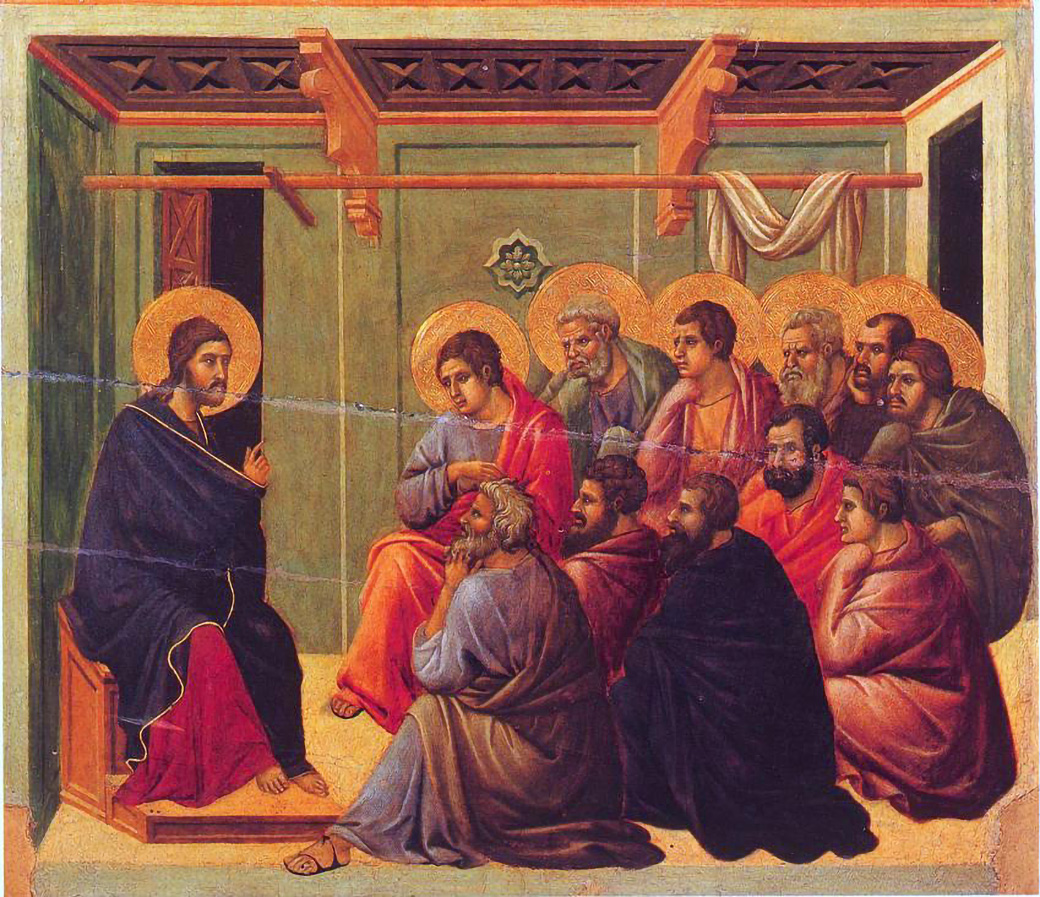
    Christ Taking Leave of the Apostles (1308-1311), Duccio di Buoninsegna | Wikimedia Commons.

    Thus we can see that the Lord’s peace can exist within a person even when the peace of the world does not exist. Every martyr is a testament to the Lord’s peace existing in the midst of the violence of the world.

    The rest of today’s gospel shows us the depth of Jesus’s empathy and care for His beloved apostles, his fledgling Church. Knowing how they might react to His death, still hidden from them, He says, “If you loved me, you would rejoice that I am going to the Father; for the Father is greater than I.” And He even gives them the reason that He is choosing this path, certainly something they will be asking themselves in the days to come: “but the world must know that I love the Father and that I do just as the Father has commanded me.” In this last sentence, He summarizes the Way of the Cross. It demands that a person demonstrate his love for and obedience to the Father. This love and obedience encounters the messiness of the world in myriad ways — sometimes it’s beautiful like the art that is poured into a cathedral, sometimes it’s mundane like the care for the sick, and sometimes it’s awful in the martyrdom of the saints.

    And so we can return to our first reading from the Acts of the Apostles, with Jesus’s words ringing in our ears. We hear that “some Jews from Antioch and Iconium arrived and won over the crowds. They stoned Paul and dragged him out of the city, supposing that he was dead.” Here are the wolves of whom Jesus warned his apostles. The matter-of-fact reporting of Paul’s stoning and being left for dead is shocking; this is the incomparable St. Paul whose epistles help to not only form the early Church but define so much of our own instruction and theology. But more shocking is the following sentence: “But when the disciples gathered around him, he got up and entered the city.” The miracle of a man stoned almost to death simply getting up is amazing in itself, but what stands out to me is the fact that he walks right back into the city where he was stoned! My first thought is, wow – that’s some serious fearlessness! But in light of today’s reflection, I begin to see that this is the Lord’s peace. 

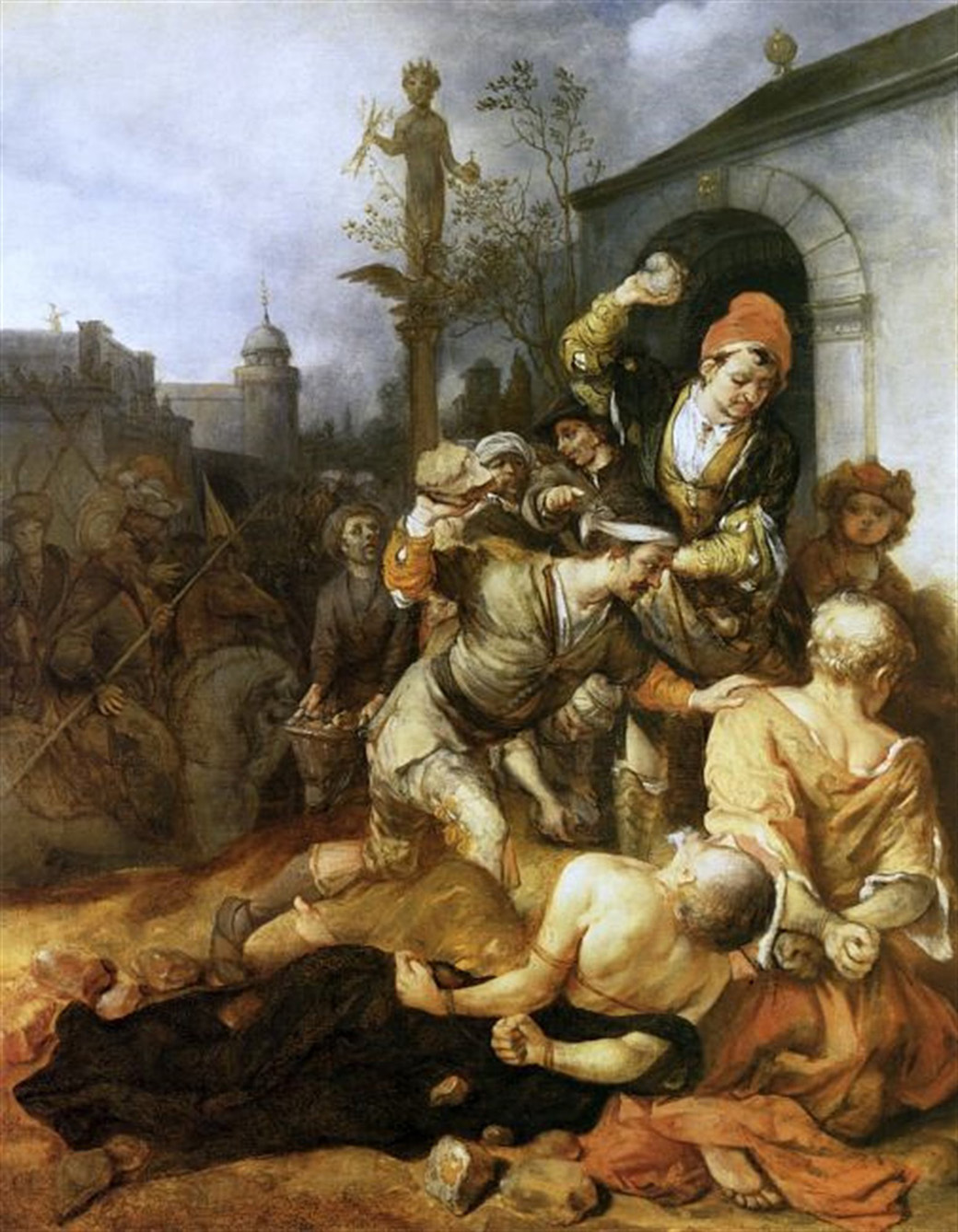
    The Stoning of St Paul and St Barnabas at Lystra (1672), Barent Fabritius | Creative Commons, courtesy Hoogsteder & Hoogsteder.

    Paul exhibits those facets of being blessed by the Lord’s peace that we pondered above: a steadfastness, an untroubled heart, an internal peace that comes from a singular focus and mission that nourishes him from within.

    Indeed, the rest of the reading shows us what the Lord’s peace within a person can achieve. They gain “a considerable number of disciples” in Derbe then return to the city where Paul was stoned and “strengthened the spirits of the disciples and exhorted them to persevere in the faith.” I am amazed by this model of strengthening and perseverance, repeated so many times in the lives of the saints. Some might claim that persecution itself helps one on the path to sainthood and ultimately to God, in a sort of pain-yields-gain model. But in the light of today’s reflection, it seems much more likely that we are learning something about the qualities of the Lord’s peace. This gift from God, this strengthened, peaceful spirit, is bestowed even more bountifully by God when we act out His will in the world. It is not the persecution and pain that begets more peace but our unreserved gift of ourselves to God that garners His love in return. 

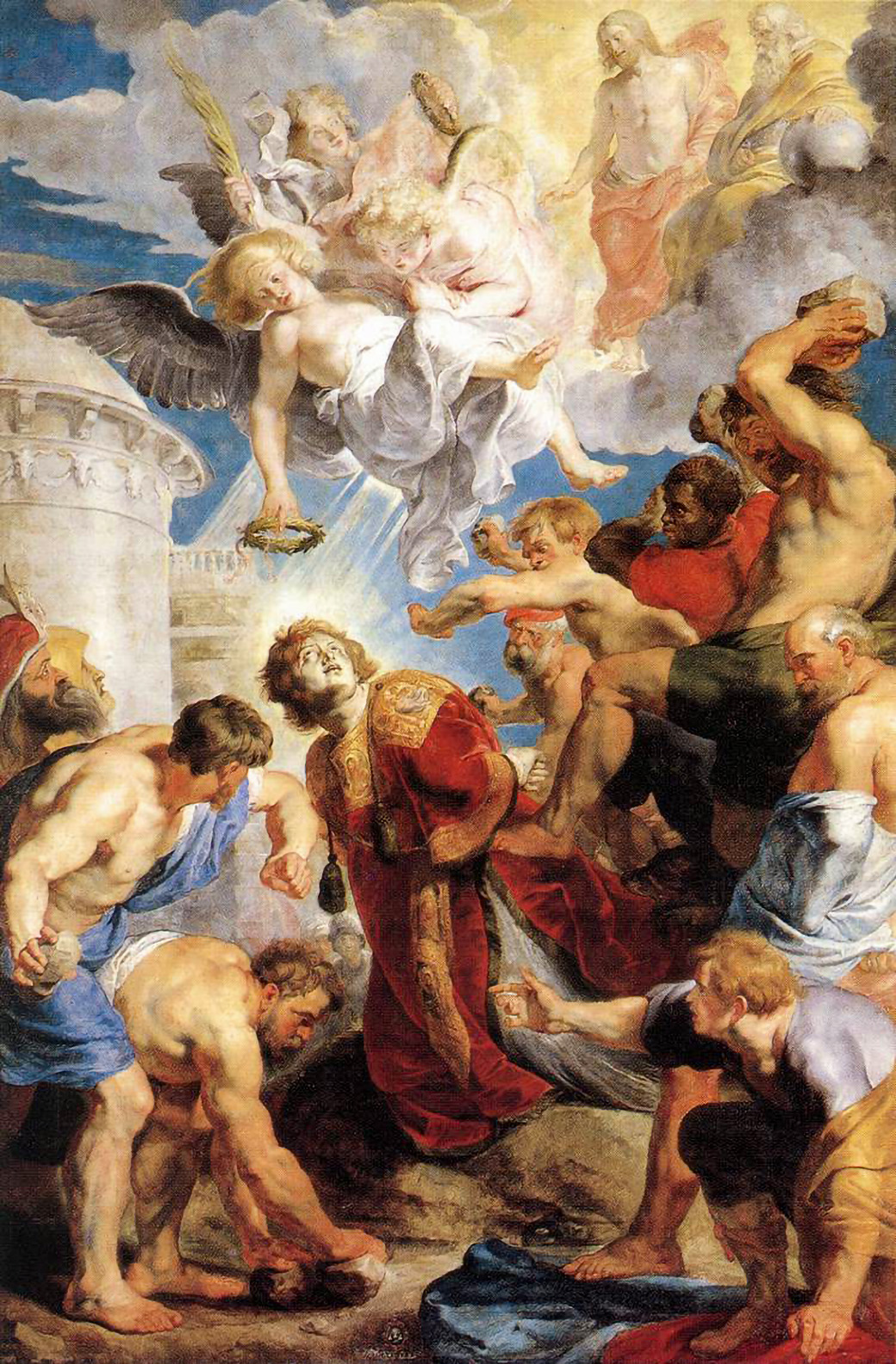
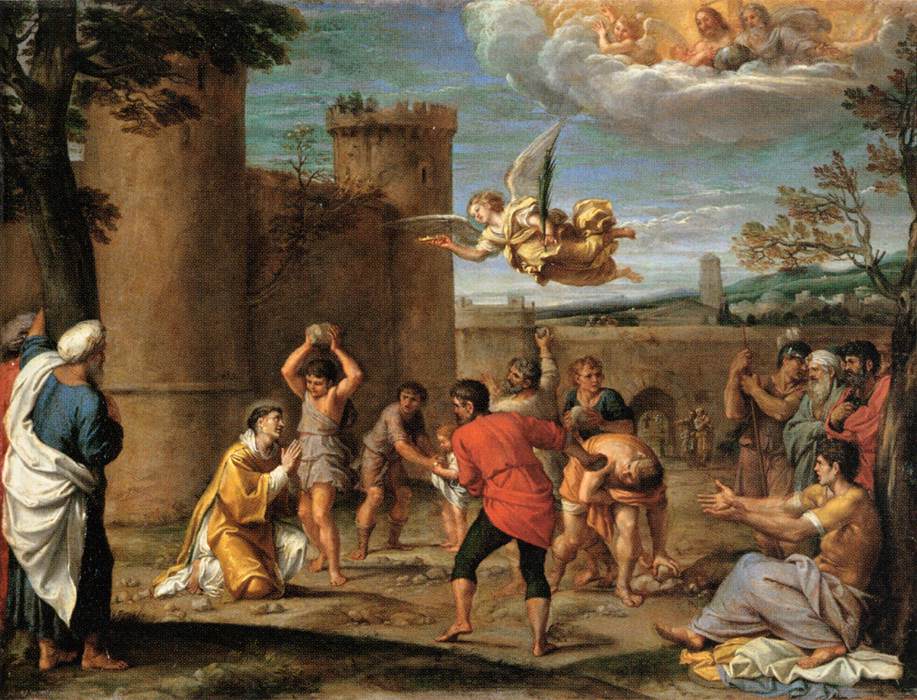
    The Martyrdom of St Stephen (1616-1617), Peter Paul Rubens | Wikimedia Commons. God bestows His peace ever more bountifully on those who do His will.

    So we must not misunderstand Paul and Barnabas’s words when they say, “It is necessary for us to undergo many hardships to enter the Kingdom of God.” I don’t think they mean that the hardships in themselves guarantee the entrance to the Kingdom but that these hardships are inevitable when the word and will of God (themselves a “sword”) are active in the world through the disciples of Christ. In other words, the world is filled with wolves who will react violently to the choice God will thrust upon them in the form of His disciples. The hardships we undergo are a part of the world in which we must live, a world fundamentally fallen, and we are here to help achieve the salvation of fallen souls, so we will inevitably encounter violence and hardships. This is the Way of the Cross.

    It makes me wonder what hardships I’ve encountered as I follow Christ. Not many if I’m honest. What does this say about me as a true follower? Am I bringing the “sword” of Christ by proclaiming that we must put God first, above all else? Have I helped accelerate the fire of God’s discernment in the souls of others? 

  • Who Are His Sheep?

    Monday and Tuesday the Fourth Week of Easter – Acts of the Apostles 11:1-26, John: 10:11-18, 22-30.

    Yesterday’s and today’s readings are in sequence, both the first reading and the gospel. I’d like to think about them together because this provides a fuller look at how the Church first spread beyond the Jewish enclaves around Jerusalem and into the Gentile communities of the Near East. They also show us how Jesus is simultaneously fulfilling the specific promise of Israel’s Messiah yet defining the community of “sheep” to be saved by criteria that are not restricted to a Jewish heritage.

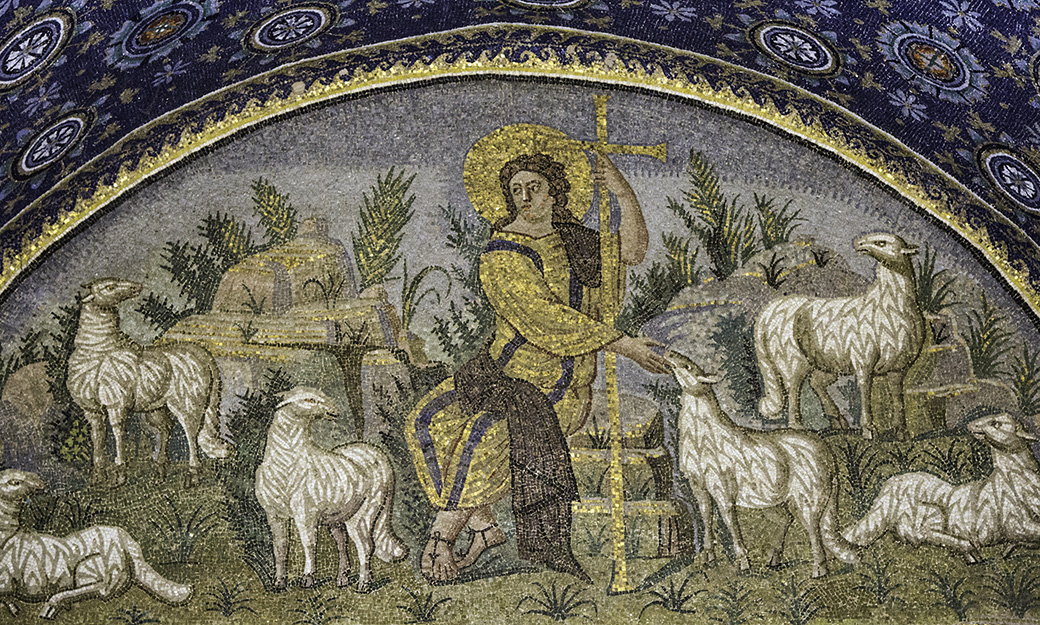
    Good Shepherd, 5th-century mosaic from the tomb of Galla Placidia in Ravenna | image from flickr.com.

    Let’s start with the gospel readings where Jesus uses the image of the Good Shepherd to describe Himself. The first aspect of the good shepherd He points out is self-sacrifice: “I am the good shepherd. A good shepherd lays down his life for the sheep.” This is in contrast to the paid worker who abandons the sheep in tough times because he only works for money. The second aspect is a hard-to-describe quality of knowing: “I know mine and mine know me, just as the Father knows me and I know the Father.” How can we understand this? This type of knowing can only come from a few things: perhaps a long, close acquaintance such as one with a friend, family member, or co-worker with whom you interact every day; or another way to “know” someone comes through the bond of love and trust that transcends the physical aspects of the person. This second type of knowing we might see in a mother and child, forged through gestation, feeding, and care over years, present in their mental and physical attachments. Or we might see this in a husband and wife who have grown so close in love that they know what the other person is thinking, they anticipate the other person’s needs before they are spoken, they instinctively know when the other enters the room without having to look up. This is what I mean by a love and trust that transcends the physical aspects of a person — you don’t need to see them to feel their presence, you don’t even need to have them be present to hear them in your mind, how they might react to something. In this way, love and trust fuse people together in an altogether more-than-physical way. We might dare to call this way of knowing mystical because it belongs to the family of spiritual mystery that we encounter in the liturgy.

    Jesus is saying that He knows His sheep and they know Him in this way. More than that, this is the same way that He and the Father are in relationship. How incredible! I’d definitely use the term mystical once we understand that this is a sharing in the Personhood of the Trinity. I don’t want to lose track of the first way I identified above, the close acquaintance gained by repeated interaction. This is displayed in Jesus’s constant prayer to the Father throughout His life — whether in the desert, on the mountain, before meals and miracles, or simply in His solo time. This way of prayer is an essential element of our mystical “knowing” when we have a hard time seeing the physical presence of God the Father, Son, and Holy Spirit. Jesus models for us the love and trust born of filial relationship as well as the prayer life that reinforces the companionship, love, and trust: these are our ways of knowing God.

    The message of the Good Shepherd would have meant something specific to His Jewish audience. The Word of God first used this language with Ezekiel (see Ezekiel chapter 34), and the full message was that God Himself will come to replace the bad shepherds (i.e., chief priests and leaders) of Israel: “my sheep have become food for all the wild animals, since there was no shepherd; and because my shepherds have not searched for my sheep, but the shepherds have fed themselves, and have not fed my sheep … I myself will search for my sheep, and will seek them out” (Ez 34:8,11). Thus, when Jesus says that He is the Good Shepherd, by invoking Ezekiel He is telling them that they have fallen down on the job of shepherding God’s people and that He Himself is God, here to do the work Himself.

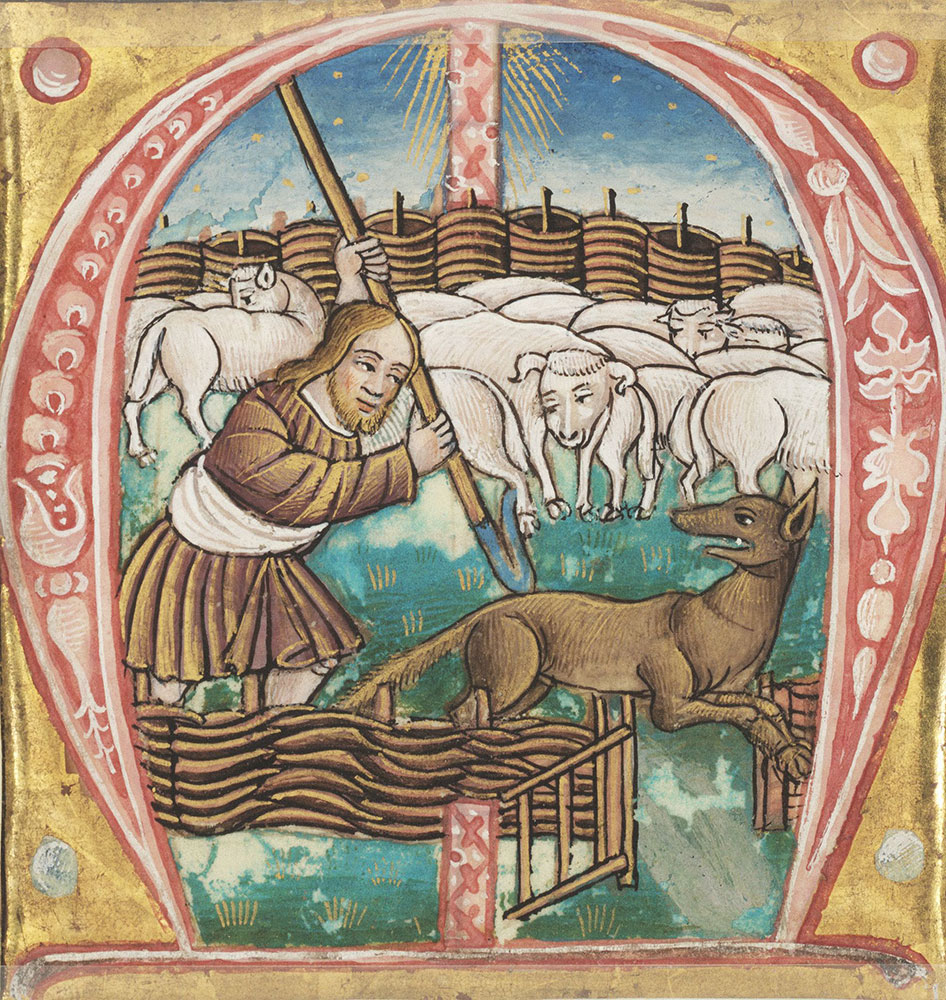
    Initial M depicting the parable of the Good Shepherd from a French illustrated manuscript | Creative Commons, courtesy the Free Library of Philadelphia.

    What’s more, the Word of God tells Ezekiel that His sheep are more than just those living in Israel: “I will bring them out from the peoples and gather them from the countries, and will bring them into their own land; and I will feed them on the mountains of Israel, by the watercourses, and in all the inhabited parts of the land. 14 I will feed them with good pasture, and the mountain heights of Israel shall be their pasture” (Ez 34:13-14a). Here we see a different and broadened definition of God’s people than “descendants of Abraham and Jacob” or “house of David” or “of the twelve tribes.” In other words, the genetic heritage that grants the Jews the status of Chosen People is not equivalent to the group of people who will be saved (here called “my sheep”). I make this point not to diminish in any way the important status of the Chosen People, but to point out that the eschatological end God envisions for humanity is not restricted to the Chosen People. God reveals Himself as the great “I AM,” the only God, to the Chosen People so that they can nurture this truth over the millennia and become a shining light for all of the nations. As He tells Isaiah: “I will give you as a light to the nations, that my salvation may reach to the end of the earth” (Is 49:6). Thus, Israel as a light to the nations, is there precisely so that salvation may reach beyond it, “to the end of the earth.”

    Jesus is the promised “light to the nations.” Remember, when he is presented in the Temple as a child, holy Simeon took him in his arms and declares Jesus to be, “a light for revelation to the Gentiles and for glory to your people Israel” (Luke 2:32). Thus, we can see the trajectory of these various threads. When Ezekiel relates that God will feed his sheep “on the mountains of Israel,” he is referring to the spiritual wisdom and revelation of Judaism. Those sheep from outside of the Jewish nation will be brought to “the mountain heights of Israel” to feed on the good pasture of their spiritual wisdom. In this manner, Jesus glorifies Israel while being a revelation for Gentiles. He does not create a new religion but fulfills all of the prophecies and promises within Judaism: “Do not think that I have come to abolish the law or the prophets; I have come not to abolish but to fulfill” (Matt 5:17). He upholds Judaism while making way for the eschatological expansion of the faith to the rest of the world. So, yes, His ministry is primarily, overwhelmingly, focused on Jews, Jewish towns, and Jerusalem; His chosen twelve disciples stand as the chosen twelve tribes, and all of His Words and works are those that He seeded in the minds and mouths of the Jewish prophets over the millennia. But multiple times throughout the gospels we receive the message that the reign of God that He brings is open to non-Jews: the exorcism of the Canaanite woman’s daughter, healing of the Centurion’s servant, etc.

    The story of the Canaanite woman in Matthew, chapter 15 is especially interesting because some people use one of Jesus’s quotes to show that He only came for the Jews: “I was sent only to the lost sheep of the house of Israel” (Matt 15:14). But that interpretation takes the quote out of context. This is actually His answer to his disciples who want Him to send the woman away — it’s a statement that reveals what they’re thinking and not a fulfillment of their request to dismiss her. In fact, after she shows perseverance in asking for His help, He commends her and grants her wish for her daughter. The lesson is clearly a contrast: the woman’s perseverance of faith stands out against constant skepticism and lack of acceptance from the Jews. Jesus makes abundantly clear that His saving work is open to all who have faith.

    That’s why we have to pay special attention to His words in yesterday’s gospel: “I have other sheep that do not belong to this fold. I must bring them also, and they will listen to my voice. So there will be one flock, one shepherd.” Who are His sheep? “Other sheep that do not belong to this fold” may mean dispersed Jews in other lands, or — as we see fulfilled in the Acts of the Apostles — the “Greeks,” the Gentiles. Jesus establishes the fact that His sheep “know” him like He knows the Father, that they will “listen to my voice.” This spiritual, mystical knowing does not rely on genetic Jewish heritage. This is the knowledge that the Creator places in our souls at the moment of our creation. This is our response to God within us, cultivated as we listen to His call and by our prayers, our desire, our thirst.

    In today’s gospel, Jesus repeats this language and makes even more clear that His sheep are not simply those of Jewish heritage. He says to the Jews gathered around Him: “you do not believe, because you are not among my sheep. My sheep hear my voice; I know them, and they follow me.” So, not only are the sheep to be saved and brought into this “one flock” open beyond those of Jewish heritage, some Jews will actually be excluded from the flock. The Chosen People kept the flame of God’s revelation to humanity alive, but the sheep to be saved are those who respond to God with all their hearts, minds, and souls — a different set of people not determined by the status of Chosen People.

    I Am the Good Shepherd (contemporary), Jackson Studios | image from etsy.com.

    Once again, we hear the Word of God before He is incarnated as Jesus telling Ezekiel these same things hundreds of years earlier: “I myself will judge between the fat sheep and the lean sheep. 21 Because you pushed with flank and shoulder, and butted at all the weak animals with your horns until you scattered them far and wide, 22 I will save my flock, and they shall no longer be ravaged; and I will judge between sheep and sheep.” Thus, the Jews themselves will be sorted according to their acts and their hearts.

    This message was lost in the fervor of the Jews being astounded at Jesus’s claim that “The Father and I are one.” They want to stone Him right after He says this. And then, of course, this great “blasphemy” (aka truth!) is used as the rationale for His Crucifixion. Therefore, this message did not sink in right away for the first Jewish followers of Christ who made up the Apostolic Church. When evangelizing throughout the Near East, at first they went only to Jewish synagogues. Today’s first reading tells us that the disciples fleeing the persecutions in Jerusalem “went as far as Phoenicia, Cyprus, and Antioch, preaching the word to no one but Jews.” But some preached Jesus Christ to the “Greeks” in Antioch (meaning non-Jews, aka Gentiles). This is the first record of deliberate evangelization to non-Jews. The author writes: “The hand of the Lord was with them and a great number who believed turned to the Lord.” What does it mean that “the hand of the Lord was with them”? Throughout the Bible, the hand of God signifies protection, blessing, and anointing. God tells Isaiah: “I will strengthen you, I will help you, I will uphold you with my victorious right hand” (Is 41:10b). Thus, those preaching to the Gentiles in Antioch are strengthened and protected by God in their efforts.

    So, when the church in Jerusalem hears of this unprecedented work and sends Barnabas to investigate, he “saw the grace of God, he rejoiced and encouraged them all to remain faithful to the Lord in firmness of heart.” Let’s remember that Jesus promised, “I know mine and mine know me,” so Barnabas, filled with the Spirit, recognized that same Spirit of Christ alive in the work of the disciples preaching to the Gentiles. This mystical knowledge, so palpable at Pentecost, continues to pulsate through the early Church, calling the sheep who thirst for God, Jew and Gentile alike. 

    This is no small thing. As Peter tells us in the episode that yesterday’s first reading summarizes, “it is unlawful for a Jew to associate with or to visit a Gentile” (Acts 10:28). But God provides Peter with a vision as he prays in which all of creation descends from heaven on a white sheet. It is a sign of the purification of Creation by Jesus’s great sacrifice. With Christ as the new Adam, Creation itself is re-sanctified and is no longer unclean. God’s voice tells Peter, “What God has made clean, you must not call profane.” The ripple effects of the Christ event in the fabric of history are making themselves felt in this revelation to Peter. 

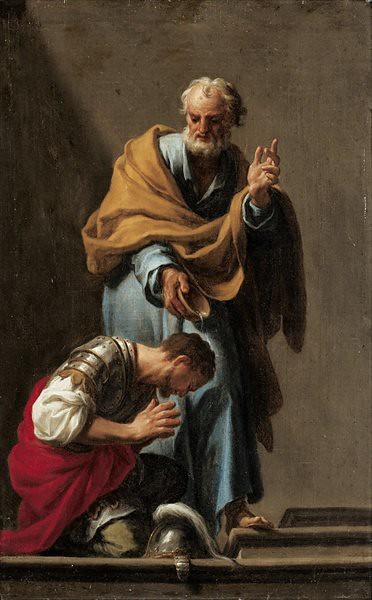
    Peter Baptizing the Centurion Cornelius (1709), Francesco Trevisani | image from flickr.com.

    Guided by the Holy Spirit, Peter ministers to Cornelius the centurion and his household of Gentiles. Thanks to his vision, Peter is beginning to understand what Jesus was saying when he said, “I have other sheep that do not belong to this fold. I must bring them also, and they will listen to my voice.” Cornelius tells him that he was praying at his house when an angel appeared and tells him that his prayers were answered and he should seek out Peter. This is a man who is spending time with God, who yearns for Him; a man who is one of the sheep. So, Peter admits, “I truly understand that God shows no partiality, 35 but in every nation anyone who fears him and does what is right is acceptable to him” (Acts 10:34-35).

    Jesus promises his Apostles that the Holy Spirit will be sent to them after He ascends to heaven, and indeed this is what happens in the house of Cornelius: “While Peter was still speaking, the Holy Spirit fell upon all who heard the word. 45 The circumcised believers who had come with Peter were astounded that the gift of the Holy Spirit had been poured out even on the Gentiles” (Acts 10:44-45). This is another Pentecost moment, and here the Holy Spirit descends upon Gentiles! Even the grumbling Jewish members of the fledgling Church in Jerusalem are mollified when they hear that the Holy Spirit was present to the Gentiles in the same manner He came to them: 

    [Peter said]: “If then God gave them the same gift he gave to us
    when we came to believe in the Lord Jesus Christ,
    who was I to be able to hinder God?”
    When they heard this,
    they stopped objecting and glorified God, saying,
    “God has then granted life-giving repentance to the Gentiles too.”

    The last two days’ worth of readings presents to us the growth of the Church beyond the Jewish community within which Jesus Christ came and ministered. It shows that the Spirit didn’t “force” a growth outside of the Jewish communities (as some scholars argue) but that this was a Spirit-fueled unveiling of a promise given to the Jews by Ezekiel and then Jesus. This idea of the eschatological sheep in God’s flock being defined outside of the strict genetics of the Jewish race was always present in God’s teaching. Just like the Holy Spirit came to infuse the Apostles in the upper room with the grace, wisdom, and courage to start their ministry in Jerusalem, the Spirit came to expand this grace to include Gentiles.

    The growth of the Church unfurled precisely in the order promised by Christ, with the undeniable logic of the grain of wheat, dead to the earth but rising again in great bounty. No other gospel makes this as clear as the gospel of St. John, which is one of the reasons I find it so appealing. We find in the very first chapter, through the mouth of John the Baptist, that Jesus’s saving action would be for the benefit of the world, not just the Jewish nation: “Here is the Lamb of God who takes away the sin of the world!” (Jn 1:29). The first epistle from John also makes the scope of His mission crystal clear: “he is the atoning sacrifice for our sins, and not for ours only but also for the sins of the whole world” (1 Jn 2:2).

    In my mind, the move of some theologians to reduce the mission of Jesus to only gathering the nation of Israel to fulfill the prophecies pertaining to the Jewish God is too limiting and deaf to the revelation of the Spirit after the Resurrection. It is of the same ilk as writings that attempt to distill some version of a historical Jesus from the Christianity that developed after Jesus. Historical underpinnings are very important, as is the deep spiritual Jewish formation of the culture within which Jesus was born. But an attempt to find a Christ “before” or “outside of” Christology simply denies the fullness of God’s entry into the stream of human history.

  • The Flesh is the Hinge of Salvation

    Friday the Third Week of Easter: Acts of the Apostles 9:1-20, John 6:52-59.

    Today’s readings are two incredibly important passages; one describes Saul’s transformation from persecutor to “chosen instrument” of Christ, and the other gives us Christ’s words that insist upon the literal ingestion of his flesh and blood, which we Catholics likewise insist is present in the Eucharist. What emerges as we hear these readings is a persistent focus on the need for the body, the flesh, to be purified and perfected as we are on our way to salvation.

    In the first reading, we find “Saul, still breathing murderous threats against the disciples of the Lord.” He asks the high priest for letters to go to synagogues in Damascus that would give him the authority to arrest Christians and bring them back to Jerusalem in chains. He is zealous in his desire to stamp out the new Way of Jesus Christ. But, like prophets before him (Noah, Jonah), God has radically different plans for him. We are familiar with the story: a light flashes all around him and he falls to the ground (no horse is mentioned, but that has somehow crept its way into the story). He and his companions hear the voice of Christ: “I am Jesus, whom you are persecuting. Now get up and go into the city and you will be told what you must do.” 

    The Conversion of Saint Paul, detail (c.1600), Caravaggio | Wikimedia Commons.

    Paul’s conversion has a significant physical aspect: “Saul got up from the ground, but when he opened his eyes he could see nothing; so they led him by the hand and brought him to Damascus. For three days he was unable to see, and he neither ate nor drank.” Whenever we encounter blindness in our scriptures, we can understand it to signify spiritual blindness, which certainly can be applied in this instance. But note here how the physicality of the blindness reduces Saul from this puffed up, powerful persecutor so someone who must be led by the hand. He becomes absolutely dependent on people, like a child. This is undoubtedly part of the penance of his conversion, and by taking the time to explain this aspect of the story, the author of the Acts of the Apostles is taking on the same insistence of the physicality of our faith that we will encounter in the gospel.

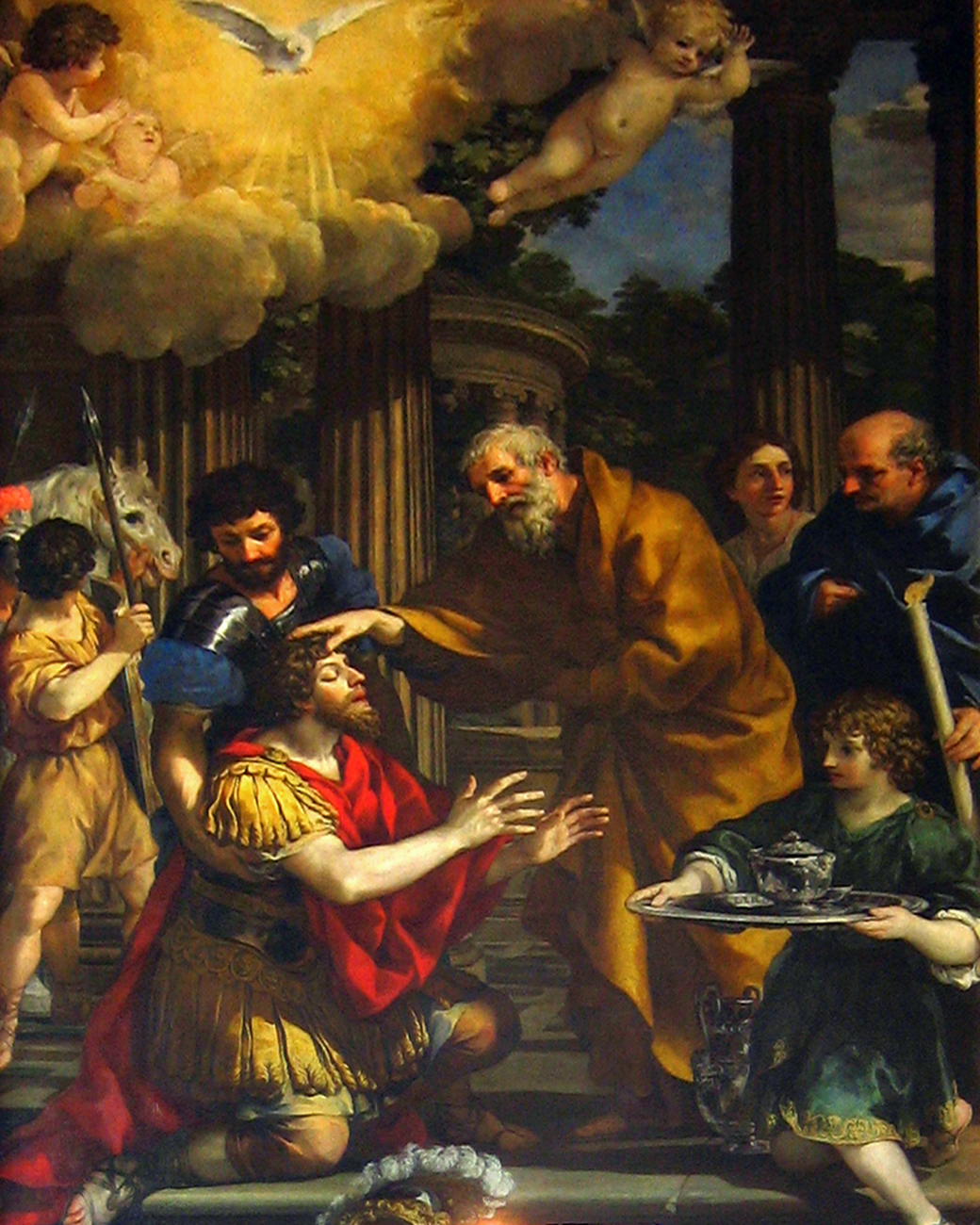
    His physical and spiritual dependence is again emphasized when he is told that Ananias, a follower of the Way, will be the one to heal him. Saul is made vulnerable, delivered into the hands of the very people he set out to imprison. And how do disciples of Christ respond to persecutors? They turn the other cheek, they offer love, and in this case, spiritual and physical healing. Again, we hear very physical details about the healing: “Immediately things like scales fell from his eyes and he regained his sight. He got up and was baptized, and when he had eaten, he recovered his strength.” The scales are a physical manifestation of the spiritual mire, the spiritual blindness of this man who was a primary witness of the martyrdom of St. Stephen. It’s as if his sin and self-imposed blockages to the Word of God were crystallized, precipitated out of solution, pulled out like a filter that cleans filthy water. Directly after he gets up, able to see, we hear that he is baptized. Even though this seems to be reported casually, this is no small matter. Baptism in the name of Jesus Christ marked a full conversion of a person to the new Way and a direct rebuke of the chief priests and scribes who had murdered Christ. By accepting baptism, Saul was making a 180-degree turn towards Christ and away from the high priest whose approval he had just sought.

    Another aspect of Saul’s conversion is his self-imposed fasting. Fasting was an important aspect of having an appropriate “fear of God” in the Jewish tradition. The fast, or taʿanith, was specifically when atoning for sins, to accompany contrition in the heart, and in supplication during earnest prayer (see our reflection Esther: Model of How to Petition the Father). Any reader familiar with Jewish tradition (which continues in Christian tradition) would understand that Saul would be searching his heart in atonement over those three days and would be deep in supplication and prayer with God. As St. Isaac the Syrian wrote, “When a man begins to fast, he straightway yearns in his mind to enter into converse with God” (Homilies 37, in Ascetical Homilies, 171). Yet once again we are tuned into the physicality of Saul’s conversion, that the once virile man who dragged Christians to prisons in chains had been reduced to a weak, blind, and utterly dependent child. This is just the beginning of the Way of the Cross. As Jesus tells Ananias, “I will show him what he will have to suffer for my name.” A more literal translation of this passage is “I will show him how much it behooves him to [or he must] suffer for my name.” But the point isn’t penance, it’s deliverance from the reign of death and into the salvation found in the reign of God. For Saul is cured of his blindness, he is made strong again at the hand of Jesus’s disciples, he is baptized into the inheritance of everlasting life. It’s simply that the Way of the Cross naturally involves suffering, which the one who suffers comes to understand is nothing more than purification in the Name of the Lord.

    Ananias Restoring the Sight of St. Paul (1631), Pietro da Cortona | Wikimedia Commons.

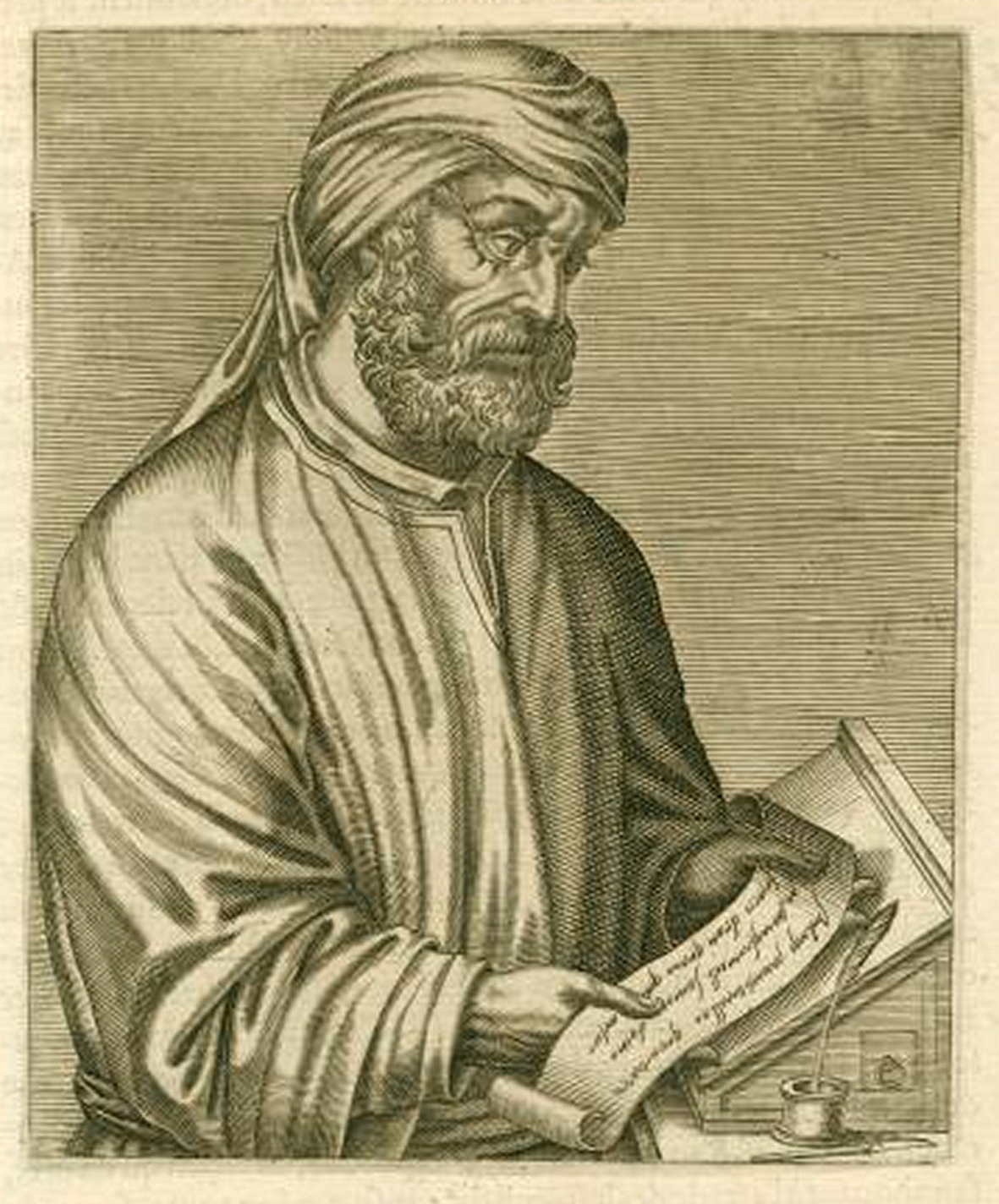
    Our Church Father Tertullian provides us with a nice way to think about a central truth in our faith. The Catechism of the Catholic Church quotes him as writing: “The flesh is the hinge of salvation” (CCC, 1015). The fuller context of the quote is as follows: “no soul can ever obtain salvation unless while it is in the flesh it has become a believer. To such a degree is the flesh the pivot [hinge] of salvation, that since by it the soul becomes linked with God, it is the flesh which makes possible the soul’s election by God. ” (De Resurrectione Carnis translated by Ernest Evans, 8). Written sometime around 220 AD, this passage summarizes a “take-home message” from Christ’s ministry and the scope of salvation history leading up to it. The flesh is clearly central — as Tertullian put it, a pivot, fulcrum, or hinge — to salvation, a phenomenon of the soul. Let’s unpack this. First, the soul is seamlessly united to the body in this life; the union of the soul (breath of God) and the body (clay or dust of the earth) is what makes me a person. The body is intimately entwined with the soul and thus it is part and parcel of our connection to God as defined at creation. Second, Christ spoke again and again about the importance of accepting God and the Way while alive here on earth, before the death of the body. More than just accepting God, we are called to act with charity towards our fellow humans (charity being a perfect reflection of the outpouring love that is God). In other words, what we do while we have these bodies matters. Our faith in God and our works of mercy and charity secure our salvation. Both faith and works happen while our personhood inhabits the bodies we have been given. Thus, “the flesh is the hinge of salvation” since without the actions of the flesh, salvation could not be secured.

    I have to address one other item before we return to today’s readings. The title of Tertullian’s work is translated as “The Resurrection of the Flesh,” and the question inevitably turns to what happens after our death — if we achieve salvation, is our very flesh raised from the dead? This has been debated since the earliest days of the Church. St. Paul has a strong opinion that he relates to the Corinthians: “What is sown is perishable, what is raised is imperishable. 43 It is sown in dishonor, it is raised in glory. It is sown in weakness, it is raised in power. 44 It is sown a physical body, it is raised a spiritual body. If there is a physical body, there is also a spiritual body” (1 Cor 15:42-44). He makes himself even more clear a few verses later: “flesh and blood cannot inherit the kingdom of God, nor does the perishable inherit the imperishable. 51 Listen, I will tell you a mystery! We will not all die, but we will all be changed” (1 Cor 15:50-51). But 300 years later, St. Jerome and St. Augustine insist that our bodies are indeed resurrected on the last day, and the medieval scholastics agree with them. So we read in the Catechism of the Catholic Church a quote from the Council of Lyons in 1274: “We believe in the true resurrection of this flesh that we now possess” (CCC, 1017). But this has been debated up through our contemporary times. St. Pope John Paul II wrote what is probably the most reasonable way to speak of our resurrection and eternal life: “It is always necessary to maintain a certain restraint in describing these ‘ultimate realities’ since their depiction is always unsatisfactory” (General Audience, 1999). In other words, we can affirm that whatever comprises our “person” will rise to have eternal life with God. In this life on earth, our “person” is understood to be a seamless union between soul and body, but will that be the same case (or the same body) at our resurrection? We will only know for sure on the Last Day!

    Quintus Septimius Florens Tertullianus, engraving by unknown artist | Wikimedia Commons.

    Back to our readings. I am struck by how Christ insists upon the fundamental physicality with which we live our lives “on the Way.” Saul is to become one of the great examples of a man beaten, imprisoned, starved, shipwrecked, and rejected repeatedly while at the same time joyously bringing the light of the Word of God to the world. How can we expect the flesh to endure such things?  Who would want to endure such things?

    Jesus gives us the answer in today’s gospel, the culmination of the Discourse on the Bread from Heaven: “Just as the living Father sent me and I have life because of the Father, so also the one who feeds on me will have life because of me. This is the bread that came down from heaven. Unlike your ancestors who ate and still died, whoever eats this bread will live forever.” Here is the great promise, the New Covenant. The one who feeds on me will have life because of me. What’s more, this bread that is His Flesh and Blood guarantees life forever. OK, pretty good reason to have our own bodies endure the Way of the Cross. Also, the promise includes a wellspring of life that we must understand extends to this life, not just life in Heaven. This food sustains and uplifts, rejuvenates and expands a person like no regular food can do.

    The great question that has splintered groups from the Catholic Church is whether Jesus refers to symbolic flesh or literal flesh. We Catholics believe that He didn’t just stop at a symbolic or spiritual understanding of eating His Flesh and Blood. He says, “my Flesh is true food, and my Blood is true drink. Whoever eats my Flesh and drinks my Blood remains in me and I in him.” This is a response to the Jews saying, “How can this man give us his Flesh to eat?” He doesn’t respond by saying “I am referring to my flesh symbolically,” but instead repeats Himself, rephrases Himself, never losing the stubborn physicality of the message. Of course, His Flesh and Blood is spiritual food, but He also insists that it is His Body, His Flesh and Blood, the same physical thing that He brings to the Cross.

    Breaking the Bread at Emmaus, a mosaic by Fr. Marko Ivan Rupnik, SJ | image from diocesi.torino.it.

    What are we to make of this? Should we be grossed out and turn away like “many of his disciples” after they hear this teaching? Certainly not! We are not cannibals who feast on bloody flesh for flesh’s sake. The Eucharist is an unbloody offering of the flesh, done sacramentally and reverently, where the Holy Spirit is the means and the goal. Christ’s way of giving the Spirit to us through his flesh is an orienting reminder to who we are as Christians, willing to sacrifice our very selves to the Father. It is an insistence that the flesh matters. Just like fasting and mortification of the flesh are ways to purify the body, not in disdain for it but in acknowledgment of its intimate union with the soul, we can see how Christ’s offering of himself as food is another acknowledgment of the importance of our bodies. The body must be nourished by the right food — spiritual food — if it is to be ready to walk the Way of the Cross.

    As Tertullian writes, the flesh is the hinge of salvation. We must not hide that, we must exult in that. Our greatest sacrament embraces Christ’s sacrificed Flesh and Blood, brought to the Father with greatest reverence, Who in turn offers it back to us as the Bread from Heaven. Alleluia! 


  • Drawn by the Father

    Thursday in the Third Week of Easter: Acts of the Apostles 8:26-40, John 6:44-51.

    Today’s readings describe the action by which we find salvation in Jesus Christ, and it starts by being first drawn by the Father. St. John gives us Jesus’s description of this action in the Discourse of the Bread from Heaven, and the Acts of the Apostles provides a concrete example in the Ethiopian eunuch master of the treasury. 

    Let’s start with the gospel. This is the end of the Discourse of the Bread from Heaven in John that we have been reading all week. Let’s recall that this discussion with the crowds begins with a provocation by them. They ask Jesus for a sign so that they can believe that He is the Chosen One from God. They say, “What work are you performing? Our ancestors ate the manna in the wilderness …” as a way to bring up Moses’s greatness in comparison. This gives Jesus the impetus for discussing bread from heaven. He reminds them that it was not Moses, but God the Father who provided the manna, and that the bread God provides in the form of his Son is bread that does more than just fill your belly: this bread provides everlasting life.

    The Gathering of the Manna (1460-1470), Master of the Gathering of the Manna | Wikimedia Commons. Note how this medieval painting depicts the manna in a decidedly communion host-like shape.

    At His words, the crowds grumble, murmur, whisper, express discontent (the Greek word used is egongyzon). In the verse prior to the ones we hear today, they say, “Is not this Jesus, the son of Joseph, whose father and mother we know? How can he now say, ‘I have come down from heaven’?” Jesus does not take offense. We’ve already seen Him deal with this same type of disbelief in His hometown of Nazareth (see the reflection A Prophet in His Own Land). His response simply turns their questioning back on themselves. He says, “No one can come to me unless the Father who sent me draws him.” In other words, if you’re really wondering about the truth of what I’m telling you, search first for the Father in yourself. In the next verse, He quotes Isaiah 54:13: “They shall all be taught by God,” and in so doing demonstrates that His coming — and their acceptance of it — has been set up throughout the history of their people. If they had listened to the prophets and more importantly the Father, they would have no question in their hearts about what he’s saying. There would be no egongyzon.

     I love the phrase Jesus uses to describe how the Father works: He draws us. For the Jews, God had been working for millennia through the prophets, the judges, the kings, and the multitude of signs and wonders He gave them. His many covenants with the Jewish patriarchs were meant to draw the Jewish nation to Him, in heart and mind. By quoting the prophets, Jesus is reminding them of God’s active role in drawing them to Him.

    But God draws all of humanity, at all points in history. This is evident most plainly in the beauty that we encounter in the world. Whether the sublime beauty of a rainbow or mountain range or the artistic beauty of a painting or cathedral, beauty itself is the creative gift of God in the world. We have a gut-like reaction to something outside of us. Whatever the beautiful thing is, it is fundamentally outside of us and fills us with a sense of wonder and appreciation for something other. Beauty is an antidote for self-absorption, one of the steps required as we encounter holiness. As we embrace and encounter beauty, we inevitably open ourselves up, specifically in the direction of wonder and appreciation, and these are attributes of the “awe” of God and the “fear” of God. Beauty is a mode by which God pulls and draws us to Him. 

    Nasturtiums (1957), Ansel Adams | Creative Commons, image from superkintaro.tumblr.com. Who can deny that the beauty of creation beckons to us? Whether form, spacing, color, texture, or a combination of these and more, there is something arresting that pulls us out of our headspace and makes us stop to gaze, to wonder, to connect. This, we must all realize, is God drawing us to Him. How can we respond?

    I don’t think that beauty is the only way God draws us to Him (as the medieval scholastics amply laid out, goodness and truth are equally “transcendent” qualities found in God and in creation that draw us to Him), but I particularly like it. What’s so interesting about beauty, what’s so Catholic about it, is that it operates concretely in the world but at the same time clearly points to something that’s difficult to describe … for lack of a better word, something spiritual. The Catholic faith, like beauty, is firmly grounded in the world (it does not see the body as evil) yet equally embraces the spirit and the indescribable (i.e., God). If the core description of beauty is that something earthly and created exists in a way that points to something transcendent and spiritual, then Jesus Christ is the ultimate beauty, precisely because this body-pointing-to-heaven movement is made so transparent. 

    In today’s reading, Jesus clarifies that not only is being drawn to God a prerequisite to coming to Him, but in fact an inevitability: “Everyone who listens to my Father and learns from him comes to me.” This action of first being drawn to the Father and then finding your way to Christ is illustrated in the first reading from the Acts of the Apostles. This reading is a lovely portrayal of how God is the mover of all things, especially when one is open to receiving Him and doing His will. In this chapter from Acts, we discover that the apostle Philip was a mighty evangelist for Christ. First, he performs exorcisms, healings, and baptisms in Samaria, where he gathers a great following. Then, “the angel of the Lord spoke to Philip,” and commanded him to take a road south from Jerusalem, which he does at once. Note a few things here: Philip does not argue with the urgings of the Lord (via an angel) but is happy to go where he is sent. Second, this is the state of the Apostolic Church after Pentecost: one in body, mind, and spirit with the Lord, actively being led by the Spirit. This is the reign of God on earth, and the incredible spread of His Church is the fruit.

    Philip is encouraged to approach an Ethiopian eunuch from the court of the Queen of Ethiopia. We learn some key facts about him: he has access to the entire wealth of the kingdom, being in charge of her treasury; he is curious and adventurous in the world, traveling to Jerusalem to see the holy city and worship; and he is learned enough to have procured scrolls containing the prophecies of Isaiah. In short, here is a man who has been drawn to the Father. He seeks out the truth and goodness of the holy city of which the entire region knows, he is drawn to further study Jewish holy texts even though he is an outsider to Judaism. Where will the Father take this man now that he has been drawn?

    Philip and the Ethiopian Eunuch from the illustrated manuscript the Menologion of Basil II (c.1000), unknown illustrator | Wikimedia Commons, from the Vatican Library.

    Philip eagerly obeys the Spirit and “ran up and heard him reading Isaiah the prophet.” This man has even learned to read and speak Hebrew! Philip asks if he understands what is being prophesied and the man wisely says he needs a teacher, so he invites Philip into the chariot with him. Being drawn to the Father, he is not suspicious of this solo Jew wandering in the desert but opens himself up, inviting interaction, displaying courage and honesty. The passage is none other than Isaiah’s prophecy of the Savior’s Death:

    Like a sheep he was led to the slaughter,
    and as a lamb before its shearer is silent,
    so he opened not his mouth.
    In his humiliation justice was denied him.
    Who will tell of his posterity?
    For his life is taken from the earth.

    And here we perceive an even deeper drawing in of Philip, in addition to the Ethiopian man. God speaks through Isaiah directly to Philip: Who will tell of his posterity? And again through the Ethiopian man: “I beg you, about whom is the prophet saying this? About himself, or about someone else?” God’s work is never complete, but constantly in action, spilling out His message of love and salvation over and over, through the liturgy, through the mouths of the faithful, and to the ears of the faithful and uninitiated alike.

    It’s a fantastic recounting that “Philip opened his mouth and, beginning with this Scripture passage, he proclaimed Jesus to him.” Certainly, it could have simply said, “Philip proclaimed Jesus to him.” But it is important to note that this was a recounting of salvation history that the Word of God proclaimed through prophets for millennia, culminating in Christ. And it is an important note that the Word of God is an active force (through the Spirit) even now because Philip is just a vessel, a man who opens his mouth, while the true agent of the action is the implied Word of God, the divinity that spills forth from Philip. Where does the “drawing in” action of God lead humanity? Directly to Jesus Christ, as He says in the gospel reading, “Everyone who listens to my Father and learns from him comes to me.”

    Philip the Apostle Baptizing the Eunuch, Treasurer of Candace, Queen of the Ethiopians (18th century), unknown artist | from The Russian Museum in St. Petersburg, image from Flickr.

    And the eunuch, bless his soul, receives the Word of God and believes with an immediacy that would make the skeptical Jews who actually met Jesus blush: “the eunuch said, ‘Look, there is water. What is to prevent my being baptized?’” Wow! That’s some effective catechism, Philip! And Philip baptizes him with water, signaling the repentance of the man’s sins and willingness to enter into a new reality with Christ. Some of the best bits of this joyful story happen after this baptism: “the Spirit of the Lord snatched Philip away [to Azotus on the Mediterranean coast], and the eunuch saw him no more, but continued on his way rejoicing.” The Spirit, ever active during the establishment of the Church, whisks Philip away to the cool coast for more evangelical work. The eunuch, likely suitably amazed, continues on his way, “rejoicing.” How fantastic that his heart is filled with joy at this encounter and baptism — God responded to his being “drawn in” by providing an overwhelming and overflowing grace. And let us not forget that this is the master of the treasury in Ethiopia, symbolic of the conversion of Gentile power to the true source of power in the world.

    This is the activity of God: to provide for us through a gradual unfolding of Himself that culminates in the form of his Son in the flesh, an inexhaustible mystery, an inexhaustible font of grace and blessing, a gateway back to the Father, the source of the liturgy that always continues to provide for us until the end of time. Note that this is not a willy-nilly grace or a mercurial God! He shows us over and over how this was carefully planned, heralded in the days of the prophets and the Jewish patriarchs, carefully seeded in the virgin womb of the perfect Mother as he entered history in the fragile form of a baby. All of this was planned and pre-ordained as a way to prepare humanity to accept the gift of Christ that transforms the world. Now imagine being that gift, the Christ, and trying to explain to the “stiff-necked” Chosen People the import of your ministry. 
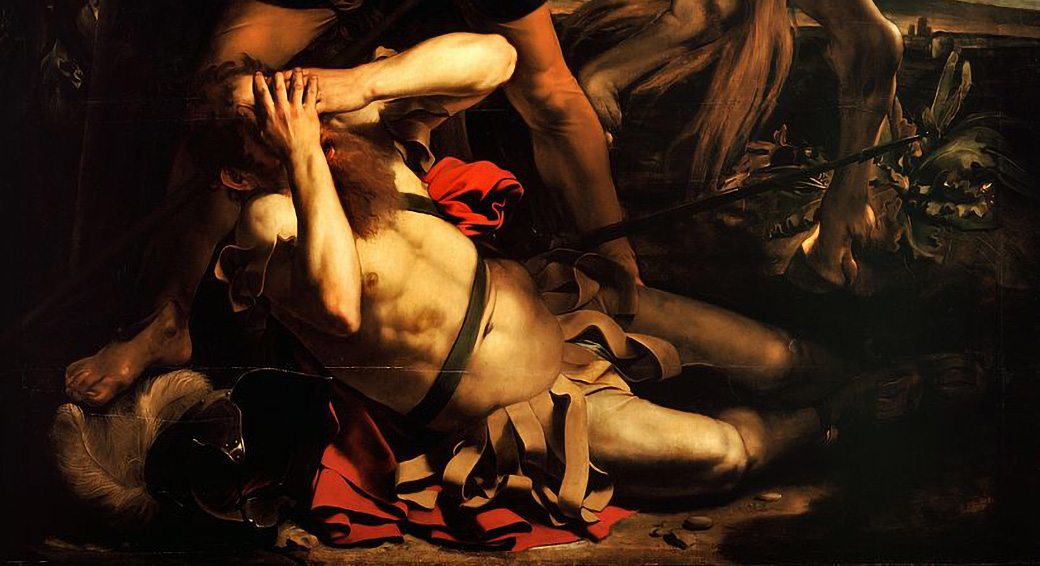
    Back to our gospel reading, Christ attempts to meet them on their level and put things in terms of the manna-from-Moses history they first brought up, “Your ancestors ate the manna in the desert, but they died; this is the bread that comes down from heaven so that one may eat it and not die. I am the living bread that came down from heaven.” To me (and probably you), this seems clear as day. But we have the hindsight of the initiated, those who have inherited millennia of Christology that began when Christ explained to his apostles in the upper room and “opened their minds to understand the scriptures,” (Lk 24:45-49) and to the disciples going to Emmaus, “beginning with Moses and all the prophets, he interpreted to them the things about himself in all the scriptures” (Lk 24:27). As a small side note, I strongly disagree with theologians who claim that a highly-developed Christology such as we find in the gospel of St. John was developed later, in the century following Christ’s death — these passages from Luke and similar ones in the other gospels show us that Christ Himself gave the apostles this understanding of His importance to the world. But the Jews who heard his words in today’s gospel had no benefit of the Resurrection and Christ’s teaching thereafter. The “living bread come down from heaven,” what does this mean when you’re a man standing in front of us?

    Icon of the Supper at Emmaus (20th century), unknown icon writer | image from blogs.ancientfaith.com.

    So Jesus makes it explicit: “whoever eats this bread will live forever; and the bread that I will give is my Flesh for the life of the world.” In tomorrow’s reading, we’ll hear how the astounded Jews questioned him about this eat-my-flesh statement and how He doubles down and explains “my Flesh is true food, and my Blood is true drink.” We’ll also hear how “many of his disciples” leave him because of this “hard” teaching. In today’s reading, he firmly establishes two facts: 1) the living bread come down from heaven grants eternal life, and 2) this bread has a fundamentally sacrificial quality where his very flesh will be sacrificed for the life of the world. Thus, there is a transactional quality to his fleshly sacrifice, like the sin offerings that the Jews had been performing for God for millennia. The difference is that this sacrificial offering will provide eternal life while the former ones done with lambs only remitted the sins of the people for a moment of purification.

    Jesus is providing a teaching about the nature of our Triune God. Each Person of the Trinity perpetually offers the gift of Himself to the other Persons in the Trinity. This outpouring of self in love is the very definition of the Trinity. God draws us to the Son. The Son, in turn, offers Himself back to God. When Jesus says “the bread that I will give,” His gift is to God first, “for the life of the world,” and then also for us as we sacramentally recall and enact this once-and-forever sacrifice in our Mass. My point is that Jesus must teach us about His relationship with the Father while telling us about our own salvation. The sequence of saving action He shares with us is this: first, the Father draws us to Him, second, a natural and inevitable result of being drawn to the Father is to believe in Jesus Christ, His Son, and third, we enter into the divine relationship of love between the Father and the Son through the liturgy when we sacramentally Eat his Flesh and Drink his Blood. We can ponder elsewhere how this devouring of the bread from heaven is a transformational act for our bodies and our souls, a way to physically bring Christ to our bodies while accepting the Spirit into our souls, all in adoration and awe of the Father. But here, let’s ponder that each of these stages of entering into the reign of God demands our free will, choice, and acceptance of the gifts being offered to us. It is our choice to be drawn to God and not resist it. It’s our choice to believe in the Son as we understand that all of the Father’s work in the world points to the Son (just as the Ethiopian eunuch believes). And it is our choice to enter into the liturgy, to join the one, Holy, Apostolic, Catholic Church.

    Blessed are we to learn of God’s plan, to have access to the divine relationship of love here and now, and in entering this divine relationship, to transform the world around us with love!

  • The Work of God

    Monday of the Third Week of Easter: Acts of the Apostles 6:8-15, John 6:22-29.

    In today’s readings, we encounter two men — filled with the Holy Spirit and dedicated to the Father — in the moments before they speak with great eloquence to those who do not understand or believe. In the gospel, it is our Lord and Savior, Jesus Christ, who is the perfect union of mankind with God. In the first reading, it is St. Stephen, a perfect Christian, walking in the footsteps of Jesus and understanding that He is the “gate” to the Father (Jn 10:9 — “I am the gate. Whoever enters through me will be saved”).

    Let’s start with the gospel reading. This passage occurs the day after the feeding of the 5,000; the crowds are looking literally all across the Sea of Galilee for Jesus and find Him at Capernaum. As is the way with Jesus’s ministry, He draws people to Himself but, once there, continuously challenges them to encounter a new reality that He is offering. Today’s gospel reading is the beginning of the great discourse on the Bread from Heaven, His own flesh. For many, it is the hardest of all of His teachings — we will hear at the end of this chapter from St. John that many followers will leave Him because of it. Let’s trace how Jesus begins this difficult teaching.

    Corpus Christi Icon (unknown provenance) | image from catholicsteward.com.

    When the crowds find Him, He cuts to the chase: “you are looking for me not because you saw signs but because you ate the loaves and were filled. Do not work for food that perishes but for the food that endures for eternal life.” He is saying that they essentially want a free lunch, that they want to find Him to fill their bellies. He contrasts this to seeing “signs” of something greater. Then He encourages them to work for a different kind of food, a “food that endures for eternal life.” Let us not misinterpret Him as saying something along the lines of “don’t think of your physical needs, only think of eternity.” He never says in His ministry something like “let yourself die and join me in Heaven.” Remember, He is the Lord of Life, and living as a child of God in the world is central to His message. He is encouraging them to work for “food that endures,” in other words to feed their spirit as well as their body.

    This is an interesting facet of Christ’s ministry. He is solidly focused on bringing salvation to the world (not just keeping it distantly away in Heaven). He bases His proverbs and analogies in the land (the mustard seed, the harvest, the wine, the water, the mountain) and the way people relate (the wicked manager, the thief in the night, etc.). At the same time, He always points to the Father, to the kingdom/reign of God, to a new reality and a new covenant. Thus, while He grounds His teachings in this world, He urges His followers to open themselves up to a greater reality, namely the reign of God.

    This is not something foreign to the Jewish people; their life in the world has always been oriented towards God. But Jesus comes in a time when the law is fetishized by a few experts (scribes, chief priests) in a way that chokes off the saving power of God from the world. Just as they try to trap Jesus in legal arguments, they employ God’s law as a great weight around the necks of the Jewish people. The options available to Jews are to either live under the nitpicky legal codification of rituals or live in the shame of being unclean, impure, or outside of the favor of the experts. This is counter to all of salvation history, where God chooses a people upon whom He gives great favor in order for them to flourish and be a light to all nations. Jesus comes to break through this stalled state where the work of God in the world is stifled. He provides a new “Way” so that life can be lived in the way God intended, so that Israel truly can be a light to all nations.

    Thus, Jesus is often trying to get his followers to break through a “dead” way of seeing things. In today’s reading, He wants them to look beyond the promise of simple food and see the “signs” His miracles represent, namely the creative power of God in the world. They pick up on his command to “work for” a different kind of food, and they respond by asking, “What can we do to accomplish the works of God?” A more literal translation that accounts for their repetition of the root word ἔργα (erga) is “What must we do, that we may work the works of God?” At first glance, this seems like a step in the right direction, perhaps even a noble thing. But remember that Jesus just pointed out that they understand the “work of God” to be feeding themselves. Their request to know “what must we do” still smacks of a limited, selfish drive to get an everlasting food supply. Their hope to “work the works of God” shows how they primarily see this as a type of conjuring.

    Jesus Teaches the People by the Sea (Jésus enseigne le peuple près de la mer), 1886-1896, James Tissot | Creative Commons, courtesy Brooklyn Museum.

    Jesus responds, “This is the work of God, that you believe in the one he sent.” While Jesus will expand upon this statement greatly in the following verses, it stands on its own as a fantastic, compact teaching. First, let’s ask ourselves if He answers their question of “what must we do.” He responds by telling them what the work of God is. There is a difference. They are not ready to be instructed on “what to do” when they don’t even know what the work of God is. They think God’s work boils down to miracles of food or healing — a series of supernatural interventions to ease the life we have on earth. They want to know what to do so they have this miracle-working power. He directs them instead to truly understand what the work of God is. 

    So what does He say the work of God is? He says it is “that you believe in the one he sent.” This is a remarkable saying: the Heavenly Father’s work in the world is to seed the belief in His Anointed One, His Son. The Father’s work is to act within each of us. And this action He accomplishes is belief, or better translated “faith.” The Greek word used is πιστεύητε (pisteuēte), which is a verb form of pistis (faith). So the work of God is that we have faith in Jesus Christ. Here we can see that our work and God’s work are united in the great activity of faith — faith is work, it isn’t easy, it requires help, in fact, heavenly help. In other words, we can glimpse how Jesus’s reply fuses multiple meanings of the “work of God”: it means both the work God accomplishes as well as the “work of God” that we do. These are united in the work of faith.

    And what a remarkable claim out of the mouth of Jesus that God’s work is to believe in Him, Jesus! This is one of those moments when Jesus forces us to either think He’s a self-absorbed madman or, in fact, the Savior. And since He speaks with wisdom, grace, love, and always gives glory to the Father, being a madman doesn’t fit. But why is God’s work to have faith in this one man from Nazareth in 30 AD? This is where outsiders to Christianity often stumble and brush it off as a silly deification of a guy from a detested outpost of the Roman Empire. Let’s remember that when He said these words, there were no Christians yet, so the crowds of Jews who heard it may very well have been thinking the same thing: what an odd thing for someone to say! God’s work in the world is for us to have faith in this guy? 

    But in the same breath, He is clearly not just “some guy.” Apart from the signs and miracles He makes, there is something that draws crowds to Him, that draws people to give up their livelihoods, their pride, their earthly concerns to abruptly follow Him. In everything He does, from preaching to healing, He is set apart from everyone else. In fact, the word Jesus uses when He refers to Himself as “the one whom God sent,” ἀπέστειλεν (apesteilen), means to be sent forth (as in a mission), but also carries the connotation of being set apart. Strong’s Exhaustive Greek Concordance states that apesteilen is “From apo and stello; set apart, i.e. (by implication) to send out (properly, on a mission) literally or figuratively.” God the Father has sent Jesus into the world, has set Him apart from His fellow men, and the reason is to be revealed on the Cross and in the Resurrection.

    So we come back to faith and work. God’s work, our work, is to have faith in the One He has sent. What does this mean to have faith in Him? It must mean that we believe the words that He speaks, but also the signs that he gives us: that feeding 5,000 people is a sign of the overflowing mercy and love of God active in the world, that Jesus Christ brings a new kind of nourishment, sacramental nourishment, that is the way for his followers to be a light for the rest of the world here, on earth, in this time.

    Christ the High Priest Icon (contemporary), unknown icon writer | image from monasteryicons.com.

    As we look back to the first reading in the light of Christ’s words in the gospel, we see that St. Stephen is the manifestation of the “work of God.” He shows us what it means to have faith in Christ. In today’s reading, while we hear of the arguments, resistance, and the false witness of his opponents, we encounter a thrilling serenity in the form of Stephen. “Stephen, filled with grace and power, was working great wonders and signs among the people … [those arguing with him] could not withstand the wisdom and the Spirit with which he spoke.” He appears fully under control, yet filled with power. This power comes from God, not Stephen, and that is the difference. Despite the nasty public accusations, we hear that the Sanhedrin “saw that his face was like the face of an angel.” What a gift to be so united with the will of God, doing the work He calls you to do! It manifests visibly upon Stephen’s face.

    We are told in the verses prior to today’s reading that Stephen is “a man full of faith and the Holy Spirit (Acts 6:5). Here, then is the example and proof of what Jesus meant when he said the work of God is to have faith in the One He sent. This condition of having faith in Christ means that you believe in His Sonship with the Father, you believe in His work of redemption at Easter, in the new state of human history made possible by Him where we can live differently with one another under the reign of God. Stephen is graced by God to be an example for us.

    Of course there are those who do not have faith in Jesus Christ, and those who allow evil to settle in their hearts. That is why there is persecution and suffering and why the reign of God is not yet complete. And Jesus gave us the way to encounter these people: to speak the truth of God’s love and plan for humanity and to leave open the door to repentance. This is what Stephen does in his great speech to the Sanhedrin in the following verses, which is an extended recounting of salvation history in the lives of the Jews, focused on times when they were deaf to God and turned their backs on his providence. He ends with the hard truth that these very men to whom he was speaking murdered the Son of God. 

    The Stoning of St. Stephen (1603-1604), Annibale Carracci | Wikimedia Commons.

    The end for Stephen, as we all know, is his stoning at the hands of these enraged Jews. Yet lest we think that the way of the Cross is nothing but torture and suffering, we will hear in tomorrow’s reading how Stephen looks up to heaven and sees the glory of God and how he meets his end with a certain peaceful unity with God. The way is certainly hard, but when filled with the Holy Spirit, the saints can endure (even joyfully so) the hard way.

    Let’s consider that this, too, is the work of God.

  • God’s Ever-Generative Endeavors

    Friday of the Second Week of Easter: Acts of the Apostles 5:34-42, John 6:1-15.

    Today’s readings place two disparate events in context with one another and reveal the ever-generative aspect of God’s reign. In the first reading, a member of the Sanhedrin is inspired to share some wisdom about the divine nature of the spread of Jesus’s disciples. Seen in the light of the gospel’s loaves and the fishes, this provides a glimpse into the here-but-not-yet-fully reign of God.

    In the Acts of the Apostles, we read the bold teachings of Peter, John, and the other apostles, which quickly lead to the conversion of thousands and jail time for the apostles. After being captured then released, re-captured and released by an angel from jail, and yet another re-capture, today’s reading shows them standing in front of a Sanhedrin that is steaming mad and ready to put them all to death. But here God intervenes in the form of a Pharisee by the name of Gamaliel. 

    Synaxis of the Twelve Apostles (20th century), unknown icon writer | image from greekcitytimes.com.

    Something makes Gamaliel speak up in the face of an enraged Sanhedrin. Perhaps it’s the apostles’ persistence in preaching in the temple despite repeated warnings and arrests. Perhaps it’s the boldness with which the apostles tell the Jews and the council that they are to blame for crucifying the Savior. Perhaps it’s their reply to the council, “We must obey God rather than any human authority” (Acts 5:29). It is likely a combination of these, but, as believers, we know that it is also the action of the Holy Spirit. The Spirit that has so inflamed the apostles with the truth and courage to proclaim Jesus Christ as Lord is also active in the heart of Gamaliel. He, a Pharisee on the council, speaks with a wisdom and courage that mirrors the apostles.

    He begins his appeal to the Sanhedrin with a secular logic: other false Messiahs had been put to death and their followers naturally dissipated. But then he presents a faith-based logic: “if this endeavor or this activity is of human origin, it will destroy itself. But if it comes from God, you will not be able to destroy them; you may even find yourselves fighting against God.” Certainly this logic was always in the back of the minds of the council as they took out one “Messiah” after another — what if one of those actually was the Messiah? Wouldn’t they be “fighting against God”? However, something is happening here that doesn’t just “feel” different but is different in substance. Christ’s sacrifice and resurrection have ruptured history and the liturgy is pouring into the world. The Spirit — the advocate, the Paraclete — is doing the work of the advocate, revealing in the hearts of those who have ears to listen the truth of this new reality. The action of the Spirit is more powerful than fear of disagreement, ridicule, or even persecution. 

    That’s why the Apostles react with joy after being flogged and told not to speak any more about Jesus. They leave the council “rejoicing that they had been found worthy to suffer dishonor for the sake of the name. And all day long, both at the temple and in their homes, they did not stop teaching and proclaiming the Christ, Jesus.” How can we account for this? Are they just masochists? It would be a weird coincidence if the Apostles, as well as so many martyrs and saints, found masochistic pleasure in suffering in the name of Jesus Christ. We can only understand this as something other than personal “pleasure;” it is a sharing in the self-giving love that marks the reign of God. 

    Christ and the Twelve Apostles, from the base of an altarpiece (c.1400), Taddeo di Bartolo | Creative Commons, courtesy the Metropolitan Museum of Art.

    I bring up the idea of the reign of God because this is what is on display in the Acts of the Apostles. I borrow here from the writings of the contemporary theologian Gerhard Lohfink. Jesus’s miracles and message, his gathering of the Twelve and his sacrifice for all, these all point to the reign of God (also translated as the kingdom of God), which He promised was here, available, immanent yet not fully complete. In his book Jesus of Nazareth: What He Wanted, Who He Was, Lohfink provides an extended reflection upon what the reign of God means. One description that I think applies here is his interpretation of the story from the gospel of St. Mark when the poor widow gives her two copper coins and Jesus points out the value of her gift. Lohfink writes:

    the reader of Mark’s gospel is meant to see the widow’s sacrifice against the background of the reign of God proclaimed by Jesus. The reign of God — that means that God turns to human beings totally and without any reservation in order to bring divine abundance to the world. This self-gift of God is a historical event: it is happening now, in Israel and in the new community life Jesus is creating. Therefore the reign of God attracts those who are able to experience God’s overflowing self-gift, so that they in turn give everything they have: their whole heart, their whole existence. The poor widow who gave her two copper coins becomes a sign, a symbol of this “totality” (220).

    Of course the real “totality” of self-gift is Jesus Christ Himself. Many parables and comments throughout His ministry point to the gratuitous and overflowing gift of self that characterize the essence of our Three-in-One God, and characterize the reign of that God that is to be brought to humanity here within history. This is what the Apostles are talking about when they say “for the sake of the name.” The Name of Jesus Christ encompasses His self-gift, His divinity, and His message for the world to reach out and embrace the reign of God.

    Yet Jesus didn’t just say “follow me,” but “take up your cross and follow me.” As Lohfink writes, “It was only in Jesus’ death that this message achieved its proper profundity … the reign of God does not come without persecution, without sacrifice … Ultimately, Jesus’ death lays bare all human self-glorification and thereby also every superficial and presumptuous notion of the reign of God” (38). Once people understand this, then they are able to “rejoice that they had been found worthy to suffer dishonor for the sake of the name,” because they know they are properly participating in the reign of God. Their persecution can become an opportunity to let go of their “selves” and desires as the ultimate truth of Jesus Christ shines forth.

    Pentecost (detail). c.1600, El Greco | Creative Commons, courtesy Museo del Prado.

    For me, it is very gratifying to read the Acts of the Apostles as the realization of the reign of God in the hearts of people here in the stream of time, acting on this earth. Lohfink, for one, feels that this aspect of the reign of God is too often overlooked as we concentrate on the last times and a reign of God that is purely consigned to Heaven. He argues persuasively that this is a reduction of Jesus’s message that leaves behind an important aspect of immanence. He explains that Jesus spoke of the reign being immanent, available, and yet not fully realized because not everyone was accepting the reign of God in their hearts and their lives. I feel that the Acts of the Apostles is a real gift — we get to glimpse how the reign of God, delivered to us with the very real historical sacrifice and resurrection of Jesus Christ, can live here and now on this earth. Of course, it is still incomplete because not everyone has accepted it and because a final judgment is coming.

    As we turn our attention to today’s gospel reading, we can start to contemplate another aspect of the reign of God that we glimpse in the life of the Apostolic Church: the fact that it is everlasting. 

    The gospel is a familiar one. A crowd of 5,000 is gathered to listen to Jesus, and his disciples are incredulous that they could be fed. The meager gathering of a few loaves and fish is given to Jesus and after He blesses them, this small amount of food is passed to the crowd. It miraculously feeds everyone. In fact, in the end, 12 wicker baskets are filled with the leftovers. Much has been said about this episode (and woe to those who deny the miracle and claim that these people simply pitched in what they were hoarding in a type of mass generosity event). This scene is a precursor to the Last Supper and the institution of the Eucharist, the food that will never run out, the very sacramental Body and Blood of Christ. But here, Jesus is not as close to his Passion, after which the meaning of the Last Supper will become clear. Here, we can understand the miracle within the context of his proclamations about the reign of God, which happen in the prior chapter in Matthew’s account of the feeding of the 5,000.

    St. Matthew reports a series of seven parables from Jesus that describe the reign (kingdom) of God.¹ Two of these describe the ever-generative nature of the reign of God: the mustard seed and the leaven. Like leaven, the reign is always actively growing and multiplying; like a mustard seed, it contains the growth potential to become “greater than the herbs and become a tree.” Two of the parables speak of the unsurpassable value of the reign of God: the hidden treasure and the pearl of great price. In both parables, the human who discovers these items (i.e., the reign of God) completely devotes himself to it, selling everything else to possess it. And the remaining three parables refer to the winnowing of the people who have accepted the reign into their hearts from those who have not: the sower, the wheat and the weeds, and the net. In each of these, there is a clear eschatological bent that speaks to the end times, but notably the reign does not wait until the end times to start: the seed on the good ground grows and multiplies, the wheat grows tall amid the weeds, and the net pulls in the good fish with the bad. The point is that the reign/kingdom is here and active for those who choose to claim it, and yet there will be a time of reckoning for people and their choices, so the reign is not yet fully “complete.”

    Parable of the Sower icon (20th century), unknown icon writer | image from blessedmart.com.

    So, how do these parables shed light on the feeding of the 5,000? We see the promise of the reign of God in action. We see the food multiply like leaven or a mustard seed becoming a great tree. What’s more, this is a gift that has been given (the aspect of the self-gift that is so integral to the reign of God), and a gift that was initiated by God (as we ask and give Him thanks). And the people recognize the amazing value of the gift, but their understanding is incomplete. As St. John tells us in today’s gospel, the people say “‘This is truly the Prophet, the one who is to come into the world.’ Since Jesus knew that they were going to come and carry him off to make him king, he withdrew again to the mountain alone.” With the feeding of the 5,000, we have the parable of the sower happening in front of our eyes. Let’s revisit Jesus’s own explanation of the parable:

    When anyone hears the word of the kingdom and does not understand it, the evil one comes and snatches away what is sown in the heart; this is what was sown on the path. As for what was sown on rocky ground, this is the one who hears the word and immediately receives it with joy; yet such a person has no root, but endures only for a while, and when trouble or persecution arises on account of the word, that person immediately falls away. As for what was sown among thorns, this is the one who hears the word, but the cares of the world and the lure of wealth choke the word, and it yields nothing. But as for what was sown on good soil, this is the one who hears the word and understands it, who indeed bears fruit and yields, in one case a hundredfold, in another sixty, and in another thirty (Matt 13:18-23).

    Jesus, as the Word of God, sows the seed of the reign of God through his miracle, and John shows us that it fell among some rocky and thorny ground. The people receive the Word, but will their immediate joy endure? Are they only concerned with wealth and power in the form of a king?

    The Feeding of the Five Thousand (c.1560), Hendrick de Clerck | image from resourceforkidsministry.com.

    The last aspect of today’s gospel I’d like to explore are the only words John ascribes to Jesus after the 5,000 are fed: “Gather the fragments left over, so that nothing will be wasted.” I’d wager that Lohfink would tell us how this displays Jesus’s “gathering of Israel” (which is the title of a chapter in his book). And indeed, His ministry was very deliberately the act of gathering the tribes of Israel to be that mustard seed where the reign of God starts, specifically so that it can then spread throughout the world. What’s more, I think Jesus demonstrates a few other important things: the overflowing generosity of God and his reign and His desire that no one is spared an invitation, that everyone is given a chance to “enter into” the kingdom. The reign of God starts in Israel, but it is meant for all — it is already inevitably spreading beyond the Jewish people (think of the Canaanite woman who says to Jesus, “even the dogs eat the crumbs that fall from their masters’ table,” whereupon He heals her daughter). Jesus will not waste any of the fragments, for the Word is here, the reign is available to us, and it will not erupt into history in vain.

    All of this brings me back to the Acts of the Apostles in a sort of breathless way. Here we have people who get it, who are the seed growing on good ground, who are living in the kingdom of God, under the reign of God. The power, boldness, courage, and joy of these people, even right after being flogged, is contagious! This is the Spirit who has been unleashed in the world in a new way now that the reign of God is at hand. Let us all participate in this wondrous new world!


    ¹ I am persuaded by Gerhard Lohfink’s argument about preferring “reign of God” to “kingdom of God.” He argues,

    In Aramaic, the language Jesus spoke every day, the Greek basileaia reflects the word malkuta. And malkuta is first of all the “king’s rule or reign,” and only secondarily the extent of the king’s rule or a particular territory. With Jesus the concept of “reign of God” has something utterly dynamic about it. The reign of God has an event-character. It is something that happens. It “comes” or “is coming.” For that reason also we should prefer the concept of the “reign of God.” But obviously the notion “kingdom of God” also reflects a certain aspect of the event, namely a realm within which God is establishing his rule. One can “go into” the basileia or “enter into” it (cf., e.g., Mark 9:47; 10:15).  (Jesus of Nazareth, 24-25).