Tag: love

  • The Irrefutable Logic of the Logos

    The Irrefutable Logic of the Logos

    Friday in the Fifth Week of Lent: Jeremiah 20:10-13, John 10:31-42.

    Today’s readings show the inexorable movement of Jesus’s ministry towards the Passion but also the irrefutable logic he provides in his works and words. The take-home message of the gospel narratives seems to be that since humanity can’t accept the divine truth brought into their midst, Jesus must be crucified as a sacrifice on our behalf, not just to fulfill prophecy, but as a very real atonement on our behalf for our rejection of Him, the Spirit, and the Father.

    Jeremiah was a “repent, the end is near!” prophet. The Book of Jeremiah is so interesting in part because it is a first-hand account of someone we’d probably call a crazy person if we saw them on the street corner. In the verse prior to the ones in today’s reading, he explains that he tries not to be that guy and he knows he’s a “laughingstock,” but he can’t resist God’s message within him: “If I say, ‘I will not mention him, or speak any more in his name,’ then within me there is something like a burning fire shut up in my bones; I am weary with holding it in and I cannot” (Jer 20:9). He shares a clear insight into what it means to completely give yourself over to God: “O Lord, you have enticed me,” he says, “you have overpowered me” (Jer 20:7). This is a great example of how we can’t pigeonhole God into a single metaphor or image. He’s not always the benign guiding light or the patient beating heart of love. Sometimes He’s the urgent master, beguiling us with His energy and leading us to preach like wild people (or wear camel hair and eat grasshoppers and wild honey like St. John the Baptist). 
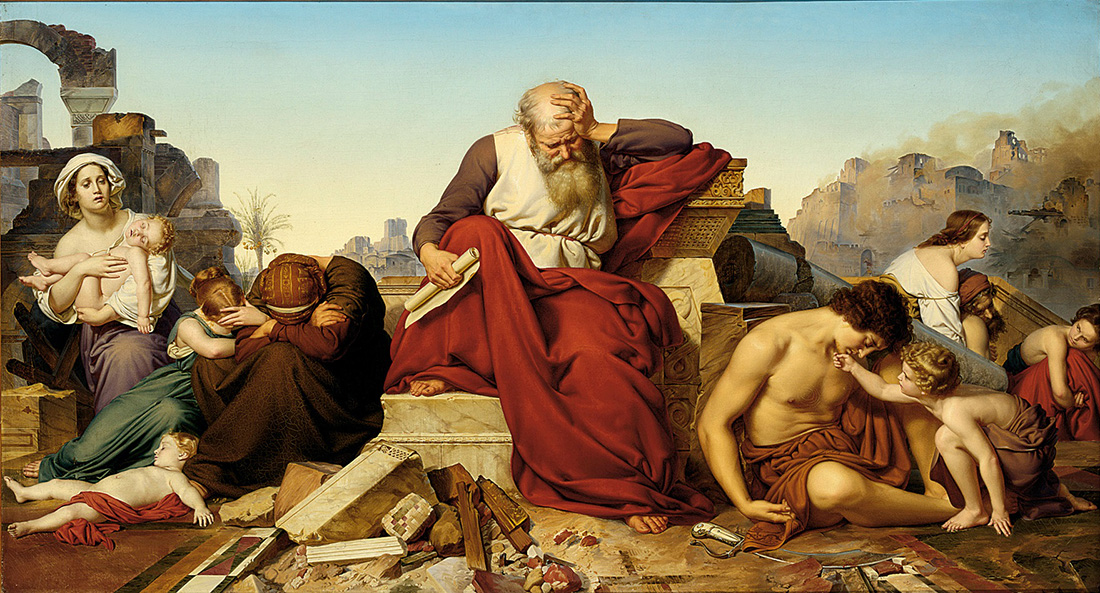
    Jeremiah Seated in the Ruins of Jerusalem (Jeremias auf den trümmern von Jerusalem), 1837, Eduard Julius Friedrich Bendemann | Wikimedia Commons.

    So in today’s reading, Jeremiah laments that he is abandoned by his friends and trapped by his enemies, but he is aware that in a way he brought it upon himself. After all, he pointed out how wicked everyone was and how they would be conquered and enslaved. Not exactly words to win friends. At the beginning of this very chapter, the priest Pashhur beats him and puts him in the stocks for a day because he hears him prophesying. When he is let out, Jeremiah delivers a tirade complete with curse and death sentence for Pashhur. Firebrand, indeed. So we must read today’s lament within this mixed bag of emotions: a man who wants to save his people, but ends up being hated by them. When he tries to hold it in, he can’t resist God, whom he loves but also feels a bit exhausted by. He notes the inevitability that God will triumph over those persecuting him because He is “a mighty champion.” Jeremiah has cast his lot with the Lord over all else, and it’s interesting to hear the way he describes God. The lectionary reads at one point, “O LORD of hosts, you who test the just, who probe mind and heart,” and it seems like Jeremiah is speaking from experience, as one who has been tested in mind and heart. The NRSV Bible translation of this verse is “O LORD of hosts, you test the righteous, you see the heart and the mind; let me see your retribution upon them, for to you I have committed my cause,” and we hear even more clearly the internal dialogue Jeremiah is having with the Lord. He is saying, you’ve tested me, you know my heart and mind, so let me confess that I want to see your retribution on them, for I have long ago committed to you and you know that I am just a petty human doing your work.

    The passage we read ends in a seemingly triumphant way: “Sing to the LORD, praise the LORD, For he has rescued the life of the poor from the power of the wicked!” And I don’t mean to question the legitimate praise and truth in this statement, but when we read the very next verse, omitted from today’s reading, we get quite a different picture of his struggle. He says, “Cursed be the day on which I was born!” (Jer 20:14) and a little later to clarify: “Why did I come forth from the womb to see toil and sorrow, and spend my days in shame?” (Jer 20:18). These are the words of a tortured soul. He knows on a certain level that he is but God’s tool in this life, yet he is also committed to and entranced by God. He knows that he is doing good work but also knows that the Lord has planned the destruction of Jerusalem and the Babylonian Exile for the Jews. Jeremiah teaches us that the life of the prophet is a hard, hard, thing. That God’s love sometimes carries a difficult message, one that will make you hated.
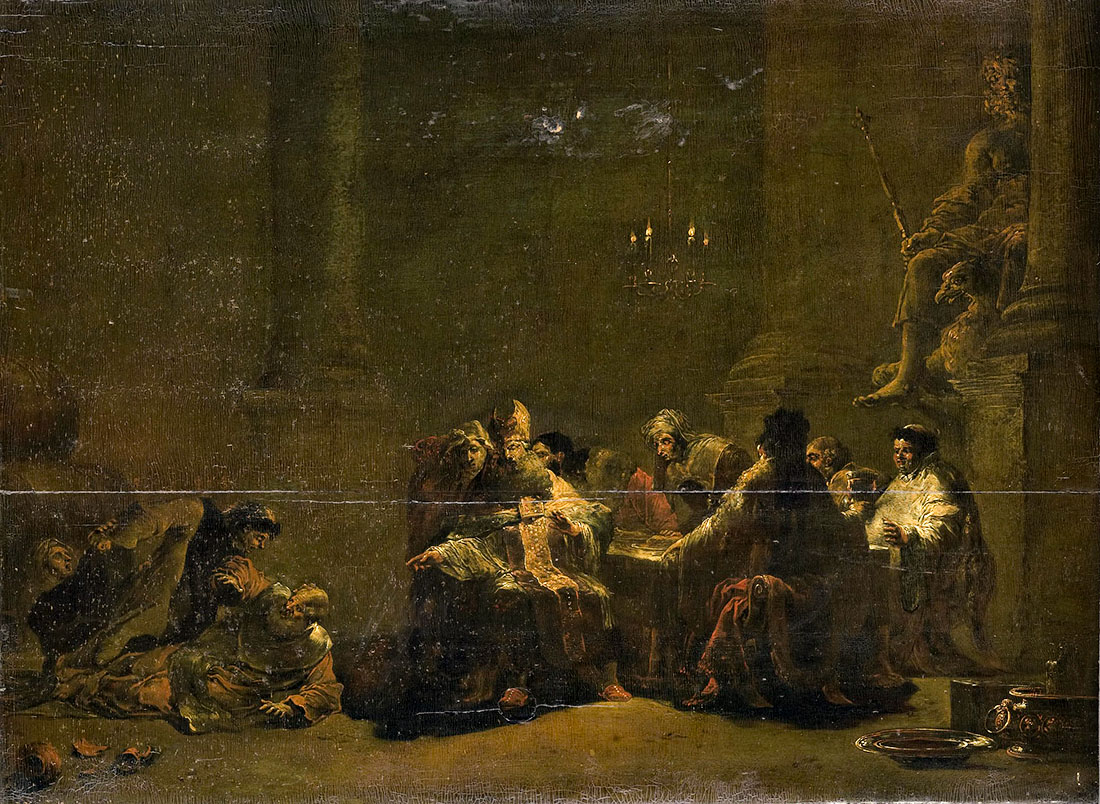
    Pashur Smiting Jeremiah in the Temple (c.1648), Leonaert Bramer | Wikimedia Commons.

    Which brings us to our greatest prophet and Only-Begotten Son of God, Jesus Christ. Much like Jeremiah, he faces some serious hatred and persecution, as the first line of today’s reading states, “The Jews picked up rocks to stone Jesus.” But Jesus handles Himself very differently than Jeremiah. We never get the sense in the gospels that he is mentally tortured, even when crying in the Garden of Gethsemene, or that He wishes to see the Lord’s retribution on the people. Exactly the opposite: He still wants to grant them salvation and forgive them, all the way to His death and triumphantly so with His Resurrection. This is the great game-changer in history. No mere human could do this. It is why God had to send us His Son and have Him take on the flesh of humanity so that He could enact such forgiveness and love when those of us who were merely human would have failed long before.

    How can he accomplish this? The fact that he is the Logos of God has something to do with it. In today’s reading, he displays the irrefutable logic inherent in the Logos. Faced with stoning, He calmly asks, “I have shown you many good works from my Father. For which of these are you trying to stone me?” Logical point one: why would you stone a miracle worker? Point two: these good works have come from God the Father, why would you stone someone bringing you works from God?
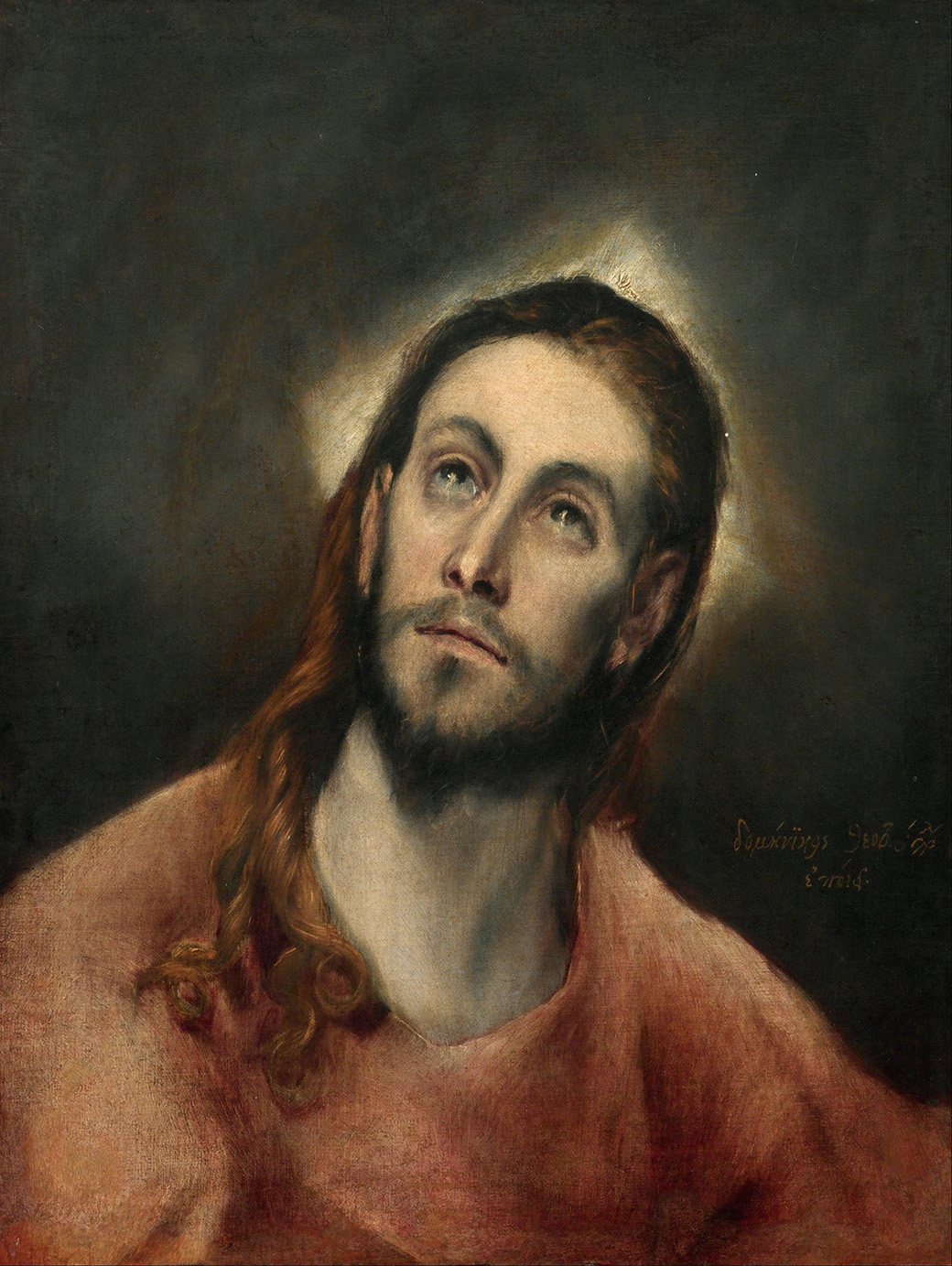
    Christ in Prayer (1595-1597), Doménikos Theotokópulos (called El Greco) | Wikimedia Commons. I love El Greco’s painting of a pure, patient, innocent-yet-all-wise Christ, looking to His Father with eyes full of devoted love, despite all its difficulty.

    They respond that it’s not the good works but his words, that “You, a man, are making yourself God.” He responds first by pointing out that God Himself in the Scriptures (in Psalm 82, to be precise) says “You are gods,” when he is speaking to the highest earthly authorities (judges, kings) to remind them of their moral responsibilities and the fact that they’re failing at giving justice to the weak and not the wicked. Jesus’s point is that if the Scriptures, the very Word of God, in fact, call some humans “gods,” especially when those were being called to the carpet for shirking their duties, then why is it blasphemy for him to call himself “Son of God” when he is enacting the works of the Father? His logic resides in the Scriptures, the Law itself. He goes on to let the works of the Father be his testimony:

    If I do not perform my Father’s works, do not believe me;
    but if I perform them, even if you do not believe me,
    believe the works, so that you may realize and understand
    that the Father is in me and I am in the Father.

    In other words, if I perform no miracles, then you shouldn’t believe me. But look at these works of the Father and you can believe them even if you don’t believe me. Maybe through them, you’d realize and understand when I say I am the Son of God. His logic cannot be questioned. There is no arguing with it. They simply try to grab him. Our lectionary reads, “but he escaped from their power.” The Greek, however, is that he “went forth from” (ἐξῆλθεν / exēlthen) — interestingly, the same verb used to describe the water and blood that “flowed” from his side when he is pierced by a spear on the cross — “their grasp” (literally, their hands). This sense of “going forth” like flowing water reinforces the sense of irrefutability of the logic that we hear from the Logos of God. When water flows, we are somewhat at a loss of how to stop it, just like the Word of God can’t be stoppered and Jesus can’t be arrested before His time. These things are not subject to the will of humanity; they operate on a different plane and they are inevitable.
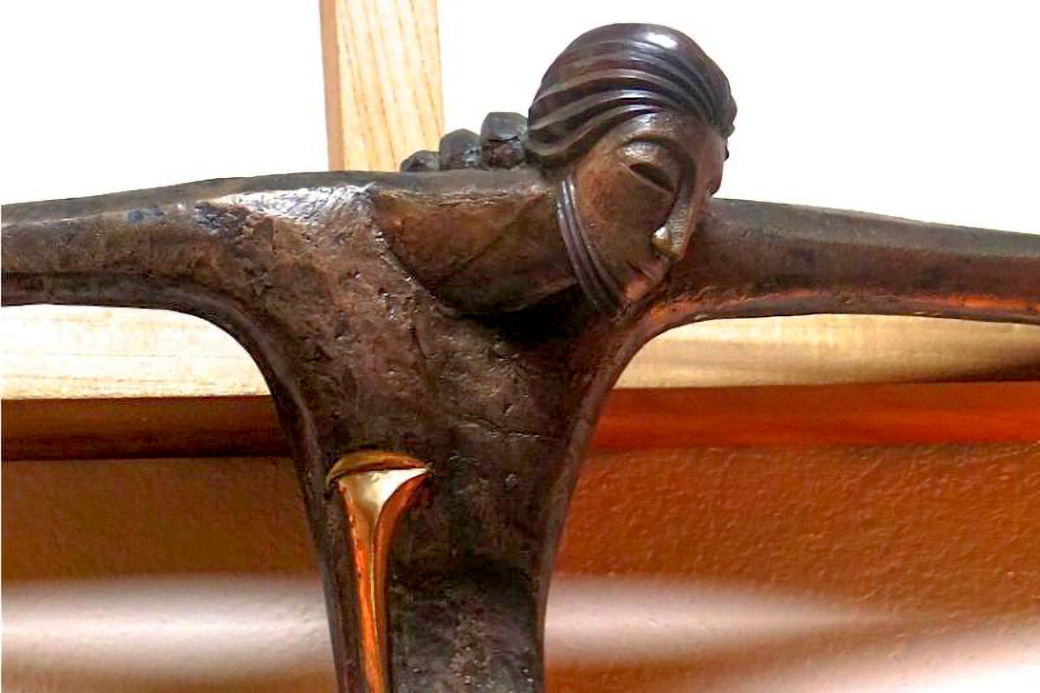
    Crucifix of the Pierced Heart of Jesus from the Mother House Chapel of the Religious of the Sacred Heart of Jesus, Ixelles, Belgium | image from rscjinternational.org.

    As we have read Jesus’s exchanges with the Jews in Jerusalem all week, I am struck by the repeated rejection He received and the unwillingness of the Jews to hear His message. There were many years when I only got the “greatest hits” readings on Sundays, often focused on his miracles and great sayings, and they don’t portray the fuller story of his work as a prophet who is rejected by his people. The gospels are definitely meant to be read as a narrative, straight through, beginning to end. The whole Bible for that matter, for how else can we see the redemption of Jeremiah in the figure of Christ, who experiences his same tribulations but bears it with a patience, a steadiness, and a love that is unequaled by mankind.
  • Agape Has Only One Source: God

    Agape Has Only One Source: God

    Friday in the Third Week of Lent: Hosea 14:2-10, Mark 12:28-34.

    Today’s gospel reading should be very familiar to us. Not only is it one of Jesus’s most straightforward sayings, it’s the answer to what is the “greatest commandment,” which is shorthand for saying, “cut to the chase, what do I need to do to get into Heaven?” Everyone perks up their ears for this answer. It sounds simple; it’s a nice sound bite. But we really have to dig into this to understand what defines Christianity beyond simple morality or concern for the social good.

    Although this episode occurs in all three of the synoptic gospels (Matthew, Mark, and Luke), here in Mark it is the most positive of all the run-ins with scribes in the gospels. A scribe, evidently impressed with his teachings rather than simply seeking to test him or trap him, asks Jesus what the greatest commandment is. Remember, there are 613 commandments in the Old Testament, and the scribes’ job was to know them intimately and come up with complex scenarios to test them as they teach their people. While we can rightly understand Jesus’s response as a joining of two commandments — loving God and loving neighbor — his response has three parts:

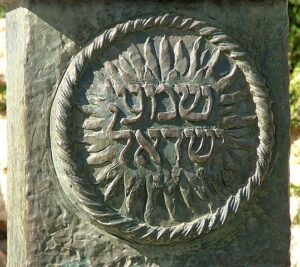
    The Shema inscription on the Knesset Menorah (the Israeli national legislature building in Jerusalem), 1954, Benno Elkan | Wikimedia Commons.

    1a. Hear, O Israel! The Lord our God is Lord alone! This is the opening verse of the Shema (she-MAH), a highly important prayer recited by Jews to open their morning and evening prayer. It is spoken by Moses in Deuteronomy 6:4. Praying the Shema is a religious commandment in itself (a mitzvah). This prayer distinguished our God as only one in the midst of a world dominated by polytheism. But it applies today; the gods vying for our attention may not be Baal, Ishtar, or Zeus, but they most certainly are self, as seen in pride, power, riches, and pleasure.

    1b. You shall love the Lord your God with all your heart, with all your soul, with all your mind, and with all your strength. This is the continuation of the Deuteronomy passage (6:5), and while it flows directly from the first declaration, it is a different mandate. The only difference between Mark’s account of Jesus’s words is the addition of “with all your mind,” which may be an addition for his Greek-speaking, non-Jewish audience since Jews had a concept of the mind being intertwined in the heart, akin to the concept of intention (and was therefore implied in already in Deuteronomy). In either case, it is clear that we should love God with everything we have: intelligence, emotion, intention, courage, endurance, etc. It is from this whole-person love of God that we receive the gifts to accomplish the last part of the great commandment.

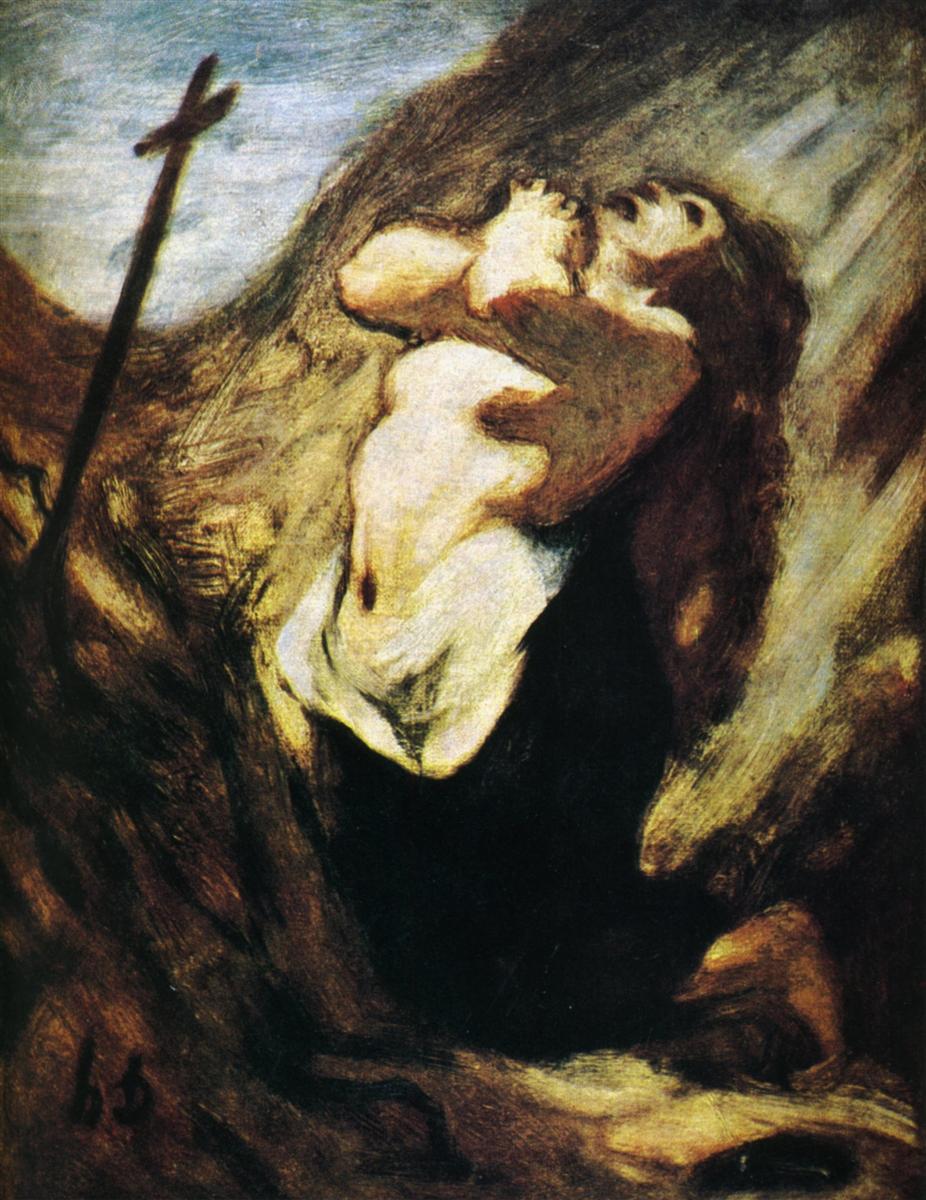
    St. Magdalene in the Desert (1848-1852), Honore Daumier | Creative Commons, courtesy WikiArt.org.

    2. You shall love your neighbor as yourself. The Word of God first uttered this commandment to Moses as recorded in the Book of Leviticus, chapter 19, verse 18. It comes after a series of verses that describe ways this love should be manifested, reading much like the second half of the Ten Commandments. And when we consider Jesus’s answer to the scribe, we do see a reflection of the Ten Commandments, the first half dealing with loving God and the second half dealing with love of neighbor. The “greatest” of the commandments is a consolidation of God’s law that does not omit a thing.

    More than just a summary, however, this commandment demonstrates the great movement and flow of love between us and God. What is this love that has a life of its own, that gains energy as it gets passed along? Let’s examine the classical Greek categories of love. This is not eros, or erotic love, that is the irresistible desire between two people; although desire is a part of this love. This is not philia, or the fondness and brotherly love that binds us in friendship; although this type of love is a part of it. This is not storge, or instinctual love like that towards your family, although, again, instinctual love comes into play.

    This love is agape (ἀγάπη). It is considered the “highest” type of love, transcending the others. This word for love was seldom used by Greek writers prior to Christianity and meant a selfless love solely for the benefit of another. Agape was used by the New Testament writers and found its truest, purest definition in God. As we explored in If You Knew the Gift!, the love we call agape is at the heart of the Trinity. The river of life, the love that endlessly flows between the three Persons of the Trinity, is the “self-opening of our thrice-holy God.” Here we see that agape originates in God, before the world was created. 

    It is only in this sense that we can begin to understand what is meant in the First Letter of John: “God is love, and those who abide in love abide in God, and God abides in them” (Jn 4:16). Yes, St. John uses the word agape for love. And this famous passage provides a good lens for understanding the greatest commandment. If God is love, then by “loving God with all our heart, soul, mind, and strength” is to give God (love) back to God. It is to be God, for God. We are asked to somehow give this selfless river of life back to God.

    And we can see how the second part of the great commandment flows naturally from the first, for what characterizes God’s agape other than the care and cultivation of his Creation? God does this gratuitously and with unending forgiveness. When we allow the agape originating in God to suffuse us and pour from us back to Him, we are at the same time loving our neighbor since this is part of the nature of that agape to begin with. That’s why love of God always must come first. Loving our neighbor cannot be an aim in its own right, divorced from loving God first. It is our very acceptance, understanding, and reciprocation of God’s own agape that enables us to truly love our neighbor as Christ intends.

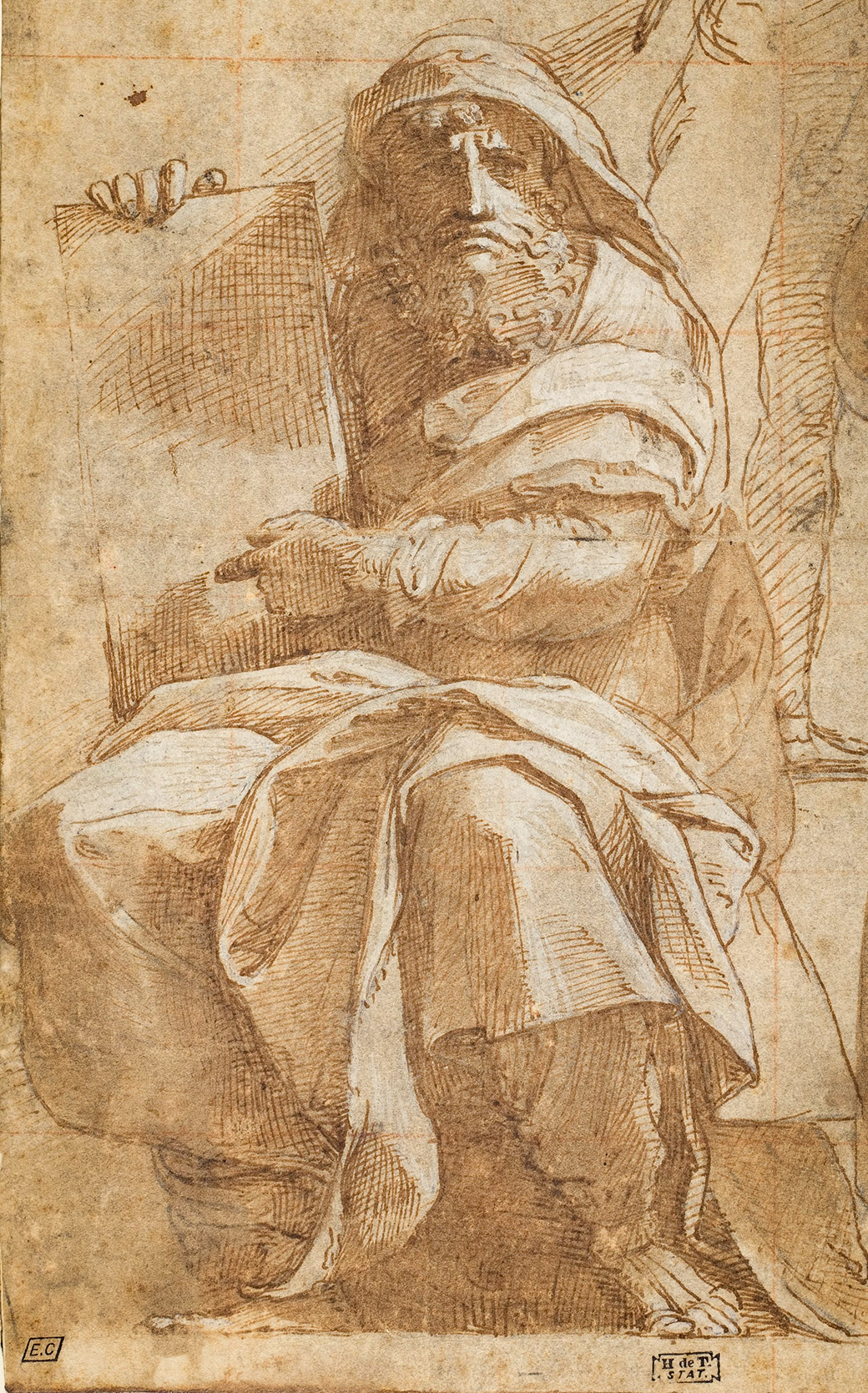
    The Prophet Hosea (c.1510), Raphael | Wikimedia Commons. This was a preparatory study for a fresco in the Chigi Chapel in Santa Maria della Pace in Rome.

    Here we see a great connection to Hosea, one of the earliest prophets, to whom God revealed the nature of his love. As Pope Benedict the XVI’s points out in his first encyclical, Deus Caritas Est (God is Love):

    Hosea above all shows us that this agape dimension of God’s love for man goes far beyond the aspect of gratuity. Israel has committed “adultery” and has broken the covenant; God should judge and repudiate her. It is precisely at this point that God is revealed to be God and not man: “How can I give you up, O Ephraim! How can I hand you over, O Israel! … My heart recoils within me, my compassion grows warm and tender. I will not execute my fierce anger, I will not again destroy Ephraim; for I am God and not man, the Holy One in your midst” (Hos 11:8-9).

    So when we hear in the final chapter of Hosea in today’s first reading, “Return, O Israel, to the LORD, your God,” it is God in his forgiveness and love who is imploring them to return. As we discovered in our reflection a few days ago, mercy is the master principle for our religion because it is the act of passing on the forgiveness God gives us. Through mercy, we take in God’s agape and reflect it, share it with others.

    You might ask if God is really a necessary part of the loving others equation. Atheists who donate to food banks and agnostics who volunteer at homeless shelters are fine examples of philia, brotherly love, or even perhaps storge, instinctual love, but not agape. Because the atheist and the agnostic turn their backs on God, they refuse to receive and then give the agape that originates in Him. No Christian can truly live the greatest commandment to love his or her neighbor without having that love originate in and be a reflection of God.

    Why does this matter? Because eternal salvation rests in us uniting ourselves with God, with that agape. 

    It feels like our readings and reflections this Lent have been building to this point, which is roughly halfway to our Lord’s death and resurrection. We have been growing in our understanding of God’s nature: how he thirsts for us and we reciprocate in thirst for him (see If You Knew the Gift!), how he wants us to turn from our sin and follow him in spirit as well as adherence to the law (see Salvation is Based on our Core Person), how each of us is on a path of reditus back to the Lord and once we get there we can start to love selflessly like him (see Rejoice for the Pardon of the Prodigal), and how our granting of mercy to each other in the same manner he grants it to us is the master principle of our faith (see Mercy is the Master Principle). We are left with a question: how do we follow the greatest commandment? With what strength will we possibly be able to love God completely and treat others like we treat ourselves? We know that we constantly fall back into temptation and sin. It is our nature and the way of the world. How can we be re-sanctified and raised beyond this world in order to follow this greatest of commandments?

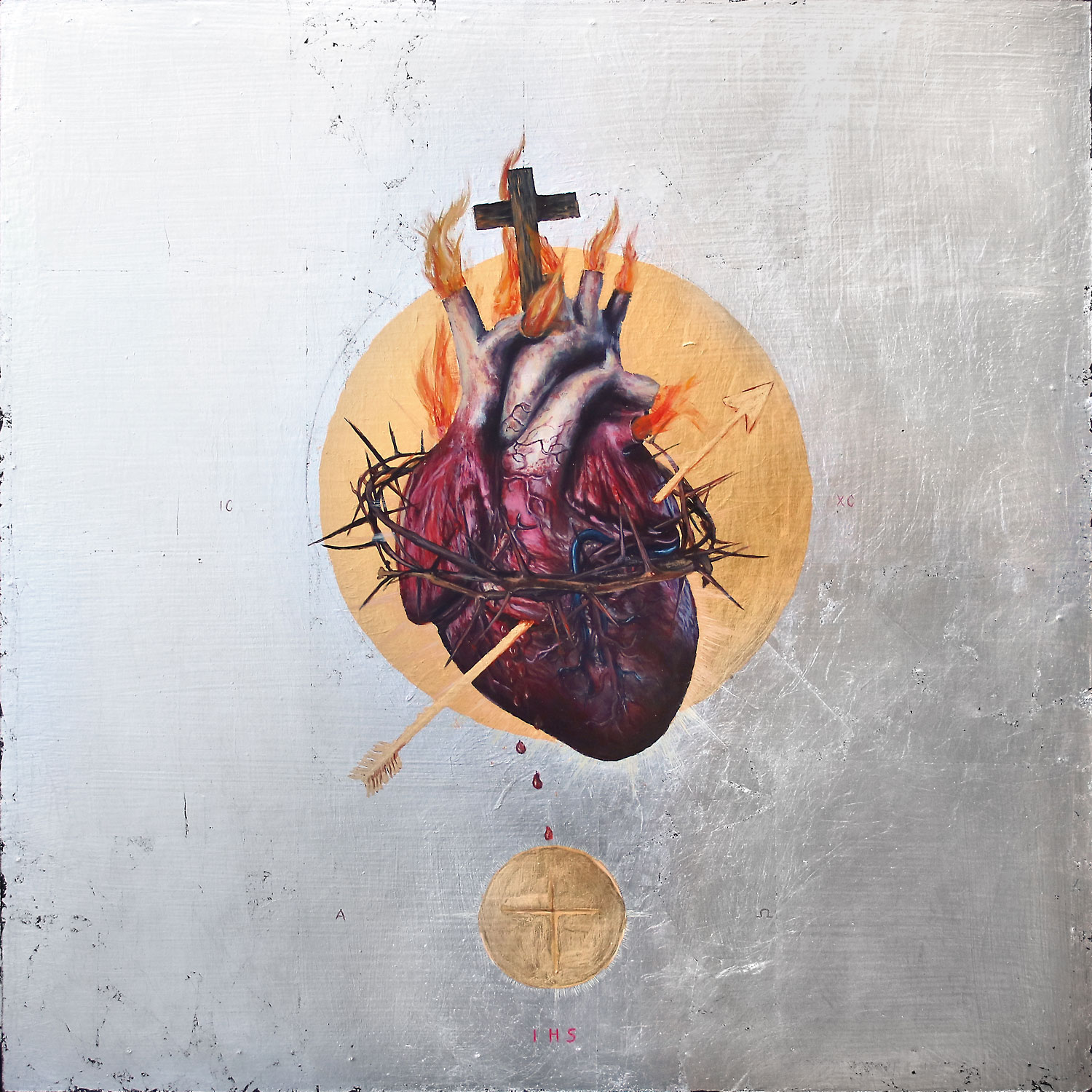
    The answer for all of us Christians is, of course, the Sacred Heart of Jesus, which is the fount of our strength, purification, and salvation. It endlessly pours upon us divine grace and enables our true communion with God.

    The Sacred Heart of Jesus – the Golden Arrow (2017), Ingrid Blixt | Artwork from ingridblixt.wordpress.com.

    Pope Benedict XVI writes, “Anyone who wishes to give love must also receive love as a gift. Certainly, as the Lord tells us, one can become a source from which rivers of living water flow (cf. Jn 7:37-38). Yet to become such a source, one must constantly drink anew from the original source, which is Jesus Christ, from whose pierced heart flows the love of God (cf. Jn 19:34)” (Deus Caritas Est, 7). Yes, Christ is the ultimate example of agape for us. God not only gives his Son as a sacrifice for us in a stunning display of love, but he opens the door for us to become sources of life for the world. The Christ event opens a new reality specifically through the flesh and blood of Jesus, in which he enables us to mystically partake in every liturgy.

    How exactly are the Church and the great Sacrament enabling us to live out the greatest commandment in an even more unanticipated and deep way? Pope Benedict XVI explains:

    Communion draws me out of myself toward him, and thus also toward unity with all Christians. We become “one body,” completely joined in a single existence. Love of God and love of neighbor are now truly united: God incarnate draws us all to himself. we can thus understand how agape also became a term for Eucharist: there God’s own agape comes to us bodily, in order to continue his work in us and through us. Only by keeping in mind this Christological and sacramental basis can we correctly understand Jesus’ teaching on love (Deus Caritas Est, 14).

    Over the second half of Lent we continue to contemplate God’s nature and works but we also pivot to begin contemplating the majesty and mystery of his Son. The internal logic of the readings and their relationship to the liturgical seasons becomes more apparent. Yet the fullness of God’s message was always there, at all times. It was Christ, the Word, who first gave this greatest of commandments to Moses as recorded in Deuteronomy and Leviticus. The one great difference, the great change, is the New Covenant given by Christ in the person of Jesus, where agape descended from Heaven and manifested in a bodily and spiritual sacrifice, made once and forever.

    Let us embrace this second half of Lent and immerse ourselves, prepare ourselves for the gift of agape that we are asked to celebrate and carry with us throughout our lives.

  • Rejoice for the Pardon of the Prodigal

    Rejoice for the Pardon of the Prodigal

    Saturday in the Second Week of Lent: Micah 7:14-15, 18-20, Luke 15:1-3, 11-32.

    Today we read one of Jesus’s most famous parables, the Parable of the Prodigal Son. There is so much to say about it. The broad strokes: it displays the unflagging love of the father (that is, God the Father) and our ability to return to Him like the prodigal son, no matter how grievous our sins. In this reflection, I’d like to take a deep dive into a few other aspects, especially the type of love the father provides. 

    We might not quite comprehend just how insulting the younger son is when he demands his inheritance. It would have shocked the Jewish audience to hear that the younger son demands a portion of the inheritance (the eldest son has first dibs and the younger is expected to work). When we look at the original Greek, we see that Jesus actually presents a deeper meaning here. When the son says, “Father, give me the share of your estate that should come to me,” the word Luke chooses to best report what Jesus uses for “estate” is οὐσίας (ousias), which means being, meaning, or essence. The son is asking for his inheritance, yes, but more literally the essence of the father.

    The prophets have a long tradition of referring to the inheritance of the nation of Israel (when they live by God’s precepts) as God’s grace and more specifically the nation’s glory and lands. Thus, it makes sense that the listeners to Jesus’s parable would understand an inheritance to have a double meaning of property/estate as well as the grace or essence of the father.

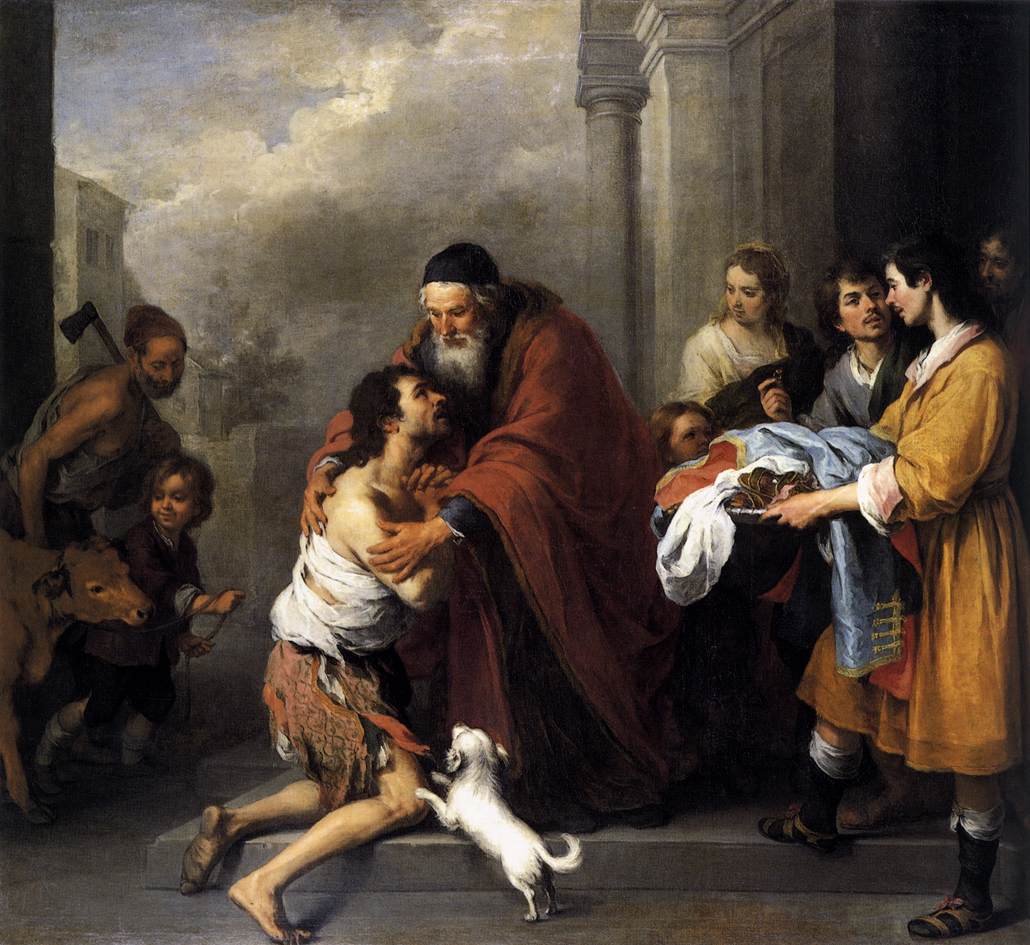
    Return of the Prodigal Son (1667-1670), Bartolome Esteban Murillo | Creative Commons, WikiArt.org.

    But Jesus speaks of the Kingdom of God throughout his ministry in a new, eschatological way. That is, inheritance means everlasting life with God in Heaven (not just glory and land); and perhaps even a share in the Kingdom here in this life, albeit an imperfect one. The next sentence is a lovely way for Jesus to expand the meaning of the “essence of the inheritance” in the new Christology. I like to think of him saying it slowly and deliberately to his audience, making strong eye contact: “So he divided his property between them.” The reason this is so important is that he switches from ousias when describing the property/inheritance and uses βίον (bion, the singular form of bios), which means life. So, he gave them his life in response for the son’s demand for his portion of the inheritance. How deeply prophetic and significant to put this into the parable!

    Today, we know how God gave his essence, his life, in the form of his only-begotten Son on the cross. This inheritance of which Christ speaks is love.

    Knowing the type of inheritance given to the younger son, it is all the more shocking to hear that he used the essence of God given to him on a “life of dissipation” (i.e., prostitution, drunkenness, debauchery). He falls so far that he tends the Jew’s forbidden animal to eat, the pig. This places him in the lowest levels of uncleanliness for a Jewish culture obsessive about cleanliness in body and spirit.

    Then we get to the younger son’s great conversion, which begins with a simple assessment of his own pathetic situation, as it does for most of us. His initial motivation is selfish, simply to get fed and earn some money, because selfishness is all he has and all he knows. But contemplation of his father, enkindled by the never-dormant ember of the essence of the Father given to him, broadens and deepens the return he plans. He commits to say, “Father, I have sinned against heaven and against you. I no longer deserve to be called your son; treat me as you would treat one of your hired workers.” The selfishness, in its destitution, finds something outside of itself to cling to: the Father, in front of whom the debasement of his sins is clear and undeniable.

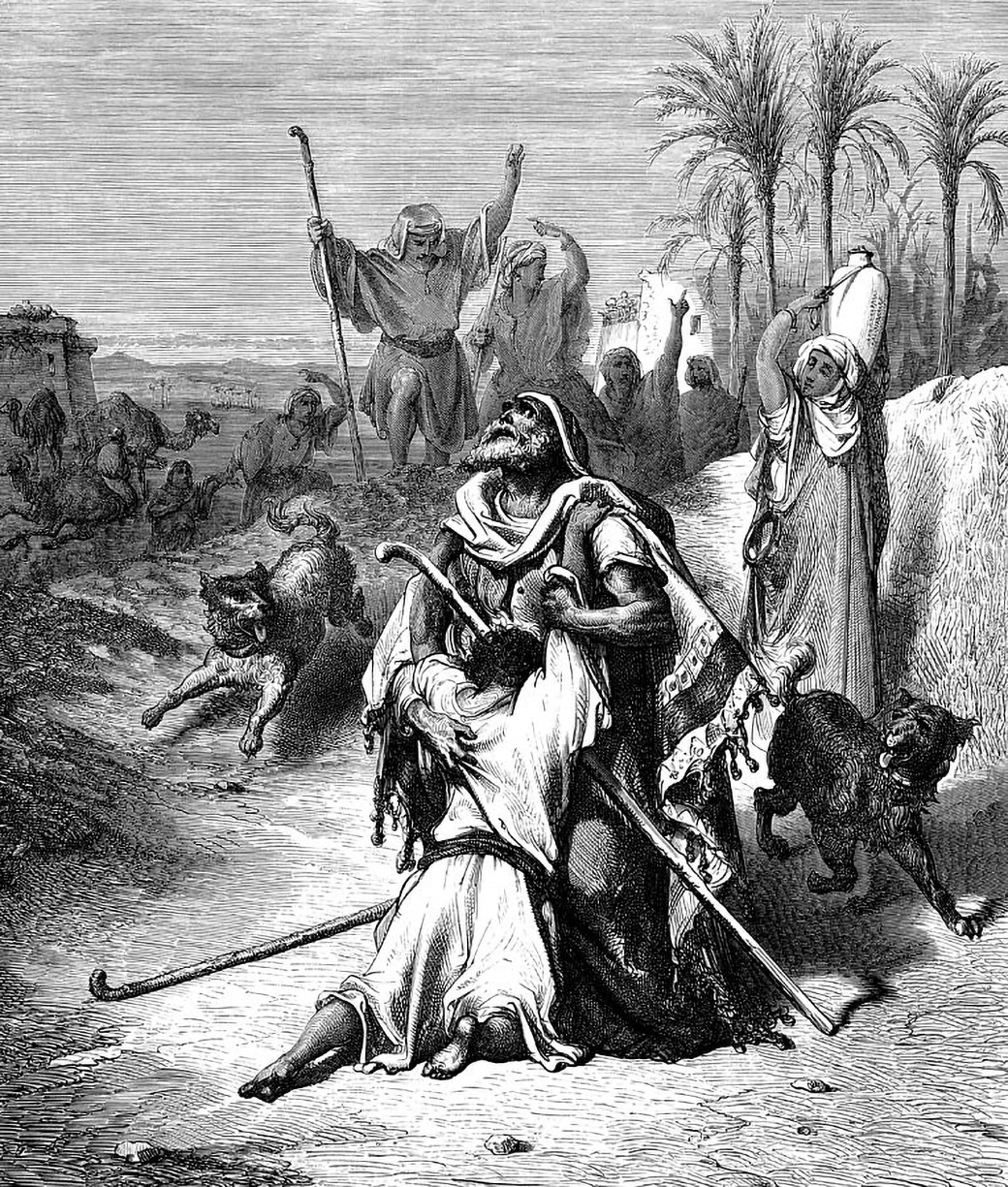
    The Prodigal Son In The Arms Of His Father (c. 1870-1883), Gustave Dore | Creative Commons, WikiArt.org

    At this point, we can turn to our Angelic Doctor of the Church, St. Thomas Aquinas, who wrote extensively about the going from God (exitus) and returning to Him (reditus). He and other theologians understand God as the First Cause of all things and the End to which all things come. He writes early in his scholastic career: “[Sacred] doctrine will consider things in so far as they leave God at the start, and in so far as they are brought back to Him in the end. Thus, we understand divine things first as going forth [exitum] and, second, as returning to [reditum] the End.”¹

    The Parable of the Prodigal Son concisely portrays this same understanding of our existence as ordered by God; the younger son goes forth from God and returns to him. But, let’s order things precisely: first, the Father gives the son his essence to enable him to leave. This could be seen as the breath of God in our creation as well as every gift and grace of God given freely to us, such as Baptism.

    What happens after the gifts are bestowed on us? This is another great generosity of our Lord: we have the free will to do with these gifts as we please. God tries throughout our history to instruct us on good uses of our free will. He gives us endless opportunities to use his inheritance for good works, He works to purify us, and has even poured out the love of the Trinity in the liturgy as a way for us to have true communion with Him. What is our personal story of reditus?

    I believe that this is what defines us as individuals: how we find our way back to God time and again, the decisions we make and the people we interact with on our way to God as the Truth and the End. It’s not the clothes we wear, the haircuts we have, the house we live in, the careers we strive for — in short, all of the things our secular society says define us. No the “person” who is hopefully granted everlasting life in the Kingdom is the being who worked with the essence of God that was bestowed on him or her; all the rest will be stripped away in death, for it is our spirit, our soul, that rests in God.

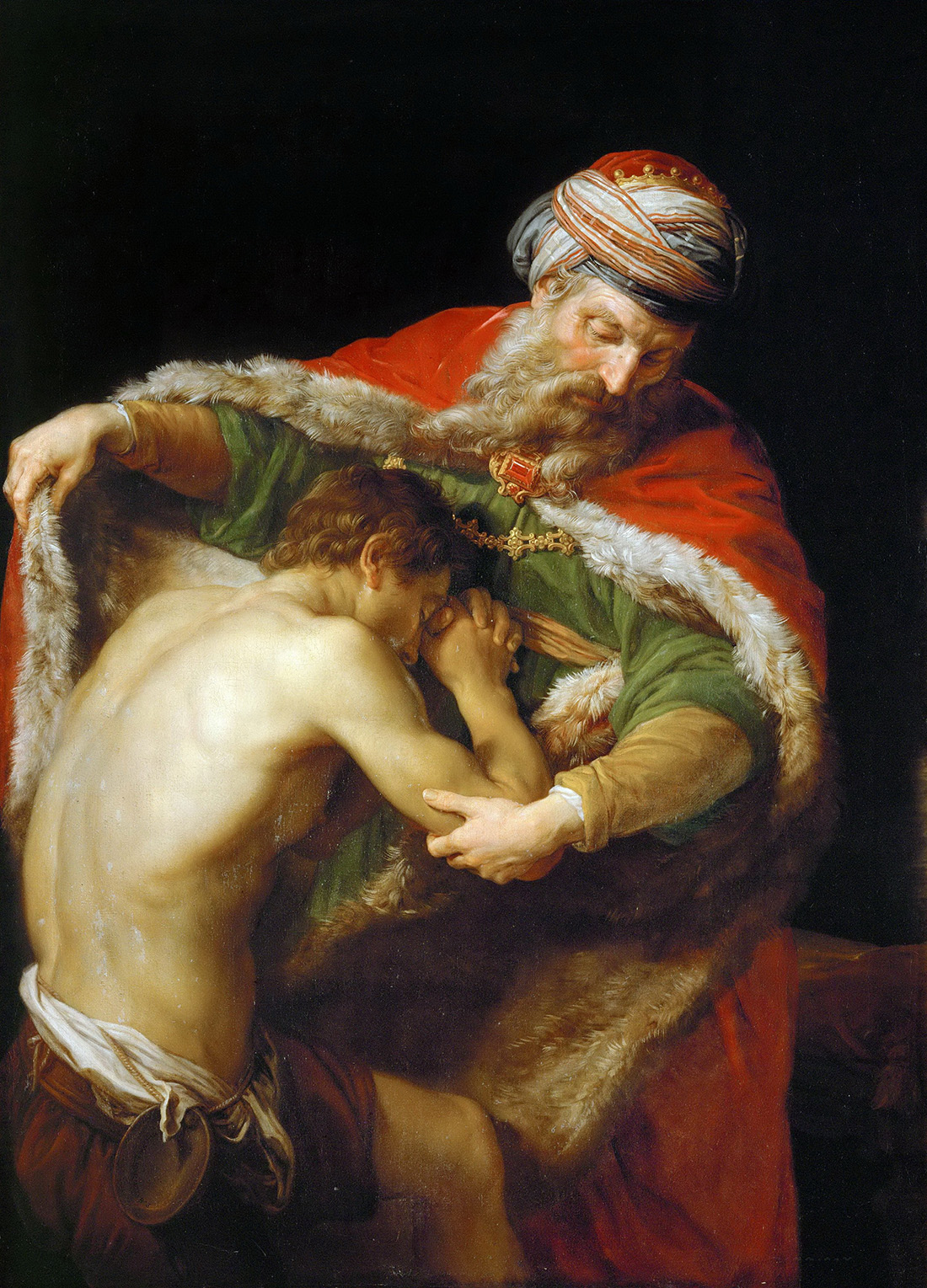
    The Return of the Prodigal Son (1773), Pompeo Batoni | Wikimedia Commons. I love this painting of the father holding his returning son. It shows not just the contrite, true conversion of the son but the colorful richness of God’s love in the figure of the father.

    Let’s turn to the elder son and see ourselves in him. Whenever we feel like we’re on the right track, we’re honoring God and doing his will in the world, we may slip into the persona of the elder son, pathetic creatures that we are.

    Upon hearing that his father is throwing a feast to welcome home his prodigal son, the elder son becomes angry, refuses to enter the house, and is overcome with righteous indignation. In short, he is undergoing his own exitus, a leaving of God. What we see in him is the lesson Jesus has for the Pharisees and scribes who grumble and say a few verses before today’s reading, “This fellow welcomes sinners and eats with them.”

    Like the Pharisees, the elder son seems to have done everything correctly, or at least he’s done externally what was expected of him as a good son. Yet in his refusal to enter the house (and here we can infer the temple, the house of God) and in his righteous indignation, we see that he never converted his heart to God. He has wasted his inheritance as much as the younger son, wasting it on his own sense of righteousness and fastidiousness about the law without digging deeper and truly letting the essence of the Father inhabit him.

    The father immediately wants the elder son to participate in the welcome feast as well. The father seems to not sympathize with the elder son’s jealousy. I think this is a significant point. If we live with the Father and do his will, we are filled with the same love that he has. Our hearts are in union with his. We should want the best for everyone and not be thinking of others as competitors to ourselves, for the love of God is not in finite supply — there is plenty for all.

    The father’s last gentle words of comfort make me want to hide my head in shame for the elder son: “Son, you are always with me, and all that is mine is yours.” You can almost hear a note of puzzlement in the voice of the father at this reminder, as if the son should be aware of this if he has been a good son all these years. And it is here, in these tests of our faith and fidelity of heart, that God finds out if we are good inheritors and produce good fruits (to echo the language from yesterday’s reflection, Tend to the Good Fruit of the Vineyard).

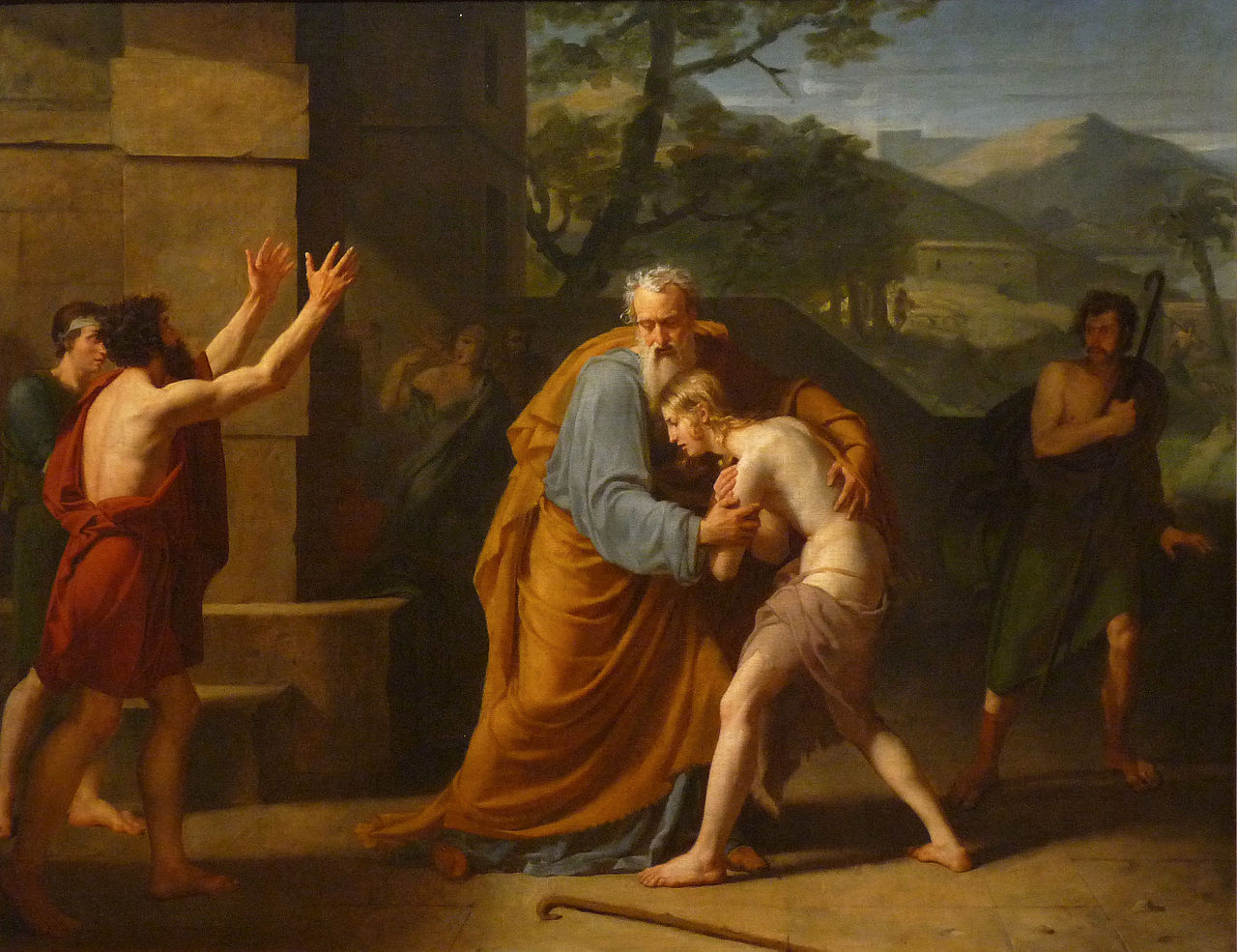
    The Return of the Prodigal Son (Le Retour du fils prodigue), 1806, Michel Martin Drolling | Wikimedia Commons. Drolling gives us a painting of the parable that displays the elder son on the left raising his hands in protest, clearly out of sync with the embrace of the father and, as such, out of place in a world ruled by love.

    It is interesting to note that the Greek verb used when the father “pleaded” with his elder son to stay is παρεκάλει (parekalai), which is the same root as the name given to the Holy Spirit: παράκλητος (parakletos), or paraclete. “Paraclete” carries a complex meaning for the apostles, as the Holy Spirit advocates, witnesses, comforts, and intercedes. The father in our parable is acting with the Holy Spirit, and indeed, this is how God works within us here on earth.

    The Holy Spirit was promised by Jesus: “And I will ask the Father, and he will give you another advocate [Παράκλητον (Parakleton)] to help you and be with you forever— the Spirit of truth. The world cannot accept him, because it neither sees him nor knows him. But you know him, for he lives with you and will be in you” (Jn 14:16-17).

    We see St. Luke use this same verb, parekalai, three times in the Acts of the Apostles, and in a similar way. The first one is striking because it is attributed to St. Peter directly after the Holy Spirit descends at Pentecost and they leave the upper room speaking in tongues. Peter addresses the crowd that gathers with a long speech and then “he testified with many other arguments and exhorted [παρεκάλει (parekalai)] them, saying, ‘Save yourselves from this corrupt generation’” (Acts 2:40). Thereupon, three thousand were converted to Christianity that day. This is a clear indication that the author uses the word to mean the action of the Holy Spirit within us as we exhort, plead, encourage, implore others to convert to God. It is another gift we barely realize that we have from God, the gift of the Holy Spirit active within us as we exhort and encourage others.

    The parable ends with a final window into the vast love of the Father: “now we must celebrate and rejoice, because your brother was dead and has come to life again; he was lost and has been found.” I love passages from scripture that remind us that God rejoices, that he wants to be delighted. And here we see that he fundamentally delights in each of us on our path of reditus.

    Our return to Him is the most pleasing thing we can do. And once we are with him, we need not desire more personal doting, because we can join with him in welcoming others as they find their ways back to him, too.


    ¹ The translation of the Latin here is partially my own. The original text: “consideratio hujus doctrinae erit de rebus secundum quod exeunt a Deo ut a principio, et secundum quod referuntur in ipsum ut in finem. Unde in prima parte déterminât de rebus divinis secundum exitum a principio; in secunda secundum reditum in finem” (I Sent., 2 dist., divisio textus).