Tag: morality

  • The Way to Pleasing God

    The First Sunday of Advent, Year C: Jeremiah 33:14-16, 1 Thessalonians 3:12 – 4:2, Luke 21:25-28, 34-36.

    It is right and just that Advent starts with looking forward to Christ’s coming, that is, “coming in a cloud with power and great glory,” as He himself attests in the gospel reading. Yes, in the liturgical calendar, this season occurs before the birth of the Christ child in Bethlehem, but the real waiting and anticipation that we are doing – right here, right now – as Christians alive in this last age is the waiting for the end of the world and the final judgment. We celebrate the birth of Christ at Christmas, but we don’t live in a make-believe reality where He has not yet been born.

    Too often we boil down Christianity to easy sayings (e.g., “God is Love”) and simple moral living. This is a great disservice to the density of the Christian life within which we live. Advent can easily be seen as a time simply waiting for the Christ baby to appear in the manger scene. Not so! Let’s remember that Christ has already begun His reign and has invited us to be a part of the kingdom while alive here on the earth. We can never be as fully united with God as we will in death, but we are given a way to experience the kingdom through the Holy Spirit, not to mention amazing role models (saints), sacraments, and spiritual communion. Not to mention, in terms of the hard facts of salvation history, Christ has ushered in this final era, whether we listen/understand/believe it or not. We are literally on the Way (to the end of humanity and all time), and the start of Advent is a reminder of exactly what it means to be on the Way.
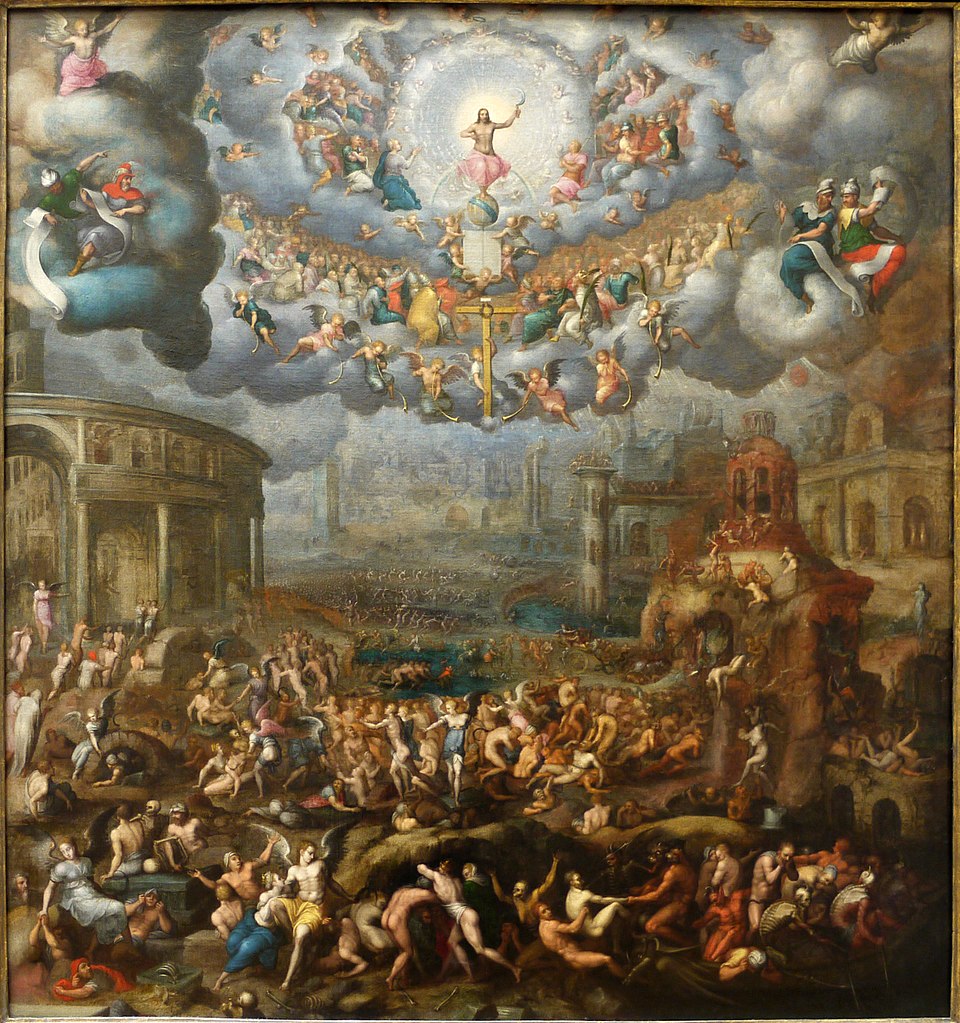
    Judgment Day, Jean Cousin le fils (c. 1585) | image courtesy wikimedia.

    God is, as the saying goes, love; and lucky for us! Jeremiah reminds us of God’s loving covenant with us: “I will fulfill the promise I made … I will raise up for David a just shoot … Judah shall be safe and Jerusalem shall dwell secure.” The Jews never forgot that our relationship with God rests on this undeserved covenant He made with us, and neither should we. Without this covenant, the end of the world would be as bad as every Hollywood apocalypse movie or dystopian sci fi novel would have us believe. But with this covenant, we have hope; more than hope, we have God’s very promise.

    2000 years ago, God sent the “just shoot” from David’s line: Jesus. But His plan is even greater than we could imagine, because Christ ushers in an age where we have the ability to reach new spiritual heights, through Him. Those who listen to Him and abide in Him are able to experience the Kingdom and bring others to the Kingdom – a spectacular raising up of our souls and purpose that we couldn’t imagine possible. Christ promises that it will be hard, that we will be persecuted, and He himself accepts the most ignoble death to show us that in seeming weakness is the great, loving power of God. Thus, today’s second reading gives us St. Paul exhorting the Thessalonians to stick to the Way: “May the Lord make you increase and abound in love for one another and for all.” Why is this so important? Again, Christ has made possible for us the great spiritual purpose of making our way to the Kingdom. Apart from the saints, the vast majority of us will not experience the kingdom while still alive, but we must devote ourselves to it nonetheless. Paul explains why: “to be blameless in holiness before our God and Father at the coming of our Lord Jesus with all his holy ones.” The Way itself helps us get to the Kingdom, whether partially experienced while still alive or simply through our efforts that show us faithful to Him when He comes on the cloud with the heavenly host. 

    This is a great way to reflect on why Catholics have spent so much time on preaching and living the moral life. We may have gone too far from mentioning God in our moral writings and conversations over the centuries because it really makes no sense if you’re not on the Way. If you’re not living the dense Christian life, aware of ourselves here in the final age, then moral decisions are as arbitrary as evil ones. I would go so far as to say that there is no real purpose to choosing good if you are not at the same time knowingly choosing God. Secularists would say that lawful society, psychological health, or longevity would be perfectly good examples of the purpose behind choosing good vs. evil. I would respond that all of these are justifications that deliberately remove God from our existence, creating a seemingly rational, human-made world. But that type of world Christians flatly reject. Our lives are a gift directly from God – how can we remove Him from the equation and think it’s rational? Lawful society, psychological health, and longevity are certainly benefits of moral action, but they should not be the purpose or the goal. The purpose we act morally is that we love God first, and God (who is love) has given to us commandments and precepts to help us achieve a greater, fuller way to be human. The purpose is our loving relationship with God as His subjects, and in the final age in which we live, that purpose has the goal revealed by Christ: walking the Way to the Kingdom that will be finally commenced at some point in the future. 

    Oh, the anticipation, the waiting! Yes, this is the Advent spirit. In the gospel reading, Christ tells us, “People will die of fright in anticipation of what is coming upon the world, for the powers of the heavens will be shaken.” We are in a state of tension, but it’s no holding pattern, with nothing to do and no way to hasten its fulfillment. He has given us His Spirit to help us stay on the path to the Kingdom. And so He can say, “when these signs begin to happen, stand erect and raise your heads because your redemption is at hand.” This is the great Christian message of hope: the end of the world is not annihilation but redemption and reunion with God. Don’t be frightened, be excited! But also, be prepared. Christ somberly exhorts His apostles in this reading to stick to the Way and not to falter: “Be vigilant at all times and pray that you have the strength to escape the tribulations that are imminent and to stand before the Son of Man.” So … excited with an asterisk, that we must be obedient to Him.

    Obedience is such a downer for today’s modern person, right? The modern would say that obedience equals stifling freedom of speech, obedience equals the white, rich status quo, and obedience prevents positive change. Where to start? It must always start with God, who is not a stifling influence but a creator, not a preventer but an expander of potential. When we take ourselves and our precious points of view so seriously that we forget that all we have is a gift we didn’t earn, then we are truly lost. In the end, obedience takes a heart docile to God, and once that happens, joy, wonder, and hope follow. Isn’t that what we want to experience in Advent?
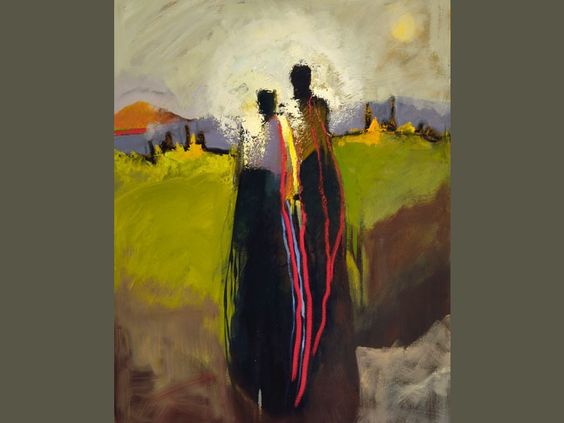
    Unknown title, Kathy Jones (contemporary) | Image from kathyjonesstudio.com

    Perhaps the most helpful short line in today’s readings comes from St. Paul: “conduct yourselves to please God.” This wraps up everything we’ve been discussing: acknowledging God’s supreme sovereignty, the true purpose behind moral actions, the way to live in this final age that has already been given Christ but yet awaits Him still. It is right and just that the operative word here is to “please” God. God wants to please us, His beloved creation; and as we grow in love for Him, we realize that wanting to please Him is our greatest calling.
     

  • False Utilitarian Morality

    False Utilitarian Morality

    Saturday in the Fifth Week of Lent: Ezekiel 37:21-28, John 11:45-56.

    Today we read of the chief priests and scribes convening in the Sanhedrin about Jesus. I immediately think of the plotting that was foreshadowed in the stories of Joseph (son of Jacob) whose brothers plotted against him and the Jews who plotted against Jeremiah (see Evil Plots in Empty Hearts).

    Caiaphas, “the high priest that year,” steps up with authority to ease their consciences about a plot to have Jesus killed. It’s worth looking at Caiaphas’s words in detail. They lay out for us a false morality completely at odds with the gospel of love, mercy, and charity that Jesus preaches. 

    John tells us that the chief priests and Pharisees are concerned that their inaction against Jesus will lead to the Romans coming to “take away both our land and our nation.” They rightfully worry about an established order being disrupted — not that it needs to happen violently, but Jesus is clear that he brings a New Covenant to the world, the salvation for all, a nation beyond the Israelites, a new Jerusalem that is the spiritual Kingdom of God, and a new temple that is himself. This would rightfully cause worry and existential angst for the power structure of the Jewish nation; what is to become of them? Jesus forces them to make a decision to be a part of his New Covenant or to oppose it.

    They choose to oppose it.

    Opposing this new ordering of the world could take many forms: a disinformation campaign against him, an increase in traditional Jewish piety, exiling him to some faraway place, etc. But Caiaphas cuts them to the quick: “You know nothing.” His evil plan, the acceptance of death into his heart, fittingly starts with an insult to his comrades. The way of violence starts and ends with violence. He then presents a seemingly logical and beneficent rationale, a spoonful of sugar to help the medicine of death go down: “nor do you consider that it is better for you that one man should die instead of the people, so that the whole nation may not perish.” This is classic utilitarian morality: given an unavoidable choice, choosing that one die rather than many is the better, more moral choice.

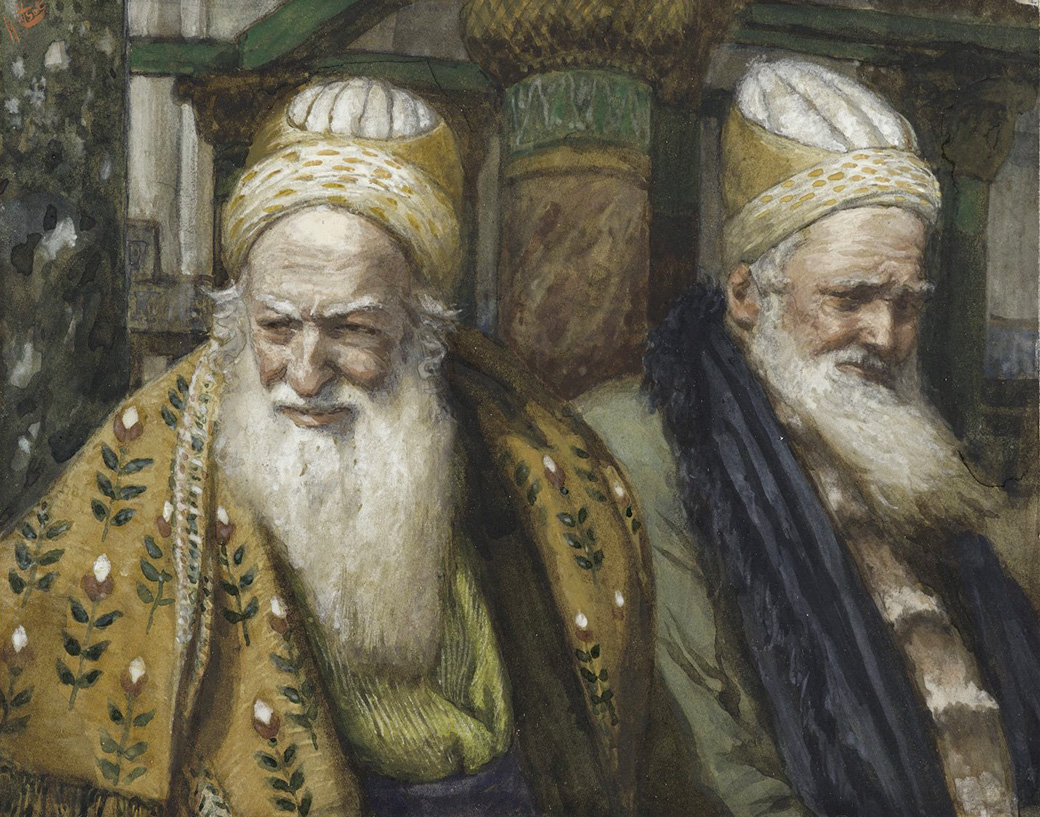
    Annas and Caiaphas (Anne et Caïphe), 1886-1894, James Tissot | Creative Commons, courtesy the Brooklyn Museum.

    This seems to be a persuasive argument, so let’s dig into it a bit. While this thinking is as old as time, it was presented in a modern way as the “Trolley Problem” by Philippa Foot in 1967. The scenario is this: a trolley is hurtling down a track and can’t be stopped. There are five people on the track who will be killed, but you have a chance to switch the trolley to a side track where only one person will be killed. Should you switch the trolley to the side track? In other words, it’s not just a question of whether it is better to have one person die than five, but also would you intervene to make this happen?

    There are plenty of variations here, including one with a large man who could be shoved onto the track to derail the trolley and save the five people (making the violence of the act a bit more apparent). The dilemma calls into question the idea that not acting is as immoral as being complicit in murder. We’ve heard this same dilemma posed with intensified pressure as “would you kill Hitler as a young man to avoid World War II?” or similar such thought experiments. Caiaphas is setting up the same problem: killing one man to save the nation is a better, more moral act.

    Now I’m not a professional ethicist, nor do I think anyone can simply put this thought experiment to bed in a blog post. Instead, I am suggesting that our scriptures and tradition give us plenty of reasons not to be beguiled by the limited choice suggested by Caiaphas. Let’s start on the personal level: is choosing to sacrifice the one person in this dilemma the mark of a more generous person, someone more concerned with the greater good?

    Since utilitarian morality is more prevalent in a modern, nonreligious mindset, let me marshal a scientific study for evidence to the contrary. Oxford researchers published a paper in the journal Cognition in January 2015, detailing how four separate experiments teased out the fact that people revealed their true stripes apart from their answer to the trolley problem. The authors found several striking things: “rates of ‘utilitarian’ judgment were associated with a broadly immoral outlook concerning clear ethical transgressions … less donation of money to a charity, and less identification with the whole of humanity.” What’s more, people who chose to sacrifice the one person in the dilemma showed no desire for “assistance to distant people in need, self-sacrifice and impartiality, even when the utilitarian justification for these judgments was made explicit and unequivocal.” So, in short, no, making this utilitarian moral choice is not really the mark of a “good” person when judged by these many factors. (read the paper: ‘Utilitarian’ judgments in sacrificial moral dilemmas do not reflect impartial concern for the greater good.)

    From a Christian viewpoint, utilitarian morality is problematic for several reasons. First, it positions us as a type of god who is in the position of determining right and wrong for society. This is definitely the position that Caiaphas and those in the Sanhedrin occupy — as leaders, they have let the scope of their responsibilities creep from maintaining religious teaching and leading worship into questions of law and order, life and death. At the heart here is a desire to control the world and destinies of those in it. They determine right from wrong and are “playing God.” This is the opposite of the humility that is a prerequisite for our relationship to God and a building block for all of Christianity.

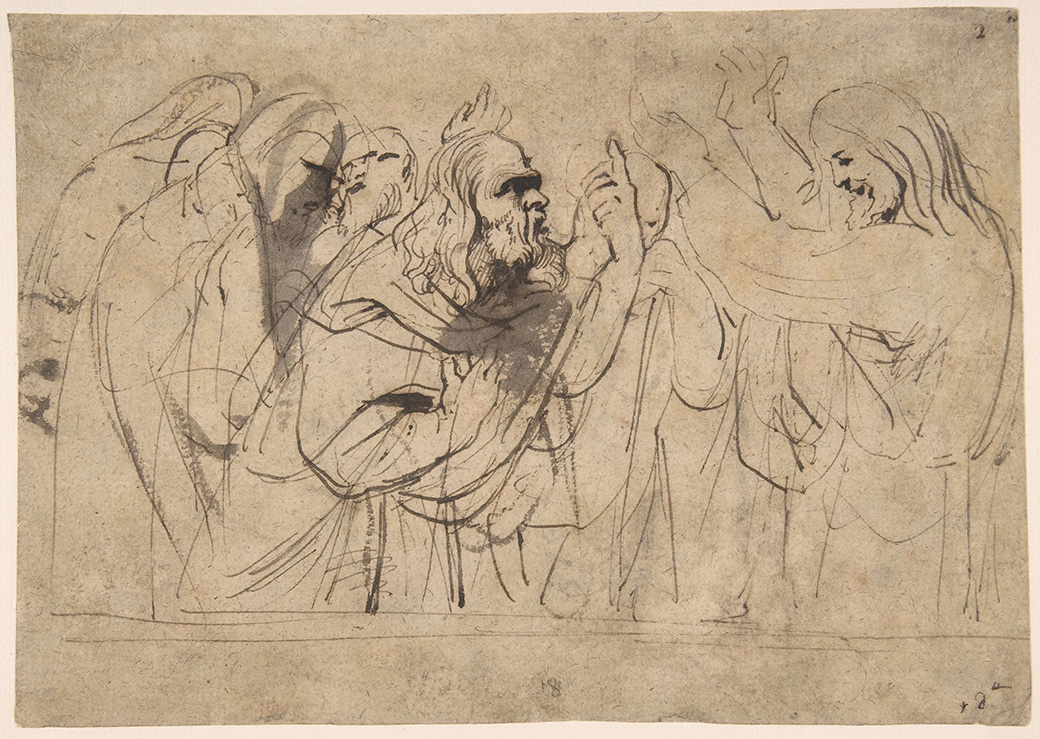
    Christ and the Pharisees (early 17th century), Anthony van Dyck | Creative Commons, courtesy the Metropolitan Museum of Art.

    Second, once the scope of the drama has been expanded and the actor in the drama is the controller and arbiter of right and wrong, the question of “obligation” looms large. Obligation is, in fact, the central question of the Trolley Problem: what are you obliged to do, morally speaking?

    I believe that this is the wrong focus, taking a cue from Servais Pinckaers, OP. He is a master of moral theology, whose seminal book, The Sources of Christian Ethics, contrasts a more modern morality based on obligation with an earlier Christian ethics based on happiness (as we read it from St. Augustine and St. Thomas Aquinas). Pinckaers admits that the question of obligation is important for moral theory, but questions, is it “really all that central and basic?” Citing the Franciscan William of Ockham as the poster child, he notes that morality has been reduced to following the obligation of laws prescribed by God. “For Ockham all morality was concentrated in free choice … a succession of free decision or independent acts — cases of conscience as they would later be called”(243, 244).

    You might be asking yourself, what’s so wrong with this? Indeed, this viewpoint has been so incorporated into our modern Christian consciousness that it is almost a “given.” But Pinckaers calls it “the first atomic explosion of the modern era” (242). His point is that by conceiving of ourselves as little independent islands and all of existence as independent acts, there are no “universals.” Moreover, Ockham’s philosophy separates modern ethicists from the Church Fathers and the scriptures themselves, which is a problem because Pinckaers follows St. Thomas Aquinas in seeing the Sermon on the Mount as a “perfect charter for Christian living” (162). The Beatitudes and accompanying sermon reveal the active Spirit of the Lord as a defining principle of life that unites us instead of splintering us into individual fiefdoms of independence.

    Pinckaers says, “there can be no renewal of moral theology today without the rediscovery and exploitation of the Gospel sources. They alone can restore to moral theology its true dimension and spiritual vitality”(167).

    To apply this to our current question, I would say that the trolley problem is simply a manifestation of a perverted understanding of ethics that breaks down the world into isolated questions of obligation. We are even further distanced from the moral theology Ockham envisioned because today’s philosophers don’t even agree on basic Christian tenets, so the question of obligation is not rooted in God’s Word or God’s Law, but some variant of natural law, social law, or some other human-constructed law. Is this even a moral question at this point?

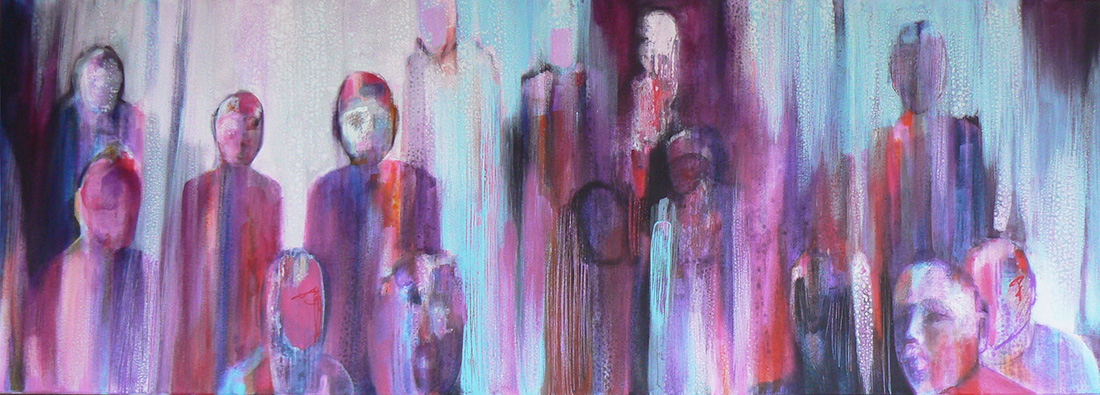
    The Just and the Unjust (2016), Carolynne Coulson | image from carolynnecoulson.co.uk. The abstract forms and streakily blurred faces seem to comment on the impossibility of real justice on earth, on the unknowability of people and the mistake of judging. Who is just? Who is unjust? Perhaps Coulson is calling into question whether moral systems can truly exist, but I see this the other way – that only God has a clear picture of who we are (He is the one true moral system) and when we try to judge, our vision is as blurred as this one.

    Christ gives us the clearest of instructions: love our neighbor as ourselves. This follows from loving God first, with all of our being. For the sake of argument, let’s apply this to our trolley problem. If we are consumed with the love of God (for Him and back from Him), then the idea of intentionally causing the trolley to hurt someone (in any direction) is simply anathema. Our choice is not determined by what we do with the trolley but how we bring God’s love to people. A Christian would run towards an accident, a site of violence, with a prayer on his or her lips and a body poised to provide care and comfort.

    The Christian is the servant of God, humble in aspect, giving all power over to Him. Our work is always and primarily with and through God. By living with him at all times, we realize that this world is full of death and violence, but that doesn’t determine our outlook. We don’t choose between the lesser of deaths but the overwhelming greater of life, of the Kingdom, both in this world and in the next. We reflect God’s mercy, we swim in the matrix of his grace, and we provide light in the darkness. The trolley problem simply isn’t a problem for us, just like death isn’t a problem for us. We live on a different plane.

    So, back to our reading, Caiaphas is presenting a false utilitarian morality. It is anti-Christian not just in the false restriction of choice it presents (as if killing Jesus is the only option), but also in how it embraces death on all sides as an inevitable finality. Either the nation dies or Jesus dies. Jesus has been telling the Pharisees and scribes: come to me for life-giving water and you will never be held in the thrall of death again. Caiaphas has turned his back on this offer.

    John provides us with an interesting gloss after Caiaphas speaks: “He did not say this on his own, but since he was high priest for that year, he prophesied that Jesus was going to die for the nation, and not only for the nation, but also to gather into one the dispersed children of God.” Why does John go out of his way to relieve Caiaphas from some of his personal responsibility and shift some of the responsibility to the fulfillment of prophecy?

    John puts the power and will in Jesus’s hands in this statement: “Jesus was going to die for the nation” —Jesus is the agent of action, not Caiaphas. This is very important for John, who presents us with a Savior who is always in control and in the driver’s seat for his saving action on earth. I do not doubt this perspective is real and divinely inspired! Caiaphas becomes a type of Judas figure, one who’s actions are undoubtedly vile but also in some way the will of God because they reveal the saving work of Christ. 

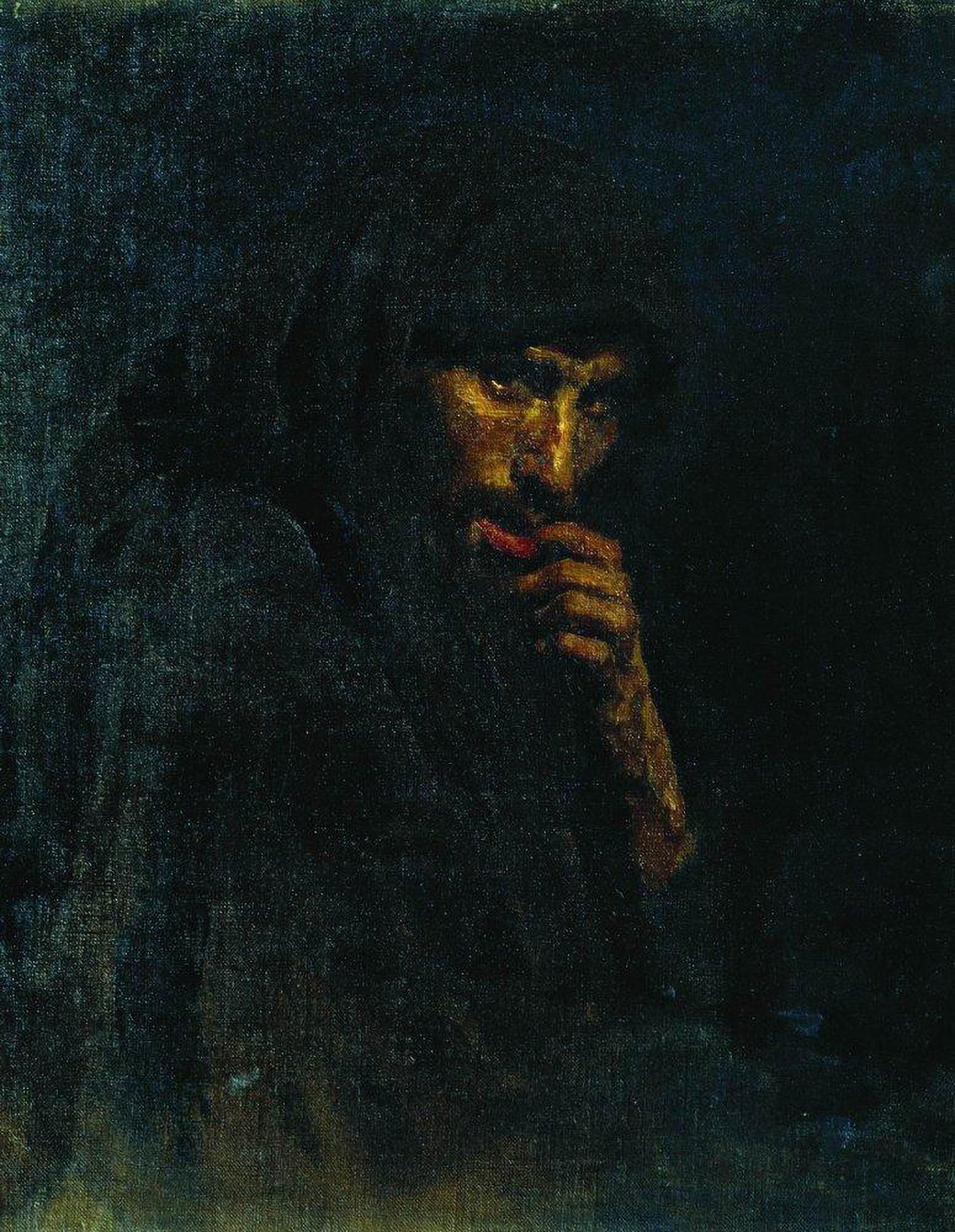
    Judas (1885), Ilya Repin | Creative Commons, courtesy wikiart.org.

    Looking back at the first reading, we can see what prophecy John was referencing. God tells Ezekiel that he will “gather them from all sides to bring them back to their land. I will make them one nation upon the land … Thus the nations shall know that it is I, the LORD, who make Israel holy, when my sanctuary shall be set up among them forever.” John helps us see that Christ’s ministry is one of unification, of bringing all the nations together. Also that his death and Resurrection, which starts with Caiaphas’s venom, will open up the eternal liturgy and is the “sanctuary set up among them forever.”

    Here, on the eve of Holy Week, may we be like the Jews arriving in Jerusalem for Passover, asking one another, “What do you think? That he will not come to the feast?” We anticipate his coming, once and forever eternal.