Tag: prayer

  • The Jesus Prayer

    The Jesus Prayer

    Saturday in the Third Week of Lent: Hosea 6:1-6, Luke 18: 9-14.

    Today’s readings seem to be about us — about our fidelity and about how we pray. But just under the surface, they reveal themselves to be all about Jesus Christ, body and soul, as befits prayer itself. Reflecting on these readings, it is easy to see how the short Jesus prayer has become such a mainstay of the Church (especially the Eastern Orthodox Churches).

    In the reading from Hosea, we hear the Word of God promise his coming through the mouth of the prophet: “on the third day he will raise us up, to live in his presence.” This reference to the world-changing Resurrection of Christ is joined by a call to action on our part. Hosea says, “Let us know, let us strive to know the LORD.” I love this little repetition and reframing. We want to know the Lord but also that we may never truly fathom Him. The emphasis turns to striving to know the Lord. This effort shows our pure intentions, our focus, our dedication to God, and the way we enact this striving to know the Lord is through prayer.

    God speaks to this very thing through Hosea: “For it is love that I desire, not sacrifice, and knowledge of God rather than burnt offerings.” He wants us to want him. He wants us to love him and know him, certainly more than burnt offerings and ritual sacrifice. Ours is a God who wants a personal relationship with us, deeper than any other relationship we can forge on earth.

    I love the poetry of the scriptures, too. Hosea uses some wonderful imagery to urge us into right relationship with God: “as certain as the dawn is his coming, and his judgment shines forth like the light of day!” I love the prophet’s faith. I love that the Lord’s coming is as “certain as the dawn.” This is unshakable faith, for what do we rely on more than the changing of night into day? And the light that he brings is his judgment, his Truth, aka Jesus Christ, the Word of God in the flesh.

    In another life-giving image, Hosea tells us, “He will come to us like the rain, like spring rain that waters the earth.” We will hear from many prophets and Christ himself how physical thirst and spiritual thirst are conjoined. Jesus will perfect Hosea’s prophecy: “but those who drink of the water that I will give them will never be thirsty. The water that I will give will become in them a spring of water gushing up to eternal life” (John 4:14). Yes, he will come to us like spring rain that waters the earth.

    The reading from Hosea is a call to anticipate God’s coming in Christ and to strive to know him. How else do we do this other than prayer?
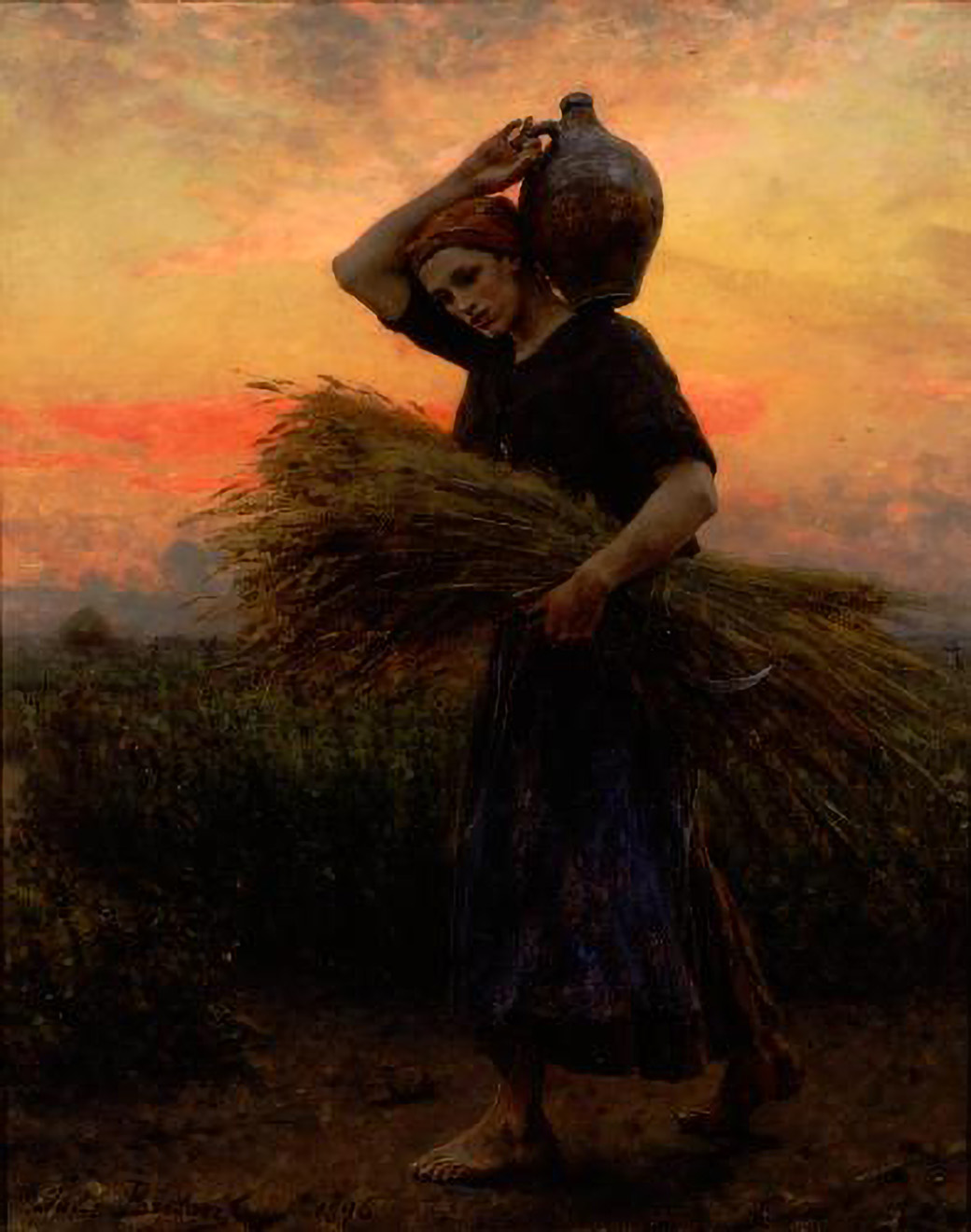
    Dawn (1896), Jules Breton | Wikimedia Commons. This work beautifully expresses Hosea’s message. The dawn arrives and we are expected to be at work, bringing the harvested wheat (souls brought to Christ) and “living water” of Christ to the world.

     Jesus addresses the question of prayer head-on in the gospel reading comparing the prayer of the Pharisee to that of the tax collector. Jesus describes the Pharisees’ showy devotion that lacks a sincere love of God in their hearts. The Pharisee in the parable “takes up his position” in the temple, which was undoubtedly one where he could be seen clearly, and “spoke this prayer to himself.” This is a huge clue that something’s backward; prayer is always offered to God and spoken to God, whether audibly or inaudibly. The Pharisee is primarily self-focused.

    After a cursory “O God” to start, we hear the Pharisee speak of himself during the whole prayer, contrasting his law-abiding deeds with “the rest of humanity — greedy, dishonest, adulterous.” Let’s note that his window on the world, himself included, is one of judgment. Jesus is clear about not being judgmental: “Do not judge, so that you may not be judged” (Mt 7:1). We all know people who are consumed with judging themselves and others (we probably fall into this camp ourselves at times). It is simply not compatible with being a Christian. Judging the worth of another being is something that rightfully belongs only to God. Furthermore, we know that he judges us all to be worth forgiving, worth saving, worth His love. We are asked to follow his lead and offer nothing but his love to the rest of Creation. 
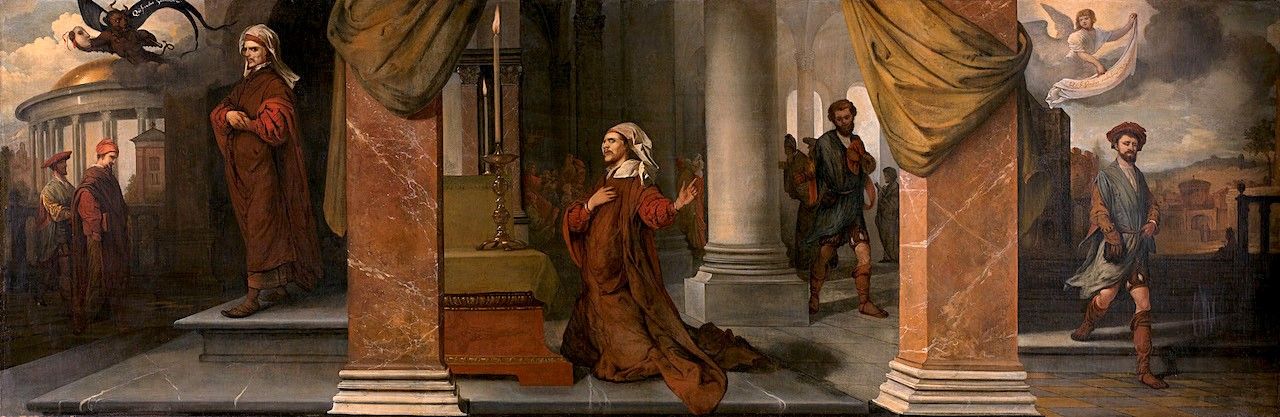
    The Pharisee and the Publican (1661), Barent Fabritius | Image from oceansbridge.com.

    The next item to note about the Pharisee’s off-kilter prayer is how much he speaks of himself as the agent of action. What a marvelous command of grammatical structure Jesus uses to display the self-centeredness of the Pharisee. Four times we hear the Pharisee put himself as the first person subject of phrases in his prayer: “I thank you,” “I am not like,” “I fast,” and “I pay tithes.” The Pharisee has so sublimated his own sense of self-worth that, apart from being the subject of the phrases, he places himself as the grammatical agent (meaning the cause and initiator of action). This semantic idea is a great way for Jesus to make his point: it’s not just the empty show of devotion that makes the Pharisee a hypocrite, it’s his lack of conversion of heart to place the Lord first, the agent of all. This almost unconscious grammatical structuring of his prayer belies the deep perversion and reversal of order in his being. 

    Let’s compare this with what Jesus tells us about the tax collector: “But the tax collector stood off at a distance and would not even raise his eyes to heaven but beat his breast and prayed, ‘O God, be merciful to me a sinner.’” We hear much about his physical bearing — standing off, eyes lowered, beating his breast. This is the stance of supplication. It reminds us of the great supplication offered for days by Esther in order to save the Israelites in Babylonia (see the reflection Esther: Model of How to Petition the Father) and of Hananiah, Azariah, and Mishael in Nebuchadnezzar’s fiery furnace.

    The tax collector’s prayer itself is so fundamentally correct that it forms the proto-Jesus Prayer. In this prayer, Jesus gives us another example of how to pray correctly (in addition to the Lord’s Prayer, of course). Let’s dissect it: the tax collector approaches in supplication, addresses God as the agent of action in the world (he says “merciful to me,” and as such he is the object of action, not the agent), and identifies himself as a sinner in need of mercy. And as we reflected this week, mercy is the way of the Kingdom, the currency of the economy of love. Jesus wants us to “pay forward” the mercy God gives us by forgiving “seventy times seven” times (i.e., infinitely). Acknowledging that we need God’s mercy is the first step in becoming more God-like and offering His mercy to others.
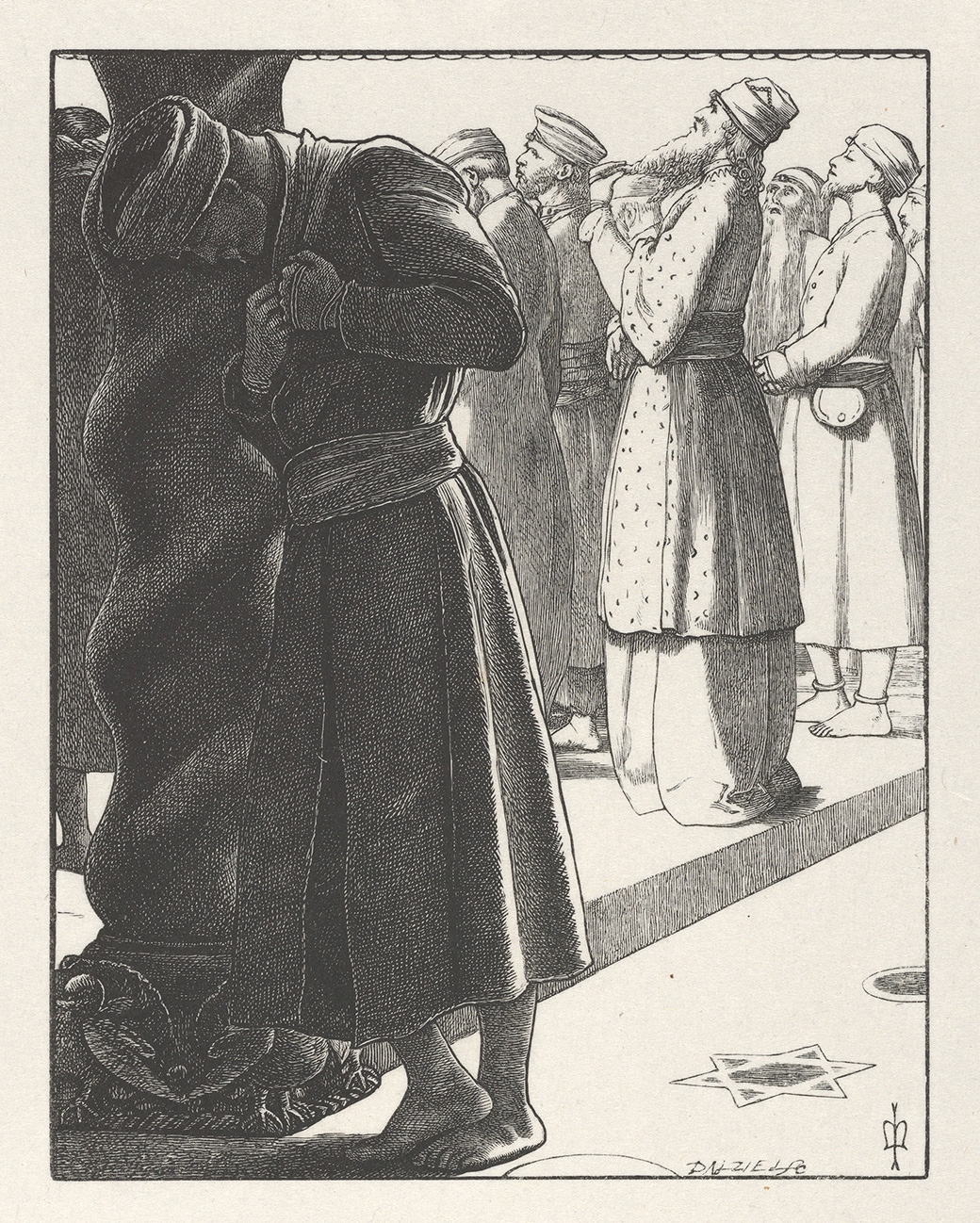
    The Pharisee and the Publican (1864), Artist: After Sir John Everett Millais, Engraved and Printed by Dalziel Brothers | Creative Commons, courtesy The Metropolitan Museum of Art.

    Today’s most common form of the Jesus Prayer is, “Lord Jesus Christ, Son of God, have mercy on me, a sinner.” We can see the marriage of today’s two readings — Hosea’s striving to know God who rises on the third day and the tax collector’s humble prayer for mercy. Praying to the second Person of the Trinity, our great high priest and chief intercessor who descended to earth to dwell and suffer with us, is a key gift in our Christian lives. The Catechism of the Catholic Church teaches us, “The name ‘Jesus’ contains all: God and man and the whole economy of creation and salvation. To pray ‘Jesus’ is to invoke him and to call him within us. His name is the only one that contains the presence it signifies” (2666).

    Thus, the Jesus Prayer unites the same correctness of prayer we find in the tax collector with the new reality that Christ brought to history with his death and Resurrection. The Jesus Prayer is powerful and draws us deeper into the mystery of being a part of the Church.

    “When the holy name is repeated often by a humbly attentive heart, the prayer is not lost by heaping up empty phrases, but holds fast to the word and ‘brings forth fruit with patience.’ This prayer is possible ‘at all times’ because it is not one occupation among others but the only occupation: that of loving God, which animates and transfigures every action in Christ Jesus” (CCC, 2668).

    I can testify that I’ve come to a much deeper appreciation of the Jesus Prayer in my own prayer life. I use it often when I find myself not concentrating during the Mass to bring myself back to the sacrifice at the altar. I use it when in Adoration, contemplating the mysteries of our Savior, and I use it now and again during the day when I need to remind myself of my purpose and my center: Christ.

    What better time than Lent, in its stillness and silence, to repeat the Jesus Prayer and let it sink in to transform our hearts? Let us take the Church’s instruction to pray in Jesus’s name as we ask God for mercy in the light of our infidelities and sins.

    For we know, as certain as the dawn, He will come.
  • Asking for God’s Help

    Asking for God’s Help

    Thursday in the First Week of Lent: Esther C: 12, 14-16, 23-25, Matthew 7:7-12.

    Today, we hear Jesus tell us “Ask and it will be given to you; seek and you will find; knock and the door will be opened to you.” Christians have reflected on these words since the earliest days of the Church, and our perspectives have ranged from awe over a responsive God to expectations of a vending-machine deity. God is decidedly not a vending machine or djinn in a lamp, granting wishes. The key to understanding Jesus’s words is to put today’s gospel reading in context.

    This reading is a small excerpt from the magnificent Sermon on the Mount, which stretches from Matthew 5:1 to 7:29, three full gospel chapters. It opens with the Beatitudes, includes the Lord’s Prayer, and ends with dire warnings over not aligning oneself interiorly to God. This is one great teaching, and cherry picking a saying here and there, while easy to do, greatly misrepresents the complex threads of his teaching.

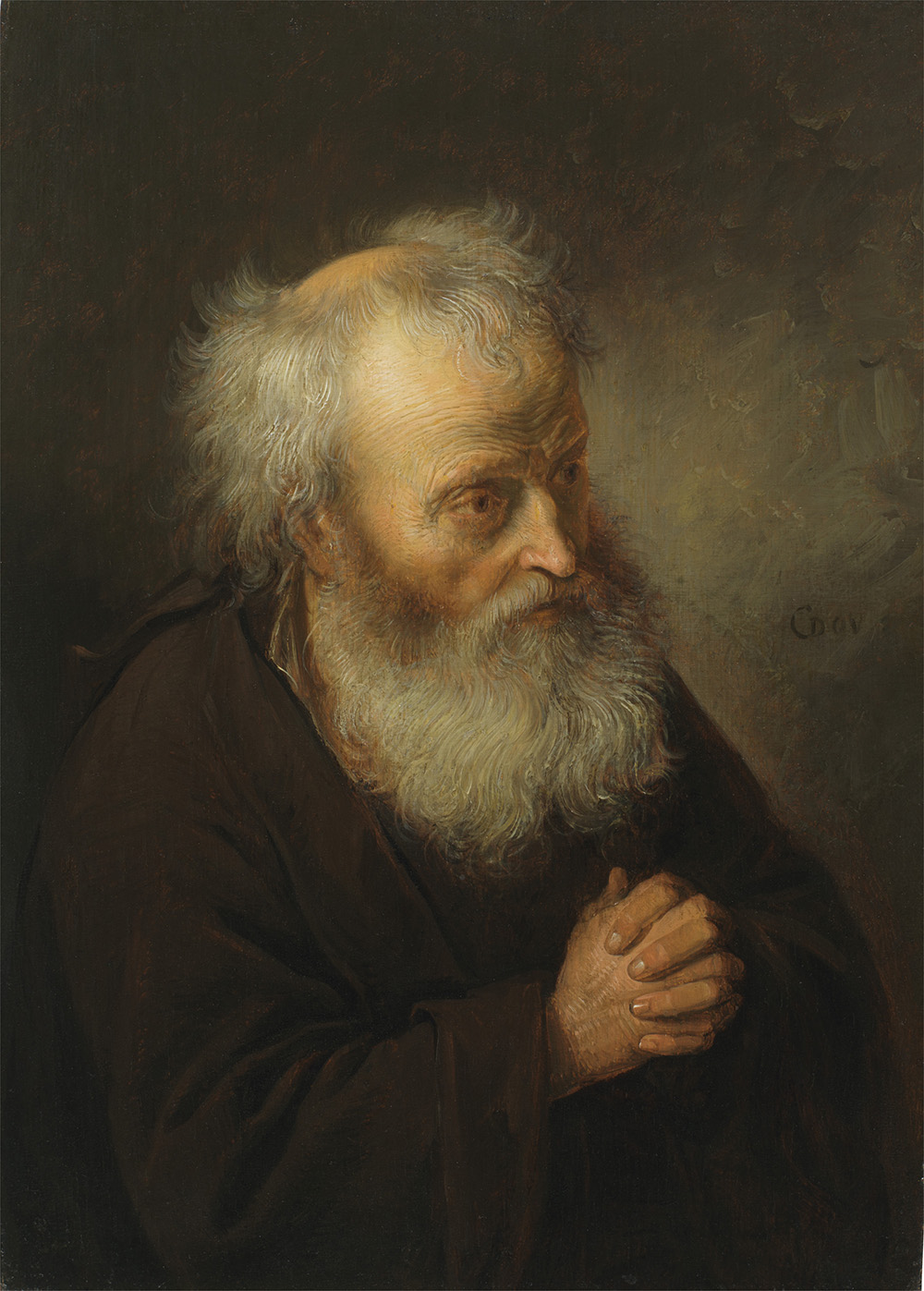
    Old Man Praying (1665-1670), Gerrit Dou | Creative Commons, courtesy The Leiden Collection.

    There are several passages that specifically warn against a flippant, easy way of asking God for what you want. The most direct might be: “Not everyone who says to me, ‘Lord, Lord,’ will enter the kingdom of heaven, but only the one who does the will of my Father in heaven. On that day many will say to me, ‘Lord, Lord, did we not prophesy in your name, and cast out demons in your name, and do many deeds of power in your name?’ Then I will declare to them, ‘I never knew you; go away from me, you evildoers.’” (Mt 7:21-23). This is a person calling out — asking, seeking, knocking — but the answer is unimaginably awful. Christ tells this person, “go away from me, you evildoers.”

    Doesn’t this contradict the excerpt from today’s gospel? Jesus explains the crucial qualifier: only the one who does the will of my Father in heaven will enter the kingdom. Another aspect of this passage that jumps out at me is when he says, “I never knew you,” to the person clamoring to enter the kingdom. Getting to know Christ is an absolutely essential part of our Christian journey. There simply is no salvation unless we acknowledge him as God, walk alongside him, and ask him to intercede for us to receive God’s mercy.

    This Christian journey happens as we live the liturgy, both sacramentally in our sacred spaces and practically in our secular spaces. And at the heart of today’s reading is a particular aspect of the journey: prayer. Our asking, seeking and knocking are ways we appeal to God through prayer.

    But let’s not get this backwards — anything we ask God in prayer is already a response to Him having first reached out to us. The Catechism of the Catholic Church states, “God calls man first. Man may forget his Creator or hide far from his face; he may run after idols or accuse the deity of having abandoned him; yet the living and true God tirelessly calls each person to that mysterious encounter known as prayer” (2567). He gave us prophets, he gave us revelation, he gave us his Son, he gives us miracles; in short, he has provided the reason to believe in him and a reason to call out to him for help.

    The question is, are we coming from a place where we are his humble servants, begging to know his will? Or are we instead coming from a place where we’ve already identified an outcome we want and are asking him to fulfill it? I want a good grade, a healthy dog, a politician to change his views, etc. In these scenarios, we have supplanted his will with our will. It’s easy to do — something, in fact, we’re much more likely to do than not because patiently, quietly, humbly discerning God’s will takes lots of prayer and lots of practice.

    Don’t get me wrong, I don’t think that asking for a good grade or a healthy dog is a bad thing. In fact, it is a sign that we want to bring God into our daily travails, to live with him and his help in everything. My gripe (to be honest – that’s what it is) is the all-too-common contemporary response we hear when people don’t get what they want. “How could God do that to me?” is the gist of this response.

    And sometimes it’s such a violent response when dealing with things like life, death, and suffering, that people decide to push God out of their lives, stop “being Catholic” (which is impossible, BTW, once you’ve been baptized into the Church), or even deny His existence. This is as transparently the work of Satan as it gets; we can practically see him sitting on the shoulder of these people prompting them to put their will ahead of God’s, to react with anger over outcomes they set for themselves, to blame God, and to ultimately decide to deny Him. We must avoid these things at all costs.

    And Jesus teaches us how to orient ourselves appropriately right here in the Sermon on the Mount. The Lord’s Prayer is the pinnacle of how to pray to our Father and the way to orient ourselves. Let’s recall our first two petitions at the beginning of the prayer, after acknowledging his holiness: “Thy kingdom come. Thy will be done …” We are asking, before all else, to hasten to the Kingdom of God. This does not mean that we are asking for death or for the end of the world, but for unification with God, which can happen while in this world as the saints show us.

    Do we believe this when we say it? Is this the thrust of our lives — to hasten to the Kingdom above all else? If it is, then earthly concerns take on a decidedly lower importance.

    The second request to God is that his will is done here on earth like we know it is in heaven. Christ repeats this many times throughout his ministry and lives it by willingly going through his Passion and Death according to the will of his Father. Jesus can’t stress enough for us how important this aspect of prayer and faith life is for us. God’s will — often unknowable and veiled — is something we hope to discern; but regardless of fully knowing, it is something we desire to be realized in the world.

    That’s real trust, you might say, and yes, it is! But there is nothing better to want than the will of Goodness itself, of Love itself, of Wisdom and Justice itself. The Lord’s Prayer teaches us to align ourselves with his will, feed ourselves on the spiritual food of his Word and worry less about this world and more about our spiritual well-being.

    Jesus reiterates this a few verses later: “Therefore I tell you, do not worry about your life, what you will eat or what you will drink, or about your body, what you will wear. Is not life more than food, and the body more than clothing? … But strive first for the kingdom of God and his righteousness, and all these things will be given to you as well” (Mt 6:25, 33). Ahh, what a salve for our constant worry! Our Lord tells us not to worry about our lives and earthly things but to “strive first” for the Kingdom and God’s righteousness, then everything else will fall into place.

    Woman in Prayer (contemporary), by Maria Magdalena Oosthuizen | Image from pinterest.com.

    So, let’s return to today’s gospel reading with the broader context of the Sermon on the Mount in mind. When Jesus says, “Ask and it will be given to you; seek and you will find; knock and the door will be opened to you,” I have to believe that he has something specific in mind. He has already told us to be humble petitioners yearning for the Kingdom, so what we are asking for is ultimately for God’s will to be done, if not understood. What we are seeking is his guidance in our lives. And we are knocking on his door in that response to his invitation to know him — we are knocking because we want his grace and love to overwhelm us in our lives.

    And just like we know how to give good gifts to our children, “how much more will your heavenly Father give good things to those who ask him.” Let’s just not imagine that we know what those good things are or when we’ll receive them, if ever in this world. Our humbleness dictates that we to not presume to put our desires or will ahead of the supreme will.

    Does Jesus direct us only to ask for God’s will to be done and nothing else? Not exactly, although I think he emphasizes that this should be first in our order of operations. Once we start to know God and love him, we can become instruments of his love in this world and that’s where charity comes in. We can bring our petitions on behalf of others, which come about because of God’s love working through us and manifesting as charity, thanks to “that mysterious encounter known as prayer.”

    And so in the Beatitudes, Jesus says, “Blessed are those who mourn, for they will be comforted.” Mourning is an act of charity for the souls of the departed. Also: “Blessed are those who hunger and thirst for righteousness, for they will be filled.” This hunger and thirst for righteousness is not just one’s own perfection but a desire for God’s justice for others in the world. And, of course, “Blessed are the merciful, for they will receive mercy.” The mercy that we pour out for our fellow humans is absolutely an act of charity, and God rewards us in the Kingdom for this.

    But let’s remember the order of operations here: 1. Love God first; ask for His will to be done, seek for His guidance, knock on His door for grace; and then: 2. Love your neighbor; ask for God’s love to pour through you to them, seek for their good, knock on His door to grace them. All of our Christian attitude and prayer is outwardly focused, not inwardly. May we remember this!

    I don’t want to miss saying a few words about the lovely reading from Esther. Here are my thoughts as recounted from last year’s reflection. For me, the Book of Esther is a bit of an odd duck in the Old Testament. It’s a great story explaining the establishment of the Jewish holiday of Purim, but the colorful narrative of ironic reversals and high-stakes changes of fortune remind me of a Shakespearean play. The setting is Babylon, and while many Jews have started to return to Israel after the Babylonian Captivity officially ends, Esther and her uncle Mordecai are some of those who remain. She’s not presented as particularly devout, and her most striking asset is her beauty, which gets her chosen as Queen after “trying out” with many other young virgins in the harem.

    But her secularism changes when the king is convinced to pass an edict that all Jews in the kingdom “shall all—wives and children included—be utterly destroyed by the swords of their enemies, without pity or restraint, on the fourteenth day of the twelfth month, Adar, of this present year.” Mordecai asks Esther to intercede with the king. In a passage before the one read today, Mordecai implores her not to “keep silence at such a time as this,” and says, “Who knows? Perhaps you have come to royal dignity for just such a time as this.” 

    The rub is that no one can come into the king’s presence without being summoned or they are killed. So in order to ask for him to change the edict, Esther must take her life in her hands. But, Esther is convinced that action is needed. And — praise the Lord — the action she takes begins with God. She responds to Mordecai: “Go, gather all the Jews to be found in Susa, and hold a fast on my behalf, and neither eat nor drink for three days, night or day. I and my maids will also fast as you do.”

    Queen Esther (1878), Edwin Long | Wikimedia Commons.

    This is where we join today’s reading. Esther, alone and “seized with mortal anguish,” falls back on the faith of her people. She covers her head with ashes and dung and utterly humbles every part of her body. Clearly, her prayer is fervent and sincere. It takes the form of both petition to help her find the right words and intercession, to save all of the Jews from slaughter. It seems to me that this reading is included in our Lectionary as a reminder of the sincerity with which we should pray to our God when we ask for his help. Also, it shows us that she is moved by charity, not selfish concerns, something that prefigures what Christ will eventually set up as the paradigm for His Church.


  • Esther: Model of How to Petition the Father

    Esther: Model of How to Petition the Father

    Thursday in the First Week of Lent: Esther C:12, 14-16, 23-25, Matthew 7:7-12.

    With eight kids vying for attention and elbowing for their piece of pie, my mother was fond of the saying, “Ask and you shall receive.” I must have heard it a hundred times growing up. Today, we hear the origin of this saying, out of the mouth of Jesus as he encourages his disciples to petition the Father. Lest we think that any old way of asking is OK, we are given the ideal model of petitioning from Esther in the first reading.

    For me, the Book of Esther is a bit of an odd duck in the Old Testament. It’s a great story explaining the establishment of the Jewish holiday of Purim, but the colorful narrative of ironic reversals and high-stakes changes of fortune remind me of a Shakespearean play. The setting is Babylon, and while many Jews have started to return to Israel after the Babylonian Captivity officially ends, Esther and her uncle Mordecai are some of those who remain. She’s not presented as particularly devout, and her most striking asset is her beauty, which gets her chosen as Queen after “trying out” with many other young virgins in the harem.

    But her secularism changes when the king is convinced to pass an edict that all Jews in the kingdom “shall all—wives and children included—be utterly destroyed by the swords of their enemies, without pity or restraint, on the fourteenth day of the twelfth month, Adar, of this present year.” Mordecai asks Esther to intercede with the king. In a passage before the one read today, Mordecai implores her not to “keep silence at such a time as this,” and says, “Who knows? Perhaps you have come to royal dignity for just such a time as this.” 

    The rub is that no one can come into the king’s presence without being summoned, or they are killed. So in order to ask him to change the edict, Esther must take her life in her hands. But, Esther is convinced that action is needed. And — praise the Lord — the action she takes begins with God. She responds to Mordecai: “Go, gather all the Jews to be found in Susa, and hold a fast on my behalf, and neither eat nor drink for three days, night or day. I and my maids will also fast as you do.”

    Queen Esther (1878), Edwin Long | Wikimedia Commons.

    This is where we join today’s reading. Esther, alone and “seized with mortal anguish,” falls back on the faith of her people. She covers her head with ashes and dung and utterly humbles every part of her body. Clearly, her prayer is fervent and sincere. It takes the form of both petition, to help her find the right words, and intercession, to save all of the Jews from slaughter. It seems to me that this reading is included in our Lectionary as a reminder of the sincerity with which we should pray to our God when we ask for his help.

    The Jews are saved in the end, and it’s important to note that Mordecai offers a passionate plea for help and, in fact, “all Israel cried out mightily, for their death was before their eyes.” It was a group effort.

    So when we encounter Jesus in the gospel reading from Matthew, we have in our minds the same impassioned, sincere type of prayer that the Jews of the time knew was an appropriate way to speak to God. This passage comes towards the end of Matthew’s account of Jesus’s words upon the mountain after he preaches the Beatitudes. It’s a section that presents rapid-fire nuggets of wisdom. In fact, in the NRSV Bible, the last verse is given a different subheading: The Golden Rule.

    Jesus’s words in our Book of Gospels: “Ask and it will be given to you; seek and you will find; knock and the door will be opened to you.” Really? This seems like a carte blanche scenario, and our experience tells us otherwise. As a priest in Salt Lake City, Fr. Erik, is fond of saying, “God isn’t a vending machine.” You don’t put out a set of prayers in the right words and quantity and receive back exactly the thing you wanted. (Another phrase I like: God isn’t a cosmic genie!)

    We must read this passage in its entirety. Jesus uses the analogy of how we give our children good things when they ask for them: “how much more will your heavenly Father give good things to those who ask him.” A few things are going on here. First, we are reminded that the Father is truly that: a father, and all the aspects of that relationship apply. Second, the Father’s will is to give “good things.” He knows better than we do what we need and what is good.

    I’d venture to claim that we very rarely know what is good, especially from the perspective of God. What we know is what pleases us or solves our short-term problems. Children indeed.

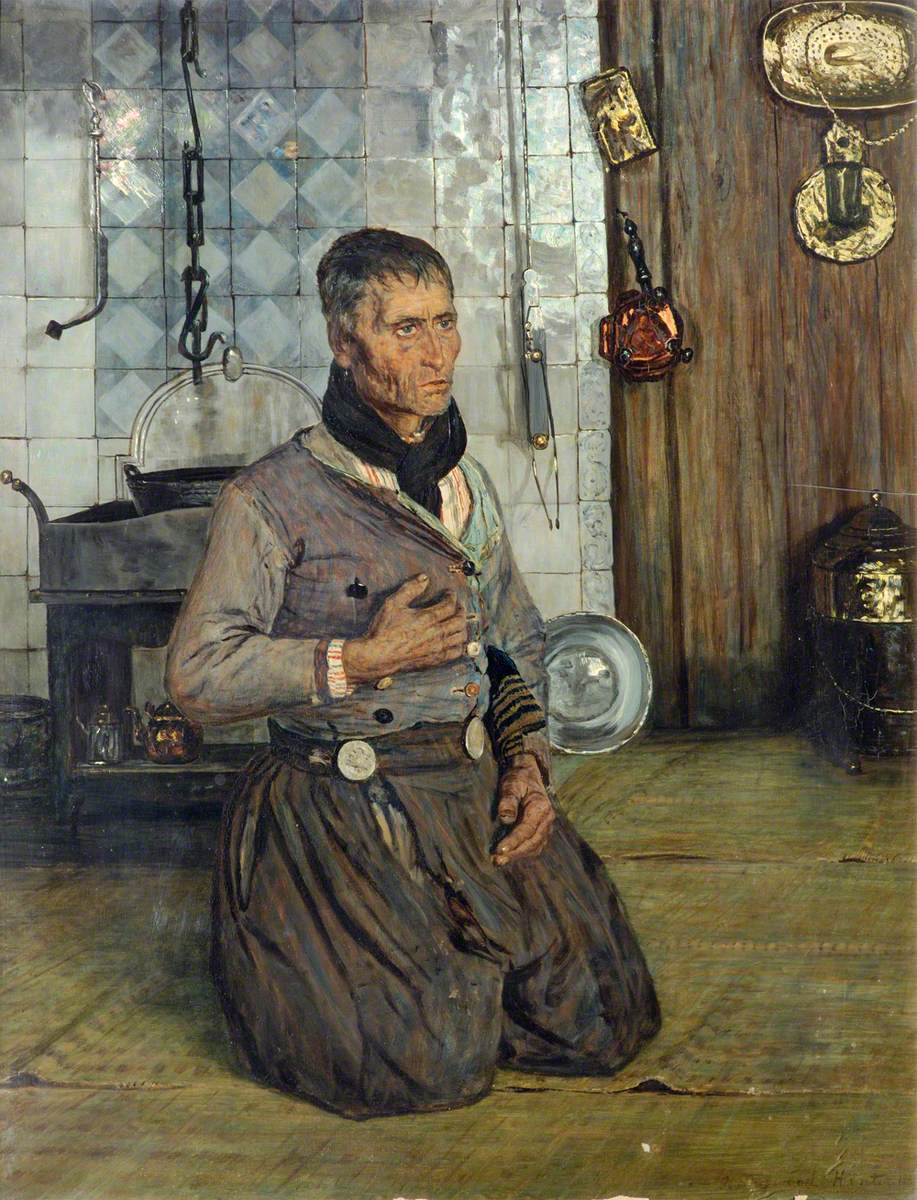
    Ave Maria, Volendam, The Netherlands (1897), George Sherwood Hunter | Creative Commons, courtesy Aberdeen Art Gallery & Museums/ArtUK.

    So what’s the point of asking if we are like the four-year-old asking for more candy or for our dad to get the monster out from under the bed? I can imagine several reasons Jesus urges us to ask the Father and assures us that he will answer. The most basic one is that it reminds us to live in faith; it reminds us that we are dependent upon an omnipotent God who wants to bring us to Himself.

    The second reason is that this reminder, in turn, can deepen our contemplation of God and his will. We are not expected to stay in spiritual infancy, but to mature and more closely align our own will with God’s over time. As the 1st Letter of John states, “And this is the boldness we have in him, that if we ask anything according to his will, he hears us” (Jn 5:14, emphasis mine).

    The third reason is that we answer our call as Christians to act in the world according to God’s will. We are not called to sit in contemplation as passive lumps. We just read a few days ago that there will be a final judgment and it will be based on our acts of love. We have to ask, we have to seek, we have to knock, and we have to do God’s will. We are a people on the move towards the Kingdom, but we must get there in participation with God, not by somehow floating there.

    And this is why the last verse is a great way to end the reading: “Do to others whatever you would have them do to you. This is the law and the prophets.” Yes, that doing — it’s on the same wavelength as the asking and seeking. It’s to be done in reverence to God (think about Esther) and in accordance with his laws. This great Golden Rule is an example of God’s love in action, a charitable act. 

    Back to Esther: she is a great model for us because she shows that even if you’re alone, terrified, and not regularly pious, if you appropriately petition God from a position of humility and have the courage to act in difficult situations, the way God answers may just align with your earthly desires.

  • Ambassadors for Christ

    Ambassadors for Christ

    Ash Wednesday: Joel 2:12-18, 2 Corinthians 5:20-6:2, Matthew 6:1-6, 16-18

    The readings today certainly set the stage for Lent, as you’d imagine they might on Ash Wednesday. In the gospel reading, Jesus instructs on the appropriate way to pray and fast. This is part of his long sermon that starts with the Beatitudes, taking up three full chapters in Matthew’s gospel. But let’s take our time and see how today’s first two readings tell us why we might be praying and fasting in the first place.

    The book of Joel uses lovely language to portray some rather drastic times for the Jewish people. A plague of locusts (some scholars claim this is an allegory for invading armies) has so devastated the land that there is no grain in the fields nor even viable wilderness pasture either thanks to wildfires. The land is ruined, “the ground mourns.” Then the prophet Joel speaks of impending doom, “the day of the Lord,” when the Lord brings an innumerable, unstoppable army upon them. This horrible apocalyptic vision ends with: “Truly the day of the Lord is great; terrible indeed—who can endure it?”

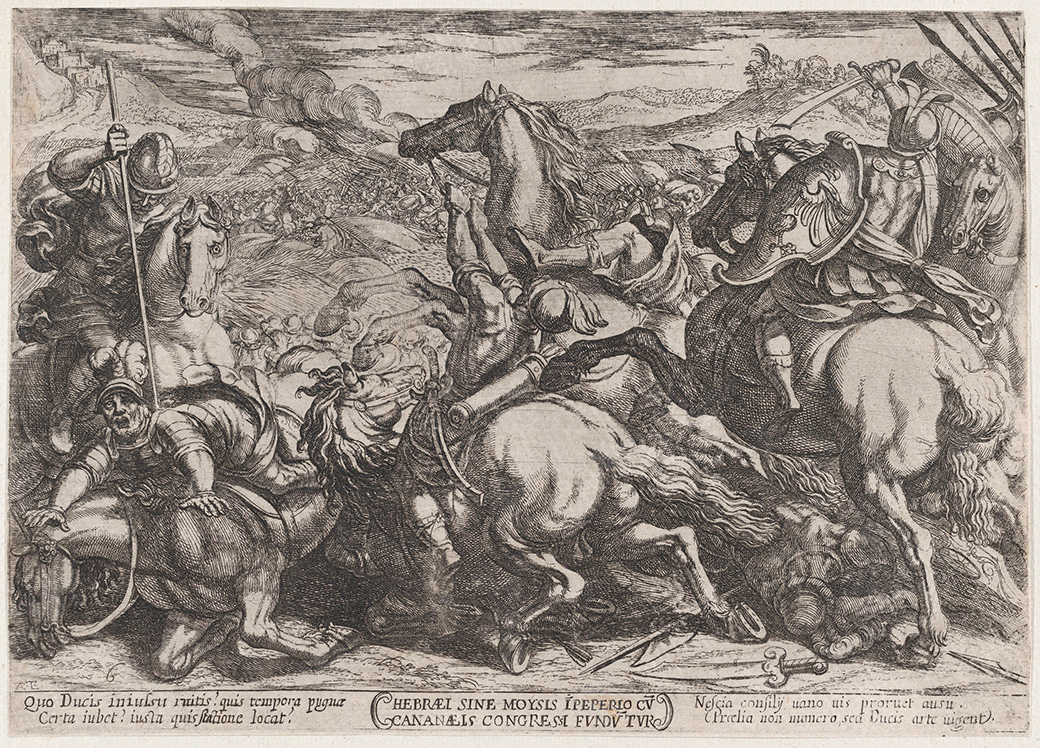
    Israelites defeated by Canaanites for Having Disobeyed Moses, ~1590-1610, Antonio Tempesta | Creative Commons license, courtesy The Metropolitan Museum of Art.

    And that’s the lead up to what we read today. Despite opening with complete despair, we hear undeniable hope from Joel, “Even now, says the LORD, return to me with your whole heart, with fasting, and weeping, and mourning; Rend your hearts, not your garments, and return to the LORD, your God. For gracious and merciful is he, slow to anger, rich in kindness, and relenting in punishment. Perhaps he will again relent and leave behind him a blessing.” Joel gives us a reason to return to God with our whole hearts: the hope that He will relent from his punishments, that is, the hope that we will be saved and be brought into his Kingdom for eternity. This trumps all of the worldly concerns of barren land and empty granaries. Joel implores the entire populace (“Assemble the elders, gather the children…”) to weep and pray for God’s mercy.

    St. Paul’s words to the Corinthians are significantly different than Joel’s instructions for the Jews of his time.

    As we move to the New Testament in the second reading, we enter a new world transformed by Christ. We are, ontologically speaking, new beings. St. Paul explains this beautifully elsewhere, in the letter to the Hebrews: “we have been sanctified through the offering of the body of Jesus Christ once for all … by a single offering he has perfected for all time those who are being sanctified” (Heb 10:10,14). We no longer have to keep sacrificing animals and other offerings over and over as we beg for God’s forgiveness and mercy (which he amply provides in the time before Christ). Instead, we are able to commune directly with God thanks to, and through Christ — our new way of “right relationship” with God is called the Holy Liturgy.

    This is why St. Paul’s words to the Corinthians are significantly different than Joel’s instructions for the Jews of his time. Christians encounter a new perspective. The first sentence of the reading encapsulates the new reason we pray, fast, and give alms: “We are ambassadors for Christ, as if God were appealing through us.” What an exalted position, ambassadors for Christ! This means that our lives are examples to the world, showing who Christ is. And who exactly was Christ? Above all, he was perfect in devotion to his Father. Therefore, our first act as ambassadors is to embody the humility for the Father that Christ had, the desire to please Him and do His will, the focus on spiritual fortitude, not the pleasures of the world. This is why St. Paul asks the Corinthians to “be reconciled to God” so that they do not “receive the grace of God in vain.” We do this for the Father, yes, but also to grow the Body of Christ in the world.

    This brings us to the words of Jesus himself. Shortly before what we read today, he says, “Do not think that I have come to abolish the law or the prophets; I have come not to abolish but to fulfill” (Mt 5:17). And, indeed, he mentions the same prescriptions that prophets like Joel and Isaiah levy upon their people: righteous deeds, giving alms, prayer, and fasting. Only now Christ is instructing us on the way in which we carry out these acts. In order for us to be good ambassadors for him, we must listen intently and understand that he perfected the law, fulfilled the law, and wishes for us to continue this fulfillment of the law as He lives in us. And so we are instructed to fervently pray, fast, give alms, and do good deeds, but to do them in a way that does not draw attention to ourselves. This self-effacement is essential for the good Christian. Why? Because Jesus reminds us in his instructions that all things should begin and end in the Father. All things should point to the Father. What will be noticed are the good works, the alms, the prayerful attitude — all of which speak of God alive in the world. What won’t be noticed is a person trying hard to look pious. 

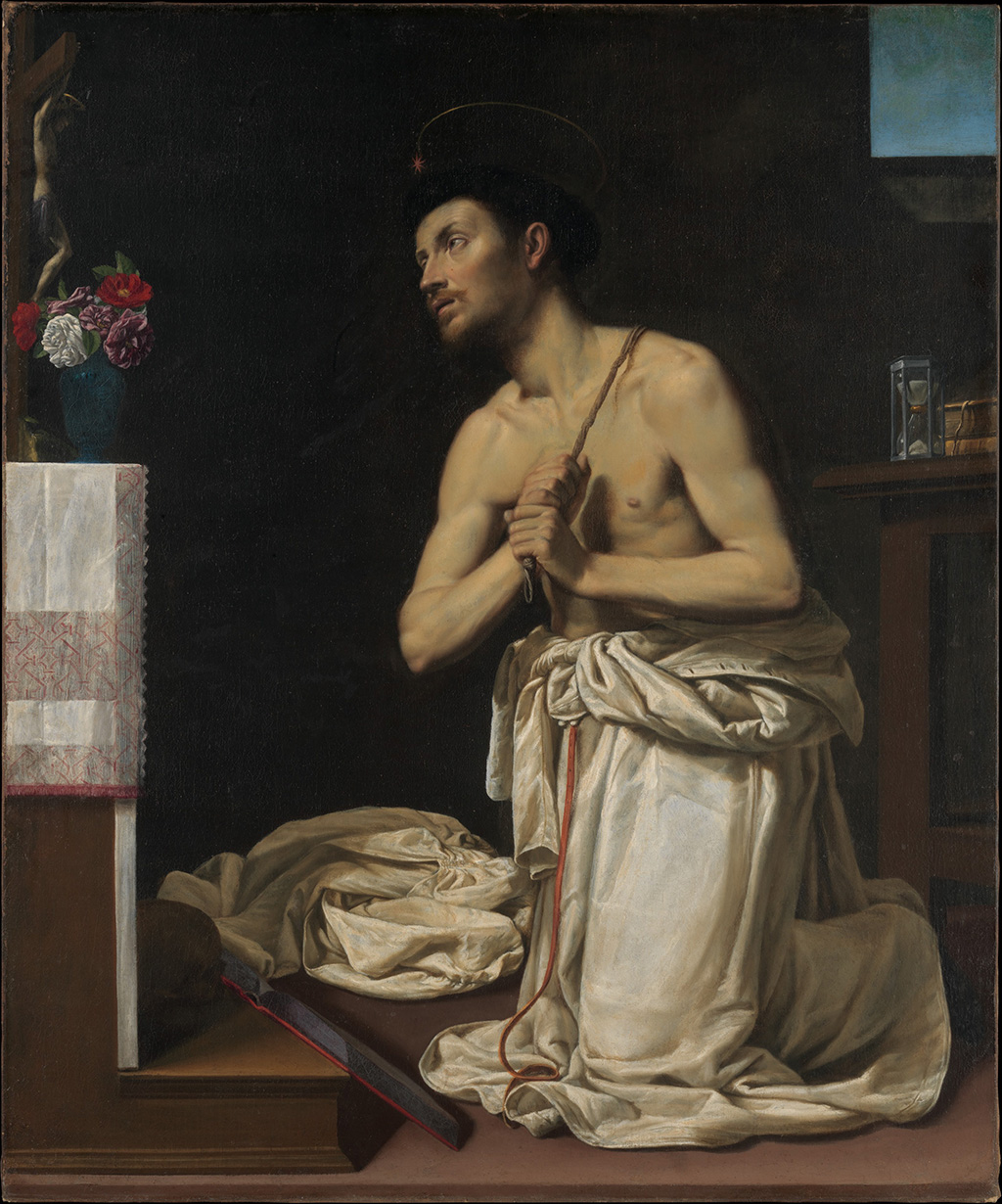
    St. Dominic in Penitence, 1607, Filippo Tarchiani | Creative Commons license, courtesy The Metropolitan Museum of Art

    This reminds me of St. Dominic. He was known for being an enjoyable, affectionate man in an age when the religious were expected to be grimly serious. Yet he was also famous for his all-night weeping and prayer sessions in the chapel, crying for the lost souls in Purgatory, that kept up the friars in the various monasteries where he rested his head.¹  Here was a saint who actively worked all over Europe doing good deeds, praying, and preaching; in essence, being a fantastic ambassador for Christ. We also know that he was deeply penitent, praying, fasting, and even performing mortification of the flesh three times nightly. Yet those who met him enjoyed his company immensely and did not find him morose or looking like he was in the middle of constant penance. Something about the man always pointed to the goodness of God. In fact, the Dominicans gained an early reputation for being too cheerful and showy, but the order grew in all ways (friars, nuns, laypeople) exponentially. 

    So that we don’t forget the upshot of all of this, Jesus reminds us in today’s reading at the end of each paragraph. He repeats: “And your Father who sees in secret will repay you.” This is a great reminder of the intensely personal relationship each of us has with our God, who knows us better than we know ourselves. May we all be reconciled to Him this Lent so that we can be excellent ambassadors for Christ!


    ¹ I am much indebted to Simon Tugwell, OP, for any knowledge I might have about St. Dominic and the early Dominicans. If you haven’t read The Way of the Preacher (among several other excellent books), I highly recommend it.

  • Mark’s account of the mute spirit exorcism

    Monday, 7th Week of Ordinary Time: Mark 9:14-29

    Today’s reading was that great one from St. Mark where Jesus, Peter, James, and John come down from the mountain of the Transfiguration to find their disciples in a bit of a ruckus with the scribes. As I read and listened, it was one of those times when the reality of the actual Word of God springing into our lives was evident. Every sentence struck me as being loaded with import.

    The Transfiguration of Christ: Part of an iconostasis in Constantinople style. Middle of the 12th century. | Wikimedia Commons.

    The crowds are “utterly amazed” when they see Jesus after his transfiguration. But we get no time to dwell on that piece of revelation because the old law of the scribes is once again challenging the new charism of the spirit. Off we go, back to his ministry! Jesus asks about the nature of their argument and “someone from the crowd” answers that he brought his possessed son to be cured but the disciples were unable to do it. This seems like a non-sequitur to me – was that really the argument the scribes were having? I tend to think from evidence elsewhere that they are claiming, as usual, that the disciples (and Jesus) have no authority to teach and drive out spirits because they don’t follow the law to the very letter. They’re probably accusing them of blasphemy.

    But the text continues without further discussion of the scribes. Jesus responds with a lament: “O faithless generation, how long will I be with you? How long will I endure you?  Bring him to me.” His exasperation is clear. It’s almost jarring (for me, at least) because we honor the Transfiguration to such an extent that I’m imagining this white-as-snow figure of Christ fairly floating down the mountain, radiating love, having been face-to-face with the Father, and these words of complaint don’t seem to fit. It’s a great reminder not to get complacent with images and notions (especially romantic or emotional ones) about who the Lord is. We really can’t fathom.

    When the man explains about his son’s possession, he finishes with what seems to be a request based in an appropriate stance towards God: “if you can do anything, have compassion on us and help us.” Shouldn’t we ask for compassion and help? But Jesus pounces upon the first part of his appeal: “‘If you can!’ Everything is possible to one who has faith.” His exasperation continues, it seems. It’s as if he’s saying “can’t you all see who I am?” Then, Mark gives us one of the best lines in the gospels: “the boy’s father cried out, ‘I do believe, help my unbelief!’” We should all have this tattooed on our bodies somewhere. If that’s not the human condition, I don’t know what is. We are so weak in faith, that even our tentative belief must be bolstered by a plea for help with our basic struggle to believe.

    Piqsels/Creative Commons Zero

    Bishop Robert Barron’s daily gospel reflection picks up on this problem of faith. He writes, “Don’t think of faith so much first in propositional form—the things that I believe—but rather in psychological or spiritual form. Faith is an attitude of trust in the God who is always holding out new possibilities to us.” I really like thinking of faith as an “attitude of trust.”

    Barron’s words remind me of Cardinal Joseph Ratzinger, who writes in Introduction to Christianity, “For to believe as a Christian means in fact entrusting oneself to the meaning that upholds me and the world; taking it as the firm ground on which I can stand fearlessly” (73).  I love his construction of faith as the firm ground, the thing that I stand on, that upholds me. He has a wonderfully large understanding of “meaning” in his book as going far beyond “knowledge.” He writes: “[To believe] means affirming that the meaning we do not make but can only receive is already granted to us so that we have only to take it and entrust ourselves to it” (73). Again, trust (not knowledge) becomes the operative function when it comes to faith. I guess this is what Jesus bemoans when he points out the conditional aspect of the man’s plea; the “if you can” part betrays a lack of trust.

    One other thing strikes me about this wonderfully rich gospel reading. The boy is possessed by a “mute and deaf spirit.” The significance must be noted. After Jesus drives out the spirit and heals the boy, his disciples ask him in private why they were not able to drive out the spirit. Jesus answers: “This kind can only come out through prayer.” My first thoughts are, “Oh, no, now we need an evil spirit compendium and a degree in demonology to do the good work of God in the world.” It just seems to be a weird qualification – how could the disciples, or we for that matter, distinguish between types of spirits and what is needed to drive them out? But that’s not what Christ’s message is during his ministry. It’s not magic or the arcane arts. The important thing he says is “through prayer.” What is prayer other than the verbalization of our faith, our trust in God, in order to praise him, thank him, and intercess for others? There is something important about speech, about the word, verbalization – which is faith proclaimed – that becomes an action in its own right. It’s no coincidence that this is a “mute and deaf spirit”: it clarifies the problem with not proclaiming faith, with not hearing the Word. Yes, here is the Word of God made flesh – as true of a testament to the power of logos in our world as there can be – reminding us that it’s not enough to have faith, but to put that faith into action through our own words and prayers.

    What a great reading for me as I contemplate the lay Dominican vocation. This order of preachers – what does it mean? What significance might it have for me? Is it about me being called to write and preach about God? Is there something that fundamentally fits with God’s call to us all? Today’s gospel seems to affirm these thoughts.