Tag: faith

  • Why Should We Do Good Works?

    Why Should We Do Good Works?

    5th Sunday in Ordinary Time: Isaiah 58:7-10, 1 Corinthians 2:1-5, Matthew 5:13-16.

    Doing good works, especially for those who are in great need, is at the core of the Christian life. Jesus not only preaches this (Parable of the Good Samaritan, Parable of the Sheep and Goats, etc.), but he also demonstrates it by doing the greatest work of all — providing salvation for the entire human race.
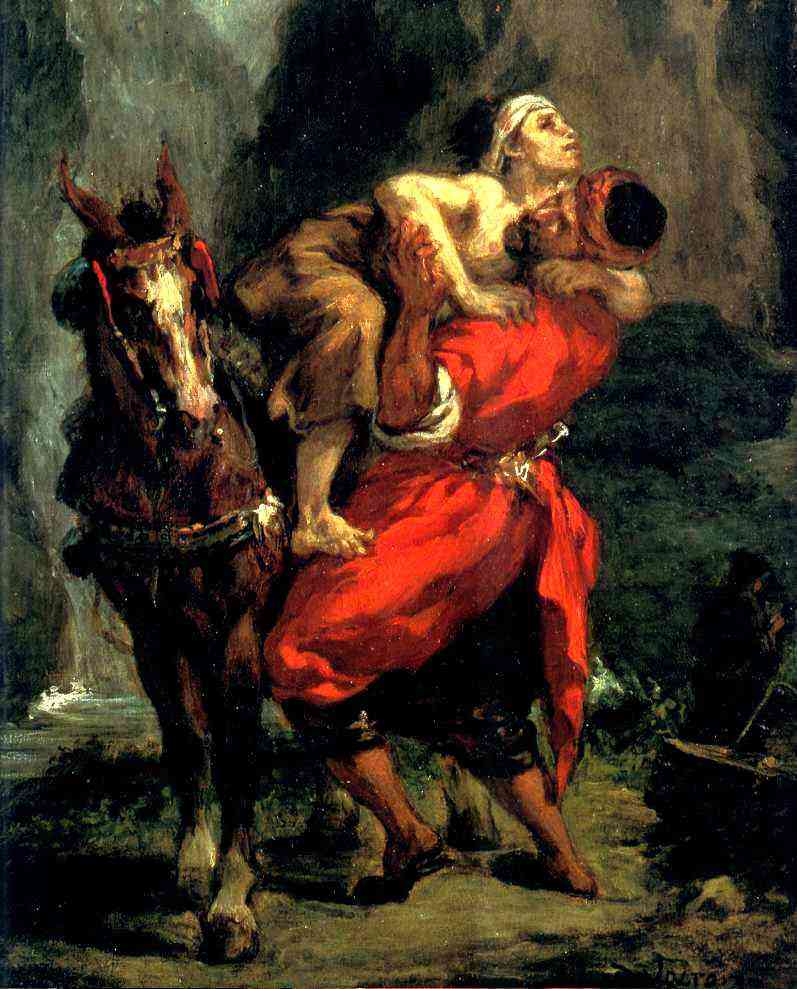
    The Good Samaritan, Eugène Delacroix (1849) | Creative Commons, courtesy Wikimedia.

    This is not to say that Christianity as a religion is only about doing good works. It is clearly about much more, most especially God’s revelation of himself to us in the form of the Word of God incarnate, through whom, in whom and for whom, all Creation is made. The centrality of Jesus Christ’s Incarnation, ministry, suffering, Crucifixion, Resurrection and Ascension (all of which we could call the “Christ Event”) to all of humanity and to each of us individually is truly the core of Christianity.

    But the scriptures tell us that the Christian life — that is, how we go about living in this world while we await the infinitely greater one we hope to inhabit with God — is one that should be lived in service to others.

    Today’s readings afford us the opportunity to ask why. Why does God want us to do good works?

    The question might seem like a no-brainer — we do good works in order to get to Heaven, right? But Christians have been arguing over this particular issue for centuries.

    The Theological Fuss Over Salvation and Justification

    “Getting to Heaven” is an informal way to refer to salvation. There is another term, justification, that is related to the larger concept of salvation, but refers to that moment when God declares a person to be “not guilty” or “acquitted of guilt.” The reason we pay attention to these two terms is that St. Paul uses them, especially in his Epistle to the Romans. In one passage, for example, he writes, “… now that we have been justified by his blood, will we be saved through him from the wrath of God” (Romans 5:9). I want to take a moment to examine good works in relation to salvation (“getting to Heaven”) and justification because this is one of the big debates that was brought up in the Protestant Reformation.

    In his Epistle to the Romans, Paul is not terribly precise in describing justification, despite the fact that he spends a lot of time discussing it. In the passage above, he states that Christ’s sacrifice on the Cross is the thing that justifies us: “we have been justified by his blood.” Yet a few verses earlier, Paul writes that Jesus “was handed over to death for our trespasses and was raised for our justification” (Romans 4:25). Here, it seems that the Resurrection was the vehicle for our justification, not the sacrifice on the Cross. More fundamentally, he writes that “since all have sinned and fall short of the glory of God; they are now justified by his grace as a gift, through the redemption that is in Christ Jesus” (Romans 3:23-24). This is a more comprehensive statement and the one he really cares about, that we are justified by God’s grace, and this grace manifested itself through all the divine works of Jesus Christ (including his sacrifice on the Cross and his Resurrection).

    This point is not debated between Catholics and Protestants, despite some confusion. Both profess the same belief that the moment of being pronounced “acquitted” by God (aka, justified) is accomplished solely through God’s grace and no effort of our own. It’s beyond our ability to acquit ourselves before God — it took the divine Son of God to take on our humanity and accomplish this for us.

    Of course the issue is that we continue to sin, so despite this initial divine help in justifying us, the question remains: could we lose our salvation by turning away from God? Is there a way for us to secure our salvation?

    In the early 1500s, a German priest and theology teacher at the University of Wittenburg named Martin Luther made waves in the Church, preaching about this technical term, justification, and offering his opinion on this matter. Luther had become obsessed with the letter to the Romans, writing, “This epistle is in truth the chief part of the New Testament and the purest Gospel.” This should strike us as a bit of a red flag, in that none of the epistles are the actual Gospel, but inspired instruction to the faithful — certainly not “the chief part of the New Testament”! Yet Luther latches onto some of St. Paul’s statements in the epistle and doesn’t let go, unable to weigh them in the balance of all of scripture and achieve the appropriate perspective for orthodox theological teaching.

    One of Luther’s main objectives in his Preface to the Epistle of the Romans is to argue that our righteousness before God comes through faith alone, not through works. To accomplish this, he puts forth an imbalanced definition of faith, not in line with Catholic teaching then or now. He writes, “faith is a divine work in us, which transforms us, gives us a new birth out of God … Oh, it is a living, energetic, active, mighty thing, this faith. It cannot but do good unceasingly” (16). Luther overemphasizes the divine origin of the theological virtue of faith, to the point where it becomes an “active, mighty thing” all on its own, doing good seemingly without any tether to the person. He writes scathingly about people who doubt if faith is enough and go about doing good works as a way to “become godly.” He says their notions of faith are erroneous and a “human figment” (15).

    Contrast this with the Catechism of the Catholic Church, which teaches that faith is both a grace and a human act: “In faith, the human intellect and will co-operate with divine grace”; at this point, the Catechism quotes St. Thomas Aquinas, whose writings already heavily influenced the Church by Luther’s time: “Believing is an act of the intellect assenting to the divine truth by command of the will moved by God through grace” (155).

    Luther is having none of this.1 He imagines faith as a type of superpower: “Faith is a living, daring confidence in the grace of God … [which] makes a person happy, bold, and full of gladness in his relation to God and all creatures.” He adds that faith makes a person “willing and enthusiastic to do good to everybody, to serve everybody.” His conception of faith prompts him to make the claim that “it is impossible to separate works from faith, just as impossible as it is to separate the power to burn and shine from fire” (18). Not only does this fly in the face of human experience (clearly, it’s possible to have great faith but not have the physical ability or opportunity to do works, and just as clearly you can do good works but have zero faith in God), it also disagrees with how the Apostles, Church Fathers, saints and popes have talked about faith and works.

    St. Gregory of Nyssa puts it plainly: “Faith without works of justice is not sufficient for salvation; neither is righteous living secure in itself of salvation, if it is disjoined from faith” (Homilies on Ecclesiastes, 8 [ca. A.D. 335- 394]). Why Luther chose to disagree with so many Fathers of the Church and the teaching of the Magisterium is beyond me. But, to this day, Protestants continue to choose this hill to die on.

    In short, Luther elevates faith to the level of a divine force (as opposed to simply having a divine origin) in order to make it easier to swallow the claim that justification and salvation come from faith alone. The implications of his definition of faith enable him to write, “all good works are merely external signs flowing from faith and, as good fruits, attesting that a person is already inwardly righteous in the sight of God” (26). While good works can be a sign of strong faith and good fruits of faith, not all good works find their source in faith. His diminishment and disdain for good works find their punctuation in the word merely.

    The implications of this philosophy is that our lives and actions are divorced from divine, supernatural realities. Our works are just external signs of this supernatural faith that seems to leave out any potential for free will, concupiscence or any number of things that make us human. And, it has more than a little of the old gnostic heresy that calls the body bad and the spirit the only good.

    OK, enough of Luther and this foray into “faith alone.” As the Church reminds us, God invites us, urges us, enchants us, fills us with awe — all so that we respond. We are called to respond with our will, our intellect, and our acts.

    Do Good Works Earn You Anything?

    Luther’s legacy has given Protestants a firm belief that good works can earn you nothing. Yet the Church Fathers like Gregory of Nyssa are clear: faith and works contribute to God’s decision over the fate of our souls. This is the orthodox teaching of the Church.

    But that doesn’t mean that the point of good works is to earn salvation. Perhaps they do help us achieve ultimate union with God; but maybe they do more.

    Turning to today’s readings, we encounter some intriguing suggestions. God shares his wisdom through the mouth of Isaiah, encouraging us to do good works like feeding the hungry, sheltering the oppressed and homeless, clothing the naked and not turning our backs on our family and neighbors. What does God do in response?

    Then your light shall break forth like the dawn,
    and your wound shall quickly be healed;
    your vindication shall go before you,
    and the glory of the LORD shall be your rear guard.
    Then you shall call, and the LORD will answer,
    you shall cry for help, and he will say: Here I am!

    We are given a key image here: light. Jesus speaks to this in the gospel reading, and we’ll return to this below. Other things are happening — things that impact us here and now in this life. When I hear “your wound shall quickly be healed,” I think of emotional and psychological wounds. There is something about charitable works that heals the doer as much as the recipient.

    More importantly, we are told that good works bolster our relationship with God. As God stands by our side and acts as our rear guard, our faith can strengthen. As our faith and reliance on him grows, he answers when we call.

    The Lord adds one more thing at the end of this reading: “then light shall rise for you in the darkness, and the gloom shall become for you like midday.” How important this light is! The scene is spectacular if we picture it: the person doing good deeds has an internal light that flows forth like the dawn, and at the same time another spiritual light rises within that person’s life, enlightening them in their spiritual darkness.

    How else to describe the influence of God, other than light? It’s hard to pinpoint, but overwhelming in its impact, it’s warmth, it’s omnipresence. Note that this does not deny the fact that the fallen world holds “gloom” for us; doing good deeds, however, makes that gloom seem like midday, because we have brought God into the world. It enables us to not just endure the gloom of a fallen world, but to encounter it differently. By living in the light, the world no longer holds its terror.

    So, the point of good works might be more immediate than earning eternal salvation. This reminds me of a discussion I had recently with my brother that involved the distinction between Heaven and the Kingdom of God. Heaven — that ultimate resting place where we hope to dwell in the eternal Father’s presence — is different from the Kingdom, it can be argued. Jesus talks about the Kingdom of God movingly in his parables, and it is something more immediate to which we have access. The Kingdom is “happening now,” in our midst, while Heaven is that long-sought-after final home. Jesus’s description of the Kingdom of God is not that of a physical place or jurisdiction (like the Kingdom of Thailand, or the United Kingdom) but that of an active presence of a King, almost like an existential state of living under the power and rule of a king.

    The Kingdom, we might consider, is this spiritual light that God tells us about. This light is the presence of the king. Remarkably, here in the passage from Isaiah, He even tells us that doing good works helps to manifest the Kingdom!

    Thus, another way of considering good works, when done with faith in God and out of love for him, is that it enables us to share in his Kingdom. He has implanted in humanity a way to channel his transcendent love by using our will, intellect and very bodies — and this seems to enable the divine light to grow in us and illuminate us from without.

    Today’s psalm echoes this important lesson, with the refrain, “The just man is a light in darkness to the upright.” This light in the darkness is clearly more than just a helpful physical thing: it’s a spiritual light. In the same way, the good deeds done by this just man are about more than just clothing, food, and physical aid. The good deeds are ultimately (perhaps primarily) about spiritual aid in a fallen world.

    The light we read about in these passages is a little peek into the dynamic love that flows between the persons of the Trinity. This divine love, this divine light, might seem impossible to experience in this life, but Jesus dispels this doubt in today’s gospel reading.

    We are told that Jesus tells his disciples, “You are the light of the world.” Let’s return with fresh ears to this familiar saying from Jesus. He and his disciples knew the prophecy of Isaiah quite well. They would have known that good works, in particular, make “your light break forth like the dawn.” During his ministry, he gave them even more wisdom and spiritual power to bring forth light in his name. So, when we reach the final teaching he provides in this episode, we can see how doing good works continues to be at the heart of living a Christian life: “your light must shine before others, that they may see your good deeds and glorify your heavenly Father.”

    He gives us an answer here to that question, why should we do good works? The answer is that these works bring God’s transcendent, divine light into the world, and this light dispels darkness, turning gloom into midday, spreading spiritual encouragement, and — ultimately — bringing people into right relationship with the Father, glorifying him. In short, the reason is the salvation of souls. Doing good works brings salvation to others by bringing them into contact with God’s light.

    Note that these are his beloved disciples he’s talking to. Thus, the component of faith is also present. We have the conditions of faith and good works coming together.

    So perhaps the whole theological fuss was beside the point. It’s not about what good works earn for the doer, but what they do for the world, the watchers, the recipients, the skeptics. Justification is certainly brought about by grace alone, specifically through Jesus Christ, but the fact that our good works do not justify us does not diminish their importance in bringing about the Kingdom of God and doing his will.

    Doing. Not just passively receiving. Not burying in the ground these talents we received.


    1Paul was not writing a theological treatise on the concept of justification, so Luther’s commentary is taking Paul’s words a bit out of context. He was more concerned with the issues gripping early Christian communities, particularly whether non-Jewish converts to the faith needed to be circumcised, according to Old Testament practices. He is adamantly against this prescription and successfully argues so that it was formally upheld in the First Council of Jerusalem, AD 48-50.

    The way he makes his argument in the Epistle to the Romans is by asking whether doing things according to the Law (like circumcision) provided salvation, or if instead it was faith in Jesus Christ that saved people. He notes that Jews who are circumcised are just as likely to be denied Heaven as anyone else. It’s not the physical circumcision — the deed, or “work” of the law — that justifies them. As he writes, “real circumcision is a matter of the heart—it is spiritual and not literal” (Romans 2:29). He asks if it was the stuff that Abraham did that justified him or if it was his faith and fidelity to God that made the difference. He quotes the Old Testament, writing, “Abraham believed God, and it was reckoned to him as righteousness” (Romans 4:3). “Reckoned to him as righteousness” is another way to say “he was justified.”

    Paul goes on to discuss how adherence to the law does not justify anyone, but “it depends on faith.” Luther latches onto Paul’s diminishment of “works under the law” (like circumcision) in favor of faith — taking it out of this context of belonging to the community and applying it to the broader question of individual salvation.

  • In Praise of St. Augustine

    In Praise of St. Augustine

    Feast of St. Augustine, Monday of the Twenty-first Week in Ordinary Time, Year A: 1 Thes 1:1-5, 8b-10, Mt 23:13-22.

    Apart from St. Paul, it’s hard to think of a more pivotal early figure for the Roman Catholic Church than St. Augustine of Hippo. Even in the heady time of the late Patristic Age. Just consider the list of Church Fathers from this period!

    • Gregory of Nazianzus (329 – c. 390)
    • Basil of Caesarea (c. 330 – 379)
    • John Chrysostom (347–407)
    • Ambrose (A.D. 340–397)
    • Jerome (347–420)
    • Augustine of Hippo (354–430)
    St. Augustine (1645-1650), Philippe de Champaigne | Wikimedia Commons.

    His corpus of writing is immense and highly influential: more than 100 separate titles, including Confessions, City of God, and On Christian Doctrine. It wouldn’t be until St. Thomas Aquinas came along 800 years later that the Western Church would produce such a philosophically deep and theologically important writer.

    Any facet of his life or works would serve to occupy us for days at a time. Today, I want to focus on something that might surprise you to discover: St. Augustine wrote the oldest known monastic rule in the Western Church. Yes, 150 years before St. Benedict of Nursia wrote the longer Rule of Saint Benedict, St. Augustine wrote his rule in 397 AD. We might not think of St. Augustine as particularly “monastic.” We might know of his early life as a successful rhetorician and promiscuous Roman gentleman on his way to being a provincial governor. Alternatively, we might recognize that his major vocation was as Bishop of Hippo, a position also not associated with the observance of a rule of common life. But that major turning point in his life when he was stationed in Milan (then, the most powerful seat of the Roman empire) brought him into intimate contact with the strong, orthodox St. Ambrose. He also knew other figures such as the cantankerous St. Jerome, who was translating Greek and Hebrew sources to compile new Latin texts (and picking fights with friends and enemies alike). All three men were successful Roman citizens, dedicated to secular upward mobility until they had their respective conversion moments and adult baptisms. All three men experienced that something electric in the 4th-century air that was appealing to adult converts ready to devote themselves to God. This electricity took the form of ascetical practices like virginity, voluntary poverty and other self-denials that had made their way into Christian minds from the Desert Fathers.

    Let’s recall the history of the Church in the 4th century. Under the emperor Diocletian, this century opens with one of the most severe (and final) persecutions of Christians throughout Europe, north Africa, the Levant, and the East. Royal edicts banned Christian worship, confiscated books and sacred vessels, legally destroyed churches, arrested all clergy, released apostates, and made sacrifice to pagan gods compulsory. Christians began the century in the same state of putting their lives on the line for Christ that had occurred sporadically in the previous three centuries. Martyrdom remained the very real standard for which Christians strived.

    But then along comes Emperor Constantine who surprises everyone. Christianity is made legal by the Edict of Milan in 313 and Constantine is the one who convenes the Council of Nicea in 325 to get the 1,800 bishops to agree upon and articulate their official doctrine. Imagine going from underground house churches to formal, state-sanctioned religion in the matter of a few decades. Christians who saw themselves as ready at any moment to sacrifice their lives for Christ were now surrounded by an influx of new Christians who saw it as a safe and sanctioned religion. As Henri Marrou writes in The Christian Centuries: The First Six Hundred Years, “From the spiritual point of view, of course, this progress was not wholly beneficial. The calm enjoyed by the Church deprived it of the sieve of martyrdom and on the whole lowered the quality of recruits; there is evidence of contamination, compromise, and some infiltration from the surrounding paganism, and we are no longer aware of the early fervor of the Church of Saints” (226). 

    It’s no wonder that the next several hundred years were very concerned with rooting out heresies. 

    The Four Doctors of the Western Church, Saint Augustine of Hippo (354–430) | Gerard Seghers, between 1600 and 1650, Wikimedia Commons.

    While the martyr-as-model became a rarity, the Holy Spirit had been building a new model of Christian life: the monastic. In the second half of the previous century (the late 200s), men and women began to voluntarily remove themselves from “civilized life” to the desert just outside the cities in Egypt and later the middle east. These early monastics, sometimes completely alone, sometimes in loose communities, pursued a life more “pure,” away from the temptations and irrelevancies of secular life. Their personal habits ranged from severely to loosely ascetical. Christianity found a new role model in the desert monastics.

    By the time St. Anthony the Great (the “founder of desert monasticism” although not the first) dies in 356, thousands of monks and nuns were flocking to the deserts for this lifestyle. And by the time Jerome, Ambrose, and Augustine were being baptized (respectively, 365-ish, 374, and 387 AD), the monastic lifestyle was widely upheld as the new standard of Christian behavior. All of this explains why Augustine developed his Rule in 397 – it was his ideal to continue to live in community with like-minded Christian men.

    The Rule of Saint Augustine clearly holds up the early Apostolic Church as the model for living in an intentional community. As it states, “The primary reason for your sharing life together is to live harmoniously in the house and to have one heart and one soul in seeking God. Do not call anything your own; possess everything in common … For thus you read in the Acts of the Apostles, that all things were held in common among them, and distribution was made to each one as needed” (from the text received by the Order of Preachers, as appears in the second reading of today’s Office of the Readings according to the Propers for the Order of Preachers). Thus, Christians have a lineage from apostle to martyr to monastic.

    A thousand years later, St. Augustine’s rule was just as important as St. Benedict’s. By the fifteenth century there were over 4,500 houses in Europe following the rule (from The HarperCollins Encyclopedia of Catholicism). Of particular interest to me, St. Dominic chose the Rule of Saint Augustine as the rule for his newly formed Order of Preachers. This shouldn’t surprise us since Dominic was drawn to the same Apostolic mission that appealed to St. Augustine: living simply in accord with one another while preaching the Gospel. In today’s Office of the Readings according to the Propers for the Order of Preachers, Blessed Humbert of Romans (fifth Master General of the Order of Preachers, 1254-1263) tells us how appropriate the rule is for preachers, particularly in its simplicity and emphasis on apostolic life. He writes:

    There are many rules that lay down many bodily disciplines. The rule of Saint Augustine consist of more regulations regarding spiritual actions, so that there may be the love of God and neighbor, the unity of hearts, and the harmony of lives. Who does not know that spiritual exercises are more valuable than bodily ones?

    So while St. Augustine gives the Church the most thorough synthesis and re-working of Neoplatonism within Christianity, while he gives us incredible understanding and articulation of the Trinity and other supernatural concepts, while he details exacting problems with heresies like Manicheanism and Pelagianism, he holds onto this core of simplicity in the apostolic life. His life shows us that a simple, apostolic way of living puts us on the Way to the Kingdom and reveals to us the treasures of wisdom that God is delighted to give us.

    The earliest known portrait of Augustine in a 6th-century fresco, Lateran, Rome | Wikimedia Commons

    More particular to today’s readings in the Mass, St. Augustine is a thorough foil to the scribes and Pharisees who Jesus warns in the gospel reading. Jesus calls them “blind guides” and “blind fools.” He points to their inability to see the forest through the trees: “And you say, ‘If one swears by the altar, it means nothing, but if one swears by the gift on the altar, one is obligated.’ You blind ones, which is greater, the gift, or the altar that makes the gift sacred?” Jesus is pointing out that in their tiptoeing around their many rules (case in point: do not swear by the Lord’s name), they create ridiculous new rules that have corrupted the very heart of God’s revelation to humanity. How could they ever utter the phrase, “if one swears by the altar, it means nothing”? This is the path of people who have forgotten the truths about God and instead of constantly conforming their hearts to God they conform their lives to a succession of trivial rules they make up to avoid trivial sins.

    Jesus strongly states just how off-base they have become: “One who swears by the altar swears by it and all that is upon it; one who swears by the temple swears by it and by him who dwells in it; one who swears by heaven swears by the throne of God and by him who is seated on it.”

    At stake in this gospel passage is the concept of taking oaths – that is, declaring one’s commitment to something. The scribes and Pharisees have invented some sayings that exploit loopholes in Jewish strictures, but they’ve completely lost the point along the way. They should know that the first, and really only meaningful oath they take is to God Himself, and the altar and temple are His, not theirs. As Jesus says later in this episode, “You blind guides! You strain out a gnat but swallow a camel!” (Mt 23:24).

    Are oaths that important? Absolutely! We receive baptism, we receive our faith, we receive confirmation and the gifts of the Holy Spirit; but at some point God wants us to actively swear our lives to Him. He wants us to stake our lives in Him, to have Him be the basis upon which everything else in life is measured and committed. Thus, if He is the measure of absolute commitment, the seriousness of our oaths and commitments to other things in life can be made in reference to Him.

    But doesn’t Jesus tell us elsewhere, “But I say to you, Do not swear at all, either by heaven, for it is the throne of God, or by the earth, for it is his footstool” (Mt 5:34-35a)? St. Augustine himself replies to this when replying in a letter to “Honorable Publica” (thought to be a North African Jew in the process of converting to Christianity). Augustine writes that Jesus’s words are “in my opinion spoken, not because it is a sin to swear a true oath, but because it is a heinous sin to forswear oneself: from which crime our Lord would have us keep at a great distance, when He charged us not to swear at all” (Letter 47, 398 AD). Augustine knows that in the context of commitment to the faith and to each other, oaths serve a very great purpose.

    His religious rule continues to elicit oaths of faithfulness to this day, 1600 years later.

    So, today I thank God for the life, writings, example, and rule of Saint Augustine. May we continue to plumb the depths of his writings and wisdom throughout our days here on earth and maybe even praise God in heaven alongside him. 


  • My Soul Magnifies the Lord

    My Soul Magnifies the Lord

    Thursday of the Fourth Week of Advent, Year A: 1 Samuel 1:24-28, Luke 1:46-56.

    Today the Church reminds us how humanity has been working in concert with God, 1,000 years apart; specifically, how unlikely mothers bore a child who would be a special link for the people to their God (see readings).

    Hannah, the mother of the great Jewish prophet and leader, Samuel, is a forerunner of Mary in her complete devotion to God and assent to keep her covenant with her God. Mary echoes Hannah’s words in the amazing Magnificat prayer, and supersedes Hannah in perfection. Both women work with God (as do their sons).

    In a past post, I compared their incredible prayers side-by-side. Today, I’d like to reflect on what this working with God might be – something more, surely than “living right,” or even doing God’s will. These women are in scripture because they inaugurated a special kind of cooperation with God.

    The Visitation,
    Dorothy Webster Hawksley (mid 1900s) | Image from melaniejeanjuneau.blog.

    We are accustomed to the word “cooperate” in our catechism: “Grace responds to the deepest yearnings of human freedom, calls freedom to cooperate with it, and perfects freedom” (CCC 2022). “Cooperate” in the religious sense means that our will gives over to God’s will, knowingly. It is different than the way we might cooperate with someone to, say, build a community garden. It’s not really just a cooperation of our intellect; it requires faith. Furthermore, it requires that our faith draw us into a correct relationship with God wherein we recognize His sovereignty and give ourselves over to His grace and love. We fully assent and He guides and draws us to Himself. If this sounds a little slippery and difficult, then we need to work on strengthening our faith, trust, and relationship with God.

    Jean Corbon, OP, prefers the Greek word synergeia, which he defines as “combined energy” or “joint activity,” instead of cooperate. His book Wellspring of Worship is a deep dive into the liturgy, where synergy plays an important role: “when [God] elicits our response to his multiform energy, the Spirit and the Church become one in an astounding ‘synergy’: the liturgy” (66).

    Mary is the first person where the liturgy as we know it forms; her will is completely turned over to God. The Holy Spirit dwells in her, in fact, impregnates her with divinity. She fully cooperates with God. She achieves an astounding synergy with God in forming Jesus. As Corbon writes, “When the river of life joins the energy of acceptance, it acquires a name: JESUS” (39).

    Let’s turn to just one small piece of textual analysis: Mary’s first line in the gospel reading. The lectionary says, “My soul proclaims the greatness of the Lord,” but this common English translation has removed perhaps the most intriguing and potent word from the original Greek: Megalynei (to magnify). The original Vulgate Latin got it right: Magnificat anima mea Dominum. Heck, that’s why we call this prayer the Magnificat! The literal translation is “My soul magnifies my Lord,” and it is a perfect way for Mary to describe what is happening within her.

    Mary is both growing a human child and also cooperating spiritually with God to magnify His image, not only within herself but for the whole world. I say “magnify his image” because this is what the Church has always taught. In his Homilies on the Gospel of Luke, Origen of Alexandria explains that, while we cannot enlarge God in His nature, we can enlarge His Image within us. Likewise, in his Commentary on Luke, St. Ambrose elaborates:

    Truly the Lord is magnified: for you read somewhere else, ‘Magnify the Lord with me’ (Ps 33:4). This does not mean that human speech can add anything to the Lord; it means rather that the Lord grows within us. ‘Christ is the image of God’ (2 Cor 4:4), and therefore the soul that acts justly and devoutly magnifies this image of God, in whose likeness it was created (cf. Gn 1:27). It magnifies that image and – while magnifying it – participates in some sort in its grandeur and is made sublime. It appears to reproduce this icon within itself by the brilliant colors of its good deeds; and by its virtue it seems to copy the original. (2, 27).

    Yet even Mary is awaiting a more perfect sacramental synergy that won’t be gifted to humanity until Christ fulfills his life, sacrifice, and resurrection. This is another piece of the waiting and preparation we can connect to Advent. The reason we anticipate the Christ child so expectantly is that he will usher in a new life for us all, one where the gates of heaven are opened to us. One where we, too, can cooperate and achieve synergy with God along the lines of what Mary experienced. A life where our souls can magnify the image of God and through our charity we can be a source of inspiration for others to join the Church in liturgy.

    Synergy, Alex Raynham (contemporary) | Image from Saatchi Art.

    The Catechism (which Corbon had a hand in helping to write) provides us with a summary: “The desire and work of the Spirit in the heart of the Church is that we may live from the life of the risen Christ. When the Spirit encounters in us the response of faith which he has aroused in us, he brings about genuine cooperation. Through it, the liturgy becomes the common work of the Holy Spirit and the Church” (CCC 1091) [emphasis added]. This is our Church, the one, holy, apostolic, Catholic Church, instituted before time began and in a special way in history with Mary’s great “yes” to God.

    May we reverence her and see how she is a great signpost pointing to God, showing us how to cooperate, participate, and commune with the Spirit in the great liturgy that gives us life.

  • A Glimpse of Heaven

    A Glimpse of Heaven

    Second Sunday in Lent: Genesis 22:1-2, 9a, 10-13, 15-18; Romans 8:31b-34, Mark 9:2-10.

    Today’s readings demand that we stretch ourselves beyond our comfort zone. Parts of our faith are easy to accept — the Beatitudes, for example — they mirror moral truths we find in other religions and civic systems. But when it comes to actual encounters with God, which are the endgame to which we’re all drawn, I might add, we find some frankly difficult episodes.

    Sure, God is love, but is he also the one who tells a man to sacrifice his own child, and tests him up to the point of the knife going in? That sounds extreme, almost unhinged, to our rational minds. And the Transfiguration includes what some would call ghosts, voices from the clouds, and secrecy pacts. This would be the description of a skeptic, of course. As believers, we have to come face-to-face with the Transfiguration as reality, not make believe; the truth, not a story.

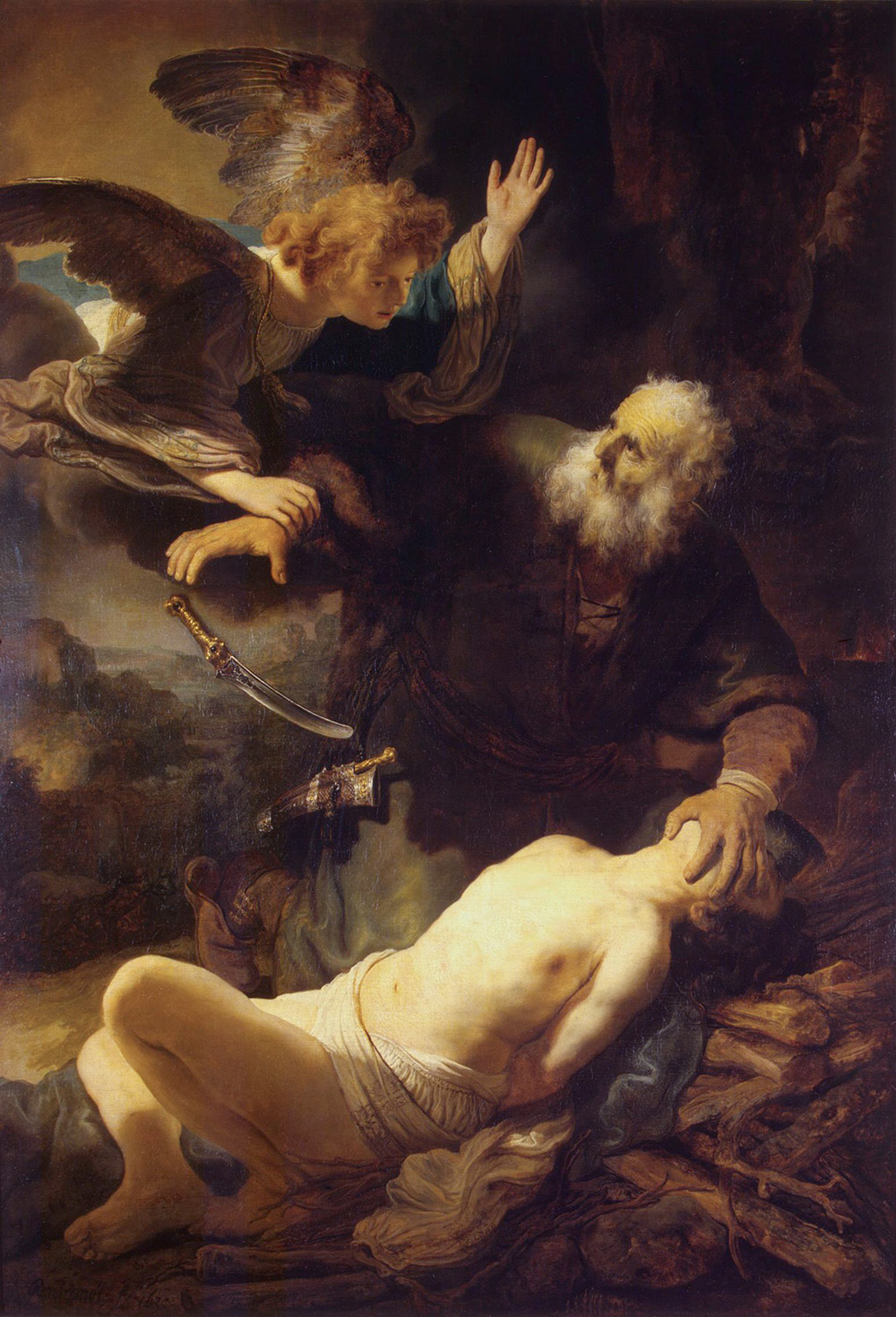
    Sacrifice of Isaac (1635), Rembrandt Harmensz. van Rijn | Creative Commons, courtesy the State Hermitage Museum, St. Petersburg, Russia. There are several famous paintings of this moment, but the action captured in this one really strikes me – not just the hand of the angel on Abraham’s arm and the falling knife, but also Abraham’s hand completely covering Isaac’s face, pushing back his head and bearing his neck for the sacrifice. Isaac is clearly depicted as a lamb about to be slaughtered, and the vulnerability is moving.

    Lest we think we have to leave reason by the door as we enter into these moments of faith, there are rational underpinnings to God’s actions with Abraham, the father of Judaism, Christianity, and Islam. The covenant God makes with him is fundamental for the preparation of humanity for his Son’s entry into history. It’s appropriate, then, that the patriarch understand and commit to the type of love God has in store for his progeny, God’s Chosen People.

    In poker terms, this love is all-in. No chips are set aside, nothing reserved. Today, we read that “God put Abraham to the test,” and not to belabor the comparison, but he needed to see if Abraham would go all-in. Why, we might ask, is this necessary?

    We can’t forget that God’s love allows for our own assent and free will to meet his. He never wants to take away our sovereignty over our own will; if he did, this would be a lesser love that does not respect us as complete beings. Not only that, we would be incapable of truly loving him back. We would be automatons, doing everything he willed like marionettes.

    As God is establishing his People, he needs to have these moments where his leaders, prophets, and other figures exercise their free will in the direction of faith otherwise this spiritual muscle and determination can wither and become weak. I think this is a good way of looking at what the scriptures call “testing” — it is, in fact, a loving act by God to help his chosen ones to grow in faith, to enact and uphold their end of the covenant (this is the definition of “being faithful”). They gain spiritual determination, but perhaps even more importantly they serve as a lasting example and teaching for all of us who follow.

    Who is this God? A God who wants us to come to him, not a God who cackles with sadistic glee by making us march around doing ridiculous and dangerous tasks. Every moment of salvation history is infused with God’s superabundant love. In order to truly understand our scriptures and the Word of God, this must be our starting point.

    This is why all the details are so important in our recorded scriptures. God acts with great purpose in the world and the Holy Spirit guides the pen of the authors of scriptures in order to capture these details faithfully. Two details from the first reading jump out at me today. First, it is what God’s messenger tells him: “Do not do the least thing to him. I know now how devoted you are to God, since you did not withhold from me your own beloved son.” I love how absolute the command is not to “do the least thing” to Isaac, displaying God’s absolute love for His creation. The angel acknowledges Abraham’s devotion to God (most translations write “that you fear God,” meaning you have great reverence, respect, awe, fear, and devotion), specifically because “you did not withhold from me your own beloved son.” As Christians, we see the significance of this episode because God, too, will be sacrificing his own Son (and not stopping it). God is not asking of us anything he is not willing to accomplish himself.

    The second detail that jumps out for me today is the ram. In a verse skipped over in today’s reading, Isaac asks Abraham where the lamb is for the sacrifice. Abraham replies, “God himself will provide the lamb for a burnt offering, my son” (Gen 22:8a). This is a sad-but-lovely double meaning for Abraham because in his mind Isaac is himself this lamb led to the slaughter. What prompted him to say it this way? Perhaps it was the Word of God placing this phrasing in his mouth.

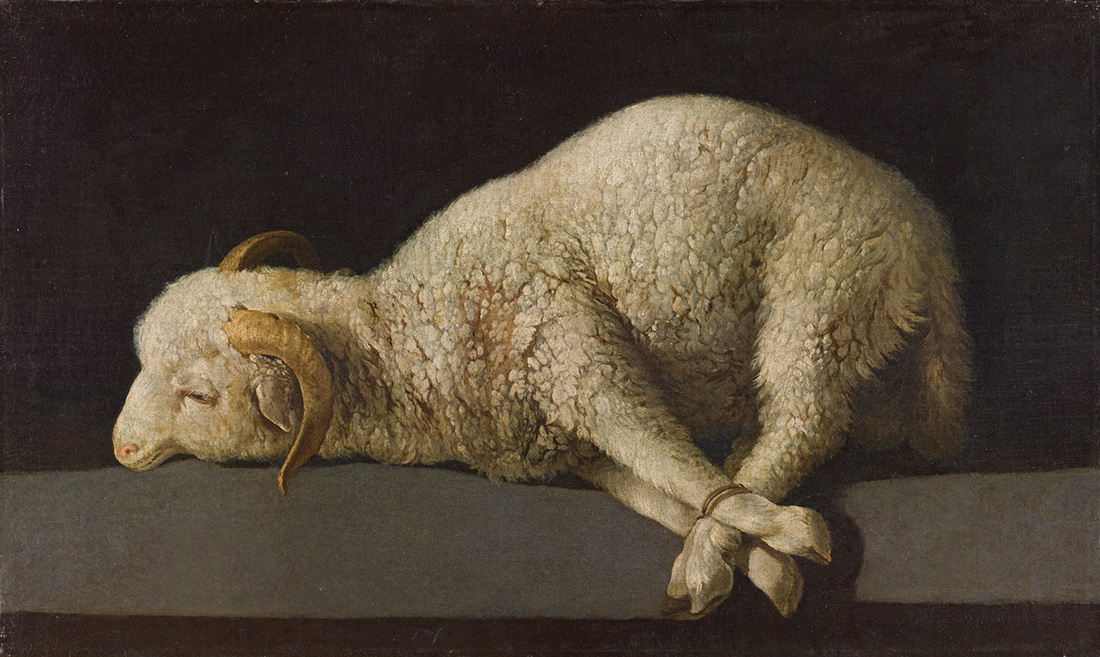
    While some scholars see no significance to the fact that a ram was what God provided instead of a lamb, others see a great significance here. I tend to see significance in scriptural details as the Doctors of the Church teach us to. A ram is just an adult sheep while a lamb is a young one, and a ram’s horns make it easier to be caught in a thicket and so be delivered to Abraham. More significantly, we know that ultimately an unblemished lamb will be sacrificed once and for all; John the Baptist tells us, “Look, the Lamb of God, who takes away the sin of the world!” (John 1:29). The ram can be used for Abraham to sacrifice and save his son from physical death while Jesus, the Lamb of God, will be sacrificed to save us all from spiritual death.

    Agnus Dei (1635-1640), Fracisco de Zurbarán | Creative Commons, courtesy the Museo del Prado, Madrid.

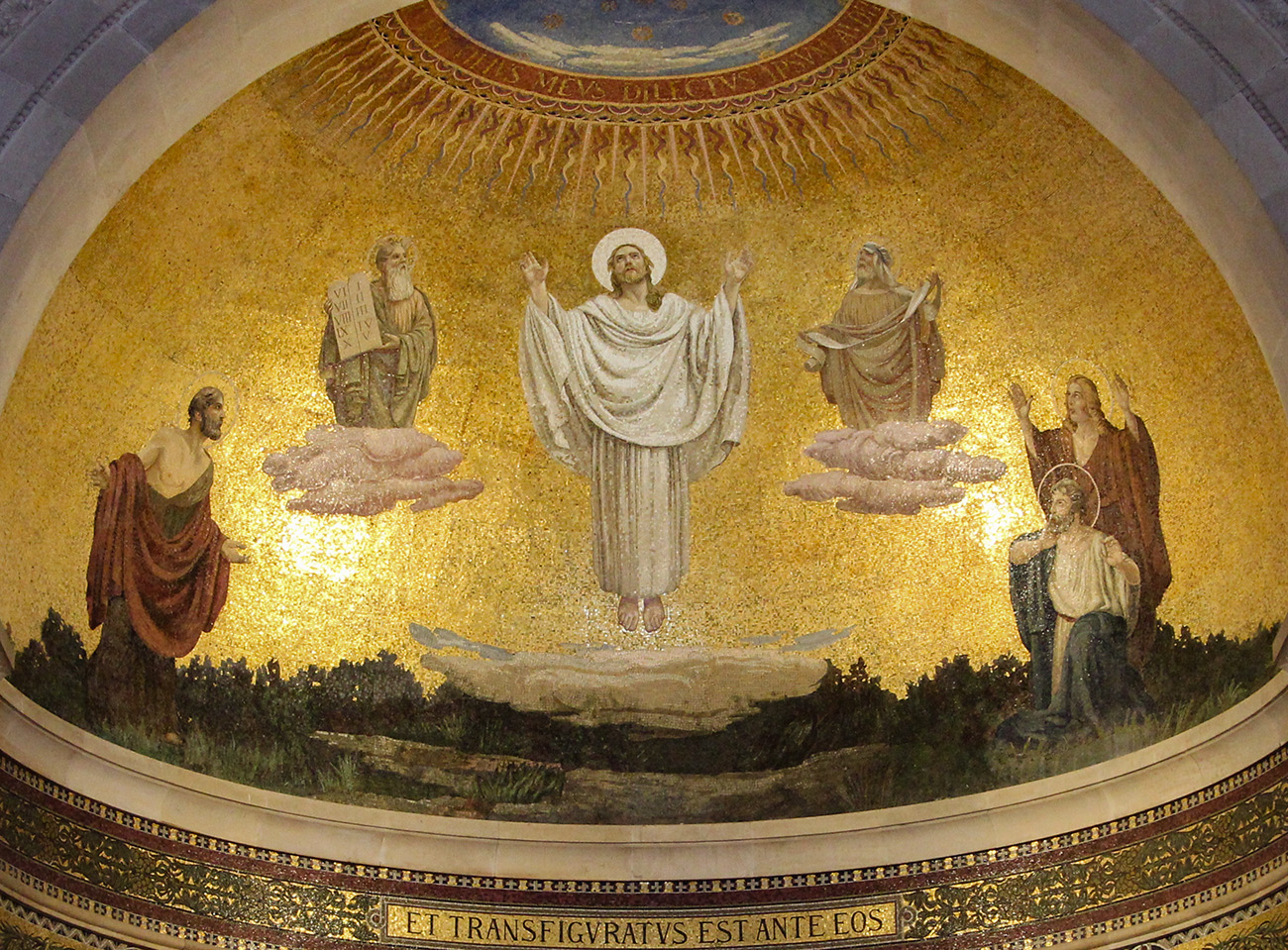
    In the gospel reading, St. Mark’s account of the Transfiguration, Peter, James and John behold this spotless lamb: “he was transfigured before them, and his clothes became dazzling white, such as no fuller on earth could bleach them.” The Transfiguration starts where Abraham finished — they have climbed the mountain with the Son and have found the lamb acceptable to God as a sacrifice. 

    But here God more fully reveals his Truth to humanity. “Then Elijah appeared to them along with Moses, and they were conversing with Jesus.” We are invited, like Peter, James and John, to ask what this could possibly mean. On the mountain — the place of encounter with God since time immemorial — our teacher is transfigured into a vision of purity so dazzling white it hurts the eyes. Clearly he is someone special and this is a great confirmation of our decision to follow him. But now he stands in the company of the greatest law-giver and the prophet who was to return to us, talking with them as an equal would!

    To be on the same level as Moses and Elijah, well, we perhaps didn’t expect such an exalted teacher. Not to mention, these great men are dead and yet here they are, seemingly in the flesh once again and holding a conversation with him. Are they apparitions or spirits? Are we to think that they are there in some sort of resurrected body? Whatever the case, this encounter is miraculous and great. Praise be to God, and how exalted this spiritual encounter must feel to be in the presence of these three great men!

    Thus, Peter says, let’s build a tent for everyone and stay here. This is how Moses welcomed the divine presence of God to stay with them in the desert, obscured by the cloud. The tent has a sacred significance for the temporary dwelling of the divine here on earth. I can relate to Peter here. Have you ever been on a retreat or encountered the sacraments in a way that was extraordinary, when you felt the Spirit of God more palpably than you ever had before? I’ve felt that — like my soul was soaring. And above any other reaction (fear, confusion, uncertainty, nervousness) was the desire to have it continue, to keep that feeling going. Let’s build a tent and stay awhile!

    But this is not the Christian path, always on the move, always in the world. 

    And in response to Peter’s naïve declaration, the Father arrives: “from the cloud came a voice, ‘This is my beloved Son. Listen to him.’” Peter, James and John must have been thunderstruck. Their teacher’s specialness was confirmed in a way that far surpassed any expectation. Moses and Elijah now appear as minor players in the drama where the Father reveals his Son as the unblemished lamb, the Savior. And just as abruptly as Jesus was transfigured before them, it all disappears. Mark writes, “Suddenly, looking around, they no longer saw anyone but Jesus alone with them.” What was the point of having this revelation of the Son in all his Glory only visible to these three men for a few moments on a secluded mountain?

    Today’s Office of Readings gives us an explanation from Pope St. Leo the Great: 

    The great reason for this transfiguration was to remove the scandal of the cross from the hearts of his disciples, and to prevent the humiliation of his voluntary suffering from disturbing the faith of those who had witnessed the surpassing glory that lay concealed. With no less forethought he was also providing a firm foundation for the hope of holy Church. The whole body of Christ was to understand the kind of transformation that it would receive as his gift. The members of that body were to look forward to a share in that glory which first blazed out in Christ their head.

    This is a sharp insight. The Transfiguration occurs towards the end of Jesus’s ministry, shortly after he first shares with his Apostles “that the Son of Man must undergo great suffering, and be rejected by the elders, the chief priests, and the scribes, and be killed, and after three days rise again” (Mk 8:31). Peter’s response is to vigorously tell Christ not to say such things (and Jesus famously responds, “get behind me, Satan,” pointing out that it is a temptation of course to deny the bitter cup he is asked to drink and he must not be tempted away from the Father’s will). This shows us that there was likely some emotional upheaval going on with the Apostles.

    They had given up everything to follow this man they believed to be the Messiah and he tells them the endgame is great suffering and being killed. Pope St. Leo the Great recognizes the despair that must have gripped the Apostles and the fact that the Transfiguration is God’s way of showing them the truth and glory behind the sacrifice before it was made. It is a glimpse of Heaven. This vision, imprinted on the very hearts of Peter, James and John, gives them the image of their faith to share with everyone else in their time of darkest despair after the Crucifixion. Christ always is this immaculate lamb, even when pierced and covered with blood and hanging from the cross. It is his core being, the Truth. To this day, this gives us our undimmable Christian hope for our reunion with our undefeatable Savior.

    The Transfiguration of the Lord (mosaic, Church of the Transfiguration, Mount Tabor, Israel), 1924, Umberto Noni | Wikimedia Commons. The caption is Latin for “And he was transfigured before them.”

    When we recognize the great purpose and significance of the Transfiguration, it helps us start to digest and accept the wondrous event as it took place. But no less than the Resurrection itself, we are called to believe this without seeing it with our own eyes. Doubting Thomas would (without a doubt) doubt the Transfiguration as much as the bodily Resurrection of our Savior. God’s question to us is the same as it was to Abraham: are you all-in?

    Our faith demands ever fiber of our minds, bodies, and souls. We must give ourselves back to our Creator, in love, in order to enter the Kingdom. This is the same action of Christ, giving himself wholly back to his Father in love. If we are called to believe that Jesus is the Christ, the Messiah, we are also called to believe in his bodily Resurrection, his Ascension into Heaven, and his Transfiguration on the Mountain that revealed his Glory to the apostles to plant the seed of faith, hope, and love in the Church.

  • The Parched Land Will Exult

    Monday in the 2nd Week of Advent: Isaiah 35:1-10, Luke 5:17-26.

    Yesterday, we reflected that part of Advent’s preparing the way for the Lord is to keep a burning vision of the heavenly Kingdom at the forefront of our minds and desires. I noted that there is a bit of a failure of the Christian imagination on this front, perhaps linked to our relatively comfortable lifestyles, at least in the USA. In today’s readings, Isaiah presents us with a fantastic vision of the Kingdom, and the gospel reading shows us how that Kingdom came to earth with Christ, a blessing on all creation.

    If we have trouble conjuring for ourselves what the Kingdom might be like, Isaiah provides the image. I love the opening to today’s reading: “The desert and the parched land will exult; the steppe will rejoice and bloom. They will bloom with abundant flowers, and rejoice with joyful song.” Here is God’s creation, meeting the glory of its Creator as He descends to greet it. For those of us who live in desert climates, we know that what looks barren and dead is actually full of life — from tiny flowers to lizards under rocks — and certain times of year give us a glimpse into what the final Kingdom might bring. The desert in bloom is beautiful. Isaiah is granted a vision that eclipses normal seasonal change, however. The steppe “rejoices” in bloom, the steppe and desert “rejoice with joyful song.” Lest we think this simple hyperbole, remember what Jesus told the Pharisees who wanted to silence the crowds singing for Him upon His entrance into Jerusalem (Palm Sunday): “I tell you, if these were silent, the stones would shout out” (Lk 19:40). All of creation rejoices to see its Creator!

    Zion Dreams (contemporary), Johnathan Harris | Image from fineartamerica.com.

    As we explored last week, the love we invite into our hearts as Christians is transformative. Isaiah’s passage today is all about God’s transformative love. We are accustomed to thinking of this love transforming human hearts, but what about non-human nature? Isaiah says, “Streams will burst forth in the desert, and rivers in the steppe. The burning sands will become pools, and the thirsty ground, springs of water.” We see all that is good bursting forth, specifically water in many forms. Water is synonymous with life — the land is returning to the state of the Garden of Eden. The dangerous aspects of nature are subsumed in order for the righteous to walk unhindered: “No lion will be there, nor beast of prey go up to be met upon it. It is for those with a journey to make, and on it the redeemed will walk.”

    As for humanity, God’s presence will “Strengthen the hands that are feeble, make firm the knees that are weak, Say to those whose hearts are frightened: Be strong, fear not!” Isaiah sees Christ coming into the world, and he relates, “he comes to save you. Then will the eyes of the blind be opened, the ears of the deaf be cleared; Then will the lame leap like a stag, then the tongue of the mute will sing.”

    This is exactly what happens in the gospel. We cannot mistake the fact of Christ on the earth: it is the beginning of the Reign of God. These things that are prophesied actually take place; they cannot help but take place in the presence of God! Luke’s gospel reading tells of the paralytic who was lowered through the roof in the house to be in the presence of the Messiah and be healed. Let’s recall that Jesus was teaching “Pharisees and teachers of the law, who had come from every village of Galilee and Judea and Jerusalem.” This was not a small, intimate room but more like a court of the learned surrounding their resplendent King. And into this distinguished court, a poor paralytic is lowered through the roof. Talk about crashing a party!

    And does this upset the Heavenly King? Of course not — the paralytic and those with him are exactly the subjects whom the King has come to welcome into his Kingdom. In a typical gospel social class reversal, Jesus shows love for the least of his people, over and above the more distinguished in His company. But this episode has a greater depth of meaning because Christ does not heal the man’s physical infirmity; instead “When Jesus saw their faith, he said, “As for you, your sins are forgiven.’” Jesus has ordered for us what is important: spiritual health far surpasses physical health. We see His true self and true mission. At this point, I almost become uncomfortable referring to Jesus Christ as having a “mission;” As God, He IS. His being needs no mission, it is the ongoing outpouring of creative, salvific love into the world. Like Isaiah tells us, creation rejoices and is transformed in His Presence. So, rather than seeing His true mission, let’s rephrase: we see Him.

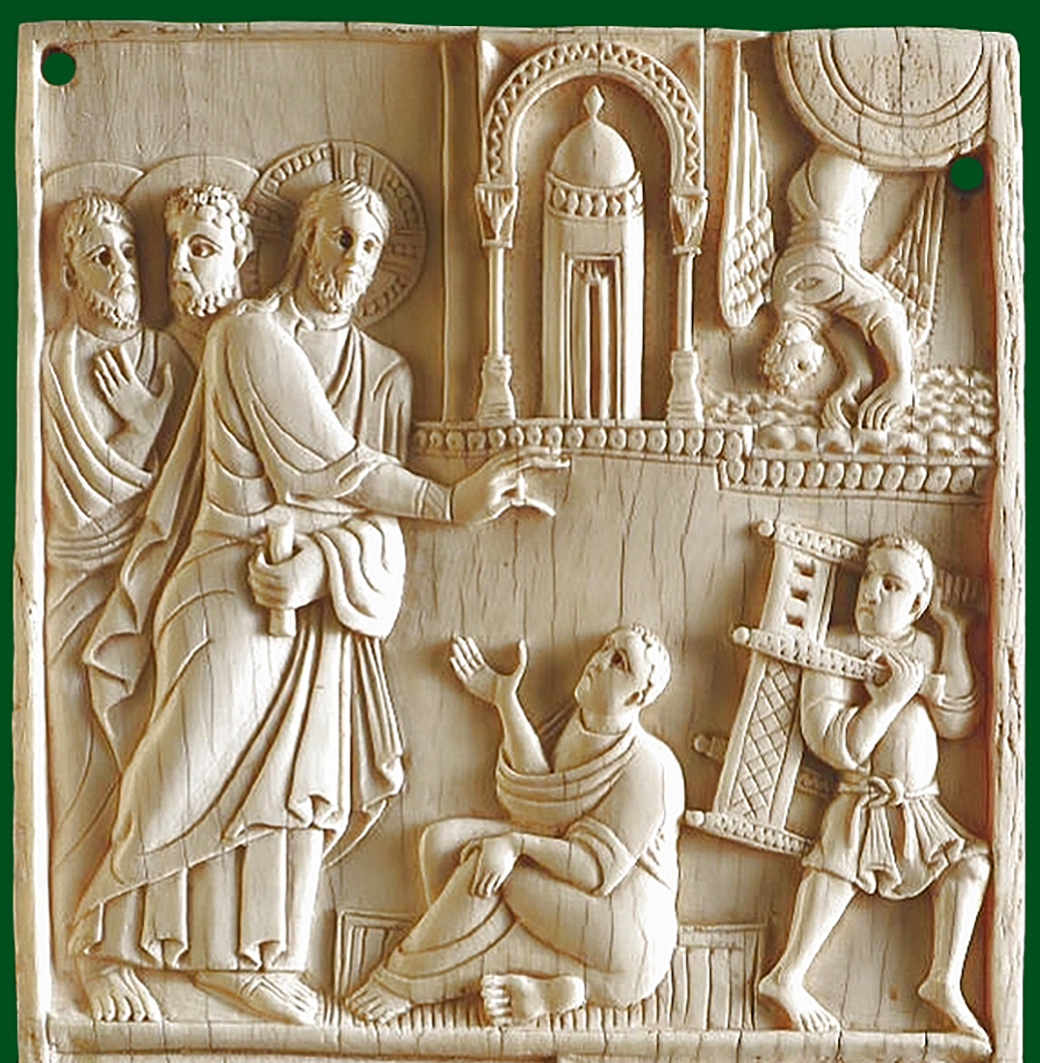
    Healing of the Paralytic (c.1100), unknown artist, from the Museo diocesano in Salerno, Italy | Image from flickr.com.

    He invites us to be faithful and, in return, He will perfect us. Last week, we reflected several times upon the concept of faith that is discussed in scripture and how it is more akin to “fidelity to my promise to you, Lord” rather than “belief in something unproven.” Faith — in our traditional Judeo-Christian sense — is a demonstrable response to something outside of us that is real, not a shaky internal belief system. So when the paralytic and his friends demonstrate their fidelity to God’s promise to send a Savior who will make “the lame leap like a stag” by coming with hope, love, and devotion into His Presence, then the Savior forgives their sins. This purification of their souls (the baptism in the Holy Spirit promised by John the Baptist) makes them suitable to inhabit the Kingdom of God for eternity.

    As we might expect, the Pharisees and scribes ask themselves, “Who is this who speaks blasphemies? Who but God alone can forgive sins?” An interesting question arises: do they lack faith? One can imagine that their insistence that God alone can forgive sins demonstrates faith in God. So maybe a lack of faith is not what’s going on with them, but a spiritual blindness. They cannot recognize God’s own Son in front of them whereas others (so often the less fortunate ones) see Him clearly. Perhaps they’re not looking for a Savior at this moment. Perhaps they’re too comfortable in their stations in life to yearn for a Savior; in fact, a Savior might spoil their career plans. We begin to see the importance of Christ’s question to Peter: “But who do you say I am?” (Mt 16:15) and more forcefully to the Jews, “you will die in your sins unless you believe that I am he” (Jn 8:24b). Denying that He is the Son of God reveals our own self-centeredness, our spiritual blindness, our inability to have prepared the way for the Lord.

    Jesus, in His love and desire to save all with Him, responds to their unspoken doubts and questioning and heals the paralyzed man, explaining why: “that you may know that the Son of Man has authority on earth to forgive sins.” This is a very specific reason, let’s consider this. A self-aggrandizing healer would not bother with the whole sins forgiven quagmire and would just heal so that people would think he’s great. A pretender Messiah would likely just stick with the sins forgiven line and avoid the work of healing a paralytic because forgiving sins is the more religiously important act. But Christ deigns to accomplish both spiritual and physical healing, not to show off His power, but specifically to accomplish another healing: healing the spiritual blindness in the scribes and Pharisees. They are blind to the Son of God in their midst for whatever reason, and the physical healing of the paralyzed man, despite being a lesser miracle, is done for them more than it’s done for the paralytic. 

    When he picks up his mat and leaves, the final lines show us that the third healing has been accomplished: “Then astonishment seized them all and they glorified God, and, struck with awe, they said, ‘We have seen incredible things today.’” What they say might on the surface sound a little underwhelming (couldn’t they say, “you are God”?) but it clues us into the problem of blindness and the healing — they now acknowledge that they have seen incredible things.

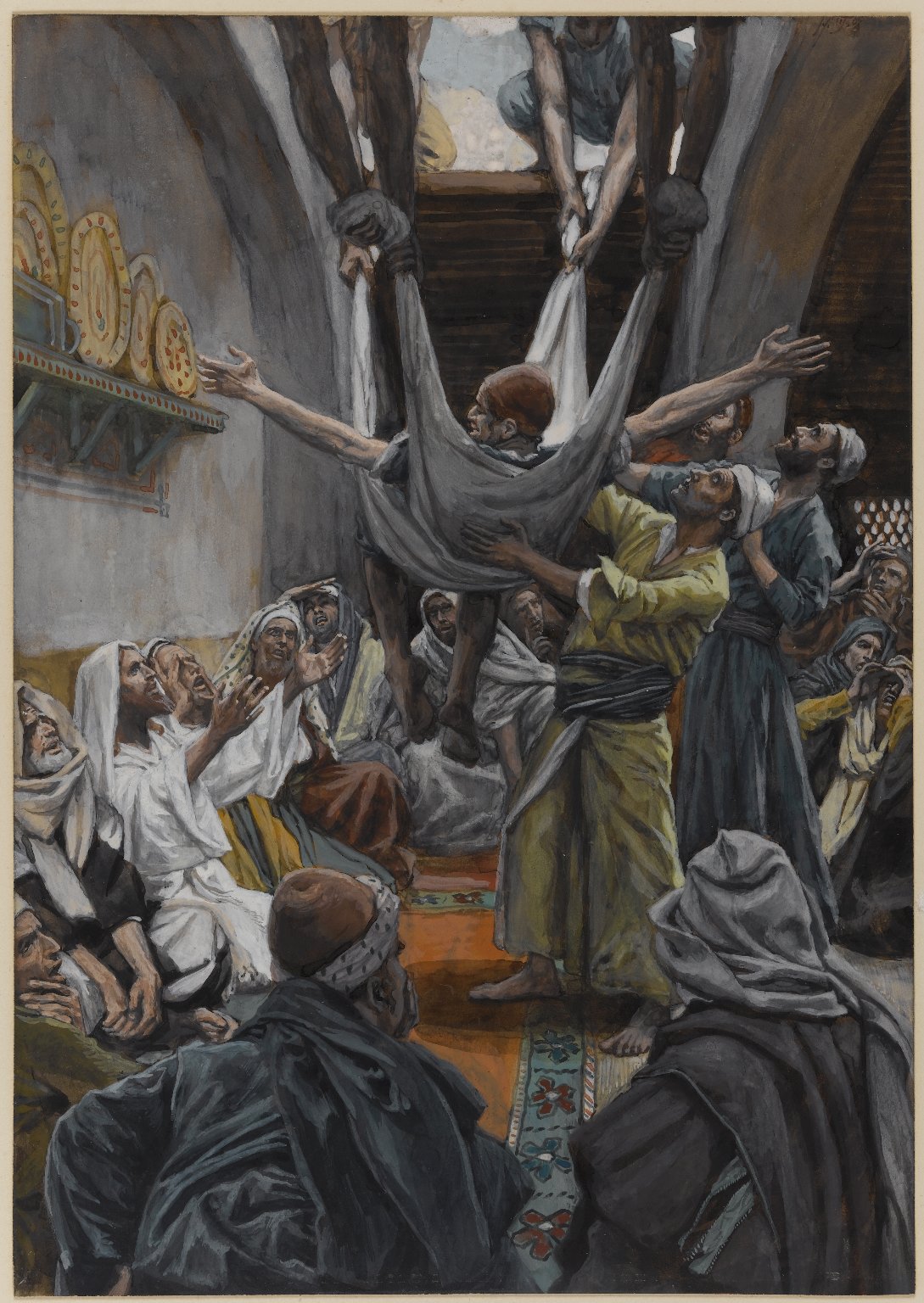
    The Palsied Man Let Down through the Roof (Le paralytique descendu du toit), c.1886-1896, James Tissot | Creative Commons, courtesy the Brooklyn Museum.

    I think this spiritual blindness continues to be a problem for us. Our imagination is not dominated by visions of the Heavenly Kingdom; we cannot see it clearly. But this is why we study scripture, why we revel in the ecstatic vision of the Kingdom that Isaiah gives us, and why we gasp with astonishment like the scribes at Jesus’s miracles. When I’ve been asked if I could go back in time to any point in history, I answer that it would absolutely be during Christ’s ministry to see and hear God walk upon the earth. But I need not be wistful for this impossible dream. What we must keep in mind during Advent is that Jesus’s life on earth is a foretaste of the eternal Kingdom promised to us. This is great news! We are all invited to experience Him for eternity — something that was only foreshadowed and begun when Jesus Christ walked in human form on the earth. It seems almost too good to be true. If you’re like me, you earnestly ask, what must we do to reach this Kingdom? 

    Christ, the Way, answers us over and over again during His ministry. In this episode, in particular, I think we are being shown an interesting perspective on salvation. We must truly be the paralytic, unable to move on our own, suffering, but filled with the vision of something incomparably better. We can only put ourselves as close to Christ as possible as a demonstration of our faith in Him.

    He does the rest.  

  • The Mystery, As We Live It

    Friday in the 1st Week of Advent: Isaiah 29:17-24, Matthew 9:27-31.

    Today’s readings juxtapose more of Isaiah’s brilliant prophecy of Christ’s entrance into human history with St. Matthew’s deceptively concise illustration of how we can meet this great mystery in our lives: the healing of two blind men. In many ways, I feel that we are more aligned with blind men today than the Jews and Gentiles in the Apostolic Age. We encounter endless perspectives, philosophies and ideologies today, and a high cultural premium is attached to “choosing” an ideology to define oneself (at least for a time). In fact, Pope Francis just published an op-ed in the New York Times about who we are in the time of the COVID pandemic and he writes, “It is all too easy for some to take an idea — in this case, for example, personal freedom — and turn it into an ideology, creating a prism through which they judge everything.” Thus, not only do we resemble blind people groping about in life for something solid, for an identity, we also turn our very personal freedom to choose into an ideology that rules us, further divorcing us from encountering the mystery of God. In this vein, I think St. Matthew’s concise gospel story has much significance today.

    Let’s remind ourselves of this three-verse story:

    As Jesus passed by, two blind men followed him, crying out,
    “Son of David, have pity on us!” 
    When he entered the house,
    the blind men approached him and Jesus said to them,
    “Do you believe that I can do this?” 
    “Yes, Lord,” they said to him. 
    Then he touched their eyes and said,
    “Let it be done for you according to your faith.” 
    And their eyes were opened. 
    Jesus warned them sternly,
    “See that no one knows about this.” 
    But they went out and spread word of him through all that land.

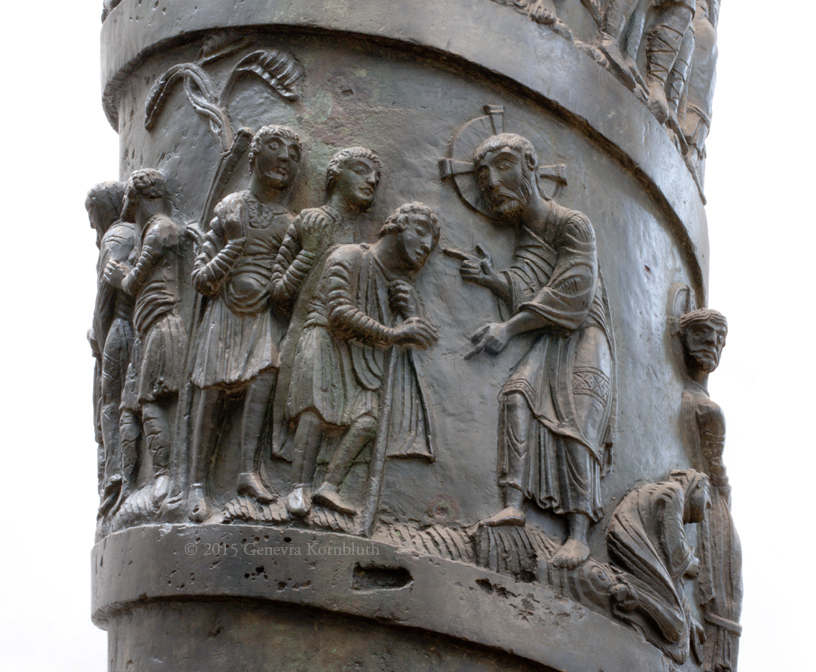
    “Healing of a Blind Man,” detail from the bronze Bernward Column in St. Mary’s Cathedral, Hildesheim, Germany, around 1020 | Photo taken by Genevra Kornbluth.

    This episode occurs in the immediate eddy of the raising of Jairus’s daughter from the dead. Recall that a sequence of important events happen in chapter 9 of Matthew’s gospel: He heals a paralytic by forgiving his sins; He calls Matthew as a disciple then dines with sinners and tax collectors; a leader of the synagogue, Jairus, asks Him to resurrect his daughter, and on the way a woman with 12 years of hemorrhages was healed by touching his cloak; He raises the daughter of Jairus; He heals the two blind men; He heals the mute man; and finally He sets about in all the villages doing this work and telling His disciples, “the harvest is plentiful, but the laborers are few.” This may seem like a laundry list of miraculous miscellany, but there is a deep logic to these events that Matthew presents to us. God is the Creator who orders all things. This includes the mystery of Christ-come-to-earth as it unfolds. This chapter speaks to the inherent ordering of the work of Christ in marrying Himself to us in the Church. The Spirit truly guides the hand of St. Matthew as he relates these events. Just for the big perspective’s sake, let’s consider the step-wise establishment of Christ’s mission in just this one chapter:

    • healing the paralytic ⇒ enabling the movement of the Spirit in our lifetimes where there was once inactivity.
    • calling Matthew ⇒ establishing Apostolic Fathers of the Church
    • dining with sinners ⇒ the feast of the Bridegroom with his Bride the Church
    • Jairus comes to him ⇒ the Jewish nation, God’s Chosen People, accept Christ as Messiah
    • hemorrhages healed ⇒ the long-time rift between humanity and God is healed through Christ
    • Jairus’s daughter is raised ⇒ death is finally overcome by Christ
    • blind men are healed ⇒ the life of faith in a nutshell
    • mute man is healed ⇒ our mouths are open to spread the Good News of Christ

    Seen at this 50,000-foot level, this is pretty remarkable. The evangelists needed to somehow encapsulate the miraculous mission and works of Christ, which must have ranged in the thousands of examples. With the guiding hand of the Holy Spirit, they not only gave us startlingly intimate stories with precise details, but infused the work with a subtle but persistent meta-narrative of salvation history unfolding through Christ’s emergence on earth as a man. As Fr. “Simeon” Erasmo Leiva-Merikakis writes, “Jesus does not just perform isolated ‘miracles’ for the undeniable benefit of individuals. At each step of his journey, the Word is building up his Church” (Fire of Mercy, Heart of the Word, Vol. I, 485).

    For today’s reading of the blind men being healed, I’d like to use Fr. Leiva-Merikakis as our guide as we look at this miniature masterpiece detailing the life of faith. Formerly a professor of Literature and Theology at the University of San Francisco and now a Trappist monk, Leiva-Merikakis is someone I greatly admire and a person I’ve quoted at length previously in this blog. He meditates on the gospel of St. Matthew, verse by verse, in his three-volume Fire of Mercy, Heart of the Word. I will be drawing from the first volume of his work here.

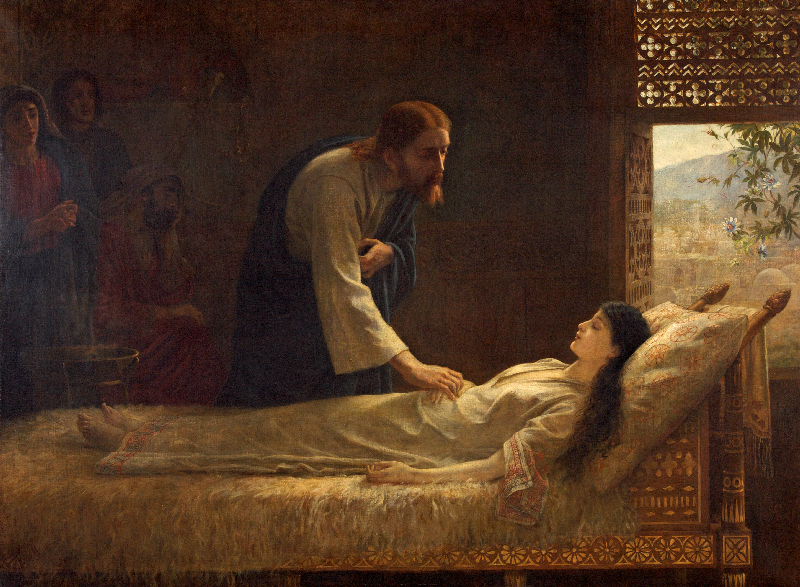
    The Raising of Jairus’ Daughter (1889), Edwin Longsden Long | Image from iconsandimagery.blogspot.com.

    So, how does it start? Truthfully, it follows immediately after the raising of Jairus’s daughter: “he went in and took her by the hand, and the girl got up. And the report of this spread throughout that district. As Jesus passed by, two blind men followed him, crying out.” It’s important to recall that news of His miracle working was already running ahead of him like wildfire. And not just any miracle working, but actual resurrection from death. This is something only God-among-us could accomplish and we can just imagine what thrill and awe swept through Capernaum as the footfalls of God graced the streets. Leiva-Merikakis conjures the imagery of the Benedictus (the Canticle of Zechariah from Luke’s gospel), which we sing during Morning Prayer each morning: In the tender compassion of our God, the dawn from on high shall break upon us, to shine on those who dwell in darkness and the shadow of death, and to guide our feet into the way of peace (Lk 1:78-79). He elaborates: “Jesus traversed the streets of Palestine on human feet with the same tireless exactitude and fecund splendor with which the fiery sun pursues his daily circuit. … Like a pair of light-hungry sunflowers, the two blind men follow Jesus’ orbit in unison” (477). I love the way Leiva-Merikakis brings his rich faith to his gospel reflections, fleshing out the concise words of the evangelist with the great mystery of Christ alive on the earth. In even this simple sentence of reportage, “As Jesus passed by, two blind men followed him,” Leiva-Merikakis teaches us that much more is going on. He elaborates: “Like a thermosensitive plant in the night, stretching out its tendrils to the imminent sun, they begin to follow Jesus in the late afternoon” (479).

    Is this not how each of us is awakened to the light of faith? The Spirit draws us with a palpable warmth to follow where it leads. We learn that it dwells in Christ, and we follow Him, seeking meaning, seeking more than just sin and death on this earth.

    Next, we read that the two men shout “Son of David, have pity on us!” This is the moment of acknowledgment. And it’s a bit odd that our lectionary translates this as “pity” because the original Greek is Ἐλέησον (Eleison). These are the words the Church will echo at the beginning of the holy liturgy for centuries to come: Kyrie Eleison! It serves a similar purpose for us in the Mass as it does for the blind men: an acknowledgment that Christ is indeed the Son of God, the anointed one, and in reverence and obeisance we ask for His mercy. Leiva-Merikakis describes the import of them calling Him Son of David:

    To proclaim Jesus to be the Son of David amounts to broadcasting God’s accomplished fidelity to his promise to have mercy on David and his line of descendants forever. … The whole Gospel stands or falls, not only on the truth of Jesus’ divine sonship, but likewise on the truth of his royal, fleshly descent from David. If Jesus is the Son of David, then the messianic era prophesied by Isaiah has already dawned, and even before the Passion and Resurrection his presence in the world must begin to bear the fruits of God’s burning mercy. (481)

    The Gospel insists on Christ’s earthly lineage through the line of David not for simply historical believability, but because it reveals how God kept His promise. Jesus isn’t just another miracle worker, model human or spiritual guru. The physical historicity of Christ as coming from the line of David is proof of God’s fidelity to His Chosen People. When the blind men acknowledge this, they have opened themselves to the truth and reality of salvation history. This is an important part of our faith journey, too.

    Next, Jesus enters the house and they approach Him there. Simple, right? Well, this building, presumably the one where He dined the night before with tax collectors and sinners, is one that He has already sanctified. That episode the night before can be likened to the wedding feast of the Bridegroom and His Bride, the Church. So, this is no ordinary following of a man into a building – it is two men of faith entering a church to encounter Christ. They follow the warmth and radiance of the Son of God, and, as Leiva-Merikakis writes, “God reciprocates such keen expectation by leading them into the house of the Church, where their eyes are opened at the very threshold, reminding us that φωτισμός (‘illumination’) was the other name for baptism in the early Church” (485). Leiva-Merikakis continues by examining the “liturgical flavor” of the episode, specifically the ritual movements of the blind men, following the great High Priest after the Kyrie eleison profession. This connection makes a lot of sense to me and again is an integral step in our faith journey as Christians – sacramental baptism and the importance of the sacred space.

    The liturgical call-and-response intensifies in the exchange where Christ asks “Do you believe I have the power to do this?” and they respond “yes.” The parallel to our Eucharistic sacrament is clear: The Body of Christ – Amen. This is the same question and assent in which we participate at every Mass. As Joseph Cardinal Ratzinger writes in Introduction to Christianity, “The Christian attitude of belief is expressed in the little word ‘Amen’, in which the meanings trust, entrust, fidelity, firmness, firm ground, stand, truth all interpenetrate each other” (76) – I’ve previously explored the deep connection between the Logos and Amen in the post Amen, The Logos is the Great I AM. The broader implications of the blind men assenting to Christ’s power to heal and save is that it is the archetype for our faith life. All Christians enact this same assent, stand on this same firm ground, over and over as we invite Him into our beings to heal and transform us.

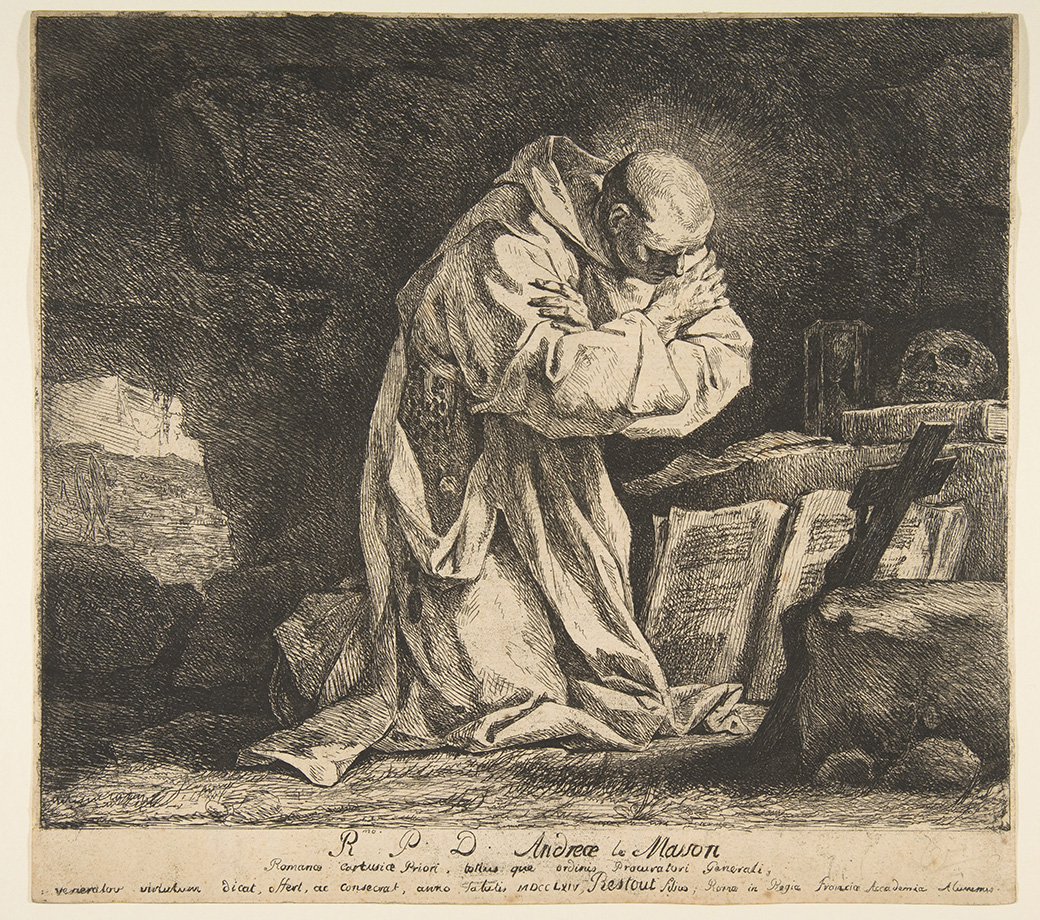
    St. Bruno (1764), Jean Bernard Restout | Creative Commons, courtesy the Metropolitan Museum of Art.

    Then, we encounter the detail that “he touched their eyes.” This is not a ritualistic magic or witchcraft. He does not necessarily need to touch their eyes in order to heal them, but he does. And this emphasis on touch – He takes Jairus’s daughter by the hand, the woman with hemorrhages touches His cloak, and here He touches their eyes – reminds us that God is, in fact, incarnate. Here God walks with feet that leave impressions in the ground, He can be touched and can touch others. The irrefutable carnality of our Messiah is something we cannot avoid. We are asked not just to embrace Him as an idea and a lofty spiritual Savior, but to eat His Flesh and drink His Blood. This means that Christians cannot dissociate ourselves from our bodies and this world. We are called to live in it while we are here, and live with Christ as our guide for how to be a human. He was real so that He could show us the path to salvation while also being flesh and blood ourselves. 

    Jesus tells them, “Let it be done for you according to your faith.” On the heels of yesterday’s reflection, we can recall that faith more properly means fidelity to God, faithfulness to His Word and law. Again, it is not the modern meaning “believing in something where there is no proof.” These blind men have demonstrated their faith by following the Spirit and Person of God the Son into the house of the Church, by proclaiming Him to be the fulfillment of God’s promise to the line of David, by asking for His mercy and by assenting to His sacramental, transformative power. This is their faith, not a collection of vague ideas in their head. Again, we can see here the same life of faith in which we participate and Christ’s response to us. If we truly believe in the promise of God that is present in Christ, we follow Him into His Church, give Him reverence, and ritually assent to His power, then His healing touch is the response. This same touch stanches flowing wounds, opens eyes, heals disease, and dispels death. 

    Once again, St. Matthew seems to give us a reporter’s account of what happened: “And their eyes were opened.” But there is genius in Matthew’s concise and precise prose. It might be tough to get through a gospel that was endlessly poetic with the eschatological reverberations of every moment during Christ’s ministry. Matthew gives us words that are pregnant with significance, and it is our prayerful study of scripture that allows the Word of God to speak to us. In this instance, we have the levels of physical healing, spiritual healing, and new life as a being seeing the world anew. St. Paul’s first letter to the Thessalonians comes to mind: “But you, beloved, are not in darkness, for that day to surprise you like a thief; for you are all children of light and children of the day; we are not of the night or of darkness” (1 Th 5:4-5). This is fundamental to our understanding of our life of faith: Christ re-creates us (He is a Person of God, the Creator, always), He transforms us in the sacraments and grace He gives us. Do we realize that we are renewed “children of light” when we finish each Mass? More importantly, do we act in a way faithful to God, in Whom we have put our trust? Is our faith demonstrated to Christ in a way that is hand-in-hand with our assent to have Him transform us? These are questions far more important than whether we take Eucharist by hand or by mouth, how many Hail Marys we say each day, or (especially!) for which candidate we voted.

    The penultimate action in this episode is the seemingly incongruous warning from Jesus. “Jesus warned them sternly,
    ‘See that no one knows about this.’” What are we to make of this abrupt change of tone? We know that Jesus wasn’t bipolar, so something else must be going on here. Part of the problem, I think, is the troublesome translation of the Greek. The verb that is translated as “warned them sternly” is ἐνεβριμήθη (enebrimēthē), which comes from the main form embrimaomai. I have reflected previously at length on this term (in the post, See the Glory of God) as it is used right before Jesus raises Lazarus from the dead. In short, I believe it has a meaning closer to “a gut-like surge of divine passion.” Other translations state “strictly charged” or “strictly instructed” instead of “warned them sternly.” Again, the strictness or sternness of this verb is attached to divine works and belief in the Gospels. It seems that Jesus is stirring a certain reverence in them about what has happened. So why stir up a warning of reverence? Leiva-Merikakis provides an answer: “To retain from this rich texture of converging mysteries only the material fact of the physiological healing would be tantamount to ‘giving a holy thing to the dogs’ and to reducing Jesus’ recreative power as Word to that of a magician, and his disciples’ faith to a conspiracy of mercenaries, anxious to ‘market’ their ringleader’s powers. It is against this tendency in man to reduce the divine that Jesus is thundering” (501). I like this explanation – it is very consonant with our scriptural understanding of God to protect the sacred, and Christ’s passionate instruction is that they do not cheapen their life of faith by spreading words simply about physical healing.

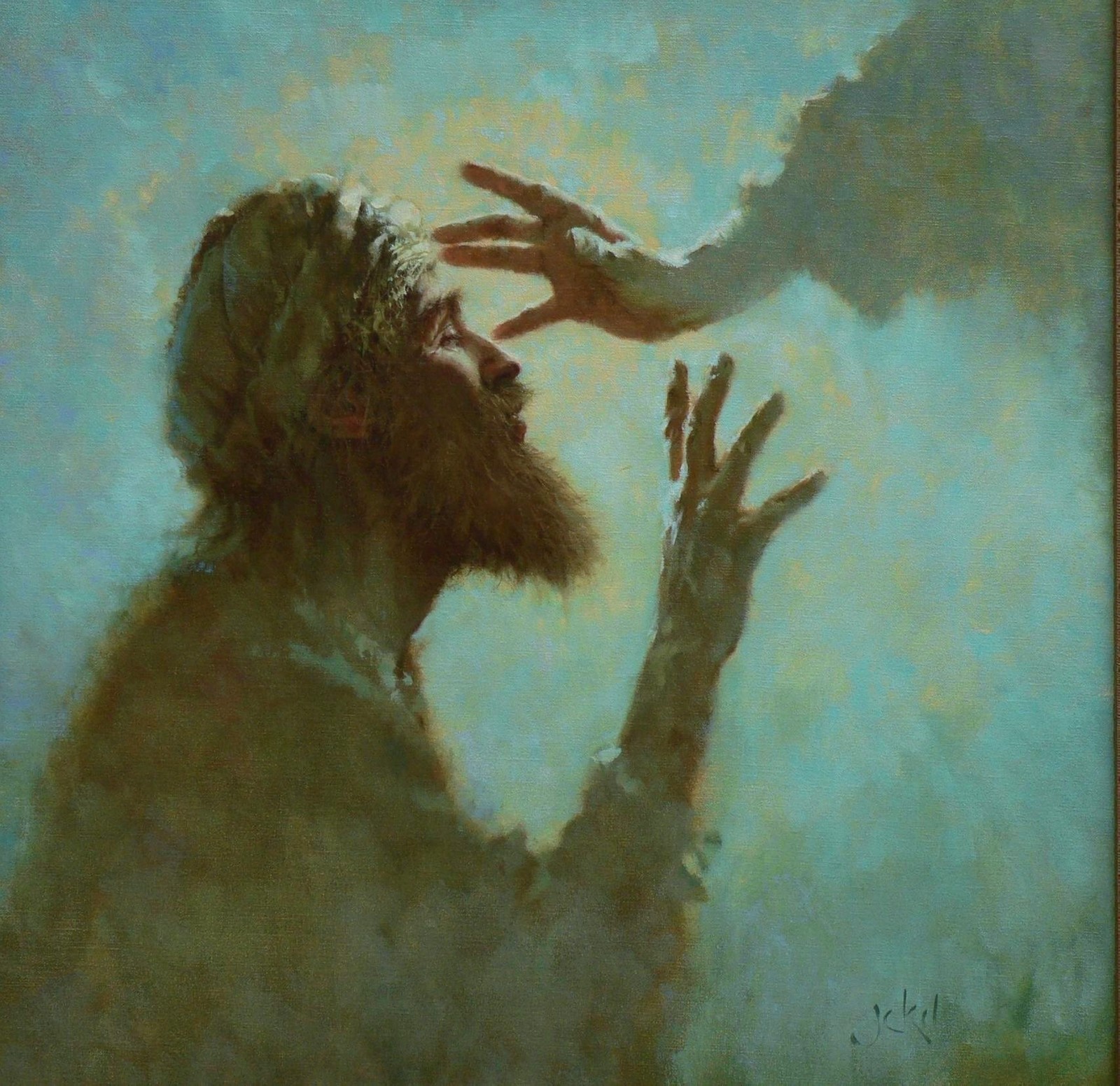
    Jesus Healing the Blind Man (2008), Brian Jekel. | Image from christian.art.

    The actual warning, too, loses much in translation. There are simply three emphatic words in the Greek: Ὁρᾶτε μηδεὶς γινωσκέτω (Horate mēdeis ginōsketō), which more correctly translated would be “See! And let no one know it.” Leiva-Merikakis explains, “[These words] have the ring of a ritual formula. And they contain a serious pun: ‘See!’ is the perfect liturgical command to accompany the enlightenment of faith and the gesture of touching the eyes” (502). But does he really want to stifle the work of evangelization? Just verses later Matthew reports that He encourages His disciples in spreading the Good News: “the harvest is plentiful, but the laborers are few.” Let’s remember that his passionate instruction is one that is concerned with a facile, cheapened message of physical healing in the face of something much deeper that is going on. Thus, “let know one know” can be interpreted as a warning against a shortcut in a faith life, a warning not to spread a type of false “knowledge.” His instruction is to “See!” which is a type of inner transformation. How does one share inner transformation? This is beyond words. “This living contact comes first; then the healing; and last of all the knowledge; and nothing can short-circuit this structure of the total act of faith” (502), writes Leiva-Merikakis.

    So, how do we take the final sentence, “But they went out and spread word of him through all that land”? Did they disobey him? The little conjunction “But” seems to imply this. Leiva-Merikakis dissents from this reading, however: “The explosion of thrill and joy conveyed … implies that the two men exactly abided by the intention of Jesus’ command. They did not go out and coolly ‘inform’ this interested party or that about what had happened, cluing them in to Jesus as a potential reservoir to be tapped. Rather … the indiscriminate energy of their new way of life bespeaks a joy at now being in the light and an inability to hide that light under a prudent bushel basket” (504). Leiva-Merikakis imagines them praising God rightfully as they dance through the streets with their newfound sight, encouraging others to go find Christ and begin their own life of faith. Let’s also note that what happens next is that a demoniacally possessed person who is mute is cured by Christ. This bolsters Leiva-Merikakis’s reading that Christ is, in fact, looking for rightly aligned speech, not necessarily silence. First, a person must be sanctified and healed by Christ, and then they can speak rightly, proclaiming the Good News.

    In closing, today’s gospel is simply astounding when read deeply, in the light of faith. I am so glad to have found spiritual teachers like Fr. Leiva-Merikakis, Fr. Jacques Corbon, and so many popes and saints to help me in my journey of lectio divina. We are blessed by the Spirit to have two thousand years of holy writings helping us plumb the never-ending depths of our sacred scripture.

  • An Eternal Rock

    Memorial of Saint Francis Xavier, Priest (Thursday in the 1st Week of Advent): Isaiah 26:1-6, Matthew 7:21, 24-27.

    Today’s readings ask us to consider how we use the word “strong” when it comes to our faith life. It seems reasonable that we encourage one another to keep our faith strong, or, as George Michael famously sang, “you gotta have faith.” But, like that song, this sentiment is completely about us, about putting things in our power. Rather than preaching this gospel of self-empowerment, our scriptures tell us – over and over, from Genesis to the Book of Revelation – that “strength” is God’s. What’s in our power? Simply to recognize this and rely upon it.

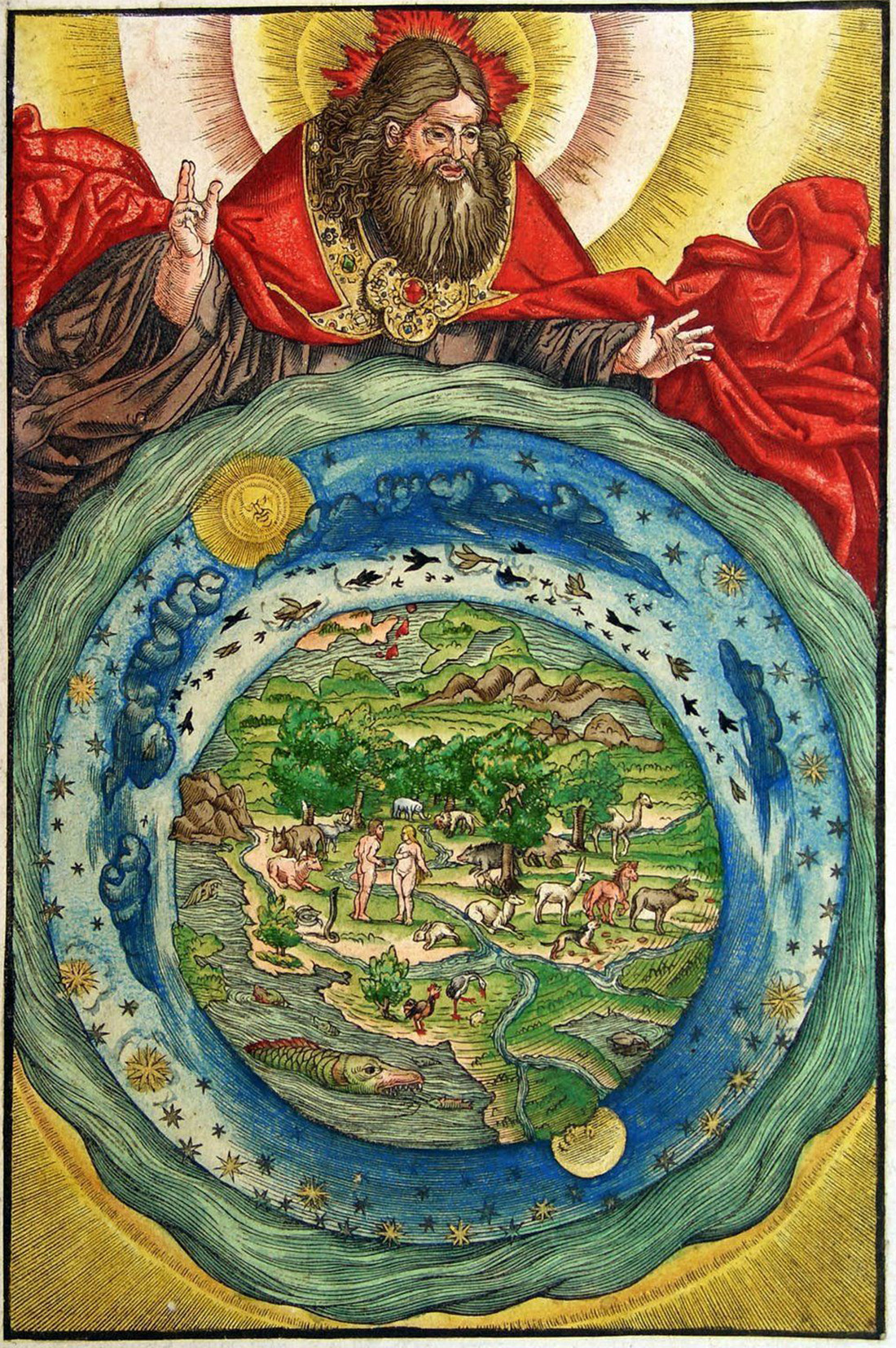
    The Creation Story (c.1530), Lucas Cranach the Elder | Image from pinterest.

    Isaiah is clear: “A strong city have we; he sets up walls and ramparts to protect us.” The prophet portrays God as a diligent ruler who builds protective structures for His people. The space created by God is what is strong. The people abjectly rely on the strength of their ruler and his fortress to protect them: “Open up the gates to let in a nation that is just, one that keeps faith.” Isaiah uses the Hebrew word אֱמֻנִֽים (’ĕ·mū·nîm), which properly means “one who is trustworthy,” although it is commonly translated as “one that keeps faith,” as in “one who did not betray his faith.” Consider this: in the ancient world, faith in something was generally understood to come from concrete proof in reality. God’s work in the world and in the lives of the Jewish people was a palpable thing. How different from what it has come to mean today, i.e., belief in something without proof. So, what Isaiah is saying is that the strong city of God should admit people who are trustworthy, who live by His commandments and do His will. He is not saying to admit people who fabricate for themselves a belief-without-proof. This was inconceivable to people who observed God in everything around them and Who was central to their very history and existence. Far from the abstract word we use today, we might say that “faith” for ancient Jews was more akin to acting in concordance with expectations. In other words, “keeping faith” or “having faith” was adhering to God’s commandments and precepts, in other words, being trustworthy. “Being faithful” was demonstrating that you could be trusted by God not to betray Him or stray from Him. “Faith” was concretely observable.

    “Trust,” on the other hand, was the word that had more in common with today’s understanding of “belief without proof.” Isaiah’s next line describes how the word trust was used: “A nation of firm purpose you keep in peace; in peace, for its trust in you.” Isaiah says that God protects his faithful people because they trust that He will come through for them. For the Jews, it’s not a question of whether there’s a God or not, it’s more a question of whether a person can trust in God’s intervention on their behalf. This clearly causes a bit of a problem in the “don’t put the Lord your God to the test” category. At issue, I think, is expecting God’s saving grace and protection in this world, in this lifetime. The prophets and, finally, Jesus Christ, clarify that God’s Kingdom is not the same as the world. Jesus repeatedly speaks of death as “sleep,”  and emphatically points out that everlasting life happens after resurrection from this sleep/death. Put your trust in God, but don’t expect His actions to come about according to your timeline or in the way you expect.

    And so our scriptures are full of the tension between trusting in God or trusting in something else in the world (money, power, our own intelligence, etc.). The problem is that humans live in a fallen state, temporarily separated from their Creator and longing to hear Him, see Him, feel Him. (We can begin to understand the divine genius behind the Incarnation – God’s loving us so much to be present to us in human form.) In our spiritual weakness, we stop trusting in the invisible One and start trusting in worldly things that give us immediate feedback and immediate satisfaction.

    The Prophet Isaiah (early 1700s), Antonio Balestra | Wikimedia Commons. While that looks like a dentist’s tool in the cherub’s hand, it’s not a tooth with gum tissue he’s holding – it’s the burning coal set to Isaiah’s lips.

    This is why Isaiah’s cry to his people is “Trust in the LORD forever! For the LORD is an eternal Rock.” And here we have it: the eternal rock, the strength, is the Lord. We need the urgings of the prophets because we are weak and tempted by the world. In acknowledgement of worldly temptations, Isaiah follows this with, “He humbles those in high places, and the lofty city he brings down … It is trampled underfoot by the needy, by the footsteps of the poor.” The measure of the world is wealth, and Isaiah’s words remind his listeners that this measure is false and will be overturned by God.

    In the gospel reading, Jesus takes up Isaiah’s theme of God being the rock and the strength upon which we should rely. The first verse from St. Matthew: “Not everyone who says to me, ‘Lord, Lord,’ will enter the Kingdom of heaven, but only the one who does the will of my Father in heaven.” This should sound familiar – doing “the will of my Father” is what Isaiah says about a nation “that keeps faith.” Jesus tells us that actual faithfulness to the commandments and spirit of God’s law is what we are called to do in order to enter the Kingdom of Heaven. This is a call to practice what we preach, to not simply profess to believe in God without submitting to His will.

    Next, Jesus reminds us of God’s strength being the only real, reliable strength for us. He uses the image of the rock: “Everyone who listens to these words of mine and acts on them will be like a wise man who built his house on rock. The rain fell, the floods came, and the winds blew and buffeted the house. But it did not collapse; it had been set solidly on rock.” This is an interesting little parable because through Christ the strength of God, the rock, becomes something we can work with and use. Let’s unpack this. In this parable, what we do in our lives is compared to the type of house we build. The foundation of this house is what makes the difference. If the foundation is rock, our house will not collapse. In Christ’s words, if we listen to his words and act on them, we can withstand storms and disasters, and our lives will continue (in the next life). 

    Jesus emphasizes acting on His words. In other words, living according to God’s will. The rest of the parable makes this clear:

    And everyone who listens to these words of mine
    but does not act on them
    will be like a fool who built his house on sand. 
    The rain fell, the floods came,
    and the winds blew and buffeted the house. 
    And it collapsed and was completely ruined.

    It’s interesting to dig into this. Acting on His words seems to have a bolstering effect, a solidifying effect, making our foundation solid, like rock, instead of shifty, like sand. This action is a type of embodiment of God’s will – making it real and alive through us. And that is precisely Jesus Christ Himself! He is the example of the embodiment of God’s will, even more, the mystical Incarnation of God Himself into humanity. He is the pinnacle, the apex, of His own teaching, and by following His teaching we are able to share in this embodiment of God on earth. This is part of God’s inscrutable plan, that He infuses the world through His human creatures, renewing and healing all of creation through us. 

    And the stakes could not be higher. A life built on sand results in complete ruin. The eschatological implications are severe: no entry into the eternal Kingdom of heaven. 

    St. Francis Giving His Mantle to a Poor Man (San Francesco Dando il suo mantello ad un povero), 1297-1299, Giotto | Creative Commons, from wikiart.org.

    The picture we are left with nicely re-frames the great challenge of Christianity. We might think that trusting in our invisible God is the challenge – what we would call today “having faith.” But this intellectualizes what is actually a challenge of actions. In other words, we’re making a mental game out of something that is much more practical and within our reach (albeit no less difficult). The challenge Christ lays before us is acting in the world according to God’s will. Listening to His Word and acting accordingly. This means forgiving, being humble, giving away wealth, caring for others more than ourselves, avoiding sin, praising and thanking and fearing God every moment. These are all things we do, and what Christ and the saints teach us is that when we do them over and over, God becomes more apparent to us and trusting in Him and relying on Him become easier and easier. 

    Let’s remember, then, why Advent is a season of penance, almsgiving, and prayer. These are the actions we are called to do before we can enter the Kingdom of Heaven.

  • The Empty Tomb

    The Empty Tomb

    Easter Sunday: Acts of the Apostles 10:34a, 37-43, Colossians 3:1-4, John 20:1-9.

    Today’s readings uncover the truly baffling nature of the empty tomb. We rejoice 2,000 years later because the full revelation of the Resurrection is known. We sing Alleluia! with abandon, but today’s readings remind us that his rising from the dead was unexpected and incomprehensible on the morning after Passover, even for those who believed in him as the Messiah.

    Mary Magdalene on Christ’s Tomb (c.1900), Giuseppe Calì | image from artnet.com.

    In the gospel, Mary Magdalene, driven by her love of Jesus, goes to the tomb early in the morning after Passover, “while it was still dark.” The darkness is emblematic of the encounter at the tomb for her and, later, Peter and John. Mary is so discombobulated by the sight of the stone that is rolled away that she runs back to the Apostles without even looking in. She thinks that someone stole his body: “They have taken the Lord from the tomb, and we don’t know where they put him.” Perhaps the “they” she refers to are the guards, the Romans. 

    The state of the burial cloths is even more confusing for them. Peter and John see “the burial cloths there, and the cloth that had covered his head, not with the burial cloths but rolled up in a separate place.” This is not the scene of a tomb being pilfered or a simple act of transferring a body somewhere else. St. John Chrysostom writes:

    If any persons had removed the body, would they before doing so have stripped it; or if any had stolen it, would they have taken the trouble to remove the napkin, and roll it up, and lay it in a place by itself; but how? They would have taken the body as it was. On this account John tells us by anticipation that it was buried with much myrrh, which glues linen to the body not less firmly than lead; in order that when you hear that the napkins lay apart, you may not endure those who say that He was stolen. For a thief would not have been so foolish as to spend so much trouble on a superfluous matter. For why should he undo the clothes? And how could he have escaped detection if he had done so? Since he would probably have spent much time in so doing, and be found out by delaying and loitering. But why do the clothes lie apart, while the napkin was wrapped together by itself? That you may learn that it was not the action of men in confusion or haste, the placing some in one place, some in another, and the wrapping them together (Homily 85 on the Gospel of John, 4).

    I had no idea that myrrh “glues linen to the body not less firmly than lead.” Thank you to Chrysostom for pointing that out. Chrysostom indentifies that the care taken not just to unwrap the body but also lay the head covering (“napkin”) aside separately means that something altogether different happened. Something deliberate, something careful, something unafraid. Yet something that is still hidden from them.

    The Disciples Peter and John running to the sepulchre on the morning of the Resurrection (1898), Eugène Burnand | Image from eugene-burnand.com.

    Which makes me wonder what is meant when John says of himself, “he saw and believed,” when he follows it with “For they did not yet understand the Scripture that he had to rise from the dead.” I think that John and Peter have the seeds of hope when they encounter the empty tomb in the state it is in. They believe in the possibility of all the hints that Christ gave them about them seeing him again after he dies. They have yet to meet him in his Resurrected Body. The angels have yet to explain to Mary what happened.

    This is the moment of hope! Humanity sees order, care, and absence where there should be death. What a mysterious but wonderful sight. Mourning is no longer appropriate, but instead hope — maybe, just maybe, all those incredible things Jesus told us are true!

    The empty tomb is the picture of our new reality: the place of death has been ransacked and re-ordered. Mysterious hope fills us but God remains out of sight; we must trust the Lord’s Word and grow together as a Church in the sacraments he has given us until we meet him face-to-face.

    Even in the decades after His Resurrection, St. Paul in today’s second reading writes of a “hiddenness” that characterizes Christianity: “For you have died, and your life is hidden with Christ in God. When Christ your life appears, then you too will appear with him in glory.” This is the wonderful mystery we are able to live to this very day.

    People bemoan this state, they want proof that God exists, but what we are given is the empty tomb. This is, in fact, proof; albeit, proof of a different type. We have to remember that God fundamentally wants us to yearn for him, to thirst for him, to live in a differently ordered way that shows how central he is to us despite his hiddenness. He has given us free will, but “to whom much is given, much will be required” (Lk 12:48). We are called to use our free will to choose His will precisely because he gave us the empty tomb, his ordered absence that speaks volumes.

    Of course, much more is given to us. He will appear to his disciples and His Spirit explodes into the world in all its fullness, working amidst humanity constantly and to this day. All of this is most evident in the liturgy, in the sacraments.

    But for now, let us consider the empty tomb, the mystery of his disappearance from the grip of death. It is the surest sign we require.

  • Evil Plots in Empty Hearts

    Evil Plots in Empty Hearts

    Saturday in the Fourth Week of Lent: Jeremiah 11:18-20, John 7:40-53.

    Today’s readings display the evil plots of those who willingly disbelieve. In the Old Testament and New, we see those with hardened hearts speak ill of and plan the destruction of the righteous. We must beware of this tendency that arises when we are not open and inquiring, always humble in the presence of God.

    Jeremiah was a spitfire of a prophet, to be sure. He did God’s will without fail, but also reveled a bit in divine justice, or vengeance as he would call it. In today’s reading, God reveals to him that there are those who dislike his preaching and are plotting against him. We hear, “Let us destroy the tree in its vigor; let us cut him off from the land of the living, so that his name will be spoken no more.”

    We hear similar evil words throughout sacred scripture and secular history. It reminds me of our Lenten reading of Joseph’s brothers (sons of Jacob), plotting against him and selling him into slavery (see Tend to the Good Fruit of the Vineyard). They say, “Here comes that master dreamer! Come on, let us kill him and throw him into one of the cisterns here” (Gen 37:19-20). Both of these episodes display a disease at the heart of the speakers, their flawed hearts allow jealousy, anger, self-centerdeness, defensiveness, and, ultimately, malice to grow.

    Even if murder is not physically enacted, Jesus tells us that the intent is enough to condemn us. As the fulfillment of the law, Jesus warns us that we must be more than just followers of the letter of the law; we must allow God’s Law to inhabit our hearts. From another reading this Lent, he illustrates that while we know we should not kill, “whoever is angry with his brother will be liable to judgment” (Mt 5:22). His point is that while we might refrain from the physical act of murder, we may still hold murderous intent — malice — in our hearts (see Salvation is Based on Our Core Person … for a fuller reflection on this). The reading from Jeremiah (and Genesis) displays this murderous intent in stark words.

    Witches’ Sabbath, or the Great He-Goat (1820-1823), Francisco de Goya y Lucientes | Creative Commons, courtesy Museo del Prado, Madrid. The rapt and deformed (unformed might be a better description) faces of the witches painted by Goya in his “Black Period” remind me of the evil plots and empty hearts of those in the world who are paying more attention to Satan than to God. In the process, they are becoming enslaved to themselves and Satan and losing their humanity.

    Turning to today’s gospel reading from St. John, we encounter a crowd of very divided Jews reacting to Jesus’s words. Some were convinced that he was “the Christ,” while others wanted to arrest him. What has them in such a state?

    In the verses just prior to our reading, we learn that it is “last day of the festival, the great day,” which is known as Hoshana Rabbah. This is the last “day of judgment” in the Jewish calendar, when they process around the temple seven times and have a great temple service, imploring the Lord for a bountiful year ahead. Water played a special role throughout the festival of Sukkot during this period of history. On each morning of the seven days, the priests would travel down to the river to gather water and bring it back to the altars, where it would be poured into special holes that would allow the water to drain at a slow rate, flowing from God’s altar. On this last day of Hoshana Rabbah, the priest makes a great show of the water libation as an appeal to God to provide water for the people in the year ahead. It is at this time that Jesus cries out, “Let anyone who is thirsty come to me, and let the one who believes in me drink. As the scripture has said, ‘Out of the believer’s heart shall flow rivers of living water’” (Jn 7:37-38).

    No wonder the crowd is aghast! Jesus, as if in answer to the priest’s prayer, tells the people to come to him for living water. He is saying that he has God’s power of restoration for the people. This proclamation forces the Jews to make a decision, to react. Will they accept the Messiah in their midst or reject him?

    If they believe him, they must follow him in order to receive this living water that God will provide. Here, at the culmination of a great seven-day festival, replete with rituals and priestly roles, they are facing the option of potentially replacing all of these things that define them with faith in a single man (a Galilean at that!).

    On the persuasive side, his preaching during the festival has “astounded” them with his wisdom and command of God’s Word. Plus, he is renowned for working miracles, in the temple and beyond. But the stakes are incredibly high for them. The alternative to following him is that they maintain the rituals and beliefs that are much more comfortable to them. It’s inertia vs. actuation. Comfortable doubt vs. faith in something new.

    Jesus and the Samaritan Woman at the Well (c.1420) Southwest German? | Creative Commons, courtesy the Metropolitan Museum of Art. Jesus offers us living water – will we accept his offer like the Samaritan woman (who appears about to jump into the well in her act of pulling up the water)?

    We hear that “Some of them even wanted to arrest him, but no one laid hands on him.” These are the ones who have chosen doubt, and we see where it leads them: arrest, persecution, shutting him up. The gospel emphasizes that these feelings from diseased hearts lead nowhere. St. John Chrysostom explains in his Homily 51 on the Gospel of John: 

    Such a thing is malice! It will give way to nothing, it looks to one thing only, and that is, to destroy the person against whom it plots. But what says the Scripture? “Whoever digs a pit for his neighbor, shall fall into it himself” (Proverbs 26:27). Which was the case then. For they desired to kill Him, to stop, as they thought, His preaching; the result was the opposite. For the preaching flourishes by the grace of Christ, while all that was theirs is quenched and perished; they have lost their country, their freedom, their security, their worship, they have been deprived of all their prosperity, and have become slaves and captives (Homily 51, 3).

    The problem with plotters is that they are too caught up in the short-term and in themselves. Chrysostom shows us that the long view, the perspective where we interact with the eternal, has a “rightness” that does not belong to us. This eternal perspective God invites us to share shows us that those malicious Jews (and all who exhibit malice) “have lost their freedom” in that they are captive to their own prejudice and small-mindedness; “they have been deprived of all their prosperity” in that they no longer grow as human beings but shrink into desiccated shells of hatred.

    Study of five grotesque heads (c.1494), Leonardo da Vinci | Wikimedia Commons. da Vinci’s sketch truly makes me think of the chief priests and Pharisees, wicked plotting and self-righteousness evident in their bearing.

    Today’s gospel continues by showing us the diseased hearts and malice of the chief priests and Pharisees. They chastise the guards for not arresting Jesus: “Have you also been deceived? Have any of the authorities or the Pharisees believed in him?” They attack the guards as being feeble-minded and offer themselves as the authorities on what is correct. They display their myopic determination to be seen as “right.”

    And when Nicodemus, a Pharisee who has come to Jesus previously with an open mind, urges them to give him a chance to talk with them before condemning him, they lash out. They venomously reply, “You are not from Galilee also, are you? Look and see that no prophet arises from Galilee.” We are shown that the diseased hearts of these impotent plotters devours them, so much so that they begin attacking their own.

    What a stark choice we are given in John’s gospel. On one hand, we have the Son of God, speaking with authority, working miracles, and offering life-giving water. On the other, we have the chief priests, Pharisees, and doubters — plotters all — who have no light and no truth to offer their people. All they offer is malice. If we judge by the fruits, we can see that this tree is diseased. And as Chrysostom points out, “it will come to nothing.”

    The passage ends: “Then each went to his own house.” They are left with nothing but themselves and their evil thoughts.

  • As Certain As the Dawn

    As Certain As the Dawn

    Saturday in the Third Week of Lent: Hosea 6:1-6, Luke 18: 9-14.

    Today’s readings give us a stunning prophecy of the Christ event some 780 years earlier and urge us to remain steadfast to the Lord in our faith and humility.

    The short Book of Hosea continues to surprise me. We hear the Word of God promise his coming through the mouth of the prophet: “on the third day he will raise us up, to live in his presence.” It’s easy to understand how the Israelites could not comprehend this prophecy since they were worried more about pressures from great nations like Assyria and Egypt. As if the “third day” reference wasn’t difficult enough to understand in its specificity, there is the question of the raising up and living in his presence.

    The closest they might have come was to understand this in its eschatological sense of their own bodies rising after death to join God in Heaven. The mystical reality that Jesus would be the one rising and we would live in his presence sacramentally (and bodily for a few disciples) … well, that wouldn’t become clear until the event itself. But here we can see that the Word of God was speaking in its fullness much earlier in our history.

    Hosea then uses some wonderful imagery from nature to urge us into right relationship with God: “let us strive to know the LORD; as certain as the dawn is his coming, and his judgment shines forth like the light of day!” I love the prophet’s faith. I love that the Lord’s coming is as “certain as the dawn.” And the light that he brings is his judgment, his truth. This is not a prophecy of the end of time (the second coming), but of Jesus’s first mission on earth that brings the times we live in now. Hosea tells us, “He will come to us like the rain, like spring rain that waters the earth.” This spring rain brings Christianity to the world.

    Dawn (1896), Jules Breton | Wikimedia Commons. This work beautifully expresses Hosea’s message. The dawn arrives and we are expected to be at work, bringing the harvested wheat (the communion with Christ who brings new life with his death and Resurrection) and “living water” of Christ to the world.

    We also hear the Lord’s slightly exasperated but caring question, “What can I do with you, Judah? Your piety is like a morning cloud, like the dew that early passes away.” The image is clear: we must be more substantial in our faith, more persistent, and not fade away so easily.

    Jesus picks up this thread in the gospel reading. In another parable addressed to the Pharisees, Jesus describes their showy devotion that lacks a sincere love of God in their hearts. The Pharisee in the parable “takes up his position” in the temple, which was undoubtedly one where he could be seen clearly, and “spoke this prayer to himself.” This is a huge clue that something’s backward; prayer is always offered to God and spoken to God, whether audibly or inaudibly. The Pharisee is primarily self-focused.

    This focus on himself is evident in his words. After a cursory “O God” to start his prayer, we hear the Pharisee speak of himself during the whole prayer, contrasting his law-abiding deeds with “the rest of humanity — greedy, dishonest, adulterous.” Let’s note that his window on the world, himself included, is one of judgment.

    Jesus is clear about not being judgemental: “Do not judge, so that you may not be judged” (Mt 7:1). We all know people who are consumed with judging themselves and others (we all probably fall into this camp at times). It is simply not compatible with being a Christian. Judging the worth of another being is something that rightfully belongs only to God. We should never try to put ourselves on par with Him.

    Furthermore, in this life he judges us all to be worth forgiving, worth saving, worth his love. We are asked to follow his lead and offer nothing but his love to our brothers and sisters on the planet. The Final Judgment will come at the end of time, and we are the judged, not the judges in that drama.

    A colorized version of an illustration from Die Bibel in Bildern (Picture Bible), 1860, Julius Schnorr von Carolsfeld | Creative Commons, courtesy orthochristian.com.

    The next item to note about the Pharisee’s off-kilter prayer is how much he speaks of himself as the agent of action. As we explored in the reflection Our Vocation to Teach the Word of God, the Word contains the fullness of communication. What a marvelous command of grammatical structure Jesus uses to display the self-centeredness of the Pharisee. Four times we hear the Pharisee put himself as the first person subject of phrases in his prayer: “I thank you,” “I am not like,” “I fast,” and “I pay tithes.” The Pharisee has so sublimated his own sense of self-worth that, apart from being the subject of the phrases, he places himself as the grammatical agent (meaning the cause and initiator of action).

    This semantic idea is a great way for Jesus to make his point: it’s not just the empty show of devotion that makes the Pharisee a hypocrite, it’s his lack of conversion of heart to place the Lord first, the agent of all. This almost unconscious grammatical structuring of his prayer belies the deep perversion and reversal of order in his being. 

    Let’s compare the tax collector’s prayer: “But the tax collector stood off at a distance and would not even raise his eyes to heaven but beat his breast and prayed, ‘O God, be merciful to me a sinner.’” We hear much about his physical bearing — standing off, eyes lowered, beating his breast. This is the stance of supplication. It reminds us of the great supplication offered for days by Esther in order to save the Israelites in Babylonia (see Esther: Model of How to Petition the Father).

    The tax collector’s prayer itself is so fundamentally correct that it forms the proto-Jesus Prayer. In this prayer, Jesus gives us another example of how to pray correctly (in addition to the Lord’s Prayer, which he gives us as well). Let’s dissect it: the tax collector approaches in supplication, addresses God as the agent of action in the world (he says “merciful to me,” and as such he is the object of action, not the agent), and identifies himself as a sinner in need of mercy.

    We have reflected upon the importance of mercy as one of God’s great attributes that sets him above the rest of Creation (see Mercy is the Master Principle). As we start to comprehend that mercy is an important aspect of God’s love (agape), which is given to us in order to live beyond us as we give it to others, we can see that asking for mercy is a way to return to the wellspring of life-giving water. This can and should be our perpetual prayer as Christians.

    The Pharisee and the Publican (1864), Artist: After Sir John Everett Millais, Engraved and Printed by Dalziel Brothers | Creative Commons, courtesy The Metropolitan Museum of Art.

    And Jesus has given us a much deeper, intimate communion with this wellspring in the form of the liturgy where we can sacramentally bring into our bodies the mercy and love flowing from the Lord’s pierced heart. This brings us to the Jesus Prayer: “Lord Jesus Christ, Son of God, have mercy on me, a sinner.” Praying to the second Person of the Trinity, our great high priest and chief intercessor who descended to earth to dwell and suffer with us, is a key gift in our Christian lives. The Catechism of the Catholic Church teaches us, “The name ‘Jesus’ contains all: God and man and the whole economy of creation and salvation. To pray ‘Jesus’ is to invoke him and to call him within us. His name is the only one that contains the presence it signifies” (2666).

    Thus, the Jesus Prayer unites the same correctness of prayer we find in the tax collector with the new reality that Christ brought to history with his death and Resurrection. The Jesus Prayer is powerful and draws us deeper into the mystery of being a part of the Church.

    “When the holy name is repeated often by a humbly attentive heart, the prayer is not lost by heaping up empty phrases, but holds fast to the word and ‘brings forth fruit with patience.’ This prayer is possible ‘at all times’ because it is not one occupation among others but the only occupation: that of loving God, which animates and transfigures every action in Christ Jesus” (CCC, 2668).

    What better time than Lent, in its stillness and silence, to repeat the Jesus Prayer and let it sink in to transform our hearts? Let us take Jesus’s instruction to be like the tax collector in the parable and not the Pharisee. Let us take the Church’s instruction to pray in Jesus’s name as we ask God for mercy in the light of our infidelities and sins.

    For we know, as certain as the dawn, He will come.