Tag: judgment

  • A Place for Fire

    A Place for Fire

    Second Sunday in Advent: Isaiah 11:1-10, Romans 15:4-9, Matthew 3:1-12.

    It is not in fashion to bring up damnation as a part of our religion. Heck, people look at you like you’re a superstitious nut if you mention Satan. The decades after Vatican II in America attempted to make Mass more “engaging,” and the catechism of both children and adults in the past 50 years … well, it softened, for lack of a better word. In a discussion with our first year Lay Dominican inquirers, several of us shared stories of priests we knew in our childhood telling people that more strict matters of doctrine and moral teaching were optional (or at least they would turn their heads and ignore it). Lest we think this is just anecdotal evidence, a 2021 Pew research poll asking if you could go to heaven if you don’t believe in God showed that 45% of non-Catholic Christians said yes to this prompt while 68% of Catholics said yes. Heaven without believing in God! Worse yet, a full 10% of the Catholics surveyed said they don’t believe in heaven (!!). What’s more, 26% of these Catholics don’t believe in hell. 
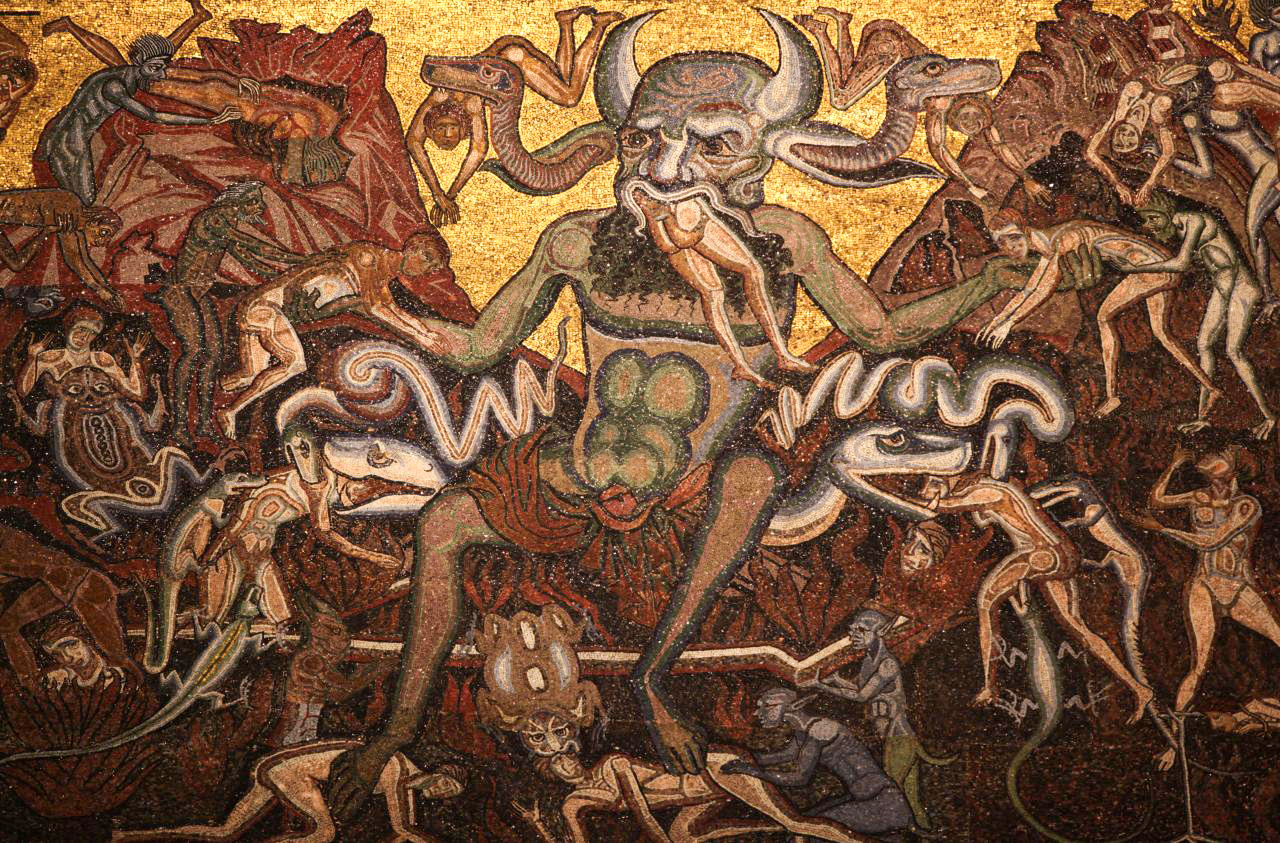
    Mosaic depiction of Satan in Hell, Baptistery of Saint John in Florence, Italy (1260-75) | Image courtesy Holly Hayes on Flickr. More on this image below, at the end of the reflection.

    These are fundamental aspects of our faith. Christ didn’t come to earth to start a feel-good-about-yourself community of do-gooders. If we deny the whole point of our faith — going to heaven to be in union with God — then there is no point in calling ourselves Christian. Let’s put this another (more positive) way … if we believe in Jesus Christ, it would do good to listen to what he promises us: heaven for those who walk in his Way, hell for those who don’t. This is reality for eternity, of course, which might be the very thing that people don’t want to come to grips with. 

    Why bring this up now, in cosy, rosy Advent of all times? Well, I’m just following the Lectionary here. Today’s readings give us the same first reading from Isaiah that we encountered on Tuesday of week one, paired with Matthew’s introduction of St. John the Baptist. I reflected on much of the Isaiah reading on Tuesday, but I’d like to focus on two different lines from this passage today: “He shall strike the ruthless with the rod of his mouth, and with the breath of his lips he shall slay the wicked.” Isaiah is, of course, referring to the Anointed One, the shoot from the stump of Jesse, who we know as Jesus Christ. In the midst of passages that glow about his wisdom, fear of the Lord, and faithfulness, Isaiah puts in these lines about striking the ruthless and slaying the wicked. If these lines seem out of place, then we must remind ourselves of God’s plan. 

    The key word that unites these concepts of peace and retribution occurs in the very next line: “Justice shall be the band around his waist.” God’s justice is that the pure of heart are rewarded while the wicked are punished. Both of these, reward and punishment, are part of God’s promise to His People. We can’t choose to ignore this.

    Thus, the line after this also follows logically: “and faithfulness a belt upon his hips.” The Messiah is, above all, faithful to the Lord whom he loves and fears. It is faithfulness to the Father’s will that makes the distribution of justice happen. Aren’t these great qualities, justice and faithfulness? Then why do I still sense some Catholics squirming with uneasiness at these words?

    This was always the job of the prophesied Messiah: to bring peace and justice. Why have we skewed so far towards the peaceful Lamb of God rather than the Lord of Justice in our modern age? What is it about divine justice and retribution that disturbs us? Perhaps it is because we have ingrained in ourselves a very correct Christian morality of upholding life — not harming others and not judging others. This is good! But let’s not apply the rules of the servants to the master. It’s like ants in a little plastic ant farm looking out at the human caring for them and saying, wait, why aren’t you rooting around in sand? What has been given to us for our own good is not for us to turn around and try to apply to God.
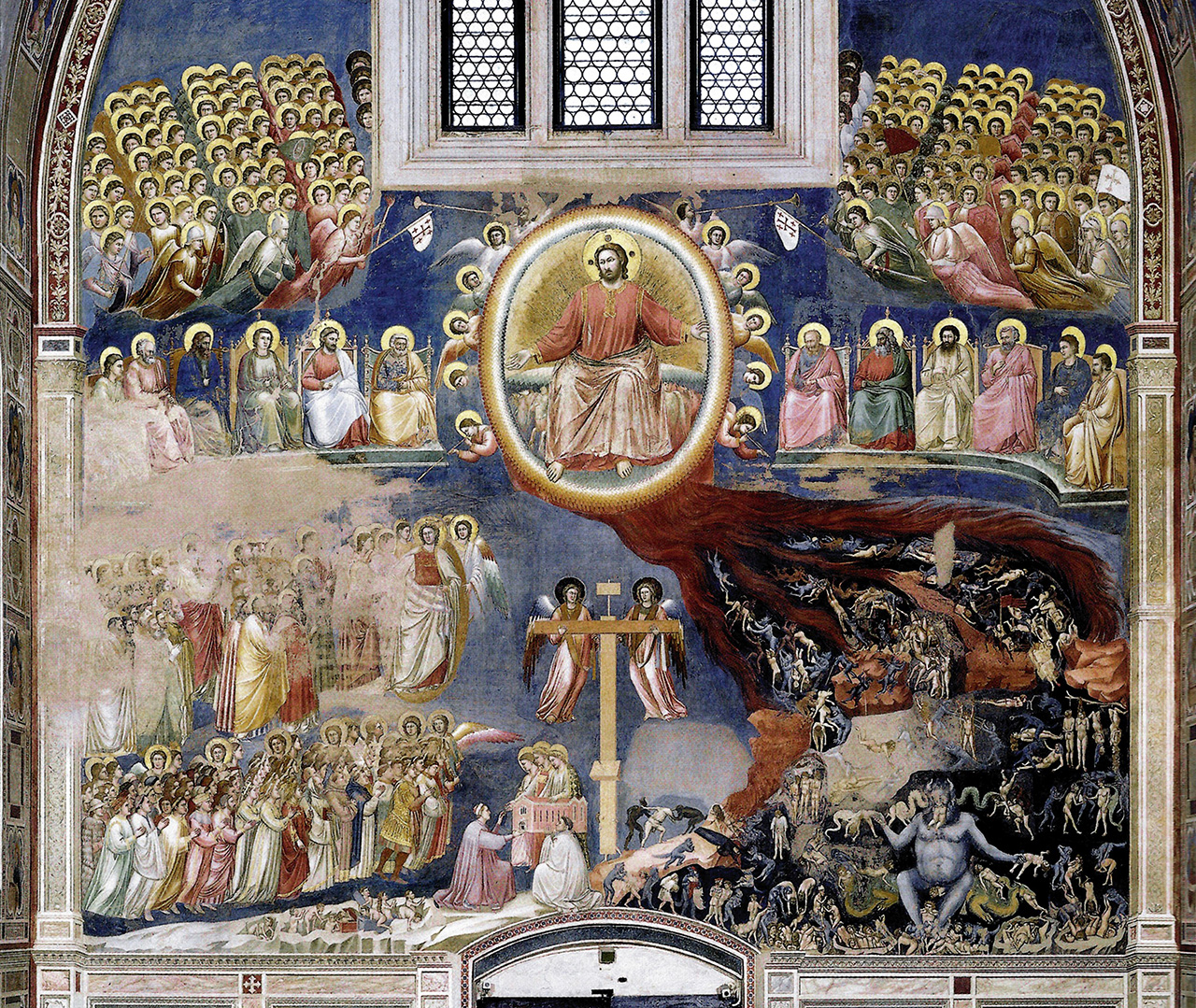
    Last Judgement, Giotto (1306) | Creative Commons, courtesy Wikimedia. The Last Judgment at the Arena Chapel (Cappella Scrovegni), in Padua. Christ in Majesty is surrounded by a rainbow mandorla and angels, flanked by the Apostles. The Heavenly Host is above, while the saved and the damned are shown below, rising to Heaven or being dragged to Hell. What would our faith be without Christ as rightful judge at the Last Judgement? We can’t excise this from our beliefs and still call ourselves Catholics.

    In fact, God is the only just judge. It is his rightful role. To tell him not to judge is like telling a fish not to swim. It is what He was always meant to do. Instead of fretting over this, we should thank him endlessly for his love and mercy (and for being God, because only the one who knows us better than we know ourselves would be qualified to be our judge). So, why be uneasy with the fact that the just judge will come to dispense justice?

    Maybe it’s because we think the punishment doesn’t suit the crime (amateur, unqualified mini judges that we are). We might argue that just because someone does some bad stuff here on earth, that doesn’t merit eternal damnation, without parole! Apart from the fact that we’re breaking rule #1 (it’s not our place to judge or weigh merit), there are two problems with this line of reasoning. First, we have forgotten that actions in this life have consequences beyond the immediate ones. Think of the butterfly effect. On a physical level, a drunk driving accident that paralyzes a person impacts them and their family and acquaintances for generations, far beyond what we could know or anticipate. A worse crime might occur on a spiritual level, where our sins might spiritually cripple someone, even cause them to turn from God and lose their own salvation. This is a grave crime indeed.

    Second, and related, we misunderstand what type of beings we are, having a body, mind, and soul. This makes us believe a weird version of the Las Vegas slogan, “what happens on earth stays on earth.” In fact, what we do on earth has impact in the afterlife, precisely because our soul is irrevocably wrapped up in the actions of our mind and body. Our soul receives the stain when we sin with our body. God has given us a physical life here as well as a greater life that our soul is already a part of, even while we’re here on earth. Thus, our eternal soul is committing crimes that resonate in eternity while we are here on earth. Even to our limited rational mind and logic, the punishment suits the crime.

    The scarier part here is that atheists and others who don’t take heaven and hell seriously are not exempt from justice and punishment just because they mistakenly choose to stick their heads in the sand about the whole matter. They are committing crimes in eternity without even accepting the moral teaching that would help them avoid sin and repent for the ones they have committed. We should have pity on them. This is why the salvation of souls is such an important goal for Dominicans (and all Christians), and something that will always be needed.

    So, can we Catholics accept the fact that God, our just judge, will come to both reward and punish?

    No? You say God is love and he would never punish because that’s evil? Ho, ho – one final objection to overcome. I won’t dwell on the fact that we are in no place to dictate what God can’t do, and that we live in faith, meaning in the totality of the faith and revelation that has been handed down to us (including the bits about divine retribution). Instead, I’ll attempt the more rational, logical argument, following Aquinas’s lead. The point that God is pure love and goodness is the very proof that punishment and banishment to Gehenna must happen. Pure goodness cannot exist alongside evil. That would be impossible, like trying to make oil become part of water. God’s goodness is like a white hot, purifying flame, and those who have been tested in the fire during life, like gold purified from slag, will glory in the pure flame of God’s love (this is reward). Meanwhile, those who have remained slag, or perhaps piled on more muck that they created themselves, will smoke and burn and writhe in the presence of God’s love.

    Perhaps this is hell, the burning out. Perhaps it is a place in the underworld. I don’t know. But what I know is the promise, in the words of Jesus Christ: 

    Woe to you, scribes and Pharisees, hypocrites! For you are like whitewashed tombs, which on the outside look beautiful, but inside they are full of the bones of the dead and of all kinds of filth. So you also on the outside look righteous to others, but inside you are full of hypocrisy and lawlessness … You snakes, you brood of vipers! How can you escape being sentenced to hell?  (Mt 23:27,28, 33).

    I bring up all of this is to get us to the point of understanding St. John the Baptist, who makes his appearance every Advent as we contemplate the coming of Jesus Christ. I love John. What a figure! The final prophet, the bridge between the old covenant and the new, the voice crying out in the wilderness. In our reverence of this saint, however, let’s not lose sight of just what a wild figure he was. “John wore clothing made of camel’s hair and had a leather belt around his waist. His food was locusts and wild honey.” This is not normal — not now, not then. Setting the fashion for centuries’ worth of future desert ascetics wasn’t his only standout quality, though. He was a true fire and brimstone preacher, and famous throughout the land. Something was different with him and his message. 
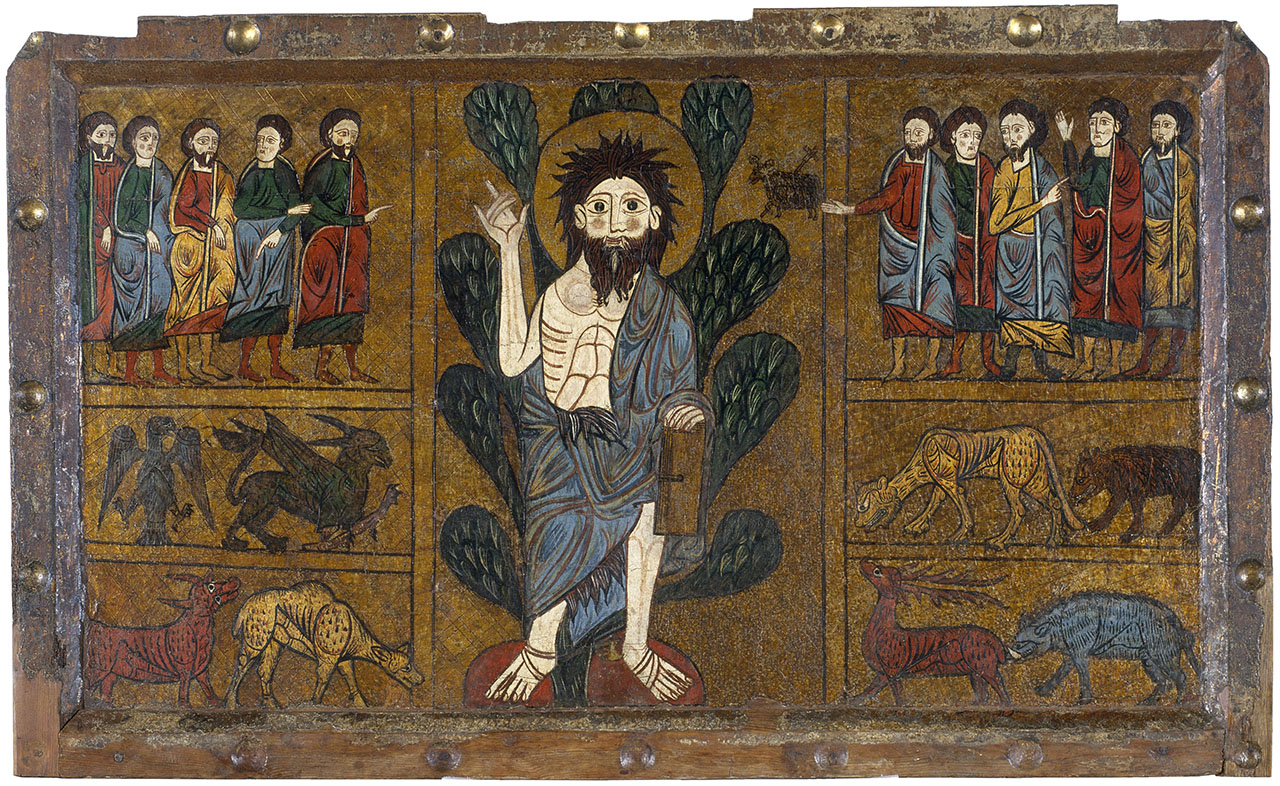
    Altar Frontal from Gésera, Spain (1200s) depicting John the Baptist preaching in the desert, surrounded by wild animals | Image from Museu Nacional d’Art de Catalunya, Barcelona.

    We are told that his message was, “Repent, for the kingdom of heaven is at hand!” This is something that Jesus would echo throughout his ministry, too. So, after God spent centuries preparing His People to develop their faith, culminating in the woman who would bear God as the Ark of the New Covenant, John spends these last moments before Jesus begins his ministry by preparing the people to bear the Word in their hearts. 

    John and Jesus share a fondness for calling out Pharisees: “When he saw many of the Pharisees and Sadducees coming to his baptism, he said to them, ‘You brood of vipers! Who warned you to flee from the coming wrath?’” We cannot turn a blind eye to the fact that John and Jesus’s message was one of preparing for the Final Judgement, the “coming wrath.” Today’s readings put this uncomfortable fact front and center. Advent is about preparing for Jesus, and that preparation has very, very serious stakes.

    Consider how central “fire” is to St. John’s short speech about God’s judgment. “Even now the ax lies at the root of the trees. Therefore every tree that does not bear good fruit will be cut down and thrown into the fire.” Fire consumes the trees that do not bear the fruit for which they were planted. And then: “His winnowing fan is in his hand. He will clear his threshing floor and gather his wheat into his barn, but the chaff he will burn with unquenchable fire.” Fire immolates the leftover and useless chaff that was separated from the life-bearing grain. In both instances, fire is the judgement rendered, and importantly that fire cleans. It is a way to finalize the harvest season, to reset an ordered existence. 

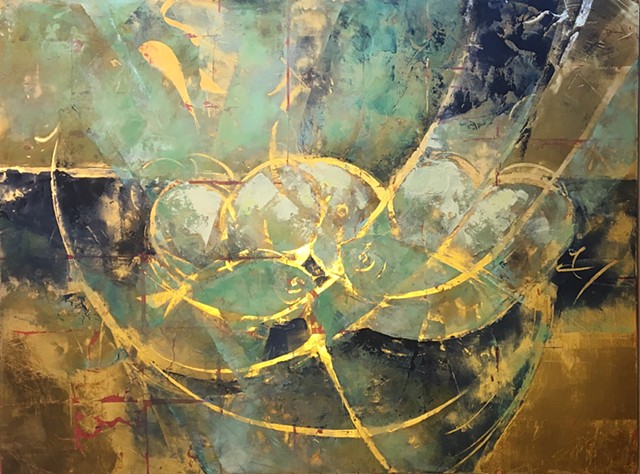
    Fire Blaze, Carol Carter (contemporary) | Image from CCarterWatercolors Etsy page.

    So, when John also tells us that Jesus “will baptize you with the Holy Spirit and fire,” we must realize that the cleansing, ordered, perfect fire of God is present with us from the very beginning of our journey to Him. Our baptism is conducted with the grace of the Holy Spirit and the soul-cleansing effect of fire. Fire is there in the beginning and it will be there in the end. There is a place for fire.

    After all, there is even fire (in a positive sense, as in baptism), for those who will enter heaven. Being united to the divine glory that is the fiery love and goodness of God, our earthly concerns will be immolated by the great love we will bear in our whole beings, participating fully in that irresistible and never-ending flow of love in the Trinity.

    If we are still bugged by the question of how do we feel about a God who judges harshly, then I think we need to contemplate the wild, frightening words of St. John the Baptist. We must take seriously the covenant God has made with us. We must repent for our sins, convert our hearts, and strive with all of our beings to be on the right side of the judgement. And we have to understand that there is a rightful place for fire.  
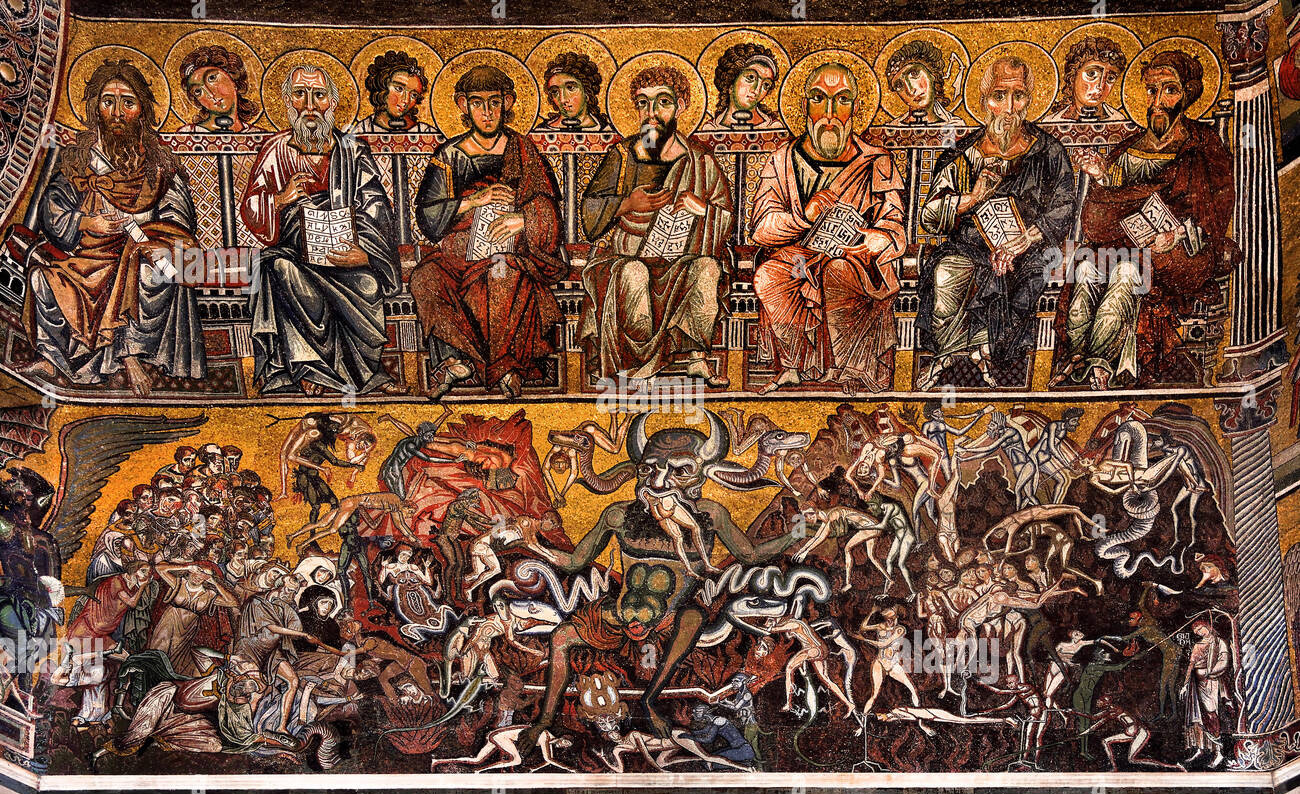
    Christ and the Last Judgement, mosaic in Saint John Baptistery in Florence, Italy (1260-75) | Image is a preview download from Alamy.com. Here we have the fuller composition of the image at the top of this reflection (apologies for the watermarks). Note that the damned in hell are presided over by the council of prophets and angels – in particular, note the wild-haired St. John the Baptist on the far left. This is a good reminder of our doctrine: hell is a sentence that is passed on those who have not “born good fruit” in life and accepted God; it is just and ordered, promised from the beginning. Unlike popular culture conceptions of good and evil fighting it out in an almost-equal battle (think of Star Wars), we condemn that heresy as dualism. Evil and Satan certainly exist, but they serve as part of the crucible of perfecting ourselves in this life and then as the jailers of hell in the afterlife. God has no equal and Jesus has already defeated death and Satan. The other important aspect of this mosaic is that it shows the deep medieval understanding of the important truths of the faith that are inaugurated with baptism. This magnificent Battistero di San Giovanni reveals to the initiates on the inside of its walls in glorious fashion the mysteries of our faith, including the fact that they are being baptized with the Holy Spirit and fire. They are being brought into the faith that promises a Final Judgement by fire from the very beginning.


  • As Wheat Gathered by the Lord

    Third Sunday of Advent: Zephaniah 3:14-18a, Philippians 4:4-7, Luke 3:10-18.

    Gaudete in Domino semper! These are the first words of today’s second reading and, in fact, the introit (opening chant) for the third Sunday in Advent, marking Gaudete Sunday every year. What does it mean? The Latin translates as “Rejoice in the Lord always,” so we celebrate Rejoice Sunday. Hooray!

    But what is joy, really? St. Thomas Aquinas writes that “joy is caused by love,” either in the presence of something that is loved or having that thing you love achieve it’s proper state of goodness (Summa II-II, q28.1). There is joy in earthly things, but the highest joy is spiritual because the highest form of love is charity (caritas). As St. Thomas writes, “according to 1 John 4:16: ‘He that abideth in charity, abideth in God, and God in him.’ Therefore spiritual joy, which is about God, is caused by charity” (Ibid). There is something circular here, something only the Creator Himself can generate: we rejoice in God always because God is the very charity that creates the joy we have. It boils down to simply allowing ourselves to exist wholly in His generative presence, which is love itself, and which generates the joy we experience.

    Adoration of the Magi (detail), Domenico Ghirlandaio (1488-1489) | Wikimedia Commons.

    As we dig into St. Paul’s exhortation in the second reading, we should note a subtlety to today’s Lectionary translation. We hear today, “Your kindness should be known to all,” but “kindness” is an interesting translation of the original Greek, ἐπιεικὲς (epieikes), which means gentle spirit or gentleness. The Latin Vulgate translation is Modestia vestra nota sit omnibus hominibus, or “let your moderation be known unto all men.” So, we have a key word, epieikes or modestia, which is variously translated as forbearance, gentleness, reasonableness, moderation, and humility. In fact, our Lectionary is the only place I’ve found it translated as kindness. This is a point to consider, especially in the context of what we are called to do and to be. Certainly, our call to love God and then our neighbor as ourselves (simply put, a call to caritas or agape) can manifest itself as kindness. I’m not saying this is a mis-translation. But kindness emphasizes an act that we do – something we call up within us and enact on the world around us. These other words: forbearance, gentleness, moderation, and humility, all emphasize a state of internal calm that radiates through our actions. It is best phrased in perhaps the closest translation, gentle spirit. This emphasizes an internal ordering toward God, a letting go of self rather than an assertion of self. St. Paul is exhorting the Philippians (and all of us) to be known for our gentle spirit. Indeed, in the next sentence he says, “Be anxious about nothing.” This is Christianity on earth: a gentle spirit, anxious about nothing, living in Christ and awaiting His triumphant return; awaiting our own second birth into heaven. This is the essence of Gaudete Sunday, especially.

    This gentle spirit, ordered to and ordered by God, is compatible with St. Thomas’s discussion of joy, too. He writes, “joy is not a virtue distinct from charity, but an act, or effect, of charity” (Summa, II-II, q 28.4). Joy, in other words, is brought about by charity. As stated earlier, when God loves us, joy is the natural effect. Contemplating and living in the Christ event brings this joy back to the surface of our minds. Living in Christ also means allowing God’s love – charity – to flow through us to others. Our gentle spirit can be anxious about nothing as we are rejoicing in God always because we exist within the constant effects of charity.

    This is getting a little abstract and philosophical (as St. Thomas tends to do). Let’s bring it back to the reality of Jesus Christ, man and God, alive on earth. In his excellent apostolic exhortation in 1975, Gaudete in Domino, Pope Paul VI reminds us: “But it is necessary here below to understand properly the secret of the unfathomable joy which dwells in Jesus and which is special to Him. It is especially the Gospel of Saint John that lifts the veil, by giving us the intimate words of the Son of God made man. If Jesus radiates such peace, such assurance, such happiness, such availability, it is by reason of the inexpressible love by which He knows that He is loved by His Father” (III). Pope Paul VI goes on to recount the number of ways John tells us Christ knows the Father and is united with Him: “It is an unceasing and total exchange: ‘All I have is yours and all you have is mine.’ The Father has given the Son the power to judge, the power to dispose of life. It is a mutual indwelling: ‘…I am in the Father and the Father in me….’.” Pope Paul VI’s point is to more clearly flesh out the charity that gives us joy. Perfect charity is the relationship between God the Father and God the Son: “Here there is an uncommunicable relationship of love which is identified with His existence as the Son and which is the secret of the life of the Trinity: the Father is seen here as the one, who gives Himself to the Son, without reserve and without ceasing, in a burst of joyful generosity, and the Son is seen as He who gives Himself in the same way to the Father, in a burst of joyful gratitude, in the Holy Spirit.” And, the best part: “And the disciples and all those who believe in Christ are called to share this joy.” There it is! This is the fullness of what St. Paul means when he says rejoice in the Lord always.

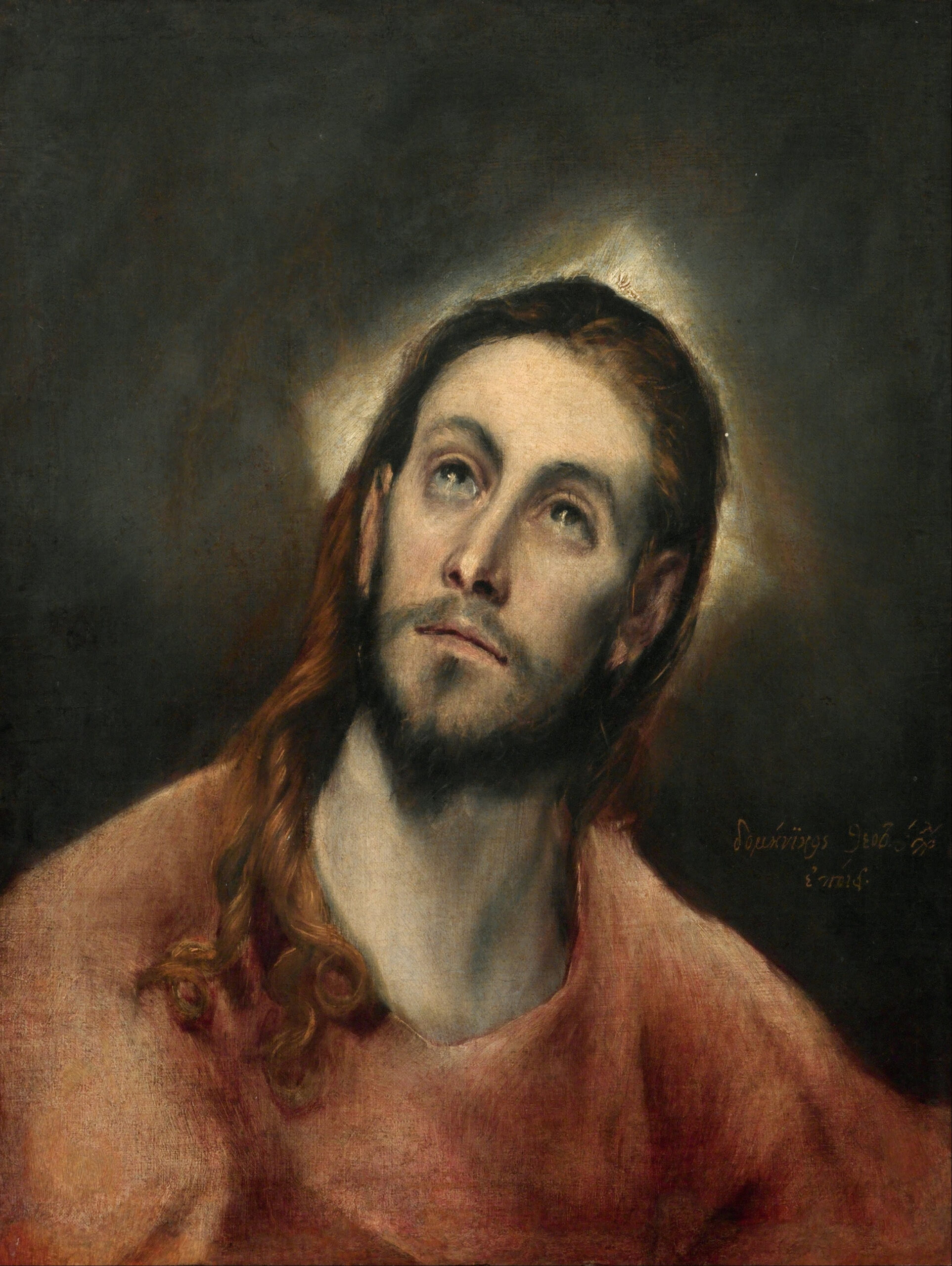
    Christ in Prayer, El Greco (1595-1597) | Wikimedia Commons.

    This (and every) Advent, we remember the anticipation of the world awaiting its Savior. We also anticipate the second coming of Christ. And, finally, we celebrate Christ being here with us already. This third reality is most clearly articulated here on the third Sunday of Advent through St. Paul’s words to the Philippians, who were themselves living in the new reality brought to the Earth through His death and resurrection. Zephaniah, too, in the first reading foresees this age: “the King of Israel, the LORD, is in your midst, you have no further misfortune to fear … Fear not, O Zion, be not discouraged! The LORD, your God, is in your midst, a mighty savior; he will rejoice over you with gladness, and renew you in his love.” What a deep and accurate prophecy! This is the same Word that speaks through St. Paul to the Philippians, a Word that unveils the meaning of the Christ event in the lives of humans. How can we fear misfortunes here on earth when the grave has been conquered and eternal life in Heaven has been offered to us? Humanity’s greatest fear and sadness, that we will cease to exist one day and that life has no meaning beyond the present, has been blown to bits by Christ’s sacrifice. What joy that His love of the Father has provided us a Way to the Kingdom! Rejoice in the Lord always!

    We cannot end this reflection without gazing at the titanic figure of St. John the Baptist, the great prophet, the voice crying out in the wilderness. In the gospel reading, John teaches the crowds to stop being selfish: “share with the person who has none … Stop collecting more than what is prescribed … Do not practice extortion.” Let’s remember that John has felt the effects of charity come to earth; he “leaped for joy” in Elizabeth’s womb when Mary, carrying Jesus, came near. Like a supernova, the child even as an embryo radiated charity upon the world, transforming the hearts of those open to Him. John is so transformed that he spends his life preparing the world for Jesus. What other messianic figure in that day (and there were many, as we know from the historic record) tells his expectant, adulatory followers that he doesn’t want their praise, that “one mightier than I is coming. I am not worthy to loosen the thongs of his sandals”? Only a man who has been transformed by God and holds no stock in worldly things can so thoroughly cast off the mantle that his followers want to place on him. John, filled with the zeal of the Lord, infects his followers with the anticipation of Christ that fills him. What’s more, this anticipation is not just one of looking and waiting but one that paves the way for charity. He tells them to stop being selfish while they wait so that they can prepare themselves for the more radical baptism in the Spirit that Jesus will bring to them. If they can repent, strip away their concern for worldly pleasure and security, they will create fertile ground for the message Christ brings.

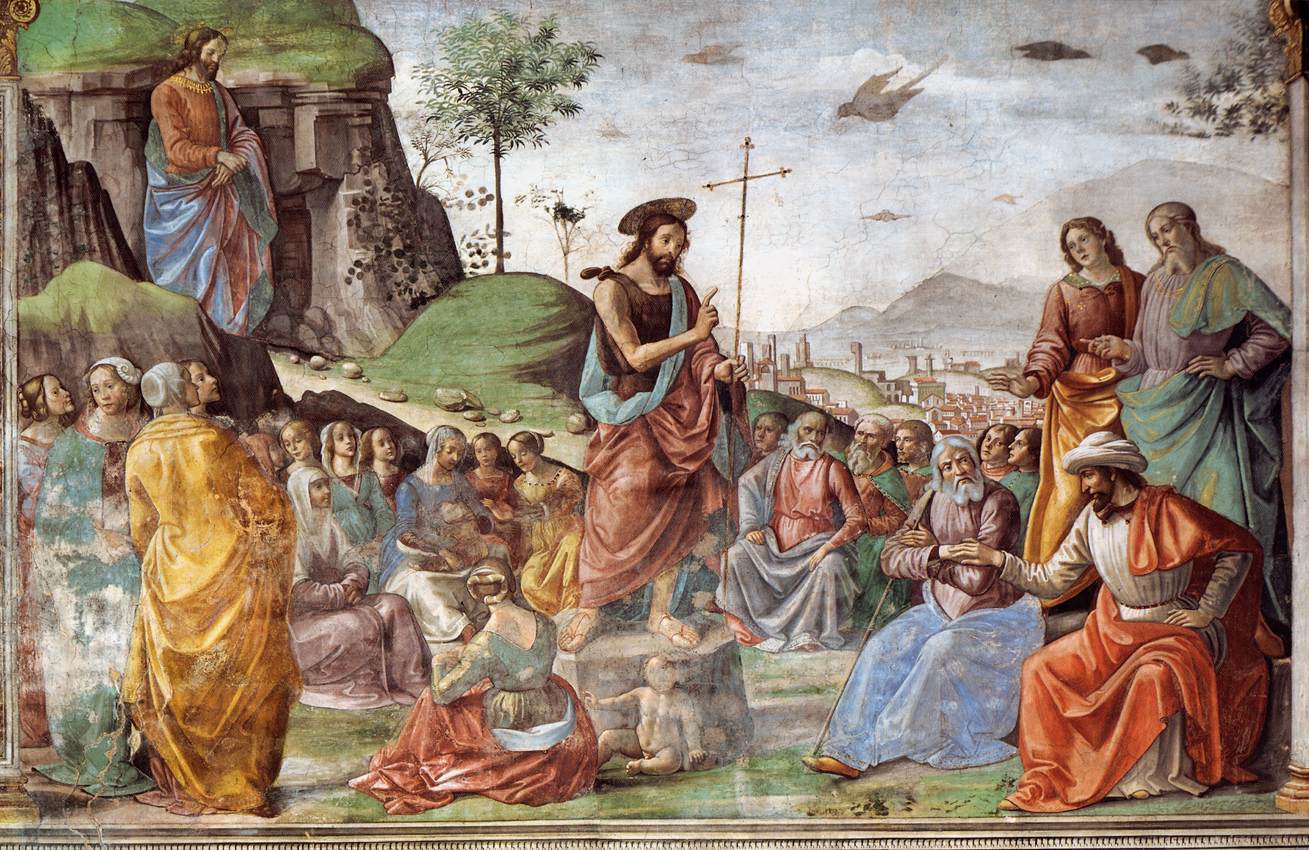
    Preaching of St. John the Baptist, Domenico Ghirlandaio (1486-1490) | Wikimedia Commons.

    I choose the agricultural metaphor purposely, because John, in his brilliance as a prophet, does the same. Let us concentrate on these final words of the gospel reading as John describes Christ: “His winnowing fan is in his hand to clear his threshing floor and to gather the wheat into his barn, but the chaff he will burn with unquenchable fire.” On the most obvious level, the metaphor is one his listeners can understand given the tools and occupation common to their time and place. A winnowing fan is used at the harvest to separate the good grain from the husks, dust, stalks and other “chaff” that do not serve as food. Metaphorically, the wheat are those who please God while the evil ones are the chaff. The harvester is Christ, the one who brings the final judgment. But the metaphor is agricultural particularly because it involves growth and harvest. He could have used a metaphor of a builder choosing strong stones instead of weak ones, or any number of other metaphors. But this one reminds us that life is at stake. First, life is implicated because we can grow into wheat or dead stalks. This is a living process in which we are bound up. Second, life is at stake because the wheat will go on to a greater life (gathered into the barn, or kingdom of Heaven) while the chaff will be burned in unquenchable fire. Finally, the third and most intricate reading here is to consider what the life of mature wheat is. Wheat feeds us, it is nourishment, it is an offering of life. Literally, it forms the grain offering, the minchah, that is prescribed in the Book of Leviticus where the finest parts of the grain, the semolina, are offered to God, either ground, cooked, or burnt. This is our destiny, to feed others, and to be an offering of life to the Father. Our greatest destiny and goal is to be gathered like wheat to the Father where we cease living simply for ourselves (that is, to grow nice, fat grains on the stalk). The mature wheat, having been grown rejoicing in the charity of God, achieves its ultimate purpose: to nourish others and be an offering to God Himself. Astounding depth in a simple metaphor!

    And this is why John must begin the process by having us turn our mindset away from self and towards others. Our ultimate purpose, revealed through Christ, is to grow into something great with a purpose beyond us. If we allow ourselves to rejoice in the Lord always, to be fully caught up in His love, we just might achieve it.

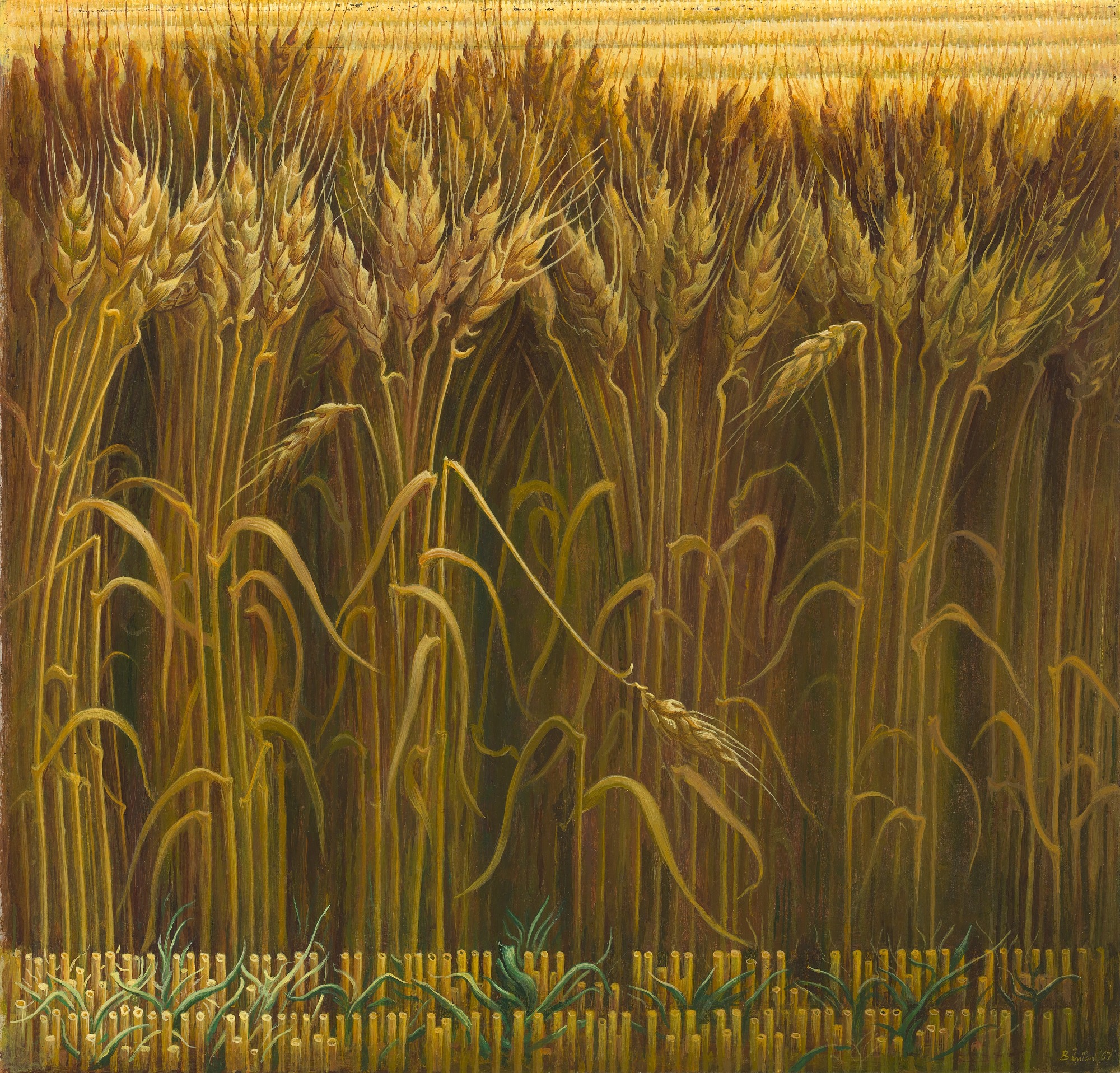
    Wheat, Thomas Hart Benton (1967) | Image courtesy the Smithsonian American Art Museum.

  • Feasting and Recognizing God

    Feasting and Recognizing God

    Wednesday in the 1st Week of Advent: Isaiah 25:6-10a, Matthew 15:25-37.

    In today’s readings, we encounter a stunning prophecy of the Christ Event from Isaiah and a passage from the gospel that aligns exactly with this prophecy. I’m going to focus mainly on the Isaiah passage before finishing with a connection to the gospel, so if you haven’t read the Isaiah passage, you might want to check it out now.

    In this short passage from Isaiah, he points out three aspects of the coming Reign of God: He will provide for us rich sustenance, He will remove a “veil that veils all peoples,” and we will recognize and praise Him. Let’s take these in turn.

    First, God’s sustenance might be spiritual, but the image used by Isaiah is very earthly: “A feast of rich food and choice wines, juicy, rich food and pure, choice wines.” I love the repeated sentence here, with an intentional emphasis pointed out by the adjective “juicy” for the rich food and “pure” for the choice wines. What he seems to be pointing out is that God is not just going to provide a basic level of sustenance but instead a feast of the very finest things. Psychologically for Christians, this is a nice counterbalance to the ascetic life that shuns fleshly desires, as insisted upon by St. Paul, the desert Fathers, the saints of the medieval period and so many more of our Doctors and saints in the Church. These holy men and women would certainly agree with Isaiah and his description here, but would likely say that restraining ourselves from desires while on the earth is necessary to forge our spirit in Christ’s image; plus, it will make the great heavenly feast of the kingdom all the more richly appreciated. Yet we must admit that the enjoyment of feasting is something not altogether bad, or else God would not be employing this image to describe His Kingdom. One might argue that a Christian might properly enjoy moments of feasting in this lifetime, especially if a person is living morally under God’s law and focused on God’s providence and grace.

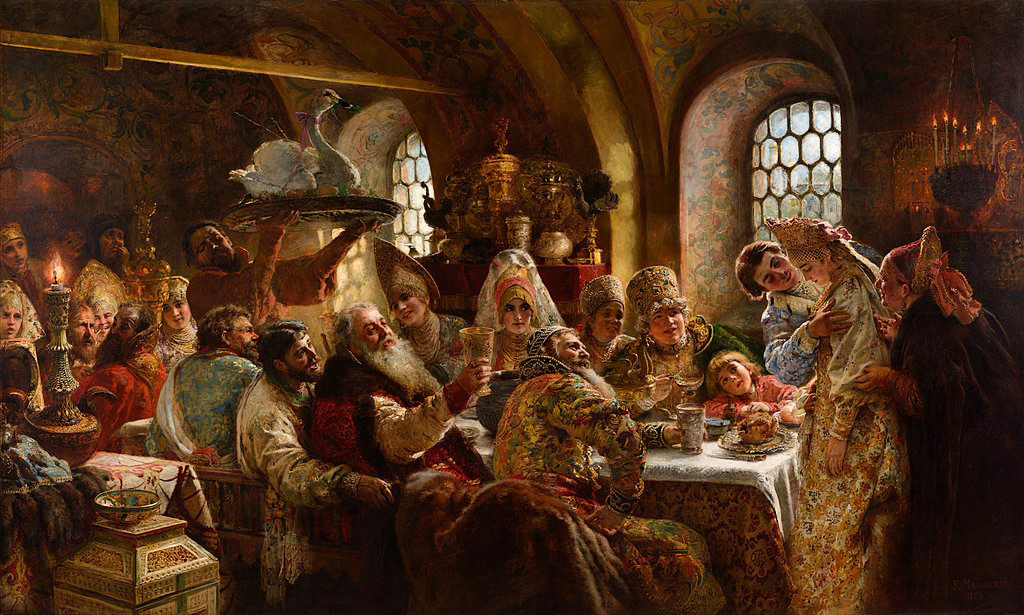
    A Boyar Wedding Feast (1883), Konstantin Makovsky | Wikimedia Commons. There is an interesting recalcitrance in the bride on the right side of the picture, with the groom attempting to coax her into enjoying their wedding feast. Indeed, the attention of all the guests is placed on this interaction. Perhaps she is sad to be married, perhaps she loved that beautiful swan that’s being served as food (ha!), or perhaps she’s terribly shy. In light of the paragraph above, though, perhaps we can read some of this recalcitrance as the pious Christian’s reaction to feast and worldly excess. I, for one, am with the groom on this one, though. If there is a time for feasting and enjoyment, let it be at a wedding feast. There is goodness in this world, and we can celebrate it appropriately.

    The second promise from Isaiah is that God will remove something that ensnares humanity: “he will destroy the veil that veils all peoples, The web that is woven over all nations; he will destroy death forever. The Lord GOD will wipe away the tears from all faces.” In a phrase, Isaiah is talking about the fallenness of the world and our natures. He calls this veil “death,” and indeed it is, but the ancient, scriptural understanding of death is deeper than we usually consider it in our analytical, scientific age. Yes, death has a technical meaning as the loss of life, measured perhaps in the absence of a heartbeat and the lack of measurable brain activity. But death also has a larger metaphysical meaning. When there is nothing ahead of us but death and a hole in the ground, then death reigns in a real psychological and even existential way. As we’ve amply seen with writers from Nietzsche onward, disbelieving in God goes hand-in-hand with the reign of death (one logically flows to the other). The reign of death is more than physical – it is spiritual, the death of the spirit. Any atheist will proclaim that nothing awaits us beyond this world, and the implications of this are diverse, but often include a softening of moral thought (i.e., if there is no larger or eternal repercussion for doing something right vs. something wrong, then why worry about making sure you’re doing things that are right? Even further, in this worldview, moral “right” is completely conceived by people rather than emanating from the source of all goodness, and so it is by definition changing and malleable).

    When moral thought and action are brought low, we Christians are taught that this is the devil at work in the world. Thus, the devil’s influence and the reign of death are tightly linked. This brings us back to our origin as recounted in Genesis: Satan – the serpent – is the cause of our temptation; and he is cursed as is humanity when cast out of the garden into the world where death reigns. Eons of weeping, blood, and sin ensue. We now live apart from God, unable to be in His presence, unable to see the truth and light clearly. St. Paul tells us, “For now we see in a mirror, dimly, but then we will see face to face” (1 Cor 13:12). So, when Isaiah promises that “he will destroy the veil that veils all peoples … he will destroy death forever,” we can understand that this is a full reconciliation with Him, a return to the garden. It is again St. Paul who helps us locate the promise of Isaiah in the Reign of Jesus Christ: “but when one turns to the Lord [Jesus Christ], the veil is removed. Now the Lord is the Spirit, and where the Spirit of the Lord is, there is freedom” (2 Cor 3:16-17). The freedom offered by Christ is a freedom from the reign of death, a removal of a veil that has ensnared us, and a reconciliation with God thanks to Christ’s great sacrifice.

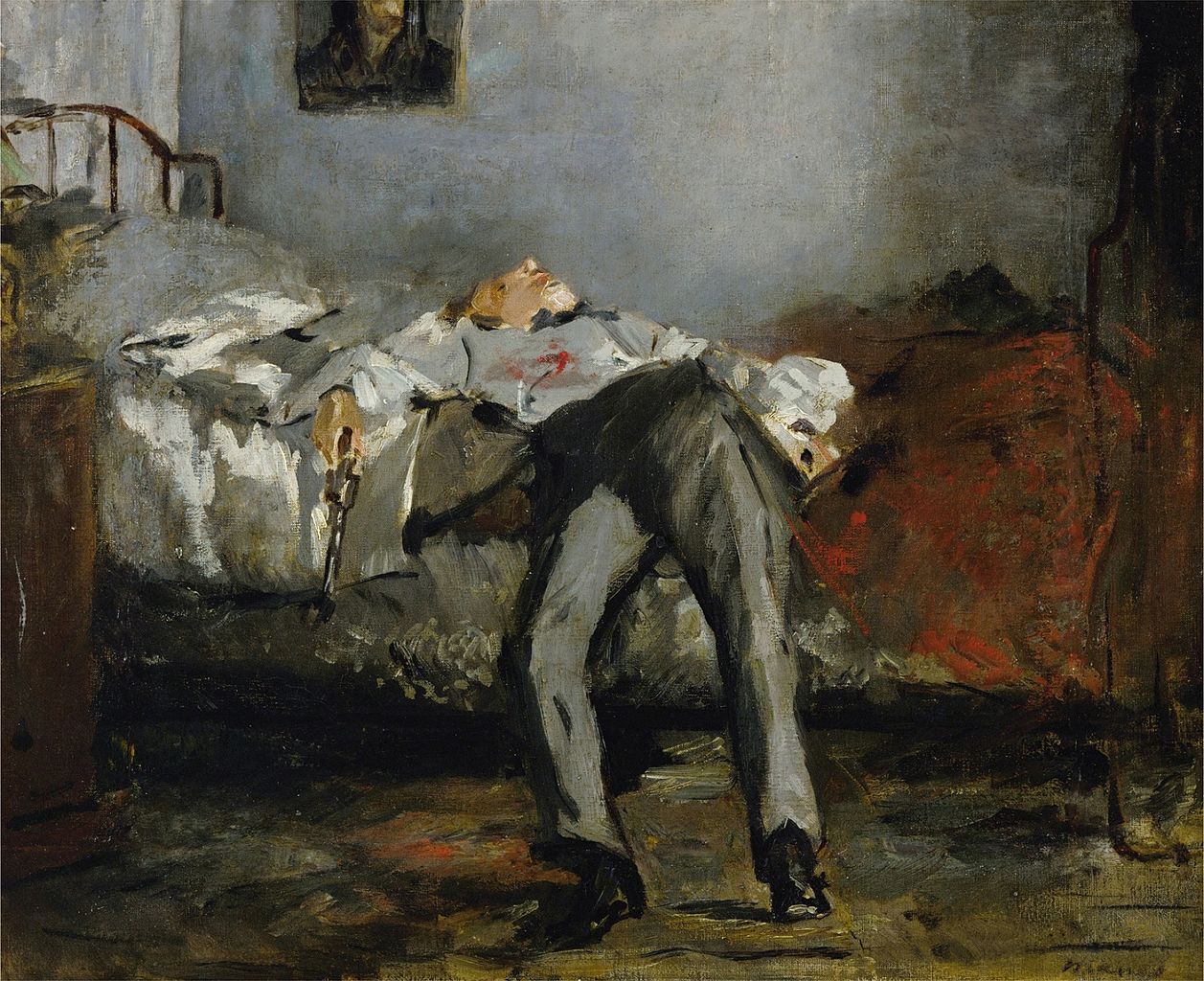
    Le Suicidé (1877), Édouard Manet | Wikimedia Commons. For me, nothing proclaims the ascendancy of the reign of death like suicide, especially in our modern era when atheism and disbelief in God compound the sin unimaginably. The great flaw in the thinking that leads to suicide is that there is no redemption, no God who can wipe away stain or guilt. In short: a complete lack of hope, which must be like living with that veil of death drawn so tightly around oneself.

    Finally, today’s prophecy by Isaiah tells that the world will recognize God as the bringer of the feast and conqueror of death. Humanity shall say, “Behold our God, to whom we looked to save us! This is the LORD for whom we looked; let us rejoice and be glad that he has saved us!” This recognition is important because God is calling us to a relationship but also gives us the free will to either refuse or answer the call. Isaiah’s prophetic vision reveals those who are present at the feast, who have the veil lifted as death is defeated. These people give God his due credit and rejoice in Him; they have answered his call to a relationship with him. Importantly, they recognize that His action is a saving action – one that saves them from the reign of death.

    Now, let’s turn to today’s gospel and see each of these three aspects of Isaiah’s prophecy in this single episode of Jesus feeding the four thousand (plus women and children!). First, the feast: this is the famous miracle of the loaves and fishes. Signaling the abundance, the richness of the feast, is the fact that after all were satisfied, “They picked up the fragments left over – seven baskets full.” Such unheard-of largess appearing without delivery carts and many villages’ worth of bakers and fishermen has only one author: God Himself. More: these people knew the writings of Isaiah, “On this mountain the LORD of hosts will provide for all peoples…” Here, with them and for them, the Reign of God was beginning – God in the form of the Messiah was here.

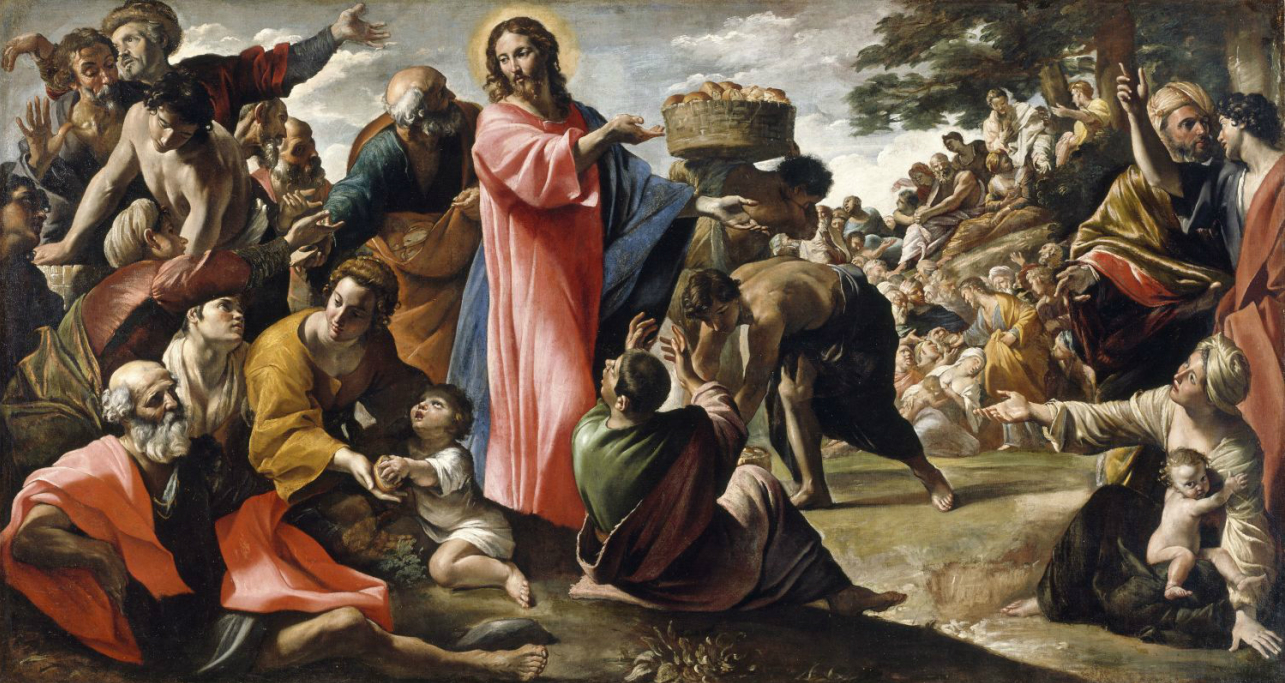
    Miracle of the Bread and Fish (1620-1623), Giovanni Lanfranco | Wikimedia Commons. I appreciate Lanfranco’s Baroque period portrayal of the serene, haloed Christ in the posture of giving in the midst of the writhing masses. Yes, the elaborate body positions were likely done to show off a certain painterly prowess for anatomy and beauty of the human form, but the effect is one that recognizes the fallenness/messiness of the world and portrays with true eyes the Messianic, generous substance of Christ.

    Second is the removal of the veil of death. Remember that the crowd had gathered because they had heard Jesus was a great teacher and healer – they came seeking Him. This is the essential ingredient for those who will be present at the eternal feast: that they answer God’s call. “Great crowds came to him, having with them the lame, the blind, the deformed, the mute, and many others. They placed them at his feet, and he cured them.” These people are in the grip of death in one form or another, not just physical death but spiritual death. Jesus often shows us that healing physical blindness in fact heals a deeper, underlying spiritual blindness. As mentioned earlier, death reigns not just physically, but spiritually. The Christ Event in history is the beginning of the Reign of Christ – death’s reign is clearly defeated in these miracles and the veil of sin, Satan, and death is lifted from these people. 

    Third is the recognition of God as the Savior. This, too, is pointed out by St. Matthew: “The crowds were amazed when they saw the mute speaking, the deformed made whole, the lame walking, and the blind able to see, and they glorified the God of Israel.” But giving thanks to God for being healed is a bit different from looking at the one who healed you and thanking him, personally, as God incarnate. And this is the aspect of Isaiah’s prophecy that is played out throughout the gospels and even to this day. As we investigated yesterday, the fantastic vision of Christ granted to Isaiah 700 years before Jesus was born was truly a glimpse into the time-defying kairos event that is God puncturing human history and coming at the end of time, swirled into one ecstatic vision. If we try to inhabit this vision, we can see that we are living within this prophecy, where the feast is available to us, death’s reign can be lifted from us, and we must strive to recognize God in the person of Christ, just like the people described in the gospels.

    The three touchstones Isaiah shares today, the feast, the removal of the veil of death, and the recognition of God as Savior, are at the heart of the Christ Event and all of our symbols and actions that emanate from it. The feast was celebrated throughout his ministry in every miraculous outpouring of sustenance and richness – wedding at Cana, feeding of the four thousand, and most clearly in the Last Supper – and it is this last example that instituted the ongoing feast of the Holy Eucharist that we continue to celebrate day after day in this contemporary moment within the Reign of Christ. The removal of the veil of death, specifically spiritual death, happens in our sacraments, notably in baptism, and integral to each of the other sacraments as we are drawn deeper and deeper into full communion with God. Over the course of our lifetimes as Catholics, we participate in the removal of this veil of death that ensnares and blinds us – it is our journey of faith. So we can see how the first two touchstones happened in Jesus’s life events and also happen our own. But this last one, our participatory acceptance and recognition of God in the form of Christ our Savior, is the one we must step up and bring to God all on our own. We pray that all are able to do this at some point before their physical bodies die. This great drama of recognizing Christ as God was brought to the forefront by Christ Himself: “Who do you say I am?” (Mat 16:15, Mk 8:29, and Lk 9:20). He asks each of us this same question. The Apostles realized that this was their great duty: to evangelize, that is, bring this good news of the Christ Event to people across the globe. Pope Benedict XVI identifies that this evangelical activity is part of the ongoing lifting of the veil of death: “But the preaching of God’s Kingdom is never just words, never just instruction. It is an event, just as Jesus himself is an event, God’s Word in person … Because the world is ruled by the powers of evil, this preaching is at the same time a struggle with those powers” (Jesus of Nazareth, 173).

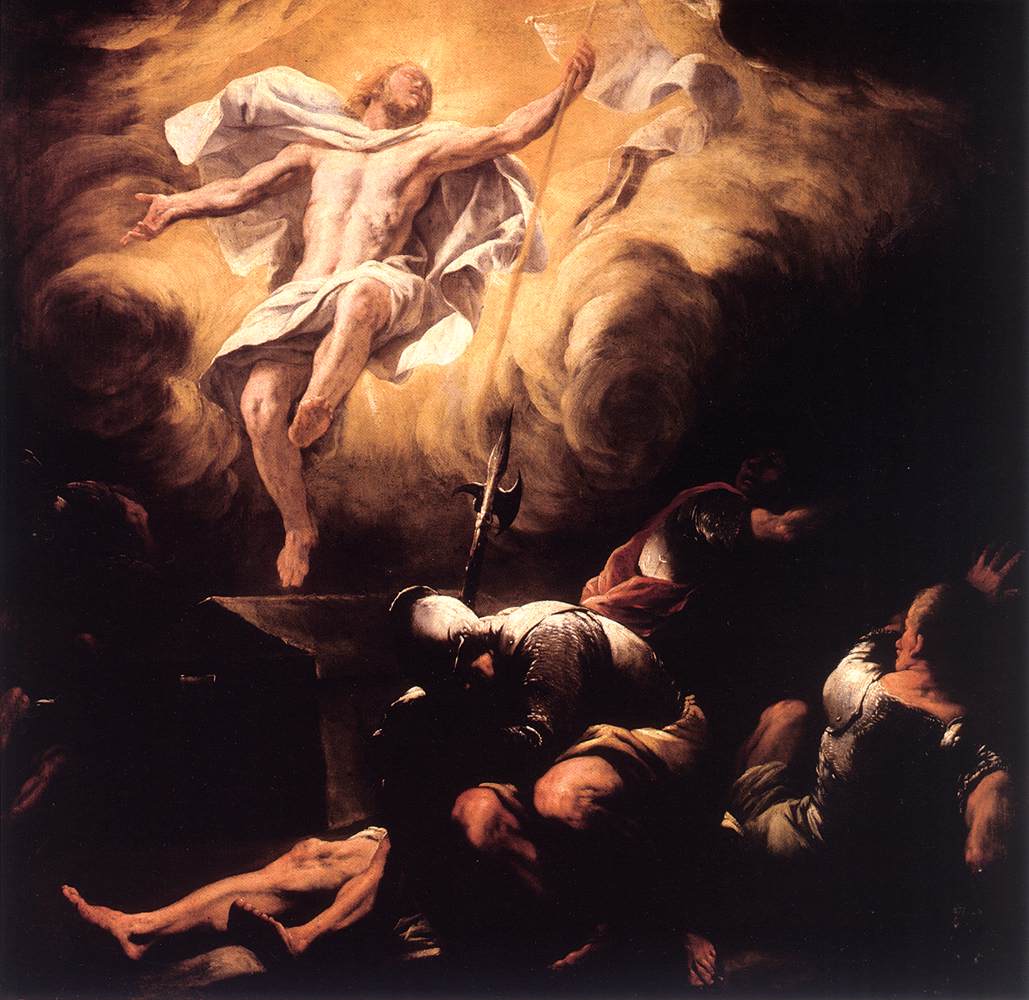
    The Resurrection (after 1655), Luca Giordano | Wikimedia Commons.

    Don’t let anyone tell you that all major religions are the same; we have a very particular core to our faith, and it is Jesus Christ, the man and God incarnate. Pope Benedict XVI, like Pope Saint John Paul II before him, writes that everything in our faith tradition and practice must be understood through a Christocentric lens. Everything about our salvation as well as the signs, symbols and language of our religion is fundamentally about Christ being God. It’s not about being morally good or doing good deeds or praying a certain way (although those things matter, especially when seen as ways of being united with our Savior). How can the popes insist on this (and not just them – think of so many saints and doctors of the Church, St. Augustine to name just one)? Well, it starts perhaps most plainly with Christ Himself, especially as revealed through the gospel of St. John: “for you will die in your sins unless you believe that I am he” (Jn 8:24). Jesus is adamant that He is the path to the Father, to salvation, to the end of the reign of death. Why might faith in Jesus Christ as the Son of God and Savior be so important for eternal salvation? I can think of several reasons, but here are two that jump most quickly to mind. First, denying that Christ is the Son of God (when He is one of three Persons of God) is, in fact, denying God (being atheist, that is). Second, the Christ Event – and only the Christ Event – is the exact action of God in the world that ushers in our salvation. This means that only Christ is the vector God provides for us to unite with Him. 

    And perhaps a third, more human reason that this specific faith in Christ as God is necessary: Jesus reveals aspects of God in a way that no one or nothing else in creation can. Jesus Christ reveals to us ways that we are made in the image of God (we are agents of truth and light as He is) and that humanity is precious to God in a special way. As we dwell on the Word of God, as uttered by the Word of God made incarnate, we learn about Him as well as the great potential within all of us. Jesus Christ becomes our “key” to knowing God and to knowing ourselves.

    Today’s gospel reading, for instance, stands out to me not just because of the amazing parallels with Isaiah’s prophecy and these three touchstones of our faith. It stands out because of what Jesus says: “My heart is moved with pity for the crowd, for they have been with me now for three days and have nothing to eat. I do not want to send them away hungry, for fear they may collapse on the way.” Matthew takes 5 lines to describe Jesus’s great compassion here, and just 2 to describe the miracle itself. This is where we find the reality of Christ – in His love and compassion. After healing hundreds, if not thousands, of people on the mountain by the Sea of Galilee, surely He would be exhausted by the sheer weight of it all. But, as God, He shows us that God never tires of compassion. He teaches us how to find that compassion in ourselves. Even after delivering them from the grip of death through His healing, His saving acts do not end. He knows their hunger and, more importantly, this hunger moves him to compassion. It never fails to amaze that our God is a God who is moved to compassion for us. This is no distant God! So, He feeds them, as only God can. Here is the same God accomplishing the same act He did for His Chosen People after freeing them from slavery in Egypt and feeding them manna in the desert. Only now our God walks among us, speaks plainly for us, and ultimately sunders the divide between our fallen earth and heaven.

    The Miracle of the Five Loaves and Two Fish (contemporary), Grace Carol Bomer | Image from gracecarolbomer.com.

    Thank God for His compassion! Because this Advent is about anticipating the culmination of the Christ Event, and we will certainly all need compassion, understanding, and forgiveness on the Day of Judgment.

  • Tree Beside Running Waters

    Tree Beside Running Waters

    Thursday in the Second Week of Lent: Jeremiah 17:5-10, Luke 16:19-31.

    (Note: this is a lightly edited version of the reflection I originally wrote in 2020 for the Second Thursday of Lent: Beware the Enchantments of the World.) 

    Today, we hear the parable of the Rich Man and Lazarus from the gospel of St. Luke. On its surface, this parable seems to warn us of too much enjoyment in this world because we will pay for it later (in Hell). As we dig into the parable, however, we see a deeper problem with the rich man. The connection to the reading from Jeremiah becomes more apparent: the enchantments of this world distract us from God, who is busy giving us plenty of opportunities for redemption by our faith and actions.

    The opening of Jesus’s parable almost sounds like a fairy tale: “There was a rich man who dressed in purple garments and fine linen and dined sumptuously each day.” This opening may tempt us to read it as a simple morality play. But the Truth spoken by the Word of God is not just a self-improvement class. It draws our spirit to dwell with Him, even if it does so via a warning.

    Our gospel passage opens: “Jesus said to the Pharisees…” and in Luke, Chapter 15, He is, in fact, in the middle of talking to them. Let’s back up a few verses to get the full context. “The Pharisees, who were lovers of money, heard all this [his last parable that “You cannot serve God and wealth”], and they ridiculed him. So he said to them, ‘You are those who justify yourselves in the sight of others; but God knows your hearts; for what is prized by human beings is an abomination in the sight of God’” (Lk 16:14-15). These parables are specifically for them. We shall see that His criticism of loving money holds true for loving other human desires.

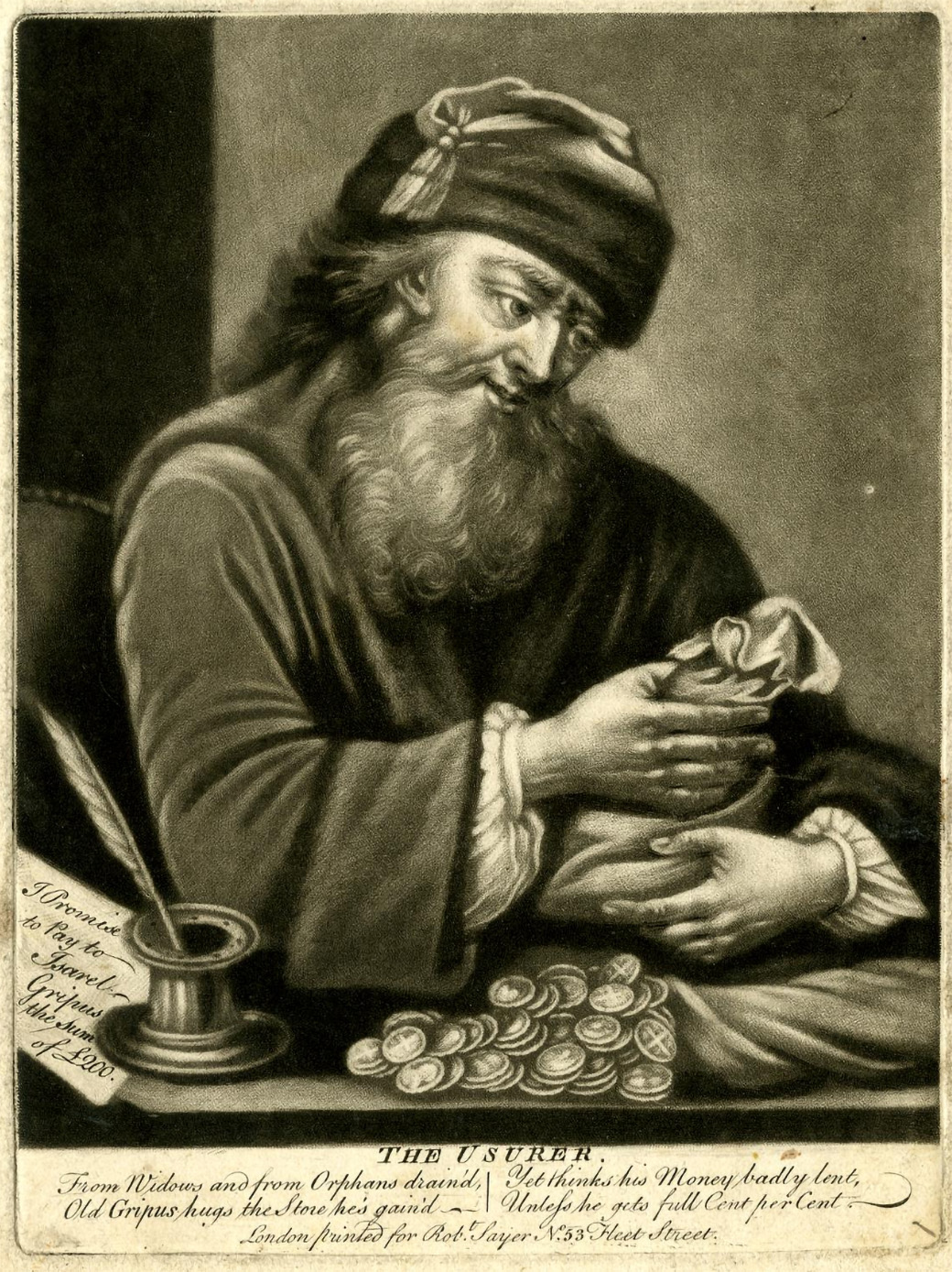
    The Userer, ca. 1766-1774, after George van der Mijn (1721-1763) | Creative Commons, courtesy the British Museum.

    What does today’s parable tell us about the rich man other than his expensive tastes and gluttony? We can glean that he did not seem to give alms of any sort to Lazarus, who would have been glad to have “scraps that fell” from his table. Just two days ago, we heard Jesus saying of the Pharisees: “For they preach but they do not practice. They tie up heavy burdens hard to carry and lay them on people’s shoulders, but they will not lift a finger to move them. All their works are performed to be seen.” In the rich man we see the same lack of helping as we do in the Pharisees: he does “not lift a finger” to relieve Lazarus’s suffering.

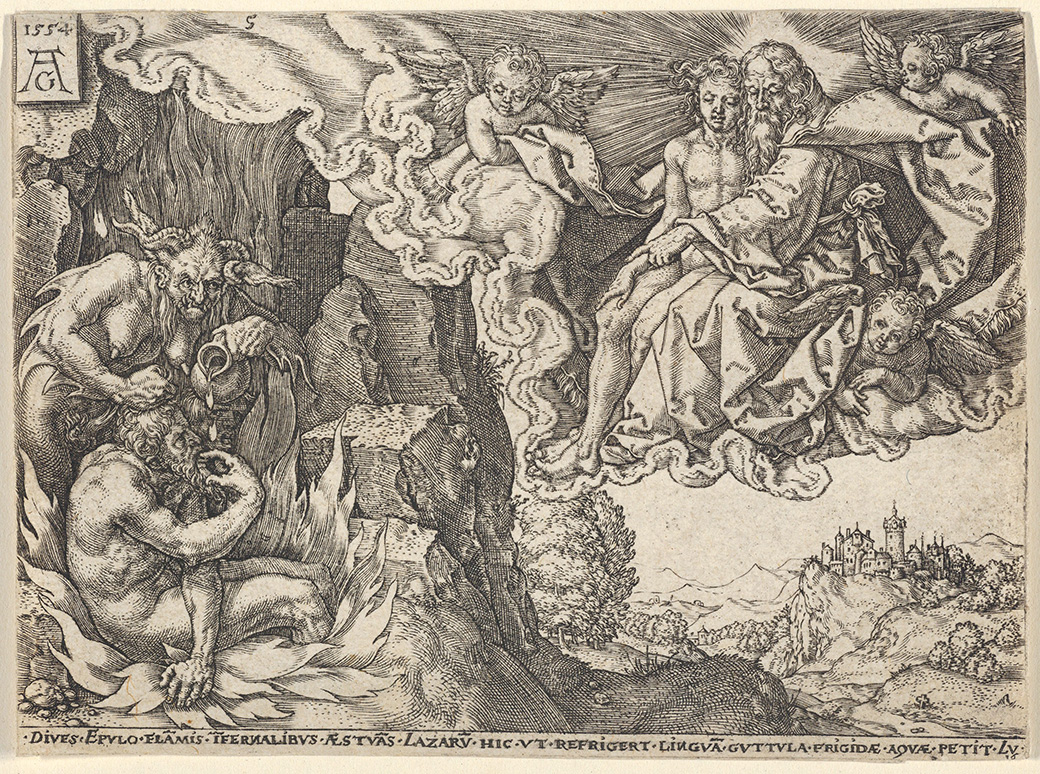
    He displays his true colors when he finds himself in Hell. Unbelievably, he retains an arrogant sense of self-worth greater than Lazarus when he says, “Send Lazarus to dip the tip of his finger in water and cool my tongue.” Here the rich man is “in torment,” asking for pity, and he’s still treating Lazarus as a servant or slave! 

    Abraham explains that they are reaping their rewards based on their experiences and actions on earth, and that “a great chasm” separates them. And still the rich man asks, “send him to my father’s house” to warn his family to mend their ways, betraying his continued dismissal of Lazarus as a person with dignity. He sees Lazarus as a tool to be employed for his family’s benefit, arguing with Abraham, “if someone from the dead goes to them, they will repent.” His sense of superiority and belief that everyone (even Abraham!) should listen to him is astounding, and certainly a pointed example for the Pharisees who were listening.

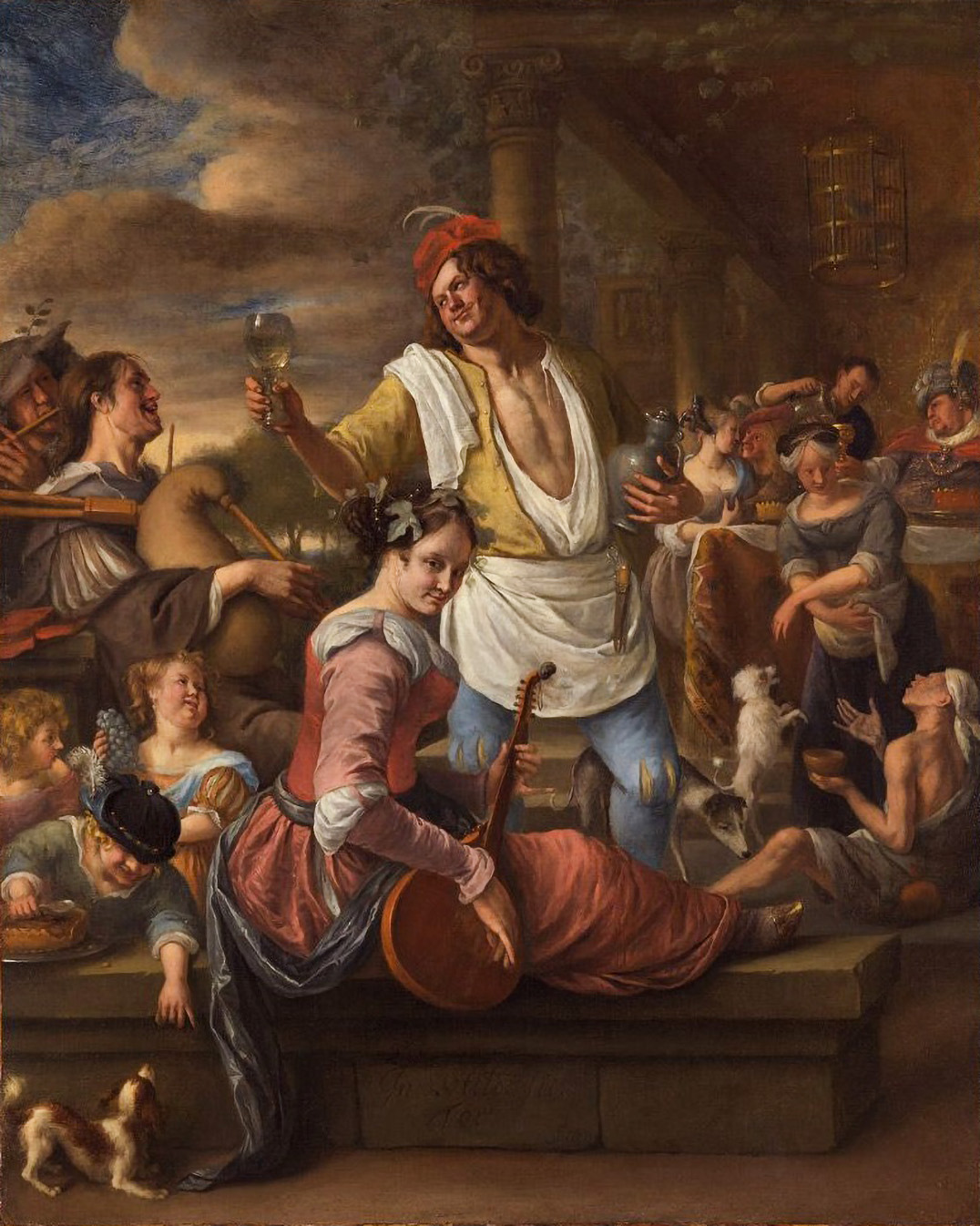
    The Parable of the Rich Man and Lazarus (1677), Jan Steen | Wikimedia Commons. I particularly like the self-important, dismissive expression of the man holding the goblet in the foreground, which captures the failings of the rich man archetype. Note that the actual rich man from the parable, however, seems to be in the upper right corner, even more removed from humanity in his gluttony. Overall, I appreciate Jan Steen’s painting for focusing on the enchantments of the world, raising a glass to toast today’s enjoyments, oblivious to the judgment that is coming.

     For his part, Abraham at first replies with a certain pity for the rich man, saying, “My child, remember that you received what was good during your lifetime …” This turns eerily neutral after the rich man displays his unrepentant attitude: “They have Moses and the prophets. Let them listen to them.” And finally he utters some baleful words indeed at the end: “If they will not listen to Moses and the prophets, neither will they be persuaded if someone should rise from the dead.” This last proclamation can clearly be applied to Christ, who will rise from the dead, and those who refuse to listen are, of course, the Pharisees themselves.

    If we return to the verse that set the context for the parable of the rich man, we can see how the parable illustrates Jesus’s point: “God knows your hearts; for what is prized by human beings is an abomination in the sight of God.” Money, gluttony, and other things “of the flesh” take the brunt of the blame, but let’s not overlook that Christ is talking about God knowing our hearts. Love of wealth and being noticed are the “bad fruit” from a diseased tree — “every good tree bears good fruit, but the bad tree bears bad fruit” (Mt 7:15). The tree itself is what concerns God — He wants us to grow strong and beautiful and bear good fruit (i.e., love one another, good deeds), which require nourishment from Him and His precepts. 

    The Rich Man in Hell, Seeing Lazarus Embraced by Abraham, from The Parable of the Rich Man and Lazarus (1554), Heinrich Aldegrever | Creative Commons, courtesy the Metropolitan Museum of Art.

    This is where the first reading from Jeremiah is helpful. He employs this same imagery of a tree that is either healthy or diseased, depending on a person’s attachment to God or to the world. He says that he “who seeks his strength in flesh … is like a barren bush in the desert … [that] stands in a lava waste, a salt and empty earth.” Conversely, “the man who trusts in the LORD … is like a tree planted beside the waters that stretches out its roots to the stream … In the year of drought it shows no distress, but still bears fruit.” I love the image of a person strong in the Lord being a plant growing by running waters (also used in the first Psalm), probably because it simplifies life: all you need to make you thrive is the Word of God. What a refreshing thought when compared to all of the other “things” we think we need to do and accumulate in this life. Applying Jeremiah’s imagery to the gospel reading, the Pharisees are the “barren bush in the desert,” removed from the life-giving spring because they reflect everything back on themselves. While they seem rich (in this life), they will find that they are barren spiritually and destitute in the next life. 

    But, look! God gives us endless chances to return to the stream of living water. What was Lazarus but a chance for the rich man to turn his heart to God and practice charity? And what was Lazarus’s suffering but his cross to bear for the salvation of another (even if that other person did not accept the salvation offered to him)? This is God’s prerogative as our Master and Creator. The Word tells us through Jeremiah at the end of today’s reading:

    I, the LORD, alone probe the mind
    and test the heart,
    To reward everyone according to his ways,
    according to the merit of his deeds. 

    This is the work of God to bring us back to unity with Him: probing our minds, providing opportunities to exercise our spiritual muscle, and ultimately rewarding us according to our ways and deeds. As fruit shows us the type of tree, our deeds reveal the heart of the person. Charity comes from a good heart that finds its refreshment in the Lord. Selfishness comes from a heart focused on this world’s enchantments and the self alone. This is why we Catholics insist that our justification (i.e., place in heaven) comes from faith and works, not just faith alone. This teaching is found throughout scripture, no more clearly than today’s readings.

    At the risk of slightly repeating myself, let’s tackle one of the common complaints humans have voiced throughout our history, “why is there suffering in the world?” The parable of the rich man is a great reply to this. For the rich man, God is probing his heart and giving him opportunities to return to the sheepfold. For Lazarus, he must remember that he will be comforted in heaven if he bears his suffering with dignity and a focus on God. What’s more, all of us must remember that God works in ways beyond our immediate knowledge to bring us closer to him. Lazarus is God’s way to reach out to the rich man’s heart. Which of us can truly bemoan the honor of being used by God for a holy purpose, even if it involves our suffering? Was this not the exact example Christ set for us? 

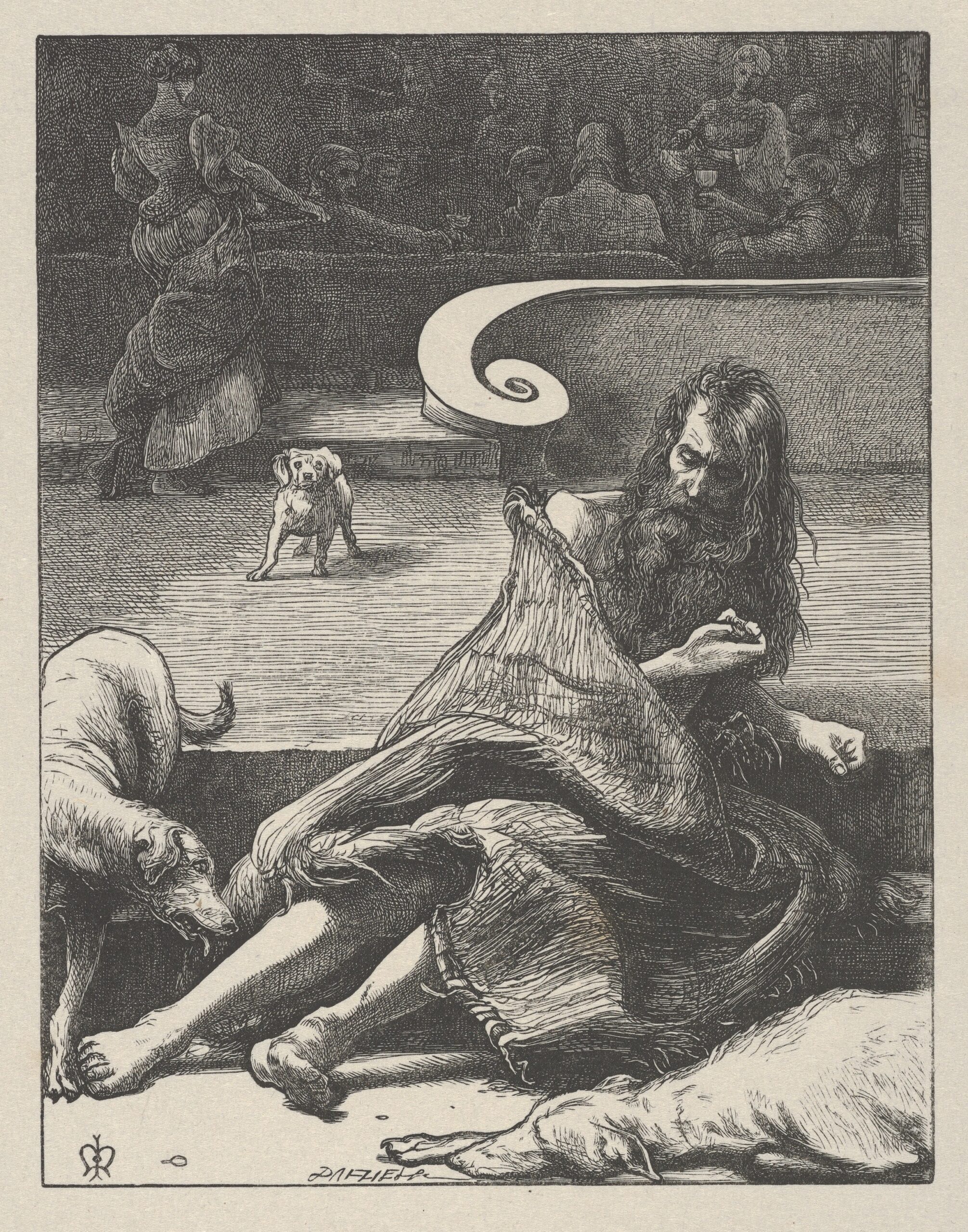
    The Rich Man and Lazarus (The Parables of Our Lord and Saviour Jesus Christ), 1864, Sir John Everett Millais | Creative Commons, courtesy The Metropolitan Museum of Art. I love this more tender artistic look at Lazarus, who is often sidelined in the story.

    In this vein, let’s finish this reflection with the words of St. Therèse of Lisieux. One of only three female Doctors of the Church, St. Therèse led an incredibly short life, dying at the age of 24 from tuberculosis. She suffered much (even as a child she suffered from mysterious illnesses that left her bed-bound) but bore it with incredible kindness towards others. “As Jesus had made me realize that the Cross was the means by which He would give me souls,” she said, “the more often it came my way, the more suffering attracted me.” What a fantastic attitude towards suffering!

    Since suffering was “attractive” to her as a way of doing God’s will, she saw small sacrifices less as burdens and more like acts of love. She writes, “Miss no single opportunity of making some small sacrifice, here by a smiling look, there by a kindly word; always doing the smallest right and doing it all for love.”

    And, finally, almost as a nod to Lazarus in today’s reading, she writes, “Our Lord’s love shines out just as much through a little soul who yields completely to His Grace as it does through the greatest.” Talk about a tree growing next to life-giving waters! She is a true inspiration.

    Thank you, St. Therèse for giving us such a positive way to understand turning our hearts to God and making suffering a joy to bear for the Lord.

  • On Feasting, Being Saved, and Recognizing

    Wednesday in the 1st Week of Advent: Isaiah 25:6-10a, Matthew 15:25-37.

    In today’s readings, again we encounter Isaiah’s stunning prophecy of the Christ Event and a passage from the gospel that illustrates Christ’s prophesied reign at work in the world. On Advent days like these, we are reminded that Jesus Christ’s miraculous actions 2,000 years ago are contiguous with the Church’s ongoing work in the world as His bride and with his return at the end of time. Advent is here to remind us that His works were not just historical. He began His Reign when being born unto Mary, but it continues through the Spirit’s action in the Church and we anxiously await its culmination. We are living in the End Times! Keep your lamps trimmed and burning as we await the return of the bridegroom!

    Today’s reading from Isaiah points out three aspects of the Reign of God: He will provide for us rich sustenance, He will remove a “veil that veils all peoples,” and we will recognize and praise Him. Let’s take these in turn. First, while this sustenance might be spiritual, the image used by Isaiah is rich and abundant food: “A feast of rich food and choice wines, juicy, rich food and pure, choice wines.” I love the repeated sentence here, with an intentional emphasis pointed out by the adjective “juicy” for the rich food and “pure” for the choice wines. So, not just base sustenance but a feast of the very finest things. Psychologically, for Christians this is a nice counterbalance to the ascetic life that shuns fleshly desires, as insisted upon by St. Paul, the desert Fathers, the saints of the medieval period and so many more of our Doctors and saints in the Church. They would certainly agree with Isaiah and his description here, but would say that restraining ourselves from desires while on the earth is necessary to forge our spirit in Christ’s image; plus, it will make the great heavenly feast of the kingdom all the more richly appreciated. Yet we must admit that the enjoyment of feasting is something not altogether bad, or else God would not be employing this image to describe His Kingdom. One might argue that a Christian might properly enjoy moments of feasting in this lifetime, especially if a person is living morally under God’s law and focused on God’s providence and grace.

    A Boyar Wedding Feast (1883), Konstantin Makovsky | Wikimedia Commons. There is an interesting recalcitrance in the bride on the right side of the picture, with the groom attempting to coax her into enjoying their wedding feast. Indeed, the attention of all the guests is placed on this interaction. Perhaps she is sad to be married, perhaps she loved that beautiful swan that’s being served as food (ha!), or perhaps she’s terribly shy. In light of the paragraph above, though, perhaps we can read some of this recalcitrance as the pious Christian’s reaction to feast and worldly excess. I, for one, am with the groom on this one, though. If there is a time for feasting and enjoyment, let it be at a wedding feast. There is goodness in this world, and we can celebrate it appropriately.

    The second promise from Isaiah is that God will remove something that ensnares humanity: “he will destroy the veil that veils all peoples, The web that is woven over all nations; he will destroy death forever. The Lord GOD will wipe away the tears from all faces.” In a phrase, Isaiah is talking about the fallenness of the world and our natures. He calls this death, and indeed it is, but the ancient, scriptural understanding of death is deeper than we usually consider it in our analytical, scientific age. Yes, death has a technical meaning as the loss of life, measured perhaps in the absence of a heartbeat and the lack of measurable brain activity. But death also has a larger philosophical meaning. When there is nothing ahead of us but death and a hole in the ground, then death reigns in a real psychological and even existential way. As we’ve amply seen with writers from Nietzsche onward, disbelieving in God goes hand-in-hand with the reign of death (one logically flows to the other). The reign of death is more than physical – it is spiritual, the death of the spirit. Any atheist will proclaim that nothing awaits us beyond this world, and the implications of this are diverse, but often include a softening of moral thought (i.e., if there is no larger or eternal repercussion for doing something right vs. something wrong, then why worry about making sure you’re doing things that are right? Even further, in this worldview, moral “right” is completely made up by people rather than emanating from the source of all goodness). When moral thought and action are brought low, we Christians are taught that this is the devil at work in the world. Thus, the devil’s influence and the reign of death are tightly linked. This brings us back to our origin as recounted in Genesis: Satan – the serpent – is the cause of our temptation; and he is cursed as is humanity when cast out of the garden into the world where death reigns. Eons of weeping, blood, and sin ensue. We now live apart from God, unable to be in His presence, unable to see the truth and light clearly. St. Paul tells us, “For now we see in a mirror, dimly, but then we will see face to face” (1 Cor 13:12). So, when Isaiah promises that “he will destroy the veil that veils all peoples … he will destroy death forever,” we can understand that this is a full reconciliation with Him, a return to the garden. It is again St. Paul who helps us locate the promise of Isaiah in the Reign of Jesus Christ: “but when one turns to the Lord [Jesus Christ], the veil is removed. Now the Lord is the Spirit, and where the Spirit of the Lord is, there is freedom” (2 Cor 3:16-17). The freedom offered by Christ is a freedom from the reign of death, a removal of a veil that has ensnared us, and a reconciliation with God thanks to Christ’s great sacrifice.

    Le Suicidé (1877), Édouard Manet | Wikimedia Commons. For me, nothing proclaims the ascendancy of the reign of death like suicide, especially in our modern era when atheism and disbelief in God compound the sin unimaginably. The great flaw in the thinking that leads to suicide is that there is no redemption, no God who can wipe away stain or guilt. In short: a complete lack of hope, which must be like living with that veil of death drawn so tightly around oneself.

    Finally, today’s prophecy by Isaiah tells that the world will recognize God as the bringer of the feast and conqueror of death. Humanity shall say, “Behold our God, to whom we looked to save us! This is the LORD for whom we looked; let us rejoice and be glad that he has saved us!” This recognition is important because God is calling us to a relationship but also gives us the free will to either refuse or answer the call. Isaiah’s prophetic vision reveals those who are present at the feast, who have the veil lifted as death is defeated. These people give God his due credit and rejoice in Him; they have answered his call to a relationship with him. Importantly, they recognize that His action is a saving action – one that saves them from the reign of death.

    Now, let’s turn to today’s gospel and see each of these three aspects of Isaiah’s prophecy in this single episode of Jesus feeding the four thousand (plus women and children!). First, the feast: this is the famous miracle of the loaves and fishes. Signaling the abundance, the richness of the feast, is the fact that after all were satisfied, “They picked up the fragments left over – seven baskets full.” Such unheard-of largess appearing without delivery carts and many villages’ worth of bakers and fishermen has only one author: God Himself. More: these people knew the writings of Isaiah, “On this mountain the LORD of hosts will provide for all peoples…” Here, with them and for them, the Reign of God was beginning – God in the form of the Messiah was here.

    Miracle of the Bread and Fish (1620-1623), Giovanni Lanfranco | Wikimedia Commons. I appreciate Lanfranco’s Baroque period portrayal of the serene, haloed Christ in the posture of giving in the midst of the writhing masses. Yes, the elaborate body positions were likely done to show off a certain painterly prowess for anatomy and beauty of the human form, but the effect is one that recognizes the fallenness/messiness of the world and portrays with true eyes the Messianic, generous substance of Christ.

    Second is the removal of the veil of death. Remember that the crowd had gathered because they had heard Jesus was a great teacher and healer – they came seeking Him. This is the essential ingredient for those who will be present at the eternal feast: that they answer God’s call. “Great crowds came to him, having with them the lame, the blind, the deformed, the mute, and many others. They placed them at his feet, and he cured them.” These people are in the grip of death in one form or another, not just physical death but spiritual death. Jesus often shows us that healing physical blindness in fact heals a deeper, underlying spiritual blindness. As mentioned earlier, death reigns not just physically, but spiritually. The Christ Event in history is the beginning of the Reign of Christ – death’s reign is clearly defeated in these miracles and the veil of sin, Satan, and death is lifted from these people. 

    Third is the recognition of God as the Savior. This, too, is pointed out by St. Matthew: “The crowds were amazed when they saw the mute speaking, the deformed made whole, the lame walking, and the blind able to see, and they glorified the God of Israel.” But giving thanks to God for being healed is a bit different from looking at the one who healed you and thanking him, personally, as God incarnate. And this is the aspect of Isaiah’s prophecy that is played out throughout the gospels and even to this day. As we investigated yesterday, the fantastic vision of Christ granted to Isaiah 700 years before Jesus was born was truly a glimpse into the time-defying kairos event that is God puncturing human history and coming at the end of time, swirled into one ecstatic vision. If we try to inhabit this vision, we can see that we are living within this prophecy, where the feast is available to us, death’s reign can be lifted from us, and we must strive to recognize God in the person of Christ, just like the people described in the gospels.

    The three touchstones Isaiah shares today, the feast, the removal of the veil of death, and the recognition of God as Savior, are at the heart of the Christ Event and all of our symbols and actions that emanate from it. The feast was celebrated throughout his ministry in every miraculous outpouring of sustenance and richness – wedding at Cana, feeding of the four thousand, and most clearly in the Last Supper – and it is this last example that instituted the ongoing feast of the Holy Eucharist that we continue to celebrate day after day in this contemporary moment within the Reign of Christ. The removal of the veil of death, specifically spiritual death, happens in our sacraments, notably in baptism, and integral to each of the other sacraments as we are drawn deeper and deeper into full communion with God. Over the course of our lifetimes as Catholics, we participate in the removal of this veil of death that ensnares and blinds us – it is our journey of faith. So we can see how the first two touchstones happened in Jesus’s life events and also happen our own. But this last one, our participatory acceptance and recognition of God in the form of Christ our Savior, is the one we must step up and bring to God all on our own. We pray that all are able to do this at some point before their physical bodies die. This great drama of recognizing Christ as God was brought to the forefront by Christ Himself: “Who do you say I am?” (Mat 16:15, Mk 8:29, and Lk 9:20). He asks each of us this same question. The Apostles realized that this was their great duty: to evangelize, that is, bring this good news of the Christ Event to people across the globe. Pope Benedict XVI identifies that this evangelical activity is part of the ongoing lifting of the veil of death: “But the preaching of God’s Kingdom is never just words, never just instruction. It is an event, just as Jesus himself is an event, God’s Word in person … Because the world is ruled by the powers of evil, this preaching is at the same time a struggle with those powers” (Jesus of Nazareth, 173).

    The Resurrection (after 1655), Luca Giordano | Wikimedia Commons.

    Don’t let anyone tell you that all major religions are the same; we have a very particular core to our faith, and it is Jesus Christ, the man and God incarnate. Pope Benedict XVI, like Pope Saint John Paul II before him, writes that everything in our faith tradition and practice must be understood through a Christocentric lens. Everything about our salvation as well as the signs, symbols and language of our religion is fundamentally about Christ being God. It’s not about being morally good or doing good deeds or praying a certain way (although those things matter, especially when seen as ways of being united with our Savior). How can the popes insist on this (and not just them – think of so many saints and doctors of the Church, St. Augustine to name just one)? Well, it starts perhaps most plainly with Christ Himself, especially as revealed through the gospel of St. John: “for you will die in your sins unless you believe that I am he” (Jn 8:24). Jesus is adamant that He is the path to the Father, to salvation, to the end of the reign of death. Why might faith in Jesus Christ as the Son of God and Savior be so important for eternal salvation? I can think of several reasons, but here are two that jump most quickly to mind. First, denying that Christ is the Son of God (when He is one of three Persons of God) is, in fact, denying God (being atheist, that is). Second, the Christ Event – and only the Christ Event – is the exact action of God in the world that ushers in our salvation. This means that only Christ is the vector God provides for us to unite with Him. 

    And perhaps a third, more human reason that this specific faith in Christ as God is necessary: Jesus reveals aspects of God in a way that no one or nothing else in creation can. Jesus Christ reveals to us ways that we are made in the image of God (we are agents of truth and light as He is) and that humanity is precious to God in a special way. As we dwell on the Word of God, as uttered by the Word of God made incarnate, we learn about Him as well as the great potential within all of us. Jesus Christ becomes our “key” to knowing God and to knowing ourselves.

    Today’s gospel reading, for instance, stands out to me not just because of the amazing parallels with Isaiah’s prophecy and these three touchstones of our faith. It stands out because of what Jesus says: “My heart is moved with pity for the crowd, for they have been with me now for three days and have nothing to eat. I do not want to send them away hungry, for fear they may collapse on the way.” Matthew takes 5 lines to describe Jesus’s great compassion here, and just 2 to describe the miracle itself. This is where we find the reality of Christ – in His love and compassion. After healing hundreds, if not thousands, of people on the mountain by the Sea of Galilee, surely He would be exhausted by the sheer weight of it all. But, as God, He shows us that God never tires of compassion. He teaches us how to find that compassion in ourselves. Even after delivering them from the grip of death through His healing, His saving acts do not end. He knows their hunger and, more importantly, this hunger moves him to compassion. It never fails to amaze that our God is a God who is moved to compassion for us. This is no distant God! So, He feeds them, as only God can. Here is the same God accomplishing the same act He did for His Chosen People after freeing them from slavery in Egypt and feeding them manna in the desert. Only now our God walks among us, speaks plainly for us, and ultimately sunders the divide between our fallen earth and heaven.

    The Miracle of the Five Loaves and Two Fish (contemporary), Grace Carol Bomer | Image from gracecarolbomer.com.

    Thank God for His compassion! Because this Advent is about anticipating the culmination of the Christ Event, and we will certainly all need compassion, understanding, and forgiveness on the Day of Judgment.

  • For What are we Waiting?

    Sunday in the 1st Week of Advent: Isaiah 63:16b-17, 19b; 64:2-7, 1 Corinthians 1:3-9, Mark 13:33-37.

    We are reminded at the beginning of Advent that we are entering a liturgical season of special significance: one where we pare back distractions and excesses as we wait for the birth of Christ. These short days and long nights of winter are supposed to be marked by prayer, almsgiving, and acts of penance. All of this while we wait for a blessed event, often cast in a heartwarming holiday glow. But the Church is clear that this is not all that we await. Christ Himself tells us in today’s gospel reading that we are also awaiting Judgment Day and our final union with God. How many of us put this awful and awesome vision in our sights as we putter about during these 4 weeks before Christmas? It’s a reminder of what a Christian should be doing: embracing this life while achingly desiring the next life. 

    For me, today’s readings ask me to consider what exactly I’m waiting for during this Advent “season of waiting.” As a child, I was waiting for that great Christmas morning of gift opening with my family. As a young adult, it was the feeling of warmth as my family gathered for the holidays; later it was the re-enactment of the “magic” of Christmas morning (and the preparations and decorations along the way) for my own children. I have to admit that on the balance my Advents haven’t been terribly spiritual. Church punctuated these years of Advents sometimes as a way to punch through the ersatz Christmas haze with moments of solemnity. Other times, Church simply heightened the anticipation for Christmas; for instance, part of the experience of Christmas Eve Mass was the relief of finally getting out of those dress clothes and into pajamas, knowing that gifts and goodies came next. I can tell myself that it’s hard to stay focused on the Christ event – that is, His coming to the world in its entirety, both as a babe and as King in judgment – when the Charlie Brown Christmas album is making me want to scamper about the house with abandon. But that’s a cop-out, and so is blaming “commercialism.” As Christians, we’re called to much, much more. Part of our journey is learning the discipline required to keep God front and center.

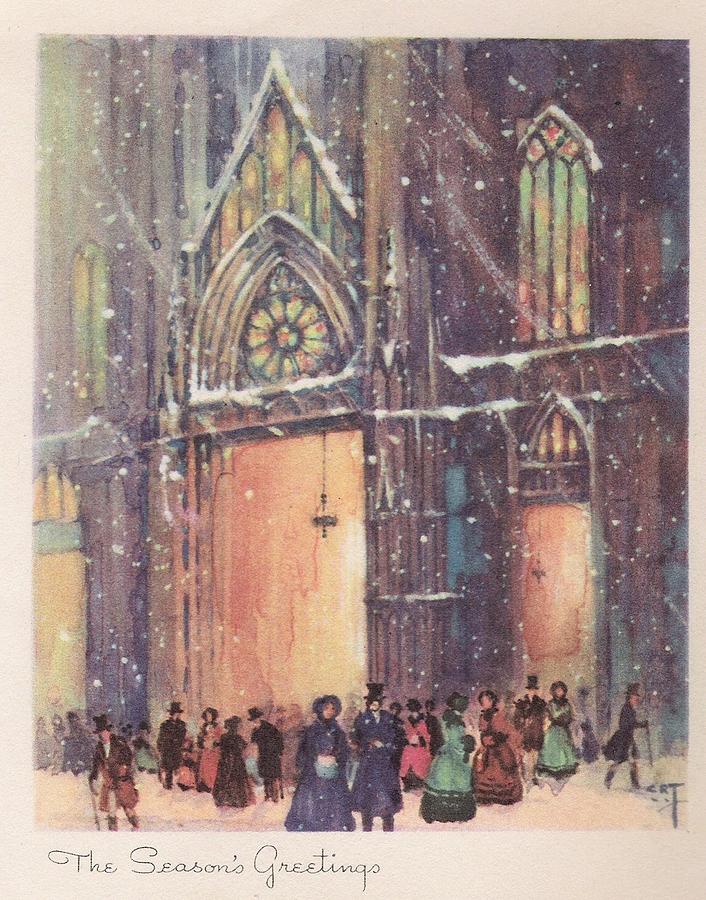
    Christmas Illustration 1294 – Vintage Christmas Cards – Season Greetings – Cathedral (2017), “Tuscan Afternoon” | Image from fineartamerica.com.

    There are many reasons to love the prophet Isaiah, and today’s first reading gives me another. He has such a clear understanding of God’s loving perfection and our dismal abilities to live upright lives on our own. The reading starts with a crystal clear lament over the dangers of free will: “You, LORD, are our father, our redeemer you are named forever. Why do you let us wander, O LORD, from your ways, and harden our hearts so that we fear you not?” Isaiah identifies God’s plan and permission that we have the freedom to wander from His ways and even choose to harden our hearts against Him. Isaiah asks the question that a holy man must ask: why? In other words, if you love God with all of your heart, mind, and soul, then you despise the worldly temptations that lead away from God. Wouldn’t it be better if we didn’t have those temptations or if we weren’t so easily distracted from our father and source? But God is not a tyrant; He grants us the free will to cook our own goose if we choose to.

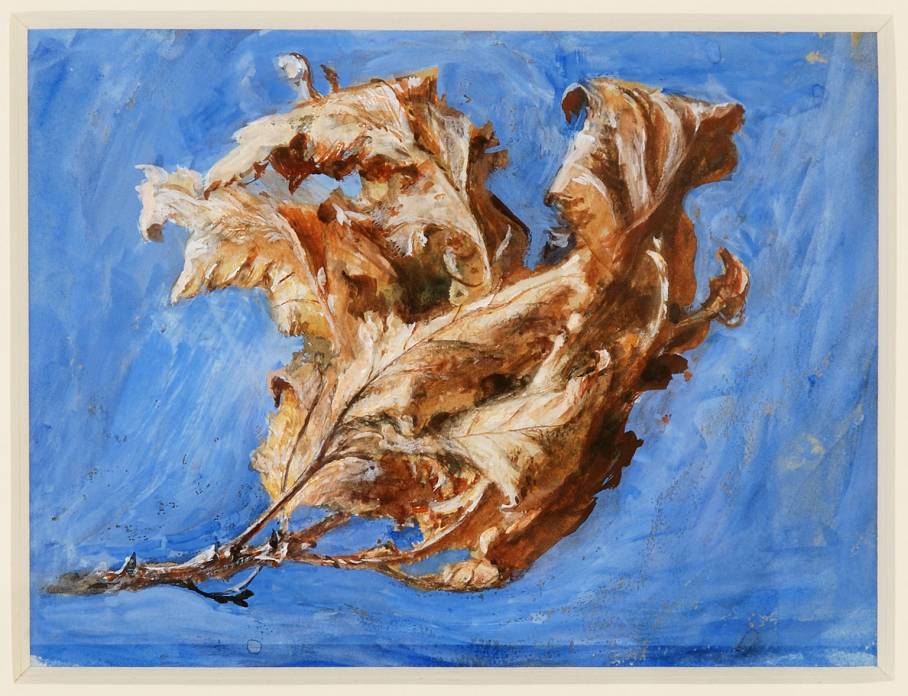
    And cook our own goose we do! Isaiah is blunt in his assessment of how successful we’ve been with this free will of ours: “all of us have become like unclean people, all our good deeds are like polluted rags; we have all withered like leaves, and our guilt carries us away like the wind.” Two fascinating images here – the first is the uncleanliness of who we are, so much so that even what we consider to be good deeds “are like polluted rags.” I believe that what Isaiah calls pollution is the prideful belief in ourselves as authors of goodness soiling our actions. The scriptures remind us again and again that all good comes from God, not from us. When we wander from Him and do not “fear” him (i.e., revere Him as the author of all goodness), we pollute our good deeds by believing that we are creating goodness. The second image is the withering, the dying, of our souls, and the stirring image that “guilt carries us away like the wind.” Maybe because it’s autumn and I’ve been out raking leaves, but this image really touches me. Guilt, of course, requires a knowledge that what you’ve done is wrong. And as a prophet to the Chosen People, there is no room for Isaiah or his listeners to wriggle out of this one. Likewise for us, we know the revelation of our Lord Jesus Christ. We have been raised with the Good News of the gospels as our mother’s milk. Guilt should and would carry our withered husks of souls away like the wind were it not for the sacrament of Confession. Note that Isaiah also calls God “our redeemer, you are named forever,” that is, the one who rescues us from error and wipes away our sins. Before Christ, this involved rituals and sacrifices at the temple; after Christ’s great sacrifice, this entails our intentional and remorseful confession to God in the presence of a priest. Both acknowledge God’s work as redeemer.

    Study of a Spray of Dead Oak Leaves (1879), John Ruskin | Image from artfund.org.

    The hard truths about our human condition lead Isaiah to implore God with a sentiment we will hear echoed by Jesus in the gospel reading: “Would that you might meet us doing right, that we were mindful of you in our ways!” I think Isaiah answers for us what we’re really waiting for during Advent: God coming to meet us. What an interesting and theologically deep event! “Would that you might meet us doing right” means that it is God who chooses the meeting at a time and place over which we have no control. We’re used to thinking that we go to meet God when we die – that’s what we hear at every funeral, after all. But here, it seems that God is actually coming here while we’re still alive. Isaiah’s words mean that we march on in our free will existence until He comes, like children running around the house while their parents are away. Will we be going to bed at a decent hour and not eating junk food? Or will we be torturing our sister and not feeding the dog?  

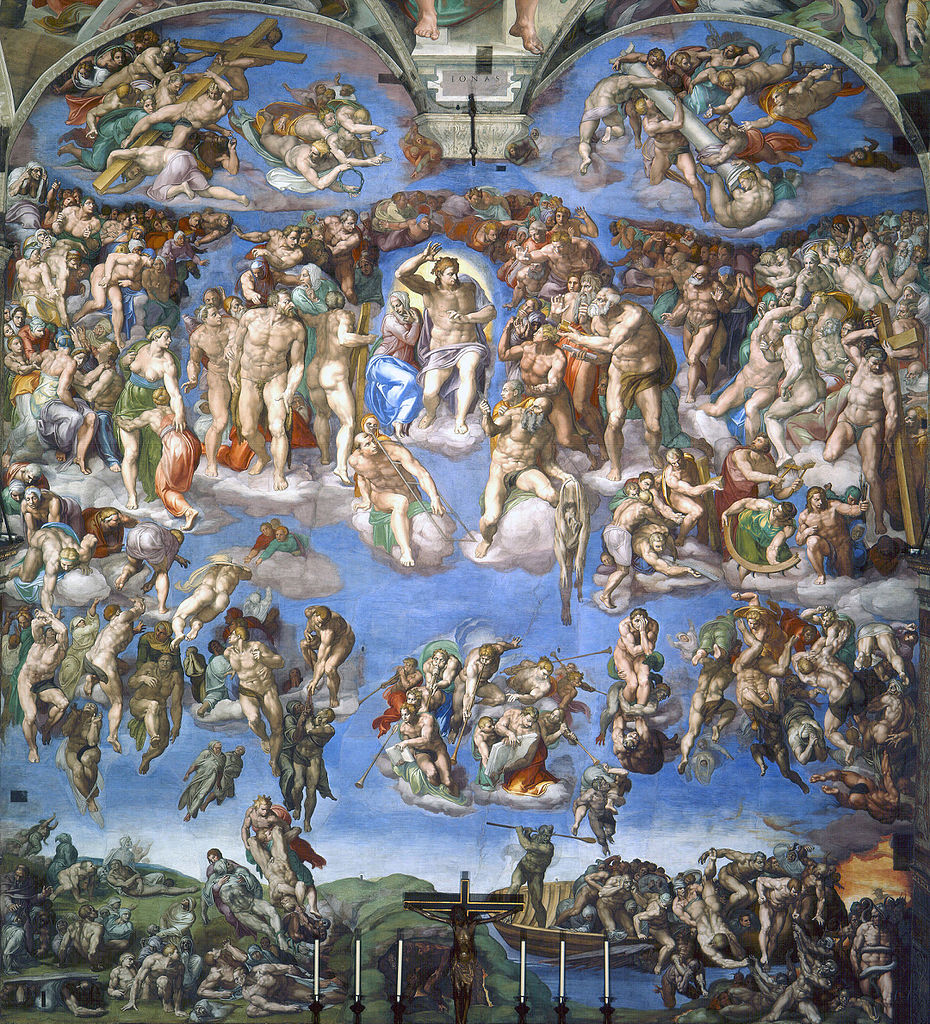
    The gospel reading comes from the 13th chapter of St. Mark’s gospel. This chapter details Christ’s words towards the end of His ministry, just before His Passion, death, and Resurrection. It is almost like the Book of Revelation in miniature – He foretells the destruction of the temple, the persecution of His disciples, a “desolating sacrilege” being set up, false Messiahs, cataclysmic events in the skies, and the stars falling from heaven. This frightening series of events culminates in: “Then they will see ‘the Son of Man coming in clouds’ with great power and glory. Then he will send out the angels, and gather his elect from the four winds, from the ends of the earth to the ends of heaven” (Mk 13:26-27). This is Christ’s return for the Final Judgment when he gathers his elect, that is, those who are to be saved. This is the context for today’s reading. This is what Jesus is referring to when He says, “You do not know when the time will come.” Jesus’s words of advice for us is to be alert and watch for this final coming. He says, “Watch, therefore; you do not know when the Lord of the house is coming, … May he not come suddenly and find you sleeping.” The unspoken but obvious bit is that we want to be part of the elect, of those who are brought to heaven to live with God forever. We do this by not “sleeping” on the job, by living out a moral life according to Christ’s teachings.

    The Last Judgement (1536-1541), Michelangelo | Wikimedia Commons.

    This is one way to look at Advent, reminding ourselves to watch for the end times. In this vein, we are taught that Advent is a penitential season where we pray, give alms, and practice small acts of penance (perhaps time spent in prayer or service, perhaps small deprivations of our desires to focus us on God rather than things of this world). This is spiritual training camp. What a different perspective than “I need to get my shopping done and put lights on the house!” But this is our challenge. Yes, we can live in the now, with its joys, desires, disappointments, and victories. But we have to be constantly training for that heavenly kingdom, too. We have to find time for daily prayer and giving glory to God. Otherwise, we’re sleeping on the job.

    And God bless St. Paul for giving us the positivity and hope that we need when considering God coming to meet us. In the second reading, he reminds us that “in him you were enriched in every way, with all discourse and all knowledge, as the testimony to Christ was confirmed among you, so that you are not lacking in any spiritual gift as you wait for the revelation of our Lord Jesus Christ.” He reminds us that Christ Himself has guaranteed the spiritual gifts and enrichment to prepare us for God’s coming. All we have to do is remain faithful to His teachings and invite God to accomplish His will through us. Advent sharpens the edge on our Christian lives. In the midst of our fat, jolly, and drowsy Christmas personas, we have to also be lean, sharp, and awake.

    There is another way of looking at Advent, with less emphasis on the spiritual training camp aspect and more emphasis on the anticipation. I’d like to explore this through the play Waiting for Godot. For those familiar with Samuel Beckett’s celebrated tragicomedy, you’ll recall that it’s a play in two acts where nothing happens. Two men wait for Godot (whoever that is, although many see God in this character), but Godot never arrives. The play explores the human traits of forgetfulness, anxiety, over-intellectualizing, boredom, suffering, despair, nihilism, and absurdity. In the light of Isaiah’s reading today, it’s as if the characters are stuck in the wandering phase of free will, far from the light of Truth and purpose that is God. Their sometimes nonsensical banter reminds me of “polluted rags” and “withered leaves” blowing in the wind. It is possible to experience this play as a poignant truth-telling of the modern condition. While true, how sad it is! Theirs is a waiting with no real purpose, to the effect that the audience is convinced that they’d be better off not waiting at all and getting on with their lives. And this is the great sin described by the play and the worst temptation of our existence: to convince ourselves that we need not wait because no one is coming.

    Waiting for Godot, text by Samuel Beckett, staging by Otomar Krejca. Avignon Festival, 1978. Rufus (Estragon) and Georges Wilson (Vladimir) / photographs by Fernand Michaud | Wikimedia Commons.


    But the more fundamental error of the characters (if we read the play through a Christian lens) is that they do not know Godot, the one for whom they are waiting. Take this exchange, for example:

    POZZO: (peremptory). Who is Godot?
    ESTRAGON: Godot?
    POZZO: You took me for Godot.
    VLADIMIR: Oh no, Sir, not for an instant, Sir.
    POZZO: Who is he?
    VLADIMIR: Oh he’s a . . . he’s a kind of acquaintance.
    ESTRAGON: Nothing of the kind, we hardly know him.
    VLADIMIR: True . . . we don’t know him very well . . . but all the same . . .
    ESTRAGON: Personally, I wouldn’t even know him if I saw him.
    POZZO: You took me for him.
    ESTRAGON: (recoiling before Pozzo). That’s to say . . . you understand . . . the dusk . . . the strain . . . waiting . . . I confess . . . I imagined . . . for a second . . .
    POZZO: Waiting? So you were waiting for him?
    VLADIMIR: Well you see—

    This reveals the absurdity of waiting for someone you don’t know, yet having the meeting be important. Such a meeting creates only anxiety and questioning. This is not the type of waiting that we are called to in Advent. The concept was explained beautifully to us today by Fr. Gabriel, OP, at St. Catherine of Siena Newman Center this morning. He spoke of his childhood, when he and his brother got ready for the annual visit of their aunt, uncle and cousin. They would lay out all of their cousin’s favorite games and get everything ready so that the moment he came in, they could jump into their loving friendship with great joy. This is the type of anticipation that we might use as an analogy for the anticipation of Advent. The key is that you can’t truly anticipate someone without knowing this person already. And this is so very true of Christ. He gave the Church His Spirit so that we can know Him intimately now – in the Eucharist and sacraments, in our communal prayer as a Church, in the love that infuses the world in so many actions by the faithful. As Fr. Gabriel said, we are not waiting for a stranger or a distant judge, but for the source of love itself, our Lord Jesus Christ.

    What great joy there is in this type of Advent anticipation! It encompasses and eclipses all of the giddy night-before-Christmas moments I’ve had with my brothers, sisters, and children. Waiting for the coming of love in the person of Christ is something that can completely overtake our beings, thrill us with the exciting anticipation of being a part of that love for ever.

    In this light, I can be less critical of the “glow of the season.” It shares, however intentionally or tangentially, in the anticipation of the coming of love. All of that holiday cheer and joy is this love already present on earth, from people knowingly or unknowingly allowing God to work through them. Consider: generosity is perhaps the virtue we most associate with the season. Generosity is the loaves and the fishes, the Passion, the Eucharist, forgiveness and absolution. Generosity and charity are palpable acts of God in the world. In Advent, we are simply called to acknowledge God in these works and work to conform our entire lives to His commandments and will. We can’t be perfect, but we can try.

    In closing, I acknowledge that part of the Advent message falls flat for most modern ears. It smacks of hard work and joyless self-flagellation. I don’t think this is the case. Advent can be joyous anticipation, but also one that recognizes that all is from God and for God. The only check on our joy must be that we don’t lose ourselves in the pleasures of this world and thoughts of ourselves – the One we wait for, the One in whom we place our joy, is Christ.

  • Beware the Enchantments of the World

    Beware the Enchantments of the World

    Thursday in the Second Week of Lent: Jeremiah 17:5-10, Luke 16:19-31.

    Today, we hear the Parable of the Rich Man and Lazarus from the gospel of St. Luke. On its surface, this parable seems to warn us of too much enjoyment in this world because we will pay for it later (in Hell). As we dig into the parable, however, we see a deeper problem with the rich man. The connection to the reading from Jeremiah becomes more apparent: the enchantments of this world distract us from God, who is, in the meantime, giving us plenty of opportunities for redemption by our actions.

    The opening of Jesus’s parable almost sounds like a fairy tale: “There was a rich man who dressed in purple garments and fine linen and dined sumptuously each day.” This opening may tempt us to read it as a simple morality play. But the Truth spoken by the Word of God is not just a self-improvement class. It draws our spirit to dwell with Him, even if it does so via a warning.

    We must note how this passage opens: “Jesus said to the Pharisees…” Let’s back up a few verses to get the full context. “The Pharisees, who were lovers of money, heard all this [his last parable that “You cannot serve God and wealth”], and they ridiculed him. So he said to them, ‘You are those who justify yourselves in the sight of others; but God knows your hearts; for what is prized by human beings is an abomination in the sight of God’” (Lk 16:14-15). The parable of the rich man is specifically for them, and his criticisms of the Pharisees speak loudly in it.

    The Pharisee and the Publican (Le pharisien et le publicain), 1886-1894, James Tissot | Creative Commons, courtesy the Brooklyn Museum.

    So, what do we know about the rich man other than his expensive tastes and gluttony? We can glean that he did not seem to give alms of any sort to Lazarus, who would have been glad to have “scraps that fell” from his table. Just two days ago, we heard Jesus saying of the Pharisees: “For they preach but they do not practice. They tie up heavy burdens hard to carry and lay them on people’s shoulders, but they will not lift a finger to move them. All their works are performed to be seen.” (See the post Led by the Master for more on this aspect of the Pharisees.) In the rich man we see the same: he does “not lift a finger” to relieve Lazarus’s suffering.

    So this is no oversight from an otherwise kindly rich man in the parable. He displays his true colors when he finds himself in Hell. Unbelievably, he retains an arrogant sense of self-worth as being greater than Lazarus when he says, “Send Lazarus to dip the tip of his finger in water and cool my tongue.” Here the rich man is “in torment,” asking for pity, and he’s still treating Lazarus as a servant or slave! 

    Abraham explains that they are reaping their rewards based on their experiences and actions on earth, and that “a great chasm” separates them. And still the rich man asks, “send him to my father’s house” to warn his family to mend their ways, betraying his continued dismissal of Lazarus as a person with dignity. He sees Lazarus as a tool to be employed for his family’s benefit, arguing with Abraham, “if someone from the dead goes to them, they will repent.” His sense of superiority and belief that everyone (even Abraham!) should listen to him is astounding, and certainly a pointed example for the Pharisees who were listening.

    The Parable of the Rich Man and Lazarus (1677), Jan Steen | Wikimedia Commons. I particularly like the self-important, dismissive expression of the man holding the goblet in the foreground, which captures the failings of the rich man archetype. Note that the actual rich man from the parable, however, seems to be in the upper right corner, even more removed from humanity in his gluttony. Overall, I appreciate Jan Steen’s painting for focusing on the enchantments of the world, raising a glass to toast today’s enjoyments, oblivious to the judgment that is coming.

     For his part, Abraham at first replies with a certain pity for the rich man, saying, “My child, remember that you received what was good during your lifetime …” This turns eerily neutral after the rich man displays his unrepentant attitude: “They have Moses and the prophets. Let them listen to them.” And finally he utters some baleful words indeed at the end: “If they will not listen to Moses and the prophets, neither will they be persuaded if someone should rise from the dead.” This last proclamation can clearly be applied to Christ, who will rise from the dead, and those who refuse to listen are, of course, the Pharisees themselves.

    If we return to the verse that set the context for this parable, we can see how it illustrates Jesus’s point: “God knows your hearts; for what is prized by human beings is an abomination in the sight of God.” Money, gluttony, and other things “of the flesh” take the brunt of the blame, but let’s not overlook that Christ is talking about God knowing our hearts. Love of wealth and being noticed are the “bad fruit” from a diseased tree — “every good tree bears good fruit, but the bad tree bears bad fruit” (Mt 7:15). The tree itself is what concerns God — He wants us to grow strong and beautiful and bear good fruit (i.e., love one another, good deeds), which require nourishment from Him and faithfulness to his precepts. 

    The Rich Man in Hell, Seeing Lazarus Embraced by Abraham, from The Parable of the Rich Man and Lazarus (1554), Heinrich Aldegrever | Creative Commons, courtesy the Metropolitan Museum of Art.

    This is where the first reading from Jeremiah is helpful. He employs this same imagery of a tree (bush) that is either healthy or diseased, depending on a person’s attachment to God or to the world. He says that he “who seeks his strength in flesh … is like a barren bush in the desert … [that] stands in a lava waste, a salt and empty earth.” Conversely, “the man who trusts in the LORD … is like a tree planted beside the waters that stretches out its roots to the stream … In the year of drought it shows no distress, but still bears fruit.” I love the image of a person strong in the Lord being a plant growing by running waters (also used in the first Psalm), probably because it simplifies life: all you need to make you thrive is the Word of God. What a refreshing thought when compared to all of the other “things” we think we need to do and accumulate in this life. Applying Jeremiah’s imagery to the gospel reading, the Pharisees are the “barren bush in the desert,” removed from the life-giving spring because they reflect everything back on themselves. While they seem rich (in this life), they will find that they are barren spiritually and destitute in the next life. 

    But, look! God gives us endless chances to return to the stream of living water. What was Lazarus in life but a chance for the rich man to turn his heart to God and practice charity? And what was Lazarus’s suffering but his cross to bear for the salvation of another (even if that other person did not accept the salvation offered to him)? This is God’s prerogative as our Master and Creator. The Word tells us through Jeremiah at the end of today’s reading:

    I, the LORD, alone probe the mind
    and test the heart,
    To reward everyone according to his ways,
    according to the merit of his deeds. 

    This is the work of God to bring us back to unity with Him: probing our minds, testing our hearts, and ultimately rewarding us according to our ways and deeds. As fruit shows us the type of tree, our deeds reveal the heart of the person. Charity comes from a good heart that finds its refreshment in the Lord. Selfishness comes from a heart focused on this world’s enchantments and the self alone. This is why we Catholics insist that our justification (i.e., place in heaven) comes from faith and works, not just faith alone. This teaching is found throughout scripture, no more clearly than today’s readings.

    At the risk of slightly repeating myself, let’s tackle one of the common complaints humans have voiced throughout our history, “why is there suffering in the world?” The Parable of the Rich Man is a great reply to this. For the rich man, God is probing his heart and testing him to bring him back into the sheepfold. For Lazarus, he must remember that he will be comforted in heaven if he bears his suffering with dignity and a focus on God. What’s more, all of us must remember that God works in ways beyond our immediate knowledge to bring us closer to him. Lazarus is God’s way to reach out to the rich man’s heart. Which of us can truly bemoan the honor of being used by God for a holy purpose, even if it involves our suffering? Was this not the exact example Christ set for us? 

    The Rich Man and Lazarus (The Parables of Our Lord and Saviour Jesus Christ), 1864, Sir John Everett Millais | Creative Commons, courtesy The Metropolitan Museum of Art. I love this more tender artistic look at Lazarus, who is often sidelined in the story.

    In this vein, let’s finish this reflection with the words of St. Therèse of Lisieux. One of only three female doctors of the Church, St. Therèse led an incredibly short life, dying at the age of 24 from tuberculosis. She suffered much (even as a child she suffered from mysterious illnesses that left her bed-bound) but bore it with incredible kindness towards others. “As Jesus had made me realize that the Cross was the means by which He would give me souls,” she said, “the more often it came my way, the more suffering attracted me.” What a fantastic attitude towards suffering!

    Since suffering was “attractive” to her as a way of doing God’s will, she saw small sacrifices less as burdens and more like acts of love. She writes, “Miss no single opportunity of making some small sacrifice, here by a smiling look, there by a kindly word; always doing the smallest right and doing it all for love.”

    And, finally, almost as a nod to Lazarus in today’s reading, she writes, “Our Lord’s love shines out just as much through a little soul who yields completely to His Grace as it does through the greatest.” Talk about a bush growing next to life-giving waters! She is a true inspiration.

    Thank you, St. Therèse for giving us such a positive way to understand turning our hearts to God and making suffering a joy to bear for the Lord.


  • Judgment Will be Based on Acts of Love

    Monday the First Week of Lent: Leviticus 19:1-2, 11-18, Matthew 25:31-46.

    Today presents a good old fire-and-brimstone set of readings. Leviticus gives us the Word of God from the mouth of Moses, laying out a further explanation of the commandments. He elaborates on the law, “you shall love your neighbor as yourself.” Jesus takes up the thread in the reading from Matthew and explains that Jesus the King will separate the lambs from the goats, sending the evil people to Hell and taking the good to Heaven. This judgment will be based on whether we adhere to God’s law as laid out in the scriptures. Heed well, O Christians: there will be a second coming and judgment!

    As we dwell on these readings, let us not forget this terrible and great day of judgment that is promised, but let us also glean what is hopeful, for we know that our God is the God of Life.

    The Last Judgment (1525–30), Joos van Cleve | Creative Commons, courtesy the Metropolitan Museum of Art.

    What strikes me about the reading from Leviticus is the last line of each paragraph (or stanza, as it were): “I am the LORD.” Four times it is repeated, and this is no accident. God wants to impress upon his people that these instructions for life come from a place of ultimate authority. But let’s consider what type of authority that is. He is the perfection of love, truth, and goodness; the giver of light and life. Imagine that phrase at the end of each paragraph: “I am the perfection of love, truth, goodness; the giver of light and life.” The sense of oppressiveness is lifted; we now cling to these words as veritable gifts bestowed on us to help us in our poor, imperfect state.

    God clearly cares that we try our best to be like Him. The first words he instructs Moses to share are “Be holy, for I, the LORD, your God, am holy.” He wants us to share in his perfection. What a loving, caring God! At the same time, we must carry in our hearts the humility to know that humanity is imperfect and in need of redemption, that we aren’t God. His words, “but you shall fear your God,” must be indelibly carved in our spirits. 

    This co-existence of a holy, reverent “fear” of the Lord and the knowledge of an all-good and loving Lord is no more evident than it is in the reading from Matthew. On the one hand, Jesus at the Second Coming jubilantly welcomes those who have acted righteously: “Come, you who are blessed by my Father. Inherit the kingdom prepared for you from the foundation of the world.” God prepared for us a kingdom from the foundation of the world! Yet on the other hand, Jesus the King curses those who have not obeyed God’s commandments: “Depart from me, you accursed, into the eternal fire prepared for the Devil and his angels.” Terrible judgment, indeed. God renders both of these because truth and divine justice are not just cotton candy and puppy dogs.

    (As a side note, given yesterday’s post Getting to Know the Tempter, I find it fascinating to hear that the eternal fire is “prepared for the Devil and his angels.” We think of the Devil as reigning in Hell, but here it seems that he is burning in Hell with the rest of the damned. Indeed, he is Prince of this World, but when the world comes to an end and all are judged, it seems that he is cast into Hell to succumb to eternal fire just as the damned are. Not so much a monarch of Hell as a fellow sufferer…)

    In this judgment scene, we hear the oft-repeated phrase “whatever you did for one of these least brothers of mine, you did for me.” Growing up in a rather liberal post-Vatican II family and church, this was the folk-mass standard lingo for a type of social justice and care of the homeless and poor. And I don’t think that’s far off — certainly, it’s consistent with the Beatitudes and Jesus’s other teachings. But if we singlemindedly focus on works of kindness towards others, especially the less fortunate, it may devolve into simple “good society building” or “personal virtue building.” We must dig deeper into what Jesus is saying.

    We must cultivate in ourselves the best reason to treat others with charity: that we fundamentally and desperately love God and all his creation.

    First, we know one thing is for sure: His message is not a self-improvement plan or an instruction book for how to build a just society here on earth. We must resist all statements about our faith that simplify his message to these banal ends.

    What Jesus says is “For I was hungry and you gave me food, I was thirsty and you gave me drink …” He is the one to whom we are ministering. Importantly, neither the good people nor the bad people understand what he means — they both ask for clarification. The good people follow God’s commandments, not even necessarily understanding the full import of their works. Great reminder! We don’t know God’s full plan, nor are we meant to. Trust in his Word and faith in the mystery are the challenging yet most important aspects of our mission.

    Jesus emphasizes that we are acting upon God when we act in the world. How is this possible? We must come to realize that God loves us so much that he shares himself with each of us. Our spirit is the organ for communion with him and the vessel to receive his Spirit. He has fused himself with us, his creation, and greatly cares that we return again to him in the Kingdom. This fusion is no more evident than in the person of Jesus Christ, fully man and fully God. 

    Arab Man with a Child (1933), James McBey | Creative Commons, courtesy Aberdeen Art Gallery & Museums/ArtUK

    So, yes, it is a common refrain to “see God in others” as a way to respect and care for other people. But sometimes this feels a bit like tricking our minds to “look past” that person’s flaws and things we dislike to “imagine God” in his or her face. Let’s take this deeper.

    We must love God so much that we don’t just follow his commandments out of fear or out of duty. We must love him so much that we start to see how he has fused himself with all of humanity (each of us included). We must love him so much that we realize we offend the Spirit of God in us when we act in sin. Finally, we must love him so much that we love his creation, we love him in his creation, and here is where our charity towards others finds its inexhaustible spring. We love others, warts and all, not looking past them or through them, but directly at them because they are God’s creation and fused with God like we are, and we love all of God and what he has created.

    No easy feat. But let’s not simplify Jesus’s message. We are called to communion with something amazing, namely “the perfection of love, truth, goodness; the giver of light and life.” This is mystical, it is known by the spirit and through faith.

    Christians are not simply social workers, but members of a family that is not of this world.