Tag: Lent

  • Forgiving our Great Affront

    Forgiving our Great Affront

    Thursday of the Fourth Week of Lent: Exodus 32:7-14, John 5:31-47.

    Today’s readings pull no punches in shining a light on our inability to recognize God and remain faithful to Him. But they also show us that God’s overwhelming love, mercy, and forgiveness wipe away this great affront. This is our God: deserving of all honor and glory, but as the source of goodness and love, willing to erase the greatest affront and welcome us back to himself.
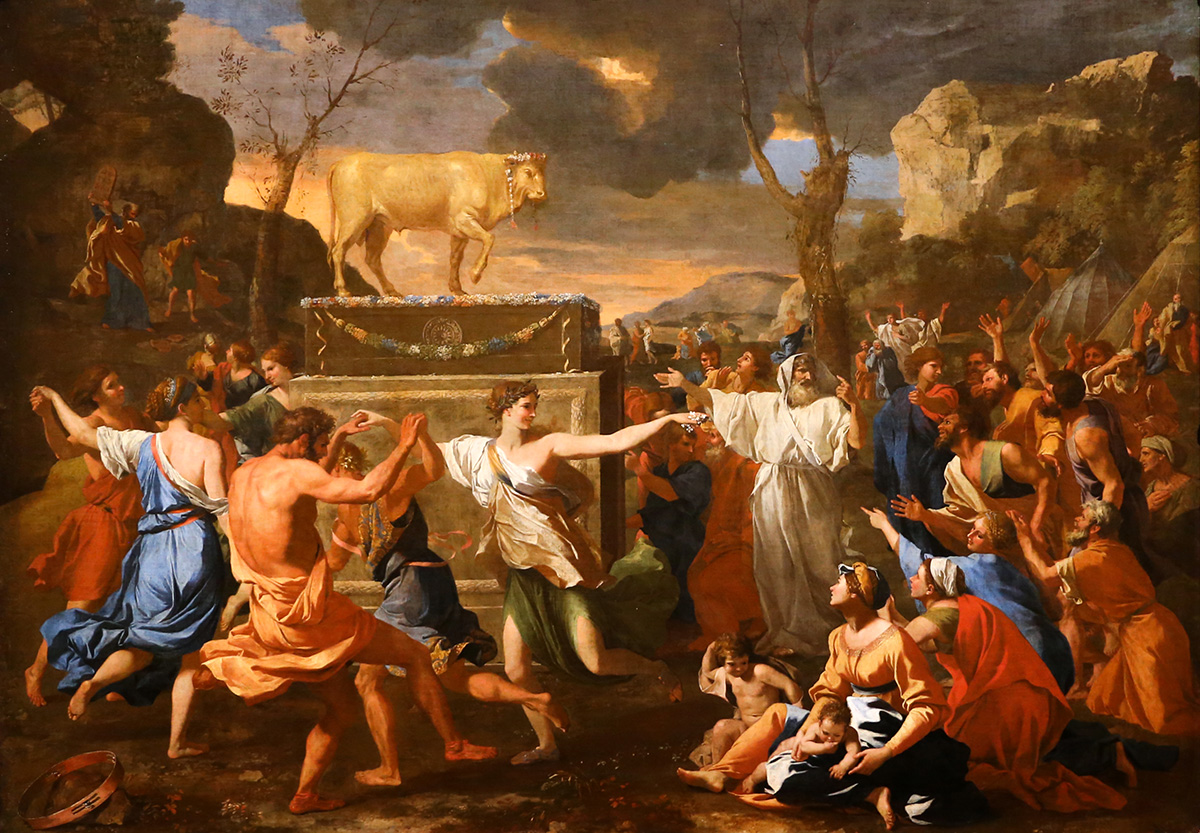
    The Adoration of the Golden Calf (L’Adoration du veau d’or), 1633-1634, Nicolas Poussin | Wikimedia Commons.

    The famous incident of the golden calf is the subject of the first reading. In the verses just prior to this, the extent of God’s betrayal is shown in the person of his chosen priest, Aaron. Aaron, Moses’s brother, who has been by his side for all of the wonders God worked in Egypt, who held up Moses’s arms during the long battle with Amalek so the Jews could win, is the one who builds the calf. Aaron responds to the wishes of the people who were tired of waiting for Moses (occupied on Mount Sinai with God). He takes all of their gold rings, melts them, and casts a statue of a golden calf. Then, he says, “These are your gods, O Israel, who brought you up out of the land of Egypt!” and “he built an altar before it; and Aaron made proclamation and said, ‘Tomorrow shall be a festival to the Lord.’”

    Now, that’s truly messed up if you asked me. I understand the desperation of a people lost and wandering in the desert without a home, but this extreme of abandoning the God who made himself known personally to Aaron, who singlehandedly brought them all out of slavery … it’s almost unfathomable.

    It’s surprising, but on second thought, not terribly different from all of us today who abandon God despite all of the blessings we’ve received. It is interesting that those who receive the most blessings on earth are often the quickest to abandon God when reflecting on the troubles that plague humanity. People in poorer countries (in South America and Africa, for instance) are the ones who comprise the bulk of the Catholic Church nowadays while rates of atheists in first-world countries are higher than ever before.

    Perhaps God makes up for whatever blessings of earthly pleasures are lacking for some people by blessing them with greater faith. Or perhaps striving to live with dignity in the face of great obstacles reminds us of our humility in the face of things greater than us and thereby find room in our hearts to honor God and seek his help. Either way, the poor and less fortunate seem to be more faithful to God.

    We begin to understand Jesus when he says, “many who are first will be last, and the last will be first” (Mt 19:30) — that is, the “first” in this world will be last in the Kingdom because they have abandoned God while the “last” in this world will be first in the Kingdom because they remained faithful.

    There is something of this conundrum in the Jews who are tarrying at the base of Mt. Sinai. Over the course of their miraculous deliverance from slavery in Egypt, they have benefitted from miracle after miracle: waters parting, manna and quail being given as food, water sprouting from rocks at the strike of Moses’s staff. And oddly we hear at each turn how they are abandoning God for idols or not obeying his commandments. Their ongoing blessings seem to engender a sense of entitlement rather than thankfulness. The more they receive, the less they recognize the giver of the gifts.

    This culminates in them so forgetting who God is that they clamor for Aaron to invent someone for them to worship: “Come, make gods for us, who shall go before us; as for this Moses, the man who brought us up out of the land of Egypt, we do not know what has become of him” (Ex 32:1b).

    Let’s not tell ourselves that this is the work of particularly evil or callous people. The story of the Jews in the desert is the story of all humanity failing to recognize God in their blessings. It is the story of our lost wanderings, being led back to God and the Promised Land (i.e., the Kingdom of God), but questioning him and his ways at every step. Sadly, it is the story of our contemporary descent into idolatry and atheism even when we have been shown the way.

    What is God’s response to this unfaithfulness? He tells Moses he’s ready to purify these people: “that my wrath may blaze up against them to consume them. Then I will make of you a great nation.” Whoa! This is the God of Love. Let’s unpack this so that we don’t think there is some sort of contradiction going on.

    The Church teaches us that God is all good, complete, and unchanging. He is the origin of all creation, not a part of it, as He tells Moses: “I AM who I AM.” As the only complete and unchanging thing in the universe (or outside of the universe), he doesn’t get angry, he’s not surprised, he’s not jealous, etc. That doesn’t mean he doesn’t care, mind you, or doesn’t yearn for us more than we yearn for him. When we encounter moments like today’s in the Scriptures, we have to remember what all of revelation has taught us about God and read the passage as it has been laid down by a mortal.

    One of the better articles I’ve read on this topic was posted on the Catholic Standard by Monsignor Charles Pope in 2019. He writes that God’s “wrath” can be called “wrath” only in how it is experienced by us, not as an emotion raging within him. He writes about the analogy of trying to mix water and fire:

    God’s wrath is our experience of the total incompatibility of our sinful state before the holiness of God. Sin and God’s holiness just don’t mix; they can’t keep company. Think of fire and water; they cannot coexist in the same place. Bring them together and you can hear the conflict. Think of a small amount of water poured into a large fire: the water droplets sizzle and pop; steam rises as the water boils away. … We must be purified before entering His presence, otherwise we could not tolerate His glory. We would wail and grind our teeth, turning away in horror. The wrath is the conflict between our sin and God’s holiness. God cannot and will not change, so we must be changed or else we will experience wrath.

    So we can affirm that God does not lose self-control or experience emotions in the ways that humans do. I tend to agree with our Church Father, Tertullian, though, who writes, “Angry He will possibly be, but not irritated, nor dangerously tempted; He will be moved, but not subverted” (Against Marcion, II.16). Tertullian’s point, in part, is that we can’t really know how or if God experiences “feelings,” since it is beyond our capacity. But, he notes that one thing is for sure: “it is yet palpably absurd of you to be placing human characteristics in God rather than divine ones in man, and clothing God in the likeness of man, instead of man in the image of God” (ibid, II.16).

    As I wrote in Forgiveness is Mercy in Action last week, there is something in the original Greek that points to God’s visceral reaction that we might interpret (by analogy) as “emotional” or “affective.” When he is viscerally moved to compassion, the verb has its root in the word for intestines and internal organs: σπλαγχνισθεὶς (splanchnistheis). This is a nice nuance to add to Msgr. Pope’s analogy of the fire, which is by definition an element that is impassive and will burn anything regardless of its good or evil nature.

    Let me tentatively put this forward: because God is all goodness and purity, the purifying fire of his nature has a valence, meaning that it is weighted with all things good and against all things evil. Thus, when goodness approaches Him, the reaction is unity, which we experience as delight, warmth, and embrace. When evil approaches Him, the reaction is rejection and elimination, which we experience as wrath, anger, and jealousy.

    Transfiguration of Jesus (2004), Armando Alemdar Ara | Wikimedia Commons. I think this beautiful interpretation of the Transfiguration might also be a nice way to visualize the purifying fire of God.

    Let’s return with these thoughts to our story from Exodus. God says, “Let me alone, then, that my wrath may blaze up against them to consume them.” Two things to note: first, he maintains his discourse and relationship with Moses, not to mention the promise to build for him “a great nation.” When he asks Moses to “let him alone,” we might see this as a the way Moses interprets this moment of sensing the momentum of God’s purifying fire and the opening Moses himself has in terms of begging for mercy for his people.

    For those who welcome the idea of a God who tests us, perhaps he is probing to see if Moses is able to fully inhabit the mercy of God and reflect this same mercy in a request to save his people. In any case, we can say that God is exhibiting his own mercy here simply in the act of conversing with Moses, giving him a chance to halt his purifying essence from burning through his people.

    The second thing to note is that God is not consumed by wrath; he is not out of control with human-like emotions. He is measured, speaking frankly and with mercy to Moses. In fact, he presents his wrath as a fundamental part of who he is, a purifying force that simply blazes up in rejection of the sin it encounters. This shows us the mercy and compassion of God while maintaining his essential, indivisible nature, “I AM who I AM.”

    Moses steps into his role of chosen prophet and law-giver admirably, reflecting back to God the mercy that he himself was shown. He pleads for the sinful people to be saved. God, ever merciful, grants his prayer. We hear, “So the LORD relented in the punishment, he had threatened to inflict on his people.” In some ways this wording is unfortunate because the words “punishment” and “threatened” feed a misunderstanding of God as one who is overly emotional and fickle (the theological terms would be passible and changing). This sentence could have also been written “So the LORD granted Moses’s prayer and mercifully spared the sinful people from His purifying essence.” In this way, we should understand his “punishment” as simply the incompatibility of sin and blasphemy with the presence of God. Likewise, “threatened to inflict” is “told Moses would occur if His presence fully encountered and burned/purified the sinful people.”

    Could worshipping a golden calf after God has saved you countless times be the biggest affront possible? It’s close, but I think how we treat Jesus Christ is worse. After all, we take his greatest gift, his only Son, don’t believe him, mock him, torture him, and crucify him. It is the same type of affront — faithlessness — but many degrees more egregious.

    Today’s gospel reading is a continuation of yesterday’s, when Jesus is talking about his consubstantial relationship with the Father, like a flame and the light it gives forth. He is trying to show the ridiculousness of the Jews’ accusations of blasphemy; they are distrustful of the only one telling the truth! But how do you convince distrustful people? You have prophets testify to your coming throughout the scriptures, including a living example in John the Baptist. More, you have the Father’s miracles coursing through you that testify to the Truth you are. What more could they want?

    This is what Jesus tells them. They have the promised gift of life from God and refuse to accept it. He speaks of an interesting mindset, particularly Jewish: “You search the Scriptures, because you think you have eternal life through them; even they testify on my behalf. But you do not want to come to me to have life.” This is not the disbelief of an atheist or pagan. This is the disbelief of a people who have become fossilized in what they consider to be truth, yet is only prophecy, only something that points to the truth yet to come in a very real way: Jesus the Christ.

    They think they have eternal life through the scriptures, that is, by living out written laws and prescriptions, but Jesus tells them this is not eternal life — it is only part of the path of living on the earth right now. Importantly, he points out the big affront: “you do not want to come to me to have life.” This is the stubbornness and pride of the “stiff-necked” people. They must acknowledge that they need something more, that they are still vulnerable and dependent on God, in order to want to come to Christ. They do not do so.
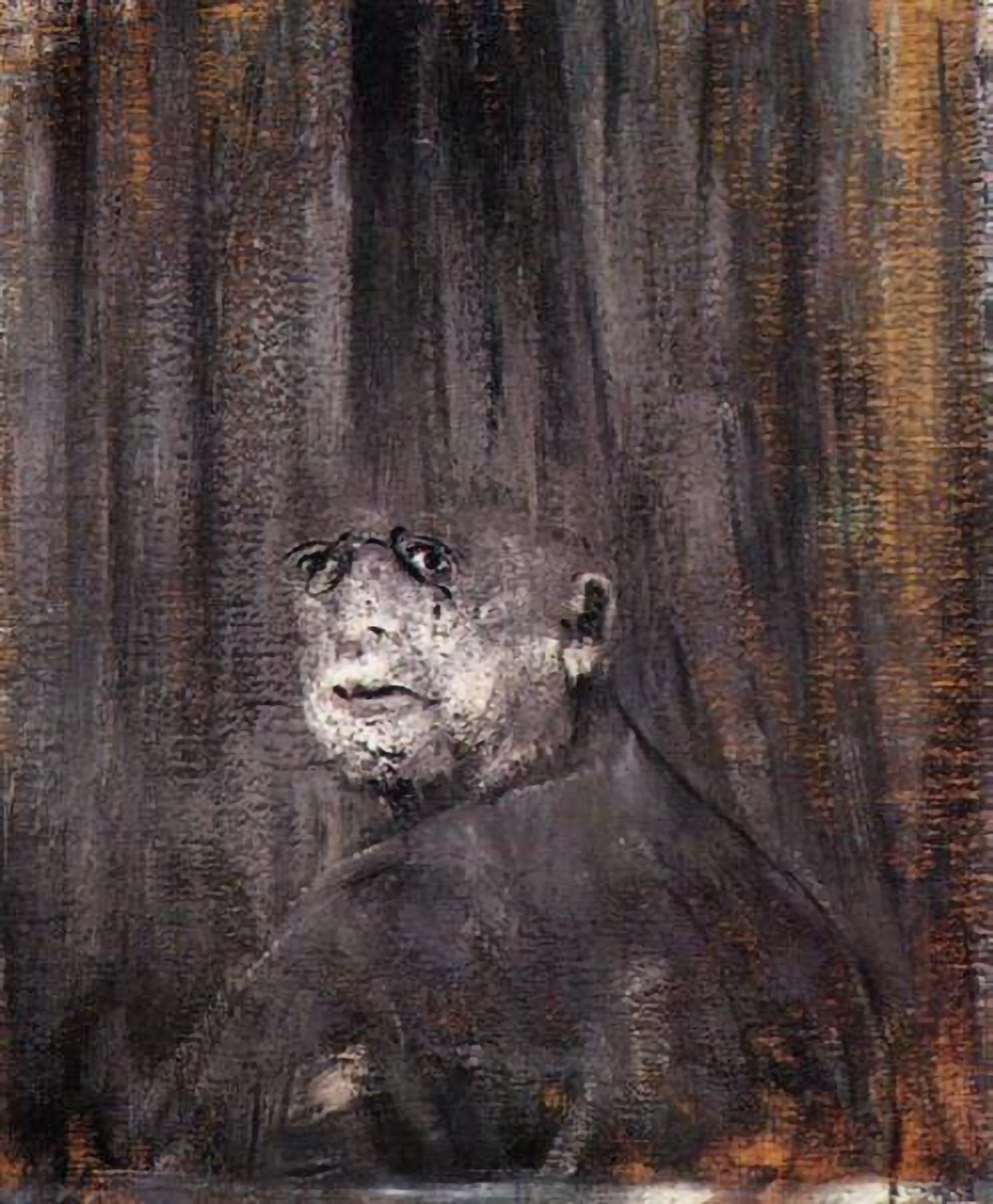
    Head III (1949), Francis Bacon | Wikimedia Commons. Bacon was an Irish-born British figurative painter known for his raw, unsettling imagery, and claimed that he strove to render “the brutality of fact.” This is neither his most abstract nor most macabre work, but one that I think speaks to the mind of humans when we think that we “know best.” There is a pride in this man’s demeanor and hints of scholarly knowledge in his eyeglasses. And while we see his features and face, it is as if they emerge with great effort, for he is but a shell of what a full human should be. Importantly, his mind is obliterated – lost to a vacuum of some sort rather than full and defined with actual Truth.

    “Moreover,” Jesus says, “I know that you do not have the love of God in you.” Oh, the shame and trembling if they only knew who was saying this to them! It is interesting to me that Jesus separates this ultimate sin of turning one’s back on God from the earlier point about them not wanting to come to him. Jesus instructs us here that one can be imperfect and prideful yet still perhaps have a kernel of God’s love inside them. Sadly, the Jews who disbelieve and accuse him are both prideful and lack God’s love inside them, meaning that the truth they supposedly found in the scriptures is not something they have incorporated into themselves. They lack God’s love out of their own fault, not because it has been withheld from them. This is a horrible state of affairs, a great affront to our Creator, to whom we owe our lives, our intelligence, our souls, everything. 

    But like the Father, the Son loves and gives mercy. Despite their accusations against him and their disbelief in who he IS, he says, “Do not think that I will accuse you before the Father: the one who will accuse you is Moses, in whom you have placed your hope.” Like the Father, he IS, meaning he will radiate and purify with his love through his actions and his very being. His saving mission at this moment in history is to teach, to suffer, to die, to resurrect, and to initiate the Church in Spirit and Truth.

    But we must remember his words from yesterday (part of this same dialogue), when he says, “[the Father] has given him authority to execute judgment, because he is the Son of Man.” This discussion, in other words, has an eschatological bent. It is concerned with everlasting life or everlasting torment. The Son’s mission isn’t done with the establishment of the Church — it will eventually conclude with his presiding over Judgement Day. He will embody the purifying love of the Father. He returns to that concept when he says “Do not think that I will accuse you before the Father.” It sends a chill up my spine to imagine how these unconverted Jews will wither when they see their great hero, Moses, prostrate before the Son of God and condemning them.

    The take-home message is clear: be grateful to God for your life and every blessing in it. Be faithful to God — especially when thinking and talking about him with others. Your testimony to the Truth of God and Jesus Christ is an essential element of your salvation. And, like Jesus tells us, whether you believe it or not, the Truth has already been testified to.
  • Consubstantial yet a Different Person

    Consubstantial yet a Different Person

    Wednesday of the Fourth Week of Lent: Isaiah 49:8-15, John 5:17-30.

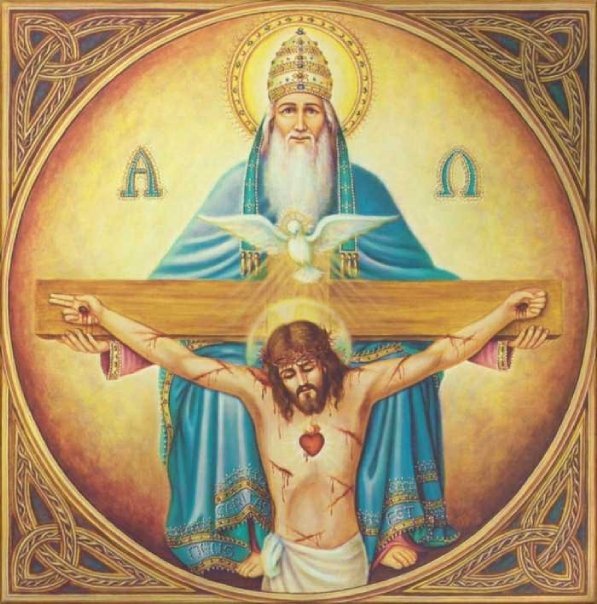
    I’d like to ponder the moment in today’s gospel reading when Jesus speaks of the mystery of the Trinity, specifically the Father and Son who are separate yet at the same time One God. In the early history of the Church, this was one of the great jumping off points for heretics who wanted to contain and understand this mystery and arrived at incorrect conclusions. It often manifested as a demotion of the Son as less than the Father (e.g., Arianism  or Adoptionism) or an elevation of the Son as being a divine spirit and not a man at all (e.g., Monophysitism or Docetism). There’s also the problem of people claiming we worship three gods, not one God!

    There are many errant beliefs that rage unnoticed and unexamined today, in fact, among otherwise pious Catholics and Christians of other denominations. A true understanding is important — to the best of our abilities, since this is, after all, the greatest mystery of our faith.

    We have to start with the version of the Nicene Creed we say at Mass. It lays out for us the essential relationship between the Father and Son. As the USCCB website states:

    The bishops at the Council of Nicea (AD 325), in order to ensure that Jesus was professed as the eternal Son of God, equal to the Father, stated that he is “the Son of God, begotten from the Father, the only-begotten, that is from the substance of the Father, God from God, light from light, true God from true God, begotten not made, the same substance (homoousion) with the Father…” The Creed of the Council of Constantinople (381), which is professed at all Sunday Masses and Solemnities within the Catholic Church, similarly stated: “We believe in one Lord Jesus Christ, the only Son of God, eternally begotten of the Father, God from God, Light from Light, true God from true God, begotten, not made, of the same substance (homoousion) with the Father.”

    We now say “consubstantial,” not “of the same substance.” I think this concept of consubstantiality is very important for us to keep in mind. The divine person of the Father is the Creator, the great mover who initiates all things. His Son is, as St. Paul writes, “the firstborn of all Creation” (c.f. Colossians 1), yet is not of a different substance than the Father. At this point, we have to dispense of biology class. This is not a mammalian relationship, but a divine one. We have no idea how this divine substance exists, leads to creation, has intelligence, etc. It is only through God revealing himself to us through prophets and his Son, and secondarily through all of his Creation, which has the fingerprint of the Father throughout, that we start to learn about him. 

    So, when we hear Jesus say, “the Son cannot do anything on his own, but only what he sees the Father doing; for what he does, the Son will do also,” we must be careful not to imagine that the Father operates independently of the Son and in a greater way. Jesus uses these terms to help us start to grasp the ultimate glory and priority of the Father — it is the Way of humility and fear of God that he gives to us as a gift to help us towards salvation.

    I don’t think that we should just shrug and accept it as a mystery, although that is certainly an option. But for those who want to delve deeper into this mystery, there are great saints smarter and more graced than the rest of us who have shared their meditations. There are so many great sources: Chrysostom, Augustine, Aquinas, and many more. For the sake of brevity given an impossibly deep subject, one small image from St. Augustine jumps out at me.

    Reflecting on the line the Son cannot do anything on his own, St. Augustine presents us with a way to think of the unity of the Father and Son without thinking of the Son as less than the Father (instead, maintaining that they are equal). He compares them to a flame: “The generating flame is coeval with the light which it generates: the generating flame does not precede in time the generated light; but from the moment the flame begins, from that moment the light begins. Show me flame without light, and I show you God the Father without Son” (Tractates on the Gospel of John 20.8).

    What a great thought! He bumps up the analogy later: “If, indeed, you can separate the brightness from the sun, then separate the Word from the Father” (20.13). And he notes that he’s not just talking about the sun, but the divine essence. “See God, see His Word inhering to the Word speaking, that the speaker speaks not by syllables, but this his speaking is a shining out in the brightness of wisdom. What is said of the Wisdom itself? It is the radiance of eternal light. (Wisdom 7:26).

    St. Augustine (1645-1650), Philippe de Champaigne | Wikimedia Commons.

    It is only through God’s grace that he reveals himself to us. The prophets, the Apostles, and the saints are outstanding examples of those who have been graced with understanding. It is from them that we must continually refresh our understanding. On that note, I can think of nothing better to end with than St. Paul’s letter to the Colossians. There is a reason it is used so much in the Divine Office: it is an intense meditation on the relationship between the Father and the Son.

    He is the image of the invisible God, the firstborn of all creation; for in him all things in heaven and on earth were created, things visible and invisible, whether thrones or dominions or rulers or powers—all things have been created through him and for him. He himself is before all things, and in him all things hold together. He is the head of the body, the church; he is the beginning, the firstborn from the dead, so that he might come to have first place in everything. For in him all the fullness of God was pleased to dwell, and through him God was pleased to reconcile to himself all things, whether on earth or in heaven, by making peace through the blood of his cross. (Col 1:15-20).


  • From Temple to Living Water

    From Temple to Living Water

    Tuesday of the Fourth Week in Lent: Ezekiel 47:1-9, 12, John 5:1-16.

    [COVID-19-era] It’s been over a year since we could attend Mass in our churches in a normal fashion. The exact experience differs from town to town, church to church. For some people, this has been quite upsetting while for others it’s a convenient excuse to stop going to something that interrupted their leisurely Sundays. Being Lent, it’s a good chance to reflect on our church experiences — what they mean to us, what they should mean to us.

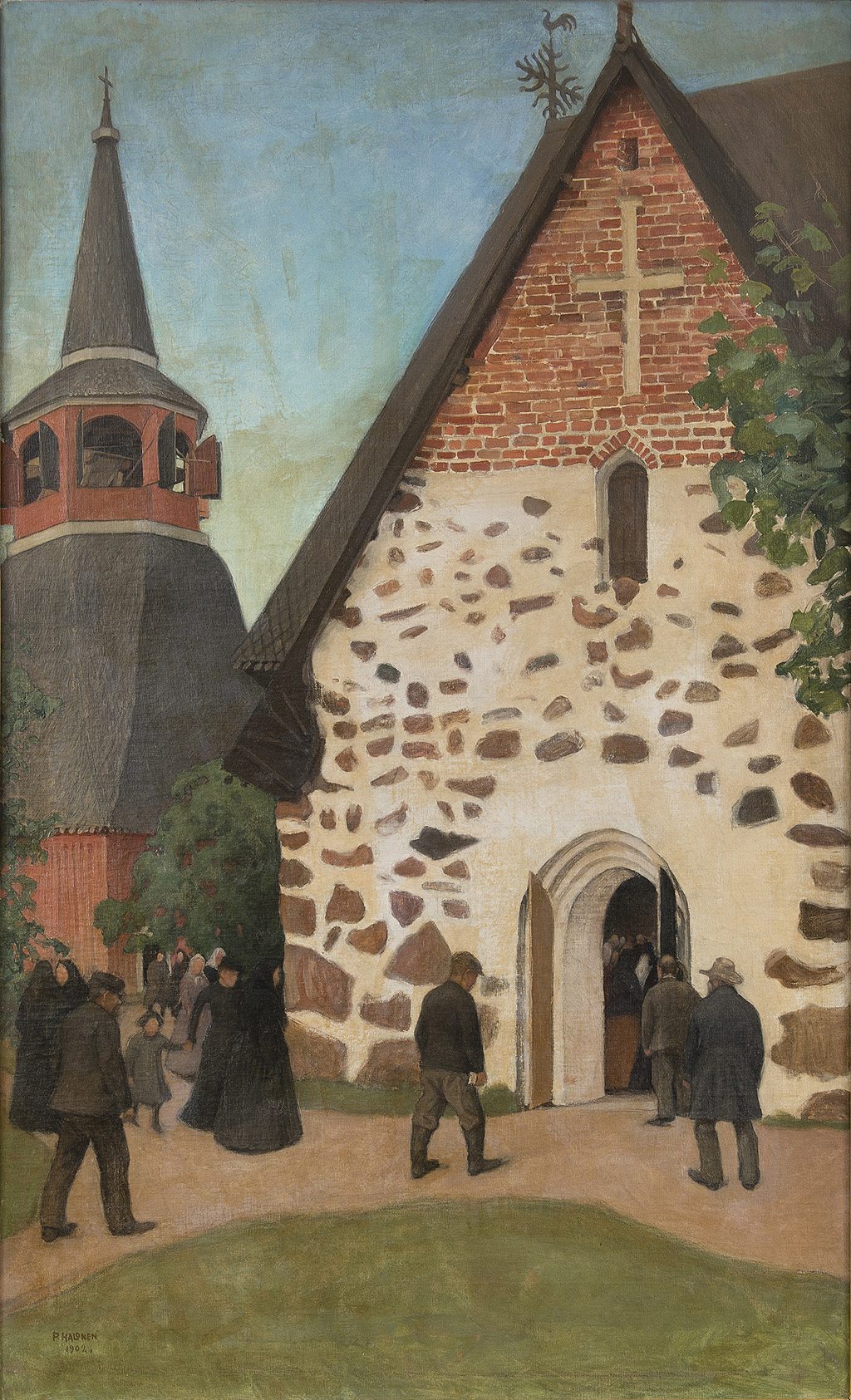
    Going to Church (1902), Pekka Halonen | Wikimedia Commons.

    I grew up going to church every Sunday (bless my parents for that). “Blowing off” Mass was not an option. Thus, I came into adulthood with a strong sense of obligation when it comes to regular Mass attendance. But when you’re a young adult you have this existential moment when you realize that you don’t have to do things just because you always have or you feel obligated to. You can skip Mass and no one is around to make you feel guilty. This is an important moment — some experience it while still in their teens, others not until their 30s or later. This is important because we need to grow out of the habit of going to the church building to “endure” the Mass for an hour and grow into something deeper. We must find that it is something we do because we felt compelled to, from deep inside of ourselves as we respond to God’s call. Not because someone else is telling us we have to go. God wants us to respond personally to His invitation.

    On the other side of this moment, when I feel so blessed to be part of the mystical Church, I look back on the great bugbear of Catholic obligation as an absurdity. I see how it served its purpose, especially for children who must be taught where the spiritual well resides so that they can access it throughout their lives, but if we allow our lifelong relationship to God to exist in the shadow of obligation, we risk never finding the Church despite all our church-going.

    Don’t get me wrong — I think obligation has a very good place within the pantheon of attitudes that make up “fear of God” — but this is a reflection of our humble state in front of our Creator, not a motivation for religious practices like going to Mass or confession.

    What does that church building mean to you? That question is at the forefront of our readings today. Ezekiel is shown how the temple is transformed in the New Jerusalem, and in the gospel reading, Jesus enters a ritualized, symbolized, and mythologized part of the great Temple in Jerusalem to establish a new call to humanity on the Sabbath, effectively reforming the temple from within. At the end of this reflection, we must ask ourselves if we have heard the scriptures and the Voice of God — do we conceive of our churches and our Church in the way he intends?

    Ezekiel prophesies during the Babylonian Captivity, around the years 596-574 BC. Jerusalem and its great holy temple have been destroyed, which is a catastrophic symbolic and religious loss for the Jews. They collectively mourn, and Ezekiel can only dream of the great temple being rebuilt. Twenty-five years into their exile, God grants Ezekiel an extraordinary vision of the restored temple. The record of this vision covers 7 extensive chapters at the end of the Book of Ezekiel and details the dimensions and activities of the temple. Clearly, the Jewish traditions and laws surrounding religious worship still matter a great deal, but something else is going on, too. And it coalesces at the East Gate.

    Ezekiel relates that at the East Gate, “the glory of the God of Israel was coming from the east; the sound was like the sound of mighty waters; and the earth shone with his glory.” Ezekiel falls on his face, and “As the glory of the Lord entered the temple by the gate facing east, the spirit lifted me up, and brought me into the inner court; and the glory of the Lord filled the temple” (Ez 43:2, 4-5). The East Gate, therefore is identified as the place where the Lord enters, and Ezekiel is commanded to keep it closed and locked except on the Sabbath, when the people come to encounter the Lord. The temple is made holy not by its height and girth and golden ornamentation, but by this connection to the presence of the Lord.

    One of our Church Fathers, Origen, helps us understand Ezekiel’s vision of the east through the lens of Christ: “Atonement comes to you from the east. From the east comes the one whose name is Dayspring, he who is mediator between God and men. You are invited then to look always to the east: it is there that the sun of righteousness rises for you, it is there that the light is always being born for you” (Hom. 9, 5. 10: PG 12, 515. 523.). 

    The description of the restored temple finishes with today’s reading. In an extraordinary scene, Ezekiel sees beyond the temple walls. Flowing eastward from the temple is a stream of water that becomes deeper and deeper until it is a mighty river, too deep to cross. The river gives life to all around it: “Wherever the river flows, every sort of living creature that can multiply shall live.”

    The vision is clear: the Lord, coming from the east, meets humanity in the temple at the altar, and from the temple flows forth a river of life — in the world and making its way back toward God in the east. This river of life happens as a consequence of the encounter within the temple, and is clearly an ecstatic vision of a transformed world. Nothing could be a more concise picture of the reality ushered in by Christ than this.

    River in Saint-Clair (1908), Henri-Edmond Cross | Creative Commons, courtesy Wikiart.org.

    The Jews recognized the incredible importance of the temple as the holy meeting place between them and God, but it seems as though the end of Ezekiel’s vision was not as firmly implanted. Jesus criticizes the Pharisees and scribes for only upholding the strictures of the laws and rituals but missing the point of how the temple encounter should transform how they relate with their fellow human beings outside of the temple. This aborted, truncated life in the Lord precipitates the need for the Son of God to be born into humanity, perfect the Lord’s teachings, and usher in a new way to encounter divinity that allows for the River of Life to eclipse the temple in importance.

    At many points in Christ’s ministry, he tells us how he is establishing a new priesthood (with Peter and his apostles), a new sacrifice to replace all other ritual sacrifices (the Eucharist as initiated at the Last Supper), and a new direct communion with God and God’s love through himself. In fact, we hear echoes Ezekiel’s description of the temple gates when Jesus calls himself the gate for the sheep (cf. Jn 10:1-10). Most strikingly, he not only identifies himself with the temple, but being greater than the temple: “I tell you, something greater than the temple is here. … For the Son of Man is lord of the sabbath” (Mt 12:6, 8).

    This brings us to the gospel reading, which happens at the Temple, on the Sabbath, at the Sheep Gate. This likely references the sheep market where people could buy sheep for sacrifice at the temple. There are also pools there, used to ritually wash the animals before they were used in the temple. “In these lay a large number of ill, blind, lame, and crippled. One man was there who had been ill for thirty-eight years.”

    A few things are being conveyed to us. First, Jesus is drawn to the place where the outcasts go in a bid to purify themselves like the sacrificial animals. (Jesus more than once calls humanity his sheep as he describes himself as the Good Shepherd — here that image is seen to be much more accurate in actual practice than we may have realized.) We see a desperation in these poor beings as they wait for a “stirring” of the waters by an angel whereby, according to common legend, the first one in the water is cleaned by divine action. We might be reminded of the story of the Canaanite woman begging for Christ’s mercy and healing: “Even the dogs eat the crumbs that fall from their master’s table” (Mt 15:27). 

    To sum up the deeply symbolic scene: at a place where animals are purified before being sacrificed to God, we encounter poor, wretched humans hoping for scraps of cleanliness to drop their way, by a singular, angelic stirring of the waters. They essentially have no dignity, no place in Jewish society. Contrast this with the great, flowing River of Life that Ezekiel sees pouring out from the temple, granting bounty to everything it touches. Clearly, the beatific vision is not being realized.

    But then comes Christ.

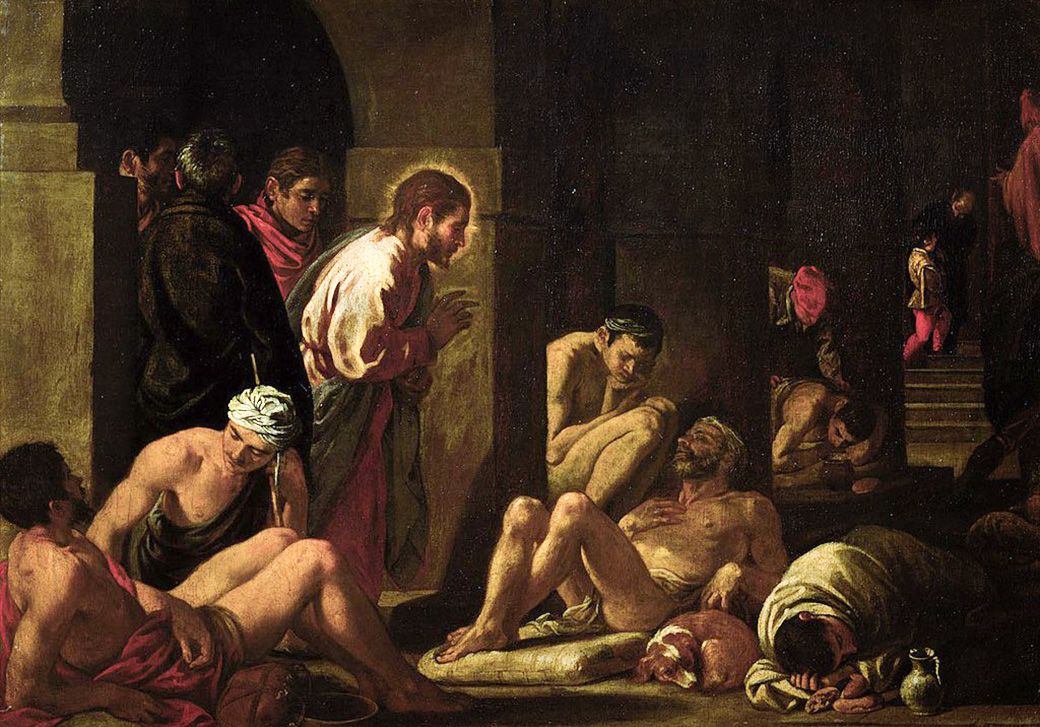
    Christ Healing the Sick at the Pool of Bethesda (c.1615-1620), Pedro Orrente | Wikimedia Commons.

    Note the formula of God’s call and our response; this is his way. Jesus asks if the man wants to be well (pure, whole; the Greek word is hygiēs). The man laments that he cannot do it on his own, he needs help. Jesus’s response is beyond the man’s expectations or even understanding of what is possible, as is always the way with God’s overflowing love. Jesus says, “Rise, take up your mat, and walk.”

    Like all of us, the man was so caught up in his thoughts of what he needed at the moment (which he had been doing for 38 years!), that he couldn’t imagine anything else to ask for. How many times have we been overwhelmed by our current concerns and worries that we only bring these trivialities to God to “solve” rather than asking to be made whole?

    Let’s expand our focus and notice several other things happening here.

    First, Jesus establishes a new, direct connection to healing in himself, something only available before through the extensive rituals of the temple. This is the miraculous change brought about by the Incarnation of divinity in human flesh. This is underscored by his instruction to “take up your mat,” which provides a temporary dwelling place for the man in the temple. That dwelling is no longer needed.

    Second, he provides the divine energy personally to the man so that he can rise by himself and walk on his own. The river of life enables us to “bear fresh fruit” of our own. The man is enabled to be fully human, blossoming in the love of God.

    Third, Jesus performs an act of healing on the Sabbath. The Jews, particularly the Pharisees and scribes, will use this act of “work” on the Sabbath to persecute and eventually arrest Jesus. It is a major theme of the gospels, and juxtaposes their hangups with particularities of the law while disregarding the presence of God among them.

    But perhaps throughout the gospels, Jesus is intentionally healing on the Sabbath. Let’s return to the quote from Matthew: “I tell you, something greater than the temple is here. … For the Son of Man is lord of the sabbath” (Mt 12:6, 8). Christ is establishing in himself, here at the temple in today’s reading, what he says in that passage from Matthew. Here, in the temple, he does the “work” of replacing the temple through his own saving person and mission. As the Lord of the Sabbath, united with God to whom the sacrifice is being offered, he releases humanity from our ritual debt of sin offerings and atonement.

    Origen emphasizes this wonderfully in terms of the liturgy:

    “God taught the people of the old covenant how to celebrate the ritual offered to him in atonement for the sins of men. But you have come to Christ, the true high priest. Through his blood he has made God turn to you in mercy and has reconciled you with the Father. You must not think simply of ordinary blood but you must learn to recognize instead the blood of the Word. Listen to him as he tells you: This is my blood, which will be shed for you for the forgiveness of sins.”

    This brings us back to the questions that opened this reflection: what do our churches mean to us? Our churches are the center of our liturgical lives because that is where Christ instituted the sacramental remembrance of his own great sacrifice. No longer are animals needed for atonement as we encounter God because Jesus makes that sacrifice unnecessary.

    But so much more! He gives himself continually, over and over, not just to the Father but to us, through his Word and his Body and Blood. He is the River of Life flowing from the altar, nourishing us and making the world whole and bountiful. He flows to the east, back to the Father, and has inaugurated the Church, his mystical Body, as his Bride in this journey to the Father.

    Thus, our participation in the Church (both in the church building and in every other aspect of our lives) becomes much more than just “going to church”. It is the deepest spiritual encounter with God that certainly does not end when the priest announces “the Mass is over, go in peace.” The life of the Church is the liturgy. Liturgy is not confined to the hour or so of the Mass; instead the Mass is one of the greatest ways we celebrate the liturgy.

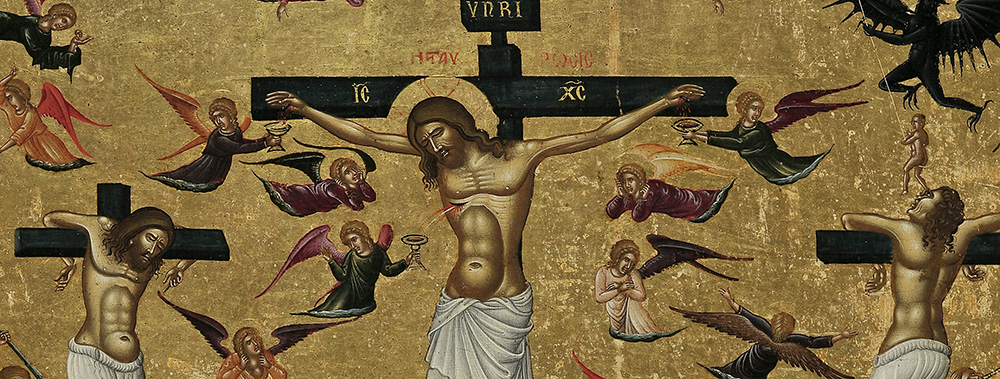
    Detail from The Crucifixion (late 1400s), Andreas Pavias | Wikimedia Commons. St. John’s description of water and blood coming from the side of Christ when the centurion pierces his side with a spear is a good point of reflection. As we consider the River of Life in which we are baptized as Christians, this life-giving water finds its source alongside the Blood of our crucified Savior.

    If what we miss about church in the time of pandemic is hanging out with other parishioners for doughnuts and coffee, perhaps we need to reconsider what our Church means. If what we miss most is the great music at Mass, perhaps we need to recall exactly what type of heavenly encounter is going on there and re-prioritize ourselves. We are united with saints and angels, the dead and the alive, in a way that is much more deep than discussion groups, charity drives, and parish dinners. These things are great, absolutely! But the Church is fundamentally something altogether different.

    A Lenten prayer for today: may we all desire to encounter the River of Life throughout our day and cherish our moments within the Mass when we encounter the Word and Eucharist in a singularly spectacular way.

  • New Heavens and a New Earth

    New Heavens and a New Earth

    Monday of the Fourth Week of Lent: Isaiah 65:17-21, John 4:43-54.

    Yesterday we leapt forward, pushing our clocks ahead an hour as we transitioned into Daylight Savings Time. My wife spent her life getting up early to swim (around 5 am!) and so this transition always bothered her because just as the sun would be making its way into her morning workouts, she’d be plunged back into darkness for another month.

    Yesterday, she went walking with a good friend who confided to her that she actually sets her alarm clock back 5 minutes each day for a month leading up to Daylight Savings Time because she has such a hard time adjusting to the change.

    On the other hand, I am more of an evening person, so I am more bothered in the fall when my evenings suddenly go black much sooner than I thought they would. It’s an interesting lesson in how we create little realities for ourselves that are sometimes revealed for what they are: self-made constructions of happiness and comfort.

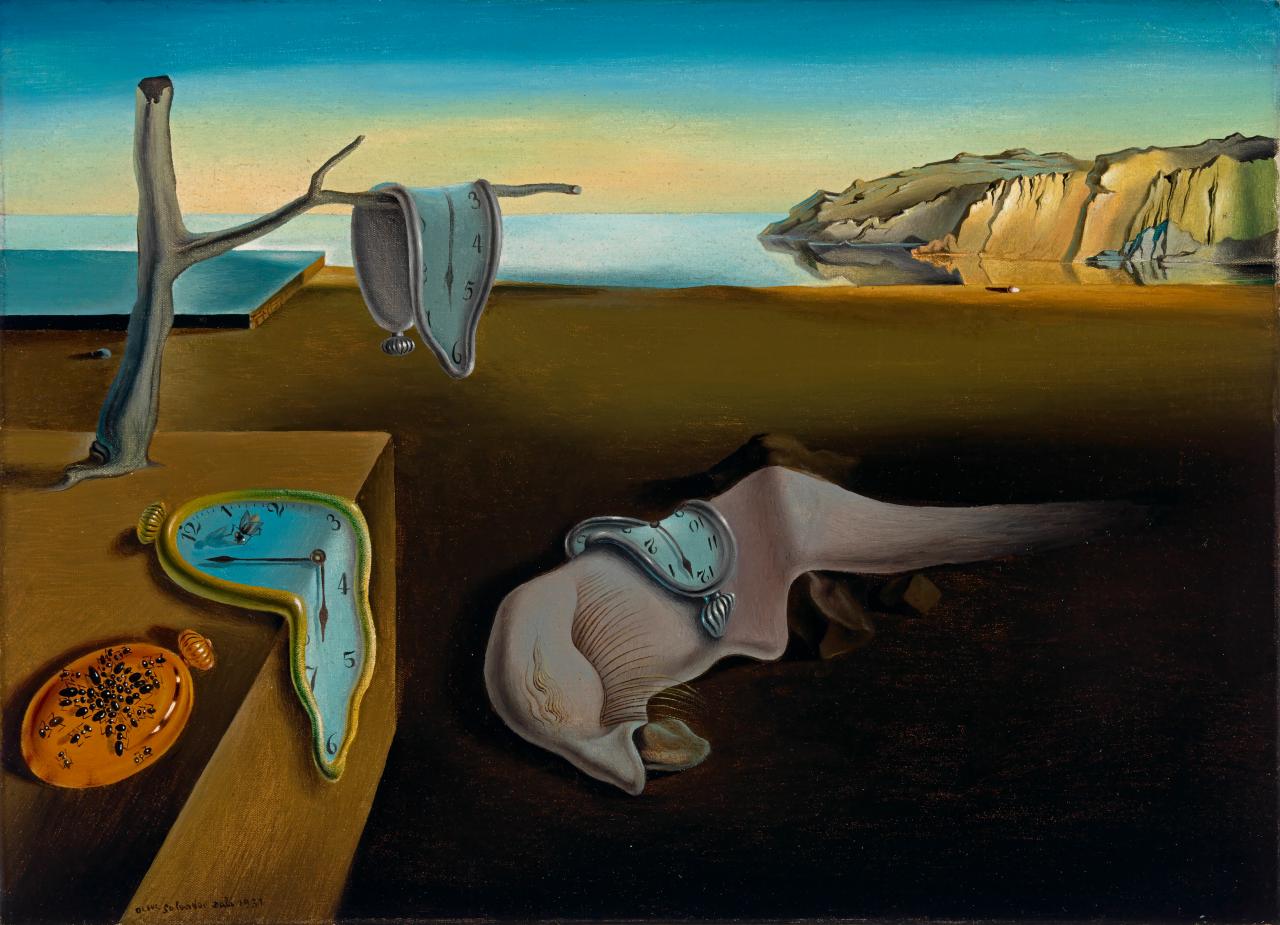
    The Persistence of Memory (1931), Salvador Dalí | Image from the Museum of Modern Art.

    Sure enough, yesterday I had a moment of elation when I looked out the window after dinner and realized how light it was. I could go for a walk, enjoy the sunshine, maybe putter around in the garden! Suddenly, new possibilities were open to me that haven’t been open for the past I-don’t-know-how-long. Silly, I know, but that was how I felt. And what really changed? Nothing but an arbitrary shift of the clock. 

    This incredible shift in mindset is something we’re asked to experience in today’s readings. And rather than an arbitrary clock change, an actual new reality has opened up between Heaven and earth to cause this change in mindset.

    If we allow ourselves to be complacent in what we think we know of the New Testament, the gospel reading appears like any other healing story. A man asks Jesus to heal his son and Jesus does it without even having to go to the man’s house. But if we allow the new reality of God-come-to-earth as Christ to illuminate our souls — like we allow the newfound post-dinner hour of light to illuminate our outlook on the evening — something altogether different is happening.

    St. John tells us that Jesus is traveling back to Galilee after coming north through Samaria. In the verses just prior to this, Jesus encounters the Samaritan woman at the well and in their conversation he reveals to her, “I am the Christ” (Jn 4:26). Based on his conversation with her, she believes and so does an entire town of Samaritans who get him to spend several days with them. Who he is — the reality of the Messiah come to earth — has dawned upon them and changed their entire outlook on their own lives.

    To signal that a new spiritual reality is making itself known, a reality more important and fundamental than the earthly reality, Jesus rebuffs his disciples’ urgings to eat by responding, “My food is to do the will of him who sent me and to complete his work” (Jn 4:34).

    He goes on to encourage them to help him usher in the new mindset that should accompany this new reality: “look around you, and see how the fields are ripe for harvesting. The reaper is already receiving wages and is gathering fruit for eternal life, so that sower and reaper may rejoice together” (Jn 4:35b-36). Jesus is trying to get the Apostles to notice this new reality in which they have a part to play.

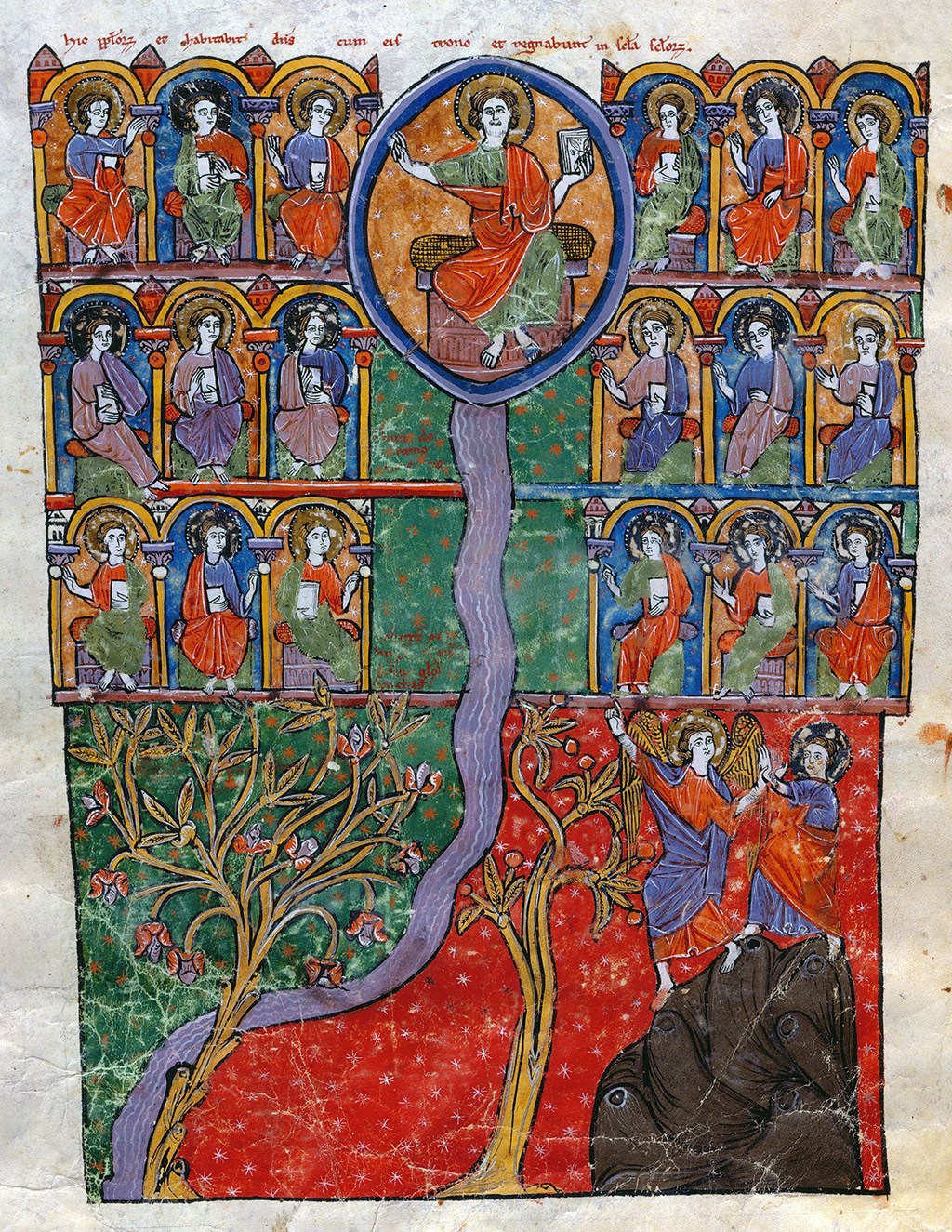
    Christ Enthroned Over the River of Life (1220), Beatus of Liébana | Creative Commons, courtesy of the Morgan Library & Museum. This is MS M.429 (fol. 141), called the Las Huelgas Apocalypse, the latest dated (1220) and largest surviving manuscript of a Spanish tradition of illuminated commentaries on the Apocalypse by the monk Beatus of Liébana. The series of manuscripts constitutes Spain’s most important contribution to medieval manuscript illumination.

    We are so used to being Christian that we no longer comprehend the massive change of reality that happened at the Incarnation. Perhaps we never fully understood it. Fr. Jean Corbon, OP, writes, “In Jesus the entire energy of love impregnates human energy with an ‘anointing’ that makes this human energy its own and gives it life” (Wellspring of Worship, 40). In other words, the divine love that continually flows between Father, Son and Holy Spirit now descends into humanity to find a new home there, to begin to work within humanity until the end of time.

    Fr. Corbon reminds us that the first creation moment saw everything come from nothingness into being, but “In the new creation that is beginning here, he who is eternally begotten of the Father is fashioned out of living earth, namely, the entire being of his mother” (37). This new creation is something that has never existed before: fully God and fully human, a man to change history and the fabric of spiritual being.

    This is what the Father promises to Isaiah in the first reading today! He proclaims, “Lo, I am about to create new heavens and a new earth; The things of the past shall not be remembered or come to mind. Instead, there shall always be rejoicing and happiness in what I create.” The newness of our beings, when divinity has come to dwell among us, cannot be overemphasized. It is an entirely new creation, creating a new heaven and earth that did not exist before.

    He continues: “For I create Jerusalem to be a joy and its people to be a delight; I will rejoice in Jerusalem and exult in my people.” The Catechism teaches us that the Church herself, the bride of Christ, is the New Jerusalem that God promises. It exists on both Heaven and Earth and is beloved to the Lord.

    What we encounter in Chapter 4 of John’s gospel is the beginning of the New Jerusalem, brought about during the new creation that Jesus Christ has ushered in. This is a new reality filling the world with light — the Samaritans see it like new hours granted by Daylight Savings Time. Can we? Does it affect our mindset as much as the arbitrary change in hours does?

    New Jerusalem Revealed (contemporary), Alexander Sorsher | Image from pixels.com.

    When the royal official in today’s gospel reading asks Jesus to come to his house to heal his son, Jesus responds, “Unless you people see signs and wonders, you will not believe.” Perhaps Jesus is contrasting the man’s state of mind with that of the Samaritans, who believed in him purely by encountering him and speaking with him. No “signs and wonders” were required apart from the truth that he spoke. But the man just plows on as if not hearing: “Sir, come down before my child dies.”

    What is going on here?

    I think this speaking-past-one-another illustrates how this man is oblivious to the reality that the Messiah has ushered in. The man has not come to encounter Christ — he is living in his usual, un-transformed world that is dominated by fear of death. He has come not to encounter a new reality that does away with that fear but instead to find something that will, in fact, confirm his fears of the ultimate domination of death by keeping it at bay for a while.

    Notably, though, he does not come to “test” Jesus — it seems that he already has placed a good deal of hope in him. Thus, when Jesus says that they need signs and wonders “to believe,” it seems that he is referring to a deeper “belief” than the more surface belief that he is a type of healer. He seems to be just stating a fact of human nature.

    He may be gently lamenting that this man isn’t of the right mindset, but he nonetheless performs this wondrous act of healing. He heals the man’s son not to prove that he’s a wonder-worker, but to affect the man’s entire mindset on the reality that walks among them. He performs this miracle so that the man might be shocked out of his usual, un-transformed world and believe in something greater: the new creation and the New Jerusalem being built around him. This is why Jesus always points back to the Father — it is the Creator who is accomplishing this new creation by incarnating His Word in humanity. Belief in Jesus is belief in the Father, belief in salvation, belief in a new spiritual reality.

    How curious that we can be more affected by our clock changes than changes in the fabric of our spiritual reality! As Christians, we’re called to become more attentive to our spiritual selves (by dying to our worldly senses and desires) so that we can be awestruck by the Christ Event dumping immense light into our lives.

    That’s what Lent is here for: to help us become aware once again, appreciative once again, transformed once again.


  • Lifted Like the Serpent

    Lifted Like the Serpent

    Sunday of the Fourth week in Lent: 2 Chronicles 36:14-16, 19-23, Ephesians 2:4-10, John 3:14-21.

    In today’s gospel reading, Jesus has a memorable meeting with Nicodemus, a Jewish member of the Sanhedrin, a faithful Jew, and eventually a full disciple of Jesus who comes with myrrh and aloes along with Joseph of Arimathea to retrieve his body from the Cross.

    Jesus presents himself to Nicodemus as a modern, living version of Moses’s serpent on the staff that saved the Jews bitten by poisonous serpents in the desert. While foreign to us if we are not versed in scriptures, this comparison would undoubtedly have been powerful and shocking for Nicodemus. In fact, Jesus’s words finally explain the significance of God instructing Moses to make a bronze serpent and mount it on a pole.

    As we dig into today’s gospel reading, we are struck with the entire span of salvation history from the Garden of Eden to Christ’s Paschal Sacrifice on the Cross. Also, we see Nicodemus as a true Christian, converted to Christ, moving from the darkness to the light.

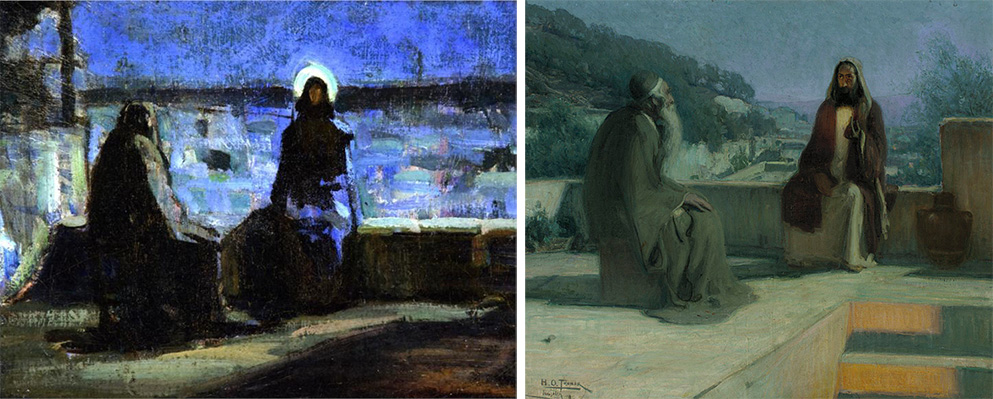
    Nicodemus and Jesus on a Rooftop (1899), Henry Ossawa Tanner | Wikimedia Commons. On the left is a study that Tanner did for the finished painting on the right. I appreciate the nimbus on Christ in the study, acknowledging that he is the “Light of the World,” despite the meeting occurring at night.

    St. John tells us that Nicodemus comes to Jesus by night. In just this simple statement, we can glean many things. Some scholars believe that a leader of the Jews would only come by night because it would be unseemly for a member of the Sanhedrin to join the crowds and rabble who followed this traveling preacher by day. Whether he was too busy with his duties, too proud to be seen going to learn from an unlearned miracle-worker, or too bashful to present himself openly, we encounter this powerful man coming to Jesus under cover of night.

    As historians and scholars have envisioned this meeting, there is a compelling argument that they met on a rooftop. First of all, this was (and is) common practice for men to retire to the rooftops after their evening meal on the hot, Middle Eastern nights, in order to enjoy cooling breezes. Second, Jesus makes some memorable statements about the air and the Spirit, likely choosing the moment when the phenomenon of the breeze could help him make this point: “The wind blows where it chooses, and you hear the sound of it, but you do not know where it comes from or where it goes. So it is with everyone who is born of the Spirit” (Jn 3:8).

    Jesus speaks of a spiritual logic unknown to those merely born of the flesh, encouraging Nicodemus to break out of his disbelief and earth-bound assumptions about what is possible. So, we see Nicodemus coming to Christ at night to know more about this man sent by God, and God, in return, engages him in the deepest truths. Is this not the exact journey we all make to Christ? Do we all not suffer from a certain bashfulness to approach Him openly in a culture where our faith is seen as antiquated, naïve, and gullible? Yet Jesus is there, waiting for us with deep truths.

    These deep truths are inevitably deeper than we are prepared to comprehend. Jesus reveals himself to Nicodemus as not just “a teacher who has come from God” (as Nicodemus calls him), but as the “Son of Man” and God’s “only Son.” And Jesus ups the stakes to eternal bliss or eternal damnation based on this very fact alone: “everyone who believes in him might not perish but might have eternal life … but whoever does not believe has already been condemned, because he has not believed in the name of the only Son of God.” Nicodemus definitely got more than he bargained for by coming to this “teacher” by night.

    As we think about this “all-or-nothing” statement by Christ, we are reminded of the gospel a few days ago where he proclaimed, “whoever is not with me is against me,” that is, scattering people instead of gathering to the Kingdom. Why does our Lord deal in these absolutes? There can be no doubt here that he is asking us to be “all-in,” much like he asked Abraham to sacrifice his son or Noah to build the ark (see the post, A Glimpse of Heaven). And just as Abraham’s assent was blessed by founding the nations and Noah’s assent was blessed by saving humanity from destruction, our assent to Christ will be blessed with everlasting life.

    In all cases, the call is personal. It is an individual meeting with the unfathomable God. Just like Nicodemus, we all must go to have a personal encounter with Christ to listen to what he has to tell us.

    Pope Benedict the XVI put this succinctly at the beginning of his encyclical on love: “Being Christian is not the result of an ethical choice or a lofty idea, but the encounter with an event, a person, which gives life a new horizon and a decisive direction” (Deus Caritas Est, 1). Today’s gospel is one of many very concrete examples of this encounter in action. 

    Jesus proclaims elsewhere in John’s gospel, “I am the light of the world” (Jn 8:12), and he makes a similar statement here with Nicodemus. His words may have stung Nicodemus, since he came to Christ at night:

    “And this is the verdict, that the light came into the world, but people preferred darkness to light, because their works were evil. For everyone who does wicked things hates the light and does not come toward the light, so that his works might not be exposed. But whoever lives the truth comes to the light, so that his works may be clearly seen as done in God.”

    He is urging Nicodemus to come to him in the light of day, openly. But more than that, he needs Nicodemus to understand that God and truth dwell in the light, and this is something to always glory in, to be proud of; in fact, by believing in this truth and light, and acting in it, a person is securing for himself or herself a place in Heaven.

    Jesus mentions the concept of being exposed, and there is absolutely an aspect of vulnerability in this. As he says, the “verdict” is that “people preferred darkness to light,” thus living in the light does not exempt one from pain and suffering as a result of this exposed vulnerability. This fact is wonderfully demonstrated in Jesus’s incredible comparison of himself to Moses’s serpent on the staff.

    That story from the Book of Numbers speaks of events 1,475 years before Christ sits with Nicodemus on the roof. The passage is exceedingly odd at first glance: God first punishes the Israelites for complaining by sending poisonous serpents among them. In terms of today’s gospel, we could say that they are living in darkness (complaining and turning from God), and as a result they are bitten by serpents and die. Upon their admission of guilt and atonement, Moses prays for deliverance. At this point, God instructs Moses to mount a bronze serpent on a pole; subsequently, when the people look up at the serpent on the pole after being bitten, they are spared from death.

    Before we wonder what kind of witchcraft is going on here, let’s again consider it in terms of today’s gospel reading: by looking up at the serpent, the Jews in the desert are re-confirming their belief in God, who promises to protect them. They gaze upon the source of their suffering, the serpent, exposed, held up in the light for all to see, and they do not die. Importantly, they do not avoid suffering (that is, they continue to be bitten by serpents), but they avoid death through their continually re-confirmed faith in God.

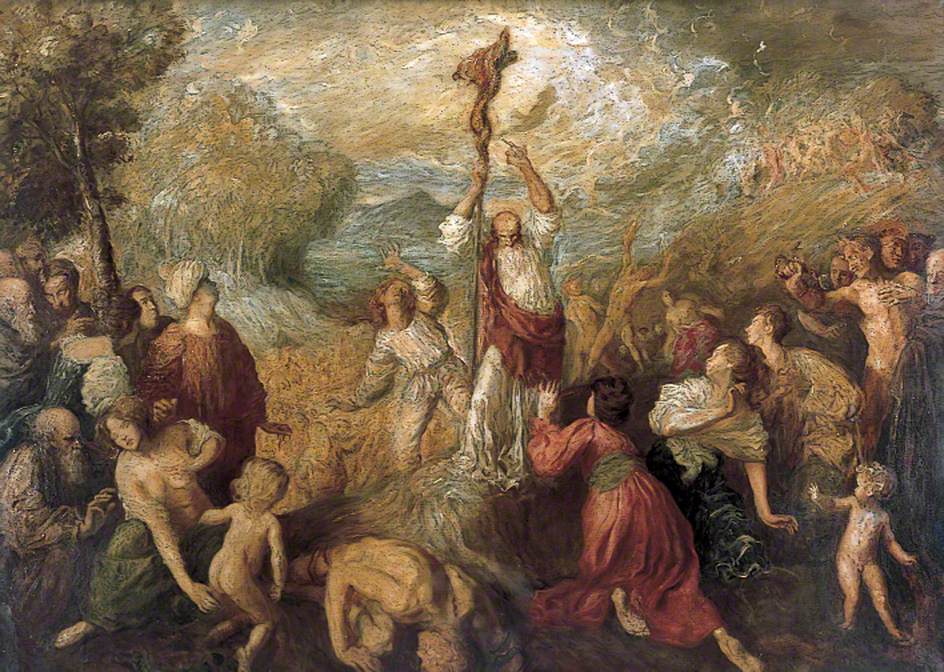
    Moses and the Brazen Serpent (1898), Augustus John | Creative Commons, courtesy UCL Art Museum/ArtUK. I like the impressionistic style Augustus John employs in this painting, the flowing waves suggesting a divine entrance into the fabric of humanity. As with any encounter with the divine, sin will merit pain and “gnashing of teeth,” and the purifying energy of God may not be pleasant for those in sin. I also see a bit of the devil in the bare-chested man on the right side of the canvas, which for me, at least, recollects the Garden of Eden connection. 

    It would be fair to say that the serpent is the symbol of humanity’s sin against God, ever since Adam and Eve in the garden. This sin is poisonous and it brings about the reign of death. The people repent and say to Moses, “We have sinned in complaining against the LORD and you. Pray the LORD to take the serpents away from us.” The act of looking up, heavenward, to the sign of the sin they lived with, is the action that reminds them of their dependence on God and his saving mercy. God’s divine mercy flows to the sinful, bitten individual in that moment, not through the arcane power of a bronze staff, but through the symbol that the staff presents to the Jewish believers in God.

    As Catholics, we know well that, in the liturgy, divine sanctification works in and through symbols, from the altar and ambo to the bread and wine. The bronze serpent on the staff is this type of sacramentalized symbol that his prophet on earth made under his instruction.

    The Jews understood the symbolic importance of this staff as a way to encounter God’s grace and they kept the physical staff around for centuries. They may have begun to confuse the symbolic function of the staff with a divine presence, however, because 740-ish years later we read in 2 Kings that King Hezekiah orders the destruction of the staff, which he calls Nehushtan (“a mere piece of brass”) because the Jews were burning incense to it and essentially treating it like an idol. 

    Now I don’t know much about divine numerology, but I do find it interesting that exactly another 740-ish years later, we hear Jesus tell Nicodemus the Pharisee: “just as Moses lifted up the serpent in the wilderness, so must the Son of Man be lifted up, that whoever believes in him may have eternal life.” With this statement, the Word of God reveals the full scope of this symbol Moses was instructed to make. “Just as Moses lifted up the serpent”: note that the parallel being drawn is to the fixing of the serpent to the pole and lifting it up, the fact of exposure for all to see. “So must the Son of Man be lifted up”: this refers to his Crucifixion, where he becomes the ultimate symbol for humanity. And finally the salvific import: “that whoever believes in him may have eternal life.” Like the sinful Jews who re-confirmed their belief in God and were saved from dying, we receive an infinitely greater promise and divine grace given to us when we behold Christ on the Cross, believe in him, and are granted eternal life that eradicates all sway of death.

    Yes, consider this! Christ is admitting that living in the light constitutes suffering at the hands of those who live in the darkness. What greater sign than his broken and crucified Body hanging on the Cross for all to see? But just as the suffering from being bitten by serpents is ameliorated by gazing at that exposed suffering on a pole, our suffering from sin in this life is ameliorated by gazing on the Lord’s suffering on the Cross, done for our sakes. This is exactly what “on our behalf” entails!

    He allowed himself to be affixed on the Cross like the serpent on Moses’s staff so that we could have salvation as we gaze upon him and live in his light!

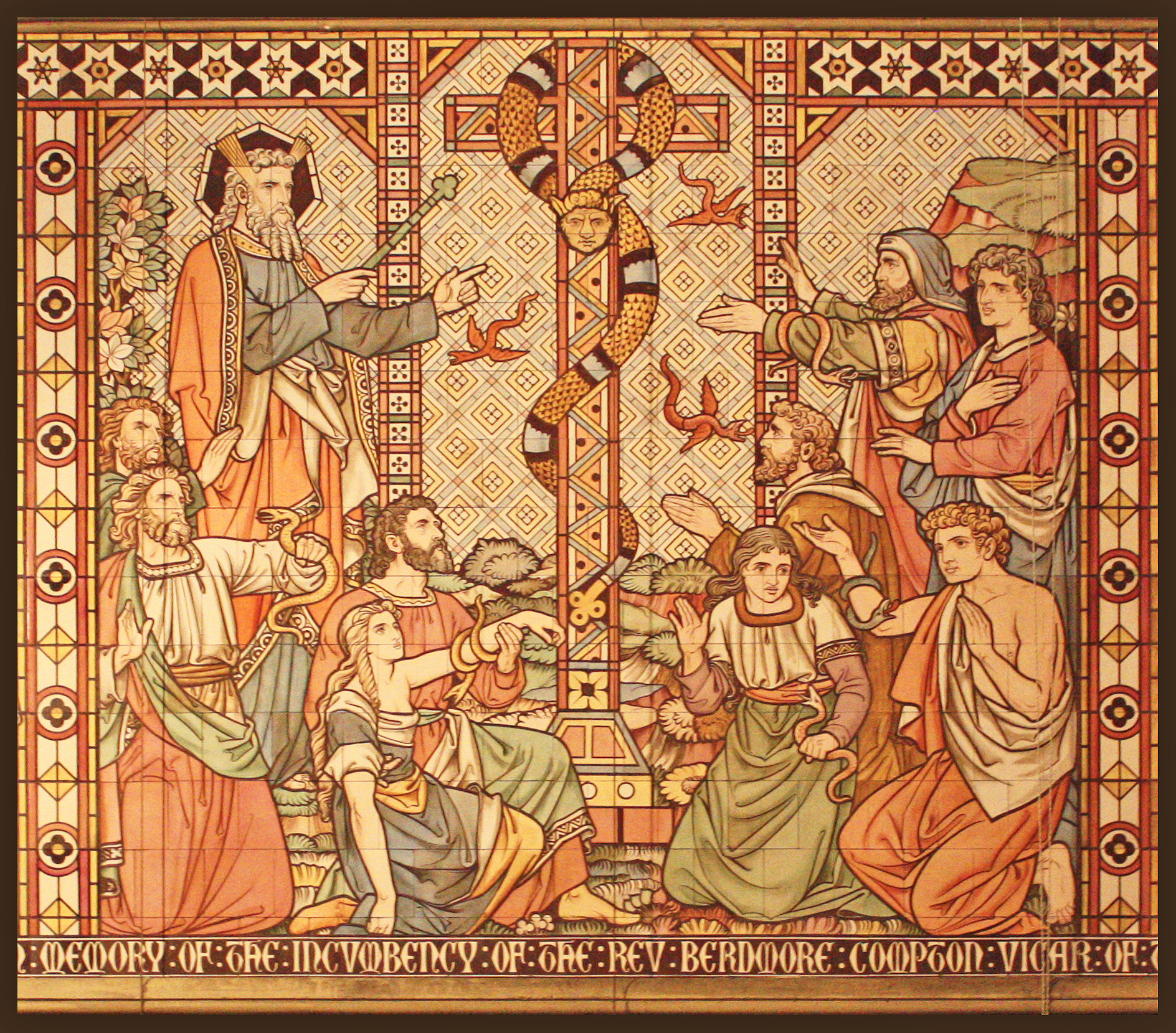
    Moses and the Bronze Serpent, mural in All Saints Margaret Street church in London (1889), tiles painted by Alexander Gibbs | photo courtesy Lawrence OP, flickr.com. Note that over the centuries, the connection of the bronze serpent and the cross has been made much more explicitly, as in this tile work.

    Sometimes the scope of God’s saving plan is just breathtaking. So many moments of patience and mercy over the millennia, from Adam and Eve, through Moses, and ultimately Jesus Christ. And so subversive of our normal worldly affections, too, in the use of the lowly and hated serpent as a resounding symbol for overcoming sin, much like using the reviled Cross as a throne for our Savior.

    I am brought back to the all-or-nothing statements we keep encountering this Lent. After this reflection, I am struck by the fact that Jesus is saying these absolutes because he must remind us that he is God’s plan, God’s gift. To not recognize and believe in him is to throw God’s gift back in his face. It is worse than living in sin — it is a deliberate act of defiance and rejection of our Creator. We must listen to Christ, and St. Paul does a fantastic job of reminding us in today’s second reading: “God, who is rich in mercy, because of the great love he had for us, even when we were dead in our transgressions, brought us to life with Christ — by grace you have been saved.”

    Serpent Illustration by Katie Scott | courtesy katie-scott.tumblr.com.
  • The Jesus Prayer

    The Jesus Prayer

    Saturday in the Third Week of Lent: Hosea 6:1-6, Luke 18: 9-14.

    Today’s readings seem to be about us — about our fidelity and about how we pray. But just under the surface, they reveal themselves to be all about Jesus Christ, body and soul, as befits prayer itself. Reflecting on these readings, it is easy to see how the short Jesus prayer has become such a mainstay of the Church (especially the Eastern Orthodox Churches).

    In the reading from Hosea, we hear the Word of God promise his coming through the mouth of the prophet: “on the third day he will raise us up, to live in his presence.” This reference to the world-changing Resurrection of Christ is joined by a call to action on our part. Hosea says, “Let us know, let us strive to know the LORD.” I love this little repetition and reframing. We want to know the Lord but also that we may never truly fathom Him. The emphasis turns to striving to know the Lord. This effort shows our pure intentions, our focus, our dedication to God, and the way we enact this striving to know the Lord is through prayer.

    God speaks to this very thing through Hosea: “For it is love that I desire, not sacrifice, and knowledge of God rather than burnt offerings.” He wants us to want him. He wants us to love him and know him, certainly more than burnt offerings and ritual sacrifice. Ours is a God who wants a personal relationship with us, deeper than any other relationship we can forge on earth.

    I love the poetry of the scriptures, too. Hosea uses some wonderful imagery to urge us into right relationship with God: “as certain as the dawn is his coming, and his judgment shines forth like the light of day!” I love the prophet’s faith. I love that the Lord’s coming is as “certain as the dawn.” This is unshakable faith, for what do we rely on more than the changing of night into day? And the light that he brings is his judgment, his Truth, aka Jesus Christ, the Word of God in the flesh.

    In another life-giving image, Hosea tells us, “He will come to us like the rain, like spring rain that waters the earth.” We will hear from many prophets and Christ himself how physical thirst and spiritual thirst are conjoined. Jesus will perfect Hosea’s prophecy: “but those who drink of the water that I will give them will never be thirsty. The water that I will give will become in them a spring of water gushing up to eternal life” (John 4:14). Yes, he will come to us like spring rain that waters the earth.

    The reading from Hosea is a call to anticipate God’s coming in Christ and to strive to know him. How else do we do this other than prayer?

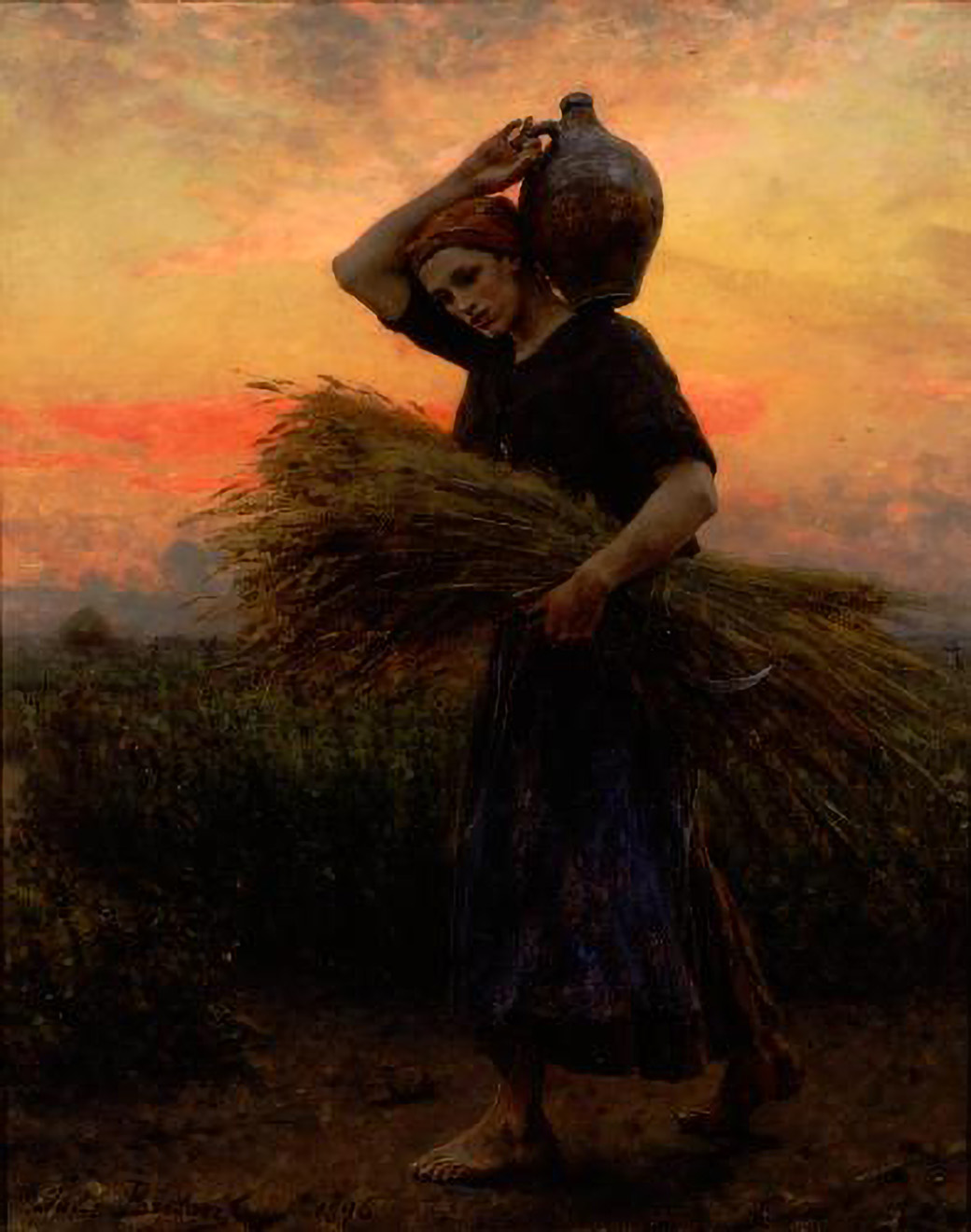
    Dawn (1896), Jules Breton | Wikimedia Commons. This work beautifully expresses Hosea’s message. The dawn arrives and we are expected to be at work, bringing the harvested wheat (souls brought to Christ) and “living water” of Christ to the world.

     Jesus addresses the question of prayer head-on in the gospel reading comparing the prayer of the Pharisee to that of the tax collector. Jesus describes the Pharisees’ showy devotion that lacks a sincere love of God in their hearts. The Pharisee in the parable “takes up his position” in the temple, which was undoubtedly one where he could be seen clearly, and “spoke this prayer to himself.” This is a huge clue that something’s backward; prayer is always offered to God and spoken to God, whether audibly or inaudibly. The Pharisee is primarily self-focused.

    After a cursory “O God” to start, we hear the Pharisee speak of himself during the whole prayer, contrasting his law-abiding deeds with “the rest of humanity — greedy, dishonest, adulterous.” Let’s note that his window on the world, himself included, is one of judgment. Jesus is clear about not being judgmental: “Do not judge, so that you may not be judged” (Mt 7:1). We all know people who are consumed with judging themselves and others (we probably fall into this camp ourselves at times). It is simply not compatible with being a Christian. Judging the worth of another being is something that rightfully belongs only to God. Furthermore, we know that he judges us all to be worth forgiving, worth saving, worth His love. We are asked to follow his lead and offer nothing but his love to the rest of Creation. 

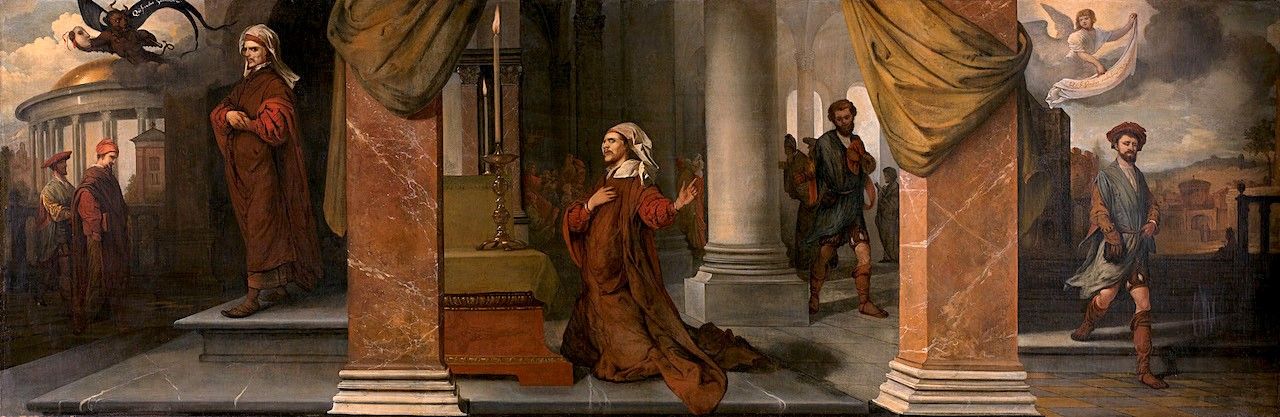
    The Pharisee and the Publican (1661), Barent Fabritius | Image from oceansbridge.com.

    The next item to note about the Pharisee’s off-kilter prayer is how much he speaks of himself as the agent of action. What a marvelous command of grammatical structure Jesus uses to display the self-centeredness of the Pharisee. Four times we hear the Pharisee put himself as the first person subject of phrases in his prayer: “I thank you,” “I am not like,” “I fast,” and “I pay tithes.” The Pharisee has so sublimated his own sense of self-worth that, apart from being the subject of the phrases, he places himself as the grammatical agent (meaning the cause and initiator of action). This semantic idea is a great way for Jesus to make his point: it’s not just the empty show of devotion that makes the Pharisee a hypocrite, it’s his lack of conversion of heart to place the Lord first, the agent of all. This almost unconscious grammatical structuring of his prayer belies the deep perversion and reversal of order in his being. 

    Let’s compare this with what Jesus tells us about the tax collector: “But the tax collector stood off at a distance and would not even raise his eyes to heaven but beat his breast and prayed, ‘O God, be merciful to me a sinner.’” We hear much about his physical bearing — standing off, eyes lowered, beating his breast. This is the stance of supplication. It reminds us of the great supplication offered for days by Esther in order to save the Israelites in Babylonia (see the reflection Esther: Model of How to Petition the Father) and of Hananiah, Azariah, and Mishael in Nebuchadnezzar’s fiery furnace.

    The tax collector’s prayer itself is so fundamentally correct that it forms the proto-Jesus Prayer. In this prayer, Jesus gives us another example of how to pray correctly (in addition to the Lord’s Prayer, of course). Let’s dissect it: the tax collector approaches in supplication, addresses God as the agent of action in the world (he says “merciful to me,” and as such he is the object of action, not the agent), and identifies himself as a sinner in need of mercy. And as we reflected this week, mercy is the way of the Kingdom, the currency of the economy of love. Jesus wants us to “pay forward” the mercy God gives us by forgiving “seventy times seven” times (i.e., infinitely). Acknowledging that we need God’s mercy is the first step in becoming more God-like and offering His mercy to others.

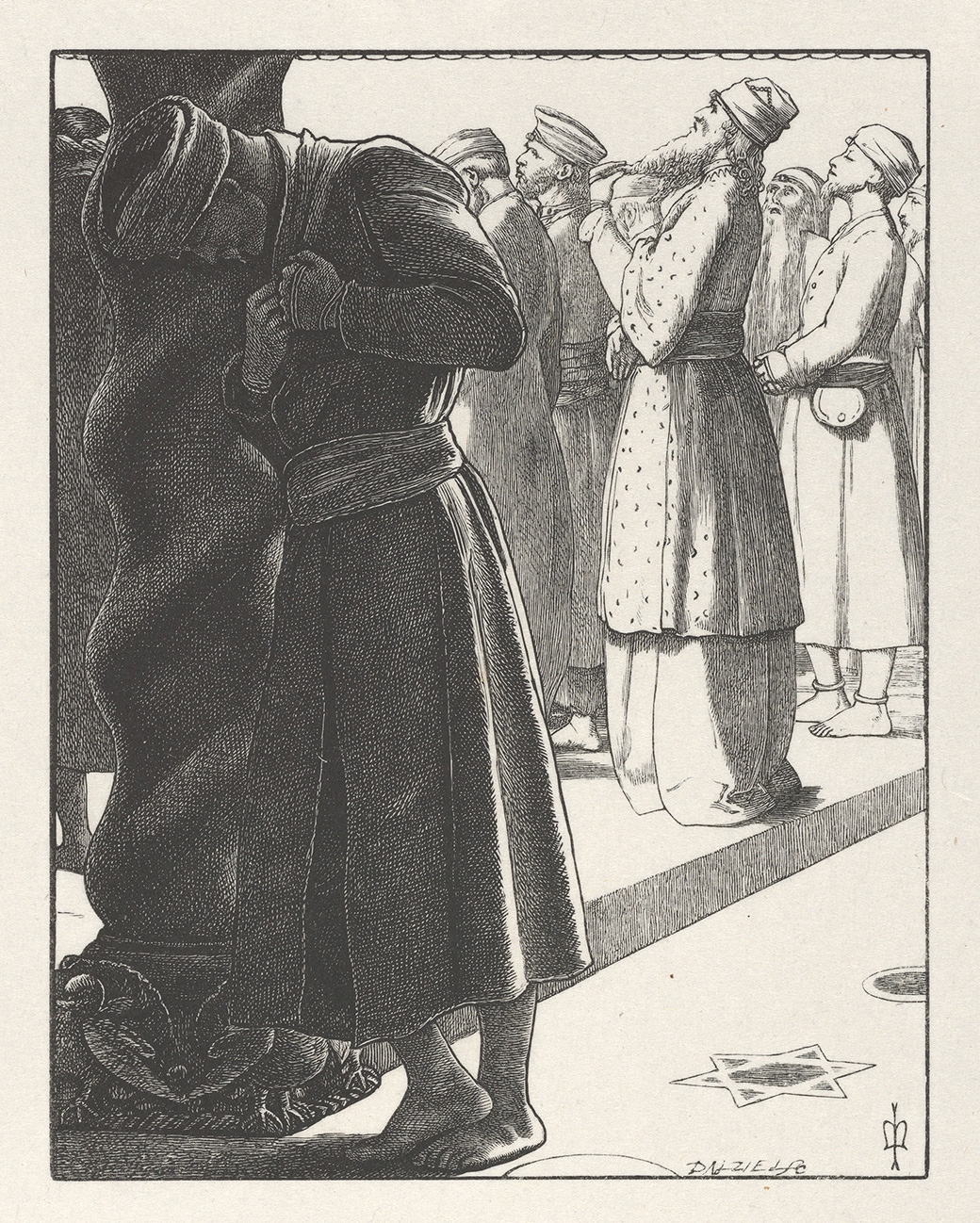
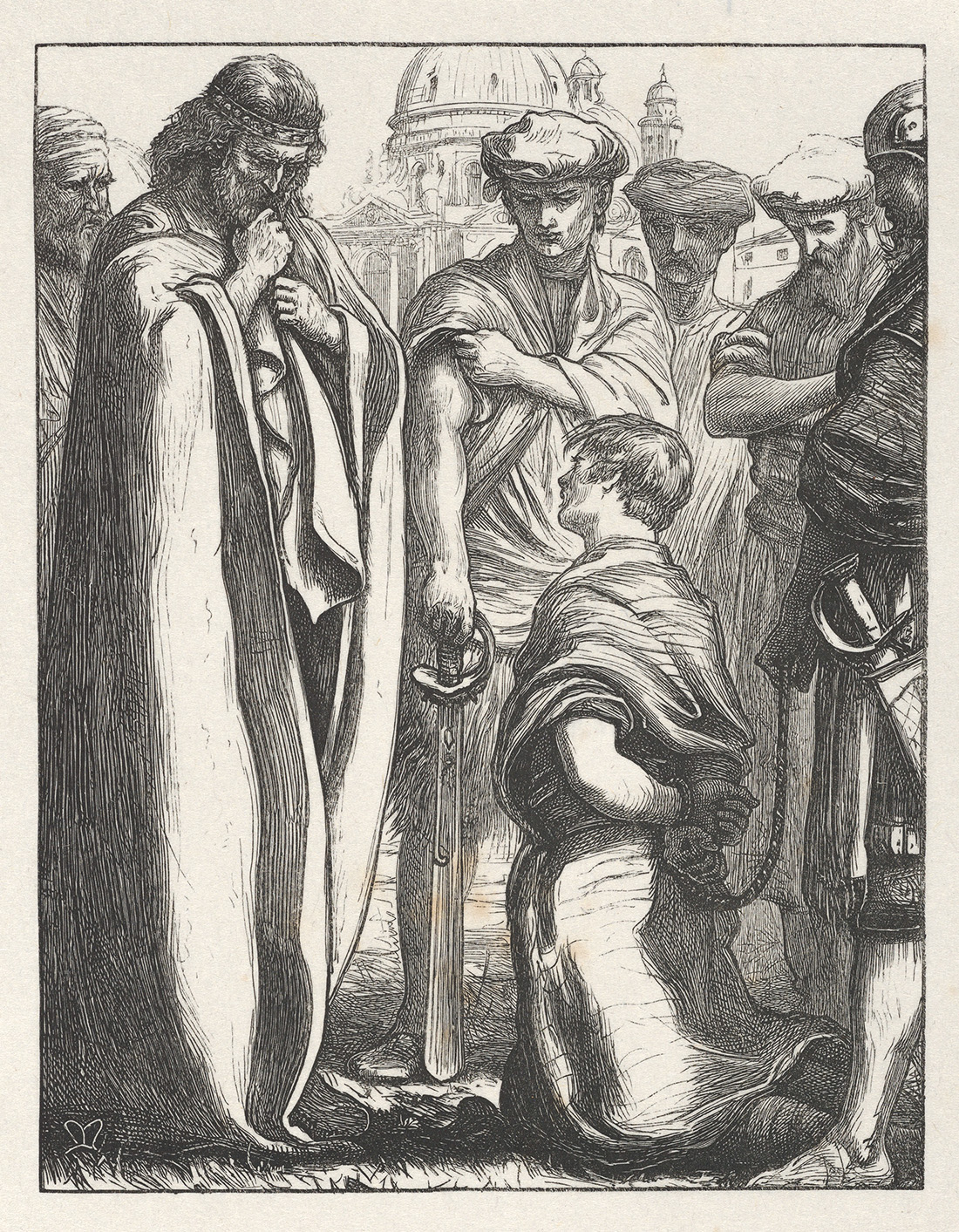
    The Pharisee and the Publican (1864), Artist: After Sir John Everett Millais, Engraved and Printed by Dalziel Brothers | Creative Commons, courtesy The Metropolitan Museum of Art.

    Today’s most common form of the Jesus Prayer is, “Lord Jesus Christ, Son of God, have mercy on me, a sinner.” We can see the marriage of today’s two readings — Hosea’s striving to know God who rises on the third day and the tax collector’s humble prayer for mercy. Praying to the second Person of the Trinity, our great high priest and chief intercessor who descended to earth to dwell and suffer with us, is a key gift in our Christian lives. The Catechism of the Catholic Church teaches us, “The name ‘Jesus’ contains all: God and man and the whole economy of creation and salvation. To pray ‘Jesus’ is to invoke him and to call him within us. His name is the only one that contains the presence it signifies” (2666).

    Thus, the Jesus Prayer unites the same correctness of prayer we find in the tax collector with the new reality that Christ brought to history with his death and Resurrection. The Jesus Prayer is powerful and draws us deeper into the mystery of being a part of the Church.

    “When the holy name is repeated often by a humbly attentive heart, the prayer is not lost by heaping up empty phrases, but holds fast to the word and ‘brings forth fruit with patience.’ This prayer is possible ‘at all times’ because it is not one occupation among others but the only occupation: that of loving God, which animates and transfigures every action in Christ Jesus” (CCC, 2668).

    I can testify that I’ve come to a much deeper appreciation of the Jesus Prayer in my own prayer life. I use it often when I find myself not concentrating during the Mass to bring myself back to the sacrifice at the altar. I use it when in Adoration, contemplating the mysteries of our Savior, and I use it now and again during the day when I need to remind myself of my purpose and my center: Christ.

    What better time than Lent, in its stillness and silence, to repeat the Jesus Prayer and let it sink in to transform our hearts? Let us take the Church’s instruction to pray in Jesus’s name as we ask God for mercy in the light of our infidelities and sins.

    For we know, as certain as the dawn, He will come.

  • Internal Transformation

    Internal Transformation

    Friday of the Third Week in Lent: Hosea 14:2-10, Mark 12:28-34.

    Today we hear Jesus affirm the greatest commandment to love God first and then your neighbor. The short exchange with the scribe after his answer seems at first glance either to be unnecessary or to elevate the scribe as judge of Christ’s answer. But this exchange is very valuable because God had been trying to teach the Jews for centuries, if not millennia, that a transformation of heart is more important than the rituals of sacrifice. The first reading underlines the type of transformation God promises as you come to Him — one that involves every aspect of yourself.

    One question has bothered me: does it seem egotistical of the scribe to test Jesus about the commandments? Jesus doesn’t seem too put out by this, and we have to remember that this was part and parcel of the scribes’ work. There are 613 commandments in the Old Testament, and the scribes’ job was to know them intimately and come up with complex scenarios to test them as they teach their people. If a prophet and healer appears, it would be natural for a scribe to converse with him specifically about the commandments.

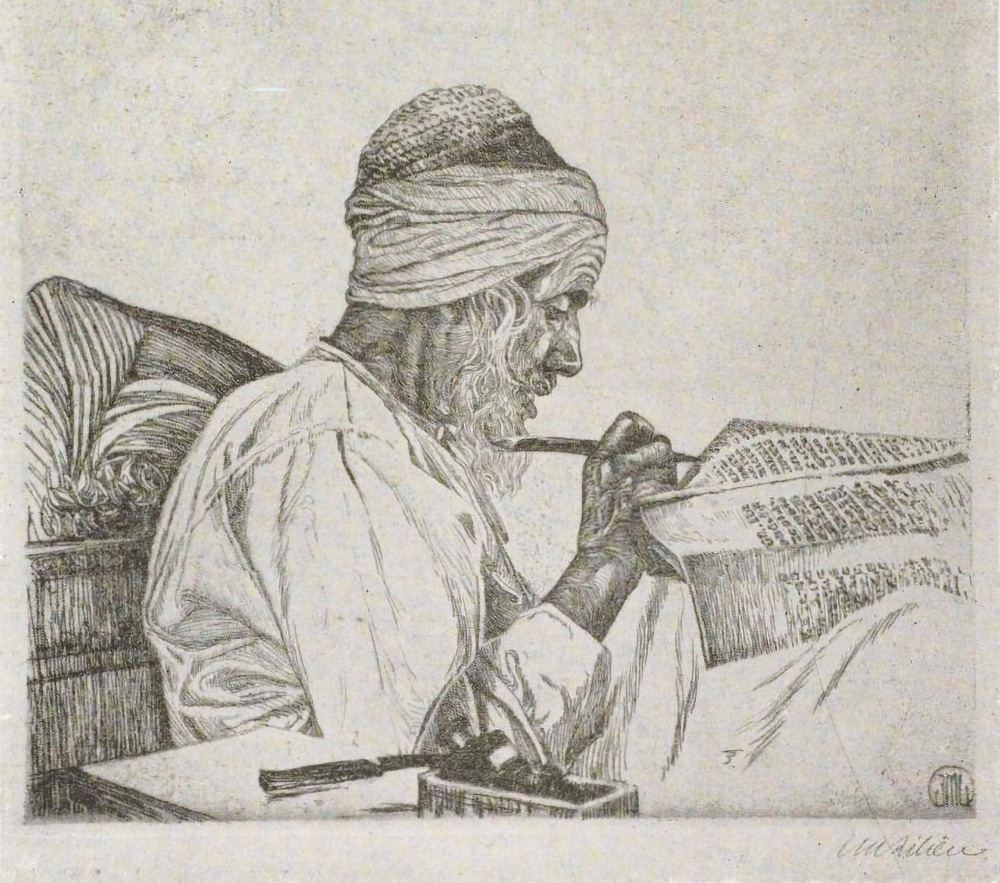
    The Torah Scribe (1914), Ephraim Moses Lilien | Wikimedia Commons.

    We all know Jesus’s answer, wherein he fuses two commandments into one great commandment of love: “The first is this:Hear, O Israel! The Lord our God is Lord alone! You shall love the Lord your God with all your heart, with all your soul, with all your mind, and with all your strength. The second is this:You shall love your neighbor as yourself. There is no other commandment greater than these.” Actually, there are three parts to this (the opening of the Shema plus the two commandments); see the post Agape has Only One Source: God for a longer reflection on this.

    In short, Jesus is showing that the complete love of God has a transformative effect on us so that we are infused with his Love in return, which naturally must be shared with those around us on earth in acts of kindness and charity. Love of God, in other words, has consequences; great consequences.

    The Word of God shared this same truth of internal transformation with the prophet Hosea over 700 years earlier, as we hear in today’s first reading. The first part of the commandment occurs as the Israelites are urged to return to the Lord fully. This complete love of God has a few markers in Hosea’s short passage: 1. Contrition for past sins: “Forgive all iniquity,” 2. Acknowledgment that he alone is God and Savior: “Assyria will not save us … We shall say no more, ‘Our god,’ to the work of our hands,” 3. Complete giving of themselves and their fate to him and his grace: “in you the orphan finds compassion.”

    Then, the fun part: “I will heal their defection, says the LORD, I will love them freely.” Our God is a God of forgiveness and love. All it takes is our commitment to him. And what do we get in return? Hosea does a poet’s job of describing the transformation of a person when God’s love is given freely. Hosea involves the senses: 

    • Touch: “I will be like the dew for Israel: he shall blossom like the lily”
    • Sight: “His splendor shall be like the olive tree … They shall blossom like the vine”
    • Smell: “and his fragrance like the Lebanon cedar”
    • Taste: “his fame shall be like the wine of Lebanon”

    This has always been God’s promise for those who uphold his Covenant. He reminds them what upholding the covenant means: “Straight are the paths of the LORD, in them the just walk, but sinners stumble in them.” In other words, this transformation demands your continued fidelity to God and the moral precepts he has given you.

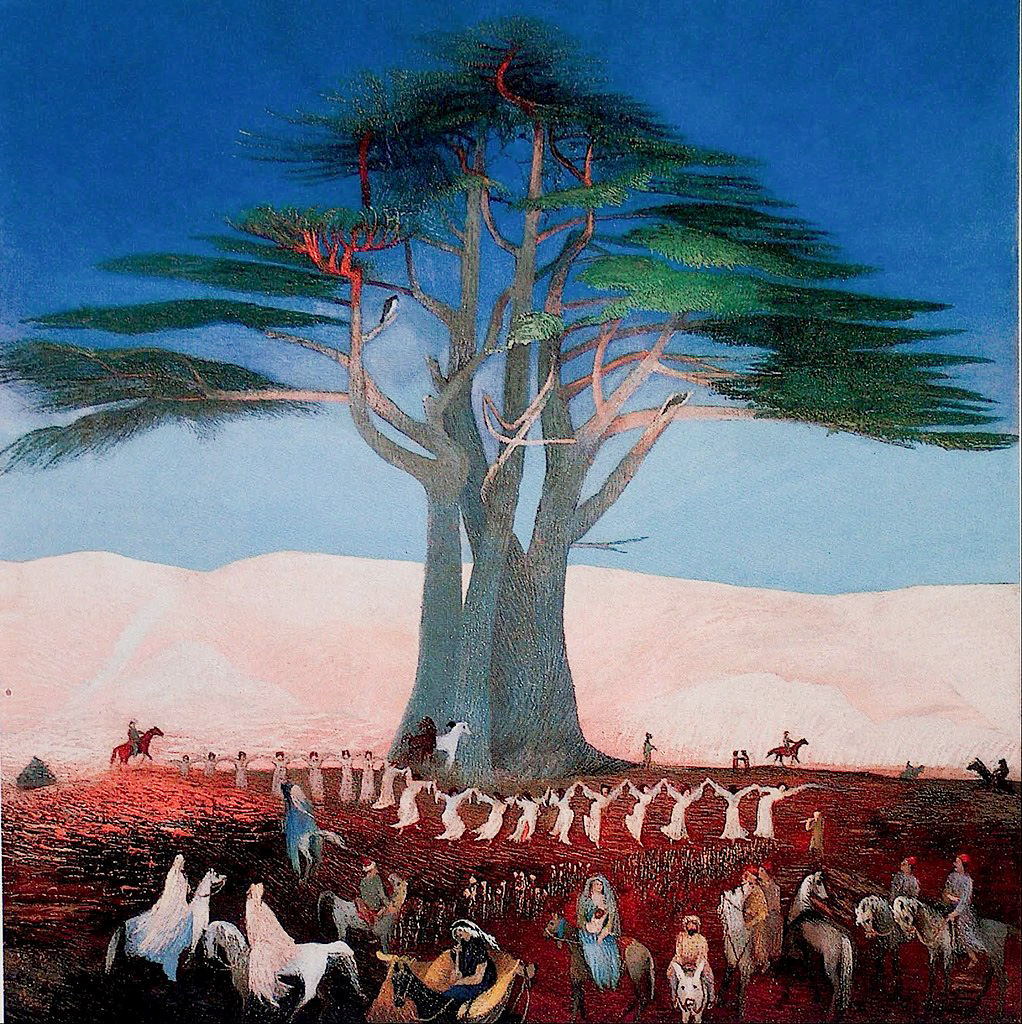
    Pilgrimage to the Cedars of Lebanon (1907), Tivadar Csontváry Kosztka | Wikimedia Commons.

    So, what about the “love your neighbor” part? Was that given by the Word of God to the prophets as well? It was, and we see it in the images they give us about the yield of the harvest. In today’s reading, we hear Hosea say, “Again they shall dwell in his shade and raise grain … ‘I am like a verdant cypress tree’ – Because of me you bear fruit!” God’s protection gives them the ability to “raise grain” and “bear fruit” — signs of a flourishing human community, one that cares for itself and prospers.

    The idyllic nature of these words describes a society where people care for each other and prosper under God’s guidance. Note how their ability to love each other is just as tied to loving/being loved by God as it is when Jesus ties these two in the greatest commandment. Not only does loving God come first, it also enables us to love our neighbor in the way he or she deserves.

    To return to the gospel pericope, the scribe hears Jesus’s answer and agrees, adding that this commandment “is worth more than all burnt offerings and sacrifices.” This little addendum demonstrates to Jesus that this scribe has set aside the fetishization of the 613 prescriptions, an overly ritualistic understanding of a relationship with God, in favor of a simple call to true internal transformation. This is why Jesus responds, “You are not far from the Kingdom of God.” The Kingdom is this state of loving God, being transformed by God and spreading his love throughout the world. 

    The challenge is to stay on the Lord’s straight path, and that’s why Christ has been given to us as the Way. We are joined to Christ on this Way by being baptized into his mystical Body, the Church. We must continually pray to Christ to intercede for us to the Father — to grant us his grace in helping us stay on the straight path. We must continually feed ourselves on his Word and his sacramental Body. All of this describes the liturgy that has been given to us through his Resurrection, a new Way of obtaining the Kingdom of God with all our heart, our soul, our mind, and our strength.

  • The Scattered People

    The Scattered People

    Thursday of the Third Week in Lent: Jeremiah 7:23-28, Luke 11:14-23.

    In today’s readings, we hear a lament from Jeremiah about the faithlessness of the Jewish people coupled with a gospel reading where Jesus’s exorcism of demons is met with skepticism. I am struck by a few things: the reluctance of humanity to accept God’s guidance and help as well as the stubbornness of humanity in believing we know what’s true and what’s not.

    But what jumps out at me most today are the final words from Jesus: “whoever does not gather with me scatters.” This tells us much about what God is trying to do and why. He offers us unity, and in unity, strength to rebuff the devil. This is the action of the Good Shepherd, to gather the sheep and save them from being scattered (which is the action of the wolf/devil).

    The Word of God today provides the logic of establishing the Church, and it is a fantastic lesson of love for humans caught in a spiritual battle with the forces of the devil.

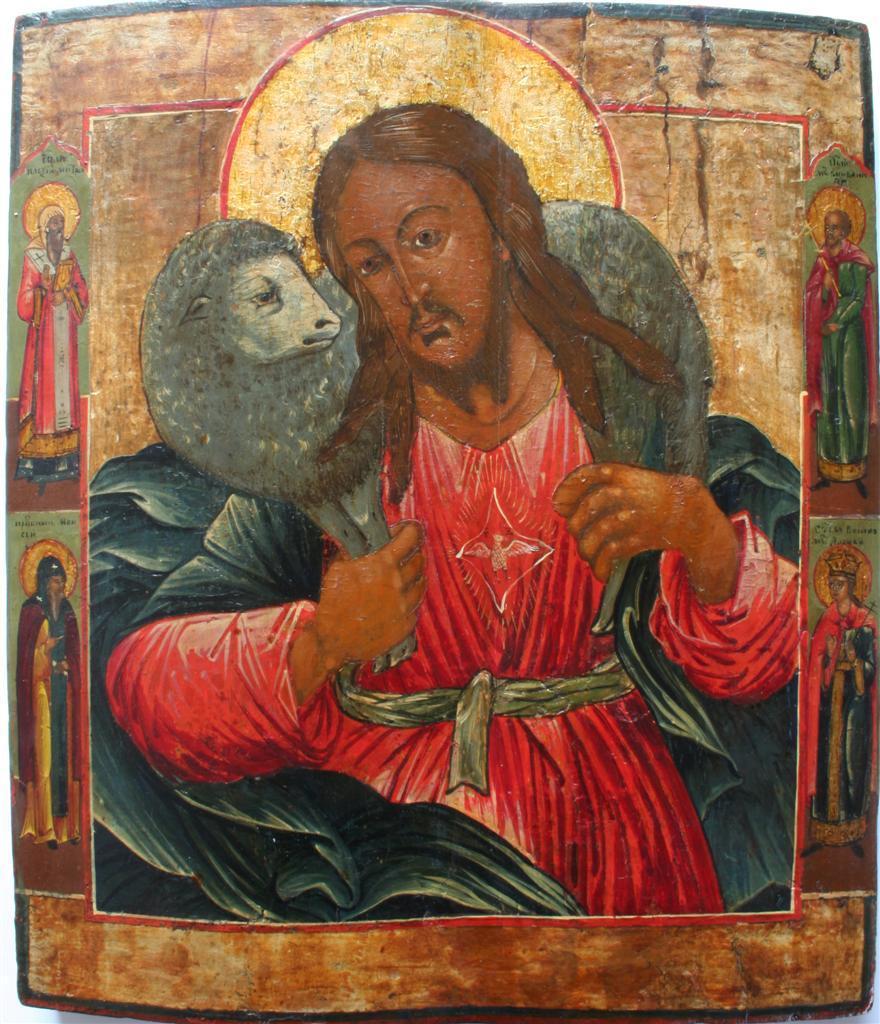
    The Good Shepherd, 19th Century Russian Icon | Wikimedia Commons.

    In the gospel reading, Jesus drives out “a demon that was mute” and the man who was possessed begins to speak. Skeptics said, “By the power of Beelzebul, the prince of demons, he drives out demons.” In some ways, we can all identify with these skeptics. Charlatans and carnival tricks are nothing new — in fact, Jesus and later the Apostles warn Christians about being taken in by charlatans pretending to be sent from God. In our science-driven age, we are taught to mistrust things until they are examined thoroughly and (dis)proven via the scientific method (or Sherlock Holmes-level sleuthing).

    This is an unavoidable reaction to miracles, which is why true miracles, especially those accomplished by Christ, always have a greater divine purpose than just “amazing” people. Every miracle done by Christ primarily serves to point to his own divinity as the Son of God come to earth, but each also has a deeper spiritual lesson. Today, the demon is mute, and we learn something about freeing our lips in response to God’s presence in our lives.

    Jesus delivers his lesson in response to lips that have been freed by things other than God — namely, worldly mistrust, which has its origin in the serpent in the Garden of Eden. He points out the ridiculousness of their logic: “Every kingdom divided against itself will be laid waste and house will fall against house. And if Satan is divided against himself, how will his kingdom stand?” He is pointing out that Satan is always seeking to divide and pervert humanity, and that he would never come to the aid of a human to heal another human. It is against his nature and what’s more, he could not maintain “his kingdom” on earth if half the time he was helping humans and the other half he was harming them. No, Satan would never be party to his own undoing. 

    After dispelling their logic, Jesus proclaims, “But if it is by the finger of God that I drive out demons, then the Kingdom of God has come upon you.” He wants them to be open to the possibility of the truth in front of them. It’s an interesting, patient way of engaging them. He acknowledges their skepticism but points out their flawed logic. He opens the possibility of the Kingdom of God having come upon them.

    Then he talks about Satan as a strong man, fully armed and guarding his possessions (humans). Jesus accepts their belief in Satan as someone so strong he can work wonders on earth and then trumps it completely. He says, “But when one stronger than he attacks and overcomes him, he takes away the armor on which he relied and distributes the spoils.” This is the Lord on earth, pointing out that Satan can never stand in the Face of God. 

    Then comes the line that jumps out at me: “Whoever is not with me is against me, and whoever does not gather with me scatters.” The first half of this sentence is stark and absolute. It makes me shudder a bit because it has been used since 2001 in reference to our “war on terror” (first by Hilary Clinton, then George W. Bush; more recently by Turkish President Recep Tayyip Erdoğan).

    The great difference, of course, lies in Christ’s actions and in the second half of the sentence. Christ heals, Christ loves, Christ sacrifices himself, and Christ gathers his sheep. Our political figures use this phrase when employing aggressive campaigns of violence, essentially the work of the devil in the world even if it is sold as “for the greater good.” These statements may upset some people, but Christ is unequivocal in his teaching to uphold the commandments (you shall not kill); everything he does nurtures and builds up humanity so that we can find our way to God.

    If everything Jesus does as the Way, the Truth and the Light is to gather and bring people to God, anyone who is not helping in this work is truly against that gathering action. This is why he says, “whoever does not gather with me scatters.” There are two main ways that “scattering” is used in the New Testament. In the positive sense, we read about seed being scattered in the Parable of the Sower (“the seed is God’s word,” Jesus tells us). The Greek word here is related to sowing/planting: σπείρειν (speirein). But there is another, negative sense of scattering that means to waste something, disperse it, or dissipate it. This is an entirely different word, which we encounter here in today’s gospel: σκορπίζει (skorpizei). The root word here is skorpios, or scorpion — clearly a negative connotation, and possibly the connection is the concept of penetration or the way scorpions scatter when you come upon them. 

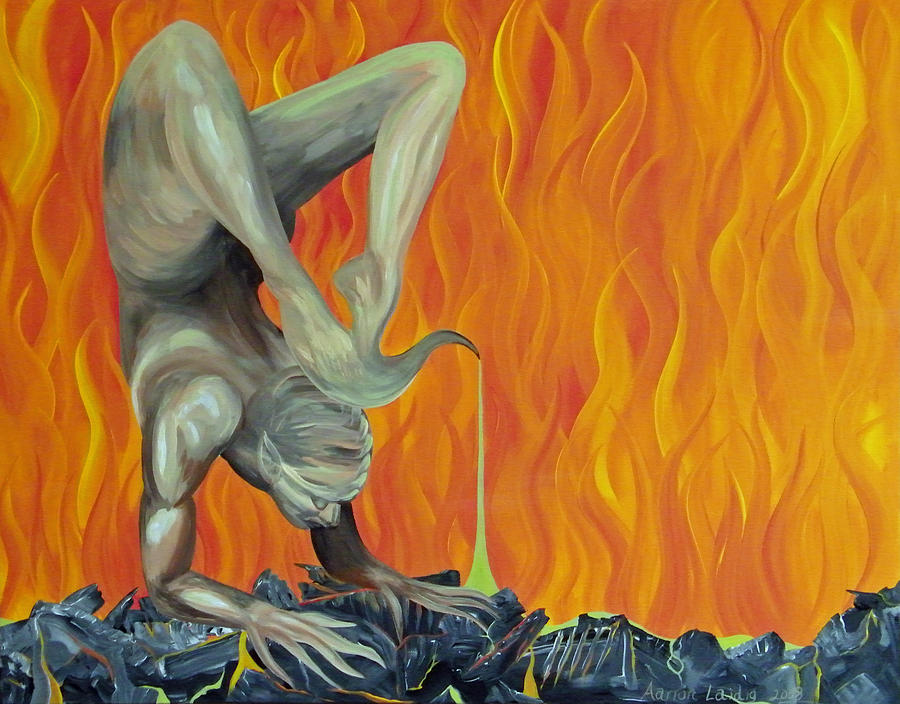
    Scorpion Oil Painting (2010), Fabrizio Cassetta | Image from fineartamerica.com.

    It does make me think about the way the devil operates in the world, this skorpios scattering. He works by tempting us, inflating our pride, making us operate solely out of selfish concerns. Looking at humanity from the 100,000-foot view, we see a mass of scorpions lashing out at one another’s dignity, each on his or her own self-determined path. The prince of the world thrives on us being scattered and without a purpose greater than our own selfish desires.

    God provides us with the great antidote to the scorpion’s venom in the form of His Son. This new Way, this brilliant Light, is a uniting force that gathers us to work together as we honor the Father. Indeed, one of Jesus’s other references to skorpios scattering occurs in the Parable of the Good Shepherd: 

    Very truly, I tell you, I am the gate for the sheep. … Whoever enters by me will be saved, and will come in and go out and find pasture. … I am the good shepherd. The good shepherd lays down his life for the sheep. The hired hand, who is not the shepherd and does not own the sheep, sees the wolf coming and leaves the sheep and runs away—and the wolf snatches them and scatters [skorpizei] them. (Jn 10:7, 9, 11-12)

    Here the devil (the wolf) is much more clearly identified with the skorpios scattering. And Christ the Good Shepherd protects us from Satan’s scattering by not leaving his sheep, by laying down his very life (which allowed him to vanquish Satan and death in Hell). We also see a clear connection to today’s reading in Luke where Jesus says “whoever does not gather with me scatters.” Jesus is completely consistent across all gospel accounts: his action is to gather the sheep, the Children of God, to himself so that through him (the gate), they can enter the Kingdom.

    What he tells his listeners today is that their response to him has eschatological implications. If they believe in him as the Son of God and follow his Way of gathering, then they are with him and have access to the Kingdom of God. On the other hand, if they are skeptical — worse yet, if they encourage others not to believe in him — then they have joined the devil in his work of scattering humanity.

    Scorpion (2008), Aarron Laidig | Image from fineartamerica.com.

    This brings us back to the mute man being given his voice in this miraculous exorcism. God always lets us have our voice, our free will. By giving this man his voice and engaging the skeptics in their arguments, Jesus is posing the question to us: what will you use your voice for? Will you join him in gathering people to the Way? Or will you join the devil in scattering people away from the Kingdom? The choice is yours.

    One last item: we can start to understand the divine logic behind the Church as the mystical Body of Christ, still at work in the world gathering humanity and providing a Way to the Father. Christ very deliberately establishes the Church and from the Apostolic Age onward, our saints and doctors of the Church have rigorously defended the need for the Church to remain united despite evils from within and without. The unity of the Church in its spiritual mission as the Body of Christ means that either we are with it in gathering people to God or we are against it in our scattering effect with the devil. May all Christian denominations understand this fundamental concept and find their way back to the one, universal Catholic Church.

  • Forgiveness is Mercy in Action

    Forgiveness is Mercy in Action

    Tuesday of the Third Week in Lent: Daniel 3:25, 34-43, Matthew18:21-35.

    Today’s readings slide from Azariah’s beautiful placement of his fate in God’s hands to the damning of the unmerciful servant in the gospel. If ever there was a day to consider the term fear of God, this is it.

    The Books of Psalms and Proverbs mention fear of the Lord many times, calling it “the beginning of wisdom” and the “fountain of life” and proclaiming that the person who lives in the fear of the Lord is “blessed.” St. Thomas Aquinas reminds us that fear of God is one of the gifts of the Holy Spirit, and it is best understood not in terms of fearing something evil but fearing being separated from our Father — a filial fear.

    Detail from A Hermit Praying (1663), Gerbrand van den Eeckhout | Image from artsy.net.

    Fear is a blessing? How gauche, how antiquated! We live in a time when liberation and freedom to do as you please holds the highest cultural value. But as we are swept up in this cultural moment, we have to remember that what we think is ours (our body, our thoughts, our actions) is actually a gift, too. It was a biological gift from a mother and a father, but more importantly, that spark of life, intellect, and soul is a gift from God. No biological mechanism can explain that gift of spirit that makes us human.

    Biologically, we are but atoms arranged in certain ways — proteins and fats and water that come together in a certain form. Even these building blocks had to come from somewhere, and we believe that our God is the Creator of all the universe. But more, we owe the divine Maker the fact that we are animated as intelligent, soulful beings, bridging the animal kingdom and the angelic kingdom.

    Here is where fear comes in and why we might call it a blessing. Imagine that source of divine power and goodness for just a second. Imagine how incredible it is that he cares enough to hold us in being, favored among all Creation. “Fear of God” means giving him the respect and love that he is due, but also clinging to him as the source of our being. To help us, the Holy Spirit gives us the gift of fear of God, something that aligns us spiritually, that endows us with the appropriate humble stance in front of our Creator.

    This is the way we should be thinking about the fear of God as we examine today’s readings: a gift to be treasured, one that gives us wisdom and blesses us, a feeling in our gut that we never want to be separated from our Father and the knowledge that our actions and hearts must be in line with God’s will in order to stay united with him and his grace.

    This type of fear of God is evident in Azariah in the first reading. This is part of the much-celebrated episode when the three young Jews Hananiah, Azariah, and Mishael are punished by Nebuchadnezzar for refusing to worship the gigantic golden idol he builds on the plain of Dura. They respond to the accusations against them by saying, “we have no need to present a defense to you in this matter. If our God whom we serve is able to deliver us from the furnace of blazing fire and out of your hand, O king, let him deliver us.” In a rage, he sentences them to be bound and cast into a fiery furnace so hot that it burns to death the men who throw them in.

    Dancing Hebrew youths, Mishael, Azariah and Hananiah, in a fiery furnace of Nebuchadnezzar (contemporary) Zoriy Fine | Image from fineartamerica.com.

    We read the Prayer of Azariah in today’s readings, which he offers to God when they are inside the furnace. Importantly, Azariah prays not for the three of them, but for the entire nation of Israel, “for the sake of Abraham, your beloved, Isaac your servant, and Israel your holy one.” He notes how depleted Israel is (indeed, they’ve been conquered by the Babylonians and many have been dragged to Babylon). In a clear reference to the psalms, he says he has no offering but his “contrite heart and humble spirit.” (Psalm 51 reads: “For you have no delight in sacrifice; if I were to give a burnt offering, you would not be pleased. The sacrifice acceptable to God is a broken spirit; a broken and contrite heart, O God, you will not despise.”)

    Having declared his pure intentions, he says, “we fear you and seek your presence.” As we shall see in the gospel reading, this deep respect, this profound obeisance, is key to our request for mercy. The entire prayer reaches its climax with his request: “deal with us in your patience and in your abundant mercy. Deliver us in accordance with your marvelous works, and bring glory to your name, O Lord.” How important that Azariah understands that all must point back to God and his glory! He asks for deliverance not just out of a selfish desire for his own life, but knowing that Nebuchadnezzar would be amazed at the power of God to save his people. Most importantly, he models for us what a gift fear of God is.

    Spoiler alert: the three young men are saved by God and not harmed in the fiery furnace.

    Upon their deliverance, the three young men dance and sing in the furnace a great canticle of thanksgiving, one that we use in our liturgy: Week 1 Sunday Morning Prayer of the Divine Office, and repeated for each solemnity and other high feast days. The canticle is one of my favorites to chant during the Liturgy of the Hours because it starts by blessing God and then goes through all of creation, encouraging everything to bless the Lord. This canticle is important because Hananiah, Azariah, and Mishael not only model for us the fear of God and heartfelt pleas for mercy, but also the correct response once you’ve received his mercy: sharing that mercy with all of creation.

    Turning our attention to the gospel reading, the Parable of the Unmerciful Servant starts strong. The servant who owes an impossible amount of money to the king follows the lead of Hananiah, Azariah, and Mishael, showing proper respect for and dependence on the king. The original Greek uses the verb προσεκύνει (a form of proskynesis), which is often translated as “worship” elsewhere in the Bible and means to bow on your knees in a display of supplication and reverence. 

    Further examination of the Greek helps us understand the exchange between the servant and the king. Erasmo Leiva-Merikakis writes in Volume II of his masterwork Fire of Mercy, Heart of the Word, “God responded at once to the servant’s plea because the man used one of God’s dearest names in adoration of him: ὁ Μακροθύμος—’the Long-suffering One’. The man’s plea is said to have affected the almighty King’s very viscera (σπλάγχνα), hidden under all his golden robes … ‘the Lord of that servant was viscerally moved to compassion’” (647-648). The king is so moved that he forgives his entire debt! In this way, Jesus is describing God the Father in his overflowing forgiveness and mercy, far beyond our expectations. 

    The parable then turns, however, and reveals that the servant’s display of respect was only skin deep. He finds a fellow servant who owes him a much smaller debt and instead of forgiving this debt in turn, as his king forgave him, he chokes him, refuses to show him mercy, and has him imprisoned. This is a grievous sin.

    Parable of the Wicked Servant (La parabola del servo malvagio), 1620, Domenico Fetti | Wikimedia Commons.

    The king’s action is not merely a good example for the servant. God’s mercy is a thing, alive, needing to course through us into the world. His mercy is the living force of love in the world. Leiva-Merikakis beautifully describes this, “Our vocation is to ignite conflagrations of love and forgiveness all around us. God’s light intends to be refracted through our being: it shines upon us not only for our own benefit, to dispel our own darkness, but also to stream through us and beyond us” (649). 

    Our very “vocation,” our purpose on the earth, is to share God’s mercy in the world. By so doing, we accomplish God’s will. But refusing mercy is the perversion of the Spirit. In the parable, the unmerciful servant shows that he does not have the type of fear of the Lord that is wholesome and transformative. The other servants must react at his perversion of the Spirit: “Now when his fellow servants saw what had happened, they were deeply disturbed, and went to their master and reported the whole affair.” Not sharing mercy with others is a cardinal sin. This leads us to the conclusion of the parable and a glimpse of divine justice.

    Even if it makes us uncomfortable, we must accept that God rightfully expresses anger when his goodness is hoarded and discarded. Divine justice hinges upon how we use the gifts God bestows on us, principally mercy: is it shared and given forth to others in acts of charity and love or is it discarded and replaced by selfishness, greed, and sadism? When we discard the energy of God Himself, we embrace the energy of evil, of the devil. What’s more, we reject ourselves, our purpose, to help bring others to God and into the Kingdom. We become an abomination of everything God has created us to be.

    The Unmerciful Servant (1864), artist: After Sir John Everett Millais, Engraved and printed by Dalziel Brothers | Creative Commons, courtesy The Metropolitan Museum of Art.

    So, we read that “in anger his master handed him over to the torturers.” Let’s look closely at the original Greek as we wrap our heads around God’s righteous anger and act of divine justice in this passage.

    The verb for his anger is ὀργισθεὶς (orgistheis), which can be translated as “moved to anger” or “provoked to anger.” Here we see that the king is provoked or moved by the actions of the servant; it is a response to something the servant has done. We must recall that while God is indeed all that is good, he is also the source of moral behavior, moral decision making, and moral valence (that is, what is good vs. what is bad). As such, he stands as the judge of behavior, and a judge is not silent when presented with something. Actions either uphold the good or go against the good. Being “moved to anger” means that he stands in his role as judge and proclaims the evil that he sees.

    Why anger? Why not sadness or emotionless judgment? Well, let’s return to the kind of God we know we have: one who overflows with love for his people and his creation. Is this the sign of impassivity? Should we expect a divinity so pure and full to not react viscerally to both the goodness he finds in us as well as the evil he finds in us? As it appears in today’s reading, God is viscerally moved to compassion — σπλαγχνισθεὶς (splanchnistheis) where the word σπλαγχνα (splanchna) means interior organs or intestines — and we can expect that he can be viscerally moved to something other than compassion when encountering evil. I don’t presume to know what he is moved to, but the scriptures tell us many times that he is moved to anger, so I take divine revelation for what it is.

    In his anger, the king “handed him over”: παρέδωκεν (paredōken), which occurs 18 times in the New Testament, notably when Judas hands over Christ to the chief priests, when Pilate hands over Christ to be crucified, and when Christ gives up his spirit in death. This is an irrevocable step in delivering something. And to whom does the king hand over the servant? The torturers, who will enact pain upon him “until he should pay back the whole debt” (200,000 years, I guess). We can rightfully say that in his goodness God does not take pleasure in this torture and note that he does not inflict it himself. Gehenna/Hell is set up for this purpose, a place for the people who pervert the Spirit and undermine God’s law.

    So as to not end this reflection as a total downer, let’s end with some wise words from Leiva-Merikakis, for whom today’s reading in part gives him the title for his three-volume work on St. Matthew’s gospel.

    The only thing we should be afraid of is not being merciful as our heavenly Father is merciful, for it is from unmercy that the most dire consequences flow, the ones reaching most deeply and devastatingly into both our psyche and our eternal destiny. For the Kingdom of Heaven is a kingdom of mercy, and mercy is never realized in the abstract but only through a concrete exercise of forgiveness. … Therefore, the ability to forgive our brother unceasingly and from the heart should be one of the primary concerns of our prayer, one of the most earnest pleas we make before the Throne of Grace (654).

  • The Unexpectedly Common

    The Unexpectedly Common

    Monday of the Third Week of Lent: 2 Kings 5:1-15ab, Luke 4:24-30.

    You’ve likely heard the adage that God works in mysterious ways. Today’s readings put a finer point on this: God ways are mysterious because they paradoxically appear to be common. Another way to say this is that God uses the things and people we know (or think we know) to enact his will in the world. This is unexpected because we expect something more flashy, more glorious.

    Oddly, we see people in both the Old and New Testaments reacting with anger when they are faced with this unexpectedly common appearance of divine will in the world. Isn’t that a bit odd? To get angry? I’d like to explore the significance of this instance of God’s plan and our reactions to it.

    God the Father with Angels, medallion, ceiling of the Stanza dell’Incendio di Borgo, Vatican City (c. 1510),
    Pietro Perugino | Wikimedia Commons.

    I particularly like the reading from the second Book of Kings because it reveals that our God is truly a God of all Creation, blessing people other than the Israelites. We might get a skewed conception of God, given our scriptural lens into God’s actions with his Chosen People. Yes, the story of humanity’s salvation lies in the Jewish people and then Christianity, but we can never allow our understanding to delimit God in any way.

    Jesus tells us that no one knows the Father except the Son, and many Doctors and saints have affirmed that God is unknowable. St. John of Damascus puts it well: “God is infinite and incomprehensible and all that is comprehensible about Him is His infinity and incomprehensibility” (On the Orthodox Faith).

    In my mind, it’s a good little jolt of remembering not to limit God when we read today that he “had brought victory to Aram” through the military commander Naaman. His reach is limitless, his love is limitless, and those outside of the Jewish nation have undoubtedly played a big role in revealing God to all the nations (as Jesus points out in the gospel reading).

    After hearing how the holder of secular power, the king of Israel, is sent into a paranoid fit at the appearance of Naaman from his powerful neighbors, Naaman finds his way to the true spiritual power of the Chosen People: the prophet Elisha. Here is the crux of the meeting: “Naaman came with his horses and chariots and stopped at the door of Elisha’s house. The prophet sent him the message: ‘Go and wash seven times in the Jordan, and your flesh will heal, and you will be clean.’”

    Note the scene: a big entourage of military might arrives at the prophet’s house and Elisha doesn’t even come outside to greet them. Elisha “sent him the message,” likely via a servant, and the message is almost offhand: “go dunk in the local river Jordan.” We can start to understand why Naaman got angry. It’s a problem of appearances.

    Naaman feels disrespected because Elisha doesn’t even appear before him. There is no ceremony, no waving of hands and calling out loudly to the Lord for healing. And the river Jordan isn’t a crystal clear mountain spring or even very big and mighty. All “signs” point to disappointment. Naaman typifies the angry disappointment of humanity facing the lack of a flashy and mighty God-on-earth.

    God is asking Naaman to accept him in humility. This is always an important step in our encounter with God. We are asked to put away our way of knowing in favor of his way of knowing. Humility (and humiliation) are our path to putting aside our own preconceptions and stubborn “knowledge” of how things work.

    Thus, God acts again through humble messengers: Naaman’s servants. They plead with the great military commander to do what was asked. Their logic is interesting. They say, you would have done something much more difficult if the prophet had asked it of you, so why not do the easier task? This reasoning resonates with him; he goes to the Jordan under the logic of a servant, finally ready to do what is asked of him.

    This is the baptismal sign under which God consecrates us to him, the same sign he gives to Noah and the earth and the same by which John the Baptist prepares us for Christ. For Naaman, “His flesh became again like the flesh of a little child, and he was clean.” We can thus understand his leprosy as a sign of his pride and reliance on his own powers of knowing rather than being open to God’s way of knowing.

    Once he humbles himself and does what he is asked, he is clean. The child-like condition of his skin mirrors the child-like openness of his soul, something Jesus asks of us: “Truly I tell you, unless you change and become like children, you will never enter the kingdom of heaven” (Mt 18:3).

    Medieval enamel and bronze altarpiece of Naaman washing in the Jordan (1150-1160), unknown artisan | Creative Commons, courtesy the British Museum.

    The final piece of the account is that Naaman returns to Elisha’s house and praises God, not the prophet. He has been truly converted to God, he has understood his humble relationship to the Creator and rightly praises Him: “Now I know that there is no God in all the earth, except in Israel.” He has changed his entire understanding of this journey — it wasn’t a journey to meet with a prophet and be cured by a human with powers; it was a journey to encounter God himself, who works through the common fabric of humanity that he loves.

    Like Naaman, the Nazarenes in the gospel reading are asked to accept the words of a prophet delivered in an unexpectedly common way. This scene from the Gospel of St. Luke occurs at the very beginning of Jesus’s ministry after he returns from his 40 days in the desert. He comes to his hometown of Nazareth and reads a famous passage from Isaiah in the synagogue: “The Spirit of the Lord is upon me, because he has anointed me to bring good news to the poor …” (Is 61:1). This is the message of deliverance in the Book of Isaiah.

    Jesus then proceeds to proclaim, “Today this scripture has been fulfilled in your hearing.” Shock of shocks! This son of Joseph, whom they all know since childhood, is claiming to be the Anointed One of God, ushering in a new era for the nation of Israel! They are incredulous; after all, they know him, he is common, and surely the Messiah won’t be the son of a common carpenter, much less that Jesus we’ve seen so many times we forget he’s even around.

    In response, Jesus begins, “Doubtless you will quote to me this proverb, ‘Doctor, cure yourself!’ And you will say, ‘Do here also in your hometown the things that we have heard you did at Capernaum’ (Lk 4:23). The proverb comes from a place of disbelief and contains an implicit “prove it to me first before I believe you” (that is, show that you’re in top shape before trying to heal me).

    Jesus knows that they want to test him, make him prove himself as the Messiah by working miracles in their midst. His answer is the same one that Naaman receives. The prophet won’t be made to perform or do circus tricks for the demanding audience. That’s not how God’s will is accomplished. He works through common, humble humanity — nothing proves this more than this moment when the Son of God acknowledges that he is also just a son of a humble carpenter named Joseph and this does not diminish in any way the power, glory, and majesty of his being the Messiah.

    Jesus sums up his poor reception among his childhood neighbors thus: “Amen, I say to you, no prophet is accepted in his own native place.” Human expectations of the miraculous and divine are too concerned with style and not concerned enough with substance. We, like Naaman and the Nazarenes, want something special, electric, and obvious to appear and wow us. Once we’ve made up our minds about people we know, we cross them off the list of potential sources of God at work in the world. We think of this as wise, worldly and mature, but God again and again tries to show us that the Spirit works through any and all according to God’s will — we can’t predict it with our intelligence, much less categorize things as likely or unlikely based on how well we know someone.

    This why Jesus’s words to “change and become like children” are so important. Children don’t carry the burden of preconceptions fossilized into place after years of experience. They are open to be amazed at the things around them, open to the wonder inherent in their parents, siblings, and friends. This is also why death to self and rebirth in the Spirit is such an important concept in the sacrament of Baptism.

    Christ in the Synagogue (1868), Nikolai Ge | Image from wikiart.org.

     Jesus goes on to give us another level of significance to Naaman and Elisha in the gospel reading. On one hand, the Nazarenes are just like Naaman in their expectations that the prophet will be flashy and commensurate with their expectations of grandeur. But on the other hand, Jesus points out that in the scope of salvation history they are the opposite of Naaman because they are the Jews, stubborn and unconverted in heart, while he is the Gentile outsider who displays a true conversion.

    Jesus sharpens the point of the Gentile miracles found in the scriptures. He says that this is not coincidence but instead God’s plan because human nature is what it is: “there were many lepers in Israel during the time of Elisha the prophet; yet not one of them was cleansed, but only Naaman the Syrian.” Jesus is saying that these Gentiles were chosen by God, like the Jewish prophets were chosen by God, and together they reveal the greatness of the Lord.

    The Jews take this as a great insult: “When the people in the synagogue heard this, they were all filled with fury.” Luke reminds us that this exchange takes place in the synagogue — the place where the Chosen People set themselves apart in their worship of their God. The weight of thousands of years of Jewish exceptionalism is felt in this moment. They were the Chosen People, special to God, with whom He makes his Covenant. They have crafted for themselves an identity in a hostile world that hinges upon their special relationship with God and here is a common man telling them — in their holy synagogue — that unlikely people and outsiders are in fact chosen by God over them, his People. It’s an outrage to them.

    They have missed Christ’s lesson. They could have reasonably reflected upon his words and allowed humility to enter their hearts like Naaman did at the prompting of his servants. Instead, in their rage, they drive him to the outskirts of town with the intention of killing him. This is not a conversion-to-God scene. Worse than missing his lesson or the opportunity to humble themselves before God, they have missed recognizing the Messiah in their midst. They are proving Jesus’s words to be true, that “no prophet is accepted in his own native place.”

    And in a sentence illustrating the massive significance of how they missed knowing him, “he passed through the midst of them and went away.” They miss recognizing Jesus, his lessons, and his new era of living in the light so profoundly that he can just pass through the midst of them. They are literally blind, groping angrily in spiritual darkness, unable to even remember who it was who they are angry with, why they are angry, or what they are doing with themselves there at the edge. (I reflected on a different aspect of this moment last year, considering the Spirit-like movement of Christ out of their midst. Read that reflection in A Prophet in his Own Land.)

    In Lent, we are called to prayer, fasting, and acts of charity (i.e., caritas or agape love). As we turn our attention to the vulnerable, the poor, and the needy, we should find ourselves reaching out to help them in some form or another. We are taught that we participate in God’s love when we act in charity and love, but let’s consider the mindset with which we approach our acts of charity and how that might impact whether we truly participate in God’s love.

    If we do good deeds with an eye on reaping eternal rewards, then this is self-serving.

    If we do good deeds simply because we are convinced it is morally right, without encountering God in the other, then we are spiritually frozen.

    If we do good deeds in an honest way but harbor a hidden feeling of the uncleanliness or lowliness of those we are serving, we are missing Christ in the same way the Nazarenes did.

    We have to become like children, ready to be filled with wonder as we notice God everywhere in creation. We cannot harbor a feeling of superiority, even if we push it down and don’t let it show. We have to humble ourselves before God, embrace our baptism and rebirth, and see that common, unexpected person as likely even more chosen than we are.

    A Shy Peasant (1877), Ilya Repin | Wikimedia Commons.