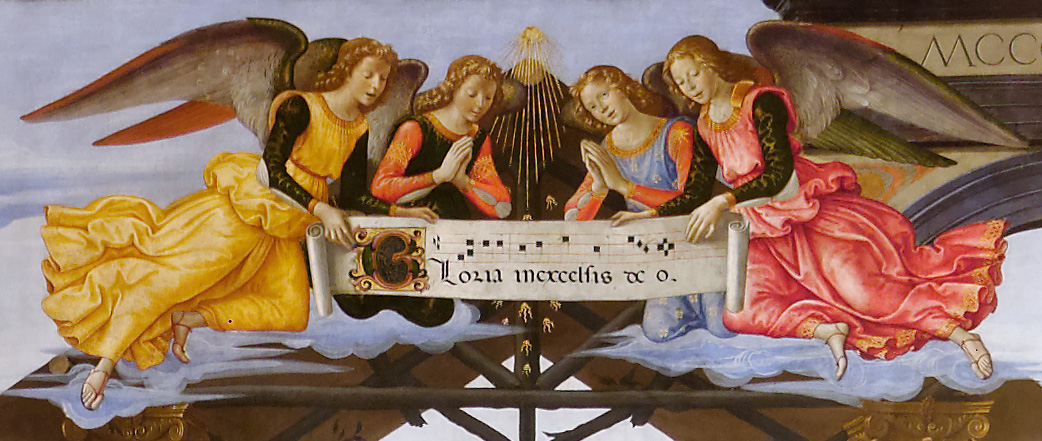
Tag: St. Luke

  • Doughnuts and Kenosis: Our Come-to-Jesus Moment

    Doughnuts and Kenosis: Our Come-to-Jesus Moment

    Thursday after Ash Wednesday: Deuteronomy 30:15-20, Luke 9:22-25.

    In today’s gospel reading, Jesus tells us plainly that to follow him has a personal cost, that a person must “deny himself and take up his cross daily.” This saying is familiar to most Christians, although most believers I know are more apt to quote, “love thy neighbor.” With Lent upon us, this concise description of the Christian life is especially meaningful. What exactly does it mean to deny ourselves? 

    In Luke’s gospel, today’s passage comes right after the miracle of the loaves and fishes when Jesus fed the 5,000 (not counting women and children). He is praying alone and when the disciples appear, he asks them, “Who do the crowds say I am?” followed by “But you, who do you say that I am?” Then comes Peter’s great statement of faith: “The Messiah of God.” Now, in the Gospel of St. Matthew, Jesus proceeds to name him Peter “the Rock” and gives him the keys to the kingdom of heaven. But St. Luke records a markedly different reaction: Jesus “sternly ordered and commanded them not to tell anyone.” His tone is very serious as he relates the prophecy of his own suffering: “The Son of Man must suffer greatly and be rejected by the elders, the chief priests, and the scribes, and be killed and on the third day be raised.” This is the point that “he said to all, ‘If anyone wishes to come after me, he must deny himself and take up his cross daily and follow me.’”

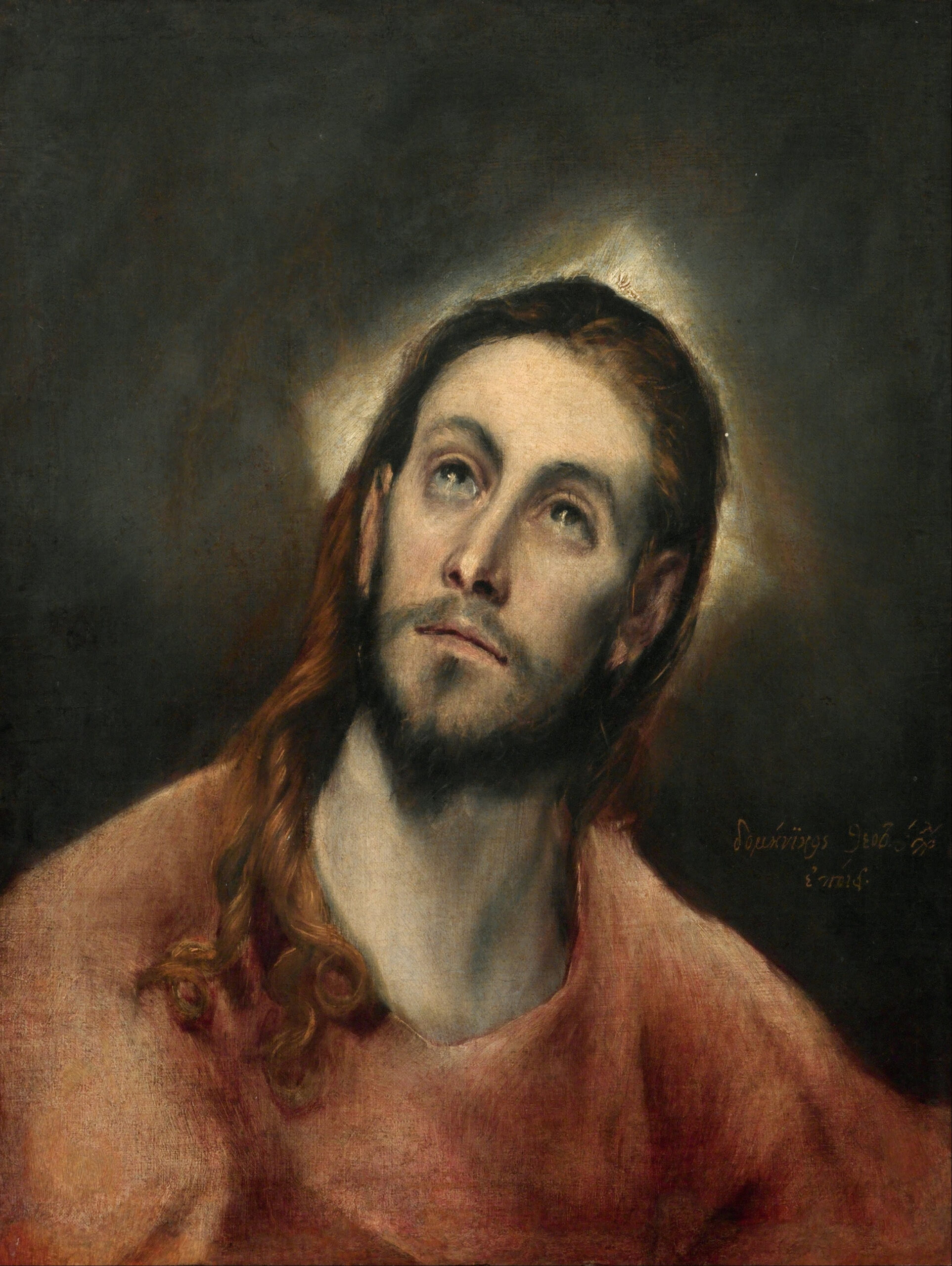
    Holy Face (1515-1525), Joan Gasco | Wikimedia Commons.

    To summarize this episode, once Christ knows that his beloved Apostles understand who he is, he decides that they must understand the repercussions of that knowledge. There was great expectation among the many Jewish sects over the coming of the Messiah, most of them boiling down to the establishment of a great Jewish nation on earth. Note how this type of expectation clashes with the great corpus of teaching and healing that Jesus had been doing in his ministry. Jesus wants to dispel these secular expectations and prepare them for the reality of what his coming will entail.

    How thoughtfully he prepares his Church, not burdening them with too much too soon! Imagine if the first works of his ministry were to tell everyone that he, a person of the One divine God, was coming to die for them because that incredible self-sacrifice would open the gates of Heaven for them once he resurrects and ascends. Not only would he sound like an overly self-confident crackpot, his message of humility and fear of God would be hypocritical. Instead, he had to do his Father’s will according to his Father’s plan. This means that even though he is the Messiah, he must eschew any earthly glory or proclamations to power. The reality is that earthly displays of power and glory are false. This is why we hear Christ tell those he heals throughout the gospels not to tell anyone of what they saw or experienced. As the very Truth itself, he cannot abide his works being proclaimed or twisted for mere earthly means. The deep truth that he must share is that God’s love — one typified by kenosis, or pouring oneself out, emptying oneself — is the matrix within which we are called to exist.

    How gently God reveals himself and his plan to us! First as a babe in an animal trough, unassuming, nothing to fear. Then, Jesus grows up within the tradition of the Chosen People that God has been cultivating for millennia. He — God Himself — deigns to be taught as just another child the ways of the Jews that he himself gave to them as commandments and precepts. He patiently listens to and learns the words of the prophets that he, the Word Incarnate, spoke to those prophets hundreds of years earlier. And when he does start teaching, he affirms every word of the law that has been given to them. Rather than bring down his awesome divinity in displays of fearful power, he draws them to himself by miracles of healing and words of love. In short, he shows them a vision of the Kingdom in his own humble self. Why does God’s plan unfold this way? Why does he subdue his rightful divine power and take on the frailty of humanity? Because he is love and this is how love works — he loves humanity and wishes for them to understand him and choose to come back to him of their own accord.

    St. Paul writes memorably to the Philippians about this very thing:

    Let the same mind be in you that was in Christ Jesus, who, though he was in the form of God, did not regard equality with God as something to be exploited, but emptied himself, taking the form of a slave, being born in human likeness. And being found in human form, he humbled himself and became obedient to the point of death—even death on a cross (Phil 2:5-8).

    Today’s gospel relates the key moment when Jesus lets his disciples know that God’s plan, and love itself, involves pain and sacrifice rather than a shortcut to glory and power. It’s important to remember that Jesus is fully human and fully divine — as a human, he shows us that we can make the decision to accept God’s way of love. None of his ministry or Passion and death is accomplished without his human assent to do the will of his Father.

    I used the Greek word kenosis above as theological shorthand for what St. Paul says, “he emptied himself, taking the form of a slave.” This word kenosis is a very important Greek term for Christianity. Fr. Jean Corbon, OP, defines it in his “Liturgical Vocabulary” in The Wellspring of Worship:

    The noun is derived from the verb “he emptied himself” or “annihilated himself” that is used in [St. Paul’s letter to the Philippians]. The Son remains God when he becomes incarnate, but he divests himself of his glory to the point of being “unrecognizable” (see Is 53:2-3). Kenosis is the properly divine way of loving: becoming man without reservation and without calling for recognition or compelling it. Kenosis refers first to the self-emptying of the Word in the Incarnation, but this is completed in the self-emptying of the Spirit in the Church, while it also reveals the self-emptying of the living God in creation. … Our divinization comes through the meeting of the kenosis of God with the kenosis of man; the fundamental requirement of the Gospel can therefore be stated as follows: we shall be one with Christ to the extent that we “lose” ourselves for him.

    As Fr. Corbon points out, kenosis is accomplished for our benefit by all members of the Trinity (this is, in fact, the state of their inexhaustibly flowing love), but we, too, are called to a type of kenosis. This is what Jesus is saying today: “If anyone wishes to come after me, he must deny himself and take up his cross daily and follow me.” Here is the true “Come to Jesus” moment! Denying oneself is not a simple matter of self-restraint over that second doughnut. The depth of Christ’s own kenosis is involved here: denying oneself is a love-filled endeavor of leaving your own desires behind and filling yourself with God’s will. 

    Denying oneself is not a simple matter of self-restraint over that second doughnut.

    Those new to Christianity ask why Jesus had to do things the way he did — dying in ignominy on the Cross especially. A part of the answer is that this “Way” itself is how we realize the Kingdom. It is the Way of God’s Love, not the logic of the world. Does this mean that we have to be demeaned in order to get to Heaven? I think that’s a question that comes from pride and fear. What a king thinks is demeaning the handmaid thinks is natural. Pride determines our outlook on what we do. This is the importance of the “deny himself” commandment. We must deny that part of ourselves that is pride, that thinks cleaning the sores from the feet of a beggar is demeaning, that thinks sitting silently and praying for some person who has lost control and is yelling at us is “weak.” If all we have to confront the difficulties and evil in the world is our own sense of who we are, then we’re bound to fight to keep that image of ourselves intact. Consider, instead, if we deny our own sense of who we are and fill ourselves instead with the invincible and inviolable will of God, and his inexhaustible love, then the concept of being demeaned is ridiculous. 

    Saintly Hermit, Walking on Water (c.1612), Abraham Bloemaert | Image courtesy the Detroit Institute of the Arts.

    What About My Personality?

    A book I am reading with our Lay Dominican chapter comes to mind. It is Fr. Reginald Garrigou-Lagrange, OP’s excellent little book Knowing the Love of God, a collection of the spiritual master’s retreat conferences as he preached them to his fellow Dominicans. He has a section entitled “The Personality of the Incarnate Word” that is very applicable to today’s gospel. He discusses the idea of our own sense of who we are, our personality:

    Many errors on the meaning of this word, personality, circulate throughout the world. Today many talk in a pompous way about the development of their personality, but, in reality, they are developing only some natural gifts that permit them to be distinguished from other persons, gifts which make their pride grow daily. They believe that to practice renunciation and the so-called passive virtues of humility, obedience, patience, and meekness, that is, to follow Christian morality in its totality, constitutes the annihilation of one’s personality (31).

    Garrigou-Lagrange goes on to define personality as “the principle of our reason and liberty,” something that makes us independent agents in the world. Importantly, he writes that personality “enables us to resist the attraction of merely sensible goods according to the judgment of our intelligence and the choice of our freedom.” What he means is that it distinguishes us from creatures who would just gorge themselves on something yummy (aka, doughnuts). We can think about consequences and make choices that might be different than the immediate “what is good right now.” I find his definition attractive; it brings together human intelligence, freedom, and volition. He then goes on to define levels of personality. The lowest level is like animal life, where people are driven “almost exclusively under the tyranny of their senses and passions.” But, he writes, “Personality can be gradually elevated as the activity of our spirit and will free itself from the purely sensible life. This can be accomplished in the measure that we learn to control the influences exercised upon us instead of passively submitting to them.” The independence of this type of personality involves a “grave danger,” however, because people might think that “the highest development of personality consists in absolute independence” (32). He notes that this is the way of pride and atheism and “is found fully realized in the Devil.”

    Garrigou-Lagrange then writes about how the mystery of the Incarnation teaches us something very different. Permit me to quote this great passage:

    While the great philosophers scarcely caught a glimpse of this, the saints truly grasped the way to the full development of our personality. It consists in losing in some way our own personality in the personality of God who alone possesses personality in the perfect sense of the word. He alone is absolutely independent in His being and actions … [The saints] were armed with a holy hatred of their own ego. They sought to make God the principle of their actions, no longer acting according to the rules of the world or their own limited judgment, but according to God’s ideas and rules as received through faith … They understood that God had to become for them another ego more intimate than their own. They had to realize that God was more “them” than they themselves because He is preeminently Being (33-34).

    The Kenosis of St. Bernadette of Lourdes (2020), Fr. William Hart McNichols | Image from frbillmcnichols-sacredimages.com

    These passages deserve careful thought and re-reading, to be sure. They provide another way to understand Christ’s words. Perhaps the cross we must take up daily is this work of losing our personality in the personality of God, the work of perfecting our person, which requires a kenosis. Lest we worry that this means the obliteration of our own “self,” Garrigou-Lagrange writes, “In the order of the operations of knowing and loving the saint has substituted, as it were, the divine ego for his own ego, but in the order of being his ego remains distinct from God” (34). This is an important point: we do not ever “lose” ourselves on the level of being. We are who we are. But on the level of what knowledge we accept and how we love and act in the world, we can (by the grace of God) substitute God’s person for our own. We accomplish this by filling ourselves with the Word in all ways — study of scripture, prayer, penitential acts (following Christ’s example), and in the sacraments. This is what it means to “live the liturgy” (which is not just a set of rituals we do at church). We lose that prideful way of knowing and acting that is always corrupt in this fallen world and put in its place the incorruptible way of knowing and acting that Christ gives us. In so doing, we perfect our personalities and ourselves.

    We can finally come face-to-face with the seeming paradox of Jesus’s final words in today’s gospel: “What profit is there for one to gain the whole world yet lose or forfeit himself?” Gaining the world — the sensible world that we see, feel, touch, eat, buy, etc. — is indeed profitless if we forfeit our “selves.” He is giving us a way to perfect ourselves, not forfeit our selves. The seeming paradox is that he tells us to deny ourselves so as to not forfeit ourselves (i.e., wouldn’t you be forfeiting yourself precisely by denying yourself?), but we can see that the first “self” we deny is the prideful human loner while the second “self” we wish to live forever is the person perfected in Christ. It’s still us, only fit to live in the Kingdom because we have undergone a kenosis in the image of our Maker.

    Let’s close this reflection with St. Paul, who lays out for us a concise summary of the Way of Christ: “Do not be conformed to this world, but be transformed by the renewal of your mind, that by testing you may discern what is the will of God, what is good and acceptable and perfect” (Rom 12:1-2).


  • The Dawn from on High

    The Dawn from on High

    Thursday in the 4th Week of Advent: 2 Samuel 7:1-5, 8b-12, 14a, 16, Luke 1:67-79.

    Christmas Eve! Ah, the Dickensian glow that illuminates my image of this day. It’s the day of antique sweets in lamp-lit Victorian windows, snowball fights and sledding, and the night Scrooge finds a heart. But this Christmas Eve of my mind is based on novels and centuries of traditions from various nations and tribes. We customarily think that the original one was very different, in a desert culture without any of these comfy trappings. But was it any less “magical” feeling?

    Mosaic of Joseph and Mary traveling to Bethlehem (1315-1320), Chora Church in Istanbul | Wikimedia Commons.

    Let’s consider Bethlehem: December and January offer cold, often rainy days. Snow is rare, but not unheard of because Bethlehem is actually on a plateau 2,550 feet above sea level. This is all the more interesting since the Dead Sea is 1,100 feet below sea level, just 30 miles east of Bethlehem (by car, that is; it’s about 20 miles as the crow flies). Joseph, leading a donkey with a very pregnant Mary on it, has likely spent a few days in Jerusalem, packed with travelers trying to get to their ancestral homes for the census taking. Could there have been shops with sweets? Sure. How about kids frolicking in the streets? Sure!

    They leave the cacophony to hustle the final six miles southeast to Bethlehem. The town is packed, and there’s a fair chance they’re wet and cold and looking for a warm fire to settle in — especially welcome before Mary gives birth. We can imagine their sense of relief, even at just a stable. It’s a place they can be out of the space of strangers with curious eyes and expectations of social niceties. Joseph likely got a fire going, unpacked some blankets, and heated up some food and water while Mary began her birthing pains.

    So, on the surface, we find some similarities that link our current experience of Christmas Eve with theirs. But as we turn to today’s readings, we see that there are deeper feelings — anticipation for something great we feel in our hearts — that link us more strongly to them.

    In today’s first reading, we find King David musing about building God a house, but God tells the prophet Nathan in a dream that He is the one building a house for King David — a line of heirs who will produce a son that God will be a father to. So, the first impression we have today is an earthly debt we owe to our God and an unlikely response from Him: a waving off of this debt and a promise, in fact, of something new and awesome that He will give us. The promise of a great Christmas present! Now that is something that resonates with the little boy in me on Christmas Eve!

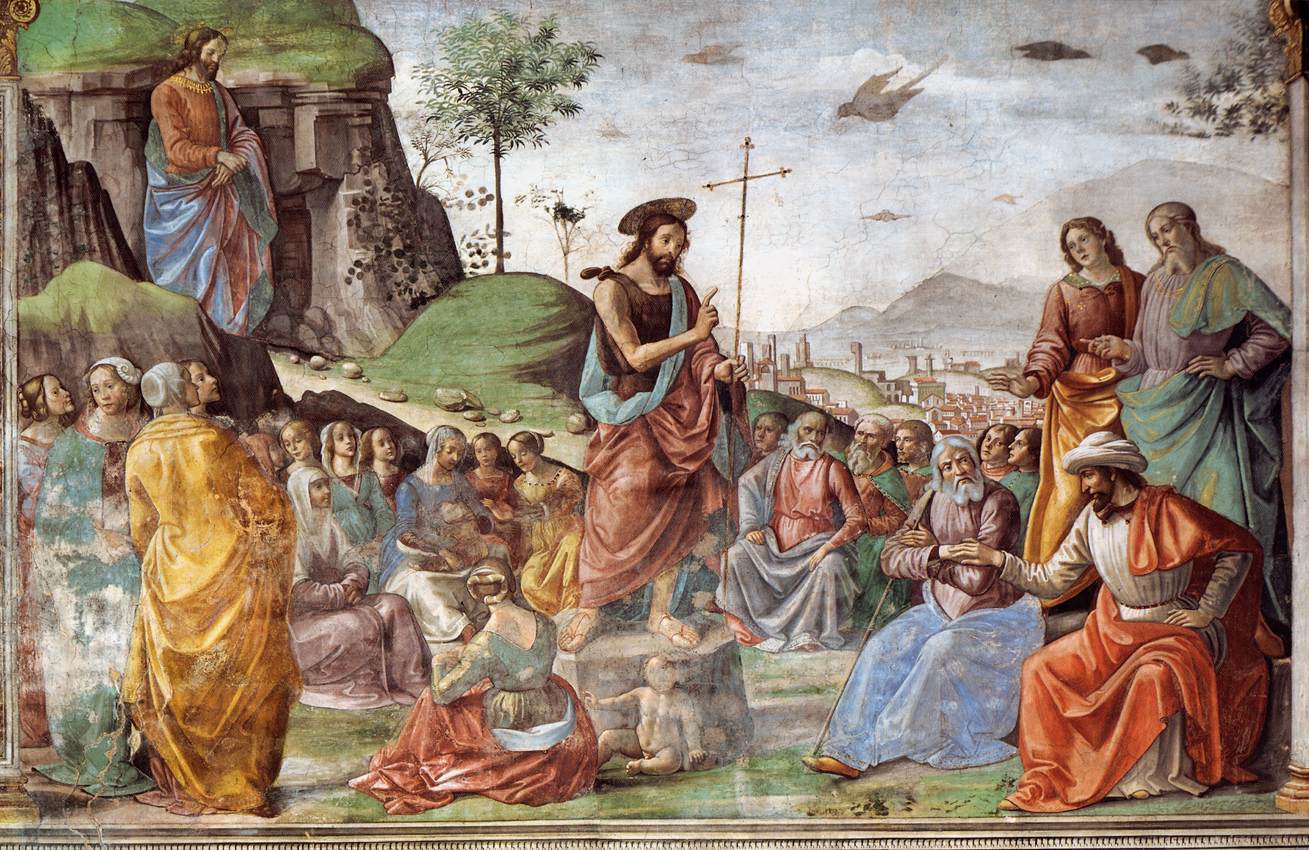
    Detail from Zacharias Writes Down the Name of his Son (1486-1490), Domenico Ghirlandaio | Wikimedia Commons.

    The gospel reading is a continuation of St. Luke’s gospel from the past few days. This is the great Canticle of Zechariah, also called the Benedictus, which he prophesies directly after his lips are loosened by the Lord. The first thing we hear is that he is “filled with the Holy Spirit,” which means that he is inspired by and experiencing the same Person of God who conceived Jesus in Mary’s womb and moved John in Elizabeth’s womb as Jesus came near.

    We often consider the Spirit as “fleeting” since He comes and goes like the wind in the world. Yet He operates with all the power, memory, and fullness of God the Father. The Holy Spirit connects moments of salvation history in an unexpected way. His presence can connect a person with all the great kairos of God’s coming to humanity, instilling a sense of peace and gravity that only comes with one aware of and active within that great plan.

    Moments with the Holy Spirit exist outside of linear time because they are an immersion in God Himself. The prophet Jeremiah, Zechariah the father of John, and St. Catherine of Siena (among many, many others) exist together in God when they are “filled with the Holy Spirit.” This sharing in the Spirit is what unites our Catholic (that is, universal) Church in a mystical relationship with the saints and angels. And nothing seems to better describe this moment of being filled by the Spirit than the great mixture of anticipation and joy of the coming of the Savior. Perhaps the feeling generated by the Holy Spirit is the true “Christmas spirit,” and we’ve just let secular notions replace the real thing.

    When we hear the Canticle of Zechariah, prophesied on the moment of Elijah’s return, the final prophet’s entry upon the scene, we share in the same heartfelt feelings of Christmas Eve. Zechariah speaks here on behalf of all of us recognizing that tomorrow brings the greatest Christmas present of all: Christ Himself.

    A short sidebar: isn’t it fascinating that Zechariah prophesies at the coming of his son, the great, last prophet? What I mean is that the trumpets heralding the coming of the Christ Event are simply multiplying. We know that John will be the great herald of the Messiah, but we even have a voice heralding the herald! We must imagine that the God-fearing people of Judea were tingling with prophetic trumpets in their ears.

    The Kingdom (20th century), unknown illustrator | Image from Pinterest.com. Could this be the shared vision of those who have been “filled with the Holy Spirit”?

    On to the Benedictus. The Holy Spirit, through Zechariah’s human voice, is thanking the Father, bending the knee to the Son, and encouraging the Baptist. This is what the world must do on Christmas Eve. “Blessed be the Lord, the God of Israel; for he has come to his people and set them free. He has raised up for us a mighty Savior, born of the house of his servant David.” We know this is the Spirit talking because He speaks of the Father and Son long before mentioning John, even though the mouth is Zechariah’s and he’s speaking at his own son John’s circumcision.

    The thanks and blessing go first to the Father, and the honor to the Son of the Father, the Messiah. Next is the profession of faith that leads to absolute trust in God: He has spoken through the prophets, He promised to show mercy, He gave an oath to Abraham. The Spirit seamlessly knits together God’s plan, despite the thousands of years separating events. This is kairos time. 

    This being said, the Spirit can turn His focus on the baby John: “You, my child, shall be called the prophet of the Most High, for you will go before the Lord to prepare his way.” The Spirit enables Zechariah to give a fatherly mission and blessing upon his son, the prophet-to-be. Even though the Spirit is the one talking, the man Zechariah is still there and in full possession of his faculties. He would not know his son’s destiny without the Spirit, and we can imagine the tears of joy that filled his eyes, how honored he must have felt to have Elijah returned as his son.

    These feelings of honor deepen into a river of gratitude and awe as he announces the Messiah, anticipating his son’s work: “In the tender compassion of our God the dawn from on high shall break upon us, to shine on those who dwell in darkness and the shadow of death, and to guide our feet into the way of peace.” The imagery of light is beautifully employed. Christ is the “dawn from on high,” sent with “tender compassion” by God, and “breaking” upon us. This gentle yet fierce dawn, brilliant and powerful, shines on the people of darkness who dwell in the “shadow of death.” Christ’s light is so pure it illuminates the Way, “guiding our feet into the way of peace.” As Christ will tell us, that Way is straight back to the Father, the One who has given us the dawn.

    The Spirit can find no better image for humans to understand the Christmas gift given by the Father. The Spirit tells us through Isaiah 750 years earlier: “The people who walked in darkness have seen a great light … and there shall be endless peace for the throne of David and his kingdom” (Is 9:2a, 7a). And the Spirit will speak through St. Paul 40-50 years later: “For once you were darkness, but now in the Lord you are light. Live as children of light” (Eph 5:8). Light is used from the beginning of scriptures (God said let there be light and there was light) to the end as a way to describe God’s plan and the purity of things infused by Him. Light is the work of prophecy, revealing truth, as we see in Zechariah today.

    The Sun (Solen), 1911, Edvard Munch | Wikimedia Commons.

    Light — real, life-saving light in human form — is also the Christmas gift that makes us giddy for Christmas morning. In a passive way, we can receive this great, undeserved gift, but do we recognize the extent of the gift? If we really receive Him, He begins to transform us. We receive blessings as we bend our will to his. We start to glow with His light.

    And as He taught us, our light is not meant to be hidden under a bushel basket. Sharing His light with others, we participate in the work of God here on earth. This is a step towards divinification or theosis for ourselves, but we think not of our own rewards. The important bit is that light. That precious dawning sun for humanity that we suddenly, amazingly can permit to shine through our very selves.

    Now that’s a Christmas gift!

  • Amazing Portents

    Amazing Portents

    Wednesday in the 4th Week of Advent: Malachi 3:1-4, 23-24, Luke 1:57-66.

    At Penn State University where I attended college, a grand, elm-lined pedestrian walkway called Pattee Mall leads from College Ave all the way up to the library. Classroom buildings line the 0.3-mile stretch, and it is after one of these — the particularly nondescript Willard Building — that the infamous Willard Preacher was named.

    This bedraggled fellow would preach a distinct brand of fire-and-brimstone gospel to all the students streaming by and, more often than not, a few philosophy types (or, alternatively, frat boys trying to outdo one another in offensiveness) could be found shouting back and forth arguments with the Willard Preacher. I always thought of him as a type of prophet. I recall walking away from him several times on my way to class with a bit of unease as if I should be lingering to hear an important message.

    Then again, I remember encountering the poor guy at the bus stop one time thinking he was a homeless beggar until I recognized his profile and the proud eyes behind his dirty long hair. It was odd to have this quiet moment next to someone who always seemed to be at the center of a maelstrom of noise. 

    Wild Man (contemporary), Mary Giacomini | Image from Pixels.com.

    I thought of the Willard Preacher when I read today’s readings, probably because I recognized that same sense of something important descending on the neighbors of Zechariah and Elizabeth. We read that “fear came upon all their neighbors” as his tongue was loosed upon the naming of John the Baptist. Something new came into the family — the name John — but the loosening of Zechariah’s mute tongue spoke of greater portents. Something was happening and they needed to pay attention.

    In the first reading, the prophet Malachi lays out more details about these great things manifesting in the house of Zachariah and Elizabeth. In hindsight, we can see how Malachai’s words directly relate to John and Jesus: “Lo, I am sending my messenger to prepare the way before me.” We have examined several times this Advent how John is “the voice crying out in the wilderness” foreseen by Isaiah. Even so, it’s worth recognizing how unique it is to foresee another prophet in addition to the Savior.

    You’d think Malachi’s prophecy would be concerned with the Messiah, and everything else is irrelevant. But it’s not irrelevant: God chooses to share this vision, “Lo, I will send you Elijah, the prophet, Before the day of the LORD comes.” Elijah, one of the greatest of the Jewish prophets, who was taken up to heaven bodily on a flaming chariot, is promised to return to earth before the Messiah comes, specifically in order to “prepare the way” for Him.

    As we heard this Advent, Jesus professes that John is, in fact, the promised Elijah. The Messiah and this final prophet, this returned Elijah, are inseparably linked. It’s an important way for God to signal the importance of His Son and at the same time, it’s the action of His Son’s entrance into humanity that blesses the entire line of God’s prophets that came before Him, making them more important as a consequence.

    But Zachariah and Elizabeth’s neighbors didn’t have the advantage of hindsight that all Christians do. They had the rich tradition of the Torah and the prophets, though. And as they considered what Zechariah’s freeing from being mute meant at the precise moment that his son, this new John, was made part of the Jewish tribe at his circumcision and name-giving day, they had this rich tradition to mine.

    They would have wondered what the opening up of a voice, a new voice, would have meant when it happens in miraculous circumstances. The symbolism was clear: it was as if nothing the respected priest Zachariah had to say was important until the announcement of his son’s arrival to the Chosen People. By extension, the entire tradition held its breath and its tongue, silent, until the announcement “John is his name” was inscribed. Zechariah has written the first line of a new book of prophecy. With the words of Isaiah, Jeremiah, Malachi and many others resounding in their heads, the people would then hear that Zechariah’s first words in many months are a great blessing to God after John is proclaimed. It is no wonder that “fear came upon all their neighbors and all these matters were discussed throughout the hill country of Judea. All who heard these things took them to heart, saying, ‘What, then, will this child be?’ For surely the hand of the Lord was with him.”

    The Prophet Malachi (c.1900-1910), Frederick James Shields, Stained Glass Design | Creative Commons, courtesy ArtUK/ Wolverhampton Art Gallery

    God planted the seeds of this sacred fear and wonder several millennia earlier. How they must have marveled with the sense of something of ultimate importance hanging in the very air around them! The Holy Spirit was active in the world, Elijah was alive again in the world, and God Himself was about to make His entrance into our mortal plane. Spiritual antennae were quivering, to be sure.

    I’d like to finish this short reflection with a look at Malachi’s description of Christ. The Word of God describes what His own work on earth will be: “he is like the refiner’s fire, or like the fuller’s lye. He will sit refining and purifying silver, and he will purify the sons of Levi, Refining them like gold or like silver that they may offer due sacrifice to the LORD.” We must never forget this message about our Savior.

    He is the worker, the hand that refines the impure material and creates something that will be suitable to give glory to the Father. This orders not just our theology but our philosophy of self. First, Christ comes not just to wave a magic wand of salvation but to work with a specific raw material to refine it for His Father.

    Second, we are that raw, impure ore, waiting to be refined. This means we should expect to change over the course of our lives. This means we need to look to Christ our Savior to change us, not to try to change ourselves by our own will and plans. And, this means that our end goal is to offer pure, “due” sacrifice to the Lord. Christ will teach us that the acceptable sacrifice to the Lord is our own heart, our will, our entire person.

    Third, we understand that Christ is doing this work not for his own glory but for the glory of the Father, and thereby reveals the endless cycling of love between the Father, Son, and us as crucial elements in that love.  

    What a theologically rich few lines of prophecy about the Messiah!

    And how lovely that we see this cycle of refinement for the glory of God active within Zachariah. God uses him as an example of how we must silence our own will while God does the work of refining our spirit — with our acceptance being paramount. Then, we are able to properly give glory to God. This cycle of love we see active in Zechariah is incomplete and imperfect, however, because Christ has yet to be born and make His great sacrifice to conquer death, which will carry Zechariah into the Kingdom alongside Him to glory the Father for eternity. But that doesn’t mean Zechariah’s glory-giving to God is imperfect, as we’ll see tomorrow!

    Circumcision and Birth of John the Baptist with Annunciation to Zechariah (1535), Teramo Piaggio | Wikimedia Commons.

    So, let us end these last few days of Advent with these great portents gripping us as they did the Jews at the naming of John. Let’s make sure our anticipation of Christ is configured appropriately: waiting for His help in refining our spirit to make us acceptable to the Father.

  • Maidservants, Rejoice!

    Maidservants, Rejoice!

    Tuesday in the 4th Week of Advent: 1 Samuel 1:24-28, Luke 1:46-56.

    As we approach our great day of rejoicing, the significance of our readings and the weight of salvation history build and magnify. We have been holding our breath, waiting for the Christ child to burst into the world, and these readings hit us like a burning in our lungs, desperate for the life-giving air just ahead.

    Today’s readings leave me reeling, almost giddy with the knowledge that we get to take part in God’s great plan. Today, we hear Mary’s great Canticle, the Magnificat, the longest passage in the gospels attributed to her and something we chant along with her every night at Vespers. For many years, I thought of this as a slightly out-of-place, slightly stiff prayer. It seemed odd to be coming from the young, pregnant virgin.

    But the readings today illuminate how Mary is the perfected maidservant of the Lord, offering Him rightful praise in a specific form handed down to her in the Jewish tradition. By tracing how Hannah prefigures Mary, much like other figures such as King David prefigure Jesus, we can see how the Christ Event transforms all who are caught up in His glory.

    Hannah presenting her son Samuel to the priest Eli (1665), Gerbrand van den Eeckhout | Wikimedia Commons.

    Hannah is the mother of the great prophet Samuel. Like Sarah before her, Hannah was barren and taunted by her husband’s second wife because of it. She prayed fervently to the Lord for a child and promised to dedicate the boy as a Nazirite if God would grant her a child. She prays so fervently (yet silent, swaying with her lips moving) that the priest Eli thinks she is drunk and scolds her. But she explains herself to him and he sends her away with a blessing. She responds, “Let your maidservant find favor in your sight” (1 Sam 1:18a, NASB and NKJV translations).

    Lo, and behold, she conceives and bears the boy Samuel. Today’s first reading recounts how she returns to the temple with the boy, encounters Eli again, and leaves the boy there to be dedicated to God as a Nazirite. 

    These facts alone make her a precursor to Mary: barrenness/virgin womb, God’s help in conceiving a child, a humble and prayerful demeanor as as a “maidservant of the Lord,” and giving birth to a great religious figure. But it is the beginning of the second chapter in 1 Samuel where we see the huge parallel today.

    At first I was flummoxed as to why the first reading wasn’t Hannah’s great prayer of thanks to God because of how it parallels the Canticle of Mary, but then I realized that it is actually used today as the responsorial psalm! It’s very fitting, too, because Hannah’s prayer looks and sounds much like one of the Psalms, which were meant to be sung, not just spoken.

    We can recognize the similarities right from the beginning. Hannah begins, “My heart exults in the Lord; my strength is exalted in my God,” and Mary begins, “My soul proclaims the greatness of the Lord; my spirit rejoices in God my savior.” The two are not an exact match, and rightly so for Mary did not just repeat Hannah’s praise word-for-word (nor did Luke crib the text from the Book of Samuel!). They share a certain form in terms of their poetry, a certain amount of content, and a similar posture of exultant trust in the Lord’s power. Here is a quick look at their similarities:

    Hannah’s PrayerCanticle of Mary
    My heart exults in the Lord; my strength is exalted in my God. (1 Sam 2:1a)My soul proclaims the greatness of the Lord; my spirit rejoices in God my savior. (Luke 1:46-47)
    There is no Holy One like the Lord, no one besides you; there is no Rock like our God. (1 Sam 2:2)the Almighty has done great things for me, and holy is his Name. (Luke 1:49)
    Talk no more so very proudly, let not arrogance come from your mouth; for the Lord is a God of knowledge, and by him actions are weighed. (1 Sam 2:3)He has shown the strength of his arm, and has scattered the proud in their conceit. (Luke 1:51)
    The bows of the mighty are broken, but the feeble gird on strength. (1 Sam 2:4)He has cast down the mighty from their thrones and has lifted up the lowly. (Luke 1:52)
    Those who were full have hired themselves out for bread, but those who were hungry are fat with spoil. (1 Sam 2:5a)He has filled the hungry with good things, and the rich he has sent away empty. (Luke 1:53)
    He will guard the feet of his faithful ones, (1 Sam 2:9a)He has mercy on those who fear him in every generation. (Luke 1:50)
    The Lord will judge the ends of the earth; he will give strength to his king, and exalt the power of his anointed. (1 Sam 2:10b)He has come to the help of his servant Israel for he remembered his promise of mercy, the promise he made to our fathers, to Abraham and his children for ever. (Luke 1:54-55)

    As we look at these two paeans, over 1,000 years apart, we can see why Mary spoke in this formal way: much like Messianic prophecy is fulfilled in Christ, the “right praise” of God by His faithful maidservant is fulfilled in Mary. This formal prayer/song of praise is used when righteous Jewish women have been blessed by God’s mercy and through His power give birth to a person who changes the world. The Spirit of the Lord guides Mary to give praise in a way fit for the gravity of her role in salvation history.

    The Visitation (1503), Mariotto Albertinelli | Wikimedia Commons.

    As for what distinguishes the two, we can say that Hannah’s prayer feels like a capstone moment — it’s the song of vindication from the underdog who has been blessed with victory. You hear her mention many reversals of fortune: the mighty become weak while the feeble find strength, full people are destitute while the hungry are fat, barren women have many children while the one with many children is forlorn, etc. She recognizes that only by the power of Almighty God can these things happen, and she also recognizes that faithfulness to Him is repaid generously.

    Mary, on the other hand, establishes less of a posture of the vindicated underdog and more of the simple handmaiden made as firm and beautiful as pearl by her faith in God. Those opening lines are just poetically beautiful: “My soul proclaims the greatness of the Lord; my spirit rejoices in God my savior, for he has looked upon his lowly servant.” She opens herself up so personally, so truthfully.

    And she is in touch with the part of herself that communes with God: it is her spirit that is rejoicing and her soul proclaiming. She also realizes her place in salvation history here: “From this day all generations will call me blessed.” And I think it is this recognition that enables her to take on the formality of this prayer as well as the following lines that detail His work in previous generations: “He has shown the strength of his arm, and has scattered the proud in their conceit. He has cast down the mighty from their thrones and has lifted up the lowly. … the promise he made to our fathers, to Abraham and his children for ever.” This is essentially the structure of the Canticle of Mary: a personal, soulful prayer of thanks followed by the recognition of the fruition of God’s saving power in the history of her people. This is a prayer all of us can say with her and thank her for giving us the words of “right praise.”

    All of our Advent themes are intertwining as we approach Christmas: anticipation, justice, patience, praise, recognition. But today’s readings demonstrate that the mystery is much deeper and more mystical than mere reflections can appreciate. Any type of “appreciation of themes and meaning” falls far short of coming face-to-face with the majesty and grandeur of God’s plan.

    This is where forms and poetry play a role: for instance, Mary inhabiting and transforming an ages-old psalm of praise as the mystery elevates her. Forms and formality play a huge role in our Catholic experience of our faith for this very reason. The mysteries lived out in the Mass achieve a level of call and response that echoes our deepest yearnings for God and His for us. The forms of the prayers and songs at Mass soar within the great river of praise as passed down from Noah and Abraham until now.

    I guess what I’m saying is that while I love a completely personal, charismatic, and spirit-filled experience of God and our faith, I truly believe that the forms of our prayer, the rituals of our sacramental life elevate us and our experience of the mysteries of our faith. More than simply enriching our faith lives, the forms are essential because they achieve a beauty of expression that is missing without them.

    Mass of Saint Giles (c.1500) Master of Saint Giles | Wikimedia Commons.

  • On Recognition

    Monday in the 4th Week of Advent: Song of Solomon 2:8-14, Luke 1:35-49.

    How would you recognize Jesus if He stood in front of you? This is a common enough prompt from preachers, although theologically it seems to hold no water. What I mean is that we hear a lot about Jesus’s second coming in the Book of Revelations and it sounds like there will be no doubt about what’s going on. If we ever have a chance to see Jesus in this lifetime, I think cataclysmic events and the great winnowing of humanity would make it evident. 

    Or maybe not.

    Maybe Christ, in a great act of mercy, will first meet each of us as a normal human, just so that we can give Him the love He gave His Father, almost like an entry ticket to Heaven. OK, then, how would you recognize Jesus if He stood in front of you?

    Today’s readings provide poetic moments of recognition. The Song of Songs, also called the Song of Solomon, Canticles, and Canticle of Canticles, is one of the most interesting books of the Old Testament. It doesn’t deal with moral teachings or God’s covenant with His people; what’s more, it celebrates sexual love and has passages that excite the passions. It’s possible to read it on a completely secular level as a long love poem. Yet early on, rabbis defended its inclusion in the canon of sacred scripture partly because it is said to have come from Solomon himself and partly because it was seen as an allegory of God’s love for His people, specifically in the gifting of His law and the installation of the Ark of the Covenant in Jerusalem. Christians built upon this allegorical reading of the Song of Songs and came to see it also as an allegory for Christ’s love of His Bride, the Church. I think that the section found in today’s first reading is a lovely way to look at God’s relationship to each of us on a very personal level. I think it’s entirely consistent with scriptural tradition to think of the author of the love poem as someone (perhaps Solomon) who seeks to use language and poetic form to communicate how very personal a loving relationship with God can be.

    Springbok in Damaraland (contemporary), Stefano Zagaglia | Image from www.stefanozagaglia.com.

    Each of the lovers describe one another with evocative metaphors and analogies. Today, we read: “My lover is like a gazelle or a young stag. Here he stands behind our wall, gazing through the windows, peering through the lattices.” This passage speaks to the vigor and power of our God, like a young stag. I like considering surprising images of our God. The Dominican theologian, Fr. Simon Tugwell, writes that “we need imaginative models, ways of looking at life, that leave room for novelty, for amazement, for that hesitant, enquiring joy that comes when we think we recognize something but are not quite sure” (Prayer: Living with God, 20). He traces scriptural examples where God is portrayed as a robber and a laundryman while Christians are deserters and nonconformists. He summarizes:

    The important thing is that we learn to use our imagination in a way that will lead us into the spaciousness of the Gospel, letting us become the kind of people whose hearts can be enlarged, the kind of people therefore who can keep company with God, whose heart knows no bounds. If we use our imagination in a way which cramps us, the results may look very proper, but we shall end up with a world too small for God. We may find, for instance, that we have opted for a morality that is desperately moral, but devoid of the wild freedom of true Christian morality: a morality that imprisons us in “goodness” instead of freeing us for God. And this is one of the worst kinds of imaginational cramp. (27-28).

    So, back to our passage, this virile Lord of ours is separate from us, but does not let that stop him from “gazing through the windows, peering through the lattices.” We have the sense that He’s an impatient and persistent lover.

    He doesn’t stop at simply looking. He calls to us: “Arise, my beloved, my dove, my beautiful one, and come! For see, the winter is past, the rains are over and gone. The flowers appear on the earth, the time of pruning the vines has come, and the song of the dove is heard in our land.” If this is God (and I like imagining that it is), then we start to realize that an aspect of His love is as insistent and longing as a lover’s. Lovers see the world differently. They are so caught up with one another that their perspective on anything and everything is tinged with the excitement of the relationship. Flowers smell better, sunsets are more beautiful, angry and frustrated people appear more baffling and silly. This is the love of God that we can be caught up in, that transforms for the better how we look at the world.

    The passage ends with God’s desire to see us: “Let me see you, let me hear your voice, For your voice is sweet, and you are lovely.” We read in the scriptures and the writings of the saints how often this sentiment is expressed from people in their desire to be in God’s presence. But, honestly, I’ve never thought that He thinks that way about me! This really is a failure of my imagination. How wonderful to consider that God longs for me just as much as I long for Him. More, in fact — I’m sure of it. Does He think my voice is sweet and I am lovely? (Seriously, I feel a little silly because this thought makes me want to blush! How great is that?) In the Song of Songs, we recognize God as a lover we long to be with, the thought of whom dominates our waking hours and our dreams.

    The Visitation (1737), Jerónimo Ezquerra | Wikimedia Commons.

    Another moment of recognition is given to us in the gospel of the Visitation of the Blessed Virgin Mary with her cousin, Elizabeth, the mother of John the Baptist. In an unforgettable image, “When Elizabeth heard Mary’s greeting, the infant leaped in her womb.” Before they are even born, the gestating babies of Jesus and John call out to one another, they make their mothers aware of their recognition. Then, “Elizabeth, filled with the Holy Spirit, cried out in a loud voice and said, ‘Most blessed are you among women, and blessed is the fruit of your womb. And how does this happen to me, that the mother of my Lord should come to me?’” Can we imagine a scene where the fullness of Christ’s coming is more evident? Not only has the Spirit impregnated Mary and made Elizabeth’s pregnancy possible, Christ is there, bodily within Mary, while the Holy Spirit “fills” Elizabeth with knowledge and words. The Persons of the Trinity greet one another through the women who bear them. John is witness and participant as well, and his ministry will resound with the shock waves of this encounter. 

    I feel that Elizabeth’s final words are appropriate for both of these women, not to mention all humans: “Blessed are you who believed that what was spoken to you by the Lord would be fulfilled.” Her words echo lessons from the Old Testament and speak it in a new way, incarnated as it were, as these two women bear for humanity a new understanding and perfection of this Wisdom. The blessedness of which Elizabeth speaks is partly grace and partly our own assent to be an active part of God’s plan. It is also, I think, the path to answering the original question posed on today’s reflection. How would we recognize God? I think it starts with longing for Him. We can long for Him in so many ways: as a Savior from the sin and corruption of the world, as a wise brother who can guide us to our Father, as a Father who welcomes His prodigal children, and as a lover who consumes our every thought and makes the world brighter just by being Who He Is. When we long for Him, we enter into a reciprocal gazing (He is already looking at us, calling to us). We can see Him in our hearts and in our imaginations, allow Him to share the silence of our ponderings and prayers. This attunes us to God and Godliness. We begin to see Him working through others and, in fact, beam with recognition when we witness His work in the world. Every time we give thanks to Him and ask for His help in becoming a better person, more fit to be in His Kingdom, He grants us greater depth of vision, a better ability to recognize the good and the bad. This lifelong process is our Christian journey, and none of us should be dragging our heels in getting on that pilgrimage!

    Icon of the Visitation (20th century), unknown artist | Image from passionistnuns.org.

    So, if Jesus comes bodily to earth again, I can only ask His help in recognizing Him and pray that my time spent longing for Him and getting to know Him bears the fruit of recognition.

  • A House for the Lord to Dwell

    A House for the Lord to Dwell

    The 4th Sunday of Advent: 2 Samuel 7:1-5, 8b-12, 14a, 16, Luke 1:26-38.

    Today we are asked to witness the scope of God’s plan through the generations as He prepares a home for Himself in humanity. Can there be a better reminder that we owe all we have to God than today’s readings? He grants a Chosen People laws to live by, prophesy to announce His plans, leaders to shepherd them, and, when they’re ready, a living home for Himself: the Virgin Mary.

    Madonna del Parto (Our Lady of Parturition), mid-1300s, Taddeo Gaddi | Creative Commons, courtesy www.chiesadisanvito.it. The Madonna del Parto is an iconic depiction of the Virgin Mary as pregnant, usually pointing to or cradling her belly.

    I’ve always considered King David’s desire to build God a house a very reasonable and respectful one. As he concisely puts it in today’s reading, “Here I am living in a house of cedar, while the ark of God dwells in a tent!” At some point, many of us have a moment when we count our blessings and wonder if we’ve been thankful enough to God. David was pretty respectful throughout his life, but this seems like one of those moments. I can imagine him sitting on his throne in a splendid new palace in Jerusalem, surveying the finery and feeling a cold ripple of guilt ripple from his scalp down to his tailbone. We read that he was King in Hebron for 7 years before taking back Jerusalem from the Jebusites, setting up there, and calling it the City of David. He reigned there for 33 years, and “In Jerusalem, after he came from Hebron, David took more concubines and wives; and more sons and daughters were born to David” (2 Sam 5:13). But then he has this moment, something is nagging him, God seems to be calling to him. In his kingly surety, he takes 30,000 men in a festive atmosphere to go get the Ark of the Covenant where it had been housed for 20 years (the house of Abinadab) about 7 miles west of Jerusalem. David’s ecstatic: he’s purchased a new cart for the ark and they’re leading it away in great rejoicing, “David and all the house of Israel were dancing before the Lord with all their might, with songs and lyres and harps and tambourines and castanets and cymbals” (2 Sam 6:5). Personally, I love the translation of “dancing with all their might” — it conjures quite a picture! 

    But something goes wrong. They only make it partway back because as they pass through a threshing floor, the oxen make the cart sway and Uzziah (Abinadab’s son who was helping transfer the ark) uses his hand to steady the ark — touching the Ark of the Covenant is strictly forbidden — and he drops dead instantly. “David was afraid of the Lord that day” (2 Sam 6:9), and abandons his great plan, leaving the ark at the “house of Obed-edom.” The great king, who gathered his great throng of people for this royal procession was mortified, upset, and even a bit angry.

    King David brings Ark of the Covenant from Abinadab (c.1240-1250), from the Morgan Bible | Creative Commons, courtesy marysrosaries.com. Note the hand of God above the ark as Uzziah falls down dead after touching it.

    What’s going on here? Why does this happen and why is it recorded in both 2 Samuel and 1 Chronicles? The full answer lies in today’s reading, but let’s consider what we’ve just covered. It’s no accident that Uzziah is struck dead as they pass over a threshing floor, a place of the harvest. The natural order of things is backward. We have an earthly king, even though he is favored and blessed by God, who goes out to “take” God into his city. The great pride of the king reaches a physical moment when Uzziah reaches out his human hand to “steady” the divine ark. This is not God’s plan for the natural order of things. Humans must approach the Lord in humility and be led by Him, not lead Him. What is being harvested here? God?! No, that cannot be; do we dare see our immense Creator as someone to be harvested and taken to fulfill our desires? King David got it wrong.

    But God continued to call to David. He wants to establish himself with the nation of Israel, but He needs David to better understand their relationship and the great plan of salvation of which he is a part. David hears that the house of Obed-edom has been blessed by the Lord for the three months that the ark has rested there and he decides to go back to try again. This time, however, he approaches with much more reverence. This is most clearly manifested in the way the ark is handled, as David himself realizes: “the Lord our God burst out against us, because we did not give it proper care” (1 Chron 15:13b). David commands that only Levites should carry the ark (as prescribed back in Moses’s time) and set out with a large group of priests, making sacrifices and making loud music again, but this time of a much more religious ritual nature. He even wears a “linen ephod,” which is the ceremonial dress of priests. This time, they make it all the way back to Jerusalem amid great rejoicing. They place it inside the tent David has pitched for the ark, outside of his palace. David seems to be doing things right this time. While this next passage seems to be simply a description of more ritualistic practice, there’s more going on:

    David offered burnt offerings and offerings of well-being before the Lord. When David had finished offering the burnt offerings and the offerings of well-being, he blessed the people in the name of the Lord of hosts, and distributed food among all the people, the whole multitude of Israel, both men and women, to each a cake of bread, a portion of meat, and a cake of raisins  (2 Sam 6:17b-19).

    Here we have the greatest commandment in action! You shall love the Lord your God with all your heart, and with all your soul, and with all your strength, and with all your mind; and your neighbor as yourself. God is guiding David to give us an example of loving Him and then loving your neighbors. 

    David Dancing (1998), Richard McBee | Image from richardmcbee.com.

    But it will take Christ to explain how this needs to be a transformation of heart and continuation of God’s love as expressed in charity, because David falls back into his prideful control mode again as we read in today’s reading. God speaks in a dream to David’s right-hand man, the prophet Nathan, telling him to respond to David’s desire to build a house with a reminder that God is the one in the process of building a home for the Chosen People, not the other way around. “Should you build me a house to dwell in? It was I who took you from the pasture … I will fix a place for my people Israel.” God then shares with Nathan a fabulous insight into his saving plan for humanity: “The LORD also reveals to you that he will establish a house for you. … I will raise up your heir after you, sprung from your loins, and I will make his kingdom firm. I will be a father to him, and he shall be a son to me.” There is so much here. First, God is re-fashioning the idea of a house to mean more than the hard-roofed dwelling that David has in mind. He expands this to mean a lineage, a heritage, but more than that: a type of life that extends beyond the one that David lives. This lineage, as we know, will bring forth the Son of God, so this is more than just living genetically through his line — it is the promise of a life in Christ’s Kingdom beyond the one David lives in now. That Kingdom, distinct from David’s kingdom, is the real “house” for David and all of humanity. This also carries with it the promise to convert the literal, ritualistic practice of the Time of Promises (David’s idea of a house) into a conversion of heart and life of love in the End Times (God’s idea of a house).

    With an expanded notion of “house” in our minds, let’s turn to the gospel reading. This is Luke’s account of the Annunciation, about which I’ve already written extensively (see Our Blessed Kecharitōmenē). There is much to say about Mary’s perfect “yes” to the Lord, and if you’re craving a reflection on that, I’d suggest clicking on that post. For today, however, I’d like to follow this thread of the house for the Lord. God, being the omnipresent, omniscient Creator, has always had a great plan and logic for the universe that we’ll never comprehend until perhaps we achieve perfect union with Him. But we have a good window to His saving plan as it begins with Abraham and the Chosen People. And we just explored another milestone moment with King David. Fast forward 1,000 years and we have the gospel reading, but let’s not overlook those thousand years with the struggles of the Jewish people to understand the teachings of the Lord through their prophets, their territorial battles and exile to Babylon, and their return to Israel as a people more religious and dedicated to God. That time of formation made them the people they became: devout, expectant, forged in penance and reconciliation. Historians write that Jewish girls in Mary’s time were steeped in a tradition of the Torah and the prophets and knew that one of them, perhaps sometime soon, would become mother to the Messiah. Perhaps God’s plan in the Time of Promises was to create the culture, readiness, and parents who would produce the perfect “house” for Him to enter the world. 

    Gabriel, in all of his fearsome glory, appears to Mary and bestows a divine title, recognizing the blessings of God upon her: “Grace to you, The One Whom Grace Inhabits, The Lord is with you!” (as my reflection in the post referenced above explains). If you were graced with spiritual senses, Mary must have glowed like the sun. Gabriel’s blessed message is the great pivot point of God’s plan for humanity: “Behold, you will conceive in your womb and bear a son, and you shall name him Jesus. He will be great and will be called Son of the Most High, and the Lord God will give him the throne of David his father, and he will rule over the house of Jacob forever, and of his kingdom there will be no end.” Gabriel has fused the house of Jacob, throne of David, and Fatherhood of God into this statement. Our dogma about Christ being fully man and fully divine is based in this revelation. The house of God is now fused with the house of David in a way that David himself never could have accomplished. God told David not to build Him a house because God was building His own house, a living house in human flesh, something that David could never have conceived.

    The Annunciation (1405-1409), The Limbourg Brothers. This is a page from the Beautiful Hours (Belles Heures) commissioned by Jean de France, duc de Berry | Creative Commons, courtesy wikiart.com

    This living house is Mary’s womb. This is why Mary is the Ark of the New Covenant. She is so much more perfect than the tent that housed the Ark of the Covenant apart from humanity because she is the way that God finds a way to truly dwell within humanity. 

    Time is of no matter to God, Who exists inside and outside of time simultaneously. But to us, to humanity … well, let’s say that we’ve been waiting for this Living House of God since the earliest humans learned to grunt. And we wait for it for four weeks every Advent, a commemoration of the long Time of Promises where humanity lived in darkness, awaiting the Savior like the dawn.

    Blessed are you, Mary, Kecharitōmenē! Blessed are we, as our God comes to live in us!


  • “Fathering” the Word of God – Part II

    “Fathering” the Word of God – Part II

    Friday in the 3rd Week of Advent: Judges 13:2-7, 24-25a, Luke 1:5-25.

    On the heels of yesterday’s reflection of St. Joseph’s righteousness and exemplary acceptance of God’s plan for him, today’s readings give us the stories of two other scriptural fathers, 1,100 years apart, with stunning parallels. Neither father accepts God’s word to the extent that Joseph does, although both of their sons are towering figures in bringing people to God: Samson and John the Baptist. While accentuating the true blessedness of St. Joseph, both readings underline our need to trust in the Lord as well as the impact of generational germination of the Word.

    The first reading from the Book of Judges presents the origins of the near-mythological Samson, the last of the judges before the Judaic monarchy is established. Samson’s family is not particularly distinguished; we don’t know much from scripture other than his unnamed mother worked in the fields like a common Jewish woman of the time: “the angel of God came again to the woman as she sat in the field” (Jgs 13:9). But God likes to work through the humble and lowly, doesn’t He?

    The readings today give us several important parallels between Samson and John the Baptist: both of their mothers were barren and older, both sets of parents were visited by an angel promising that they would become pregnant and give birth to men who would be important figures for the Lord and His work, and both fathers do some questioning before acquiescing to the angel.

    And then there are the parallels between the men themselves. Samson is to be brought up as a Nazirite, which means “one separated” or “one consecrated.” This was a class of people as recorded in the Book of Numbers, Chapter 6. God declares to Moses that Nazirites should not shave their hair, drink alcohol, or come in contact with corpses. Being a Nazirite was a sign of consecrating oneself to God, like an early form of voluntary commitment to a religious order.

    Samson’s life was filled with episodes of conquering nature or putting it to good use: slaying the lion with his bare hands, tying torches to the tails of 300 foxes to burn Philistine fields, killing 1,000 Philistines with the jawbone of a donkey, etc. These actions and his God-given superhuman strength served to make Jew and Gentile alike marvel at the works of the Lord and believe more deeply in the Jewish God. 

    Samson Slaying the Lion (1628), Peter Paul Rubens | Wikimedia Commons.

    John, for his part, shares many of these characteristics. We know that he was the “voice crying out in the wilderness” and he is aligned with nature in several aspects: “John wore clothing of camel’s hair with a leather belt around his waist, and his food was locusts and wild honey” (Mk 1:6, Mt 3:4). He lives apart, much like a devout Nazirite; today, we hear the angel tell his father, Zechariah: “He will drink neither wine nor strong drink.” He is also depicted throughout Christian art history as being wild in appearance, with long, uncut hair. Since he was completely devoted to being God’s mouthpiece (see A Day of Vindication by Our God), he was as close to a Nazirite in spirit as you can get, if not formally one. 

    (Recently, in his book, Jesus and the Dead Sea Scrolls, Catholic scholar John Bergsma makes a strong case that John the Baptist may have been part of the Essene movement from early in his life another proto-monastic group much like the Nazirites).

    But today’s readings aren’t about Samson and John; instead, they’re about God’s announcement of these great figures to their childless, barren parents. This, in itself, is proof of God’s loving mercy and overflowing generosity to those who remain faithful to Him. There are many stories of God granting pregnancies to barren women in the Bible, starting with our patriarch Abraham and his wife, Sarah. In sympathy with these women who lived in a culture where birthing children, especially sons, was given such importance, we see that God responds to their feelings of inadequacy, abandonment by God, and failure. Into these hearts, yearning to feel God’s healing love, He delivers a miraculous fecundity. I am reminded of previous reflections on agricultural harvest and fertility. God’s blessings carry this same imperative: to bring forth fruits of righteousness. For Samson’s mother and John’s mother, these fruits are their sons. 

    With Mary, God gives us a turning point. He sends the Spirit to bring about Jesus in her womb, and here divinity itself becomes the answer to humanity, which has repeated its sacrifices and strivings generation after generation to no avail. As Fr. Jean Corbon writes, the time leading up to Mary “is also the time when prophetic words and cultic sacrifices are repeated again and again; nothing can do away with this repetition, which signals the grip of death, until the coming of the event that ‘once and for all’ delivers man from death” (The Wellspring of Worship, 35).

    Women prayed for children in the Time of Promises because they were caught in the wheel of generational futility, the “grip of death.” With Mary, the child that is born is a new being, a God and man, who establishes His Reign on earth and delivers humanity from the grip of death. No longer do we need long for children alone to prolong our lives on the planet because Christ has opened up for us life eternal!

    After Christ, our spiritual fruits, rather than physical offspring, are the fruits for which we pray and upon which we pin our hopes.

    Fruits of the Spirit (contemporary) Leann Bowen Fine Art | Image from etsy.com.

    St. Paul is very good at exhorting us to embrace this new state of being. He recognizes how the Nazirite tradition prefigured the state of being a Christian. Sanctifying ourselves to God and restraining ourselves from worldly things is now the de facto state for all. This is because of the Spirit, who descended upon Mary and whom Christ has promised will guide us throughout the End Times. Paul writes to the Galatians: “Live by the Spirit, I say, and do not gratify the desires of the flesh. … those who belong to Christ Jesus have crucified the flesh with its passions and desires” (5:16, 24).

    We are all now anointed, set apart, and sanctified for God thanks to Jesus Christ. We must live by the Spirit, and this brings us back to the idea of fruitfulness and fertility. The new fertility is one of the Spirit. Paul writes: “the fruit of the Spirit is love, joy, peace, patience, kindness, generosity, faithfulness, gentleness, and self-control” (Gal 5:22-23a). The fruit that we bring forth into the world is God’s love! This is marked by charity and the personal attributes that Paul lists.

    Note that this is real fruit — it represents the true germination of the Word in our hearts and the creation of new selves. More importantly, this new self is outwardly focused, generating God’s love within all those we meet. We cannot deny the impact of pure charity, forgiveness, patients, and generosity on others. This is the harvest we are called to bring into the Kingdom.

    Of course, we’re imperfect (thanks be to God for the sacraments of Confession and Eucharist!).

    Let’s return to the fathers in today’s readings: Manoah and Zechariah. Both men reveal an imperfect reception of the Word of God delivered by the angel. First (in verses skipped by the Lectionary), Manoah reacts to his wife’s news of the angel by asking God to hear it himself: “O Lord, I pray, let the man of God whom you sent come to us again and teach us what we are to do concerning the boy who will be born” (Jgs 13:8). God sends His angel again, but once again to Manoah’s wife, and she has to run to get Manoah to meet him.

    We are witnessing a little frustration by Manoah that God isn’t doing things the way he wants him to. Manoah asks the angel what they should do with the child and the angel responds a bit dismissively, “Let the woman give heed to all that I said to her” (Jgs 13:13). Like Joseph, Manoah is being asked to take a back seat here, but he’s not quite as good at accepting this as Joseph.

    Manoah wants to make an offering to the angel in response to the news and asks, “What is your name, so that we may honor you when your words come true?” But the angel of the Lord said to him, “Why do you ask my name? It is too wonderful” (Jgs 13:17-18). While not doing anything specifically against God here, Manoah is living in a way where his actions and expectations are driven by the culture of the Jewish law: he offers the prescribed sacrifice and attempts to take control of the situation as the man of the house. Contrast this with Joseph hearing the Word of God and responding in righteousness from the heart. Both men are asked to “father” the Word of God, and Joseph clearly is more configured internally to the Word Himself than Manoah.

    We see a similar circumstance with Zechariah. We hear Zechariah respond to the angel with much more challenge in his demeanor: “How shall I know this? For I am an old man, and my wife is advanced in years.” This would be surprising for those who associate the trappings of piety with actual conformation to God. Zechariah was of the priestly class and in the much-respected role of entering the sanctuary of the Lord alone to burn incense. Of course, Christ preached many times against those who appear to be living according to the law but are not transformed in their hearts, so from our perspective as Christians we should not be too surprised.

    Unlike the episode with Manoah, the angel is not shy about using his own name in a bit of a smack-down: “I am Gabriel, who stand before God. I was sent to speak to you and to announce to you this good news. But now you will be speechless and unable to talk until the day these things take place, because you did not believe my words, which will be fulfilled at their proper time.” How ironic that the father of the great Voice in the Wilderness would be silenced himself throughout his wife’s pregnancy! God’s plan for the announcement and coming of His Son has no room for lukewarm reception or obstacles.

    Zechariah, like Manoah before him and Joseph after him, must take a humble position while fathering the Word of God, and in his case, it must be an externally enforced humbling.

    Zechariah and St. John the Baptist. A medieval Georgian fresco from Monastery of the Cross, Jerusalem (c.1600s) | Wikimedia Commons.

    I’m not trying to take Manoah and Zechariah down a peg — don’t get me wrong. Both men are great figures in our faith tradition. When his tongue is loosed at the circumcision and naming of John, Zechariah gives us one of the great canticles that we chant daily at Lauds (this is the gospel reading on Christmas Eve Mass during the day). Their stories do, however, contrast with Joseph’s humble fathering of the Word, and they give us room to reflect on how we might be fathering the Word in our own lives. We all must germinate and gestate the Word in our hearts and souls; we all must meet God’s plan with humility and acceptance rather than hesitation and excuses; and we all must bring forth the fruits of the Spirit during our time here on earth.

    As we remind ourselves of our Nazirite calling as Christians during this Advent time of waiting and anticipation, we might be tempted to wonder if this is worth it. After all, if the cycle of human reproduction and death ended 2,000 years ago in Christ, why does it still feel that we’re on that hamster wheel? Be comforted in the fact that this confusion over the time of Christ’s Second Coming has existed from the earliest Apostolic Age. In St. Peter’s second letter we read his exhortation to keep the faith:

    But do not ignore this one fact, beloved, that with the Lord one day is like a thousand years, and a thousand years are like one day. The Lord is not slow about his promise, as some think of slowness, but is patient with you, not wanting any to perish, but all to come to repentance. But the day of the Lord will come like a thief, and then the heavens will pass away with a loud noise, and the elements will be dissolved with fire, and the earth and everything that is done on it will be disclosed  (3:8-10).

    This is the message of Advent. Keep your lamps trimmed and burning, for we know neither the day nor the hour when the Lord will come in judgment. “Therefore, beloved, while you are waiting for these things, strive to be found by him at peace, without spot or blemish; and regard the patience of our Lord as salvation” (2 Peter 3:14-15a).

  • Justice Like Gentle Rain

    Wednesday in the 3rd Week of Advent: Isaiah 45:6c-8, 18, 21c-25, Luke 7:18b-23.

    Justice is something I’ve been considering a lot in the face of crooked politicians making themselves rich while being morally abhorrent in behavior and policy. Of course it’s important to remember that this is nothing new — every generation has human greed and sin, dating back before the days of King Herod in Israel. But certainly there are times all of us want justice not to descend on the earth “like gentle rain,” but instead like a cracking, vindicating lightning bolt. God, in His mercy, has a different plan; if justice were so severe, there would be very few of us left to marvel at it!

    Today’s readings tackle God’s promise of justice, and contemplating them has helped me start to reconsider what justice on earth might look like. Undoubtedly, we are faced with two types of justice: the justice that happens on Judgment Day, when souls are weighed and either accepted into heaven or sent to hell, and the secular justice that we experience while alive on the earth. I’m starting to wonder if there isn’t also a third — one that straddles these two — the loving, forgiving justice of God working through humanity here on earth. This is perhaps the most tenuous and paradoxical of all; it might be uncommon or it might be the most common thing ever, a testament to God’s grace at work in the world; it might seem fleeting in its smallness but likely looms as the most eventful thing in a person’s life, configuring them to the light until death. It seems to be the stuff of novels, a wispy but significant thread in the human experience that turns out to be stronger than steel. How can we truly explore this justice without living it? Let’s turn to scripture.

    Saint Michael Vanquishing Satan (early 1500s), attributed to Pedro Romana | Image from pinterest.com. This divine justice, meted out by Christ and the angels, is not something we can expect to apply to common, legal justice we hope to see enacted in this lifetime.

    God, speaking through Isaiah, says, “Let justice descend, O heavens, like dew from above, like gentle rain let the skies drop it down.” He speaks of justice like dew, like a gentle rain — I’m reminded of manna in the Exodus, feeding the Jews who were following God’s commands. This is definitely not a fire-and-brimstone justice but more like a blessing. He then says, “Let the earth open and salvation bud forth; let justice also spring up!” We read earlier this week how Isaiah prophesies that salvation budding forth on the earth will be in the form of the Christ, the Anointed One. Thus, the “earth opening” to bring forth salvation we can understand as Mary bringing forth divinity, the mystery of the Incarnation. The corollary statement is “let justice also spring up,” which means that a second way God is giving the world justice is through His Son on earth. Thus, we have two forms of earthly justice given to us by God: His blessing/grace from above and His Son, the Way, the Truth and the Light made incarnate here on earth.

    For the past few years, I’ve nearly given up on the idea of earthly justice, probably because I’m always putting it in secular terms. In other words, “why can’t that person go to jail or be found guilty and punished accordingly?” In the face of what seems like injustice all around and an increasing culture of hate and self-centeredness, I have turned my eyes to the heavenly kingdom to come. My past year of lectio divina, however, has made it apparent that God means for us to experience the Kingdom here and now if we can only meet Him, fully open to do His will. Nothing speaks more clearly to this desire for us to experience a kind of heavenly justice while alive on earth like these lines from Isaiah today: “The creator of the heavens, who is God, The designer and maker of the earth who established it, Not creating it to be a waste, but designing it be lived in: I am the LORD, and there is no other.” The culmination of the sentence is an confirmation of the first part of the Jewish profession of faith, the shema: Hear O Israel, the Lord is our God, the Lord is One. The force of the sentence is that our God is the only God in the heavens, in fact he created the heavens and the earth, and nothing is impossible for Him to decree or to do. Yet placed in this sentence is an affirmation that earth was created for real, true, full living: “not creating it to be a waste, but designing it to be lived in.” For me, this means I can’t just scorn this world as a testament to the fallenness of humanity (no matter how much I want to at times). God wants us to live fully in the world, not to have it be a waste.

    But how can we trust that God’s great plan for this world he created is not going to be wasted anyway, given the freewill granted to humanity to mess things up if they so choose? Well, here’s where faithfulness to God and trust in Him come to roost. Isaiah continues: “Turn to me and be safe, all you ends of the earth, for I am God; there is no other!” The answer is really quite simple: if you truly believe in your singular, all powerful creator God, then from what you know of His benevolence and scope of salvation history, you can’t doubt. In Isaiah’s words is comfort for anxiety: “Turn to me and be safe.” There is safety in the turning to Him, in the posture: physical, mental, and spiritual. 

    Mother Teresa (contemporary), Br. Michael Valdes, CFC | Image from the Edmund Rice Christian Brothers Art Foundation. I can’t think of a better contemporary portrait of real justice and power in the world than the life of St. Mother Teresa.

    After these words of comfort, Isaiah then brings us back to justice: “Only in the LORD are just deeds and power. Before him in shame shall come all who vent their anger against him.” What does it mean that only in the Lord are just deeds and power? Does the preposition here mean that justice and power are relegated to heaven only and are only wielded by God from on high? Or does it leave room that those who live in the Lord may also accomplish just deeds and wield power (a power and justice that rightly come from God and belong to Him)? We have to be careful with our definitions; remember that Christ’s great lesson is that power resides in taking up the cross, a very contrary understanding to temporal power. Power flows from a love that conquers and purifies everything. It is reasonable to surmise that justice, too, is subject to love as its guiding principle.

    God is known by His transformative love. What does His love transform other than beings in the sphere of creation? Revelation teaches us that this happens specifically in human hearts. Thus, as God’s love becomes active in the world in human hearts, so “just deeds and power” are present. The logic that flows from our scriptures teaches us about this third type of justice and power: while God may wield justice and power from on high, He also chooses to have them present in the world through us because He transforms us and conforms our hearts to Him.

    Note how Isaiah’s second sentence paired to this declaration characterizes base, worldly actions as “venting anger against him.” I don’t think that all actions outside of those done in the Lord are a type of “vented anger” (some may be simply indifferent), but this category might be more expansive than we imagine. Any act that inherently works against love is contrary to God. Even the smallest thing that is done out of self-interest instead of love for another belies a type of vented anger, frustration, or brushing off of God’s law and God’s always-outwardly-focused love. I am reminded of the past few days’ worth of reflections on sin, even venial sin, and how it is the “blackest ingratitude, the greatest injustice, and the gravest outrage” to God, our rightful master. Thus, of course “before him in shame shall come all who vent their anger against him!”

    The message I hear as I contemplate Isaiah’s words is that in order to have justice, we must trust in and channel the God who is love — love that is beyond Platonic, erotic, fraternal, and even agape; the unselfish, always forgiving, always wanting the best for the other, desiring to sow the seeds that will bear fruit in the other love of God that we cannot describe, understand, or even feel. We are poor vessels to carry His love and spread it, but it is His plan, nonetheless. It prepares us for eventual unity with Him. We are bound to fail, but how we deal with our failures is also of the essence (can we accept His forgiveness as His created creatures?).

    At issue here is the fact that instead of embracing this charge to channel God’s love, we want to skip straight to the justice and the power. It’s convenient for us to think that justice can be implemented without that difficult, slow process of loving (which often changes the whole scenario and outcome), or that what we think is “power” can simply be enacted/enforced (even if, deep down, it’s just venting anger at God). Perhaps this is because our prophets and Lord have given us such great visions of justice and power that we want to just make it so. But this is impossible — “Only in the LORD are just deeds and power” — that is, justice and power must flow from Him and His transformative love. We can’t even conceive of what justice in any given circumstance will look like until we enter into this love. We can’t conceive of what power looks like either.

    That’s not entirely true. Christ shows us the power of God here on earth. In today’s gospel reading, John the Baptist sends his disciples to Christ to see for themselves if He is the Messiah. “At that time Jesus cured many of their diseases, sufferings, and evil spirits; he also granted sight to many who were blind.” He manifests God’s love here on earth, pouring out blessings, healings (spiritual and physical), and above all, forgiveness and mercy. Jesus tells John’s disciples, “Go and tell John what you have seen and heard: the blind regain their sight, the lame walk, lepers are cleansed, the deaf hear, the dead are raised, the poor have the good news proclaimed to them. And blessed is the one who takes no offense at me.” Jesus calls us to testify to Him and His works. This none other than the same refrain He spoke to Isaiah 800 years earlier: “Turn to me and be safe, all you ends of the earth, for I am God; there is no other!” He is here to prove to us that we can trust in Him. We must share that essential message around the world because trust in God combats our propensity to define for ourselves justice and power without having His love as the essential part of the equation.

    Christ Healing the Blind Man (1645), Eustache Le Sueur | Wikimedia Commons.

    But why might he say, “And blessed is the one who takes no offense at me”? Who would take offense at healings and raising from the dead? Well, yesterday’s gospel shows us: the chief priests and elders who are shocked to hear that tax collectors and prostitutes are getting into the Kingdom of Heaven ahead of them. Those who embrace being transformed by God’s love are accessing the Kingdom being given to them here and now by Christ. This offends those who have practiced piety for so long but whose hearts are frozen in judgement against their “lesser” fellow humans. They think they know what justice looks like: this person who worked on the Sabbath or who consorts with prostitutes should not enter the Kingdom, much less be God Himself! These same people supposedly have power that they wield with their earthly positions in the synagogue. But that sense of justice and power is totally perverted. It means nothing if it does not emanate from God’s love. 

    This, of course, applies today. I know many a pious Catholic who prays longer, harder, and more frequently than 99% of us, but their hearts are frozen in judgement against those who are “polluting” the Church. What a sad state! Not just them; really any of us who gain our bearings in the world by defining “justice” as we see it are guilty of the same offense. I’m starting to realize that “justice” as a social and legal concept needs to be taken down from its secular pedestal lest it defile our understanding of divine justice, which is never ours to define or even completely comprehend. We might have to be jury members or judges in our work and civic life, but this should in some ways fill us with dread and unease. We are called to something much greater, and the more we can turn to that greater being, the more we can enact real justice in the world. 

  • The Parched Land Will Exult

    Monday in the 2nd Week of Advent: Isaiah 35:1-10, Luke 5:17-26.

    Yesterday, we reflected that part of Advent’s preparing the way for the Lord is to keep a burning vision of the heavenly Kingdom at the forefront of our minds and desires. I noted that there is a bit of a failure of the Christian imagination on this front, perhaps linked to our relatively comfortable lifestyles, at least in the USA. In today’s readings, Isaiah presents us with a fantastic vision of the Kingdom, and the gospel reading shows us how that Kingdom came to earth with Christ, a blessing on all creation.

    If we have trouble conjuring for ourselves what the Kingdom might be like, Isaiah provides the image. I love the opening to today’s reading: “The desert and the parched land will exult; the steppe will rejoice and bloom. They will bloom with abundant flowers, and rejoice with joyful song.” Here is God’s creation, meeting the glory of its Creator as He descends to greet it. For those of us who live in desert climates, we know that what looks barren and dead is actually full of life — from tiny flowers to lizards under rocks — and certain times of year give us a glimpse into what the final Kingdom might bring. The desert in bloom is beautiful. Isaiah is granted a vision that eclipses normal seasonal change, however. The steppe “rejoices” in bloom, the steppe and desert “rejoice with joyful song.” Lest we think this simple hyperbole, remember what Jesus told the Pharisees who wanted to silence the crowds singing for Him upon His entrance into Jerusalem (Palm Sunday): “I tell you, if these were silent, the stones would shout out” (Lk 19:40). All of creation rejoices to see its Creator!

    Zion Dreams (contemporary), Johnathan Harris | Image from fineartamerica.com.

    As we explored last week, the love we invite into our hearts as Christians is transformative. Isaiah’s passage today is all about God’s transformative love. We are accustomed to thinking of this love transforming human hearts, but what about non-human nature? Isaiah says, “Streams will burst forth in the desert, and rivers in the steppe. The burning sands will become pools, and the thirsty ground, springs of water.” We see all that is good bursting forth, specifically water in many forms. Water is synonymous with life — the land is returning to the state of the Garden of Eden. The dangerous aspects of nature are subsumed in order for the righteous to walk unhindered: “No lion will be there, nor beast of prey go up to be met upon it. It is for those with a journey to make, and on it the redeemed will walk.”

    As for humanity, God’s presence will “Strengthen the hands that are feeble, make firm the knees that are weak, Say to those whose hearts are frightened: Be strong, fear not!” Isaiah sees Christ coming into the world, and he relates, “he comes to save you. Then will the eyes of the blind be opened, the ears of the deaf be cleared; Then will the lame leap like a stag, then the tongue of the mute will sing.”

    This is exactly what happens in the gospel. We cannot mistake the fact of Christ on the earth: it is the beginning of the Reign of God. These things that are prophesied actually take place; they cannot help but take place in the presence of God! Luke’s gospel reading tells of the paralytic who was lowered through the roof in the house to be in the presence of the Messiah and be healed. Let’s recall that Jesus was teaching “Pharisees and teachers of the law, who had come from every village of Galilee and Judea and Jerusalem.” This was not a small, intimate room but more like a court of the learned surrounding their resplendent King. And into this distinguished court, a poor paralytic is lowered through the roof. Talk about crashing a party!

    And does this upset the Heavenly King? Of course not — the paralytic and those with him are exactly the subjects whom the King has come to welcome into his Kingdom. In a typical gospel social class reversal, Jesus shows love for the least of his people, over and above the more distinguished in His company. But this episode has a greater depth of meaning because Christ does not heal the man’s physical infirmity; instead “When Jesus saw their faith, he said, “As for you, your sins are forgiven.’” Jesus has ordered for us what is important: spiritual health far surpasses physical health. We see His true self and true mission. At this point, I almost become uncomfortable referring to Jesus Christ as having a “mission;” As God, He IS. His being needs no mission, it is the ongoing outpouring of creative, salvific love into the world. Like Isaiah tells us, creation rejoices and is transformed in His Presence. So, rather than seeing His true mission, let’s rephrase: we see Him.

    Healing of the Paralytic (c.1100), unknown artist, from the Museo diocesano in Salerno, Italy | Image from flickr.com.

    He invites us to be faithful and, in return, He will perfect us. Last week, we reflected several times upon the concept of faith that is discussed in scripture and how it is more akin to “fidelity to my promise to you, Lord” rather than “belief in something unproven.” Faith — in our traditional Judeo-Christian sense — is a demonstrable response to something outside of us that is real, not a shaky internal belief system. So when the paralytic and his friends demonstrate their fidelity to God’s promise to send a Savior who will make “the lame leap like a stag” by coming with hope, love, and devotion into His Presence, then the Savior forgives their sins. This purification of their souls (the baptism in the Holy Spirit promised by John the Baptist) makes them suitable to inhabit the Kingdom of God for eternity.

    As we might expect, the Pharisees and scribes ask themselves, “Who is this who speaks blasphemies? Who but God alone can forgive sins?” An interesting question arises: do they lack faith? One can imagine that their insistence that God alone can forgive sins demonstrates faith in God. So maybe a lack of faith is not what’s going on with them, but a spiritual blindness. They cannot recognize God’s own Son in front of them whereas others (so often the less fortunate ones) see Him clearly. Perhaps they’re not looking for a Savior at this moment. Perhaps they’re too comfortable in their stations in life to yearn for a Savior; in fact, a Savior might spoil their career plans. We begin to see the importance of Christ’s question to Peter: “But who do you say I am?” (Mt 16:15) and more forcefully to the Jews, “you will die in your sins unless you believe that I am he” (Jn 8:24b). Denying that He is the Son of God reveals our own self-centeredness, our spiritual blindness, our inability to have prepared the way for the Lord.

    Jesus, in His love and desire to save all with Him, responds to their unspoken doubts and questioning and heals the paralyzed man, explaining why: “that you may know that the Son of Man has authority on earth to forgive sins.” This is a very specific reason, let’s consider this. A self-aggrandizing healer would not bother with the whole sins forgiven quagmire and would just heal so that people would think he’s great. A pretender Messiah would likely just stick with the sins forgiven line and avoid the work of healing a paralytic because forgiving sins is the more religiously important act. But Christ deigns to accomplish both spiritual and physical healing, not to show off His power, but specifically to accomplish another healing: healing the spiritual blindness in the scribes and Pharisees. They are blind to the Son of God in their midst for whatever reason, and the physical healing of the paralyzed man, despite being a lesser miracle, is done for them more than it’s done for the paralytic. 

    When he picks up his mat and leaves, the final lines show us that the third healing has been accomplished: “Then astonishment seized them all and they glorified God, and, struck with awe, they said, ‘We have seen incredible things today.’” What they say might on the surface sound a little underwhelming (couldn’t they say, “you are God”?) but it clues us into the problem of blindness and the healing — they now acknowledge that they have seen incredible things.

    The Palsied Man Let Down through the Roof (Le paralytique descendu du toit), c.1886-1896, James Tissot | Creative Commons, courtesy the Brooklyn Museum.

    I think this spiritual blindness continues to be a problem for us. Our imagination is not dominated by visions of the Heavenly Kingdom; we cannot see it clearly. But this is why we study scripture, why we revel in the ecstatic vision of the Kingdom that Isaiah gives us, and why we gasp with astonishment like the scribes at Jesus’s miracles. When I’ve been asked if I could go back in time to any point in history, I answer that it would absolutely be during Christ’s ministry to see and hear God walk upon the earth. But I need not be wistful for this impossible dream. What we must keep in mind during Advent is that Jesus’s life on earth is a foretaste of the eternal Kingdom promised to us. This is great news! We are all invited to experience Him for eternity — something that was only foreshadowed and begun when Jesus Christ walked in human form on the earth. It seems almost too good to be true. If you’re like me, you earnestly ask, what must we do to reach this Kingdom? 

    Christ, the Way, answers us over and over again during His ministry. In this episode, in particular, I think we are being shown an interesting perspective on salvation. We must truly be the paralytic, unable to move on our own, suffering, but filled with the vision of something incomparably better. We can only put ourselves as close to Christ as possible as a demonstration of our faith in Him.

    He does the rest.  

  • Glimpsed by Prophets

    Tuesday in the 1st Week of Advent: Isaiah 11:1-10, Luke 10:21-24.

    Imagine what it must have been to be a true prophet! Someone like Isaiah, Joel, or Jeremiah – given glimpses of God’s will and the heavenly kingdom. Today we hear an important prophecy of Advent: Isaiah sees Jesus, sprung from the “root of Jesse,” describing him and the world he ushers in. It’s remarkable, especially in light of yesterday’s reflection, because Isaiah describes both the Jesus Christ who comes to the Apostles in the flesh and the Jesus Christ who is the bringer of the Reign of God and end times. As we reflected, this is the same Christ, the same moment of kairos that we anticipate during Advent. Let’s dive into this moment with one of our great prophets, Isaiah, for we, too, participate in the prophetic announcement he makes.

    Just as we mark Advent as a time of paring down and preparation, Isaiah foresees that God’s people will be winnowed and devastated before the root of Jesse blossoms. In the chapter prior to today’s reading, Isaiah speaks of God’s wrath at his “godless nation,” those “who make iniquitous decrees, who write oppressive statutes, to turn aside the needy from justice and to rob the poor of my people of their right” (Is 10:1-2a). Isaiah tells them that God uses the Assyrians as “the rod of my anger,” and describes the penance of the Jewish nation as the cutting down of a forest. “Look, the Sovereign, the Lord of hosts, will lop the boughs with terrifying power; the tallest trees will be cut down, and the lofty will be brought low” (Is 10:33). This is truly a penance for sins committed against God, and we can connect our penitential season to this ages-old story among God’s people. Isaiah writes of the completeness of the humbling: “The remnant of the trees of his forest will be so few that a child can write them down” (Is 10:19). This is important! We so rarely take seriously the need for things like fasting, prayer, almsgiving, and humility before our God, but it is emphasized continually in our scriptures. From Abraham taking his son to an altar to Esther, in sackcloth, praying to God for three days to Jesus himself, stripped and beaten and hung on a cross (penance for our sins, not his), we are reminded that penance and supplication are necessary precursors to deliverance. We must ask ourselves how we are participating in penance and preparation this Advent.

    Upon this backdrop of a devastated forest, Isaiah foresees a shoot springing from the root of Jesse “and from his roots a bud shall blossom.” This new growth comes from old and revered rootstock: Jesse, grandson of Ruth and Boaz, was from the tribe of Judah and his youngest son was David. Yes, the greatest king of the Israelites sprung from Jesse, but more importantly, many generations later that line of David produces Joseph, Jesus’s father. Genealogy is important in our Judeo-Christian tradition because it shows how God remains true to His People over time and why the passing down of God’s revelation through families is so important.

    O Root (c. 2010), Sr. Ansgar Holmberg, CSJ, of the Sisters of St. Joseph of Carondelet | Image from thejesusquestion.org.

    I find Isaiah’s vision so striking because he is able to perceive the action of the Trinity. “The Spirit of the LORD shall rest upon him: a Spirit of wisdom and of understanding, A Spirit of counsel and of strength, a Spirit of knowledge and of fear of the LORD, and his delight shall be the fear of the LORD.” We’ve all seen people who stand out from others, who have a light in them, who say or do something that seems divinely inspired, even if just for a moment. Imagine what Isaiah sees in Jesus, who is the Son of God, with the Spirit of the Lord indeed resting upon him, instilled in his very being, giving him wisdom, understanding, counsel, strength, and, reciprocally, such a sense of thanks and fealty to his Father that he delights in the fear of the Lord. Great mysteries of the Trinity are revealed to Isaiah in this moment, and he sees the interweaving love of the Three Persons.

    After this vision of the Trinity in Christ, Isaiah shares with us a vision of his righteous works: “Not by appearance shall he judge, nor by hearsay shall he decide, But he shall judge the poor with justice, and decide aright for the land’s afflicted.” Here we have a clear statement about how the righteous man (the Messiah, in fact) operates in terms of social justice: a preference for the poor and afflicted, without bias based on appearances. This is echoed in the book of Samuel, which relates how God guided him to choose the next king (David) from among Jesse’s sons: “the Lord said to Samuel [about the oldest son, Eliab], ‘Do not look on his appearance or on the height of his stature, because I have rejected him; for the Lord does not see as mortals see; they look on the outward appearance, but the Lord looks on the heart’” (1 Sam 16:7). God reveals to both prophets, Isaiah and Samuel, how his sight works (it peers into the unseen heart of humans) and how justice should flow from this type of God-bestowed sight and wisdom. It is worth re-reading the chronicles of David in the book of Samuel; we see parallels with Christ and how the Spirit of God dwelt with his Chosen People – specifically in the line of Jesse – in so many eras.

    But wait, you might say, perhaps Isaiah is just talking about David in this passage? Let’s get our historical timelines in order. King David made Jerusalem the capital of the united Jewish nation right around 1000 BC. Isaiah didn’t proclaim his prophecies until almost 300 years later, around 740-700 BC! He couldn’t have been talking about David because David was long dead; the kingdom had split between Judah and Israel and was about to be destroyed by the Assyrian empire. The blossoming bud from the root of Jesse is someone farther down the line from David. Isaiah the prophet sees Christ the Messiah, and although he doesn’t know his name, he describes him and the world he ushers in.

    Isaiah delivers his prophecy with some beautiful poetry: “with the breath of his lips he shall slay the wicked. Justice shall be the band around his waist, and faithfulness a belt upon his hips.” Indeed, as the incarnate Word of God, Jesus’s every word accuses and condemns wickedness. He is wrapped in justice, and will deliver it in the final judgment, and as for faithfulness, his very incarnation is the manifestation of God’s faithfulness to humanity. Only poetry can strive for the wonder and sheer beauty of this perfect Messiah that Isaiah glimpses in his prophetic vision.

    And then Isaiah’s prophecy changes from describing Christ to describing the world that Christ ushers in: “Then the wolf shall be a guest of the lamb, and the leopard shall lie down with the kid; The calf and the young lion shall browse together, with a little child to guide them.” These scenes are certainly miraculous, and, importantly, they describe a world where the needs and desires of the flesh are gone. In their place, peace reigns. The fallenness of our world is no more, in fact the very “rules” under which we think the world operates are confounded. We see nothing of the instinct of hunting creatures or the incompatibility of vulnerability and ingrained predation. Isaiah shows us a deeper reality in creation where all beings share a peaceful spirit. 

    The Peaceable Kingdom, woodcut (1950), Fritz Eichenberg, for The Catholic Worker | Image from michaelanthonyhoward.com.

    This scene culminates in the most frightening scene for a parent: “The baby shall play by the cobra’s den, and the child lay his hand on the adder’s lair. There shall be no harm or ruin on all my holy mountain; for the earth shall be filled with knowledge of the LORD, as water covers the sea.” And here, in the place where our human instinct to protect our young from danger merges with the from-the-gut animal instincts we see confounded in the preceding verses, we start to understand that a greater parent provides such powerful love that it conquers animal instinct itself. The Father does not permit “harm or ruin” because His essence infuses all of creation “as water covers the sea.” He perfects creation and removes all violence and conflict, simply through His being. This is the power of God and our ultimate destiny.

    How seamlessly Isaiah sees the humanity of Jesus as the bud from the root of Jesse as well as His divinity as the Incarnate Word as well as His kingdom, established in and with the Father’s love that transforms humanity. What Isaiah glimpses is no less than the complete mystery of the Son of God, in his kairos moment of incarnation, life, death, resurrection, and final judgment. This is properly called the Christ Event that descends upon the world and ruptures history like nothing before or after. What an ecstatic vision for Isaiah! How could he even take it in and utter it without the grace of God? 

    Importantly, this is the very vision we celebrate in Advent. We await the coming not just of the babe but the Christ Event, even while we exist within the reign he began with his sacrifice and resurrection. We exist now within a thread of historical time that is superseded by and subsumed within the great Christ Event that is ongoing.

    Turning our attention to today’s gospel from St. Luke, we must have Isaiah’s prophecy in mind. Recall that Isaiah’s first words about this bud from the stump of Jesse are: “The Spirit of the LORD shall rest upon him: a Spirit of wisdom and of understanding.” And how does the gospel start? “Jesus rejoiced in the Holy Spirit.” This is what Isaiah foresees! He glimpsed this and, through Isaiah, the Lord gave us the promise of Christ, who comes with the Spirit of the Lord resting upon him. The gifts of the Spirit are wisdom, understanding, counsel, strength, and knowledge and fear of the Lord. Jesus shares the wisdom and respect for the Lord that the Spirit gives him: “I give you praise, Father, Lord of heaven and earth, for although you have hidden these things from the wise and the learned you have revealed them to the childlike.” This is not the only time in the gospels that Jesus speaks of the blessedness of being childlike. What He means is the openness and naïve trust with which children typically encounter the world. Jesus’s own openness to and trust in His Father have resulted in God’s grace and gifts of the Spirit.

    The knowledge that is given to Christ is, in part, the reciprocal nature of His own membership in the Trinity: “All things have been handed over to me by my Father. No one knows who the Son is except the Father, and who the Father is except the Son and anyone to whom the Son wishes to reveal him.” Far from being a prideful or arrogant claim (as the Chief Priests, scribes, and Pharisees might suggest), Christ is trying to share as plainly and truthfully as possible the nature of our Trinitarian God. He is unfolding the mysteries of our faith; mysteries, we must remember, that are integral to our salvation because these mysteries transform and perfect the Jewish tradition into Christianity. Everything must become Christocentric in order for his sacrifice to his Father to make sense to us, so that we can rightfully conform ourselves to the perfect human teacher bestowed upon us, who continues to grace us in the sacraments and throughout our lives.

    The Holy Trinity I (La Santisima Trinidad I), contemporary, Candelario Cervantez | Image from fineartamerica.com.

    The import of His revelation is underscored in the final verses from today’s reading: “Turning to the disciples in private he said, ‘Blessed are the eyes that see what you see. For I say to you, many prophets and kings desired to see what you see, but did not see it, and to hear what you hear, but did not hear it.’” There is a profound humility in Christ speaking about this moment in this way. He speaks deferentially to the Spirit and the Father, ascribing to the Father alone the timing and method of revealing His instrument of salvation to the world. Jesus Christ is truly remarkable for me in this moment: when the rest of us would be understandably puffed up with importance to be graced by the Spirit and to find out that we are the gatekeepers for humanity’s salvation, Christ instead offers a gracious and deferential comment to His Apostles. Blessed are you, He confirms. Not “I am one with God! Bow down and kiss my feet!” No, quite the opposite: it’s “how blessed you are to be hearing and seeing God’s unfolding revelation in the Christ Event.” (And, soon he’ll be washing their feet.) If we want an example of how base human nature is transformed by God against every fleshly instinct, here it is. “The baby shall play by the cobra’s den … and there shall be no harm or ruin.” And here our childlike Jesus Christ realizes His Kingship without succumbing to pride or power. 

    What can we do with such humility?? It seems like I can’t even breathe without thinking of myself. In moments when I read the scriptures and re-discover His perfection, I feel like I can never abase myself enough to be worthy of my Savior. It’s good that it’s Advent. I need time to contemplate my Lord, to remember who this man and God is, to remember that my understanding of the world is circumscribed by silly laws and rules that really have nothing to do with the kingdom God holds for us. The fact that Christ turns to His Apostles in this gospel moment – apostles who were flawed humans just like us – is our sign that He loves us as much as He loves His Father. It reminds me that God’s infinite love and forgiveness is the matrix that will transform all of creation, that it’s not about me, really, and the more I can remember that, perhaps the closer I can be to the Spirit of our Lord.