Tag: St. Luke

  • What is there about His Word?

    Tuesday of the 22nd Week in Ordinary Time: 1 Corinthians 2:10b-16, Luke 4:31-37

    Today’s readings present St. Paul’s contrast of spiritual living and worldly living to the early Christian community in Corinth as well as Christ’s healing of a possessed man in Capernaum. Both readings invite us to consider the invisible world of the Spirit where God reigns, a world where Christ is our key to life.

    The fuller introduction to St. Paul’s discussion of the Spirit is excluded from the Lectionary reading. Yet it is important because it sets the context; he is discussing the Spirit as a way to explain wisdom, specifically God’s wisdom: “But we speak God’s wisdom, secret and hidden, which God decreed before the ages for our glory … these things God has revealed to us through the Spirit; for the Spirit searches everything, even the depths of God” (1 Cor 2:7,10). This “secret and hidden” wisdom of God, “decreed before the ages for our glory,” is surely of ultimate importance to all humanity. And there is only one agent capable of knowing and of revealing this wisdom: the Holy Spirit of God.

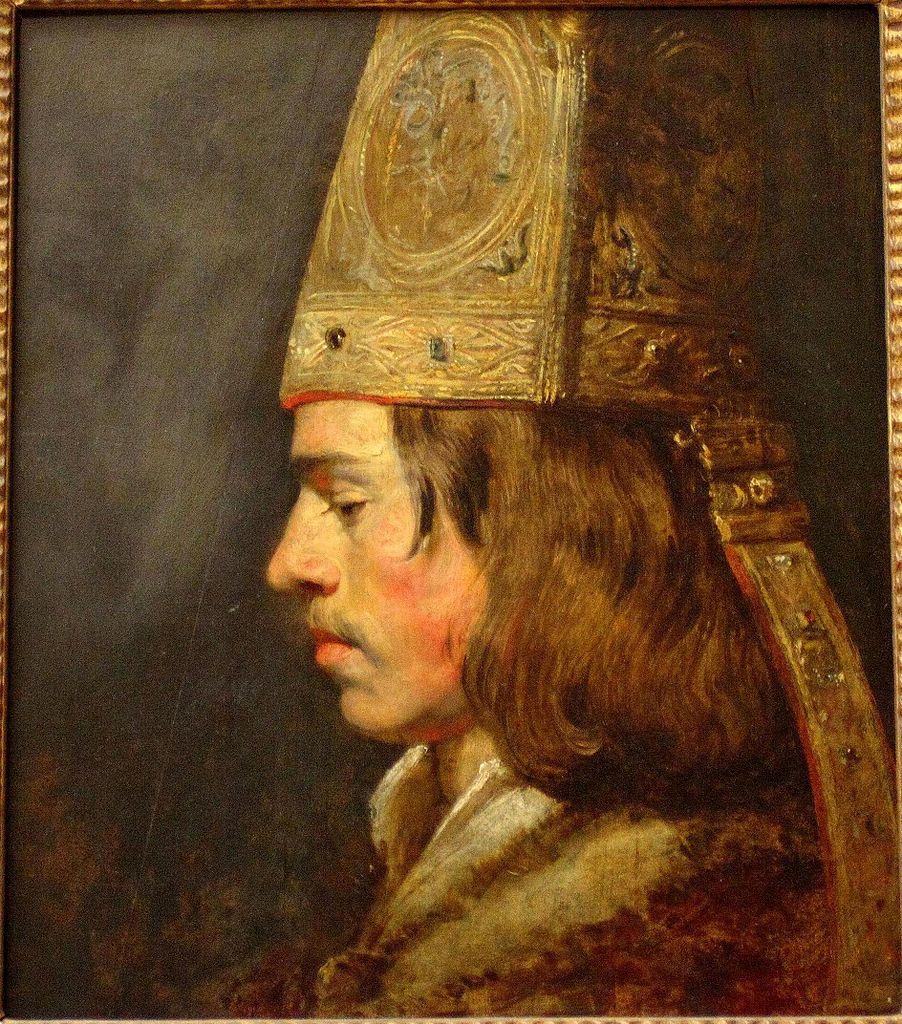
    Saint Paul Writing (from an early 9th century manuscript version of Saint Paul’s letters), ascribed to the Monastery of St. Gallen under the scribe Wolfcoz | Wikimedia Commons.

    St. Paul makes an analogy between God’s wisdom and ours: “Among men, who knows what pertains to the man except his spirit that is within? Similarly, no one knows what pertains to God except the Spirit of God.” This analogy rests on a common idea of an integral spirit within a being. We are able to speak of this spirit as something separate from the being yet something intimately tied to that being. Thus, “my” spirit is particular to me. I might argue that it is nonsensical to speak of my spirit separate from “me” (whatever that non-spiritual part of me is), but St. Paul speaks of a spirit as separate from the being, as an agent who knows me intimately; likewise for God’s Spirit. But next he points out that the Spirit who speaks with and through the apostles is not their internal human spirit but “the Spirit who is from God.” This direct contact with the Holy Spirit. That’s important because there is no understanding or wisdom of God without the Spirit. God is unknowable. Except with the help of His Spirit.

    Thus, St. Paul can describe his entire enterprise of evangelization in this way: “And we speak about [the things freely given us by God] not with words taught by human wisdom, but with words taught by the Spirit, describing spiritual realities in spiritual terms.” This has rather huge implications for how we should treat the writings of the New Testament. Without a doubt, the source of Wisdom is Jesus Christ, the Son, co-existent with the Spirit and the Father. Yet let’s not overlook that this same source spoke to the apostles at Pentecost and afterward. They speak and write with words given to them from the Spirit, “describing spiritual realities in spiritual terms.” This is why the Church refers to these writings as divinely inspired — not because they seem to capture a certain “poetic essence” of divine things, but because they actually come from the Holy Spirit and describe spiritual realities as God reveals them to us.

    Beyond this, St. Paul writes about these spiritual matters because early Christian communities were bound to test the wisdom presented to them by the apostles against the wisdom they found in the world. This worldly wisdom tells them that people are selfish, that the rich are “blessed,” that all pleasure is good. What’s more, Corinth is in south-central Greece, 50 miles west of Athens, and the wisdom of the Greek philosophers was a learned perspective often in opposition to Christian wisdom as revealed by God. St. Paul here pointedly writes: “Now the natural man does not accept what pertains to the Spirit of God, for to him it is foolishness, and he cannot understand it, because it is judged spiritually. The one who is spiritual, however, can judge everything but is not subject to judgment by anyone.” Here he counsels that non-spiritual people will call Christian wisdom foolish because it is of an order they cannot understand (unless they accept the Spirit). Furthermore, he points to the supremacy of the order of spiritual wisdom over worldly wisdom because “one who is spiritual … can judge everything.” In other words, the “secret and hidden” wisdom of God pertains to the right ordering of all of creation, and with this wisdom, a spiritual person can “judge everything.” The reciprocal statement is not true: someone with only worldly wisdom doesn’t have the full picture. This is why St. Paul says a person living in spiritual wisdom “is not subject to judgment by anyone” (especially those with only worldly wisdom). His letter is a comfort for these early Christians: despite the scoffing and judgments they might endure, they should remain confident that they are living in the true and transcendent Wisdom of God.

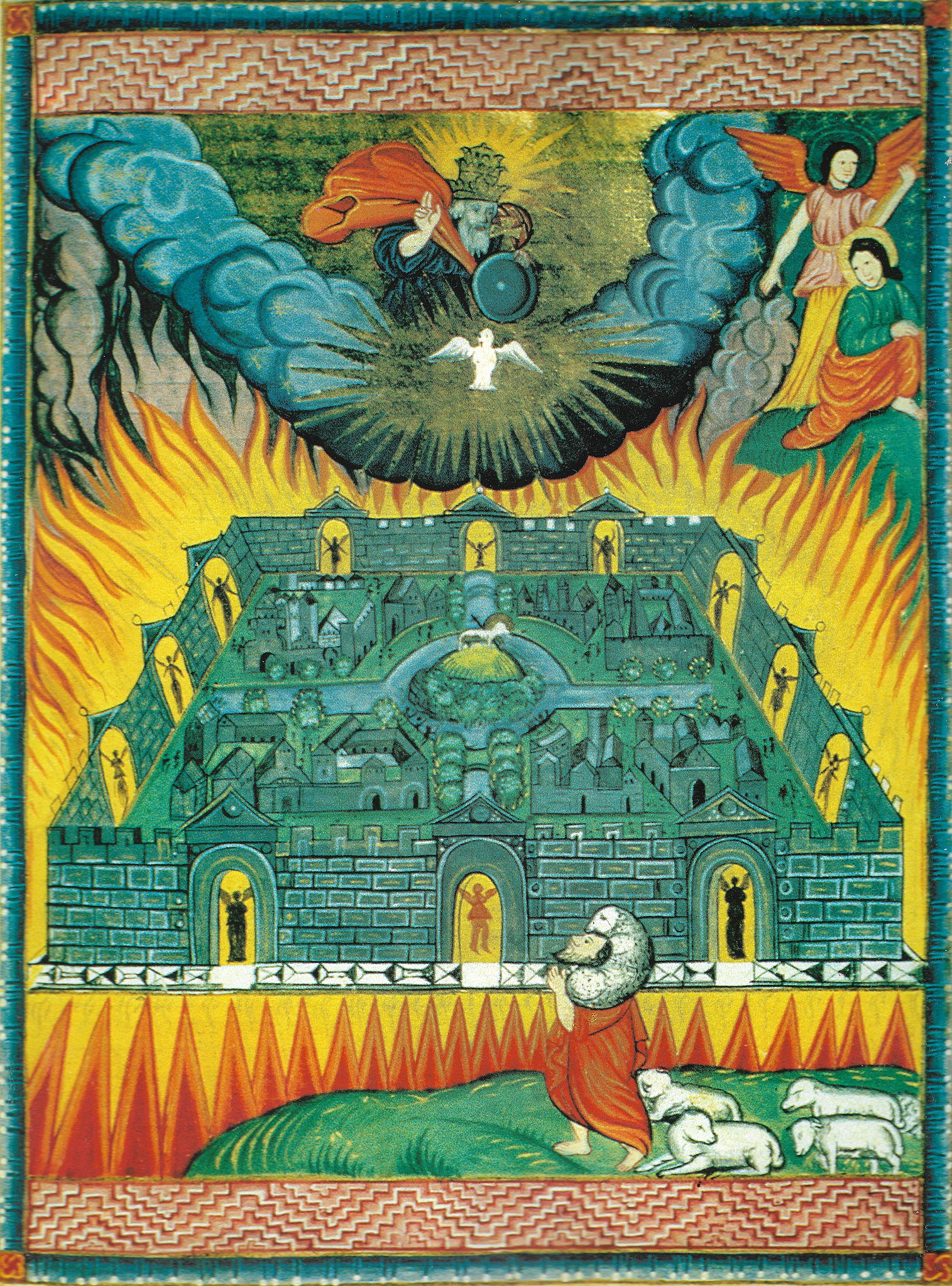
    Icon of St. Paul (unknown provenance) | found on Pinterest, uploaded by Icone Sacre Mirabile Ydio.

    His final sentence, “But we have the mind of Christ,” stresses the indivisible nature of the Trinity. Christ is one with the Spirit and the Father. It is Christ who has interceded on our behalf with the Father and who ushers in the great pouring out of the Spirit into history. It is Christ who is the living Word of God, present with the early prophets and again as a human in Galilee, the incarnation of the Wisdom and Logos living among us. And it is Christ who shared God’s wisdom not just in the Word, but in his actions and ultimately in the Cross. Above all, Christ distinguishes the wisdom they have received from every other philosophical or theological foray humans have made. It’s not just a correct philosophical worldview to compare among so many other worldviews, but God’s singular way of making His Wisdom and self known to us, in a form we can comprehend: a man.

    This, ironically, becomes a stumbling block for us: how can a mere man encompass all of God’s wisdom? How can a mere man at the same time also be God Himself? Just yesterday, we heard in the gospel that the Nazarenes from his hometown skeptically declare, “Is this not the son of Joseph?” They are full of judgment, full of their worldly knowledge when they declare to know him as something different than what he claims. To them we can only repeat St. Paul’s words: “The one who is spiritual [in this case, Jesus] … can judge everything but is not subject to judgment by anyone.”

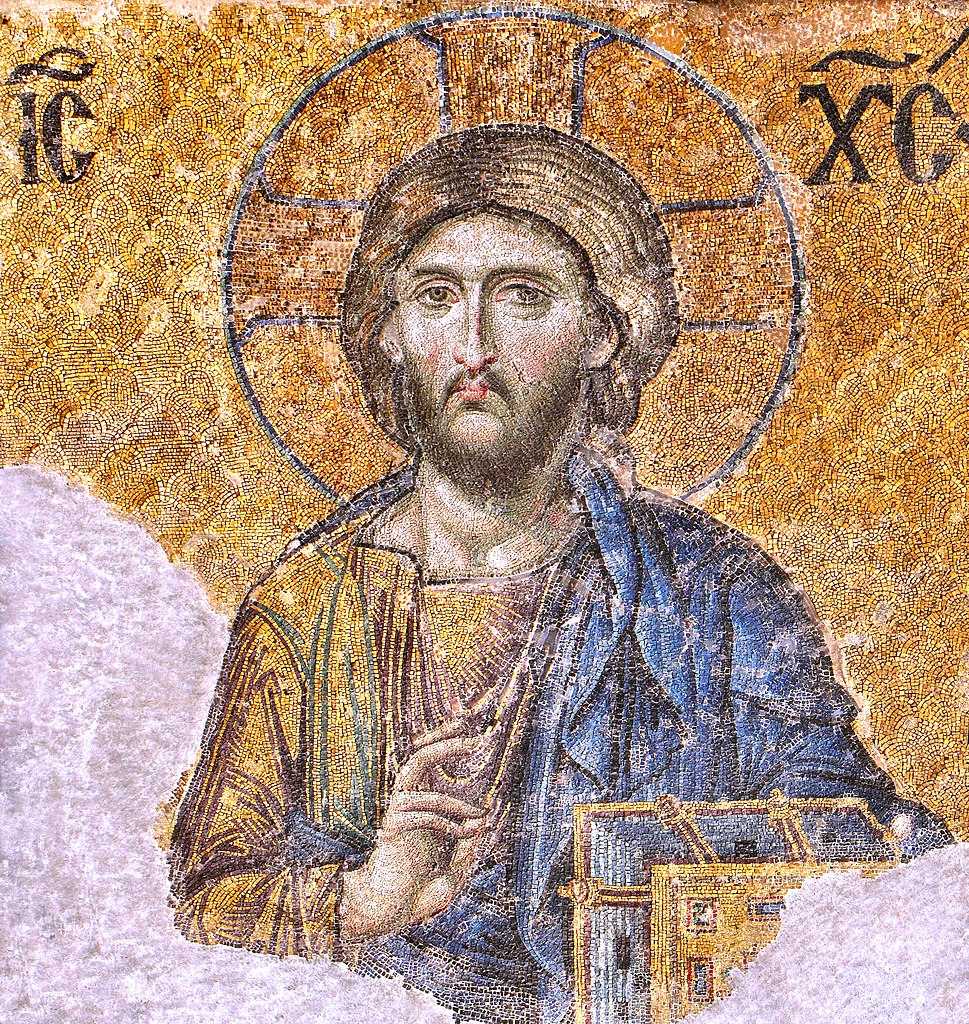
    Head of Christ (c.1648), Rembrandt | Wikimedia Commons.

    Appropriately, today’s gospel reading immediately follows the episode in Nazareth. It ends as He, we might conclude, physically manifesting the powers of the Holy Spirit, “passed through the midst of them and went away.” St. Luke gives us this striking marker of his nature starting to be revealed, like an early Transfiguration. Today’s gospel takes place in Capernaum, where he teaches in the synagogue on the sabbath, “and they were astonished at his teaching because he spoke with authority.” We hear from the start that He is again recognized, but in a completely different way than He was in Nazareth. He is recognized first by the Jews in the synagogue by a quality of his words, an authority that is found in great, inspired, perhaps prophetic or anointed teachers.

    And next, He is recognized by a denizen of the spiritual world. “A man with the spirit of an unclean demon” recognizes Him and cries out, “What have you to do with us, Jesus of Nazareth? Have you come to destroy us? I know who you are–the Holy One of God!” St. Luke clearly ties back in the Nazareth episode by having the demon call him out as “Jesus of Nazareth” and at the same time “I know who you are-the Holy One of God!” This is what the Nazarenes could not wrap their heads around: the fact that God has become a man, a specific man from a specific place, but is nonetheless much more than just a man.

    Possession by demons is the sign of spiritual illness. Jesus, by His Word (although it could have easily have been a flick of the wrist or even just a blink of His eye), cures the spiritual illness and casts out the demon. He deliberately speaks, “Be quiet! Come out of him!” He silences the voice of a perverted spirit and removes the world-bound false knowledge of the demons that possess us. The Jews from Capernaum begin to ask the right question: “What is there about his word? For with authority and power he commands the unclean spirits, and they come out.” This is the exact question that we must ask ourselves as we constantly re-convert to Christ and re-discover God: what is there about his word? This is no ordinary word, no ordinary authority, no ordinary power.

    The Word of God, made flesh in Jesus, is present in the world to do some specific Spiritual work. The Word of God, made flesh, then crucified, then risen in Jesus, establishes a new reality for us that transcends the created world. In the words of St. Paul, “We have not received the spirit of the world but the Spirit who is from God, so that we may understand the things freely given us by God.”

    The Holy Trinity (1st half of 17th century), Antonio De Pereda | Creative Commons, courtesy the Web Gallery of Art.

    As some of these thoughts swirled in my head today, it was a pleasure to hear the following from Thomas à Kempis’s The Imitation of Christ during the Office of the Readings: “My son, says the Lord, listen to my words, the most delightful of all words, surpassing all the knowledge of the philosophers and wise men of this world. My words are spirit and life and cannot be comprehended by human senses alone.” This is the answer to the question, “What is there about his word?” This is the sense of wonder we read about in the gospels as people hear Jesus preach and work miracles; it “cannot be comprehended by human senses alone.” The something wonderful is the presence of God, of the Spirit of God, because “My words are spirit and life.” All of life, which is more than our flesh on this earth, can be found in God’s Word.

    Now, consider that this Word was a living man, in whom the swirling mysteries of the universe, right and wrong, destiny and salvation, were located. What an incomprehensible mystery and miracle! We think of wisdom as belonging in a book, perhaps in advice garnered from long life experience. But this wisdom, as St. Paul points out, is of a different order. God’s wisdom is made manifest as a stroke of artistic brilliance that only the Creator Himself could devise: a living, breathing being who can speak His Word, with whom He can co-exist, a unique someone who can be perfect and thereby bestow a perfect gift upon humanity.

    What is this Word, what is this gift? Here, let us trace the passage from The Imitation of Christ to its origin in the gospel of St. John: Jesus says, “It is the spirit that gives life; the flesh is useless. The words that I have spoken to you are spirit and life” (Jn 6:63). Jesus is referring to specific words he spoke moments before. This is the discourse on the Bread of Life and His listeners are balking at His promise to those who eat his flesh. He tells them, “I am the living bread that came down from heaven. Whoever eats of this bread will live forever; and the bread that I will give for the life of the world is my flesh” (Jn 6:51). He doubles down on this: “for my flesh is true food and my blood is true drink. Those who eat my flesh and drink my blood abide in me, and I in them. Just as the living Father sent me, and I live because of the Father, so whoever eats me will live because of me” (Jn 6:55-57). 

    Christ the Saviour with the Eucharist (1545-1550), Juan de Juanes (Vicente Juan Masip) | Creative Commons, courtesy Museo Del Prado.

    For the Church, this means that the sacrament of the Eucharist is part and parcel of the wisdom of God. It is this gift (the actual Flesh and Blood, the actual Spirit acting within the sacrament) that the living Word of God, Jesus Christ, brings to humanity as a way to forever have access to the heavenly liturgy and the kingdom. We don’t divorce this sacrament from the other wisdom that Christ and the prophets present in their teachings, nor do we separate it from His miracles, His death on the Cross, or His Resurrection. The Eucharist is all the more significant because all of these things are made present in the sacrament: the Spirit, Wisdom, the Body and Blood of Christ, the flashpoint of salvation history. He gives it to us to sustain us in spirit and to help us remember the supremacy of the Spirit, especially in a physical world where we are called to sacrifice and serve one another.

  • Stay With Us

    Wednesday in the Octave of Easter: Acts of the Apostles: 3:1-10, Luke 24:13-35.

    Today’s readings display the natural desire to have Jesus with us, as He was before His death. They also show the dawn of a new, more potent way that Jesus is still with us. This is the advent of the Church, the mystical infusion of the risen Christ into the world.

    Ivory panel with the scene from Emmaus (850-900), from Metz, France, then known as part of the kingdom of Lotharingia | Wikimedia Commons.

    The gospel reading is Luke’s famous account of Jesus’s appearance to His disciples on the road to Emmaus. While walking, the two disciples were deep in conversation about the Passion, death, and entombment of Jesus. Note how casually and matter-of-factly Jesus makes his first appearance in Luke’s gospel after the Resurrection: “Jesus himself drew near and walked with them, but their eyes were prevented from recognizing him.” The Greek text is very evocative. Their eyes (ὀφθαλμοὶ / ophthalmoi) can be understood as both the physical eyes as well as the mind’s eye, and the verb ἐκρατοῦντο (ekratounto) is used to describe how they are “prevented” from recognizing him — ekratounto properly means being seized or held. This sentence indicates that their minds were seized by their preoccupied thoughts and kept from being open to the possibility of Christ being with them.

    They explain to Jesus all that has happened, their sadness at his passing, their dashed hopes that He would redeem Israel, and their confusion over reports of His Resurrection. In short, they explain the kerygma of our faith to their Savior, but from a perspective that doesn’t comprehend the very events that make up the kerygma. His response, understandably, is “How slow of heart to believe all that the prophets spoke!” This is a fantastic phrase,” slow of heart to believe,” in that it describes a momentum of love that accompanies faith. Jesus points out that the preoccupations “seizing” them have stuck them spiritually; they are not growing in faith, their hearts have slowed and love is no longer moving them. He wants them to expand their mind’s eye to the full scope of salvation history, and so, “Then beginning with Moses and all the prophets, he interpreted to them what referred to him in all the Scriptures.” This is an incredible service that the Lord provides for His Church at this delicate moment after the mystery of His death and Resurrection has been accomplished.

    Jesus and the Disciples on the Road to Emmaus (1571), Pieter Bruegel the Elder | Wikimedia Commons.

    There are critics who accept most of the narrative in the gospels about Jesus’s life yet claim that Christianity was invented by his disciples after He died. Their claim is that the well-defined Christology that arose after His death is almost “too perfect.” They say that our beliefs about how Christ fulfilled Old Testament prophecies, is the Son of God, and the key to our salvation within the New Covenant were not established by Him during His ministry and only came from the mouths of His followers after He was gone. These critics clearly aren’t hearing what Luke tells us here, that Jesus “interprets” for his disciples everything that referred to Him in the Scriptures. Not just here on the road to Emmaus, but later He does the same for all the disciples in Jerusalem. In all four gospels, he speaks to His disciples after His Resurrection. Christology comes from Christ — His works and the reality of His Person as well as the interpretation of those works and the prophecies that spoke of Him. Christology was not something invented by the disciples. It was spoken to them by the Resurrected Christ and further given to them by the Holy Spirit at Pentecost and beyond. 

    Today’s gospel reading marks the transition from the empty tomb to the mystical God made present in the Eucharist. This is the turning point when the Church is born, and it requires a shift from minds seized by preoccupation with his Passion to minds opened to the fullness of our faith and salvation history. See that Jesus did not expect us to make this transition on our own! Each of the four gospels testifies to His reappearance after His Resurrection, his instruction and interpretation of His Resurrection, and his visibility dissolving into the community that makes up the Church. Just like they testify to His parables, His Passion, His Death, and His Resurrection, they testify to this work of transition that Jesus Christ performs for us. He appears bodily, risen, specifically to show us that He still lives with us, but within our sacramental, mystical union with Him as a Church, not forever in human form. We will celebrate his Ascension in a few weeks, but now we celebrate this turning point when the Church is born and instructed in the Christology whereby Christ inhabits the earth until the end of time.

    The Emmaus Disciples (1622), Abraham Bloemaert | Wikimedia Commons.

    At different times in our lives and in different ways, we are all the slow-of-heart disciples in today’s gospel. As we struggle with faith and the true import of this Jesus of Nazareth, we can be seized by our preoccupations and thoughts about His life. Even after we hear the interpretation of his life within the scope of salvation history, as we do at Mass and when reading Scriptures, and as the disciples heard on their seven-mile walk to Emmaus, we can remain stuck. Like the disciples who arrive at Emmaus and say, “Stay with us,” we want to hold fast onto this historical wonder-worker. We have realized that this man speaks the Truth, but we still have to move into His reality. Finally, it is at our communal table, in our sacrament of Eucharist that Christ instituted, that we are able to live within the mystical reality given to us. As we hear today, “he took bread, said the blessing, broke it, and gave it to them. With that their eyes were opened and they recognized him.” Their ophthalmoi were fully opened (their eyes and mind’s eyes) and they “knew” Him or “recognized” Him. Jesus the Resurrected man vanishes and the Eucharist remains. He shows them how He now dwells in the world, with His Church — in their gathering as a community, presided by priestly action and sanctified by His Spirit. It’s no coincidence that a meal marks Christ’s presence with His Church. It is the fulfillment of his greatest commandment to love God and then each other; He gives Himself to us, to nourish us, and we, in turn, give Him to each other. This physical action of receiving and passing along God’s agape encompasses the entire life of a Christian within the sacrament.

    Supper at Emmaus (1601), Caravaggio | Wikimedia Commons.

    In the light of the gospel, let’s look back at the first reading from the Acts of the Apostles, which shows us how life after the Ascension is filled with Christ. It takes the form of a classic miracle as we see before Jesus dies. “A man crippled from birth” is carried and placed by a temple gate daily to beg for alms. Peter and John walk by and “looked intently at him,” and Peter asks him to “look at us.” What is the meaning of this intense gaze? What are we being directed to see? What is there? Peter poetically tells him he has neither silver nor gold, but “what I do have I give you: in the name of Jesus Christ the Nazorean, rise and walk.” What is there? It is Jesus Christ! The Lord’s Spirit is alive and active in the world just as it was when He performed miracles Himself at the temple. It is there in the recognition between people, dwelling within them and ready to be a healing force in their lives. Importantly, Peter and John perform this miracle not just in the name of Jesus Christ, but with the intention of taking this man into their flock, their Church. We hear that he “went into the temple with them, walking and jumping and praising God.” The work of the Church points back to its source, to God. Peter and John live in the overflowing love of the Trinity, the life-giving and healing font for humanity. The Spirit of the Lord fills them, they act in the name of the Son, and they constantly praise the Father — all of this displaying clearly the work of the Church.

  • Our Blessed Kecharitōmenē

    Our Blessed Kecharitōmenē

    Solemnity of the Annunciation: Isaiah 7:10-14; 8:10, Hebrews 10:4-10, Luke 1:26-38.

    God has poured out his grace on us all, most especially Mary, on this holy day! Today we celebrate one of the greatest miracles, the Annunciation that God will dwell in humanity, and Mary’s resounding yet humble “yes.” Today’s readings display how God shared his plan 730 years earlier and also reveal the unique title bestowed on Mary from Heaven: Kecharitōmenē.

    Isaiah’s reading is interesting because we hear that the Lord speaks to King Ahaz of Judah and tells him to ask for a great sign, “let it be deep as the nether world, or high as the sky!” What an offer! And yet King Ahaz refuses the Lord, citing the commandment not to test the Lord. With this, he displays a stunning lack of discernment about the law and the Lord. To follow God’s Word is not to test the Lord. Isaiah rightly upbraids him: “Is it not enough for you to weary people, must you also weary my God?” (This makes me chuckle; clearly, Isaiah is the one being wearied here.) So, God says he will give his own sign: “the virgin shall be with child, and bear a son, and shall name him Emmanuel.”

    God’s promise to his people, 730 years before the event: this is how prophecy works. Our timeline is not the same as God’s. He decides when we might be ready to accept his gifts. And as we shall explore, one key to this great mystery is, in fact, acceptance.

    St. Paul’s letter to the Hebrews gives us an idea of the type of acceptance that Mary, and in turn Jesus, gives to God. Conveying Jesus’s words, Paul writes, “a body you prepared for me; in holocausts and sin offerings you took no delight. Then I said, ‘As is written of me in the scroll, behold, I come to do your will, O God.’” Throughout the Old Testament we find references to the conversion of heart that God prefers to the ritual sacrifices and offerings; Jesus will emphatically proclaim this in his ministry while becoming the one sacrifice and offering to end them all. He also references Isaiah’s prophecy of his coming “as is written of me in the scroll.”

    The Agony in the Garden of Gethsemane (La Oración del huerto), c.1590, El Greco | Wikimedia Commons.

    Not to strike an emotional off-note in this post, but for me his words “behold, I come to do your will, O God,” are heart-wrenching. This is because I know the shame, pain, and horror that awaits Jesus in his crucifixion, and we see him accept it willingly, “like a lamb led to the slaughter.” I know that we should rejoice in his coming and how he offers everything that he is to the Father, but at the same time I have pity and empathy for my brother and Savior. Like Mary, I want to wrap my arms around him and save him from what awaits. What are we in comparison to him? Shouldn’t we all want to take his place, to save him from this burden? Are we too wrapped up in our small problems and desire to have our crosses lifted that we miss the chance to save him from his Cross?

    I know that this is not possible, that his coming and sacrifice for our salvation is pre-ordained and that he is the most amazing heavenly gift of self from God, but something inside of me is stirred with compassion, and I don’t think that’s wrong. As we approach Holy Week, we must embrace this compassion for Christ in our hearts, for it is a part of God’s agape, it is why we commemorate his sacrifice every year and every Mass. 

    Enough! Let’s turn our attention to the gospel reading. We all know this story, it is our spiritual lineage. A virgin is betrothed to Joseph of the house of David. The Angel Gabriel “was sent from God” to her. And here is what he says:

    Ancient Greek:  χαῖρε, κεχαριτωμένη, ὁ κύριος μετὰ σοῦ.
    “Greeklish”:      Chaire, kecharitōmenē, ho kyrios meta sou!
    English:             Hail, “Full of Grace,” the Lord is with you!

    I want to dwell on the actual Greek text here because it’s very important. The Angel Gabriel bestows on Mary a one-of-a-kind greeting, and “Full of Grace” doesn’t quite sum up the name he calls her, Kecharitōmenē. First, let’s get our pronunciation down (since we should all know how to speak her heavenly title): keh-kah-rih-toe-MEN-ee.¹  Notice that the root of his first two words is the same: χαῖρε (chaire) and χαριτω (charitō), which would have sounded a bit like heavenly wordplay coming from the Angel Gabriel, or at least a doubling or emphasis. “Kai-ray, keh-kah-rih-toe-MEN-ee,” he said.

    So what does this root word mean? χαριτω (charitō) means “grace”; χαῖρε (chaire) means “hail!” or “greetings!” and is clearly meant to be a happy greeting as the addition of -τε makes χαίρετε (chairete), which means “rejoice!”

    Our Lady of Peace tapestry (printed on cotton), photo of tapestry hanging in the author’s home. The artwork was originally created in the workshop of Hendrik Slabbinck in Bruges, Belgium during World War II.

    However, κεχαριτωμένη (kecharitōmenē) is only used once in scripture and never in secular writings. That’s right, this one-of-a-kind word is invoked by the Angel Gabriel at that moment, used uniquely as a title for Mary. The common English translation is “full of grace,” which is fairly close, but does not express its true depth. In fact, “full of grace” is properly written as πληρης χαριτος (pleres charitos), which is used in reference to Christ in the prologue of the Gospel of St. John (Jn 1:14) and in reference to St. Stephen in the Acts of the Apostles (Acts 6:8).

    But Kecharitōmenē is not an adjective. It is a noun, a title, and would be better translated as “The One Whom Grace Inhabits.” Thus, a better translation of the whole greeting would be: “Grace to you, The One Whom Grace Inhabits, The Lord is with you!”

    The Annunciation (early 2000s), Olga Suvorova | Creative Commons, courtesy european-people-history.com/art4664. I appreciate the artist’s imagination here for how to picture the overflowing grace on Kecharitōmenē, although the facial expressions are too affected for my tastes and I think they lack the appropriate emotional register of the Annunciation.

    Why does this matter? This unique title that the Lord bestows on Mary tells us about her role and special place in salvation history. Just like Abram is called Abraham (“Father of Nations”) and Simon is called Peter (“the Rock”), Mary is given a particular name and vocation. Before Mary is the Mother of God (Theotokos), before she is Mother of the Church (Mater ecclesiae), Mary is The One Whom Grace Inhabits (Kecharitōmenē). This name tells us that she is defined by the grace God gives her (by being chosen for her role) and the divine grace that will physically inhabit her womb. “Full of grace,” indeed!

    Mary’s reaction is understandable: “she was greatly troubled at what was said and pondered what sort of greeting this might be.” Absolutely! She, a humble Jewish virgin teenager was not only approached by an angel, but that angel greeted her with enthusiastic respect and a unique title that had never been uttered before!

    The Annunciation (L’Annonciation) 1908, Luc-Olivier Merson | Creative Commons, courtesy melaniejeanjuneau.blog.

    The Angel Gabriel reassures her and explains that she has “found favor with God.” He explains that she will conceive and bear a son she will name Jesus, not to mention this son will inherit “the throne of David,” he will “rule forever,” and his “Kingdom” will have no end. Mary’s first question: “How can this be, since I have no relations with a man?” (As if, hold that thought on the whole Messianic child thing … you said something about conceiving??)

    And here we see the beautiful simplicity and purity of Mary, unperturbed at the majestic role the Lord has in store for her, but making sure that her purity was upheld. For most people, Gabriel’s answer would have probably led to just more questions: “The Holy Spirit will come upon you, and the power of the Most High will overshadow you,” but not Mary. She doesn’t press him further. Contrast this with King Ahaz’s refusal to ask God for a sign in the first reading from Isaiah. The Angel Gabriel then reveals that this conception by the Holy Spirit will make the child the “Son of God.” 

    We don’t ponder the next moment much, but consider that the fate of humanity hangs in the balance. Mary could choose to refuse this, knowing the problems a mystery pregnancy would cause her husband-to-be, her family, and her community. She could balk at the sheer greatness of expectation hanging on her to be the mother of the Messiah, of the Son of God. But her beautiful, sweet, humble answer is — in a nutshell — why she is so adored by the Church. In a sentence that itself can form the blueprint for all prayers, she responds, “Behold, I am the handmaid of the Lord. May it be done to me according to your word.”

    Virgin Mary (Virgen María), 1887, Joaquín Sorolla | Creative Commons, courtesy Wikiart.org. I like Sorolla’s very personal and human depiction of a pregnant Virgin Mary here. We are so often presented with the alabaster-skinned, statuesque Virgin Mary that it’s good to remember that she was a very real Jewish girl from Nazareth, likely darker in complexion, if not skin tone, and a model for us all precisely because she was fully human like us. Sorolla’s use of black and white here is also notable – the white head covering and halo emphasize the grace bestowed on her from above while the black maintains her human nature or perhaps even a kind of mourning for her inevitable separation from the rest of humanity as she is elevated on such a majestic and heavenly pedestal.

    And here we also see the glory of God who places his grace in the hearts of his people who must meet it with their free will. While His power is so undeniable and great, he chooses for it to be at the same time fragile. To enter into humanity first through the humble assent of a teenage girl and then the vulnerable form of an infant in a manger! He is always teaching us, caring for us as he enters into our human history. Could we have had a more gentle and humbling entrance for the Lord than the Virgin Mary conceiving a child not from her husband? 

    Finally, let us understand the importance of the Annunciation in the scope of salvation history. The scene of the Annunciation painted by the great Dominican Fra Angelico below displays the import of this event:

    Annunciation (Annunciazione), c.1435, Fra Angelico | Wikimedia Commons.

    This is the third in a series of paintings that Fra Angelico made from 1430-1435, and the richest theologically. Unique to this version, we find the ray of light emanating from the hands of God, sending the Holy Spirit in the form of a dove; we see the archways decorated in vibrant dark blue with golden stars, the classic medieval way to represent the entire cosmos, under which Mary is seated as if on a throne; and we see Adam and Eve being expelled from the Garden of Eden. Our Catholic theology of Mary is highly developed. We understand that she is the Ark of the New Covenant, containing God in a new way just as the Ark of the Covenant built by Moses contained the stone tablets and the presence of God. We also understand that she is the New Eve, undoing the great original sin of disobeying God by obeying him via the Incarnation. This painting by Fra Angelico not only depicts the actual visitation of the Angel Gabriel but also the mystical aspects of the encounter such as the Holy Spirit coming upon her and the establishment of her role in salvation history as the New Eve.

    Blessed are we that Kecharitōmenē was chosen by God for this great vocation! Blessed are we that she can be our spiritual mother, our intercessor with God to Whom she has joined in Heaven.


    ¹ Scholars note that Ancient Greek was pronounced differently than modern Greek, so while modern Greek speakers would pronounce χαῖρε (chaire) with a soft-ish “ch” sound at the beginning, ancient Greek speakers would pronounce this as a “kh” sound like our word “kite.” I’ve stuck with pronunciations as St. Luke and his readers would have said them.


  • As Certain As the Dawn

    As Certain As the Dawn

    Saturday in the Third Week of Lent: Hosea 6:1-6, Luke 18: 9-14.

    Today’s readings give us a stunning prophecy of the Christ event some 780 years earlier and urge us to remain steadfast to the Lord in our faith and humility.

    The short Book of Hosea continues to surprise me. We hear the Word of God promise his coming through the mouth of the prophet: “on the third day he will raise us up, to live in his presence.” It’s easy to understand how the Israelites could not comprehend this prophecy since they were worried more about pressures from great nations like Assyria and Egypt. As if the “third day” reference wasn’t difficult enough to understand in its specificity, there is the question of the raising up and living in his presence.

    The closest they might have come was to understand this in its eschatological sense of their own bodies rising after death to join God in Heaven. The mystical reality that Jesus would be the one rising and we would live in his presence sacramentally (and bodily for a few disciples) … well, that wouldn’t become clear until the event itself. But here we can see that the Word of God was speaking in its fullness much earlier in our history.

    Hosea then uses some wonderful imagery from nature to urge us into right relationship with God: “let us strive to know the LORD; as certain as the dawn is his coming, and his judgment shines forth like the light of day!” I love the prophet’s faith. I love that the Lord’s coming is as “certain as the dawn.” And the light that he brings is his judgment, his truth. This is not a prophecy of the end of time (the second coming), but of Jesus’s first mission on earth that brings the times we live in now. Hosea tells us, “He will come to us like the rain, like spring rain that waters the earth.” This spring rain brings Christianity to the world.

    Dawn (1896), Jules Breton | Wikimedia Commons. This work beautifully expresses Hosea’s message. The dawn arrives and we are expected to be at work, bringing the harvested wheat (the communion with Christ who brings new life with his death and Resurrection) and “living water” of Christ to the world.

    We also hear the Lord’s slightly exasperated but caring question, “What can I do with you, Judah? Your piety is like a morning cloud, like the dew that early passes away.” The image is clear: we must be more substantial in our faith, more persistent, and not fade away so easily.

    Jesus picks up this thread in the gospel reading. In another parable addressed to the Pharisees, Jesus describes their showy devotion that lacks a sincere love of God in their hearts. The Pharisee in the parable “takes up his position” in the temple, which was undoubtedly one where he could be seen clearly, and “spoke this prayer to himself.” This is a huge clue that something’s backward; prayer is always offered to God and spoken to God, whether audibly or inaudibly. The Pharisee is primarily self-focused.

    This focus on himself is evident in his words. After a cursory “O God” to start his prayer, we hear the Pharisee speak of himself during the whole prayer, contrasting his law-abiding deeds with “the rest of humanity — greedy, dishonest, adulterous.” Let’s note that his window on the world, himself included, is one of judgment.

    Jesus is clear about not being judgemental: “Do not judge, so that you may not be judged” (Mt 7:1). We all know people who are consumed with judging themselves and others (we all probably fall into this camp at times). It is simply not compatible with being a Christian. Judging the worth of another being is something that rightfully belongs only to God. We should never try to put ourselves on par with Him.

    Furthermore, in this life he judges us all to be worth forgiving, worth saving, worth his love. We are asked to follow his lead and offer nothing but his love to our brothers and sisters on the planet. The Final Judgment will come at the end of time, and we are the judged, not the judges in that drama.

    A colorized version of an illustration from Die Bibel in Bildern (Picture Bible), 1860, Julius Schnorr von Carolsfeld | Creative Commons, courtesy orthochristian.com.

    The next item to note about the Pharisee’s off-kilter prayer is how much he speaks of himself as the agent of action. As we explored in the reflection Our Vocation to Teach the Word of God, the Word contains the fullness of communication. What a marvelous command of grammatical structure Jesus uses to display the self-centeredness of the Pharisee. Four times we hear the Pharisee put himself as the first person subject of phrases in his prayer: “I thank you,” “I am not like,” “I fast,” and “I pay tithes.” The Pharisee has so sublimated his own sense of self-worth that, apart from being the subject of the phrases, he places himself as the grammatical agent (meaning the cause and initiator of action).

    This semantic idea is a great way for Jesus to make his point: it’s not just the empty show of devotion that makes the Pharisee a hypocrite, it’s his lack of conversion of heart to place the Lord first, the agent of all. This almost unconscious grammatical structuring of his prayer belies the deep perversion and reversal of order in his being. 

    Let’s compare the tax collector’s prayer: “But the tax collector stood off at a distance and would not even raise his eyes to heaven but beat his breast and prayed, ‘O God, be merciful to me a sinner.’” We hear much about his physical bearing — standing off, eyes lowered, beating his breast. This is the stance of supplication. It reminds us of the great supplication offered for days by Esther in order to save the Israelites in Babylonia (see Esther: Model of How to Petition the Father).

    The tax collector’s prayer itself is so fundamentally correct that it forms the proto-Jesus Prayer. In this prayer, Jesus gives us another example of how to pray correctly (in addition to the Lord’s Prayer, which he gives us as well). Let’s dissect it: the tax collector approaches in supplication, addresses God as the agent of action in the world (he says “merciful to me,” and as such he is the object of action, not the agent), and identifies himself as a sinner in need of mercy.

    We have reflected upon the importance of mercy as one of God’s great attributes that sets him above the rest of Creation (see Mercy is the Master Principle). As we start to comprehend that mercy is an important aspect of God’s love (agape), which is given to us in order to live beyond us as we give it to others, we can see that asking for mercy is a way to return to the wellspring of life-giving water. This can and should be our perpetual prayer as Christians.

    The Pharisee and the Publican (1864), Artist: After Sir John Everett Millais, Engraved and Printed by Dalziel Brothers | Creative Commons, courtesy The Metropolitan Museum of Art.

    And Jesus has given us a much deeper, intimate communion with this wellspring in the form of the liturgy where we can sacramentally bring into our bodies the mercy and love flowing from the Lord’s pierced heart. This brings us to the Jesus Prayer: “Lord Jesus Christ, Son of God, have mercy on me, a sinner.” Praying to the second Person of the Trinity, our great high priest and chief intercessor who descended to earth to dwell and suffer with us, is a key gift in our Christian lives. The Catechism of the Catholic Church teaches us, “The name ‘Jesus’ contains all: God and man and the whole economy of creation and salvation. To pray ‘Jesus’ is to invoke him and to call him within us. His name is the only one that contains the presence it signifies” (2666).

    Thus, the Jesus Prayer unites the same correctness of prayer we find in the tax collector with the new reality that Christ brought to history with his death and Resurrection. The Jesus Prayer is powerful and draws us deeper into the mystery of being a part of the Church.

    “When the holy name is repeated often by a humbly attentive heart, the prayer is not lost by heaping up empty phrases, but holds fast to the word and ‘brings forth fruit with patience.’ This prayer is possible ‘at all times’ because it is not one occupation among others but the only occupation: that of loving God, which animates and transfigures every action in Christ Jesus” (CCC, 2668).

    What better time than Lent, in its stillness and silence, to repeat the Jesus Prayer and let it sink in to transform our hearts? Let us take Jesus’s instruction to be like the tax collector in the parable and not the Pharisee. Let us take the Church’s instruction to pray in Jesus’s name as we ask God for mercy in the light of our infidelities and sins.

    For we know, as certain as the dawn, He will come.

  • A Prophet in his Own Land

    A Prophet in his Own Land

    Monday in the Third Week of Lent: 2 Kings 5:1-15, Luke 4:24-30.

    Today’s readings are an excellent example of how the New Testament can help to clarify seemingly incongruous events in the Old Testament. It’s a good reminder of how the fullness of God exists outside of (yet operates within) linear time and history.

    When I first read the second book of Kings and encountered the prophet Elisha, I had to do a double-take. Does this book really describe how he fed a hundred people with 20 loaves? How he cured lepers, knew men’s hearts and deeds without them saying anything, and even raised a boy from the dead?? These are too close to Jesus’s miracles to be a coincidence. Nearly 900 years before Christ, we encounter a prophet, the disciple and successor to Elijah, who performs very “Messianic” miracles. What do we make of this?

    It’s safe to say that Elisha prefigures Jesus and the New Covenant that will be established. Let’s remember that the prophets were men and women who dedicated themselves utterly to God, who lived righteous lives and were granted special graces from God, enabling them to do his will in extraordinary ways. Above all, prophets were the mouthpieces for the Word of God. That same Word is, of course, Jesus Christ. When they perform miracles, the Spirit works in the world through them, much in the way that the Word is spoken by them. Thus, it is God, the Spirit and the Word, who works through Elisha. Christ is performing works in a time long before his coming in the flesh as a way to prepare the hearts of humanity for the new reality he will bring.

    Elisha the Prophet (2011), E. G. Gauger

    When we realize that God works (and has always worked) in the world through us, it should come as no surprise that those speaking and acting in truth are being used by him in similar ways as he will act as the Word Incarnate.

    Let us see the ways Christ is operating in human history 900 years before his Incarnation. In today’s reading, we find a Syrian (Aramean) general, Naaman, who learns from a captured Israeli servant girl that there is a prophet in Israel who can cure his leprosy. Note that Syria is an active enemy of Israel at this time, and in just the next chapter of 2 Kings, Elisha helps to thwart an Aramean attack.

    In this episode, Elisha asks the king of Israel to send Naaman — not just an outsider from the tribe of Israel but an enemy — to him. When Elisha asks for Naaman to be sent to him, we hear earlier echoes of Jesus (like a pebble dropped in time that ripples both backward and forward on our timeline): “Love your enemies and pray for those who persecute you” (Mt 5:44, see the reflection The Difficult New Covenant of Love).

    Elisha tells Naaman, “Go and wash seven times in the Jordan, and your flesh will heal, and you will be clean.” The Jordan River will become the workplace of St. John the Baptist in his mission of repentance and preparing the way for Christ. Just as John washes sin away in the Jordan, Naaman will wash away the uncleanliness of leprosy. Moreover, Christ (through Elisha) is performing the first baptism of a Gentile in the Spirit of the Lord. This will become the New Covenant, salvation opened up for the entire world through baptism in Jesus’s name.

    Naaman, the great commander with his horses and chariots, gets angry. He expected more of a show, perhaps more attention and honor given his status. Elisha, for his part, acts like Christ might, not impressed by worldly power. For Naaman, why travel all this way just to be told to jump in Israel’s little river, no match for the great Syrian rivers? Here we see the ever-present challenge of faith presented to us in the scriptures. And who is it but the lowly servants who have faith and encourage Naaman to follow Elisha’s instructions? “Blessed are the poor in spirit,” says our Lord.

    When he is cured of his leprosy (through faith, encouraged by the lowly), he returns to Elisha to profess his newfound faith in the Jewish God. What is omitted in today’s reading is that he also wants to bestow lavish gifts on Elisha for his miracle, but Elisha refuses them, saying, “As the Lord lives, whom I serve, I will accept nothing!” This is concordant with our teaching that God’s gifts are given freely to us, who do not deserve them.

    Elisha refuses the gifts of Naaman (Elisa verweigert die Annahme der Geschenke Naemans), 1637, Pieter Fransz de Grebber | Wikimedia Commons.

    Without Christ and the New Testament, I find that Elisha’s deeds stand out as exceptional but a little pointless. What happens when he dies but more of the same for God’s people? They remain in an endless holding pattern of ritual observance and sacrifice, praying for God’s protection and grace in this world. Elisha did great things, but then he died like the other prophets. He reveals some important things about God, but they don’t really coalesce into their fullness until Christ. To Jews of the time, for instance, what’s the point of healing an Aramean leper general when they’re fighting for their nation’s survival?

    This is where our distance from these events is a grace in itself. We are able to make connections between the Old and New Testaments in a way countless millions were never able to. The Second Vatican Council’s Dogmatic Constitution on Divine Revelation, Dei Verbum, remarks pointedly on the relationship between the testaments:

    “God, the inspirer and author of the books of both Testaments, in his wisdom has so brought it about that the New should be hidden in the Old and that the Old should be made manifest in the New. For, although Christ founded the new Covenant in his blood, still the books of the Old Testament, all of them caught up into the Gospel message, attain and show forth their full meaning in the New Testament and, in their turn, shed light on it and explain it.”

    Today’s reading is an excellent example of how the “New should be hidden in the Old and the Old should be manifest in the New.” I also appreciate how the Council points out the reciprocal nature of this relationship, how the Old Testament can shed light on the New while at the same time its stories show their full meaning in the New Testament. This attests to the nature of God Himself, who is fully active at all times, both within time and outside of it. 

    The notion of “fullness” is important here. Let’s start with a definition of fullness as the completeness of abundance; that is, something that is already abundant and overflowing somehow being complete. The proposition of our faith is that the fullness of God inhabits the universe at all times.

    He instructs Moses to tell the Israelites: “I AM has sent me to you.” His name, his being, is summed up in being itself. There is nothing more fundamental — no other level supporting being itself.

    At the risk of our heads exploding over the ontological implications of God’s being (which we can never truly comprehend until we come face to face with Him), let’s listen to some wisdom from our Church Fathers. St. Gregory Nazianzen says, “God always was and always is, and always will be; or rather, God always Is. For Was and Will Be are fragments of our time, and of changeable nature. But He is Eternal Being … like some great Sea of Being, limitless and unbounded, transcending all conception of time and nature” (~388 AD, Oration 45, The Second Oration on Easter, III). The fullness of God’s being is limitless and unbounded, transcending time.

    God’s revelation has taught us some other things about his fullness: He endlessly pours his Spirit and love upon his Creation, especially humanity in which he incarnated his Son. He tirelessly calls us to him, thirsts for us (see the reflection If You Knew the Gift!), with inexhaustible forgiveness in his heart. Thus, the fullness of his being in all time is characterized by his love, care, and thirst for us. He meets us in our mortal reality of linear time through a progressive revelation of himself, yet at every stage of revelation, he and his message are fully there.

    (As a side note, when I read of the “immensity” of God, I think of this very fullness of his being.)

    In all the similarities between Christ and early prophets like Elisha, let us not forget that Christ is also the most exceptional historical figure, the most blessed man, the Anointed One of God. While the Word and Spirit work through the prophets, the Word itself is joined with mankind in Jesus Christ. This manifestation of God on earth is greater than all of the prophets, it is the perfection of the Law and the Spirit.

    Humans can only try to uphold the law and live in the Spirit from the distance of their mortality while Jesus is the actual manifestation of the Law and Spirit, incomparable to us in his essence. His miracles supersede Elisha’s in every way — Christ feeds 40,000 while Elisha feeds 100, Christ heals 40 lepers while Elisha heals one, etc. Interestingly, we are told that when a dead man is buried near Elisha’s bones and touches them, he immediately jumps back up, alive. Christ, on the other hand, brings eternal life for all humanity. 

    Jesus Teaches at the Synagogue in Nazareth, unknown icon author | Creative Commons, benedicamusdominoblog.com

    So what do we make of Jesus in today’s reading being the prophet not accepted in his “native place”? I always saw this as a sad, personal low point for Jesus. But upon reflection, I think I was dead wrong. In fact, it’s a pretty triumphant moment, where he gives us the reason for Elisha’s incongruous act of healing non-Jews in difficult times.

    Remember, the Nazarenes in his hometown had just heard him say that the fulfillment of Isaiah’s prophecy was him, standing in front of them. They were astounded. Then he says that they might be expecting a miracle from him, but no such thing would happen (this is where our reading picks up).

    He declares, “no prophet is accepted in his own native place,” and thereby tells them that he will not be working wonders in their midst. Then he uses an episode in Elijah and the story of Naaman and Elisha as proof that prophets are to work wonders for those outside their “native place.” This infuriates them. They must have felt brushed aside, as if he was saying they weren’t worth the trouble. Worse yet, that non-Jews and pagans were more deserving of God’s graces than they were. So they mob him and push him out of town with murderous intent.

    And the miraculous thing upon which our reading might hinge: “But he passed through the midst of them and went away.” Whaaaa?

    How mysterious … like the wind or a spirit.

    Exactly.

    Although not “a spirit,” but THE Spirit. Jesus physically redoubles his message by passing directly through the midst of them, as the grace of God being taken from them and given to others. This is, of course, the message he will continue to spread when he talks with the Samaritan woman, welcomes and eats with sinners, and more. The Good News is that eternal salvation is being offered to all peoples, all nations through Christ. This significant broadening of salvation beyond the nation of Israel is a large part of his ministry, and it begins here in his hometown of Nazareth. 

    Dove of the Holy Spirit (ca. 1660, stained glass, Throne of St. Peter, St. Peter’s Basilica, Vatican), Gian Lorenzo Bernini | Wikimedia Commons.

    This new salvation is brought about in the Spirit, and Jesus “passing through the midst of them” is both the sign and the reality of this message. He voices this message later to Nicodemus the Pharisee: “You must be born from above. The wind blows where it chooses, and you hear the sound of it, but you do not know where it comes from or where it goes. So it is with everyone who is born of the Spirit” (Jn 3:8). In fact, the Greek here shows that wind (πνεῦμα, pneuma) and Spirit (Πνεύματος, pneumatos) are the same word. The lack of stable physical location for the wind/Spirit is the same for those who are “born of the Spirit,” i.e., baptized as Christians. They no longer belong to Israel, to particular castes or families, but to God, not of this world.

    Thus, like the wind and the Spirit, “he passed through the midst of them and went away.”

    This does not mean that Nazarenes (and Israel as a whole) are not welcome in the Kingdom, simply that they need to understand that the Old Covenant establishing them as the Chosen People is being replaced by a New Covenant that is not bound by a place or a nation. They are the first, in fact, to be invited into the New Covenant and to be born of the Spirit. 

    The West Wind (1891), Winslow Homer | Wikimedia Commons.

     So what are we to make of the fact that they were told by God that they were the Chosen People for the prior several millennia? Just like Elisha’s deeds only making sense as a prefiguring of Christ’s opening up of the New Covenant, we can see the appellation “Chosen People” making sense in Christ as well. They were chosen to receive the prophets, to prepare the hearts of mankind for the Anointed One, the Son of God, to be born into their tribe and then open up the Kingdom to all. Importantly, the millennia of God working within his Chosen People led to Mary the Mother of God being trained by generations of those abiding by the law of God. She was perfect in mind, body and spirit, ready to say yes to God, to be the Ark of the New Covenant.

    Therefore, let us look past the anger of the Nazarenes and read the triumphant message in today’s gospel. Jesus is never defined by the fact that he is not accepted but hated. He bears it all willingly because his message is not about himself as a man, but himself as divine reality — unbound by time or circumstance — in our midst.

  • Rejoice for the Pardon of the Prodigal

    Rejoice for the Pardon of the Prodigal

    Saturday in the Second Week of Lent: Micah 7:14-15, 18-20, Luke 15:1-3, 11-32.

    Today we read one of Jesus’s most famous parables, the Parable of the Prodigal Son. There is so much to say about it. The broad strokes: it displays the unflagging love of the father (that is, God the Father) and our ability to return to Him like the prodigal son, no matter how grievous our sins. In this reflection, I’d like to take a deep dive into a few other aspects, especially the type of love the father provides. 

    We might not quite comprehend just how insulting the younger son is when he demands his inheritance. It would have shocked the Jewish audience to hear that the younger son demands a portion of the inheritance (the eldest son has first dibs and the younger is expected to work). When we look at the original Greek, we see that Jesus actually presents a deeper meaning here. When the son says, “Father, give me the share of your estate that should come to me,” the word Luke chooses to best report what Jesus uses for “estate” is οὐσίας (ousias), which means being, meaning, or essence. The son is asking for his inheritance, yes, but more literally the essence of the father.

    The prophets have a long tradition of referring to the inheritance of the nation of Israel (when they live by God’s precepts) as God’s grace and more specifically the nation’s glory and lands. Thus, it makes sense that the listeners to Jesus’s parable would understand an inheritance to have a double meaning of property/estate as well as the grace or essence of the father.

    Return of the Prodigal Son (1667-1670), Bartolome Esteban Murillo | Creative Commons, WikiArt.org.

    But Jesus speaks of the Kingdom of God throughout his ministry in a new, eschatological way. That is, inheritance means everlasting life with God in Heaven (not just glory and land); and perhaps even a share in the Kingdom here in this life, albeit an imperfect one. The next sentence is a lovely way for Jesus to expand the meaning of the “essence of the inheritance” in the new Christology. I like to think of him saying it slowly and deliberately to his audience, making strong eye contact: “So he divided his property between them.” The reason this is so important is that he switches from ousias when describing the property/inheritance and uses βίον (bion, the singular form of bios), which means life. So, he gave them his life in response for the son’s demand for his portion of the inheritance. How deeply prophetic and significant to put this into the parable!

    Today, we know how God gave his essence, his life, in the form of his only-begotten Son on the cross. This inheritance of which Christ speaks is love.

    Knowing the type of inheritance given to the younger son, it is all the more shocking to hear that he used the essence of God given to him on a “life of dissipation” (i.e., prostitution, drunkenness, debauchery). He falls so far that he tends the Jew’s forbidden animal to eat, the pig. This places him in the lowest levels of uncleanliness for a Jewish culture obsessive about cleanliness in body and spirit.

    Then we get to the younger son’s great conversion, which begins with a simple assessment of his own pathetic situation, as it does for most of us. His initial motivation is selfish, simply to get fed and earn some money, because selfishness is all he has and all he knows. But contemplation of his father, enkindled by the never-dormant ember of the essence of the Father given to him, broadens and deepens the return he plans. He commits to say, “Father, I have sinned against heaven and against you. I no longer deserve to be called your son; treat me as you would treat one of your hired workers.” The selfishness, in its destitution, finds something outside of itself to cling to: the Father, in front of whom the debasement of his sins is clear and undeniable.

    The Prodigal Son In The Arms Of His Father (c. 1870-1883), Gustave Dore | Creative Commons, WikiArt.org

    At this point, we can turn to our Angelic Doctor of the Church, St. Thomas Aquinas, who wrote extensively about the going from God (exitus) and returning to Him (reditus). He and other theologians understand God as the First Cause of all things and the End to which all things come. He writes early in his scholastic career: “[Sacred] doctrine will consider things in so far as they leave God at the start, and in so far as they are brought back to Him in the end. Thus, we understand divine things first as going forth [exitum] and, second, as returning to [reditum] the End.”¹

    The Parable of the Prodigal Son concisely portrays this same understanding of our existence as ordered by God; the younger son goes forth from God and returns to him. But, let’s order things precisely: first, the Father gives the son his essence to enable him to leave. This could be seen as the breath of God in our creation as well as every gift and grace of God given freely to us, such as Baptism.

    What happens after the gifts are bestowed on us? This is another great generosity of our Lord: we have the free will to do with these gifts as we please. God tries throughout our history to instruct us on good uses of our free will. He gives us endless opportunities to use his inheritance for good works, He works to purify us, and has even poured out the love of the Trinity in the liturgy as a way for us to have true communion with Him. What is our personal story of reditus?

    I believe that this is what defines us as individuals: how we find our way back to God time and again, the decisions we make and the people we interact with on our way to God as the Truth and the End. It’s not the clothes we wear, the haircuts we have, the house we live in, the careers we strive for — in short, all of the things our secular society says define us. No the “person” who is hopefully granted everlasting life in the Kingdom is the being who worked with the essence of God that was bestowed on him or her; all the rest will be stripped away in death, for it is our spirit, our soul, that rests in God.

    The Return of the Prodigal Son (1773), Pompeo Batoni | Wikimedia Commons. I love this painting of the father holding his returning son. It shows not just the contrite, true conversion of the son but the colorful richness of God’s love in the figure of the father.

    Let’s turn to the elder son and see ourselves in him. Whenever we feel like we’re on the right track, we’re honoring God and doing his will in the world, we may slip into the persona of the elder son, pathetic creatures that we are.

    Upon hearing that his father is throwing a feast to welcome home his prodigal son, the elder son becomes angry, refuses to enter the house, and is overcome with righteous indignation. In short, he is undergoing his own exitus, a leaving of God. What we see in him is the lesson Jesus has for the Pharisees and scribes who grumble and say a few verses before today’s reading, “This fellow welcomes sinners and eats with them.”

    Like the Pharisees, the elder son seems to have done everything correctly, or at least he’s done externally what was expected of him as a good son. Yet in his refusal to enter the house (and here we can infer the temple, the house of God) and in his righteous indignation, we see that he never converted his heart to God. He has wasted his inheritance as much as the younger son, wasting it on his own sense of righteousness and fastidiousness about the law without digging deeper and truly letting the essence of the Father inhabit him.

    The father immediately wants the elder son to participate in the welcome feast as well. The father seems to not sympathize with the elder son’s jealousy. I think this is a significant point. If we live with the Father and do his will, we are filled with the same love that he has. Our hearts are in union with his. We should want the best for everyone and not be thinking of others as competitors to ourselves, for the love of God is not in finite supply — there is plenty for all.

    The father’s last gentle words of comfort make me want to hide my head in shame for the elder son: “Son, you are always with me, and all that is mine is yours.” You can almost hear a note of puzzlement in the voice of the father at this reminder, as if the son should be aware of this if he has been a good son all these years. And it is here, in these tests of our faith and fidelity of heart, that God finds out if we are good inheritors and produce good fruits (to echo the language from yesterday’s reflection, Tend to the Good Fruit of the Vineyard).

    The Return of the Prodigal Son (Le Retour du fils prodigue), 1806, Michel Martin Drolling | Wikimedia Commons. Drolling gives us a painting of the parable that displays the elder son on the left raising his hands in protest, clearly out of sync with the embrace of the father and, as such, out of place in a world ruled by love.

    It is interesting to note that the Greek verb used when the father “pleaded” with his elder son to stay is παρεκάλει (parekalai), which is the same root as the name given to the Holy Spirit: παράκλητος (parakletos), or paraclete. “Paraclete” carries a complex meaning for the apostles, as the Holy Spirit advocates, witnesses, comforts, and intercedes. The father in our parable is acting with the Holy Spirit, and indeed, this is how God works within us here on earth.

    The Holy Spirit was promised by Jesus: “And I will ask the Father, and he will give you another advocate [Παράκλητον (Parakleton)] to help you and be with you forever— the Spirit of truth. The world cannot accept him, because it neither sees him nor knows him. But you know him, for he lives with you and will be in you” (Jn 14:16-17).

    We see St. Luke use this same verb, parekalai, three times in the Acts of the Apostles, and in a similar way. The first one is striking because it is attributed to St. Peter directly after the Holy Spirit descends at Pentecost and they leave the upper room speaking in tongues. Peter addresses the crowd that gathers with a long speech and then “he testified with many other arguments and exhorted [παρεκάλει (parekalai)] them, saying, ‘Save yourselves from this corrupt generation’” (Acts 2:40). Thereupon, three thousand were converted to Christianity that day. This is a clear indication that the author uses the word to mean the action of the Holy Spirit within us as we exhort, plead, encourage, implore others to convert to God. It is another gift we barely realize that we have from God, the gift of the Holy Spirit active within us as we exhort and encourage others.

    The parable ends with a final window into the vast love of the Father: “now we must celebrate and rejoice, because your brother was dead and has come to life again; he was lost and has been found.” I love passages from scripture that remind us that God rejoices, that he wants to be delighted. And here we see that he fundamentally delights in each of us on our path of reditus.

    Our return to Him is the most pleasing thing we can do. And once we are with him, we need not desire more personal doting, because we can join with him in welcoming others as they find their ways back to him, too.


    ¹ The translation of the Latin here is partially my own. The original text: “consideratio hujus doctrinae erit de rebus secundum quod exeunt a Deo ut a principio, et secundum quod referuntur in ipsum ut in finem. Unde in prima parte déterminât de rebus divinis secundum exitum a principio; in secunda secundum reditum in finem” (I Sent., 2 dist., divisio textus).

  • Beware the Enchantments of the World

    Beware the Enchantments of the World

    Thursday in the Second Week of Lent: Jeremiah 17:5-10, Luke 16:19-31.

    Today, we hear the Parable of the Rich Man and Lazarus from the gospel of St. Luke. On its surface, this parable seems to warn us of too much enjoyment in this world because we will pay for it later (in Hell). As we dig into the parable, however, we see a deeper problem with the rich man. The connection to the reading from Jeremiah becomes more apparent: the enchantments of this world distract us from God, who is, in the meantime, giving us plenty of opportunities for redemption by our actions.

    The opening of Jesus’s parable almost sounds like a fairy tale: “There was a rich man who dressed in purple garments and fine linen and dined sumptuously each day.” This opening may tempt us to read it as a simple morality play. But the Truth spoken by the Word of God is not just a self-improvement class. It draws our spirit to dwell with Him, even if it does so via a warning.

    We must note how this passage opens: “Jesus said to the Pharisees…” Let’s back up a few verses to get the full context. “The Pharisees, who were lovers of money, heard all this [his last parable that “You cannot serve God and wealth”], and they ridiculed him. So he said to them, ‘You are those who justify yourselves in the sight of others; but God knows your hearts; for what is prized by human beings is an abomination in the sight of God’” (Lk 16:14-15). The parable of the rich man is specifically for them, and his criticisms of the Pharisees speak loudly in it.

    The Pharisee and the Publican (Le pharisien et le publicain), 1886-1894, James Tissot | Creative Commons, courtesy the Brooklyn Museum.

    So, what do we know about the rich man other than his expensive tastes and gluttony? We can glean that he did not seem to give alms of any sort to Lazarus, who would have been glad to have “scraps that fell” from his table. Just two days ago, we heard Jesus saying of the Pharisees: “For they preach but they do not practice. They tie up heavy burdens hard to carry and lay them on people’s shoulders, but they will not lift a finger to move them. All their works are performed to be seen.” (See the post Led by the Master for more on this aspect of the Pharisees.) In the rich man we see the same: he does “not lift a finger” to relieve Lazarus’s suffering.

    So this is no oversight from an otherwise kindly rich man in the parable. He displays his true colors when he finds himself in Hell. Unbelievably, he retains an arrogant sense of self-worth as being greater than Lazarus when he says, “Send Lazarus to dip the tip of his finger in water and cool my tongue.” Here the rich man is “in torment,” asking for pity, and he’s still treating Lazarus as a servant or slave! 

    Abraham explains that they are reaping their rewards based on their experiences and actions on earth, and that “a great chasm” separates them. And still the rich man asks, “send him to my father’s house” to warn his family to mend their ways, betraying his continued dismissal of Lazarus as a person with dignity. He sees Lazarus as a tool to be employed for his family’s benefit, arguing with Abraham, “if someone from the dead goes to them, they will repent.” His sense of superiority and belief that everyone (even Abraham!) should listen to him is astounding, and certainly a pointed example for the Pharisees who were listening.

    The Parable of the Rich Man and Lazarus (1677), Jan Steen | Wikimedia Commons. I particularly like the self-important, dismissive expression of the man holding the goblet in the foreground, which captures the failings of the rich man archetype. Note that the actual rich man from the parable, however, seems to be in the upper right corner, even more removed from humanity in his gluttony. Overall, I appreciate Jan Steen’s painting for focusing on the enchantments of the world, raising a glass to toast today’s enjoyments, oblivious to the judgment that is coming.

     For his part, Abraham at first replies with a certain pity for the rich man, saying, “My child, remember that you received what was good during your lifetime …” This turns eerily neutral after the rich man displays his unrepentant attitude: “They have Moses and the prophets. Let them listen to them.” And finally he utters some baleful words indeed at the end: “If they will not listen to Moses and the prophets, neither will they be persuaded if someone should rise from the dead.” This last proclamation can clearly be applied to Christ, who will rise from the dead, and those who refuse to listen are, of course, the Pharisees themselves.

    If we return to the verse that set the context for this parable, we can see how it illustrates Jesus’s point: “God knows your hearts; for what is prized by human beings is an abomination in the sight of God.” Money, gluttony, and other things “of the flesh” take the brunt of the blame, but let’s not overlook that Christ is talking about God knowing our hearts. Love of wealth and being noticed are the “bad fruit” from a diseased tree — “every good tree bears good fruit, but the bad tree bears bad fruit” (Mt 7:15). The tree itself is what concerns God — He wants us to grow strong and beautiful and bear good fruit (i.e., love one another, good deeds), which require nourishment from Him and faithfulness to his precepts. 

    The Rich Man in Hell, Seeing Lazarus Embraced by Abraham, from The Parable of the Rich Man and Lazarus (1554), Heinrich Aldegrever | Creative Commons, courtesy the Metropolitan Museum of Art.

    This is where the first reading from Jeremiah is helpful. He employs this same imagery of a tree (bush) that is either healthy or diseased, depending on a person’s attachment to God or to the world. He says that he “who seeks his strength in flesh … is like a barren bush in the desert … [that] stands in a lava waste, a salt and empty earth.” Conversely, “the man who trusts in the LORD … is like a tree planted beside the waters that stretches out its roots to the stream … In the year of drought it shows no distress, but still bears fruit.” I love the image of a person strong in the Lord being a plant growing by running waters (also used in the first Psalm), probably because it simplifies life: all you need to make you thrive is the Word of God. What a refreshing thought when compared to all of the other “things” we think we need to do and accumulate in this life. Applying Jeremiah’s imagery to the gospel reading, the Pharisees are the “barren bush in the desert,” removed from the life-giving spring because they reflect everything back on themselves. While they seem rich (in this life), they will find that they are barren spiritually and destitute in the next life. 

    But, look! God gives us endless chances to return to the stream of living water. What was Lazarus in life but a chance for the rich man to turn his heart to God and practice charity? And what was Lazarus’s suffering but his cross to bear for the salvation of another (even if that other person did not accept the salvation offered to him)? This is God’s prerogative as our Master and Creator. The Word tells us through Jeremiah at the end of today’s reading:

    I, the LORD, alone probe the mind
    and test the heart,
    To reward everyone according to his ways,
    according to the merit of his deeds. 

    This is the work of God to bring us back to unity with Him: probing our minds, testing our hearts, and ultimately rewarding us according to our ways and deeds. As fruit shows us the type of tree, our deeds reveal the heart of the person. Charity comes from a good heart that finds its refreshment in the Lord. Selfishness comes from a heart focused on this world’s enchantments and the self alone. This is why we Catholics insist that our justification (i.e., place in heaven) comes from faith and works, not just faith alone. This teaching is found throughout scripture, no more clearly than today’s readings.

    At the risk of slightly repeating myself, let’s tackle one of the common complaints humans have voiced throughout our history, “why is there suffering in the world?” The Parable of the Rich Man is a great reply to this. For the rich man, God is probing his heart and testing him to bring him back into the sheepfold. For Lazarus, he must remember that he will be comforted in heaven if he bears his suffering with dignity and a focus on God. What’s more, all of us must remember that God works in ways beyond our immediate knowledge to bring us closer to him. Lazarus is God’s way to reach out to the rich man’s heart. Which of us can truly bemoan the honor of being used by God for a holy purpose, even if it involves our suffering? Was this not the exact example Christ set for us? 

    The Rich Man and Lazarus (The Parables of Our Lord and Saviour Jesus Christ), 1864, Sir John Everett Millais | Creative Commons, courtesy The Metropolitan Museum of Art. I love this more tender artistic look at Lazarus, who is often sidelined in the story.

    In this vein, let’s finish this reflection with the words of St. Therèse of Lisieux. One of only three female doctors of the Church, St. Therèse led an incredibly short life, dying at the age of 24 from tuberculosis. She suffered much (even as a child she suffered from mysterious illnesses that left her bed-bound) but bore it with incredible kindness towards others. “As Jesus had made me realize that the Cross was the means by which He would give me souls,” she said, “the more often it came my way, the more suffering attracted me.” What a fantastic attitude towards suffering!

    Since suffering was “attractive” to her as a way of doing God’s will, she saw small sacrifices less as burdens and more like acts of love. She writes, “Miss no single opportunity of making some small sacrifice, here by a smiling look, there by a kindly word; always doing the smallest right and doing it all for love.”

    And, finally, almost as a nod to Lazarus in today’s reading, she writes, “Our Lord’s love shines out just as much through a little soul who yields completely to His Grace as it does through the greatest.” Talk about a bush growing next to life-giving waters! She is a true inspiration.

    Thank you, St. Therèse for giving us such a positive way to understand turning our hearts to God and making suffering a joy to bear for the Lord.


  • The Examined Self Before God

    The Examined Self Before God

    Monday the Second Week of Lent: Daniel 9:4b-10, Luke 6:36-38.

    Today’s readings call us to reflect on our sins. In the Book of Daniel, we are shown the model of a contrite heart for past sins. In the gospel of St. Luke, Jesus instructs us on how to avoid sins in the future. Now for many of us, thinking about sins is not the most captivating aspect of our religion (low attendance at Confession can attest to that), yet even the most casual reading of the Bible shows us how essential self-examination is.

    Perhaps we can better embrace the spirit of today’s readings if we bring to mind yesterday’s glorious Transfiguration reading from Matthew. When I put myself in the sandals of Peter, James, and John, and imagine witnessing the divine light shining from the face of our Lord, followed by the bright cloud of the Father instructing me to listen to him, I can also see myself falling prostrate on the ground. The purifying and incomprehensible divine light casts a shadow over my soul that “darkens and empties and annihilates it in its particular apprehensions and affections concerning both earthly and heavenly things,” in the words of St. John of the Cross (see the end of yesterday’s reflection for more context here).

    When my soul in its imperfect state encounters the divine light, I cannot help but notice its blemishes. It’s like a familiar shirt that seems fine until I wear it to a nice event in the sunshine — then, the stains and frayed seams jump out as obvious.

    How do we feel about the grubby shirt that is our soul? A bit embarrassed? That’s OK — let’s take heart from one of today’s patron saints, St. Catherine of Bologna (1413-1463): “It means little to wear a worn habit and walk with bowed head; to be truly humble one has to know how to bear humiliation. It is the touchstone of Christian discipleship.” Humiliation, embarrassment: both of these accept a public acknowledgment of a sin or mistake. It shouldn’t be too difficult for us to acknowledge our sins before God, in the privacy of our relationship with Him.

    The Adoration of the Golden Calf (L’Adoration du veau d’or), 1633-1634, Nicolas Poussin | Wikimedia Commons.

    Humiliation is something the Jews knew well at the time the Book of Daniel was written (~165 BC). During this period, Antiochus IV Epiphanes was the Greek ruler over Israel who brutally put down the revolt recorded in the Book of Maccabees. “He ordered his soldiers to cut down without mercy those whom they met and to slay those who took refuge in their houses. There was a massacre of young and old, a killing of women and children, a slaughter of virgins and infants. In the space of three days, eighty thousand were lost, forty thousand meeting a violent death, and the same number being sold into slavery” (2 Maccabees 5:11–14). Then he tried to force the remaining Jews to worship Zeus on pain of death.

    Rather than bemoan their conquered and downtrodden state, the Book of Daniel acknowledges the humiliation and takes spiritual responsibility: “O LORD, we are shamefaced, like our kings, our princes, and our fathers, for having sinned against you.” The message is not all shame and doom, however. God’s covenant with his people still stands and hope is always there: “But yours, O Lord, our God, are compassion and forgiveness!” The Book of Daniel is an apocalyptic writing and focuses on the coming day of the Lord and the ultimate vindication of the chosen people. (The writer of Daniel uses the famous phrase “Son of Man” for the messiah — one that Jesus will use in reference to himself throughout his ministry.) 

    What can we learn from this long passage acknowledging sins? We aren’t Israelites who broke their covenant by worshipping idols and ignoring God’s commandments. Or are we more like them than we think? Our idols may not be golden calves, and our worship of them may not include burnt offerings, but let’s consider our contemporary lives. American culture is known for a few things: nearly limitless choice (for food, for clothing, for entertainment, for jobs, for housing, etc.) and unconstrained appetite (for those same things). We don’t think twice about ordering something we don’t need from Amazon if the price seems good or buying that little impulse purchase right next to the cash register at the store.

    Our golden calf is ourselves and our offerings are conspicuous consumption. This has been true for a long time. Heck, Thorstein Veblen writes in the Theory of the Leisure Class in 1899 that “The quasi-peaceable gentleman of leisure, then, not only consumes of the staff of life beyond the minimum required for subsistence and physical efficiency, but his consumption also undergoes a specialization as regards the quality of the goods consumed. He consumes freely and of the best, in food, drink, narcotics, shelter, services, ornaments, apparel, weapons and accoutrements, amusements, amulets, and idols or divinities” (Chap 4: “Conspicuous Consumption, p.73).

    All of this is to say that we live in a society rooted in self, not in God. We participate in ways great and small. Too often we rationalize away the Word of God and try to fit it within our normal cycle of making money, saving money, spending money, getting things for ourselves, getting things for our mini-me (kids), etc. Granted, living in contemporary society and simultaneously living out the New Covenant is not easy apart from becoming a monk, but nonetheless we’re all called to be saints.

    Plus. that’s kind-of the point of Christianity. It was seriously hard (on pain of death) before it was sanctioned by Constantine and being Christian began to synchronize with the power of the state. This sent us down an arguably more difficult path of retaining our focus on a world beyond this one when the current world seemed to be achieving all we wanted. I digress.

    Acknowledging sins: is it worthwhile or does the reading from Daniel seem to take it a little too far? Let’s take some wisdom from one of our great Church Fathers, St. John Chrysostom, who writes: “If we have been neglectful to the present moment, let us proceed immediately to the work of destroying sin through confession and tears. … Unless you tell the magnitude of your debt, you do not experience the abundance of grace” (Homilies on Lazarus (388 AD), 4.4). Sounds like it’s worth it.

    Chrysostom’s comment about confession and tears (i.e., contrition) “destroying sin” is echoed by several other Church Fathers. Tertullian writes his treatise Repentance in 203 AD and makes clear this connection: “of confession is repentance born, and by repentance is God appeased. … by its own pronouncement against the sinner, [confession may] stand in place of God’s indignation … In so far as you do not spare yourself, the more, believe me, will God spare you!” This affirms that God wants us to convert to Him wholly, and the more work we do in confessing sins and purifying our own souls, the less God will have to do later (perhaps in Purgatory?).

    So here we get to the reason we’re confessing sins to God. Tertullian and Chrysostom are doing some arithmetic: if we have a bank of sins, we can confess and be contrite while here on earth to destroy some or most (maybe even all?) of this bank of sins … while of course trying not to commit more of them. Otherwise, we meet God after this life with a big bank of sins that He must deal with, not something we want. To use our earlier analogy, will we present ourselves to God in a grubby, stained shirt or will we scrub and iron that shirt the best we can before we meet Him?

    Saint Francis in Ecstasy (1600s), Italian (Neapolitan) School | Creative Commons, courtesy Guernsey Museum & Art Gallery/ArtUK.

    The reasoning presented by Tertullian and Chrysostom we might call “negative reasoning” in that we are encouraged to do something good to avoid something bad (God’s reaction to our huge bank of sins). Christ presents us with “positive reasoning” in today’s gospel reading. While he is referring to avoiding future sins instead of confessing and repenting for past sins, his reasoning applies to both.

    Christ’s message is that we are active participants in our own salvation in how we respond to God’s call and take on God’s commandments. He says, “Stop condemning and you will not be condemned. Forgive and you will be forgiven. Give and gifts will be given to you.” In other words, live by God’s law and you will continue to live with God for eternity; carry divine love in your heart as you live, work, and act with other people, and divine love will be given to you for eternity.

    This reciprocation is a refrain that Jesus repeats throughout his ministry. The Lord’s Prayer uses nearly the same formulation: “forgive us our trespasses, as [you see us forgiving others].” How extraordinary — we seem to be hearing that we, in effect, have the power to save ourselves because God will mirror whatever we do. But let’s avoid this simplification of the message (and heresy) and dig a little deeper. 

    Jesus wants us to so fully embrace the divine life offered to us that we transcend the letter of the law to inhabit the spirit of the law. The readings last week showed us several times how Jesus exhorts us to surpass the righteousness of the scribes and Pharisees and to “be perfect, just as your heavenly Father is perfect” (see The Difficult New Covenant of Love). What changed from the time of Daniel in the old covenant is that Jesus offers humanity a real taste of the Kingdom here on earth and is the true gateway to the eternal Kingdom. That’s why we must transcend the letter of the law, which ruled the Israelite understanding of God’s relationship, and more fully let the Spirit inhabit us.

    Since we now have the liturgy that gives us true communion with God, we have the opportunity to carry our godliness into every aspect of our lives in a way that was never available before Christ. It is this same generosity of Christ that speaks today when he says that an “overflowing measure” will be measured out to us if we live in the New Covenant. This new Way (earliest Christians referred to themselves as followers “of the Way,” cf. Acts 9:1-2) requires more than the old covenants.

    To inhabit the spirit of the law (and let the Spirit inhabit us), we must not carry the spirit of condemnation and judgement, we must forgive and give. Again, the big difference is that we are sanctified by the Spirit in the liturgy and sacraments; our sanctified lives puts us in intimate communion with God. That means that when we sin we turn our backs on God, the God dwelling within us who we just sullied with sin. We must both confess/repent for past sins and keep from future sins because we are already “on the Way” to union with God. We already have the Spirit dwelling within us and acting in our lives. Our union with God’s will by the way we act confirms our covenant with Him and therein his promise to reciprocate in the life to come.

    To live a fully human life means to be elevated and transformed by God, to strive for perfection in spirit and action as we unite ourselves with Him. The ultimate reason for Christians to live like this is not a selfish guarantee of eternal life for that person we think we are (as we worship at the altar of self), but because we want to be with Him, to leave these limited “selves” and join the heavenly host. That’s exactly the “overflowing measure” promised to us.

  • Woe to (and Deliverance for) the Faithless Generation

    Woe to (and Deliverance for) the Faithless Generation

    Wednesday of the First Week of Lent: Jonah 3:1-10, Luke 11:29-32.

    We receive a warning from Jesus today about faithlessness. The readings trace his presence among several faithless generations who came to trust and fear God, including those of his time who challenged his authority. This is a valuable lesson for us not to question or challenge the Lord our God. He also gives us a wonderful foreshadowing of his own Resurrection.

    The short Book of Jonah is as rich a study of human error as it is brief in length. The reading we receive today is the entirety of Chapter 3, one quarter of the whole Book of Jonah. It occurs after Jonah has already tried to flee God’s command to warn the people of Nineveh, after he is swallowed by the giant fish for three days and then spit back up on land after his prayer of distress from the belly of the fish. In other words, we encounter a man who believes in God but is unwilling to do His work. God puts him through trials to purify his heart, and Jonah finally realizes his indebtedness to God and converts to do the work he is asked. Many of us live a parallel relationship with God.

    Jonah and the Whale (Jonas uitgespuwd door de walvis), 1621, Pieter Lastman | Wikimedia Commons.

    Note that the beginning of today’s reading is specific about who speaks to Jonah: “the word of the LORD.” This is the second person of our triune God, the one who became flesh in Jesus Christ. With Jonah, he displays God’s eternal forgiveness and desire to work with and through us in the world. While Nineveh would have taken three days to walk through, the people listen to Jonah on just his first day, much to his surprise. In fact, everyone, king included, puts on sackcloth, repents, and asks God to be spared. Jonah, unwilling and unwitting as he is, has done the Lord’s work and brings about a miraculous change in the people that saves them.

    (As an aside, Chapter 4 of Jonah is worth revisiting if you haven’t read it lately. We see a pouting Jonah get angry with God because he was made to look like a fool, since his warning did not come true. He just doesn’t understand that he should rejoice over the success of his mission and God’s resulting mercy. God gives him one last lesson in the matter. Jonah is so relatable! How many times have I been too wrapped up in myself and my worry over embarrassment so that I miss the work of God in the world?)

    Shifting to the gospel reading from St. Luke, Jesus recalls Jonah’s work as well as the Jewish King Solomon in order to show his contemporaries that they are completely missing God in front of them. Christ says,

    At the judgment
    the queen of the south will rise with the men of this generation
    and she will condemn them,
    because she came from the ends of the earth
    to hear the wisdom of Solomon,
    and there is something greater than Solomon here.

    Let’s take a moment to recall this piece of Jewish history as related in the 1st Book of Kings, Chapter 10 . Upon his ascendency to the throne, Solomon demonstrates that he truly loves God and makes many sacrifices to him. He is then visited by God in a dream and told: “Ask what I should give you.” Solomon asks for wisdom to best govern God’s people. This pleases God greatly in that his petition was for the benefit of the nation, and replies, “Indeed I give you a wise and discerning mind; no one like you has been before you and no one like you shall arise after you.” (Note that the Book of Wisdom in the Bible is also known as the Wisdom of Solomon).

    What is the Wisdom of God? St. Thomas Aquinas tells us (and the Catechism of the Catholic Church quotes this), “In God, power, essence, will, intellect, wisdom, and justice are all identical. Nothing therefore can be in God’s power which could not be in his just will or his wise intellect” (CCC 271). Wisdom is part and parcel of God’s intellect and power. And God shares his Wisdom through his Word, which is Truth. Therefore, the Word of God, who is Christ, is the expression of Wisdom, and was a constant companion of Solomon.

    Back to our passage, “the queen of the south” is the Queen of Sheba (Sheba is thought to be either modern-day Yemen or Ethiopia). She hears of Solomon’s fame and “came to test him with hard questions.” She brings a huge retinue with loads of treasures and precious spices. She’s full of unbelief, but after speaking with him and seeing firsthand how he ruled, she exclaims, “The report was true that I heard in my own land of your accomplishments and of your wisdom, but I did not believe the reports until I came and my own eyes had seen it. Not even half had been told me; your wisdom and prosperity far surpass the report that I had heard.” She bestows great treasures upon him.

    Christ, the Word of God, was with both Jonah and Solomon when they performed God’s work in the world, and the Jews of his time were well aware of these histories. So when he says that both the Queen of Sheba and Jonah will condemn them, they understand that these two signify great unbelief that has been converted to belief. To be condemned by the Queen of Sheba and the Ninevites is ignominious indeed!

    Jonah preaching in the city of Nineveh (Jonás predicando al pueblo de Nínive), Andrea Vaccaro (1604-1670) | Wikimedia Commons, courtesy Museo de Bellas Artes de Sevilla.

    Jesus does not call them an evil generation because of a general lack of faith in God or a betrayal of his commandments, but because of their lack of faith in him. He says, “At the judgment the men of Nineveh will arise with this generation and condemn it, because at the preaching of Jonah they repented, and there is something greater than Jonah here.” Yes, that something greater is the Word of God in the flesh.

    Unlike the warnings of the prophets in the Old Testament, who were mainly concerned with those disobeying God’s laws, Jesus has a very specific condemnation related to not believing in his divinity. Why is this so important? Because the New Covenant given to us — our new Baptism — relies on the faith that God himself has made a sacrifice in the form of a human in order to open up a new reality of communion with him. If we don’t believe that Jesus is God, then claiming a new reality in Christianity is a sham. Our belief is what will carry us into the salvation that has been granted to us by the grace of God.

    Thus, Jesus has rough words for the generation that does not believe in Him: their condemnation at the final judgment. These are terrifying words. Christ proclaims, “no sign will be given it, except the sign of Jonah.” Jonah’s words that scared an entire city and its king into wearing sackcloth and begging for mercy were, “Forty days more, and Nineveh shall be overthrown!” Christ gives this same sign to the Jews, and the earthquake that shakes the temple and the curtain of the Holy of Holies being torn in half do indeed overthrow the Old Covenant. The new Jerusalem is born: it is the resurrected body of Christ.

    This is one way to understand the “sign of Jonah,” but we might detect a bitterness and vengefulness here. That doesn’t quite fit. God goes out of his way to cure Jonah of his bitterness and vengeful nature at the end of the Book of Jonah. Maybe we need to dwell on what Jesus means by the “sign of Jonah.” He makes a distinction between Jonah’s words and the overall sign that he became: “Just as Jonah became a sign to the Ninevites, so will the Son of Man be to this generation.” The good news here is that the Ninevites listened to Jonah. He did, in fact, save them from destruction. His words were those of condemnation, but the result was repentance. Thus, the overall “sign” Jonah represents is conversion.

    Christ’s warning to those around him is still very real, but he is speaking as if outside of time, seeing the entirety of his earthly mission. He is letting them know that he is a sign from the Father, who wants them to repent and see his Son. That sign is a hopeful one of conversion and deliverance.

    One last beautiful parallel between Christ and Jonah. What do we usually associate with Jonah? The whale! He spends three days in the belly of the whale and then is miraculously spit up on the beach. This is the sign of resurrection. When Jesus says, “no sign will be given it, except the sign of Jonah,” it almost seems like an understatement when you consider that Jonah is the sign of resurrection. What a sign! And, truly, that sign of Jonah launched the Church as the Body of Christ that exists to this day and will exist forever.

    These readings urge us to recognize the significance of Christ as the true Lord and Son of God. May we all recognize that his mission on earth was the most important event in the history of the world.


  • On Being Chosen

    On Being Chosen

    Saturday after Ash Wednesday: Isaiah 58:9b-14, Luke 5:27-32

    Today, we hear Isaiah preaching the benefits of living a Godly life — that the Chosen People will “ride on the heights of the earth.” Then, in the gospel of St. Luke, we see the Word Incarnate choosing the lowest of the Jews, a tax collector, and even having dinner with a large crowd of tax collectors. Imagine the indignation of the upright Jews who saw this, who expected the Messiah to bless them, not the money-grubbing agents of the state. The lesson Jesus gives us is his great egalitarian message: all are offered the chance to be God’s chosen children. 

    Isaiah’s words, which are a continuation of yesterday’s Old Testament reading, sound an awful lot like St. Paul’s words 700 years later. That’s because they both speak of God’s precepts, which are unchanging. More generally, they speak of the greatest commandment that we should first love the Lord our God above all else and then our neighbors as we love ourselves. Let’s compare the two following passages:

    (1) If you remove from your midst oppression,
    false accusation and malicious speech;
    If you bestow your bread on the hungry
    and satisfy the afflicted;
    Then light shall rise for you in the darkness

    (2) As God’s chosen ones, holy and beloved, clothe yourselves with compassion, kindness, humility, meekness, and patience.
    Bear with one another and, if anyone has a complaint against another, forgive each other; just as the Lord has forgiven you, so you also must forgive.

    Which comes from Isaiah and which from St. Paul? The first talks about good works of charity and images of light dispelling darkness. We’ve heard those things many times from St. Paul. Plus, the second one talks about God’s chosen ones, holy and beloved, words that the Hebrew nation traditionally used to refer to itself. So, that’s Isaiah, right?

    The Vision of Isaiah (1838), Jean-Louis Ernest Meissonier, oil on oak panel | Creative Commons.

    Nope.

    The first one is Isaiah from today’s reading and the second is St. Paul’s letter to the Colossians (3:12-13). God’s message, the Word, is consistent and unchanging. It is the perfection of truth and wisdom. This is why our holy scripture contains both the Old and New Testaments. Christ didn’t change the fundamental message that God gives to humanity. What he clarified was the scope of the message (its universality). He also ruptured all of time with the life-giving spring of his resurrected Body and began the holy liturgy, which the Spirit pours out upon us daily.

    Today’s readings speak specifically to the clarification in scope that Christ shares. The Hebrews in Isaiah’s time had lived through several thousand years of blessings and curses, each connected to the actions of its people, kings, priests, and judges. The prophets in the Old Testament are very consistent in their call to repentance and upholding God’s precepts. The master narrative could be summed up in Isaiah’s words we hear today: if they follow his commandments,

    Then the LORD will guide you always
    and give you plenty even on the parched land.
    He will renew your strength,
    and you shall be like a watered garden,
    like a spring whose water never fails.

    The Jews who received this message very much took it to heart, establishing a very robust set of rules and laws to follow so as to stay in God’s grace. Rabbinic tradition tells us that there are 613 mitzvot (תרי״ג מצוות), or commandments, in the scriptures. These include 365 “negative commandments” (prescribe what not to do) and 248 “positive commandments.” Knowing all of these commandments, much less staying pure by following them all, became a specialized and serious business.

    Central to the commandments is the concept of purity — of distinguishing between clean and unclean, pure and impure — in thought, action, inanimate, and animate things. And between people! The first distinction was Jews and non-Jews (or “Greeks” as we hear them described throughout the New Testament). But even among Jews there were definite distinctions between those considered holy and those who held lower stations by birth, situation, or behavior. Take the much-maligned Samaritans, who were just as Jewish as the Jews returning from Assyria, only they had stayed behind in their sacked towns and lived with (and intermarried with) the invaders. 

    Into this legalistic impurity minefield, Jesus was born. And we can start to understand why the Pharisees (a religious sect opposed to assimilation with non-Jews and expert in impurity laws) and their scribes “complained to his disciples, saying, ‘Why do you eat and drink with tax collectors and sinners?’”

    As inheritors of 2,000 years of Christian thought and practice, it’s easy for us to consider their words as prejudiced invective, but many Jews of the time probably wondered the same thing about Jesus. They had inherited several thousand years of purity laws that were built on making distinctions. And here was a man people called the Messiah seeming to disregard all of these distinctions.

    But Jesus’ masterful reply to the Pharisees acknowledges the distinctions: “Those who are healthy do not need a physician, but the sick do. I have not come to call the righteous to repentance but sinners.” The Word of Truth here affirms that sin exists and some people live in it, but he displays for us a new way of relating to the sinful: to serve them, to call them to repentance. He also affirms that the Pharisees are “healthy” and “righteous.” But underlying these complements is a gentle reproach for how they look down upon the sinful instead of looking at them with eyes of love.

    The Calling of Saint Matthew (1599-1600), Caravaggio | Wikimedia Commons. Matthew (Levi) sits counting money at the far left, while Christ on the far right, signified by the halo, points to him (the hand that of the Sistene Chapel), calling him as a disciple. The beautiful use of light and shading emphasizes the light of God breaking into the darkness. It is a remarkable study of the heavenly meeting the earthly and the light of God seeking us wherever we are.

    The parable of the Prodigal Son is the clearest expansion of Jesus’ message here. The father welcomes the prodigal son, but much of the lesson is for the good son who stayed home and has a hard time understanding his father’s generosity towards the profligate son. The father’s reply is that the good son already has an honored place in his father’s house and the welcoming of the prodigal son in no way diminishes that place. The Pharisees and Jews living God’s commandments are the “good son,” while Christ’s mission is to gather as many prodigal sons as he can.

    Christ’s message re-framed the Jewish inheritance of God’s commandments and extended it, in love, to those living in darkness. He opened up the true faith in the true God to all rather than keeping it hidden behind layers of commandments and concerns over purity.

    And thus, Matthew, one of the great gospel writers, was saved from a sinful life. In responding to God’s call, St. Matthew has, in turn, brought light to millions of people throughout the world.

    May we all hear Jesus as he calls us out personally to follow him. And may we each accomplish just a sliver of what St. Matthew accomplished after answering the call.