Tag: St. Matthew

  • Salvation Is Based on Our Core Person, a Deep Adherence to the Law

    Salvation Is Based on Our Core Person, a Deep Adherence to the Law

    Friday in the First Week of Lent: Ezekiel 18:21-28, Matthew 5:20-26.

    Today’s readings are very much concerned with what is central to a person, as opposed to the actions they take on the surface. First from the mouth of the prophet Ezekiel and then from the mouth of the Lord Himself, we hear how God wants a relationship with authentically upright and loving people.

    Ezekiel writes in a particularly difficult time for the Jewish nation, in between the multiple sackings of Jerusalem by the Babylonians, when the Jews were forcibly exiled in waves. They must have been wondering what they did to deserve this, and he spends a section of Chapter 18, just prior to today’s reading, adjusting the common notion of being punished by God for your own father’s sins. God speaks through Ezekiel: “Know that all lives are mine; the life of the parent as well as the life of the child is mine: it is only the person who sins that shall die” (Ez 18:4).

    Today’s reading is a continuation of this theme of being personally responsibile for one’s sins, and it reflects back for the listener some truths about God Himself. We hear that God welcomes the repentant person: “If the wicked man turns away from all the sins he committed, if he keeps all my statutes and does what is right and just, he shall surely live, he shall not die.” It is God’s great message of hope that anyone can live in the light, united with Him if he or she repents and lives according to His statutes. One’s past does not matter as much as the state of one’s heart and soul in the present.
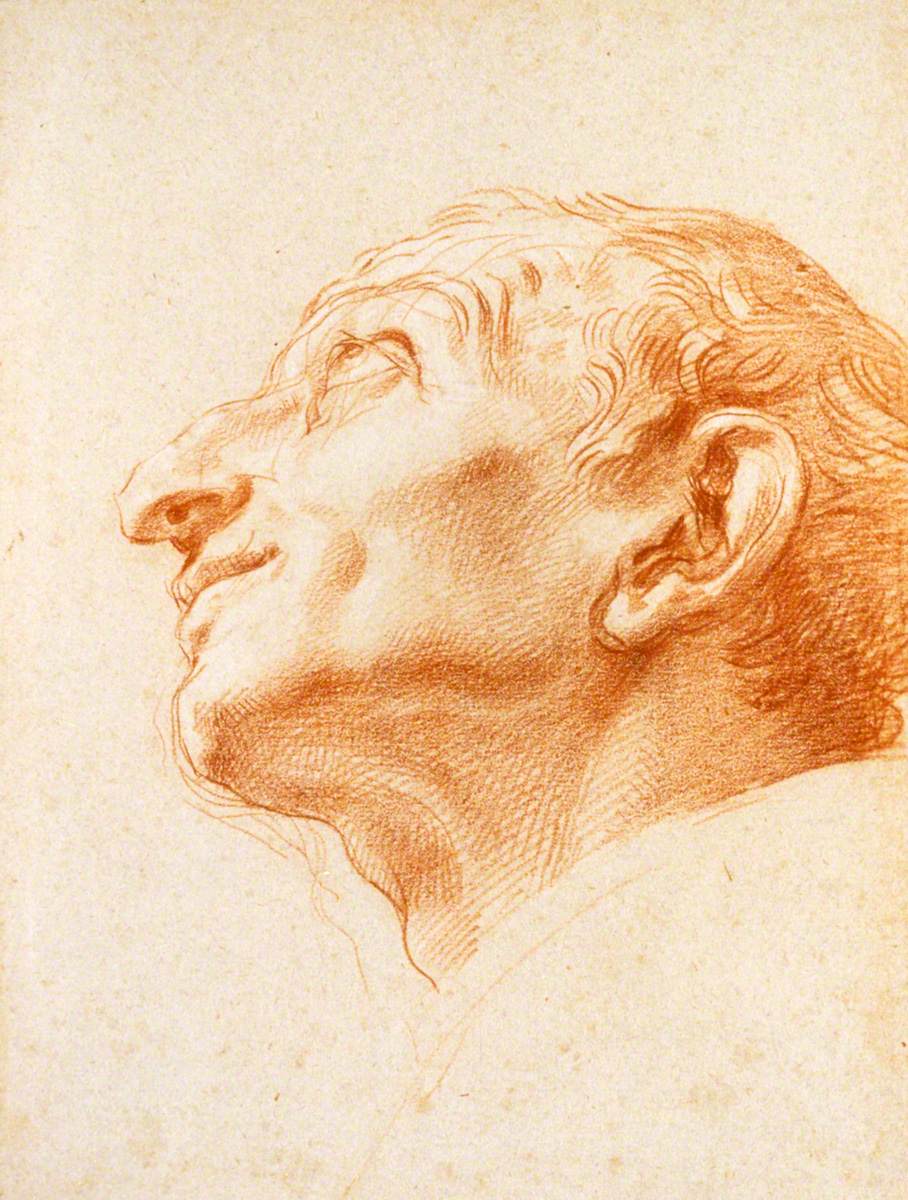
    Study for the Head of Saint Charles Borommeo (1658-1690), Carlo Maratta | Creative Commons, courtesy the Barber Institute of Fine Arts/ArtUK.

    Ezekiel affirms the opposite, that an otherwise virtuous person will die if he or she turns to wickedness. This is undoubtedly less-than-good news, especially for people who might believe their final judgment is weighed “in the balance.” God states unequivocally that it’s not an average of one’s lifetime of goodness vs. wickedness: “None of his virtuous deeds shall be remembered, because he has broken faith and committed sin; because of this, he shall die.”

    While this may not seem fair to those who subscribe to the “I mostly do things right” camp of salvation, God is telling us that he wants us to be authentically converted to him. He points out that if we’ve turned away from him and embrace wickedness, we have taken ourselves out of the light, we have accepted death over life. “When someone virtuous turns away from virtue to commit iniquity, and dies, it is because of the iniquity he committed that he must die.” It is our action of turning away that has, in effect, killed us.

    In Matthew’s gospel reading, Jesus elaborates on God’s desire to have us turn to him in heart and soul, with the very core of our being. He begins by doubling down on adherence to the law: “unless your righteousness surpasses that of the scribes and Pharisees, you will not enter into the Kingdom of heaven.” These fastidious practitioners of Jewish law — who could hope to be more righteous than them? To clarify what he means, Jesus says that while the law forbids murder, “whoever is angry with his brother will be liable to judgment.”

    And so we get to the meat of the matter. It’s not just adherence to the outward details of the law, but adherence to the spirit of the law as well that makes one righteous. Jesus is pointing out that being angry with someone carries the same intent as murder. Our anger puts us in a position of opposing that person to such an extent that we wish to enact some type of violence — a verbal insult, public scorn, physical violence, etc. Each of these reflects an attitude of hate, not love, where we no longer consider that person a brother or sister but an enemy or an opponent. In this state of anger, we no longer abide by the spirit of the law. Murder is an extreme physical manifestation of the same spiritual low point.

    His next example is similar. Jewish law made it punishable to be judged by the Sanhedrin for saying the epithet “Raqa” (essentially, “I spit at you”) to someone. Christ counters “whoever says, ‘You fool,’ will be liable to fiery Gehenna.” This seemingly lesser crime contains within it the same seed of spiritual decay, however. The Greek word that Matthew records Jesus using is Μωρέ, which is also aptly translated as “idiot” (it is the root of the English word “moron”). To call someone a fool or idiot discounts them completely as someone with dignity. More than that, we are denying our brotherhood with them, denying their equal status given to them by God. Christ’s Passion, Death and Resurrection was accomplished for all of humanity. Through this earth-shattering event, he dwells in each of us. Thus, when we discount another person by calling them fool or idiot, we are discounting Christ as well. A grievous sin, indeed! 

    Fr. Simeon Erasmo Leiva-Merikakis, PhD, states this clearly in his three-volume masterpiece on the gospel of St. Matthew, Fire of Mercy, Heart of the Word: “Who am I to raise myself exaltedly above another and confine that child of God and brother of mine to the category of human debris?” (221). Central to our understanding is that God’s Law describes outward markers of actions that stem from a deeply planted spiritual truth. The deeply planted truth is that we are undeservedly loved by the origin of love Himself, who wants us to share this heavenly love with all of his creation. Everything stems from that, and the “spirit of the law” is how deeply this spiritual truth orients the core of our being. Our actions (which show whether we adhere to the “letter” of the law) are, in effect, the fruits of either a healthy spirit dwelling with God or an unhealthy spirit obsessed with self and dwelling with the devil. 
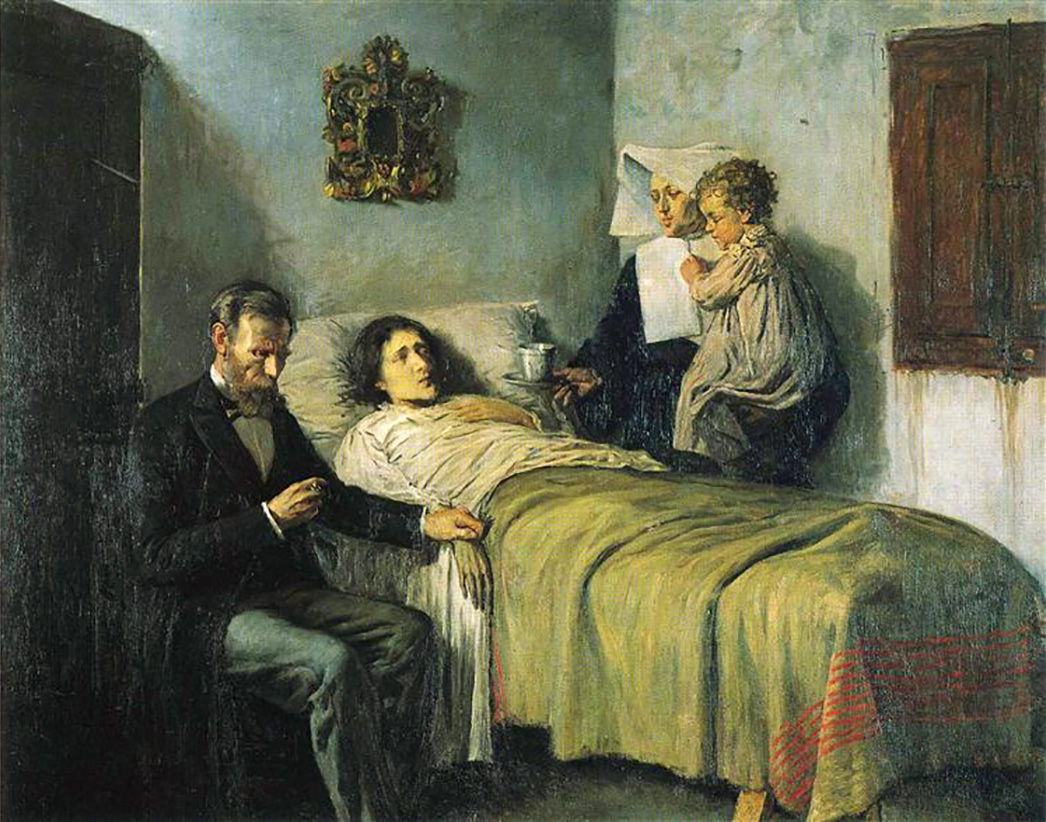
    Science and Charity (1897), Pablo Picasso | Creative Commons, courtesy WikiArt.org

    We must be careful not to simplify and misunderstand Jesus’s message to be “the spirit of the law is more important than the letter of the law.” Leiva-Merikakis states that the spirit is an “overabundance,” not a different/better thing: “If he is asking his followers to surpass the ‘justice’ of the Pharisees and Doctors of the Law, this ‘surpassing’ is an overabundance that transcends the Law interiorly, that deepens the sense of the Law and traces it back to its very source in the will and Heart of God … [transcending] in the sense of going deeper into it: an interior transcendence.” (216-217).

    The last words of Jesus presented in today’s gospel relate an urgency to keep our deeply planted spiritual truth healthy and in front of our own eyes. He says, “leave your gift there at the altar, go first and be reconciled with your brother.” We must not attempt to offer sacrifice to God, our ultimate display of obedience and honor, if we are dishonoring him by arguing with or discounting another child of God. We would be hypocrites, pretending to give ourselves to Him while at the same time being in a state of pushing Him away.

    Both readings today, therefore, display how God wants us to convert to him, fully and unreservedly. It’s easy for us to be tempted to sin and be out of grace, covering up that deep spiritual truth God has planted in us. But that’s why Lent is so important, so that prayer, fasting, and almsgiving can help us fight temptations and remain close to God, anxious to meet him face-to-face.


    As a final note on the passage from St. Matthew’s gospel and a plug for Erasmo Leiva-Merikakis’s amazing three-volume set, revel for a moment in his command of language and excellence as a scholar. Below is a more extended excerpt from the first volume of Fire of Mercy on today’s reading.

    There is a subtle progression in the verbs used by the Lord in these three verses (5:21-23). Just as his doctrine is proceeding from external to the interior, from the past to the present, and from the general to the particular, so too his language. He first addresses the crowd as such in the plural: “All of you have heard.” He then singles out individuals from the group before him, but somewhat hypothetically: “Whoever might say….” Finally, he completes his approach to the human heart and conscience of the specific person standing before him by using the second person singular: “When thou are taking….” Matthew’s scenography here is full of visual dramatic impact. We can see Jesus first looking over the whole crowd on the mountainside and then gradually beginning to move in on individuals, who are transfixed by the penetrating goodness of his eyes. In the end, the merely curious individual who found himself in the crowd just “to see” can no longer hide, for he feels Jesus address him, and no one else, with his words and glances.

    “When you are bringing your gift-offering to the altar.” The material gift offered to God to fulfill a ritual prescription suddenly becomes the symbol of the human heart, which is the real gift the external sacrifice intends in authentic religion. But the pious rite that is to be transacted between the individual and his God cannot be completed if the memory (μνησθῇς) of a rift with one’s brother intervenes. On the way to the altar, the gift must be dropped; not a minute more can pass; reconciliation cannot be left for later. The impediment to sacrifice, and hence to right relationship with God in worship — what had been objectified as ritual impurity before the coming of Christ — now becomes the impediment of the memory, of the consciousness of disharmony with one’s brother. You cannot present your heart to God as a gift-offering on the altar of sacrifice (θυσιαστήριον) if that heart is turned against God’s other children   (222-223).

    Buy the 1st volume here.

  • Esther: Model of How to Petition the Father

    Esther: Model of How to Petition the Father

    Thursday in the First Week of Lent: Esther C:12, 14-16, 23-25, Matthew 7:7-12.

    With eight kids vying for attention and elbowing for their piece of pie, my mother was fond of the saying, “Ask and you shall receive.” I must have heard it a hundred times growing up. Today, we hear the origin of this saying, out of the mouth of Jesus as he encourages his disciples to petition the Father. Lest we think that any old way of asking is OK, we are given the ideal model of petitioning from Esther in the first reading.

    For me, the Book of Esther is a bit of an odd duck in the Old Testament. It’s a great story explaining the establishment of the Jewish holiday of Purim, but the colorful narrative of ironic reversals and high-stakes changes of fortune remind me of a Shakespearean play. The setting is Babylon, and while many Jews have started to return to Israel after the Babylonian Captivity officially ends, Esther and her uncle Mordecai are some of those who remain. She’s not presented as particularly devout, and her most striking asset is her beauty, which gets her chosen as Queen after “trying out” with many other young virgins in the harem.

    But her secularism changes when the king is convinced to pass an edict that all Jews in the kingdom “shall all—wives and children included—be utterly destroyed by the swords of their enemies, without pity or restraint, on the fourteenth day of the twelfth month, Adar, of this present year.” Mordecai asks Esther to intercede with the king. In a passage before the one read today, Mordecai implores her not to “keep silence at such a time as this,” and says, “Who knows? Perhaps you have come to royal dignity for just such a time as this.” 

    The rub is that no one can come into the king’s presence without being summoned, or they are killed. So in order to ask him to change the edict, Esther must take her life in her hands. But, Esther is convinced that action is needed. And — praise the Lord — the action she takes begins with God. She responds to Mordecai: “Go, gather all the Jews to be found in Susa, and hold a fast on my behalf, and neither eat nor drink for three days, night or day. I and my maids will also fast as you do.”

    Queen Esther (1878), Edwin Long | Wikimedia Commons.

    This is where we join today’s reading. Esther, alone and “seized with mortal anguish,” falls back on the faith of her people. She covers her head with ashes and dung and utterly humbles every part of her body. Clearly, her prayer is fervent and sincere. It takes the form of both petition, to help her find the right words, and intercession, to save all of the Jews from slaughter. It seems to me that this reading is included in our Lectionary as a reminder of the sincerity with which we should pray to our God when we ask for his help.

    The Jews are saved in the end, and it’s important to note that Mordecai offers a passionate plea for help and, in fact, “all Israel cried out mightily, for their death was before their eyes.” It was a group effort.

    So when we encounter Jesus in the gospel reading from Matthew, we have in our minds the same impassioned, sincere type of prayer that the Jews of the time knew was an appropriate way to speak to God. This passage comes towards the end of Matthew’s account of Jesus’s words upon the mountain after he preaches the Beatitudes. It’s a section that presents rapid-fire nuggets of wisdom. In fact, in the NRSV Bible, the last verse is given a different subheading: The Golden Rule.

    Jesus’s words in our Book of Gospels: “Ask and it will be given to you; seek and you will find; knock and the door will be opened to you.” Really? This seems like a carte blanche scenario, and our experience tells us otherwise. As a priest in Salt Lake City, Fr. Erik, is fond of saying, “God isn’t a vending machine.” You don’t put out a set of prayers in the right words and quantity and receive back exactly the thing you wanted. (Another phrase I like: God isn’t a cosmic genie!)

    We must read this passage in its entirety. Jesus uses the analogy of how we give our children good things when they ask for them: “how much more will your heavenly Father give good things to those who ask him.” A few things are going on here. First, we are reminded that the Father is truly that: a father, and all the aspects of that relationship apply. Second, the Father’s will is to give “good things.” He knows better than we do what we need and what is good.

    I’d venture to claim that we very rarely know what is good, especially from the perspective of God. What we know is what pleases us or solves our short-term problems. Children indeed.

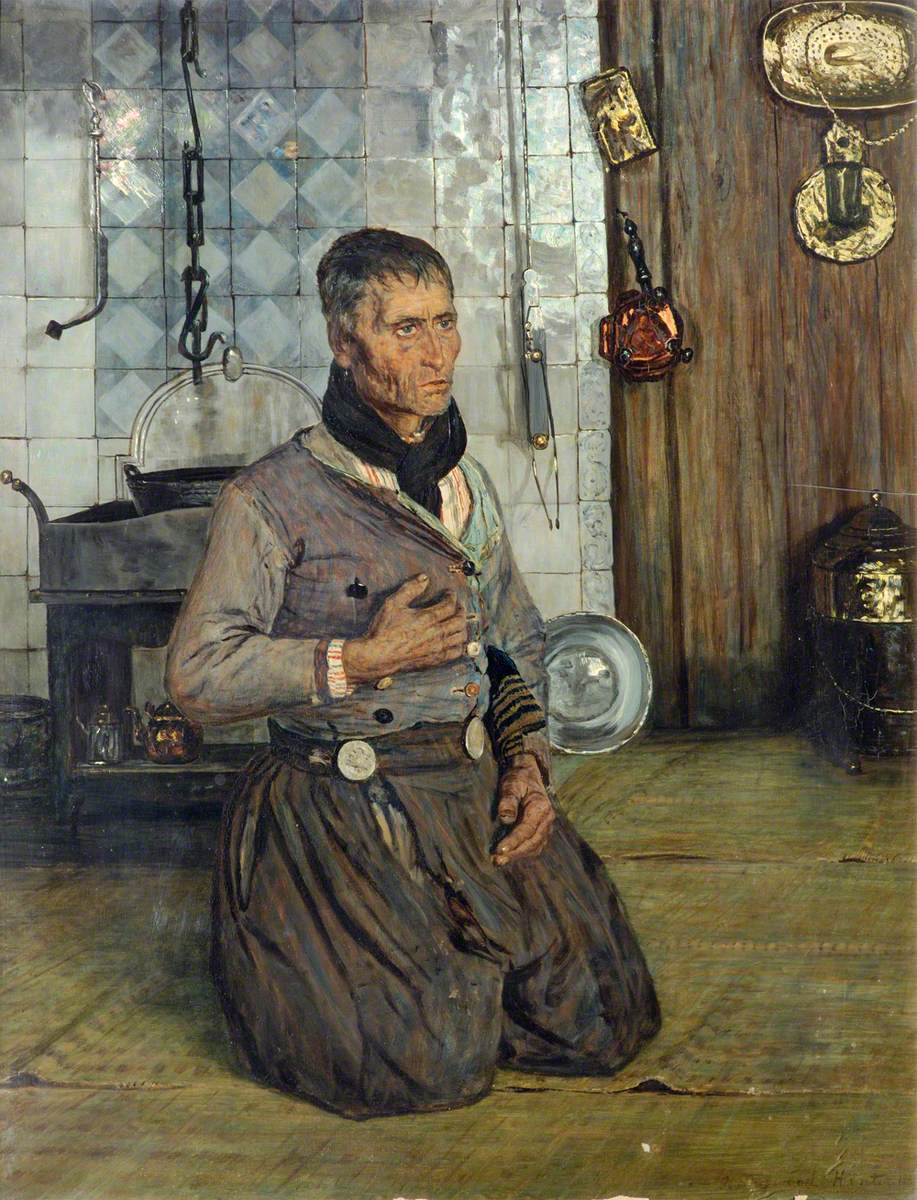
    Ave Maria, Volendam, The Netherlands (1897), George Sherwood Hunter | Creative Commons, courtesy Aberdeen Art Gallery & Museums/ArtUK.

    So what’s the point of asking if we are like the four-year-old asking for more candy or for our dad to get the monster out from under the bed? I can imagine several reasons Jesus urges us to ask the Father and assures us that he will answer. The most basic one is that it reminds us to live in faith; it reminds us that we are dependent upon an omnipotent God who wants to bring us to Himself.

    The second reason is that this reminder, in turn, can deepen our contemplation of God and his will. We are not expected to stay in spiritual infancy, but to mature and more closely align our own will with God’s over time. As the 1st Letter of John states, “And this is the boldness we have in him, that if we ask anything according to his will, he hears us” (Jn 5:14, emphasis mine).

    The third reason is that we answer our call as Christians to act in the world according to God’s will. We are not called to sit in contemplation as passive lumps. We just read a few days ago that there will be a final judgment and it will be based on our acts of love. We have to ask, we have to seek, we have to knock, and we have to do God’s will. We are a people on the move towards the Kingdom, but we must get there in participation with God, not by somehow floating there.

    And this is why the last verse is a great way to end the reading: “Do to others whatever you would have them do to you. This is the law and the prophets.” Yes, that doing — it’s on the same wavelength as the asking and seeking. It’s to be done in reverence to God (think about Esther) and in accordance with his laws. This great Golden Rule is an example of God’s love in action, a charitable act. 

    Back to Esther: she is a great model for us because she shows that even if you’re alone, terrified, and not regularly pious, if you appropriately petition God from a position of humility and have the courage to act in difficult situations, the way God answers may just align with your earthly desires.

  • The Life-Giving Word

    The Life-Giving Word

    Tuesday of the First Week of Lent: Isaiah 55:10-11, Matthew 6:7-15.

    The Word of God: could there be a more exciting topic for those of us with English degrees? If your academic training is centered on how words create and describe culture, then the Word of God in scripture is the pinnacle of significance. In addition to literature and cultural studies, we moderns have scientific systems for analyzing words and languages: semiotics (thanks to Ferdinand de Saussure) and linguistics (looking at you, Noam Chomsky), to name some biggies. But humans have always been aware of the power of words. The Judeo-Christian understanding of the Word of God is that it is not just an utterance with theological significance, but the very mechanism of creation. From the beginning of scripture and Jewish consciousness, this has been the case. Imagine if every time you spoke of something, it came to be. That’s the Word of God.

    We read an engaging set of verses about the Word from Isaiah in today’s readings. Suiting the beauty of his imagery, the living Word of God, Jesus, gives us the Lord’s Prayer in the gospel according to Matthew. What a day of readings!

    Isaiah’s verses form a lovely piece of poetry. He says that just as rain and snow water the earth, “making it fertile and fruitful, Giving seed to the one who sows and bread to the one who eats,” so God’s Word “that goes forth from my mouth” will act in the world. We receive a promise from God that his will will, in fact, be done: “It shall not return to me void, but shall do my will, achieving the end for which I sent it.” For me, this is greatly comforting and reassuring. In a world that appears more godless by the minute, I begin to fear God’s will is completely betrayed and somehow lost. But God assures us that his Word is a generative, active force, as reliable and inexorable as the rain that makes the earth fertile. It’s not up to me to make sure God’s will is done (although I pray for it daily); his Word contains all of the power needed to complete his will. Thanks be to God!

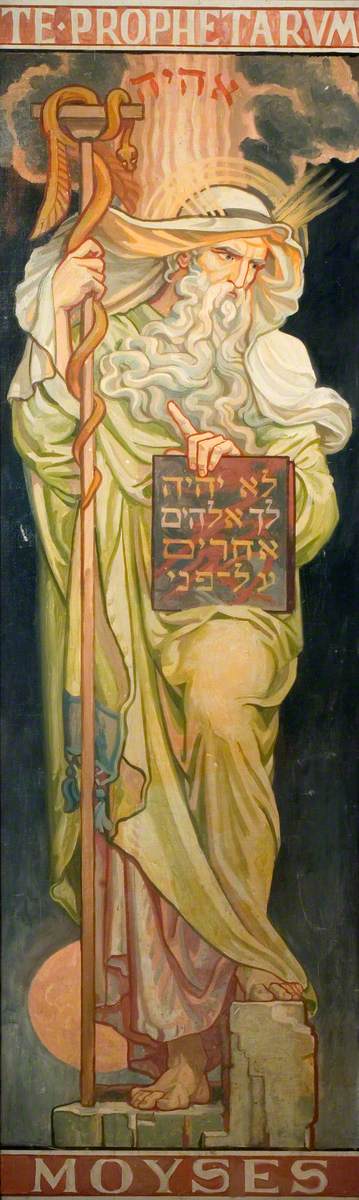
    Stained Glass Design, Moses (1900-1910), Frederick James Shields | Creative Commons, courtesy Bantock House and Park/ArtUK.

    This Word is such an active force — and issues from such an inscrutable source — that Isaiah, just a few verses prior to today’s reading, prophesies to the Jews: “See, you shall call nations that you do not know, and nations that do not know you shall run to you, because of the Lord your God” (Is 55:5). This “calling” of other nations happens 700 years after Isaiah in the form of the Word incarnate, Jesus Christ. Isaiah describes the remarkable spread of Christianity to this day.

    Let us contemplate this amazing Word. The Word of God is evident in the time of promises, in his covenants with Abraham, Moses, David, and other figures in the Old Testament. His Word generates action in the Chosen People, who alternately live out his commands and are blessed or betray them and incur wrath and misfortune. It manifests itself throughout the history of the Jews, not just as words inscribed in stone tablets as if a dead text. In fact, Moses breaks the tablets — they’re not the point; the Word must live actively. The Word continues to flow forth from the mouth of the prophets; it spills into the dreams of men and women; it orients every action recorded about these people.

    And we cast back further to find that the Word always existed. It was the very generative force that made the cosmos. It issues forth from God, both an integral part of him and somehow ontologically separate from him. St. John opens his gospel with perhaps the most complex and beautiful words in all of scripture: “In the beginning was the Word, and the Word was with God, and the Word was God. He was in the beginning with God. All things came into being through him, and without him not one thing came into being” (Jn 1:1-3). Indeed, we hear from Eve in Genesis that they are told about the garden and the forbidden tree from God, so we know that the Word was with them at this point. The Word of God is not made, like the other aspects of the cosmos, but is “with God” and “is God” from the beginning. Even deeper, here, the original Greek word is logos, which does mean word but also means an organizing principle, something that makes meaning.

    And in the opening prologue to John’s gospel, we of course read that “the Logos became flesh and lived among us.” That is, the generative Word of God, the organizing principle of the universe that enables meaning to be made, well, it took on human flesh. Our ancestors in the faith would have recognized the incomprehensible power in this person Jesus Christ, the logos in the flesh, even if it comes to us 2,000 years later as a sort of ho-hum story. Something new happened that ended the time of promises and began the end times: the Word that existed from the beginning is made flesh, has a mother named Mary.

    Is this really the same Word of God that we know has been active throughout the history of humanity? Our Church Father, Origen, verifies this in his Commentaries on John when contemplating the death of Jesus:

    But while it is certainly a man who died, the Truth, Wisdom, Peace and Justice, of whom it is written, “The Word was God,” was not a man; and the God who is the Word, and the Truth, and Wisdom and Justice, is not dead. For the Image of the invisible God, the First-born of all creation, is incapable of death.

    This insight sheds light on the resurrection. It does not diminish the sacrifice in the least, as if the Word of God knew he could not die so Jesus’s Passion and death was just a show. In fact, it elevates the Passion, death, and resurrection because God deigned to truly suffer and die for us instead of ruling the created world in power (simple!) or majestically exiting the scene as an untouchable deity might (like the Greek gods would in their mythology).

    Consider that. The Word of God deliberately chose a specific way of becoming man, revealing the truth in Himself, submitting to human authority, suffering, and offering himself back to the Father in the greatest act of love. This life he led was not an accident and he certainly had as many other options available as you can imagine (and more we can’t imagine).

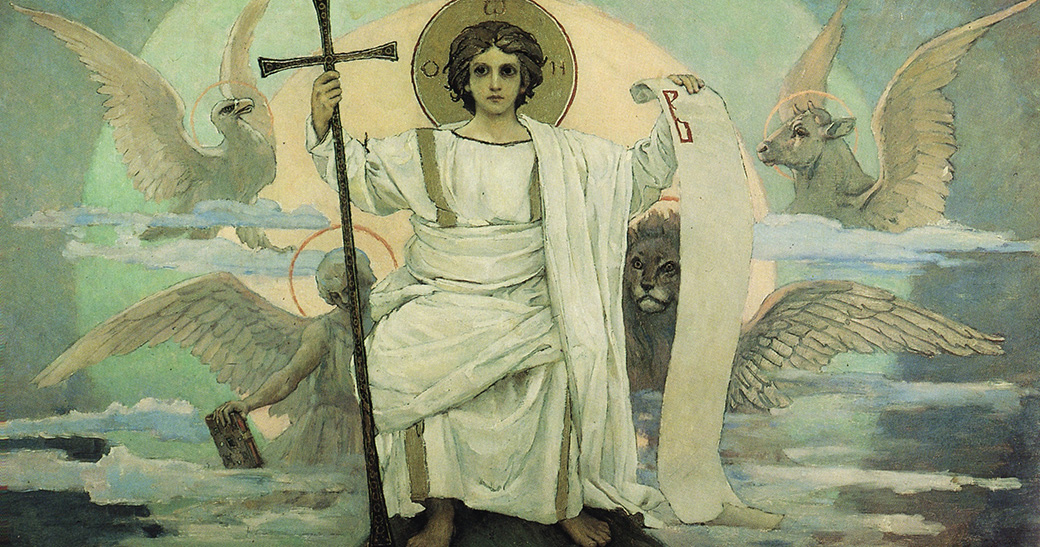
    His only Begotten Son and the Word of God (sketch for a fresco in the Cathedral of St. Vladimir in Kiev 1885-1896), Victor Mikhailovich Vasnetsov | Wikimedia Commons

    Why? What causes the invincible Word of God that made all of creation choose such a torturous existence as a human? It might just be that it is the perfect way for Jesus to be the ultimate teacher as well as the very method of our salvation. As a simple man who bleeds and suffers, he is our brother, yet as the life-giving Word, he alone can accomplish our salvation. As a human like us, he demonstrates in his life how to have a relationship with the Father, but as God he brings the reality of the Father into the world to forever change it. He is both the role model and reality being modeled.

    This brings us to the reading from Matthew where Jesus inhabits the role of teacher when he says, “This is how you are to pray.” And then we are given the Lord’s Prayer, the depths of which are too great to plumb in a simple blog post. If you want to better understand the meaning of the Lord’s Prayer, read Pope Benedict XVI’s book Jesus of Nazareth, which contains a great 40-page chapter devoted to the Lord’s Prayer.

    But let us note just a few things. We hear echoes of Isaiah’s verses in “thy will be done, on earth as it is in heaven.” Remember, God promises that his Word “shall not return to me void, but shall do my will, achieving the end for which I sent it.” Thus, we signal our acceptance of how the Word acts in the world, and we give it our blessing, our hope for its speedy success. 

    The second thing that strikes me is the verbal equation, “and forgive us our trespasses, as we forgive those who trespass against us.” I’ve always wondered why this isn’t stated the other way around, i.e., “as your father forgives you, you should forgive others.” I think my confusion stems from the use of the word “as,” which I typically take to mean “in the manner.” Thankfully, today’s reading includes the verses following the bestowal of the Lord’s Prayer, where Christ doubles down on the formulation and explains what He means: “If you forgive men their transgressions, your heavenly Father will forgive you. But if you do not forgive men, neither will your Father forgive your transgressions.” Aha! I should be reading it in this way: “forgive us our trespasses if we are able to forgive those who trespass against us.” Even if we do everything according to His will (such as forgiving others), we must also pray for his grace and salvation, which is not guaranteed, but a gift.

    As we return to Isaiah’s verses that God’s Word will make the earth fruitful and do his will, we are struck with just how true this is and in how many ways we can see it. God’s will that we are brought into perfect communion with him: the liturgy is established by the Word made Flesh; his will that men testify to his truth at the risk of their own lives: the saints and the martyrs; his will that we love our neighbors as ourselves: countless acts of true charity done in the name of the Lord. Christ the Word has made this possible on earth in a way it was never possible before his great sacrifice.

  • Judgment Will be Based on Acts of Love

    Monday the First Week of Lent: Leviticus 19:1-2, 11-18, Matthew 25:31-46.

    Today presents a good old fire-and-brimstone set of readings. Leviticus gives us the Word of God from the mouth of Moses, laying out a further explanation of the commandments. He elaborates on the law, “you shall love your neighbor as yourself.” Jesus takes up the thread in the reading from Matthew and explains that Jesus the King will separate the lambs from the goats, sending the evil people to Hell and taking the good to Heaven. This judgment will be based on whether we adhere to God’s law as laid out in the scriptures. Heed well, O Christians: there will be a second coming and judgment!

    As we dwell on these readings, let us not forget this terrible and great day of judgment that is promised, but let us also glean what is hopeful, for we know that our God is the God of Life.

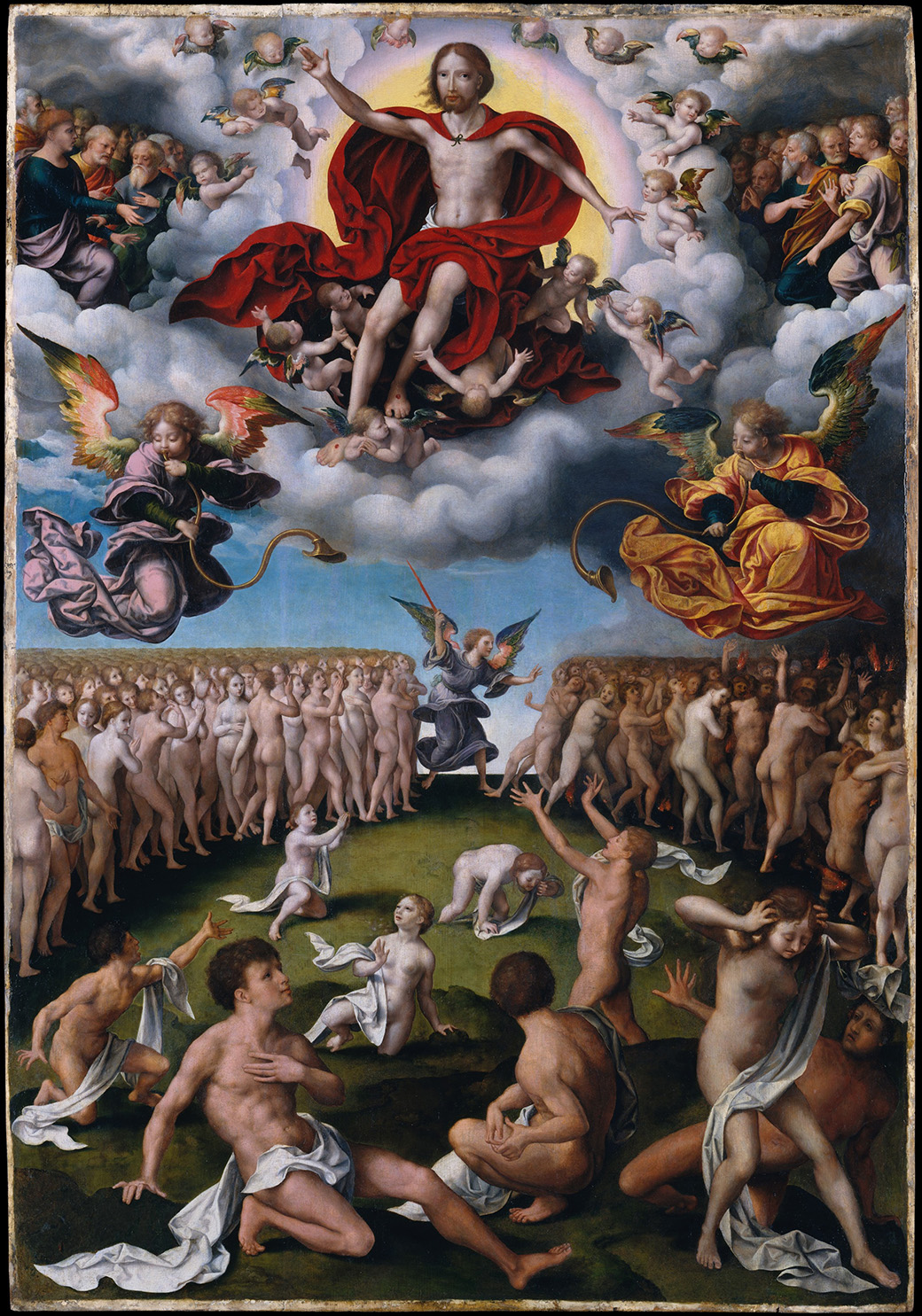
    The Last Judgment (1525–30), Joos van Cleve | Creative Commons, courtesy the Metropolitan Museum of Art.

    What strikes me about the reading from Leviticus is the last line of each paragraph (or stanza, as it were): “I am the LORD.” Four times it is repeated, and this is no accident. God wants to impress upon his people that these instructions for life come from a place of ultimate authority. But let’s consider what type of authority that is. He is the perfection of love, truth, and goodness; the giver of light and life. Imagine that phrase at the end of each paragraph: “I am the perfection of love, truth, goodness; the giver of light and life.” The sense of oppressiveness is lifted; we now cling to these words as veritable gifts bestowed on us to help us in our poor, imperfect state.

    God clearly cares that we try our best to be like Him. The first words he instructs Moses to share are “Be holy, for I, the LORD, your God, am holy.” He wants us to share in his perfection. What a loving, caring God! At the same time, we must carry in our hearts the humility to know that humanity is imperfect and in need of redemption, that we aren’t God. His words, “but you shall fear your God,” must be indelibly carved in our spirits. 

    This co-existence of a holy, reverent “fear” of the Lord and the knowledge of an all-good and loving Lord is no more evident than it is in the reading from Matthew. On the one hand, Jesus at the Second Coming jubilantly welcomes those who have acted righteously: “Come, you who are blessed by my Father. Inherit the kingdom prepared for you from the foundation of the world.” God prepared for us a kingdom from the foundation of the world! Yet on the other hand, Jesus the King curses those who have not obeyed God’s commandments: “Depart from me, you accursed, into the eternal fire prepared for the Devil and his angels.” Terrible judgment, indeed. God renders both of these because truth and divine justice are not just cotton candy and puppy dogs.

    (As a side note, given yesterday’s post Getting to Know the Tempter, I find it fascinating to hear that the eternal fire is “prepared for the Devil and his angels.” We think of the Devil as reigning in Hell, but here it seems that he is burning in Hell with the rest of the damned. Indeed, he is Prince of this World, but when the world comes to an end and all are judged, it seems that he is cast into Hell to succumb to eternal fire just as the damned are. Not so much a monarch of Hell as a fellow sufferer…)

    In this judgment scene, we hear the oft-repeated phrase “whatever you did for one of these least brothers of mine, you did for me.” Growing up in a rather liberal post-Vatican II family and church, this was the folk-mass standard lingo for a type of social justice and care of the homeless and poor. And I don’t think that’s far off — certainly, it’s consistent with the Beatitudes and Jesus’s other teachings. But if we singlemindedly focus on works of kindness towards others, especially the less fortunate, it may devolve into simple “good society building” or “personal virtue building.” We must dig deeper into what Jesus is saying.

    We must cultivate in ourselves the best reason to treat others with charity: that we fundamentally and desperately love God and all his creation.

    First, we know one thing is for sure: His message is not a self-improvement plan or an instruction book for how to build a just society here on earth. We must resist all statements about our faith that simplify his message to these banal ends.

    What Jesus says is “For I was hungry and you gave me food, I was thirsty and you gave me drink …” He is the one to whom we are ministering. Importantly, neither the good people nor the bad people understand what he means — they both ask for clarification. The good people follow God’s commandments, not even necessarily understanding the full import of their works. Great reminder! We don’t know God’s full plan, nor are we meant to. Trust in his Word and faith in the mystery are the challenging yet most important aspects of our mission.

    Jesus emphasizes that we are acting upon God when we act in the world. How is this possible? We must come to realize that God loves us so much that he shares himself with each of us. Our spirit is the organ for communion with him and the vessel to receive his Spirit. He has fused himself with us, his creation, and greatly cares that we return again to him in the Kingdom. This fusion is no more evident than in the person of Jesus Christ, fully man and fully God. 

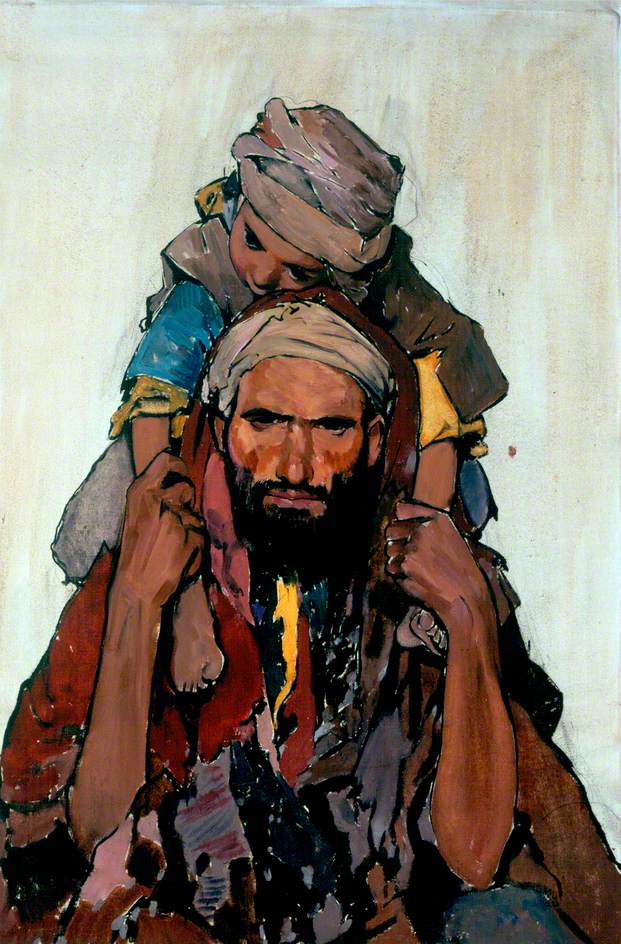
    Arab Man with a Child (1933), James McBey | Creative Commons, courtesy Aberdeen Art Gallery & Museums/ArtUK

    So, yes, it is a common refrain to “see God in others” as a way to respect and care for other people. But sometimes this feels a bit like tricking our minds to “look past” that person’s flaws and things we dislike to “imagine God” in his or her face. Let’s take this deeper.

    We must love God so much that we don’t just follow his commandments out of fear or out of duty. We must love him so much that we start to see how he has fused himself with all of humanity (each of us included). We must love him so much that we realize we offend the Spirit of God in us when we act in sin. Finally, we must love him so much that we love his creation, we love him in his creation, and here is where our charity towards others finds its inexhaustible spring. We love others, warts and all, not looking past them or through them, but directly at them because they are God’s creation and fused with God like we are, and we love all of God and what he has created.

    No easy feat. But let’s not simplify Jesus’s message. We are called to communion with something amazing, namely “the perfection of love, truth, goodness; the giver of light and life.” This is mystical, it is known by the spirit and through faith.

    Christians are not simply social workers, but members of a family that is not of this world.

  • Getting to Know the Tempter

    Getting to Know the Tempter

    First Sunday of Lent: Genesis 2:7-9, 3:1-7, Romans 5:12-19, Matthew 4:1-11.

    Satan is known by many names in the scriptures: the Adversary (the most literal definition of the word “Satan”), Lucifer, Beelzebub, the Devil, the serpent, the Prince of the World, the Father of Lies, and the Tempter. Today’s readings give us a chance to get to know him as the Tempter. First, we watch him tempt Eve and cause the great fall of humanity. Then, we watch him try to tempt Christ in the desert. What we might realize from the readings is just how tightly interwoven his whispers are to our way of looking at the world. His temptations are the same ones we encounter today. 

    As we revisit our origin story in Genesis, it absorbs us lyrically like a colorful legend. After forming man from clay, God “blew into his nostrils the breath of life.” God plants a garden and makes trees sprout up that are “delightful to look at and good for food.” What evocative language! But lest we consider this just a colorful story, remember that it is laced with the undeniable stamp of truth. One example: thanks to modern science, we realize that we are made of biological building blocks like DNA, in turn made of inert elements (the “clay”) like carbon, nitrogen and oxygen, somehow sewn together and animated in relationship to one another.

    But I am not trying to be a Biblical literalist here; let me focus more on the theological truths in Genesis. Let’s consider that the garden is a metaphor for perfect life with God, in other words, the Kingdom of God. We long to return to a place of unity with God. One aspect of the garden that we take into our spiritual lives is its orientation. The garden is planted in the east, not just symbolic of newness, but the direction of the rising sun. It is the place of eternal renewal and newness, which is why Catholic churches have their altars in the east and the people face east during Mass.

    In the middle of the garden are the tree of life and the tree of the knowledge of good and evil. The tree of life is the creative power of God, and the tree of knowledge of good and evil reveals characteristics of his essence. God’s only commandment for Adam and Eve is to not eat of the fruit of the tree in the middle of the garden. The message here is that humanity should not try to partake in the essence of God, should not try to be gods.

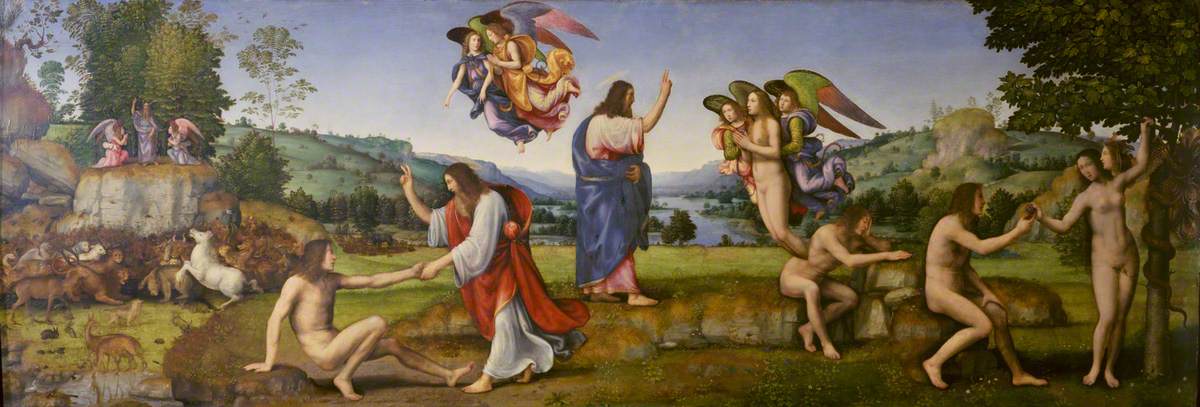
    Lo, enter the serpent, the “most cunning of all the animals.” He begins his conversation like the quintessential gossip: “Did God really tell you not to eat from any of the trees in the garden?” The “really” is very telling — he’s not asking for clarification, he’s asking because he has an agenda, something he wants to implant in Eve’s mind. She naively tells him about the injunction on the tree in the middle of the garden, and the serpent responds: “You certainly will not die! No, God knows well that the moment you eat of it your eyes will be opened and you will be like gods who know what is good and what is evil.” The first thing we must acknowledge is that the Tempter is setting himself up as an alternative truth, a friend who shares secret knowledge. This presents Eve with a choice, who to believe? And her great sin (and Adam’s) is to begin to doubt God. She doubts that God has been entirely truthful. 

    Creation and Fall of Man (1513-1514), Mariotto Albertinelli | Creative Commons, courtesy The Courtauld Gallery/ArtUK. Note the depiction of the serpent in the tree as a human voice whispering in Eve’s ear, a nice representation of temptation as a familiar, almost human voice.

    The Tempter, we see, is a friendly devil. He operates by setting himself as a friend who wants the best for you, but that “best” is always to be questioned. Who on earth or in the heavens knows what is best for us, other than God?

    It’s important not to misunderstand the outcome of their choice. We read: “Then the eyes of both of them were opened, and they realized that they were naked.” Was Satan right? He said their eyes would be opened! Like a good used car salesman, the Devil may have laced his lies with some half-truths, but when their eyes are opened, they do not become omnipotent (which we realize in retrospect he didn’t promise) and instead they realize the evil they committed in disobeying and distrusting God, and the goodness of the garden they just betrayed. It is their shame that they realize, and the metaphor, or perhaps simply the object of this shame, is their nakedness, which they attempt to hide. Their nakedness caused no shame while they were in perfect, trusting relationship with God, but they became ashamed of their very nature (most physically obvious in their nakedness) once they broke the trust.

    This is the Original Sin: mistrusting God.

    The Expulsion of Adam and Eve (1829), Alexander Mosses | Creative Commons, courtesy Walker Art Gallery/ArtUK

    St. Paul connects for us the truth in God’s statement to Adam and Eve, “You shall not eat it or even touch it, lest you die.” The death of which God warned was not immediate (as if the fruit was a poisoned apple), but now an inevitable part of the nature of humans, brought about by their sin. Paul writes, “Through one man sin entered the world, and through sin, death, and thus death came to all men, inasmuch as all sinned.” Sin and death are inexorably joined. But the good news Paul shares is that when Jesus Christ takes on this sin and offers it to the Father in a perfect sacrifice, we are given life again. This life is evident in the bodily resurrection of Jesus, and is now available to all humanity.

    Jesus is the new Adam.

    And just as the Tempter wormed his way into the minds of Adam and Eve, he attempts to do the same with Jesus. The three temptations he uses with Jesus after his 40 days of fasting in the desert are a case study in the way we experience temptations to this day.

    The first thing we read from Matthew in today’s reading is that Jesus was “led by the Spirit into the desert to be tempted by the devil.” How much this tells us of the Spirit of God! Jesus was led by the spirit in order to be tempted. One of the major questions modern people ask when they question God is why he permits evil in the world. There are many ways to approach the answer (one of which being the fact that we were meant to be in the garden, not the world, but we screwed that one up), and this passage helps us realize one of the reasons. As we read from our Church Fathers, God refines our spirit through the fires of temptation and difficulties. God, no doubt, tests us and wants us to continue to purify ourselves and our souls in order to rejoin him in perfection. Jesus was not exempt from this. And temptations are hard, particularly because the Devil is so convincing. This is why in the Lord’s Prayer we ask God not to lead us into temptations (although it is his prerogative to do so).

    Matthew tells the temptation story in a very neutral voice. Picking up on his clues (calling the devil “the tempter,” for instance) and knowing what we know of the devil, we can flesh out this story as we contemplate. We are told that Jesus was hungry after his 40-day fast. So when the Tempter says, “If you are the Son of God, command that these stones become loaves of bread,” we can almost hear the false compassion in his voice.

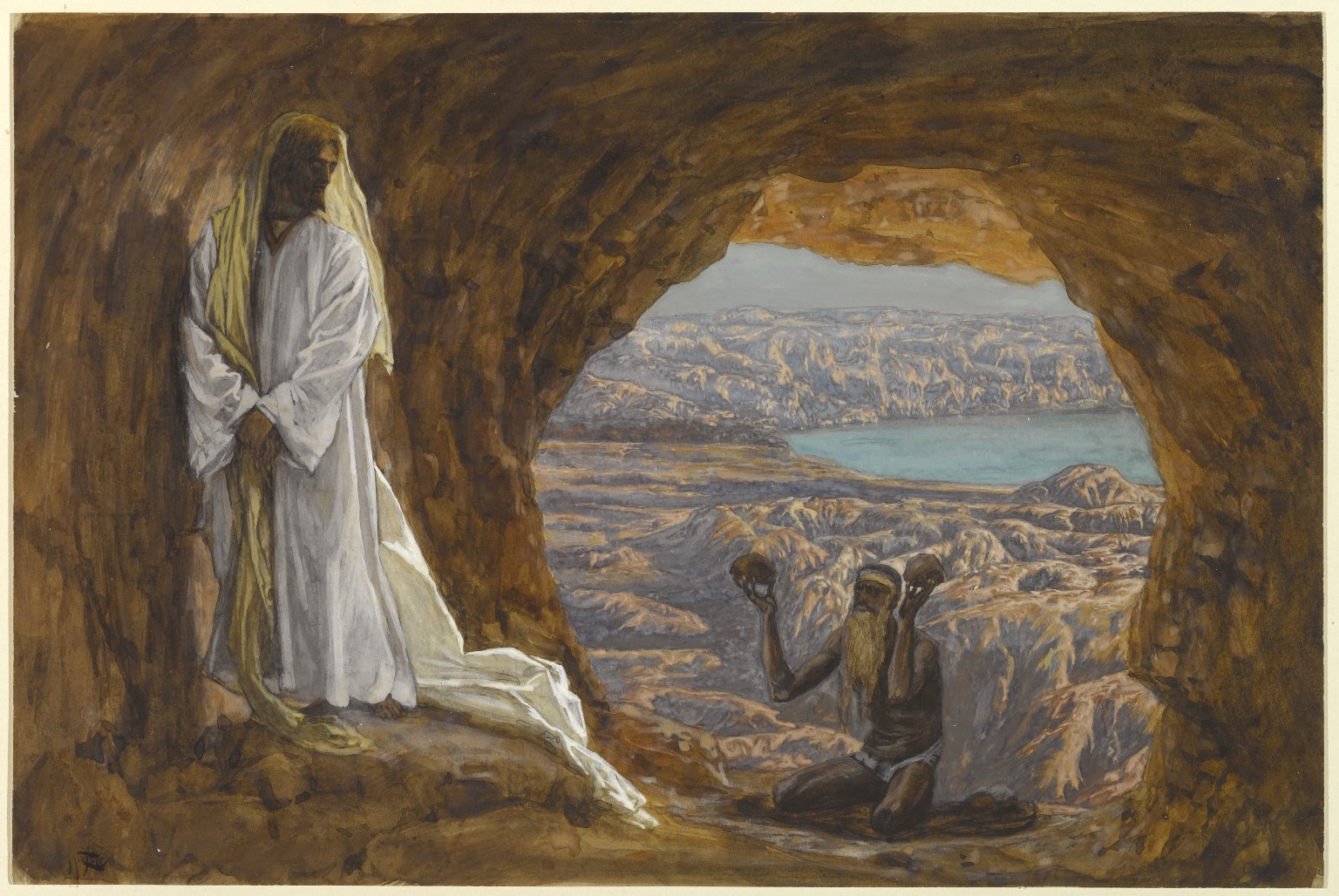
    Jesus Tempted in the Wilderness (Jésus tenté dans le désert), 1886-1894, James Tissot | Creative Commons, courtesy Brooklyn Museum. I particularly like the depiction of the Tempter as a common desert ascetic, hiding his nature from Jesus.

    Satan wants to appear empathetic to Jesus’s hungry state and offers him a way out. But Jesus points out the falseness of his empathy in that the Tempter focuses on physical things when the test is a spiritual one. Jesus responds with a scriptural quote: One does not live on bread alone, but on every word that comes forth from the mouth of God. What a great way to start Lent, when we might be tempted by this same devilish voice to focus on the physical discomfort we might feel in fasting instead of forging our spiritual fortitude.

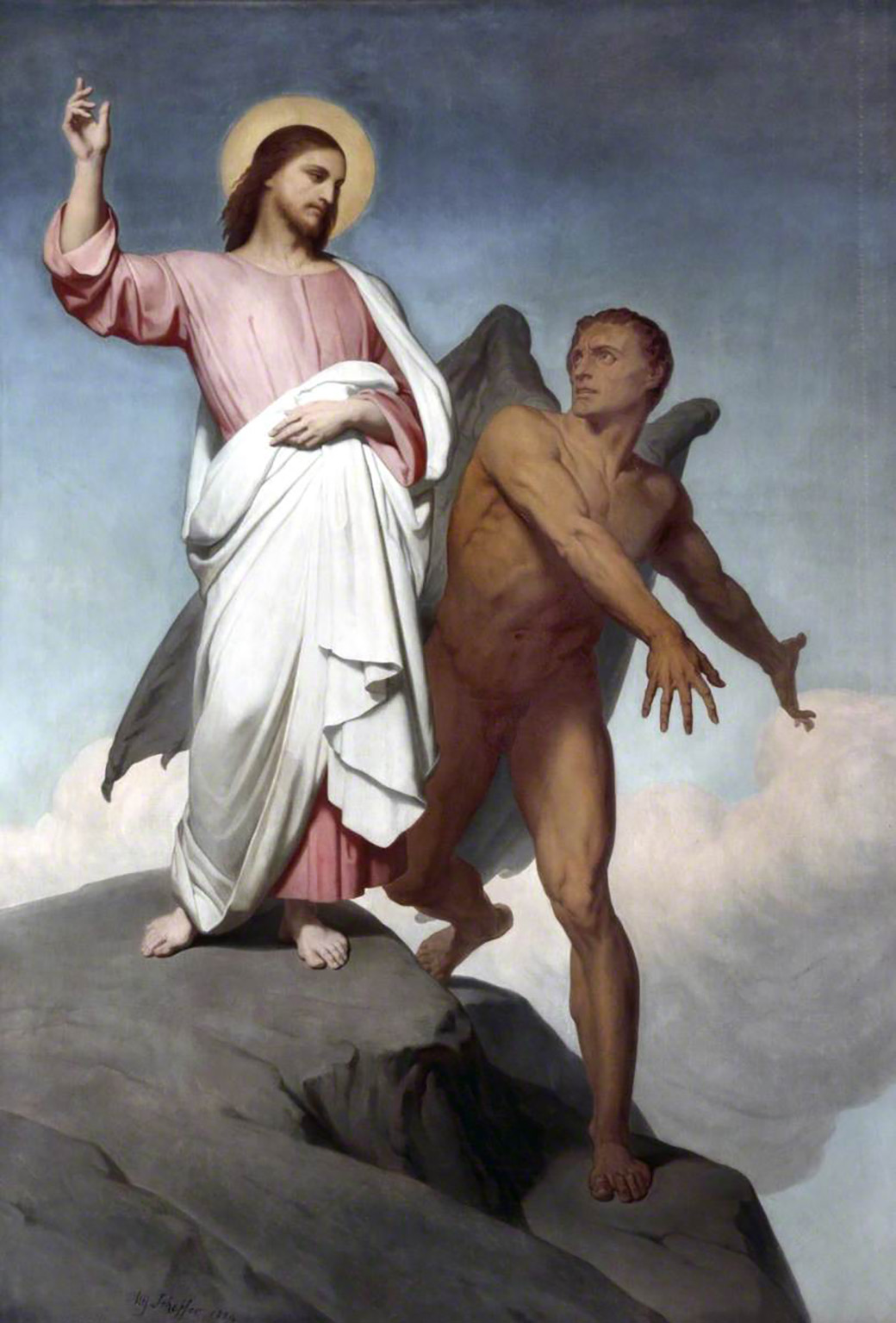
    With the second temptation, we might think that the devil is mocking Jesus when he says, “If you are the Son of God, throw yourself down” from the high parapet of the temple in Jerusalem. But I think he’s more smooth and sneaky than this. He is a fallen angel and has the same nature as these celestial creatures, so he could appear to Jesus as an angel who is interceding with him. Note that at the end of the temptations, this is precisely what happens when angels tend to him. Indeed, I think that he takes Jesus up on his redirection of the first temptation that this is a spiritual quest, and he pretends to support him in this. The Tempter quotes scripture when saying that God will command his angels concerning you and with their hands they will support you. In fact, Satan may have been posing as one of those angels who would support him, making the temptation all the more difficult to resist.

    The Temptation of Christ (1834), studio of Ary Scheffer | Creative Commons, courtesy Walker Art Gallery/ArtUK. While this may depict the third temptation, I find it works well at this point in my post because it depicts the devil in an angelic form.

    But Jesus demurs and in humility reminds Satan that we are not to tempt our God. This is another great reminder not just during Lent but for life in general. We may feel that we are due a certain support from God or from other people, but humility and the fear of God (as in reverence and awe) should be our focus, not our own rights/desires/feelings.

    Jesus calls out the Tempter for who he is in the final temptation, perhaps because the vice of pride is on full display with this temptation. The Devil comments on all the lands below them on the earth: “All these I shall give to you, if you will prostrate yourself and worship me.” He appeals to both Jesus’s pride (the promise of power and glory) and his own pride (of being worshipped). Not only is pride the opposite of humility, but it is also a fundamental regard of oneself above God. It is, in essence, self-worship. The Devil’s condition of worship carries this double-meaning of worshipping self.

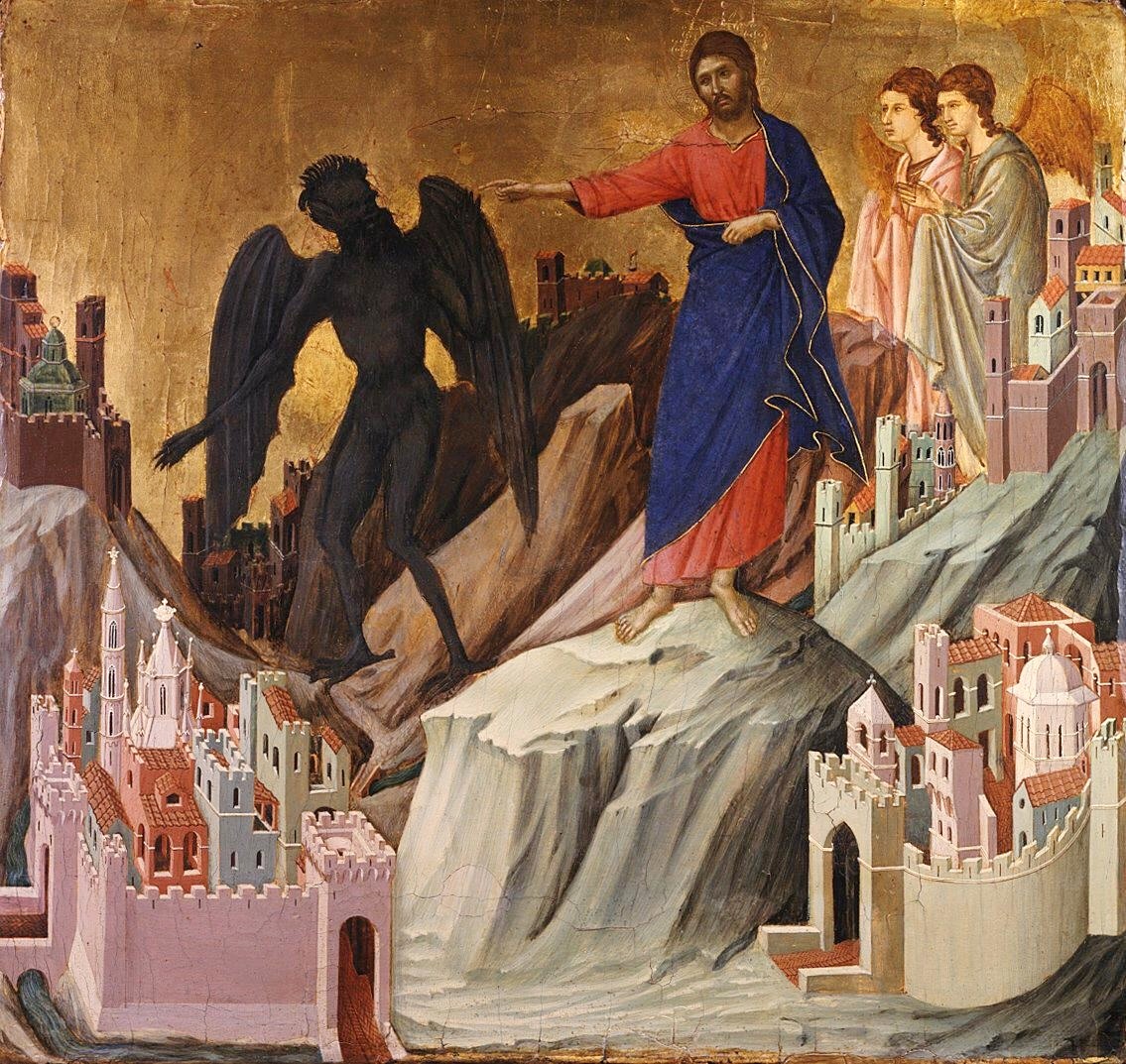
    Temptation on the Mount (1308-1311), Duccio di Buoninsegna | Wikimedia Commons. This earlier representation of the Temptation of Christ is done in an icon style where the entire story is told, regardless of each element’s temporal relationship to the others. In other words, the devil unmasked appears, Christ in victory appears, as do the angels who tend to him at the end, the wilderness, the mountain, and Jerusalem.

    Christ calls out the tempter at this, knowing that the core of all truth and light is the first commandment to worship one God above all else. Satan has revealed himself as the antithesis of truth. Elsewhere, in the gospel of St. John, Jesus elaborates on how Satan is the antithesis of truth: “He was a murderer from the beginning and does not stand in the truth, because there is no truth in him. When he lies, he speaks according to his own nature, for he is a liar and the father of lies” (Jn 8:44b). The phrase “He was a murderer from the beginning” refers to the Adam and Eve story in that Satan brought about our fallen state of sin and death. Note that Christ establishes the fact that the Tempter’s very nature is the antithesis of truth. He contains no truth and is not to be trusted.

    Christ shows us the right way to deal with the Father of Lies. We must always keep God in the forefront of our minds, and all the truth that God shares with us in his commandments. When we encounter temptations in the workplace, in our home, even in the quiet of our own minds, we must compare these thoughts and words to the truth revealed to us by God and through Christ. We have been given agape (love) and charity as our guides for how to act in the world — they are essential guideposts for us as we discern the difference between the voice of God and the sneaky, all-too-human voice of the Tempter.

  • Fasting for What?

    Fasting for What?

    Friday after Ash Wednesday: Isaiah 58:1-9a, Matthew 9:14-15


    In today’s readings, Isaiah takes on the custom of fasting head-on. Then, in the gospel reading, John the Baptist’s disciples challenge Christ on fasting, but he uses it as a chance to reveal his own nature and thereby reflect on the entire purpose of fasting. The question of sincerity is at stake in both readings.

    Isaiah is an unrelenting prophet. He delivers vividly clear images of Christ who will come, but also pulls no punches when it comes to calling out the unfaithfulness of his people. In today’s reading, he points out the hypocritical self-righteousness of the Jews:

    They seek me day after day,
    and desire to know my ways,
    Like a nation that has done what is just
    and not abandoned the law of their God;
    They ask me to declare what is due them
    pleased to gain access to God

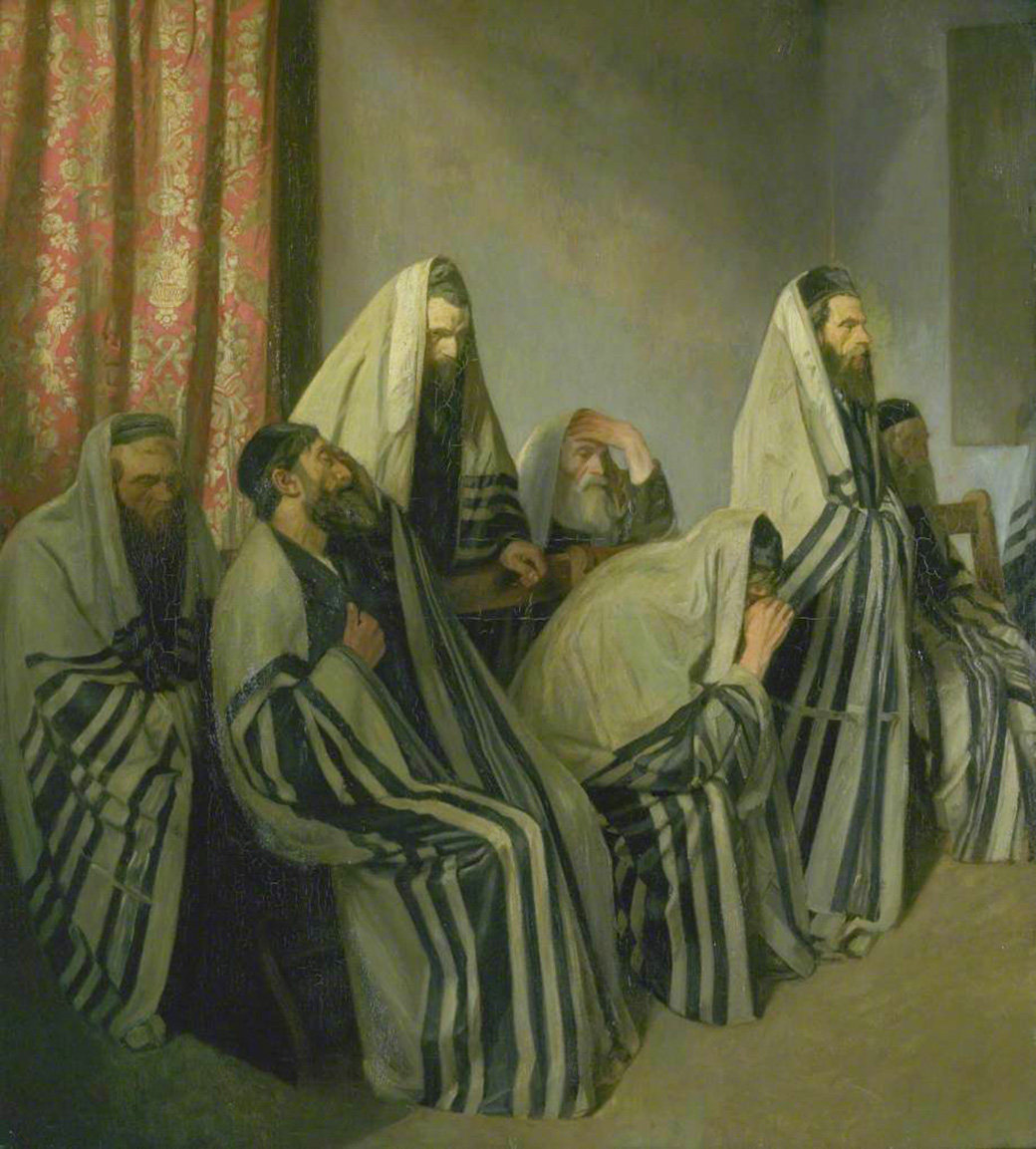
    Jews Mourning in a Synagogue, 1906, William Rothenstein | Creative Commons, courtesy Tate Museum.

    Yes, as if they had done what is just, they want what is due to them. Oh, the arrogance. The question they ask is “why do we fast and you take no notice of it?” Isaiah schools them. He points out that while they put on the appearance of fasting (sackcloth and ashes), their deeds display that they aren’t living the fast. Much like the Christ who will come, Isaiah wants to distinguish living the letter of the law from living the spirit of the law. Isaiah tells them what they should be doing while fasting (apart from abstaining from foods):

    releasing those bound unjustly,
    untying the thongs of the yoke;
    Setting free the oppressed,
    breaking every yoke;
    Sharing your bread with the hungry,
    sheltering the oppressed and the homeless;
    Clothing the naked when you see them,

    Jesus will emphasize these same points in his ministry. We can call them acts of charity. Many of us consider fasting mainly an act of deprivation, but Isaiah reminds us that the act of depriving ourselves of food is simply the first step — sharpening our senses, waking us up from the complacency of being well-fed — so that we can offer ourselves more fully to God by service to one another.

    But if we’re too absorbed in ourselves when we fast, all we think about is our hunger and discomfort. Alternatively, if we’re too concerned with showing others that we abide by the law, we look mournful and disheveled in order to broadcast our efforts to humble ourselves in front of God. Both of these pitfalls miss the entire point of fasting, which is the spirit of fully offering ourselves to God.

    Isaiah is essentially asking his people, “Are you sincere in your faith?” Following God’s precepts is a whole-person effort, and God knows if we are sincere. There’s an old saying, “Smith went to Mass every Sunday, but went to hell for what he did on Monday.” The idea, of course, is that simply going through the motions is not what God asks of us.

    So what about duty? Where does our obligation lie? Isaiah (and later, Jesus) is clear that our obligation is not to the rituals but to the spirit that the rituals are meant to bring us into. As the Catechism of the Catholic Church states, “Our duty toward God is to believe in him and to bear witness to him” (2087). Belief, faith, bearing witness (through testimony and good acts).

    An interesting acceleration of these questions occurs in Matthew’s gospel today. The disciples of John the Baptist, who were by all accounts faithful in spirit as well as in the letter of the law, ask Jesus why his disciples weren’t fasting. Jesus uses this opportunity to talk not about fasting, but about his own divine nature. Like Isaiah, he presses the people about their sincerity, only this time in a more immediate way.

    Jesus says, “Can the wedding guests mourn as long as the bridegroom is with them?” This image of Jesus as the groom and the Church as his mystical bride will be developed theologically in the years to come. More germane to our discussion, Jesus is gently telling John the Baptist’s disciples (who, we must remember, already heard from John that Jesus is the Messiah) that God is in their midst. If the goal of fasting is to attest to God in our bodies and our spirits, in a desire to be close to Him, then what place does it have when he’s already with you? 

    It’s like standing next to your father and shouting, “Oh, if my father was only here! I wish to be near my father!” It’s ridiculous. And here Jesus pushes on the sincerity of these questioners’ practice of fasting at that moment in time. If they sincerely desire unity with God, why are they fasting in front of him as if he was not present? Or is their fasting yet again simply a ritual that they stubbornly hold onto? 

    Our faith demands that we bring our entire beings, including our spirit and our intellect, to bear on this world and the next. If we fast without acting in God’s love, we are not living out our faith. If we prioritize the niggly details of our fast over the presence of God Himself, then we are blindly following ritual and not recognizing the Spirit at work.

    By being sincere in our fast — focusing on being close to God, doing his will — we can avoid these mistakes and begin to recognize when and where He is with us.

  • Ambassadors for Christ

    Ambassadors for Christ

    Ash Wednesday: Joel 2:12-18, 2 Corinthians 5:20-6:2, Matthew 6:1-6, 16-18

    The readings today certainly set the stage for Lent, as you’d imagine they might on Ash Wednesday. In the gospel reading, Jesus instructs on the appropriate way to pray and fast. This is part of his long sermon that starts with the Beatitudes, taking up three full chapters in Matthew’s gospel. But let’s take our time and see how today’s first two readings tell us why we might be praying and fasting in the first place.

    The book of Joel uses lovely language to portray some rather drastic times for the Jewish people. A plague of locusts (some scholars claim this is an allegory for invading armies) has so devastated the land that there is no grain in the fields nor even viable wilderness pasture either thanks to wildfires. The land is ruined, “the ground mourns.” Then the prophet Joel speaks of impending doom, “the day of the Lord,” when the Lord brings an innumerable, unstoppable army upon them. This horrible apocalyptic vision ends with: “Truly the day of the Lord is great; terrible indeed—who can endure it?”

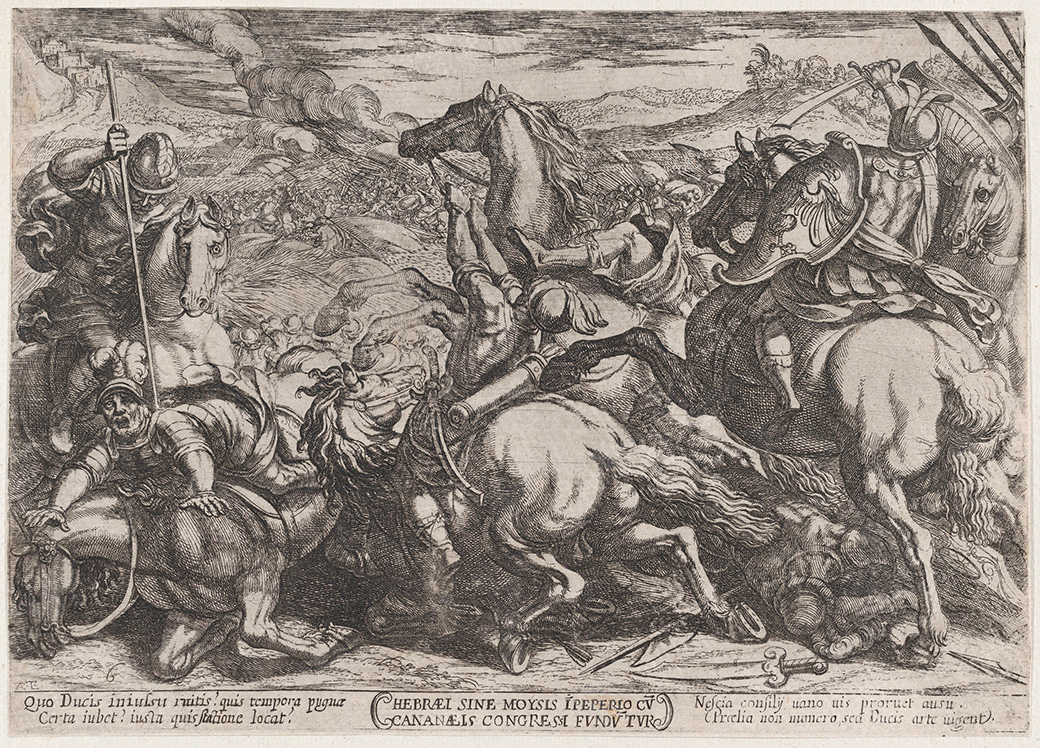
    Israelites defeated by Canaanites for Having Disobeyed Moses, ~1590-1610, Antonio Tempesta | Creative Commons license, courtesy The Metropolitan Museum of Art.

    And that’s the lead up to what we read today. Despite opening with complete despair, we hear undeniable hope from Joel, “Even now, says the LORD, return to me with your whole heart, with fasting, and weeping, and mourning; Rend your hearts, not your garments, and return to the LORD, your God. For gracious and merciful is he, slow to anger, rich in kindness, and relenting in punishment. Perhaps he will again relent and leave behind him a blessing.” Joel gives us a reason to return to God with our whole hearts: the hope that He will relent from his punishments, that is, the hope that we will be saved and be brought into his Kingdom for eternity. This trumps all of the worldly concerns of barren land and empty granaries. Joel implores the entire populace (“Assemble the elders, gather the children…”) to weep and pray for God’s mercy.

    St. Paul’s words to the Corinthians are significantly different than Joel’s instructions for the Jews of his time.

    As we move to the New Testament in the second reading, we enter a new world transformed by Christ. We are, ontologically speaking, new beings. St. Paul explains this beautifully elsewhere, in the letter to the Hebrews: “we have been sanctified through the offering of the body of Jesus Christ once for all … by a single offering he has perfected for all time those who are being sanctified” (Heb 10:10,14). We no longer have to keep sacrificing animals and other offerings over and over as we beg for God’s forgiveness and mercy (which he amply provides in the time before Christ). Instead, we are able to commune directly with God thanks to, and through Christ — our new way of “right relationship” with God is called the Holy Liturgy.

    This is why St. Paul’s words to the Corinthians are significantly different than Joel’s instructions for the Jews of his time. Christians encounter a new perspective. The first sentence of the reading encapsulates the new reason we pray, fast, and give alms: “We are ambassadors for Christ, as if God were appealing through us.” What an exalted position, ambassadors for Christ! This means that our lives are examples to the world, showing who Christ is. And who exactly was Christ? Above all, he was perfect in devotion to his Father. Therefore, our first act as ambassadors is to embody the humility for the Father that Christ had, the desire to please Him and do His will, the focus on spiritual fortitude, not the pleasures of the world. This is why St. Paul asks the Corinthians to “be reconciled to God” so that they do not “receive the grace of God in vain.” We do this for the Father, yes, but also to grow the Body of Christ in the world.

    This brings us to the words of Jesus himself. Shortly before what we read today, he says, “Do not think that I have come to abolish the law or the prophets; I have come not to abolish but to fulfill” (Mt 5:17). And, indeed, he mentions the same prescriptions that prophets like Joel and Isaiah levy upon their people: righteous deeds, giving alms, prayer, and fasting. Only now Christ is instructing us on the way in which we carry out these acts. In order for us to be good ambassadors for him, we must listen intently and understand that he perfected the law, fulfilled the law, and wishes for us to continue this fulfillment of the law as He lives in us. And so we are instructed to fervently pray, fast, give alms, and do good deeds, but to do them in a way that does not draw attention to ourselves. This self-effacement is essential for the good Christian. Why? Because Jesus reminds us in his instructions that all things should begin and end in the Father. All things should point to the Father. What will be noticed are the good works, the alms, the prayerful attitude — all of which speak of God alive in the world. What won’t be noticed is a person trying hard to look pious. 

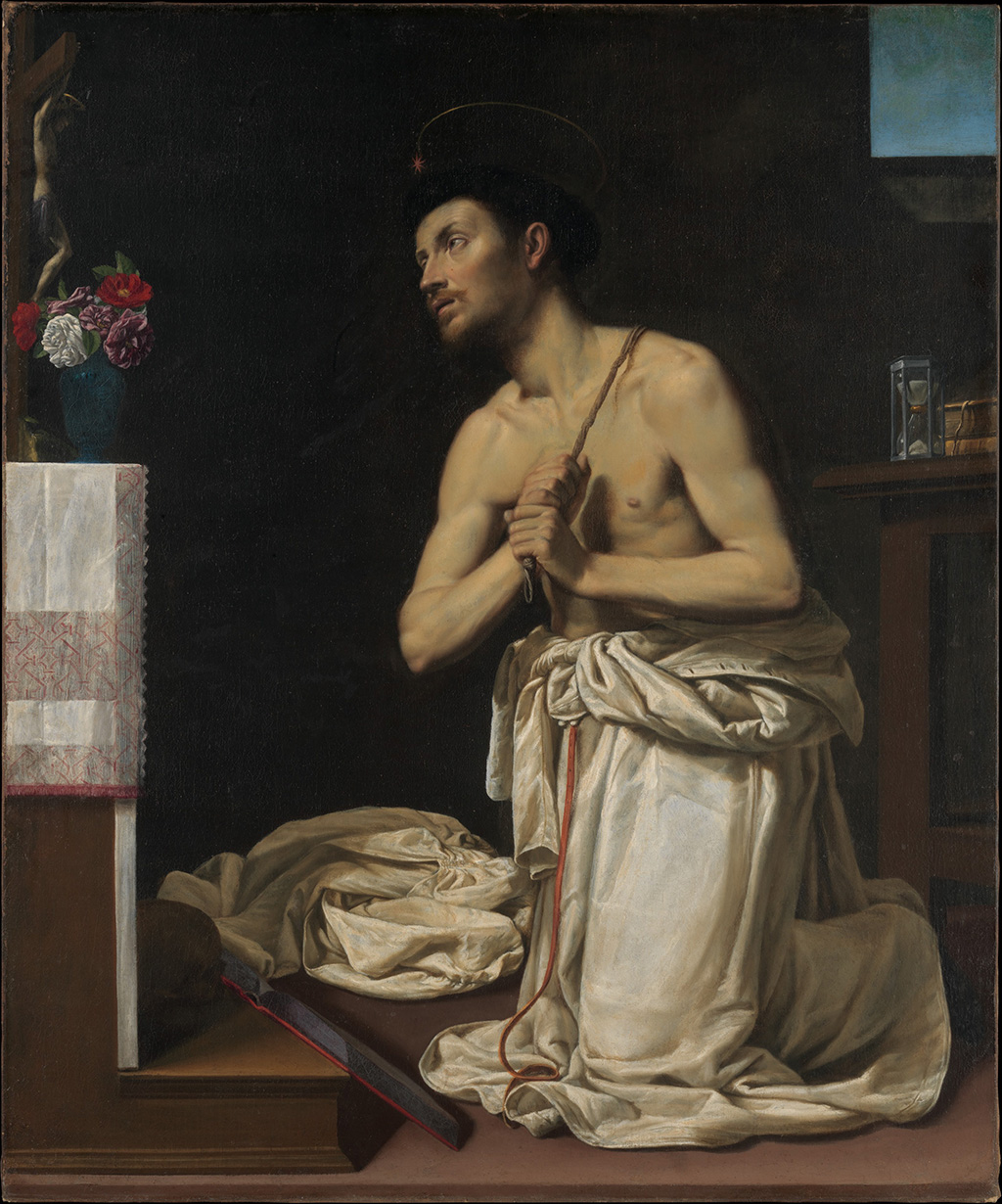
    St. Dominic in Penitence, 1607, Filippo Tarchiani | Creative Commons license, courtesy The Metropolitan Museum of Art

    This reminds me of St. Dominic. He was known for being an enjoyable, affectionate man in an age when the religious were expected to be grimly serious. Yet he was also famous for his all-night weeping and prayer sessions in the chapel, crying for the lost souls in Purgatory, that kept up the friars in the various monasteries where he rested his head.¹  Here was a saint who actively worked all over Europe doing good deeds, praying, and preaching; in essence, being a fantastic ambassador for Christ. We also know that he was deeply penitent, praying, fasting, and even performing mortification of the flesh three times nightly. Yet those who met him enjoyed his company immensely and did not find him morose or looking like he was in the middle of constant penance. Something about the man always pointed to the goodness of God. In fact, the Dominicans gained an early reputation for being too cheerful and showy, but the order grew in all ways (friars, nuns, laypeople) exponentially. 

    So that we don’t forget the upshot of all of this, Jesus reminds us in today’s reading at the end of each paragraph. He repeats: “And your Father who sees in secret will repay you.” This is a great reminder of the intensely personal relationship each of us has with our God, who knows us better than we know ourselves. May we all be reconciled to Him this Lent so that we can be excellent ambassadors for Christ!


    ¹ I am much indebted to Simon Tugwell, OP, for any knowledge I might have about St. Dominic and the early Dominicans. If you haven’t read The Way of the Preacher (among several other excellent books), I highly recommend it.