Category: Lent

  • As Certain As the Dawn

    As Certain As the Dawn

    Saturday in the Third Week of Lent: Hosea 6:1-6, Luke 18: 9-14.

    Today’s readings give us a stunning prophecy of the Christ event some 780 years earlier and urge us to remain steadfast to the Lord in our faith and humility.

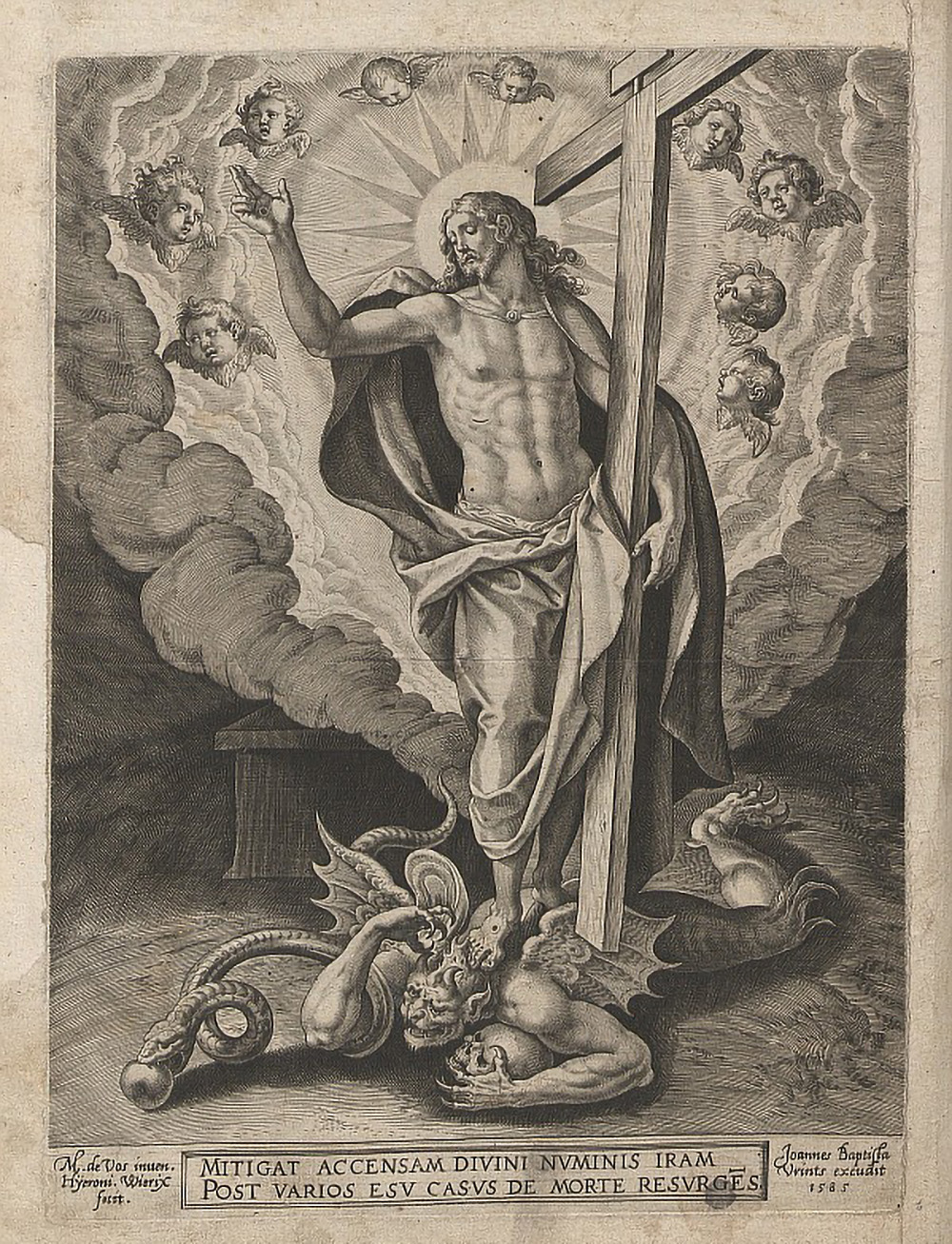
    The short Book of Hosea continues to surprise me. We hear the Word of God promise his coming through the mouth of the prophet: “on the third day he will raise us up, to live in his presence.” It’s easy to understand how the Israelites could not comprehend this prophecy since they were worried more about pressures from great nations like Assyria and Egypt. As if the “third day” reference wasn’t difficult enough to understand in its specificity, there is the question of the raising up and living in his presence.

    The closest they might have come was to understand this in its eschatological sense of their own bodies rising after death to join God in Heaven. The mystical reality that Jesus would be the one rising and we would live in his presence sacramentally (and bodily for a few disciples) … well, that wouldn’t become clear until the event itself. But here we can see that the Word of God was speaking in its fullness much earlier in our history.

    Hosea then uses some wonderful imagery from nature to urge us into right relationship with God: “let us strive to know the LORD; as certain as the dawn is his coming, and his judgment shines forth like the light of day!” I love the prophet’s faith. I love that the Lord’s coming is as “certain as the dawn.” And the light that he brings is his judgment, his truth. This is not a prophecy of the end of time (the second coming), but of Jesus’s first mission on earth that brings the times we live in now. Hosea tells us, “He will come to us like the rain, like spring rain that waters the earth.” This spring rain brings Christianity to the world.
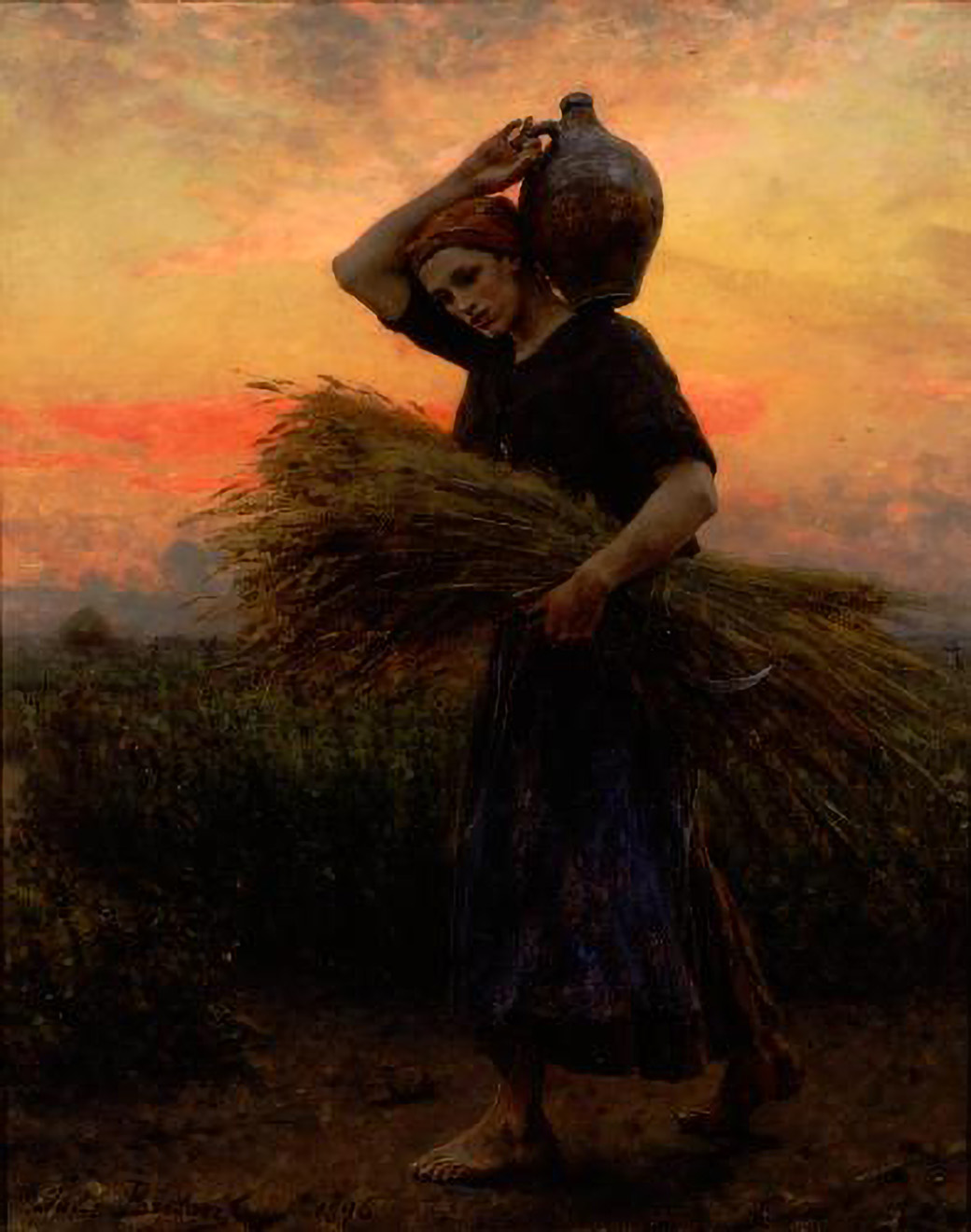
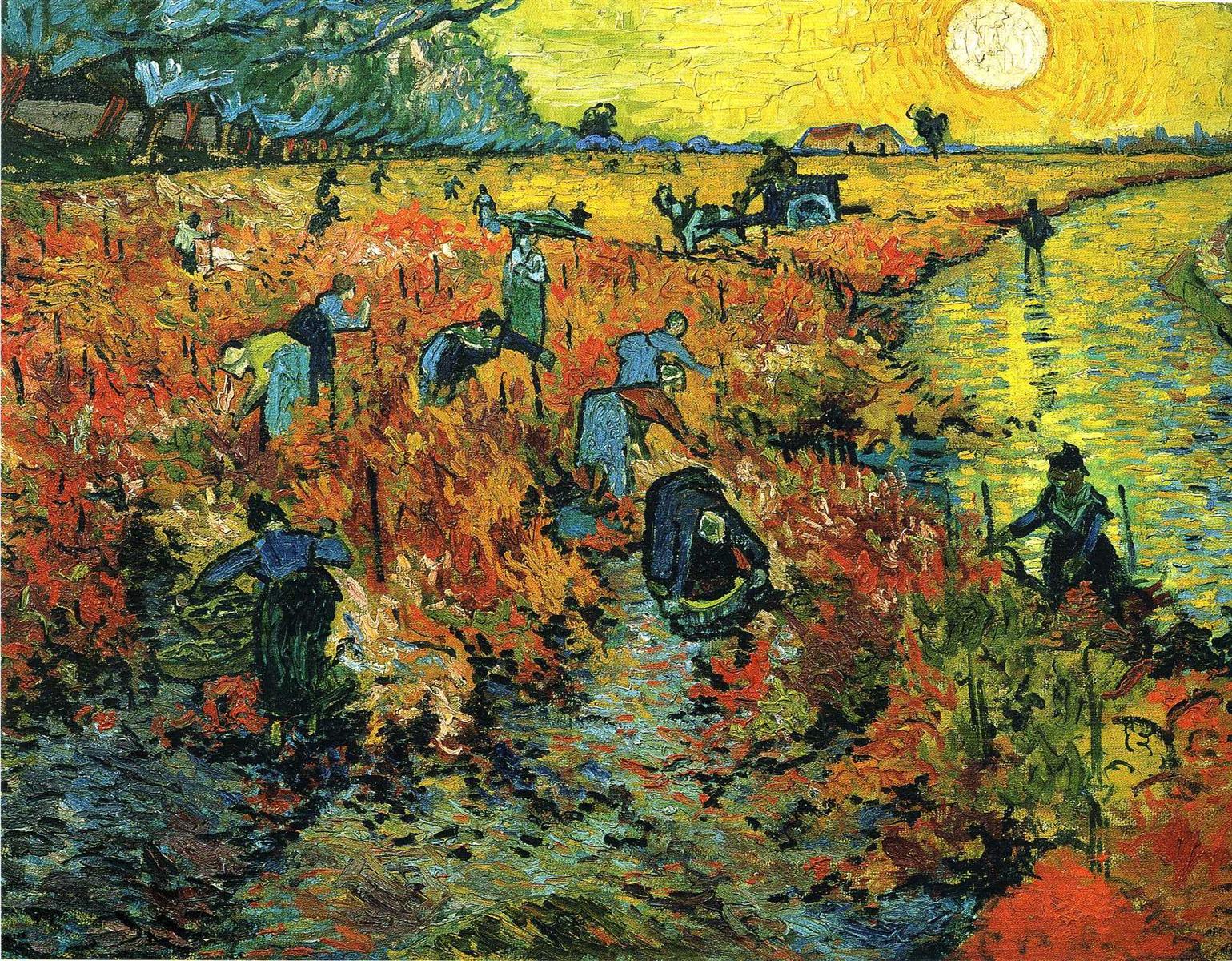
    Dawn (1896), Jules Breton | Wikimedia Commons. This work beautifully expresses Hosea’s message. The dawn arrives and we are expected to be at work, bringing the harvested wheat (the communion with Christ who brings new life with his death and Resurrection) and “living water” of Christ to the world.

    We also hear the Lord’s slightly exasperated but caring question, “What can I do with you, Judah? Your piety is like a morning cloud, like the dew that early passes away.” The image is clear: we must be more substantial in our faith, more persistent, and not fade away so easily.

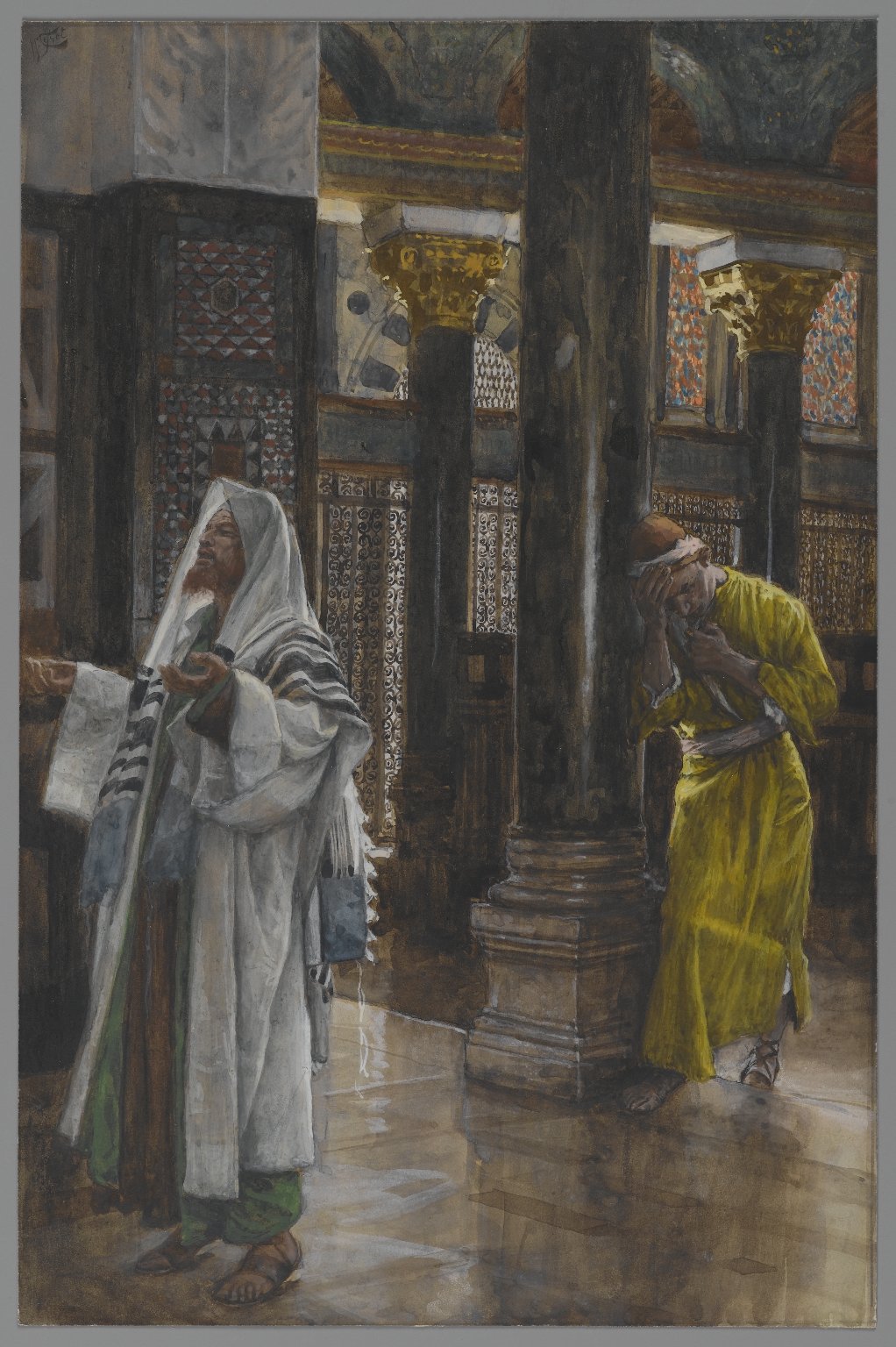
    Jesus picks up this thread in the gospel reading. In another parable addressed to the Pharisees, Jesus describes their showy devotion that lacks a sincere love of God in their hearts. The Pharisee in the parable “takes up his position” in the temple, which was undoubtedly one where he could be seen clearly, and “spoke this prayer to himself.” This is a huge clue that something’s backward; prayer is always offered to God and spoken to God, whether audibly or inaudibly. The Pharisee is primarily self-focused.

    This focus on himself is evident in his words. After a cursory “O God” to start his prayer, we hear the Pharisee speak of himself during the whole prayer, contrasting his law-abiding deeds with “the rest of humanity — greedy, dishonest, adulterous.” Let’s note that his window on the world, himself included, is one of judgment.

    Jesus is clear about not being judgemental: “Do not judge, so that you may not be judged” (Mt 7:1). We all know people who are consumed with judging themselves and others (we all probably fall into this camp at times). It is simply not compatible with being a Christian. Judging the worth of another being is something that rightfully belongs only to God. We should never try to put ourselves on par with Him.

    Furthermore, in this life he judges us all to be worth forgiving, worth saving, worth his love. We are asked to follow his lead and offer nothing but his love to our brothers and sisters on the planet. The Final Judgment will come at the end of time, and we are the judged, not the judges in that drama.
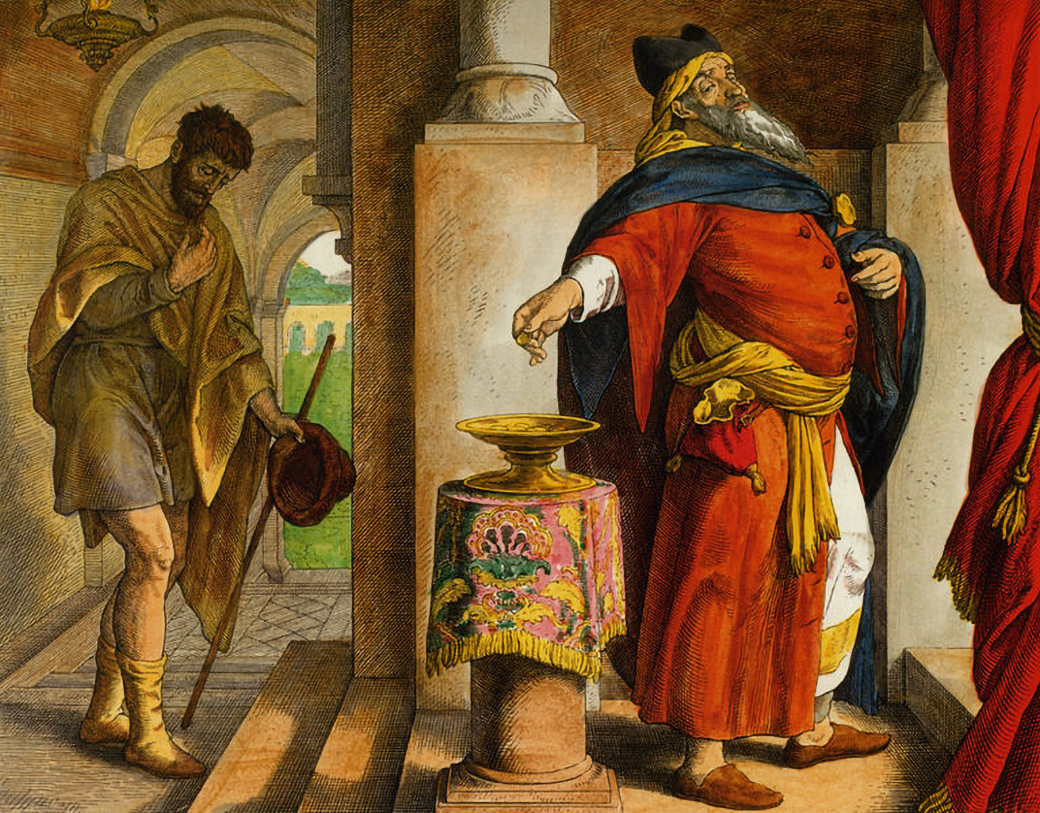
    A colorized version of an illustration from Die Bibel in Bildern (Picture Bible), 1860, Julius Schnorr von Carolsfeld | Creative Commons, courtesy orthochristian.com.

    The next item to note about the Pharisee’s off-kilter prayer is how much he speaks of himself as the agent of action. As we explored in the reflection Our Vocation to Teach the Word of God, the Word contains the fullness of communication. What a marvelous command of grammatical structure Jesus uses to display the self-centeredness of the Pharisee. Four times we hear the Pharisee put himself as the first person subject of phrases in his prayer: “I thank you,” “I am not like,” “I fast,” and “I pay tithes.” The Pharisee has so sublimated his own sense of self-worth that, apart from being the subject of the phrases, he places himself as the grammatical agent (meaning the cause and initiator of action).

    This semantic idea is a great way for Jesus to make his point: it’s not just the empty show of devotion that makes the Pharisee a hypocrite, it’s his lack of conversion of heart to place the Lord first, the agent of all. This almost unconscious grammatical structuring of his prayer belies the deep perversion and reversal of order in his being. 

    Let’s compare the tax collector’s prayer: “But the tax collector stood off at a distance and would not even raise his eyes to heaven but beat his breast and prayed, ‘O God, be merciful to me a sinner.’” We hear much about his physical bearing — standing off, eyes lowered, beating his breast. This is the stance of supplication. It reminds us of the great supplication offered for days by Esther in order to save the Israelites in Babylonia (see Esther: Model of How to Petition the Father).

    The tax collector’s prayer itself is so fundamentally correct that it forms the proto-Jesus Prayer. In this prayer, Jesus gives us another example of how to pray correctly (in addition to the Lord’s Prayer, which he gives us as well). Let’s dissect it: the tax collector approaches in supplication, addresses God as the agent of action in the world (he says “merciful to me,” and as such he is the object of action, not the agent), and identifies himself as a sinner in need of mercy.

    We have reflected upon the importance of mercy as one of God’s great attributes that sets him above the rest of Creation (see Mercy is the Master Principle). As we start to comprehend that mercy is an important aspect of God’s love (agape), which is given to us in order to live beyond us as we give it to others, we can see that asking for mercy is a way to return to the wellspring of life-giving water. This can and should be our perpetual prayer as Christians.
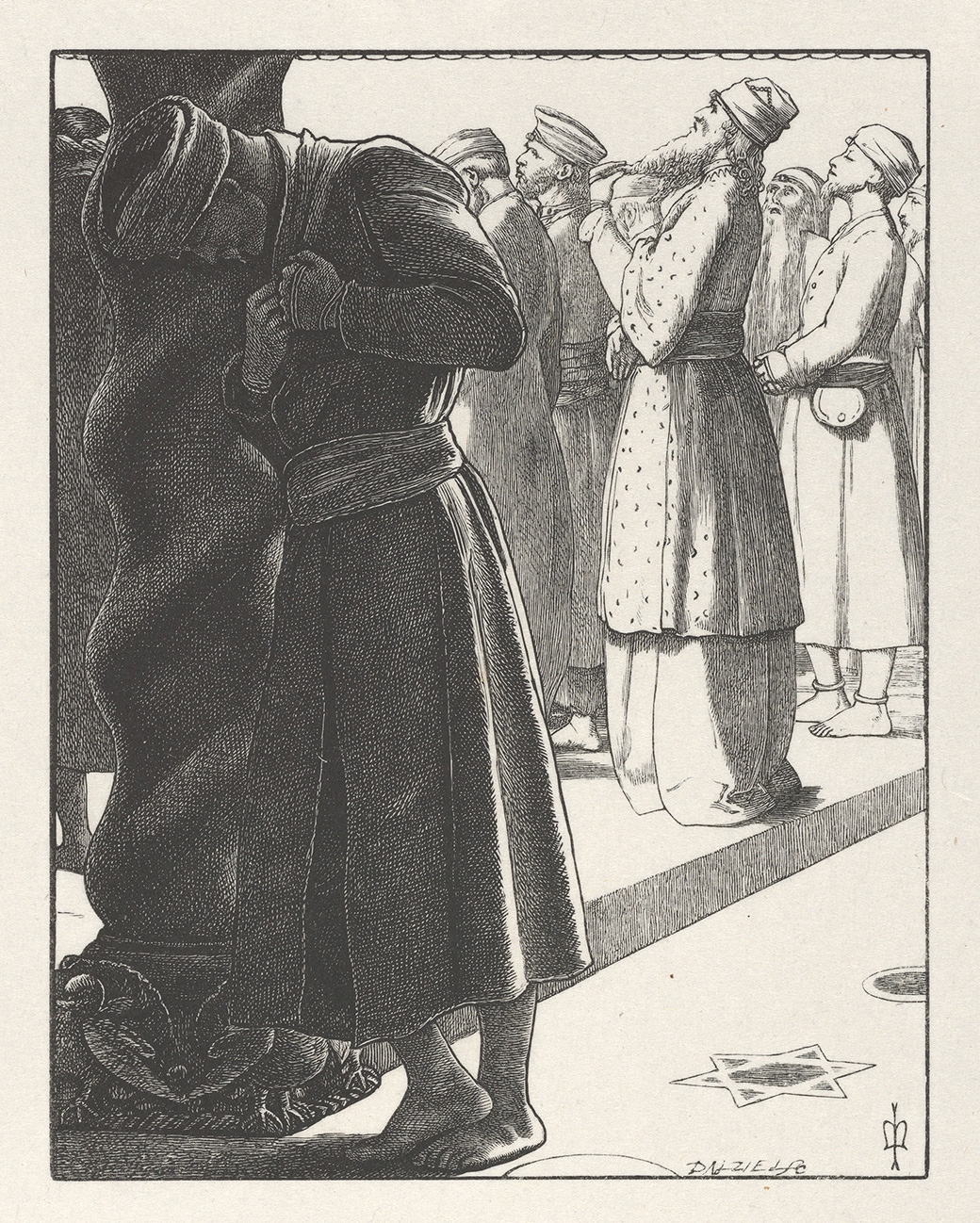
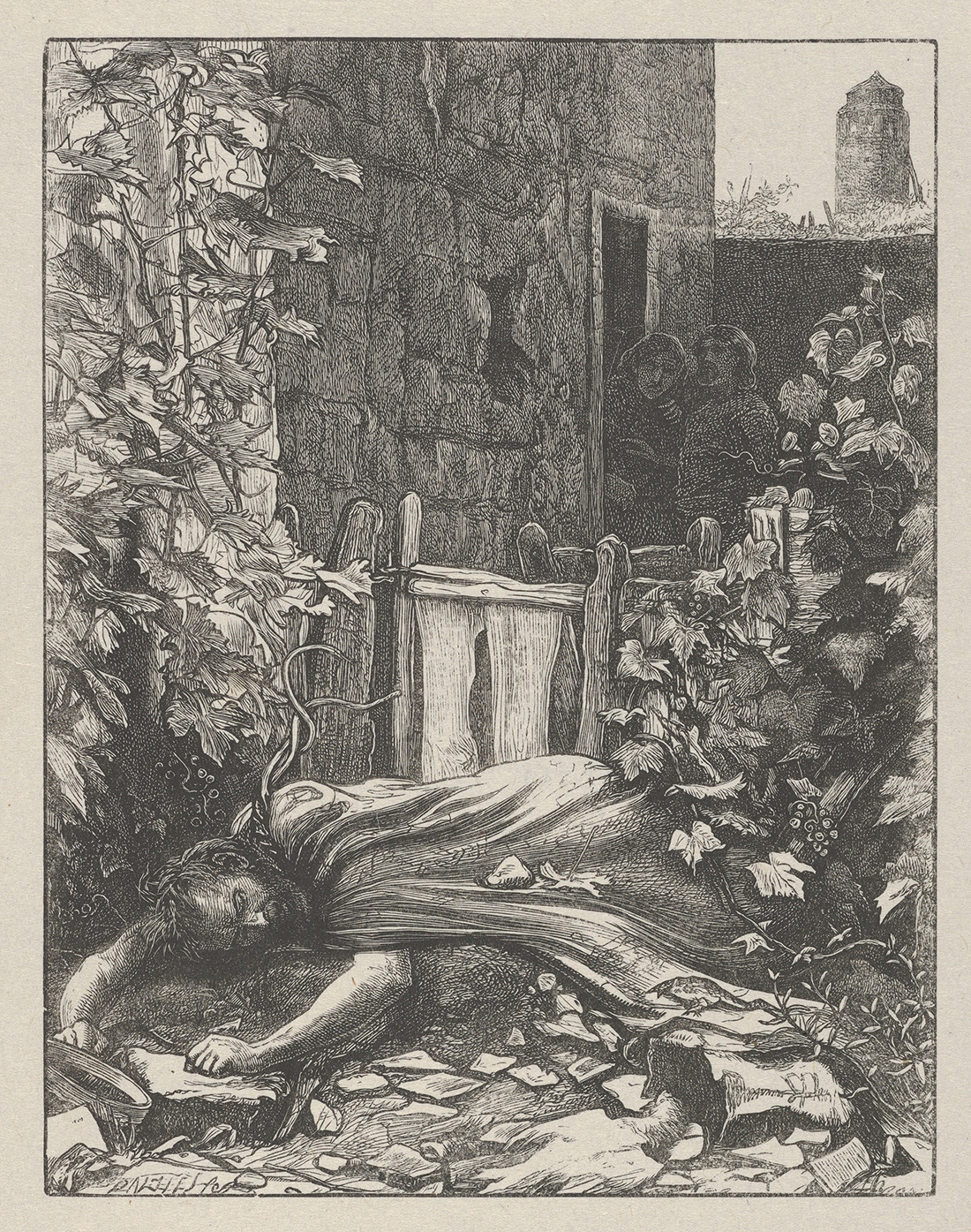
    The Pharisee and the Publican (1864), Artist: After Sir John Everett Millais, Engraved and Printed by Dalziel Brothers | Creative Commons, courtesy The Metropolitan Museum of Art.

    And Jesus has given us a much deeper, intimate communion with this wellspring in the form of the liturgy where we can sacramentally bring into our bodies the mercy and love flowing from the Lord’s pierced heart. This brings us to the Jesus Prayer: “Lord Jesus Christ, Son of God, have mercy on me, a sinner.” Praying to the second Person of the Trinity, our great high priest and chief intercessor who descended to earth to dwell and suffer with us, is a key gift in our Christian lives. The Catechism of the Catholic Church teaches us, “The name ‘Jesus’ contains all: God and man and the whole economy of creation and salvation. To pray ‘Jesus’ is to invoke him and to call him within us. His name is the only one that contains the presence it signifies” (2666).

    Thus, the Jesus Prayer unites the same correctness of prayer we find in the tax collector with the new reality that Christ brought to history with his death and Resurrection. The Jesus Prayer is powerful and draws us deeper into the mystery of being a part of the Church.

    “When the holy name is repeated often by a humbly attentive heart, the prayer is not lost by heaping up empty phrases, but holds fast to the word and ‘brings forth fruit with patience.’ This prayer is possible ‘at all times’ because it is not one occupation among others but the only occupation: that of loving God, which animates and transfigures every action in Christ Jesus” (CCC, 2668).

    What better time than Lent, in its stillness and silence, to repeat the Jesus Prayer and let it sink in to transform our hearts? Let us take Jesus’s instruction to be like the tax collector in the parable and not the Pharisee. Let us take the Church’s instruction to pray in Jesus’s name as we ask God for mercy in the light of our infidelities and sins.

    For we know, as certain as the dawn, He will come.
  • Agape Has Only One Source: God

    Agape Has Only One Source: God

    Friday in the Third Week of Lent: Hosea 14:2-10, Mark 12:28-34.

    Today’s gospel reading should be very familiar to us. Not only is it one of Jesus’s most straightforward sayings, it’s the answer to what is the “greatest commandment,” which is shorthand for saying, “cut to the chase, what do I need to do to get into Heaven?” Everyone perks up their ears for this answer. It sounds simple; it’s a nice sound bite. But we really have to dig into this to understand what defines Christianity beyond simple morality or concern for the social good.

    Although this episode occurs in all three of the synoptic gospels (Matthew, Mark, and Luke), here in Mark it is the most positive of all the run-ins with scribes in the gospels. A scribe, evidently impressed with his teachings rather than simply seeking to test him or trap him, asks Jesus what the greatest commandment is. Remember, there are 613 commandments in the Old Testament, and the scribes’ job was to know them intimately and come up with complex scenarios to test them as they teach their people. While we can rightly understand Jesus’s response as a joining of two commandments — loving God and loving neighbor — his response has three parts:

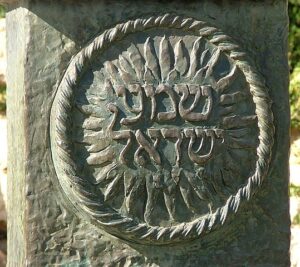
    The Shema inscription on the Knesset Menorah (the Israeli national legislature building in Jerusalem), 1954, Benno Elkan | Wikimedia Commons.

    1a. Hear, O Israel! The Lord our God is Lord alone! This is the opening verse of the Shema (she-MAH), a highly important prayer recited by Jews to open their morning and evening prayer. It is spoken by Moses in Deuteronomy 6:4. Praying the Shema is a religious commandment in itself (a mitzvah). This prayer distinguished our God as only one in the midst of a world dominated by polytheism. But it applies today; the gods vying for our attention may not be Baal, Ishtar, or Zeus, but they most certainly are self, as seen in pride, power, riches, and pleasure.

    1b. You shall love the Lord your God with all your heart, with all your soul, with all your mind, and with all your strength. This is the continuation of the Deuteronomy passage (6:5), and while it flows directly from the first declaration, it is a different mandate. The only difference between Mark’s account of Jesus’s words is the addition of “with all your mind,” which may be an addition for his Greek-speaking, non-Jewish audience since Jews had a concept of the mind being intertwined in the heart, akin to the concept of intention (and was therefore implied in already in Deuteronomy). In either case, it is clear that we should love God with everything we have: intelligence, emotion, intention, courage, endurance, etc. It is from this whole-person love of God that we receive the gifts to accomplish the last part of the great commandment.

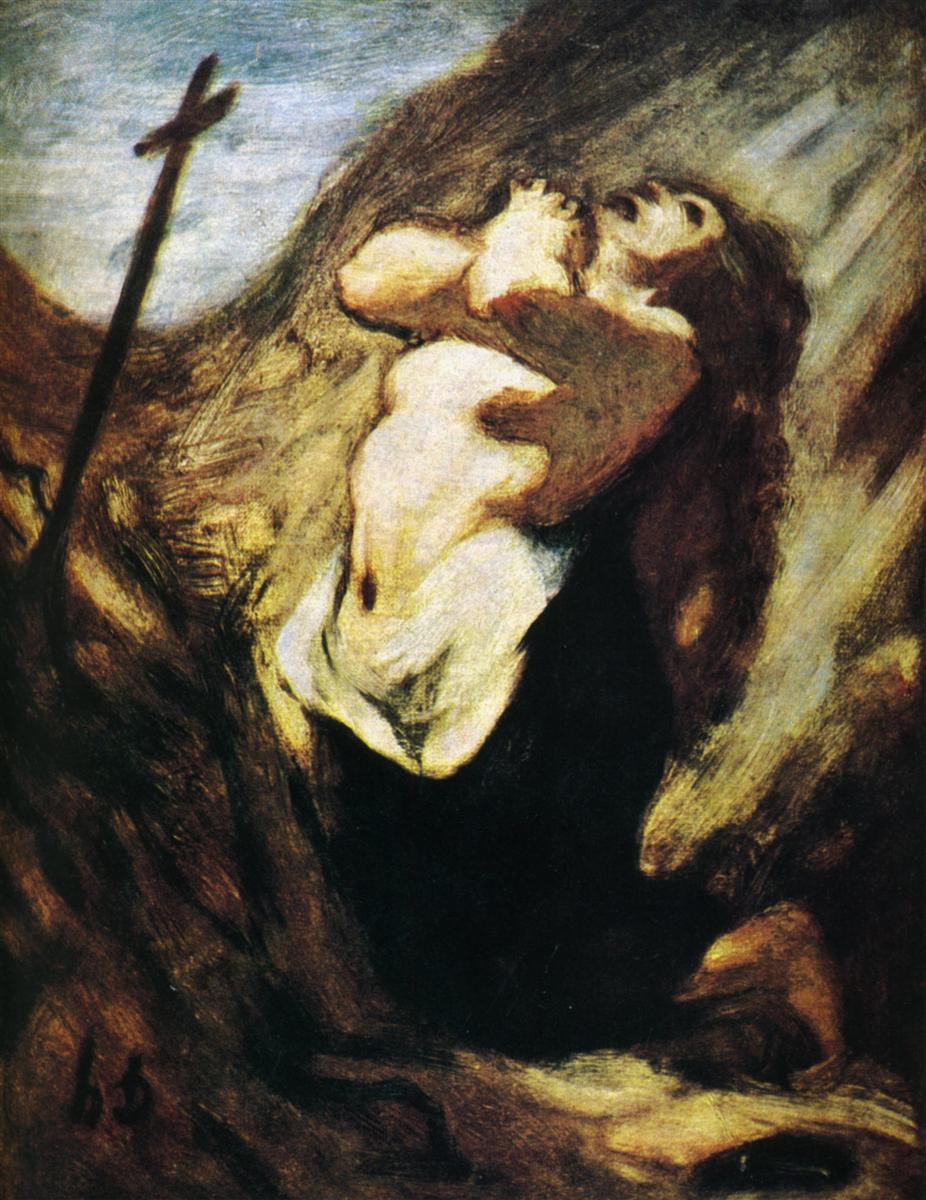
    St. Magdalene in the Desert (1848-1852), Honore Daumier | Creative Commons, courtesy WikiArt.org.

    2. You shall love your neighbor as yourself. The Word of God first uttered this commandment to Moses as recorded in the Book of Leviticus, chapter 19, verse 18. It comes after a series of verses that describe ways this love should be manifested, reading much like the second half of the Ten Commandments. And when we consider Jesus’s answer to the scribe, we do see a reflection of the Ten Commandments, the first half dealing with loving God and the second half dealing with love of neighbor. The “greatest” of the commandments is a consolidation of God’s law that does not omit a thing.

    More than just a summary, however, this commandment demonstrates the great movement and flow of love between us and God. What is this love that has a life of its own, that gains energy as it gets passed along? Let’s examine the classical Greek categories of love. This is not eros, or erotic love, that is the irresistible desire between two people; although desire is a part of this love. This is not philia, or the fondness and brotherly love that binds us in friendship; although this type of love is a part of it. This is not storge, or instinctual love like that towards your family, although, again, instinctual love comes into play.

    This love is agape (ἀγάπη). It is considered the “highest” type of love, transcending the others. This word for love was seldom used by Greek writers prior to Christianity and meant a selfless love solely for the benefit of another. Agape was used by the New Testament writers and found its truest, purest definition in God. As we explored in If You Knew the Gift!, the love we call agape is at the heart of the Trinity. The river of life, the love that endlessly flows between the three Persons of the Trinity, is the “self-opening of our thrice-holy God.” Here we see that agape originates in God, before the world was created. 

    It is only in this sense that we can begin to understand what is meant in the First Letter of John: “God is love, and those who abide in love abide in God, and God abides in them” (Jn 4:16). Yes, St. John uses the word agape for love. And this famous passage provides a good lens for understanding the greatest commandment. If God is love, then by “loving God with all our heart, soul, mind, and strength” is to give God (love) back to God. It is to be God, for God. We are asked to somehow give this selfless river of life back to God.

    And we can see how the second part of the great commandment flows naturally from the first, for what characterizes God’s agape other than the care and cultivation of his Creation? God does this gratuitously and with unending forgiveness. When we allow the agape originating in God to suffuse us and pour from us back to Him, we are at the same time loving our neighbor since this is part of the nature of that agape to begin with. That’s why love of God always must come first. Loving our neighbor cannot be an aim in its own right, divorced from loving God first. It is our very acceptance, understanding, and reciprocation of God’s own agape that enables us to truly love our neighbor as Christ intends.

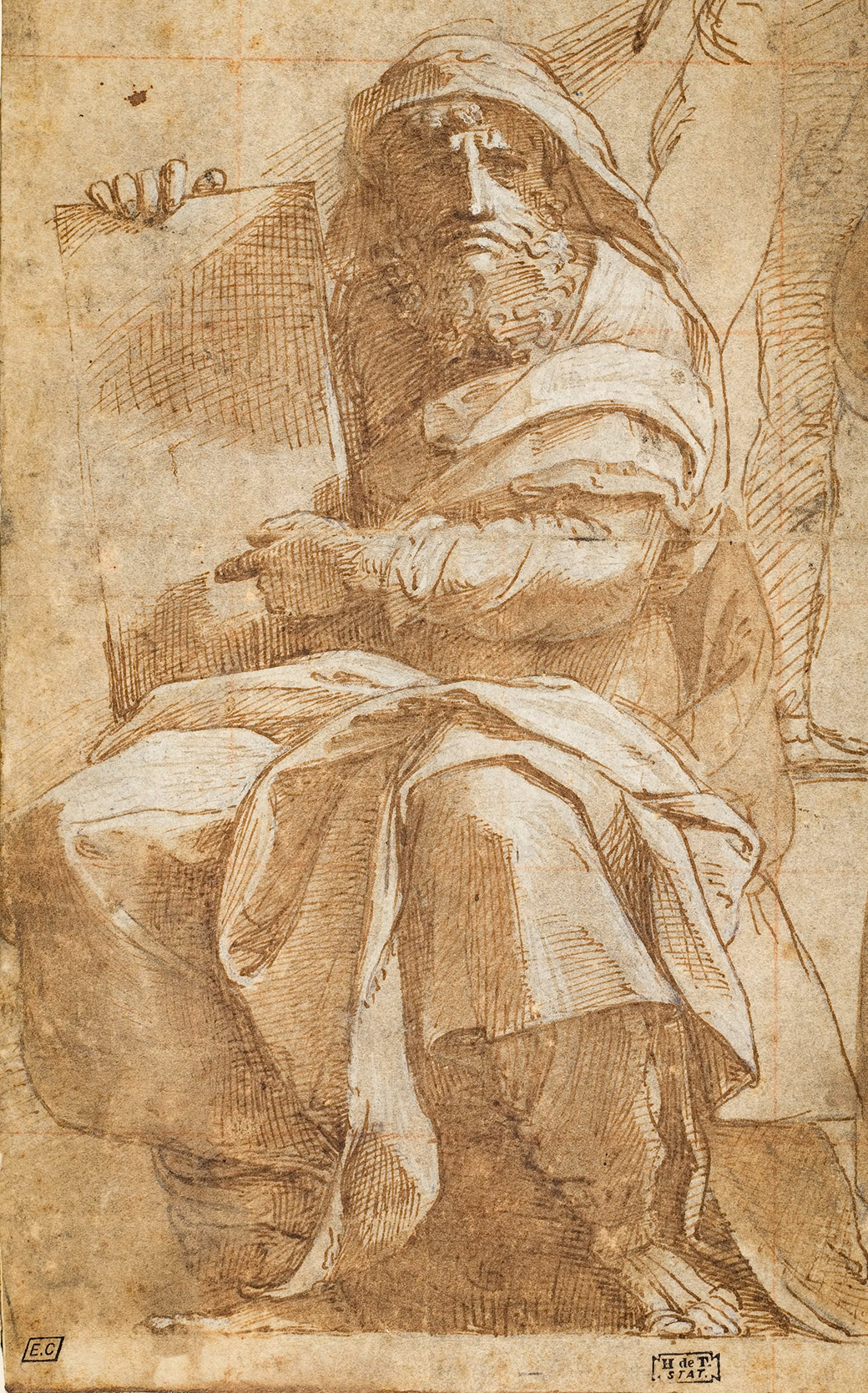
    The Prophet Hosea (c.1510), Raphael | Wikimedia Commons. This was a preparatory study for a fresco in the Chigi Chapel in Santa Maria della Pace in Rome.

    Here we see a great connection to Hosea, one of the earliest prophets, to whom God revealed the nature of his love. As Pope Benedict the XVI’s points out in his first encyclical, Deus Caritas Est (God is Love):

    Hosea above all shows us that this agape dimension of God’s love for man goes far beyond the aspect of gratuity. Israel has committed “adultery” and has broken the covenant; God should judge and repudiate her. It is precisely at this point that God is revealed to be God and not man: “How can I give you up, O Ephraim! How can I hand you over, O Israel! … My heart recoils within me, my compassion grows warm and tender. I will not execute my fierce anger, I will not again destroy Ephraim; for I am God and not man, the Holy One in your midst” (Hos 11:8-9).

    So when we hear in the final chapter of Hosea in today’s first reading, “Return, O Israel, to the LORD, your God,” it is God in his forgiveness and love who is imploring them to return. As we discovered in our reflection a few days ago, mercy is the master principle for our religion because it is the act of passing on the forgiveness God gives us. Through mercy, we take in God’s agape and reflect it, share it with others.

    You might ask if God is really a necessary part of the loving others equation. Atheists who donate to food banks and agnostics who volunteer at homeless shelters are fine examples of philia, brotherly love, or even perhaps storge, instinctual love, but not agape. Because the atheist and the agnostic turn their backs on God, they refuse to receive and then give the agape that originates in Him. No Christian can truly live the greatest commandment to love his or her neighbor without having that love originate in and be a reflection of God.

    Why does this matter? Because eternal salvation rests in us uniting ourselves with God, with that agape. 

    It feels like our readings and reflections this Lent have been building to this point, which is roughly halfway to our Lord’s death and resurrection. We have been growing in our understanding of God’s nature: how he thirsts for us and we reciprocate in thirst for him (see If You Knew the Gift!), how he wants us to turn from our sin and follow him in spirit as well as adherence to the law (see Salvation is Based on our Core Person), how each of us is on a path of reditus back to the Lord and once we get there we can start to love selflessly like him (see Rejoice for the Pardon of the Prodigal), and how our granting of mercy to each other in the same manner he grants it to us is the master principle of our faith (see Mercy is the Master Principle). We are left with a question: how do we follow the greatest commandment? With what strength will we possibly be able to love God completely and treat others like we treat ourselves? We know that we constantly fall back into temptation and sin. It is our nature and the way of the world. How can we be re-sanctified and raised beyond this world in order to follow this greatest of commandments?

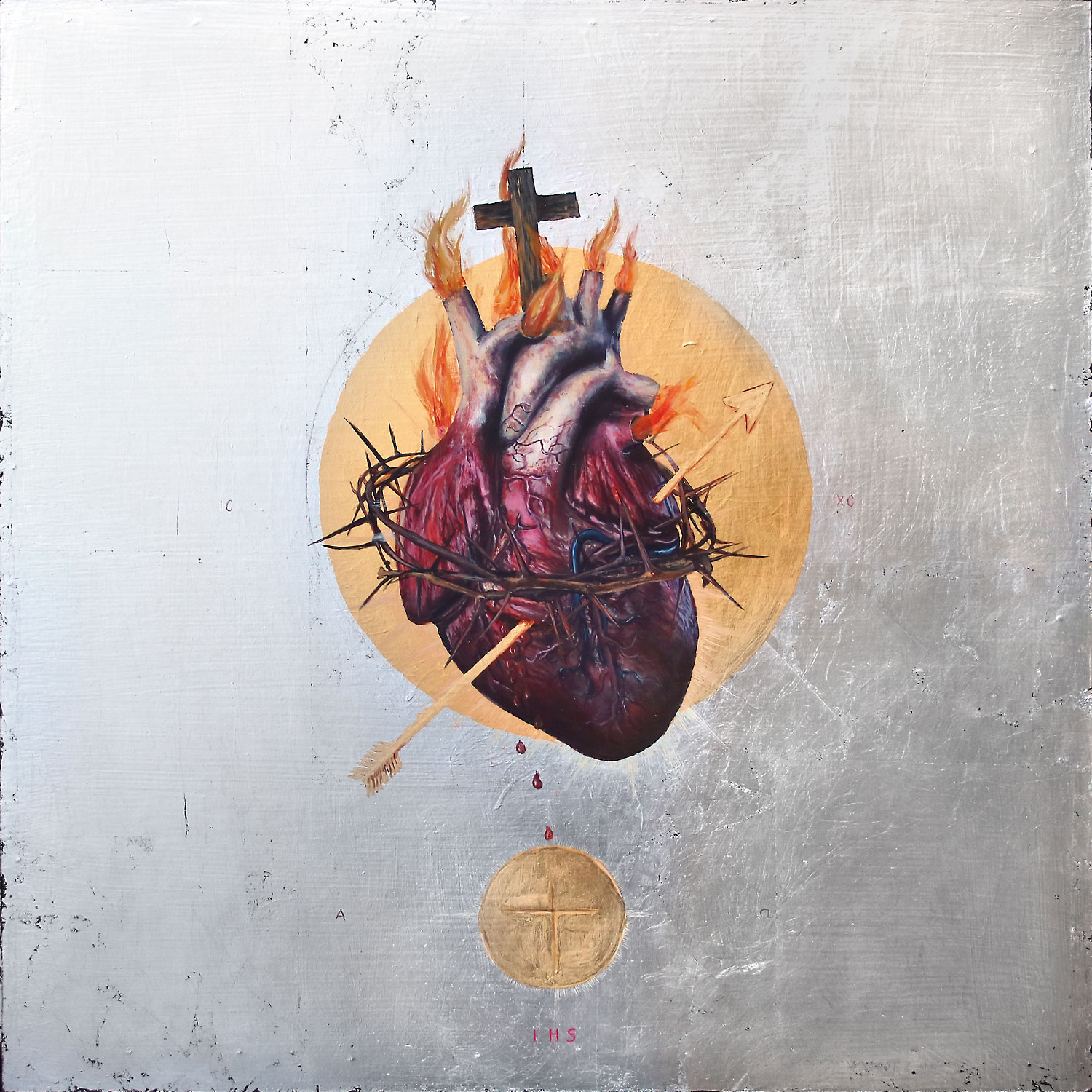
    The answer for all of us Christians is, of course, the Sacred Heart of Jesus, which is the fount of our strength, purification, and salvation. It endlessly pours upon us divine grace and enables our true communion with God.

    The Sacred Heart of Jesus – the Golden Arrow (2017), Ingrid Blixt | Artwork from ingridblixt.wordpress.com.

    Pope Benedict XVI writes, “Anyone who wishes to give love must also receive love as a gift. Certainly, as the Lord tells us, one can become a source from which rivers of living water flow (cf. Jn 7:37-38). Yet to become such a source, one must constantly drink anew from the original source, which is Jesus Christ, from whose pierced heart flows the love of God (cf. Jn 19:34)” (Deus Caritas Est, 7). Yes, Christ is the ultimate example of agape for us. God not only gives his Son as a sacrifice for us in a stunning display of love, but he opens the door for us to become sources of life for the world. The Christ event opens a new reality specifically through the flesh and blood of Jesus, in which he enables us to mystically partake in every liturgy.

    How exactly are the Church and the great Sacrament enabling us to live out the greatest commandment in an even more unanticipated and deep way? Pope Benedict XVI explains:

    Communion draws me out of myself toward him, and thus also toward unity with all Christians. We become “one body,” completely joined in a single existence. Love of God and love of neighbor are now truly united: God incarnate draws us all to himself. we can thus understand how agape also became a term for Eucharist: there God’s own agape comes to us bodily, in order to continue his work in us and through us. Only by keeping in mind this Christological and sacramental basis can we correctly understand Jesus’ teaching on love (Deus Caritas Est, 14).

    Over the second half of Lent we continue to contemplate God’s nature and works but we also pivot to begin contemplating the majesty and mystery of his Son. The internal logic of the readings and their relationship to the liturgical seasons becomes more apparent. Yet the fullness of God’s message was always there, at all times. It was Christ, the Word, who first gave this greatest of commandments to Moses as recorded in Deuteronomy and Leviticus. The one great difference, the great change, is the New Covenant given by Christ in the person of Jesus, where agape descended from Heaven and manifested in a bodily and spiritual sacrifice, made once and forever.

    Let us embrace this second half of Lent and immerse ourselves, prepare ourselves for the gift of agape that we are asked to celebrate and carry with us throughout our lives.

  • Our Vocation to Teach the Word of God

    Our Vocation to Teach the Word of God

    Wednesday in the Third Week of Lent: Deuteronomy 4:1, 5-9, Matthew 5:17-19.

    Today’s readings show Moses and the new Moses (Christ) discussing God’s law and urging their listeners to not only obey it but teach it to future generations. Jesus’s words occur during the Sermon on the Mount when he shares the Beatitudes, and they are a powerful claim on his Kingship.

    Once chosen by God, Moses seems to be in near-constant communication with him. I’m sure that’s not quite true, but when reading Exodus and Deuteronomy, I’m struck with just how much the two of them spoke. The Word of God is not only with him verbally, but eventually on “tablets of stone, written with the finger of God” (Ex 31:18).

    The Word is extraordinarily active, first as prophecy bringer, then miracle worker, deliverer, satisfier of human needs, and finally, upon Mt. Sinai, law-giver. God continues to reach out to his people, manifesting his presence as a response to their incapacity to recognize him and hold him in their hearts. The law written on stone tablets is a capstone on his work establishing the nation of Israel, rescuing them from enslavement.

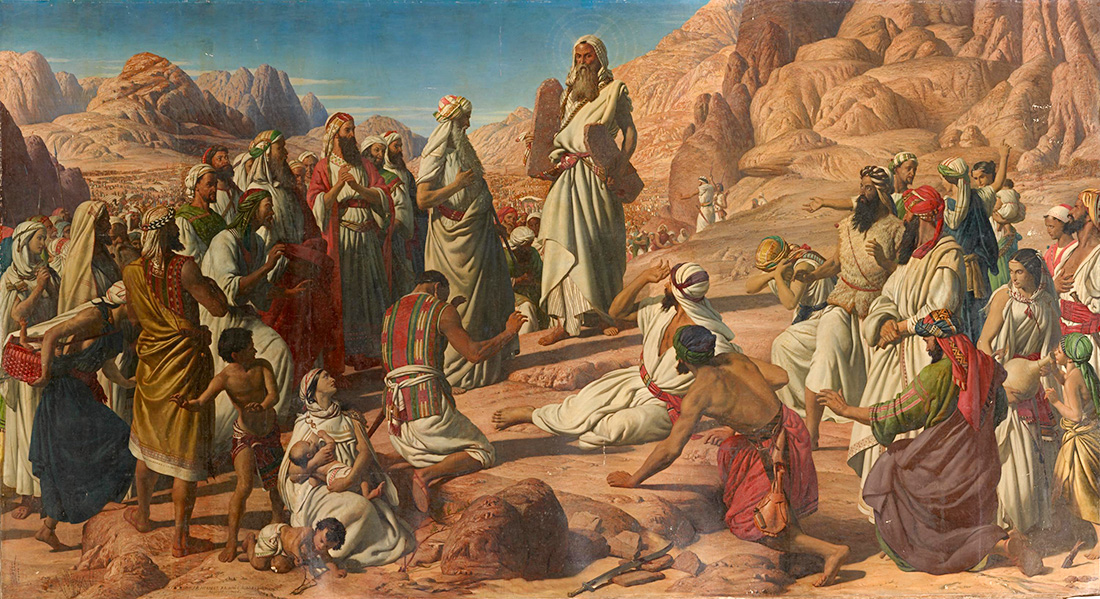
    Moses bringing down the Tables of the Law (1877), John Rogers Herbert | Creative Commons, courtesy the National Gallery of Victoria, Melbourne, Australia. This monumental work of art is 11 feet high and nearly 21 feet wide, suiting the monumental nature of the event. As someone who lives in Utah, I also appreciate the red rock desert depicted here it all its beautiful barrenness.

    Laws on stone tablets (not to mention the much more extensive precepts given to Moses verbally) seem fairly final in their permanence, but God’s aim is to inscribe his law on the hearts of his people, not on stone. Indeed, while he’s inscribing the first set of stone tablets, the Israelites are busy building and worshipping a golden calf at the base of Mt. Sinai. He eventually gives Moses a second set of tablets after Moses smashes the first ones in his anger and shock over the Israelites unfaithfulness while he was on the mountain for 40 days and nights.

    So today’s reading shows Moses imploring God’s fledgling people not to forget (again) God’s works, providence, and laws. After stressing God’s laws and decrees, Moses tells them “not to forget the things which your own eyes have seen, nor let them slip from your memory as long as you live, but teach them to your children and to your children’s children.” Like God, Moses understands that the laws must be inscribed in their memory and on their hearts, not just on stone tablets.

    Moses spends the bulk of the Book of Deuteronomy teaching them the laws and decrees. At one point, though, he summarizes the multitude of prescriptions: “what does the Lord your God require of you? Only to fear the Lord your God, to walk in all his ways, to love him, to serve the Lord your God with all your heart and with all your soul, and to keep the commandments of the Lord your God and his decrees” (Dt 10:12-13). 

    We see over time that the Israelites struggle with both keeping both the letter of the law and the spirit of the law. Jesus enters history at a time when the Pharisees and scribes are experts in the letter of the law but do not uphold the spirit of the law. Jesus points out that they have ended up fetishizing the law, as demonstrated by their physical appearance: “they make their phylacteries broad and their fringes long” (Mt 23:5). Phylacteries are boxes affixed to the head and left arm that contain slips of paper with scriptural passages. The tassels on their clothing were commanded in the Book of Numbers by God to be worn as a reminder to keep his commandments. They take these devices meant to remind a person to turn inwardly to God and make a show of them, boasting outwardly that the law resides with them.

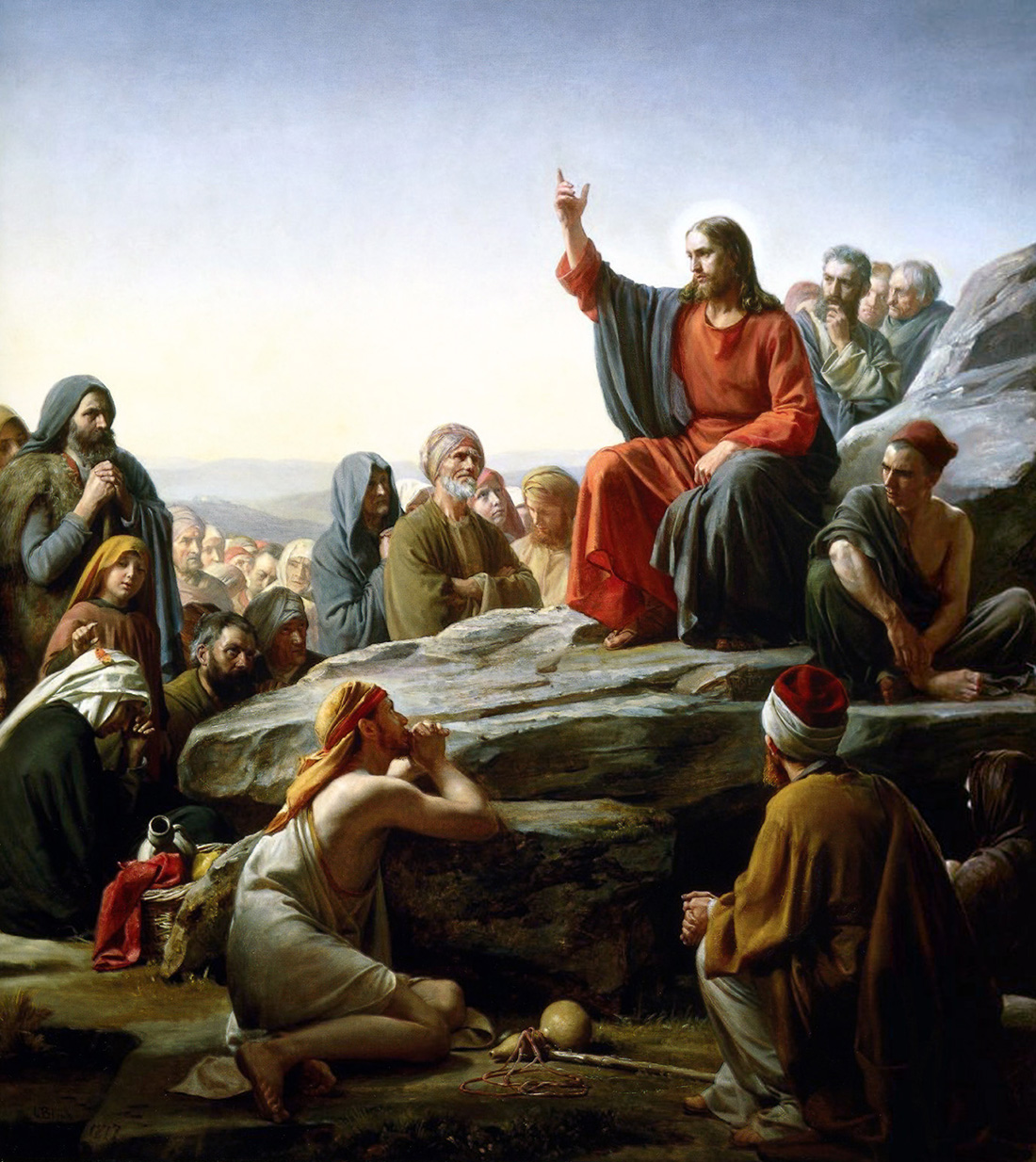
    Today’s gospel reading marks how Jesus reconciles, joins, and perfects the letter and the spirit of the law in himself. It comes shortly after the Beatitudes, towards the beginning of the lengthy Sermon on the Mount. Let’s imagine the excitement in the air with the crowds gathered around him, the Sea of Galilee the backdrop for a miracle worker preaching with authority.

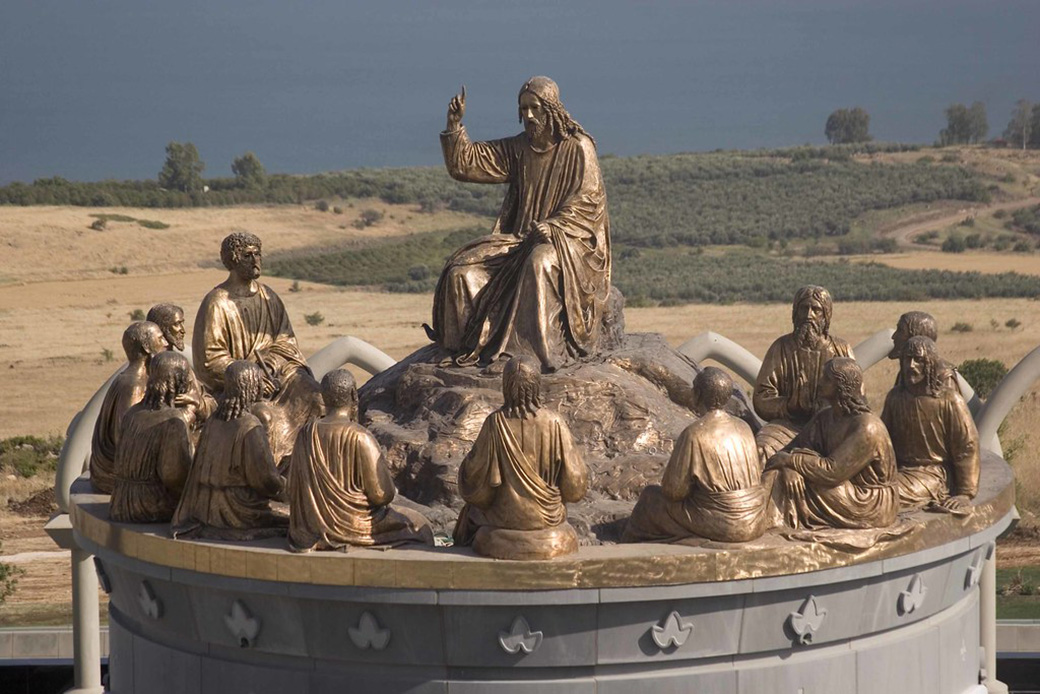
    Statues depicting Christ preaching the Sermon on the Mount, located above the Chapel of Adoration at Domus Galilaeae International Center, near the summit of the hill known as the Mount of the Beatitudes. The Sea of Galilee can be seen in the background. The actual figures are slightly larger than human scale.

    The Beatitudes seem to turn everything on its head. Blessed are the poor in spirit, the meek, the merciful, the peace makers — all figures of weakness who are guaranteed the earth and the kingdom of Heaven. Many who were listening may have thought this was a new revelation, perhaps the beginning of a new sect of Judaism. But, as Fr. Erasmo Leiva-Merikakis points out,

    “Jesus likewise surprises everyone by here defining himself over against mere religious anarchists and innovators, all those who would in fact invent on the spot a religious ‘tradition’ that is nothing more than a projection of their own frustrations, opportunism, political programs, and spiritual arbitrariness, often masquerading under the names of ‘mysticism’ and ‘spiritual authenticity’” (Fire of Mercy, Heart of the Word, Vol I, p. 211).

    Jesus surprises everyone by stating, “Do not think that I have come to abolish the law or the prophets; I have come not to abolish but to fulfill.” Contrary to that Baby Boomer we know at our church who always says, “Jesus was the first hippy,” he most definitely was not. He is not anti-establishment for the sake of disrupting social order. He is not just preaching peace, love and joy (although these are aspects of his teaching). He is the Law (its fulfillment in fact) and he is the Spirit. His being and ministry unite these seemingly disparate but in fact unified things. 

    When he says, “I have come,” he speaks not of coming to the mountain or coming to Galilee, but of coming in the more general sense, coming to earth. He refers to his purpose. It is an astounding message for the Jews who were listening and a good reminder for us now. Everything that they have founded their nation upon, from Moses and the Ten Commandments to the finicky rule-following of the Pharisees in their own time, is being fulfilled by Jesus. Not added onto, not adjusted, not clarified, but fulfilled. Either this was a seriously self-deluded man or it was God Himself. The mystical realities presented in the New Testament prove the second option.

    There is something new about his Word, but he is careful to point out that this newness is a fulfillment, not a breaking with the law that has been established. A megalomaniac savior figure would likely have wanted to start his own cult, but as we realize that Jesus is the Word of God, this is preposterous. He does not propose a schism or something “better.” The New Covenant (which is Christ Himself, body, teaching, and Spirit) is offered to us from God like the other covenants, superseding the ones that came before, but from the same originator (see the reflection The Difficult New Covenant of Love for more discussion here).

    The Sermon on the Mount (1877), Carl Bloch | Wikimedia Commons.

    Why do both of today’s readings speak of our participation in teaching the law? Moses urges his people to teach all future generations about what they hear and see. Jesus goes a step further and says, “whoever obeys and teaches these commandments will be called greatest in the Kingdom of heaven.” To answer this, let us ponder the nature of the Word of God.

    Just as God is characterized by the fullness of all that is good (see yesterday’s reflection, Mercy is the Master Principle), implicit in the Word of God is that fullness in communication. It is at once declarative, imperative, exclamatory, and even interrogative in its request to have us comprehend. It engages us wholly, it elicits a response (in prayer, in study, in action). 

    Also, when we say that the Word of God is given to us for our own benefit, this has many layers of meaning. It benefits us on a physical level by ordering us correctly in relation to one another, enabling just dealings and charity for all to live. It benefits us on a moral level, ordering our actions to the good rather than the evil, and leading us towards salvation. Finally, it benefits us on a spiritual level by uniting us with its author, God. Every benefit requires us to participate with it, however.

    The Word lives organically in our world both because of its nature as being the fullness of communication and because God deemed that we should have free will and choose to interact with him of our own accord. When we do interact with God through his Word, it lives in us (precisely by ordering us for physical, moral, and spiritual well-being). We become caught up in the Word, intertwined with the Word. What could be more satisfying as a human being than to be lifted into higher graces and levels of being than to be intertwined with the Word of God?

    Here’s the great bit: in a spiritual symbiosis, we engender more life for the Word of God in our world when we teach it to others. At the same time, the Word strengthens us and brings us closer to its author. God does not need us to do this work — it’s not as if the Word of God would somehow peter out if we stopped teaching it — but this is the great vocation God has granted us. It is part and parcel of his injunction to share his mercy and charity throughout the world (again, see yesterday’s reflection). Like granting others mercy and performing acts of charity, our very act of teaching lifts us spiritually, delights God on a visceral level, and brings us closer to him. That is why Jesus says, “whoever obeys and teaches these commandments will be called greatest in the Kingdom of heaven.” Obeying and teaching is the union of the letter and spirit of God’s law in us.

    Additionally, to be able to teach something the way Jesus does means that you more than understand the Word; you are living with the Word and therefore setting a living example of the teaching. This is why Jesus gets so upset with the Pharisees, who pose as the ultimate teachers but have somehow removed living the Spirit of the law from knowing the letter of the law. 

    Jesus is the fulfillment of the law that he, the Word of God, first spoke to Moses, precisely because he can live it perfectly. He is rightfully seen as our King. Every word and act he performs on earth is pregnant with the depth of God’s message for us.

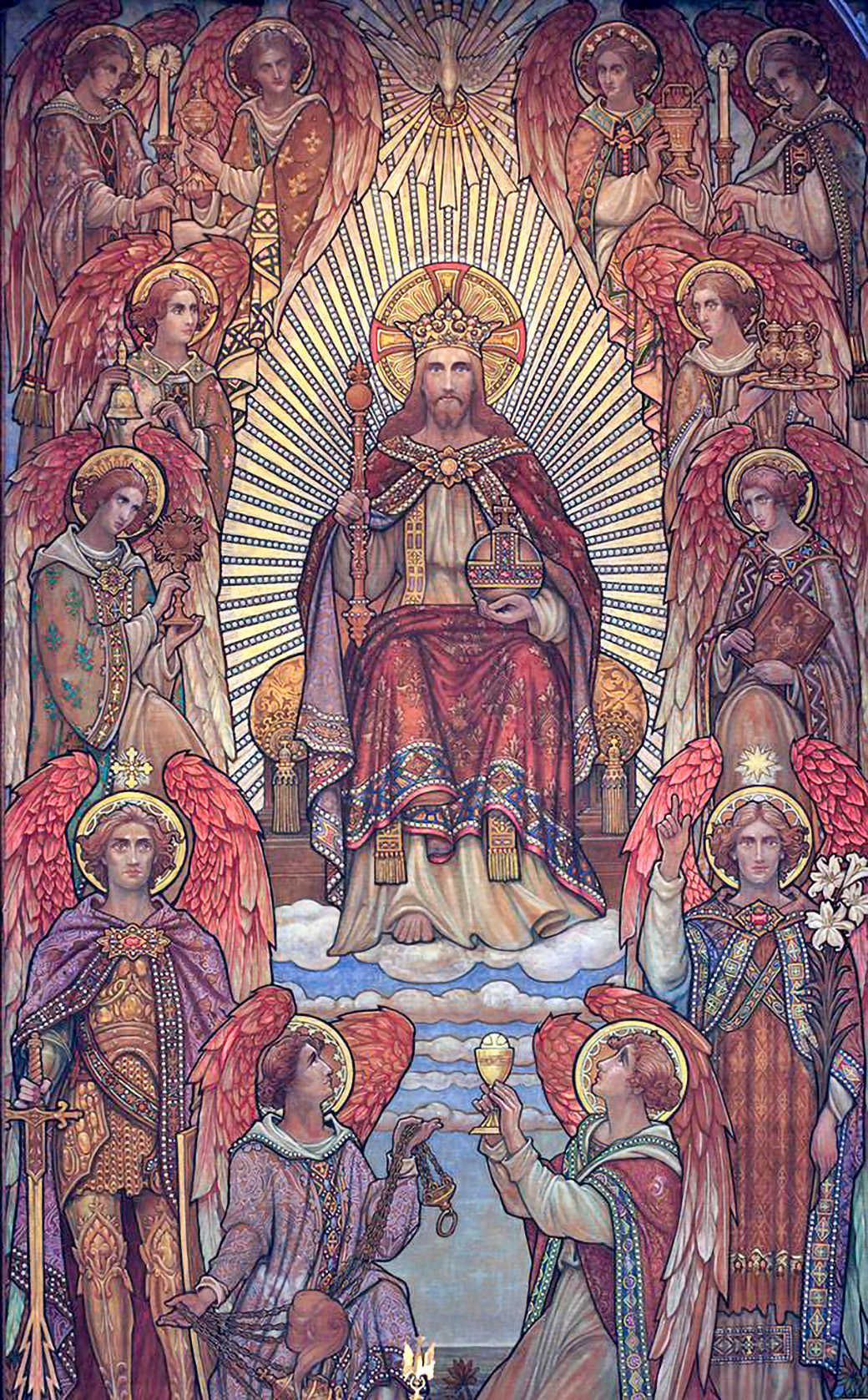
    Christ the King tapestry hung at the altar of St. James the Greater Church in St. Louis, Missouri, artist unknown.

    It is worth reflecting upon the awesome glory contained in our God-and-man Jesus Christ. To have your purpose be the very fulfillment of the law and covenants God has made with humanity! To become a suffering sacrifice for the entire human race, offered as the means to rescue us from the slavery of death and sin! To become a sacrament in body and Spirit!

    Did Mary have an inkling of this when she accepted the Incarnation given to her? Jewish women of her time were primed with the sure knowledge that one of them would bear the Messiah to the nation, but to have it come about in humbleness and end in seeming humility, only to burst forth in the liturgy of true communion with God … what a strange king! He leads us to a wholly different land with wholly different goals, but He is the truest King the world will ever know.

  • Mercy is the Master Principle

    Mercy is the Master Principle

    Tuesday in the Third Week of Lent: Daniel 3:25, 34-43, Matthew 18:21-35.

    Today, we read a parable about God’s great mercy and the expectation that we will, in turn, extend that mercy to each other. Mercy, we learn, is the great master principle upon which divine justice is built, and it is an action that stems not from the human heart, but from the heart of the Lord.

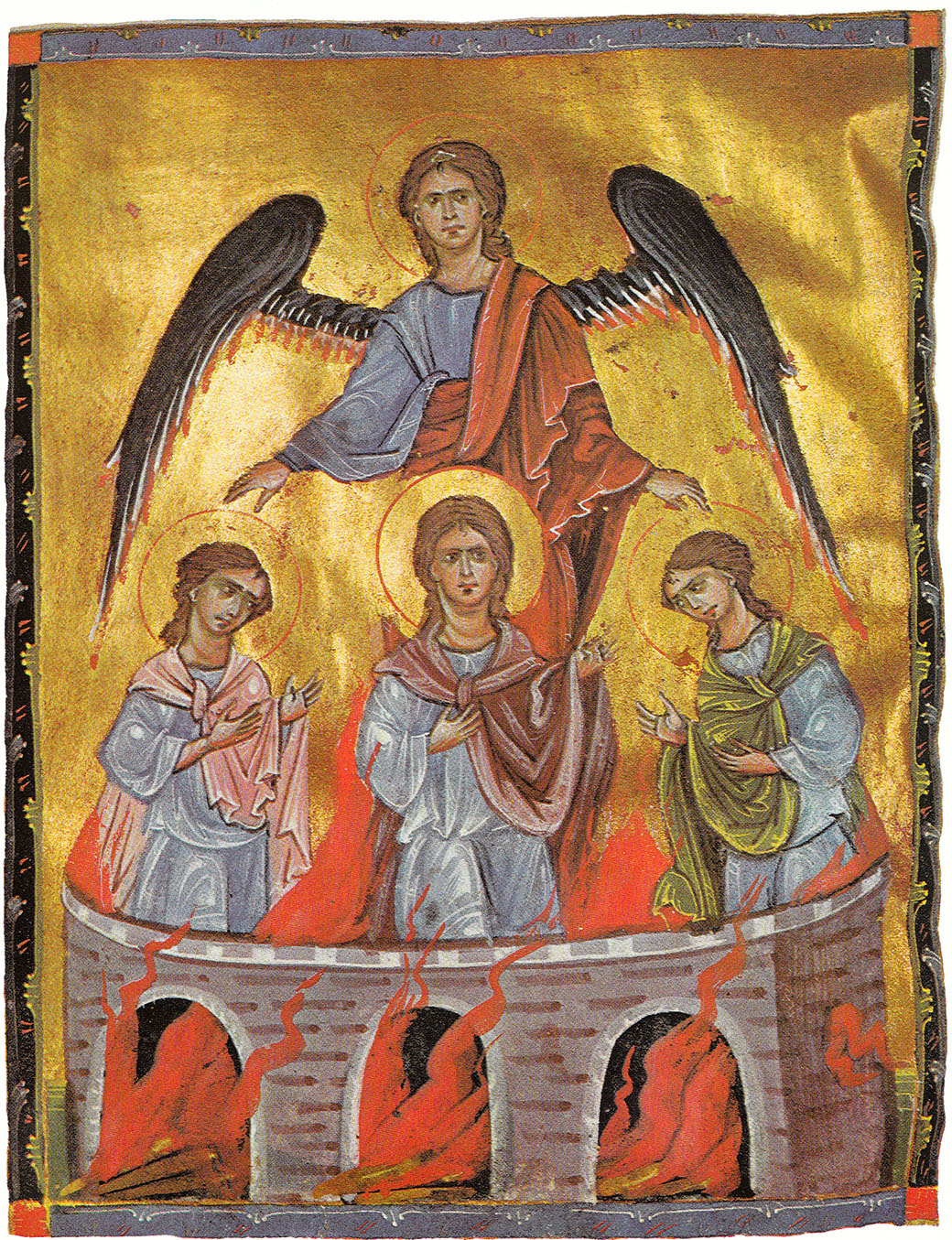
    The beginning of the book of Daniel, although written ~165 BC, details the stories of Daniel and his friends in Babylon around the year 600 BC. Today’s reading comes from the much-celebrated episode when the three young Jews Hananiah, Azariah, and Mishael are punished by Nebuchadnezzar for refusing to worship the gigantic golden idol he builds on the plain of Dura. They respond to the accusations against them by saying, “we have no need to present a defense to you in this matter. If our God whom we serve is able to deliver us from the furnace of blazing fire and out of your hand, O king, let him deliver us.” In a rage, he sentences them to be bound and cast into a fiery furnace so hot that it burns to death the men who throw them in.

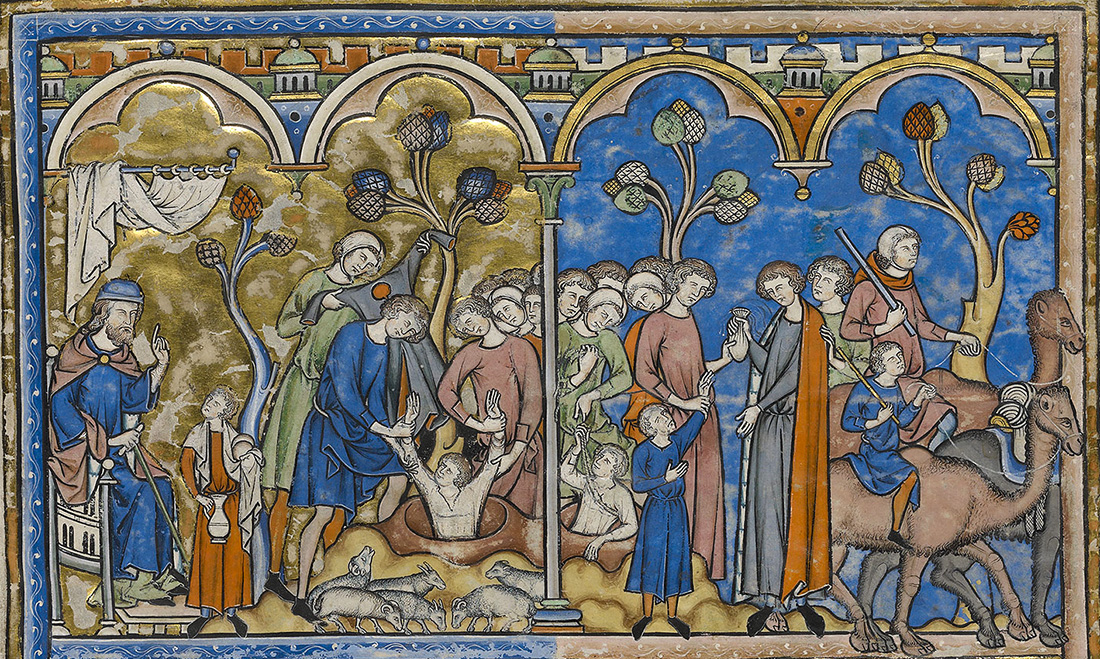
    Fiery Furnace, Shadrach, Meshach, and Abednego (1266), Toros Roslin (circa 1210–1270), who was the most prominent Armenian manuscript illuminator in the High Middle Ages | Wikimedia Commons.

    We read the Prayer of Azariah in today’s readings, which he offers to God when they are inside the furnace. Importantly, Azariah prays not for the three of them, but for the entire nation of Israel, “for the sake of Abraham, your beloved, Isaac your servant, and Israel your holy one.” He notes how depleted Israel is (indeed, they’ve been conquered by the Babylonians and many have been dragged to Babylon). In a clear reference to the psalms, he says he has no offering but his “contrite heart and humble spirit.” (Psalm 51 reads: “For you have no delight in sacrifice; if I were to give a burnt offering, you would not be pleased. The sacrifice acceptable to God is a broken spirit; a broken and contrite heart, O God, you will not despise.”)

    Having declared his pure intentions, he says, “we fear you and seek your presence.” As we shall see in the gospel reading, this deep respect, this profound obeisance, is crucial to our request for mercy. The entire prayer reaches its climax with his appeal: “deal with us in your patience and in your abundant mercy. Deliver us in accordance with your marvelous works, and bring glory to your name, O Lord.” How important that Azariah understands that all must point back to God and his glory! He asks for deliverance not just out of a selfish desire for his own life, but knowing that Nebuchadnezzar would be amazed at the power of God to save his people.

    The reader of the Book of Daniel is held in suspense a bit longer. After the passage we read today, we hear that the king’s servants stoke the fire mightily, and it rises 49 cubits (73.5 feet!) above the furnace. The point is that God’s people are being purified. The fiery furnace is the symbol of ultimate trial by fire, which is only met and conquered in the Spirit, with a steadfast faith and fundamental reliance on God. They prove that their hearts are pure, focused on God, and they ask for his mercy. Thus, “the angel of the Lord came down into the furnace to be with Azariah and his companions, and drove the fiery flame out of the furnace, and made the inside of the furnace as though a moist wind were whistling through it.”

    Upon their deliverance, the three young men dance and sing in the furnace a great canticle of thanksgiving, one that we use in our liturgy: Week 1 Sunday Morning Prayer of the Divine Office, and repeated for each solemnity and other high feast days. The canticle is one of my favorites to chant during the Liturgy of the Hours because it starts by blessing God and then goes through all of creation, encouraging everything to bless the Lord. (Some of my favorites: sun and moon, fire and heat, dolphins and water creatures.)

    This canticle is important because Hananiah, Azariah, and Mishael not only model for us the correct approach and posture to have before God when begging for mercy, but also the correct response once you’ve received his mercy: sharing that mercy with all of creation.

    The Parable of the Unmerciful Servant in today’s gospel reading clearly depicts the other side of this coin. Today’s gospel reading begins with Peter asking Jesus how many times we should forgive someone. Jesus corrects Peter’s guess of seven (the number of perfection in Jewish numerology, and already a literal number that would test the most patient person) to say seventy times seven — essentially, an infinite number of times. He then explains the reasoning with the Parable of the Unmerciful Servant.

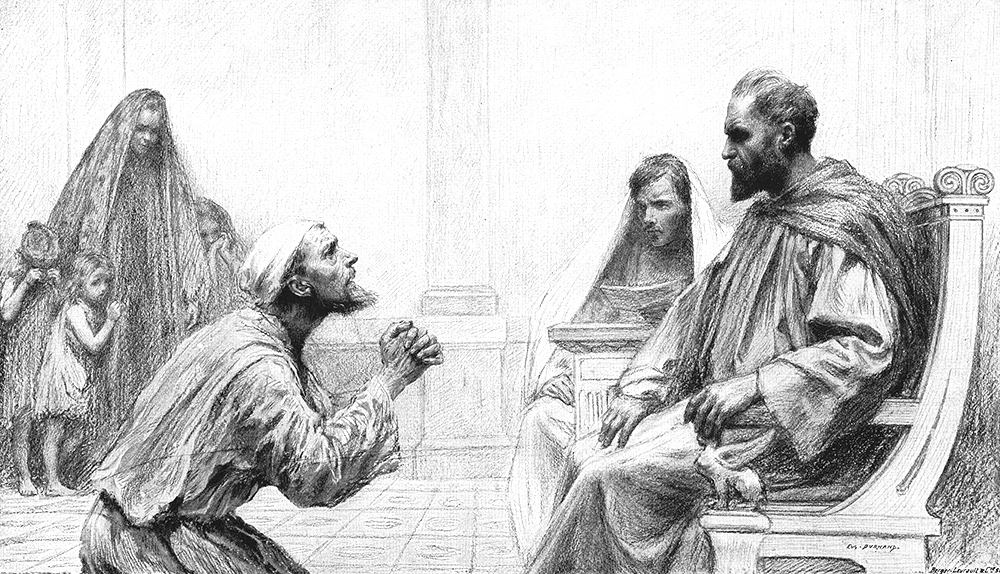
    The Unmerciful Servant (1908), Eugène Burnand | Creative Commons, courtesy eugene-burnand.com.

    Our lectionary reading says the servant owed the king “a huge amount,” although the scriptures specify “10,000 talents;” a talent is equal to 6,000 denarii, and since a typical Jewish laborer earned 300 denarii a year (1 denarius per day, 6 days per week, minus religious holidays), it would take around 200,000 years to earn 10,000 talents! Clearly, this is an impossible amount to pay back.

    The king proclaims a sentence according to the law, that he, his family and his property be sold. At this, “the servant fell down, did him homage, and said, ‘Be patient with me, and I will pay you back in full.’” Now, there is no way the king could expect to be paid back in full, but the servant follows the lead of Hananiah, Azariah, and Mishael in that he shows proper respect for and dependence on the king. The original Greek uses the verb προσεκύνει (a form of proskynesis), which is often translated as “worship” elsewhere in the Bible and means to bow on your knees in a display of supplication and reverence. 

    Further examination of the Greek helps us understand the exchange between the servant and the king. Erasmo Leiva-Merikakis writes in Volume II of his masterwork Fire of Mercy, Heart of the Word, “God responded at once to the servant’s plea because the man used one of God’s dearest names in adoration of him: ὁ Μακροθύμος—’the Long-suffering One’. The man’s plea is said to have affected the almighty King’s very viscera (σπλάγχνα), hidden under all his golden robes … ‘the Lord of that servant was viscerally moved to compassion’” (647-648).

    And the king goes beyond giving the servant time to repay, instead forgiving his entire debt! In this way, Jesus is describing God the Father in his overflowing forgiveness and mercy, far beyond even our expectations.

    The parable now turns on the actions of the forgiven servant. He finds a fellow servant who owes him a much smaller debt and instead of forgiving this debt in turn, as his king forgave him, he chokes him, refuses to show him mercy, and has him imprisoned. This is a grievous sin.

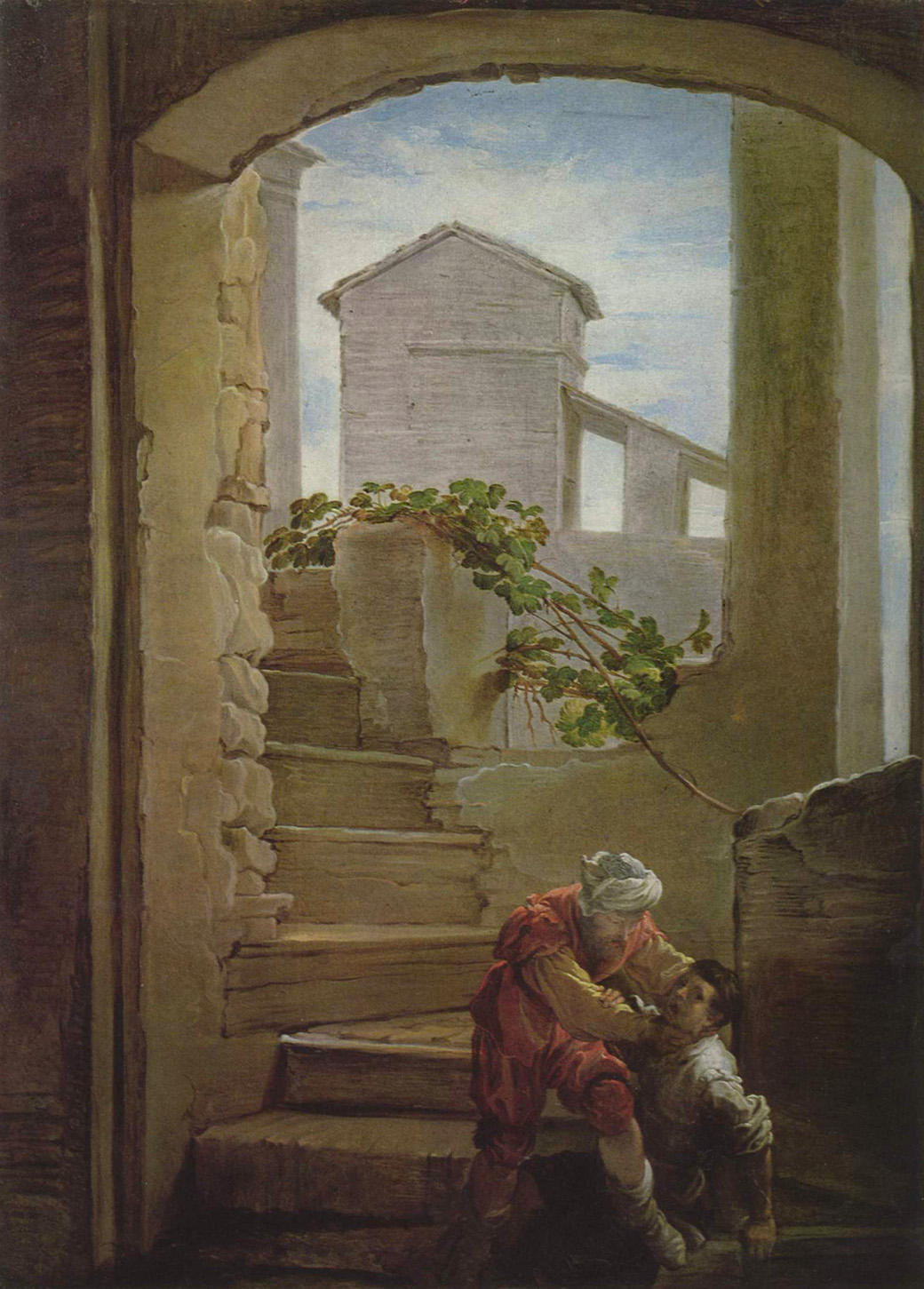
    Parable of the Wicked Servant (La parabola del servo malvagio), 1620, Domenico Fetti | Wikimedia Commons.

    The king’s action is not merely a good example for the servant. God’s mercy is a thing, alive, needing to course through us into the world. His mercy is the living force of love in the world. Leiva-Merikakis beautifully describes this, “Our vocation is to ignite conflagrations of love and forgiveness all around us. God’s light intends to be refracted through our being: it shines upon us not only for our own benefit, to dispel our own darkness, but also to stream through us and beyond us” (649). 

    As Leiva-Merikakis points out, God sharing his mercy implicates our very “vocation,” our purpose on the earth. And the kingdom reacts at the injustice, the perversion of Spirit in its midst: “Now when his fellow servants saw what had happened, they were deeply disturbed, and went to their master and reported the whole affair.” As Leiva-Merikakis writes, “Mercilessness looms as the primary enemy of the hierarchy of being as established by divine creation and decree” (653). In other words, God — as the fullness of mercy and goodness — fills us with mercy so that we, in turn, can allow the overflowing mercy to be shared with the rest of creation (this is what he means by “hierarchy”). Not sharing mercy with others is a cardinal sin, a “primary enemy.” This leads us to the conclusion of the parable and a glimpse of divine justice.

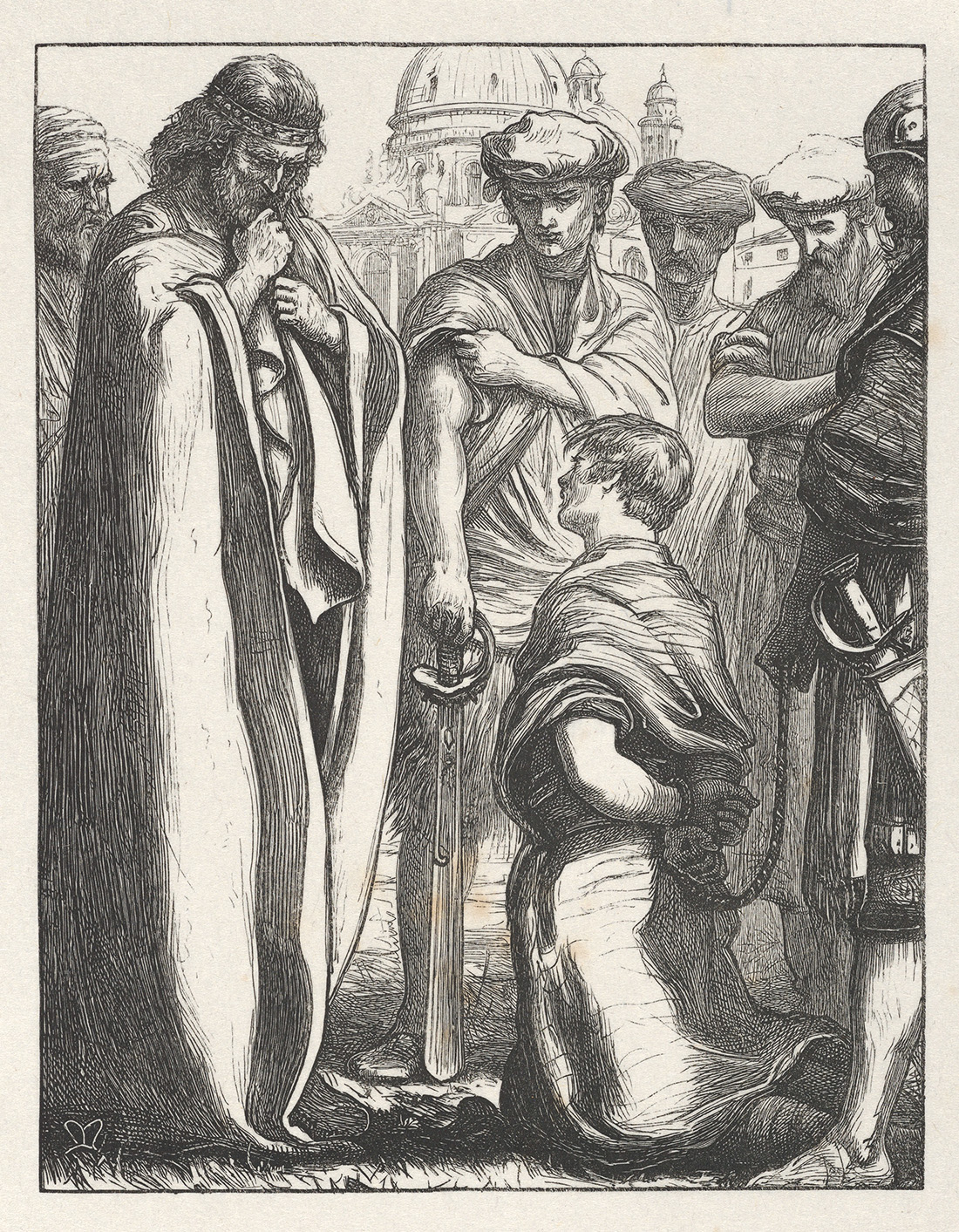
    The Unmerciful Servant (1864), artist: After Sir John Everett Millais, Engraved and printed by Dalziel Brothers | Creative Commons, courtesy The Metropolitan Museum of Art.

    Even if it makes us uncomfortable, we must accept that God rightfully expresses anger when his goodness is hoarded and discarded. Divine justice hinges upon how we use the gifts God bestows on us, principally mercy: is it shared and given forth to others in acts of charity and love or is it discarded and replaced by selfishness, greed, and sadism? When we discard the energy of God Himself, we embrace the energy of evil, of the devil. What’s more, we reject ourselves, our purpose, to help bring others to God and into the Kingdom. We become an abomination of everything God has created us to be.

    So, we read that “in anger his master handed him over to the torturers.” Much has been said in recent years about how God is all goodness and could never have vengeance or anger. I think we come close to ignoring parts of scripture if we take this too far. Let’s look closely at the original Greek as we wrap our heads around God’s righteous anger and act of divine justice in this passage.

    The verb for his anger is ὀργισθεὶς (orgistheis), which can be translated as “having been angry,” “moved to anger,” or “provoked to anger.” Here we see that the king is provoked or moved by the actions of the servant; it is a response to something the servant has done. We must recall that while God is indeed all that is good, he is also the source of moral behavior, moral decision making, and moral valence (that is, what is good vs. what is bad). As such, he stands as the judge of behavior, and a judge is not silent when presented with something. Actions either uphold the good or go against the good. Being “moved to anger” means that he stands in his role as judge and proclaims the evil that he sees.

    Why anger? Why not sadness or emotionless judgment? Well, let’s return to the kind of God we know we have: one who overflows with love for his people and his creation. Is this the sign of impassivity? Should we expect a divinity so pure and full to not react viscerally to both the goodness he finds in us as well as the evil he finds in us? As it appears in today’s reading, God is viscerally moved to compassion — σπλαγχνισθεὶς (splanchnistheis) where the word σπλαγχνα (splanchna) means interior organs or intestines — and we can expect that he can be viscerally moved to something other than compassion when encountering evil. I don’t presume to know what he is moved to, but the scriptures tell us many times that he is moved to anger, so I take divine revelation for what it is.

    In his anger, the king “handed him over”: παρέδωκεν (paredōken), which occurs 18 times in the New Testament, notably when Judas hands over Christ to the chief priests, when Pilate hands over Christ to be crucified, and when Christ gives up his spirit in death. This is an irrevocable step in delivering something. And to whom does the king hand over the servant? The torturers, who will enact pain upon him “until he should pay back the whole debt” (200,000 years, I guess). We can rightfully say that, in his goodness, God does not take pleasure in this torture and note that he does not inflict it himself. Gehenna/Hell is set up for this purpose, a place for the people who pervert the Spirit and undermine God’s law.

    So as to not end this reflection as a total downer, let’s end with some wise words from Leiva-Merikakis, for whom today’s reading in part gives him the title for his three-volume work on St. Matthew’s gospel.

    The only thing we should be afraid of is not being merciful as our heavenly Father is merciful, for it is from unmercy that the most dire consequences flow, the ones reaching most deeply and devastatingly into both our psyche and our eternal destiny. For the Kingdom of Heaven is a kingdom of mercy, and mercy is never realized in the abstract but only through a concrete exercise of forgiveness. … Therefore, the ability to forgive our brother unceasingly and from the heart should be one of the primary concerns of our prayer, one of the most earnest pleas we make before the Throne of Grace (654).

  • A Prophet in his Own Land

    A Prophet in his Own Land

    Monday in the Third Week of Lent: 2 Kings 5:1-15, Luke 4:24-30.

    Today’s readings are an excellent example of how the New Testament can help to clarify seemingly incongruous events in the Old Testament. It’s a good reminder of how the fullness of God exists outside of (yet operates within) linear time and history.

    When I first read the second book of Kings and encountered the prophet Elisha, I had to do a double-take. Does this book really describe how he fed a hundred people with 20 loaves? How he cured lepers, knew men’s hearts and deeds without them saying anything, and even raised a boy from the dead?? These are too close to Jesus’s miracles to be a coincidence. Nearly 900 years before Christ, we encounter a prophet, the disciple and successor to Elijah, who performs very “Messianic” miracles. What do we make of this?

    It’s safe to say that Elisha prefigures Jesus and the New Covenant that will be established. Let’s remember that the prophets were men and women who dedicated themselves utterly to God, who lived righteous lives and were granted special graces from God, enabling them to do his will in extraordinary ways. Above all, prophets were the mouthpieces for the Word of God. That same Word is, of course, Jesus Christ. When they perform miracles, the Spirit works in the world through them, much in the way that the Word is spoken by them. Thus, it is God, the Spirit and the Word, who works through Elisha. Christ is performing works in a time long before his coming in the flesh as a way to prepare the hearts of humanity for the new reality he will bring.

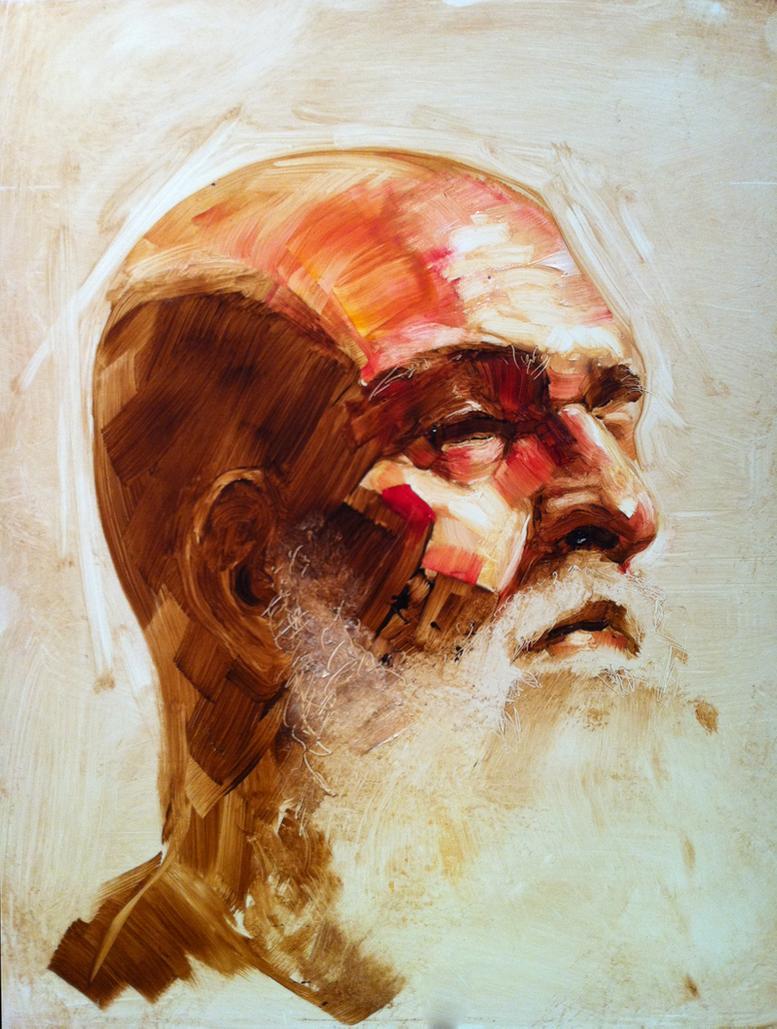
    Elisha the Prophet (2011), E. G. Gauger

    When we realize that God works (and has always worked) in the world through us, it should come as no surprise that those speaking and acting in truth are being used by him in similar ways as he will act as the Word Incarnate.

    Let us see the ways Christ is operating in human history 900 years before his Incarnation. In today’s reading, we find a Syrian (Aramean) general, Naaman, who learns from a captured Israeli servant girl that there is a prophet in Israel who can cure his leprosy. Note that Syria is an active enemy of Israel at this time, and in just the next chapter of 2 Kings, Elisha helps to thwart an Aramean attack.

    In this episode, Elisha asks the king of Israel to send Naaman — not just an outsider from the tribe of Israel but an enemy — to him. When Elisha asks for Naaman to be sent to him, we hear earlier echoes of Jesus (like a pebble dropped in time that ripples both backward and forward on our timeline): “Love your enemies and pray for those who persecute you” (Mt 5:44, see the reflection The Difficult New Covenant of Love).

    Elisha tells Naaman, “Go and wash seven times in the Jordan, and your flesh will heal, and you will be clean.” The Jordan River will become the workplace of St. John the Baptist in his mission of repentance and preparing the way for Christ. Just as John washes sin away in the Jordan, Naaman will wash away the uncleanliness of leprosy. Moreover, Christ (through Elisha) is performing the first baptism of a Gentile in the Spirit of the Lord. This will become the New Covenant, salvation opened up for the entire world through baptism in Jesus’s name.

    Naaman, the great commander with his horses and chariots, gets angry. He expected more of a show, perhaps more attention and honor given his status. Elisha, for his part, acts like Christ might, not impressed by worldly power. For Naaman, why travel all this way just to be told to jump in Israel’s little river, no match for the great Syrian rivers? Here we see the ever-present challenge of faith presented to us in the scriptures. And who is it but the lowly servants who have faith and encourage Naaman to follow Elisha’s instructions? “Blessed are the poor in spirit,” says our Lord.

    When he is cured of his leprosy (through faith, encouraged by the lowly), he returns to Elisha to profess his newfound faith in the Jewish God. What is omitted in today’s reading is that he also wants to bestow lavish gifts on Elisha for his miracle, but Elisha refuses them, saying, “As the Lord lives, whom I serve, I will accept nothing!” This is concordant with our teaching that God’s gifts are given freely to us, who do not deserve them.

    Elisha refuses the gifts of Naaman (Elisa verweigert die Annahme der Geschenke Naemans), 1637, Pieter Fransz de Grebber | Wikimedia Commons.

    Without Christ and the New Testament, I find that Elisha’s deeds stand out as exceptional but a little pointless. What happens when he dies but more of the same for God’s people? They remain in an endless holding pattern of ritual observance and sacrifice, praying for God’s protection and grace in this world. Elisha did great things, but then he died like the other prophets. He reveals some important things about God, but they don’t really coalesce into their fullness until Christ. To Jews of the time, for instance, what’s the point of healing an Aramean leper general when they’re fighting for their nation’s survival?

    This is where our distance from these events is a grace in itself. We are able to make connections between the Old and New Testaments in a way countless millions were never able to. The Second Vatican Council’s Dogmatic Constitution on Divine Revelation, Dei Verbum, remarks pointedly on the relationship between the testaments:

    “God, the inspirer and author of the books of both Testaments, in his wisdom has so brought it about that the New should be hidden in the Old and that the Old should be made manifest in the New. For, although Christ founded the new Covenant in his blood, still the books of the Old Testament, all of them caught up into the Gospel message, attain and show forth their full meaning in the New Testament and, in their turn, shed light on it and explain it.”

    Today’s reading is an excellent example of how the “New should be hidden in the Old and the Old should be manifest in the New.” I also appreciate how the Council points out the reciprocal nature of this relationship, how the Old Testament can shed light on the New while at the same time its stories show their full meaning in the New Testament. This attests to the nature of God Himself, who is fully active at all times, both within time and outside of it. 

    The notion of “fullness” is important here. Let’s start with a definition of fullness as the completeness of abundance; that is, something that is already abundant and overflowing somehow being complete. The proposition of our faith is that the fullness of God inhabits the universe at all times.

    He instructs Moses to tell the Israelites: “I AM has sent me to you.” His name, his being, is summed up in being itself. There is nothing more fundamental — no other level supporting being itself.

    At the risk of our heads exploding over the ontological implications of God’s being (which we can never truly comprehend until we come face to face with Him), let’s listen to some wisdom from our Church Fathers. St. Gregory Nazianzen says, “God always was and always is, and always will be; or rather, God always Is. For Was and Will Be are fragments of our time, and of changeable nature. But He is Eternal Being … like some great Sea of Being, limitless and unbounded, transcending all conception of time and nature” (~388 AD, Oration 45, The Second Oration on Easter, III). The fullness of God’s being is limitless and unbounded, transcending time.

    God’s revelation has taught us some other things about his fullness: He endlessly pours his Spirit and love upon his Creation, especially humanity in which he incarnated his Son. He tirelessly calls us to him, thirsts for us (see the reflection If You Knew the Gift!), with inexhaustible forgiveness in his heart. Thus, the fullness of his being in all time is characterized by his love, care, and thirst for us. He meets us in our mortal reality of linear time through a progressive revelation of himself, yet at every stage of revelation, he and his message are fully there.

    (As a side note, when I read of the “immensity” of God, I think of this very fullness of his being.)

    In all the similarities between Christ and early prophets like Elisha, let us not forget that Christ is also the most exceptional historical figure, the most blessed man, the Anointed One of God. While the Word and Spirit work through the prophets, the Word itself is joined with mankind in Jesus Christ. This manifestation of God on earth is greater than all of the prophets, it is the perfection of the Law and the Spirit.

    Humans can only try to uphold the law and live in the Spirit from the distance of their mortality while Jesus is the actual manifestation of the Law and Spirit, incomparable to us in his essence. His miracles supersede Elisha’s in every way — Christ feeds 40,000 while Elisha feeds 100, Christ heals 40 lepers while Elisha heals one, etc. Interestingly, we are told that when a dead man is buried near Elisha’s bones and touches them, he immediately jumps back up, alive. Christ, on the other hand, brings eternal life for all humanity. 

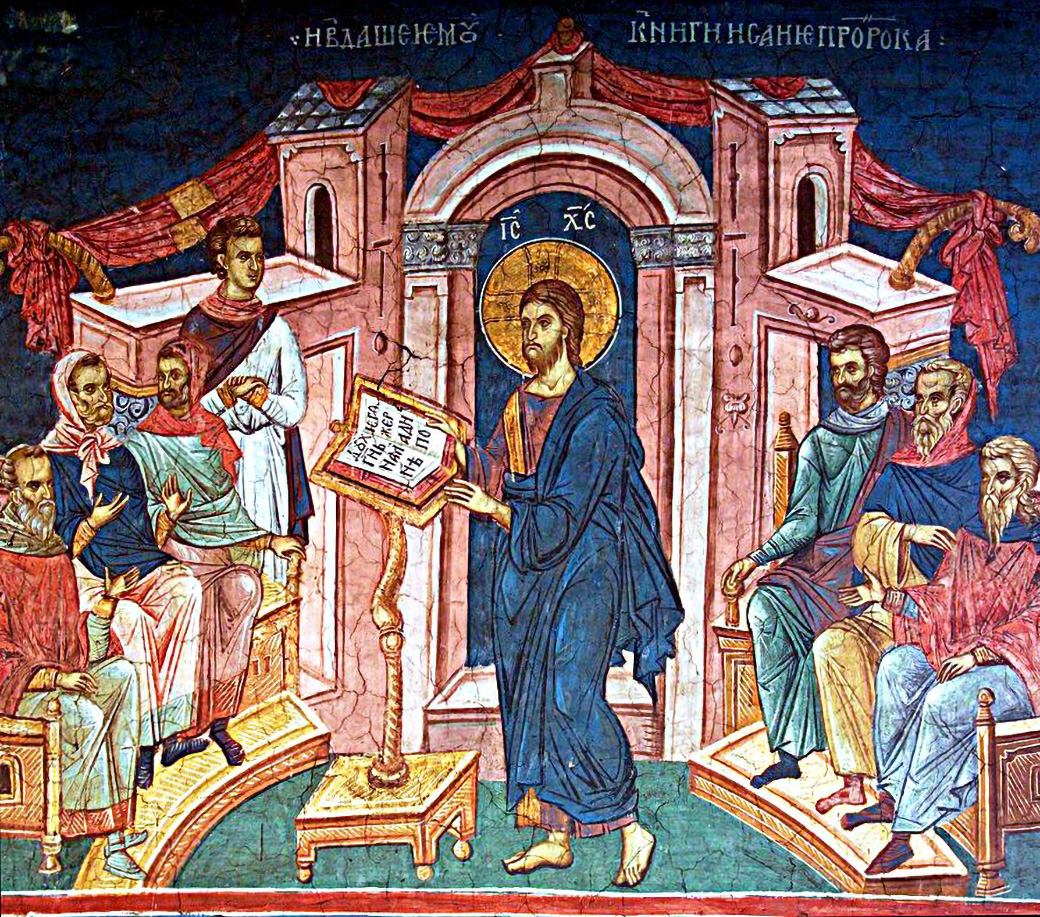
    Jesus Teaches at the Synagogue in Nazareth, unknown icon author | Creative Commons, benedicamusdominoblog.com

    So what do we make of Jesus in today’s reading being the prophet not accepted in his “native place”? I always saw this as a sad, personal low point for Jesus. But upon reflection, I think I was dead wrong. In fact, it’s a pretty triumphant moment, where he gives us the reason for Elisha’s incongruous act of healing non-Jews in difficult times.

    Remember, the Nazarenes in his hometown had just heard him say that the fulfillment of Isaiah’s prophecy was him, standing in front of them. They were astounded. Then he says that they might be expecting a miracle from him, but no such thing would happen (this is where our reading picks up).

    He declares, “no prophet is accepted in his own native place,” and thereby tells them that he will not be working wonders in their midst. Then he uses an episode in Elijah and the story of Naaman and Elisha as proof that prophets are to work wonders for those outside their “native place.” This infuriates them. They must have felt brushed aside, as if he was saying they weren’t worth the trouble. Worse yet, that non-Jews and pagans were more deserving of God’s graces than they were. So they mob him and push him out of town with murderous intent.

    And the miraculous thing upon which our reading might hinge: “But he passed through the midst of them and went away.” Whaaaa?

    How mysterious … like the wind or a spirit.

    Exactly.

    Although not “a spirit,” but THE Spirit. Jesus physically redoubles his message by passing directly through the midst of them, as the grace of God being taken from them and given to others. This is, of course, the message he will continue to spread when he talks with the Samaritan woman, welcomes and eats with sinners, and more. The Good News is that eternal salvation is being offered to all peoples, all nations through Christ. This significant broadening of salvation beyond the nation of Israel is a large part of his ministry, and it begins here in his hometown of Nazareth. 

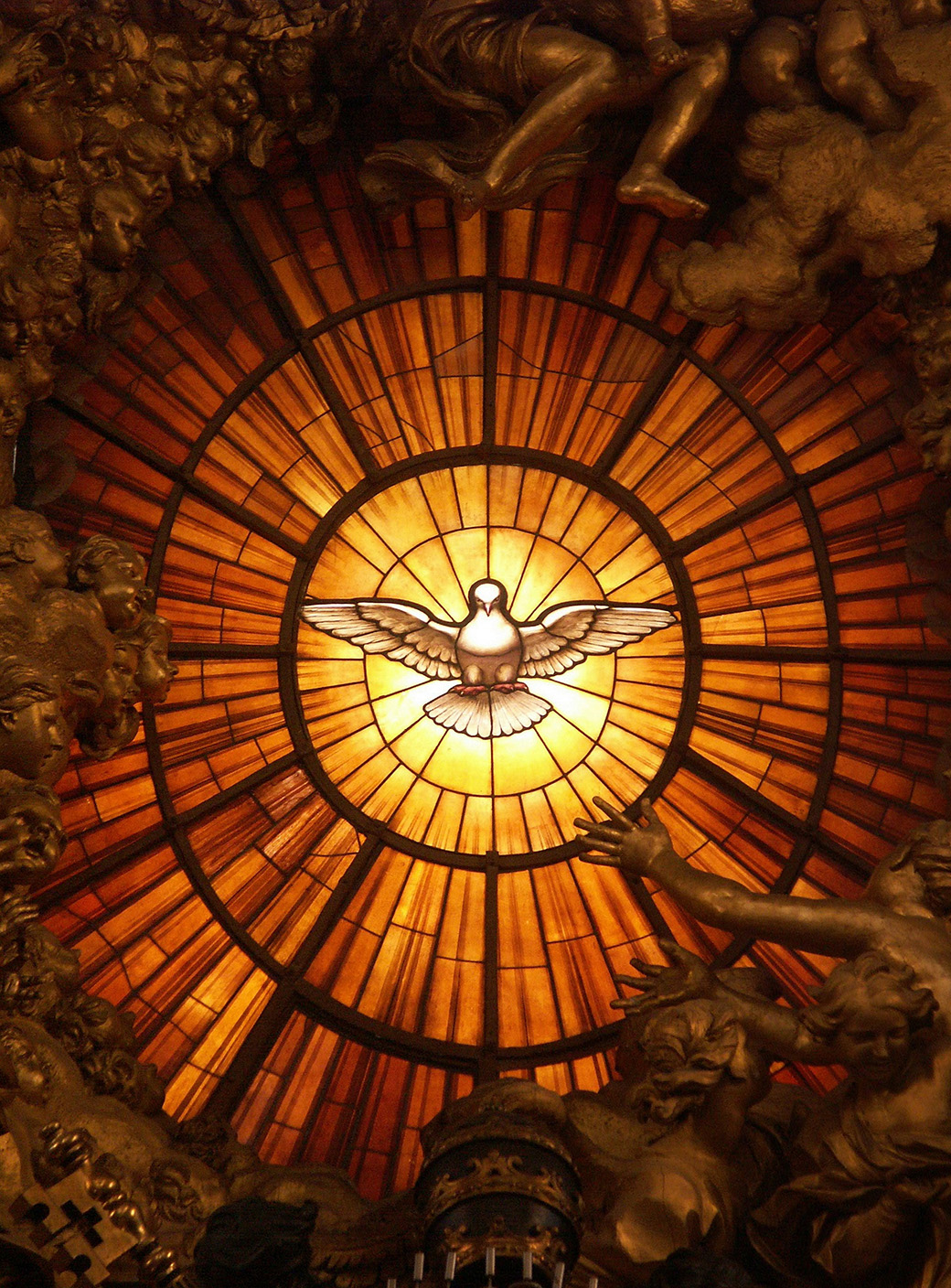
    Dove of the Holy Spirit (ca. 1660, stained glass, Throne of St. Peter, St. Peter’s Basilica, Vatican), Gian Lorenzo Bernini | Wikimedia Commons.

    This new salvation is brought about in the Spirit, and Jesus “passing through the midst of them” is both the sign and the reality of this message. He voices this message later to Nicodemus the Pharisee: “You must be born from above. The wind blows where it chooses, and you hear the sound of it, but you do not know where it comes from or where it goes. So it is with everyone who is born of the Spirit” (Jn 3:8). In fact, the Greek here shows that wind (πνεῦμα, pneuma) and Spirit (Πνεύματος, pneumatos) are the same word. The lack of stable physical location for the wind/Spirit is the same for those who are “born of the Spirit,” i.e., baptized as Christians. They no longer belong to Israel, to particular castes or families, but to God, not of this world.

    Thus, like the wind and the Spirit, “he passed through the midst of them and went away.”

    This does not mean that Nazarenes (and Israel as a whole) are not welcome in the Kingdom, simply that they need to understand that the Old Covenant establishing them as the Chosen People is being replaced by a New Covenant that is not bound by a place or a nation. They are the first, in fact, to be invited into the New Covenant and to be born of the Spirit. 

    The West Wind (1891), Winslow Homer | Wikimedia Commons.

     So what are we to make of the fact that they were told by God that they were the Chosen People for the prior several millennia? Just like Elisha’s deeds only making sense as a prefiguring of Christ’s opening up of the New Covenant, we can see the appellation “Chosen People” making sense in Christ as well. They were chosen to receive the prophets, to prepare the hearts of mankind for the Anointed One, the Son of God, to be born into their tribe and then open up the Kingdom to all. Importantly, the millennia of God working within his Chosen People led to Mary the Mother of God being trained by generations of those abiding by the law of God. She was perfect in mind, body and spirit, ready to say yes to God, to be the Ark of the New Covenant.

    Therefore, let us look past the anger of the Nazarenes and read the triumphant message in today’s gospel. Jesus is never defined by the fact that he is not accepted but hated. He bears it all willingly because his message is not about himself as a man, but himself as divine reality — unbound by time or circumstance — in our midst.

  • If You Knew the Gift!

    If You Knew the Gift!

    Third Sunday in Lent: Exodus 17:3-7, Romans 5:1-2, 5-8, John 4:5-42.

    Today’s readings map the importance of water not just as a lifeforce for our bodies, but as a symbol of the spiritual nourishment provided by God. We are given two seminal scriptural stories: Moses striking the rock at Massah and Meribah to let forth water and Jesus revealing his gift of “living water” to the Samaritan woman at the well. Both episodes underscore the way our bodily and spiritual needs intertwine in our faith.

    The first question we might ask is, why water? It’s so mundane. Yes, we rely on it to live, our bodies consist mostly of water, but why would it be associated with holiness? Why is it used for baptism in Christ?

    The Great Wave off Kanagawa (1830-1832), Katsushika Hokusai | Wikimedia Commons.

    Our early Church Father Tertullian (c.155 AD – c.240 AD) speaks movingly about the fact that water was present early in creation. In his treatise, On Baptism, he recalls the first sentence from the Book of Genesis, where the earth is a formless void and “the Spirit of the Lord was hovering over the waters.” Tertullian writes:

    “The first thing, O man, which you have to venerate, is the age of the waters in that their substance is ancient; the second, their dignity, in that they were the seat of the Divine Spirit, more pleasing to Him, no doubt, than all the other than existing elements. For the darkness was total thus far, shapeless, without the ornament of stars; and the abyss gloomy; and the earth unfurnished; and the heaven unwrought: water alone — always a perfect, gladsome, simple material substance, pure in itself — supplied a worthy vehicle to God. What of the fact that waters were in some way the regulating powers by which the disposition of the world thenceforward was constituted by God?”

    Thus, Tertullian demonstrates how water is ancient, dignified, pleasing to the Holy Spirit, pure, and was instrumental for God when forming the rest of Creation. Due to this intimate relationship with the Spirit, all waters, he says, “attain the sacramental power of sanctification; for the Spirit immediately supervenes from the heavens, and rests over the waters, sanctifying them from Himself.” And just as water washes the dirt from our skin, it washes the spiritual stain of sin from our souls. 

    Water figures mightily in the Exodus story. It is the saving agent for the Israelites and the humbling force against Pharaoh’s army when God parts the sea as Moses raises his staff. And in today’s reading, we hear of the famous place with a double name, Massah and Meribah, which is invoked every day in the Liturgy of the Hours with the invitatory from Psalm 95. “The place was called Massah and Meribah, because the Israelites quarreled there and tested the LORD, saying, ‘Is the LORD in our midst or not?’” God has already delivered them from the hands of Pharaoh, he has given them manna and quail to eat, and so their doubt displeases him so much that he declares the entire generation will have to wander the desert for 40 years and only the next generation will see the promised land.

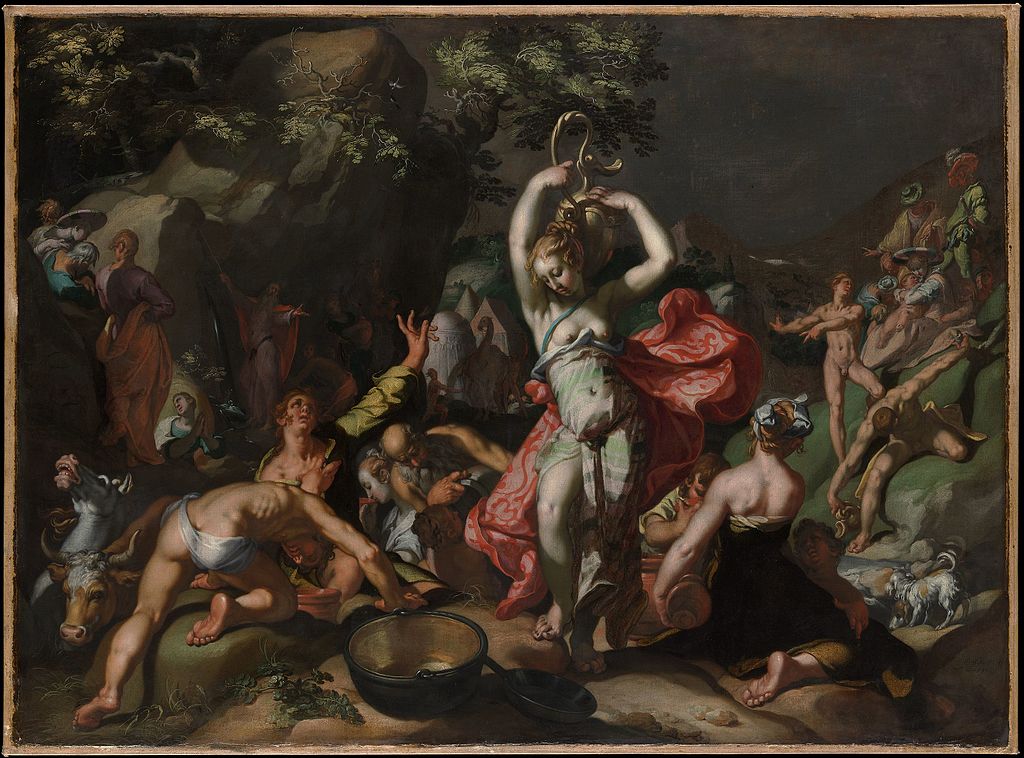
    Moses Striking the Rock (1596), Abraham Bloemaert | Wikimedia Commons. I quite like this interpretation of the scene at Massah and Meribah because it displays carousing, clueless Israelites who are focused on their material needs and bodies. Meanwhile, Moses strikes the rock in the background, imploring them to pay attention to the miracles God is working in their midst. You can sense his frustration with the unfocused and unfaithful tribe he is leading.

    The passage opens with an important statement that we should not overlook. It reads, “In those days, in their thirst for water, the people grumbled against Moses …” Thirst for water is answered by God, and is forever associated with faith, or lack of faith. When they thirst for water, they are also thirsting for reassurance, for deliverance. Faith in God is what will bring them both of these, and because they grumble and revolt against Moses instead of staying strong in faith, God makes them an example for the rest of our salvation history. He delivers water to us, but we must wait 1,500 years before Christ makes it clear what type of water God provides.

    The second reading from St. Paul to the Romans contains a crucial phrase that connects Massah and Meribah to the Samaritan Woman at the Well. Referring to Christ’s death and Resurrection, St. Paul writes, “the love of God has been poured out into our hearts through the Holy Spirit.” All three Persons of the Trinity are present in this concise statement, and the verb is “pour.” God’s unfathomable love is being poured into our hearts. Here we get to the core of what Jesus will refer to as “living water.”

    Before diving into the gospel reading, let’s think about wells for a moment. Wells are our way of digging deep for the water God has planted in the earth in the form of natural springs. We are reaching out to God’s providence when we dig wells. We are displaying a primordial faith in our Creator who provides for us. Also, we dig wells when we want to settle in a place for a period of time. Wells, therefore, represent a stable relationship between ourselves and the wonders of Creation that God has given to help support us. 

    In his incredible book Wellspring of Worship, Jean Corbon, OP, explores the fundamental symbolism of water as he describes the mystical wellspring of worship that is the liturgy. He writes:

    “Men thirst and look for water wherever they think they will find it. As they wander without any horizon in sight and no way of escape, they dig a well each time they pitch their tent. … Nor does he sleep who placed in the human soul both the thirst and the expectation. Indeed, he is the first to thirst and set out in search of us, to the point of joining us beside our pathetic wells.”

    Corbon paints a picture of dependence on the part of humanity and something of a tavern owner in God (to borrow one of my favorite images of God from Simon Tugwell, OP). God the tavern keeper, offering us the most satisfying drink, has planted the thirst in us and is also the one who fulfills the thirst. 

    As we see at Massah and Meribah, thirst is physical and spiritual. The Catechism of the Catholic Church affirms this: “Whether we realize it or not, prayer is the encounter of God’s thirst with ours. God thirsts that we may thirst for him” (2560). Thirst, therefore, defines our mutual relationship with God. And thirst is the thing that brings Jesus and the Samaritan woman together at the well in the noonday heat.

    Thirst (2011), Sigalit Landau | Creative Commons. This striking sculpture by Israeli artist Sigalit Landau depicts male and female forms in poses that might be supplication, physical effort, strain, or resignation upon a rock. The rock suggests Massah and Meribah (and there is an inscription in Hebrew on the back of the rock for which I wish I knew the translation). The two tones of marble suggest a meeting of humanity and God. The sculpture, carved in two gigantic chunks of Rosa Portugalo and Calacatta Gold marble, rests at the Elma hotel in Zichron Yaakov, Israel.

    Note, in fact, who asks for water first in our gospel reading: it is Jesus. The Lord thirsts for us — what a remarkable thing! The source of life, beauty and truth, perfect in Himself without any needs … thirsts for an authentic and pure relationship with us! If you haven’t considered this before, realize that this sets our religion and our God apart from all other gods and all other religions.

    The Samaritan woman is certainly struck by Jesus’s request. Everyone — Jews and Gentiles alike — was surprised by his opening of the New Covenant to all peoples on earth. Her surprised words, “How can you, a Jew, ask me, a Samaritan woman, for a drink?” are met with what seems like one of the great wry understatements in all of the gospels: “If you knew the gift of God and who is saying to you, ‘Give me a drink,’ you would have asked him and he would have given you living water.” Of course, it’s not wry or an understatement, but the honest truth that he gives her in their moment of mutual thirst.

    She doesn’t quite understand what he’s saying, so he elaborates: “the water I shall give will become in him a spring of water welling up to eternal life.” As with every word of this passage, so much depth inhabits these words. Jesus is proclaiming the significance of the New Covenant, that his water (the love he will pour out onto humanity with his death and Resurrection) will become a spring for us that wells up to eternal life. A spring is self-regenerating, and let us realize that the self-regenerating aspect of Christianity is the active work of Christ’s Spirit, renewing us in the liturgy and the sacraments. Furthermore, the goal of this water is not physical life but eternal life. Jesus establishes a new goal, a new end-game that we are able to experience thanks to him.

    The Samaritan woman exclaims that she would love to have this water, “so that I may not be thirsty or have to keep coming here to draw water.” She doesn’t quite get it. She still thinks this is about her physical needs (and psychological, since having to keep coming there in the midday sun to avoid the sneers of the more upstanding women of the community would certainly mean psychological stress). So she responds to God’s thirst with her own thirst, but in order to purify her thirst and point it towards her spiritual needs, not just her physical ones, God tests her.

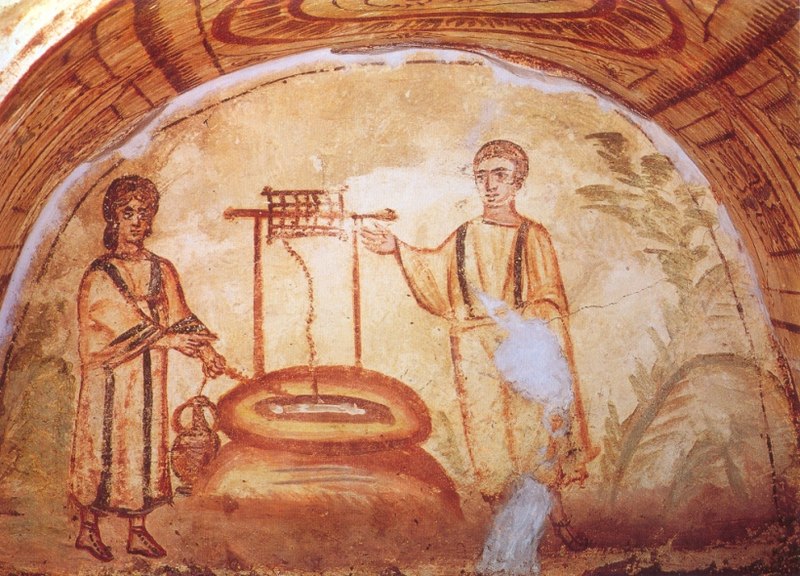
    Jesus and the Samaritan Woman at the Well, ~350 AD in the catacombs beneath Rome. Note that many scholars believe this is a closer representation of Christ to how Jews commonly looked in his time, clean-shaven and short-haired. But, we must of course reconcile that with the image found on the Shroud of Turin.

    He tells her to get her husband. Certainly a moment of soul-searching for her, she decides to speak the truth and tell him about her unmarried state. Without scorn or harsh judgment, Jesus affirms her statement and details her life of sin to that point. Our lesson here is twofold: we must recognize and atone for our sins in order to begin a correct relationship with God, and God demands truth in our relationship. Because she meets him in truth, the remainder of their conversation is startling in its revelation.

    Jesus proclaims to her, the outcast and sinner who is thirsty for Him and honest with Him:

    “But the hour is coming, and is now here,
    when true worshipers will worship the Father in Spirit and truth;
    and indeed the Father seeks such people to worship him.
    God is Spirit, and those who worship him
    must worship in Spirit and truth.”

    Worshipping in Spirit and truth. This is what the Father thirsts for because he “is Spirit” and we meet him “in Spirit and truth.” It is the activity of our souls, not the activity of our bodies in a certain place (like the mountain or Jerusalem). It is the work of intent and heart, not of bodies and outward ritual.

    Jesus reiterates this point when his disciples ask him if he wants to eat and he responds, “I have food to eat of which you do not know. … My food is to do the will of the one who sent me and to finish his work.” To finish his work! The work of Creation started by God will be finished, refined in the fire of the sacrifice, to purify humanity and make them finally ready to unite with God on the spiritual level for which he always intended.

    But before this exchange with the disciples, he makes the most shocking statement in private to the Samaritan woman, acknowledging, “I am he [the Messiah], the one speaking with you.” How can we reconcile this revelation of his identity when he spends much of the gospels asking people not to talk about him as the Messiah and not fully proclaiming it until the time just before his Passion in Jerusalem? How else except to understand this encounter as the prototype for all relationships with God: when we meet him personally, in truth, honestly thirsting for him, then he will share with us all of his glory and revelation. She is the archetype of the sinner who converts in honesty, is baptized in water of the Spirit, and enjoys an honest and blessed existence close to God. 

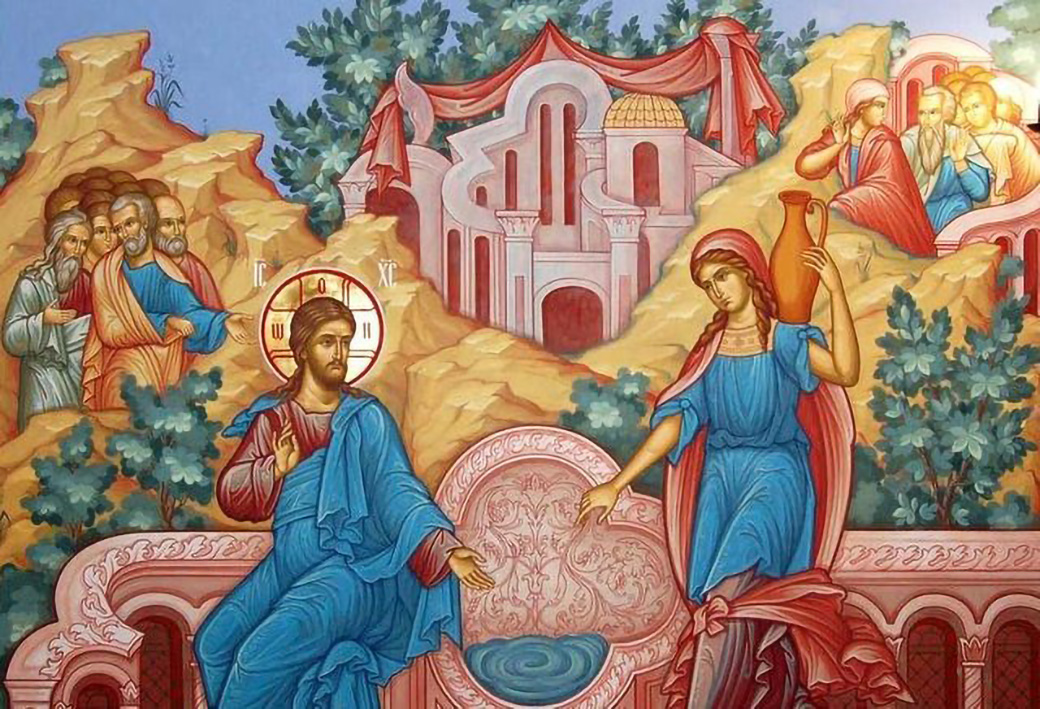
    Jesus and the Samaritan Woman at the Well, 19th century Russian icon, author unknown | Creative Commons. In this classic icon representation of the gospel scene, we see the scope of the story, from Jesus’s reference to the water in the well (which has taken on a cruciform appearance with his anointing presence) to the disciples backed by mountains (signifying enlightenment and spiritual matters) and the townspeople moving from the town to the mountain.

    There is so much to say here: how the townspeople experience this conversion themselves (“We no longer believe because of your word; for we have heard for ourselves, and we know that this is truly the savior of the world.”), how the well is Jacob’s well and Christ is the Anointed One, greater than the prior prophets and figures in the scriptures and instilling a new meaning on water and the well, etc. But, I’ve gone on long enough. 

    One last thing to mention that brings us back to St. Paul’s words in the second reading, “the love of God has been poured out into our hearts through the Holy Spirit.” The living water that Christ brings to the Samaritan woman at the well is the very same “love of God” St. Paul writes about. That’s why Paul speaks of it as being “poured out.”

    Corbon gives us a lovely way to connect water with the love of God:

    In the communion of the Blessed Trinity … we find life in its eternal outpouring; the river of life, which John contemplates at the heart of history, is an energy of love at work before the world was. … Yes, the mysterious river of divine communion is an outpouring of love among the Three, and in it eternal life consists. Each person is gift and acceptance of gift. … The river is love, but a love that does not arise in the human heart. The river is life, but a life that does not flow from the human heart. That is because this river, this energy, is wholly other; it is the self-opening of our thrice-holy God.

    This is the theology of the Trinity: not just three Persons contained in one God, but three Persons endlessly pouring out their love among one another. Here is the river of life, the river of love, the wellspring of worship: it is located in the “self-opening of our thrice-holy God.” That is why Christ experienced the Passion, death, and Resurrection. He shared with us this self-sacrificing quality of the Trinity; more than shared, he poured upon all of history the river of love that is the fundamental action of the Trinity. THIS is his living water, of which he tells the Samaritan woman, “If you knew the gift of God …”

    If you knew the gift, indeed!

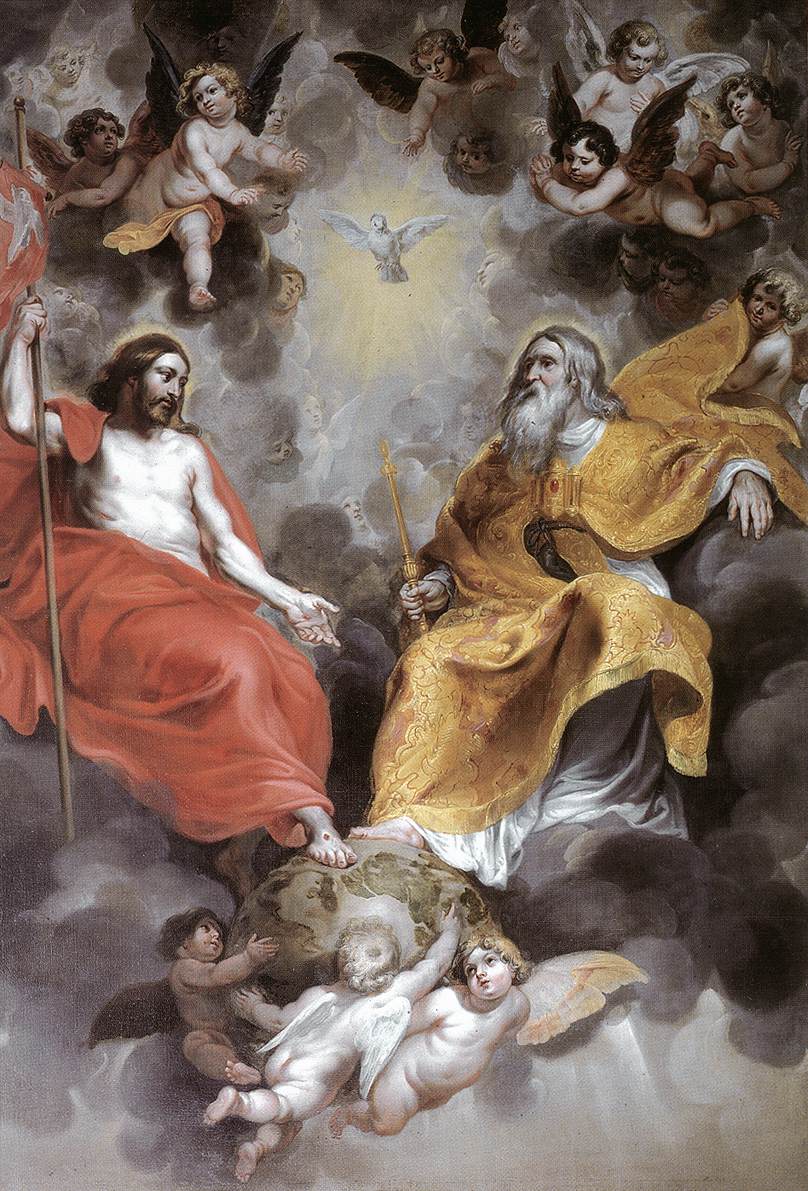
    Holy Trinity (1620), Hendrick van Balen | Wikimedia Commons. I greatly appreciate the efforts to which van Balen goes to show the loving gazes shared between the three Persons of the Trinity as well as Christ’s crucified foot resting on the world with his Father’s.
  • Rejoice for the Pardon of the Prodigal

    Rejoice for the Pardon of the Prodigal

    Saturday in the Second Week of Lent: Micah 7:14-15, 18-20, Luke 15:1-3, 11-32.

    Today we read one of Jesus’s most famous parables, the Parable of the Prodigal Son. There is so much to say about it. The broad strokes: it displays the unflagging love of the father (that is, God the Father) and our ability to return to Him like the prodigal son, no matter how grievous our sins. In this reflection, I’d like to take a deep dive into a few other aspects, especially the type of love the father provides. 

    We might not quite comprehend just how insulting the younger son is when he demands his inheritance. It would have shocked the Jewish audience to hear that the younger son demands a portion of the inheritance (the eldest son has first dibs and the younger is expected to work). When we look at the original Greek, we see that Jesus actually presents a deeper meaning here. When the son says, “Father, give me the share of your estate that should come to me,” the word Luke chooses to best report what Jesus uses for “estate” is οὐσίας (ousias), which means being, meaning, or essence. The son is asking for his inheritance, yes, but more literally the essence of the father.

    The prophets have a long tradition of referring to the inheritance of the nation of Israel (when they live by God’s precepts) as God’s grace and more specifically the nation’s glory and lands. Thus, it makes sense that the listeners to Jesus’s parable would understand an inheritance to have a double meaning of property/estate as well as the grace or essence of the father.

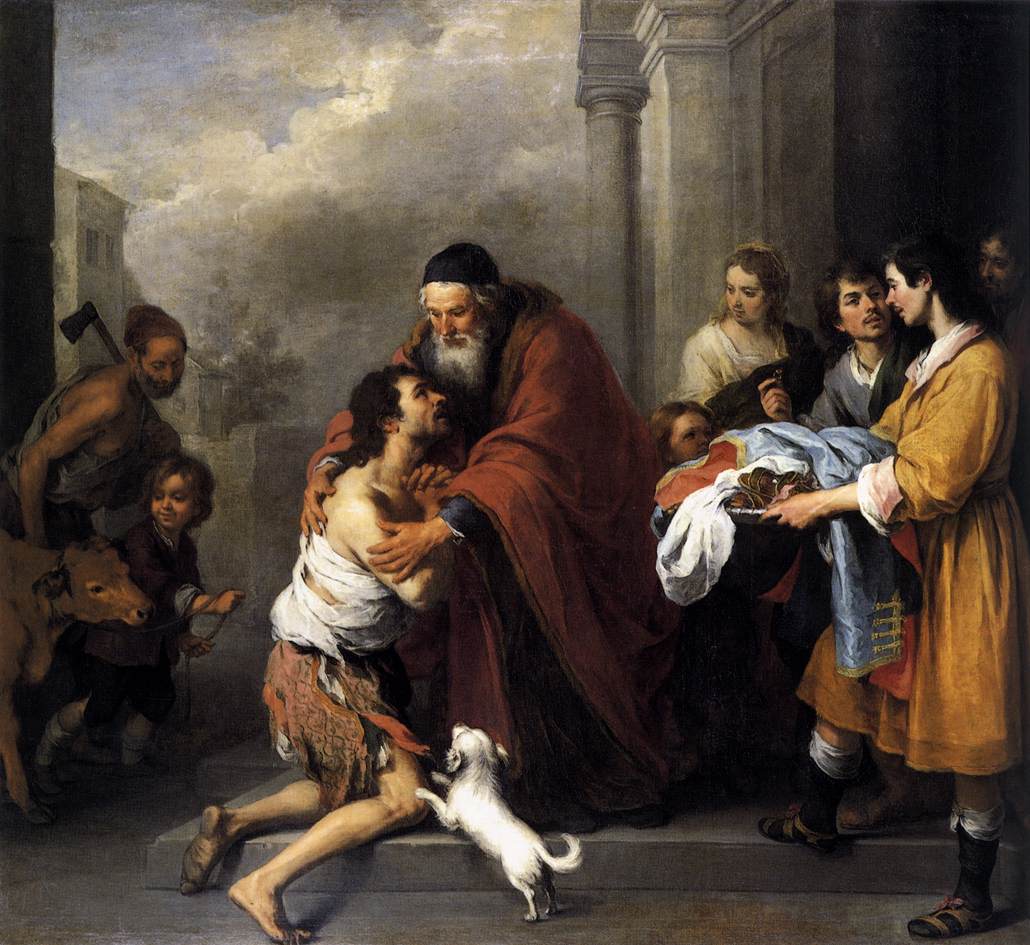
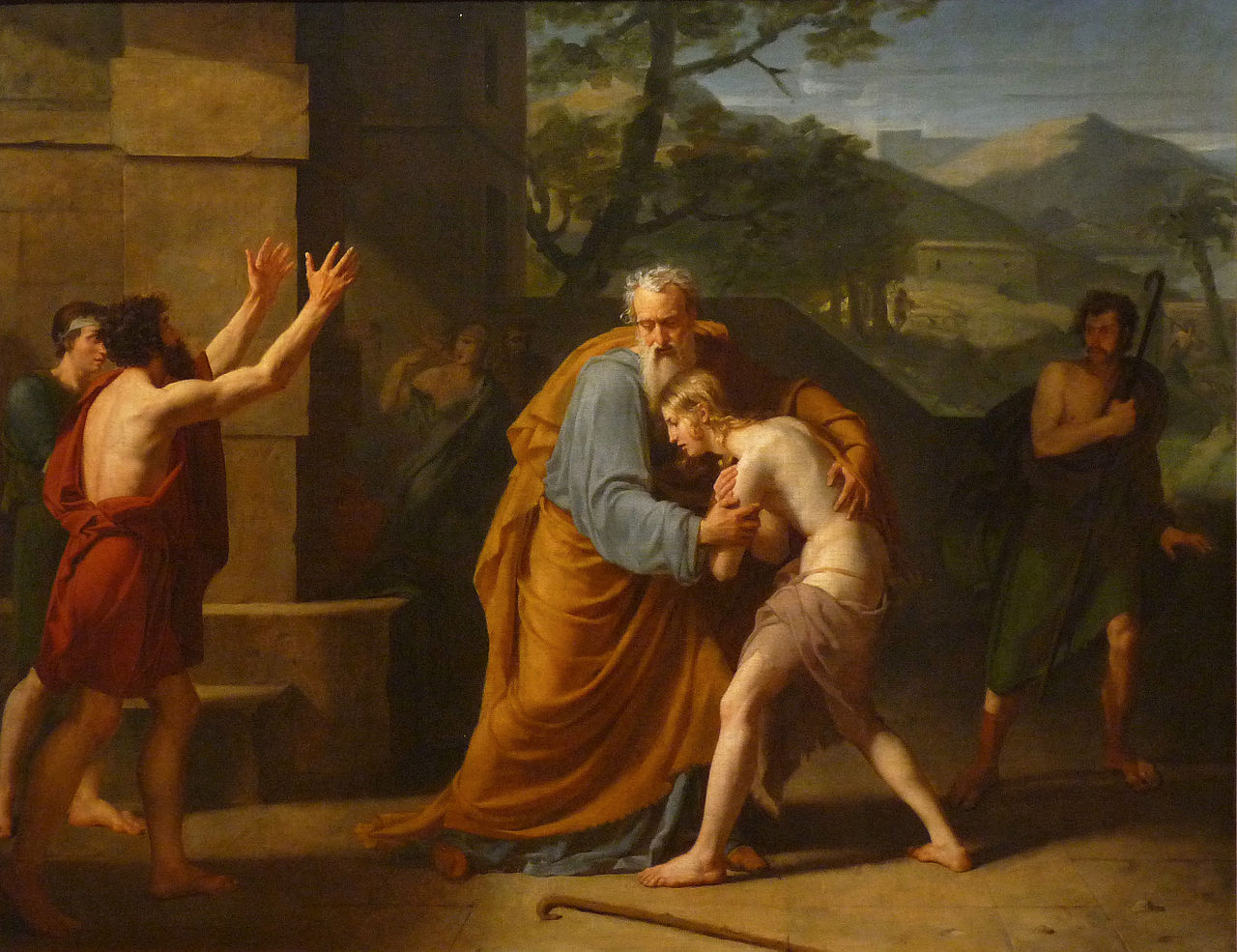
    Return of the Prodigal Son (1667-1670), Bartolome Esteban Murillo | Creative Commons, WikiArt.org.

    But Jesus speaks of the Kingdom of God throughout his ministry in a new, eschatological way. That is, inheritance means everlasting life with God in Heaven (not just glory and land); and perhaps even a share in the Kingdom here in this life, albeit an imperfect one. The next sentence is a lovely way for Jesus to expand the meaning of the “essence of the inheritance” in the new Christology. I like to think of him saying it slowly and deliberately to his audience, making strong eye contact: “So he divided his property between them.” The reason this is so important is that he switches from ousias when describing the property/inheritance and uses βίον (bion, the singular form of bios), which means life. So, he gave them his life in response for the son’s demand for his portion of the inheritance. How deeply prophetic and significant to put this into the parable!

    Today, we know how God gave his essence, his life, in the form of his only-begotten Son on the cross. This inheritance of which Christ speaks is love.

    Knowing the type of inheritance given to the younger son, it is all the more shocking to hear that he used the essence of God given to him on a “life of dissipation” (i.e., prostitution, drunkenness, debauchery). He falls so far that he tends the Jew’s forbidden animal to eat, the pig. This places him in the lowest levels of uncleanliness for a Jewish culture obsessive about cleanliness in body and spirit.

    Then we get to the younger son’s great conversion, which begins with a simple assessment of his own pathetic situation, as it does for most of us. His initial motivation is selfish, simply to get fed and earn some money, because selfishness is all he has and all he knows. But contemplation of his father, enkindled by the never-dormant ember of the essence of the Father given to him, broadens and deepens the return he plans. He commits to say, “Father, I have sinned against heaven and against you. I no longer deserve to be called your son; treat me as you would treat one of your hired workers.” The selfishness, in its destitution, finds something outside of itself to cling to: the Father, in front of whom the debasement of his sins is clear and undeniable.

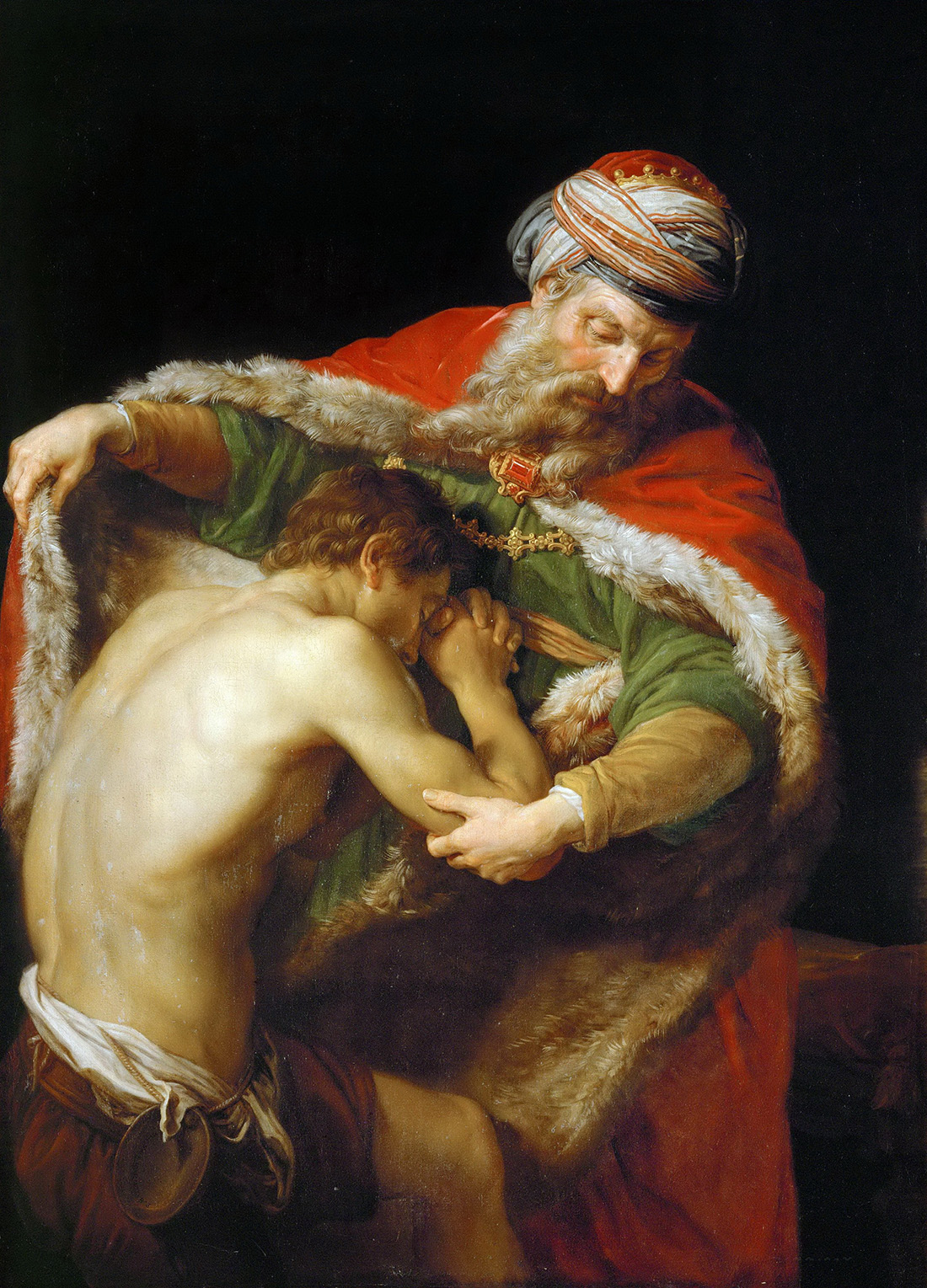
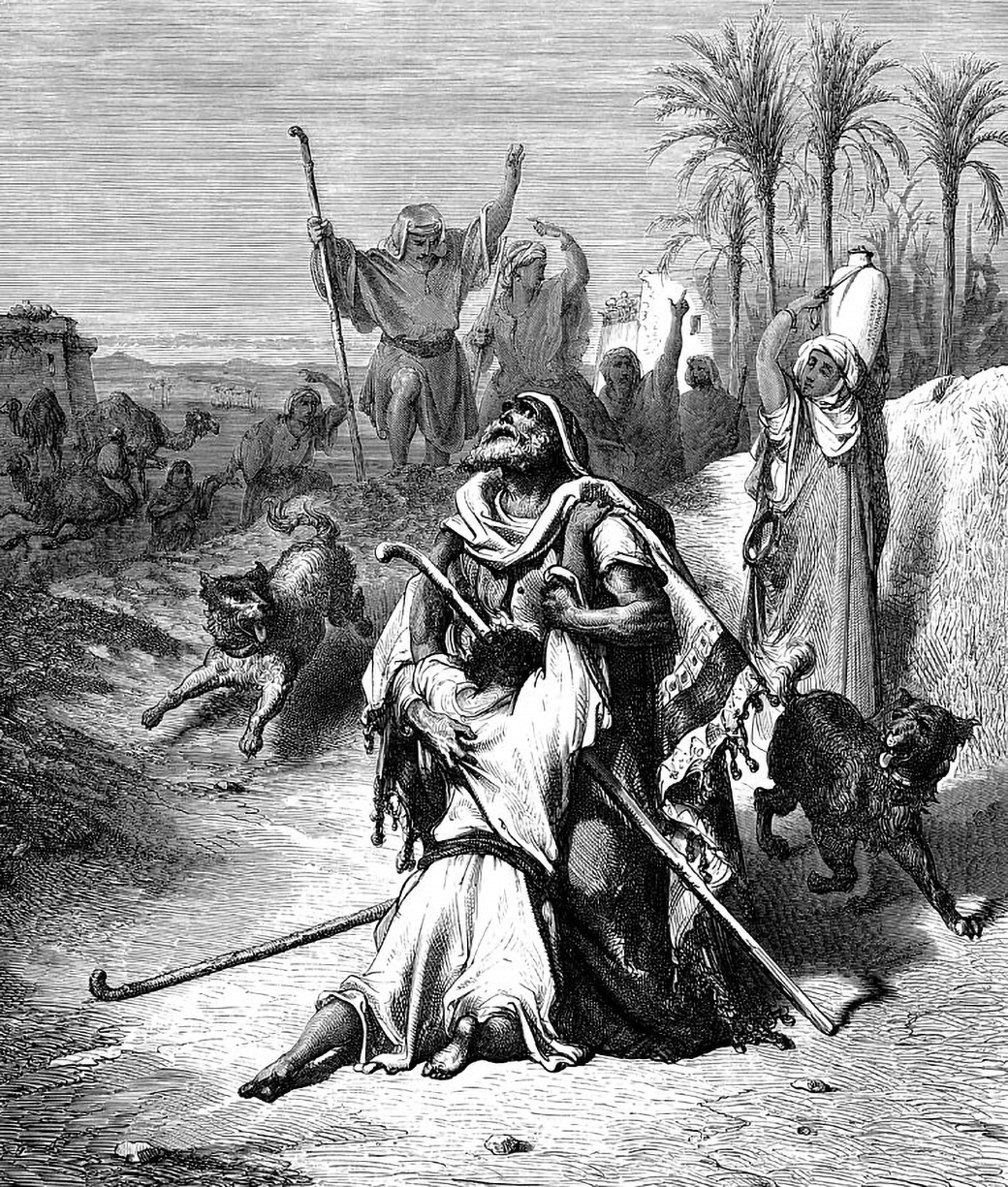
    The Prodigal Son In The Arms Of His Father (c. 1870-1883), Gustave Dore | Creative Commons, WikiArt.org

    At this point, we can turn to our Angelic Doctor of the Church, St. Thomas Aquinas, who wrote extensively about the going from God (exitus) and returning to Him (reditus). He and other theologians understand God as the First Cause of all things and the End to which all things come. He writes early in his scholastic career: “[Sacred] doctrine will consider things in so far as they leave God at the start, and in so far as they are brought back to Him in the end. Thus, we understand divine things first as going forth [exitum] and, second, as returning to [reditum] the End.”¹
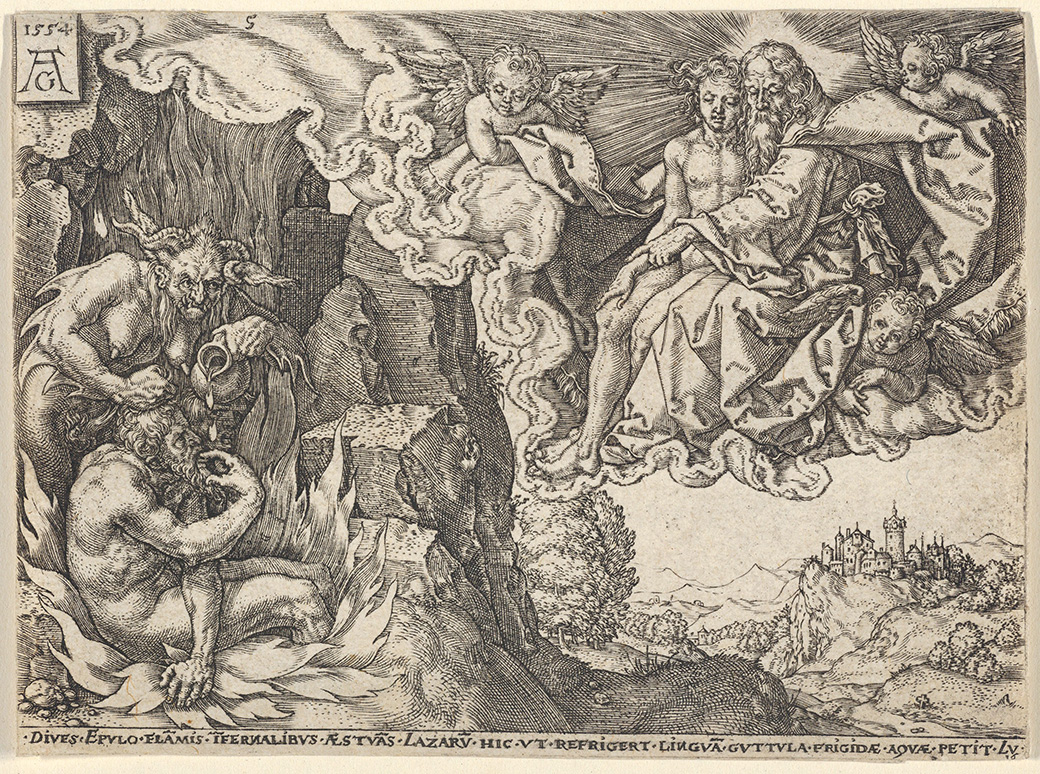
    The Parable of the Prodigal Son concisely portrays this same understanding of our existence as ordered by God; the younger son goes forth from God and returns to him. But, let’s order things precisely: first, the Father gives the son his essence to enable him to leave. This could be seen as the breath of God in our creation as well as every gift and grace of God given freely to us, such as Baptism.

    What happens after the gifts are bestowed on us? This is another great generosity of our Lord: we have the free will to do with these gifts as we please. God tries throughout our history to instruct us on good uses of our free will. He gives us endless opportunities to use his inheritance for good works, He works to purify us, and has even poured out the love of the Trinity in the liturgy as a way for us to have true communion with Him. What is our personal story of reditus?

    I believe that this is what defines us as individuals: how we find our way back to God time and again, the decisions we make and the people we interact with on our way to God as the Truth and the End. It’s not the clothes we wear, the haircuts we have, the house we live in, the careers we strive for — in short, all of the things our secular society says define us. No the “person” who is hopefully granted everlasting life in the Kingdom is the being who worked with the essence of God that was bestowed on him or her; all the rest will be stripped away in death, for it is our spirit, our soul, that rests in God.

    The Return of the Prodigal Son (1773), Pompeo Batoni | Wikimedia Commons. I love this painting of the father holding his returning son. It shows not just the contrite, true conversion of the son but the colorful richness of God’s love in the figure of the father.

    Let’s turn to the elder son and see ourselves in him. Whenever we feel like we’re on the right track, we’re honoring God and doing his will in the world, we may slip into the persona of the elder son, pathetic creatures that we are.

    Upon hearing that his father is throwing a feast to welcome home his prodigal son, the elder son becomes angry, refuses to enter the house, and is overcome with righteous indignation. In short, he is undergoing his own exitus, a leaving of God. What we see in him is the lesson Jesus has for the Pharisees and scribes who grumble and say a few verses before today’s reading, “This fellow welcomes sinners and eats with them.”

    Like the Pharisees, the elder son seems to have done everything correctly, or at least he’s done externally what was expected of him as a good son. Yet in his refusal to enter the house (and here we can infer the temple, the house of God) and in his righteous indignation, we see that he never converted his heart to God. He has wasted his inheritance as much as the younger son, wasting it on his own sense of righteousness and fastidiousness about the law without digging deeper and truly letting the essence of the Father inhabit him.

    The father immediately wants the elder son to participate in the welcome feast as well. The father seems to not sympathize with the elder son’s jealousy. I think this is a significant point. If we live with the Father and do his will, we are filled with the same love that he has. Our hearts are in union with his. We should want the best for everyone and not be thinking of others as competitors to ourselves, for the love of God is not in finite supply — there is plenty for all.

    The father’s last gentle words of comfort make me want to hide my head in shame for the elder son: “Son, you are always with me, and all that is mine is yours.” You can almost hear a note of puzzlement in the voice of the father at this reminder, as if the son should be aware of this if he has been a good son all these years. And it is here, in these tests of our faith and fidelity of heart, that God finds out if we are good inheritors and produce good fruits (to echo the language from yesterday’s reflection, Tend to the Good Fruit of the Vineyard).

    The Return of the Prodigal Son (Le Retour du fils prodigue), 1806, Michel Martin Drolling | Wikimedia Commons. Drolling gives us a painting of the parable that displays the elder son on the left raising his hands in protest, clearly out of sync with the embrace of the father and, as such, out of place in a world ruled by love.

    It is interesting to note that the Greek verb used when the father “pleaded” with his elder son to stay is παρεκάλει (parekalai), which is the same root as the name given to the Holy Spirit: παράκλητος (parakletos), or paraclete. “Paraclete” carries a complex meaning for the apostles, as the Holy Spirit advocates, witnesses, comforts, and intercedes. The father in our parable is acting with the Holy Spirit, and indeed, this is how God works within us here on earth.

    The Holy Spirit was promised by Jesus: “And I will ask the Father, and he will give you another advocate [Παράκλητον (Parakleton)] to help you and be with you forever— the Spirit of truth. The world cannot accept him, because it neither sees him nor knows him. But you know him, for he lives with you and will be in you” (Jn 14:16-17).

    We see St. Luke use this same verb, parekalai, three times in the Acts of the Apostles, and in a similar way. The first one is striking because it is attributed to St. Peter directly after the Holy Spirit descends at Pentecost and they leave the upper room speaking in tongues. Peter addresses the crowd that gathers with a long speech and then “he testified with many other arguments and exhorted [παρεκάλει (parekalai)] them, saying, ‘Save yourselves from this corrupt generation’” (Acts 2:40). Thereupon, three thousand were converted to Christianity that day. This is a clear indication that the author uses the word to mean the action of the Holy Spirit within us as we exhort, plead, encourage, implore others to convert to God. It is another gift we barely realize that we have from God, the gift of the Holy Spirit active within us as we exhort and encourage others.

    The parable ends with a final window into the vast love of the Father: “now we must celebrate and rejoice, because your brother was dead and has come to life again; he was lost and has been found.” I love passages from scripture that remind us that God rejoices, that he wants to be delighted. And here we see that he fundamentally delights in each of us on our path of reditus.

    Our return to Him is the most pleasing thing we can do. And once we are with him, we need not desire more personal doting, because we can join with him in welcoming others as they find their ways back to him, too.


    ¹ The translation of the Latin here is partially my own. The original text: “consideratio hujus doctrinae erit de rebus secundum quod exeunt a Deo ut a principio, et secundum quod referuntur in ipsum ut in finem. Unde in prima parte déterminât de rebus divinis secundum exitum a principio; in secunda secundum reditum in finem” (I Sent., 2 dist., divisio textus).

  • Tend to the Good Fruit of the Vineyard

    Tend to the Good Fruit of the Vineyard

    Friday in the Second Week of Lent: Genesis 37:3-4, 12-13a, 17B-28a, Matthew: 21:33-43, 45-46.

    Today’s readings are riches in storytelling and spiritual importance. I don’t mean to give short shrift to Joseph and his jealous brothers in Genesis, but I must explore it rather briefly to leave space to plumb the depths of the Parable of the Wicked Tenants in the gospel reading from St. Matthew.

    These two stories are, of course, quite related. Joseph is a very early figure in the Bible who prefigures Jesus. He is the favored son, given visions and special graces from God the Father. He is persecuted by those closest to him and finds adoption by an alien people. Finally, he never stops loving even those who sold him into slavery and ends up saving them during a time of famine and establishing a new home for them.

    Joseph, a favorite Son, Sold into Slavery (from an illustrated French manuscript, known as the Crusader Bible or the Morgan Bible, c.1244-1254) | Creative Commons, courtesy Pierpont Morgan Library. MS M.638.

    What strikes me about today’s reading is what becomes of us when we allow ourselves to be consumed by jealousy and are taken over to sin. Listen to the brothers: “Here comes that master dreamer! Come on, let us kill him and throw him into one of the cisterns here; we could say that a wild beast devoured him. … just throw him into that cistern there in the desert; but do not kill him outright. … What is to be gained by killing our brother and concealing his blood? Rather, let us sell him to these Ishmaelites.” This spiral of evil conspiracy starts with the seed of jealousy, planted in their hearts by the devil. It is not something they push away with prayer and trust in God. Instead, it festers and manifests by calling him names, degrading him. This enables them to see him as something other than fully human (much less their brother).

    Then we hear a sequence of plots and machinations. They have already given themselves over to sin and evil, and this sequence smacks of the guilty desperately trying to find a way not to be found out. We must recognize this tortured logic because we encounter it in ourselves in many ways. Whenever we find ourselves making certain calculations and rationalizations to avoid a certain end, it is a good time to sit up and examine what exactly we are doing. Are we living in the light or are we obscuring our actions because we’re heading down a path of darkness? This is not to say that all situations are easy and straightforward — indeed, many take careful thought and weighing of moral issues — but it is a good reminder in this Lenten season of what our more quiet soul-searching can do for us in a busy modern world.

    Jesus is all-too-aware of the plots and machinations of the chief priests and elders of the temple who want to arrest him. They, too, are already guilty of having sinned in their hearts and turned away from the light. For them, he presents the Parable of the Wicked Tenants.

    Central to the parable is the setting: a vineyard. His listeners would immediately identify the vineyard with Israel since one of the more famous and eloquent passages in Isaiah is “The Song of the Vineyard”:

    Let me sing for my beloved
        my love-song concerning his vineyard:
    My beloved had a vineyard
        on a very fertile hill.
    He dug it and cleared it of stones,
        and planted it with choice vines;
    he built a watchtower in the midst of it,
        and hewed out a wine vat in it;
    he expected it to yield grapes,
        but it yielded wild grapes. …
    For the vineyard of the Lord of hosts
        is the house of Israel,
    and the people of Judah
        are his pleasant planting;   (Is 5:1-2, 7a).

    Isaiah’s verses question why wild grapes have grown rather than choice grapes, and Jesus answers: it is the evil in the tenants who were entrusted to care for the vineyard.

    Against the important backdrop of a vineyard, Jesus weaves a parable that presents the scope of salvation history. First, we see creation: the landlord planted a vineyard, put a hedge, dug a wine press, and built a tower. Next, the election of the nation of Israel as a hope for the world: “Then he leased it to tenants and went on a journey.” Then, we see the long line of prophets who were sent to the people as well as their brutal rejection: “the tenants seized the servants and one they beat, another they killed, and a third they stoned.” Next, we see the time of Christ, when the son comes to “obtain the produce,” but he, too, is killed. Finally, we are given the question about the final judgment: “What will the owner of the vineyard do to those tenants when he comes?” Because it presents the history of God’s work of salvation in a concise allegory, this parable should be precious to us.

    The Wicked Husbandmen (1864), Artist: After Sir John Everett Millais, Engraver: Dalziel Brothers | Creative Commons, courtesy The Metropolitan Museum of Art.

    In his masterwork volumes on the gospel of St. Matthew, Fire of Mercy, Heart of the Word, Erasmo Leiva-Merikakis points out how central to the story (both the allegory and our reality) is the absence of the landowner. God’s physical absence is what makes the life of faith so important and what makes his return so anticipated. In Volume III, Leiva-Merikakis states, “The master’s physical absence is a kind of mystical vacuum that generates a tremendous moral crisis exposing the innermost heart of the tenants, revealing it in all its perversity” (468).

    Why, in fact, does God leave us to begin with? Leiva-Merikakis points out that the Hassidic answer “is that God must be absent for man’s sake, that is, if man is ever to grow fully into his divine vocation of becoming the eyes and hands and Heart of God in this word, the very dwelling place of God’s glory and truth” (468).

    God’s absence presents us with the choice: either trust in him, his wishes, and his eventual return, or choose to forget that he was ever here and act like it’s all in our hands to do what we want. Clearly, the wicked tenants in the parable, who Jesus points out are the chief priests and Pharisees, have chosen the second option. 

    But let’s not forget that God cares deeply about his beloved vineyard, the tenants, and the precious fruit he waits for it to bear. That’s why he sends his servants (the prophets) time and again, as well as his son. When Jesus asks the priests and elders what the landlord will do to the tenants, they rightly answer, “He will put those wretched men to a wretched death and lease his vineyard to other tenants who will give him the produce at the proper times.”

    But God is not focused on the retribution for the wrongdoing. Instead, Jesus replies to their answer with the following from scripture: “The stone that the builders rejected has become the cornerstone; by the Lord has this been done, and it is wonderful in our eyes.” His Good News is that God’s work and presence in the world is restored. The “stone that the builders rejected” refers to the new tenants who will better care for the vineyard. Who exactly are they? 

    The Heir Cast Out of the Vineyard (1855-1856), William Cave Thomas | Creative Commons, courtesy The World of Glass/ArtUK.

    The tenants (and the rejected cornerstone) begin with Christ. He is rejected by his people, but becomes the cornerstone of a new reality of salvation alive in the world. And it is wonderful in our eyes. This new reality of salvation happens in the presence, not the absence, of the Spirit of Christ, alive in the world after the Resurrection. This makes us the new tenants in as much as we share Christ with the world. In his high-priestly prayer at the Last Supper, Jesus affirms this aspect of the Church: “The glory that you have given me I have given them, so that they may be one, as we are one, I in them and you in me, that they may become completely one, so that the world may know that you have sent me and have loved them even as you have loved me” (Jn 17:22-23).

    Leiva-Merikakis elaborates: “When people look for God in a visible form, they will see only each other. When they look for Christ, they will see only Christians. By giving us his own animating and sanctifying Spirit, Christ has entrusted us with everything that is his. No, ‘entrusted’ is not to say enough. Through his death and Resurrection, he has implanted in us a wholly new life, with all the same energies and principles of life that give thrust to his own life” (469).

    If we are in part the new tenants, are we (or our deeds) not also the fruit that the landlord will find? This is the question of all of salvation history: what kind of fruit will the landlord find? God has given us the ability to tend the vineyard through Christ’s Spirit active in our lives, but our deeds and charity, indeed all that we do here on earth are our fruits.

    Can we wisely accept the Spirit of Christ in our lives as a landlord who is present? Or will we continue to act as the Israelites did and conform to the law externally while having no internal relationship to the truth? Each of us this Lent has the opportunity to re-dedicate ourselves to tending the vineyard with Christ and bringing forth the fruits pleasing to the Lord.

    Red Vineyards at Arles (1888), Vincent van Gogh | Creative Commons, WikiArt.org.
  • Beware the Enchantments of the World

    Beware the Enchantments of the World

    Thursday in the Second Week of Lent: Jeremiah 17:5-10, Luke 16:19-31.

    Today, we hear the Parable of the Rich Man and Lazarus from the gospel of St. Luke. On its surface, this parable seems to warn us of too much enjoyment in this world because we will pay for it later (in Hell). As we dig into the parable, however, we see a deeper problem with the rich man. The connection to the reading from Jeremiah becomes more apparent: the enchantments of this world distract us from God, who is, in the meantime, giving us plenty of opportunities for redemption by our actions.

    The opening of Jesus’s parable almost sounds like a fairy tale: “There was a rich man who dressed in purple garments and fine linen and dined sumptuously each day.” This opening may tempt us to read it as a simple morality play. But the Truth spoken by the Word of God is not just a self-improvement class. It draws our spirit to dwell with Him, even if it does so via a warning.

    We must note how this passage opens: “Jesus said to the Pharisees…” Let’s back up a few verses to get the full context. “The Pharisees, who were lovers of money, heard all this [his last parable that “You cannot serve God and wealth”], and they ridiculed him. So he said to them, ‘You are those who justify yourselves in the sight of others; but God knows your hearts; for what is prized by human beings is an abomination in the sight of God’” (Lk 16:14-15). The parable of the rich man is specifically for them, and his criticisms of the Pharisees speak loudly in it.

    The Pharisee and the Publican (Le pharisien et le publicain), 1886-1894, James Tissot | Creative Commons, courtesy the Brooklyn Museum.

    So, what do we know about the rich man other than his expensive tastes and gluttony? We can glean that he did not seem to give alms of any sort to Lazarus, who would have been glad to have “scraps that fell” from his table. Just two days ago, we heard Jesus saying of the Pharisees: “For they preach but they do not practice. They tie up heavy burdens hard to carry and lay them on people’s shoulders, but they will not lift a finger to move them. All their works are performed to be seen.” (See the post Led by the Master for more on this aspect of the Pharisees.) In the rich man we see the same: he does “not lift a finger” to relieve Lazarus’s suffering.

    So this is no oversight from an otherwise kindly rich man in the parable. He displays his true colors when he finds himself in Hell. Unbelievably, he retains an arrogant sense of self-worth as being greater than Lazarus when he says, “Send Lazarus to dip the tip of his finger in water and cool my tongue.” Here the rich man is “in torment,” asking for pity, and he’s still treating Lazarus as a servant or slave! 

    Abraham explains that they are reaping their rewards based on their experiences and actions on earth, and that “a great chasm” separates them. And still the rich man asks, “send him to my father’s house” to warn his family to mend their ways, betraying his continued dismissal of Lazarus as a person with dignity. He sees Lazarus as a tool to be employed for his family’s benefit, arguing with Abraham, “if someone from the dead goes to them, they will repent.” His sense of superiority and belief that everyone (even Abraham!) should listen to him is astounding, and certainly a pointed example for the Pharisees who were listening.

    The Parable of the Rich Man and Lazarus (1677), Jan Steen | Wikimedia Commons. I particularly like the self-important, dismissive expression of the man holding the goblet in the foreground, which captures the failings of the rich man archetype. Note that the actual rich man from the parable, however, seems to be in the upper right corner, even more removed from humanity in his gluttony. Overall, I appreciate Jan Steen’s painting for focusing on the enchantments of the world, raising a glass to toast today’s enjoyments, oblivious to the judgment that is coming.

     For his part, Abraham at first replies with a certain pity for the rich man, saying, “My child, remember that you received what was good during your lifetime …” This turns eerily neutral after the rich man displays his unrepentant attitude: “They have Moses and the prophets. Let them listen to them.” And finally he utters some baleful words indeed at the end: “If they will not listen to Moses and the prophets, neither will they be persuaded if someone should rise from the dead.” This last proclamation can clearly be applied to Christ, who will rise from the dead, and those who refuse to listen are, of course, the Pharisees themselves.

    If we return to the verse that set the context for this parable, we can see how it illustrates Jesus’s point: “God knows your hearts; for what is prized by human beings is an abomination in the sight of God.” Money, gluttony, and other things “of the flesh” take the brunt of the blame, but let’s not overlook that Christ is talking about God knowing our hearts. Love of wealth and being noticed are the “bad fruit” from a diseased tree — “every good tree bears good fruit, but the bad tree bears bad fruit” (Mt 7:15). The tree itself is what concerns God — He wants us to grow strong and beautiful and bear good fruit (i.e., love one another, good deeds), which require nourishment from Him and faithfulness to his precepts. 

    The Rich Man in Hell, Seeing Lazarus Embraced by Abraham, from The Parable of the Rich Man and Lazarus (1554), Heinrich Aldegrever | Creative Commons, courtesy the Metropolitan Museum of Art.

    This is where the first reading from Jeremiah is helpful. He employs this same imagery of a tree (bush) that is either healthy or diseased, depending on a person’s attachment to God or to the world. He says that he “who seeks his strength in flesh … is like a barren bush in the desert … [that] stands in a lava waste, a salt and empty earth.” Conversely, “the man who trusts in the LORD … is like a tree planted beside the waters that stretches out its roots to the stream … In the year of drought it shows no distress, but still bears fruit.” I love the image of a person strong in the Lord being a plant growing by running waters (also used in the first Psalm), probably because it simplifies life: all you need to make you thrive is the Word of God. What a refreshing thought when compared to all of the other “things” we think we need to do and accumulate in this life. Applying Jeremiah’s imagery to the gospel reading, the Pharisees are the “barren bush in the desert,” removed from the life-giving spring because they reflect everything back on themselves. While they seem rich (in this life), they will find that they are barren spiritually and destitute in the next life. 

    But, look! God gives us endless chances to return to the stream of living water. What was Lazarus in life but a chance for the rich man to turn his heart to God and practice charity? And what was Lazarus’s suffering but his cross to bear for the salvation of another (even if that other person did not accept the salvation offered to him)? This is God’s prerogative as our Master and Creator. The Word tells us through Jeremiah at the end of today’s reading:

    I, the LORD, alone probe the mind
    and test the heart,
    To reward everyone according to his ways,
    according to the merit of his deeds. 

    This is the work of God to bring us back to unity with Him: probing our minds, testing our hearts, and ultimately rewarding us according to our ways and deeds. As fruit shows us the type of tree, our deeds reveal the heart of the person. Charity comes from a good heart that finds its refreshment in the Lord. Selfishness comes from a heart focused on this world’s enchantments and the self alone. This is why we Catholics insist that our justification (i.e., place in heaven) comes from faith and works, not just faith alone. This teaching is found throughout scripture, no more clearly than today’s readings.

    At the risk of slightly repeating myself, let’s tackle one of the common complaints humans have voiced throughout our history, “why is there suffering in the world?” The Parable of the Rich Man is a great reply to this. For the rich man, God is probing his heart and testing him to bring him back into the sheepfold. For Lazarus, he must remember that he will be comforted in heaven if he bears his suffering with dignity and a focus on God. What’s more, all of us must remember that God works in ways beyond our immediate knowledge to bring us closer to him. Lazarus is God’s way to reach out to the rich man’s heart. Which of us can truly bemoan the honor of being used by God for a holy purpose, even if it involves our suffering? Was this not the exact example Christ set for us? 

    The Rich Man and Lazarus (The Parables of Our Lord and Saviour Jesus Christ), 1864, Sir John Everett Millais | Creative Commons, courtesy The Metropolitan Museum of Art. I love this more tender artistic look at Lazarus, who is often sidelined in the story.

    In this vein, let’s finish this reflection with the words of St. Therèse of Lisieux. One of only three female doctors of the Church, St. Therèse led an incredibly short life, dying at the age of 24 from tuberculosis. She suffered much (even as a child she suffered from mysterious illnesses that left her bed-bound) but bore it with incredible kindness towards others. “As Jesus had made me realize that the Cross was the means by which He would give me souls,” she said, “the more often it came my way, the more suffering attracted me.” What a fantastic attitude towards suffering!

    Since suffering was “attractive” to her as a way of doing God’s will, she saw small sacrifices less as burdens and more like acts of love. She writes, “Miss no single opportunity of making some small sacrifice, here by a smiling look, there by a kindly word; always doing the smallest right and doing it all for love.”

    And, finally, almost as a nod to Lazarus in today’s reading, she writes, “Our Lord’s love shines out just as much through a little soul who yields completely to His Grace as it does through the greatest.” Talk about a bush growing next to life-giving waters! She is a true inspiration.

    Thank you, St. Therèse for giving us such a positive way to understand turning our hearts to God and making suffering a joy to bear for the Lord.


  • The Chalice of Persecution and the Ransom for Many

    The Chalice of Persecution and the Ransom for Many

    Wednesday in the Second Week of Lent: Jeremiah 18:18-20, Matthew 20:17-28.

    Today’s readings display two things clearly: how clueless the chosen people can be, and (somewhat related) the inevitable persecution of those who proclaim the Word of God. 

    Jeremiah was a prophet 100 years after Isaiah, and the major power threatening Israel and Judah is no longer Assyria but Babylon. The unfaithfulness of the Jews, however, is a common thread, and we find them once again worshipping other gods and not being faithful to the God of Abraham. Jeremiah is a bold prophet, not afraid to proclaim the difficult words God gives him. The Word, which will become flesh in Jesus, is shown to be unstoppable, even though Jeremiah gets beaten, put in stocks, and later thrown in a pit to die.

    Jesus, too, will pay the price for bringing the Truth to humanity.

    The section from Jeremiah we hear today happens in the midst of a classic metaphor where we are the clay and the Lord is the potter. Given my upbringing with the dulcet folk tunes played in our 1980s church, I always associated this verse with a gentle potter shaping us in love. And certainly this would be the case in the Book of Jeremiah if the Jews had obeyed God’s commandments, but that’s not the case.

    It’s much more neutral. God’s message is that, as the potter, He can do as he pleases with the malleable clay. He can mold a nice vessel with the nation of Israel or utterly destroy what he’s building and start over. He ends his analogy by commanding Jeremiah to tell the people, “Look, I am a potter shaping evil against you and devising a plan against you. Turn now, all of you from your evil way, and amend your ways and your doings” (Jer 18:11b).

    (Just imagine the tune “Abba, Father” with dark and haunting chords.)

    Jeremiah on the Ruins of Jerusalem (Jeremia op de puinhopen van Jeruzalem), 1844, Horace Vernet | Wikimedia Commons.

    The Jews respond to Jeremiah’s message: “But they say, ‘It is no use! We will follow our own plans, and each of us will act according to the stubbornness of our evil will’” (Jer 18:12). So, God says he will make their land a horror, “a thing to be hissed at forever.” Then we get to today’s passage.

    I’m going into this detail because, on one hand, Jeremiah’s words in the selected text today seem very much like a mirror of Christ’s trials to come. The people say, “let us destroy him by his own tongue; let us carefully note his every word.” This sounds like the plots of the Pharisees and scribes in trapping Jesus in his own teachings.
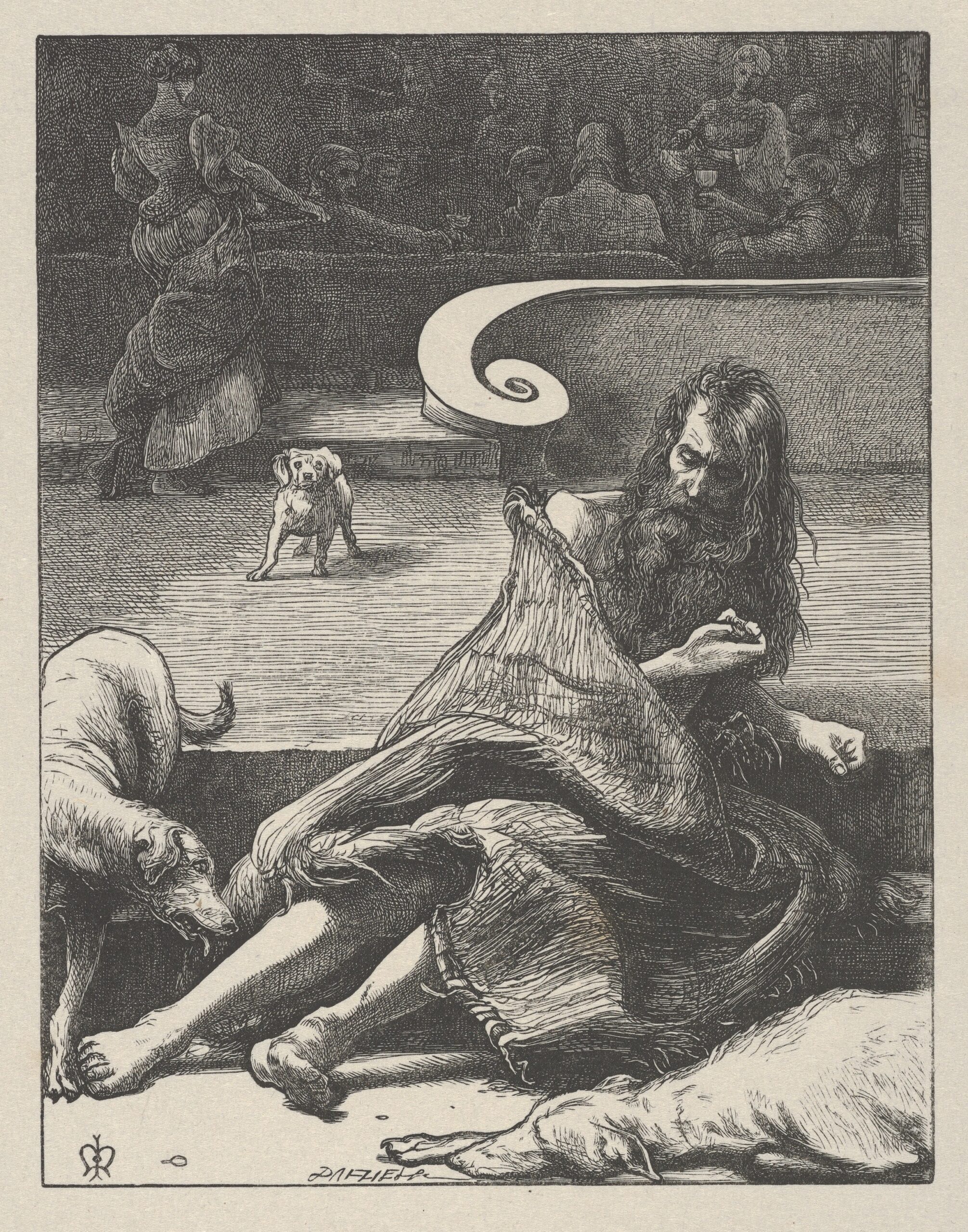
    Even more in the final verses: “Must good be repaid with evil that they should dig a pit to take my life? Remember that I stood before you to speak in their behalf, to turn away your wrath from them.” We could imagine Christ uttering similar words in the Garden of Gethsemane. In today’s passage from Jeremiah, we see the Word of God enduring similar treatment that He will endure as Christ 600 years later.

    But the parallels end as we look at the full context of Jeremiah. In fact, there is a stark difference in the way Jesus accepts his Cross and offers his suffering and Passion to the Father “as a ransom for many” (more on that below), and the way Jeremiah reacts with righteous indignation. Here is the frightening verse immediately following the ones from today’s reading: “Therefore give their children over to famine; hurl them out to the power of the sword, let their wives become childless and widowed. May their men meet death by pestilence, their youths be slain by the sword in battle” (Jer 18:21). Oy! Jeremiah, what are you wishing upon your fellow people?? Sounds like straight-up revenge talk to me.
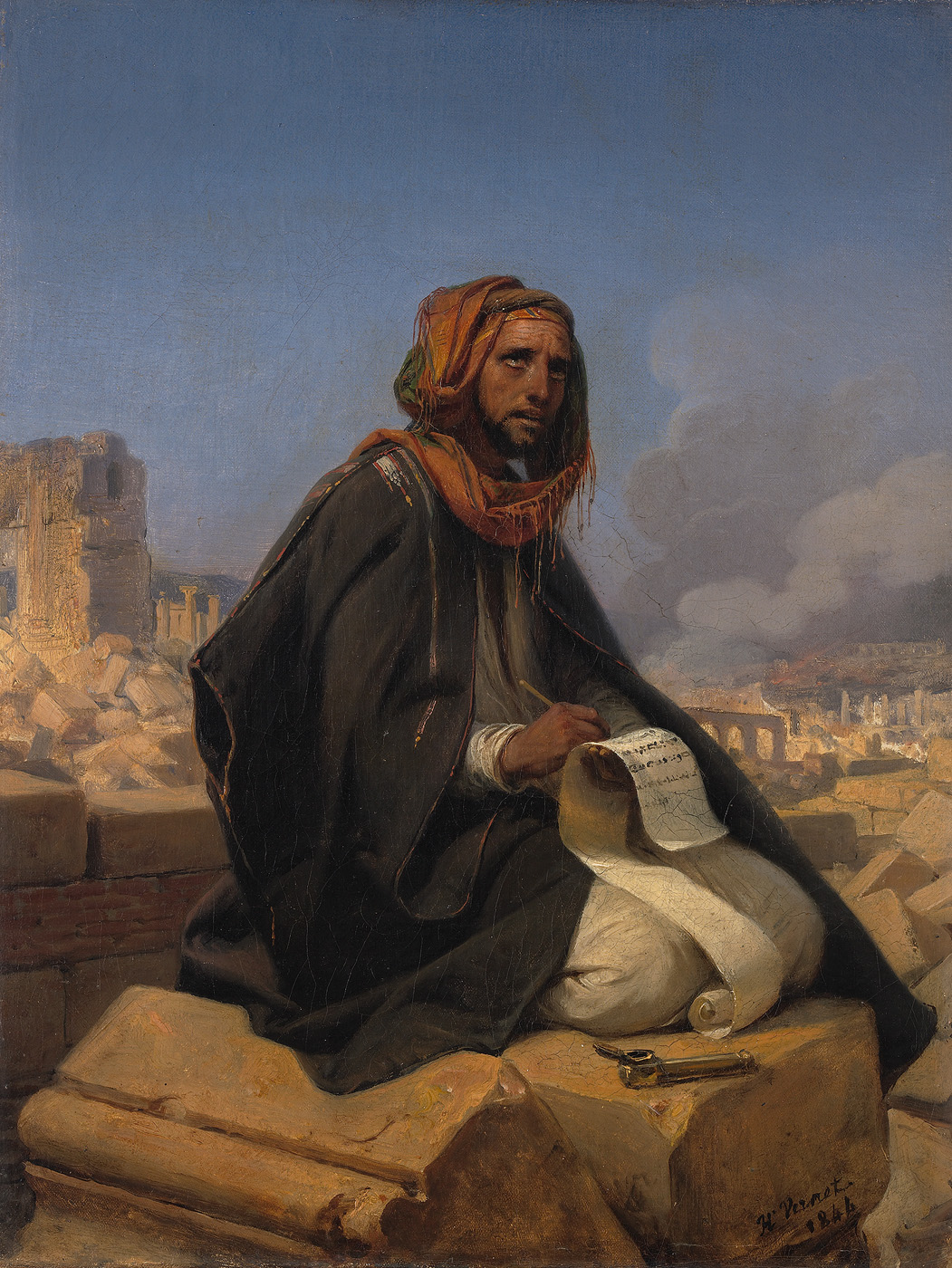
    Yes, they may deserve it, but where’s the begging for mercy such as Abraham did on behalf of Sodom or Moses did time and again for the unfaithful Israelites in the desert? (It’s worth noting that whatever his personal bitterness, Jeremiah continued to follow God’s instructions to the letter. When he takes an earthenware jug and breaks it in front of the people as a symbol of how they will be broken by the potter, this is the beginning of a string of doomsday-ish prophecies leading up to the Babylonian Captivity. But he also spreads prophecies of hope after that for Israel and Judah to be restored.)

    Now let’s turn to the gospel reading from St. Matthew. Jesus tells his apostles as clear as day what awaits when they get to Jerusalem: “and they will condemn him to death, and hand him over to the Gentiles to be mocked and scourged and crucified, and he will be raised on the third day” (speaking of the “Son of Man,” who he is). But they remain clueless.

    So clueless that the next thing Matthew reports how the mother of James and John comes before Jesus to ask that her sons “sit, one at your right and the other at your left, in your kingdom.” There is good evidence here to assume that she, like all of them, still thinks there will be an earthly kingdom, where the Romans will be driven out and the descendent of David (Jesus) will sit on the kingly throne of a restored Jewish nation. As a funny aside, our Fr. Erik shared his nickname for James and John in morning Mass today: “Mama’s boys,” due to today’s reading.

    Zebedee’s Wife Petitioning Our Lord, Paolo Caliari, called Il Veronese, (1528-1588) and Workshop | Creative Commons, courtesy Burghley House Collections, UK. This altarpiece was formerly in the Church of St Jacopo on the Venetian island of Murano, where it formed part of a triptych.

    Jesus asks if they can drink of the chalice that he will drink and they blithely respond, “We can,” which I read as “Sure!” Maybe they were thinking of a jewel-encrusted chalice of victory, but we in retrospect know better. Jesus patiently and knowingly affirms that they will (James is the first martyred apostle) but deflects the question at hand by saying it is the Father’s choice in terms of who will be at his right and his left when he enters the Kingdom.

    We know that it will be the two thieves crucified with Christ, drinking of that chalice of suffering. There’s a lesson in “watch out what you ask for.”

    The ensuing “indignation” of the other ten apostles provides a good teaching opportunity for Jesus. He reiterates a theme we reflected upon yesterday: “whoever wishes to be first among you shall be your slave,” that is, humility must reign, not lording authority over others (see Led by the Master for a deeper discussion of humility). As their heads are filled with visions of an earthly empire like King Solomon, King David, and others in their history, this message was probably received as a bit of simple peacemaking, an Apostles’ Code of Good Conduct.

    But it’s so much more. It’s the essence of the Trinity and the mystery by which our salvation is gained. So Jesus pushes deeper: “Just so, the Son of Man did not come to be served but to serve and to give his life as a ransom for many.” He wants them to understand that humility and service are the core of his mission. These are more than behavioral codes — they are ways to embody the selfless love that endlessly flows between the persons of the Trinity, and he will be giving them an ultimate example of humility and service in just a week’s time.
    The fulcrum here is the word “ransom.” We use the word ransom in reference to extortion, when someone is held against their will, and the ransom is the payment to free them. The Greek word used by Matthew, λύτρον, means ransom, but more specifically a payment to free slaves, which is different than extortion payments. For millennia, theologians have formulated various ransom theories of atonement, going down the rabbit hole, asking “to whom is the ransom payment made? The devil? Death? Back to God?” But I think the important point Jesus wants to make is that his selfless sacrifice is a severing of an enslavement, a change in the status of humanity; in other words, we were a people fundamentally enslaved in sin and death, but his sacrifice for us makes us a people freed from that enslavement and welcomed into the Kingdom of everlasting life.

    In fact, we find the Word of God speaking 750-some years earlier through the mouth of the Hosea, prophesying this ransom. The NRSV Bible translates it as: “Shall I ransom them from the power of Sheol? Shall I redeem them from Death?” The Hebrew word אֶפְדֵּ֔ם translated as “ransom” is, like the Greek, not tinged with our references to extortion. It means to sever, i.e., ransom; or more generally to release or preserve. And here in Hosea we see the Word of God making it clear that the enslavement is to death.

    Mitigat Accensam Divini Numinis Iram Post Varios esu Casus de Morte Resurges (1585), Martin de Vos, Hieronymus Wierix, and Johann Baptist Vrints | Wikimedia Commons. Copper engraving on paper.

    Back to Jesus’s words “to serve and to give his life as a ransom for many.” Jesus is the ransom payment that releases us from the bondage of death and sin, but not a payment of inert money. His ransom is an active, divine energy inherent in service and humility. What a complex thought. Something that we think of as a static thing, a payment, can be an active process to be lived and replicated. Just so, our God, who we might relegate to being a static “old guy in the sky” is an active energy in the world, then and now. This is getting abstract, but stay with me because the important pivot here is that Christ’s ransom is not just a one-time thing. It’s a once and forever thing.

    Christ’s ransom converts the potential energy of hope and salvation into a reality, a kinetic energy of living with God. Yes, we get to live with God in the Kingdom here and now, a real communion. The liturgy is our ongoing communion, freed from enslavement. We not only commemorate but re-celebrate Christ’s sacrifice during the liturgy so that the sacraments re-instill the divine energy in us as we fall away into sin and require constant re-dedication to God. There is much more to say about how important it is that Eucharist is the actual Body and Blood of Christ because his ransom is essentially about the flesh of the world, death, and rising in spirit … but let’s leave that for another day. 

    May we not be like the Mama Zebedee and the Jews of Jeremiah’s time, focused on the present and clueless to the truth revealed by the Word of God. And may we forever thank God for sending his Son as a ransom for us. So much better than human prophets like Jeremiah who got fed up and called down bitter revenge for our sins!