Category: Lent

  • Led by the Master

    Led by the Master

    Tuesday in the Second Week of Lent: Isaiah 1:10, 16-20, Matthew 23:1-12.

    Today’s readings reveal much about the Master, that is, Christ, as well as how He wants His people to live in his Spirit. The Word of God spoken by Isaiah makes clear that religious customs won’t save the Jews, instead they must cleanse their souls and perform acts of mercy. Jesus repeats this refrain in the flesh when contrasting his teachings with the Pharisees. 

    The “Vision of Isaiah” concerning Judah and Jerusalem was taken down in the early 700s BC, during a low point for Judah. King Ahaz (r. 732-715 BC) had cozied up to the Assyrians and brought their tastes and religious idolatry not just into the country but into the Temple itself. Just how wicked was he? Well, he also offered his son by fire to Moloch, the Canaanite god associated with child sacrifice. His wickedness did not stop despite many trials, and he even closed schools and houses of worship so religious instruction had to go underground.
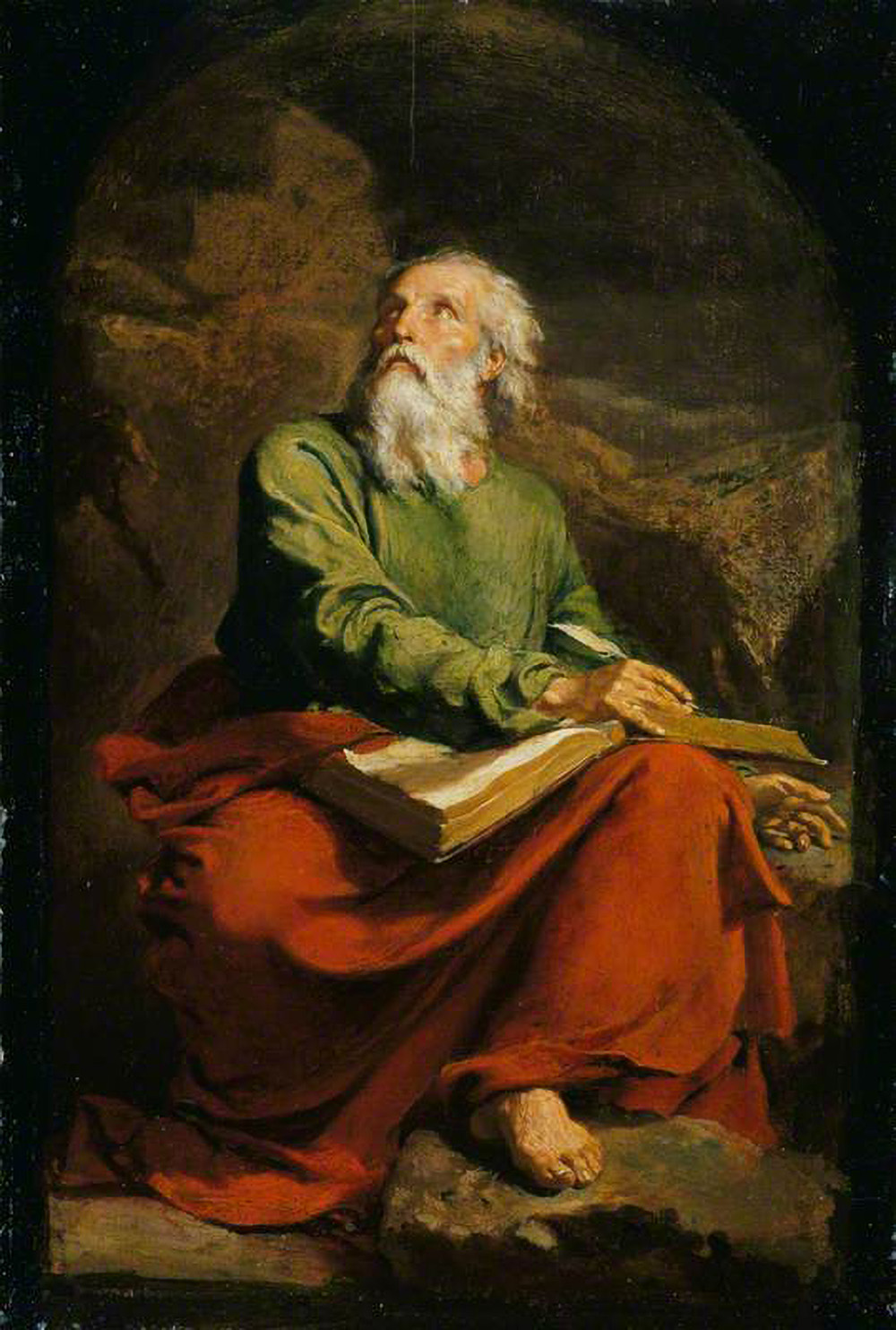
    Isaiah (1838), Jean Louis Ernest Meissonier | Creative Commons, courtesy The Wallace Collection/ArtUK.

    Given the king’s significant turning away from God, we can start to understand the dire warnings in Isaiah. For me, one of the signs that the Word of God is truly speaking through Isaiah is that he did not focus on the form of worship, which constitutes the core of Jewish priestly concerns and to this day characterizes the ultra-Orthodox strain of Judaism. In verses 11-14 (omitted from today’s reading), he is clear that these are no longer pleasing to the Lord: 

    I have had enough of burnt offerings of rams
        and the fat of fed beasts;
    I do not delight in the blood of bulls,
        or of lambs, or of goats. …

        Trample my courts no more;
    bringing offerings is futile;
        incense is an abomination to me. …

    Your new moons and your appointed festivals
        my soul hates;
    they have become a burden to me,
        I am weary of bearing them.

    You could imagine that the priestly class would be calling for more sacrifices, more incense, more religious festivals. But Isaiah points out that the problem is the people themselves. His encouragement is for them to “Wash yourselves clean! Put away your misdeeds from before my eyes; cease doing evil; learn to do good.” And in a verse that could come from the mouth of Jesus some 700 years later, he urges them to establish their goodness through works of mercy: “Make justice your aim: redress the wronged, hear the orphan’s plea, defend the widow.”

    What strikes me in this reading is the eternal patience of God and his refusal to abandon those with whom he has made his covenant, even after they abandon him: “Come now, let us set things right, says the LORD: Though your sins be like scarlet, they may become white as snow.” These are sweet words, like a parent cajoling a naughty child to make up with them after some misbehavior. Even the imagery is soothing — taking a blood-red sin and making it “white as snow.” Who would not want this Master? He gives us the opportunity to make amends where so many other masters would not.

    In the reading from Matthew, Jesus has some harsh words for the Pharisees and scribes. He enjoins the crowds to listen to their words because they have law-giving authority in their society (they sit on “the chair of Moses”). But he tells them flat-out not to ” follow their example. For they preach but they do not practice.” Ouch! To be called out by Christ!

    Their problem, Jesus says, is that they glory in their power, they have too much pride in their station. “All their works are performed to be seen,” he says, “They love places of honor at banquets, seats of honor in synagogues, greetings in marketplaces, and the salutation ‘Rabbi.’” Jesus tells them they have only one teacher (and I think it rhymes with “the level”).

    He adds two more equivalent sayings, one for God the Father and one for himself. There is only one Father, who is our Creator … this seems obvious. But note who the master is: “Do not be called ‘Master’; you have but one master, the Christ.” And here we get to see for ourselves the most exceptional aspect of our Master: he leads by the ultimate example. He is the opposite of the Pharisees who don’t practice what they preach. He leads us with love and dies on the Cross himself, as an example and encouragement for us all to not fear death, but retain absolute devotion to our Father in all circumstances.

    To solidify his message about subduing pride and, instead, serving others, he ends today’s reading with: “The greatest among you must be your servant. Whoever exalts himself will be humbled; but whoever humbles himself will be exalted.” We must note his authority over the abstract moral terms “greatest” and “exalted.” He, the Lord, is the definition and the definer of what is known as “great” and what will be “exalted.” There is no debate or wiggle room where we could somehow insert our own understanding of what it means to be great.

    This is precisely his point: we keep getting ourselves in this pickle, this distancing ourselves from God, because we try to be the definer of moral terms. We think that we have mastered life (or ethics, or morality) and can teach others. We have the audacity to feel “exalted” above others if we do something our earthly jobs/politics/society feels is “great.” These terms are not for us to play with; they have very definite meanings established by the source of the universe: God. This is why humility is his example and is so important to our lives as Christians.
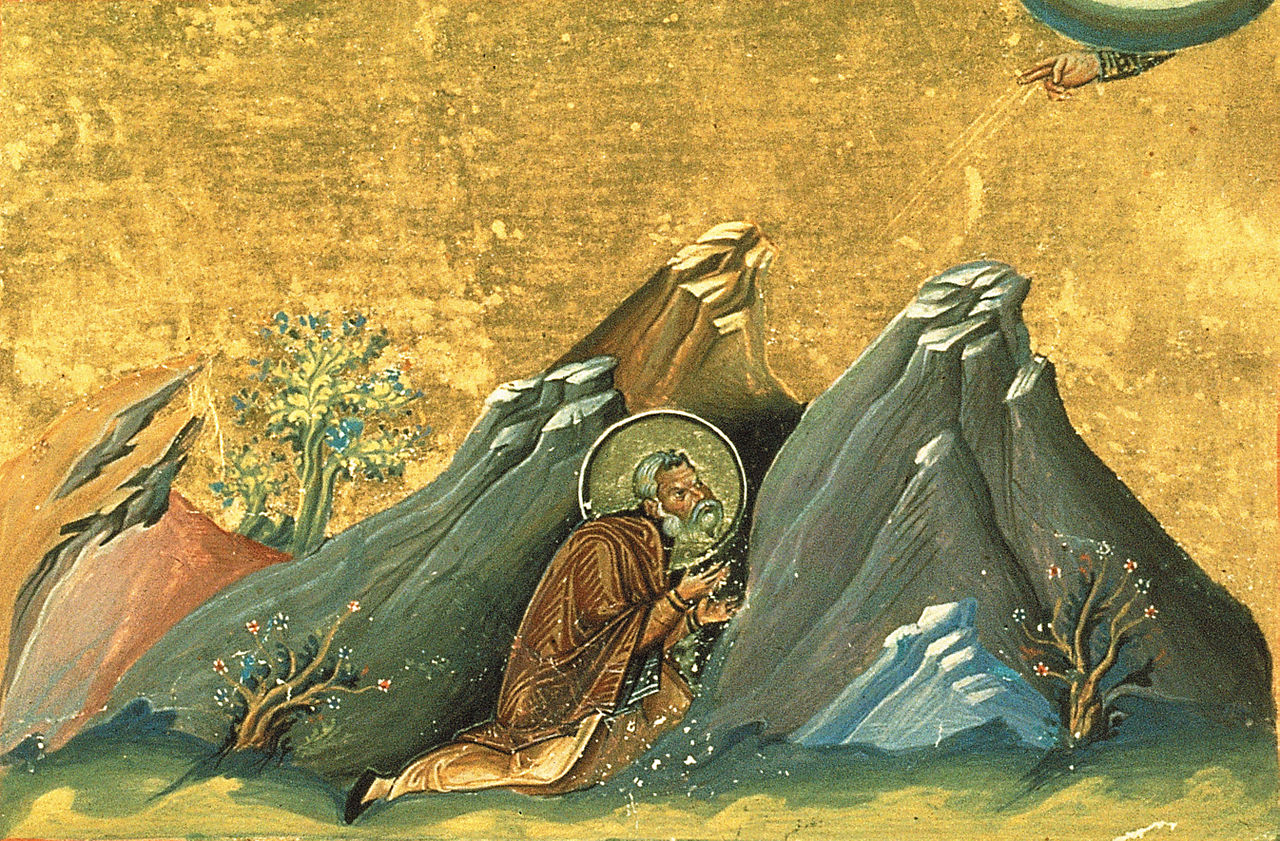
    Vendimian of Bithynia, a miniature painting found in the Menologion of Basil II, an illuminated “lives of the saints,” 985 AD | Wikimedia Commons.

    It’s fascinating to see how the Desert Fathers lived out Christ’s instructions from today’s gospel. The Desert Fathers (and Desert Mothers) were Christians who moved to the desert to live the life of seclusion and asceticism. The area especially known for this was the Scetes Desert south of Alexandria, Egypt (to get your bearings, this would be a 24-hour walk from Alexandria, or a 2-hour drive for us moderns), and the most well-known Desert Father, St. Anthony the Great, moved there about 270 AD. The Desert Fathers sought to be humble to the utmost. This meant always recognizing their own sinfulness, being gentle and subservient to others, and not judging others. It seems they fashioned their lives directly on Mt 23:11-12 from today’s reading: “The greatest among you must be your servant. Whoever exalts himself will be humbled; but whoever humbles himself will be exalted.”

    For instance, Abba Matoes says “Be always mindful of your sins and do not judge others; rather become inferior to all … If somebody speaks to you about any matter whatsoever, do not argue with him; but [if he speaks well] say ‘yes’ and if he speaks badly, say: ‘You know what you are talking about’ and do not contend with him about how he spoke” (Matoes 11).

    Over time the sayings from the great abbas (elders) of these monastic groups were written down and became the Sayings of the Desert Fathers (the Apophthegmata Patrum, originally written in Greek). These sayings contain wonderful anecdotes that display the depths of the humility these Christians took upon themselves. Lest we think they just preached humility, there are many examples of practice. “

    Someone once brought abba Hor and abba Athre a bit of fish, and Athre had already picked up the knife and started cutting it up when Hor called him. He left the knife in the fish and came at once. Sisoes was impressed and asked where the old man had learned such submission. Athre said he had learned it from Hor, and to prove it he took a bit of the fish and cooked it and deliberately spoiled it. Then he took it to abba Hor and said, ‘Isn’t it good, father?’ Hor said, ‘Yes, it’s excellent.’ Then he cooked another bit without spoiling it, and took it to Hor, saying, ‘I’ve spoiled it, father.’ And Hor replied, ‘Yes, you have spoiled it a bit’” (from Ways of Imperfection by Simon Tugwell, OP, p.19).

    This type of humility was good for the soul of the one humbling himself and also a type of fraternal charity to uplift one’s brothers. There are countless stories of how humility and fraternal charity was lived by these Christians. Here’s another noteworthy one:

    Now there was a tone statue there in the temple; Abba Anoub would get up early in the morning and throw stones at the face of the statue; in the evening he would say to it, “Forgive me,” and he spent the whole week behaving like that. On Saturday they met up with each other, and Abba Poemen said to Abba Anoub, “I saw you throwing stones at the face of the statue during the whole week, Abba, then making an apology to it too. Does a man of faith act like that?” “I did this deed on your account,” the elder replied. “When you saw me stoning the face of the statue, was it angry, or did it speak?” “No,” said Abba Poemen. “And then again, when I prostrated myself to it, was it troubled, and did it say, ‘I do not forgive you’?” “No,” said Abba Poemen. Abba Anoub said, “And here we are, seven brothers. If you want us to live with each other, let us become like this statue that is not troubled even if it is insulted. If you do not want to become like that, here there are four gates in this temple; let each one go where he will.” But they threw themselves to the ground saying to Abba Anoub, “We will do as you wish, father, and attend to what you say to us” (number 12 in the Humility section of the systematic collection of the Book of Elders).

    Finally, one of my favorite (number 87): “The devil appeared to a brother in the disguise of an angel of light, saying to him, ‘I am the archangel Gabriel, and I was sent to you.’ ‘Make sure you were not sent to somebody else,’ said the brother to him, ‘for I am not worthy to see an angel,’ and the demon immediately disappeared.” 

    So here we have centuries of examples of how humility and charity can be lived as the core part of what makes us Christian. May we all learn from these examples and seek to bring the spirit of this teaching into our daily modern existence.
  • The Examined Self Before God

    The Examined Self Before God

    Monday the Second Week of Lent: Daniel 9:4b-10, Luke 6:36-38.

    Today’s readings call us to reflect on our sins. In the Book of Daniel, we are shown the model of a contrite heart for past sins. In the gospel of St. Luke, Jesus instructs us on how to avoid sins in the future. Now for many of us, thinking about sins is not the most captivating aspect of our religion (low attendance at Confession can attest to that), yet even the most casual reading of the Bible shows us how essential self-examination is.

    Perhaps we can better embrace the spirit of today’s readings if we bring to mind yesterday’s glorious Transfiguration reading from Matthew. When I put myself in the sandals of Peter, James, and John, and imagine witnessing the divine light shining from the face of our Lord, followed by the bright cloud of the Father instructing me to listen to him, I can also see myself falling prostrate on the ground. The purifying and incomprehensible divine light casts a shadow over my soul that “darkens and empties and annihilates it in its particular apprehensions and affections concerning both earthly and heavenly things,” in the words of St. John of the Cross (see the end of yesterday’s reflection for more context here).

    When my soul in its imperfect state encounters the divine light, I cannot help but notice its blemishes. It’s like a familiar shirt that seems fine until I wear it to a nice event in the sunshine — then, the stains and frayed seams jump out as obvious.

    How do we feel about the grubby shirt that is our soul? A bit embarrassed? That’s OK — let’s take heart from one of today’s patron saints, St. Catherine of Bologna (1413-1463): “It means little to wear a worn habit and walk with bowed head; to be truly humble one has to know how to bear humiliation. It is the touchstone of Christian discipleship.” Humiliation, embarrassment: both of these accept a public acknowledgment of a sin or mistake. It shouldn’t be too difficult for us to acknowledge our sins before God, in the privacy of our relationship with Him.

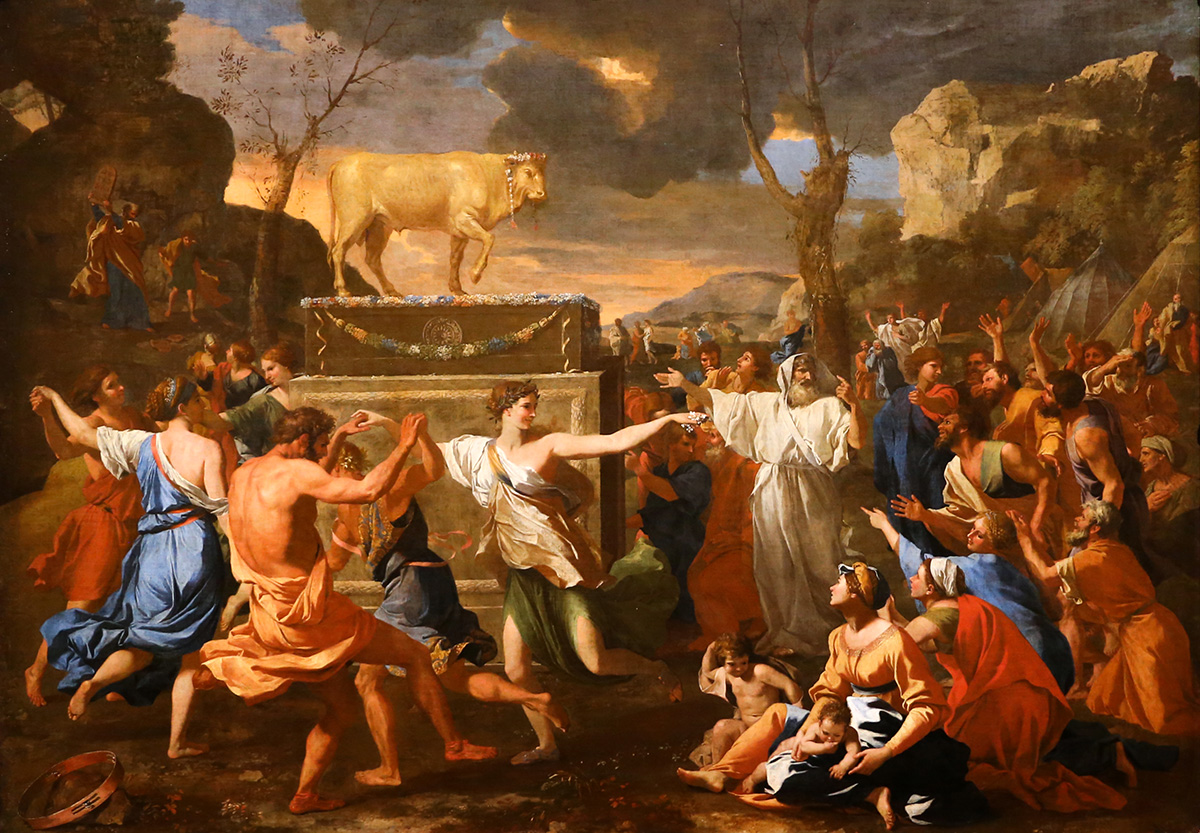
    The Adoration of the Golden Calf (L’Adoration du veau d’or), 1633-1634, Nicolas Poussin | Wikimedia Commons.

    Humiliation is something the Jews knew well at the time the Book of Daniel was written (~165 BC). During this period, Antiochus IV Epiphanes was the Greek ruler over Israel who brutally put down the revolt recorded in the Book of Maccabees. “He ordered his soldiers to cut down without mercy those whom they met and to slay those who took refuge in their houses. There was a massacre of young and old, a killing of women and children, a slaughter of virgins and infants. In the space of three days, eighty thousand were lost, forty thousand meeting a violent death, and the same number being sold into slavery” (2 Maccabees 5:11–14). Then he tried to force the remaining Jews to worship Zeus on pain of death.

    Rather than bemoan their conquered and downtrodden state, the Book of Daniel acknowledges the humiliation and takes spiritual responsibility: “O LORD, we are shamefaced, like our kings, our princes, and our fathers, for having sinned against you.” The message is not all shame and doom, however. God’s covenant with his people still stands and hope is always there: “But yours, O Lord, our God, are compassion and forgiveness!” The Book of Daniel is an apocalyptic writing and focuses on the coming day of the Lord and the ultimate vindication of the chosen people. (The writer of Daniel uses the famous phrase “Son of Man” for the messiah — one that Jesus will use in reference to himself throughout his ministry.) 

    What can we learn from this long passage acknowledging sins? We aren’t Israelites who broke their covenant by worshipping idols and ignoring God’s commandments. Or are we more like them than we think? Our idols may not be golden calves, and our worship of them may not include burnt offerings, but let’s consider our contemporary lives. American culture is known for a few things: nearly limitless choice (for food, for clothing, for entertainment, for jobs, for housing, etc.) and unconstrained appetite (for those same things). We don’t think twice about ordering something we don’t need from Amazon if the price seems good or buying that little impulse purchase right next to the cash register at the store.

    Our golden calf is ourselves and our offerings are conspicuous consumption. This has been true for a long time. Heck, Thorstein Veblen writes in the Theory of the Leisure Class in 1899 that “The quasi-peaceable gentleman of leisure, then, not only consumes of the staff of life beyond the minimum required for subsistence and physical efficiency, but his consumption also undergoes a specialization as regards the quality of the goods consumed. He consumes freely and of the best, in food, drink, narcotics, shelter, services, ornaments, apparel, weapons and accoutrements, amusements, amulets, and idols or divinities” (Chap 4: “Conspicuous Consumption, p.73).

    All of this is to say that we live in a society rooted in self, not in God. We participate in ways great and small. Too often we rationalize away the Word of God and try to fit it within our normal cycle of making money, saving money, spending money, getting things for ourselves, getting things for our mini-me (kids), etc. Granted, living in contemporary society and simultaneously living out the New Covenant is not easy apart from becoming a monk, but nonetheless we’re all called to be saints.

    Plus. that’s kind-of the point of Christianity. It was seriously hard (on pain of death) before it was sanctioned by Constantine and being Christian began to synchronize with the power of the state. This sent us down an arguably more difficult path of retaining our focus on a world beyond this one when the current world seemed to be achieving all we wanted. I digress.

    Acknowledging sins: is it worthwhile or does the reading from Daniel seem to take it a little too far? Let’s take some wisdom from one of our great Church Fathers, St. John Chrysostom, who writes: “If we have been neglectful to the present moment, let us proceed immediately to the work of destroying sin through confession and tears. … Unless you tell the magnitude of your debt, you do not experience the abundance of grace” (Homilies on Lazarus (388 AD), 4.4). Sounds like it’s worth it.

    Chrysostom’s comment about confession and tears (i.e., contrition) “destroying sin” is echoed by several other Church Fathers. Tertullian writes his treatise Repentance in 203 AD and makes clear this connection: “of confession is repentance born, and by repentance is God appeased. … by its own pronouncement against the sinner, [confession may] stand in place of God’s indignation … In so far as you do not spare yourself, the more, believe me, will God spare you!” This affirms that God wants us to convert to Him wholly, and the more work we do in confessing sins and purifying our own souls, the less God will have to do later (perhaps in Purgatory?).

    So here we get to the reason we’re confessing sins to God. Tertullian and Chrysostom are doing some arithmetic: if we have a bank of sins, we can confess and be contrite while here on earth to destroy some or most (maybe even all?) of this bank of sins … while of course trying not to commit more of them. Otherwise, we meet God after this life with a big bank of sins that He must deal with, not something we want. To use our earlier analogy, will we present ourselves to God in a grubby, stained shirt or will we scrub and iron that shirt the best we can before we meet Him?

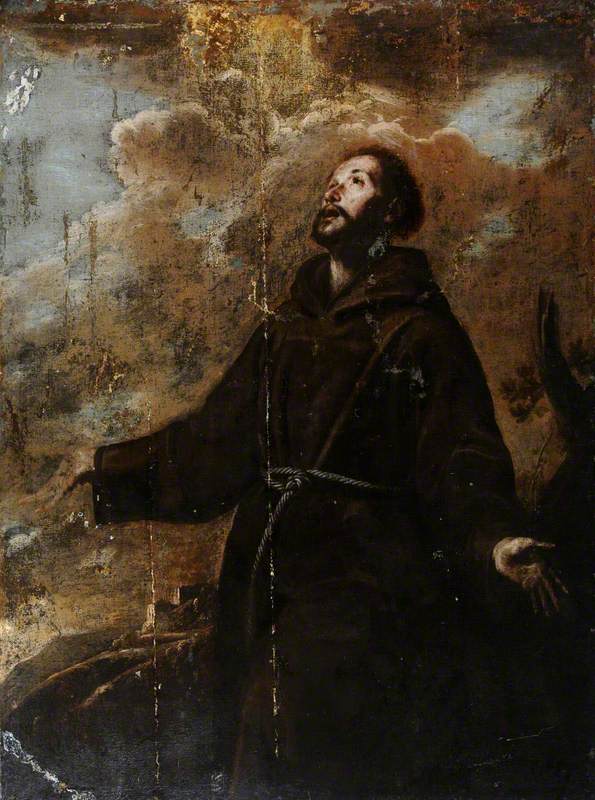
    Saint Francis in Ecstasy (1600s), Italian (Neapolitan) School | Creative Commons, courtesy Guernsey Museum & Art Gallery/ArtUK.

    The reasoning presented by Tertullian and Chrysostom we might call “negative reasoning” in that we are encouraged to do something good to avoid something bad (God’s reaction to our huge bank of sins). Christ presents us with “positive reasoning” in today’s gospel reading. While he is referring to avoiding future sins instead of confessing and repenting for past sins, his reasoning applies to both.

    Christ’s message is that we are active participants in our own salvation in how we respond to God’s call and take on God’s commandments. He says, “Stop condemning and you will not be condemned. Forgive and you will be forgiven. Give and gifts will be given to you.” In other words, live by God’s law and you will continue to live with God for eternity; carry divine love in your heart as you live, work, and act with other people, and divine love will be given to you for eternity.

    This reciprocation is a refrain that Jesus repeats throughout his ministry. The Lord’s Prayer uses nearly the same formulation: “forgive us our trespasses, as [you see us forgiving others].” How extraordinary — we seem to be hearing that we, in effect, have the power to save ourselves because God will mirror whatever we do. But let’s avoid this simplification of the message (and heresy) and dig a little deeper. 

    Jesus wants us to so fully embrace the divine life offered to us that we transcend the letter of the law to inhabit the spirit of the law. The readings last week showed us several times how Jesus exhorts us to surpass the righteousness of the scribes and Pharisees and to “be perfect, just as your heavenly Father is perfect” (see The Difficult New Covenant of Love). What changed from the time of Daniel in the old covenant is that Jesus offers humanity a real taste of the Kingdom here on earth and is the true gateway to the eternal Kingdom. That’s why we must transcend the letter of the law, which ruled the Israelite understanding of God’s relationship, and more fully let the Spirit inhabit us.

    Since we now have the liturgy that gives us true communion with God, we have the opportunity to carry our godliness into every aspect of our lives in a way that was never available before Christ. It is this same generosity of Christ that speaks today when he says that an “overflowing measure” will be measured out to us if we live in the New Covenant. This new Way (earliest Christians referred to themselves as followers “of the Way,” cf. Acts 9:1-2) requires more than the old covenants.

    To inhabit the spirit of the law (and let the Spirit inhabit us), we must not carry the spirit of condemnation and judgement, we must forgive and give. Again, the big difference is that we are sanctified by the Spirit in the liturgy and sacraments; our sanctified lives puts us in intimate communion with God. That means that when we sin we turn our backs on God, the God dwelling within us who we just sullied with sin. We must both confess/repent for past sins and keep from future sins because we are already “on the Way” to union with God. We already have the Spirit dwelling within us and acting in our lives. Our union with God’s will by the way we act confirms our covenant with Him and therein his promise to reciprocate in the life to come.

    To live a fully human life means to be elevated and transformed by God, to strive for perfection in spirit and action as we unite ourselves with Him. The ultimate reason for Christians to live like this is not a selfish guarantee of eternal life for that person we think we are (as we worship at the altar of self), but because we want to be with Him, to leave these limited “selves” and join the heavenly host. That’s exactly the “overflowing measure” promised to us.

  • The Transfiguration Reveals Truth “According to His Own Design”

    The Transfiguration Reveals Truth “According to His Own Design”

    Second Sunday in Lent, The Transfiguration of Christ: Genesis 12:1-4a, 2 Timothy 1:8b-10, Matthew 17:1-9.

    Today we hear of the Lord’s glorious Transfiguration, set up wonderfully by yesterday’s readings on covenants (see The Difficult New Covenant of Love). There are many signs that point to the New Covenant, including the Annunciation, the Lord’s Baptism, the Presentation of Jesus at the Temple, and of course the Resurrection. But the Transfiguration stands out as a pivotal moment that invokes the old covenants in the form of Moses and Elijah while the Father presents his blessed Son as a gift with the command to “listen to him.” We encounter all of the elements of the covenant as a pact with God where his gift and our commitment to him are both present.

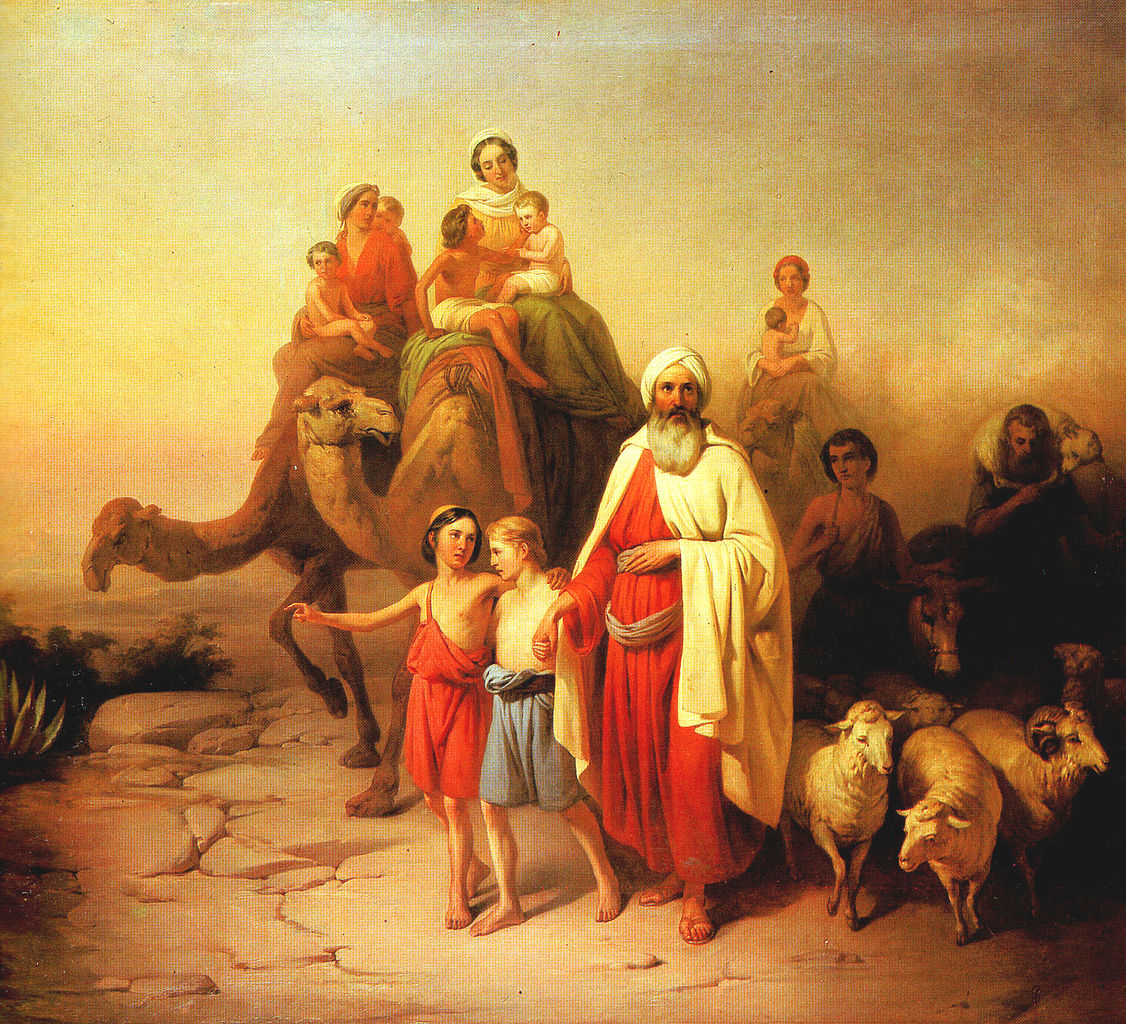
    The first reading from Genesis relates the Abrahamic Covenant where God asks for great faithfulness in return for his blessing. He commands: “Go forth from the land of your kinsfolk and from your father’s house to a land that I will show you.” We might call this blind faith, actually. Abraham must leave everything — his father’s inheritance, all of his relatives and friends — to go to parts unknown (to be revealed later!). Of course, after the test of faith where he was asked to sacrifice his son Isaac, maybe he was getting used to these demands of faithfulness. Whatever the case, we hear that “Abram went as the LORD directed him.” It’s a short sentence but displays the absolute trust that Abram places in God. (Hence the very appropriate Responsorial Psalm 33, Lord, let your mercy be on us, as we place our trust in you.)

    Abraham’s Journey from Ur to Canaan (Ábrahám kiköltözése), 1850, József Molnár | Wikimedia Commons, artwork housed in Szépművészeti Múzeum – Magyar Nemzeti Galéria, Hungary.

    The Abrahamic Covenant sets the stage for all of God’s covenants: we are asked to act in faith based on what we do not know or see. We can’t do this unless we trust God completely.

    In the second reading, St. Paul underscores this aspect of our relationship with God as he urges his flock to “Bear your share of hardship for the gospel with the strength that comes from God.” We might think we lack that strength ourselves, but no matter, the strength actually comes from God, another point of trust. This trust is made possible thanks to Abraham and the entire tradition to the point of Christ. Paul writes, “He saved us and called us to a holy life,” noting that God’s covenants have saved the nation time and again, and that, in return, they have been called to a holy life. Lest his readers think they earned their holiness, much less their salvation, he corrects them: “not according to our works but according to his own design.”

    And here we have a great and humbling admission: “according to his own design.” As humans, relinquishing power over our destiny, trajectory, or career (to use modern terms) is something we have a hard time accepting. Especially in “pull yourself up by your bootstraps” USA. It’s part of our national fabric to be a “self-made man.” Yet how far from our faith could we possibly get when we think this way? Was Abraham a self-made man? Moses? Elijah? Christ?? Of course not. These greatest of figures in history were not only made by God, but directed, commanded, steered, and loved by Him. Their greatness lay in their acceptance of his dominion and willingness to trust, have faith, and do his will.

    We have to actively work to change our unconscious bias for being self-made, for controlling our own destiny. Thank God that we have thousands of years of his promises kept, miracles done, and covenants upheld. These must give us great comfort; they display that he does indeed have “his own design” and it works best if we don’t try to know it but rather simply trust it.

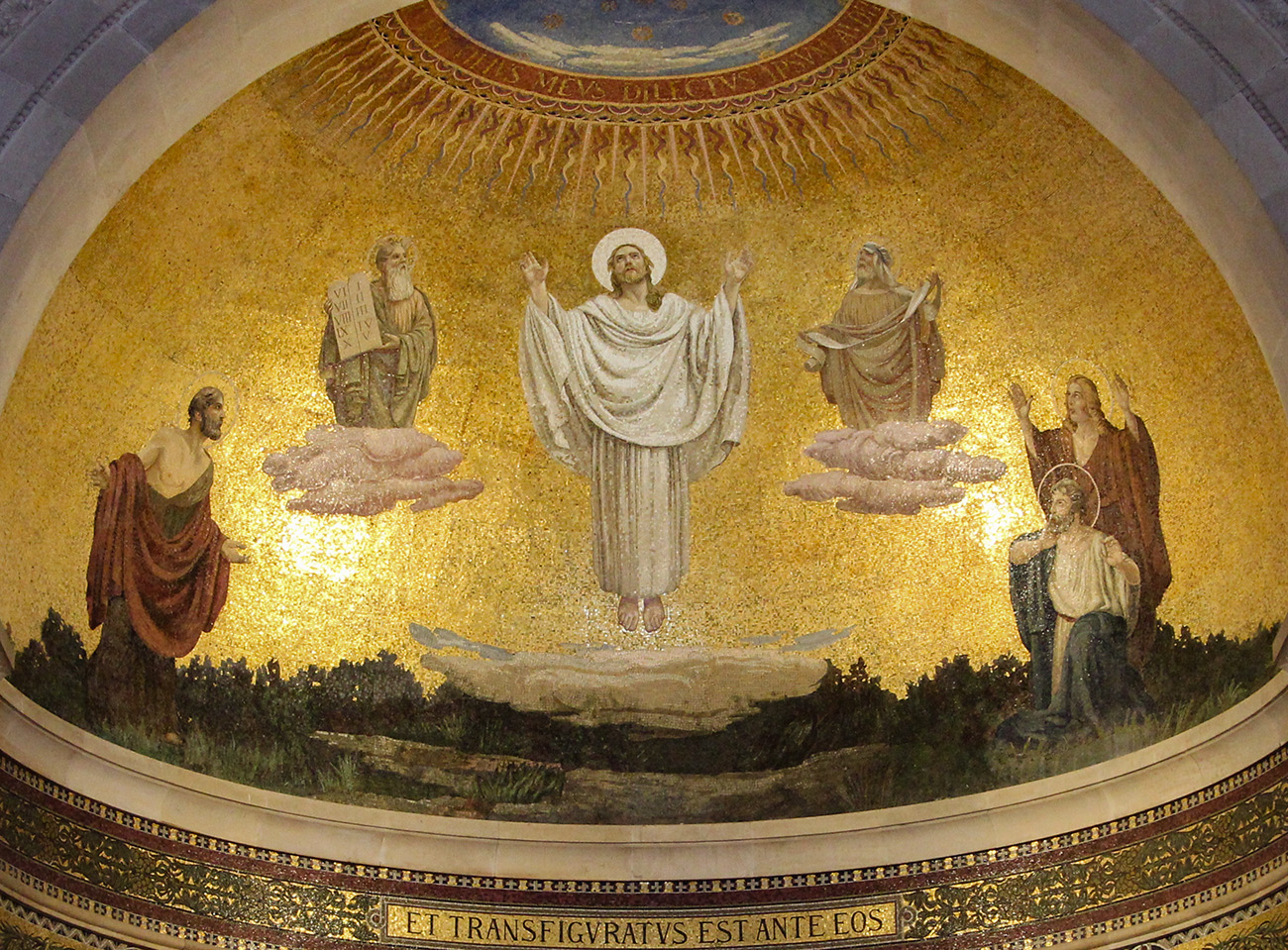
    The greatest of You-deserve-our-trust signs is Jesus Christ himself. Today’s account of the Transfiguration of Christ in the gospel of St. Matthew is almost understated in regards to the pure majesty and import of the New Covenant’s revelation. Matthew gets right to the point: Jesus and his chosen three go up the mountain, “And he was transfigured before them; his face shone like the sun and his clothes became white as light.” 

    The Transfiguration of the Lord (mosaic, Church of the Transfiguration, Mount Tabor, Israel), 1924, Umberto Noni | Wikimedia Commons. The caption is Latin for “And he was transfigured before them.”

    There was one other encounter with God that changed a man’s appearance: Moses on Mt. Sinai receiving the Ten Commandments. These two mountain encounters with God are worth comparing. Matthew’s report that Jesus’s face shone like the sun is important to contrast to the interplay of light on the faces at Mt. Sinai. The glorious face needed to be hidden from Moses; The Lord tells him “you cannot see my face; for no one shall see me and live….you shall see my back; but my face shall not be seen” (Ex 33:20, 23). When he comes down from the mountain, “Moses did not know that the skin of his face shone because he had been talking with God” (Ex 34:29b), and even this reflected glory makes the Israelites afraid. Moses has to wear a veil over his face when he talks to them so that they can overcome their fear and awe.

    Yet Jesus does not reflect God’s light, he emanates it. He is such a perfect, non-conflicting union of the human and the divine that the divine light that would kill humans merges perfectly with him; more: he, in fact, is the source of illumination.

    What is the significance of his clothes? He purifies these garments made by human hands, turning them white. This is a sign that, in him, humans can be purified and divinized as well.

    Matthew tells us next, “behold, Moses and Elijah appeared to them, conversing with him.” Moses is the ultimate representative of the law, and Elijah is the ultimate representative of the prophets. Christ is the fulfillment of both the law and the prophets. Here he stands talking with the greatest of those who represent the law and the prophets, and Peter, for one, is thrilled. Here are two of the greatest Jewish religious figures and heroes, conversing with his own teacher, who glows with some sort of mysterious providence that they’ve never seen before. He asks Jesus if he should build tents for each of them. This is easy to misinterpret, but remember that Moses (and all of Israel before the Temple of Solomon was built) made a tent for God to dwell with them. Peter’s tents are a Biblically-sound suggestion for these celestial beings to remain with them, as if a new era has started where the new heavenly Jewish superheroes will help the nation reach new heights.

    But he’s clearly missed the point, and God the Father interrupts him mid-request. Note how differently God appears here on Mt. Tabor compared to Mt. Sinai. On Mt. Sinai:

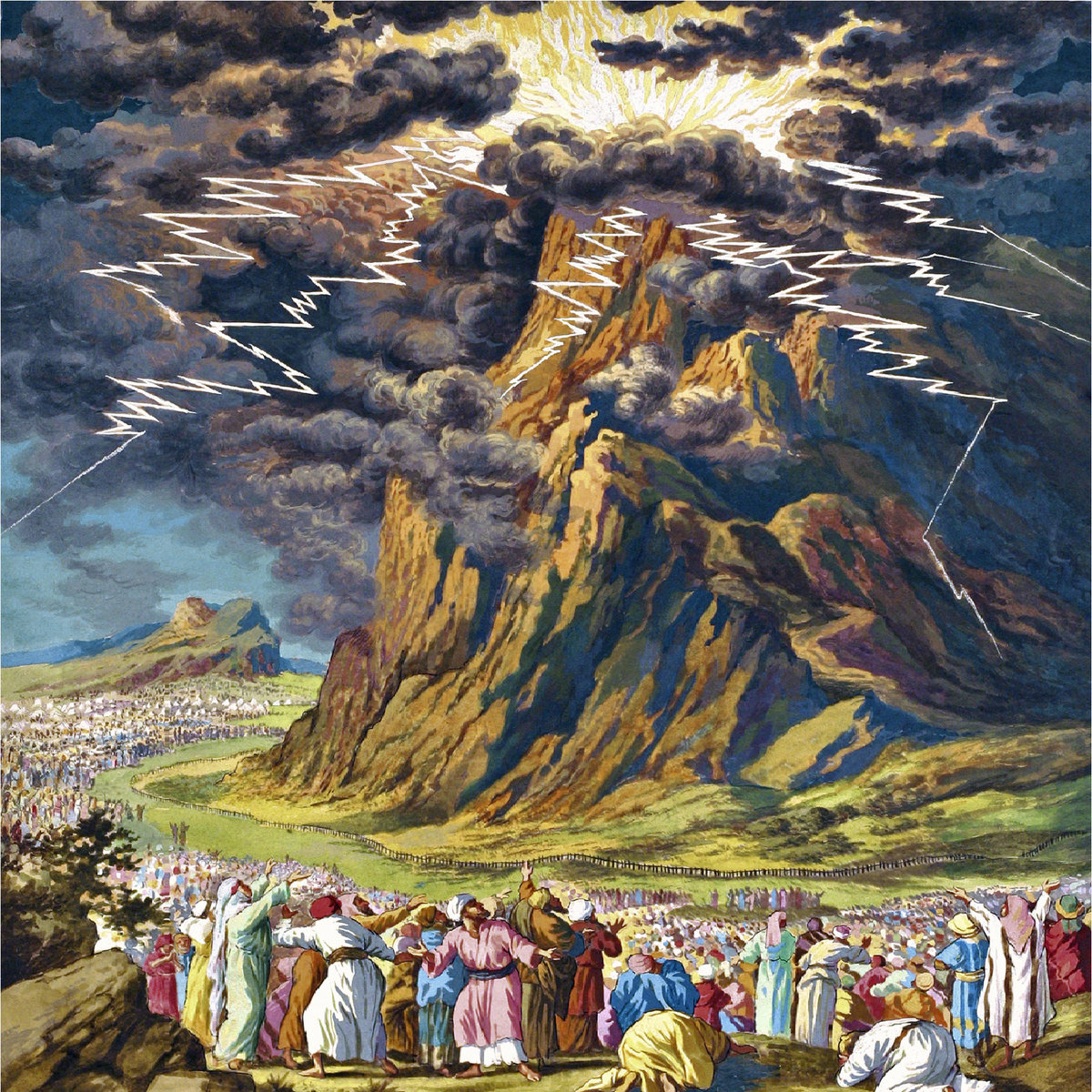
    On the morning of the third day there was thunder and lightning, as well as a thick cloud on the mountain, and a blast of a trumpet so loud that all the people who were in the camp trembled. Moses brought the people out of the camp to meet God. They took their stand at the foot of the mountain. Now Mount Sinai was wrapped in smoke, because the Lord had descended upon it in fire; the smoke went up like the smoke of a kiln, while the whole mountain shook violently. As the blast of the trumpet grew louder and louder, Moses would speak and God would answer him in thunder (Ex 19:16-19).

    The Giving of the Law, 1936, unknown artist | Creative Commons.

    Thunder, lightning, a thick cloud, smoke, fire, violent shaking and trumpet blasts. Truly frightening phenomena. Add to this God’s command to Moses: “warn the people not to break through to the Lord to look; otherwise many of them will perish.” The Lord is hidden from view, darkness and opacity characterize His appearance, and even Moses must only converse with his back, not his face.

    Contrast this with today’s reading: “While [Peter] was still speaking, behold, a bright cloud cast a shadow over them, then from the cloud came a voice…” What an interesting description of light that St. Matthew gives us! The cloud is bright, not dark, akin to the glow we see on the face of Christ. And how can we explain that a source of brightness casts a shadow, since shadows are only cast when a greater source of light is behind them? The divine cloud is surely the brightest thing in the sky.

    For one point of reference, I am reminded of St. John of the Cross and his contemplations in The Dark Night of the Soul: “The more simply and purely the divine light strikes the soul, the more it darkens and empties and annihilates it in its particular apprehensions and affections concerning both earthly and heavenly things” (Book 2, 8.2(2)). This seems to be precisely what is happening — the shadow cast over them is the darkness that strikes the soul by the purifying and incomprehensible divine light.

    Indeed, “they fell prostrate and were very much afraid,” despite the fact that they are in the light and there are no terrible phenomena like we see on Mt. Sinai. Their minds are also cleared of the “particular apprehensions and affections concerning both earthly and heavenly things” as described by St. John of the Cross — there is no more discussion of tents.

    God delivers the New Covenant: “This is my beloved Son, with whom I am well pleased; listen to him.” His gift: his Son. His command: listen to him. Christ is both sides of the covenant, the gift and our requirement. This seemingly simple covenant, taking up so few words compared to those in the Old Testament, is unapproachably dense in its profundity.

    How can we comprehend the gift of God Himself, joined to humanity in our New Covenant? This unlikely and undeserved gift simply requires us to “listen to him.” Like an overly-dense star ready to become a supernova, Christ is poised for the Resurrection, when the love of the Trinity will be poured out on humanity. But the Resurrection will only come after his example of self-giving love is shared with us in the form of the Cross. Listening to him will, in fact, require a radical shift in our lives, a willingness to accept the way of the cross.

    Transfiguration of Jesus (icon), 1408, Theophanes the Greek | Wikimedia Commons. Artwork from Spaso-Preobrazhensky Cathedral in Pereslavl-Zalessky.

    But the truth of the Transfiguration is most beautifully portrayed in Jesus’s words: “Jesus came and touched them, saying, ‘Rise, and do not be afraid.’ And when the disciples raised their eyes, they saw no one else but Jesus alone.” Despite the difficulties we will encounter truly listening to him and taking up our crosses, Jesus the man, the friend, the teacher, is there for us in person, giving us his generous love. He touches them with tenderness, encouraging them not to be afraid of the reaction of their souls to the divinity they are in contact with. When they raise their eyes like docile sheep, they see only the Good Shepherd, who is also the sacrificial lamb.

    The first test of this New Covenant will be given to Peter, James and John when he charges them: “Do not tell the vision to anyone until the Son of Man has been raised from the dead.” They must listen to him as God commanded, although every fiber of their being must have been straining to share the Good News, electrons excited out of their shells with the potential of the divine energy waiting to erupt into the world. But only when the Resurrection is accomplished will the world be ready to comprehend that God Himself walked among us, that he was the fulfillment of the law and the prophets.

  • Esther: Model of How to Petition the Father

    Esther: Model of How to Petition the Father

    Thursday in the First Week of Lent: Esther C:12, 14-16, 23-25, Matthew 7:7-12.

    With eight kids vying for attention and elbowing for their piece of pie, my mother was fond of the saying, “Ask and you shall receive.” I must have heard it a hundred times growing up. Today, we hear the origin of this saying, out of the mouth of Jesus as he encourages his disciples to petition the Father. Lest we think that any old way of asking is OK, we are given the ideal model of petitioning from Esther in the first reading.

    For me, the Book of Esther is a bit of an odd duck in the Old Testament. It’s a great story explaining the establishment of the Jewish holiday of Purim, but the colorful narrative of ironic reversals and high-stakes changes of fortune remind me of a Shakespearean play. The setting is Babylon, and while many Jews have started to return to Israel after the Babylonian Captivity officially ends, Esther and her uncle Mordecai are some of those who remain. She’s not presented as particularly devout, and her most striking asset is her beauty, which gets her chosen as Queen after “trying out” with many other young virgins in the harem.

    But her secularism changes when the king is convinced to pass an edict that all Jews in the kingdom “shall all—wives and children included—be utterly destroyed by the swords of their enemies, without pity or restraint, on the fourteenth day of the twelfth month, Adar, of this present year.” Mordecai asks Esther to intercede with the king. In a passage before the one read today, Mordecai implores her not to “keep silence at such a time as this,” and says, “Who knows? Perhaps you have come to royal dignity for just such a time as this.” 

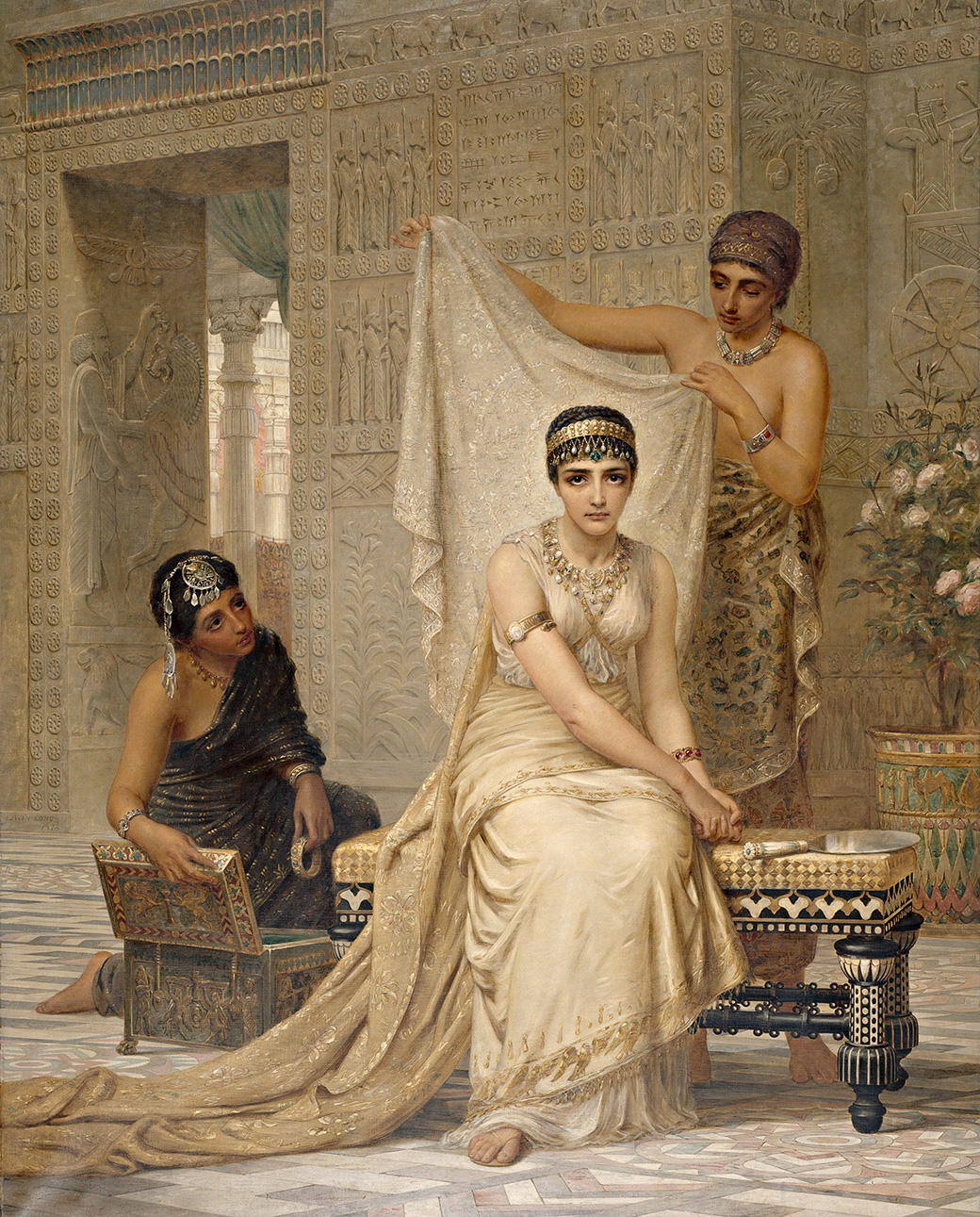
    The rub is that no one can come into the king’s presence without being summoned, or they are killed. So in order to ask him to change the edict, Esther must take her life in her hands. But, Esther is convinced that action is needed. And — praise the Lord — the action she takes begins with God. She responds to Mordecai: “Go, gather all the Jews to be found in Susa, and hold a fast on my behalf, and neither eat nor drink for three days, night or day. I and my maids will also fast as you do.”

    Queen Esther (1878), Edwin Long | Wikimedia Commons.

    This is where we join today’s reading. Esther, alone and “seized with mortal anguish,” falls back on the faith of her people. She covers her head with ashes and dung and utterly humbles every part of her body. Clearly, her prayer is fervent and sincere. It takes the form of both petition, to help her find the right words, and intercession, to save all of the Jews from slaughter. It seems to me that this reading is included in our Lectionary as a reminder of the sincerity with which we should pray to our God when we ask for his help.

    The Jews are saved in the end, and it’s important to note that Mordecai offers a passionate plea for help and, in fact, “all Israel cried out mightily, for their death was before their eyes.” It was a group effort.

    So when we encounter Jesus in the gospel reading from Matthew, we have in our minds the same impassioned, sincere type of prayer that the Jews of the time knew was an appropriate way to speak to God. This passage comes towards the end of Matthew’s account of Jesus’s words upon the mountain after he preaches the Beatitudes. It’s a section that presents rapid-fire nuggets of wisdom. In fact, in the NRSV Bible, the last verse is given a different subheading: The Golden Rule.

    Jesus’s words in our Book of Gospels: “Ask and it will be given to you; seek and you will find; knock and the door will be opened to you.” Really? This seems like a carte blanche scenario, and our experience tells us otherwise. As a priest in Salt Lake City, Fr. Erik, is fond of saying, “God isn’t a vending machine.” You don’t put out a set of prayers in the right words and quantity and receive back exactly the thing you wanted. (Another phrase I like: God isn’t a cosmic genie!)

    We must read this passage in its entirety. Jesus uses the analogy of how we give our children good things when they ask for them: “how much more will your heavenly Father give good things to those who ask him.” A few things are going on here. First, we are reminded that the Father is truly that: a father, and all the aspects of that relationship apply. Second, the Father’s will is to give “good things.” He knows better than we do what we need and what is good.

    I’d venture to claim that we very rarely know what is good, especially from the perspective of God. What we know is what pleases us or solves our short-term problems. Children indeed.

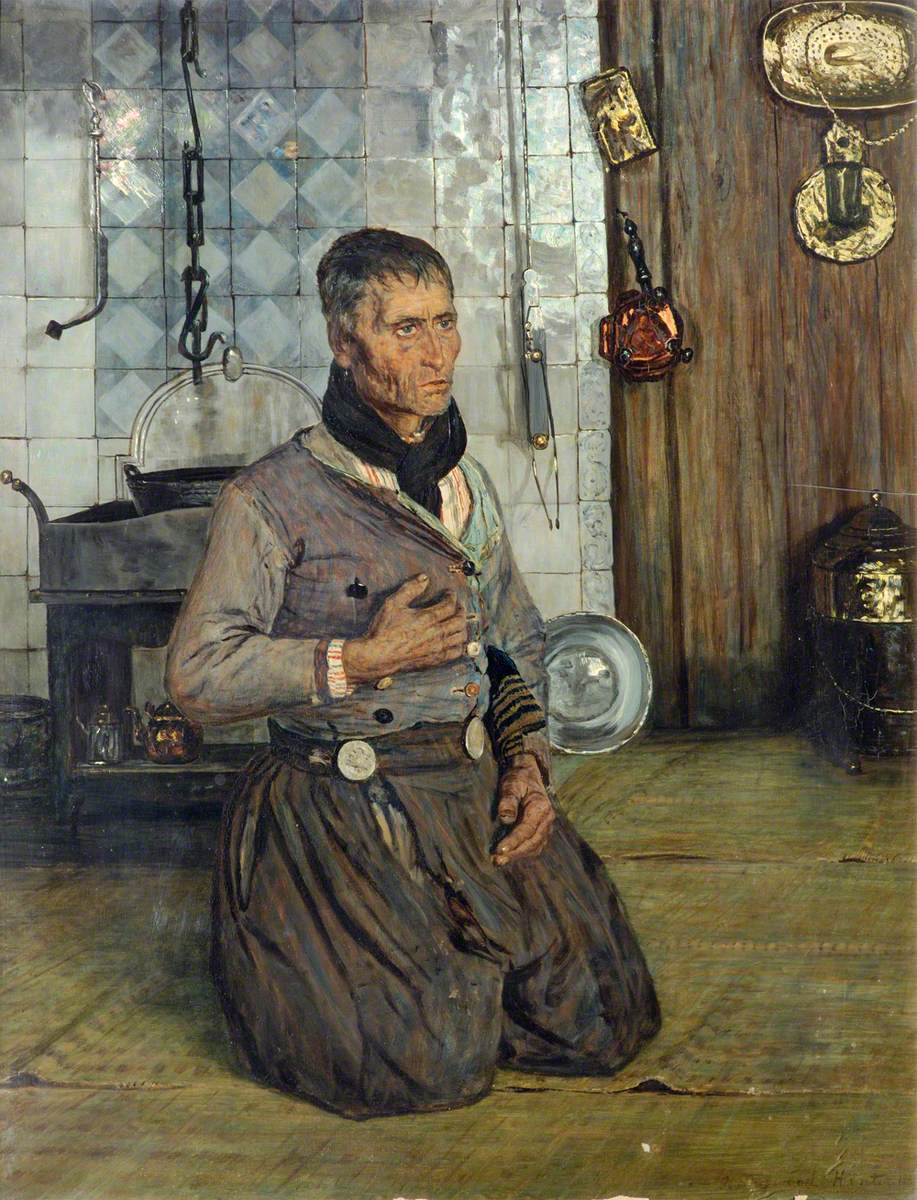
    Ave Maria, Volendam, The Netherlands (1897), George Sherwood Hunter | Creative Commons, courtesy Aberdeen Art Gallery & Museums/ArtUK.

    So what’s the point of asking if we are like the four-year-old asking for more candy or for our dad to get the monster out from under the bed? I can imagine several reasons Jesus urges us to ask the Father and assures us that he will answer. The most basic one is that it reminds us to live in faith; it reminds us that we are dependent upon an omnipotent God who wants to bring us to Himself.

    The second reason is that this reminder, in turn, can deepen our contemplation of God and his will. We are not expected to stay in spiritual infancy, but to mature and more closely align our own will with God’s over time. As the 1st Letter of John states, “And this is the boldness we have in him, that if we ask anything according to his will, he hears us” (Jn 5:14, emphasis mine).

    The third reason is that we answer our call as Christians to act in the world according to God’s will. We are not called to sit in contemplation as passive lumps. We just read a few days ago that there will be a final judgment and it will be based on our acts of love. We have to ask, we have to seek, we have to knock, and we have to do God’s will. We are a people on the move towards the Kingdom, but we must get there in participation with God, not by somehow floating there.

    And this is why the last verse is a great way to end the reading: “Do to others whatever you would have them do to you. This is the law and the prophets.” Yes, that doing — it’s on the same wavelength as the asking and seeking. It’s to be done in reverence to God (think about Esther) and in accordance with his laws. This great Golden Rule is an example of God’s love in action, a charitable act. 

    Back to Esther: she is a great model for us because she shows that even if you’re alone, terrified, and not regularly pious, if you appropriately petition God from a position of humility and have the courage to act in difficult situations, the way God answers may just align with your earthly desires.

  • Woe to (and Deliverance for) the Faithless Generation

    Woe to (and Deliverance for) the Faithless Generation

    Wednesday of the First Week of Lent: Jonah 3:1-10, Luke 11:29-32.

    We receive a warning from Jesus today about faithlessness. The readings trace his presence among several faithless generations who came to trust and fear God, including those of his time who challenged his authority. This is a valuable lesson for us not to question or challenge the Lord our God. He also gives us a wonderful foreshadowing of his own Resurrection.

    The short Book of Jonah is as rich a study of human error as it is brief in length. The reading we receive today is the entirety of Chapter 3, one quarter of the whole Book of Jonah. It occurs after Jonah has already tried to flee God’s command to warn the people of Nineveh, after he is swallowed by the giant fish for three days and then spit back up on land after his prayer of distress from the belly of the fish. In other words, we encounter a man who believes in God but is unwilling to do His work. God puts him through trials to purify his heart, and Jonah finally realizes his indebtedness to God and converts to do the work he is asked. Many of us live a parallel relationship with God.

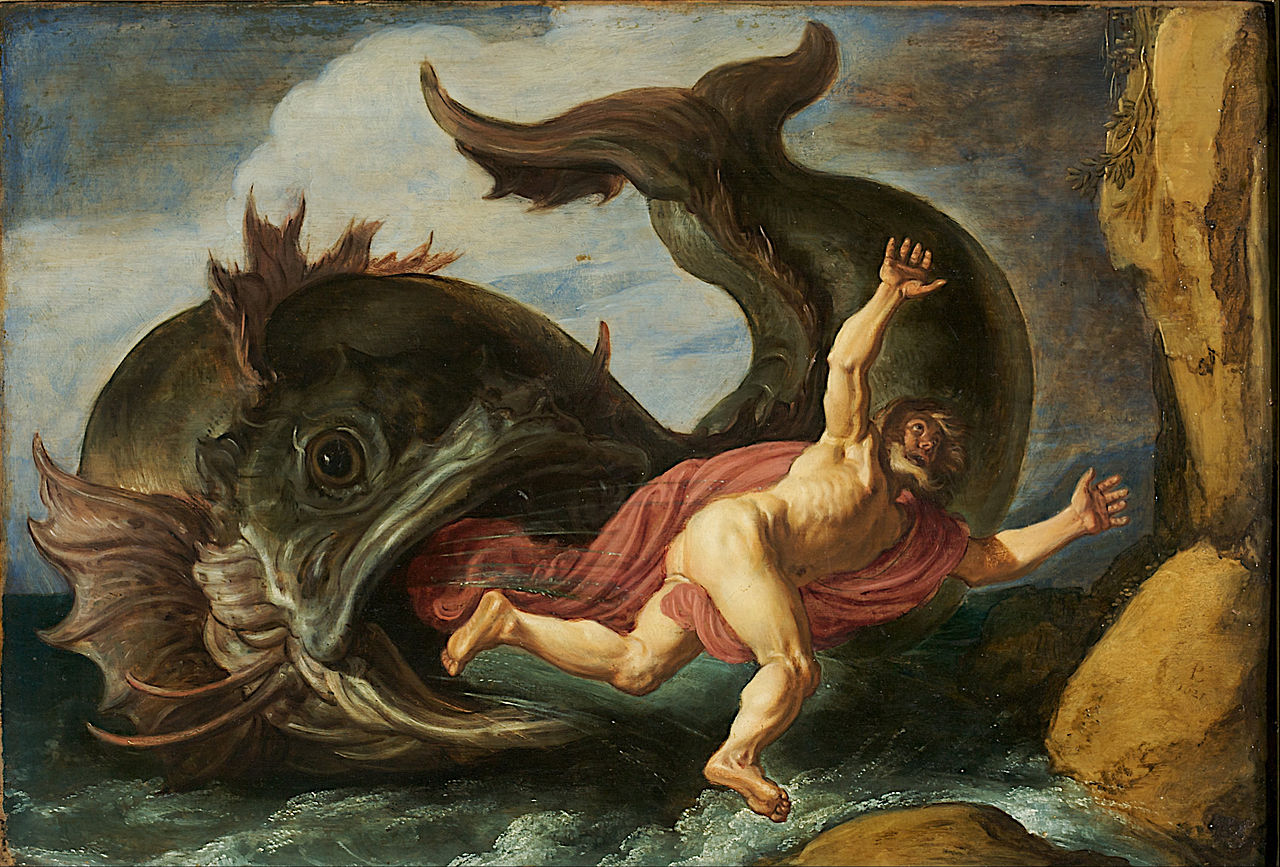
    Jonah and the Whale (Jonas uitgespuwd door de walvis), 1621, Pieter Lastman | Wikimedia Commons.

    Note that the beginning of today’s reading is specific about who speaks to Jonah: “the word of the LORD.” This is the second person of our triune God, the one who became flesh in Jesus Christ. With Jonah, he displays God’s eternal forgiveness and desire to work with and through us in the world. While Nineveh would have taken three days to walk through, the people listen to Jonah on just his first day, much to his surprise. In fact, everyone, king included, puts on sackcloth, repents, and asks God to be spared. Jonah, unwilling and unwitting as he is, has done the Lord’s work and brings about a miraculous change in the people that saves them.

    (As an aside, Chapter 4 of Jonah is worth revisiting if you haven’t read it lately. We see a pouting Jonah get angry with God because he was made to look like a fool, since his warning did not come true. He just doesn’t understand that he should rejoice over the success of his mission and God’s resulting mercy. God gives him one last lesson in the matter. Jonah is so relatable! How many times have I been too wrapped up in myself and my worry over embarrassment so that I miss the work of God in the world?)

    Shifting to the gospel reading from St. Luke, Jesus recalls Jonah’s work as well as the Jewish King Solomon in order to show his contemporaries that they are completely missing God in front of them. Christ says,

    At the judgment
    the queen of the south will rise with the men of this generation
    and she will condemn them,
    because she came from the ends of the earth
    to hear the wisdom of Solomon,
    and there is something greater than Solomon here.

    Let’s take a moment to recall this piece of Jewish history as related in the 1st Book of Kings, Chapter 10 . Upon his ascendency to the throne, Solomon demonstrates that he truly loves God and makes many sacrifices to him. He is then visited by God in a dream and told: “Ask what I should give you.” Solomon asks for wisdom to best govern God’s people. This pleases God greatly in that his petition was for the benefit of the nation, and replies, “Indeed I give you a wise and discerning mind; no one like you has been before you and no one like you shall arise after you.” (Note that the Book of Wisdom in the Bible is also known as the Wisdom of Solomon).

    What is the Wisdom of God? St. Thomas Aquinas tells us (and the Catechism of the Catholic Church quotes this), “In God, power, essence, will, intellect, wisdom, and justice are all identical. Nothing therefore can be in God’s power which could not be in his just will or his wise intellect” (CCC 271). Wisdom is part and parcel of God’s intellect and power. And God shares his Wisdom through his Word, which is Truth. Therefore, the Word of God, who is Christ, is the expression of Wisdom, and was a constant companion of Solomon.

    Back to our passage, “the queen of the south” is the Queen of Sheba (Sheba is thought to be either modern-day Yemen or Ethiopia). She hears of Solomon’s fame and “came to test him with hard questions.” She brings a huge retinue with loads of treasures and precious spices. She’s full of unbelief, but after speaking with him and seeing firsthand how he ruled, she exclaims, “The report was true that I heard in my own land of your accomplishments and of your wisdom, but I did not believe the reports until I came and my own eyes had seen it. Not even half had been told me; your wisdom and prosperity far surpass the report that I had heard.” She bestows great treasures upon him.

    Christ, the Word of God, was with both Jonah and Solomon when they performed God’s work in the world, and the Jews of his time were well aware of these histories. So when he says that both the Queen of Sheba and Jonah will condemn them, they understand that these two signify great unbelief that has been converted to belief. To be condemned by the Queen of Sheba and the Ninevites is ignominious indeed!

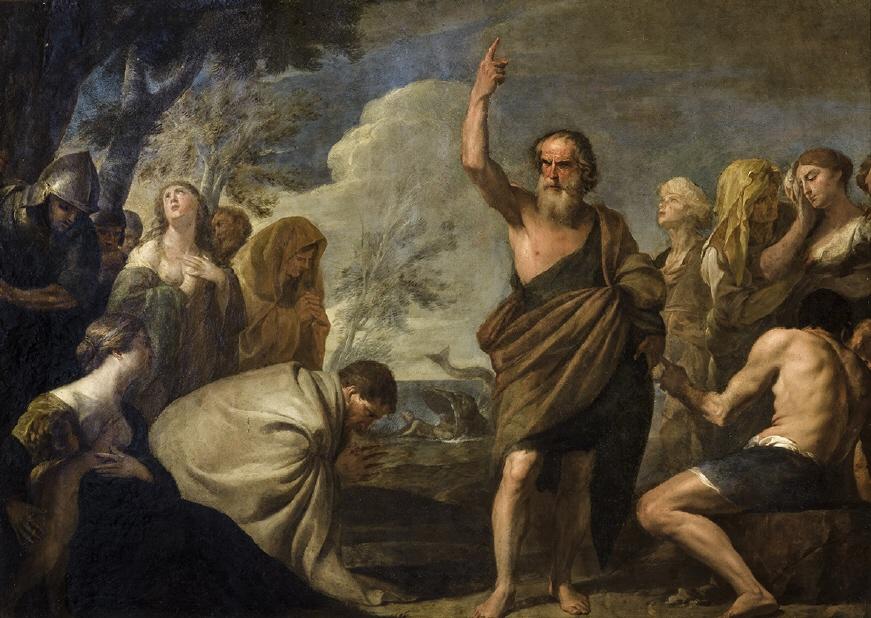
    Jonah preaching in the city of Nineveh (Jonás predicando al pueblo de Nínive), Andrea Vaccaro (1604-1670) | Wikimedia Commons, courtesy Museo de Bellas Artes de Sevilla.

    Jesus does not call them an evil generation because of a general lack of faith in God or a betrayal of his commandments, but because of their lack of faith in him. He says, “At the judgment the men of Nineveh will arise with this generation and condemn it, because at the preaching of Jonah they repented, and there is something greater than Jonah here.” Yes, that something greater is the Word of God in the flesh.

    Unlike the warnings of the prophets in the Old Testament, who were mainly concerned with those disobeying God’s laws, Jesus has a very specific condemnation related to not believing in his divinity. Why is this so important? Because the New Covenant given to us — our new Baptism — relies on the faith that God himself has made a sacrifice in the form of a human in order to open up a new reality of communion with him. If we don’t believe that Jesus is God, then claiming a new reality in Christianity is a sham. Our belief is what will carry us into the salvation that has been granted to us by the grace of God.

    Thus, Jesus has rough words for the generation that does not believe in Him: their condemnation at the final judgment. These are terrifying words. Christ proclaims, “no sign will be given it, except the sign of Jonah.” Jonah’s words that scared an entire city and its king into wearing sackcloth and begging for mercy were, “Forty days more, and Nineveh shall be overthrown!” Christ gives this same sign to the Jews, and the earthquake that shakes the temple and the curtain of the Holy of Holies being torn in half do indeed overthrow the Old Covenant. The new Jerusalem is born: it is the resurrected body of Christ.

    This is one way to understand the “sign of Jonah,” but we might detect a bitterness and vengefulness here. That doesn’t quite fit. God goes out of his way to cure Jonah of his bitterness and vengeful nature at the end of the Book of Jonah. Maybe we need to dwell on what Jesus means by the “sign of Jonah.” He makes a distinction between Jonah’s words and the overall sign that he became: “Just as Jonah became a sign to the Ninevites, so will the Son of Man be to this generation.” The good news here is that the Ninevites listened to Jonah. He did, in fact, save them from destruction. His words were those of condemnation, but the result was repentance. Thus, the overall “sign” Jonah represents is conversion.

    Christ’s warning to those around him is still very real, but he is speaking as if outside of time, seeing the entirety of his earthly mission. He is letting them know that he is a sign from the Father, who wants them to repent and see his Son. That sign is a hopeful one of conversion and deliverance.

    One last beautiful parallel between Christ and Jonah. What do we usually associate with Jonah? The whale! He spends three days in the belly of the whale and then is miraculously spit up on the beach. This is the sign of resurrection. When Jesus says, “no sign will be given it, except the sign of Jonah,” it almost seems like an understatement when you consider that Jonah is the sign of resurrection. What a sign! And, truly, that sign of Jonah launched the Church as the Body of Christ that exists to this day and will exist forever.

    These readings urge us to recognize the significance of Christ as the true Lord and Son of God. May we all recognize that his mission on earth was the most important event in the history of the world.


  • The Life-Giving Word

    The Life-Giving Word

    Tuesday of the First Week of Lent: Isaiah 55:10-11, Matthew 6:7-15.

    The Word of God: could there be a more exciting topic for those of us with English degrees? If your academic training is centered on how words create and describe culture, then the Word of God in scripture is the pinnacle of significance. In addition to literature and cultural studies, we moderns have scientific systems for analyzing words and languages: semiotics (thanks to Ferdinand de Saussure) and linguistics (looking at you, Noam Chomsky), to name some biggies. But humans have always been aware of the power of words. The Judeo-Christian understanding of the Word of God is that it is not just an utterance with theological significance, but the very mechanism of creation. From the beginning of scripture and Jewish consciousness, this has been the case. Imagine if every time you spoke of something, it came to be. That’s the Word of God.

    We read an engaging set of verses about the Word from Isaiah in today’s readings. Suiting the beauty of his imagery, the living Word of God, Jesus, gives us the Lord’s Prayer in the gospel according to Matthew. What a day of readings!

    Isaiah’s verses form a lovely piece of poetry. He says that just as rain and snow water the earth, “making it fertile and fruitful, Giving seed to the one who sows and bread to the one who eats,” so God’s Word “that goes forth from my mouth” will act in the world. We receive a promise from God that his will will, in fact, be done: “It shall not return to me void, but shall do my will, achieving the end for which I sent it.” For me, this is greatly comforting and reassuring. In a world that appears more godless by the minute, I begin to fear God’s will is completely betrayed and somehow lost. But God assures us that his Word is a generative, active force, as reliable and inexorable as the rain that makes the earth fertile. It’s not up to me to make sure God’s will is done (although I pray for it daily); his Word contains all of the power needed to complete his will. Thanks be to God!

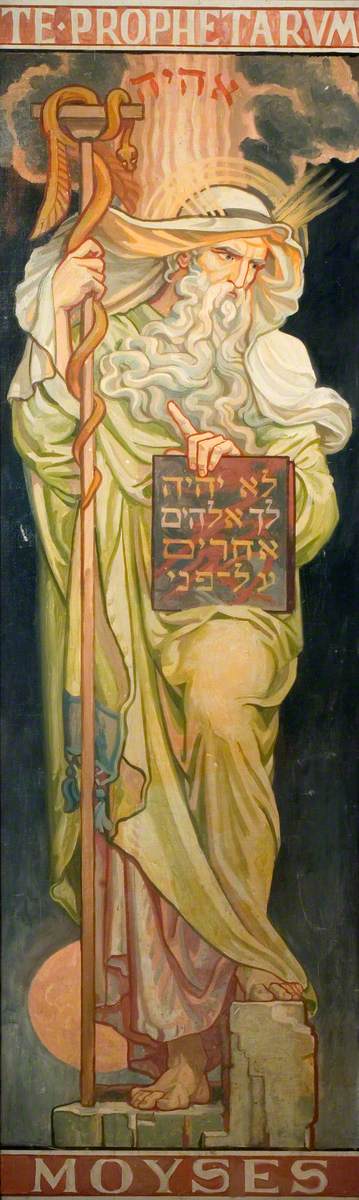
    Stained Glass Design, Moses (1900-1910), Frederick James Shields | Creative Commons, courtesy Bantock House and Park/ArtUK.

    This Word is such an active force — and issues from such an inscrutable source — that Isaiah, just a few verses prior to today’s reading, prophesies to the Jews: “See, you shall call nations that you do not know, and nations that do not know you shall run to you, because of the Lord your God” (Is 55:5). This “calling” of other nations happens 700 years after Isaiah in the form of the Word incarnate, Jesus Christ. Isaiah describes the remarkable spread of Christianity to this day.

    Let us contemplate this amazing Word. The Word of God is evident in the time of promises, in his covenants with Abraham, Moses, David, and other figures in the Old Testament. His Word generates action in the Chosen People, who alternately live out his commands and are blessed or betray them and incur wrath and misfortune. It manifests itself throughout the history of the Jews, not just as words inscribed in stone tablets as if a dead text. In fact, Moses breaks the tablets — they’re not the point; the Word must live actively. The Word continues to flow forth from the mouth of the prophets; it spills into the dreams of men and women; it orients every action recorded about these people.

    And we cast back further to find that the Word always existed. It was the very generative force that made the cosmos. It issues forth from God, both an integral part of him and somehow ontologically separate from him. St. John opens his gospel with perhaps the most complex and beautiful words in all of scripture: “In the beginning was the Word, and the Word was with God, and the Word was God. He was in the beginning with God. All things came into being through him, and without him not one thing came into being” (Jn 1:1-3). Indeed, we hear from Eve in Genesis that they are told about the garden and the forbidden tree from God, so we know that the Word was with them at this point. The Word of God is not made, like the other aspects of the cosmos, but is “with God” and “is God” from the beginning. Even deeper, here, the original Greek word is logos, which does mean word but also means an organizing principle, something that makes meaning.

    And in the opening prologue to John’s gospel, we of course read that “the Logos became flesh and lived among us.” That is, the generative Word of God, the organizing principle of the universe that enables meaning to be made, well, it took on human flesh. Our ancestors in the faith would have recognized the incomprehensible power in this person Jesus Christ, the logos in the flesh, even if it comes to us 2,000 years later as a sort of ho-hum story. Something new happened that ended the time of promises and began the end times: the Word that existed from the beginning is made flesh, has a mother named Mary.

    Is this really the same Word of God that we know has been active throughout the history of humanity? Our Church Father, Origen, verifies this in his Commentaries on John when contemplating the death of Jesus:

    But while it is certainly a man who died, the Truth, Wisdom, Peace and Justice, of whom it is written, “The Word was God,” was not a man; and the God who is the Word, and the Truth, and Wisdom and Justice, is not dead. For the Image of the invisible God, the First-born of all creation, is incapable of death.

    This insight sheds light on the resurrection. It does not diminish the sacrifice in the least, as if the Word of God knew he could not die so Jesus’s Passion and death was just a show. In fact, it elevates the Passion, death, and resurrection because God deigned to truly suffer and die for us instead of ruling the created world in power (simple!) or majestically exiting the scene as an untouchable deity might (like the Greek gods would in their mythology).

    Consider that. The Word of God deliberately chose a specific way of becoming man, revealing the truth in Himself, submitting to human authority, suffering, and offering himself back to the Father in the greatest act of love. This life he led was not an accident and he certainly had as many other options available as you can imagine (and more we can’t imagine).

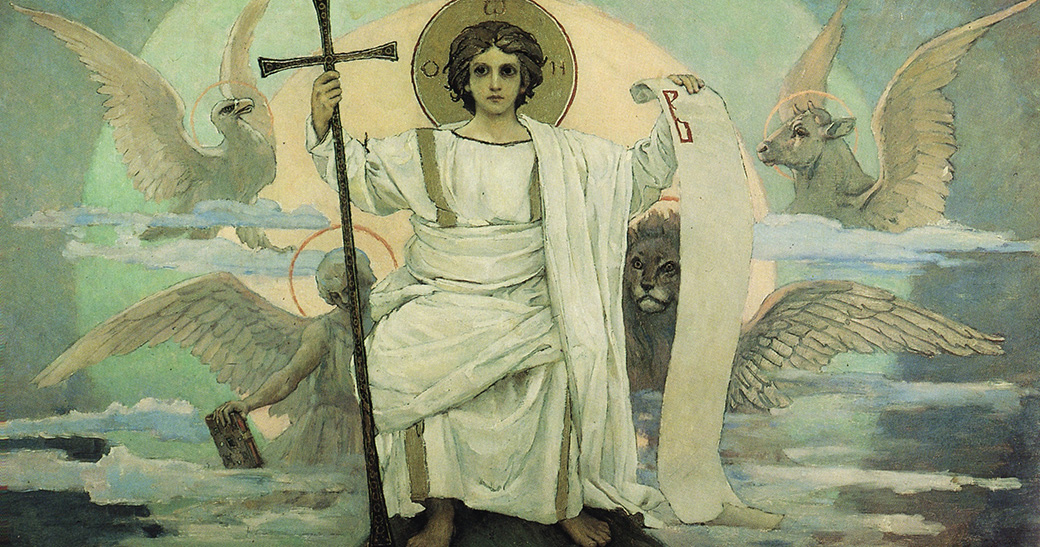
    His only Begotten Son and the Word of God (sketch for a fresco in the Cathedral of St. Vladimir in Kiev 1885-1896), Victor Mikhailovich Vasnetsov | Wikimedia Commons

    Why? What causes the invincible Word of God that made all of creation choose such a torturous existence as a human? It might just be that it is the perfect way for Jesus to be the ultimate teacher as well as the very method of our salvation. As a simple man who bleeds and suffers, he is our brother, yet as the life-giving Word, he alone can accomplish our salvation. As a human like us, he demonstrates in his life how to have a relationship with the Father, but as God he brings the reality of the Father into the world to forever change it. He is both the role model and reality being modeled.

    This brings us to the reading from Matthew where Jesus inhabits the role of teacher when he says, “This is how you are to pray.” And then we are given the Lord’s Prayer, the depths of which are too great to plumb in a simple blog post. If you want to better understand the meaning of the Lord’s Prayer, read Pope Benedict XVI’s book Jesus of Nazareth, which contains a great 40-page chapter devoted to the Lord’s Prayer.

    But let us note just a few things. We hear echoes of Isaiah’s verses in “thy will be done, on earth as it is in heaven.” Remember, God promises that his Word “shall not return to me void, but shall do my will, achieving the end for which I sent it.” Thus, we signal our acceptance of how the Word acts in the world, and we give it our blessing, our hope for its speedy success. 

    The second thing that strikes me is the verbal equation, “and forgive us our trespasses, as we forgive those who trespass against us.” I’ve always wondered why this isn’t stated the other way around, i.e., “as your father forgives you, you should forgive others.” I think my confusion stems from the use of the word “as,” which I typically take to mean “in the manner.” Thankfully, today’s reading includes the verses following the bestowal of the Lord’s Prayer, where Christ doubles down on the formulation and explains what He means: “If you forgive men their transgressions, your heavenly Father will forgive you. But if you do not forgive men, neither will your Father forgive your transgressions.” Aha! I should be reading it in this way: “forgive us our trespasses if we are able to forgive those who trespass against us.” Even if we do everything according to His will (such as forgiving others), we must also pray for his grace and salvation, which is not guaranteed, but a gift.

    As we return to Isaiah’s verses that God’s Word will make the earth fruitful and do his will, we are struck with just how true this is and in how many ways we can see it. God’s will that we are brought into perfect communion with him: the liturgy is established by the Word made Flesh; his will that men testify to his truth at the risk of their own lives: the saints and the martyrs; his will that we love our neighbors as ourselves: countless acts of true charity done in the name of the Lord. Christ the Word has made this possible on earth in a way it was never possible before his great sacrifice.