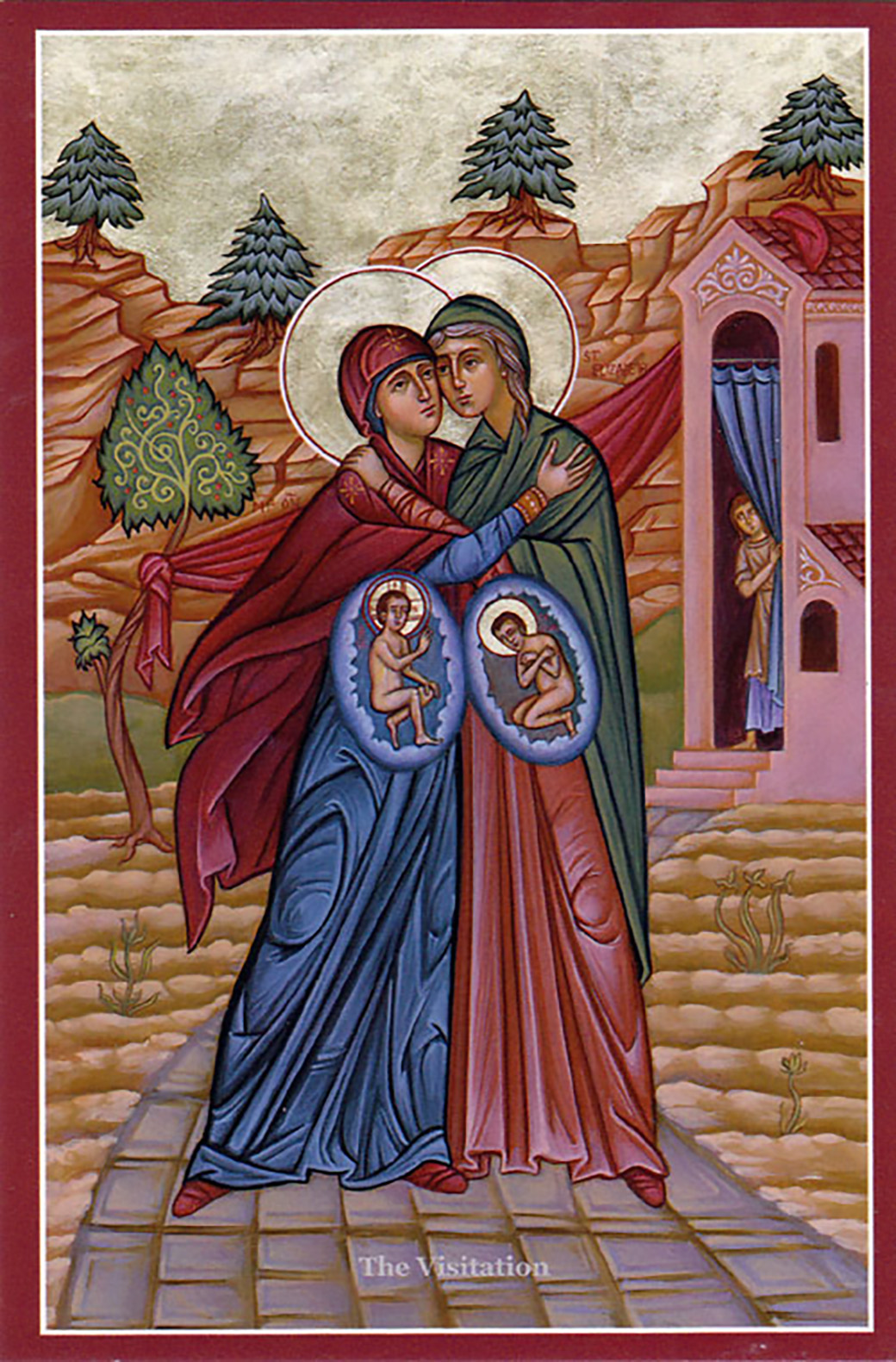
Category: Year B

  • Pray for your Persecutors

    Pray for your Persecutors

    Saturday in the First Week of Lent: Deuteronomy 26:16-19, Matthew 5:43-48.

    Today’s readings spell out our compact with God in a nutshell. He will make us sacred and all he asks in return is that we love unconditionally. We will ponder today how difficult it is to love those who hate us and are mean to us, but let’s consider for a moment the flip side. How easy and generous this covenant is! After all, loving is the best feeling one can possibly have. Not just easy love for someone who’s nice to you, but also that generous love for a stranger when you give them a coffee or a blanket. God is not trying to lead us down a necessarily onerous path (although the Cross is part of the path) — He has infused this world with grace and His Spirit and nothing is greater than union with God’s grace and Spirit. They lift us up, give us strength, reveal beauty, and elevate our souls. This feels good. As Jesus tells us, “Take my yoke upon you and learn from me, for I am gentle and humble in heart, and you will find rest for your souls. For my yoke is easy and my burden is light” (Mt 11:29-30).
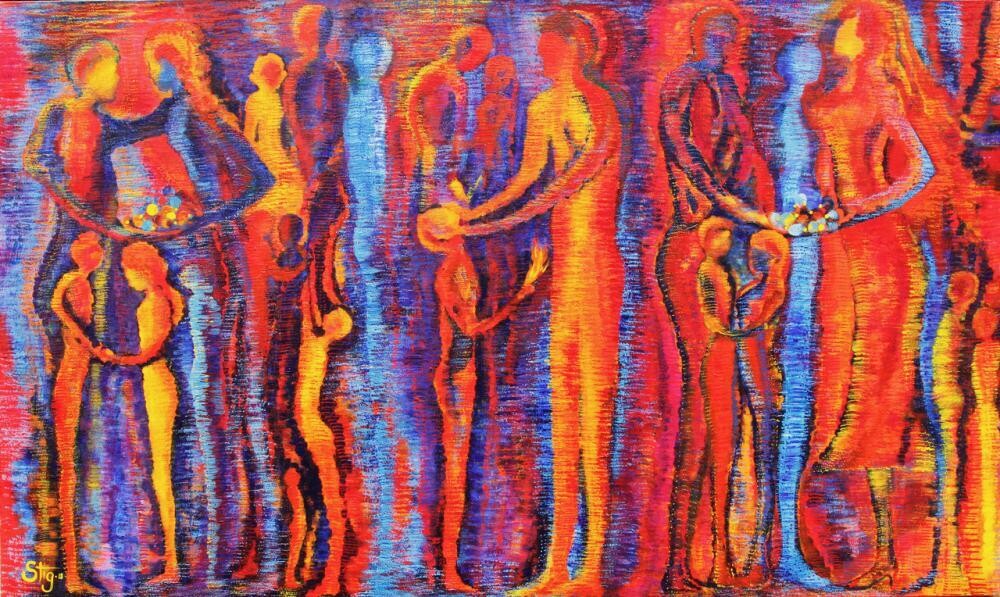
    Generosity (contemporary), Stig Lofnes | Image from silapix.com.

    For those like St. Thomas Aquinas, who believe our capacity for reason is an essential part of our spiritual being and scientific pursuits can aid our ability to know God’s wondrous works, the 2010s were a boom decade in happiness research. Several studies showed that people reported increased happiness when engaging in generous behaviors like giving sweets or money to others rather than keeping these things for themselves. This is “light” social science, but the hard sciences back this up.

    In the 2017 article “A neural link between generosity and happiness,” the authors use functional MRI to show that specific regions in the brain linked to happiness controls are more active in people practicing generosity: “Generous decisions engage the temporo-parietal junction (TPJ) in the experimental more than in the control group and differentially modulate the connectivity between TPJ and ventral striatum. Importantly, striatal activity during generous decisions is directly related to changes in happiness.”¹ So science has finally showed a physical manifestation of something God has been urging us to do since we’ve been human! Listening to God’s Word and practicing charity undeniably makes us feel good.

    So why is it seem to be so rare?

    We can’t forget that we’re living in a fallen world, the devil’s world. Jesus acknowledges this, for instance, before his Passion and Death in John’s gospel: “Now is the judgment of this world; now the ruler of this world will be driven out” (John 12:31).

    St. Paul writes several times how Christians, the children of light, must continue what Christ started and dispel the darkness of the world. He describes the action of Satan: “In their case the god of this world has blinded the minds of the unbelievers, to keep them from seeing the light of the gospel of the glory of Christ, who is the image of God” (2 Cor 4:4). And the devil’s primary mode of blinding us to the truth is through our senses, through temptations that beguile us and ensnare us into believing that we must fulfill our desires at all costs.

    The redemption of the world out of the clutches of the devil won’t be complete until the Judgement Day and Christ’s return. Until then, we struggle with temptations contrary to God’s law. This is our cross to bear, and why Jesus tells us, “If any want to become my followers, let them deny themselves and take up their cross and follow me” (Mt 16:24).

    The struggle is real. St. Paul writes to the Romans about the inner conflict between knowing what’s right but still doing the wrong thing: “For we know that the law is spiritual; but I am of the flesh, sold into slavery under sin. I do not understand my own actions. For I do not do what I want, but I do the very thing I hate” (Rom 7:14-15). He speaks of being sold into slavery under sin, that is the original sin of Adam and Eve that cursed humanity to be subjects of the prince of the world, Satan. 

    Yes, the struggle. This is why God and Moses are so forceful in setting the commandments before the Jewish people. God knows that, in our fallen state, we need strong guidance, a strong dose of His truth in order to sustain our moral fiber. Moses says, “This day the LORD, your God, commands you to observe these statutes and decrees. Be careful, then, to observe them with all your heart and with all your soul.” In just the short passage from Deuteronomy in today’s first reading, we hear “command,” “observe,” “walk,” “hearken,” and “keep.” On the other side of the equation, we hear twice that God has “promised” them in return and twice that this is an “agreement.”

    If it feels a little bit like a parent repeating himself to his wayward child in order to impress upon the child the need to do the right thing, well, it is exactly that. But the promise is so great. In no uncertain terms, God promises to reverse the curse that He placed on humanity via Adam and Eve: “you will be a people sacred to the LORD.” 

    This return to a sacred state from our fallen state, as we know, comes through His Son and the great sacrifice to expiate our sins. God’s patient plan is to cultivate his Chosen People to be the receptacle of his divinity (Mary, that is) and the first recipients of his mercy and grace. 
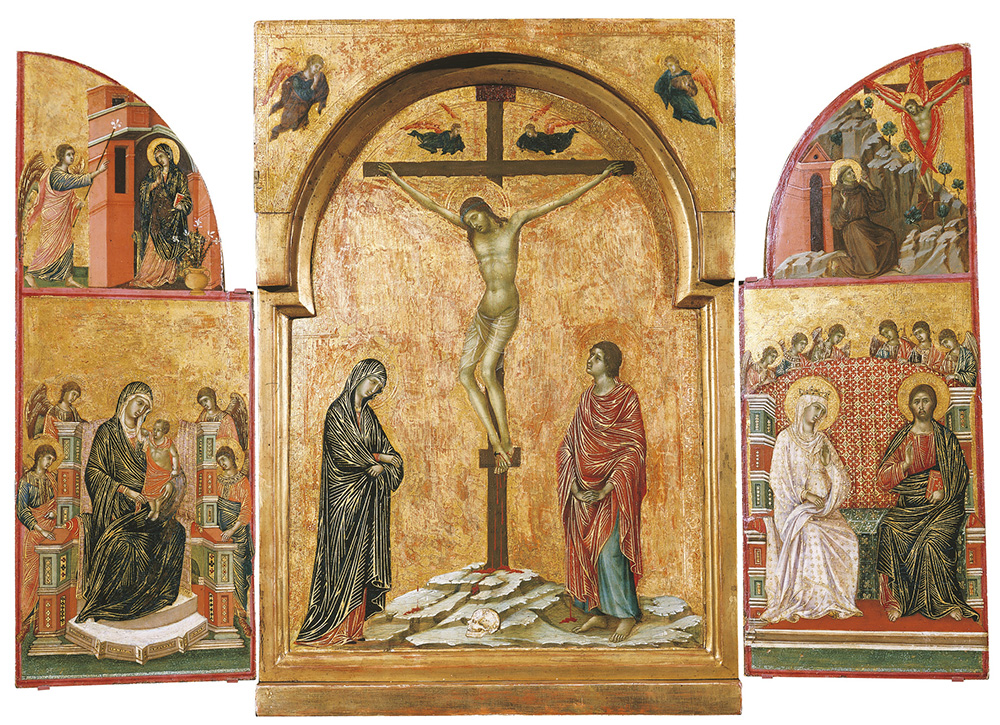
    Triptych: Crucifixion and other Scenes (1302-1308), Duccio di Buoninsegna | Creative Commons, courtesy the Royal Collection Trust, England.

    But Jesus perfects our understanding of the Ten Commandments when he comes. Today, he teaches, “You have heard that it was said, You shall love your neighbor and hate your enemy. But I say to you, love your enemies, and pray for those who persecute you.” The “hate your enemy” part was not in the Ten Commandments but rose instead as a cultural tradition, which is why Jesus must correct it.

    He explains that if we want to be a people sacred to the Lord, we must truly be worthy to be called his children; we must act like Him: “that you may be children of your heavenly Father, for he makes his sun rise on the bad and the good, and causes rain to fall on the just and the unjust.” It’s a lovely sentence to describe the indiscriminate love of the Father, because sun and rain are life-giving aspects of creation that God has created to nourish us. Jesus ends with, “So be perfect, just as your heavenly Father is perfect.” Tall order! This is the call of sainthood. But then, the reward couldn’t be greater, to reclaim our status as a people sacred to Him.

    OK, it’s time to get real with ourselves. Is perfection possible? Even just this one commandment, to love everyone, to pray for your persecutors? Let’s say that we are faithful people, that we cultivate a relationship with God in prayer and receive the sacraments as part of the Church on earth. Let’s say that we even make a point not to have “enemies,” per se. That is, even if people do evil against us, we forgive them and do not harbor hatred for them, making them an enemy. Is that the same as loving them?

    Can we remind ourselves to literally pray for the person who is being mean to us or making the planet a worse place by their greed and pride? Reason tells me that I would need a heck of a thick skin not to react badly to someone road raging at me or yelling at me in a store for no reason other than they are having a crappy day. Practically speaking, I think I would need tons of patience and tons of practice.

    While these practical considerations might be true to an extent, the one thing I’m not relying on here is God’s grace. If we are trying to be loving, wouldn’t it make sense to appeal to the author of love itself? Let’s be honest, we can’t do this on our own — our sense of pride and injustice is too great to have someone scream at us unreasonably and meet them with love in return. Or have someone drag us to court unfairly and meet them with love in return. Or have someone want to silence us, arrest us, beat us because we are different than them … and meet them with love in return.

    Thankfully, God made us more than just physical creatures. We are spiritual creatures! We have something available to us that elevates us from being mere animals and we need to enter into “that mysterious encounter known as prayer” (CCC, 2567). If we can shut off our knee-jerk response for just a moment and enter into that mystical space of prayer, it immediately helps us. Just closing your eyes and reaching out with your soul to ask God for help has a calming effect in my experience.

    We have many saints as role models for us. We also have modern role models who have dealt with some of the worst persecution outside of war — I’m speaking of icons from the civil rights movement, specifically Dr. Martin Luther King, Jr. Facing blind hatred from white supremacists, politicians reluctant to enact change, and a black populace vacillating between violent retribution and nonviolence, King’s words came from his deep Christian spirituality: “Darkness cannot drive out darkness; only light can do that. Hate cannot drive out hate; only love can do that.” King’s statement moves beyond the internal struggle to acknowledge the spiritual forces at work.

    If we do not consider that we are caught up in a much bigger world than what we perceive with our senses, we are blind to truths that we are called to understand. King helps us remember what Jesus had to say about his own Passion and Death — that it was about vanquishing Satan and death, not about his feelings or pride. I particularly like another quote from King: “I have decided to stick with love. Hate is too great a burden to bear.” He knew that beyond the emotional burden of hate, the burden of sin was much too great to carry.
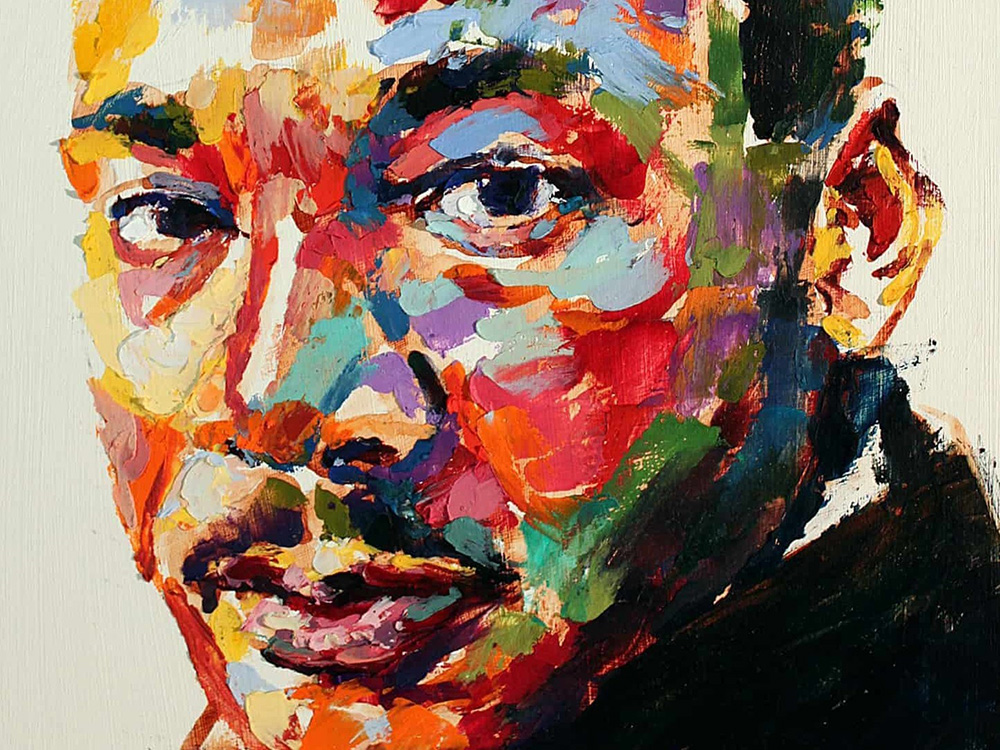
    Martin Luther King, Jr. (2013), Derek Russell | Image from mccall.com

    Look at a video recording of what King had to deal with and realize that if he could channel love in the face of the hate he endured, it should be a piece of cake for most of the rest of us.

    As we keep our sights on being perfect just as our heavenly Father is perfect, Let’s remember that God knows what it’s like to be human. Jesus acknowledges the limitations of our minds and bodies to his favored apostles this when praying at the Garden of Gethsemane: “Stay awake and pray that you may not come into the time of trial; the spirit indeed is willing, but the flesh is weak” (Mt 26:41). This added gift from God is that he showed us his willingness to become completely human and experience the same weaknesses we experience. There’s some experiential empathy for you. He gives us the sacrament of Reconciliation to help us return to him with a clean soul again and again. And he gives us the richness of his Word to explore over and over in order to help us slowly, painfully, resist hatred and enmity, replacing it with the spiritual ballast of prayer. 


    ¹ Park, S., Kahnt, T., Dogan, A. et al. A neural link between generosity and happiness. Nat Commun 8, 15964 (2017). https://doi.org/10.1038/ncomms15964
  • The Problem with Little Sins

    The Problem with Little Sins

    Friday in the First Week of Lent: Ezekiel 18:21-28, Matthew 5:20-26.

    Most of us understand when something is evil because that word itself conjures the sense of serious moral wrong. Murder, for instance, is clearly evil, and hopefully we feel the same about stealing, cheating, and adultery.

    When we get to lying, things get a bit more vague. There’s that convenient category of “white lies” wherein we place our untruths not done out of malice but out of some other interest (often mistakenly considered “the other person’s own good”). I’d like to ponder this category of white lies because it attempts to bring the spirit of Christ’s words today to weaken the law that He also upholds.

    It’s a good example of how crafty we are in trying to turn a blind eye to venial sins.

    White Lie (2010), Erin Harper Vernon | Image from erinharpervernon.com.

    In the first reading, Ezekiel explains the repercussions of following or not following the moral law set by God. God speaks through Ezekiel: “If the wicked man turns away from all the sins he committed, if he keeps all my statutes and does what is right and just, he shall surely live, he shall not die.” Now some Jewish scholars and rabbis did interpret this as an eschatological “life and death,” meaning that God was speaking of eternal life in Heaven or death in Sheol. But many Jews heard this as a life and death on this earth, which implies that God’s retribution was like an instant karma type of thing (for instance, the Sadducees did not believe in resurrection).

    God continues by speaking of his relationship with us: “None of the crimes he committed shall be remembered against him; he shall live because of the virtue he has practiced.” A few notes here: first, we hear the great tenet of the Judeo-Christian faith, what the Jews call teshuva, or the ability to repent and be forgiven by God. God promises that he will not remember — completely forget! — the sins of a wicked man who turns from his sins and practices virtue. We sometimes continue to punish ourselves for past sins even after confession, so it’s important to realize that from the very first revelations to the prophets, God shares this aspect of his love for us.

    Second note: our spiritual life or death is inexorably tied to a relationship with God, not just our virtuous actions. It is not our virtuous actions by themselves that grant us spiritual life in the Kingdom, but God’s forgiveness as part of his covenant with us. This should make us want to avoid a “cold” virtuous life, where we are simply doing what is right because that’s what we’re supposed to do. We need to encounter Him at some point, in some way, and the more we encounter and embrace his love, the more we’re on the path to spiritual life in the Kingdom. God wants to make this personal.

    Ezekiel proclaims, “Do I indeed derive any pleasure from the death of the wicked? says the Lord GOD. Do I not rather rejoice when he turns from his evil way that he may live?” I just love the idea that God can derive pleasure and rejoice when we turn away from evil. Maybe it’s the thing in me that wants to please, but I can’t think of any greater calling than to cause delight in the Lord. As the source of good, he also reassures us that he’s not a deity who cackles with glee when it comes time to punish evil. This causes him no joy; he wants us all to join him in Heaven.

    As we turn to the gospel reading, we are again plunged into St. Matthew’s account of the Sermon on the Mount. It starts with God’s call to be greater even than those who represent the pinnacle of Jewish observance of the law: “unless your righteousness surpasses that of the scribes and Pharisees, you will not enter into the Kingdom of heaven.” Whoa! What is a regular, workingman Jew or Gentile supposed to think of this?

    Today’s gospel doesn’t show us, but this comes at the end of the section where Jesus proclaims, “Do not think that I have come to abolish the law or the prophets; I have come not to abolish but to fulfill … whoever breaks one of the least of these commandments, and teaches others to do the same, will be called least in the kingdom of heaven; but whoever does them and teaches them will be called great in the kingdom of heaven” (Mt 5:17, 19). I want to examine his specific phrasing here — Christ is not speaking of just obeying the law but of (dis)obeying and teaching others to do the same.

    Why does this matter? Because Christ’s entry into history has started the End Times, where we all receive a share in his divinity. By being baptized in the blood of Christ’s sacrifice, we emerge from our baptismal waters as new people, part of the Mystical Body of Christ. Thus, when we teach others something wrong, we are attempting to corrupt a very part of the divinity of Christ. Conversely, when we uphold the law and teach others to do the same, we are upholding our New Covenant with God, affirming the divinity of Christ in humanity, and bolstering the mystical relationship between our spiritual health, God’s love for us, and the love we pour out on each other in virtuous actions of charity.

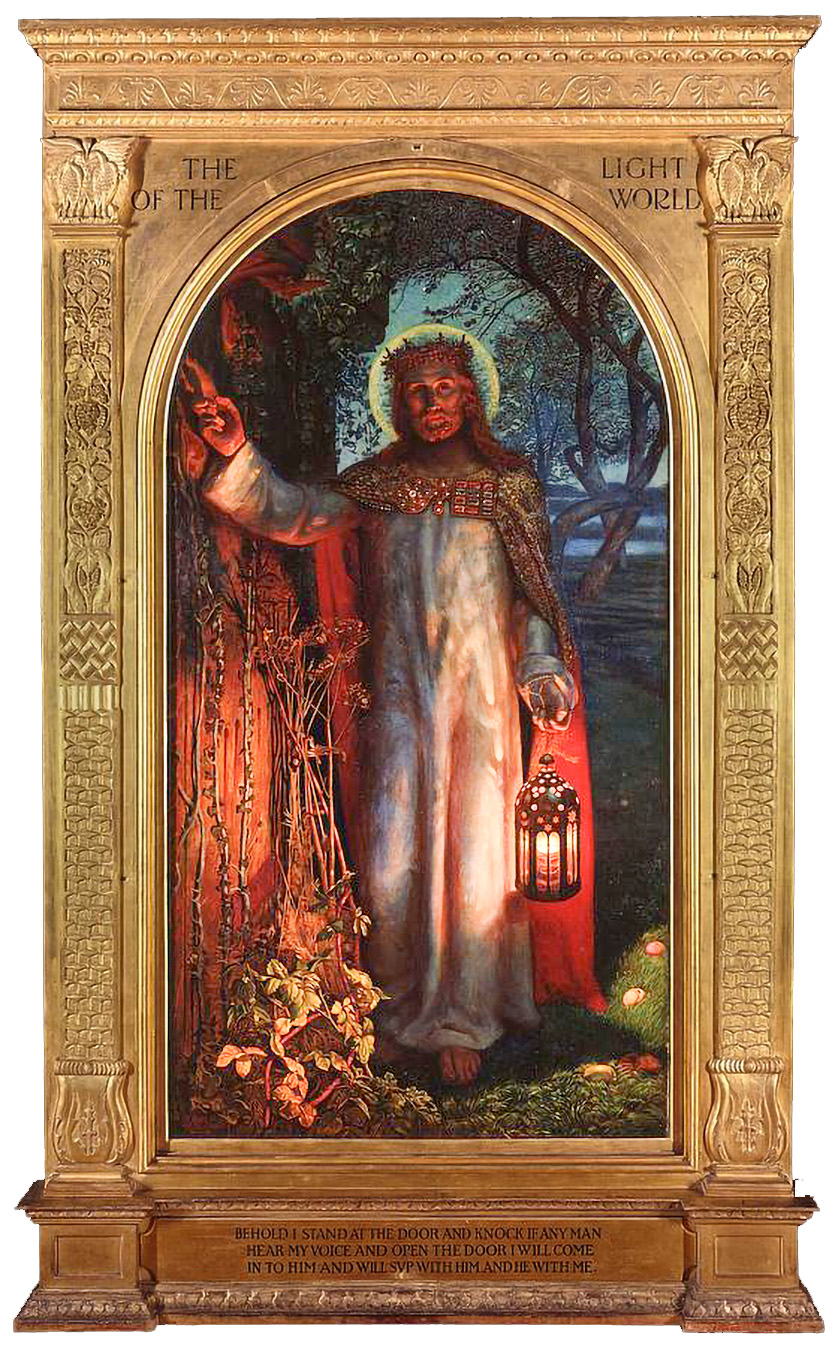
    The Light of the World (1853-54), William Holman Hunt | Image from pixels.com.

    Then, Jesus delves into the seeming differences between mortal and venial sins. He acknowledges that we all are familiar with the law of mortal sin, that You shall not kill, adding, “But I say to you, whoever is angry with his brother will be liable to judgment.” Jesus seems to impose an impossible obstacle for our entrance to the Kingdom. He is equating unspoken and unacted upon anger with murder! How can we be this perfect?

    It helps to dig into the heart. What these share is evil intent. Our anger puts us in a position of opposing another person to such an extent that we wish to enact some type of violence — a verbal insult, public scorn, physical violence, etc. This reflects an attitude of hate, not love, where we no longer consider that person a brother or sister but instead see an enemy or an opponent. In this state of anger, we no longer abide by the spirit of the law. Murder is just an extreme physical manifestation of the same spiritual low point.

    Thus, Jesus wants to point out that it’s not just adherence to the outward details of the law, but an equal adherence to the spirit of the law that makes one righteous. He points out the hypocrisy of the Pharisees and Scribes throughout his ministry, and today’s teaching is an expansion of why he is upset over hypocrisy. His point here is the same as when he says, “They tie up heavy burdens, hard to bear, and lay them on the shoulders of others; but they themselves are unwilling to lift a finger to move them” (Mt 23:4). The spirit of their actions is not God’s Spirit of helping the downtrodden.

    The Law is in place to help us become more God-like, and when they place “heavy burdens” upon others (i.e., religious prescriptions) rather than helping and loving others as God does, they are no longer operating within God’s law, even though they seem to be. To rephrase Christ’s lesson here, we must allow the Holy Spirit to re-orient us in everything we think, say, and do. Otherwise, we are just as far from God when we think hateful thoughts as we are when we act them out.

    This lesson from the Incarnate Word of God is, as we would expect, the same that he shared with Ezekiel 600 years earlier. God wants to emphasize his intimate relationship with us and our salvation. He is trying to tell us that he wants a personal relationship with us; he wants us to get close to him in mind, spirit, and action.

    Fr. Reginald Garrigou-Lagrange, the great 20th century Dominican spiritual master, can help us understand why venial sins are so destructive and to be avoided. He points out that while mortal sin is like committing spiritual suicide, “He who falls into venial sin impedes the action of God from exercising itself freely on him, and little by little ruins his spiritual health just as the alcoholic ruins the health of his body” (Knowing the Love of God, 16). I appreciate the analogy here — I can see how venial sins are somewhat addictive in that we fall into the habit of doing them because we think they’re no big deal, and I can see how they are spiritually destructive. We constantly make excuses for ourselves when we commit venial sins, specifically of the vein, “I didn’t mean to do something bad.” We are trying to excuse the slight against God and fellow human.

    Garrigou-Lagrange is unsparing in his assessment of what sin means: “Sin is not only a foolishness and a vileness, but considered in relation to God it is also the blackest ingratitude, the greatest injustice, and the gravest outrage” (21). This is where I want to go with this reflection: how do we hurt our relationship with God when we sin?

    Garrigou-Lagrange justifies his statements about ingratitude, injustice, and outrage against God by reminding us of his sovereignty as Creator of the Universe. He writes, “God, the Creator, has full rights over our life. As supreme overlord He has the right of possession over our mind and our heart, and this right, more absolute than any of our property rights, remains binding even if we forget it” (21). What a wake-up call for us. We are so used to imagining that we are independent actors in the world, sovereign over our own bodies and minds, that all our cultural messaging argues to the contrary of God’s primary sovereignty.

    Contemporary American rhetoric over “rights,” in particular, is an extreme example of how we imagine that the most inviolable thing in the world is our right to do as we see fit within the law (or change the law if it’s inconvenient). But how wrong this is! The most inviolable thing is God’s sovereignty, and we are his subjects. We owe him our faith and loyalty and his Law is not to be changed in any way. This does not sit easy with the contemporary imagination.

    Of course God is no tyrant and, instead of forcing our obedience, he gives us the free will to obey or disobey, to grow closer to him or to push him away. As we’ve observed in prior reflections, he has called out to us before we searched for him. And he constantly offers us his grace. That is where we start.

    Thus, as Garrigou-Lagrange points out, “In the present, in the very instant in which it is committed, venial sin deprives the soul of a precious grace. In that instant, grace was offered us to make progress in perfection, to be charitable, fervent, and industrious … Now this grace has been lost by our neglect, our laziness, and our limited charity” (23). Perhaps if we start thinking of our venial sins in this way, as a moment when we pushed away the grace that could have perfected us, we will become more aware of the fact that they are sins.

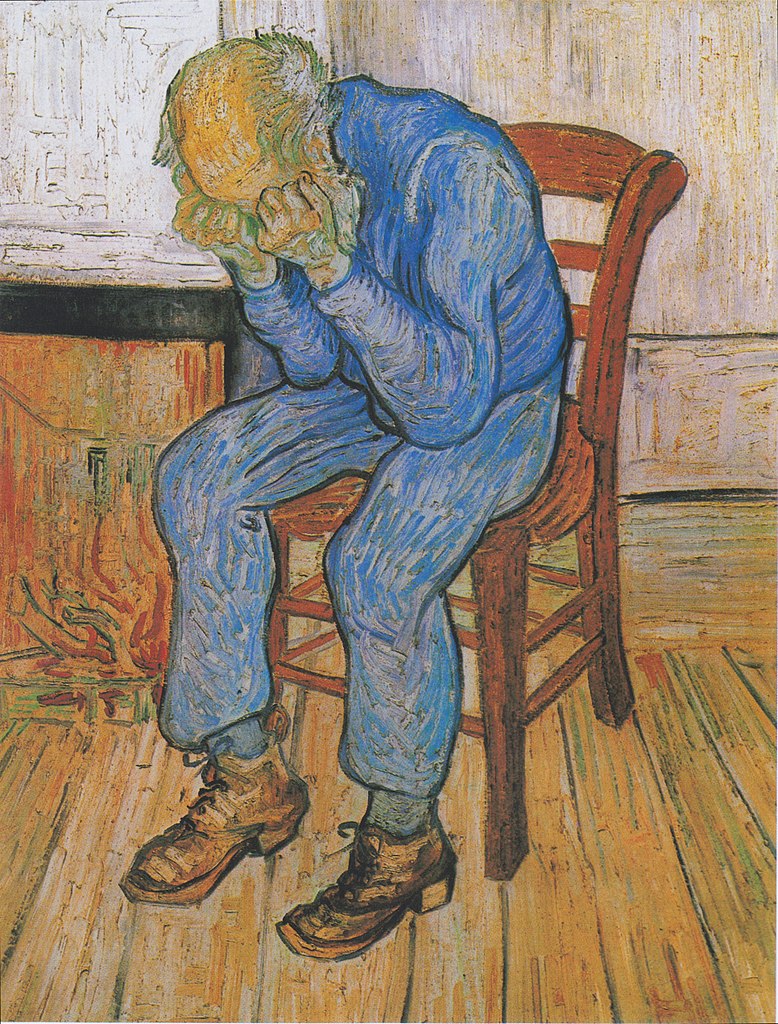
    Sorrowing old man (“At Eternity’s Gate”), 1890, Vincent van Gogh | Wikimedia Commons.

    I want to circle back to the idea of “white lies.” This might be the most common type of venial sin and it is a real perversion of Christ’s teaching in the gospel today. We justify white lies by saying that we are operating under a spirit of goodness. We don’t want someone to get overly upset by the truth, or we want to shield them from difficult truths, so we lie. But Jesus doesn’t say that the spirit trumps the letter of the law. Upholding the spirit of God’s goodness is part and parcel of the Law that also prescribes a specific way of action. The basis of these prescriptions are the Ten Commandments and the Beatitudes. We can’t justify breaking the command to be truthful by saying we meant well. Let’s remember St. Paul’s great words to the Ephesians: “For once you were darkness, but now in the Lord you are light. Live as children of light” (Eph 5:8).

    Both readings today display how God wants us to convert to Him, fully and unreservedly. Unless we’re in a monastery, praying constantly, it’s easy for us to be tempted to venial sin and turn our backs to God’s offer of grace. But that’s why Lent is so important, so that prayer, fasting, and acts of charity can help us fight temptations and remain close to God. 

  • Divine Mandate

    Feast of the Chair of St. Peter: 1 Peter 5:1-4, Matthew 16:13-19.

    Today the Church celebrates the moment when Christ entrusted His Church to a particular, flawed man. It is called the Feast of the Chair of St. Peter, and while there is an actual chair at St. Peter’s Cathedral in Rome said to be the one upon which Peter actually sat (although scientific dating shows the current chair to be no older than the 6th century), the feast is about much more than a relic. The chair is a type of throne, which symbolizes the earthly sovereignty of Peter over the Church, a position of authority that is passed to each Pope who occupies Peter’s Chair over the centuries. That last sentence is enough to make any dedicated Protestant writhe in consternation, I know. But Christ’s words (and the attestation of the other Apostles in other parts of scripture) are unequivocal. Rather than debate the merits of the papacy, I’d like to reflect on the astounding moment when Divine Will joined the mystical Church to our very earthly, undoubtedly flawed humanity.

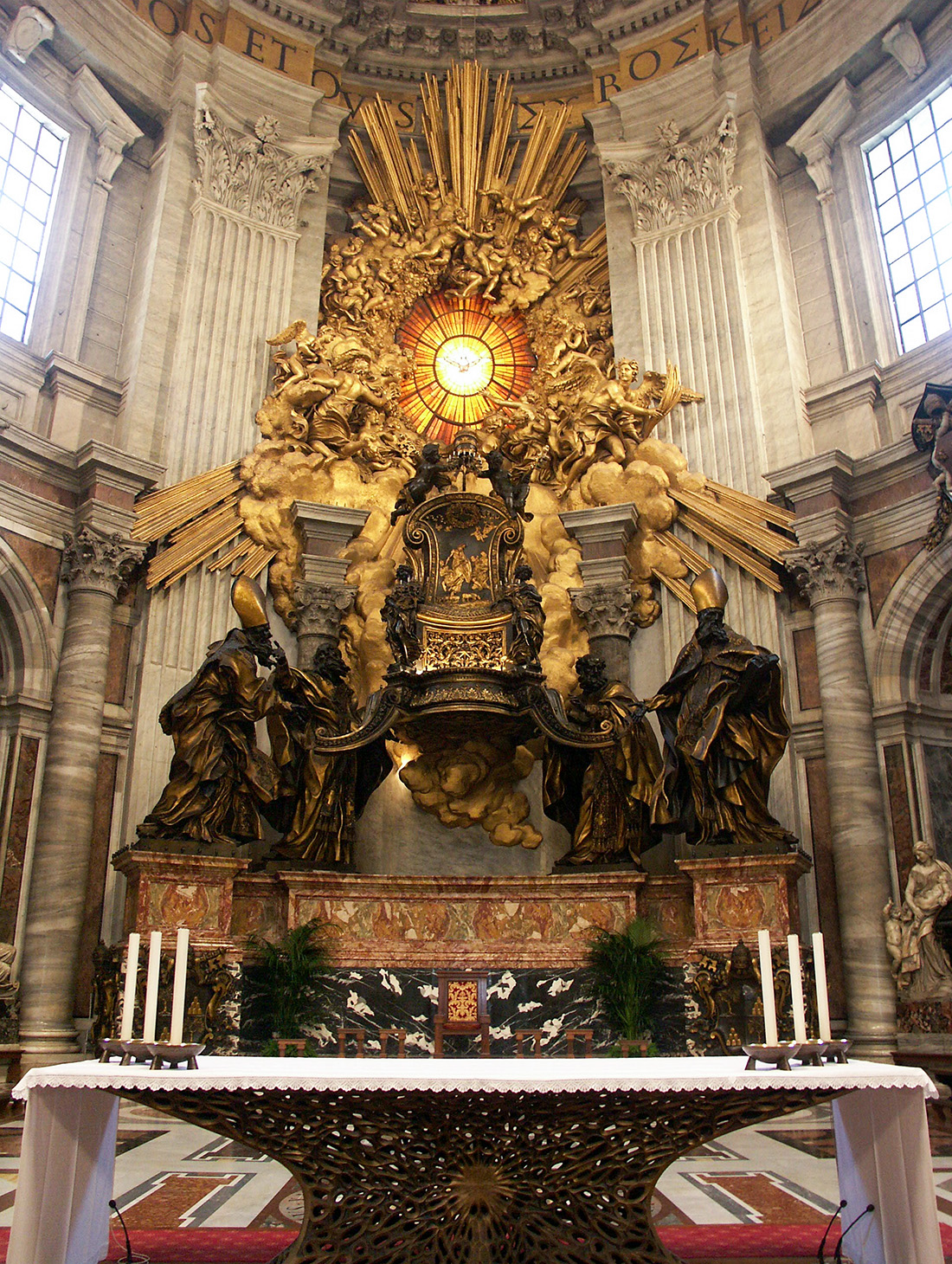
    Altar of the Chair of St. Peter (1657-1666), Gian Lorenzo Bernini | Wikimedia Commons. From the Guide to St. Peter’s Basilica: “This structure is a brilliant creation by Bernini, designed to display the chair on which, according to ancient tradition, St. Peter sat and taught Roman Christians. Pope Alexander VII had the ivory-covered chair put into the gigantic bronze cathedra, with the statues of the Doctors of the Church, St. Ambrose and St. Augustine of the Roman Church and St. Athanasius and St. John Chrysostom of the Greek Church. The religious significance is extremely clear. The Doctors of the Church were always consistent with Peter’s teachings as they expounded theological doctrine. The gospel does not change because the Holy Spirit, portrayed as a dove flies along the span of the centuries, assisting and accompanying its church. The chair or cathedra of Peter symbolizes the perpetual continuity of the doctrine and its promise of infallibility. It triumphed over all heresies throughout the centuries.”

    Today’s gospel reading is that seminal moment when Simon Peter professes faith in Christ and Jesus bestows on him a new identity and the keys to the kingdom. When Simon Peter declares, “You are the Christ, the Son of the living God,” Jesus replies, “Blessed are you, Simon son of Jonah. For flesh and blood has not revealed this to you, but my heavenly Father.” Let’s consider how Jesus responds — it’s not “that’s right! you finally got it!” It’s an acknowledgement and declaration that the Father has finally blessed a particular person with the knowledge of the Son’s deepest identity. This foundational moment of the Church must be understood primarily within the relationship of the Trinity, where another human has been taken into their mystical embrace for the specific vocation of leading Christ’s Church in the time to come. As Fr. Erasmo Leiva-Merikakis writes in Fire of Mercy, Heart of the Word, Vol II, this moment is “an intimate communication among four persons — the Father, Jesus, and Peter, by the power of the Holy Spirit — in the presence of the whole assembly of the Church [i.e., the apostles gathered together that day]” (519). In other words, it was the Spirit that moved Peter to respond correctly to Christ’s questions, with a truth planted in him by the Father. Just as Mary is “blessed among women,” Simon Peter here is “blessed” among men to have been chosen by the Father and acted upon by the Spirit.

    After He acknowledges the work of the Father and the Spirit in this man, Jesus declares: “And so I say to you, you are Peter [Petros], and upon this rock [petra] I will build my Church.” Peter’s new, God-given name is clearly meant to identify him as the foundation stone upon which any house must be built. Leiva-Merikakis asserts, “we must not overlook the fact that from the outset the Lord makes it crystal clear that it is he himself who remains supreme initiator, architect, and agent in the building of the Church, while Peter receives from Jesus the role of necessary instrumentality: he is the rock upon whom Jesus builds and the steward who, like Eliakim (cf. Is 22:21-22), receives from his master the administration of the keys to his house. By no means can Peter ever act on his own initiative, but only in the service and at the command of his Lord” (520). Simon has become a new man, joined in service by divine fiat. It is fitting that Matthew refers to him in this passage as Simon Peter, showing that the flawed human (Simon) remains but has been irrevocably joined to a new identity as the rock, the divine instrument of Church building.

    To bolster Leiva-Merikakis’s assertion that Peter can only act “in the service and at the command of his Lord,” today’s first reading from the first letter of Peter passes along this same instruction to other elders (presbyters) of early Christian communities: “as a fellow presbyter and witness to the sufferings of Christ and one who has a share in the glory to be revealed: Tend the flock of God in your midst, overseeing not by constraint but willingly, as God would have it, not for shameful profit but eagerly. Do not lord it over those assigned to you, but be examples to the flock.” These are the words of someone fundamentally aware that a great trust has been placed in him over something that is not his but God’s alone. The Church, Peter understands, is Christ’s Church that He loves like a bridegroom loves his bride. That’s why the elders (presbyters) must “oversee,” not lead, and do so willingly, eagerly, and as an example of Christ for their flock. These are the words of a man who was blessed by God and stood face-to-face with his Messiah while he was entrusted with the growth of Christ’s Mystical Body on earth.

    In the gospel reading, Jesus explains what the rock has been entrusted with: “I will give you the keys to the Kingdom of heaven. Whatever you bind on earth shall be bound in heaven; and whatever you loose on earth shall be loosed in heaven.” We have to be filled with a sense of wonder here at this seeming paradox, that any man, much less the headstrong and cowardly Simon Peter who denies his Lord three times during the Passion, would be entrusted with divine authority. The keys to the Kingdom of heaven! This means he can judge a person’s faith against the truth of faith revealed and admit or deny them access to the Kingdom We might think, OK, this might be the earthly experience of the Kingdom, but Jesus extends Peter’s authority to be binding in heaven as well as the earth. Leiva-Merikakis writes, “The declaration of such strict parallelism and equivalency of spiritual events on earth and in heaven, on the initiative and decision of a human being, would be utterly preposterous if it were not the Son of God speaking the words and guaranteeing the results. Only an incarnate God could confer such authority on a mortal, more specifically only and incarnate God who is to die and rise from the dead” (523). In other words, we can believe what Christ says because He actually demonstrates His mastery over death and His ascendency in Heaven. Anyone who wants to debate Peter’s worthiness or any individual pope’s worthiness is barking up the wrong tree. What’s at stake here is whether we accept our Lord’s own sovereignty to act as He sees fit, as Leiva-Merikakis says, “by bestowing on some human beings a participation in God’s own knowledge of truth and exercise of authority, for the common good of all and the salvation of the world” (524). Anyone who takes issue with this episode in the gospels is denying Christ that power and autonomy. We must remember to be humble servants and faithful children of God, especially when we don’t understand His ways. He is the only thing in the universe that commands our unfailing trust.

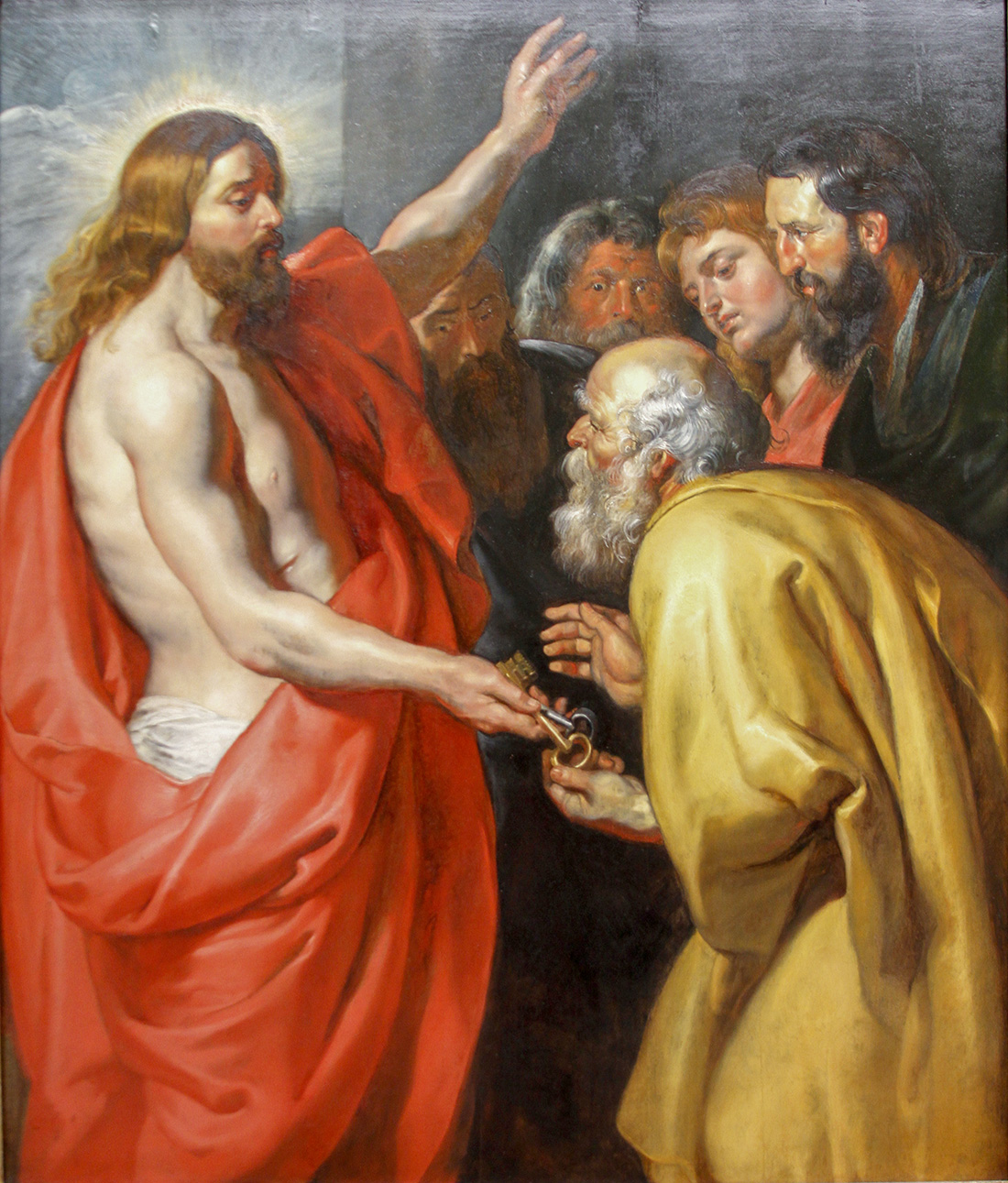
    Christ Giving the Keys to St. Peter (1612-1614), Peter Paul Rubens | Wikimedia Commons. Note Rubens’ attention to Christ here, who, although in the gospels He bestows the keys to the Kingdom before His Death and Resurrection, appears with the wound in His side and His garment loose as that of the risen Christ. These details draw attention to the divine will in kairos time, outside of traditional time, which is active in a mystical way and accomplishing the work of building the Church for humanity’s eventual reunion with Christ.

    So, as we consider what the Feast of the Chair of St. Peter is all about, I think we should avoid glorifying Peter or any of his successors for their personal qualities (although many were saints and great men), but instead consider with wonder God’s amazing plan for humanity and the divine authority to enact it. Just as He deigned to have His Son be incarnate in the fragile form of a human for the sake of us all, He also deigned to entrust fallible humans with His infallible truth and authority for the sake of the building up of the Church. If we deny this reality, we deny a part of the Divine Will.

    Let’s invite Leiva-Merikakis finish our reflection; he paraphrases Jesus’s commission to Peter: “I am making you to be Rock, and upon the solidity provided by this my choice and institution (and not so much by Peter’s personal faith) I will build my Church.” He continues, “It is, therefore, Jesus’ divine mandate that gives stability and continuity to the Church … Like the election of Israel, the motherhood of Mary, the event of the Incarnation, and the institution of the Holy Eucharist, the mandate to Peter cannot possibly have been of human invention. All of these mysteries cohere only in the divine economy of salvation and emerge solely out of the divine will and wisdom” (525).

  • The Power of Baptism

    The Power of Baptism

    First Sunday of Lent: Genesis 9:8-15, 1 Peter 3:18-22, Mark 1:12-15.

    While on our personal Lenten journeys with Christ, we sometimes forget that it is also the season for the elect to formally pledge themselves to the Church, finish their preparation, and present themselves for Baptism, Confirmation, and First Holy Communion at Easter Vigil Mass. This form of the Rite of Christian Initiation for Adults is a modern way we grow the Body of Christ and has a rich tradition stretching back to the very first days of the Apostolic Age.

    During Roman persecutions, catechumenate faced execution for attempting to join the Church, and this act of faith was a truly courageous act. In the third and fourth centuries, adult initiates had a long, three-year process of formation (at least) that impressed the seriousness of their conversion and salvation. Over the centuries, this catechism devolved into “mass baptisms” of many people and the seriousness of their training and conversion was rightfully questioned.

    In any case, today we have a formalized process that is by no means as rigorous as the early centuries but does impress both the seriousness of the sacramental union with the Church and an understanding of our teachings (our Catechism of the Catholic Church). Lent is the season of the catechumenates’ final preparations to join and grow the Church.

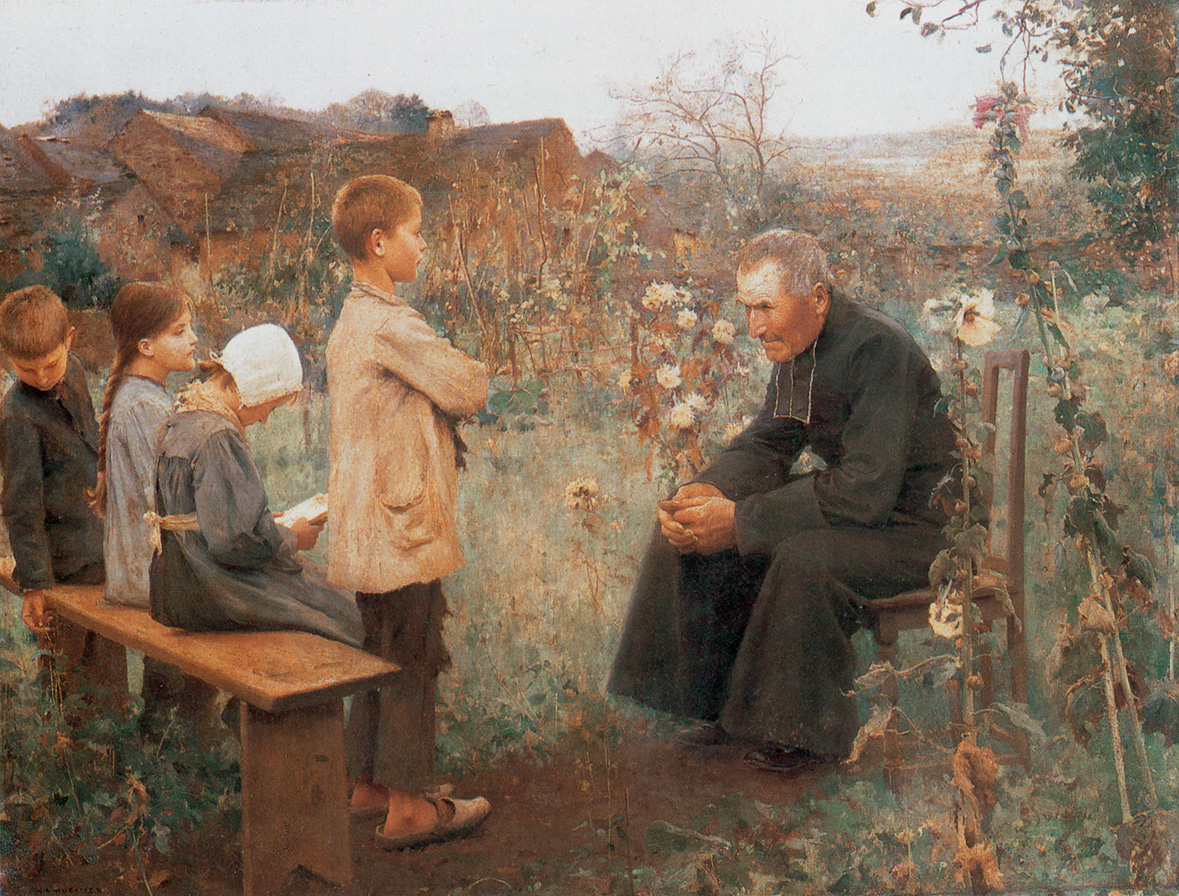
    The Catechism Lesson (La Leçon de catéchisme), 1890, Jules-Alexis Muenier | Wikimedia Commons.

    The three-year cycle of Sunday readings reflects this aspect of Lent, doing the work of reminding all of us of the major tenets of our history and faith, not to mention the importance of our sacraments. This transitions, of course, during Holy Week to recount the Passion, Death and Resurrection of our Savior, but it might be surprising to learn that the Church has ordered her readings on Sundays in Lent to help serve the formation of our catechumenate.

    So we can approach today’s readings with this framework in mind. Appropriately enough, we encounter the theme of baptism, particularly as spiritual protection. The first reading from Genesis recounts the upshot of Noah’s faithful obedience to God in building the ark. God tells him, “See, I am now establishing my covenant with you and your descendants after you and with every living creature that was with you: … there shall not be another flood to devastate the earth.” The Church sees great symbolism in the flood story. It is God’s second great covenant with humanity (the first being with Adam and Eve); the ark — the saving vessel in the face of God’s purifying force — prefigures the Church that will arise through Christ; the flood is a type of baptism, in this case a baptism that wipes away the evil of the world and blesses and ties Noah to God in a new covenant. The great tropes of baptism have been established: spiritual purification and a binding covenant with God through water.

    The first letter of St. Peter makes the connection to the flood in Noah’s time and clearly states its significance: “… a few persons, eight in all, were saved through water. This prefigured baptism, which saves you now. It is not a removal of dirt from the body but an appeal to God for a clear conscience …” This last statement is a bit confusing; is baptism an appeal to God for a clear conscience? I suppose it is, although the NRSV translation’s footnote says “Or a pledge to God from” a clear conscience. Interesting that our pledge could be perceived either as “for” or “from” a clear conscience.

    When I start wondering about translations, I often consult a few others, and I think the David Bentley Hart’s New Testament translation serves admirably (along with his three very long explanatory footnotes for this section): “… prefigures the baptism that now saves you — which is not a removal of the filth of flesh but rather the pledged consent of a good conscience to God — through resurrection of Jesus the Anointed.” He has a nice footnote to justify his translation of “pledged consent” and it does seem to wrap up the “to” vs. “from” debate by implying that God requests our good conscience in entering into the baptismal covenant and we give it to him. This reinforces the fact of our own free will and choice in baptism — something much more apparent in adult baptism than in infant baptism and thus very appropriate for this RCIA formation period.

    Noah’s Flood (Всемирный потоп), 2013, by Olga Glumcher | Image from useum.org.

    This whole discussion of conscience was initiated in the verses just prior to today’s reading. Peter encourages us to not be intimidated by those who seek to destroy our belief: “Keep your conscience clear, so that, when you are maligned, those who abuse you for your good conduct in Christ may be put to shame. For it is better to suffer for doing good, if suffering should be God’s will, than to suffer for doing evil. For Christ also suffered for sins once for all, the righteous for the unrighteous, in order to bring you to God” (1 Pet 3:16-18). A good conscience, which is part of the baptismal covenant, is important because Christians should be “living in the light.” Moreover, Peter points out that Christ, who is ultimately righteous and bears a clean conscience, suffered for all of us unrighteous souls, so he set the example of the Way we must walk. 

    All of this baptismal rubber hits the road when we encounter the gospel reading. St. Mark’s gospel, commonly seen as the earliest gospel, upon which Matthew and Luke drew, is very brief regarding the start of Christ’s ministry. There is great profundity; we must simply read it a bit slower and ponder each word.

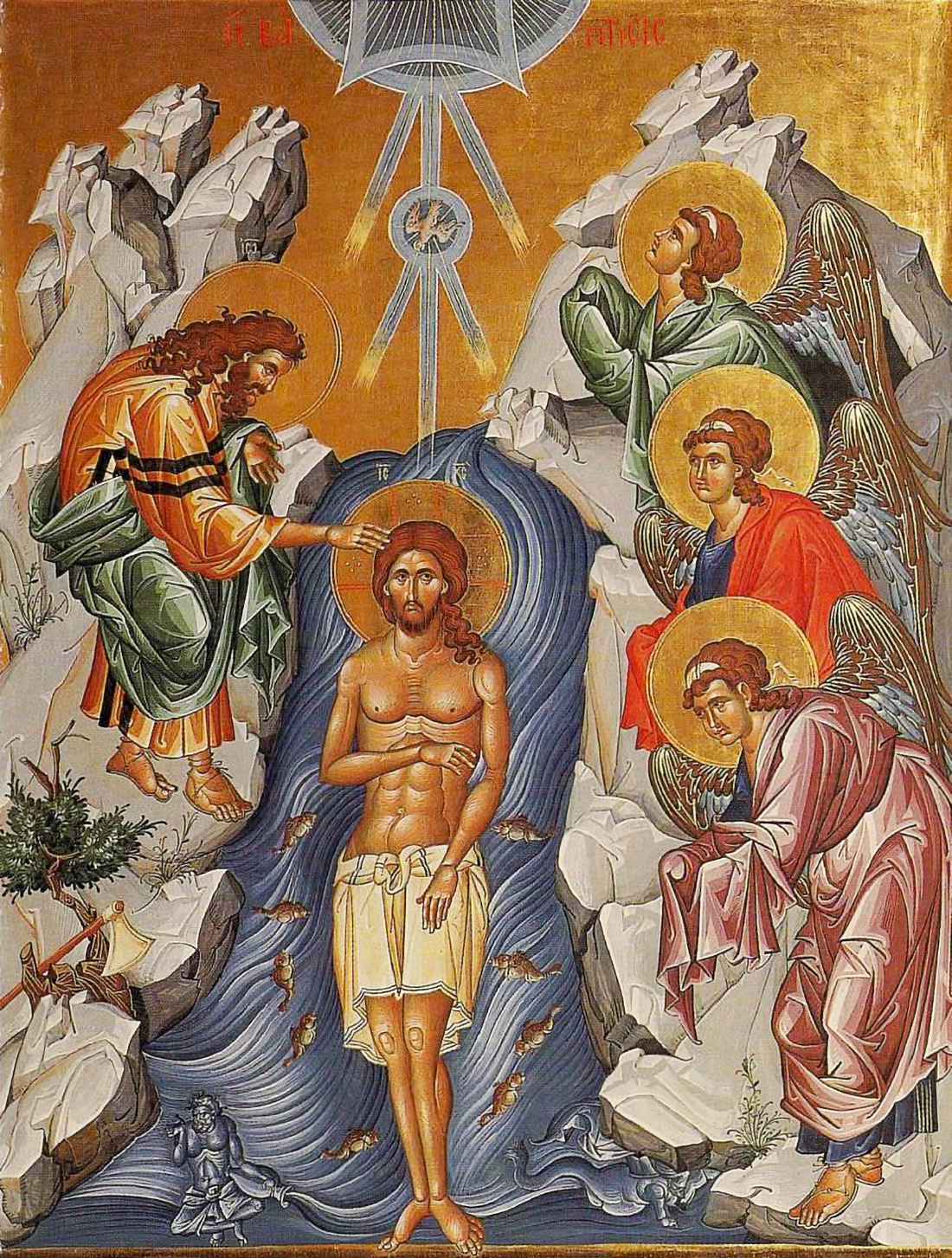
    The setup to today’s reading is the Baptism of our Lord by St. John the Baptist. Mark writes: “And just as he was coming up out of the water, he saw the heavens torn apart and the Spirit descending like a dove on him. And a voice came from heaven, ‘You are my Son, the Beloved; with you I am well pleased’” (Mk 1:10-11). So early in the first chapter of the first gospel we see the Holy Trinity in its unity as well as its diverse Persons! Consider how deep this revelation of Christ as the Son of God is: we see the outpouring of love from the Father, the participation of the Spirit, active in the earth, and Son’s willing acceptance of the covenant with His Father, which he will crown with his Blood. Christ’s Baptism reveals for all to see the endlessly flowing love of the Trinity that has burst upon the earth with his presence. This is something wholly new, and when we are baptized in Christ, it is this supernatural love and glory that is bestowed upon us as well. What a gift to be adopted sons and daughters of the Father, thanks to our great brother and teacher, Jesus Christ.

    As if sharing in the supernatural love of the Trinity was not enough, Mark shows us today how transformative a Christian baptism can be for us. He writes: “And the Spirit immediately drove him out into the wilderness. He was in the wilderness forty days, tempted by Satan; and he was with the wild beasts; and the angels waited on him” (NRSV translation). The dove-like Holy Spirit fills Jesus and immediately drives him into the desert. Matthew and Luke write that the Spirit “leads him” but Mark is undeniably writing something more forceful. The Greek word he writes is ἐκβάλλει (ekballei), the very same word used throughout the gospels when Christ “casts out” demons. Mark seems to be saying that baptismal sanctification by the Holy Spirit causes something more extreme in us than a gentle “leading into the light.” It casts the domination of worldly concerns out of our soul. This is what happens when Christ is cast into the desert, with wild beasts instead of human concerns. The supernatural force of his Baptism is so great that he cannot stay with humans who are so ordered by their passions and designs; these are not the Way to the Father.

    And while we can find profound meaning in the specific temptations that Satan imposes upon Jesus (see last year’s reflection, Getting to Know the Tempter, for thoughts on Matthew’s account of Jesus in the desert), Mark’s point is different. He notes that Jesus is tempted by the devil, but the emphasis is on the action of the Holy Spirit in Christ’s Baptism. The Spirit, let’s remember, has descended upon the Anointed One of God. While the Divine Persons undoubtedly can never be separated, we reflected last week on how Jesus put aside his divinity while taking on human form. He never stopped, on the order of being, to be the Son of God, but his time on earth in mortal form included a complete assent to being human. With his Baptism, Jesus the man is fully revealed also as a Person of the Holy Trinity, and the Spirit can dwell with him in a new way within that mortal lifetime.

    Icon of the Baptism of our Lord, provenance unknown | Image from ricochet.com.

    So he is impelled by his Baptism and the indwelling of the Spirit to eschew the human ordering of self that occurs within civilization and go to the desert. This is something we are given in our baptism as well: a radical new orientation of ourselves within salvation history where we fully enter the End Times with Christ. This doesn’t mean we are outside of the fallen world, which is ruled by Satan. Christ is tempted by Satan, just as we shall be, even after our baptism in Christ. But Mark shrugs aside these temptations as if inconsequential, for this is the Son of God, blessed by the Father and graced by the Spirit! This is why the more important point for Mark is that “the angels ministered to him.” Christ has opened a new way of living that bests the temptations of Satan and dwells in the company of angels. This is the promise of our New Covenant that we enter into in Christian baptism.

    Mark’s final verses in today’s gospel reading affirm this new state of the world. The time of John the Baptist has passed with the Baptism of our Lord. Jesus announces: “This is the time of fulfillment. The kingdom of God is at hand. Repent, and believe in the gospel.” Note that he fulfills and concludes the very words of the Baptist, “Repent, for the kingdom of heaven has come near” (Mt 3:2). The kingdom is no longer near, it is “at hand.” The command to repent remains, for none are on the new path of Christ yet, and repentance and baptism await us all as a prerequisite to entering the Kingdom of God.

    I don’t know about you, but there is something of the fire-and-brimstone Southern preacher in the call to “repent” that may deaden our ears to this call. It’s refreshing to look at Christ’s words in a new light outside of some of our cultural stereotypes. Here again is Bentley Hart’s translation: “change your hearts and have faith in the good tidings.” Yes, this is repentance: a change of heart. It is what Baptism entails as part of our covenant with God — our promise to convert our hearts to Him. We remind ourselves of our baptism and conversion of heart every time we enter our church and bless ourselves with holy water. While on the earth, we will endlessly turn our hearts back to God, return to the Way any time we stray, and employ the sacraments to strengthen us, absolve our sins, and draw us closer and closer to our Lord.

    May we all walk the way of the catechumenate this Lent, repenting and re-affirming our covenant with God.

  • Doughnuts and Kenosis: Our Come-to-Jesus Moment

    Doughnuts and Kenosis: Our Come-to-Jesus Moment

    Thursday after Ash Wednesday: Deuteronomy 30:15-20, Luke 9:22-25.

    In today’s gospel reading, Jesus tells us plainly that to follow him has a personal cost, that a person must “deny himself and take up his cross daily.” This saying is familiar to most Christians, although most believers I know are more apt to quote, “love thy neighbor.” With Lent upon us, this concise description of the Christian life is especially meaningful. What exactly does it mean to deny ourselves? 

    In Luke’s gospel, today’s passage comes right after the miracle of the loaves and fishes when Jesus fed the 5,000 (not counting women and children). He is praying alone and when the disciples appear, he asks them, “Who do the crowds say I am?” followed by “But you, who do you say that I am?” Then comes Peter’s great statement of faith: “The Messiah of God.” Now, in the Gospel of St. Matthew, Jesus proceeds to name him Peter “the Rock” and gives him the keys to the kingdom of heaven. But St. Luke records a markedly different reaction: Jesus “sternly ordered and commanded them not to tell anyone.” His tone is very serious as he relates the prophecy of his own suffering: “The Son of Man must suffer greatly and be rejected by the elders, the chief priests, and the scribes, and be killed and on the third day be raised.” This is the point that “he said to all, ‘If anyone wishes to come after me, he must deny himself and take up his cross daily and follow me.’”

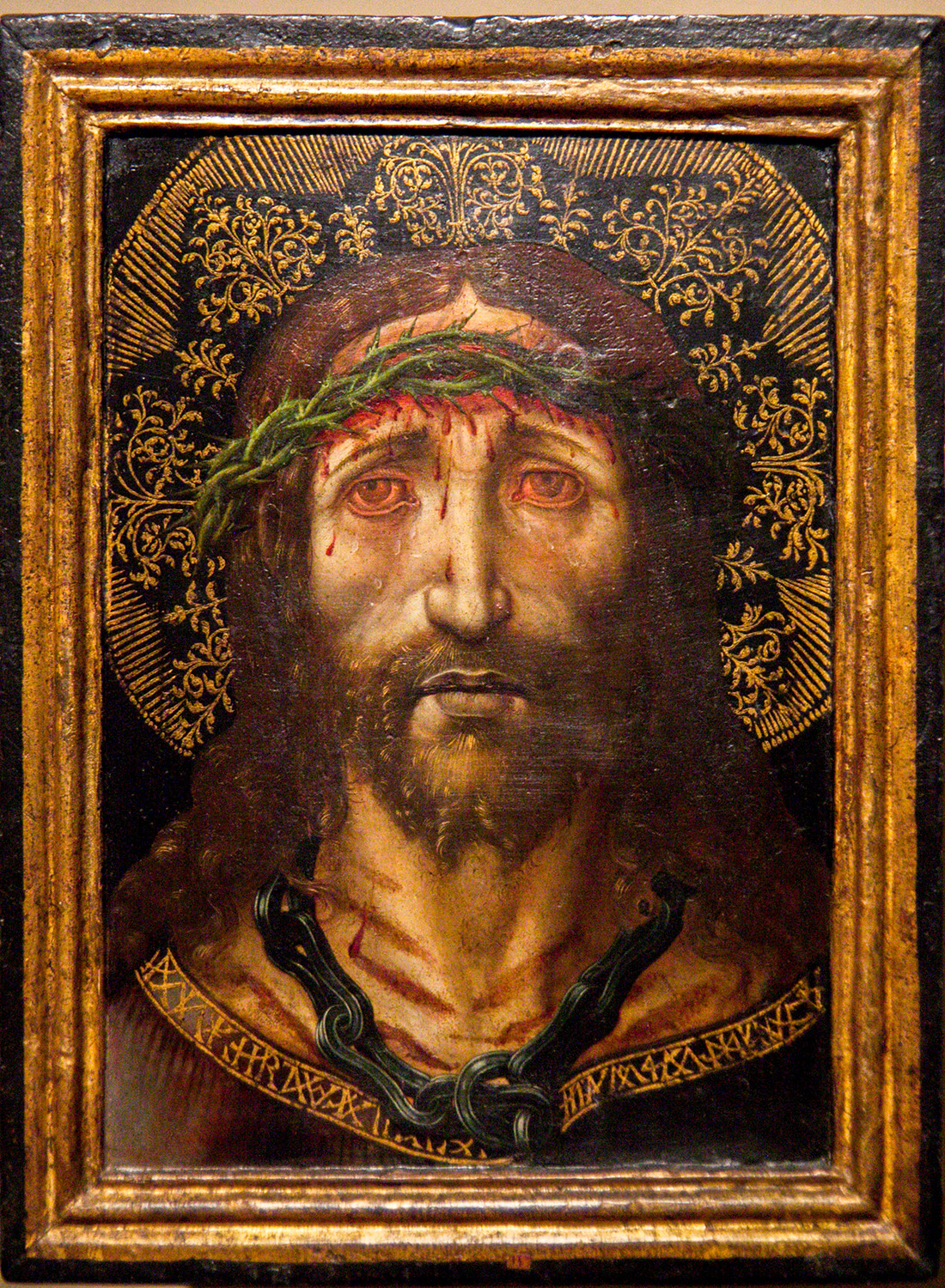
    Holy Face (1515-1525), Joan Gasco | Wikimedia Commons.

    To summarize this episode, once Christ knows that his beloved Apostles understand who he is, he decides that they must understand the repercussions of that knowledge. There was great expectation among the many Jewish sects over the coming of the Messiah, most of them boiling down to the establishment of a great Jewish nation on earth. Note how this type of expectation clashes with the great corpus of teaching and healing that Jesus had been doing in his ministry. Jesus wants to dispel these secular expectations and prepare them for the reality of what his coming will entail.

    How thoughtfully he prepares his Church, not burdening them with too much too soon! Imagine if the first works of his ministry were to tell everyone that he, a person of the One divine God, was coming to die for them because that incredible self-sacrifice would open the gates of Heaven for them once he resurrects and ascends. Not only would he sound like an overly self-confident crackpot, his message of humility and fear of God would be hypocritical. Instead, he had to do his Father’s will according to his Father’s plan. This means that even though he is the Messiah, he must eschew any earthly glory or proclamations to power. The reality is that earthly displays of power and glory are false. This is why we hear Christ tell those he heals throughout the gospels not to tell anyone of what they saw or experienced. As the very Truth itself, he cannot abide his works being proclaimed or twisted for mere earthly means. The deep truth that he must share is that God’s love — one typified by kenosis, or pouring oneself out, emptying oneself — is the matrix within which we are called to exist.

    How gently God reveals himself and his plan to us! First as a babe in an animal trough, unassuming, nothing to fear. Then, Jesus grows up within the tradition of the Chosen People that God has been cultivating for millennia. He — God Himself — deigns to be taught as just another child the ways of the Jews that he himself gave to them as commandments and precepts. He patiently listens to and learns the words of the prophets that he, the Word Incarnate, spoke to those prophets hundreds of years earlier. And when he does start teaching, he affirms every word of the law that has been given to them. Rather than bring down his awesome divinity in displays of fearful power, he draws them to himself by miracles of healing and words of love. In short, he shows them a vision of the Kingdom in his own humble self. Why does God’s plan unfold this way? Why does he subdue his rightful divine power and take on the frailty of humanity? Because he is love and this is how love works — he loves humanity and wishes for them to understand him and choose to come back to him of their own accord.

    St. Paul writes memorably to the Philippians about this very thing:

    Let the same mind be in you that was in Christ Jesus, who, though he was in the form of God, did not regard equality with God as something to be exploited, but emptied himself, taking the form of a slave, being born in human likeness. And being found in human form, he humbled himself and became obedient to the point of death—even death on a cross (Phil 2:5-8).

    Today’s gospel relates the key moment when Jesus lets his disciples know that God’s plan, and love itself, involves pain and sacrifice rather than a shortcut to glory and power. It’s important to remember that Jesus is fully human and fully divine — as a human, he shows us that we can make the decision to accept God’s way of love. None of his ministry or Passion and death is accomplished without his human assent to do the will of his Father.

    I used the Greek word kenosis above as theological shorthand for what St. Paul says, “he emptied himself, taking the form of a slave.” This word kenosis is a very important Greek term for Christianity. Fr. Jean Corbon, OP, defines it in his “Liturgical Vocabulary” in The Wellspring of Worship:

    The noun is derived from the verb “he emptied himself” or “annihilated himself” that is used in [St. Paul’s letter to the Philippians]. The Son remains God when he becomes incarnate, but he divests himself of his glory to the point of being “unrecognizable” (see Is 53:2-3). Kenosis is the properly divine way of loving: becoming man without reservation and without calling for recognition or compelling it. Kenosis refers first to the self-emptying of the Word in the Incarnation, but this is completed in the self-emptying of the Spirit in the Church, while it also reveals the self-emptying of the living God in creation. … Our divinization comes through the meeting of the kenosis of God with the kenosis of man; the fundamental requirement of the Gospel can therefore be stated as follows: we shall be one with Christ to the extent that we “lose” ourselves for him.

    As Fr. Corbon points out, kenosis is accomplished for our benefit by all members of the Trinity (this is, in fact, the state of their inexhaustibly flowing love), but we, too, are called to a type of kenosis. This is what Jesus is saying today: “If anyone wishes to come after me, he must deny himself and take up his cross daily and follow me.” Here is the true “Come to Jesus” moment! Denying oneself is not a simple matter of self-restraint over that second doughnut. The depth of Christ’s own kenosis is involved here: denying oneself is a love-filled endeavor of leaving your own desires behind and filling yourself with God’s will. 

    Denying oneself is not a simple matter of self-restraint over that second doughnut.

    Those new to Christianity ask why Jesus had to do things the way he did — dying in ignominy on the Cross especially. A part of the answer is that this “Way” itself is how we realize the Kingdom. It is the Way of God’s Love, not the logic of the world. Does this mean that we have to be demeaned in order to get to Heaven? I think that’s a question that comes from pride and fear. What a king thinks is demeaning the handmaid thinks is natural. Pride determines our outlook on what we do. This is the importance of the “deny himself” commandment. We must deny that part of ourselves that is pride, that thinks cleaning the sores from the feet of a beggar is demeaning, that thinks sitting silently and praying for some person who has lost control and is yelling at us is “weak.” If all we have to confront the difficulties and evil in the world is our own sense of who we are, then we’re bound to fight to keep that image of ourselves intact. Consider, instead, if we deny our own sense of who we are and fill ourselves instead with the invincible and inviolable will of God, and his inexhaustible love, then the concept of being demeaned is ridiculous. 

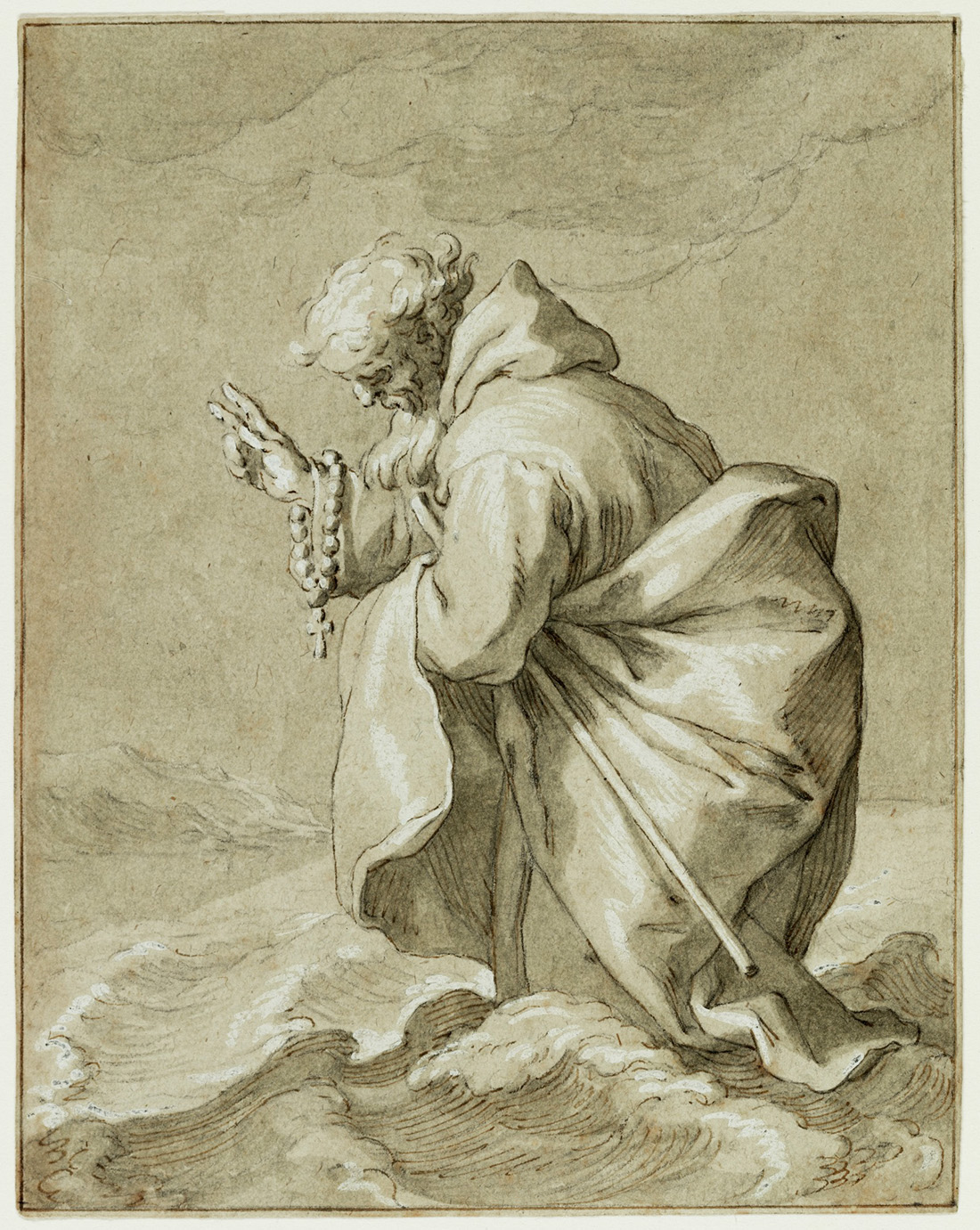
    Saintly Hermit, Walking on Water (c.1612), Abraham Bloemaert | Image courtesy the Detroit Institute of the Arts.

    What About My Personality?

    A book I am reading with our Lay Dominican chapter comes to mind. It is Fr. Reginald Garrigou-Lagrange, OP’s excellent little book Knowing the Love of God, a collection of the spiritual master’s retreat conferences as he preached them to his fellow Dominicans. He has a section entitled “The Personality of the Incarnate Word” that is very applicable to today’s gospel. He discusses the idea of our own sense of who we are, our personality:

    Many errors on the meaning of this word, personality, circulate throughout the world. Today many talk in a pompous way about the development of their personality, but, in reality, they are developing only some natural gifts that permit them to be distinguished from other persons, gifts which make their pride grow daily. They believe that to practice renunciation and the so-called passive virtues of humility, obedience, patience, and meekness, that is, to follow Christian morality in its totality, constitutes the annihilation of one’s personality (31).

    Garrigou-Lagrange goes on to define personality as “the principle of our reason and liberty,” something that makes us independent agents in the world. Importantly, he writes that personality “enables us to resist the attraction of merely sensible goods according to the judgment of our intelligence and the choice of our freedom.” What he means is that it distinguishes us from creatures who would just gorge themselves on something yummy (aka, doughnuts). We can think about consequences and make choices that might be different than the immediate “what is good right now.” I find his definition attractive; it brings together human intelligence, freedom, and volition. He then goes on to define levels of personality. The lowest level is like animal life, where people are driven “almost exclusively under the tyranny of their senses and passions.” But, he writes, “Personality can be gradually elevated as the activity of our spirit and will free itself from the purely sensible life. This can be accomplished in the measure that we learn to control the influences exercised upon us instead of passively submitting to them.” The independence of this type of personality involves a “grave danger,” however, because people might think that “the highest development of personality consists in absolute independence” (32). He notes that this is the way of pride and atheism and “is found fully realized in the Devil.”

    Garrigou-Lagrange then writes about how the mystery of the Incarnation teaches us something very different. Permit me to quote this great passage:

    While the great philosophers scarcely caught a glimpse of this, the saints truly grasped the way to the full development of our personality. It consists in losing in some way our own personality in the personality of God who alone possesses personality in the perfect sense of the word. He alone is absolutely independent in His being and actions … [The saints] were armed with a holy hatred of their own ego. They sought to make God the principle of their actions, no longer acting according to the rules of the world or their own limited judgment, but according to God’s ideas and rules as received through faith … They understood that God had to become for them another ego more intimate than their own. They had to realize that God was more “them” than they themselves because He is preeminently Being (33-34).

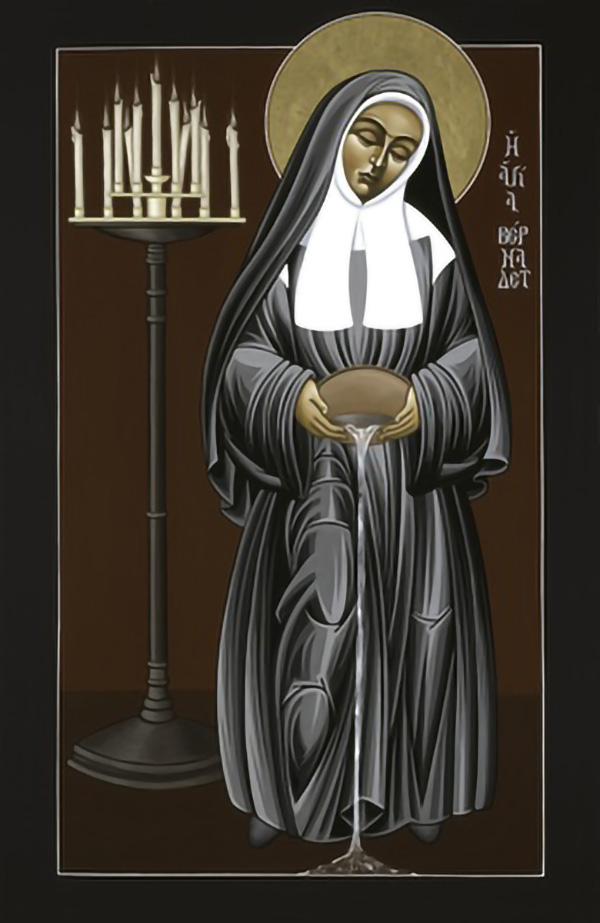
    The Kenosis of St. Bernadette of Lourdes (2020), Fr. William Hart McNichols | Image from frbillmcnichols-sacredimages.com

    These passages deserve careful thought and re-reading, to be sure. They provide another way to understand Christ’s words. Perhaps the cross we must take up daily is this work of losing our personality in the personality of God, the work of perfecting our person, which requires a kenosis. Lest we worry that this means the obliteration of our own “self,” Garrigou-Lagrange writes, “In the order of the operations of knowing and loving the saint has substituted, as it were, the divine ego for his own ego, but in the order of being his ego remains distinct from God” (34). This is an important point: we do not ever “lose” ourselves on the level of being. We are who we are. But on the level of what knowledge we accept and how we love and act in the world, we can (by the grace of God) substitute God’s person for our own. We accomplish this by filling ourselves with the Word in all ways — study of scripture, prayer, penitential acts (following Christ’s example), and in the sacraments. This is what it means to “live the liturgy” (which is not just a set of rituals we do at church). We lose that prideful way of knowing and acting that is always corrupt in this fallen world and put in its place the incorruptible way of knowing and acting that Christ gives us. In so doing, we perfect our personalities and ourselves.

    We can finally come face-to-face with the seeming paradox of Jesus’s final words in today’s gospel: “What profit is there for one to gain the whole world yet lose or forfeit himself?” Gaining the world — the sensible world that we see, feel, touch, eat, buy, etc. — is indeed profitless if we forfeit our “selves.” He is giving us a way to perfect ourselves, not forfeit our selves. The seeming paradox is that he tells us to deny ourselves so as to not forfeit ourselves (i.e., wouldn’t you be forfeiting yourself precisely by denying yourself?), but we can see that the first “self” we deny is the prideful human loner while the second “self” we wish to live forever is the person perfected in Christ. It’s still us, only fit to live in the Kingdom because we have undergone a kenosis in the image of our Maker.

    Let’s close this reflection with St. Paul, who lays out for us a concise summary of the Way of Christ: “Do not be conformed to this world, but be transformed by the renewal of your mind, that by testing you may discern what is the will of God, what is good and acceptable and perfect” (Rom 12:1-2).


  • Starting the Great Fast

    Starting the Great Fast

    Ash Wednesday: Joel 2:12-18, 2 Corinthians 5:20-6:2, Matthew 6:1-6, 16-18.

    Like a thief in the night, Lent is here. I am tempted to think, “Must I again pare down my pleasures so soon?” Maybe the start of the year was hard for us. Maybe we feel like it’s been several hard years in a row. Maybe we feel like we deserve a little break this Lent.

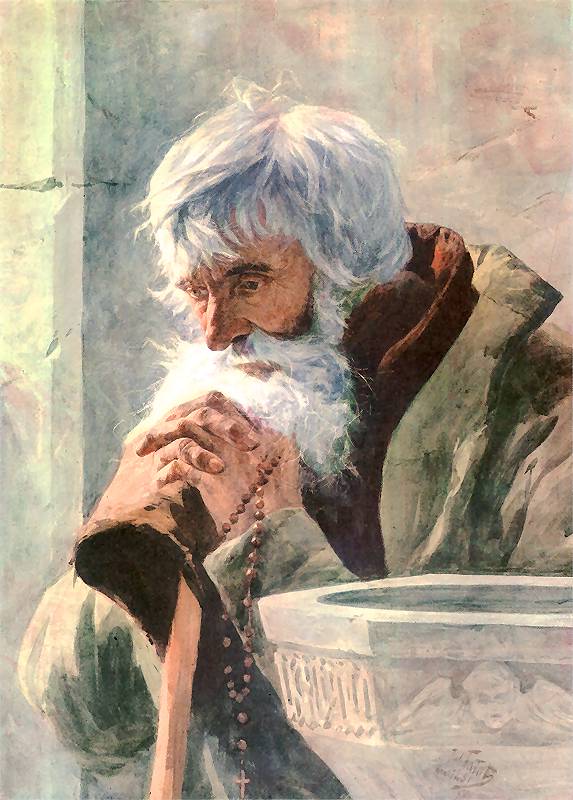
    Old Man Praying (1881), Julian Fałat | Wikimedia Commons.

    While the word “Lent” comes from old English “lengthen,” as applied to the days in Springtime, the Eastern Churches call Lent Μεγάλη Νηστεία (Megali Nisteia), which means “The Great Fast.” And while the promise of Christ’s Resurrection does approach like the slowly lengthening springtime sun, I see a deep significance in setting myself up for Lent by thinking of it as the Great Fast.

    Appropriately enough, today’s Ash Wednesday readings are all about fasting and how it was used by Jews and Christians alike as a bodily way of relating to God. This is something that might help us change our position regarding “deserving a break”: God is an essential part of the fasting equation. Without God, fasting has zero spiritual benefit and is pointless.

    Let’s consider the great commandment, gift, and tradition that is fasting. Commandment? Yes, according to St. John Chrysostom, “Fasting was the first commandment God gave to man.” He points to the Book of Genesis: “And the Lord God commanded the man, ‘You may freely eat of every tree of the garden; but of the tree of the knowledge of good and evil you shall not eat,’” (Gen 2:16-17a). I appreciate Chrysostom’s close reading here; God could have commanded Adam not to look in a special cavern, not to swim in a special pool, or not to say a certain word, but instead he commands Adam to have control over his appetite and desire.

    There have been many great essays written on the significance of the fruit of the “tree of knowledge of good and evil” being the fruit that belongs only to the Creator Himself and how Satan’s great temptation for us is to live as gods, but today I am struck by a more simple point. Chrysostom reminds us that God’s first commandment is to have bodily restraint in terms of food. On this simple level, when we fast, we can reconnect with a primal obedience to our Creator.

    In today’s first reading, God speaks through the prophet Joel to the Israelites: “return to me with your whole heart, with fasting, and weeping, and mourning; Rend your hearts, not your garments, and return to the LORD, your God.” He is talking to Adam’s ancestors, whose original father unlawfully broke his fast, and the fasting God urges upon them is a sign of their atonement, as are their tears and broken hearts. Fasting helps to mark the sincerity of their conversion back to God. And God wants His Chosen People to publicly and jointly take part: “Blow the trumpet in Zion! Proclaim a fast, call an assembly; Gather the people, notify the congregation.” Fasting unifies the people before their God and Master.

    Contrast this with our current secular culture where fasting is simply seen as another dieting option, a way to improve how you look or maybe how you feel. How strikingly different! Fasting in our faith tradition is certainly a personal response to God, but it is also a communal act of a people aware of their dependence upon God’s mercy.

    Remember the story of Jonah and the Ninevites. He (reluctantly) went to Nineveh to preach that they would be destroyed unless they repented and after just one day, “the people of Nineveh believed God; they proclaimed a fast, and everyone, great and small, put on sackcloth” (Jonah 3:5). More: “When the news reached the king of Nineveh, he rose from his throne, removed his robe, covered himself with sackcloth, and sat in ashes. Then he had a proclamation made in Nineveh: ‘By the decree of the king and his nobles: No human being or animal, no herd or flock, shall taste anything. They shall not feed, nor shall they drink water’” (Jn 3:6-7). Here we have a great, communal fast and repentance — a heartfelt response to God’s call. This story is an important illustration of what the Jewish faith calls teshuva, or the ability to repent and be forgiven by God: “When God saw what they did, how they turned from their evil ways, God changed his mind about the calamity that he had said he would bring upon them; and he did not do it” (Jonah 3:10).

    Teshuva is a persistent theme throughout the Bible, and fasting is integrally tied to this heartfelt repentance. Nearly all of the prophets speak of fasting, often in the context of teshuva. Notably, Moses fasts for 40 days and nights, as does Elijah and Jesus, the Son of God himself. (And we see these three great prophets together on the Mount of Transfiguration). John the Baptist subsists on wild locusts and honey. As we consider these prophets, the mouthpieces of God, we start to see that fasting is tied to more than just repentance and a plea for mercy. Fasting is a way for Moses to prepare to be in the presence of the divine. Fasting is a way for Elijah, Ezra, Esther and many others to ask for God’s favor and help with their specific problems. Fasting is a purification and a way for Jesus to achieve spiritual fortitude as he is tempted by the devil.

    Our great prophets teach us that fasting strengthens us spiritually — particularly our bond with God the Father — even though it seems to be weakening our bodies. Thus, Chrysostom can write, “Fasting of the body is food for the soul.”

    Not by Bread Alone (2007), C. Michael Dudash | Image from christcenteredmall.com.

    In today’s gospel reading, Jesus instructs his disciples not so much on the benefits of fasting (this was a given, known thing for Jews and Gentiles alike in Jesus’s time) but on how to fast effectively. He lays out the path to being a humble, earnest child of God: “Take care not to perform righteous deeds in order that people may see them … when you pray, go to your inner room, close the door, and pray to your Father in secret … when you fast, anoint your head and wash your face, so that you may not appear to be fasting, except to your Father who is hidden. And your Father who sees what is hidden will repay you.” For a Jewish culture at times obsessed with purity and outward signs of worthiness, Christ’s words are a significant re-ordering of their priorities.

    More importantly, He presents them with a profound revelation of who God is. This Father of ours is an intensely personal one, someone who is most interested in the secret, hidden, most private moments He shares with His children. Jesus’s words also reassure us that humans are fundamentally spiritual beings — much more than just physical creatures who act within a society, when all of the “doing” is done and we are alone, our Father is with us. He has blessed us with a soul that is at the core of our being; He has called us, entrusted us to be His beloved children, living by his commandments and praising Him by sharing his love in the world.

    Lent is our time to re-order ourselves to this fundamental truth. It is not the spiritual that should be conformed to the physical — that is, we should not pray when it’s convenient for our physical routine or allow moral judgment and God’s commandments to be casually overridden by physical cravings like rich food or sexual desire. If we are fundamentally spiritual beings first and physical and emotional beings only for a time here on this earth, then the spiritual drive should always come first. The logic of fasting suddenly becomes obvious. We offer to our God a small sacrifice of our physical comfort as we put our spiritual relationship with Him first. 

    Christians have always fasted; like devout Jews at the time of Christ, they fasted two days each week. St. Paul famously accepts fasting as a part of his spiritual conversion: for three days after being struck blind on the road to Damascus he “neither ate nor drank” (Acts 9:9b). Also at his commission at Antioch: “While they were worshiping the Lord and fasting, the Holy Spirit said, ‘Set apart for me Barnabas and Saul for the work to which I have called them.’ Then after fasting and praying they laid their hands on them and sent them off” (Acts 13:2-3).

    In fact, Paul tells the Corinthians that his entire ministry has been an acceptance of physical hardship in order to do the spiritual work to which God has called him: “In toil and hardship, in frequent sleepless nights, in famine and thirst, in frequent fasts, in cold and nakedness … If I must boast, I will boast of things belonging to my weakness” (2 Cor 11:27, 30).

    Drawing upon these great lessons from the Apostolic Age, we see the desert monks emerge a century or two later, feeding upon this same wisdom. They “boast in weakness” (that is, physical weakness) like the lack of food, comfort, sex, etc. because they find that they grow strong in spirit. This monastic tradition has continued through the centuries to this day, with the vows of poverty and chastity that monks and nuns take in their vocation. This is not ritualized masochism! Christ Himself taught us the deep truth about what it means to be human, to have a body, mind, and spirit wrapped up in one being, and how the spirit must shine because it is preeminent in the order of being. Again, let’s not twist this into thinking that the Church sees the body as evil. The Catechism tells us:

    The human body shares in the dignity of “the image of God”: it is a human body precisely because it is animated by a spiritual soul, and it is the whole human person that is intended to become, in the body of Christ, a temple of the Spirit:

    Man, though made of body and soul, is a unity. Through his very bodily condition he sums up in himself the elements of the material world. Through him they are thus brought to their highest perfection and can raise their voice in praise freely given to the Creator. For this reason man may not despise his bodily life. Rather he is obliged to regard his body as good and to hold it in honor since God has created it and will raise it up on the last day”

    (CCC, citing Gaudium et Spes from the 2nd Vatican Council, 364).

    I love our theology on the body of Christ. We, the Church, are the Body of the divine Christ active in the world, and Jesus has a corporeal body that was tortured and crucified, only to rise and walk in the world before ascending to the Father. The Body of Christ is also present in our Eucharistic sacrament, to be taken in by the faithful as spiritual sustenance. There are so many levels upon which Christ’s body is the ultimate example of how human life can transcend this mortal plane, subordinated to the spirit and yet rising in significance specifically because of its lowly state.

    The body, created from the dust of the earth, is miraculous and good because God breathed life into it. Without that breath and Spirit, the body is just dust. When the origin, the breath of life, is honored above the body, then the human who is a unified body and soul can bring that body to the heavenly plane to dwell with God. Fasting is a way — an ancient and important way — that we can honor God over and above the body.

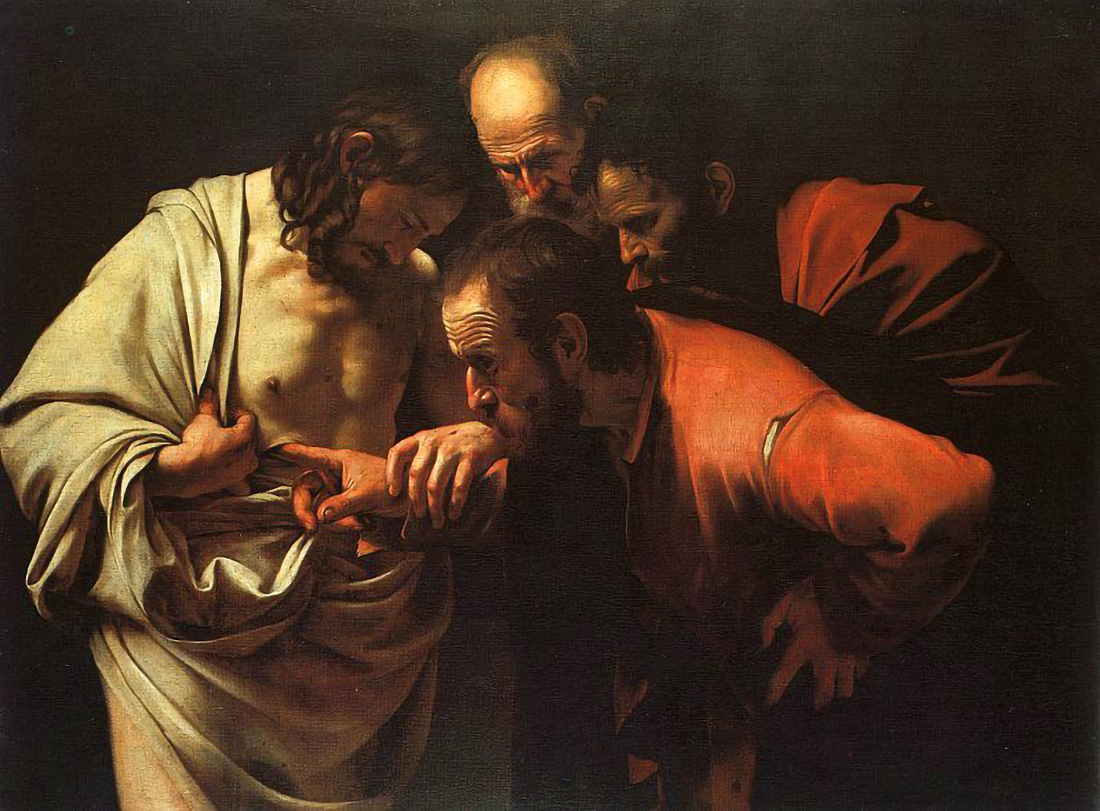
    The Incredulity of Saint Thomas (1601-1602), Caravaggio | Wikimedia Commons. Jesus is the proof that the body’s corruptibility is fleeting and tied to this earth; His sacrifice enables us to share in the rising of the body and soul to Heaven in unity with Him and the Father.

    In today’s second reading, St. Paul impresses upon the Corinthians that, as followers of Christ, what we do with our bodies matters even more than it did before Christ’s great sacrifice: “We are ambassadors for Christ, as if God were appealing through us … we appeal to you not to receive the grace of God in vain.” What he is saying is that we must carry forward Christ’s teaching and example of how the body can have everlasting life with the soul. We Christians are graced with learning the truth of Christ, which means we are entrusted with passing along the lessons, the charity, the subordination of the body to spiritual realities. We are the Body of Christ and we must uphold the sacred function of that Body in lifting up humanity through humility and charity at the cost of fleeting comforts.

    So, it’s Ash Wednesday, one of only two days of fasting that remain in the Western Catholic Church’s liturgical calendar. We really don’t ask much of ourselves these days. Let’s listen to St. Thomas Aquinas remind us of the aims of fasting: “fasting is practiced for a threefold purpose. First, in order to bridle the lusts of the flesh … Secondly, we have recourse to fasting in order that the mind may arise more freely to the contemplation of heavenly things … Thirdly, in order to satisfy for sins” (Summa 147.1). We hear him address our body (bridling lusts), our mind (contemplation of heavenly things), and our soul (atoning for sins). Fasting, in other words, is a triple-threat spiritual practice. But only if done for God! Aquinas’s entire point is to show that fasting is virtuous, with the caveat: “An act is virtuous through being directed by reason to some virtuous good.” He lays out the “virtuous good” in terms of body, mind, and soul, but of course the ultimate virtuous good is Good Itself, that is, God.

    This is why the term Μεγάλη Νηστεία, Great Fast, is so appropriate for all of Lent. This is not to say that we spend all 40 days in actual fast like our Christian forebears did (although there is a part of me that wishes I would and I could in order to be that much closer to God). It’s that we recognize these 40 days and nights as a time where we are focused on the virtuous good of God, in our bridling of our lusts, in our contemplation of heavenly things, and in our atonement for our sins.

    The aim and the thrust of fasting can be carried out throughout Lent in each moment when we hold back a rash remark, when we take that idle moment to offer a prayer to God, when we forego something little that would make us “feel good” in order to make someone else feel good or even as just a little sacrifice offered to God to let him know that we aren’t being ruled by our base earthly desires. This is how we can make all 40 days a Great Fast. And as we do, we realize it becomes easier. That spot of hunger goes away and subsides like a devil thwarted. We realize that we can live and perhaps even thrive without those creature comforts — the potato chips, the time in front of the TV — and instead spend that time reading the scriptures, singing a psalm, praying the rosary, or just reflecting quietly on Christ’s sacrifice, on the Face of God.

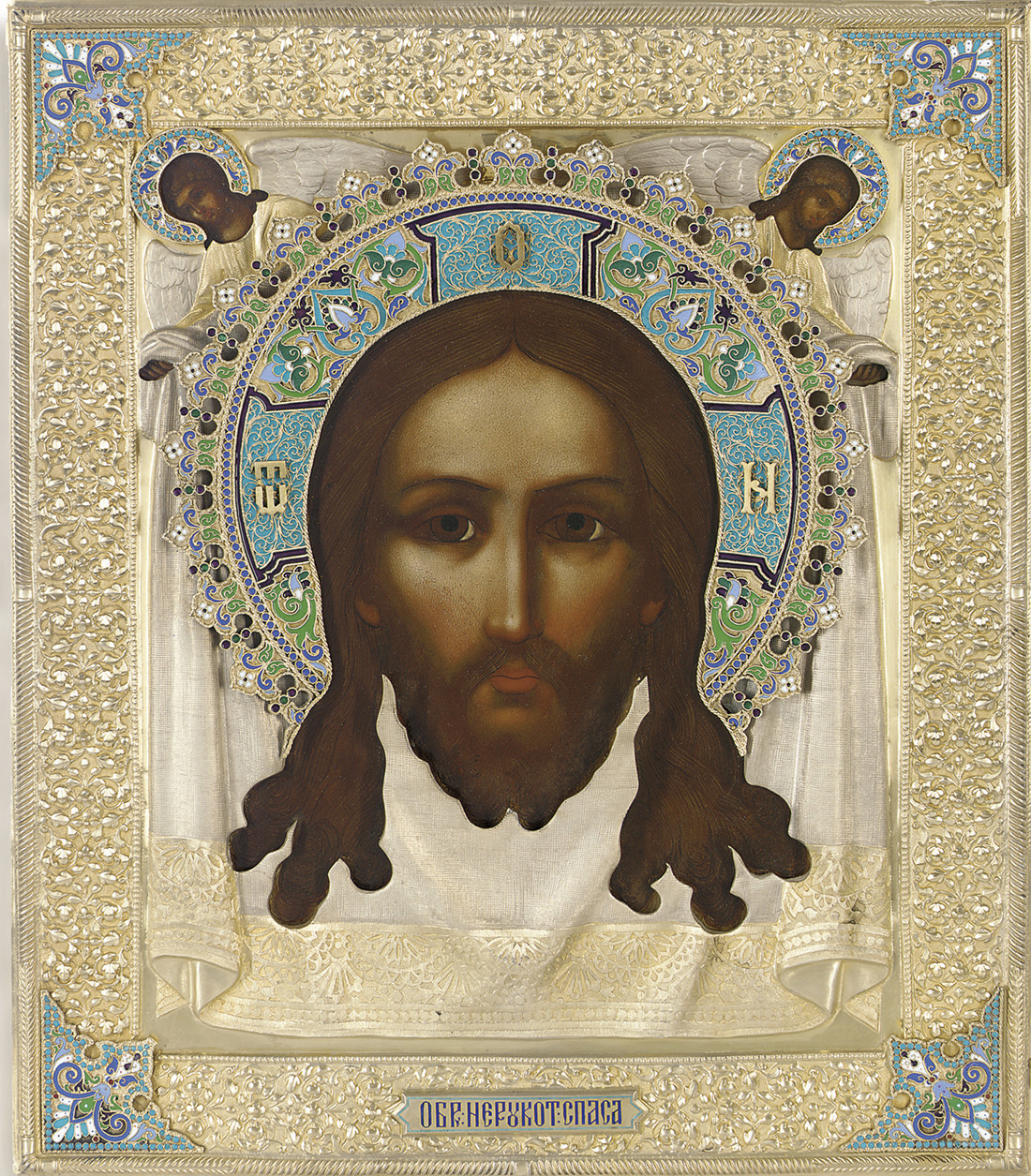
    The Mandylion (1885), Russian, Mark of Pavel Ovchinnikov with the Imperial Warrant, Moscow. A cloth with the imprinted face of Christ, its hem with stylised decoration emulating embroidery, lifted by two angels on the upper corners, each with outstretched wings bending outwards | Image from christies.com.

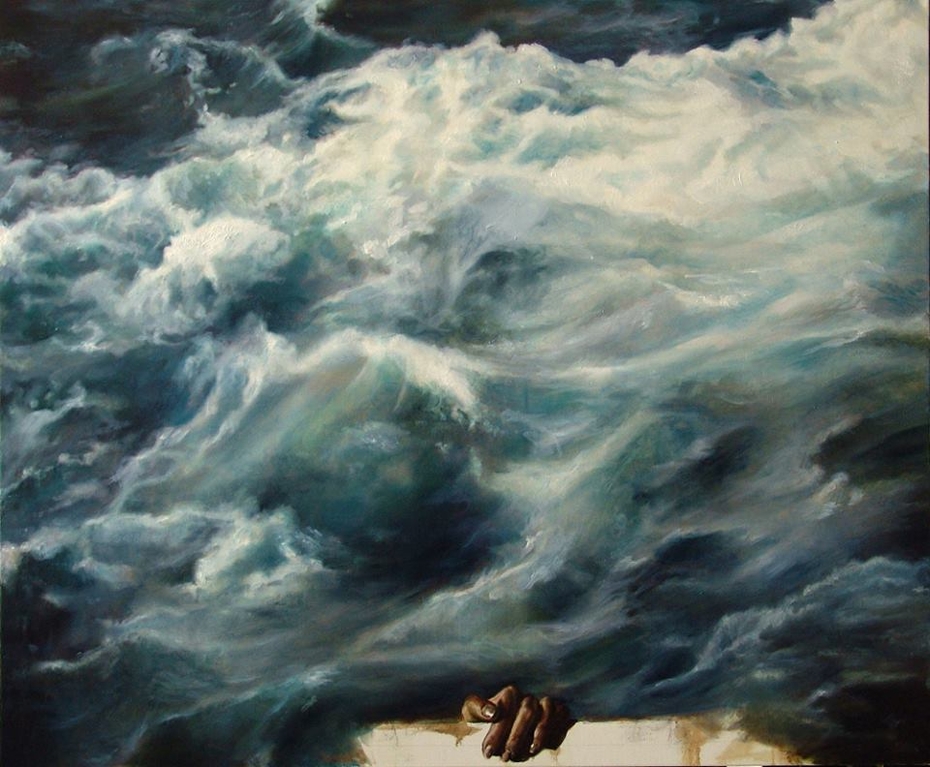
    My hope is that we allow the Great Fast to wash over us like a giant wave. That we do not resist its current but allow ourselves to be caught up in it — allow the Fast to grip us, determine our direction and our very breath. This is the the first step in giving ourselves to God and allowing Him to bestow His grace in our lives.


    Read the reflection from Ash Wednesday 2020 here: Ambassadors for Christ.

  • The Dawn from on High

    The Dawn from on High

    Thursday in the 4th Week of Advent: 2 Samuel 7:1-5, 8b-12, 14a, 16, Luke 1:67-79.

    Christmas Eve! Ah, the Dickensian glow that illuminates my image of this day. It’s the day of antique sweets in lamp-lit Victorian windows, snowball fights and sledding, and the night Scrooge finds a heart. But this Christmas Eve of my mind is based on novels and centuries of traditions from various nations and tribes. We customarily think that the original one was very different, in a desert culture without any of these comfy trappings. But was it any less “magical” feeling?

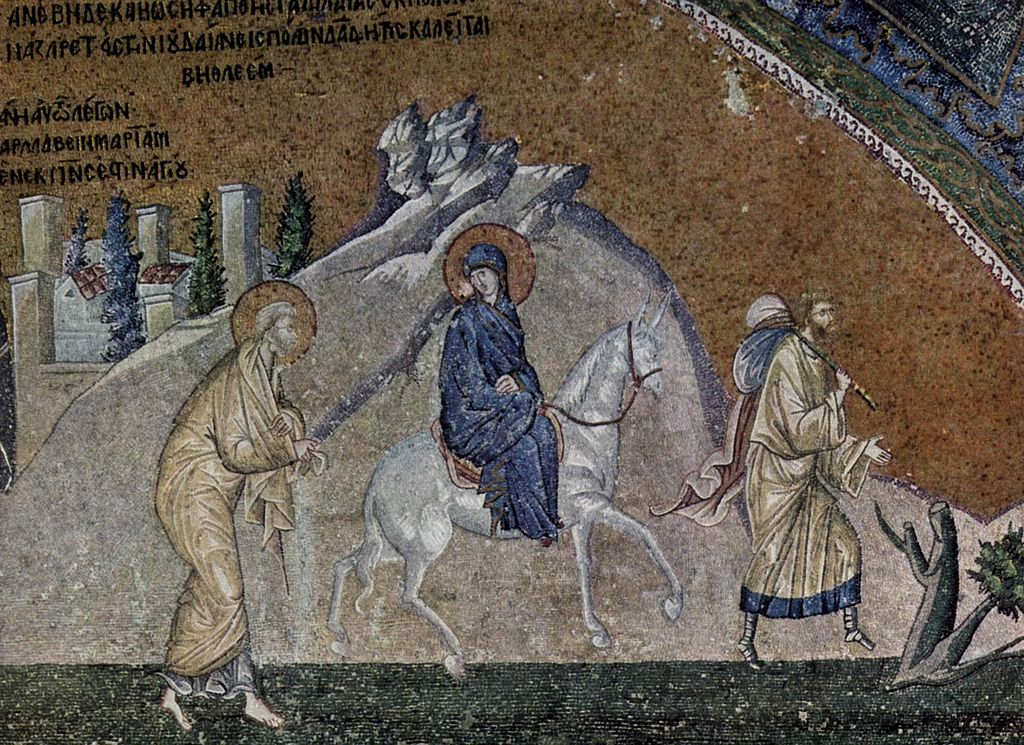
    Mosaic of Joseph and Mary traveling to Bethlehem (1315-1320), Chora Church in Istanbul | Wikimedia Commons.

    Let’s consider Bethlehem: December and January offer cold, often rainy days. Snow is rare, but not unheard of because Bethlehem is actually on a plateau 2,550 feet above sea level. This is all the more interesting since the Dead Sea is 1,100 feet below sea level, just 30 miles east of Bethlehem (by car, that is; it’s about 20 miles as the crow flies). Joseph, leading a donkey with a very pregnant Mary on it, has likely spent a few days in Jerusalem, packed with travelers trying to get to their ancestral homes for the census taking. Could there have been shops with sweets? Sure. How about kids frolicking in the streets? Sure!

    They leave the cacophony to hustle the final six miles southeast to Bethlehem. The town is packed, and there’s a fair chance they’re wet and cold and looking for a warm fire to settle in — especially welcome before Mary gives birth. We can imagine their sense of relief, even at just a stable. It’s a place they can be out of the space of strangers with curious eyes and expectations of social niceties. Joseph likely got a fire going, unpacked some blankets, and heated up some food and water while Mary began her birthing pains.

    So, on the surface, we find some similarities that link our current experience of Christmas Eve with theirs. But as we turn to today’s readings, we see that there are deeper feelings — anticipation for something great we feel in our hearts — that link us more strongly to them.

    In today’s first reading, we find King David musing about building God a house, but God tells the prophet Nathan in a dream that He is the one building a house for King David — a line of heirs who will produce a son that God will be a father to. So, the first impression we have today is an earthly debt we owe to our God and an unlikely response from Him: a waving off of this debt and a promise, in fact, of something new and awesome that He will give us. The promise of a great Christmas present! Now that is something that resonates with the little boy in me on Christmas Eve!

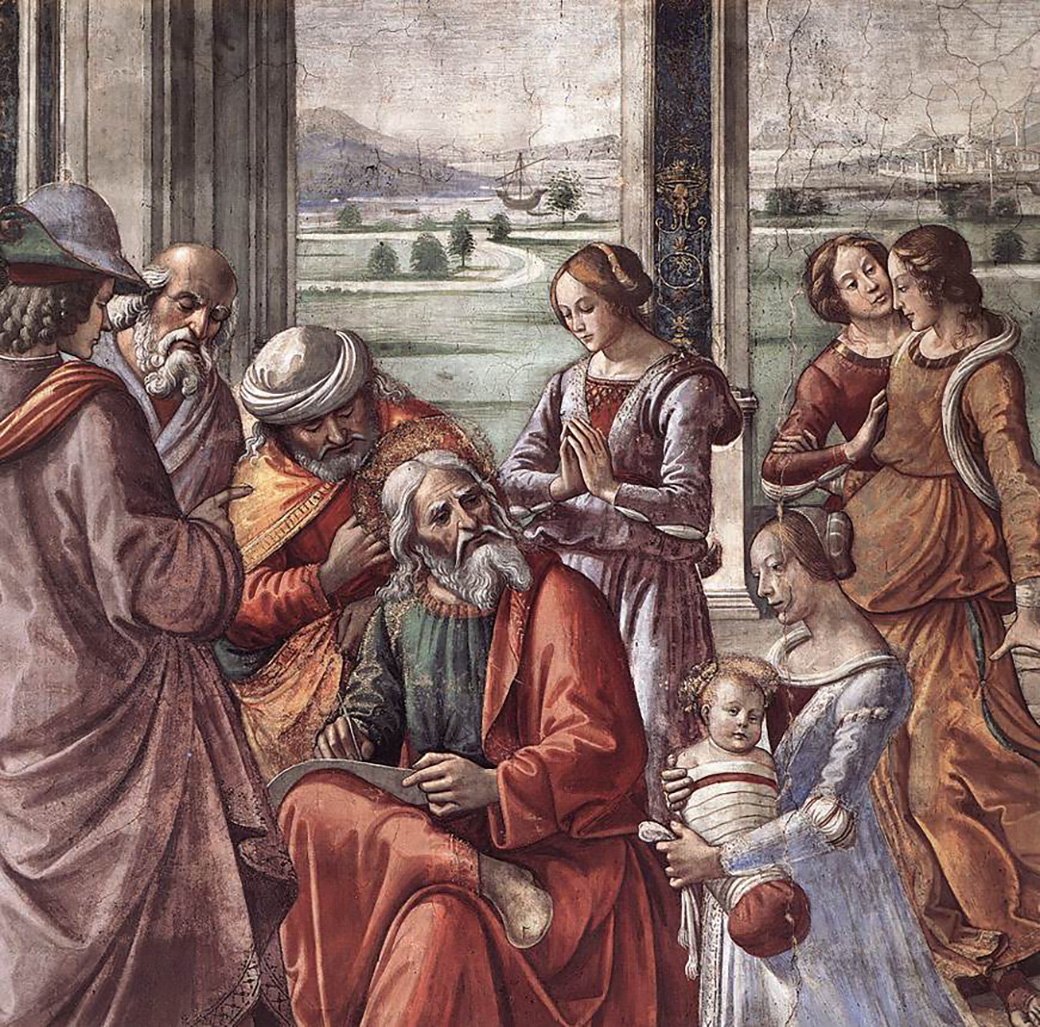
    Detail from Zacharias Writes Down the Name of his Son (1486-1490), Domenico Ghirlandaio | Wikimedia Commons.

    The gospel reading is a continuation of St. Luke’s gospel from the past few days. This is the great Canticle of Zechariah, also called the Benedictus, which he prophesies directly after his lips are loosened by the Lord. The first thing we hear is that he is “filled with the Holy Spirit,” which means that he is inspired by and experiencing the same Person of God who conceived Jesus in Mary’s womb and moved John in Elizabeth’s womb as Jesus came near.

    We often consider the Spirit as “fleeting” since He comes and goes like the wind in the world. Yet He operates with all the power, memory, and fullness of God the Father. The Holy Spirit connects moments of salvation history in an unexpected way. His presence can connect a person with all the great kairos of God’s coming to humanity, instilling a sense of peace and gravity that only comes with one aware of and active within that great plan.

    Moments with the Holy Spirit exist outside of linear time because they are an immersion in God Himself. The prophet Jeremiah, Zechariah the father of John, and St. Catherine of Siena (among many, many others) exist together in God when they are “filled with the Holy Spirit.” This sharing in the Spirit is what unites our Catholic (that is, universal) Church in a mystical relationship with the saints and angels. And nothing seems to better describe this moment of being filled by the Spirit than the great mixture of anticipation and joy of the coming of the Savior. Perhaps the feeling generated by the Holy Spirit is the true “Christmas spirit,” and we’ve just let secular notions replace the real thing.

    When we hear the Canticle of Zechariah, prophesied on the moment of Elijah’s return, the final prophet’s entry upon the scene, we share in the same heartfelt feelings of Christmas Eve. Zechariah speaks here on behalf of all of us recognizing that tomorrow brings the greatest Christmas present of all: Christ Himself.

    A short sidebar: isn’t it fascinating that Zechariah prophesies at the coming of his son, the great, last prophet? What I mean is that the trumpets heralding the coming of the Christ Event are simply multiplying. We know that John will be the great herald of the Messiah, but we even have a voice heralding the herald! We must imagine that the God-fearing people of Judea were tingling with prophetic trumpets in their ears.

    The Kingdom (20th century), unknown illustrator | Image from Pinterest.com. Could this be the shared vision of those who have been “filled with the Holy Spirit”?

    On to the Benedictus. The Holy Spirit, through Zechariah’s human voice, is thanking the Father, bending the knee to the Son, and encouraging the Baptist. This is what the world must do on Christmas Eve. “Blessed be the Lord, the God of Israel; for he has come to his people and set them free. He has raised up for us a mighty Savior, born of the house of his servant David.” We know this is the Spirit talking because He speaks of the Father and Son long before mentioning John, even though the mouth is Zechariah’s and he’s speaking at his own son John’s circumcision.

    The thanks and blessing go first to the Father, and the honor to the Son of the Father, the Messiah. Next is the profession of faith that leads to absolute trust in God: He has spoken through the prophets, He promised to show mercy, He gave an oath to Abraham. The Spirit seamlessly knits together God’s plan, despite the thousands of years separating events. This is kairos time. 

    This being said, the Spirit can turn His focus on the baby John: “You, my child, shall be called the prophet of the Most High, for you will go before the Lord to prepare his way.” The Spirit enables Zechariah to give a fatherly mission and blessing upon his son, the prophet-to-be. Even though the Spirit is the one talking, the man Zechariah is still there and in full possession of his faculties. He would not know his son’s destiny without the Spirit, and we can imagine the tears of joy that filled his eyes, how honored he must have felt to have Elijah returned as his son.

    These feelings of honor deepen into a river of gratitude and awe as he announces the Messiah, anticipating his son’s work: “In the tender compassion of our God the dawn from on high shall break upon us, to shine on those who dwell in darkness and the shadow of death, and to guide our feet into the way of peace.” The imagery of light is beautifully employed. Christ is the “dawn from on high,” sent with “tender compassion” by God, and “breaking” upon us. This gentle yet fierce dawn, brilliant and powerful, shines on the people of darkness who dwell in the “shadow of death.” Christ’s light is so pure it illuminates the Way, “guiding our feet into the way of peace.” As Christ will tell us, that Way is straight back to the Father, the One who has given us the dawn.

    The Spirit can find no better image for humans to understand the Christmas gift given by the Father. The Spirit tells us through Isaiah 750 years earlier: “The people who walked in darkness have seen a great light … and there shall be endless peace for the throne of David and his kingdom” (Is 9:2a, 7a). And the Spirit will speak through St. Paul 40-50 years later: “For once you were darkness, but now in the Lord you are light. Live as children of light” (Eph 5:8). Light is used from the beginning of scriptures (God said let there be light and there was light) to the end as a way to describe God’s plan and the purity of things infused by Him. Light is the work of prophecy, revealing truth, as we see in Zechariah today.

    The Sun (Solen), 1911, Edvard Munch | Wikimedia Commons.

    Light — real, life-saving light in human form — is also the Christmas gift that makes us giddy for Christmas morning. In a passive way, we can receive this great, undeserved gift, but do we recognize the extent of the gift? If we really receive Him, He begins to transform us. We receive blessings as we bend our will to his. We start to glow with His light.

    And as He taught us, our light is not meant to be hidden under a bushel basket. Sharing His light with others, we participate in the work of God here on earth. This is a step towards divinification or theosis for ourselves, but we think not of our own rewards. The important bit is that light. That precious dawning sun for humanity that we suddenly, amazingly can permit to shine through our very selves.

    Now that’s a Christmas gift!

  • Amazing Portents

    Amazing Portents

    Wednesday in the 4th Week of Advent: Malachi 3:1-4, 23-24, Luke 1:57-66.

    At Penn State University where I attended college, a grand, elm-lined pedestrian walkway called Pattee Mall leads from College Ave all the way up to the library. Classroom buildings line the 0.3-mile stretch, and it is after one of these — the particularly nondescript Willard Building — that the infamous Willard Preacher was named.

    This bedraggled fellow would preach a distinct brand of fire-and-brimstone gospel to all the students streaming by and, more often than not, a few philosophy types (or, alternatively, frat boys trying to outdo one another in offensiveness) could be found shouting back and forth arguments with the Willard Preacher. I always thought of him as a type of prophet. I recall walking away from him several times on my way to class with a bit of unease as if I should be lingering to hear an important message.

    Then again, I remember encountering the poor guy at the bus stop one time thinking he was a homeless beggar until I recognized his profile and the proud eyes behind his dirty long hair. It was odd to have this quiet moment next to someone who always seemed to be at the center of a maelstrom of noise. 

    Wild Man (contemporary), Mary Giacomini | Image from Pixels.com.

    I thought of the Willard Preacher when I read today’s readings, probably because I recognized that same sense of something important descending on the neighbors of Zechariah and Elizabeth. We read that “fear came upon all their neighbors” as his tongue was loosed upon the naming of John the Baptist. Something new came into the family — the name John — but the loosening of Zechariah’s mute tongue spoke of greater portents. Something was happening and they needed to pay attention.

    In the first reading, the prophet Malachi lays out more details about these great things manifesting in the house of Zachariah and Elizabeth. In hindsight, we can see how Malachai’s words directly relate to John and Jesus: “Lo, I am sending my messenger to prepare the way before me.” We have examined several times this Advent how John is “the voice crying out in the wilderness” foreseen by Isaiah. Even so, it’s worth recognizing how unique it is to foresee another prophet in addition to the Savior.

    You’d think Malachi’s prophecy would be concerned with the Messiah, and everything else is irrelevant. But it’s not irrelevant: God chooses to share this vision, “Lo, I will send you Elijah, the prophet, Before the day of the LORD comes.” Elijah, one of the greatest of the Jewish prophets, who was taken up to heaven bodily on a flaming chariot, is promised to return to earth before the Messiah comes, specifically in order to “prepare the way” for Him.

    As we heard this Advent, Jesus professes that John is, in fact, the promised Elijah. The Messiah and this final prophet, this returned Elijah, are inseparably linked. It’s an important way for God to signal the importance of His Son and at the same time, it’s the action of His Son’s entrance into humanity that blesses the entire line of God’s prophets that came before Him, making them more important as a consequence.

    But Zachariah and Elizabeth’s neighbors didn’t have the advantage of hindsight that all Christians do. They had the rich tradition of the Torah and the prophets, though. And as they considered what Zechariah’s freeing from being mute meant at the precise moment that his son, this new John, was made part of the Jewish tribe at his circumcision and name-giving day, they had this rich tradition to mine.

    They would have wondered what the opening up of a voice, a new voice, would have meant when it happens in miraculous circumstances. The symbolism was clear: it was as if nothing the respected priest Zachariah had to say was important until the announcement of his son’s arrival to the Chosen People. By extension, the entire tradition held its breath and its tongue, silent, until the announcement “John is his name” was inscribed. Zechariah has written the first line of a new book of prophecy. With the words of Isaiah, Jeremiah, Malachi and many others resounding in their heads, the people would then hear that Zechariah’s first words in many months are a great blessing to God after John is proclaimed. It is no wonder that “fear came upon all their neighbors and all these matters were discussed throughout the hill country of Judea. All who heard these things took them to heart, saying, ‘What, then, will this child be?’ For surely the hand of the Lord was with him.”

    The Prophet Malachi (c.1900-1910), Frederick James Shields, Stained Glass Design | Creative Commons, courtesy ArtUK/ Wolverhampton Art Gallery

    God planted the seeds of this sacred fear and wonder several millennia earlier. How they must have marveled with the sense of something of ultimate importance hanging in the very air around them! The Holy Spirit was active in the world, Elijah was alive again in the world, and God Himself was about to make His entrance into our mortal plane. Spiritual antennae were quivering, to be sure.

    I’d like to finish this short reflection with a look at Malachi’s description of Christ. The Word of God describes what His own work on earth will be: “he is like the refiner’s fire, or like the fuller’s lye. He will sit refining and purifying silver, and he will purify the sons of Levi, Refining them like gold or like silver that they may offer due sacrifice to the LORD.” We must never forget this message about our Savior.

    He is the worker, the hand that refines the impure material and creates something that will be suitable to give glory to the Father. This orders not just our theology but our philosophy of self. First, Christ comes not just to wave a magic wand of salvation but to work with a specific raw material to refine it for His Father.

    Second, we are that raw, impure ore, waiting to be refined. This means we should expect to change over the course of our lives. This means we need to look to Christ our Savior to change us, not to try to change ourselves by our own will and plans. And, this means that our end goal is to offer pure, “due” sacrifice to the Lord. Christ will teach us that the acceptable sacrifice to the Lord is our own heart, our will, our entire person.

    Third, we understand that Christ is doing this work not for his own glory but for the glory of the Father, and thereby reveals the endless cycling of love between the Father, Son, and us as crucial elements in that love.  

    What a theologically rich few lines of prophecy about the Messiah!

    And how lovely that we see this cycle of refinement for the glory of God active within Zachariah. God uses him as an example of how we must silence our own will while God does the work of refining our spirit — with our acceptance being paramount. Then, we are able to properly give glory to God. This cycle of love we see active in Zechariah is incomplete and imperfect, however, because Christ has yet to be born and make His great sacrifice to conquer death, which will carry Zechariah into the Kingdom alongside Him to glory the Father for eternity. But that doesn’t mean Zechariah’s glory-giving to God is imperfect, as we’ll see tomorrow!

    Circumcision and Birth of John the Baptist with Annunciation to Zechariah (1535), Teramo Piaggio | Wikimedia Commons.

    So, let us end these last few days of Advent with these great portents gripping us as they did the Jews at the naming of John. Let’s make sure our anticipation of Christ is configured appropriately: waiting for His help in refining our spirit to make us acceptable to the Father.

  • Maidservants, Rejoice!

    Maidservants, Rejoice!

    Tuesday in the 4th Week of Advent: 1 Samuel 1:24-28, Luke 1:46-56.

    As we approach our great day of rejoicing, the significance of our readings and the weight of salvation history build and magnify. We have been holding our breath, waiting for the Christ child to burst into the world, and these readings hit us like a burning in our lungs, desperate for the life-giving air just ahead.

    Today’s readings leave me reeling, almost giddy with the knowledge that we get to take part in God’s great plan. Today, we hear Mary’s great Canticle, the Magnificat, the longest passage in the gospels attributed to her and something we chant along with her every night at Vespers. For many years, I thought of this as a slightly out-of-place, slightly stiff prayer. It seemed odd to be coming from the young, pregnant virgin.

    But the readings today illuminate how Mary is the perfected maidservant of the Lord, offering Him rightful praise in a specific form handed down to her in the Jewish tradition. By tracing how Hannah prefigures Mary, much like other figures such as King David prefigure Jesus, we can see how the Christ Event transforms all who are caught up in His glory.

    Hannah presenting her son Samuel to the priest Eli (1665), Gerbrand van den Eeckhout | Wikimedia Commons.

    Hannah is the mother of the great prophet Samuel. Like Sarah before her, Hannah was barren and taunted by her husband’s second wife because of it. She prayed fervently to the Lord for a child and promised to dedicate the boy as a Nazirite if God would grant her a child. She prays so fervently (yet silent, swaying with her lips moving) that the priest Eli thinks she is drunk and scolds her. But she explains herself to him and he sends her away with a blessing. She responds, “Let your maidservant find favor in your sight” (1 Sam 1:18a, NASB and NKJV translations).

    Lo, and behold, she conceives and bears the boy Samuel. Today’s first reading recounts how she returns to the temple with the boy, encounters Eli again, and leaves the boy there to be dedicated to God as a Nazirite. 

    These facts alone make her a precursor to Mary: barrenness/virgin womb, God’s help in conceiving a child, a humble and prayerful demeanor as as a “maidservant of the Lord,” and giving birth to a great religious figure. But it is the beginning of the second chapter in 1 Samuel where we see the huge parallel today.

    At first I was flummoxed as to why the first reading wasn’t Hannah’s great prayer of thanks to God because of how it parallels the Canticle of Mary, but then I realized that it is actually used today as the responsorial psalm! It’s very fitting, too, because Hannah’s prayer looks and sounds much like one of the Psalms, which were meant to be sung, not just spoken.

    We can recognize the similarities right from the beginning. Hannah begins, “My heart exults in the Lord; my strength is exalted in my God,” and Mary begins, “My soul proclaims the greatness of the Lord; my spirit rejoices in God my savior.” The two are not an exact match, and rightly so for Mary did not just repeat Hannah’s praise word-for-word (nor did Luke crib the text from the Book of Samuel!). They share a certain form in terms of their poetry, a certain amount of content, and a similar posture of exultant trust in the Lord’s power. Here is a quick look at their similarities:

    Hannah’s PrayerCanticle of Mary
    My heart exults in the Lord; my strength is exalted in my God. (1 Sam 2:1a)My soul proclaims the greatness of the Lord; my spirit rejoices in God my savior. (Luke 1:46-47)
    There is no Holy One like the Lord, no one besides you; there is no Rock like our God. (1 Sam 2:2)the Almighty has done great things for me, and holy is his Name. (Luke 1:49)
    Talk no more so very proudly, let not arrogance come from your mouth; for the Lord is a God of knowledge, and by him actions are weighed. (1 Sam 2:3)He has shown the strength of his arm, and has scattered the proud in their conceit. (Luke 1:51)
    The bows of the mighty are broken, but the feeble gird on strength. (1 Sam 2:4)He has cast down the mighty from their thrones and has lifted up the lowly. (Luke 1:52)
    Those who were full have hired themselves out for bread, but those who were hungry are fat with spoil. (1 Sam 2:5a)He has filled the hungry with good things, and the rich he has sent away empty. (Luke 1:53)
    He will guard the feet of his faithful ones, (1 Sam 2:9a)He has mercy on those who fear him in every generation. (Luke 1:50)
    The Lord will judge the ends of the earth; he will give strength to his king, and exalt the power of his anointed. (1 Sam 2:10b)He has come to the help of his servant Israel for he remembered his promise of mercy, the promise he made to our fathers, to Abraham and his children for ever. (Luke 1:54-55)

    As we look at these two paeans, over 1,000 years apart, we can see why Mary spoke in this formal way: much like Messianic prophecy is fulfilled in Christ, the “right praise” of God by His faithful maidservant is fulfilled in Mary. This formal prayer/song of praise is used when righteous Jewish women have been blessed by God’s mercy and through His power give birth to a person who changes the world. The Spirit of the Lord guides Mary to give praise in a way fit for the gravity of her role in salvation history.

    The Visitation (1503), Mariotto Albertinelli | Wikimedia Commons.

    As for what distinguishes the two, we can say that Hannah’s prayer feels like a capstone moment — it’s the song of vindication from the underdog who has been blessed with victory. You hear her mention many reversals of fortune: the mighty become weak while the feeble find strength, full people are destitute while the hungry are fat, barren women have many children while the one with many children is forlorn, etc. She recognizes that only by the power of Almighty God can these things happen, and she also recognizes that faithfulness to Him is repaid generously.

    Mary, on the other hand, establishes less of a posture of the vindicated underdog and more of the simple handmaiden made as firm and beautiful as pearl by her faith in God. Those opening lines are just poetically beautiful: “My soul proclaims the greatness of the Lord; my spirit rejoices in God my savior, for he has looked upon his lowly servant.” She opens herself up so personally, so truthfully.

    And she is in touch with the part of herself that communes with God: it is her spirit that is rejoicing and her soul proclaiming. She also realizes her place in salvation history here: “From this day all generations will call me blessed.” And I think it is this recognition that enables her to take on the formality of this prayer as well as the following lines that detail His work in previous generations: “He has shown the strength of his arm, and has scattered the proud in their conceit. He has cast down the mighty from their thrones and has lifted up the lowly. … the promise he made to our fathers, to Abraham and his children for ever.” This is essentially the structure of the Canticle of Mary: a personal, soulful prayer of thanks followed by the recognition of the fruition of God’s saving power in the history of her people. This is a prayer all of us can say with her and thank her for giving us the words of “right praise.”

    All of our Advent themes are intertwining as we approach Christmas: anticipation, justice, patience, praise, recognition. But today’s readings demonstrate that the mystery is much deeper and more mystical than mere reflections can appreciate. Any type of “appreciation of themes and meaning” falls far short of coming face-to-face with the majesty and grandeur of God’s plan.

    This is where forms and poetry play a role: for instance, Mary inhabiting and transforming an ages-old psalm of praise as the mystery elevates her. Forms and formality play a huge role in our Catholic experience of our faith for this very reason. The mysteries lived out in the Mass achieve a level of call and response that echoes our deepest yearnings for God and His for us. The forms of the prayers and songs at Mass soar within the great river of praise as passed down from Noah and Abraham until now.

    I guess what I’m saying is that while I love a completely personal, charismatic, and spirit-filled experience of God and our faith, I truly believe that the forms of our prayer, the rituals of our sacramental life elevate us and our experience of the mysteries of our faith. More than simply enriching our faith lives, the forms are essential because they achieve a beauty of expression that is missing without them.

    Mass of Saint Giles (c.1500) Master of Saint Giles | Wikimedia Commons.

  • On Recognition

    Monday in the 4th Week of Advent: Song of Solomon 2:8-14, Luke 1:35-49.

    How would you recognize Jesus if He stood in front of you? This is a common enough prompt from preachers, although theologically it seems to hold no water. What I mean is that we hear a lot about Jesus’s second coming in the Book of Revelations and it sounds like there will be no doubt about what’s going on. If we ever have a chance to see Jesus in this lifetime, I think cataclysmic events and the great winnowing of humanity would make it evident. 

    Or maybe not.

    Maybe Christ, in a great act of mercy, will first meet each of us as a normal human, just so that we can give Him the love He gave His Father, almost like an entry ticket to Heaven. OK, then, how would you recognize Jesus if He stood in front of you?

    Today’s readings provide poetic moments of recognition. The Song of Songs, also called the Song of Solomon, Canticles, and Canticle of Canticles, is one of the most interesting books of the Old Testament. It doesn’t deal with moral teachings or God’s covenant with His people; what’s more, it celebrates sexual love and has passages that excite the passions. It’s possible to read it on a completely secular level as a long love poem. Yet early on, rabbis defended its inclusion in the canon of sacred scripture partly because it is said to have come from Solomon himself and partly because it was seen as an allegory of God’s love for His people, specifically in the gifting of His law and the installation of the Ark of the Covenant in Jerusalem. Christians built upon this allegorical reading of the Song of Songs and came to see it also as an allegory for Christ’s love of His Bride, the Church. I think that the section found in today’s first reading is a lovely way to look at God’s relationship to each of us on a very personal level. I think it’s entirely consistent with scriptural tradition to think of the author of the love poem as someone (perhaps Solomon) who seeks to use language and poetic form to communicate how very personal a loving relationship with God can be.

    Springbok in Damaraland (contemporary), Stefano Zagaglia | Image from www.stefanozagaglia.com.

    Each of the lovers describe one another with evocative metaphors and analogies. Today, we read: “My lover is like a gazelle or a young stag. Here he stands behind our wall, gazing through the windows, peering through the lattices.” This passage speaks to the vigor and power of our God, like a young stag. I like considering surprising images of our God. The Dominican theologian, Fr. Simon Tugwell, writes that “we need imaginative models, ways of looking at life, that leave room for novelty, for amazement, for that hesitant, enquiring joy that comes when we think we recognize something but are not quite sure” (Prayer: Living with God, 20). He traces scriptural examples where God is portrayed as a robber and a laundryman while Christians are deserters and nonconformists. He summarizes:

    The important thing is that we learn to use our imagination in a way that will lead us into the spaciousness of the Gospel, letting us become the kind of people whose hearts can be enlarged, the kind of people therefore who can keep company with God, whose heart knows no bounds. If we use our imagination in a way which cramps us, the results may look very proper, but we shall end up with a world too small for God. We may find, for instance, that we have opted for a morality that is desperately moral, but devoid of the wild freedom of true Christian morality: a morality that imprisons us in “goodness” instead of freeing us for God. And this is one of the worst kinds of imaginational cramp. (27-28).

    So, back to our passage, this virile Lord of ours is separate from us, but does not let that stop him from “gazing through the windows, peering through the lattices.” We have the sense that He’s an impatient and persistent lover.

    He doesn’t stop at simply looking. He calls to us: “Arise, my beloved, my dove, my beautiful one, and come! For see, the winter is past, the rains are over and gone. The flowers appear on the earth, the time of pruning the vines has come, and the song of the dove is heard in our land.” If this is God (and I like imagining that it is), then we start to realize that an aspect of His love is as insistent and longing as a lover’s. Lovers see the world differently. They are so caught up with one another that their perspective on anything and everything is tinged with the excitement of the relationship. Flowers smell better, sunsets are more beautiful, angry and frustrated people appear more baffling and silly. This is the love of God that we can be caught up in, that transforms for the better how we look at the world.

    The passage ends with God’s desire to see us: “Let me see you, let me hear your voice, For your voice is sweet, and you are lovely.” We read in the scriptures and the writings of the saints how often this sentiment is expressed from people in their desire to be in God’s presence. But, honestly, I’ve never thought that He thinks that way about me! This really is a failure of my imagination. How wonderful to consider that God longs for me just as much as I long for Him. More, in fact — I’m sure of it. Does He think my voice is sweet and I am lovely? (Seriously, I feel a little silly because this thought makes me want to blush! How great is that?) In the Song of Songs, we recognize God as a lover we long to be with, the thought of whom dominates our waking hours and our dreams.

    The Visitation (1737), Jerónimo Ezquerra | Wikimedia Commons.

    Another moment of recognition is given to us in the gospel of the Visitation of the Blessed Virgin Mary with her cousin, Elizabeth, the mother of John the Baptist. In an unforgettable image, “When Elizabeth heard Mary’s greeting, the infant leaped in her womb.” Before they are even born, the gestating babies of Jesus and John call out to one another, they make their mothers aware of their recognition. Then, “Elizabeth, filled with the Holy Spirit, cried out in a loud voice and said, ‘Most blessed are you among women, and blessed is the fruit of your womb. And how does this happen to me, that the mother of my Lord should come to me?’” Can we imagine a scene where the fullness of Christ’s coming is more evident? Not only has the Spirit impregnated Mary and made Elizabeth’s pregnancy possible, Christ is there, bodily within Mary, while the Holy Spirit “fills” Elizabeth with knowledge and words. The Persons of the Trinity greet one another through the women who bear them. John is witness and participant as well, and his ministry will resound with the shock waves of this encounter. 

    I feel that Elizabeth’s final words are appropriate for both of these women, not to mention all humans: “Blessed are you who believed that what was spoken to you by the Lord would be fulfilled.” Her words echo lessons from the Old Testament and speak it in a new way, incarnated as it were, as these two women bear for humanity a new understanding and perfection of this Wisdom. The blessedness of which Elizabeth speaks is partly grace and partly our own assent to be an active part of God’s plan. It is also, I think, the path to answering the original question posed on today’s reflection. How would we recognize God? I think it starts with longing for Him. We can long for Him in so many ways: as a Savior from the sin and corruption of the world, as a wise brother who can guide us to our Father, as a Father who welcomes His prodigal children, and as a lover who consumes our every thought and makes the world brighter just by being Who He Is. When we long for Him, we enter into a reciprocal gazing (He is already looking at us, calling to us). We can see Him in our hearts and in our imaginations, allow Him to share the silence of our ponderings and prayers. This attunes us to God and Godliness. We begin to see Him working through others and, in fact, beam with recognition when we witness His work in the world. Every time we give thanks to Him and ask for His help in becoming a better person, more fit to be in His Kingdom, He grants us greater depth of vision, a better ability to recognize the good and the bad. This lifelong process is our Christian journey, and none of us should be dragging our heels in getting on that pilgrimage!

    Icon of the Visitation (20th century), unknown artist | Image from passionistnuns.org.

    So, if Jesus comes bodily to earth again, I can only ask His help in recognizing Him and pray that my time spent longing for Him and getting to know Him bears the fruit of recognition.