Tag: St. Matthew

  • Something Greater Is Here

    Something Greater Is Here

    Wednesday of the First Week of Lent: Jonah 3:1-10, Luke 11:29-32.

    We are steeped in the importance of Christology with today’s readings. In his 1998 Encyclical Letter, Fides et Ratio, Pope Saint John Paul II writes, “The word of God reveals the final destiny of men and women and provides a unifying explanation of all that they do in the world” (81). Do we really understand that the incarnate Word of God is this important?

    Do we interpret all of history through Christ or do we think that he’s just one voice among many holy voices?

    Today’s readings lead us to reflect on Christ, the “Something Greater,” who came to earth. Note that the reflection below is a lightly edited and revised version of the one I posted last year on this day in Lent.

    Today’s readings trace the Word’s presence among several faithless generations as an agent of conversion to God. The first reading tells us of Jonah and the Ninevites. The short Book of Jonah is as rich a study of human error as it is brief in length. The reading we receive today is the entirety of Chapter 3, one quarter of the whole Book of Jonah. It occurs after Jonah has already tried to flee God’s command to warn the people of Nineveh, after he is swallowed by the giant fish for three days and then spit back up on land after his prayer of distress from the belly of the fish. In other words, we encounter a man who believes in God but is unwilling to do His work. God puts him through trials to purify his heart, and Jonah finally realizes his indebtedness to God and converts to do the work he is asked. Many of us live a parallel relationship with God.
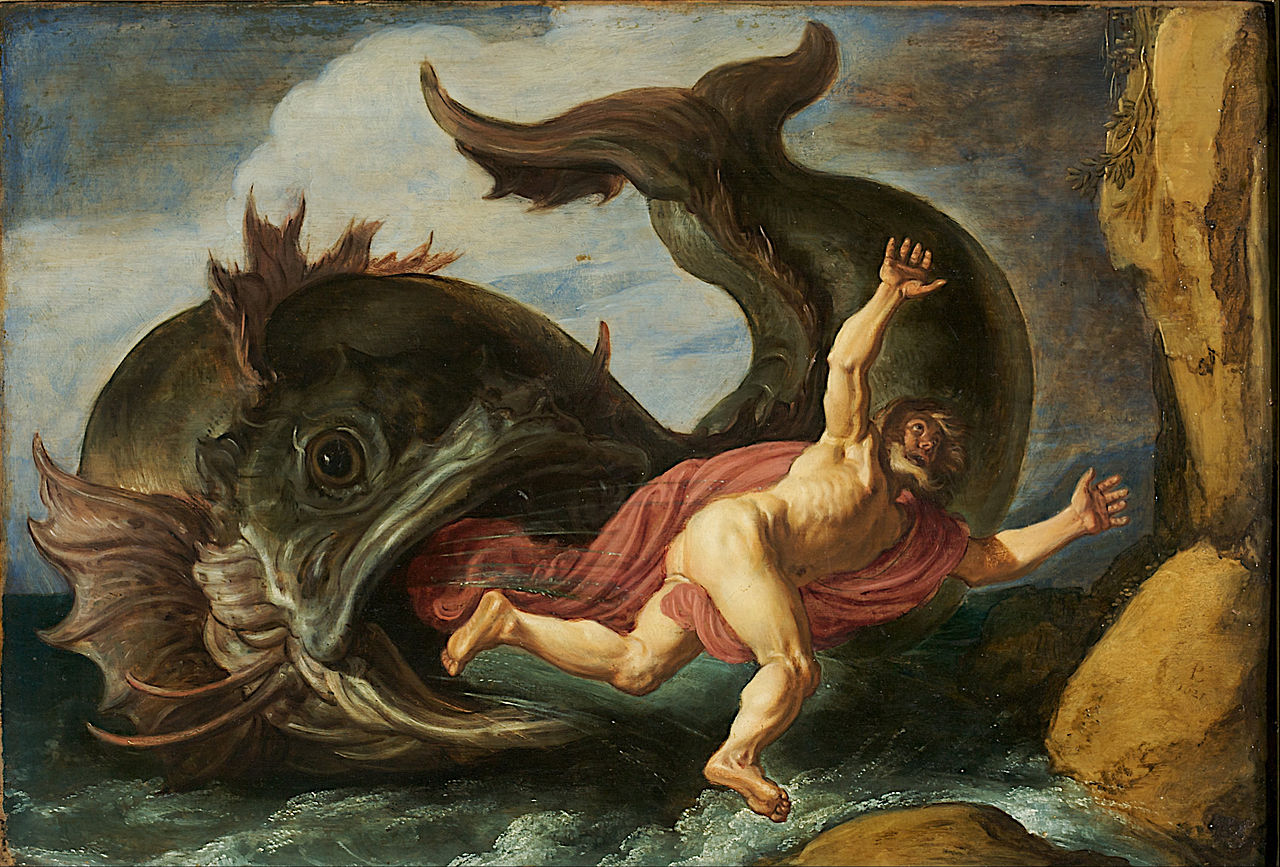
    Jonah and the Whale (Jonas uitgespuwd door de walvis), 1621, Pieter Lastman | Wikimedia Commons.

    Note that the beginning of today’s reading is specific about who speaks to Jonah: “the word of the LORD,” that is, the Son of God. The Word of God is patient with Jonah, willing to put up with Jonah’s reluctance to show us how we can be His instruments in the world. While Nineveh would have taken three days to walk through, the people listen to Jonah on just his first day, much to his surprise. In fact, everyone, king included, puts on sackcloth, fasts, repents, and asks God to be spared. Jonah, unwilling and unwitting as he is, has done the Lord’s work and brings about a miraculous change in the people that saves them.

    (As an aside, Chapter 4 of Jonah is worth revisiting if you haven’t read it lately. We see a pouting Jonah get angry with God because he was made to look like a fool since his warning did not come true. He just doesn’t understand that he should rejoice over the success of his warning and God’s resulting mercy. God gives him one last lesson in the matter. Jonah is so relatable!)

    In the gospel reading, Jesus recalls Jonah’s work as well as the Jewish King Solomon as a way to show his contemporaries that they are completely missing God in front of them. Christ says,

    At the judgment
    the queen of the south will rise with the men of this generation
    and she will condemn them,
    because she came from the ends of the earth
    to hear the wisdom of Solomon,
    and there is something greater than Solomon here.

    Let’s take a moment to recall this piece of Jewish history as related in the 1st Book of Kings, Chapter 10 .  After he takes the throne, King Solomon displays that he truly loves God and makes many sacrifices to Him. He is then visited by God in a dream and told: “Ask what I should give you.” Solomon asks for wisdom to best govern God’s people. It pleases God greatly that Solomon’s petition was not selfish but for the benefit of the nation. The Word of God replies, “Indeed I give you a wise and discerning mind; no one like you has been before you and no one like you shall arise after you.” (Note that the Book of Wisdom in the Bible is also known as the Wisdom of Solomon).

    What is the Wisdom of God? St. Thomas Aquinas tells us (and the Catechism of the Catholic Church quotes this), “In God, power, essence, will, intellect, wisdom, and justice are all identical. Nothing therefore can be in God’s power which could not be in his just will or his wise intellect” (CCC 271). Wisdom is part and parcel of God’s intellect and power. And God shares his Wisdom through his Word, which is Truth. Therefore, the Word of God, who is Christ, is the expression of Wisdom, and was a constant companion of Solomon.

    Back to our passage, “the queen of the south” is the Queen of Sheba (Sheba is thought to be either modern-day Yemen or Ethiopia). She hears of Solomon’s fame and “came to test him with hard questions.” She brings a huge retinue with loads of treasures and precious spices. She’s very skeptical, but after speaking with him and seeing firsthand how he rules, she exclaims, “The report was true that I heard in my own land of your accomplishments and of your wisdom, but I did not believe the reports until I came and my own eyes had seen it. Not even half had been told me; your wisdom and prosperity far surpass the report that I had heard.” She bestows great treasures upon him.

    To recap: the Ninevites and the Queen of Sheba are Gentiles (non-Jews) who come to believe thanks to a Jewish figure who walks with the Word of God and does God’s will. Is this not exactly Jesus’s mission as He establishes the Church? First, he starts with the Chosen People but then opens the gates of the Kingdom to all humanity. The point in today’s passage is that if Gentiles can be converted — those who don’t even know the rich history of the Chosen People’s walk with God over the centuries — then how bad is it that Jews themselves can’t listen to the Word of God right in front of them? To be condemned by the Queen of Sheba and the Ninevites is ignominious indeed!
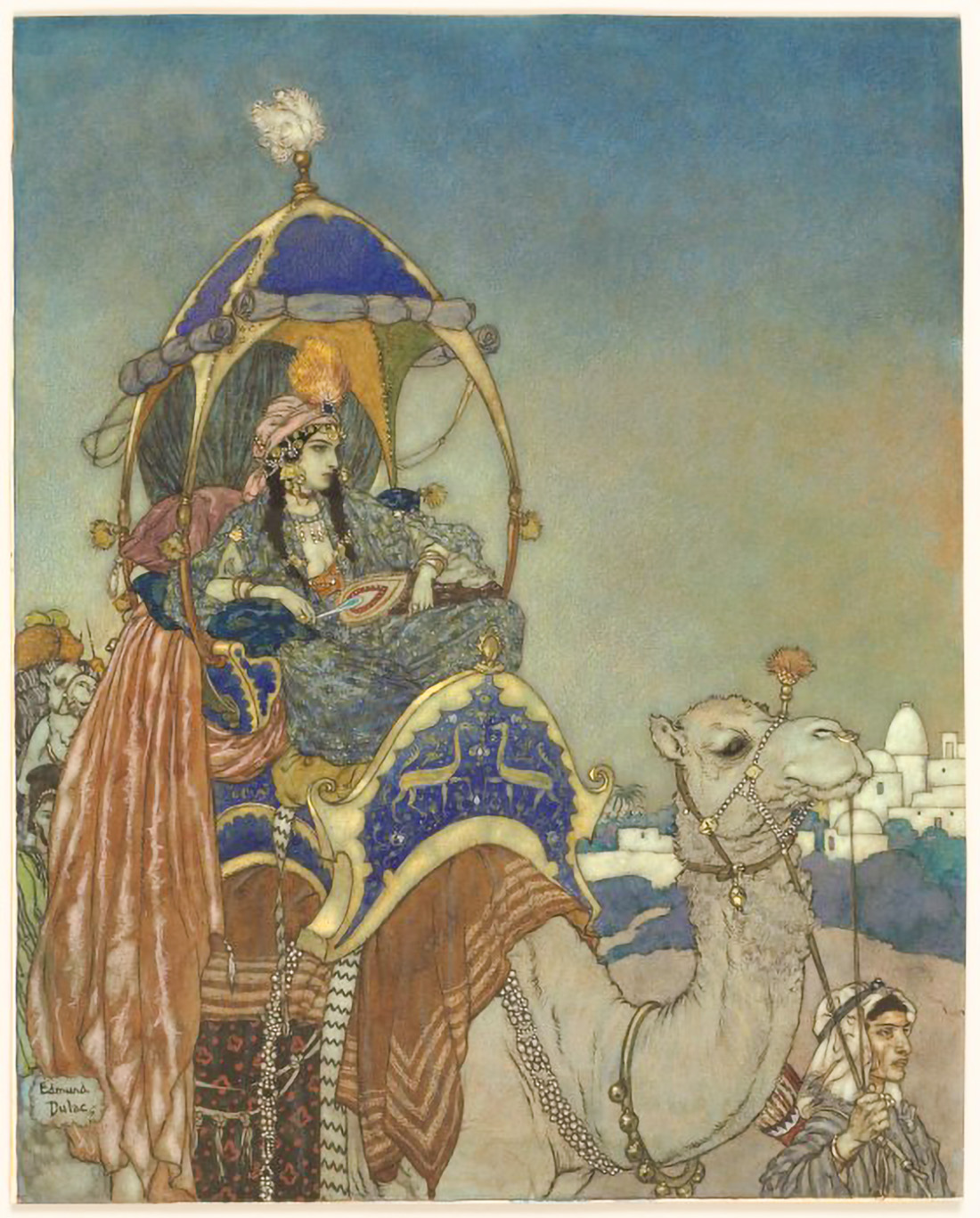
    The Queen of Sheba (1911), Edmund Dulac | Image from The Cleveland Museum of Art.

    Jesus does not call them an evil generation because of a general lack of faith in God or a betrayal of his commandments, but because of their lack of faith in Him. He says, “At the judgment the men of Nineveh will arise with this generation and condemn it, because at the preaching of Jonah they repented, and there is something greater than Jonah here.” Yes, that something greater is the Word of God in the flesh. Unlike the warnings of the prophets in the Old Testament, who were mainly concerned with those disobeying God’s laws, Jesus has a very specific condemnation related to not believing in his divinity.

    Why is this so important? Because the New Covenant given to us — our new Baptism — relies on the faith that God himself has made a sacrifice in the form of a human in order to open up a new reality of communion with Him. If we don’t believe that Jesus is God, then we are closing the door to our own salvation. 

    But Christ proclaims, “no sign will be given it [this generation], except the sign of Jonah.” This has at least two levels of meaning. First, the sign of Jonah is a call to repentance. Jonah’s words that scared an entire city and its king into wearing sackcloth and begging for mercy were, “Forty days more, and Nineveh shall be overthrown!” Christ gives this same sign to the Jews, and the earthquake that shakes the temple and the curtain of the Holy of Holies being torn in half do indeed overthrow the Old Covenant. The new Jerusalem is born: it is the resurrected body of Christ.

    Second, we have to understand that the “sign of Jonah” was also understood as a positive thing. God goes out of his way to cure Jonah of his bitterness and vengeful nature at the end of the Book of Jonah. In the gospel reading, Jesus makes a distinction between Jonah’s words and the overall sign that he became: “Just as Jonah became a sign to the Ninevites, so will the Son of Man be to this generation.” The good news here is that the Ninevites listened to Jonah. He did, in fact, save them from destruction. His words were those of condemnation, but the result was repentance. Thus, the overall “sign” Jonah represents is conversion. Christ is letting them know that He is a sign from the Father, who wants them to repent and see His Son. That sign is a hopeful one of conversion and deliverance.

    The third level of meaning in the “sign of Jonah” is the one least expected by the Jews. What do we usually associate with Jonah? The whale! He spends three days in the belly of the whale and then is miraculously spit up on the beach. This is the sign of resurrection. What a sign to receive! And, truly, that sign of Jonah launched the Church as the Body of Christ that exists to this day and will exist forever.

  • The Spirit of Fasting

    The Spirit of Fasting

    Friday after Ash Wednesday: Isaiah 58:1-9a, Matthew 9:14-15.

    Today’s readings cast some doubt on fasting, and it’s worth digging into them to understand the teaching God delivers to us.

    The verses from Isaiah are some of the longest in the Old Testament dealing with fasting. This chapter in Isaiah tackles false vs. true worship; God is chastising the Jews for presenting themselves as holy people but acting completely differently. In short, it’s a warning against hypocrisy.

    Let’s consider the first words attributed to the Jews: “Why do we fast, and you do not see it? afflict ourselves, and you take no note of it?” God’s reply is, “you serve your own interest on your fast day, and oppress all your workers. Look, you fast only to quarrel and to fight and to strike with a wicked fist” (NRSV translation).

    There are several things going on here. First, doesn’t it seem a bit pushy and presumptuous of the people to challenge God and his non-response to their penitential acts? This should clue us into their lack of true humility before God, a true fear of God. And God’s response is that they serve their own interests on the fast day rather than obeying the great commandment to love God before all else (i.e., themselves) and then their neighbor as themselves.

    They also seem to be devolving into quarrelling and fighting with one another. This sounds pretty bad, but are we much better? Fasting makes us hungry, grumpy, and snippy. That’s part of the point, really: it forces us into a position to master not just our physical hunger but our emotional state and way we react to things around us. Pile onto this our cultural pressures of politics, people at work or home who habitually bother us, and unknowns like road rage moments, and it’s a recipe for disaster.

    The War (The First Discord), 1864, William Adolphe Bouguereau | Image from arthive.com. I’m not a huge fan of cherub pictures in general, but this seems too perfect to pass up. Here we have innocence (our desire to fast) being turned ugly by the desire to possess – specifically food. 

    God details something different: “This, rather, is the fasting that I wish: releasing those bound unjustly, untying the thongs of the yoke … Sharing your bread with the hungry, sheltering the oppressed and the homeless; Clothing the naked when you see them, and not turning your back on your own.” This is the Word of God, later to be incarnated as Jesus Christ, speaking to be sure! We hear Jesus say these same things in the gospels. But does this sound like fasting to you?

    I generally think of fasting as if I am going into a desert cave and struggling with my hunger and emotional state in an environment where I can just focus on prayer without the realities of life messing things up (I’d be too tempted to say something stupid or lash out). It’s like a taking a retreat with the Lord. And yet God plainly tells the Jews that the type of fasting he wishes is one immersed in the world and in helping others. Oy! I can’t escape it! How is it possible? It’s hard enough keeping myself level without having to worry about helping others.

    The answer, it seems, is that I probably haven’t been giving myself over to God wholly or trusting in his help. His words in the verses directly following today’s reading point us in this direction: “If you remove the yoke from among you, the pointing of the finger, the speaking of evil, if you offer your food to the hungry and satisfy the needs of the afflicted, then your light shall rise in the darkness and your gloom be like the noonday” (Is 58:9b-10). We might say he’s speaking of the virtuous cycle here: if you start doing good, that good reproduces itself in others and rejuvenates you. It’s the work of the Holy Spirit in the world.

    I particularly like how God addresses the emotional hurdles associated with fasting: “your gloom will be like the noonday.” Thank you for understanding me! And giving us the Holy Spirit to aid us in our devotion. That thing that I most feared — putting my grumpy self into contact with others where I might become that very hypocrite Isaiah addresses — is the very thing that offers me an opportunity to lighten my load. I just have to fill myself with your commands to help others and remove the temptations to be grumpy and edgy. This would likely be impossible without help, and we are in a position to be more successful than the ancient Jews. Christ has promised to lash himself to us on the yoke: “Come to me, all you that are weary and are carrying heavy burdens, and I will give you rest. Take my yoke upon you, and learn from me; for I am gentle and humble in heart, and you will find rest for your souls. For my yoke is easy, and my burden is light” (Matt 11:28-30).

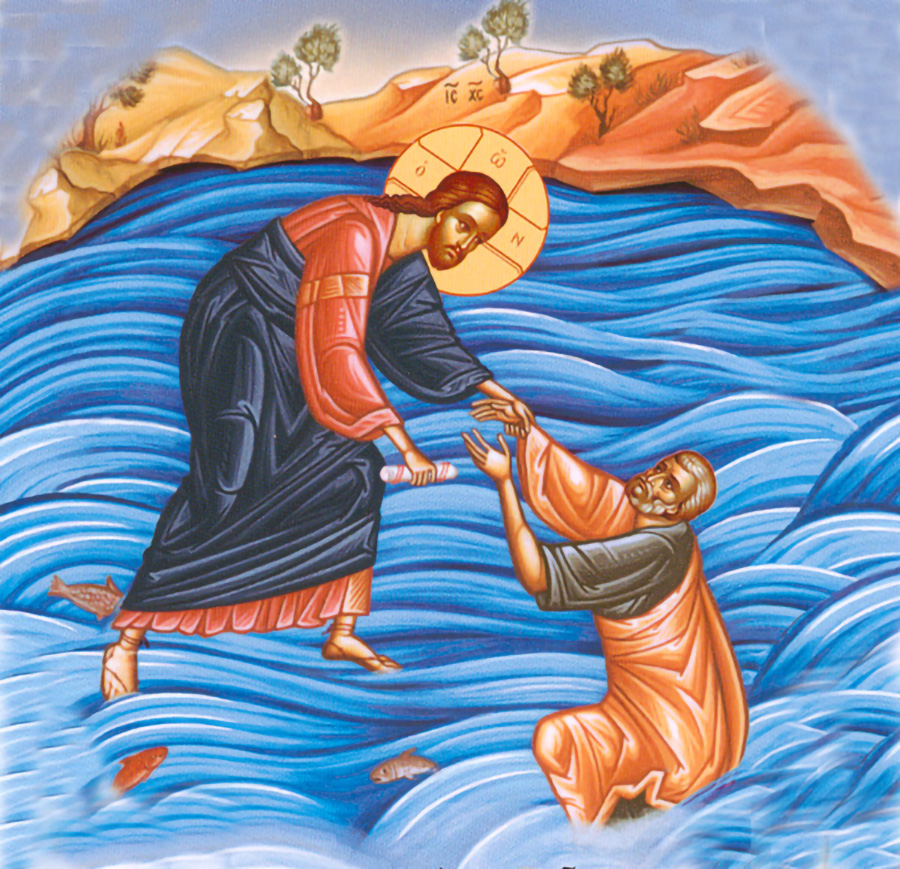
    Icon of Jesus walking on the water and helping Peter, provenance unknown | Image from www.pemptousia.gr.

    If it’s just a matter of self-discipline and mastering oneself, then it’s bound to be a hollow victory in the end, and certainly not a participation in our faith, our life in the liturgy. But if we fast with Christ at our side, we actively participate in the work of His Spirit in the world. What sounded like a burden is revealed to be an amazing spiritual activity. In his book Liturgical Asceticism, the University of Notre Dame professor of theology David Fagerberg acknowledges that fasting, solitude, and other forms of renunciation existed before Christianity and continue exist outside of it. What makes our Christian fasting different is “the degree that its source is sacramental immersion into Jesus’ life, and to the degree that this discipline frees the baptized for participation in the Mystical Body of Christ” (83). In other words, our fasting becomes a spiritual celebration of Christian liturgy the more we invite Christ to participate with us, to hold us up, and ask the Spirit to move within us and the Father to bless us in our effort.

    Fagerberg continues to distinguish our fasting from other faiths and types of fasting by showing that it is a specific response to the Christ Event in history — it is our recognition that we wait in patience for the final coming of Christ and we wait in the way Christ lived in us: allowing himself to be pierced by nails to uproot the passions and sin that ensnare us.

    Fagerberg also writes, “This liturgical asceticism initiates us into something higher than mere morality” (84). His point is that when we properly fast, with Christ at our side and love in our hearts, we are elevated beyond simply “doing the right thing.” Morality flows naturally from God, the ultimate Good; and the closer we become to God, the more we act and think in our lives in a morally correct way. But some acts of renunciation — fasting, for instance — are voluntary acts that can and should be done outside of the strict moral sense. Another way of saying this is that fasting is neither good nor bad (it is amoral) until it is united with a specific intent (see Ash Wednesday’s reflection where St. Thomas Aquinas defines fasting as virtuous only if directed to some virtuous good).

    There are many virtuous things we can direct our fast towards, and these are undoubtedly “morally good.” Fagerberg’s point is that the deepest Christian fasting is beyond just “morally good” because we participate in the actual life of Christ, fulfilling in action what we sacramentally join via Baptism and the Eucharist, bodily and mentally joining in the scope of salvation history and the awaiting of Christ’s coming in glory. We don’t fast because it’s the “right” thing to do or because the bishops declare that we have to on specific days; no, we fast in this way because we are fulfilling our purpose within the Mystical Body of Christ and becoming better spiritual beings.

    Sounds to me like I should be fasting all the time! What a fantastic and deep way to think about acts of renunciation. So, are we called to fast without ceasing as we wait for Christ’s return? After all, St. Catherine of Siena and some other saints lived this way.

    Let’s look at this question through the lens of the gospel reading. When John the Baptist’s disciples ask why they and the Pharisees fast often but his disciples do not, Jesus answers, “Can the wedding guests mourn as long as the bridegroom is with them? The days will come when the bridegroom is taken away from them, and then they will fast.” We notice a few things. First, Jesus connects fasting with mourning. In the Old Testament, the prophets advised that the people mourn their loss of God’s favor, which was brought about by their own infidelity to his law. In other words, their unfaithfulness to God resulted in his withholding his favor — this situation demanded fasting, a type of mourning, repentance and pleas for mercy. But Jesus’s use of the word mourning clearly has another edge to it as he foreshadows his own death. The second thing to notice is the content of what he’s saying: that when God is with us, there is no need or use for fasting and mourning; there is nothing missing when one is in God’s presence.

    This idea of putting fasting in its rightful place — that we might not be called to a state of constant fasting — is illustrated clearly by the Desert Fathers. In the Collected Sayings of the Desert Fathers, there is one episode shared by Abba John Cassian (360 – c.435) that reads,

    [Coming] from Palestine to Egypt, we visited one of the fathers. He entertained us and was asked by us, “Why is it that when you are entertaining brothers from elsewhere, you do not observe the rule of your fasting the way we observe it in Palestine?” “Fasting is always with me,” he replied, “but I cannot detain you with me forever. And although fasting is a useful and necessary practice, we do it because we choose to, whereas the law of God enjoins the practice of charity as a necessity. When I entertain one of you, I am serving Christ (as I am obliged to do) with full attention; and when I send you on your way, I can resume the rule of fasting, for ‘the companions of the bridegroom cannot fast while the bridegroom is with them; but when he is taken away from them, then will they fast’ [Matt 9:15] to their hearts’ content.”
    (The Book of Elders, 13.2)

    Let’s remember that the Desert Fathers were absolutely committed to physical poverty, fasting, and acts of penitence. Abba Isaiah says, “Hate everything in the world and repose of the body, for these made you an enemy of God. As a person who has an enemy fights with him, so we ought also to fight against the body to allow it no repose” (1.10). Not that these hermits’ sayings were completely uniform, but this general code of physical existence was fairly standard. This is why John Cassian’s story about the Egyptian father is worth pondering. The Egyptian ascetic notes that fasting is voluntary while charity is a commandment. His explanation that by welcoming his guest he is serving Christ is a lovely way to be looking at our interactions with each other. He even quotes today’s gospel to support his argument, suggesting that the Christ who is present in the other person is just as real and alive as Jesus was when addressing his disciples. 

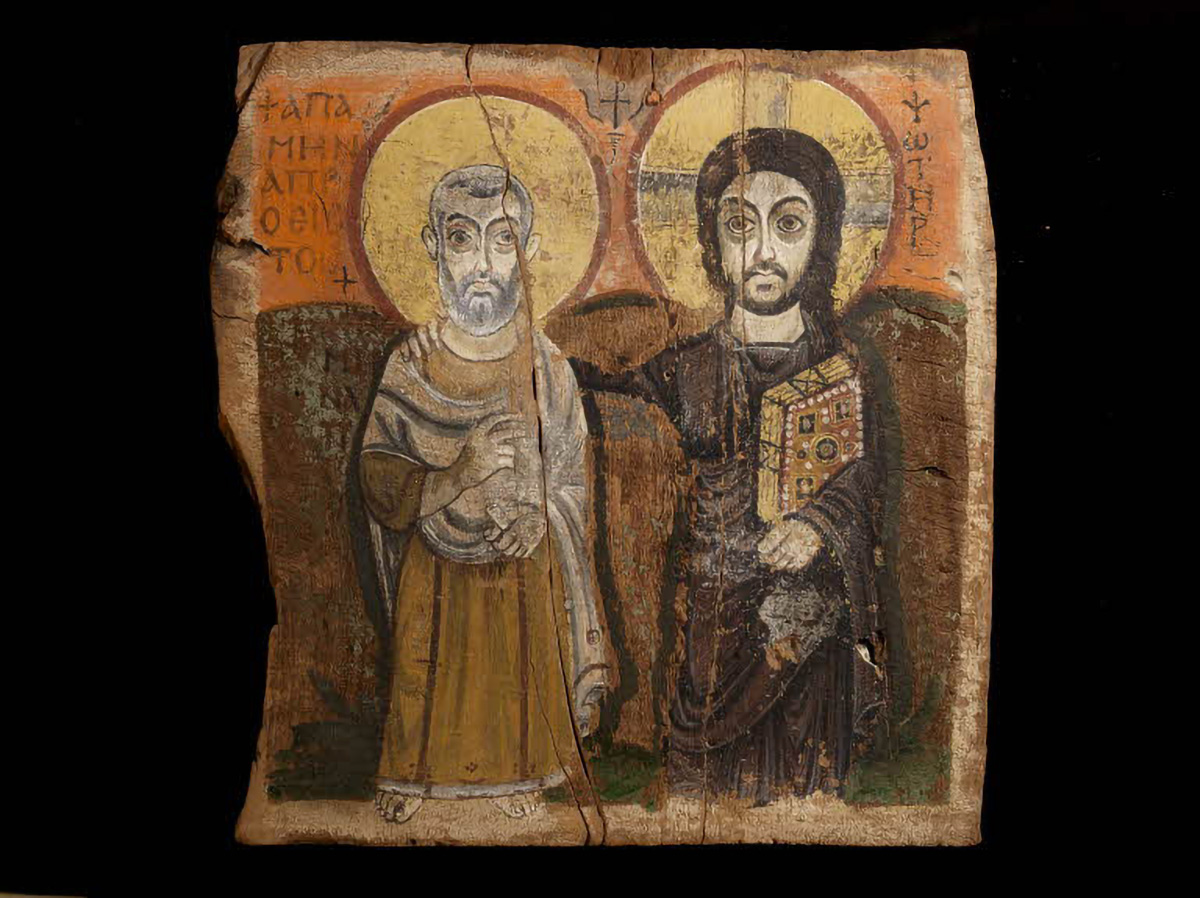
    Christ and Abbot Mena, from the monastery of Bawit in Middle Egypt. Dated to the 8th century, it represents Christ on the right (his halo has a cross) and Abbot Mena, the superior of the monastery at the time. The abbot holds a scroll in his left hand; this may have contained the rules of his monastery. | Image from the Louvre Museum.

    At the end of this reflection, it is clear that God is much more delighted when we choose to fast with the Spirit guiding us to deep, eschatologically-centered communion with God rather than when we choose to fast because it is a rule or something we “should” do. The Jews who fasted but acted poorly in Isaiah’s time as well as those who forget Christ’s presence when self-focused on fasting are examples of the wrong way to approach fasting. Even just a quick look at the saints and Desert Fathers can show us that fasting and other penitential renunciations are more of an alignment of one’s heart and spirit than a hard-and-fast set of practices.

    Each of us is called in a different way to follow Christ to the Father. We can use fasting and other renunciations of the passions and the flesh to better discern what exactly that call entails. We might find that, like St. Catherine, we are called to fast often while serving Christ in others. We might find that we are called to fast a bit less often while serving Christ in a different way. One thing is clear, however: we cannot shirk our responsibility to align our hearts in a “spirit of fasting,” for Christ tells us to deny ourselves and pick up our cross daily to follow him.

  • Starting the Great Fast

    Starting the Great Fast

    Ash Wednesday: Joel 2:12-18, 2 Corinthians 5:20-6:2, Matthew 6:1-6, 16-18.

    Like a thief in the night, Lent is here. I am tempted to think, “Must I again pare down my pleasures so soon?” Maybe the start of the year was hard for us. Maybe we feel like it’s been several hard years in a row. Maybe we feel like we deserve a little break this Lent.

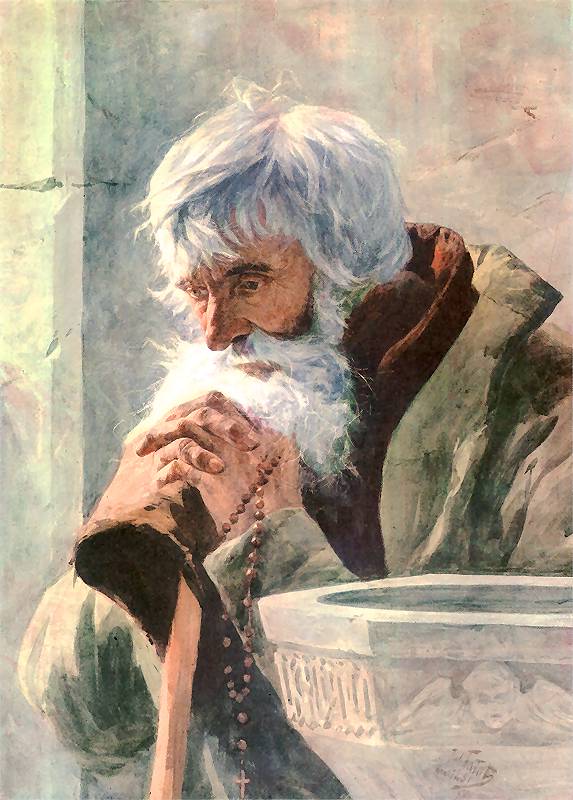
    Old Man Praying (1881), Julian Fałat | Wikimedia Commons.

    While the word “Lent” comes from old English “lengthen,” as applied to the days in Springtime, the Eastern Churches call Lent Μεγάλη Νηστεία (Megali Nisteia), which means “The Great Fast.” And while the promise of Christ’s Resurrection does approach like the slowly lengthening springtime sun, I see a deep significance in setting myself up for Lent by thinking of it as the Great Fast.

    Appropriately enough, today’s Ash Wednesday readings are all about fasting and how it was used by Jews and Christians alike as a bodily way of relating to God. This is something that might help us change our position regarding “deserving a break”: God is an essential part of the fasting equation. Without God, fasting has zero spiritual benefit and is pointless.

    Let’s consider the great commandment, gift, and tradition that is fasting. Commandment? Yes, according to St. John Chrysostom, “Fasting was the first commandment God gave to man.” He points to the Book of Genesis: “And the Lord God commanded the man, ‘You may freely eat of every tree of the garden; but of the tree of the knowledge of good and evil you shall not eat,’” (Gen 2:16-17a). I appreciate Chrysostom’s close reading here; God could have commanded Adam not to look in a special cavern, not to swim in a special pool, or not to say a certain word, but instead he commands Adam to have control over his appetite and desire.

    There have been many great essays written on the significance of the fruit of the “tree of knowledge of good and evil” being the fruit that belongs only to the Creator Himself and how Satan’s great temptation for us is to live as gods, but today I am struck by a more simple point. Chrysostom reminds us that God’s first commandment is to have bodily restraint in terms of food. On this simple level, when we fast, we can reconnect with a primal obedience to our Creator.

    In today’s first reading, God speaks through the prophet Joel to the Israelites: “return to me with your whole heart, with fasting, and weeping, and mourning; Rend your hearts, not your garments, and return to the LORD, your God.” He is talking to Adam’s ancestors, whose original father unlawfully broke his fast, and the fasting God urges upon them is a sign of their atonement, as are their tears and broken hearts. Fasting helps to mark the sincerity of their conversion back to God. And God wants His Chosen People to publicly and jointly take part: “Blow the trumpet in Zion! Proclaim a fast, call an assembly; Gather the people, notify the congregation.” Fasting unifies the people before their God and Master.

    Contrast this with our current secular culture where fasting is simply seen as another dieting option, a way to improve how you look or maybe how you feel. How strikingly different! Fasting in our faith tradition is certainly a personal response to God, but it is also a communal act of a people aware of their dependence upon God’s mercy.

    Remember the story of Jonah and the Ninevites. He (reluctantly) went to Nineveh to preach that they would be destroyed unless they repented and after just one day, “the people of Nineveh believed God; they proclaimed a fast, and everyone, great and small, put on sackcloth” (Jonah 3:5). More: “When the news reached the king of Nineveh, he rose from his throne, removed his robe, covered himself with sackcloth, and sat in ashes. Then he had a proclamation made in Nineveh: ‘By the decree of the king and his nobles: No human being or animal, no herd or flock, shall taste anything. They shall not feed, nor shall they drink water’” (Jn 3:6-7). Here we have a great, communal fast and repentance — a heartfelt response to God’s call. This story is an important illustration of what the Jewish faith calls teshuva, or the ability to repent and be forgiven by God: “When God saw what they did, how they turned from their evil ways, God changed his mind about the calamity that he had said he would bring upon them; and he did not do it” (Jonah 3:10).

    Teshuva is a persistent theme throughout the Bible, and fasting is integrally tied to this heartfelt repentance. Nearly all of the prophets speak of fasting, often in the context of teshuva. Notably, Moses fasts for 40 days and nights, as does Elijah and Jesus, the Son of God himself. (And we see these three great prophets together on the Mount of Transfiguration). John the Baptist subsists on wild locusts and honey. As we consider these prophets, the mouthpieces of God, we start to see that fasting is tied to more than just repentance and a plea for mercy. Fasting is a way for Moses to prepare to be in the presence of the divine. Fasting is a way for Elijah, Ezra, Esther and many others to ask for God’s favor and help with their specific problems. Fasting is a purification and a way for Jesus to achieve spiritual fortitude as he is tempted by the devil.

    Our great prophets teach us that fasting strengthens us spiritually — particularly our bond with God the Father — even though it seems to be weakening our bodies. Thus, Chrysostom can write, “Fasting of the body is food for the soul.”

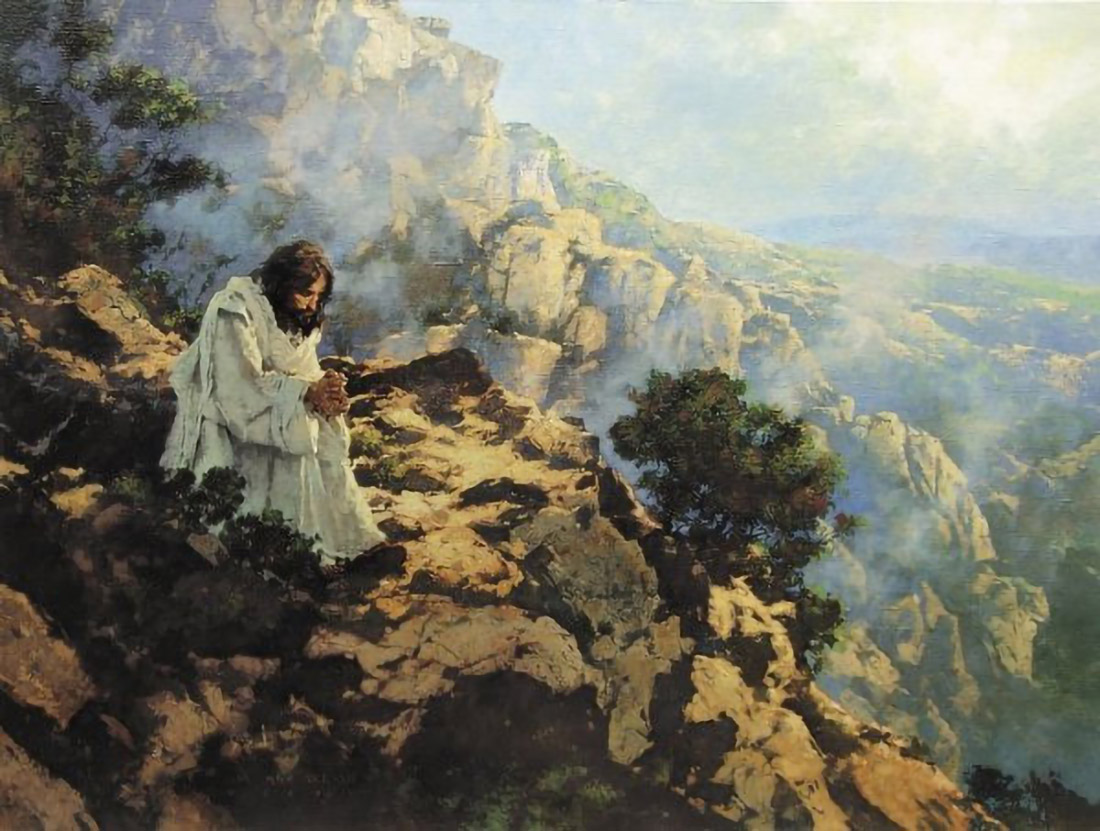
    Not by Bread Alone (2007), C. Michael Dudash | Image from christcenteredmall.com.

    In today’s gospel reading, Jesus instructs his disciples not so much on the benefits of fasting (this was a given, known thing for Jews and Gentiles alike in Jesus’s time) but on how to fast effectively. He lays out the path to being a humble, earnest child of God: “Take care not to perform righteous deeds in order that people may see them … when you pray, go to your inner room, close the door, and pray to your Father in secret … when you fast, anoint your head and wash your face, so that you may not appear to be fasting, except to your Father who is hidden. And your Father who sees what is hidden will repay you.” For a Jewish culture at times obsessed with purity and outward signs of worthiness, Christ’s words are a significant re-ordering of their priorities.

    More importantly, He presents them with a profound revelation of who God is. This Father of ours is an intensely personal one, someone who is most interested in the secret, hidden, most private moments He shares with His children. Jesus’s words also reassure us that humans are fundamentally spiritual beings — much more than just physical creatures who act within a society, when all of the “doing” is done and we are alone, our Father is with us. He has blessed us with a soul that is at the core of our being; He has called us, entrusted us to be His beloved children, living by his commandments and praising Him by sharing his love in the world.

    Lent is our time to re-order ourselves to this fundamental truth. It is not the spiritual that should be conformed to the physical — that is, we should not pray when it’s convenient for our physical routine or allow moral judgment and God’s commandments to be casually overridden by physical cravings like rich food or sexual desire. If we are fundamentally spiritual beings first and physical and emotional beings only for a time here on this earth, then the spiritual drive should always come first. The logic of fasting suddenly becomes obvious. We offer to our God a small sacrifice of our physical comfort as we put our spiritual relationship with Him first. 

    Christians have always fasted; like devout Jews at the time of Christ, they fasted two days each week. St. Paul famously accepts fasting as a part of his spiritual conversion: for three days after being struck blind on the road to Damascus he “neither ate nor drank” (Acts 9:9b). Also at his commission at Antioch: “While they were worshiping the Lord and fasting, the Holy Spirit said, ‘Set apart for me Barnabas and Saul for the work to which I have called them.’ Then after fasting and praying they laid their hands on them and sent them off” (Acts 13:2-3).

    In fact, Paul tells the Corinthians that his entire ministry has been an acceptance of physical hardship in order to do the spiritual work to which God has called him: “In toil and hardship, in frequent sleepless nights, in famine and thirst, in frequent fasts, in cold and nakedness … If I must boast, I will boast of things belonging to my weakness” (2 Cor 11:27, 30).

    Drawing upon these great lessons from the Apostolic Age, we see the desert monks emerge a century or two later, feeding upon this same wisdom. They “boast in weakness” (that is, physical weakness) like the lack of food, comfort, sex, etc. because they find that they grow strong in spirit. This monastic tradition has continued through the centuries to this day, with the vows of poverty and chastity that monks and nuns take in their vocation. This is not ritualized masochism! Christ Himself taught us the deep truth about what it means to be human, to have a body, mind, and spirit wrapped up in one being, and how the spirit must shine because it is preeminent in the order of being. Again, let’s not twist this into thinking that the Church sees the body as evil. The Catechism tells us:

    The human body shares in the dignity of “the image of God”: it is a human body precisely because it is animated by a spiritual soul, and it is the whole human person that is intended to become, in the body of Christ, a temple of the Spirit:

    Man, though made of body and soul, is a unity. Through his very bodily condition he sums up in himself the elements of the material world. Through him they are thus brought to their highest perfection and can raise their voice in praise freely given to the Creator. For this reason man may not despise his bodily life. Rather he is obliged to regard his body as good and to hold it in honor since God has created it and will raise it up on the last day”

    (CCC, citing Gaudium et Spes from the 2nd Vatican Council, 364).

    I love our theology on the body of Christ. We, the Church, are the Body of the divine Christ active in the world, and Jesus has a corporeal body that was tortured and crucified, only to rise and walk in the world before ascending to the Father. The Body of Christ is also present in our Eucharistic sacrament, to be taken in by the faithful as spiritual sustenance. There are so many levels upon which Christ’s body is the ultimate example of how human life can transcend this mortal plane, subordinated to the spirit and yet rising in significance specifically because of its lowly state.

    The body, created from the dust of the earth, is miraculous and good because God breathed life into it. Without that breath and Spirit, the body is just dust. When the origin, the breath of life, is honored above the body, then the human who is a unified body and soul can bring that body to the heavenly plane to dwell with God. Fasting is a way — an ancient and important way — that we can honor God over and above the body.

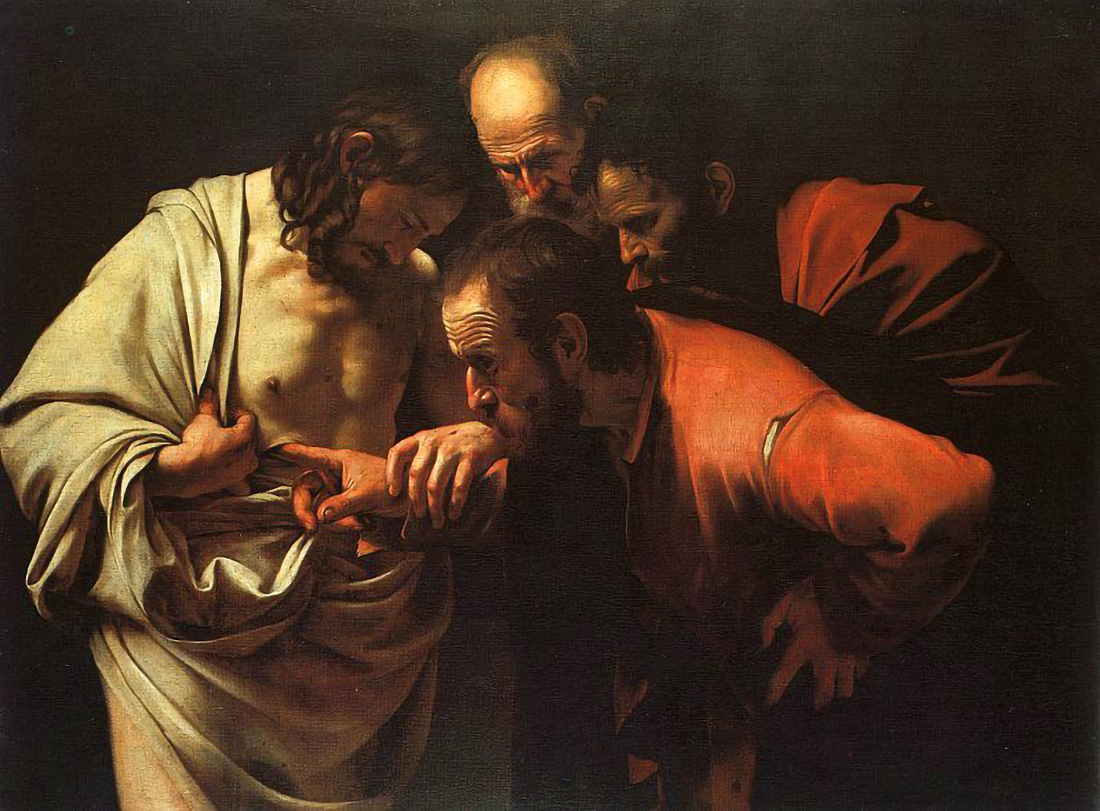
    The Incredulity of Saint Thomas (1601-1602), Caravaggio | Wikimedia Commons. Jesus is the proof that the body’s corruptibility is fleeting and tied to this earth; His sacrifice enables us to share in the rising of the body and soul to Heaven in unity with Him and the Father.

    In today’s second reading, St. Paul impresses upon the Corinthians that, as followers of Christ, what we do with our bodies matters even more than it did before Christ’s great sacrifice: “We are ambassadors for Christ, as if God were appealing through us … we appeal to you not to receive the grace of God in vain.” What he is saying is that we must carry forward Christ’s teaching and example of how the body can have everlasting life with the soul. We Christians are graced with learning the truth of Christ, which means we are entrusted with passing along the lessons, the charity, the subordination of the body to spiritual realities. We are the Body of Christ and we must uphold the sacred function of that Body in lifting up humanity through humility and charity at the cost of fleeting comforts.

    So, it’s Ash Wednesday, one of only two days of fasting that remain in the Western Catholic Church’s liturgical calendar. We really don’t ask much of ourselves these days. Let’s listen to St. Thomas Aquinas remind us of the aims of fasting: “fasting is practiced for a threefold purpose. First, in order to bridle the lusts of the flesh … Secondly, we have recourse to fasting in order that the mind may arise more freely to the contemplation of heavenly things … Thirdly, in order to satisfy for sins” (Summa 147.1). We hear him address our body (bridling lusts), our mind (contemplation of heavenly things), and our soul (atoning for sins). Fasting, in other words, is a triple-threat spiritual practice. But only if done for God! Aquinas’s entire point is to show that fasting is virtuous, with the caveat: “An act is virtuous through being directed by reason to some virtuous good.” He lays out the “virtuous good” in terms of body, mind, and soul, but of course the ultimate virtuous good is Good Itself, that is, God.

    This is why the term Μεγάλη Νηστεία, Great Fast, is so appropriate for all of Lent. This is not to say that we spend all 40 days in actual fast like our Christian forebears did (although there is a part of me that wishes I would and I could in order to be that much closer to God). It’s that we recognize these 40 days and nights as a time where we are focused on the virtuous good of God, in our bridling of our lusts, in our contemplation of heavenly things, and in our atonement for our sins.

    The aim and the thrust of fasting can be carried out throughout Lent in each moment when we hold back a rash remark, when we take that idle moment to offer a prayer to God, when we forego something little that would make us “feel good” in order to make someone else feel good or even as just a little sacrifice offered to God to let him know that we aren’t being ruled by our base earthly desires. This is how we can make all 40 days a Great Fast. And as we do, we realize it becomes easier. That spot of hunger goes away and subsides like a devil thwarted. We realize that we can live and perhaps even thrive without those creature comforts — the potato chips, the time in front of the TV — and instead spend that time reading the scriptures, singing a psalm, praying the rosary, or just reflecting quietly on Christ’s sacrifice, on the Face of God.

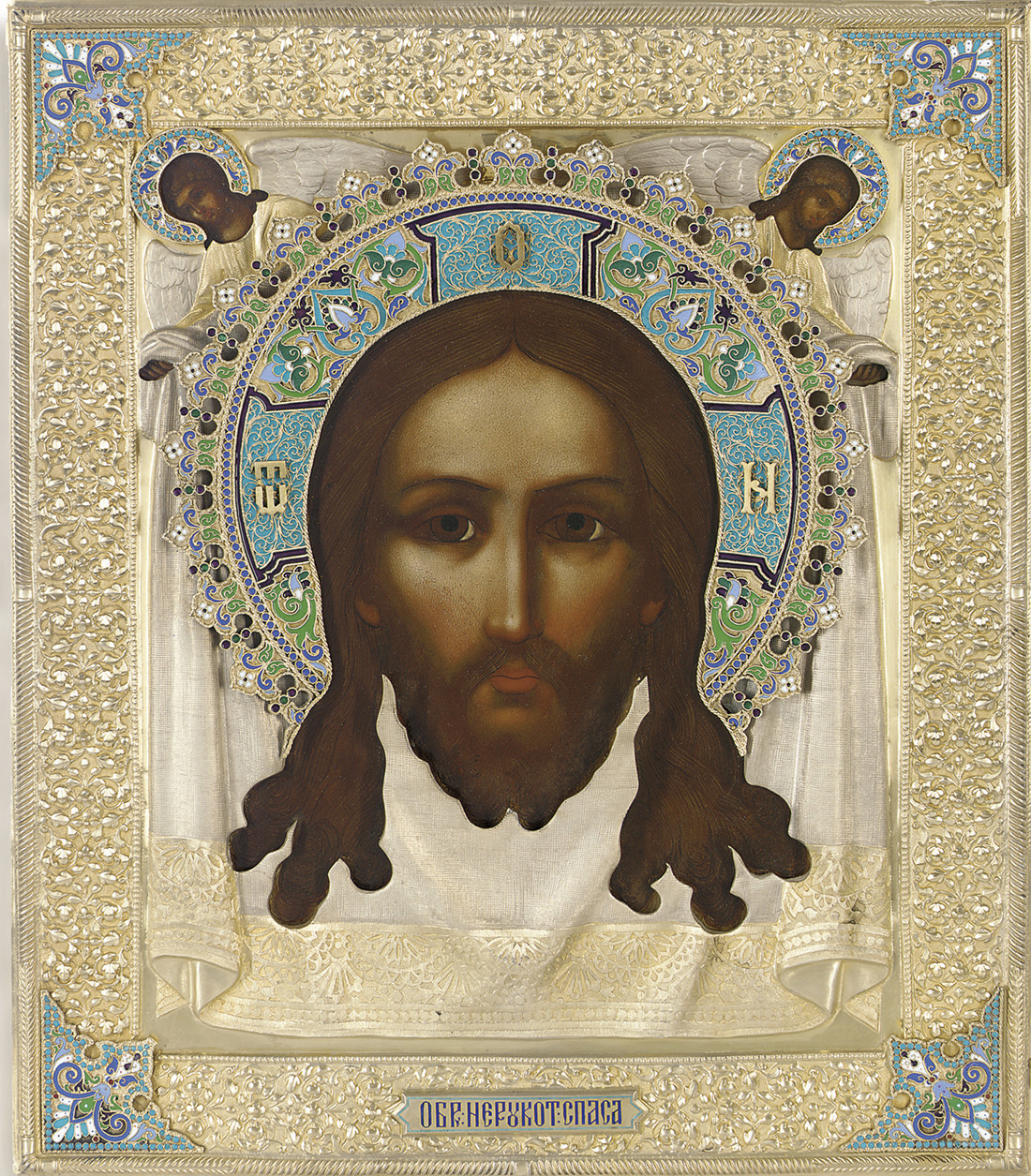
    The Mandylion (1885), Russian, Mark of Pavel Ovchinnikov with the Imperial Warrant, Moscow. A cloth with the imprinted face of Christ, its hem with stylised decoration emulating embroidery, lifted by two angels on the upper corners, each with outstretched wings bending outwards | Image from christies.com.

    My hope is that we allow the Great Fast to wash over us like a giant wave. That we do not resist its current but allow ourselves to be caught up in it — allow the Fast to grip us, determine our direction and our very breath. This is the the first step in giving ourselves to God and allowing Him to bestow His grace in our lives.


    Read the reflection from Ash Wednesday 2020 here: Ambassadors for Christ.

  • The Back-Seat Servitude of Fatherhood

    The Back-Seat Servitude of Fatherhood

    Friday in the 3rd Week of Advent: Jeremiah 23:5-8, Matthew 1:18-25.

    Today’s readings provide us with further prophecy about the coming Messiah, but from Jeremiah rather than the Advent-friendly Isaiah. Jeremiah gives a unique name for Christ the Messiah: The Lord Our Righteousness. At least most translations phrase it this way, although our lectionary for some reason chooses “The Lord Our Justice.” This raises some interesting thoughts regarding the relationship between righteousness and justice, which we’ll touch on later. But I’d like to stick with righteousness for a moment, because it gives us a lens with which we can explore the gospel reading.

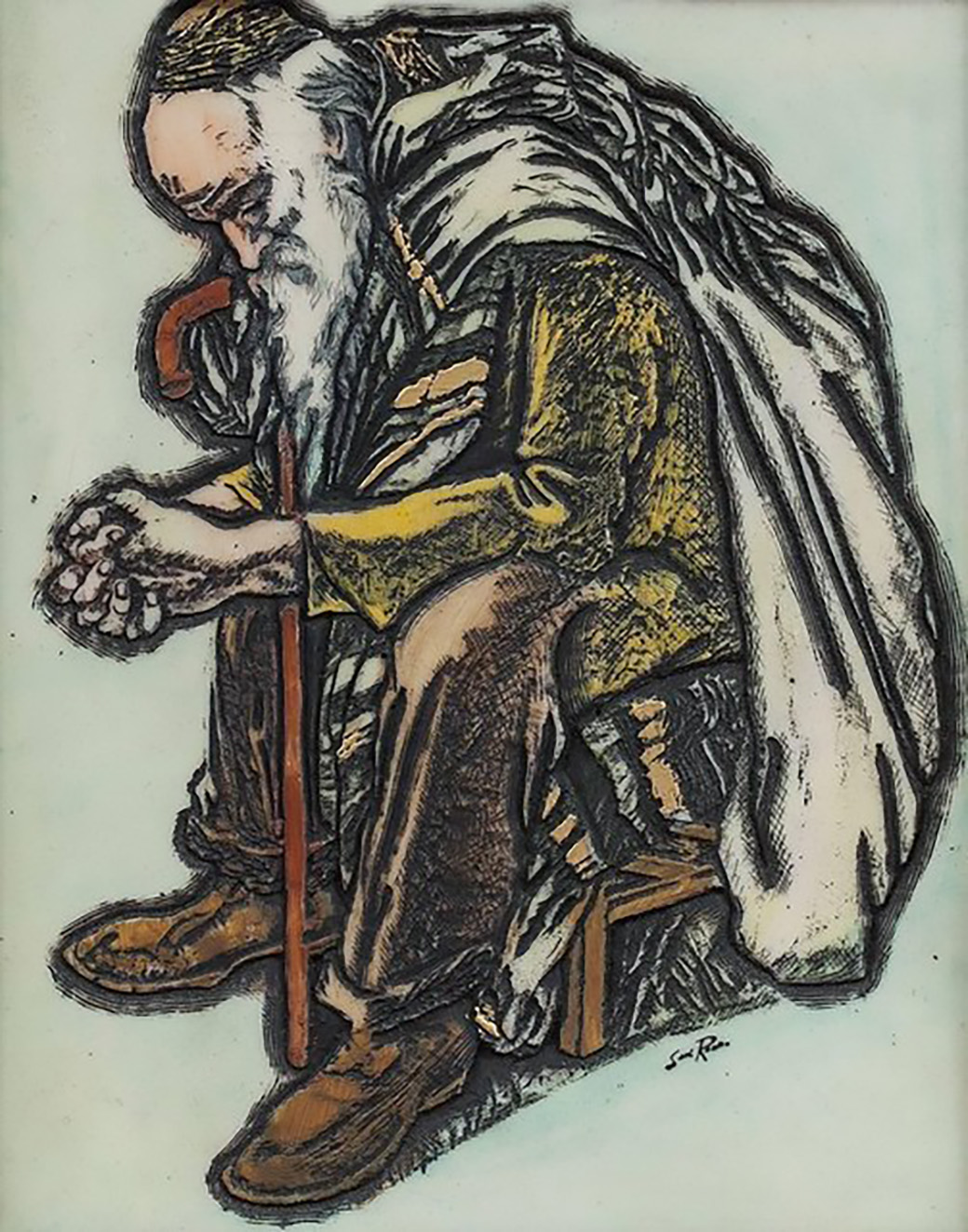
    Meditation (mid-1900s), Saul Raskin, (carved ivorine plaque) | Image from artsy.net.

    Jeremiah’s passage in the original Hebrew calls the Messiah יְהוָ֥ה ׀ צִדְקֵֽנוּ׃  (Yahweh Tsidkenu). The root here is tsedek, and the -enu is the suffix that means “our”; elsewhere in scriptures we read tsedeka, which is translated as “your righteousness,” almost always applied to God. Why am I making a point of tracing out this word? Because righteousness is at stake in the birth of Christ.

    Righteousness means a state of blamelessness, of living completely according to God’s law, of being worthy. Let’s not get sidetracked by the modern insult, “she’s so self-righteous.” This casts righteousness in the exact opposite light of what the word means. It is the state of being worthy of praise because one abides by God’s law. Jeremiah proclaims, “This is the name they give him: ‘The LORD Our Righteousness.’” In other words, Jesus Christ’s very name proclaims how his spotless worthiness is the hope and fulfillment of the Jewish people (“our” righteousness). Jeremiah underlines that God’s law made perfect is joined with a human person in this coming Messiah.

    What is a fitting way for the Lord Our Righteousness to come into the world? If righteousness is the key concept, we might expect an exceptional family for him to be born into. We’re not talking about glory (which is later revealed), so the circumstances are humble. We’re not talking about earthly success and savvy, so the circumstances are poor. No, “righteousness” is, above all, a trait characterized by the willingness to live by God’s Word. The Blessed Virgin Mary is our Queen of Heaven for a reason: she gives us the ultimate example of righteousness with her acceptance of the Holy Spirit at the Annunciation and subsequent Incarnation.

    But there’s more to the family.

    St. Matthew’s gospel is the one source that describes Joseph in the detail we hear today. Mark and John skip the Nativity entirely and Luke picks up on the journey to Bethlehem. But Matthew dwells for a moment upon Joseph, deeming it necessary and appropriate to describe the righteousness of Jesus’s family down to the foster father. Joseph, as Matthew tells us, is a very righteous man: “Joseph her husband, since he was a righteous man, yet unwilling to expose her to shame, decided to divorce her quietly.” This reaction actually goes above and beyond the law set by the Jews. He could have denounced her publicly and she could have been stoned to death for adultery. This shows his true righteousness because he understands that God’s laws are based on love, and he acts out of love, not retribution.

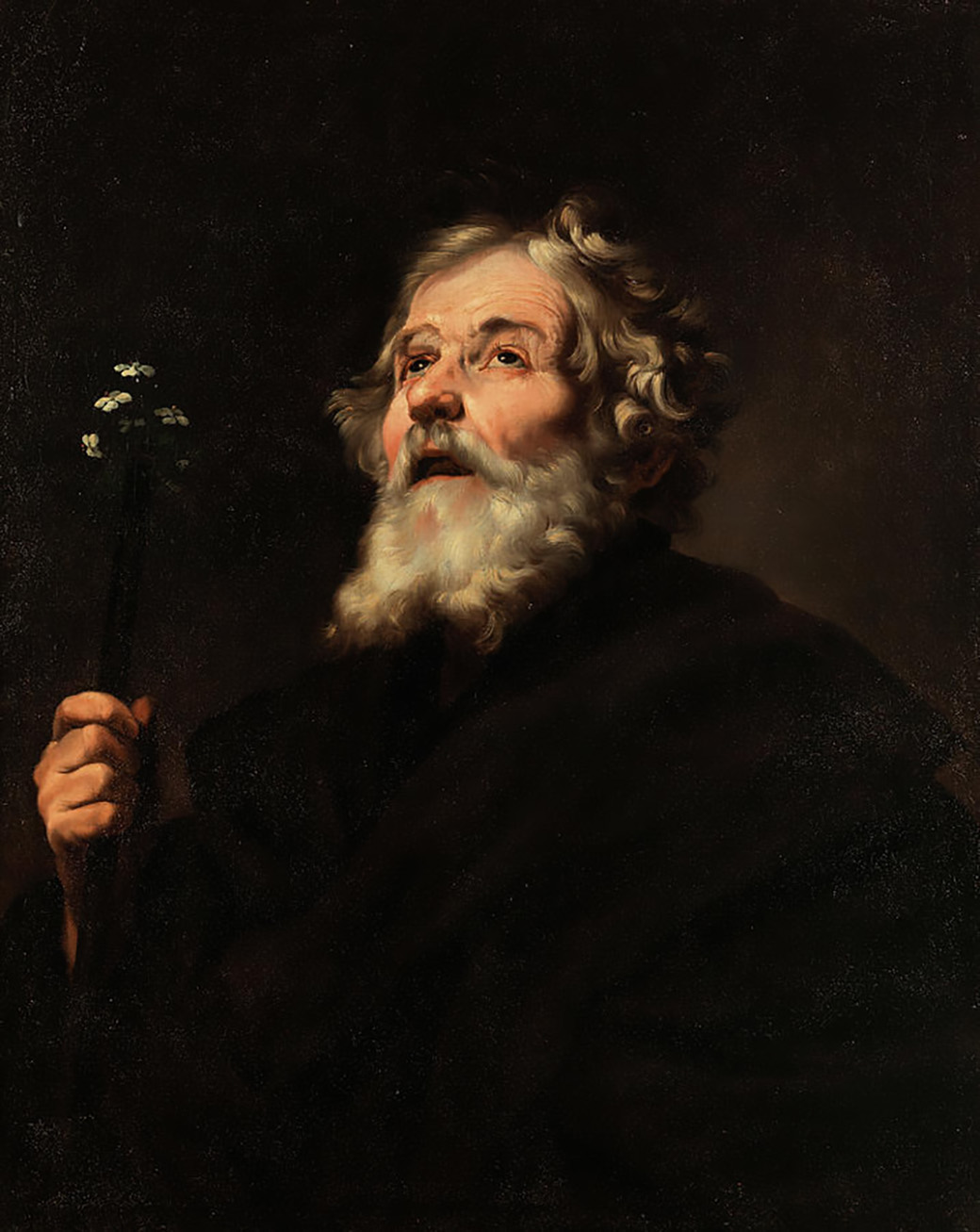
    Saint Joseph (1635), Jusepe de Ribera | Image from fineartamerica.com. I appreciate the way Ribera paints Joseph as focused intently on the voice of God. He was, after all, visited four times by angels who direct his actions in the gospels. 

    But next he is visited by an angel in a dream who tells him, “Joseph, son of David, do not be afraid to take Mary your wife into your home. For it is through the Holy Spirit that this child has been conceived in her.” It was a step beyond expectations to divorce her quietly, but now God is asking him to swallow all pride and take her into his home, to trust that God miraculously impregnated the Virgin by the Holy Spirit.

    It would take an exceptional man to agree to this. Everyone would know that Mary was pregnant before their marriage and would likely question whether Joseph was the father, given their customary distance prior to marriage. The insinuation would be that he was a cuckold, a pathetic creature who is betrayed sexually by his partner, possibly the biggest blow to a man’s pride that can happen.

    God is asking Joseph to look past all of this in great humility because something greater and more wonderful is going on: “She will bear a son and you are to name him Jesus, because he will save his people from their sins.” With fidelity and trust in God, this can be seen as an amazing blessing — a God-bestowed name for the child and the role of spiritual savior, surpassing even Messianic hopes for a great king. Through the lens of doubt, however, this could be seen as another blow: not even being able to name the child much less shape his destiny. God is asking Joseph to nearly disappear as a man and a father figure, against even his purest instincts and lawful expectations.

    Matthew then relates, without fanfare or hints of emotional struggle, “When Joseph awoke, he did as the angel of the Lord had commanded him and took his wife into his home. He had no relations with her until she bore a son, and he named him Jesus.” On the surface, we see a cowed man, stripped of his virility and authority — the very things that “man” has meant likely since the beginning of our race. What a lesson God provides us here, and what a worthy, righteous man in Joseph to do God’s will and become this new man! For it is precisely in the re-fashioning of an authority figure into a slave to God that Joseph helps to save the world through his son, Jesus.

    Let there be no doubt, Jesus has an earthly father in Joseph, the man who procured food, shelter, and clothing for him and likely taught him a trade, not to mention passed down to him his birthright by training him in the Jewish faith. Why couldn’t God simply have worked through Mary, single Mother of God? The answer is partly to teach us that the sacred bond of marriage is grounded in faithfulness to God, and the answer must also be that Joseph can become an icon of a humble, righteous father, willing to take the back seat in servitude.

    And this is another key feature of righteousness: a willing servitude to the Father in Heaven. Joseph, we are told, does “as the angel of the Lord had commanded him.” He understands his relationship to God; he owes everything he has and everything he is to God. He does not think twice about who his real master is and he willingly follows his commands. I can’t even think of such unbegrudging servitude existing in this contemporary period. We look down on the very concept of servitude — and rightfully so if it is solely defined as servitude to another human being in this fallen world. But servitude to God is the definition of righteousness! Joseph’s willing servitude to God is proof of his righteousness, of his worthiness to be the earthly foster father of Jesus Christ.

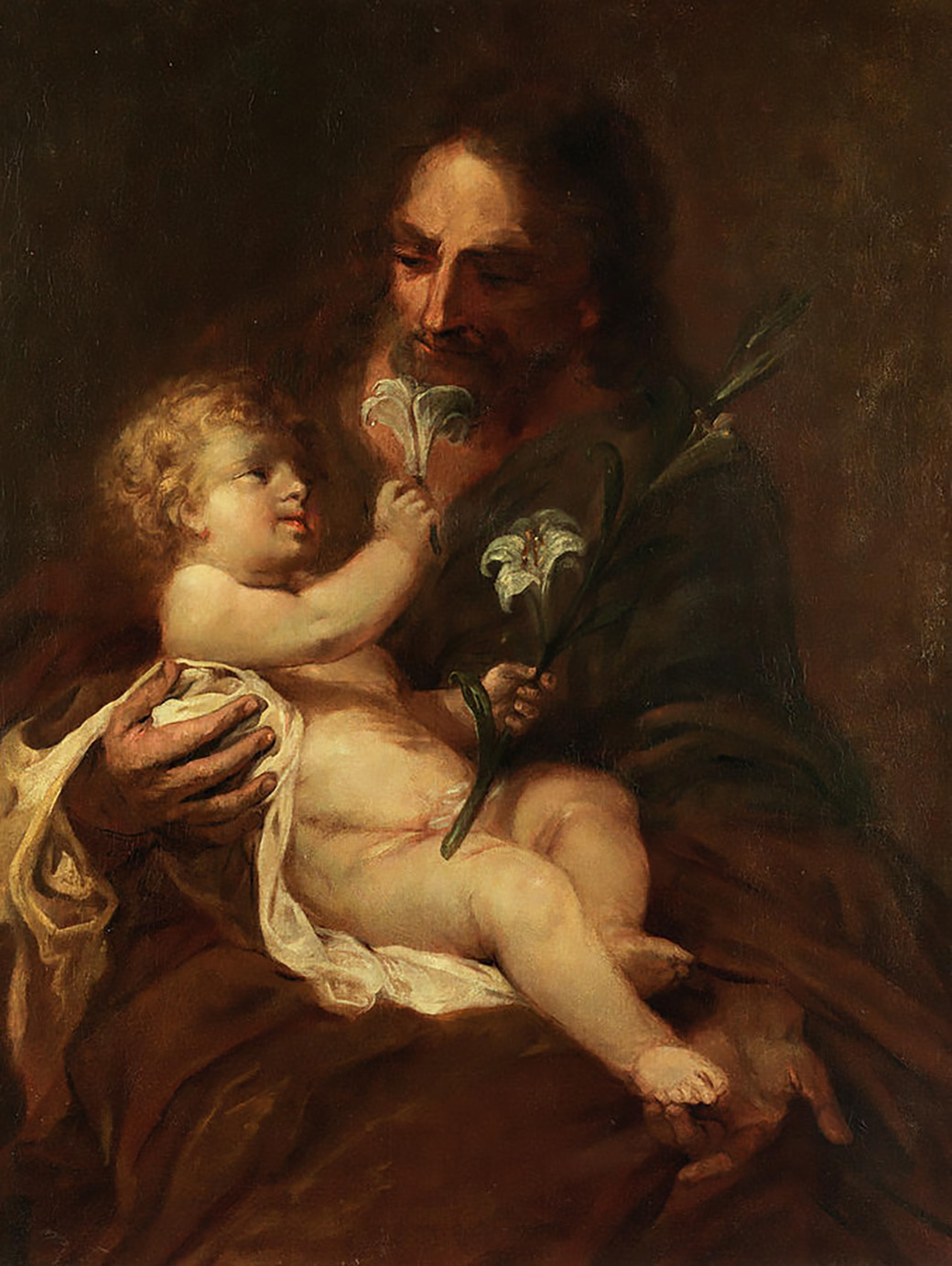
    Saint Joseph with the Infant Savior (mid 1600s), Bartolomé Esteban Murillo | Image from pixels.com. There’s something I love in this painting even though the facial details are blurry and Jesus is decidedly cherubic here. It might be the attitude of cautious awe I see in Joseph, his unselfconscious willingness to be in the background, gingerly cradling the salvation of all humanity.

    Now, let’s open ourselves to something even more amazing. In his righteousness, Joseph is one of the first humans to participate in the new life offered to us by Christ. Jesus is not yet born, yet Joseph has become a servant of the Trinitarian God (including the Son) and allows His saving grace to inhabit him.

    Let’s look at this with the words of St. Paul in mind: “And having been liberated from sin you were enslaved to righteousness” (Rom 6:18, translation from David Bentley Hart’s The New Testament). In Paul’s mind, Christ’s saving act not only liberates us from sin but enslaves us to righteousness. We have a new master here, bestowed upon humanity by adoption in Christ. Consider that this same transforming love of Christ fills Joseph in his assent to foster-fatherhood, another adoptive relationship, more intimate than the one we will all receive. What’s more, in a way Joseph prefigures the sacrifice his son will make on the cross. He gives his person, his pride, his authority to the Father.

    We can start to realize that Joseph is the perfect earthly father for Jesus, not a bystander in his life, not a second-rate role in the great drama of salvation history. Joseph is completely caught up in the self-sacrificing love of the Trinity, achieving glory in heaven while humbly, simply seeking to serve his master.

    Now that’s justice. Heavenly Justice. So we can also understand if Jeremiah’s title is translated as “The Lord Our Justice” because Christ the Lord is setting right the scale and scope of justice. Justice flows from righteousness, from a re-configuration of one’s heart to God’s will and God’s love.

    Let’s end by returning to St. Paul. Living in righteousness himself, Paul was filled with the Spirit, filled with fidelity to God. This enables him to write, “But now that you have been freed from sin and enslaved to God, the advantage you get is sanctification. The end is eternal life” (Rom 6:22). Note that our sanctification, our gift of liberation from death and the promised end of eternal life all have this happy enslavement to God as part of the equation.

    How many of us happily enslave ourselves to God? Can we follow everything that our conscience, guided by God’s Word and Spirit, presents to us? Can we bring ourselves to do whatever we sense as his will, even if it is as emasculating and potentially embarrassing as what he asked of Joseph? If we can’t, we need to re-evaluate our priorities, because we are not serving our true master. We’re turning our backs on the freedom from enslavement to sin that Christ won for us on the Cross.

    If it all sounds too hard, St. Paul has some words of encouragement: “For sin’s wages are death, but the free gift of God is eternal life in Christ Jesus our Lord” (Rom 6:23).

  • A Lion Recumbent

    A Lion Recumbent

    Thursday in the 3rd Week of Advent: Genesis 49:2, 8-10, Matthew 1:1-17

    Today’s readings are bursting with royal significance; pregnant, as it were, with the promise of triumph. It’s no wonder that expectations for the Messiah were so high by the time Jesus was born. God’s promise to His People is so great. Unimaginably great, and given the geopolitical crush of occupying powers, they could not help but try to materialize this promise in earthly kingdom-making.

    But this was never God’s plan. He offers lasting peace, yes, but a peace of the soul that is much deeper and more significant than the temporal peace found in human boundary-drawing. This misunderstanding and lack of preparedness in the hearts of the Jewish nation would mean a horrible crucifixion of God Himself, which proves to be the very action by which God ushers His peace into the world.

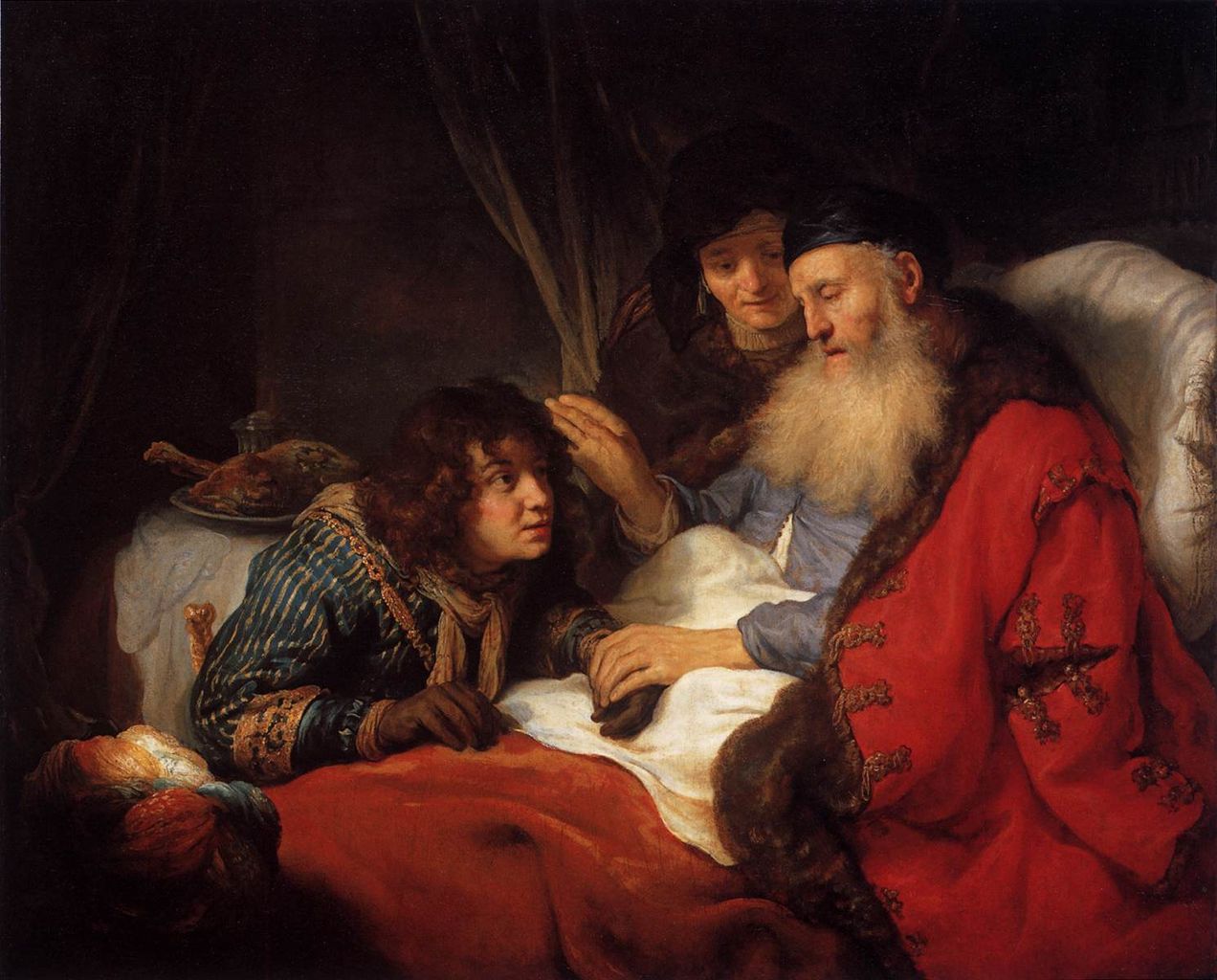
    The first reading from Genesis presents Jacob (given the name Israel by God) on his deathbed, calling his sons to gather around him so he can prophesy their futures. His sons, of course, are the heads of the twelve tribes of Israel. We might remember that Jacob is a bit of a scoundrel — he swipes his older brother Esau’s birthright impersonating him to their blind, old father Isaac on his deathbed (albeit, according to his mother Rebecca’s plot). Jacob also had children via four women (two wives and two handmaids to the wives), and famously showed favor to the second wife, Rachel, and her sons, Joseph and Benjamin.

    So, while Jacob (Israel) is the very foundation of the Jewish nation, we must recognize that he is very far from perfect. Nonetheless, God loves and blesses him. Two lessons here: the Chosen People have a lot of growing to do in forming themselves to God’s image, and God will continue to mysteriously love us and bless us even in our sins and stupidity.

    Isaac Blessing Jacob (1638), Govert Flinck | Wikimedia Commons.

    Today’s reading gives us Jacob’s words about his son Judah, who is not really his favorite, a middle son to his first wife Leah. Despite his father’s lukewarm feelings, Judah receives the second-best treatment in the book of Genesis, advocating for selling Joseph to the caravan rather than killing him, interceding on Benjamin’s behalf, and showing strong leadership among his brothers. Judah seems blessed by God. And Jacob acknowledges this: “You, Judah, shall your brothers praise … Judah, like a lion’s whelp, you have grown up on prey, my son. He crouches like a lion recumbent, the king of beasts–who would dare rouse him?” In some ways, this is a curious statement because other sons have shown much more violence than Judah. Simeon and Levi, in particular, slaughter all the men in the city for the supposed rape of their sister Dinah. So, how has he “grown up on prey” other than having to live in the wake of his father (the lion) and his dealings?

    It also seems a bit like a backhanded compliment offered to someone you secretly fear: a crouching lion, who would dare rouse him? I think Jacob sees the greatness in him and his line, but does not quite know what to make of it. This is appropriate, since the Messiah will come from his line and the people will not know what to make of Him, either.

    I do like this image, though: a lion recumbent. We’ll return to this in reference to Christ.

    Jacob foresees another thing in Judah: “The scepter shall never depart from Judah.” This and the accompanying lines about the mace and tribute brought to him speak to a lasting reign, a lasting peace, that comes through Judah.

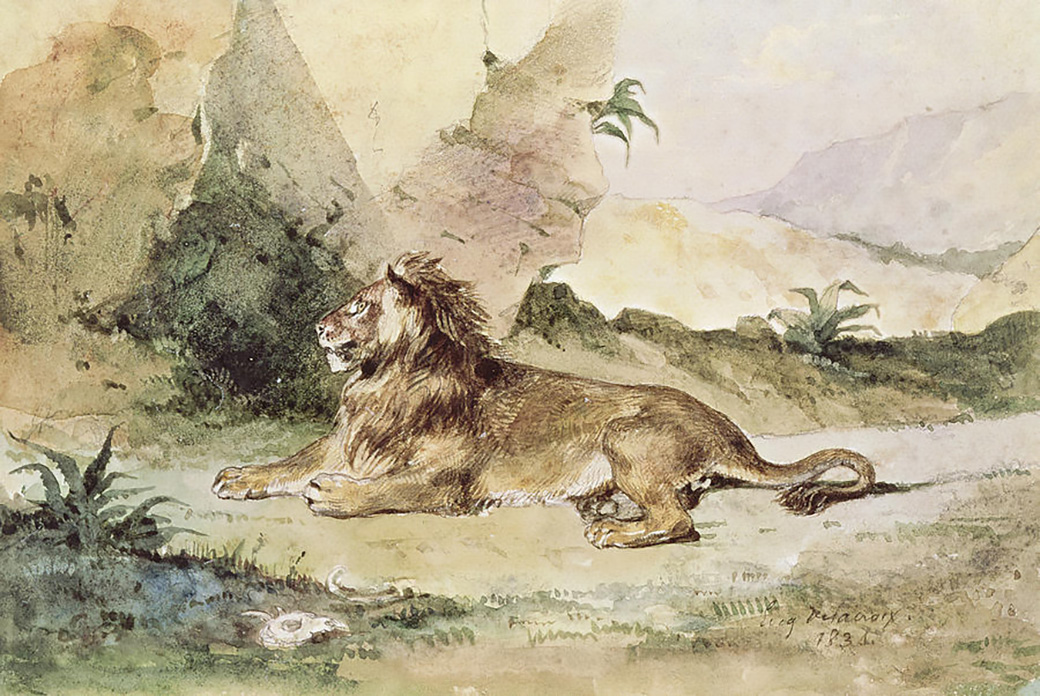
    A Lion In The Desert (1834), Eugene Delacroix | Image from arthive.com.

    Today’s responsorial psalm spikes the readings with significance. We sing: “Justice shall flourish in his time, and fullness of peace for ever.” This links overtly to the last words we hear from Jacob about his son Judah. But we know that the psalmist speaks inside and outside his own time here, not necessarily about Judah or even King David, but of the ultimate destiny of the nation, God’s plan for his people.

    Thus, we can see many figures in the following lines: “O God, with your judgment endow the king, and with your justice, the king’s son; He shall govern your people with justice and your afflicted ones with judgment.” In light of the first reading, the “king” is Israel and the “king’s son” is Judah. Closer to the historical time of the psalmist, the “king” could be King David and the “king’s son” Solomon, the wisest of all men, blessed by God. In both cases, we see the extension of a familial reign, where a father and son extend a reign of justice and righteous judgment.

    As Christians, we see the deeper theological meaning of God the Father and Jesus Christ, His Son establishing a heavenly kingdom. Christ is also in the line of Judah and David, as we read in the gospel. He unites the earthly and heavenly, the human and the divine. Today, we are urged to consider how Jesus Christ ushers in “fullness of peace for ever.” What could this mean after two millennia of wars, death and strife? Most unbelievers would be happy to point this out as a refutation of our “wishful thinking.”

    Let’s consider this in light of the gospel reading, the opening to St. Matthew’s gospel. Lectors everywhere cringe with dread over having to pronounce this seemingly endless string of biblical names. Kids shift on their feet, dads space out with glazed looks, even a pious mom or two wonders if we have to hear the whole list.

    Well, take heart, because Matthew didn’t stuff his gospel with filler. His Jewish listeners would quickly be steeped in the history of their nation, great figures and the stories surrounding them would immerse them in an illustrious familial history. Even today, we can recognize some seminal names: Isaac, Judah, Ruth, Jesse, David, Solomon.

    As the list builds and swells, we anticipate a culmination. We participate in an Advent expectation as we wait to see where this is heading. He ends it: “… Jacob the father of Joseph, the husband of Mary. Of her was born Jesus who is called the Christ.” Jesus who is called the Christ is the fulfillment of this heritage.

    With the weight of 2,500 years of Jewish prophecy, we realize that God’s plan is here laid out for us. And Matthew punctuates this larger plan by showing how 14 generations separate Abraham and David, David and the Babylonian Exile, and the Exile and Jesus Christ. There is a perfection in this, a plan. We mentioned earlier how Jacob’s (Israel’s) imperfections reveal the immaturity of the Chosen People in the scope of salvation history. Well over a thousand years later, God determines that Mary embodies the readiness of the nation.

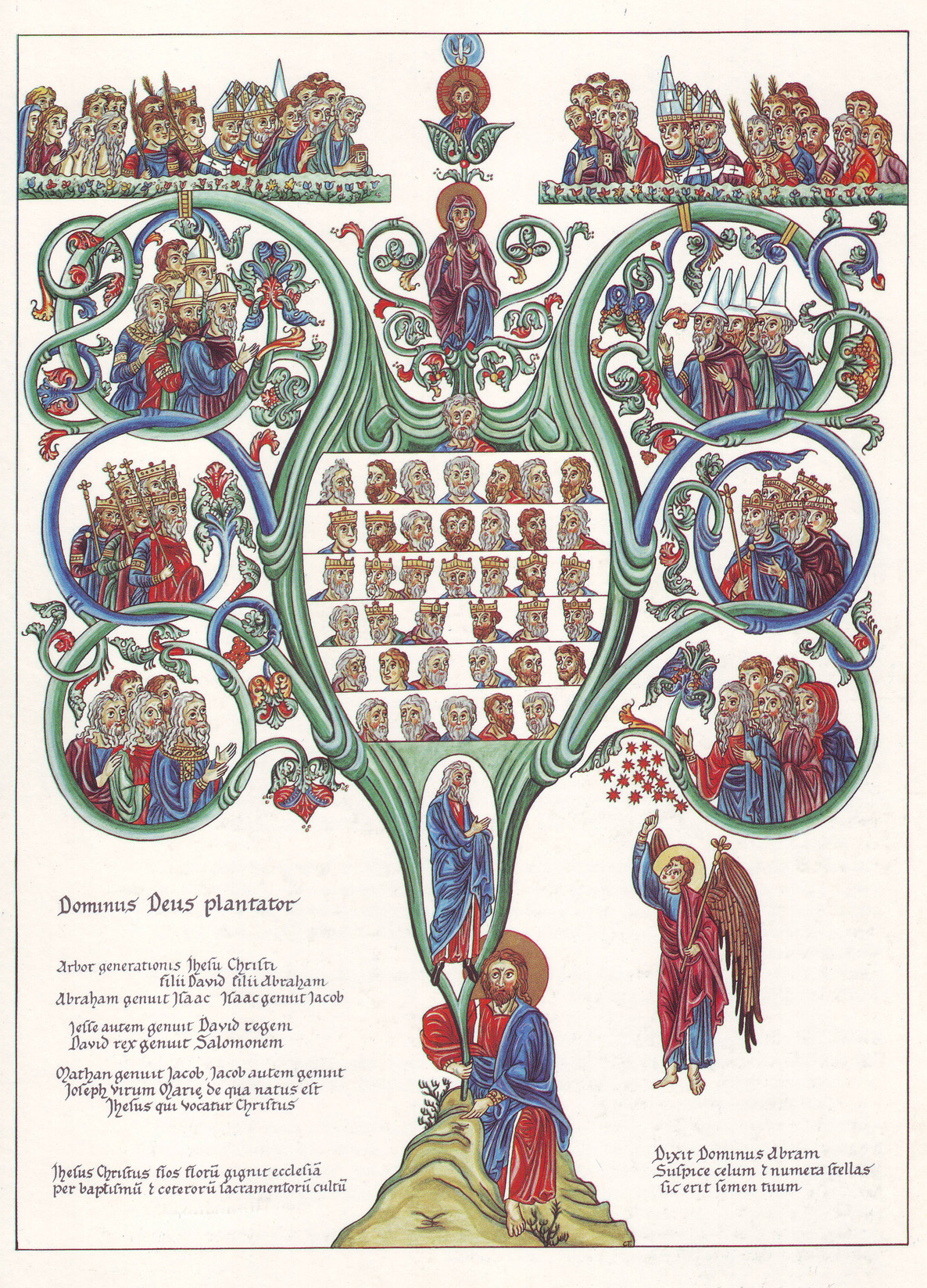
    Tree of Jesse illustration from the Hortus Deliciarum (c.1180), Herrad of Landsberg | Wikimedia Commons.

    This gospel reading requires patience to read, patience to hear, and patience to contemplate its significance. How the Holy Spirit blessed the evangelist! Just hearing this gospel as it is written brings us closer to God in receptiveness and spirit.

    The psalms recall God’s perception of time: “For a thousand years in your sight are like yesterday when it is past, or like a watch in the night” (Ps 90:4). This doesn’t mean that God could care less about what happens in the span of those thousand years — quite the contrary, He constantly, tirelessly offers his grace and forgiveness to everyone at every second. It’s just that his love is so overwhelming and so much the fabric of Him that little setbacks (like a semi-scoundrel called Jacob or a spaced-out dad at Mass) are meaningless. We can often overlook flaws in a loved one. We realize that the little things don’t matter; in fact, little flaws can be endearing.

    Thus, love is the lens by which patience is a part of God’s character. Patience is a virtue (as my mom repeated endlessly to me in my childhood) because it goes hand-in-glove with the love that God is. The gospel brings this patience to us experientially, and we begin to understand that 42 generations in a family is simply the time it takes for the Word of God to germinate. 

    Once we struggle through our antsy-ness, do our breathing or mindfulness training or meditation and finally achieve patience, we perhaps notice something else. True patience, the kind that is tethered to love, is nearly indistinguishable from a peaceful heart. 

    Think of it: we push aside the things that make us impatient, disquieting things, in order to achieve patience. We have to focus on something of a longer perspective, not the little things here and now that make us antsy to get something resolved. We adjust our bearings and this longer, broader field of vision gives us the ability to relax and be patient. What is that but a taste of true peace?

    This gospel reading provides a long view that enables us to start to grasp a bit of God’s plan. If we’re fidgeting or spacing out, it’s likely because we’re thinking of something other than encountering Christ. If we yearn for God and His entrance to humanity, this gospel allows us to join in God’s patience over the generations.

    And at the end of the genealogy lies our lion, recumbent in a manger. 

    I love the combination of the two readings today because it gives us this image: Christ, the king of the beasts, a lion, yet recumbent. There are so many ways this image resonates with me. King of the beasts, of course, meaning king of all creation; Christ is King of the Universe. “Who would dare rouse him?” takes on a solemnity as we consider the shepherds, angels, and the magi adoring the Christ child.

    But the idea of a recumbent lion is perhaps the most evocative. The dangerousness and ferocity of the lion is well-known and feared — we might consider the fears of Israel’s neighbors in the Old Testament upon their entrance into the Levant, knowing that no army could stand in the way of God and His plan. Or we might consider that Christ will come again for the Final Judgment. But the lion is recumbent. The great question: Why?

    God is the primary mover, there is no force that can exert itself against Him. Nothing would make Him be recumbent but His own will. Why does He choose to sit back and be peaceable, despite His awesome power?

    Perhaps this is the point in itself. As Christ teaches us, there is a power greater than what comes from kings and swords. This power arises from love — first for our Creator and then for our fellow human — and gives birth to charity, never violence. This is the promised “fullness of peace forever.” It comes not from an unbeatable army and impregnable national border (talking to you, U.S.A.), but from the fragile and mercurial hearts of humans, transformed and forged into something made stronger than armies by the grace of God.

    Christ gives us a Way to achieve peace in our hearts, which, in truth, is the only peace that matters because it is the achievement of the Kingdom. He is the way, he is the mystical bond between us and God, and the gateway to the Kingdom. We will sing this at his coming in a week and a half with the angels: “Glory to God in the highest heaven, and on earth peace among those whom he favors!”


    I want to thank Suzanne for sharing her thoughts this morning about today’s psalm and its relation to our reflection yesterday. She got me excited to write this reflection. Marriage is a blessing!

  • Accepting Correction

    Accepting Correction

    Tuesday in the 3rd Week of Advent: Zephaniah 3:1-2. 9-13, Matthew 21:28-32.

    People who know me would probably say I’m famously bad at taking correction. It’s something I’ve tried to work on for a long, long time. I’m still not great at it. I’m not sure how my mother and father ever dealt with such a pig-headed son, but thankfully they had 7 other kids to distract them from me. When I consider why it’s so hard to take correction, a few things come to mind: embarrassment, indignation, pride, defensiveness, inability to separate a critique of an action from critique of who I fundamentally am. In all of these things is a single thread: putting myself first.

    Pouting (contemporary), Kim Roberti | Image from pinterest.com.

    Today’s readings speak loudly to people like me. Zephaniah laments the pig-headedness of the Jews in Judah, and the Lord promises a great humbling, after which peace will come. In the gospel reading, Jesus re-frames this lesson as an internal conversion of heart, although the punishment and salvation message remains. Through both, I can see how accepting correction is a very necessary ingredient for being taken into the Kingdom.

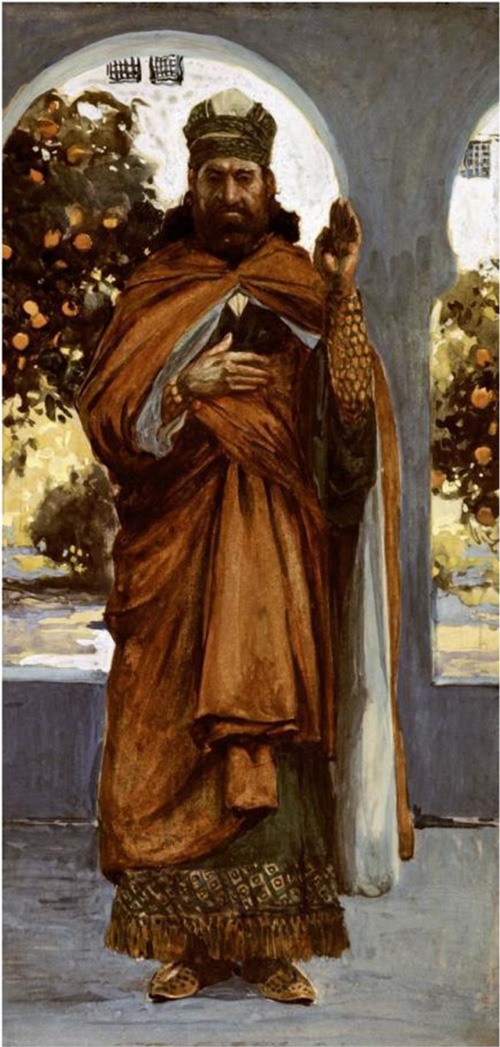
    The Prophet Zephaniah (1888), James Tissot | Image from christianimagesource.com.

    The prophet Zephaniah lived in Judah under King Josiah (640-609 BC), who reigned until 13 years before the nation’s defeat by the Babylonians. The Judeans had seen the defeat of the northern kingdom of Israel by the Assyrians 100 years prior, and yet continued to be faithless to God. This is what Zephaniah laments — he tries to get them to return to the Lord and foresees their great humbling during the Babylonian Captivity. The crown jewel of Judah is Jerusalem, a beacon for the Jewish people, and it is about Jerusalem that today’s reading speaks: “Woe to the city, rebellious and polluted, to the tyrannical city! She hears no voice, accepts no correction; In the LORD she has not trusted, to her God she has not drawn near.” Here is where scripture speaks to me — I can see myself in this refusal to hear other voices and accepting no correction. The very next sentence declares that such pigheadedness is a lack of trust in God. That’s a bit of a blow. Just when I think it’s all about me, even then it’s really about God!

    This is the irony of pride: the self-absorbed person cannot even be pitied (something they’d deserve yet despise) because the real offense is not to themselves but to God. As we reflected last Friday in The Lukewarm and the Cynical, “Sin is not only a foolishness and vileness, but considered in relation to God it is also the blackest ingratitude, the greatest injustice, and the gravest outrage” (Fr. Garrigou-Lagrange, Knowing the Love of God, 21). Once again: our hearts and souls rightly belong to God, and closing them off from Him is unjust and a great offense. 

    What does God do about this offense? Zephaniah tells us, “For then I will change and purify the lips of the peoples … remove from your midst the proud braggarts, And you shall no longer exalt yourself.” Once again we are told that God’s purifying love removes pride. In the saga of the Jewish people, this purification is seen in the fall of Jerusalem and Babylonian Captivity. They do not perish, because God loves them. In fact, many historians claim that the Jews who returned to the Holy Land after the Babylonian Captivity were much more serious observers of God’s law than those before this penitential time.¹

    God promises this very thing to Zephaniah: ” I will leave as a remnant in your midst a people humble and lowly, Who shall take refuge in the name of the LORD: the remnant of Israel. They shall do no wrong and speak no lies; Nor shall there be found in their mouths a deceitful tongue; They shall pasture and couch their flocks with none to disturb them.” What a testament to His love that He does not simply destroy evil-doers, but provides opportunities for penitence and conversion.

    And what happens on a large societal scale in the Old Testament, Jesus brings to us on an individual level.

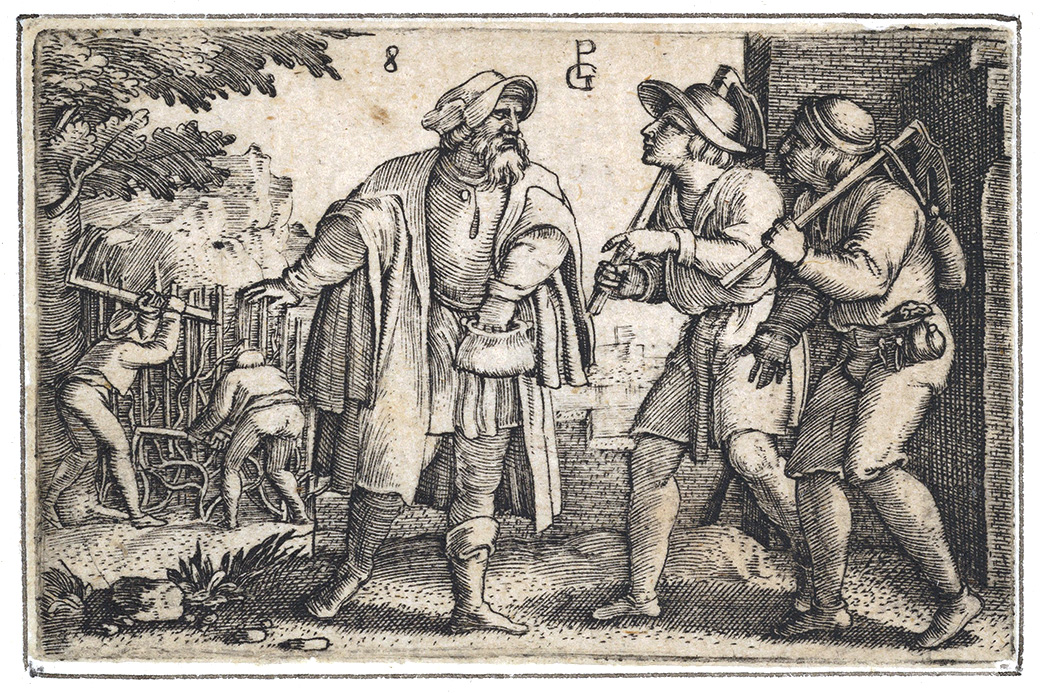
    The Parable of the Father and His Two Sons in the Vineyard, from The Story of Christ (1534-1535), Georg Pencz | Creative Commons, courtesy the Metropolitan Museum of Art.

    Jesus teaches us via the parable of the two sons. Of the one who has obeyed the will of his father, he says, “The son said in reply, ‘I will not,’ but afterwards he changed his mind and went.” The short parable is clear in what happens: an immediate refusal, then a conversion of heart followed by right action. Is this not the archetype for so many of us?

    I was blessed to have been brought up in a Catholic family and heard this parable from a very early age. I thought of it often growing up, mostly because my hotheaded inability to take correction put me in that immediate refusal mode. But the grace afforded me by my baptism into the Church and ongoing formation as a Catholic blew on that little ember of a developing conscience and I slowly applied moral sense to my life. My often sheepish conversion to do what was asked was followed by a (usually) quiet compliance.

    Today’s parable is absolutely fundamental to the Christian life. Jesus explains to the chief priests and elders — with what we might imagine to be a breathless, earnest desire to save them — “Amen, I say to you, tax collectors and prostitutes are entering the Kingdom of God before you.” How could these reviled, impure people enter the Kingdom ahead of those who are considered the crème-de-la-crème of Jewish society?

    Jesus explains that these impure people listened to and followed John the Baptist’s warnings, whereas these chief priests and elders remained skeptical.

    And think of the context here. This is chapter 21 in the gospel according to Matthew. It opens with Jesus’s triumphal entry into Jerusalem, followed by his throwing the money changers out of the temple and cursing the fig tree. Then we have yesterday’s reading where the chief priests and scribes can’t respond in truth to his question about John, followed by this parable and then the parable of the wicked tenants. This is a sequence of Christ’s arrival and sweeping the selfish pride out of Jerusalem.

    We hear how the Lord tells Zephaniah “I remove from your midst the proud braggarts, And you shall no longer exalt yourself,” and we see Jesus fulfill this promise. This is a time of winnowing, separating the chaff from the wheat, and a time of discernment, to understand what is in the hearts of the people.

    Jesus continues to heal the blind and lame in this chapter (Mt 21:14) — he could not possibly withhold his very nature of love and healing — but his message includes a very serious warning as he tells the chief priests and elders, “the kingdom of God will be taken away from you and given to a people that produces the fruits of the kingdom” (Mt 21:43). We can never forget that Christ is simultaneously the generous healer and the bringer of the end of time; the innocent lamb and the judge who divides the goats and the sheep.

    Christ, outside of time, tells us simultaneously of our past, present, and future, but never withholds the living water that flows from Him and His wounds.

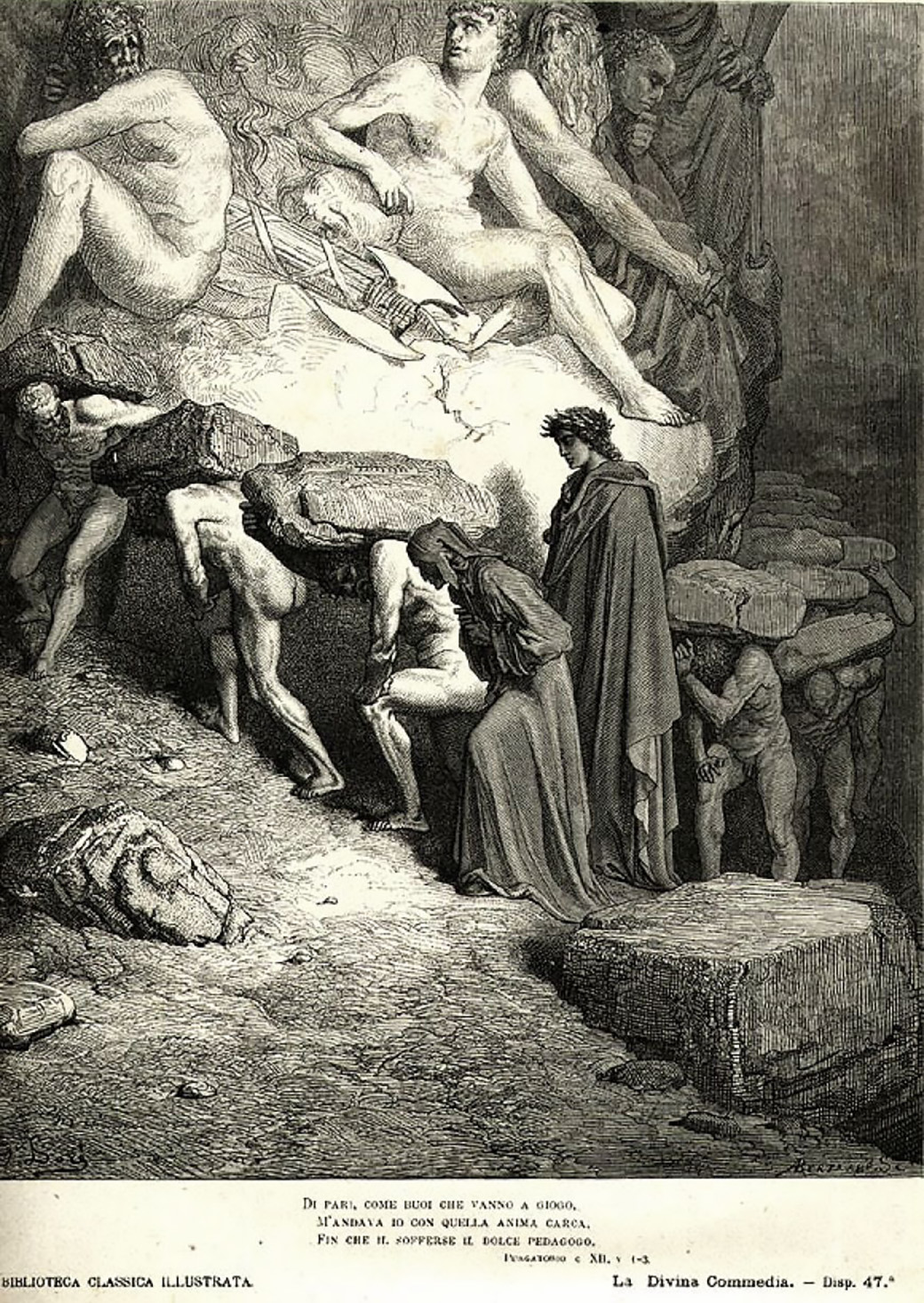
    The Prideful – Oderisi, Purgatorio Canto 12 verses 1-2 (c 1857), Gustave Doré | Wikimedia Commons. This is how Dante imagines the prideful must spend their time in Purgatory – dragging massive rocks up a mountain while chanting a modified form of the Lord’s Prayer in a type of enforced humbling/penance.

    And we can see how this is an Advent message. We are all the son who refuses — with every sin we commit!

    With every sin, we refuse God and shut our hearts to him. Consider the simplest choice to exit a conversation with someone who wants to talk because we’re bored, tired, or would rather be doing something else. In this example, we have put ourselves first and not sublimated ourselves to the will of the Father. The Good News is that as long as we have breath, we can convert our hearts and do God’s will. Jesus promises us the Kingdom; he never withholds it. We simply have to have that real, ongoing, continual conversion of heart — perhaps learn to accept correction — and start producing the fruits of the kingdom.

    We are waiting for that glorious King to be born, and we have these weeks to prepare the way in our hearts.


    ¹ Barton, George A. “Influence of the Babylonian Exile on the Religion of Israel.” The Biblical World, vol. 37, no. 6, 1911, pp. 369–378. JSTOR, www.jstor.org/stable/3141403.

  • Truth Speaks in Silence

    Truth Speaks in Silence

    Memorial of Saint John of the Cross, priest and doctor of the Church, Monday in the 3rd Week of Advent: Numbers 24:2-7, 15-17a, Matthew 21:23-27.

    Today (in the year 2020), we celebrate the memorial of one of our great mystics and doctors of the Church, St. John of the Cross. He cultivated an intense personal and internal relationship with God and wrote beautifully on the Divine Essence as well as the paradoxes he experienced in having God so close yet so immensely far and silent. I find that today’s readings, in all their seeming obscurity, help us explore alongside St. John of the Cross the loudness of truth that God so often presents to us in His silence.

    The first thing I thought about the first reading was, “wait, who is this Balaam, son of Beor?” I had to read up on him, and it turns out he was a non-Jewish seer/prophet, well-known throughout the Levant, graced with the actual truth and Word of our Lord. He lived when the Israelites were finishing their 40 year desert wandering and having great military successes, winning their place in the region. They had defeated Sihon, King of the Amorites and Og, King of Bashan, and so the other rulers in the region were getting very nervous.

    Balak, King of Moab, sends for Balaam, asking him to curse the Israelites. Over three chapters in the Book of Numbers, we read this interesting story about Balaam, who seven times lives up to his words: “Although Balak were to give me his house full of silver and gold, I could not go beyond the command of the Lord my God, to do less or more” (Nm 22:18). There is an interesting sequence of events where God tells Balaam not join Balak and not curse the Israelites because they are blessed, and Balaam sends back Balak’s men.

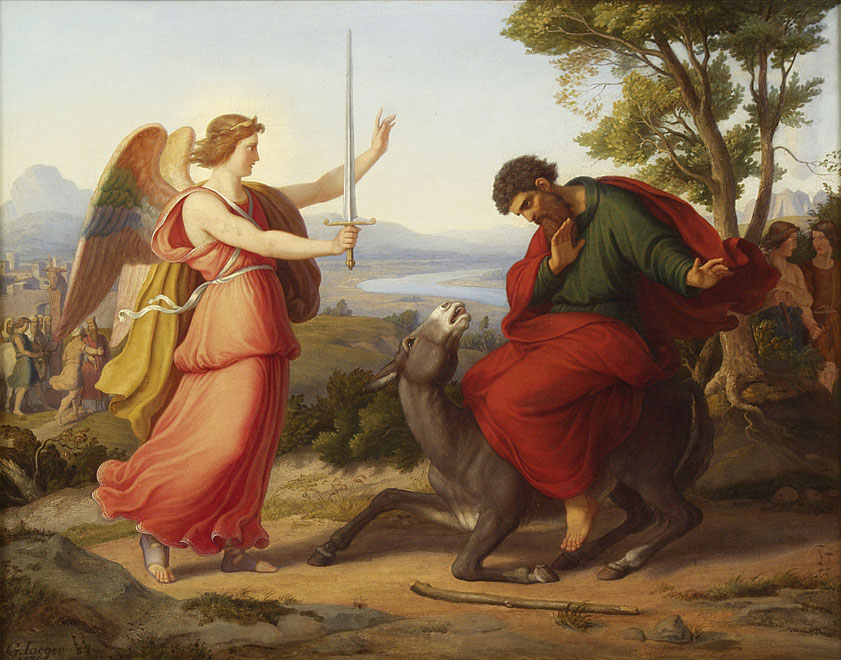
    When Balak sends messengers a second time, Balaam waits for God’s instructions and God says he can go as long as he will “do only what I tell you to do” (Nm 22:20). But next God sends an angel apparently to stop Balaam on his journey, who tells him “I have come out as an adversary, because your way is perverse before me” (Nm 22:32). What actually ensues is a physical resistance battle between Balaam and his mule, who is trying to obey the angel Balaam doesn’t see. Finally, the angel admits him passage, saying, “Go with the men; but speak only what I tell you to speak” (Nm 22:35). Indeed, over the course of seven prophecies in the presence of King Balak, Balaam has nothing but praise for Israel, even prophecy of their Messiah.

    Balaam and the Angel (1836), Gustav Jager | Wikimedia Commons.

    What to make of this curious treatment of the Gentile prophet? It’s not that God changes his mind a lot (this is contrary to God’s nature), but instead Balaam’s internal struggle with hearing God’s truth and setting out on a mission contrary to this truth. He is serving an enemy of God’s Chosen People; he has yoked himself, as it were, to an evil force contrary to God. He is the example of someone who is trying to serve two masters at once, which is never tenable.

    So why does God permit him to go on this mission for Balak? Perhaps so he can provide all of us who read the scriptures an example and valuable lesson. We learn that leading such a life is a tortuous process, where both of your masters are unhappy and unfulfilled with your service. We also learn that in the end, the Lord our God will always be vindicated and triumph. This leads us to today’s reading.

    In today’s reading, we hear of Balaam’s praise of Israel and prophecy of the Messiah. What we don’t hear is the consternation of his earthly master, Balak: “What have you done to me? I brought you to curse my enemies, but now you have done nothing but bless them.” Balaam answered, “Must I not take care to say what the Lord puts into my mouth?” (Nm 23:11-12). It seems that Balaam is completely at the mercy of God’s will, even with an angry earthly king breathing down his neck.

    It’s not clear whether Balaam is concerned for his own safety here or wishes he could just say something to please Balak. But when it comes time for him to prophesy, he is gripped by the Holy Spirit: “the spirit of God came upon him, and he gave voice to his oracle.” Things truly seem out of his hands. To the Jews, this was proof that even Gentile prophets could not disobey the overwhelming power of the God of Abraham. God’s truth is undeniable to those who are graced to receive it.

    One last thought on the first reading: it is remarkable that this early in the Jewish tradition, before they have crossed the Jordan in their military might, before they have built Jerusalem and the great temple, we hear a prophecy of the future Messiah: “I see him, though not now; I behold him, though not near: A star shall advance from Jacob, and a staff shall rise from Israel.” Most translations actually translate “staff” as “scepter.”

    The Hebrew word שֵׁ֙בֶט֙ (shebet) is alternatively translated as rod, scepter, staff, or tribe; it essentially means a ruling authority. So Balaam gives us a very Advent-sounding prophecy of a star that rises and a new reign arising from Israel. We Christians clearly interpret this to be Jesus, the Morning Star, and the Reign of Christ.

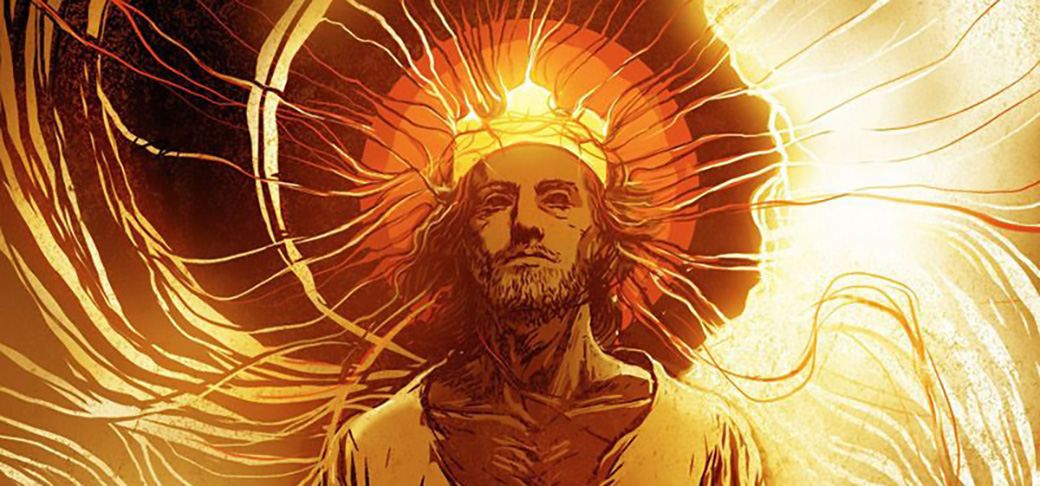
    Detail from Christ the Morning Star (contemporary), Chris Koelle | Image from pinterest.com. See more of Chris Koelle’s work.

    In the gospel reading, the question of shebet seems to come up again. The Jews are seeing Balaam’s prophecy come true in their time: a shebet has arisen from Israel in the form of this man Jesus. Remember, the Book of Numbers is the fourth of the five books of the Torah, their most sacred texts. The books of the prophets are also replete with references to the Messiah that seem to be fulfilled in Jesus as well — Jesus’s works and words are striking a chord deep in the Jewish psyche and memory.

    Thus, “the chief priests and the elders of the people approached him as he was teaching and said, ‘By what authority are you doing these things? And who gave you this authority?’” Jesus’s reply is a counter-question that points back to the voice crying out in the wilderness, John the Baptist. As we reflected yesterday, he is the ultimate testament to Christ’s divinity as he fulfills Isaiah’s prophecy of the announcement of the Messiah. Jesus has come for those who long for God, who have listened to John and prepared a way for the Lord in their hearts. He is asking the chief priests and elders if they have prepared the way.

    Instead of answering him clearly, we see exactly the type of tortured mentality we encountered with Balaam. They are serving a worldly master — their fears of the crowd and their political machinations — while attempting to encounter God’s truth. This is untenable, as Balaam showed us so long ago. They have clearly not prepared the way for the Lord in their hearts. They are not filled with the burning yearning for God, otherwise they would see Christ for who He is.

    Jesus cannot invite them to the wedding feast of the Lord while they vacillate between the pull of the world and the pull of God. He brings not peace but the sword to people like this (cf. Mt 10:34) — they must choose God or the world, not both. And there are consequences. 

    Conversely, St. John of the Cross is a master of preparing the way. If I had to imagine his heart in Isaiah’s terms, I would imagine a broad plain, as fertile as it gets, blossoming with the fruits of God’s Word and grace. This master of contemplation writes extensively on encountering God, and a key to understanding St. John of the Cross is to understand his conception of God’s omnipresence and simultaneous indwelling in our souls. At the risk of tackling something that is difficult in just a short amount of space, I want to quickly explore this because it can shed light on today’s readings’ tortured figures. 

    One theological point that we must understand before encountering St. John of the Cross is this: God is immense and omnipresent (not able to be pinned down to a specific “location”) but also makes Himself present to our souls in a special, intimate way through His grace. Fr. Donald F. Haggerty writes in Faith and Reason (Fall 1991 issue) a nice primer on the theological intricacies of St. John of the Cross. He writes, “God inhabiting the soul can now become the intimate object of a knowledge and love that unites the soul with God in the bond of grace. The divine Persons give themselves to the soul so that it might possess them in a real and substantial manner.” This means that God is closer to us than we are to ourselves! (Our mind tries to mediate with our soul whereas He has direct presence with our soul).

    Haggerty continues: “Any notion of a distant or impersonal God dissolves when He is understood to be the Guest of one’s own flesh. … Paradoxically it would seem, [St. John observes that] the more God is experienced as the source of one’s own life of the spirit, the more powerfully transcendent, incomprehensible, and inaccessible His divinity becomes.” This makes sense to me as a novice to contemplation; the more I consider how God and grace might exist within, without and through me, the more I realize how fantastically other He is, how I would love to know Him better but how impossible that seems, how communion with Him is indescribable, literally silent because my words as a created being fall so short of the type of communication that is God in my soul.

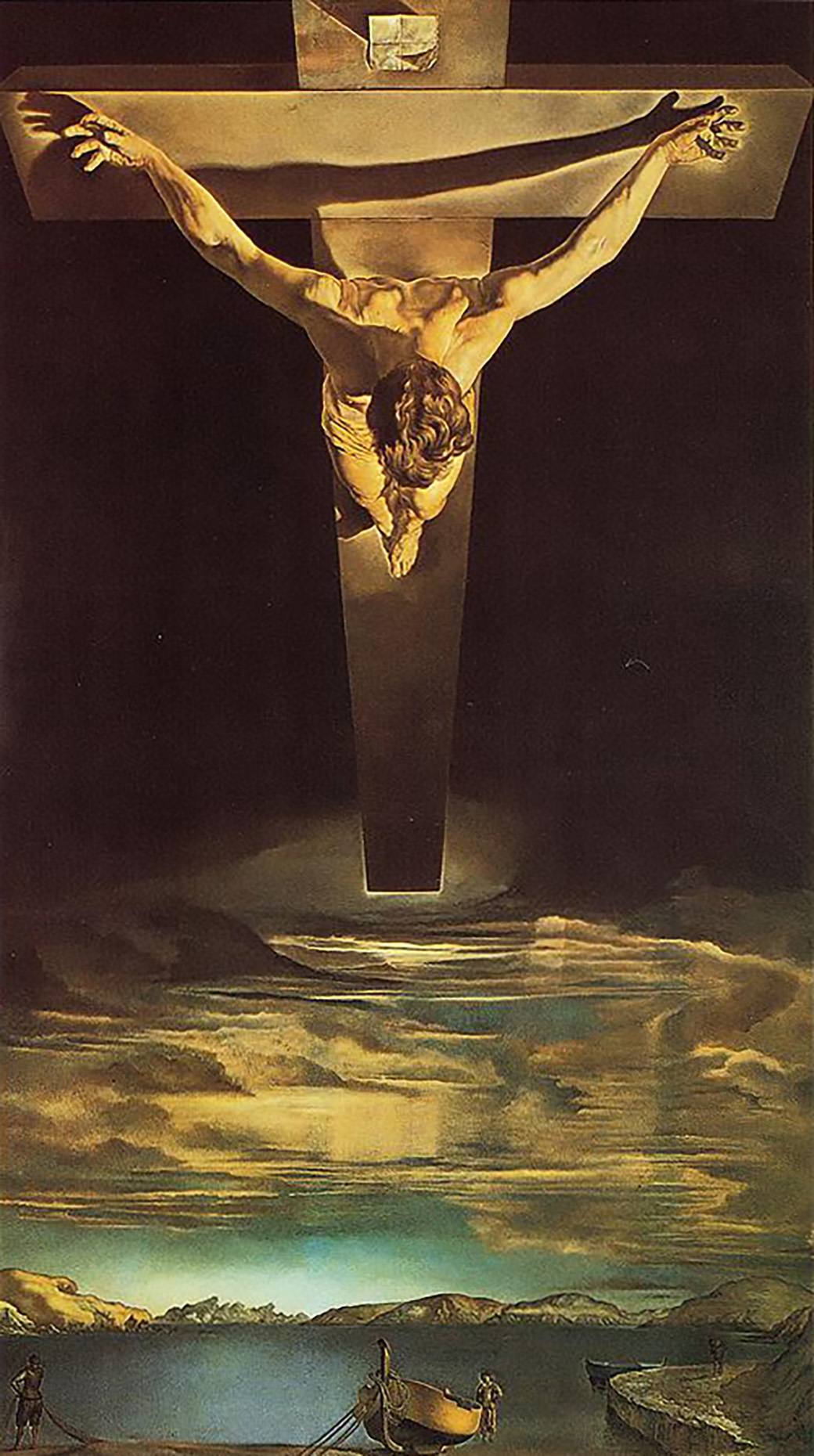
    Christ of Saint John of the Cross (1951), Salvador Dalí | Image from fineartamerica.com. I’m not a huge fan of surrealism, but it seems particularly appropriate for the silent, inward-yet-outward contemplation of St. John of the Cross and his close-yet-far theology. The perspectives on Christ that his contemplations must have garnered him seemed to be highlighted by Dalí’s emphasis on position and size of the crucified Christ over the fishermen (evangelists).

    This is where we pick up St. John of the Cross. He has so many amazing nuggets in his prose. Here’s one that’s made-to-order for Advent: “What we need most in order to make progress is to be silent before this great God with our appetite and with our tongue, for the language he best hears is silent love.” I love this idea of finding a language by which we can communicate with God because this is striving to bring the mind in concert with what the soul is able to experience without mediation.

    And here we have St. John’s recipe: silencing our worldly appetites and our tongue; communicating in silent love. Whew! If only I could still the craziness of my media-soaked head enough to get there. Thank God for retreats at Benedictine monasteries! In any case, it does seem that this is something the penitential Advent season calls us to try: more silence, darkness lit by three (next week, four) candles, and love for our God that fills our hearts and souls.

    Finally, I’d like to just reflect back on the issues the figures in today’s readings encounter. Balaam does communicate with God and hear His truth — he must have a solid fear of God — but the inability to silence the world and his desires seems to be his downfall. The chief priests as well seem very far from a contemplative experience of God. They have no stillness in their souls, no honest response to the indwelling of God that might help them recognize the very presence of God in their midst.

    It’s a great challenge for us. Thankfully we have our entire lives to grow into this communication of silent love so that we can become more and more receptive to God’s truth within and without.

  • The Lukewarm and the Cynical

    Friday in the 2nd Week of Advent: Isaiah 48:17-19, Matthew 11:16-19.

    Today’s readings put an exclamation mark on yesterday’s message about being enflamed with the passion of God’s transformative love and seizing the Kingdom of Heaven offered to us. God promises much to us if we listen to His Redeemer, His Son. Yet we find Jesus in the gospel reading lamenting over the fact that the people of that generation are lukewarm, cynical, and do not listen to His teaching.

    The first thing we hear from Isaiah is a recognition that Jesus Christ, who he calls “the Redeemer” and “the Holy One of Israel,” is the very same “I, the LORD, your God,” who speaks to His People. This is remarkable, affirming the divinity of Christ some 750 years before His birth unto Mary. What’s more, Isaiah foresees that He will be present on earth to guide and teach His People. He will “teach you what is for your good, and lead you on the way you should go.” Again, as we’ve seen throughout Advent, Isaiah affirms that God’s promise for overabundant life, grace, and the escape of death is tied to the Redeemer’s coming: “If you would hearken to my commandments, your prosperity would be like a river, and your vindication like the waves of the sea.” In this way, the New Covenant of Christ is a clear extension and perfection of the Old Covenant under which Isaiah and the Jewish people were tied to God.

    Rivers of Living Water (contemporary), Dyed4You Art | Image from dyed4youart.com.

    It’s no secret that the Jews in power did not listen to Christ and follow His teachings, as the Passion and Crucifixion attest. But Jesus laments a more general inattention to His teaching from the entire generation: “To what shall I compare this generation? It is like children who sit in marketplaces and call to one another, ‘We played the flute for you, but you did not dance, we sang a dirge but you did not mourn.’” Jesus seems to be referencing the refrain from a children’s game. This is an ingenious analogy. In one sense, the “we” of the refrain could be Jesus and John, who called to one another through their mothers’ wombs, John singing the dirge of repentance and Jesus playing the flute of salvation. In another, more overt sense, the children are the people who hear these calls and do not respond. Further, they are the ones who sit and pantomime the whole scene, calling it out to one another as if bystanders who just observe from afar. This is the ultimate picture of indifference, of being lukewarm. And as we explored yesterday, the transformative love of God inherently calls us to be passionate, to violently break through our indifference and sin to seize the Kingdom being offered to us.

    Jesus then points out a deep cynicism and skepticism at the heart of the people who do not respond to these divine calls. “For John came neither eating nor drinking, and they said, ‘He is possessed by a demon.’ The Son of Man came eating and drinking and they said, ‘Look, he is a glutton and a drunkard, a friend of tax collectors and sinners.’” These are the words of people who are comfortable with a type of restrained piety (how many of these have we all seen in our lifetimes!). They like a certain amount of propriety with their piety. John’s wild appearance and extreme fasting was too much for them — they accused him of being possessed. Jesus’s overflowing majesty and generosity, on the other hand, causes them to brand him a glutton and drunkard (not to mention impure by association with tax collectors and sinners). Jesus has little patience for this type of piety, which betrays that a person has not accepted God’s transformative love into their hearts. They are not filled with the passionate love of God. And the deep sin here is that they hold onto their own sense of “knowing” what’s real, what’s worthwhile, how the world should work. They choose their own comfort zone over God. This is what I mean by skepticism. It is their own sense of how they want to see the world that makes them disparage John and Jesus. They are skeptical of John and Jesus’s claims because they haven’t opened themselves up to be transformed by god’s love.

    Yesterday’s second reading in the Office of the Readings does a lovely job of portraying the love that Jesus sees is absent from “this generation.” Saint Peter Chrysologus, the bishop of Ravenna from 433-450AD was known for his short, simple, but inspired sermons. He says:

    But in all the events we have recalled, the flame of God’s love set human hearts on fire and intoxicated human senses. Wounded by love, men longed to see God with their bodily eyes. How could our narrow human vision perceive one whom the whole world cannot contain? What will be, what ought to be, what can be – the law of love does not care about these things. Love does not have judgement, reason, strategy. Love refuses to be consoled when its goal proves impossible, refuses to be cured if its goal is difficult to achieve. Love destroys the lover if he cannot obtain what he loves. It goes where it is led, not where it ought to go. Love gives birth to desire, it bursts into flame and that fire draws it to seek forbidden things. What more is there to say? Love cannot accept not seeing the thing that it loves.

    We can see how Jesus laments for these people — they show none of the signs of loving God. Are we any better? Are we “wounded by love” so that we long to see God? Do we allow love to transform us so that we do not have judgement, reason, or strategy? This is true abandonment of ourselves to God!

    Icon of the Sacred Heart of Jesus | Image from Immaculata Helvetia on flickriver.com.

    But I’m making this all seem like it’s a fair and open choice to make when in fact it’s not. We owe ourselves to God. Let’s take some instruction from Fr. Reginald Garrigou-Lagrange, OP, a French Dominican priest who lived from 1877-1964. Karol Wojtyla (later Pope St. John Paul II) specifically traveled to Rome to seek out the personal instruction of the faculty’s most famous professor, none other than Fr. Garrigou-Lagrange. He has been called “one of the greatest philosophers and theologians of the 20th century” (by Fr. Timothy Draper in the foreword to the book cited below). In the short book Knowing the Love of God, a collection of his retreat talks, Garrigou reminds us that as our Creator God “has the right of possession over our mind and our heart, and this right, more absolute than any of our property rights, remains binding even if we forget it” (21).

    Rightly, this entire discussion of being indifferent and not inflaming our hearts in longing for God belongs in the realm of sin. As I stated above, the sins of pride and self-centeredness are what lead us to disparage others (John and Jesus, nonetheless!) and not follow God’s commandments, not give Him our hearts. Of course, talking about sin is about as out-of-fashion as offering someone a ride in a horse-drawn carriage. Garrigou-Lagrange doesn’t hesitate to go there, however. And I find him compelling. He starts by reminding us how we got here: “For the world the true evils are diseases, tuberculosis, paralysis, infirmities of every kind, poverty, and ruin. Pride, on the contrary, is not an evil in the eyes of the world; rather, it is even necessary for attaining success. A life given over to pleasure or laziness is not an evil for those rich enough to lead this type of existence” (16). He reminds us just how reasonable pride, pleasure, and laziness seem to us. But he shows how this cascades into something more serious: “We place our childish whim in opposition to the will of God and it conquers. Is this not without doubt foolishness? It is the foolishness of an instant but it can become habitual and then produce a darkening or complete blinding of the spirit” (18).

    Given God’s proper sovereignty over our mind and heart, consider well what he then says about sin: “Sin is not only a foolishness and vileness, but considered in relation to God it is also the blackest ingratitude, the greatest injustice, and the gravest outrage” (21). These are serious statements, and it might shock you to learn that he’s talking about venial sins! I, for one, try not to berate myself for small sins, but reading this in the light of the past two days’ readings, I wonder if I’ve been letting myself off a little too easy. If I was inflamed with the passionate, transformative love of God, then I would shun even small sins with passion because they take me away from God.

    Garrigou-Lagrange speaks to the seriousness of even small moments of venial sin: “It does not kill the soul, but it leaves it without force and energy for the good. It diminishes the fervor of divine love, darkens the eyes of the soul and obscures the vision of God” (23). Not only does this remind me of my own life, it reminds me of today’s gospel reading. Here we have venial sinners, like kids calling out to one another in a certain callous sing-song of inactivity. They are diminished people, “without force and energy for the good.”

    Let us keep this in mind this Advent as we prepare the way for the Lord and await our Savior to be born (and come again). Can we overcome the diversions of sin, clear out the roadblocks of laziness and indifference? Let’s end with this thought from Garrigou-Lagrange:

    What diverts us from our ultimate end is sin. Fittingly we ask ourselves: do we have the divine hatred of sin? Do we try our utmost to understand that such a hatred, which has created hell, proceeds necessarily from the love owed God, and that such a hatred must be profound, intense, and without limits as is this love itself?
    (15)


  • The Violent Transformation of Love

    The Violent Transformation of Love

    Thursday in the 2nd Week of Advent: Isaiah 41:13-20, Matthew 11:11-15.

    Today’s readings appear to be head-scratchers. The gospel, in particular, quotes Jesus speaking in an ominous-sounding tone about the violent taking the Kingdom of Heaven by force. But as we dig into them, the readings reveal a consistent truth about the sometimes violent nature of love as it transforms something lukewarm into something passionate. We also can realize that Jesus is applying this understanding to the change of epochs from the Time of Promises to the End Times in which we live in love as the Church.

    Isaiah provides a startlingly Christ-like promise to the Chosen People 750 years before Christ — well, startling until you recall that it is the Word, Jesus Christ Himself, who is speaking through Isaiah, and then we recognize in yet another way the proof of God in the world. Isaiah says, “Fear not, O worm Jacob, O maggot Israel; I will help you, says the LORD; your redeemer is the Holy One of Israel.” Sounds harsh, doesn’t it? Is Isaiah just name-calling? He does ridicule the Chosen People soundly throughout his prophecies for how they have turned from God and stopped living according to his law. But there’s more here.

    What are worms and maggots but the lowliest of things, creatures who live off of death and decay? Isaiah is simply stating a fact that they are caught in the world ruled by death, something that Jesus will finally dispel for humanity. Isaiah actually gives them great hope here because God promises to help them, and not only that: their redeemer will be one of them, in the line of Israel. 

    And then we encounter our first visions of violence: “I will make of you a threshing sledge,
    sharp, new, and double-edged, To thresh the mountains and crush them, to make the hills like chaff.” God is speaking in terms of a violent transformation, that Israel will be a tool for the nations, sharp enough to crush them. He does not mention pagan “nations” being crushed like chaff, but instead the mountains and hills. Could these be the obstacles in life that loom before us?

    He continues: “When you winnow them, the wind shall carry them off and the storm shall scatter them.” In this image, Israel is doing the important work of threshing and winnowing grain, removing the useless and non-nutritious bits of the world and keeping that which gives life. This does not seem to be a blind violence intent on destruction.

    Threshing sledge. Illustration from Earthly Footsteps of the Man of Galilee (1884), Bishop John H. Vincent | Wikimedia Commons. The threshing sledge had sharp rocks or bits of metal studded into the bottom of the board. The driver would stand on it to put weight on the scythed grain and an animal would haul him around a large area called the threshing floor. This breaks up the usable bits of grain from the chaff. These are further refined by putting them in large baskets and tossing into the air to catch the batch again, with the wind carrying away the lighter bits of chaff.

    The next verses help to explain that something of a different order is going on. “The afflicted and the needy seek water in vain, their tongues are parched with thirst. I, the LORD, will answer them; I, the God of Israel, will not forsake them.” The passage resumes the refrain of God’s help and love for Israel and other poor “worms” in need. The sharp threshing sledge — a tool for the harvest (see The Generous Harvest without Cost for more thoughts on the importance of harvesting in God’s plan) — seems to be more of a refinement than a destruction. Water is synonymous with life in sacred scripture, and God paints his promise with the imagery of overwhelming, death-defying life sprouting everywhere: “I will open up rivers on the bare heights, and fountains in the broad valleys; I will turn the desert into a marshland, and the dry ground into springs of water.” The land itself is transformed by God’s love, in order to support life and help humanity thrive. Thus, Isaiah presents an undeniable image of violence on the earth paired with God’s saving, life-giving, transformative love.

    But how can love be violent? We think of love as comfort, protection, and peace. Without the correct lens to understand God’s Word, we end up like the Messianic Jews in Jesus’s time, awaiting a King who will enact the violence of destruction to create an earthly kingdom for the Jews. They might have even referenced Isaiah’s passage to support their arguments (they are “thirsty” for their own nation and God promises that they will crush and scatter).

    Of course, Jesus Christ is our lens to understand this seeming paradox, not to mention the Redeemer who is promised. An important explanation of this joining of violence and love comes today, although it seems even weirder at first glance. Jesus is doing a number of things in the gospel reading: testifying to John the Baptist’s greatness, marking the transition from the Old Covenant and Time of Promises to the New Covenant and the End Times, and pairing a type of violence with his new reign of love.

    The Baptism of Christ (1580-1582), Jacopo Tintoretto | Image from savevenice.org.

    Overtly, today’s gospel is about John the Baptist. He opens with, “among those born of women there has been none greater than John the Baptist.” Note that Jesus qualifies his statement with “born of women” — the contrast being “born of God” or “born of the Spirit,” which applies to Him and also all Christians who are baptized in His Name and become a part of His Bride, the Church. So, Jesus is saying that John is the greatest person ever to have been born to date. Indeed, we call him the greatest of the prophets. This is because he prepares the way for the Lord, always points away from himself and to the Son of God, demonstrating for us the appropriate posture of all humanity.

    Then Jesus quickly qualifies His statement: “yet the least in the Kingdom of heaven is greater than he.” This does not detract from John’s greatness, but simply states the fact that those who are united with God in the Kingdom are on a completely different level of greatness, simply by their proximity to and joining with the Creator. Nothing on earth can compare with the glory and splendor of the Kingdom of heaven. Jesus is drawing some distinctions for the crowd who has gathered to be with Him.

    And the next distinction is inscrutable upon first hearing it: “From the days of John the Baptist until now, the Kingdom of heaven suffers violence, and the violent are taking it by force.” Jesus is marking a distinction of times: the time before John versus the time “of” John, when Christ has been walking the earth as his contemporary. Jesus says that the Kingdom suffers violence, and those violent people are forcefully taking it. What’s going on here? We must ponder this.

    Recall that in the Gospel of St. Matthew, John’s disciples had just come to join the crowds around Jesus and asked him if he was the Messiah. Jesus told them to report back to John truthfully about what they see (the proof is in the pudding!). John’s disciples, who in truth are Jesus’s disciples just like the crowds gathered there, are what is different about this time of “John the Baptist until now.” People are earnestly seeking God, dropping everything else in their lives, living anew in a Spirit-fueled way. Are these the “violent” whom Jesus says are taking the Kingdom by force?

    We certainly can’t think that He means the Romans, the Herodians, and others who cause violence to the people. He preaches many times against this type of worldly power; we need simply scan the Beatitudes to know that these people are not “taking the Kingdom.” Plus, such a reading implies that somehow the Kingdom of Heaven is vulnerable and that the Son of God has anxiety over its unlawful seizure. No, this is untenable — God’s reign is absolute and God does not feel anxiety over injustice; instead He destroys evil with an unyielding, purifying fire.

    So if Jesus is not anxious about an unlawful violence, we must conclude that He is saying these things with a certain recognition of the righteousness of “the violent taking it by force.” This must be God’s plan.

    Thankfully, Fr. Simeon Erasmo Leiva-Merikakis helped to make sense of this passage for me. He translates the original Greek as “the Kingdom of Heaven is irrupting forcefully, and the forceful are seizing it.” I will quote at length his masterful interpretation:

    The Lord’s saying here possesses a resonance of deep mystery: Is violence being done to the Kingdom or by the Kingdom? The Greek middle voice here admits either the rendering given above or the more traditional “the Kingdom of Heaven suffers violence.” However, any number of signs from the context prompt us to understand the passage in terms of the forceful initiative undertaken by the Kingdom of Heaven to establish itself on earth as a new reality. We have been prepared for such an understanding by Jesus’ declaration, “I have come to bring not peace but the sword upon the earth” (10:34). … His followers must be persons of deep convictions, whose faith is more powerful than the natural human fear of “those who can kill the body” (10:28). Above all, the Christian must be a person who loves Jesus more than father and mother, son or daughter (10:37). All of these are particular aspects of the salutary interior violence a person must do to himself in order to be “worthy of Jesus”, an heir of the Kingdom, and a child of the Father of the Word. The mysterious formulation, then, appears to mean that the “violence” or “forcefulness” that God himself is using so as to tear down the barriers that the human heart has erected against the approach of grace must be matched by the decision on the part of individuals to respond just as violently and forcefully in embracing that grace. … The Kingdom does not fall on us like the rain: we must repent, change our way of life, catch the fire of the love of God in Jesus, cling to God just as passionately as we previously clung to our wayward desires.
    (Fire of Mercy, Heart of the Word, Vol. I, 659-660)

    I particularly like how Leiva-Merikakis identifies the violence as of the type God Himself uses to tear down barriers in the human heart. How does God do this other than love? We begin to see how God’s love has an inherent violence against sloth and against evil. We, as Christians, are called to respond to this internal violence caused by love and just as forcefully “embrace the grace.”

    I am reminded of this passage from the Book of Revelation: “I know your works; you are neither cold nor hot. I wish that you were either cold or hot. So, because you are lukewarm, and neither cold nor hot, I am about to spit you out of my mouth” (Rev 3:15-16). We are not called to be lukewarm Christians, nodding at what we hear, kneeling at the right time, learning the prayers by rote but without a conversion of heart that translates into charity. We are called to grasp Christ and hold Him close, to change our lives from the base temptations and evil in the world so that we can yoke ourselves to Christ, allow Him to perfect us, and be worthy of the Kingdom.

    St. Francis Embraces Christ on the Cross (Abrazo de San Francisco al crucificado), 1620, Francisco Ribalta | Wikimedia Commons.

    This speaks to the violence inherent in any kind of change or passion. Change is a movement from one state of being to another. It is inherently and unavoidably disruptive. And as we’ve identified throughout Advent, God’s love is transformative. This means there is a certain awesome violence in this love that dislodges us from self-centeredness and inactivity. Remember Isaiah’s words from God today: “I will open up rivers on the bare heights, and fountains in the broad valleys; I will turn the desert into a marshland, and the dry ground into springs of water.” This transformation is life-giving, not destructive. This is a force to rejoice in, not to fear. This is an internal violence that may upend our lives, but only for the better!

    So Jesus is marking the time of His coming — the time of John the Baptist helping his disciples prepare the way for the Lord — as one of an internal violence, fueled by the Spirit, where those who are “moved” are seizing the Kingdom of Heaven within this sphere of transformative love.

    The final bit of today’s gospel finds Jesus emphatically marking the end of the age of the prophets. He says, “All the prophets and the law prophesied up to the time of John. And if you are willing to accept it, he is Elijah, the one who is to come.” Jesus is saying that the time of the prophets (also called the Age of Promises) ends with John. All of the prophets until John prepared the people with prophecies of what was to come, but John actually announced that the Son of God has arrived. The last sentence shows that John is the fulfillment of the time of prophecy; Jesus is referring to the Book of Malachi: “Lo, I will send you the prophet Elijah before the great and terrible day of the Lord comes” (Mal 4:5). Jesus tells the crowds that John closes the cycle of prophecy, fulfilling the promise of Elijah’s coming. John has inaugurated the era of Christ’s Reign, the Kingdom of Heaven come down to earth.

    So, let us not be too meek and mild in our hearts this Advent. Today’s readings remind us that God’s transformative love is violent, in a good way, and we are called to seize the Kingdom by throwing ourselves into it wholeheartedly, opening ourselves completely.

    Hope (La Speranza), 2018, Carolin Goedeke | Image from Etsy.com where the original painting is on sale.
  • Yoked to the Lord

    Wednesday in the 2nd Week of Advent: Isaiah 40:25-31, Matthew 11:28-30.

    Today’s readings strike me as a sort of Catholic Labor Day. Rather than celebrating all those who labor, today (my make-believe Catholic Labor Day) celebrates our being yoked to the Lord in spiritual work — something that eclipses whatever earthly labor we do and lightens our beings. I think it is worthwhile to explore our ideas of labor in light of today’s gospel reading; perhaps we’ll be able to gain insight into how Christ’s teaching resonates through the centuries to today.

    A little historical perspective: Labor Day arose in the USA in the late 1800s as a way to recognize the contributions of workers in our newly industrialized nation. Factories in America’s cities fueled incredible growth in jobs, and there was a great exodus from agricultural and rural areas to cities. But the work was often hard, dirty, and exploitative. The American labor movement and trade unions focused on safe working conditions and workers’ rights, and grew in power and popularity. Labor Day arose from this cultural mix: believing in the power of humans to create a better world (the rallying cry of industrialization) and the simultaneous urge to not devalue humanity as “cogs in the machine,” an inherent hazard in the race to produce cheap goods for mass consumption. This is what I want to emphasize because today’s gospel has something different to say about labor. Again: Labor Day came about as a reaction against the dehumanizing effect of industrialization, within a cultural milieu of heightened expectation of the Enlightenment ideals of humanism. While the traditional Age of Enlightenment is dated to end at the Age of Revolutions (French, American, Industrial), we can understand that this revolutionary urge was nothing more than people really taking on the Enlightenment ideals of individualism, human progress, scientism, rationalism, and opposition to religious orthodoxy. Arguably, the Age of Enlightenment continues through to this day — many of our unspoken assumptions about who we are, our place in the world, and the destiny of civilization are nothing but products of Enlightenment thinking.

    Detroit Industry, North Wall (1932-1933), frescoes by Diego Rivera | Image from the Detroit Institute of Arts. Rivera (a Mexican immigrant and Communist), created a fascinating set of frescoes in the Detroit Institute of Arts to celebrate workers and progress brought about by the Industrial Revolution. The work is not without its symbolic and literal criticisms of progress, even though it celebrates and comes close to romanticizing the labor of workers.

    Many (myself included) would argue that Labor Day celebrates a noble ideal: that the common working person has dignity. But as a Catholic, I have some issues with the cultural environment that produced this holiday. Workers have forever been devalued in human societies. From the slaves who built the pyramids to the slaves who worked on American plantations, humans have long turned a blind eye to the human dignity that workers inherently have. You just have to watch one of any number of PBS Masterpiece shows from historical England to see that even the most civilized English manors had a rigorous upstairs/downstairs caste system where workers were thoroughly “put in their place.” Why, then, did Labor Day only develop in the late 1800s? Not to go on too long about historical movements, but populism, driven by humanist ideals reaching a crescendo in the French and American Revolutions, was the tipping point for the common person’s interests to begin to be heard on a global scale. Add to this the development of mass communication with newspapers, railroads, cable telecommunications and the like, and suddenly people could be “seen and heard.” But as is so often the case, people in the Industrial Revolution didn’t necessarily look to their past to contextualize their struggles, but instead to the immediate future. This is understandable: hungry people need food, poor people need money, people with dangerous work need safer conditions. So the ideal of upholding common human dignity took a back seat to pressing concerns and political goals.

    All of this is to say that Labor Day is rooted partly in class struggle, more firmly in the bosom of capitalism, and most unmovably in the assumption that humans alone must watch out for themselves, create their own justice, and progress to a better human future on this earth.

    Here we finally get to today’s readings because that last list of assumptions runs contrary to the Word of God. I wonder how construction workers at the turn of the last century would answer Isaiah from today’s reading: “Lift up your eyes on high and see who has created these things”? When all we see are skyscrapers and human “progress,” we must conclude that we are the ones who have created these things. Pride and self-centeredness can be social traits as well as personal ones. Thankfully, Isaiah continues in spreading the Word of God: “Why, O Jacob, do you say, and declare, O Israel, ‘My way is hidden from the LORD, and my right is disregarded by my God’?” These doubts in God’s desire or ability to see and hear us are common throughout history. Isaiah brings them up in order to answer them roundly: “Do you not know or have you not heard? The LORD is the eternal God, creator of the ends of the earth. He does not faint nor grow weary, and his knowledge is beyond scrutiny.” This is the first and most essential thing to get straight. We must realize that there is someone so much greater than us. God does not grow weary and He knows everything in the past, present, and future. Without this knowledge (not blind faith without evidence), we are doomed to go about life truly blind, without any of the great attributes we are called to have: wisdom, truthfulness, love.

    Isaiah then pivots to share with us the great promise of the Lord for those who suffer on the earth: “He gives strength to the fainting; for the weak he makes vigor abound. Though young men faint and grow weary, and youths stagger and fall, They that hope in the LORD will renew their strength, they will soar as with eagles’ wings; They will run and not grow weary, walk and not grow faint.” This promise is that God will share some of His great strength and endurance with us. It is promised to “they that hope in the Lord” — that is, those who can look up and see the works of God in creation, not just the works of mankind. This promise carries a specific message to workers, slaves, and the suffering. They are historically demeaned and dehumanized by human societies. God is the one who gives them dignity, especially when humans fail to. Of course, this message carries weight for anyone who grows weary (perhaps just weary of life) or who staggers and falls (perhaps in sin).

    Jesus repeats His promise in today’s gospel: “Come to me, all you who labor and are burdened, and I will give you rest.” Here we have the original Labor Day ideal, but perfect, without human conditions, caveats, or cultural baggage. Jesus calls “all you who labor and are burdened,” regardless of who they are or the burden they undertake. It is universal. And his promise of rest is absolute, not relegated to one day or an improved number of hours off. This promise is clearly above and beyond what humans can offer to one another. It can only come from God Himself.

    Oxen, Boat and Fishermen, Valencia (1912), Mathias J. Alten | Image from alten.gvsuartgallery.org. I love the impressionistic strokes lighting and darkening the oxen. I also love the image of the oxen pulling the fishermen’s boat ashore in light of today’s reading and the Apostles being appointed “fishers of men.” We and Christ are teamed up to help with the work of the Apostles.

    The image of the yoke He employs is especially significant. “Take my yoke upon you and learn from me, for I am meek and humble of heart,” He says. First, let us recognize that yokes were traditionally used to join two animals in labor together. What’s more, young and inexperienced animals were (and still are) often joined with a more experienced animal to help them learn more quickly how to behave when working. Jesus’s metaphor here is deliberate: He is asking us to become yoked to Him! He will carry the burden alongside us; He will, in fact, help us to learn how to work. This is the action of God’s love come down to earth. Consider that God has already “yoked” Himself to humanity by taking on our human form, and Christ’s invitation to us has implications beyond our individual endeavors in the world. Fr. Simeon Erasmo Leiva-Merikakis writes, “He who was divine yoked himself to us through his humanity, and now he is inviting us to yoke ourselves to him and his divinity. When the Son’s yoke becomes ours as well, his Incarnation becomes our divinization. To become yoked to the divinity and glory of the Son!” (Fire of Mercy, Heart of the Word, 722-723). 

    In the second part of his statement, “and learn from me, for I am meek and humble of heart,” provides us with an understanding of what He will teach us. He points out His own meekness and humbleness of heart because this is what He wants to teach us as we go about our work in the world. Jesus’s humbleness is evident in many ways, but especially through His relationship to the Father. He is the perfection of the law, and obedience is the trait that reveals how he is humble of heart. He wants to yoke us to Him, to train us in how to be obedient to the Father alongside Him. What a revelation of what is in the core of the Divine Being: a gentleness and obedience that we are invited to share.

    Finally, we receive the same promise that the Word of God spoke to Isaiah: Jesus says, “and you will find rest for yourselves. For my yoke is easy, and my burden light.” The great lesson is that submissiveness of heart to God in fact frees us, allows us to feel rested, rejuvenates us. What a revelation for those who labor! By nature, work means that we exert ourselves, we strain; and it is anti-strain, anti-exertion, that we should do instead. This lifting of burdens is one in the heart, and it immediately impacts us psychologically and physically. We have many folk sayings about how a light heart makes for easy work, and these emanate from this same truth revealed through Christ. This is not mere mind over matter, however, let’s be clear. This is the grace of God that is promised to us as we “hope in the Lord” and show our obedience to Him.

    The last question I ask myself is “why does the Lectionary present these readings now, during Advent?” For me, there is a clear relationship to the question with which I opened these Advent reflections: For What are we Waiting? Likewise, for whom are we preparing the way? The answer to both is, of course, Christ, but we must not fall back on vagueness and trite remembrances of who Christ is and what He means for humanity’s salvation. This reading reminds us that we are marking the time of humanity’s waiting for this great yoke-mate, this selfless, humble-of-heart teacher who brings with Him the promise of lightening our loads.

    Milk Maid (1902), Rose Emily Stanton | Creative Commons, courtesy ArtUK/The Museum in the Park.

    This reading, in the light of the opening thoughts regarding Labor Day, also points to the fact that we must expand our ideas about laboring and who is a worker beyond those tied to our cultural memory. Do we not all labor with the burden of something in this life? If not physical labor, there is the mental labor of meeting expectations, of righting wrongs we’ve done, of laboring to be more loving. The universality of Christ’s message regarding labor is important.

    Everyone, at all times, is invited by Christ to take up His yoke of obedience to the Father and learn that humbleness of heart like His will give us the rest and rejuvenation we crave.